
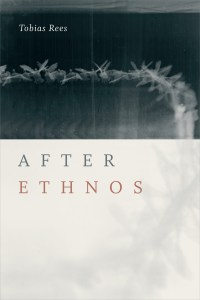
A review of After Ethnos, Tobias Rees, Duke University Press, 2018.
 What is anthropology? What should it be about, and how should it be pursued? These questions were raised with great intensity in the politically loaded context of the seventies. Radically different visions of anthropology were offered; people experimented with new forms of writing and storytelling; and the discipline was mandated to take a political stance in reaction to the issues of the day. As a result, anthropology was deeply transformed. The two canonical concepts that defined its academic status, culture and society, were discarded in favor of other constructs or organizing schemes—although modern ethnography is still referred to as cultural anthropology in the United States and as social anthropology in the United Kingdom. Fieldwork, the close and sustained observation of native customs and modes of thought by a participant observer, ceased to define the discipline. The methodology was adopted by other social sciences—or even by other occupations such as journalism, militantism, and even art—, while anthropologists experimented with multi-sited ethnographies or with research based on archival work. As Clifford Geertz and other anthropologists working in his wake made it clear, the collection of data by the ethnographer on the field is just the tip of the iceberg: it is based on years of reading other anthropologists’ work and attending academic lectures, and it is followed by the nitty-gritty work of reconstruction and composition that leads to the journal article or the scholarly volume. The anthropologist was recognized as a writer, as a maker of forms and a designer of concepts.
A designer of concepts
In his book, published in 2018, Tobias Rees takes these questions anew. After Ethnos grapples with the state of anthropology after the great surge of creativity and experimentation that followed the publication of the volume Writing Culture in 1986. It builds on an impressive bibliography of theoretical texts, as well as on countless seminar discussions, email exchanges, and tea corner conversations. It remains true to the creativity, artistic sensitivity, and philosophically informed theorizing that redefined the discipline after the epistemological turn of the seventies and eighties. On the webpage of the Berggruen Institute in California, where he chairs the Transformations of the Human Program, Tobias Rees is presented as follows: “The focus of Rees’s work is on the philosophy, poetry, and politics of the contemporary. He is intrigued by situations that are not reducible to the already thought and known –– by events, small ones or large ones, that set the taken for granted in motion and thereby provoke unanticipated openings for which no one has words yet. In his writings, he seeks to capture something of the at times wild, at other times tender, almost fragile openness that rules as long as the new/different has not yet gained any stable contours. When it is (still) pure movement. His work on the brain, on microbes, snails and AI have increasingly given rise to two observations that have come to define his work. (1) A distinctive feature of the present is that the question concerning the human occurs less in the human than in the non-human sciences. Say, in microbiome research, in AI or in the study of climate change. (2) The tentative answers that are emerging from these non-human fields radically defy the understanding of the human as more than mere nature and as other than mere machines on which the human sciences were built.”
Tobias Rees claims that After Ethnos is a non programmatic book. And yet it reads like a manifesto of sorts, a rallying call aiming at offering a vision of what anthropology could look like after it has severed it ties to ethnos and, in a way, to anthropos. Many sentences indeed offer a programme or a platform for future anthropologists. New directions in contemporary research are assessed, lines of escape are drawn, and a new orientation for future research is proposed. The author doesn’t mean to condemn or be judgmental of certain forms of anthropology that remain tied to disciplinary traditions. But this is because traditional anthropology has disappeared from anthropology department in most American universities. As Rees soberly notes, “Classical modern ethnography has come to an end.” People who still focus on traditional societies now need an excuse for doing so. The burden of proof falls upon them to justify the choice of a research topic that was considered as mandatory by their predecessors. They insist on their distinctiveness from older forms of scholarship that were often tainted by racial prejudice and positions of power. Whereas it is still possible to situate oneself in the sociological tradition, paying tribute to the founding fathers and the great names of the discipline, the anthropological tradition is all but dead. It has been reduced to old books accumulating dust on libraries’ shelves, and that are turned open only to show how antiquated and prejudiced the founders of the discipline were.
The erasure of Man
For Tobias Rees, the conditions of possibility that have organized ethnography have become impossible to maintain. The abstract figure of “Man”, itself a recent invention, has been erased “like a face drawn in the sand at the edge of the sea” (to take Michel Foucault’s famous metaphor.) Likewise, the ethnos and its declinations—the ethnic group, the tribe, the singular people with its well-defined culture and mores, was understood as a social construct whose fiction was increasingly difficult to maintain. With these erasures, the great divides of modernity—man vs. nature, science vs. tradition, reason vs. emotion, human vs. animal, life vs. matter, etc.—have all been redrawn. Starting in the late 1980s or early 1990s a number of anthropologists began to enter—per fieldwork—domains that were formerly believed to be beyond the scope of anthropological expertise or interest, such as medicine, science and technology, media, the Internet, finance, and much more. The result was a flurry of innovative texts and monographs offering new departures for the discipline. Anthropologists took the perspective of the gingko tree or the matsutake mushroom that have been around from times immemorial to envisage the possibility of life without humans, to displace “Man” from the center and to make it little more than a late-coming and transient episode in the history of the earth. Others have described the world-making qualities of bacteria that effectively have produced and continue to produce our external and internal environment, from the steady production of oxygen in the atmosphere to their critical role in digestion and the immune system through the microbiome. The choice of topics for anthropologists seems limitless: there is now an anthropology of stones and rivers, of outer space and stellar systems, of the modern, the emergent, and the still-to-come…
As the author notes, it is not that the anthropologist after “the human” stopped caring about humans. On the contrary, a new sensitivity to emotions, attachments, suffering, and human care, came to inform many texts that were being produced. But classical categories like the social, the cultural, the historical, or the natural had to be discarded in order to give way to new formulations. New concepts were designed, borrowed in part from social theory or from philosophy: entanglements, assemblages, ensembles, apparatus, dispositifs, man/machine, multispecies, animacies… They each point to the composite nature of the stuff that anthropologists study, which is a combination of humans and artefacts, of nonhuman species and animate bodies. As pointed out, anthropologists have gradually expanded their inquiries to the nonhuman natural world. The emergence of an anthropology not concerned with humans, or taking humans only as an observation point entangled in technological and interspecies relations, reconnects our societies with non-Western worldviews that have always integrated nonhumans into their cosmology. Besides, “Man”, as it was formerly conceived and now seems to have faded away, is not something to be mourned or regretted. What appears in retrospect is the disarming poverty of the figure of “the human” on which anthropologists have been relying for so long. Their traditional interest in kinship systems, gift exchanges, rites of passage, and mythic structures now seems to us only to have scratched the surface. By decoupling curiosity about “things human” from the cultural construct of “the human”, anthropologists open up new possibilities and understandings. As Tobias Rees notes, “the reason I don’t want to start with ‘the human’ is that I want to ground my research not in an answer—but in a question, in boundless questions.”
Fieldwork-based philosophy
Rethinking and redesigning the discipline from the perspective of the “after” gives birth to what the author calls a “philosophically inclined anthropology.” Philosophy and anthropology have always entertained awkward relations. Many scholars were drawn to anthropology and fieldwork as a way to escape the abstract strictures of philosophy. Philosophers, for their part, often consider anthropology as an applied science in a division of labor that leaves philosophy the key role of providing general themes and ideas. Moreover, anthropologists tend to rely on a small sample of philosophical works, authors, and concepts. The great bulk of philosophical enquiry falls outside the purview of the discipline. For Tobias Rees, “once anthropologists break with ethnos, anthropology has the potential to venture into the terrain it formerly left, unwittingly or not, to philosophy.” The discipline can become philosophical by practicing fieldwork-based philosophy, or empirically grounded ways of “thinking about thinking.” Although he makes only a passing reference to Henri Bergson, I see a strong similarity between the kind of thought he advocates and Bergson’s conceptualizing of time and movement. Like Bergson, Rees wants to cut loose “the new” from any linear comprehension of time. His key concepts—the actual, the after, the movement—are meant to capture “something that which escapes.” He would be on familiar ground with Bergsonian notions of “la durée”, “l’élan vital”, “l’intuition” or “l’évolution créatrice.” Bergson conceived of philosophy as movement in thought and, ultimately, as dance. Similarly, Tobias Rees draws a parallel between his “anthropology of the actual” and artistic practice—its poetic aim “is to render visible instances of the invisible.”
Anthropology also has to cultivate a certain disrespect for theory. In a way, theories always already know everything. By contrast, anthropologists characterize themselves by the capacity to be surprised. They are drawn to the field by the possibility that “elsewhere” could be “different”. For Tobias Rees, “fieldwork is a bit like the desire to find—or to be found by—that which makes a difference.” It is to immerse oneself into scenes of everyday life in order to let the chance events that make up the stuff of discovery give rise to new concepts and metaphors. Anthropologists don’t go to the field to validate theories they have conceived in their ivory tower; nor do they practice armchair theorizing by exploiting the data collected by others. They never deny the possibility that things could be otherwise than they appear at first glance; they take nothing for granted. This is especially true for the new kind of anthropology that Tobias Rees has in mind. Rather than difference in place, the fieldworker seeks displacement in time. She wants to capture “the openings, the bifurcations, the troubles, the jumping forth, the new causes.” Fieldwork has not disappeared; on the contrary, anthropologists have transformed countless sites into fields that were once thought to be far beyond the scope of the discipline. Nonetheless, Tobias Rees leaves open the question whether anthropological research can be dissociated from fieldwork. “Is there any obvious reason, he asks, why fieldwork would be the only, the sole, the authoritative form of anthropological knowledge production?” He leaves the question open—but answers it implicitly by making no reference to empirically collected results in his book.
So what?
I leave this book with two questions. Is there a way to reconnect with the anthropological tradition? How to make anthropology relevant for our present time? Tobias Rees makes some references to the great founders of the discipline. He reminds us that Bronislaw Malinowski invented fieldwork only serendipitously and as a result of adverse circumstances. As a citizen of Habsburg Austria he was considered a political enemy of the British Empire when the First World War erupted. The only way to escape encampment was to leave Australia and to live on the Trobiand Islands, where his lack of financial means led him to plant his tent among the natives. Tobias Rees treats classical anthropology as archive, as a repository of texts that remains available for critique and contextualization. Can we do more, and consider accumulated knowledge as a building stone for cumulative science, or can we jettison the whole edifice without great loss? In fact, many basic tenets of the discipline, or truths that for a long time were held as self-evident, have been refuted and proven wrong by advances in the life sciences. Any discipline preoccupied with the human nowadays cannot do without the findings and insights provided by the cognitive neurosciences, evolutionary biology, gene mapping, primatology, or brain science. As Charles S. Pierce once put it, “any inquirer must be ready at all times to dump his whole cartload of beliefs the moment experience is set against them.” As for anthropology’s relevance for the present, the proof of the pudding, as they say, is in the eating.
 The Duke Reader