

Random Access Memories

A review of Prosthetic Memories: Postcolonial Feminisms in a More-Than-Human World, Hyaesin Yoon, Duke University Press, 2025.
The French poet Lautréamont, considered as a precursor by the surrealism movement, defined beauty as “the chance encounter between a sewing machine and an umbrella on an operating table.” Surgery here symbolizes the unexpected and the incongruous: for the surrealists, surgery is akin to collage or to the automatic writing of the “exquisite corpse.” It allows for the cutting, isolating and grafting of body parts to create hybrid and chimerical assemblages, far removed from any anatomical logic. Similarly, in Prosthetic Memories, Hyaesin Yoon develops the Korean narrative of tongue surgery for improving English pronunciation, considered as the “cyborgian assemblage of a tongue on the operating table.” Surrealism may be considered as one of the ancestors of postmodern scholarship. Lines of flight between the two intellectual traditions could be traced through assemblages, more-than-human combinations, postcolonial longings, diasporic identities, new materialisms, and the breakdown of a stable subject. Surrealism helped normalize several moves that later became central to postmodern and poststructural thinking: distrust of rational transparency, fascination with fragmentation and juxtaposition, and the idea that meaning emerges through unstable combinations rather than fixed essences. Its techniques of automatic writing, dream logic, montage, and uncanny object relations loosened the authority of linear narrative and coherent subjectivity. The paintings of Salvador Dali, or the poetry of André Breton and Philippe Soupault, displayed the hybrid bodies, animate objects, and crossings between the biological and the mechanical that later theorists could radicalize in a more explicitly political and technological register. That doesn’t mean surrealists were postmodern critics avant la lettre: it means that their work can be productively reinterpreted as a forerunner of modern currents in the humanities and the social sciences.

The tongue on the operating table

But the “tongue on the operating table” is not just a surrealist metaphor or a creative wordplay. As detailed in Hyaesin Yoon’s book, this assemblage of mouth and machinery describes the very real practice of South Korean children undergoing tongue surgery to improve their English pronunciation and thus become competitive subjects in the neoliberal economy. According to media reports, affluent South Korean parents, mostly mothers, have surgeons sever the ligament under their children’s tongues to help them master the [r] sound, which Koreans often collapse into an [l]. This news story reflects several tropes often mentioned in discussing contemporary Korean society: the English craze that permeated South Korea after the “IMF crisis” of 1998; the power of Korean mothers who often go out of their way to equip their children with the skills and traits deemed necessary to compete in the global economy; the prevalence of facial plastic surgery to mold subjects into attractive bodies; and strong social pressure to conform to perceived cultural norms and increasingly global standards. The “mother tongue” also has deep civilizational echoes in Korean culture. Korean subjects were deprived of their national language and even personal surnames during Japanese colonial rule, turning the defense of the Korean language into a matter of pride and sovereignty. According to traditional lore, the consonants in the hangul script were designed to visually represent the shape of one’s mouth, tongue, and throat when producing each sound. For instance, <ㄱ> accounts for the shape of the tongue in the articulation of [k] in the mouth. Korean characters are thus grafted onto the body, turning the individual self into a cyborg-like assemblage of biological organs, primitive information and communications technologies, and national policies of cultural uniformization.

The “cut from one’s mother tongue” creates a split subject, unmoored from its national origin and yet viscerally attached to the motherland. It is not a coincidence that the first news reports on tongue surgery appeared in the Los Angeles Times, the Californian metropolis being home to a large population of ethnic Koreans. The outmigration of Koreans from the Korean peninsula since the 19th century has resulted in a large diaspora that spans virtually all corners of the world. Even domestically, Koreanness is increasingly described in global terms. The cultural wave known as Hallyu – spanning K-pop, dramas, film, fashion and beauty – has become synonymous with Korea’s image abroad. Koreans increasingly identify with modernity and technological advancement, while many foreigners remain drawn to the country’s cultural heritage and historical depth. In the age of global flows and transborder scholarship, Korean studies are consonant with contemporary concerns in the humanities: diasporic identities, postcolonialism, science and technology studies, and non-Western feminisms. Hyaesin Yoon, who teaches gender studies at the Central European University in Vienna, speaks from a diasporic position that projects topics identified as Korean onto a transnational framework of intellectual scholarship. Her areas of interest include biopolitics, postcolonial critiques, posthumanisms, art performance and literary theories, and feminist studies of science, technology, and medicine. Her book is published by Duke University Press in a cutting-edge series that situates it within critical race studies, postcolonial studies, and feminist science studies, while also mobilizing insights from disability studies, trans and queer theories, and posthumanism. In her introduction, she makes references to Donna Haraway’s “Cyborg Manifesto” and to Judith Butler’s ethics of mourning to position her book at the intersection of these two branches of contemporary feminist thought. Her approach is resolutely transdisciplinary and is based on “a variety of practices, including close reading of literature, films, and newspapers; archival research; in-person and email interviews; and visits to a biotech research facility.”

Body-technology interfaces

The common thread in her case studies – tongue surgery, machine poetry, commercial pet cloning, and human stem cell research – is the idea that memory is not simply housed in human minds but is redistributed across bodies, machines, companion species, bodily cells, and transnational circuits of power. Or to borrow her words: “how we remember is embedded in our entanglements with human and nonhuman others in parasitic/nurturing, exploitive/creative, and unevenly interdependent webs spun beyond human consciousness and control.” She proposes the concept of “prosthetic memory” as an emergent mode of remembering in which memory extends beyond the human subject into technological and biological assemblages. That idea is more than a provocative metaphor: it becomes a way of rethinking embodiment, speech acts, species boundaries, and the politics of knowledge under neoliberal globalization. Prosthetic Memories is especially interested in how racialized, gendered, diasporic, queer, and otherwise marginalized subjects are entangled with those assemblages in ways that produce both trauma and transgression. Hyaesin Yoon is well aware of the ableist bias that the notion of prosthesis may entail: “the trope of prosthetics often assumes disability as a deficit that needs to be supplemented—corrected—by technology.” Her notion of prosthetic memory departs from the conventional conception of mechanical memory as an artificial supplement to human mnemonic power. It also questions the implicit gender roles that assign to women the work of remembering and caring for the community, as well as the transphobia prejudice that identifies mechanical intervention into the gendered body as a transgression of natural boundaries. Her programmatic approach of “rethinking postcolonial feminist mnemonics at the turn of the twenty-first century” across South Korea and the United States critically revisits the relationship between humans, non-human living beings, and biotechnologies. The various interfaces of body-technology she describes emphasize the inhuman otherness of lived memories, as when she considers “memories from the perspective of a cactus” in an art installation by Los Angeles-based artist Kang Seung Lee.

Each case study in Yoon’s Prosthetic Memories considers a specific body-technology interface, the power relations at play along the dimensions of sex/gender, race, and disability, and how the concept of prosthetic memory can contribute to the formation of alliances for marginalized subjects in a postcolonial framework. The “cut in the tongue” is gendered—Korean boys being taken to the clinic by their overbearing mothers—and reproduces lines of race and ethnicity while echoing memories from the colonial period and replacing them in a neoliberal context of unfettered globalization. The surrealist metaphor is richly evocative—one can also think of the Buñuel movie scene in which a razor blade slices through an eye—and is further developed in artworks curated by the author: a video installation (Mouth to Mouth, 1975) featuring a close-up of a mouth silently enunciating the eight Korean vowels, or a short film (Tongue-Tie, 2003) of a tongue surgery operation. Yoon reminds us that “the tongue is a crucial channel for technologies of power that produce and shape both colonial and anticolonial subjects”: language, both national and foreign, is itself intrinsically prosthetic. A detour through Black feminism allows her to “challenge the hegemonic sense of reality based on the unracialized relationship between body and language.” Tony Morrison’s 1993 Nobel lecture tells the story of language “as a bird in your hand,” emphasizing both its agency and its precarity. NourbeSe Philip, a Tobago-born poet, evokes a mother who “licks her newborn daughter clean,” crossing the boundary between human and animal. Language as a bodily practice allows the author to question “the posthumanist narrative of the turn from the linguistic to the material”: maternal corporeality is inscribed upon the body of the speaking subject, and the tongue, sliced by the scalpel or uncut, is the material embodiment of a language that bears the memories of a colonial past and a diasporic present. Mobilizing Black critique in an Asian or Asian-American context allows the author to undermine the implicit racial hierarchies that posit Black as inferior and white as superior, granting Asians the intermediary status of a model minority. While media reports often pit one community against the other, as during the LA riots of 1992, ethnic Koreans share with African Americans a diasporic identity, the memory of an oppressive past, and an acute sense of social justice.

Language as prosthesis

Language as mnemonic prosthesis is revisited through another classic example of neoliberal globalization: the outsourced US call centers in India, where operators are trained to erase their Indian accent in English in order to sound American. This example now seems dated as we have entered a world of artificial intelligence, speech recognition, voice synthesis, and AI-powered analytics. India’s IT giants have shifted from back-office outsourcing to tech automation and AI orchestration, making the issue of the “Neutral Accent” (to borrow from a book published by Duke University Press in 2015, which I reviewed here) an outmoded signpost on the way to global integration. Indeed, this evolution was foretold by American critic Susan Sontag who, in a 2002 lecture titled “The World as India,” envisaged a near future where computers would soon be able to perform most translating tasks, leaving the field of literature and poetry as the only domain of human translators’ intervention. The dialectics between the machine and the poem, translated or not, is thematized in the work of multimedia artist and poet Margaret Rhee, which plays with the queer and diasporic relationships among robot/machine, human, and poetry. Like AI-powered computers, Asian Americans are credited with superior productivity and rigor of execution, but are sometimes dismissed as lacking creativity and emotions. According to Margaret Rhee, robots are described as “immigrants of the future” and “second-class citizens,” which bears an “uncanny resemblance” to the “model minority stereotype” of Asian Americans. In her poetry collection Love, Robot (2017) and her multimedia installation Kimchi Poetry Machine (2014), Rhee discusses the ability for machines to experience love and write poetry, often used as a touchstone for testing the uniqueness of human emotional functions. The queer intimacy between a human and a robot has always been envisaged through the lenses of race (confer the many robots with Asian features in Hollywood movies) and traditional gender norms (the hero is male, the robot female). Through poetic language, Rhee’s robots provide an alternative to the conventional trope of Asian immigrants and machines as highly productive but devoid of interiority.

South Korea is often the origin of uncanny news in the science and technology sector. It frequently generates surreal or futuristic headlines, blending ultra-high-speed automation, eccentric robotic experiments, and deep-sea data center proposals to solve land shortages. The nation treats sci-fi concepts as urgent infrastructure policy rather than distant speculation. Hyaesin Yoon revisits two such stories that briefly impacted the news cycle: commercial pet cloning as a technological substitute for mourning a lost animal companion, and human stem cell research as a tool for regenerative medicine and anti-aging applications. She suggests an affinity between clones and female, queer, and colonial subjects because all four groups have historically been treated as copies, property, or outsiders rather than unique, autonomous individuals. Asian biotech scientists also operate with fewer restrictions to fast-track innovation than their Western counterparts, bypassing rigid ethical codes or early-stage drug approval processes. Animal rights advocates have long expressed deep ethical concerns regarding the commercial pet-cloning industry, including reports that dogs used as egg donors or surrogate mothers in countries like South Korea have sometimes been rented from or returned to meat farms where they face slaughter. Hyaesin Yoon is more concerned with the ethics of mourning and the theory of grievability that stem from these prosthetic memory dogs coming from the pet cloning industry. What turns a life worth grieving into a life worth cloning, and what kind of relationship is at stake when a singular attachment story is turned into a manufactured project? The distinction between animal biotechnology and human embryonic stem cell research is a fraught one, as illustrated by the story of Dr. Woo Suk Hwang who gained recognition for livestock cloning before being barred from Seoul National University for publishing fraudulent research on cloned human embryos.

Techno-Orientalism or the New Yellow Peril

There has been a change in Western perceptions of “the Orient”. Edward Said’s core thesis exposed in 1978 in Orientalism—that knowledge production is tied to power and used to “other” regions like the Middle East and Asia—require updating and decentering. The rise of powerful Asian and Middle Eastern economies and media hubs means the “West defines the East” dynamic is increasingly challenged by multipolar narratives. Techno-Orientalism updates traditional orientalism by replacing ancient, pre-modern stereotypes with futuristic aesthetics, robotics, and cyborgs, reflecting Western anxieties about Eastern economic and technological power. Dehumanization is still there: Asian bodies and cultures are often associated with machinery, or portrayed as hive-minded, emotionless, and robotic. Contemporary geopolitical anxiety around artificial intelligence frequently recycles 19th-century “Yellow Peril” rhetoric, merging historical anti-Asian racism with modern techno-Orientalism to frame Eastern technological advancement as an existential civilizational threat. Hyaesin Yoon shows that these modern narratives are still embedded in age-old circuits of disgust and shame, perceptions of social and cultural abjection. Especially when it comes to South Korea, complex domestic socio-economic issues such as dog meat consumption or facial surgery are often sensationalized abroad, reducing a high-tech society to a stereotype of hyper-anxiety or robotic work ethics. Internal Korean discourse is itself preoccupied with the binary of sŏnjin’guk (advanced nation) versus hujin’guk (underdeveloped nation), reflecting a historical sensitivity to Eurocentric global hierarchies. By adopting a postcolonial transspecies feminist approach, Prosthetic Memories reveals how intersecting structures of human nationalism, species hierarchy, and global capitalism shape bodies, marginalized groups, and non-human animals within rapid modernization.
Science’s Big Picture

A review of Epigenetic Landscapes: Drawings as Metaphor, Susan Merrill Squier, Duke University Press, 2017.

Epigenetic landscapesSusan M. Squier believes drawings, cartoons, and comic strips should play a role in science and in medicine. Not only in the waiting room of the medical doctor or during the pauses scientists take from work, but straight into the curriculum of science students and in the prescriptions given to ailing patients. She even has a word for it: graphic medicine, or the application of the cartoonist’s art to problems of health and disease. Her point is not only that laughing or smiling while reading a comic book may have beneficial effects on the patient’s morale and health. Works of graphic medicine can enable greater understanding of medical procedures, and can even generate new research questions and clinical approaches. Cartoons can help treat cancer; they might even contribute to cancer research. Pretending otherwise is to adhere to a reductionist view of science that excludes some people, especially women and the artistically inclined, from the laboratory. In order to make science more inclusive, scientists should espouse “explanatory pluralism” and remain open to nonverbal forms of communication, including drawings and pictures. Comics and cartoons are a legitimate source of knowledge production and information sharing, allowing for an embodied and personal experience to be made social. They are providing new ways to look at things, enabling new modes of intervention, and putting research content in visual form. In comics, body posture and gesture occupy a position of primacy over text, and graphic medicine therefore facilitates an encounter with the whole patient instead of focusing on abstract parameters such as illness or diagnosis. Studies are already suggesting that medical students taught to make their own comics become more empathetic caregivers as doctors. Health-care workers, patients, family members, and caregivers should be encouraged to create their own comics and to circulate them as a form of people-centered mode of knowledge creation.
Difficult words made easy

Epigenetic Landscapes is full of difficult words: DNA methylation, chromatin modification, homeorhesis, chreod, pluripotency, anastomosis (I will explain each and every one of them in this review). It also mobilizes several distinct disciplines: embryology, genetics, thermodynamics, architecture, science and technology studies, and art critique. But the reader needs not be a rocket scientist or a medical PhD to get the gist of the book. The author’s apologia of graphic medicine, or the call to apply graphic art to healthcare and to medical science, is part of a broader agenda: the rehabilitation of gender-based and art-sensitive forms of intellection that have been estranged from the life sciences. The entanglement of art and science that the author advocates is informed by feminist epistemology: in addition to the French philosopher Michel Serres, the feminist scholar Donna Haraway is presented as one of her main sources of inspiration. However Susan Squier doesn’t discuss theory in the abstract: in order to prove her larger point, she takes the life story and scientific achievement of one scientist, the biologist and embryologist C. H. Waddington (1905-1975), as well as one of the main concepts he introduced, the epigenetic landscape, a figure that has played a foundational role in the formation of epigenetics. Squier emphasizes Waddington’s claim that art and science are inextricably intertwined, and that one largely informs and provides exposure to the development of the other. While Waddington’s model, the epigenetic landscape, represented the determinative nature of development, demonstrating how canalization leads an individual to return to the normal development course even when disrupted, recently scientists are discovering that the developmental process is neither linear nor so determined. This echoes Squier’s mode of narration, which incorporates scholarship from various disciplines and exhibits nonlinearity and indeterminacy as a style of thought.

Epigenetics is a hot topic in contemporary science: it is one of the most often quoted words in biology articles, and dozens of textbooks or popular essays have been devoted to the field—some with catchy titles such as “Change Your Genes, Change Your Life,” or “Your Body is a Self-Healing Machine.” According to its scientific promoters, epigenetics can potentially revolutionize our understanding of the structure and behavior of biological life on Earth. It explains why mapping an organism’s genetic code is not enough to determine how it develops or acts, and shows how nurture combines with nature to engineer biological diversity. Some pundits draw the conclusion that “biology is no longer destiny” and that we can optimize our health outcomes by making lifestyle choices on what we eat and how we live, or by controlling the toxicity of our environment. Epigenetics is now a widely-used term, but there is still a lot of confusion surrounding what it actually is and does. Susan Squier does not add to the hype surrounding the field, but nor does she provide intellectual clarity about the potential and limitations of recent research. Moving away from contemporary debates, she focuses on the personality of C.H. Waddington and follows the cultural trail of the metaphor he helped create and that finds echoes in fields as diverse as graphic medicine, landscape architecture, and bio-art. The epigenetic landscape is all at once a model, a metaphor and a picture that appeared in three different iterations: “the river”, “the ball on the hill”, and “the view from underneath with guy wires.”

Three pictures of the epigenetic landscape

As a scientific model, the epigenetic landscape fell out of use in the late 1960s, returning only with the advent of big-data genomic research in the twenty-fist century. Yet as the epigenetic landscape has come back into widespread use, it has done so with a difference. Now the terms refers primarily to the specific mechanisms by which epigenetics works on a molecular level, particularly through DNA methylation and chromatin modification (the first inhibits gene expression in animal cells, the second makes the chromatin structure more condensed and as a result, transcription of the gene is repressed.) When Waddington conceptualized the epigenetic landscape and coined the words homeorhesis and chreods, he had a broader signification in mind. Homeorhesis, derived from the Greek for “similar flow”, is a concept encompassing dynamical systems which return to a trajectory, as opposed to systems which return to a particular state of equilibrium, which is termed homeostasis. Waddington presented the first version of his epigenetic landscape in 1940 as a river flowing in a deep valley, a visual metaphor for the role played by stable pathways (later to be called “chreodes”) in the process of biological development. This flow represents the progressive changes in size, shape, and function during the life of an organism by which its genetic potentials (genotype) are translated into functioning mature systems (phenotype). Waddington’s second landscape–an embryo, fertilized egg, or ball atop a contour-riven slope, also allows for further visual motion; while the river flows in a linear fashion, somewhat restricted by its blurred boundaries, the embryo has the possibility of rolling down any of the paths present on the hill. The third representation used by Waddington, with wires and nodes underneath the landscape, underscores the way gene expression can be pulled into different directions.

In Waddington’s vision, the role of the epigenetic landscape extended beyond the life sciences. The first representation of the model, published in his book Organizers and Genes (1940), was a drawing commissioned to the painter John Piper, who had been enrolled as a war artist to make paintings of buildings smashed by bombings. Waddington returned to the theme of collaboration between scientists and artists in his article “Art between the Wars”, where he praised the return to figurative painting under wartime conditions, and even more so in his book Behind Appearance: A study of the relations between Painting and the Natural Sciences in this Century, published in 1970. Both scientific knowledge and artistic creations, he argued, had turned “against old-fashioned common sense” and developed models, from quantum physics to abstract painting, that fundamentally challenged individual and collective representations. Behind Appearance emphasizes that both scientists and artists have come to acknowledge the extent to which they are implicated in their research. Drawing from Einstein’s remarks on the process of creation, Waddington asked whether words or images, symbols or myths, are the foundation of scientific thought. Two mythological figures were of particular importance for him: the world egg, the bland and round shape from which all things are born, and the Ouroboros, the snake that eats its tail. These figures can be found in many mythologies and they also help represent advances in modern science, from cosmological models of the Big Bang to the cybernetic notion of the feedback loop. As he grew older, Waddington was more willing to challenge the divide between science and the humanities in order to emphasize the unitary nature of knowledge.

Feminist epistemologies

He was also, or so argues Susan Squier, less constrained by gender boundaries and more willing to acknowledge women’s contribution to the advancement of science. When he was writing about art in conjunction to science, Waddington had in mind a broad readership that included many influential women, including his wife, fellow scientists, female artists, and women architects. By contrast, when he addressed his male peers at the Serbelloni Symposium in 1967 on a topic as large and open-ended as the refoundation of biological science, he was less inclined to challenge positivist orthodoxies and offer metaphysical musings. Women at this symposium were relegated to the role of the philosopher-of-science commenting on the proceedings from a detached perspective (not unlike Susan Squier’s own position), or the artist offering two poems to close the conference with a note of gendered artistry. For Susan Squier, a feminist epistemology encourages ambiguity and questioning. She conceives of her role as “poaching on academic territory in which I can claim at best amateur competence.” She notes how embryology makes pluripotent cells (stem cells that can develop into any kind of cell) and embryos visible by turning pregnant women into invisible bodies, and she redirects our attention from the embryo to the woman that is carrying it. For her, making the embryo visible is not just a matter of imaging technology: it is an act of mediation and remediation, in the sense that it mediates between the anatomical, the experimental, and the genetic; and that it offers remedy as it helps provide a treatment, an antidote or a cure. Using cartoons and comics as a mediating and remediating media, “graphic medicine” as she advocates it can help reintegrate the gendered experience exiled from formal medicine, by literally “making the womb talk.”

A feminist epistemology is not limited to the promotion of women in science. It studies the various influences of norms and conceptions of gender roles on the production and dissemination of knowledge. It avoids dubious claims about feminine cognitive differences, and balances an internal critique of mainstream research with an external perspective based on cultural studies and social critique. Squier’s analysis shows that Waddington’s epigenetic landscape was gendered as it represented the embryo cell without any reference to the female body. Her feminist critique of life sciences stresses plasticity rather than genetic determinism. She contests the dualism between science and the humanities, and argues that biology has been shaped all along by aesthetic and social concerns, just as the humanities and arts have engaged with life processes and vitalism. The scientific imagination is nurtured by myths and symbols, as Waddington himself acknowledged by conjuring the figures of the Ouroboros and the cosmic egg. The ability to think about biological development from different perspectives, visual as well as verbal, analytic as well as embodied, is understood to be a catalyst to creativity. Similarly, medicine as a healing process must include a narrative of the patient facing the disease, as well as representations—pictures or images—of illness and well-being. An evidence-only, process-oriented, and value-blind medicine has more difficulties curing patients. A doctor that takes the embodied, personal experience of the patient as a starting point is a better doctor.

Manga and anime

Epigenetic Landscapes provides us with a useful argument for rebalancing scientific and medical knowledge practices with sensorial and embodied experiences drawing from the humanities, the arts, and popular forms of expressions such as graphic novels and comic strips. But does this make the argument a feminist one, and does it apply to cultural contexts outside the Anglo-saxon world? In fact, I was surprised that no reference was made to Japan except a passing mention of Sesshū’s landscape ink painting from the fifteenth century. Japan has developed the art of explaining scientific concepts and medical training in graphic form. Anime and manga are part of any student’s formal and informal education, and famous scientists have published manga series popularizing their discipline under their names. The manga Black Jack and the TV series The Great White Tower, not to quote many others, have accompanied generations of medical students and are at the origin of many vocations into the profession. In Japan, graphic medicine doesn’t need advocacy, feminist or otherwise: it is part of the way things are done. My second remark is that the critique of phallogocentrism—to borrow a term from Derrida that Squier doesn’t use—will only bring you so far. Under this theory, abstract reasoning, which originates in the Greek logos and identifies with patriarchy, must give way to more embodied forms of knowledge practices that include the nonverbal, the intuitive, the sensorial. But we now live in an age where the image is everywhere, and where stimuli to our senses are ubiquitous. Our visual and aural cultures have received a boost with the diffusion of new media technologies. With computer graphics and artificial intelligence, anything that can be conceived can be pictured, animated, and made real in a virtual world that encroaches on our perceived environment. The written text isn not extinct however, and we can still figure things out without the help of animated images and virtual simulations. The non-representable, the purely abstract, and the ideational must remain part of the scientific imagination.

US-Bashing, Anti-vax, Animalism

A review of Bioinsecurities: Disease Interventions, Empire, and the Government of Species, Neel Ahuja, Duke University Press, 2016.

BioinsecuritiesThis book can be read as an anti-American tract, or an anti-vaccine manifesto, or as a justification of anti-speciesism, or as an attack on liberal ideas of democracy, equality, and scientific progress. Of course, this is not the intention of the author. Neel Ahuja didn’t write a tract or a manifesto, but an elaborate social science book with deep theoretical repercussions. He is more descriptive than prescriptive, and his political message is not spelled out in detail. He situates himself in a progressive movement that is unconditionally anti-racist, feminist, and anti-war. But he doesn’t take position on vaccines, on animal rights, or on speciesism. His goal is not to provide simple answers, but to complicate things and deepen our vision of mankind and its living environment as some truths long held to be self-evident are losing political traction. However, liberal arguments can be used for very illiberal ends. As I read it, Bioinsecurities gives credence to very nasty arguments which, taken to their extreme, articulate a very anti-liberal and regressive agenda. Of course, some readers, and the author with them, may argue that it is perfectly fine to be anti-American, anti-vaccine, or to stand for a radical vision of animal rights, especially considering the background of brutal imperialism, public health manipulations, and disregard for non-human animals that have marked our common history and still inform our present. We should work against the public amnesia and state-endorsed manipulation of truth that prevent the public to exercise democratic oversight and make informed decisions on matters of life and death that affect us most. But an author also has to give consideration to how a book might be read or perceived. For me, Bioinsecurities dangerously straddles the line between liberalism and illiberalism, humanism and anti-humanism, and progressivism and regression.
Settlers and immigrants

By using the word anti-American, I don’t intend to convey a political trial on academic activities that would represent a threat to the security and identity of the nation: I am certainly in no position to do so, and I feel only repulsion for this kind of political justice. But I would like to gesture toward a tension that often inhabits post-colonial literature when applied to the United States. Was America a nation of settlers or of immigrants? For most historians, this is a matter of chronology: settlers came first, then immigrants moved in. But at what moment should one draw the line between first movers and late arrivers? Were Apaches and Navajo Indians any less settlers than Spanish conquistadors when they arrived from their native lands of Alaska to the vast plains of the American South-West, at about the same time that Christopher Columbus discovered the new continent? Is there a fundamental difference between the four grand-parents of Donald Trump, who were all born outside the United States, and the father of Barak Obama, who was born in and returned to Kenya? Bostonians, who pride themselves to be descendants of John Winthrop, are not different from the Latino-Americans freshly arrived from their barrio to populate the periphery of Los Angeles. Who is the first American of America first? Seeing America as a settler nation reactivates the myth of autochtony that is so corrosive to the social fabric of old and new nations, from Ivory Coast to the Netherlands, from Marine Le Pen’s France to Donald Trump’s America. It calls for radical measures and deadly solutions: recall the Pan Africanist Congress’ rallying cry, “one settler, one bullet,” or Franz Fanon’s contention that “killing a European is killing two birds with one stone, eliminating in one go oppressor and oppressed: leaving one man dead and the other man free.” The United States has long prided itself to be a nation of immigrants, welcoming the “huddled masses yearning to breathe free.” It would be a pity if it modeled itself after the countries of racial apartheid and colonial exploitation.

Neel Ahuja sees America as an empire and its inhabitants as a settler society. For him, imperialism is a racial endeavor that exerts itself upon people, but also natural habitats and non-human species, including microbial ones. White privilege, the benefits that whites claim over non-white people, is inseparable from the privilege of man as opposed to woman and of humans as distinct from other species. Bioinsecurities explores empire as a project in the government of species and the management of biological life. The author explains the persistence of empire long after settler societies have given way to established communities by a phenomenon he calls “dread life”, or the turn from colonial occupation and settlement to the management of bodily vulnerability and diseases. Fear of contagion was an integral part of imperial expansion, and settlers were literally obsessed by disease. They tried to circumvent it, to quarantine it, to vaccinate against it, to weaponize it, or to use if for further expansion. The “smallpox blankets” that decimated the native American Indian population have their modern equivalent in the infamous Tuskegee Syphilis Study, in which six hundred African American men were used to study the progression of syphilis and denied proper medical information, informed consent, or the known effective treatments. For Neel Ahuja, disease interventions are a form of biopolitics, defined as the ongoing expansion of government into life itself. He studies the way settler colonialism intervened in the government of species and the domestication of bodies in five outposts of the American empire: the Hawaiian islands at the time of Hawaii’s annexation, Panama under military occupation of the Canal Zone between the two World Wars, Puerto Rico where a colony of rhesus monkeys was established during the Cold War, Iraq as seen from war planners in the corridors of power in Washington, and Guantanamo which harbored “the world’s first HIV concentration camp” during the Haitian refugee crisis in 1991-94. Race played a key role in the interventions of the US security state, which inherited the settler mentality and extended it to new terrains.

Fear of contagion

The case studies presented in Bioinsecurities all illustrate the fear of disease contagion and of racial intermingling that accompanied America’s expansion beyond its continental borders. Indigenous Hawaiians diagnosed with leprosy were segregated in quarantine camps on the island of Molokai and denied basic legal rights, while outbreaks of Hansen’s disease in the north central states of the United States (at times associated with Scandinavian immigrants) never attracted much public attention. Afro-Caribbean women involved in the sex trade in the Panama Canal Zone under US administration were arbitrarily arrested and tested for syphilis or gonorrhea and sentenced to hospitals for enforced treatment if tested positive, while US soldiers were only invited to “self-regulate” through moralizing and racially charged propaganda. The 1940s and 1950s witnessed a polio scare that led American scientists to import rhesus monkeys from India to Puerto Rico and harvest their bodies for vaccines, and the Iraq war had the US military prepare for a smallpox outbreak under the belief that Iraq had developed biological weapons and was ready to use them. Haitian refugees who tested HIV positive were segregated and imprisoned in Guantanamo during the years 1991-94. These are all shocking episodes, but should we read American history only through the lenses of “species wars”, “dread life”, and the “medicalized state of war” brought about by our modern bioinsecurities? The fact is that these cases rightfully provoke our moral indignation, as they did in the past when Jack London, who was both a socialist and a racist according to the author, visited “lepers’ island” and let the world know about the plight of Hansen disease patients in Hawaii. The history of the United States is by nature contested, and historians are right to point out sore spots and moral contradictions. But I don’t believe it can be reduced to the story of a security state bent on implanting settler exploitation in its imperial conquests.

In the wake of the animal rights movement and the development of animal studies as an academic field, new words have entered our vocabulary. “Speciesism” gives greater moral rights and value to human beings than to non-human animals. By contrast, “anti-speciesism” considers that this discrimination is unfounded and militates for its abolition. For animal rights advocates, speciesism is a prejudice similar to racism or sexism, in that the treatment of individuals is predicated on group membership and morally irrelevant physical differences. Their claim is that species membership has no moral significance. For their opponents, assigning the same moral value to all animal species is not just impractical, but ultimately absurd. Therefore, speciesism is unavoidable. Why, then, all the fuss about nonhuman animals and the moral obligations that we may have toward them? This shift reflects the influence of the radical critique of humanism and the rejection of anthropocentrism, voiced especially by the animal-rights movement and advocates of trans-humanism and post-humanism in popular culture since the 1990s. My point is not to discuss anti-humanism, animalism, or the rights of nonhuman animals. I know there are serious discussions out there, beyond the caricatures that each party draws of the opposing camp. Just because an animal is not a moral agent doesn’t mean that it cannot have rights or that moral agents can’t have duties towards them. Cruelty towards animals is clearly unacceptable; but so is violence condoned in the name of animal rights. And violence is a foregone conclusion for many animal rights advocates, who see the lack of public support for their cause as an added motivation to grab the headlines by spectacular action. Of course, supporting radical means and action is not the appanage of anti-speciesism, and one should not judge a cause by the violent actions of its most extreme elements. But comparing speciesism to racism or sexism—as many critics do in the name of intersectionality—or using words like “slavery” and “genocide” to describe the breeding and slaughtering of livestock, justifies in advance the most radical means. This slippery slope can only lead to hyperbolic conclusions.

Species wars

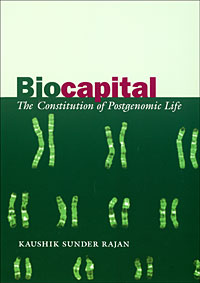
In effect, anti-speciesism or animalism usually concentrates its claims for right sharing to certain mammals, especially apes or non-human primates. On the book cover of Bioinsecurities, a rhesus macaque half soaked into water glances back at the viewer or the camera lens, with a gaze that can be read as angry, dissatisfied, or frustrated. This particular monkey is part of an imperial project: the import of 400 macaques from India to US-occupied territories in Puerto Rico to serve as guinea pigs for clinical research on poliomyelitis. In the name of producing polio vaccine, rhesus monkeys were, to use the author’s metaphor, “stabbed in the back” and inserted with spinal tap to extract polio serum. They were subjected to experimentations that would clearly fall outside what is now considered as proper and ethical laboratory norms. Could the antibiotic revolution have happened without animal experiments, and in particular primate vivisection? Before jumping to hasty conclusions, one should remember the crippling nature of polio disease, its devastating effects on children, and the public anxiety it generated. The argument made by the author that these fears of disease were themselves loaded with racial and class prejudice should in no way diminish the importance of biomedical research and vaccine production. In fact, Neel Ahuja shows that it is in the research labs and breeding stations that the modern categories of “almost human” primates and advanced sentient species originated. These categories “were less concerned with broadly questioning an anthropocentric hierarchy of species, and more involved with justifying vivisection on a mass scale.” They were the result of a complex history of Cold War politics, sovereignty claims, and ecological shifts that exceeded simple logics or science or profit. Rhesus monkeys imported from India to Puerto Rico for scientific use escaped their semi-free-ranging colonies and came to be viewed by many habitants as a pest. India protested the use of “sacred” species for biomedical research or nuclear testing and placed a moratorium on the primate trade. Regional primate research centers were established in many newly independent countries, giving rise to new disciplines such as ethology and primatology. Hollywood movies and urban legends fueled anxieties about interspecies intimacy and mad science experiments.

In place of the polio scare, new legends are emerging today about the proper role and effect of vaccines. The anti-vaccination (“anti-vax”) movement is a global phenomenon that has received a great deal of media attention. Anti-vaxxers usually don’t read or write social science dissertations and history books: they rely on word-of-mouth and social media to spread the message that the government and “Big Pharma” are colluding in a massive cover-up regarding the hidden dangers of vaccines. This has very serious public health consequences, as outbreaks of highly contagious diseases such as measles put vulnerable people, including newborn babies and people who have weakened immune systems, at great risk. My point here is not to discuss the positions of anti-vax propagandists (or “vaccine-hesitant parents,” as they prefer to describe themselves): I think that they are a menace to society, and that compulsory vaccine policies should be enforced. Any argument that reinforces their misinformation and conspiracy theories should be dealt with suspicion and care. This is why Neel Ahuja’s book is a matter of concern: he gives credence to arguments that identify vaccination policies with the police state, imperial endeavors, and neoconservative plots. Bioinsecurities’ introduction opens with two quotes relating to vaccine controversies: a 1905 legal opinion on Jacobson v. Massachusetts, a case of vaccine refusal that led to a well-publicized lawsuit, and an interview with Donald Rumsfeld in which the Defense Secretary assesses the risk of a smallpox epidemic in the lead-up to the Iraq war. Both cases are controversial: the Jacobson precedent was used to justify forced sterilization programs, and Donald Rumsfeld’s argument that Iraqis had developed biological weapons, including the variola virus that causes smallpox, proved to be unfounded. Although the author doesn’t make the link with modern vaccine controversies, the tainted nature of past “disease interventions” justifies skepticism towards modern public health policies.

Reductio ad absurdum

A good way to assess an argument is to push it to its logical extreme. To the argument about settler colonialism, one could ask: “You wouldn’t want to give it all back, would you?” In the case of America’s westward expansion, wouldn’t the Mexicans then have to give it all back to the Spanish, and then the Spanish to the indigenous populations they decimated, and then those peoples to the flora and fauna they displaced after crossing the land bridge from Siberia thousands of years earlier? The argument is absurd. Similarly, proselytizing vegans and animalists always have to face the argument that animals eat each other, and that even some pets require the death of other animals for their food. Anti-speciesism reasoning can be countered by the fact that insects, even bacterias and plants, can also be considered as sentient beings. Will we act accordingly, and with what consequences? These are some of the questions that may be raised after reading Bioinsecurities. The book’s main purpose is to describe the entanglement of human, animal, bacterial and viral bodies in the US project of imperial expansion over the course of the long twentieth century. But in doing so, it develops an anti-humanism that radically refutes the exceptional value of human life and democratic freedom and that gives credence to fringe arguments such as anti-vaccines. Some people may think that I read too much in this book and that I misinterpret its author’s real intentions. Others may argue that my own perception is biased, and that I am complicit in some conspiracy to justify US imperialism, denigrate animal rights advocates, and bolster the security state. Let me be clear: I don’t deny the interest of writing interspecies histories of American imperialism, paying tribute to those who resisted and paid the price of this imperial expansion, or documenting the cases of medical abuse in public health policies. But I worry that rather than inspiring its audience to protest against social injustice, this book may consolidate illiberal tendencies and a regressive turn in democratic governance.

Rewriting Marx’s Theory of Capital for the Twenty-First Century

A review of Biocapital: The Constitution of Postgenomic Life, Kaushik Sunder Rajan, Duke University Press, 2006

biocapitalBiopolitics is a notion propounded by Michel Foucault whereby “life becomes the explicit center of political calculation.” The increasing use of this notion in the social sciences underscores a fundamental evolution. In the twenty-first century, as anticipated by Foucault, power over the biological lives of individuals and peoples has become a decisive component of political power, and control over one’s biology is becoming a central focus for political action. Used by the late Foucault in his lectures at the Collège de France, biopolitics and its associated concept, governmentality (“the conduct of conducts”), are now in the phase of constituting a whole new paradigm, a way to define what we are and what we do. Biopolitics and governmentality are now declined by many scholars who have proposed associated notions: “bare life” and the “state of exception” (Giorgio Agamben), “multitude” and “empire” (Michael Hardt and Antonio Negri), “biological citizenship” and “the politics of life itself” (Nikolas Rose), “biopolitical assemblages” and “graduated sovereignty” (Aihwa Ong), “cyborg” and “posthumanities” (Donna Haraway), etc. This flowering of conceptualizations is often associated with a critique of neoliberalism as the dominant form of globalized governmentality, and to a renewal of Marxist studies that revisit classical notions (surplus value, commodity fetishism, alienation of labor…) in light of new developments.

From Foucault to Marx

By adding the notions of “biocapital” and “postgenomic life” to the list of new concepts, Kaushik Sunder Rajan positions himself in this twin tradition of Marxist and Foucaultian studies. As he states in the introduction, “this book is an explicit attempt to bring together Foucault’s theorization of the political with a Marxian attention to political economy.” As mentioned, the paradigm of biopolitics and governmentality has changed the traditional ways of thinking about politics, and has led to a new understanding of basic notions such as sovereignty and citizenship. But Foucault was mostly interested in deconstructing political philosophy, and failed to acknowledge that biopolitics is essentially a political economy of life. This is where the reference to Marx comes handy. As Sunder Rajan underscores, one doesn’t need to adhere to Marx’s political agenda in order to interpret his writings (“I believe that Marx himself is often read too simply as heralding inevitable communist revolution”). Instead, he uses Marx as “a methodologist from whom one can learn to analyze rapidly emergent political economic and epistemic structures.” His ambition is to rewrite Marx’s theory of capital for the twenty-first century, and to situate in emergent political economic terrains by using the tools of the ethnographer.

For Sunder Rajan, biocapital is the result of the combination of capitalism and life sciences under conditions of globalization. The evolution from capital to biocapital is symptomatic of the turn from an industrial economy to a bioeconomy in which surplus value is directly extracted from human and nonhuman biological life rather than from labor power. The extraction of surplus value from biological life requires that life be turned into a commodity, tradable on a market and convertible into industrial patents and intellectual property rights. Life sciences transforms life into a commodity by turning the biological into bits of data and information that is then traded, patented, or stored in databases. Research in genomics and bioinformatics translates the DNA into a string of numbers, and develops methods for storing, retrieving, organizing and analyzing biological data. As a consequence, life sciences become undistinguishable from information sciences. Biocapital determines the conversion rate between biological molecules, biological information and, ultimately, money. It then organizes the circulation of these three forms of currencies–life, data, capital–along routes and circuits that are increasingly global.

Turning life itself into a business plan

But Biocapital: The Constitution of Postgenomic Life is not only a theoretical intervention in the field of Marxian and Foucaultian studies. It is, as defined on the book cover, “a multi-sited ethnography of genomic research and drug development marketplaces in the United States and India.” The constitution of new subjects of individualized therapy and the genetic mapping of populations are obvious terrains for the application of Foucault’s concepts of biopower and governmentally. Similarly, Marx’s analysis of surplus production and surplus value can be brought to bear in ethnographic descriptions of Silicon Valley start-ups living on vision and hype, and turning life into a business plan. As Sunder Rajan writes, “ethnography has always prided itself on deriving its analytic and empirical power from its ability to localize, and make specific, what might otherwise be left to the vague generalizations of theory.” In addition, multi-sited ethnography allows the anthropologist to follow the globalized routes of life resources, biological data, and monetary capital, that cannot be grasped and conceptualized in a single location.

The author’s initial ambition was to observe biotechnological research within laboratories and to put them in their larger social and cultural context. His interest in the relation between biotech companies and pharmaceutical corporations led him to approach various business ventures and present requests for interviews and participant observation. But as he recalls, “trying to get into the belly of the corporate beast” was a frustrating experience. Getting access to companies and laboratories was made difficult by the value associated with intellectual property rights in the biotech industry. As the author notes, “many of these people live in worlds where information is guarded with almost paranoid zeal.” The secretive aspect of corporate activity was compounded by the wish of corporations to strictly monitor what gets said about them. Research proposals for participant observation were vetted by teams of lawyers and were usually rejected. In India, corporations and research centers had a more open attitude to the ethnographer, who could fit into the more fluid environment and leverage his ethnic identity; but the bureaucratic state imposed additional hurdles through paperwork and red tape.

“We must get ourselves a bioethicist!”

Paradoxically, the fact that genome sequencing had already been the topic of a book by a famous anthropologist facilitated first contacts and self-presentations: “I’ve read Paul Rabinow, so I know exactly what you want to do,” was how the head of the GenBank database greeted the young PhD student sent to the field by his teacher adviser. Corporate executive and research managers tried to fit the ethnographer into known categories. “We must get ourselves a bioethicist!” concluded the CEO of an Iceland-based genome company after a short interview. A public relations official at Celera Genomics wondered whether his visitor needed to be offered the “investor tour” or the “media tour”, these being the only two categories of PR communication. The author finally gained access to GeneEd, an e-learning software company co-founded by two Indians in San Francisco that sells life science courses to corporate clients. During his job interview, he provided an overview of his own field of science studies and cultural anthropology, eliciting questions about marketing strategies and employee motivation. The two CEOs agreed to have an in-house anthropologist, and let him wander around while using his skills as a marketer.

Despite the obvious limitations of his terrain, being more than one step removed from the biotech startups and big pharma industries that are at the core of biocapital, the author was able to conduct an interesting case study of corporate life that is presented in the last chapter of the book. As GenEd’s client base shifted from small biotech to big pharmaceutical companies, the status of graphic designers declined to one of mere executioners, while software programmers became the key resource of the company. By participating in industry conferences, meeting with people, and simply being there, Sunder Rajan was also able to accumulate valuable observations on biotech startups and research labs in the Silicon Valley. In particular, conferences and business events are “key sites at which unfolding dynamics and emergent networks of technocapitalism can be traced.” They have their rituals, like speeches and parties, their messianic symbolism of “going for life,” and their underlying infrastructure of competition for capital and recognition.

The biocapital ethics and the spirit of start-up capitalism

High tech startups that depend on venture capital funding have developed what the author describes as the art of vision and hype: making investors and the public at large believe in unlimited growth and massive future profits, even they don’t have a product on the market. Hype and vision form the “discursive apparatus of biocapital”: this discourse declined in “promissory articulations”, “forward-looking statements”, and the initial public offerings of “story stocks”, as these ventures are known on Wall Street. The excitement generated by endeavors like the Human Genome Project has increased the enthusiasm of state funders and private investors for anything related to the genome, even as the pragmatic applications of genetics research seem distant if not unachievable. “At some fundamental level, it doesn’t matter whether the promissory visions of a biotech company are true or not, as long as they are credible,” notes the author. Promissory articulations are performative statements: they create the conditions of possibility for the existence of the company in the present. As a result, the spirit of start-up capitalism is very different from the protestant ethic as described by Max Weber. It is “an ethos marked by an apparent irrationality, excess, gambling.” It is also, at least in the US, a neo-evangelical ethics of born-again Protestantism that promises an afterlife in one’s own lifetime: a future of health and hope, of personalized medicine and vastly increased life prospects–at least, for those who can afford it.

This is where India comes as a useful counterpoint. India entertains different dreams and visions. In 1982, Indira Gandhi addressed the World Health Assembly with the following words: “The idea of a better-ordered world is one in which medical discoveries will be free of patents and there will be no profiteering from life and death.” Since then, the world has moved into the opposite direction, and India has positioned itself as a key player in the “business of life”. Medical records and DNA samples are collected in Indian public hospitals for commercial purposes, and the nation-state itself operates as a quasi-corporate entity. India in the 1990s has emerged as a major contract research site for Western corporations, which outsource medical trials at a significantly cheaper cost. The challenge for the young entrepreneurs and government officials interviewed by Sunder Rajan is to move beyond a dependence on contract work for revenue generation, and toward a culture of indigenous knowledge generation through patenting and intellectual property appropriation. It is also an ethical challenge: in the course of his research, Sunder Rajan visited a research hospital in Mumbai that recruits as experimental subjects former millworkers who have lost their jobs as a result of market reforms. The “human capital” that forms the basis of these clinical trials experiments is very different from the often vaunted software engineers and biotech specialists who have become the hallmark of “India Shining”: it is constituted of life itself, of life as surplus, and therefore blurs the classic division between capital and labor that Marx locates at the origin of surplus value.

Fieldwork in a multi-sited ethnography

Like many anthropologists, Sunder Rajan is at his best when he connects particular reporting on field sites and informants with theoretical discussions on Marx and Foucault. The objects of his study are inseparable from the larger epistemological and political economic contexts within which they are situated. In line with other scholars in the field of STS studies, he insists on the mutual constitution of the life sciences and the socio-economic regimes in which they are embedded. There is no neatly divided partitions or clear distinctions between “the scientific”, “the economic” and “the social”; rather, these categories enter in complex relationships of coproduction and coevolution. However, Sunder Rajan’s theoretical arguments do no always receive ethnographic support, and his empirical base is spread rather thin. Multi-sited ethnography as a different way of thinking about the field runs the risk of turning into reportage or graduate school’s tourism; and it is not sure that fieldwork, once defined as hanging around, can easily be substituted by wandering about.