

A review of The Banality of Good : The UN’s Global Fight against Human Trafficking, Lieba Faier, Duke University Press, 2024.
 On the face of it, fighting human trafficking has all the banality of a good deed. The adoption in 2000 of a UN Protocol on human trafficking, with a heavy focus on the sexual exploitation and abuse of migrant women, was a positive act of feminist diplomacy and was lauded as such by feminist groups in the West and in developing countries. The UN template set the stage for the development of a new international regime of norms and guidelines for how national governments, NGOs, and international organizations should actively work together in this fight. With the Trafficking in Persons Report published yearly, the US Department of State must be praised for having given teeth to the UN Protocol, allowing a carrot-and-stick approach to ensure compliance while naming and shaming bad performers. The US government was bold enough to point finger at one of its closest allies, Japan, whose treatment of migrant women brought under an entertainer visa scheme was clearly violating basic human rights. Japan did a good thing by applying international best practices and diminishing abuse: within two years, the number of Filipino women entering Japan on entertainment visas dropped by nearly 90 percent. All stakeholders can take pride on this result: women’s groups, feminist leaders, UN diplomats, American Embassy staff, Japanese case workers, law enforcement officers, and the victims themselves. This may not sound like a big deal, but they all did well. Hence, the banality of good.
Turning Hannah Arendt’s Banality of Evil on its Head
Under this narrative, the banality of good denotes step-by-step progress in the advancement of human rights and the fight against human exploitation. But let us pause. All of the above is not the story that Lieba Faier tells, and her expression “the banality of good” in fact has the opposite meaning. She uses it “to refer to the perils of this campaign’s globalized institutional approach, which ultimately privileges technical prescription and bureaucratic compliance over the needs and perspectives of those it means to assist” (p. 11). All stakeholders aiming to do good and alleviate the plight of victims of human trafficking missed their original goal or had to compromise on their principles. By bringing a global solution to local problems, the international community only made things worse. Foreign women working in the sex industry were forcibly deported on criminal charges of visa overstay; grassroot NGO workers became complicit in the expulsion of those they were supposed to protect; while police raids pushed the sex industry further underground. In titling her book The Banality of Good, Lieba Faier of course has in mind the expression “the banality of evil” coined by Hannah Arendt to denote the fact that evil can be perpetuated when immoral principles become normalized over time by people who do not think about things from the perspective of others. Evil becomes banal when people don’t feel bad when they do evil. Here, the banality of good reflects the opposite attitude: people don’t feel good when they are supposed to do good. They know something is wrong, but they can only attribute it to “the system” or hope that their action contributes to the realization of a greater good.
Over and over in Lieba Faier’s narrative, individuals and groups committed to the betterment of foreign women’s plight had to compromise on their strategic goals and core values. The original impetus to fight against traffic in women came from Asian feminist organizations and grassroot human rights groups in Japan, Korea, and South-East Asia. Beginning in the early 1970s, they built a regional coalition to respond to a rising tide of Japanese sex tourism in the region. They also had a broader agenda that was anti-capitalist and anti-colonial at its core, seeing sex tourism as the reflect of structural inequities among nations and between genders and classes. But the US feminist groups who picked up their fight obscured the structural factors foregrounded by the earlier efforts of women’s groups in Asia and framed human trafficking as a uniform global issue that warranted a single global response. This global feminist movement coined the expression “sexual slavery” to articulate a singular, abstract, deterritorialized global practice, overlooking racial, national, and class inequalities among women. They formed an alliance with the human rights movement to launch a campaign for the abolition of “violence against women,” with human trafficking as a key instance of this violence. Lieba Faier describes how a globalist feminist project then became a UN-centered global human rights initiative: the drafting and adoption of the Trafficking Protocol was based on compromise by both Asian grassroot organizations and US feminist groups, who were themselves divided between prostitution abolitionists and sex worker rights’ advocates. By establishing a formal definition of human trafficking and then collecting data on it, the protocol promised to recognize human trafficking as a global phenomenon for states to measure and institutionally address.
Reframing Sexual Violence
But when national governments decided to act, they did not focus on human trafficking as a matter of violence against women. Rather, they reframed the issue once again, this time as a matter of transnational organized crime warranting a punitive solution. What US-based feminism had identified as violence against women would be reframed as a generalizable problem of criminal violation enacted by individual private citizens against other private citizens. A model of redistributive justice was discarded in favor of a carceral model. Of the three Ps framework—preventing trafficking, protecting victims and prosecuting traffickers–, the third P was prioritized and the two previous ones were sidelined. In Japan, grassroot NGO workers produced “trauma portfolios” of victims, collecting personal accounts of suffering to argue that foreign sex workers deserved protection and assistance, not treatment as criminals. NGO caseworkers’ accounts were so moving that American diplomats made the controversial decision of placing Japan on the Tier 2 Watch List of the 2004 Trafficking in Persons Report. For Japanese bureaucrats, this was a huge blow to national pride: most of the advanced countries were on the so-called Tier 1 list, but only Japan was ranked Tier 2. Something had to be done to restore Japan’s standing in the international community. The same narratives that had moved NGO activists and US diplomats into action were now perceived as a matter of national shame.
As Lieba Faier remarks, “People care about others for different reasons and thus to various ends” (p. 95). For NGO workers, reporting on victims’ stories of abuse to US embassy officials was a way of using gaiatsu, or foreign pressure, to induce reforms in domestic policies. But the Action Plan that the Japanese government enacted in 2005 was a bureaucratic exercise, devoid of compassion or concern for social justice. The “Roadmap to Tier 1” was rich in international best practices and indicators, but disconnected from facts on the ground. As a result of the screening process, migrants that were denied the status of victim were forcibly repatriated to their home countries or held liable for illegal residence (fuhō taizai). Only those officially recognized as victims of human trafficking received protected status, with a residency permit allowing them to remain in Japan or assistance to go back home. As one NGO caseworker confided to the author, “Sometimes I don’t feel good about the work I’m doing. These migrants have nothing back home” (p. xiv). Or as another worker put it, “They don’t have anywhere to go. For many, their life of extreme poverty in the home country is much worse than what they have now” (p. 15). These NGO caseworkers didn’t feel that justice was being served by those international protocols, but if they refused to participate in them, they worried that the situation would be worse. So they complied with the “bureaucratic glue and strings” (p. 171) attached to being part of an international campaign against trafficking in women.
Support Comes with Strings Attached
Lieba Faier complements her fieldwork with archival work and interviews with UN officials and government representatives in Japan and in the United States. She dissects the various frames and translations that a social issue has to go through in order to become a legal provision in an international protocol; and how a UN template in turn translates into reality and alters the lives of women who may or may not be designated as victims of international trafficking. She brings an ethnographic eye to practices of helping migrant workers, campaigning for women’s rights, drafting UN templates, and translating legal texts into policy options. She reads “against the grain of bureaucratic documents to see the contradictions, aporias, and impasses embedded in them” (p. 101). As she describes it, the United Nations acts as a clearinghouse for such efforts, erasing history and geographical differences in the interest of establishing a standardized international practice. As she points out, “the rote adherence to an institutional protocol comes to stand for necessary structural change” (p. 13). Well-intentioned humanitarian campaigns produce unintended harm through bureaucratic routines and institutional priorities. These efforts prioritize protocol compliance over survivors’ needs, perspectives, and lived realities, leading to repatriation, compromised quality of life, and even criminalization of those they aim to help. The Japanese government offers assistance to only a small portion of those foreign workers suffering abuse and exploitation: “In 2018, only seven trafficking victims received repatriation assistance, and this number dropped to five in 2019” (p. 211). These “lilliputian pockets of improvement” (p. 213) mask egregious failure to put an end to human trafficking. Even those who benefit from repatriation programs fall victim of “cruel empowerment” (p. 185): humanitarian programs designed to empower them through financial literacy or other neoliberal models of development fail to address the structural inequalities of the status quo.
Lieba Faier’s scholarship is informed by the years she spent as a volunteer in Japan, the Philippines and the United States working alongside NGO workers assisting migrant women and lobbying the UN and governments to address the mistreatment of foreign women working in the sex industry and other exploitative sectors. As she writes, “Doing multi-sided research involving multiple organizations in three different countries over many years had advantages insofar as I sometimes heard part of a story in one organization or country and the rest of the story in others” (p. 19). Her findings were also buttressed by the availability of US diplomatic cables disclosed by WikiLeaks, which documented internal processes and political motivations. Grassroot perspectives allowed her to question the way these migrant women’s plight was addressed in international policy forums. As she notes, “the global approach to this issue was sidelining, if not displacing, the expertise and guidance of the experienced NGO caseworkers whose labor was central to it” (p. xii). While these NGO workers were sometimes themselves former labor migrants and had a deep understanding of the situation they tried to alleviate, the organizations that brought the issue to an international public stage were headed mostly by academics, journalists, or lawyers with little direct knowledge of facts on the ground or contacts with grassroot organizations. She also questions the exclusive focus of the international campaign on the sex industry and the lack of attention awarded to other forms of exploitative labor, such as the conditions faced by Asian workers who come to Japan under the Technical Intern Training Program (Ginō Jisshū Seido), which she describes as a cover-up for cheap and disposable labor acquisition. Her advocacy for migrant rights doesn’t stop at one particular category, but is informed by “a vision of justice that asks national governments and their citizenries to see foreign workers as part of their imagined community” (p. 140).
A Plea for the UN
The Banality of Good is informed by the vision that “other worlds are possible,” as stated in the book’s opening dedication. But what are the alternatives? As a French diplomat committed to a feminist diplomacy agenda, I would not easily dismiss the United Nations’ approach to human trafficking or the work done by American diplomats to document Japan’s insufficient efforts in applying human rights standards. I agree with the author when she states that “if international guidelines are themselves problematic, little will be achieved by compliance with them” (p. 120). But this should serve as a rallying cry to devote more attention and resources to UN multilateralism and human rights campaigning. The Trafficking Protocol, with its lack of a credible enforcement mechanism and its emphasis on criminalization and border protection, is an easy target for attack. But internal debates show that the work was perfectible and that other policy options were put on the negotiation table. Mary Robinson, then UN high commissioner for human rights, pushed hard to have a human rights perspective embedded in the text. She proposed the addition of specific references, provisions, and language to acknowledge the rights of migrant workers, not just sex workers or those recognized as victims of trafficking; and she argued for strengthening the “victim protection and assistance” provisions in the draft protocol to allow for financial resources being devoted to helping victims of human trafficking. The fact is, we don’t have an alternative to the UN, and bottom-up approaches are compatible with international summitry or legal text draft-making. Concepts such as “responsibility to protect,” “rights-based approach” or “human security” are not just abstract notions devoid of any content; they alter facts on the ground and induce real changes for people in need of international protection. Misperformance is no reason for inaction.
 Imagine you are a foreign graduate student doing fieldwork in Hollywood and that you get to sit in a two-hour long interview with a major film star like Brad Pitt or Johnny Depp. This is precisely what happened to Tejaswini Ganti in the course of her graduate studies at the University of Pennsylvania when she was researching the local film industry in Mumbai, now better known as Bollywood. And it happened not only once: she sat in interviews with legendary actors such as Shah Rukh Khan, Aamir Khan, Shashi Kapoor, Sanjay Dutt, Amrish Puri, actress Ayesha Jhulka, as well as top producers and directors Aditya Chopra, Rakesh Roshan, and Subhash Ghai. What made this access possible? Why was a twenty-something PhD student in anthropology from New York able to meet some of the biggest celebrities in India? And what does it reveal about Bollywood? Obviously, this is not the kind of access a graduate student normally gets. Privileged access is usually granted to journalists, media critics, fellow producers, and other insiders. They observe the film industry for a reason: they are part of the larger media system, and they play a critical role in informing the public, evaluating new releases, building the legend of movie stars, and contributing to box-office success. As an anthropologist, Tejaswini Ganti’s approach to the Hindi film industry is different. As she states in her introduction, “my central focus is on the social world of Hindi filmmakers, their filmmaking practices, and their ideologies of production.” Her book explores “how filmmakers’ subjectivities, social relations, and world-views are constituted and mediated by their experiences of filmmaking.” As such, she produces little value for the marketization of Bollywood movies: her book may be read only by film students and fellow academics, and is not geared towards the general public. As befits a PhD dissertation, her prose is heavy with theoretical references. She draws on Pierre Bourdieu’s analysis of symbolic capital and his arguments about class, taste, and the practice of distinction. She uses Erving Goffman’s concept of face-work to describe the quest for respectability and avoidance of stigma in a social world associated with black money, shady operators, and tainted women. She steeps herself in industry statistics of production budgets, commercial outcomes, annual results, and box-office receipts, only to note that these figures are heavily biased and do not give an accurate picture of the movie industry in Mumbai.
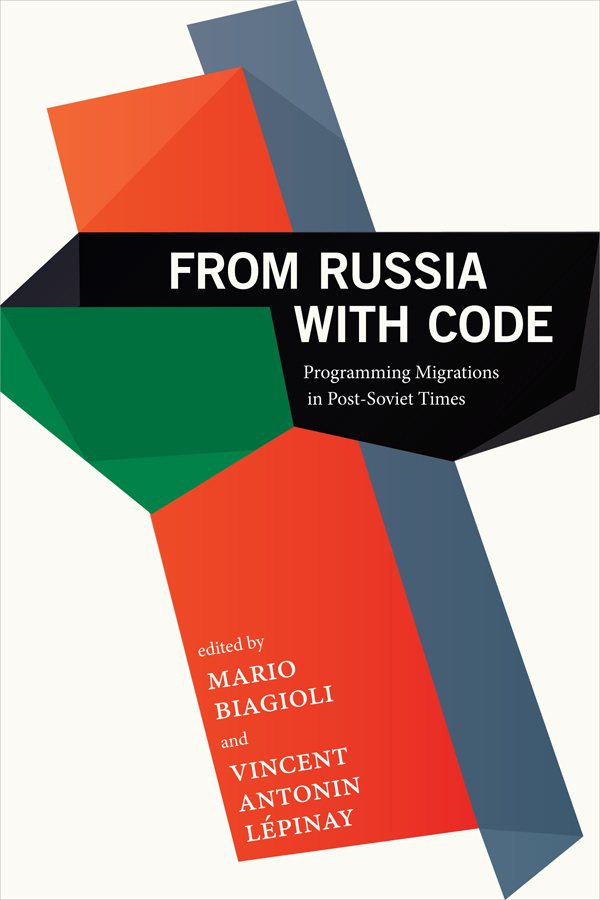 From Russia with Code is the product of a three-year research effort by an international team of scholars connected to the European University at Saint Petersburg (EUSP). It benefited from the patronage of two important figures: Bruno Latour, who pioneered science and technology studies (STS) in France and oversaw the creation of a Medialab at Sciences Po in Paris; and Oleg Kharkhodin, a Russian political scientist with a PhD from the University of California at Berkeley who served as EUSP’s rector during most of the duration of the study. Based on more than three hundred in-depth interviews conducted from 2013 through 2015, the research project also benefited from a rare window of opportunity offered by political conditions prevalent back then. Supported by a consortium of Western research institutions, it was partially funded by a grant from the Ministry of Education and Science of the Russian Federation for the study of high-skill brain migration. It could build on the solid foundation of EUSP, a private graduate institute whose academic independence is secured by an endowment fund that is one of the biggest in the country. The brain drain of IT specialists was obviously a matter of concern for Russian authorities, as surveys showed that in 2014 the emigration of Russian scientists and entrepreneurs was by a wide margin the highest since 1999. The movement was amplified after 2014 by Russia’s decision to annex the Crimean Peninsula and, in 2022, by its all-in war of aggression against Ukraine. Conditions for fieldwork-based studies and international research projects in Russia would certainly be different today. The book’s chapter on civic hackers illustrates how fast the ground has moved in the past ten years: most of the civic tech projects it describes were affiliated with the foundation created by Alexey Navalny, a Russian opposition leader who was detained in 2021 and died in a high-security prison in February 2024.
 My wife and I are moving to India along with our dog Kokoro, a shiba inu. Kokoro, aged 13 (a venerable age for a dog) has already been around, seen places. As a diplomat’s dog, he had to follow his keeper in his foreign assignments. He has never set foot, or paw, in the land of his ancestors, and doesn’t come with us when we travel to Japan. He remained in France when I was posted in Seoul—not because he was afraid of staying in a country where dog meat consumption is still not uncommon, but because I went to Seoul as a goose father, or gireogi appa, as the Koreans say to designate a breadwinner living away from wife and kids and sending money home for the sake of their children’s education. Kokoro did come to Vietnam during my most recent assignment. He and my wife had a hard time adapting to the local culture. Pets are increasingly becoming familiar in Vietnamese cities, but many people still regard dogs as uncouth and unclean, keeping them away from human contact. My wife couldn’t determine whether people waving or wagging finger at her and her dog to tell them to go away were being aggressive toward a foreigner or simply discriminatory toward a dog. She had to bring a stick when walking Kokoro in the neighborhood park in order to ward off stray dogs, and was once attacked and bruised by a mutt. Wherever we went, she joined local NGOs or Facebook groups mobilizing for animal protection and pet welfare.
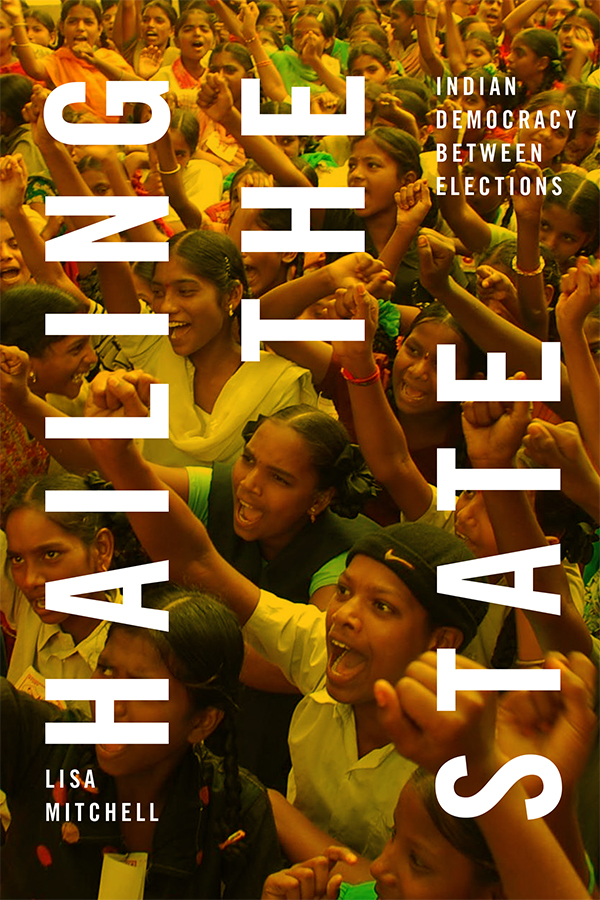 We are tirelessly reminded that India is “the world’s largest democracy.” In times of general elections, like the one taking place from 19th of April to 1st of June 2024, approximately 970 million people out of a population of 1.4 billion people are called to the ballot box in several phases to elect 543 members of the Lok Sabha, the lower house of India’s bicameral parliament. The election garners a lot of international attention. For some, it is the promise that democracy can flourish regardless of economic status or levels of income per head: India has been one of the poorest country in the world for much of the twentieth century, and yet has never reneged on its democratic pledge since independence in 1947. For others, it is the proof that unity in diversity is possible, and that nations divided along ethnic, religious, or regional lines can manage their differences in a peaceful and inclusive way. Still for others, India is not immune to the populist currents menacing democracies in the twenty-first century. For some observers, like political scientist Christophe Jaffrelot, India’s elections this year stand out for their undemocratic nature, and democracy is under threat in Narendra Modi’s India. And yet India is a functional democracy where citizens participate in voting at far higher rates than in the United States or Europe. Lisa Mitchell’s book Hailing the State draws our attention to what happens to (as the book’s subtitle says) “Indian democracy between elections.” Except during general election campaigns, foreign media’s coverage of Indian domestic politics is limited in scope and mostly concentrates on the ruling party’s exercise of power in New Delhi. Whether this year’s elections are free and fair will be considered as a test for Indian democracy. But as human rights activist G. Haragopal (quoted by the author) reminds us, “democracy doesn’t just means elections. Elections are only one part of democracy.” Elected officials have to be held accountable for their campaign promises; they have to listen to the grievances of their constituencies and find solutions to their local problems; they have to represent them and echo their concerns. When they don’t, people speak out.
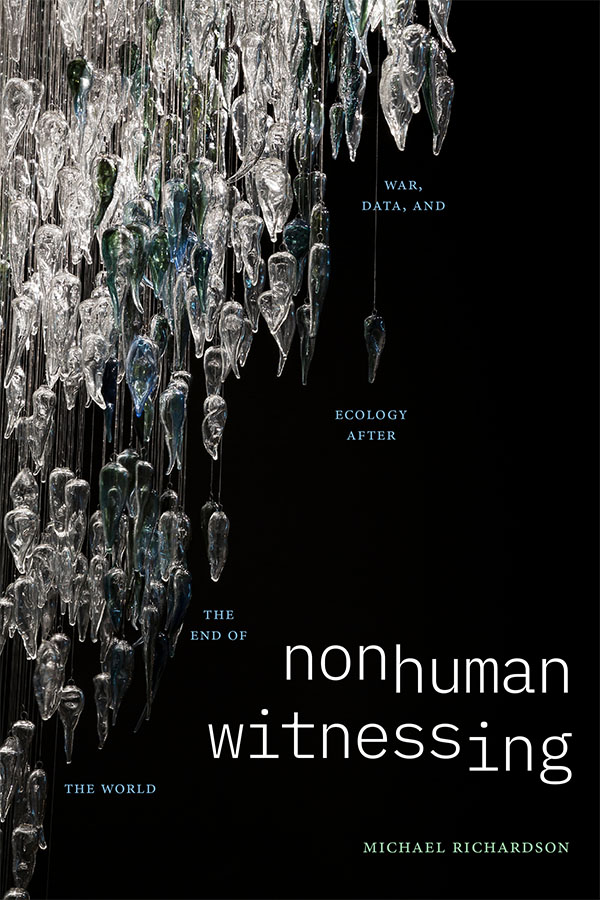 How to witness a drone strike? Who—or what—bears witness in the operations of targeted killings where the success of a mission appears as a few pixels on a screen? Can there be justice if there is no witness? How can we bring the other-than-human to testify as a subject granted with agency and knowledge? What happens to human responsibility when machines have taken control? Can nonhuman witnessing register forms of violence that are otherwise rendered invisible, such as algorithmic enclosure or anthropogenic climate change? These questions lead Michael Richardson to emphasize the role of the nonhuman in witnessing, and to highlight the relevance of this expanded conception of witnessing in the struggle for more just worlds. The “end of the world” he refers to in the book’s title has several meanings. The catastrophic crises in which we find ourselves—remote wars, technological hubris, and environmental devastation—are of a world-ending importance. Human witnessing is no longer up to the task for making sense, assigning responsibility, and seeking justice in the face of such challenges. As Richardson claims, “only through an embrace of nonhuman witnessing can we humans, if indeed we are still or ever were humans, reckon with the world-destroying crises of war, data, and ecology that now envelop us.” The end of the world is also a location: Michael Richardson writes from a perch at UNSW Sydney, where he co-directs the Media Futures Hub and Autonomous Media Lab. He opens his book by paying tribute to “the unceded sovereignty of the Bidjigal and Gadigal people of the Eora Nation” over the land that is now Sydney, and he draws inspiration from First Nations cosmogonies that grant rights and agency to nonhuman actors such as animals, plants, rocks, and rivers. “World-ending crises are all too familiar to First Nation people” who also teach us that humans and nonhumans can inhabit many different worlds and ecologies. The world that is ending before our eyes is a world where Man, as opposed to nonhumans, was “the unexamined subject of witnessing.” In its demise, we see the emergence of “a world of many worlds” composed of humans, nonhumans, and assemblages thereof.
 The relations between science and fiction have nowhere been any closer than on the planet Mars. The genre of science fiction literally began with imagining life on Mars; and some of its most popular entries nowadays are stories of how humans could settle on the red planet and make it more like the Earth. Planetary science originally took Mars as its object and tried to project onto Mars what scientists knew about the climate and geology on Earth. Now this interest for Martian affairs is coming back to Earth, as scientists are applying knowledge derived from studying Mars to the study of the Earth’s planetary dynamics. Mars’ image as a dying planet has been invoked to support competing, even antithetical views, of the fate of our world and its inhabitants: a glorious future of interplanetary expansion and space conquest, or a bleak fate of environmental devastation and human extinction. Science has not completely closed the issue on whether life has ever existed on Mars; but visions of extraterrestrial civilizations and space invaders have been superseded by narratives centered on mankind and its cosmic manifest destiny. This intimate relationship between science and fiction under the sign of Mars is now more than one century old, but shows no sign of abating. What is it in Mars that inflames people’s imagination from one generation to the next? Why has Mars attracted more interest than our closest satellite, the Moon, or than more distant planets in the solar system such as Venus or Saturn? Are there commonalities between the way our ancestors envisioned channels built by Martian civilizations and more recent visions of making Mars suitable for human sojourn? Will the detailed inventory of the Martian terrain brought back by satellite images and camera-equipped rovers put an end to our interest for the red planet, or will it rekindle a new space age with the colonization of Mars as its overarching goal? And how can our visions of planetary expansion avoid the pitfalls of colonial metaphors and Earth-based anthropocentrism?
 On July 9, 2011, South Sudan celebrated its independence as the world’s newest nation. One name considered for christening the country was the Kush Republic, after the Kingdom of Kush that ruled over part of Egypt until the 7th century BC. According to historians of antiquity, Kush was an African superpower and its influence extended to what is now called the Middle East. Placing the new nation under the sign of this prestigious ancestor was seen as particularly auspicious. But for many people the name Kush has been connected with the biblical character Cush, son of Ham and grandson of Noah in the Hebrew Bible, whose descendants include his son Nemrod and various biblical figures, including a wife of Moses referred to as “a Cushite woman.” A prophecy about Cush in Isaiah 18 speaks of “a people tall and smooth-skinned, a people feared far and wide, an aggressive nation of strange speech, whose land is divided by rivers” that will come to present gifts to God on Mount Zion after carrying them in papyrus boats over the water. For many South Sudanese at independence, Isaiah’s ancient prophecy directly applied to them, to the point the newly appointed President Salva Kiir chose Israel as one of his first destinations abroad. Churchgoers also read echoes of their fight for sovereignty and independence in various passages of the Bible. Christian southerners envisioned themselves as a chosen people destined for liberation, while Arabs and Muslim rulers in Khartoum were likened to oppressors in the biblical tradition of Babylon, Egypt, and the Philistines. John Garang, leader of the Sudan People’s Liberation Army/Movement (SPLA/M), was identified as a new Moses leading his people to the promised land. The fact that he left the reins of power to his second-in-command Salva Kiir before independence, just like Moses did with Joshua upon entering the land of Canaan, was interpreted as further accomplishment of the prophecy. Certainly God had a divine plan for the South Sudanese. For some Christian fundamentalists, the accomplishment of Isaiah’s prophecy was a sign of the imminent Second Coming of Jesus Christ that Isaiah identified as the Messiah, the king in the line of David who would establish an eternal reign upon the earth.
 The Duke Reader