
A review of Flexible Citizenship: The Cultural Logics of Transnationality, Aihwa Ong, Duke University Press, 1999.
 In Flexible Citizenship, Aihwa Ong describes how industrializing states in Southeast Asia and border-crossing citizens of Chinese descent respond differently to the challenge of globalization. Borrowing from the French philosopher Michel Foucault, she uses the term “regime” to refer to knowledge/power schemes that seek to normalize power relations. The three regimes that are considered are the regime of Chinese kinship and family, the regime of the nation-state, and the regime of the marketplace. These regimes and their associated logics of subject-making, of governmentality, and of capital accumulation, are characterized by the twin forces of flexibility and transnationality. The book explores the phenomena that are shaped by these two forces: mobile capital, business networks, migrations, media publics, zones of graduated sovereignty, and triumphant Asian discourses.
Flexibility and transnationality in the Chinese diaspora
According to Benedict Anderson, rephrasing a basic tenet of Foucaldian studies, “the dreams of racism actually have their origin in ideologies of class, rather than those of nation.” Not so in China: the embrace of the authoritarian Asian model of modernity, the crucial role of overseas Chinese in China’s development, and the encounter with global capitalism have reinvigorated racial consciousness and its implications for the integrity of the national territory. The resurgence of Chinese racial consciousness overseas, stimulated by the reemergence of China on the world stage and by the economic activities of diasporean Chinese, cannot be dissociated from the racial pride that feeds China’s imaginary community. Meanwhile, it is important that the term “Chinese” not be invoked in such ways as to become automatically and at all times the equivalent of the People’s Republic. There is an ever growing pluralization of Chinese identities, as illustrated by the figures of transnational subjects that form the focus of this study: the multiple-passport holder; the multicultural professional who is able to convert his social capital across borders; the business executive who can live anywhere in the world, provided it is near an airport; the “parachute kids” who are dropped in Southern California to acquire an American college education that is almost a requisite for global mobility.
These international managers and professionals adopt a market-driven view of citizenship: they seek legal residence and citizenship not necessarily in the states where they conduct their business but in places where their families can pursue their dreams. The art of flexibility, which is constrained by political and cultural boundaries, includes sending families and business abroad, as well as acquiring dual citizenship, second homes, overseas bank accounts, and new habits. Among overseas Chinese, cultural norms dictate the formation of translocal business networks, putting men in charge of mobility while women and children are the disciplinary subjects of familial regimes. These norms that generally valorize mobile masculinity and localized feminity shape strategies of flexible citizenship, gender division of labour, and relocation in different sites.
Sites of graduated sovereignty
Despite frequent assertions about the demise of the state, the issue of state action remains central when it comes to the rearrangements of global spaces and the restructuring of social and political relations. In Southeast Asia, governments seeking to accommodate corporate strategies of location have become flexible in their management of sovereignty, so that different production sites often become institutional domains that vary in their mix of legal protections, controls, and disciplinary regimes. As Asian postdevelopmental states seek to maintain their competitiveness and political stability, they are no longer interested in securing uniform regulatory authority over all their citizens. The low-wage export-processing zones, the illegal labour market, the aboriginal periphery, the refugee camp, the cyber corridor, and the growth triangle are the new sites of graduated sovereignty, whereby citizens in zones that are differently articulated to global production and financial circuits are subjected to different kinds of surveillance and in practice enjoy different sets of civil, political, and economic rights.
Aihwa Ong’s essay is historically dated: her narrative takes place between China’s repression of the Tiananmen mass protests of 1989 and the turbulence of the Asian financial crisis of 1997. It encompasses political milestones such as Hong Kong’s return to Chinese sovereignty and the demise of the Soeharto regime in Indonesia; cultural phenomena like the rise of Star TV and other pan-Asian medias or the birth of Asian studies in the curriculum of American universities; economic developments such as the burgeoning production networks of multinational firms in Southeast Asia or the increased visibility of Asian presence in California; and ideological debates such as Huntington’s thesis of a clash of civilizations or the promotion of Asian values as an alternative to the West’s hegemony. The emergence of China as an economic superpower provides the background to all these trends.
But the book doesn’t take into account other developments that have transformed the region’s cultural and political fabric since its date of publication. The economic centre of gravity of East Asia has moved further from Southeast Asia to the Chinese mainland. China now complements its economic power with a new political assertiveness. Nationalist claims have been given a new virulence through the development of internet discussion forums. Issues of transnationality and border crossing have taken a new salience since September 11: once valorized as the emergence of a cosmopolitan class, they now tend to be associated with risk and threats to national security. And the politics of race in the USA has been transformed and redefined by the election of a president who claims roots on three continents.
Fault lines in a multi-sited ethnography
Against this background, we can now detect some fault line in Aihwa Ong’s analysis. History is left out of the picture, and the snapshots captured by her analysis are situated into a kind of undefined present. Because she considers that most historians entertain the “grand orientalist legacy,” she rejects the historical method of building truth claims through a patient investigation of archival materials. Instead, she builds her ethnographic analysis on the most transient of sources: articles in popular magazines, casual conversations with random informants, TV images watched in hotel rooms, and media coverage of political debates.
She rejects the notion of fieldwork that, until recently, formed the hallmark of anthropology as a discipline, and substitutes to it the standard approach of cultural studies: a blind reverence to Foucault and his concept of power; a fixation with issues of race, class, and gender; and a romantic denunciation of capitalism that comes plastered with the label of political economy. Compared to the sophistication of her theoretical apparatus, her ethnographic knowledge base is rather thin, and her descriptive narrative uses the clichés found in the popular literature. Judge by the following quote: “On a palm-fringed hillock stands the Kuala Lumpur Hilton, where attendants in white suits and batik sarongs rush forward to greet well-groomed Malay executives wielding cellular phones as they step out of limousines. Women in silk baju kurong (the loose Malay tunic and sarong), dripping jewelry from their ears and necks, saunter in on their way to fancy receptions.”
Anthropology is a constantly evolving social science. While I acknowledge the positive aspects brought by new theoretical perspectives and innovative notions of what counts as ethnographic material, I don’t fully subscribe to the new directions that the discipline has taken, as exemplified by this book.
 The thesis of this book is quite simple. Korea in the 1980s and the 1990s was a post-traumatic society. The figure of the father had been shattered by its authoritarian leaders, who ended in a grotesque finale (see The President’s Last Bang, 2005, about the assassination of Park Chung-hee) or, in the case of Chun Doo-hwan, lacked hair (The President’s Barber, 2004). The double trauma of colonization by Japan and fratricide murder during the Korean War had deprived the Korean people of its identity. The sins of the fathers were visited upon the sons, and the Memories of Murder (2003) still lingered. The ritual murder of the father could not unite the community of brothers as they stood divided between North and South (Taegukgi: The Brotherhood of War, 2004), between sons of patriots and sons of collaborationists (Thomas Ahn Jung-geun, 2004). The films quoted above, all produced in the 2000s, could resolve the tensions and dilemma of overcoming trauma by representing them on screen. By contrast, films produced in the 1980s and 1990s could only repress the representation of the primal scene, generating frustration and anger. In psychoanalytic terms, this is the difference between “working through”, the positive engagement with trauma that can lead to its ultimate resolution, and “acting out” or compulsively repeating the past.
 orty years ago, Japanese psychiatrist Takeo Doi wrote The Anatomy of Dependence (or Amae no Kôzô, literally: “The Structure of Amae“). In this book, as in everyday Japanese language, amae refers to the feelings that all infants at the breast harbor for their mother–dependence, the desire to be passively loved, the unwillingness to be separated from the object of desire and cast into a world of “objective” reality. Takeo Doi’s basic premise was that Japanese men nurture these feelings well into their adult life, much more so than men raised in the West. For him, the concept of amae goes a long way in explaining the basic mentality of individuals and the organization of society in Japan.
 Two Bits is a failed anthropology project. It does not make it a bad book: it is well-written and informative, and I learned a lot about Free Software and Open Source by reading it. But it does not meet academic standards that one is to expect from a book published in an anthropology series. These standards, as I see them, pertain to the position of the anthropologist; the importance of fieldwork; the role of theory; the interpretation of facts; and the style of ethnographic writing. Let me elaborate on these five points.
 There are two types of anthropologists: those who have done fieldwork and those who haven’t. Only the former can fully bear the title of anthropologist. They have been ordained through the same rites of passage: they have been there, seen places, and have come back with the field notes and observations they can subsequently transform into a book. This marks their full entry into the profession: they will no longer have to return to the field for extended periods, as they can revisit the same material from a distance or through occasional visits. Bearing the talisman of their ordination, they can bar entry to the profession to those who haven’t been through the same ordeal. It doesn’t matter that these outsiders may have acquired an extensive knowledge of the anthropology literature or mastered the ropes and codes of the discipline: they are kept outside the tent, and forced to find other disciplinary affiliations. Many find refuge in literature departments, or under the broad canvas of cultural studies. There they may pursue their work in relatively unhindered ways, developing a critical dialogue with other, more patrolled disciplines in the social sciences. They may borrow from the toolbox and writing techniques of anthropologists to develop a view from afar, which they often turn to their own environment and surroundings in a kind of reflexive engagement. For all practical purposes, they are anthropologists in all but name.
 There was a change in the perception of literature’s social role in Japan between the Taishô and the Shôwa periods. According to Maruyama Masao, Japan’s foremost postwar critic, the average parent and teacher at the end of the Taishô era thought that “a middle school student who spent all his time reading novels was doing one of two things: avoiding his studies or corrupting his morals.” Progressively however, reading literature became a more respectable cultural pursuit, tolerated and even encouraged by schools and families. The social status of writers and the novel improved markedly: they became embodiments of the national spirit, and symbols of Japan’s entry into modernity. The possession of a national literature became a point of pride for citizens who wanted to see Japan ranked among the greatest nations of the world. A mass market for literary productions turned writing from an insecure occupation into a potential source of wealth, and transformed select authors into celebrities.
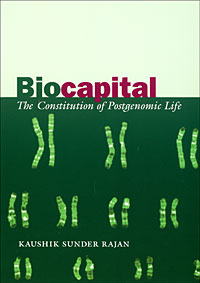 Biopolitics is a notion propounded by Michel Foucault whereby “life becomes the explicit center of political calculation.” The increasing use of this notion in the social sciences underscores a fundamental evolution. In the twenty-first century, as anticipated by Foucault, power over the biological lives of individuals and peoples has become a decisive component of political power, and control over one’s biology is becoming a central focus for political action. Used by the late Foucault in his lectures at the Collège de France, biopolitics and its associated concept, governmentality (“the conduct of conducts”), are now in the phase of constituting a whole new paradigm, a way to define what we are and what we do. Biopolitics and governmentality are now declined by many scholars who have proposed associated notions: “bare life” and the “state of exception” (Giorgio Agamben), “multitude” and “empire” (Michael Hardt and Antonio Negri), “biological citizenship” and “the politics of life itself” (Nikolas Rose), “biopolitical assemblages” and “graduated sovereignty” (Aihwa Ong), “cyborg” and “posthumanities” (Donna Haraway), etc. This flowering of conceptualizations is often associated with a critique of neoliberalism as the dominant form of globalized governmentality, and to a renewal of Marxist studies that revisit classical notions (surplus value, commodity fetishism, alienation of labor…) in light of new developments.
 Cultures from the South Pacific have provided anthropologists with a rich array of words and concepts: “mana” (power, charisma), “hau” (life’s energy), “tapu” (taboo) and its antonym “noa”, “hara” (a violation of tapu) and “wairua” (spirit) all originate in the languages of Polynesian cultures. These terms first came to the attention of western anthropologists through the reports of missionaries in the Pacific islands. Armchair theorists like James Frazer or Marcel Mauss used the observations of the first ethnographers to lay the foundation of their discipline. Their theories were built on the idea that it is possible to isolate cultural traits from their social context and bundle them together to draw comparisons and infer anthropological laws. Surveying the practice of gift-giving, Marcel Mauss famously came to the conclusion that it involved belief in a force binding the receiver and giver, which he labeled “hau” after the word used by the Māori. Such concepts derive their theoretical potential precisely from the lack of equivalence in common language. But as Claude Levi-Strauss later argued, the indiscriminate use of indigenous categories hampers the analysis of symbolic systems, which he proposed to process through the description of unconscious structures. Anthropological words have nonetheless entered common language, from totem to taboo and to tattoo, while anthropologists still use words like mana and hau as specialized vocabulary in their profession.
 So you’ve picked up this book because you think Muslim fashion is the next new thing. You’ve made a good choice: this book is totally made for you. It is a book that will teach you things, give you ideas, and make you think. Don’t expect tips on what to wear and how to wear it, though: this you will have to decide for yourself. If who you are is what you wear, then you cannot delegate this task to a third party. But reading Muslim Fashion will help you make your own choices and dress on your own terms. Maybe you won’t feel the same after reading it. Maybe your image will look different into the mirror. This is what they call a transformative book: it will make you see things differently. This is the good thing about reading books in general: you can turn them to your own use. So if this book helps you dress smarter, so be it. But it may also help you think about what you wear and why you wear it. If your style of dress makes a statement, be sure it includes the word fashion in it.
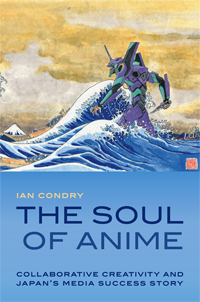 In my opinion, The Soul of Anime should be read in business schools. It provides a wonderful case study of a particular industry, and it can teach management practitioners many things about globalization, creative industries, and flexible labor. Unlike what is stated in the book’s subtitle however, the story of Japanese anime is not a success story. As Ian Condry states in the introduction, “in terms of economic success, anime seems more of a cautionary tale than a model of entrepreneurial innovation.” Judged from a management perspective, the anime industry is in many ways a case of failure: a failure to globalize, a failure to create value on a sustained basis, and a failure on the side of market participants to reap profits and secure employment. But management can learn from failures as much than it can learn from success stories. What’s more, the anthropological perspective adopted by the author points towards a different theory of value creation: for cultural content industries, value is not synonymous with profits, and the relation between producers and consumers cannot be reduced to monetary transactions and economic self-interest. This is the intuition that the founders of anthropology developed when they analyzed trading relations among primitive tribes in terms of gift-giving and reciprocity; and this is the conclusion that this modern anthropology book reaches when it describes the popular success of this particular case of industrial failure.
 The Duke Reader