
Disability Studies and Crip Theory

A review of Crip Genealogies, edited by Mel Y. Chen, Alison Kafer, Eunjung Kim, and Julie Avril Minich, Duke University Press, 2023.

Crip GenealogiesCrip Genealogies is an anthology of texts that claim the pejorative word crip as a moniker to distance themselves from earlier contributions in the field of disability studies. Crip is a diminutive for “cripple” and is used as a slur to designate people with visible forms of disabilities, mostly physical and mobility impairments. It is also a word associated with violence and ghetto culture, as the Crips are one of the largest and most violent associations of street gangs in Los Angeles. Reclaiming crip as a definition of self-identity is a way to return the stigma against the verbal offenders and to express pride in being a member of the disability community. In the academic world, it is also a way to carve a niche for critical disability studies and to express solidarity with non-normative forms of living that may also include queerness and ethnic pride. Symptomatic of this convergence between academic currents and social movements is the proliferation of acronyms to designate minoritarian identities that may be based on sexual orientation and gender identity (LGBTQ+), race and ethnicity (BIPOC, pronounced “bye-pock,” which stands for Black, Indigenous, and people of color), mental health and physical disability (MMINDS, an acronym which stands for Mad, “mentally ill,” neurodivergent, disabled, survivor), or an intersection thereof (SDQTBIPOC, which stands for sick and disabled, queer and trans non-white persons). Most contributors to Crip Genealogies are part of this extensive community and define themselves as queer persons of color, diversely abled, and straddling the line between scholarship and activism. The publication is meant to provide foundational basis for crip theory as a discipline opposed to the apolitical and normative aspects of disability studies and that is “disrupting the established histories and imagined futures of the field.”

Crip ancestors

A genealogy is a history designed to shed light on a person’s origins or a family’s ancestral line. It involves forefathers, ancestors, elders, lineages, progenitors, siblings, cousins, relatives, and descendance. It also build upon myths of origin, narratives of displacement, acts of foundation, coming-of-age stories, acknowledgements of cultural transmission and biological inheritance. In cultural term, a genealogy may include schools of thought, intellectual traditions, disciplinary boundaries, seminal texts, and anthologies or primers. Part of the motivation of many contributors to this volume is to palliate the lack of ancestors and role models they can turn to when they try to ground their scholarly and activist practices. “Where are our queer elders?”, ponder two activists during a panel discussion in which they are asked to name their “crip ancestors.” The lack of obvious answers (beyond the figures of Frida Kahlo, Audre Lorde, and Gloria Anzaldúa) leads them to reflect on “the conditions that will allow disabled QTBIPOC elderhood to flourish,” some of which having to do with the avoidance of premature death, social exhaustion, cultivated marginality, and academic bickering. But the main responsibility for the invisibility of the crip queer-of-color subject falls on the cultivated whiteness of disability studies as an academic discipline and of disability rights as a social movement. According to Sami Schalk, “the early disability rights movement was often very white, middle-class, and single-issue focused.” Leslie Frye considers “how investments in whiteness that underwrite US disability rights have been obscured and where the traces of this movement’s racial legacy lie.” Investments in “making the cripple visible” led to the invisibilization of race, gender, sexuality, and all the other axes of individual or collective identity. The editor’s intention is therefore to underscore “not only the whiteness of the field but also the way in which it both stays white and perpetuates whiteness.” 

Histories of social movements often involve a succession of “waves” or the passing of the baton from one cause to the other. One refers to “third-wave feminism” or the “third wave of the civil rights movement” to describe the succession of challenges that feminism or the fight against racial discrimination had to face, in a linear progression that goes from oppression and alienation to self-determination and enlightenment. Likewise, the fight for disability rights seems like the logical next step once “we’ve done race/gender/sexuality.” The temporality of disability studies charts a progression from self-awareness and nascent identity to the mobilization for equal access and equal treatment, then the affirmation of pride and visibility, culminating in the disability justice movement and crip theory. It is believed that recognizing disability history will inspire persons with disabilities to feel a greater sense of pride, reduce harassment and bullying, and help keep students with disabilities in schools or universities. The authors reject such genealogies built around change, progress, and modernity. They refuse to engage in celebratory commemorations of disabled people’s advancement punctuated by legislative victories, from the Rehabilitation Act of 1973 to the Education for All Handicapped Children Act of 1975, the Americans with Disabilities Act in 1990, and the Affordable Care Act of 2010. They are critical of the term “genealogy” itself, which creates “the illusion of descent as a line,” or of metaphors of genealogical trees, epistemological roots, native soil, and disciplinary fields, which inscribe “colonial temporalities and spatialities into our conceptions of scholarship.” ”Even the rhizome can be colonial,” they note in the introduction. Their ambition is to build “epistemologies of radicalized disability that do not comply with compulsory improvement, personal initiative, and change on the way to a good life.” The mixed genealogies they call forth need to “stay with the trouble” and nurture crip theory’s revolutionary potential: “crip disrupts convention and undermines social norms.” Not unlike what the deinstitutionalization movement did for people locked up in hospital wards and collective homes, crip genealogies deconstruct all aspects of institutions. 

A new wave of deinstitutionalization

Deinstitutionalization is a political and a social process which provides for the shift from institutional care and other isolating and segregating settings to independent living. The Independent Living philosophy is based on the assumption that people with disabilities should have the same civil rights, options, and control over choices in their own lives, as do people without disabilities. Crip Genealogies advocates a new wave of deinstitutionalization. The institutions under consideration are mostly academic: the authors grapple with the place of disability studies, and of crip theory as a nascent discipline, within the space of the North American university. The university’s dependency on diversity and inclusiveness is something both to be valued and criticized: according to Mel Y. Chen, “disability can confer a selective entitlement, or reveal an interior hierarchization.” Some forms of behaviors or modes of teaching and learning are valued over others: “in the university, agitated gesture—whether in the form of politically legible protest, aggressive physicality, or movement (including stillness or slowness) inopportune to class habitus—has no proper home, save perhaps in the possibilities of dance training or intramural sport.” For scholars coming from abroad, such as Eunjung Kim, “the institutional legitimacy in US academia came with a price, as it valued certain kinds of writing and thinking over others.” The unmarked human who embodies all scholarly virtues and properties continues to be “white, non disabled, masculine, ‘functionally’ social, and creditable.” “Academia, ableist to its core, rejects disability in its love for abilities.” The result, for scholars who don’t fit, is a feeling that they don’t really belong. This feeling is shared by the four editors: ”as the four of us worked together, we all confessed feelings of inadequacy to each other.” The “academic impostor syndrome” noted by Julie Avril Minich combines with a “disability impostor syndrome”: “I know I am not the only disability scholar to feel, constantly and simultaneously, both not academic enough and not crip enough.” But in the end, writes Alison Kafer, “we owe our loyalties to people, not to institutions.”

The authors are also critical of the disability rights movement as it has been institutionalized. Focusing its demands on self-determination, legal rights, and non-discrimination, the disability rights movement led to the advancement of disabled people who were considered as “good citizens” (white, heterosexual, and affluent) at the expense of others (non-white, queer, and poor). Nor did it question the fact that belonging to the working class or to an ethnic minority are factors that promote disabilities: precariousness, which affects a large part of these categories, is one of the main causes of disability because it comes with degraded, even dangerous living conditions and limited access to healthcare. People of color and queer people of color are often confronted with stigmatizing diagnoses of disability, such as “mental retardation” or “gender identity disorder,” whereas white people tend to receive less negatively connoted diagnoses, such as “attention-deficit hyperactivity disorder” (ADHD) or “gender dysphoria.” Historically, pejorative labels were often used by public authorities with a view to disqualifying immigrants, African-Americans, the poor, but also women whose “debility” was a major argument for sterilization (including white women whose behavior corrupted whiteness). This explains why minority rights movements have often perceived the need to distance themselves from disability in order to avoid being further stigmatized, involuntarily contributing to making queer people-of-color with disabilities invisible (this is by no means general: Sami Schalk claims the Black Panther Party has been an early supporter of disability rights.) It is this invisibilization that the disability justice movement tries to repair, by taking a close interest in intersectionality and also in mental disorders, which are also marginalized by the disability rights movement. For Tari Young-Jung Na, writing from the perspective of South Korea, the deinstitutionalization movement must expand into a movement for the liberation of nonnormative beings in society, including transgender people, sex workers, people living with HIV/AIDS, and other victims of “incarceration without walls.”

Decentering disability

The editors of Crip Genealogies made a laudable effort to include perspectives coming from outside the United States. The anthology contains chapters reflecting viewpoints or evidence from South Korea, Palestine, Vietnam, Kenya, the Czech Republic, the Philippines, and Australia. One of the contribution was written in Korean and translated into English, thereby contributing to a distancing from Anglosphere imperialism, although the editors acknowledge they included too few references in languages other than English in their bibliography. The article from South Korea indeed shows that modernity is not always synonymous with the West: in Korea, it came from neighboring Japan, both during the imperial occupation with the isolation of Hansen’s disease patients, and in more recent years with the import of the Independent Living movement through seminars and training. For Jasbir Puar, settler colonialism is very much alive in the West Bank, where a “number of Palestinians are maimed by Israel on a daily basis” and a policy of extreme spatial regulation keeps an entire population in a debilitating chokehold.  The analysis of a dance film, Rhizophora, featuring young patients affected by Agent Orange in a Vietnam Friendship Village, demonstrates “the possibility of queering and cripping chemical kinships that exist as alternatives to normative familial structures.” Faith Njahîra, who lives with muscular dystrophy, discovered late in childhood that she was disabled: growing up in Kenya, she experienced no markers of difference during primary school except remarks about her “walking style” and invocation of “chest problems” to limit participation in physical education. Kateřina Kolářová, who positions herself as a feminist, queer and crip scholar, reminds us that whiteness takes a different value in postsocialist Eastern Europe, where it is reproduced in conjunction with the pathologization of Roma people. Sony Coráñez Bolton uses the concept of “supercrip,” disabled individuals believed to have superior abilities to compensate their impairment, to analyze a novel written in Spanish by mestizo Filipino José Reyes. Mel Y. Chen describes a site-specific work of art by Indigenous Australian artist Fiona Foley installed in the Queensland State Library in Brisbane. Coming back to America, ethnic minority perspectives are offered on Asian Americans whose illness punctuates the myth of the”model minority”; an experimental zine project by a self-identified “queer crip Chicanx/Tejanx single mother” in South Texas; and the activism of the Black Panther Party as a precursor to today’s disability justice movement.

Assembling this edited volume in times of COVID-19 took place under the shadow of home confinement, city lock-downs, overcrowded hospitals, mandated teleworking, and Zoom conferences. For scholars critically engaged with disability studies, there are several lessons to draw from this pandemic. Because COVID-19 is associated with old age, fragility of the immune system, respiratory problems, or other health concerns, there is a worrying tendency to treat the lives of those most at risk as less valuable, as more or less expendable. Triage in hospitals became the most terrifying illustration of the hierarchy of human lives, between lives worthy of living and lives left to die. For Achille Mbembe, to kill or to let live, or “to make live and let die,” are the principal attributes of the sovereign state. As disability studies have shown, many disabled persons already experience a kind of social death. The coronavirus crisis has only provided an infallible justification for this death, making it more physical than social. At the same time, the pandemic situation and the imposed lockdowns made whole populations experience what is in fact only a banal fact of life or a permanent condition for millions of people living with disabilities. Being condemned to stay at home because public space is not accessible, facing shortages of beds and medical equipment in hospitals overloaded with patients, having to rely on social media to maintain a network of friends and relatives: all these situations sound familiar for a part of the population overlooked by public policies. As Jasbir Puar notes, “what has been widely fetishized as ‘pandemic time’ is actually what ‘crip time’ has always been—never on time, waiting out time, needing more time, unable to keep up with time, forced time at home, too long a waiting time.” The rapid development of remote working and videoconference, which has long been requested by people with disabilities to facilitate their participation in the economy and society, shows that a previously unsurmountable challenge becomes suddenly feasible once it is perceived as the only solution to continue to run the country’s economy and allow able-bodied people to carry out their activities. The authors remind us that “texting, now used by everyone, was created as assistive technology for Deaf people.” Likewise, videoconferencing can be considered as a crip technology.

Pertinence and impertinence

I realize my review may fall within “the reductive and extractive citational practices” that the authors criticize in their introduction. Why do I take an interest in crip theory, and why do I think this intellectual endeavor needs to be known beyond a small circle of social activists and academic pundits? Simply put, because of the pertinence of the question it raises, but also on behalf of the impertinence with which it addresses issues of pressing concern. The pertinence, or relevance, of crip theory seems obvious. The question of gender and sexuality, of race and identity, of minorities and rights, are at the center of contemporary debates. As Crip Genealogies makes it clear, the terms “queer” or “crip” are not limited to questions of gender or disability: from the moment we deviate from the norm, we are no longer really “straight” or “fit” even if we are otherwise heterosexual, able-bodied, or white. Disability justice activists, claiming the impossibility to achieve normality, suggest imagining new social configurations, new solidarity movements, a new public sphere which would not base participation in social life on abilities or capacities. The impertinence, or irreverence, of crip theory is just as remarkable. Crip Genealogies is relatively measured in this respect. To the more radically inclined, I recommend the reading of Testo Junkie by the transgender activist and philosopher Paul B. Preciado. Subtitled Sex, Drugs, and Biopolitics in the Pharmacopornographic Era in its English edition, it chronicles the author’s multifaceted and liminal experience taking testosterone and other pharmaceutical drugs as a political and performative act in order to undo all normative categories of gender, health, and ableness. Despite the obvious provocations, there can be something stimulating and positive about a crip theory approach. It allows us to desacralize, if need be, the discourse on disability and ableness, to remind us of its human character – not halfway but through and through. Disability studies share with ableism a number of implicit, unquestioned assumptions about what is “right” or what is “normal.” Crip theory makes fun of these conveniences, it jostles them cheerfully and not without humor. Again, this will not be to everyone’s taste. But that’s no reason not to listen to what crip theory has to tell us about human beings in their embodied and racialized selves, the way gender and ethnicity shape who we are, the forms of injustice that exist in relation to people who do not recognize themselves in the heteronormativity and whiteness inherent in our culture. Crip theory is here to stay, and should be engaged with a positive and open mind.
The Faculty of Climate & Media Studies

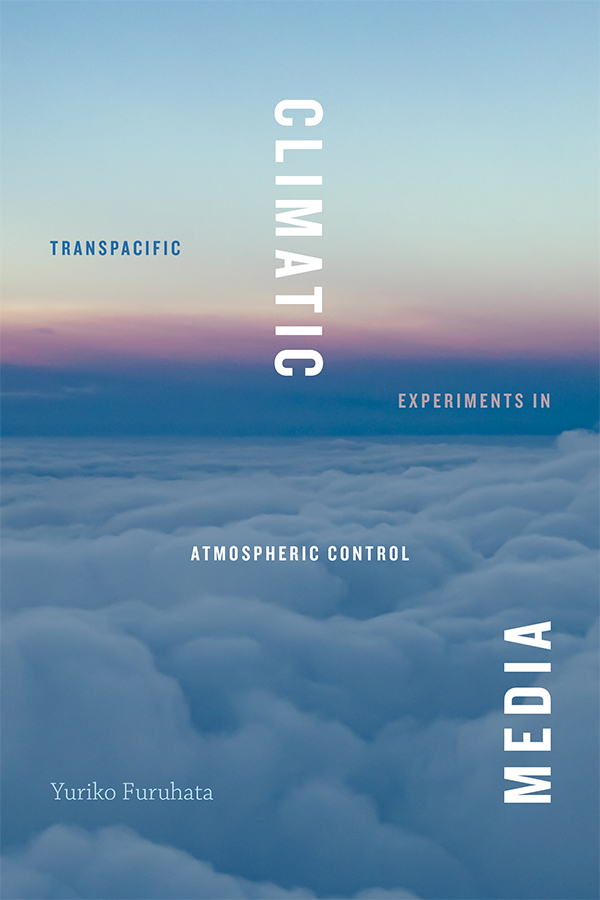
A review of Climatic Media: Transpacific Experiments in Atmospheric Control, Yuriko Furuhata, Duke University Press, 2022.

Climatic MediaMy Japanese alma mater, Keio University at Shonan Fujisawa, has a Faculty of Environment & Information. Next to it stands a Graduate School of Media & Governance. Putting two distant words together, like “environment” and “information” or “media” and governance”, creates new perspectives and innovative research questions while breaking boundaries between existing disciplines. Yuriko Furuhata uses the same approach in Climatic Media. What is climatic media? How did media become articulated with climate in the specific context of Japan? In what sense can we consider the climate, and atmospheric phenomena, as media? What new research questions arise when we put the two words “climate” and “media” together? Which disciplines are summoned, and how are they transformed by the combination of climate and media? How does climatic media relate to Watsuji Tetsurō’s concept of Fūdo, to take the title of his 1935 book translated as Climate and Culture? Can we use certain media to manage the climate, to predict and to control it? What is the genealogy of these technologies of atmospheric control, and can we trace them back to previous projects of territorial expansion and imperial hegemony? If we call “thermostatic desire” the desire to control both interior and exterior atmospheres, how does this desire “scale up” from air-conditioned rooms to smart buildings, district cooling systems, domed cities, geoengineering initiatives, orbital space colonies, and terraformed planets? In what sense can we say that air conditioning is people conditioning? These are some of the questions that Yuriko Furuhata raises in her book, which I found extremely stimulating. My review won’t provide a summary of the book’s chapters or an assessment of its contribution to the field of media studies, but will rather convey a personal journey made through Climatic Media and, indirectly, back to my formative years at Keio SFC.
The many meanings of media

One of the difficulty I had with the book, and also one of the lessons I learned from it, is the multiplicity of meanings associated with the term media. According to the burgeoning field of media studies, media can be many things. In its most widely accepted meaning, media are the communication tools used to store and deliver information or data: we may therefore speak of mass media, the print media, media broadcasting, digital media, or social media. In this limited sense, climatic media is what makes atmospheric variations visible and legible through the mediation of various instruments of data visualization: thermal imaging, photographs, charts, diagrams, computer simulations, etc. Putting the climate in media format can serve scientific, informational, political, or artistic purposes. In the arts, media designates the material and tools used by an artist, composer or designer to create a work of art. Climatic Media borrows many of its examples from the arts, and documents attempts by Japanese artists to use fog, fumes, mist, and air as a material for site-specific aerial sculptures or light projection. Architecture, in particular, can be identified as an art or a discipline deeply entangled in climatic media. In architecture, media is what mediates indoor and outdoor climate: a door or a wall can therefore be considered as media of atmospheric control. The meaning of media can also be expanded to include the materiality of elements that condition our milieu. Elemental media include the chemical components of air, indoor or outdoor air temperature and humidity, atmospheric pollution, extreme weather phenomena, the planetary atmosphere, and other natural elements of climate. In a more general meaning, media are a means toward an end. Climate can be manipulated to particular effect, which may be peaceful or war-related. Climate-controlled spheres or air-conditioned bubbles can be created, using technologies that mediate and shape what counts as a habitable environment. In this broadest sense, climatic media are technologies of government, securing a livable environment for certain populations while excluding others.  

The author chooses to concentrate on architecture as climatic media, foregrounding the imperial roots and Cold War legacy of Japanese architecture through the work of Tange Lab architects, including those associated with the internationally renowned postwar architectural movement called Metabolism, with Kurokawa Kishō and Isozaki Arata as key figures. In the past decades, Japanese architects and buildings have achieved iconic status and became known to a wide public. Even casual visitors to Tokyo are familiar with the Yoyogi National Gymnasium built by Tange Kenzō for the 1964 Tokyo Olympics, as well as the more recent National Art Center designed by Kurokawa Kishō in Roppongi. With Tange Lab as their training ground, Metabolist architects and designers believed that cities and buildings are not static entities, but are ever-changing organisms with a “metabolism.” Postwar structures that accommodated population growth were thought to have a limited lifespan and should be designed and built to be replaced. The greatest concentration of their work was to be found at the 1970 World Exposition in Osaka where Tange was responsible for master-planning the whole site whilst Kurokawa and Isozaki designed pavilions. It was also Tange Lab and Metabolism architects (some of whom were ardent “futurologists”) who helped bring cybernetics and systems theory into urban design in Japan. After the 1973 oil crisis, the Metabolists turned their attention away from Japan and toward North Africa and the Middle East, which (if we follow Yuriko Furuhata) made them complicit with the oil economy that stands as the main threat to our planetary survival in the twenty-first century.

From Japanese Empire to Osaka Expo ’70

Many of the architectural and artistic experiments described in Climatic Media are grounded in the work of the physicist Nakaya Ukichirō, known as the inventor of the world’s first artificial snow crystal. Nakaya spent his whole life studying ice, snow, and frost formations. The Institute of Low Temperature Science he established at Hokkaidō University in the 1930s helped advance research on cryospheric and atmospheric science. It was also deeply entangled in the Japanese Empire’s territorial conquests and war effort. Nakaya and his students collaborated with the research division of the South Manchurian Railway Company (“Japan’s first think tank”) in studying causes and mechanisms of frost heaving that damaged the railroad every winter in Manchuria. They helped Japanese agrarian settlers to build houses adapted to the extreme cold climate of the region, and designed ways to operate landing runways and military airplanes in frosty conditions. Nakaya Ukichirō’s ideas were later mobilized in a Cold War context, when polar regions and extreme atmospheric conditions became at stake in the geopolitical confrontation between the United States and its allies on one side and the Communist bloc on the other. Plans to weaponize the climate included battleground weather modifications such as creating hurricanes or heavy rain through cloud seeding and other chemical interventions, as well as the direct use of atmospheric weapons such as tear gas and Agent Orange during the Vietnam War. The expert knowledge of cold climates and atmospheric conditions accumulated at the Hokkaidō Institute also found civilian applications. They helped Asada Takashi, an architect at Tange Lab, to design a proto-capsule housing for the Japanese explorers and researchers at the Shōwa Station in the Antarctic in the 1950s. Tange Kenzō himself, who had aligned with the expansionist agenda of the Japanese Empire in his youth, helped design The Arctic City in 1971, a futurist proposal by Frei Otto and Ewald Bubner to house 40,000 people under a two kilometer dome in the Arctic Circle. Capsule housing and domed cities were also nurtured by dreams of extra-orbital stations and space conquest that survived the Cold War era. More down to earth, the idea of recycling snow as a source of refrigeration is now attracting investors and tech companies to build data centers in frosty regions such as Iceland or the northern provinces of Canada.

There was an even more direct connection between the physicist Nakaya Ukichirō and the architects and artists who gathered at Expo ’70 in Osaka. His daughter, Nakaya Fujiko, was a pioneer in atmospheric art and fog sculpture. She was the Tokyo representative of the American art collective Experiments in Art and Technology (E.A.T.), and was invited by Billy Klüver to create the world’s first water-based artificial fog sculpture for the Pepsi Pavilion at Expo ’70. Yuriko Furuhata argues that father and daughter were not bound solely by blood ties and a shared interest in meteorological phenomena: it is the practice of atmospheric control that binds the scientist and the artist. Nakaya Ukichirō himself was no stranger to artistic creation: he was an accomplished sumi-e artist, and documented his studies of summer fog or winter snow with ink paintings, close-up photographs, and educational films. In turn, his daughter incorporated science into her creative process, and sought advice of former students of her father to create the fog sculpture displayed at Osaka’s exposition. Nakaya Fujiko’s fog sculpture therefore sits at the point of convergence between two genealogical threads which, together, define what is at stake in climatic media: visualizing climate and engineering the atmosphere. Enveloping Pepsi Pavilion’s dome with artificial fog was meant to turn the pavilion into an interactive “living responsive environment” responding to ambient factors such as wind, temperature, humidity, and light. The machines used to make artificial fog found practical applications beyond the realm of art. Engineers use the same technology today to cool down data centers and cloud computing service infrastructure. Artificial mist is also a familiar sight in urban centers on hot summer days, where small drops of water are projected to create an artificial fog that cools down the air. Expo ’70 also served as testing ground for other urban innovations. Futurologists and technocrats paired with architects and engineers to produce a cybernetic model of the late-twentieth-century city, with its network of data-capturing sensors and its control room filled with state-of-the-art Japanese computers. This techno-utopian vision of connectivity that was put on display at Japan’s World Exposition in 1970 can be seen as a precursor of modern “smart cities” and their networked systems of urban surveillance and social conditioning. Today, many of these technologies of mass surveillance have become mundane and prevalent, but when they first entered the streets of metropoles in the late 1960s they were seen as the creative experiments of artists, architects, and futurologists.

Genealogies of the present

Instead of presenting a linear history of climatic media or splitting her subject into neatly divided themes, Yuriko Furuhata follows a genealogical method of investigation and presentation, which “reads the past as the historical a priori of the present we live in.” She starts each chapter with a modern example of atmospheric control and then goes back and forth in time to find antecedents of the same “thermostatic desire” to control the atmosphere, with Expo ’70 as a point of concentration and the Japanese Empire as a concealed Urtext. In chapter one, city sidewalks refreshed by mist-spraying devices and data centers cooled by similar technologies lead the author to describe the fog sculpture of Nakaya Fujiko at the Pepsi Pavilion and to trace her connexion with the work of her father during wartime, which in turn found direct applications in the futurist works of architects gathered at Tange Lab. In chapter two, the rise of hyperlocalized weather predictions using artificial intelligence and smart air-conditioning systems that individually curate air flows are connected to early attempts to numerically predict the weather and to the history of futurology in Japan, with early visions of the networked society that materialized in the computerized control center of the world’s fair. Amazon’s headquarters in Seattle and its CEO’s dream of colonizing space in chapter three’s opening echo former greenhouse architectures and imperial projects of a “living sphere” (Lebensraum), with Tange Lab as a source of innovative design that connects Japan’s imperial past to modern urban planning and to utopian dome cities in the Arctic or in outer space. In chapter four, the author takes the Metabolist architects at their own word, reading their defining metaphor of metabolism through the lenses of the product life cycle and the Marxist concept of the “metabolic rift” between humans and the natural environment. Kurokawa Kishō’s holistic vision of renewable capsule housing and his early engagement with systems theory are contradicted by his use of plastics as a nonrecyclable material and by his taste for the expression “Spaceship Earth,” which foregrounds modern plans to geoengineer the Earth’s climate through technological interventions. In chapter five, modern methods of atmospheric control, from tear gas to cloud computing and smart objects, are tributary to a genealogy of urban surveillance that shows the dual use of technologies of social control, turning artistic experiments into dystopian futures.

The expression “dual-use technologies” usually refers to technologies with applications in both the military and the civilian sectors. Here, they not only connect defense industries and peaceful usage, but also imperialist rule and artistic creation. Several words and expressions straddle the border between war-making and the arts: military strategists speak of theater, engagement, or war and peace without making direct reference to Shakespeare, Jean-Paul Sartre, or Leon Tolstoy. Similarly, the term “avant-garde” used by art critics derives from military vocabulary. Furuhata proposes to expand this list of dual-use terms to “site-specificity”, originally used for artworks created to exist in a certain place, and to “climatic media” in general, describing how projects to “weaponize the weather” found applications in civilian times or how avant-garde artistic experiments were the harbinger of modern security technologies. Climatic control also borrows some of its metaphors from agriculture: cloud seeding, harvesting the weather, cultivating rain, or building greenhouses point to underlying epistemic assumptions and cultural expectations associated with controlling the atmosphere. The “cloud” now used for computer data storage is not just a metaphor: cooling data centers involves the same air-conditioning nozzles and fog machines first used by artists at the Osaka fair. Computer network systems are atmospheric in the literal sense of being carried by radio waves in the air. The cybernetic model used to regulate a house’s temperature is applied to the fiction of controlling the planet’s imaginary thermostat through feedback loops. The technical operations carried out by climatic media are both material and symbolic. Urban infrastructures such as energy grids, fiber-optic cables, air ducts, water pipes, and computer systems all rely on technologies that regulate temperature and mitigate the effects of outdoor weather. In times of planetary-scale climate change caused by human activity, it is useful to remember that operations of climatic control at one scale all have consequences at another scale: the Earth is not a closed system, and climatic media are intrinsically connected with global issues of environmental pollution, greenhouse gas emissions, and waste accumulation.

Back to SFC

Reading this book reminded me of the intellectual atmosphere I found at Keio University’s Shonan Fujisawa Campus (Keio SFC) when I first came to Japan as a teacher of French studies in the early 1990s, from 1992 to 1994. Established only two years before, SFC at that time was a hotbed of technological innovation and pedagogical breakthrough. Sometimes considered as the “birthplace of the Japanese internet,” it had chosen to equip its students and faculty with state-of-the-art technology. The ubiquitous classroom computers were not the familiar IBM PC or Apple Macintosh, but turbocharged Sun SPARCstations and NeXt computers. Learning to code was a requisite, even for students specializing in the humanities. We wrote all of our documents using LaTeX, were early users of email software, and surfed the web using the Mosaic web browser upon its release in 1993. But technology was only part of the equation. SFC’s ambition was to embark a young generation of Japanese students into a life-changing experience, and to equip them with the skills and mindset for navigating the information society and its lived environment. As a junior faculty member, I was also allowed to follow courses and seminars to improve my Japanese language skills and share the students’ experience. Expanding my French upbringing and undergraduate studies in economics, the seminars and writings of Takenaka Heizo, Usui Makoto, and Uno Kimio introduced me to emergent research topics, from industrial metabolism to green accounting and input-output tables of economic development. Due to lack of personal discipline, but also because of the interdisciplinary nature of these ideas, I failed to translate all these burgeoning ideas into a PhD after I left Japan. But the knowledge acquired at Keio SFC equipped me with life-long skills and interests, and I have lived since them off the intellectual capital accumulated throughout these two years of teaching and auditing classes. I haven’t learned anything really new since then. In my view, Keio SFC at that time conveyed the vibrancy, intellectual excitement, and creativity a former generation of Japanese architects and social scientists must have experienced at Tange Lab or through the planning of Osaka Expo’ 70. Whether Keio SFC succeeded in steering Japan into the direction it set for itself is another debate. In retrospect, I could have been more attentive to the dark clouds gathering on the horizon: the bubble economy had left Japan with piles of debt and nonperforming loans; the reduced birthrate meant there were less students for an increasing number of places available in new universities; parents were still making huge sacrifices for the education of their children; and attractiveness of foreign languages and foreign destinations for studying and working abroad tended to dwindle. Even in those early years after the creation of the campus, academic inertia and routine crept in, and there was a certain hubris in the lofty goals and ambition that animated the whole project. But these two formative years still have for me the scent of youth and boundless possibilities.

Coding and Decoding

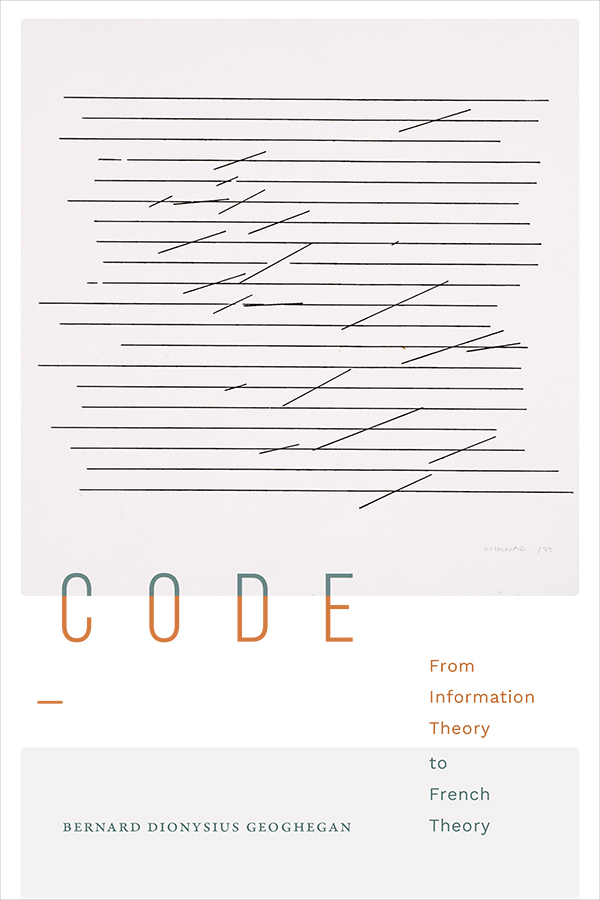
A review of Code: From Information Theory to French Theory, Bernard Dionysius Geoghegan, Duke University Press, 2023.

CodeIs there a pathway that goes “from information theory to French Theory”? Straying away from the familiar itineraries of intellectual history, Bernard Dionysius Geoghegan invites us to take a path less trodden: a detour that allows the reader to revisit famous milestones in the development of cybernetics and digital media, and to connect them to scholarly debates stemming from fields of study as distant as structural anthropology, family therapy, and literary semiology. Detours and shortcuts are deviations from linear progression, reminding the traveler that there is no one best way to reach a point of destination. Similarly, there are several ways to read this book. One is to start from the beginning, and proceed until the end, from the birth of communication science during the Progressive Era in the United States to the heydays of French seminars in sciences humaines in the Quartier latin before mai 68. Another way is to start from the conclusion, “Coding Today”, and to read the whole book in reverse order as a genealogy of the cultural analytics used today by big data specialists and modern codifiers of culture. A third approach would be to start from the fifth and last chapter on “Cybernetics and French Theory” and to see how casting cultural objects in terms of codes, structures, and signifiers relates to previous methodologies of treating communication as information, signals, and patterns. The common point of these three approaches to reading Code is to emphasize the crossing of boundaries: disciplinary boundaries between technical sciences and the humanities; political demarcations between social engineering and cultural critique; and transatlantic borders between North America and France. The gallery of scientists and intellectuals that the book summons is reflective of this broad sweep: Norbert Wiener, Warren Weaver, Margaret Mead, Gregory Bateson, Claude Lévi-Strauss, Roman Jakobson, Jacques Lacan, Roland Barthes, and Luce Irigaray are seldom assembled in a single essay; yet this is the challenge that Code raises, inviting us to hold together disciplines and methodologies that are usually kept separate.

The empire of code 

Let’s start from the present and move it from there. “Coding” now mostly means writing lines of code or computer software using a programming language such as JavaScript, Python, or C++. Codes can also designate social norms or cultural imperatives governing acceptable behavior in a certain context or within a subgroup. To “know the codes” means to be able to navigate a certain social world without committing blunders or impropriety. Of course, social scientists have taught us that social rules are best obeyed when one is not conscious of their imperium. Social norms must become embodied knowledge to be played spontaneously, and the best performance has the charm and immediacy of the natural, the innate, the unrehearsed. Culture cannot be recitated as a learned lesson or a set of rules. When social life is reduced to a system of codes, decontextualized from its rich background and reformatted for transnational circulation, then it becomes a simulacrum. This is why we should worry about the extension of the domain of the norm that is fueled by the twin forces of globalization and digital technologies. We are witnessing the weakening of the notion of culture, once thought of as a set of evidences shared and anchored in a territory, and today reduced to a corpus of explicit norms and cultural markers, which circulate on a global scale. The crisis in culture that Hannah Arendt diagnosed in 1961 has now given way to culture’s opposite: the reign of the explicit, the quantified, the normative. The disappearance of high culture as a shared implicit within territorial and social boundaries gives way to the sequencing of small bits of cultural content that are recombined to form a marketized commodity, as in UNESCO’s heritage list of intangible assets. These packets of texts and images circulate through networks that separate them from their point of origin and delivers them to the right place. If the network changes, due to congestion or broken links, routers can use an alternative interface to reach destination. 

There is a growing disconnect between the territory in which we live and the cultural references that we manipulate. National or religious identity is redefined as a set of cultural markers and signs of belonging that are decomposed and recomposed into new individual selves that are both unique and interchangeable. Coding implies normativity. We need new norms and regulation because things that seemed obvious, at least within a given cultural space, are no longer so. If everything is open to discussion and contestation, then we must make the rules explicit and as detailed as possible. This codification of social practice considerably reduces inner spaces of freedom and nonnormativity: the intimate, the private, the unconscious. Normativeness is the consequence of coding, the passage to the explicit, the quantification of affects. A grammar, for example, is a code and when we make a mistake, we are corrected. Contrary to language, code is acquired by apprenticeship or formal training: one must know the rules to practice coding, whereas it is not necessary to know grammar to practice a language. Coding follows a model of communication that makes each term explicit, where the receiver understands exactly what the emitter wants to say. This applies to social interactions, where what was previously left unsaid now needs to be specified, and even to the use of language, with the spread of global English and the standardization of public expression. In a multicultural context, it is recommended to speak as clearly as possible without using allusions, cultural references, and humor. The spread of artificial intelligence and chatbots will only reinforce this trend: in order to make ourselves understood by machines, or to allow machines to communicate between themselves, we must separate language from culture and minimize the noise generated through the process of encoding and decoding. 

The age of the seminar

This becoming-code of all cultural contents and social interactions has a long history. A surprising milestone in the advent of code is to be found in the works of philosophers, literary critics, and semioticians that are sometimes bundled together in the United States under the label of “French Theory.” Coding and decoding were definitely code words in French intellectual discussions during the 1960s and 1970s. “Assez décodé !” (Stop decoding/stop fooling around) was the title of a popular essay in 1978 that took aim at Roland Barthes’ new literary criticism and the abuse of technical jargon. Geoghegan identifies the 1960s as the period when “culture as communication” gave way to a preoccupation with “culture as code.” Cybernetics and information theory acted as both model and test bed for this transformation. They were part of a broader trend of social transformation based on the import of American technologies and institutions to fit postwar France’s condition. Techniques of management and human engineering were adopted en masse by an increasingly technocratic France. Funding from American foundations, tracing back to fortunes accumulated by robber barons and with links to the Cold War intelligence apparatus, supported the creation of research institutions that set new modes of organizing critical inquiry in the humanities and social sciences. A new research center and central forum for teaching social sciences was created within the Ecole pratique des hautes études as the “sixième section,” better known as the Ecole des hautes études en sciences sociales or EHESS. It modeled aspects of its study program on the social sciences in the United States, distancing itself from previous modes of scholarly organization in French universities. Its scope was resolutely transdisciplinary and experimental.  It pioneered the use of statistical methods and mathematical models in the humanities. Indeed, there is a book to be written on the fascination, some would say the math envy, exerted by mathematics and formal science on French social scientists as diverse as Claude Lévi-Strauss, Pierre Bourdieu, and Jacques Lacan. One locus for such collaboration was Lévi-Strauss’s research seminar on the utilization of mathematics in the social sciences,  which let to long-lasting interdisciplinary collaboration between scientists and social critics.

The research seminar thus became a key site for the clinical analysis of the human condition, remote from the elegant discussions in cafés and salons that previously exemplified intellectual authority in France. The seminar was the domain of the expert, the specialist, the fieldworker. It displayed science in the making, and opened its ranks to any social scientist who had new research results to share, regardless of academic position or social authority. Later on, Michel Foucault would label this new kind of postwar thinker a “specific intellectual” whose political responsibility was akin to that of the “nuclear scientist, computer expert, and pharmacologist.” Structuralism imposed itself as the dominant paradigm, with its emphasis on codes, systems, communication, economy, and even informatics patterning of signs. The promise of scientific precision and far-reaching advances attracted younger scholars eager to chart bold yet rigorous programs in emerging research areas. Human sciences as envisioned by Claude Lévi-Strauss had one great aim: “the consolidation of social anthropology, economics, and linguistics into one great field, that of communication.” In particular, “social anthropology,” he wrote, “can hope to benefit from the immense prospects opened up to linguistics itself, through the application of mathematical reasoning to the study of phenomena of communication.” Lévi-Strauss was an enthusiastic reader of Shannon and Weaver’s Mathematical Theory of Communication (1949). One of his early papers on the relevance of cybernetics on linguistics argued that engineering models of communication could be transposed onto all other fields of human activity, including linguistics, economic transactions, and the circulation of women within primitive systems of kinship. Through the 1950s, Lévi-Strauss sought to establish a physical infrastructure equal to the tasks of his emerging structural anthropology. His ascension to a chair at the Collège de France in 1960, and his concomitant establishment of the Laboratory of Social Anthropology, presented him with the long-sought opportunity to establish a research laboratory. One of his first initiatives was to acquire a copy of the Human Relations Area Files, a searchable database of two million index cards compiling ethnographic findings. Vast regimes of human data were disassembled into informational units for cross-cultural analysis. They were part of a global apparatus of knowledge that, paradoxically, unmoored cultures from local and embodied reality. Headquartered in Paris, UNESCO offered an early vehicle for bringing these new political techniques to the world.

Back to the future

Code insists on the transatlantic origins of the dominant paradigm in the sciences humaines, both institutionally and in terms of substance. The history of structuralism and poststructuralism has often been told, with an emphasis on the John Hopkins conference of 1966 that spearheaded the reception of French contemporary thought in North America. Here Geoghegan goes further back in time to highlight the way European nascent human sciences were incorporated into emerging logics of US communication science during World War II. As war swept Europe, the Rockefeller Foundation mobilized to bring threatened European intellectuals under the umbrella of US wartime science. An early recruit was Russian-born linguist Roman Jakobson, who founded the Linguistic Circle of New York in 1943 as a successor to the celebrated Prague Linguistic Circle, mixing structural linguistics initiated by the Swiss linguist Ferdinand de Saussure with diverse insights from fields including Russian formalism, avant-garde art such as futurism and cubism, and relativity theory developed in atomic physics. For Saussure, language was like a game of chess: one did not simply speak but selected from among a field of possibilities prefigured by formal constraints and anticipated threats. With Jakobson, language became probabilistic and combinatoric, ordered on principles that followed the direction of cybernetics and communication science. Much as Warren Weaver and Claude Shannon used probabilistic sequences to predict series of words, phrases, and sentences, Jakobson described phonemes as probabilistically encoded and decoded series. Another Rockefeller foundation initiative was the establishment of the Ecole libre des hautes études in New York, which recruited Claude Lévi-Strauss but declined to support Jacques Lacan. Under Jakobson’s influence, Lévi-Strauss ceased to study the empirical facts of indigenous kinship and focused instead on the relations among terms that constituted a kinship system proper. With the aid of a French mathematician, he even found algebraic expressions for his kinship studies. The linguistics seminar Jakobson and Lévi-Strauss held at the Ecole libre made a field trip to AT&T headquarters to witness the performance of the Voder, a synthetic speaking device, in 1944. According to Geoghegan, the Ecole Libre was a methodological crucible, nudging French scholars away from a concern for social equality and redirecting them in technocratic directions. As he remarks, “this was indeed a strategy of political transformation of the sort that would become a pillar of American ‘nation building’ in decades to come.”

The last thesis proposed by Geoghegan—or the first if you follow the book order, from chapter one to chapter five—, is that cybernetics wasn’t an invention of World War II and the Cold War, as science historians sometimes assume. Code shows that “links among the Rockefeller, Macy, and Carnegie philanthropies forged in the 1930s and 1940s, well before the United States’ entry into World War II, guided subsequent initiatives in cybernetics, information theory, and game theory.” The roots of the project lie in Progressive Era technocracy and its agenda to transform social strife into communication engineering problems available for technical problem-solving. Welfare policies, not warfare, were the test bed for the rise of the communication sciences, and its first deployments were to be found in the colony, the clinic, the asylum, and the urban ghetto. As Geoghegan observes, “dreams of cybernetic post-humanism depended on disappearing the bodies of native persons and other subjects regarded as less than human.” Anthropologists Ruth Benedict and Margaret Mead thought that all existing human cultures were distributed along a great “arc” which covered the whole range of possible cultural traits. Each culture then selects along this arc a “pattern” of human possibilities that fits its environment and forms a coherent whole. After his pathbreaking master degree thesis that laid the groundwork of information theory, Claude Shannon’s PhD dissertation, completed in 1940, applied Boolean algebra to the orderly processing of eugenic data. The celebrated Macy Conferences on Cybernetics, initially convened in 1942, brought together mathematicians, anthropologists, engineers, and scientists from other disciplines, and popularized notions such as reflexivity, feedback loops, and error correction mechanisms. Scientific networks cultivated in the 1930s and consolidated in wartime military projects laid the foundation for interdisciplinary communication projects well into the 1950s.

Return to sender

There is a tendency to downplay the links between the natural sciences and the dominant paradigms in the humanities. This book show that the history of the human sciences in the twentieth century cannot be separated from the rise of the communication sciences. Fields such as anthropology, psychology, and semiotics served as experimental laboratories for the engineering of a society of digital media and codified culture. Far from trailing behind engineers and natural scientists, human scientists spearheaded the reconceptualization of cultural forms as forms of code that could be decomposed and recombined using mathematical tools. Efforts to transform the humanities and social sciences into a single field, the human sciences, oriented toward communication, cannot be separated from the rise of scientific philanthropy. The Rockefeller Foundation and a host of like-minded philanthropies funded by robber barons (e.g., the Ford Foundation; the Josiah Macy Jr. Foundation; the Wenner-Gren Foundation) lavished generous funding on interdisciplinary research linked to research programs inspired by cybernetics and information theory. Their midcentury interest in these fields reflected progressive hopes to submit divisive political issues for neutral technical analysis. The long-standing aim of American philanthropies to reorient the humanities toward exact, quantifying, empirical, and rule-governed theoretical analysis found fertile ground in postwar France. Even if we should use the expression “French Theory” with caution, there was a theoretical impetus toward formalization, even a “math envy,” that shaped the dominant paradigms of structuralism and poststructuralism. A cybernetic turn of mind influenced French structuralists’ talk of codes, systems, and communication. While Barthes’s contrarian attitude or Lacan’s extravagant vocabulary carried a critique of technocratic rule, their seminars fit within the period’s emphasis on experts, codification, and structures. Their effort to remake French thought also ended up remaking American thought along the way. If we summarize the standard model of communication as a message sent by an addresser to an addressee through a channel involving operations of coding and decoding, the development of French Theory on American campuses was a case of return to sender.

I Can’t Breathe

A review of Breathing Aesthetics, Jean-Thomas Tremblay, Duke University Press, 2022. 

Breathing Aesthetics“I can’t breathe!” These were the last words uttered by Eric Garner, a Black resident of Staten Island who, on July 17, 2014, was put in a deadly chokehold by an NYPD officer for allegedly selling “loosies” or single cigarettes on the street. Garner suffered from asthma, a condition that, according to epidemiological data, disproportionately affects African Americans. Garner’s last words were also those of Elijah McClain and George Floyd, two other Black men killed by police just a few years later. “I can’t breathe” has become a rallying cry for our times and is used as an expression of the asphyxiating atmosphere in which activists declare that Black Lives Matter. The unability to breathe can be understood as both a metaphor and material reality of racism, which constrains not just life choices and opportunities, but the environmental conditions of life itself. It draws our attention to breathing as a political act: the capacity to breathe, or its preclusion, defines a new form of biopolitics in which some lives are deemed worthy of inhaling fresh air and some aren’t. Reclaiming ownership of the means of respiration, literally and figuratively, may delineate a new kind of respiratory politics that recognizes breathing as an unalienable right. For Jean-Thomas Tremblay, an art critic and professor of environmental humanities, breathing is, more than ever, in the air. Of course, breathing is in the air. But it specifically is, now, in the Zeitgeist. It is a sign of the times that breathing’s intensity and its variations—submitting breathing subjects to chokehold or waterboarding, refraining from inhaling certain substances, filtering inhaled air through face masks, measuring one’s carbon dioxide emissions—now feature in our political imaginary as an expression of agency and control. For Jean-Thomas Tremblay, the crisis in breathing predates the climate urgency, the Covid-19 epidemic, or the BLM movement. He sees its emergence and intensification around the 1970s, and tracks its expression in marginal, underground, or minoritarian art productions that may have escaped the radar screen of art historians but that, more than mainstream creations or popular art, may help us to capture what is at stake in the current inability to breathe.

The crisis in breathing

According to Tremblay, “the intensified pollution, weaponization, and monetization of air and breath since the 1970s amount to a crisis in the reproduction of life.” Breathing orients life toward death. It accompanies us from the cradle to the grave or, to be precise, from our first intake of outside air at a maternity hospital to our last breath on our death bed. Breathing takes place in increasingly toxic environments. To breathe is to be vulnerable to airborne particles or poisonous gas, or to bad odors and fool air. Air carries the means of life and death, and each respiration reproduces the movement of life—inhaling and exhaling, in and out, in and out. Being out of breath, deferring to exhale, breathing in sync, being left panting or gaping for air: these variations constitute a popular nomenclature for expressing experiences of hostile environments and efforts to make life within them more livable. Being aware of one’s breath doesn’t protect us from airborne threats or breathing impediments: if anything, it makes the process of breathing harder by adding a layer of consciousness to what usually goes on without thinking. Coming back to the cultural history that forms the backbone of Breathing Aesthetics, the 1970s were characterized by the triple attempt to purify, weaponize, and marketize air. Pollution and air quality became increasingly debated in these years, which saw mounting scientific evidence of greenhouse gas accumulation and global temperature rise. Weaponization of air and breathing took the form of police forces using tear gas and other toxicants against demonstrators with increasing frequency. Although international protocols and agreements, from the Geneva Protocol of 1925 to the Biological Weapons Convention of 1972 and the 1993 Chemical Weapons Convention, have prohibited the use of toxic gas and airborne germs as a method of warfare, chemical weapons were used in all major conflicts, including the Vietnam War where the spraying of Agent Orange led to long-lasting health incapacitation. As for marketization, the 1970s saw the emergence of a “breathfulness industry” ascribing therapeutic value to conscious respiration. Reiki breathing, opening one’s chakra, and aligning with one’s inner self became all the rage, and the business of breathing extended to all ages and social categories.

Not everybody is equal in front of breathing: “we are all breathers, but none of the same kind.” It is the author’s guiding principle throughout Breathing Aesthetics that “respiration’s imbrication of vitality and morbidity is differently felt by differently situated people.” Control over the means of respiration is unevenly distributed. When breathing is in order, an invisible line is dividing the haves and the have nots, the fully capable and the respiratorily impaired. This is not an intuitive argument: nothing is more free than air, and everybody in good health can afford to breathe regardless of condition of wealth or social status. The distributive effects of breathing impediments are indeed a matter of debate. For some scholars, global warming or airborne pollution are the great equalizers as they affect the whole of humanity without consideration for political or class borders. The burning of coal in Beijing, China, affects cities as far as Tokyo, Seoul, or Hanoi, and the carbon dioxide emissions liberated by Chinese powerplants have consequences for the entire planet. But for Tremblay, “toxicity does discriminate, and it does know boundaries.” In the United States, respiratory hazards and their pathologies, from asthma to lung cancer, are disproportionately concentrated in areas populated by low-income minorities, which amounts to structural and environmental racism. The respiratory enmeshment of vitality and morbidity is particularly acute in situation where the taken-for-granted nature of breathing is compromised by health or environmental conditions. As the lack of mechanical ventilators in American hospitals demonstrated, the still-ongoing Covid-19 pandemic is a crisis of breathing. Many of the symptoms associated with Covid-19 are respiratory, from cough to shortness of breath to loss of smell; complications such as pneumonia and acute respiratory distress syndrome also imperil breathing. We live in an age in which respiration can be put at risk, and where the material conditions of breathing require sustained investment.

Race and respiration

In Tremblay’s analysis, breathlessness imposes itself as a locus of colonial violence, racial discrimination, patriarchal oppression, and ecological degradation. The United States owes its existence to the single largest and most significant land grab in human history. In addition to deliberate killings and wars, Native Americans died in massive numbers from infections endemic among Europeans. Much of this was associated with respiratory tract infections, including smallpox, tuberculosis, measles, and influenza. This history of dispossession and debilitation continued well into the twentieth century: the nuclear tests that took place on US soil near Indian reservations or in evacuated atolls of the Pacific have contributed to abnormally high thyroid and lung cancer rates among Indigenous populations. Settler colonialism was also associated with the slave trade and persistent racial exploitation of African Americans. The history of Black asphyxiation began with the drowning of enslaved people thrown overboard by slave ship owners during the Middle Passage to the Americas. Even today, policies aimed at controlling public spaces and preventing urban riots are depriving African Americans of their breathing space and capacity to voice their concerns. The burden of asthma in the United States falls disproportionately on Black, Hispanic and American Indian/Alaska Native people. But being Black or Latinx or Indigenous doesn’t cause asthma: the neighborhood does. Sociologists have shown that noxious and hazardous facilities are concentrated in minority and low-income communities. For some writers-activists, a war is being waged on the urban poor and the colored in America, and this war uses asphyxia and incapacitation to produce disabled bodies and lives cut short. Health disparities and environmental inequality call for environmental justice and redistribution of the means of respiration. Breathing and breathlessness also have a gendered dimension. There is growing evidence that a number of pulmonary diseases affect women differently and with a greater degree of severity than men. Childbirth labor involves respiratory techniques such as belly breathing and pushing for birth delivery. Part of the feminist movement’s ambition in the 1970s and 1980s was to “remove the man-made obstacles to breathing” and to claim the affinity between the feminine and the natural world while identifying breath as a conduit for intimacy between the two.

In Breathing Aesthetics, Tremblay addresses this politics of breathing tangentially. He defines a breathing aesthetics as a distinct mode of artistic creation and expression that takes breathing as its medium. Breathing is part of the aesthetic experience: according to Tremblay, breathing is “a mode of spectatorship in the same class as watching or listening.” Some works of art demand a certain type of breathing. They impose upon their public a certain kind of inspiring and expiring, controlling respiratory movements to produce a shared affect or breath. Common expressions reflect this affinity between respiration and the art experience A spectacle can be breathtaking, we may hold our breath at the end of a chapter, a story may leave us gaping for air, or we may fill our lungs in full appreciation of a beautiful scene. Critics have already commented upon literature’s engagement with breath: according to François-Bernard Michel, a French writer and pneumologist, Marcel Proust exhibited a literary sensibility to the weather because he suffered from asthma, and Raymond Queneau gave life to asthmatic characters because he was allergic to grass pollen. Cinema is the art form that shows the strongest connexion with the respiratory function. A movie can embark the public on a rollercoaster of laughing, crying, panting, and other respiratory emotions. Jean-Luc Godard’s A bout de souffle was about breathlessness and freedom to breathe as much as it is about challenging Hollywood to create a New Wave of cinema. Music also has a strong affinity with breath: wind instruments and brass are operated by blowing air through the mouthpiece and opening or closing holes to change the pitch. To conceive of music solely as a listening experience is to miss the point: hearing is passive, static, and detached from emotions; it hardly involves the body. Breathing, by contrast, brings the listener closer to the rhythm and harmonies played on stage. In the visual arts, some contemporary artists have taken air, smoke, and clouds as their primary material. Air sculptures are as unusual as they are ethereal, standing at the edge of materiality and drawing the public’s attention to lived and natural environments.

Minoritarian artworks and minority artists

It is Tremblay’s hypothesis that “since the 1970s, writers, filmmakers, and artists have experimented with breathing with extraordinary frequency.” Breathing Aesthetics presents itself as a series of attentive readings shedding light on the challenges of writing in the times of environmental crisis and social upheaval. The author devotes most of his attention to “minoritarian works created by marginalized figures who tend to contest the genre and media conventions traditionally valorized by artistic and academic institutions.” He uses the term “minoritarian” to refer “not to fixed positions but to an impulse, be it artistic or analytic, to contest the forces that make the world more breathable for some people than for others.” The artists and artworks curated in the book haven’t been chosen at random. Their engagement with breathing and breathlessness was a necessary condition, but another condition was their position as “minoritarian”, meaning here a circulation outside the commercial art circuit for the artworks and a belonging to ethnic or sexual minorities for the artists. The 1970s were a time when women, gays and lesbians, and ethnic minorities hadn’t acquired or been granted the visibility they have in today’s art world. To be an artist and a woman, let alone a non-white woman, was seen as problematic. It is said that the last heated exchange between Cuban-American artist Ana Mendieta and her husband Carl Andre, prior to her defenestration (presented as an accident or a suicide), was about the lack of artistic recognition she was receiving as opposed to her husband’s success. Of the BDSM couple Bob Flanagan and Sheree Rose, art history mostly remembers the male performance artist who “nailed his penis to a plank” and whose disability condition (he was suffering from cystic fibrosis) indeed connected his art to breathing and breathlessness. Of Sheree Rose we know little, and her memoirs remain unpublished. Most of the authors surveyed in the book are women, although they tend to steer away from mainstream feminism and its insistence of a feminine “breath of life.” The minoritarian voices connected to Indigenous knowledge, Black feminism, or ecological awareness rely on respiratory rituals as tactics or strategies for living through the foreclosure of political presents and futures. Breathing together, or developing respiratory asynchrony, have inspired contingent models of social and political life that are contesting “the forces that make the world more breathable for some people than for others.”

Throughout the book, the author posits that ”respiration renders vitality and morbidity inseparable.” Individuals tend to notice breathing and air when those no longer fulfill their life-giving and life-sustaining functions: “becoming conscious of our breathing confronts us with our finitude.” Some people believe that there is a finite number of breaths that one is allowed to take during one’s life: each breath brings us closer to death, and to exhale is to die a little. The French call “la petite mort” the spiritual release that comes with orgasm, or indeed with the encounter of great works of literature as described by Roland Barthes. A little death is also when something dies in you: lung cells die with every breath we take and cannot be regenerated. The entanglement between respiration and morbidity is magnified in the last breath that is supposed to separate life from death. Of course, things are not so simple: biological death has several definitions, from the cessation of brain activity to the irreversible stopping of heart and lung functions, and a person can be maintained under artificial respiration while being brain dead. Some TV series indeed play with this ambiguous passage by staging “last breath” moments that prove not to be final, causing bereaved families and the public to burst into involuntary laughter. According to Tremblay, “the fantasy that in the last breath the dying individual encounters finitude on their own terms fulfills a social function”: it introduces an unambiguous demarcation between life and death, helping survivors to part with the deceased and to go on with their lives. The last chapter of Breathing Aesthetics documents this rite of passage by analyzing two documentaries that take palliative care and the management of death in public hospitals at their main topic. Capturing the last breath poses many technical and philosophical issues: the last breath can only be named as such retroactively, and the persons involved have to give their informed consent to this breach of intimacy. Released before the advent of the Internet and social media, the two reality movies, Near Death (1989) and Dying at Grace (2003), anticipate a time when the last moments of beloved ones are recorded live on camera and the scene of death, with its last breath and stopping electrocardiogram beeping, become public events.

The politics of breathing

I have initially titled my book review “I can’t breathe,” the rallying cry of the Black Lives Matter movement. But here I stand and hesitate: should I keep this title? I used it as an easy moniker only to catch readers’ attention and to echo the book’s concern with the devaluation of Black lives in the United States today. But of course, I can breathe, and I don’t feel privileged about that one bit. This separates me from the author, who tends to consider his own whiteness as a privilege. Throughout Breathing Aesthetics, Jean-Thomas Tremblay is only interested in inequality insofar as it intersects with race, gender, sexual orientation, and (dis)ability. The analytical tools that he mobilizes are “feminist, queer, and trans, for those are the categories, along with race and ethnicity, that expose the constitution and construction of bodies.” Note that critical theory, along Marxist or continental philosophy lines, is not mentioned in the author’s toolbox. Disparities of wealth and class distinctions are not addressed. The reason we (they) can’t breathe is to be found in identity politics, not class warfare or social inequalities. It is not a matter of rich people stealing fresh air from poor people’s lungs, but of some categories being denied their fair share of breathing. Slogans should therefore be used carefully in order to avoid illegitimate racial appropriations. Tremblay warns against “the denial of structural and environmental racism” by the anti-mask campaigners who appropriated the “I can’t breathe” slogan to protest against mask-wearing and other Covid-related restrictions. He himself confesses that he took part in the demonstrations denouncing police violence in Chicago, but that he kept silent when BLM militants were chanting “I can’t breathe” and “we can’t breathe.” He recognizes he felt breathless at the time but that “his breathlessness couldn’t be equated with the breathlessness of protesters asphyxiated by environmental racism, police violence, or microaggressions.” As a French national with no connexion whatsoever to the United States, I have even less skin in the game. But I would be more ready than Jean-Thomas Tremblay to use the denunciation of breathlessness as a rallying cry because I believe our breathing condition should bring us together and not take us apart along identitarian lines. If a politics of air redistribution is to be put in place, it should be based on a universal right to breathe and grant equal access to breathable air, regardless of skin color or other marks of identity definition. Of all the works of art surveyed in Breathing Aesthetics, the one I feel the closest with is the music video “Breathing” from British pop singer Kate Bush, although this is the one that the author deems most compromised by its whiteness and lack of minoritarian impulse. 

The Echoes of Nuclear Explosions in the Pacific

A review of Radiation Sounds. Marshallese Music and Nuclear Silences, Jessica A. Schwartz, Duke University Press, 2021.

Radiation SoundsSound studies can take you to faraway places. Ethnomusicology, the study of music in its social and cultural contexts, has taught us to lend an ear to songs and musical genres performed by people distant from Western cultures and mainstream musical practices. In Radiation Sounds, Jessica Schwartz takes her readers to the Marshall Islands, an independent microstate in the Pacific, to listen to the distant echoes and silences brought forth by the nuclear testings that took place at the onset of the Cold War. From 1946 through 1958, the United States conducted 67 nuclear tests on islands and atolls now composing the Republic of Marshall Islands (RMI). Symbolized by the strong visual of the mushroom cloud, these nuclear detonations included the 15-megaton Castle Bravo hydrogen bomb test on March 1, 1954, which led to the unexpected radioactive contamination of areas to the east of Bikini Atoll. The United States organized forcible relocations from the atolls made uninhabitable by the nuclear fallout, kept a moratorium on all information pertaining to the nuclear arms race, and submitted exposed populations without their consent to medical examination on the effects of radiations in a program code-named Project 4.1. Marshallese music and voices still carry the echoes of these nuclear explosions as they radiate through local politics, radio broadcasts, musical performances, folk songs, contaminated soils, and ailing bodies. Radiation Sounds gives equal importance to sounds and to silence, to music and to noise, to songs and to oral testimonies. It considers not only soundwaves, but also radio waves, oceanic waves, and nuclear radiations made sensible through the audible clicks of Geiger counters and the crackled voices of remembrance songs. It addresses the full spectrum of electromagnetic wavelengths while staying attuned to their sociopolitical dimension. A nuclear blast is not only a visual flash: its delayed sound effect and ionizing radiations produce more lasting consequences, including for the voices that it smothers and the silence that is forced onto all parties.
Resonances of the atomic age

Jessica Schwartz’s scholarship focuses on how different communities throughout the Marshall Islands were diversely affected by the nuclear tests. She doesn’t give full detail on the conditions and methodology of her ethnography. As a doctoral student in musicology at New York University, she conducted fieldwork in the Marshall Islands for close to two years. She stayed in Majuro, the capital city with a population of 28,000, and also visited other atolls such as Kwajalein or Kili Island where population evacuated from Bikini and neighboring islands have resettled. She mentions at some point that she was teaching at a local school, and she refers on several occasions to her contacts with local politicians, women’s groups, the local radio station, musicians, singers, and antinuclear activists. She learned the local language, and gives transcripts of some of the songs she collected in Marshallese and in English. She quotes several anthropologists who have studied the Marshall islands and Oceanian cultures, some of whom have played a role in shaping local politics and cultural policies. Hers is not a classical ethnography with neatly composed chapters documenting all aspects of a local society. She writes in an impressionistic style that is sometimes difficult to follow. She introduces concepts such as radioactive citizenship, nuclear silences, and the Marshallese notion of the “throat,” but she makes no effort at rigorous theorizing, and uses theory literature in a sparse way. Unlike classical anthropologists, she is not interested in traditional music per se, or in local traditions in general. In her account, baseball and country music are as much part of the local culture as braiding wreaths for funerals or playing the aje drum. The Marshallese popular music repertoire includes modern rock or folk songs which sometimes refer to political issues (so-called remembrance songs, protest songs, and petition songs), as well as more traditional genres such as roro, songs based on ancient legends and originally performed to give guidance during navigation or strength for mothers in labor. But there is no strict division between past genres and present repertoire, as modern bands are blending the unique songs of each island with modern influences, such as rock, country, or hip-hop. There is even a Marshallese nursery rhyme called Kōṃṃan baaṃ (“Making Bombs”) that dates back from the nuclear testing period and that is apparently set to the tune of a Filipino planting rice song. Another song, Ioon, ioon miadi kan (“Upon, Upon Those Watchtowers”) was composed in 1944 and refers to the Japanese military occupation.

When Jessica Schwartz arrived on the Marshall Islands to do fieldwork in 2008, the debates and protests that had accompanied the 2004 renewal of the Compact of Free Association (COFA) between the US and the RMI were still a vivid memory. Through the COFA initially signed in 1986, the United States has maintained military presence in the Marshall Islands while recognizing the sovereignty of an archipelago they had administered as the Trust Territory of the Pacific Islands (TTPI) since 1947. Local politics at the time of independence was dominated by local chieftains or iroij. Article III of the 1979 Constitution recognizes the title and creates a Council of Iroij chosen from holders of the chieftainship among the several constituent islands. It was not until 1999, following political corruption allegations, that the iroij-dominated government was overthrown, with Kessai Note, a commoner of Japanese-Marshallese descent, elected by the Nitijeļā (Parliament) as president. He was defeated in his bid for re-election in 2007. Jessica Schwartz points out the role of the radio as the “voice of the nation” expressing “radioactive citizenship”: “radiation and the radio have been crucial components of sense making in the period of nation building”. Installed by the US after a report by Harvard economist Anthony Solomon had recommended nation-building efforts in 1963, radio was at the center of the independence movement or “break away,” followed by COFA negotiations and the debate over monetary compensation from US nuclear militarism. In Majuro, two radio stations, divided along political lines, competed for the Marshallese audience. American Forces Radio and Television also provides broadcasting services to Kwajalein Atoll, the site of the US military base. The COFA enables Marshallese citizens to live, work, and travel freely between the RMI and the United States in exchange for the US military’s lease of large parts of Kwajalein Atoll, including Kwajalein Island. Approximately 4,300 Marshall Islands natives have relocated to Springdale, Arkansas in the United States; this figure represents the largest population concentration of Marshall Islands natives outside their island home. The threads that connect these diaspora communities are mostly oral and give more importance to songs and speeches than to the written text. Like the vocal cords in the throat that vibrate to create the sound of the voice or the umbilical cord that connects the baby to the mother’s placenta, islands are said to be connected by invisible threads that weave a network of togetherness across the atollscape.

Vocal cords and umbilical cords

The Rongelapese were the population most severely affected by the US nuclear testing program, as they were exposed to the radiations from the fallout of the Bravo explosion and had to be moved to another atoll. In 1957, three years later their first relocation, the United States government declared the area “clean and safe” and allowed the islanders to return. Evidence of continued contamination mounted, however, as many residents developed thyroid tumors and, for pregnant women, birth miscarriages. In 1985, they were evacuated to Ebeye island in Kwajalein Atoll in an operation conducted by the international NGO Greenpeace. Together with other displaced persons from Enewetak, Utrik, and Bikini, the Rongelapese formed the ERUB organization and petitioned the US government for nuclear test compensations under section 177 of the COFA agreement. A first resettlement agreement was signed in 1986, but in 2000 the Marshall Islands government submitted a Change of Circumstances Petition asking for significantly more compensation than the $US 150 million initially awarded. As a result of the radiation poisoning, many Rongelapese people developed thyroid gland disorders or cancer and required thyroid surgery–a source of particular trauma because, for the Rongelapese, the throat (“bōrō”) is the seat of the soul, comparable to the Western concept of the heart. Jessica Schwartz sees Rongelapese women as victims of US “male vococentrism”: not only were they displaced, subjected to medical testings without their informed consent, and had to undergo thyroid surgery, but they were also marginalized and stigmatized as a result of their injuries and reproductive problems. Literally and figuratively, they didn’t have a voice in the decisions and processes that affected them. As the author notes, “the Geiger counter had a political voice that is more highly valued than the women with respect to their appeal for evacuation.” The exodus of the Rongelapese community is memorialized through songs that are performed at funerals and other ceremonies: “We sing on the anniversary of Bravo, at parties, at church, and especially when visitors come.” Some of the songs are intended as musical petitions addressed to the US government. In the song performances that the ethnomusicologist attended, elderly women affected by the radiation fallout struggled to harmonize and sang in a coarse voice. And when they were unable to hit the right notes as they sang, some would gesture to their throats and blame their damaged thyroids. Schwartz sees their musical performances as “an invitation to hear radiation sounding… where precarious voices sound strength.”

Turning to the diaspora from the Bikini Atoll, the anthropologist recalls a scene, recorded on film and distributed through newsreels in 1946, in which the US military governor of the Marshall Islands asked the Bikinian leader “King Juda” for his support in evacuating the Atoll before the nuclear experiments. The American couched his request in religious terms, asking the Bikinians to give up their islands “for the good of mankind” and promising to lead them to a land of salvation, “much as God had for the Jews.” But the only answer he could get from the Bikini leader was that “everything is in God’s hands.” The sentence, Men Otemjej Rej Ilo Bein Anij, abbreviated by the Bikinians as MORIBA, has become the motto of the islands. Today the descendants of those who were moved in 1946  live on Kili Island, on Ejit Island, Majuro, other parts of the Marshall Islands, in the United States, and a few in other countries.  They have been called “nuclear nomads” or “nuclear refugees.” They cannot go home because the United States has not kept its promise to return the islands to their pristine condition. The Bikinian nation formed in the mid-1980s in self-determination to protest the COFA. It is now complete with a flag, a national day (March 7, day of removal), a motto and an anthem as well as offices in Majuro and Springdale, Arkansas. Native communities claiming origin in Bikini now number 2,800 dispersed individuals out of an initial population of 167. For Schwartz, the injustices wrought by radioactive colonization account to a kind of “dissonance” in the global harmony that the Cold War was supposed to produce. Having been deprived a voice, local populations can only express their claims ventriloquially (through the voice of God) or metaphorically, through songs and musical performances. Singing is one way to create community and mobilize solidarity in the creation of new political subjectivities and communities of belonging. Songs express feelings of displacement and exile that have an unmistakable biblical tone. The Marshallese are a very religious people, and persons without religious affiliation account for a very small percentage of the population. Especially for Bikinese, church activities, both in church and in preparation, structure much of the community’s time. Hymns and religious songs therefore had a strong influence on the musical repertoire. Another strong influence is country music, heard on the military base of Kwajalein, which is appreciated as being from the heart (throat) and having to do with loss of land and/or love.

Kūrijmōj season 

The anthropologist spent Christmas Eve of 2009 on Kili Island, attending church service and recording Kūrijmōj (Christmas) songs in Marshallese. 1,2000 exiled Bikinians live on this tiny island and receive support from the US government that sometimes makes other islanders envious. For Schwartz, “spirited noise” or uwaañaañ, which applies to religious songs but also to traditional navigation and to ritualized ceremonies, is a way to reclaim the sovereignty that has been denied to them. According to Schwartz, drawing on Jacques Attali’s essay first published in 1977, “Noise can be read as a blockage in the system, a coded form of communication, or something that impedes understanding and needs to be resolved.” Noisiness is usually attributed to men: through vocal performances, war chants, and spiritual hymns, Bikinese men express their diasporic masculinity and spirit of self-determination. But these voices have not been heard by Americans, who made the land of their ancestors uninhabitable, and by other Marshallese, who reject Bikini’s aspiration to sovereignty. Masculinity is displayed in lagoon parades by “Gospel warriors” clad in grass skirts and holding paddles and sticks. This Gospel Day of parades and celebrations is a national holiday that commemorates the coming of the Gospel to Ebon Atoll in 1857. For the author, Americans strategically used Christian culture to dispossess the Marshallese of their properties, but it is worth noting that Marshallese also use Christian words and religious repertoire as a strategy to relate to Americans and extract compensations. The spirit of MORIBA works both ways. Navigational chants and stick charts are two traditional techniques of “wave piloting” through which islanders could find their ways across the atollscape. Indigenous knowledge systems have been eroded and fractured by a century of marginalization and silencing, but efforts are made to reintroduce them in the education system. Marshallese culture evolves around three institutions: government, church, and custom, and music is part of all of them. Songfest competitions are also part of the Kūrijmōj season. When Christmas is still a few months away,  islanders divide themselves into jeptas, which may be thought of as teams. These teams begin practicing the new songs and dances that will be performed from memory on Christmas Day. Each group may perform as many as fifteen to twenty songs. Before Christmas Day, the jeptas visit one another, engaging in competitive songfests in order to show off their skills and assess the competition. Songfests present an original mix of traditional customs and cultural practices, including “war-training exercises, church singing, line dancing, and the energetic moments of roro.

Jessica Schwartz sees a dialectic between masculinist language expressed in Gospel Day parades or Kūrijmōj ceremonies and the matrilineal past that continues to shape the present. Anthropologists have described the Marshallese culture as a matrilineal society revolving around a complex system of clans and lineages tied to land ownership. In traditional culture, women protected the lands and lineage through songs through which the woman came to voice the end of war and direct peace among warring parties. “When a woman speaks, the man must give way”: women were seen as making decisions behind the scenes and as exerting the final say on matters of war and territory. Land was passed down from generation to generation through the mother, and land ownership tied families together into clans. Territorial appropriation and nuclear militarism have displaced women’s authority and power that was tied to the land. Majuro and Kwajalein have become highly masculinized spaces, and the ultimate authority of the feminine voice only remains in the echoes carried by songs and participation in customary practices. The author notes that domestic violence has now become a problem in the Marshall Islands, and that feminine voices have been silenced in a society that increasingly denies their rights and participation. She mentions the role of the women’s rights group WUTMI (Women United Together Marshall Islands) in supporting services for survivors of domestic violence, raising awareness about legal rights for victims of abuse, and underscoring the importance of women’s roles in climate conservation. One of the first songs she recorded was “Ioon, ioon miadi kan” (“Upon, Upon those Watchtowers”) that documents the indigenous population’s experiences of the Japanese and American military battles during World War II that resonates through the present. Composed in 1944 by the Marshallese female chief (leroij) Laabo, who was displaced from her land and forcibly assigned to a leper colony, the song is an embodied performance of disability, gender oppression, and voicelessness.

Pacific islands in the global imagination

Pacific islands, and Bikini Atoll in particular, continue to be present in the global imagination. Although Bikini is currently uninhabited with the exception of a few caretakers, it is recognized by UNESCO as a World Heritage Site due to its role at the dawn of the Nuclear Age and is open to visitors aboard vessels that are completely self-sufficient if they obtain prior approval. Bikini lagoon diving is limited to fewer than a dozen experienced divers a week, costs more than US$5,000, and includes detailed histories of the nuclear tests. In what may now be perceived as a blatant case of cultural misappropriation and disrespect for local populations, the “bikini” swimsuit has become a worldwide fashion commodity. The French, who invented the design and the term in 1946, also speak of “monokini” for topless beachwear and “burkini” (a portmanteau word for burqa and bikini) for an Islamic attire that covers the whole body. French nuclear tests in the Pacific, which were conducted from the 1960s to 1995 in the Mururoa Atoll in French Polynesia, led to the same controversies regarding the health, wellbeing, and environment of the people living in the region. Pacific islands now stand at the frontline in the battle against climate change, with rising sea levels threatening local livelihoods and the very existence of islanders’ communities. Despite having low emissions, the countries in the region have developed ambitious Nationally Determined Contributions (NDCs) under the Paris Agreement to be fully renewable in terms of energy by 2030. Elected in January 2020, the current president of the Republic of the Marshall Islands, David Kabua, has declared that combating climate change, negotiating with the US regarding the extension of the COFA that expires in 2023, and addressing the issue of the Runit Dome stocking radioactive debris as the top priorities of his presidency. Meanwhile, China has become an important and welcome source of loans, infrastructure and aid for the sovereign states in the region, triggering a commitment by the US and its allies to devote more resources and diplomatic engagement to Pacific island countries. While it doesn’t address these pressing geopolitical issues, Radiation Sounds documents the struggle of Marshallese men and women to keep their memories of ancestral homelands and cultural values alive, voicing their sense of identity amid the deafening silence that follows nuclear explosions.

Black Disabled Lives Matter

A review of Black Disability Politics, Sami Schalk, Duke University Press, 2022. 

Black Disability Politics

“This is a book written for Black people, especially Black disabled people.” Faced with this strong message in the introduction, the reader cannot help but ask questions. Who wrote this book, and for what purposes? Who shall read it, and to what ends? The author’s answer to the first question is straightforward: Sami Schalk identifies herself as “a fat Black queer disabled woman,” or “a Black person who seeks to avenge the suffering of my ancestors and to earn the respect of future generations.” Her goal is to understand how Black people have addressed disability as a political concern, and to develop Black disability politics as a tool and as a weapon in the fight for recognition and justice. She turns to history “because it benefits us as Black people to know and learn from what our ancestors did, to understand and honor them, and to continue their legacy of finding liberation.” Regarding the second question, the answer is even more blunt: Black readers are welcome. This book was written for them, especially for Black disabled people. As for non-Black persons, they are asked not to intrude into the conversation, for this book is not for or about them. The author makes an exception for “disabled people of color, disabled queer people, and disabled queer people of color”: even if they are not Black, the combination of traits that marginalizes them at multiple levels gives them a seat in the conversation about disability justice and collective liberation. But beware: white disabled persons should not confiscate the conversation, for their advocacy of disability rights has often led to the exclusion of people of color, queer people, or otherwise marginalized persons. Especially if you are white, living with disability does not give you the privilege to speak on behalf of other disabled persons.

A conversation about disability and Blackness

Black Disability Politics starts from the premise that “disability, as an identity, an experience, and a political category, has been conceptualized and approached differently by Black activists and intellectuals than by white activists and intellectuals.” There is something in Black disability that makes it different from disability without qualifier. Black disability has to be understood within the context of white supremacy. Even in the legal and medical sense, Black disabled persons are not equivalent to white disabled ones. Disabilities more common in rich white families are more likely to receive legal and medical recognition, while the types of disability more common in poor and racialized communities may not fit into legal and medical definitions of disability. In addition, “we cannot understand Black disability politics without engaging histories of anti-Black violence, scientific and medical racism, health disparities, health activism and environmental racism.” This makes the fight against ableism align with denunciations of racism, sexism, homophobia, classism, and fatfobia. The author points out “the whiteness and racism of the disability rights movement and disability studies as a field,” which often excludes or alienates Black disabled people. She defines the key principles around which Black disability politics is built: it has to be “intersectional but race centered” (race trumps other factors as it combines with them); not necessarily based on disability identity (unlike the white-dominated disability rights movement); contextualized and historicized (the book presents itself as a first step into that direction); centered on those most impacted by discrimination and injustice (i.e. multiply marginalized disabled people); holistic (the author believes in the “bodymind” literature); and action oriented (“I do not believe in knowledge for the sake of knowledge”). The reason Black disability politics, or the combination of critical race studies and disability studies, didn’t appear sooner as a discipline and as a social movement is because the few voices that have connected disability justice and Black liberation have been consistently ignored, overlooked, or other wise silenced by a white-dominated disability rights’ paradigm.

The book explores how Black people have engaged with disability as a social and political concern through delving into the history of two institutions: the Black Panther Party, or BPP, and the National Black Women’s Health Project, of NBWHP. To many, the Black Panther Party conjures up a hypermasculine image of Black men in leather coats and berets carrying shotguns. Yet for the bulk of its existence, and especially after 1972, the BPP had a majority of women in its membership, and many women featured prominently in its leadership. The BPP had a stated policy of gender equality from its outset, in stark contrast with many leftist groups at the time. While the role of women in the BPP and the Black struggle more broadly has been highlighted by recent scholarship, the same isn’t true of people with disabilities. The same prejudice that identifies Black Panthers with hyper macho men applies to its alleged ableism and neglect of disability rights. Surely a group that advocated armed self-defense and class struggle couldn’t open its ranks broadly to persons impaired in their ability to fight and to parade. Sami Schalk wants to correct this misperception and testify that disabled persons, and disability justice, indeed had a place in the concerns of the Black Panther movement. Exhibit #1 in this rehabilitation trial is a cover story of the weekly newspaper of the BPP dated May 7, 1977, and titled “HANDICAPPED WIN DEMANDS – END H.E.W. OCCUPATION.” The story that unfolds tells the involvement of the BPP in the “504 seat-in,” a nationwide protest in which people with disabilities and their supporters occupied federal buildings in order to push the issuance of long-delayed regulations regarding Section 504 of the Rehabilitation Act of 1973. Based in Oakland, California, the BPP apparently provided support to the San Francisco seat-in in the form of free meals for the 150 people involved and, as the magazine title testifies, a press release. In addition, two BPP members, one of them in a wheelchair, participated in the occupation of the Department of Health, Education and Welfare (HEW) in San Francisco and appeared on the article’s photo illustration.

Exhibits and posters

Exhibit #2 advanced by Sami Schalk to support the Panthers’ Black disability politics is the Panther-supported Oakland Community School’s stated policy of openness and inclusion “regardless of ability, ethnicity, or geographic location” (although the author couldn’t find any evidence that children with disabilities actually attended the school.) Another argument in the defense of the long-neglected disability politics of the Black Panther Party is the fight against the “medical and psychiatric industrial complexes” that made psychiatric abuse in mental and carceral institutions a pressing racial concern. Here again, exhibit #3 is composed of “numerous” press articles (thirteen in total) from the Black Panther weekly magazine that raised issues like forced pharmaceutical treatment, unpaid labor inside mental institutions, physical abuse in nursing homes, and involuntary commitment to state institutions. Another set of newspaper clips (exhibit #4) documents the use of psychiatric drugs in prisons as a means of control, while exhibit #5 consists of denunciations of the return of psychosurgery as a way to mitigate aggression and violence. A trial-within-the-trial, presented as a “praxis interlude,” takes issue with the ableist language and tropes used in some of the Black Panther magazine articles, such as the word vegetable to describe the potential result of psychosurgery and forced pharmaceutical treatment, or the presentation of disability and chronic illness as tragedies in need of prevention and eradication. Here the Black Panther activists are found guilty (“vegetable is used in a clearly ableist way”), but with extenuating circumstances (the term has to be placed “in its historical, medical, and linguistic context”) and they are released on parole provided they will use more proper language (alternative rhetoric and anti-ableist approaches are given.)

The author then turns to the National Black Women’s Health Project, a Black feminist health activist organization started in the early 1980s. Here, the tone is not judicial but celebratory: unlike the mock trial destined to rehabilitate the Black Panther Party’s disability politics from ignorance and neglect, the two chapters devoted to the NBWHP is an exhibition of Black women’s “empowerment through wellness.” Poster #1 in this celebratory exhibition analyzes Black feminist health activism as another prime example of Black disability politics, assessing how disability was explicitly and implicitly included within this collective’s holistic approach to health and wellness. Here the author is faced with a conundrum: she could find very few references to disability (and to the word “feminism”) in publications and internal documents of the NBWHP. But she sees this relative absence as a confirmation that Black disability politics is “intersectional but race centered, not based in disability identity.” Race and gender trump (dis)ability in the affirmation of a collective identity. The NBWHP insisted on the political nature of health and took a holistic approach that included disability in its definition of health and well-being. The self-help groups it organized were neither based in disability identity nor segregated by disability or health status (although they were segregated by race and gender: only Black women could attend.) Its publications addressed a wide variety of health and wellness problems, refusing to stigmatize or shame Black women for their health and promoting wellness for all (in a country where the majority of people don’t have social security.) It insisted on the emotional aspects of wellness and disease, and acknowledged the role of spirituality, faith, and religion in the lives of Black women (Amen to that!). For Sami Schalk, “the NBWHP was not a disability rights organization but a health organization that frequently acted in solidarity with disabled people in much of its work and included disabled people in leadership positions” (like many other health NGOs.)

HIV/AIDS is a disability

Poster #2 gets a little bit more specific on how the NBWHP provided support for people living with disability and chronic disease. The author performs a close analysis of the organization’s work on HIV/AIDS as a disability condition. The organization contributed to awareness and prevention through educational publications and campaigns taking into acount “the reality of Black women’s sexual lives.” It also provided material and emotional support for Black women living with HIV/AIDS (in the form of magazine articles and focus group discussions.) Here Sami Schalk is faced with a similar dilemma as in Poster #1: the programs focused on HIV/AIDS make no mention of disability at all. She nonetheless considers them a valid example of Black disability politics, and for three reasons. A chronic disease like HIV/AIDS is a disability condition, and is recognized as such under the American Disability Act (ADA). Even if a person doesn’t self-identify as disabled, she may be objectively included in the category. The distance or denial taken by some Black communities toward disability (the “Black disability consciousness gap”) can be explained by structural racism and the history of systemic oppression on the part of whites. Even so, the NBWHP is not without blame for keeping silent on HIV/AIDS as a disability issue and for failing to inform AIDS patients that they were eligible for support under the ADA. Again, in this mini-trial, NBWHP is deemed to have benefited from extenuating circumstances (there are “important historical and cultural reasons for that avoidance”) and is left with a prescription to encourage people to openly identify as disabled (even if they don’t have “a piece of paper to prove that”). To show that the lessons of the past are directly connected to the work of the present, Sami Schalk concludes Black Disability Politics by summarizing her interviews with eleven Black disabled activists and cultural workers whom she made provide feedback on the last chapter of her book (they were paid for their time), and four examples of contemporary instantiations of Black disability politics (a website, a book, another website, and another book.)

I feel uncomfortable in commenting this book. As a non-Black, non-disabled, non-academic, non-American, non-native speaker, I have the feeling I am intruding in a place where I don’t belong, and taking part in a conversation without a full understanding of its terms and stakes. And yet, Black Disability Politics is not a community blog or a restricted-access newsletter. It is published in an academic publishing house with an international distribution, its author presents herself as a scholar, and she wants a wide readership as she offers free access to the book through her webpage. I am therefore authorized to offer my five-cents comments for all it’s worth: if someone or something is intruding, it is this book that is trespassing into my favorite academic press series, not me. My first remark is that each time Sami Schalk uses the word Black (and she uses that word a lot), she should specify: Black American. Or maybe African American, or any other term that emphasizes geographical context. The USA is a country where, at any point in time, more than two million people find themselves behind bars; where most people don’t have social insurance; where life expectancy for men is inferior to Iran’s; and where there are more homicides in a day than in Japan during a whole year. African Americans are disproportionately represented in these categories (incarcerated, non-insured, premature deaths, authors or victims of violent crimes.) This situation should inspire shame and a modicum of modesty to all Americans, regardless of race or political persuasion. Viewed from outside, the United States increasingly appears as a country you don’t want to deal with, and definitely not as a country that should give lessons to the rest of the world. Unfortunately, what happens in the US doesn’t stay in the US. The United States influences conversations globally, especially academic conversations or discussions that find their origins on American campuses. What goes around comes around: China’s propaganda apparatus has seemingly become an active supporter of the global Black Lives Matter (BLM) movement – mostly in the form of lambasting the US government and system. In France, conservative forces dismiss any discussion on racial justice or equal opportunity by invoking “wokeness” and the excesses of political correctness observed in the US. As much as Sami Schalk wants to restrict participation in the conversation she is establishing with Black activists and scholars in the United States, I don’t want Black Disability Politics to be part of the conversation about race, disability, and politics in France.

Activism as a vocation

My second remark is that Sami Schalk should take sides more clearly: does she write as a scholar or as an activist? Does she take science or politics as a vocation? The material she presents (what I called exhibits and posters) may be fit for a trial or an exhibition, but cannot pass any academic test in the social sciences. The author recognizes it herself: “Black disability politics refuses to be disciplined,” and breaks away “from the typical disciplinary academic monograph mode.” Mining the past and the present to find heroic ancestors and comrades-in-arms does not a history book make: legacy is not history, and the intention to “exalt,” “honor,” or “avenge” past figures is usually a bad start for writing history books. I personally think African Americans deserve a genuine historical narrative of their relationship with disability, not an hagiography that takes no account of the rules of the discipline. The role of the historian should not be to “draw lessons from the past” but study it as it was. He or she should refrain from two major sins: presentism, or the introduction of present-day ideas and perspectives into depictions or interpretations of the past; and taking the role of the judge, for history is not a courthouse or a trial. She should try to exploit a vast array of sources, including oral testimonies, community documents, and national archives, but she should also apply critical lenses to appreciate the veracity of the sources and not take testimonies at face value. When doing survey research, the important thing is not to obtain a waiver from an institutional review board, but to apply the tools and methods of the social sciences regarding sample selection, baseline or control group, questionnaire design, and textual analysis of responses. If the scholar wants to take the position of the political militant or the social activist (and she is perfectly free to do so), she should specify in each of her interventions in which capacity she is speaking. Readers may find such literature inspiring or uplifting, or they may prefer to turn to other narratives as a source of inspiration. Personally, I still find relief in the statements of Martin Luther King and in his “dream that my four little children will one day live in a nation where they will not be judged by the color of their skin but by the content of their character.”

The Reparative Turn

A review of The Ruse of Repair: US Neoliberal Empire and the Turn from Critique, Patricia Stuelke, Duke University Press, 2021. 

The Ruse of RepairIn 1956, Nathalie Sarraute published The Age of Suspicion, a series of essays about the modern novel starting from the following observation: “A suspicion hangs over the characters of the novel. The reader and the author have come to feel a mutual mistrust.” This book heralded the Nouveau roman and the turn toward critique: all components of a novel, from character to plot and to author, were subjected to radical deconstruction and became marked by indeterminacy, ambiguity, and equivocation. In the politically charged atmosphere of the 1960s and 1970s, literary critique became paranoid. The protagonists of postmodernist fiction often suffered from what Tony Tanner calls in City of Words (1971) a “dread that someone else is patterning your life, that there are all sorts of invisible plots afoot to rob you of your autonomy of thought and action, that conditioning is ubiquitous.” Uncovering the violence of the US empire and the racist ideology of the settler state became the order of the day. Revolution was in the air: there was a direct connection between criticism and protest, and between protest and radical change. Then suddenly, criticism became passé and suspicious modes of reading were themselves the object of suspicion. Psychology was back in favor, novels were again supposed to have a plot with a beginning and an end, and the focus of attention turned to the intimate, private matters, affects, and the body. Racial and imperialist violence no longer needed exposure: what was required was remediation and repair of the damaged self. Interpretive practices and political claims that leftist criticism had dismissed as “merely aesthetic” or “merely reformist” were drawn back to the center of the agenda. 

Paranoid reading and reparative reading 

In The Ruse of Repair, Patricia Stuelke offers a history and a critique of this reparative turn. Turning away from literary criticism and toward cultural history, she situates the rise of repair as a “structure of feeling” in literary, scholarly, and solidarity movements in the 1980s, a period marked by the ascendancy of US neoliberal empire. Specifically, the five chapters each address episodes in which reparative visions of solidarity and belonging displaced revolutionary political projects and contributed to the broader sweep of neoliberal reforms: sex-radical feminism with regard to the Iranian revolution and the so-called sex wars; black-diasporic solidarity with the Caribbean prior to the US military invasion of Grenada in 1983; the Central America solidarity movement protesting Reagan’s covert wars in Nicaragua, Guatemala, and El Salvador; creative writing programs in American universities and their contribution to the emergence of a veteran literature reflecting the trauma of the Vietnam War; and the popular music playlist weaponized by US soldiers during their invasion of Panama in 1989. Stuelke sees the origins of the reparative turn in Melanie Klein’s theories on human development and defense mechanisms, who can be read as a disavowal of “responsibility in a history of colonial war and violence that preserves and extends life to some while simultaneously withholding it from others.” Klein’s theorization of the reparative was shaped first in the debates over whether Germany should have to pay reparations after its World War I defeat, and then whether Germans should bear the guilt for war crimes and genocide in World War II. Another important milestone is Eve Kosofsky Sedgwick’s opposition between “paranoid reading” and “reparative reading,” in which the feminist scholar argued that the time of the “hermeneutics of suspicion” was over and one should return the reparative techniques that Klein had advocated. Sedgwick advanced that paranoid critique was irrelevant in an era when the lies and acts of violence of the repressive state were hidden in plain sight for anyone to see, and that one should instead concern oneself with how people find comfort, nourishment, and personal fulfilment amid precariousness and despair. The 1980s, in particular, was a decade that anticipated the ascent of reparative thinking. For Stuelke, “the turn to repair is entangled with the very history and practices of neoliberal empire and the settler colonial carceral state.” The ruse of repair, like Hegel’s ruse of reason, means that the analytical tools, patterns of interpretation, and structures of feeling that arose in the critical years of anti-imperialist militancy and radical feminism were instrumental in the ascent and triumph of neoliberalism and racial capitalism.

“Freedom to Want,” as the first chapter is titled, sets the stage by examining the logics of queer feminist anti-imperialist critique through the sex-radical solidarity politics of lesbian feminists who expressed support for progressive causes in the US and abroad, and through the institutionalization of sex-radical feminism and queer studies in the US academy. Stuelke’s archive of texts is composed of a 1986 essay by Joan Nestle, the co-founder of the Lesbian Herstory Archives ; Going to Iran (1982), Kate Millett’s memoir of traveling to witness the Iranian Revolution in 1979 ; the collective anthologies Powers of Desire (1983) and Pleasure and Danger (1984) published in the wake of the Barnard Conference on Sexuality in 1982 ; and the feminist sex wars that ensued. Joan Nestle took activism in the wake of the civil rights movement as a form of embodiment, a liberation of the lesbian self: “my body made my history… my breasts and hips shout their own slogans.” Kate Millet crafted the testimony of her trip to Iran as a reparative fantasy of revolution intermingled with the story of her reconciliation with her aunt. For the author, “Millett’s account of her relationship to the Iranian Revolution is exemplary of how feminist and queer sex-radical movement activists were revising their radical politics as neoliberalism solidified and, more insidiously, how neoliberal visions of privacy influenced the scope of their solidarity imaginaries.” The liberation of desire was elevated as the goal of solidarity politics: US imperialism was analyzed as a violent practice of sexual repression, while the turn to repair marked the passage from negative and paranoid freedom (“freedom from”) to positive and reparative freedom (“freedom to”). Sexual freedom was envisaged as “the test of how women are surviving,” and national self-determination was conflated with individual sexual expression and the neoliberal privatization of the self. Gender studies inherited this “progress narrative” of a history that celebrates women’s agency, pleasure, and difference, reifying sexual desire as natural and eclipsing the historical and material conditions of its production. The imaginaries of sex-radical feminists, and of the antipornography feminists who opposed them at the Barnard Conference, were laced with imperialist fantasies and settler colonial visions. Meanwhile, the sex wars was a white-on-white conversation, and black feminists, or queer feminists of color, were elided from the scene. Key expressions in this chapter include “racial capitalism,” “settler colonialism,” “the repressive hypothesis,” “body’s politics”, “affective infrastructures,” “valorization of privacy,” “reparative fantasies,” “homonormative politics,” and “feminism’s complicity with neoliberalism.”

The reinvention of Zora Neale Hurston

The second chapter of The Ruse of Repair, “Debt Work,” takes the reader on a journey to the Caribbean in the footsteps of three African American writers who have earned their place in the pantheon of black feminism: Harlem Renaissance figure Zora Neale Hurston, whose novel Their Eyes Were Watching God (1937) was rediscovered by recent literary criticism and became an all-star classic; and Audre Lorde and Paule Marshall, two radical feminist scholars and poets born to Caribbean immigrants who wrote memoirs rooted in Caribbean islands and diasporic identities (Zami (1983), Praisesong for the Widow (1983), Triangular Road (2009)). Patricia Stuelke sees a reparative imaginary at work in the writings of black feminist scholars about the Caribbean: the emphasis on motherhood, matrilineal family, diasporic solidarity, sexual romance, queer intimacy, and communal care were part of an effort to market the Caribbean to US tourists, and particularly to black single women from the middle class, in the early 1980s. They were heir to a long history of romanticization of the Caribbean that imagined the region as the site of matriarchal past and diasporic celebration of the present. They underscored the pivotal importance of black women as transmitters and preservers of culture, identity, and heritage. Stuelke questions the politics of these authors’ canonization as well as the reinvention or revival of Zora Neale Hurston, who wrote her classic novel during a stay in Haiti. She sees a confluence between a US black diasporic reparative imaginary of the Caribbean and America’s expansion of liberal empire. Of course, US black feminism was not the sole agent of the United States’ neoliberal recolonization of the Caribbean: the fabrication and manipulation of debt, structural adjustment programs, and the military invasion of Grenada on October 25, 1983 (“Apocalypso Now”), were pivotal in bringing Caribbean states in line with neoliberal imperatives. But imagining the Caribbean as a timeless paradise for US black women had the effect of effacing the tumultuous present marked by revolution in Grenada and contestation elsewhere. The chapter proposes key expressions and concepts to analyze these dilemma: “a black feminist reparative imaginary,” “poetics of black queer maternity,” “failed affinity with the Caribbean,” “imperial romance,” “settler modernity,” “queered diasporic belonging,” and “the unpaid debts of antiblackness.”

In the third chapter, “Solidarity as Settler Absolution,” Stuelke examines the trajectory from militancy to domesticity that led several human rights activists to turn from the denunciation of “Reagan’s dirty wars” in Central America to concerns closer to home and to the self. Her archive includes several narratives and documentary photographs produced as part of the so-called Central America solidarity movement: Joan Didion’s El Salvador (1986), Rebecca Gordon’s Letters from Nicaragua (1986), Barbara Kingsolver’s The Bean Trees (1988), Demetria Martinez’s Mother Tongue (1994), and the book and exhibition El Salvador: Thirty Photographers (1983) curated by Harry Mattison, Susan Meiselas and Fae Rubenstein. During this period, North American activists mobilized thousands to agitate in the streets and on campuses against Reagan’s foreign policy in Central America. They staged protests, carried out acts of civil disobedience, and organized photography exhibitions, theater performances, and documentary films projections documenting human rights violations and counterinsurgency war crimes. Many traveled to Nicaragua, El Salvador, and Guatemala to witness the violence of US-orchestrated military operations and bring their testimonies back home. Yet a close reading of these texts shows the prevalence of reparative approaches inspired by desires to find relief, absolution, and personal accomplishment in mediated gestures of solidarity. Many Central American guerrilla fighters and displaced refugees also deliberately played on the feelings of guilt and contrition of First World audiences to gain support. Displays of “good ethnicity” and “innocent suffering” by indigenous populations were particularly appreciated. But in narratives of Central American solidarity, the indigenous refugee character who helps the heroin find purpose and dedication ultimately disappears from the scene at the time the main character finds her “true self.” Stuelke finds in these fiction and nonfiction stories traces of “imperial romance,” “racialization of intimacy,” “white supremacist nostalgia,” “sentimental reparativity,” “staging of forgiveness,” and “settler absolution.”

The literary afterlife of military interventions

The fourth chapter, “Veteran Diversity, Veteran Asynchrony,” focuses on the centrality of the Vietnam War in US literary program fiction in the 1980s by examining various texts chronicling the popularity of creative writing programs among US war veterans, and by analyzing a sample of writings illustrative of the genre (Lorrie Moore’s Anagram (1986), Maxine Kingston’s China Men (1980), Robert Olen Butler’s On Distant Ground (1994), and two short stories by Tobias Wolff.) As the author notes, “the experience of the Vietnam War was imagined unequivocally as the stuff of ‘literary value,’ authorizing veterans not only to write, but also to teach creative writing.” This urge to convert war experience into literary capital was not new: Master of Fine Arts (MFA) programs teaching creative writing developed in relation to war, welcoming many veterans from World War II or the Korean War, and promoting a style of writing heavily influenced by war reporters such as Ernest Hemingway or John Hersey. By the 1970s and 1980s, this style became known as literary minimalism or “dirty realism” and popularized a distanciated vision of contemporary life. MFA programs discouraged antiwar fiction or critique inspired by radical politics. They also eschewed genre fiction or popular novels appealing to the taste of the general public. The emphasis had to be on silent suffering, lingering trauma, and repressed emotions. For a whole generation, “becoming a writer meant learning how to represent the seemingly unrepresentable trauma of the Vietnam War.” The Vietnam veteran functioned as a figure of wounded masculinity and emotional maladjustment that severed anti-imperialist analysis of US violence in Vietnam: the remedy for their moral pain and the nation’s ills would be found not in the elimination of US imperialism, but rather through the recognition of veterans’ plight by their fellow citizens. The university played an important role in the shift from anti-imperialist critique to the neoliberal politics of recognition, and creative writing programs were a key site in which new visions of repair and restoration were first articulated. Here again, displays of “settler common sense,” “conquest’s absolution or repair,” “institutional polishing,” “compensatory attachments,” “controlled pathos,” “white male victimhood,” “depoliticized acts of recognition,” and “empire resurgence” are in order.

The fifth and last chapter, “Invasion Love Plots and Antiblack Acoustics,” chronicles the US invasion of Panama in 1989 by focusing on a particular episode: the sonic assault of Panama’s president Manuel Noriega through US troop’s blasting of rock music featuring love-gone-wrong songs. It first sets the stage by reviewing the film Dollar Mambo (1993) that follows a set of character around December 20, 1989, the day the US army invaded Panama and thousands of innocent people were killed. The film has very few dialogue and relies on sound, instrumental music, and dance to convey dramatic tension and riveting climax. The author then examines the soldier-curators’ selection of “musical messages” sent through loudspeakers surrounding the papal diplomatic compound where Panama’s president had taken refuge. Here, Patricia Stuelke’s archive is composed of the list of songs that the US troops requested on Southern Command Network (SCN) radio for this musical assault that was supposed to drive Noriega out of the compound due to his hatred of rock’n’roll—and also to prevent reporters from eavesdropping on US negotiations with the Papal Nuncio. A reading of the playlist confirm that US troops were trying to send a message to the failed dictator who had once been America’s stooge. Love-gone-wrong pop songs and heartbreak country ballads were particularly numerous: through these lyrics, America was trying to convey to its former partner the message that it “Feels a Whole Lot Better (When You’re Gone)” and that “The Hardest Part Of Breaking Up (Is Getting Back Your Stuff)”. Soldiers also chose some songs with explicit anti-imperialist messages that were repurposed to herald a new age of free trade and democracy in the Western Hemisphere. By contrast, local musical genres inspired by Latin and African-American music, such as Jamaican reggae, dancehall music, and reguetón were conspicuously absent, and other popular American genres such as hip-hop and R&B were underrepresented. The infrequency of black music on the playlist is even more striking given the disproportionate representation of black soldiers in the military since the 1970s. For the author, “the sounds and popular music of the US invasion of Panama provided not just a soundtrack, but a genre of explanation for US empire’s drive to fortify the neoliberal economic order in the Caribbean.” Keywords in this chapter include “poptimism,” “musical resistance,” “sonic warfare,” “weaponization of sound,” “post-breakup makeover,” “repair of a damaged US white masculinity,” and “antiblack acoustics.” 

Literary criticism and cultural history

Patricia Stuelke’s critique of the turn away from criticism and toward repair is itself hyper-critical: in the debate between paranoid reading and reparative reading, she clearly verges on the paranoid, and considers reparation as complicit with the fantasy that amends can make the violence of the past disappear. She suspects dark motives in the best of intentions of popular authors who supported radical movements and anti-imperialist critique in the liberal 1970s, only to become more preoccupied with repairing the self in the counter-revolutionary 1980s. There is a streak of paranoia running in her denunciation of reparative approaches as complicit with neoliberal racial capitalism’s spread in the 1980s. Evoking paranoia nowadays reminds readers of conspiracy theories, which tend to be more common on the far right of the political spectrum. The Ruse of Repair may thus be appealing to readers of opposite persuasions: conservatives will find solace in the fact that even the sacred cows of radical feminism and anti-imperialism are severely bruised by her critical impulse, while progressives will be encouraged in their drive to pursue the work of deconstruction to its ultimate consequences. There is indeed a potentially right-wing element in the rejection of repair as a valid approach to social problems: if the world is beyond repair and people cannot make use of affectionate care, then why bother in the first place, and why not acquiesce to the manipulative power of the repressive state? The paranoid compulsion is also a turn away from “The Pleasure of the Text” (Roland Barthes, 1973) and a rejection of literature as such. Nathalie Sarraute, Tony Tanner, and Eve Kosowsky Sedgwick took literature seriously: for them, literary works could enlighten the past and show the way to the future. By contrast, there are very few literary fictions or poems in the sample of documents that the author examines, and her analysis eschews any aesthetic appreciation of their literary value or any analysis of the basis of literary expression. She treats her texts as symptoms illustrative of broader trends in American society, displaying intentions and thoughts that reflect her own reading more than the avowed goals and beliefs of the original authors. Postcolonial critique and queer theory find their origins in literary criticism, and yet they tend to reject literature as a valid site of inquiry and scholarship. They write their books and journal articles “In Hatred of the Novel” (Marthe Robert, 1982) or dismiss literature altogether as irrelevant and ideologically compromised. The field of American Studies in which this book is catalogued is the expression of this conflation between literary criticism, historiography, and critical theory. In the turn (or return) to hyper-criticism, literature is sorely missed.

Writing French Theory in English

A review of The Power at the End of the Economy, Brian Massumi, Duke University Press, 2014.

MassumiBrian Massumi owes his career to his ability to translate obscure texts into plain English, and to his penchant for doing the reverse. His first notoriety came from bringing Deleuze and Guattari’s A Thousand Plateaus to an English-speaking audience. Without him, what became an essential text for feminists, literary theorists, social scientists, philosophers, and avant-garde artists may have remained a local event, known only to the francosphere. His meticulous translation from French into English proved that translating untranslatable language constitutes a challenge, not an impossibility. He may have understood Deleuze and Guattari’s work better than they understood it themselves: going through the detour of a foreign language allowed the text to shed some of its obscurities, and to take on new ones as the translator engaged in his own rap and wordplays. Meaning always exceeds linguistic conventions contained in national boundaries and syntaxic rules. In this case, the obscure clarity of A Thousand Plateaus inspired many creators beyond the field of continental philosophy. References to Deleuze and Guattari’s work can be found in literary artworks, blockbuster movies, electronic music, and even in financial theory and military thinking. Massumi was both a translator and an interpreter of Deleuzian philosophy: his User’s Guide to Capitalism and Schizophrenia remains the most accessible and playful introduction to one of the major intellectual achievements of the late twentieth century. If, as Michel Foucault prophesied, the twenty-first century will be Deleuzian, it will be in no small part thanks to Brian Massumi and to his role as a translator and a go-between.
The Deleuzian Century

But the most important lies elsewhere. Brian Massumi was not only the faithful translator of a thought originating from France and the commentator who explained its meaning to a general audience. He is also an author in his own right, and now can claim the paternity of an œuvre. He was the first thinker to write French theory in English. And if it wasn’t confusing enough, he did it from a perch at McGill University in Montréal, in the French-speaking province of an English-speaking country. Like Jean-Jacques Rousseau, who first earned his living from copying musical scores, Massumi was first a copyist or a scribe, then an interpreter of others’ compositions, and then a composer of his own symphonies and sonatas. From his work as a passeur, a boatman taking cultural productions from one river bank to the next, he drew the resources to become a navigator in the rough waters of postmodern philosophy. Like Charon, the ferryman of the Ancient Greek underworld, he has to be paid with the silver coins put over the eyes of dead philosophers. In this case, Deleuze and Guattari provided him with the viaticum that allowed him to launch his ship into stormy seas. In a way, his work predates artificial intelligence: it is the text that an AI software system would have produced after having been fed with the complete works of Gilles Deleuze and other luminaries of postmodern thinking. One can also say that Massumi did to Deleuze what Deleuze claimed to have done to Spinoza and to Bergson: taking an author from behind and giving him a child that would be his own offspring, yet monstrous. Massumi invites us to see the history of philosophy as a sort of buggery or (it comes to the same thing) immaculate conception. 

Brian Massumi makes many references to Lewis Carroll’s Alice’s Adventures in Wonderland and its sequel Through the Looking-Glass. Like Alice, the author identifies a rabbit hole as a point of entry to the Market in Wonderland. This entry point is called affect, and following the white rabbit of economic interest through it leads to a world where the rules keep changing, nothing is what it seems, and some people appear (like the Queen of Hearts) to be able to believe six impossible things before breakfast. When Alice was invited for tea, she naturally assumed that she would sit in one chair and enjoy her tea in the pleasant company of a collection of strange but interesting characters. Little did she know what would follow. At the Mad Hatter’s tea party, the time was always six o’clock and though Alice moved from chair to chair as she, the Mad Hatter and the March Hare moved places around the table, Alice never actually got any tea to eat or drink. Likewise, we assume we are invited to discuss economics and its limits whereas in fact we are summoned to a trial where language is put to the test and things are not what they seem. “Must a name mean something?” Alice asks Humpty Dumpty, only to get this answer: “When I use a word… it means just what I choose it to mean – neither more nor less.” Similarly, Massumi’s book, like Deleuze and Guattari’s, can mean many things to different persons. It is a remix of concepts imported from French theory, abstract notions and models used in scientific disciplines such as economics or physics, and the author’s own idiosyncrasies, such as the literary reference to Alice in Wonderland. The language used by Massumi can be highly metaphorical: “We are all paying guests at the Tea Party of choice, spreading our favorite jam on our very own slice of the bread of life, served on the silver platter of efficiency by the invisible hand.”

The Market in Wonderland

The Power at the End of the Economy is the power of economics at its frontiers, where economists dispense with the hypothesis of rational choice and efficient markets and experiment with alternative ideas. The idea that economics only deals with rational agents maximizing expected utility no longer characterizes economic science in its most recent developments. New fields of research, from neuroeconomics to behavioral economics and theoretical finance, are modeling how economic choices are made without relying on flawed assumptions and erroneous hypotheses. Bounded rationality implicates the idea that humans take shortcuts that may lead to suboptimal decision-making, and that emotions, habits, biases, heuristics, and environmental factors also contribute to individual and societal preferences. Massumi’s book starts where the explaining power of economics ends and has to give way to alternative explanations starting from very different premises. We find affects, hence power, at the end of the economy. Specifically, emotions and affects bind subjects together into collectivities, taking on a life of their own through circulation and exchange. We do not live in a world peopled by economic actors, producers and consumers, buying and selling at an equilibrium price on well-designed markets. We live in an economy of affects, and we must learn to detach these affects from the level of the individual. Affects operate at the infra-individual level, through and beyond the human actor: the pertinent scale of analysis is at the level of the body, the organ, or the body without organs. Affects are relational entities: they are generated by relationships between people, things, and their environment. They are trans-individual: they form packets and bundles of tendencies that are routed and rerouted through feedback loops and short circuits, bypassing the conscience of the self-contained individual. 

Unlike many critics, Massumi has understood that modern economics no longer posits a rational actor as the foundation of the discipline. In neuroeconomics, behavioral economics, or certain parts of empirical finance, decisions are influenced by psychological, cognitive, emotional, cultural and social factors and may differ from those implied by classical economic theory. Economics may also dispense with the individual as the unit of analysis: not necessarily by taking collective units and aggregates, like in macroeconomics, but by focusing on factors at the infra-individual level: brain waves and neurotransmitters affecting the chemistry of the brain; rumors and pieces of information circulating in financial networks; discrete preferences and inclinations that may coexist in one same individual. Modern economics tends to consider goods as a set of functions: for example, replacing demand for cars with demand for mobility. Similarly, the individual in Massumi’s post-economics world is a bundle or an assemblage of tendencies and affects, wave packets and oscillatory processes. Nothing guarantees that these circuits and resonances will converge to an equilibrium or that they will conform to economic orthodoxy. We have moved beyond the mirror and through the looking-glass into a world of power and intensity. The telos or purpose of an economic system may not necessarily be described in terms of interest, utility, wealth, or happiness; it can also be characterized by intensities and forces, potencies and tendencies. For power is what lies at the end of the economy. Remember the dialogue between Alice and Dumpty Dumpty: “The question is,’ said Alice, “whether you can make words mean so many different things.” “The question is,” said Humpty Dumpty, “which is to be master — that’s all.”

Mastering economics

Apart from economics, Brian Massumi takes his inspiration from other disciplines. I was surprised by the extent of his readings, which appear in the end notes and bibliographical references. He refers to a long list of popular management books to illustrate the notions of decison-without-deliberation and deliberation-without-attention: in the 1990s, managers were supposed to follow their intuition and “gut feelings” or practice Zen meditation in order to thrive on chaos and manage complexity. And indeed, experimental psychology has shown that intuitive reasoning leads to better choices than rational calculus or profit maximization. Giving too many reasons and considerations leads to bad decisions, whereas simple rules and heuristics generate the right course of action. The study of non-conscious decisions has become a thriving field, illustrated by concepts such as choice blindness, irrational exuberance, and strategic ignorance. In conditions of radical uncertainty, rational choice and intuition converge in a zone of indistinction where one approach can collapse into its opposite like in a Möbius strip. Footnotes include a reference to Elie Ayache’s book, The Blank Swan: The End of Probability, which applies ideas from modern philosophy and theoretical physics to the predictability of extreme events in a chaotic system. The same set of ideas were applied by Massumi in his subsequent book, Ontopower: War, Powers, and the State of Perception, which tackles the issue of preemption in international relations and modern warfare. Together with this volume, these two books form an ontology of the present, shedding light on the ways we formulate political agency as well as validate ethical and political decisions.

By unpacking the notion of affect, Brian Massumi proposes to bring an end to the linguistic turn—the idea that everything is composed of texts, discourse, written signs, signifiers and signified, layers upon layers of interpretations and rewritings. Intervening where interpretation and hermeneutics ran master, he attempts to replace deconstruction with schizoanalysis, and Derrida by his rival Deleuze. Rather than discrete language structures, he emphasizes the continuous flow of vital processes; rather than social construction and differed meanings, the immediate nature of perception and affects; emergence and immanence rather than transcendence and metaphysics; ontogenesis in place of ontology; variations in intensity rather than differences of degree; virtuality and potential rather than probability and risk. The key word in this Copernican revolution is affect. Massumi pioneered the affective turn by acknowledging the intertwining of the material, the social, and the cultural as well as their interrelational articulations. As Massumi puts it, affect is neither about the cognitive realm nor about the discursive domain, but rather is in excess of a conscious state of perception and of bodily responses. Affects refer to pre-individual bodily forces, linked to autonomic responses, which augment or diminish a body’s capacity to act or engage with others. By linking affect to intensity or force, Massumi also sees affect as “body movement looked at from the point of view of its potential – its capacity to come to be, or better, to come to do.” This notion of affect gives rise to an alternative conceptualisation of agency. Affective agency is about relations of affective circulation between material elements and the intensive affect that a particular body is capable of at various degrees of potentiality. In other words, the subject emerges as a collection of circuits immanent to both bodily matter and to all matter more generally.

Built-in obscurity

What characterizes Massumi’s texts is their hermeticity and indecipherability. He laces his writings with obscurity just like manufacturers use built-in obsolescence in their products to sell more at faster rates. His thinking is only valid as to the extent that it goes beyond his own presuppositions and readers’ expectations. He doesn’t know at the start of a paragraph when it will end and where it will lead to. Like a crazy dancer, he is always ready to move one step beyond and be surprised by his own moves. Like the cartoon character, he is constantly running over a cliff and walking into midair until he gets caught by the gravitational pull. He knows that some of the sentences he is writing cannot possibly make sense, and that others, when translated into plain language, are trivial and commonsensical. But he doesn’t care: what matters is the flow, the rhythm, the scansion. What pleases him most is when he is able to write down things he didn’t think he could think. This is the definition of enjoyment according to Lacan: the jouissance of the thing as impossible, the excess or surplus of exultation which has no use value and which persists for the mere sake of pleasuring the self. Reading The Power at the End of the Economy made me remember a scene in the movie Lost in Translation, when the director of a TV commercial is talking to the actor Bill Murray and giving him detailed instructions in Japanese, only to be summed up by the English two words: “more intensity!” by the incompetent interpreter. Many pages and long sentences by Brian Massumi could be summed up as such: “more intensity!”

When Freedom Turns Ugly

A review of Ugly Freedoms, Elisabeth R. Anker, Duke University Press, 2022.

Ugly Freedoms“We hold these truths to be self-evident, that all men are created equal, that they are endowed by their Creator with certain unalienable Rights, that among these are Life, Liberty and the pursuit of Happiness.” These truths are no longer self-evident: few people now believe in a Creator ; the inclusion of women in the generic term “all men” has to be specified ; and rights in their modern acceptation are not endowed or bestowed, but conquered and defended. What about Life, Liberty and the pursuit of Happiness? Are they not the expression of an American ideology that is shared by few people, even in the United States? Life itself has become a contested issue, as it hinges on when life starts and ends and some people are claiming a right to death in order to exit life with dignity. The pursuit of happiness was a central theme in Hollywood comedies of the 1930s and 1940s—a time of great unhappiness—, but we now look at these black-and-white motion pictures with nostalgia and irony, while Hollywood has moved to other descriptions of people’s aspirations and beliefs. Most significantly, freedom now has a hollow ring. The “Liberty Bell” march or the “Battle Cry of Freedom” were calls to rally round the flag and show patriotism, but these battle songs were used to legitimate wars of aggression and imperialism that made freedom a mockery of justice and equality. Domestically, the “land of the free” has the highest rate of incarceration in the world. We now speak with less assurance than our forefathers about the rights and values enshrined in declarations of independence or bills of rights. What if they were wrong in proclaiming life, liberty and happiness as our guiding principles? What if the reverse was true? What if freedom was not universally desirable, but “ugly” and repulsive? This is the argument that Elisabeth Anker makes in her book Ugly Freedoms, as she invites us to challenge self-evident truths and commonly believed assumptions.

Actually existing freedoms

Her point of departure is to consider “really existing freedoms,” not ideals or abstractions put forth in declarations of independence, philosophical treatises, and patriotic songs. And reality is where freedom often turns ugly. Anker’s argument is not to say that freedom leads to its own excesses and that it should be limited and regulated, or that autocratic regimes are better than unbridled democracies. She doesn’t claim that one person’s freedom ends where another’s begins, as in the popular saying that “the right to extend your hand stops where my nose begins.” She even contests John Stuart Mill’s do-no-harm rule as a limitation of freedom: under this criterium, most of our valued principles, including freedom from tyranny and national sovereignty, would be only empty promises. She is not interested in classical distinctions between “freedom to” and “freedom from,” what Isaiah Berlin distinguishes as positive and negative freedoms, or in Benjamin Constant’s “Liberty of Ancients Compared with that of Moderns.” She discards both liberal political theory and Marxist or postcolonial critiques of freedom. For Marx, exploitative forms of freedom such as freedom to sell one’s labor on a free market are “a mere semblance, and a deceptive semblance.” Under this vision, freedom is an excuse or a veil that capitalists and profit-makers use to hide and legitimize subjugation and exploitation: the ideology of freedom diverts workers from fighting for the overhaul of the capitalist order. For Frantz Fanon, colonial ideology has colonized what freedom is and who can practice it. Reclaiming freedom is a violent act: as Jean-Paul Sartre wrote in his preface to Fanon’s Wretched of the Earth, “killing a European is killing two birds with one stone, eliminating in one go oppressor and oppressed: leaving one man dead and the other man free.” But these masculinist visions of liberty still posit an untainted, heroic version of freedom and liberation that we should all strive for.

The ugly freedoms catalogued in this book do not serve these grand narratives. Freedom, for peoples liberated by US military interventions, often means being subjected to torture, indiscriminate killings, and lifelong incapacitation. Death is what liberty often tastes like for the liberated subject. On the other end of the war spectrum, freedom for Americans at home means suburban boredom, overweight-induced health risks, and unsustainable consumption. Torture, dispossession, and racial domination are not an excess or a deviation from principled ideals; they are a regular practice of American freedom. The history of freedom in the United States is tied to centuries of brutality, genocide, rape, environmental destruction, and racial hierarchy. It is too reassuring to claim that rights violations are a temporary blip in the long journey toward freedom and emancipation, or that truth will eventually prevail over the hypocrisy of those who use a distorted view of freedom to legitimate their predatory practices. American freedom entails the right to exploit and the power to subjugate. It continues to this day in ongoing settler practices of land appropriation, racial violence, and cultural erasure. US visions of freedom also contribute to mass carbon emissions, deforestation, pollution, and loss of biodiversity. Slave ownership was not different in nature from the exploitation of natural resources: in both cases, private individuals have final authority to use and dispose of their property as they see fit. Such freedom stands in stark contrast from indigenous peoples’ relations to land, living creatures, and fellow humans included in nonhierarchical webs of reciprocity and stewardship. For Michel Foucault, the history of reason included unreason as its constitutive other. Similarly, Elisabeth Anker shows that discourses of freedom and emancipation are built upon the very same philosophy and practices that wiped away indigenous cultures and justified the enslavement of racial others.

The Black Book of Freedom in America

Anker’s black book of freedom in America begins with the settler colony of Barbados, where sugar plantations offer a material archive of freedom’s violent practices. The Barbados sugar plantation owner is a key figure in the history of slavery and freedom. Cultivating sugar, as opposed to other crops, required the mobilization of money, indentured workforce or slave labor, land reclaimed from the wild, and other natural resources. It was also a lucrative business: indeed, it was the first crop to render colonization profitable, and Barbados was the first English colony to successfully cultivate and market sugar. As they became richer, Barbadian sugar plantation masters demanded more self-rule against the colonial metropole, prioritized rational choice and self-interest in juridical relations, and developed an ethos of entrepreneurship and profit-making. Meanwhile, their development was backed by unacknowledged indigenous dispossession, the wholesale destruction of ecosystems for short-term profit, and the inscription of racial hierarchies into the first English-language slave code in the world. Any free white person could discipline and punish any Black slave from a perceived infringement of the code. New practices generated on Barbados influenced political theories of individual freedom, especially in John Locke’s contribution to the Fundamental Constitutions of Carolina, which was created to bring Barbadian practices to North America. Locke’s doctrine that property rights stem from improvement of land through enclosure and industry gave legal credence to the appropriation of native lands and the violation of treaties concluded with Native American nations; and his defense of New World colonization is also a defense of “every free man to have absolute dominion and power over his negro slaves.” The Barbadian sugar master is therefore a key figure of modern freedom; and the plantation slave, its constitutive other, is a core constituent in the elaboration of political theories of individual freedom. The history of sugar doesn’t stop here: Anker reminds us that the pursuit of sugar profit contributed to US imperialist wars in Cuba, Puerto Rico, Hawai’i, and the Philippines, all of which were occupied in part to grow sugarcane. Sugar, “freedom’s digestible form,” also finds its way in contemporary artworks such as Kara Walker’s Marvelous Sugar Baby (2014), a gigantic sculpture of a nude Black woman in a sphinx position temporarily installed in an abandoned sugar factory in New York City.

Slavery, as a legal construct, was interpreted by its promoters not as the opposite of liberty but as a practice of freedom. It provided the ruling class the privilege of ownership, prosperity, and leisure, including the leisure to write treatises on liberty. Radical discourses of emancipation are themselves built upon the very same modern philosophies and practices that enslaved the racial others and justified their enslavement. Unfreedom remains after and even through emancipation. This is the disturbing lesson of Manderlay, a 2005 movie by Danish director Lars von Trier in which a Black community chooses to remain enslaved on the Manderlay plantation seventy years after emancipation. Manderlay deconstructs “the mythic march of freedom” that places Black unfreedom in the past, claims uninterrupted progress to the present, and considers white emancipators as the main protagonists. In fact, de jure emancipation neither offers freedom nor ends slavery. It casts freedom as a gift from a magnanimous nation to a grateful Black population, who first requires disciplinary guidance to become responsibly free. It sheds light on another set of “ugly freedoms”, acts of rebellion or defiance that would otherwise seem to reflect defeat and despair but that, in the movie under consideration, ultimately bring an end to the slavery plantation. The Manderlay residents have rejected the compulsion to desire the freedom they have been gifted and are seeking instead to define and enact a conception of freedom on their own terms. These deviant practices of freedom are ugly and compromised: they include theft, gambling, rape, property destruction, and the maintenance of slavery on the plantation where willing subjects self-organize their daily lives. Black freedom is typically cast as both illegible and a threat to the social order. But it also challenges the very presuppositions of white supremacy by establishing a political community that is not grounded in private possession, patriarchal mastery, and racial hierarchy. The freedom of Manderlay’s Black residents is not predicated on their virtuous suffering, on their likability, or on their resistance, as if they would have to be morally pure to deserve to be free. 

Tainted freedoms

We now live in a neoliberal economic system in which trade and financial flows, not people, must be set free. Many critics have described the rise of economic and social insecurity, the erosion of public spaces, the financiarization of transactions, and the encroachment of economic logic to previously nonmarketized activities that characterize the advent of neoliberalism. In order to thwart neoliberalism, Elisabeth Anker exposes the ugly freedoms that it represents, from the freedom to own guns to the freedom to evict nonpaying tenants, but also the tainted freedoms found in discarded and devalued spaces that can challenge the neoliberal order. She turns to a television drama set in Baltimore, The Wire (2002-2008) that describes the effects of raw, unencumbered capitalism on local governance and law enforcement. Part of the power of neoliberal capitalism is its insistence that there is no viable alternative to the American clientelist way of organizing politics and economics. But a series like The Wire shows that neoliberalism’s triumph has never been complete: its progression is obstructed and undermined by everyday acts of resistance and forces of bureaucratic inertia. Failed circuits, ineffective norms, outmoded technologies, and agency rivalry do not articulate an alternative to the current system or propose a vision for how the world could be organized otherwise, but neither do they lead to the conclusion of withdrawal, capitulation, and defeat. As Anker notes, commenting on Lauren Berlant’s cruel optimism, lack of guiding vision do not equate to hopelessness. Characters in The Wire have renounced the unattainable fantasy of the good life and know that clinging to that ideal will only bring them pain. For many, only the drug trade can offer economic support and a semblance of order; but even in the drug business, money and profit-making are not the primary factors for motivating individual action. The Wire’s depiction of Baltimore city life illustrates how neoliberal governance strategies can be weaker than otherwise presumed.

The last chapter of Ugly Freedoms examines freedom as climate destruction, or “Guts, Dust, and Toxins in an Era of Consumptive Sovereignty.” It draws from the work of Donna Haraway, Anna Tsing, Mel Chen, and other proponents of “queer inhumanisms” which focus on attachments with objects and creatures consigned to the nonhuman, the inanimate, the mineral, or the molecular. It also draws from visions of the individual as primarily an assemblage of microbes, toxins, companion species, and social interactions constituted in webs of dependence. At the planetary level, ugly freedoms are propelled by the forces of neoliberal capitalism, human exceptionalism, settler colonialism, and resource extraction, which all contribute to environmental damage and establish a regime of consumptive sovereignty. Its vision to liberate individuals by installing them as masters over things they consume puts the world they live in on a path to self-destruction: “consumptive sovereignty inexorably leads to the wasting away of much life, to incinerated landscapes, extinct species, desiccated habitats, toxic dust storm, climate refugees, and increasingly precarious populations.” But Anker also expands the commons, agents, and collectives that can be considered as political subjects of freedom. A new vision of freedom is to be “found in the dank registers of human guts, in the dirty register of household dust and shed skin, and in the geochemical registers of preplanetary gases and synthetic toxins, sites rarely explored for their political visions let alone for nurturing the hallowed practice of freedom.”

The Ugly American

Ugly Freedoms comes at a time when American liberal democracy is in tatters. Free speech has turned into ugly speech, moneyed interests dominate the legislative process, and the pledge to honor the flag of the United States of America, and the government for which it stands, has been debased by angry crowds of looters and rioters assaulting the Capitol. America is no longer a shining city upon a hill whose beacon light guides freedom-loving people everywhere. It now appears as it has always been: a settler state built on the genocidal erasure of its native population and the exploitation of Black slave labor, whose abusive practices of racial division and imperial dominance continue to this day. Americans conquered their independence over the British King to make sure they couldn’t be bossed around by a distant monarch; yet their freedom meant they could be as conspicuously greedy and wasteful as the most corrupt king or queen. It is when they want to do good and project their values overseas that Americans, like in the Marlon Brando movie, are at their ugliest. To paraphrase Graham Green in The Quiet American, I never knew a people who had better motives for all the trouble they caused. Exporting freedom has become a piece of a hegemonic ideological infrastructure, and efforts to impose democracy by force have turned into a nightmarish caricature. To be sure, no nation can claim for itself the saintliness of the promised land, and no iteration of freedom is wholly pure, righteous, or free from ambivalence. But it is time to take America down from the moral high ground that it claims for itself, and to subject its imperium to the law of nations, or indeed to the fate of any object exposed to the gravitational pull: what has been elevated must come down.

Chinese Women Students in Australia

A review of Dreams of Flight: The Lives of Chinese Women Students in the West, Fran Martin, Duke University Press, 2022.

Dreams of FlightReading Dreams of Flight made me reexamine my preconceptions about Australia, China, and university studies abroad. When I was a graduate student in France back in the early 1990s, I didn’t identify Australia as a land of opportunity for academic studies. In the disciplines that I have studied, Australia is (or was) a scientific backwater, an outlier when compared to North America or Western Europe. I don’t trust university rankings that much, but last time I checked Australian universities ranked quite low in terms of research output, number of Nobel Prizes, well-identified schools of thought, or emerging paradigms. I was under the impression that an academic career in an Australian institution was a second- or third-best choice for aspiring scholars who failed to land the position of their dreams in North America or in Europe. Spending more than a decade in East Asia made me revise that opinion. I have met many Asian scholars for whom Australia was definitely on the academic map. For a prospective graduate student in South Korea, in Taiwan, or in South-East Asia, pursuing a degree in Australia, applying for a faculty position, or doing research as a post-doctoral student in an Australian university are serious options to consider. Australia’s attractiveness is not only linked to geographical proximity. Language, lifestyle, natural environment, diasporic presence, and academic freedom in well-funded research universities also weigh in the decision for an academic destination. Besides, the international students who form the focus of Dreams of Flight—a cohort of about fifty young Chinese women that the author follows across the full cycle of international study between 2012 and 2020—did not wish to pursue an academic career in science or in the humanities. Their ambition was to acquire a degree in a practical field such as accounting, finance, or communication and media studies, to broaden their horizon by getting an experience of living and studying abroad, and to follow a career marked by international mobility and promotion opportunities. Australian universities could build on these expectations to attract a growing number of students from China: in December 2019, just before Covid, there were over 212,000 Chinese students studying in Australia. Students from China represented the largest proportion of international students, while Australia was the third foreign destination for Chinese students after the United States and the United Kingdom.

Study in France, Study in Australia

Reading that higher education in Australia is also a commercial venture wasn’t really a surprise for me. In my previous posting as cultural counsellor at the French Embassy in Hanoi, I was involved in managing a Study in France programme and in attracting Vietnamese students to French educational institutions. Australian universities were clearly our direct competitors. La Trobe University had an admission office and a partnership program within Hanoi University, while RMIT was the first completely foreign-owned university granted permission to operate in Vietnam, delivering Australian degrees for a hefty tuition fee. But even with this experience in mind, I personally don’t like to think of academic studies abroad as a field ruled by competition and marketization. For France, attracting foreign students is a matter of public policy, not market development: it is a way to promote our model and our values, to uphold the position of French as an international language, to train potential recruits for French multinational firms or research labs, and to build long-lasting influence through a network of alumni who will keep a close connection to France. This assumes, of course, that foreign students will adhere to the values conveyed through education and living abroad, that they will practice French in the classroom (where courses are increasingly taught in English) and in everyday life, and that they will keep a positive attitude toward France after their study period (remember that Ho Chi Minh and Pol Pot both worked and studied in France.) Unlike many universities in Australia, in the US or in the UK, French universities and Grandes Écoles offer high-quality training without imposing unaffordable tuition and fees. In fact, the French government offers many foreign students a benefits programme that reduces tuition fees to almost nothing. Although this is not the case for every institution of higher education, these fee structures are still lower than other universities in Europe, let alone Australia or North America. This is not always the best selling point among prospective students and their families: especially in Asia, quality comes at a price, and what is low-priced tends to be perceived as low-quality. But in countries like Vietnam, the affordability of studies in France, coupled with the known quality of French curricula, was clearly a strong argument to attract students to France and to persuade them to study French in our cultural institutes located in Vietnam’s four main cities.

Australia has a different approach to attracting foreign students. Australia has been recognized as having “the most organized and aggressive international recruitment and marketing strategy” for its universities abroad, and yet the central government has little involvement in higher education promotion. Universities, and in some respects provinces, are in charge of attracting foreign students to Australia and building an image of academic excellence and cosmopolitanism. They compete among themselves and against foreign education institutions for private income from international students, with the students themselves conceptualized essentially as consumers. To attract new students and maximize revenue, they maintain a network of commercial education agents abroad, organize student fairs and promotion events, open offices on the campus of partner universities, and sign agreements with local institutions. They use marketing strategies to target the public and divide the market into various segments: the cohort of young students studied by the author, who belong to the “post-90” (jiuling hou) generation, were more likely than the previous generation to be female, to study business and management as opposed to sciences or engineering, to start studying at the bachelor’s level, and to apply for permanent resident permit after their studies. The selling points for studying in Australia increasingly focus on urban lifestyle, natural scenery, food and beverage, and opportunities for tourism. International student offices at Australian universities emphasize the quality of students’ live & learn experience. They offer a range of support, advice and information about housing, daily life, and job opportunities. The objective is to create value and maximize consumer experience, not to promote a particular model of democracy and use education as a policy instrument. If exposure to daily life in Australia makes student acquire a taste for freedom and democratic ideals, so much the better. But studying in Australia is responding to economic rationality, not to the logic of a sovereign state. The education sector is Australia’s third export market after agriculture and mining. It generates indirect revenues by contributing to nation branding, tourism, and export promotion. If anything, dependence on Chinese student income was construed as a problem, especially at the end of the period studied by Fran Martin. Excessive market concentration affects product quality and exposes producers to increased political risk.

Preconceived ideas

As Fran Martin writes in her preface, “the young Chinese women whose stories are told in this book represent the human face of this marketization of education.” I was surprised by the description of their social background as middle class: they were the (often only) daughters of middle-rank party cadres, local officials, small business entrepreneurs, or corporate executives, who could afford to pay tuition fees and living expenses abroad. By comparison, in Vietnam, studying abroad remains the preserve of the elite or the upper middle class, and parents are making huge sacrifices to send their children abroad. Even in France, where secondary education is mostly state-led and university tuition fees are very low, sending one’s child to study abroad is a tough financial decision, and most French students content themselves with a one-year mobility in a different European country under the Erasmus student exchange program. Getting a degree in the United States, in Australia, or even in post-Brexit United Kingdom is out of the financial reach of most French families. The huge number of Chinese students abroad (over 700 000 in 2019) made me realize how rich China has become, and how devoted Chinese parents are to the education of their children. A related surprise was to read that for these young urban Chinese women, Melbourne and other Australian cities felt provincial and underdeveloped. Words like Mocun (“Melvillage”) and TuAo (“native Oz”) disparage the cultural and economic backwardness of Australia as a whole, while complaints about the nation’s backward infrastructure and early shop closing times were frequent among Chinese students. For some students, the village-like living conditions in Melbourne felt safe and friendly, while other complained against the unfriendliness of the locals, the unavailability of jobs in non-Chinese-run businesses, the ethnic concentration of Chinese students and migrants in clustered urban areas and housing, and racism and violence in public places. The dream of immersing oneself in the local culture and to get to know local people often ended in disillusion and fear. Indeed, many respondents in the study found that they had left China only to arrive in a subworld populated by Chinese friends, Chinese landlords, Chinese classmates, Chinese flatmates, Chinese bosses, Chinese media, and Chinese businesses. Everyday verbal interactions were held mostly in Mandarin, and the city was experienced as a sociospatial network of connected clusters.

Another preconceived idea I had about China was that increased openness through foreign travel and studies abroad might change Chinese society for the better and steer its citizens toward more liberal attitudes on the political and social fronts. This is a delusion I share with many people in the West: the notion that exposing young Chinese people to our ideas and values will make them think and behave more like us and will turn China as a whole into a responsible stakeholder on the global scene. In France, international education is recognized as a significant tool of soft power, a mechanism of attraction and persuasion. Through student exchange programs and cultural institutions such as Alliance française and Campus France, countries convey particular cultural, social, educational and political images of themselves abroad. These not only enhances their global visibility and influence but also their ultimate goal to reach and win the hearts and minds of people worldwide. It seems hard to deny the fact that internationalized higher education, with its cross-cultural and multi-national exchange activities, lays the ground for an intensified cross-border dialogue, contributes to a greater understanding between countries as well as enhances international cooperation. Education as a global phenomenon attracts people, and generates interest in the languages and cultures of other places. But Australia doesn’t seem to make such assumptions. For Australians, education is a lucrative business, not a policy tool, and promotion efforts focus on short rather than long term objectives. If anything, the increased number of Chinese students in Australian universities, and their dependence on partnership agreements with China, are perceived as a threat to academic freedom and domestic sovereignty. After Fran Martin completed her study, it was announced that Australia’s federal government was to shut down Chinese learning centers, known as Confucius Institutes, after the latter has been suspected of functioning as a plank of the Chinese Communist Party’s propaganda. In 2021, Human Rights Watch published a report entitled How China’s Long Reach of Repression Undermines Academic Freedom at Australia’s Universities, giving voice to students and academics who felt forced to self-censor their views about the human rights abuses of the communist regime in China. Cases of nationalist outbursts and peer harassment have been reported among Chinese students abroad, making true the Chinese regime’s assertion that “leaving the country is more effective than a hundred patriotic education classes.”

Competing models of identity

This is not to say that international education had no effect on the Chinese students who responded to Fran Martin’s questions or discussed together on their WeChat group. The author identifies two competing models of identity among the young Chinese women from the post-90 generation: neoliberal-style enterprising selfhood, and neotraditionalist familial feminity. The first one values mobility, individual freedom, cosmopolitanism, professional orientation, gender equality, and consumerism. The second one prefers stability, family orientation, filial piety, collective discipline, job security, and traditional gender roles. Studying abroad accompanied a shift from the second to the first model. Contacted a few years after the study, women in the focus group were more likely to be unmarried, independent, focused on their professional career, following a flexible life course, and geographically mobile. They valued professional ambition, cultural reflexivity, and leisure consumption. All were not able to translate international studies into higher-status jobs in the private sector, in China or in Australia, and a significant number experienced downward social mobility. Some remained in Australia, navigating the state immigration regime and accumulating points in pursuit of permanent resident status while doing odd jobs in precarious conditions. Other graduates returned to China and faced gender-based discrimination in their job searches, competing with a large number of haigui returnees and having less guanxi than those who had stayed behind. Most of them delayed marriage and childbearing, with the risk of falling behind the gendered life script of marrying before their late twenties and becoming shengnü, or “leftover women.” The other model of gender neotraditionalism also retained its influence, in alliance with family structures and the modern apparatus of the socialist state. Pressures to marry and have children on a fixed schedule were difficult to escape, and heteronormativity weighed on some women who had developed same-sex leanings while in Australia. In political terms, Chinese students abroad tended to manifest expressions of “long-distance nationalism” and “patriotism from afar.” Faced with “insults to China”, the ethics of national representation demands that one make counterclaims to defend the national honor against hostile outsiders: “A son never complains that his mother is ugly; a dog never complains that its household is poor.” But nationalist feelings were also complicated by time spent abroad: the author observes a growing tendency to distinguish patriotism (aiguo) from attachment to the party or government, as well as a growing appreciation of the heterogeneity of Chinese identity. As she observes, “national feelings on the move are characterized by multiplicity, mutability, and ambivalence.”

Interestingly, the only institutions who really care about the subjectivities of Chinese students in Australia and who want to win their “hearts and minds” are proselytizing churches and religious sects. Among evangelical churches in the West (and in South Korea), China is seen as a new frontier for Christianity, a continent ripe for mass conversion and heavenly salvation. Some churches selectively target foreign students in evangelizing strategies: their personal alienation, disorientation, and insecurity resulting from their immersion into an unfamiliar environment make them easy targets for street preachers and door-to-door missionaries. The church to which there are drawn acts as a “service hub” for foreign students, providing spiritual comfort and material orientation as well as free language classes, outdoor excursion opportunities, and a quick way to meet new friends. In France, where secularism is part of the national identity, proselytizing has a bad image in the general public. It is perceived as undue influence and foreign meddling: evangelicals are routinely characterized as “Anglo-saxon,” and Seventh-Day Adventists or Latter-Day Saints are categorized as “cults.” By contrast, I was surprised to read that Chinese students had a rather positive image of proselytizing churches; despite being warned against “heterodox cults” (xie jiao) in their home country, they were curious about what they perceived as part of the cultural foundation of Western societies, and were favorably impressed by the selflessness and genuine sympathy of Christian missionaries. Some Chinese women used Bible-study classes and Pentecostal church sermons as a type of introspective self-cultivation and self-improvement, not necessarily leading to long-term religious engagement. For others, the church became the center of their social activities and spiritual life. For many Chinese students drawn to religious activities, churches were one of the few places where conversation and friendship with locals could occur. The LDS (Mormon) Church is not allowed to proselytize in China, but it trains its missionaries in Mandarin and tasks them with targeting Chinese citizens abroad in order to expand the faith into Chinese communities. For other churches as well, returnee converts may appear as an efficient means of spreading the faith in China while complying to the strict limitation imposed by the communist authorities on their activities. For the author, “churches’ provision of social services to international students raises some questions when considered in relation to ‘education export’ in Australia”: she sees it as “neoliberal privatization” and “outsourcing” of welfare services that ought to be provided by the secular state. She notes that the LDS Church and Pentecostal megachurches promote “deeply conservative positions on gender identity, (hetero)sexuality, and marriage.” But she also acknowledges the limitation of academic approaches when it comes to religious affects and expressions of faith: “the affective experience of immersion in religious scenes—even in the scholarly guise of ethnographic observation—tends to elude the clinical grasp of academic analysis.”

Market research

I wish I had with me a similar book about Vietnamese students abroad when I was posted at the French Embassy in Hanoi, covering the education sector. In our efforts to attract Vietnamese students to France, we were more or less walking in the dark. We had no market research reports, no focus group results, no customer satisfaction surveys, no communication strategy. When we organized a Study in France fair in a big hotel in Hanoi and in Ho Chi Minh City, we were overwhelmed by the number of young Vietnamese who showed up to gather information. We did invest resources to create and sustain a network of Vietnamese alumni: they were our best salespersons, and often took an active role in attracting their junior peers to the same institutions and programs from which they had graduated. A private philanthropist, who was particularly fond of elite institutions such as Ecole Polytechnique, played a tremendous role in attracting the best and the brightest Vietnamese students to France through a scholarship program. The “bourses de l’ambassade” (scholarships at the graduate level) were also very sought after, and a process was designed to guarantee the total independence of student selection. For many students, the French language was a barrier, as most courses in France were taught in French, but it was also an incentive to enroll in French language classes in Vietnam and develop a deeper engagement with French society. In our efforts to attract Vietnamese students to France, we stood halfway between economic rationality and the logic of a sovereign state. Higher education was not identified as a business sector that could generate revenue and contribute to economic growth, but as a tool of national influence and soft power. We were in competition with other foreign destinations or domestic programs, but we tended to present the Study in France experience as unique and special, not as a competitive option amongst many. Of course, a book like Dreams of Flight is not a market research report or an exhaustive survey of Chinese students in Australia. The insights it generates are, in my view, more relevant for public policy than for private sector development. In this way, it confirms my preconception that studies abroad should not be left to market forces and wealth considerations.