
From Hot Line to Help Line

A review of Neutral Accent: How Language, Labor, and Life Become Global, A. Aneesh, Duke University Press, 2015.

Neutral AccentAt the turn of the twenty-first century, China became identified as the world’s factory and India as the world’s call center. Like China, India attracted the attention of journalists and pundits who heralded a new age of globalization and documented the rise of the world’s two emerging giants. Foremost among them, Thomas Friedman wrote several New York Times columns about call centers in Bangalore and devoted nearly half a book, The World is Flat, to reviewing personal conversations he had with Indian entrepreneurs working in the IT sector. He argued that outsourcing service jobs to Bangalore was, in the end, good for America—what goes around comes around in the form of American machine exports, service contracts, software licenses, and more US jobs. He further expanded his optimistic view to conjecture that two countries at both ends of a call center will never fight a war against each other. An intellectual tradition going back to Montesquieu posits that “sweet commerce” tends to civilize people, making them less likely to resort to violent or irrational behavior. According to this view, economic relations between states act as a powerful deterrent to military conflict. As during the Cold War, telecom lines can be used as a tool of conflict prevention: with the difference that the “hot line,” which used to connect the Kremlin to the White House, has been replaced by the “help line” which connects everyone in America to a call center in the developing world. The benefits of openness therefore extend to peace as well as prosperity. In a flat world, nations that open themselves up to the world prosper, while those that close their borders and turn inward fall behind.

Doing fieldwork in a call center

Anthropologists were also attracted to Asian factories and call center to conduct their fieldwork and write ethnographies of these peculiar workplaces. Spending time toiling along with fellow workers and writing about their participant observation would earn them a PhD and the launch of a career in an anthropology department in the United States. Doing fieldwork in a call center in Gurgaon near New Delhi came relatively easy to A. Aneesh. As a native Indian, he didn’t have much trouble adapting to the cultural context and fitting in his new work environment or gaining acceptance from his colleagues and informers. His access to the field came in the easiest way possible: he applied for a position in a call center, and after several rounds of recruitment sessions and interviews he landed a job as a telemarketing operator in a medium-sized company fictitiously designated as GoCom. He had already completed his PhD at that time and was an assistant professor at Stanford who took a one-year break to do fieldwork and publish research. He even benefited from the support of two research assistants while in New Delhi. There was no special treatment for him at the office floor, however. He started as a trainee alongside newly-hired college graduates, attending lectures and hands-on sessions to get the proper voice accent and marketing skills, then moved to the call center’s main facility to work as a telemarketer doing the night shift. He engaged in casual conversations with his peers, ate with them in the cafeteria where lunch was served after midnight, conducted formal interviews with some of them, and collected written documents such as training manuals and instruction memos.

What makes Aneesh’s Neutral Accent different from Friedman’s The World is Flat? How does an ethnographic account of daily work in an Indian call center compare with a columnist’s reportage on the frontiers of globalization? What conclusions can we infer from both texts about the forces and drivers that shape our global present? Is there added value in a scholarly work based on extended field research as compared with a journalistic essay based on select interviews and short field visits? And what is at stake in talking of call centres as evidence of a globalised world? As must be already clear, the methods used by the two authors to gather information couldn’t be more different. Aneesh’s informants were ordinary people designated by their first name—“Vikas, Tarun, Narayan, Mukul, and others”—who shared their attitudes toward their job, their experience and hardships, their dreams and aspirations. The employees with whom the author spent his working nights were recent college graduates, well-educated and ambitious, reflecting the aspirations and life values of the Indian middle-class. By contrast, Friedman associated with world-famous CEOs and founders of multi-million-dollar companies. They shared with him their worldview of a world brought together by the powerful forces of digitalization and convergence, and emphasized that globalization must have “two-way traffic.” To be true, Friedman also tells of his visits to a recruiting seminar where young Indians go to compete for the highly sought-after jobs, and to an “accent-neutralization” class where Indians learn how to make their accents sound more American. To distantiate himself from the arm-chair theorist of globalization, he emphasizes his contacts with “real” people from all walks of life. But he never pretends that his reportages amount to academic fieldwork or participant observation.

The view from below

The information collected through these methods of investigation is bound to be different. One can expect office workers to behave cautiously when addressed by a star reporter coming from the US, along with his camera crew, and introduced to the staff by top management for his reportage. The chit-chat, the informal tone, the casual conversations, and the mix of Hindi and English are bound to disappear from the scene, replaced by deference, neutral pronunciation, and silence. The views channeled by senior executives convey a different perspective from the ones expressed on the ground floor. As they confided themselves to Aneesh, employees at GoCom expressed a complete lack or pride about their job and loyalty for their company. They were in for the money, and suspected GoCom of cheating employees out of their incentive-based income. Their suspicion was not completely unfounded, and the author notices several cases of deception, if not outright cheating, regarding the computation of monthly salaries. Operators were also encouraged to mislead and cheat the customer through inflated promises or by papering over the small print in the contract. Turnover was high, and working in a call center was often viewed as a temporary position after college and before moving to other occupations. While Friedman is interested in abstract dichotomies, such as oppositions between tradition and modernity, global and local, rich and poor, Aneesh focuses on much more mundane and concrete issues: the compensation package, the commute from home, or working the night shift.

Indeed, night work is a factor that goes almost unnoticed in Friedman’s reportage, while it is a major issue in Neutral Accent. “Why is there a total absence, in thought and in practice, of any collective struggle against the graveyard shift worldwide?” asks the author, who explains this invisibility by corporate greed, union weakness, and the divergence between economic, social, and physiological well-being. He documents the deleterious effects of nocturnal labor on workers’ health, especially on women who suffer from irregular menstruation and breast cancer risk. He notices the large number of smokers around him, as well as people who complain about an array of anxieties without directing their complaints on night work per se. The frustration and discomfort of working at night is displaced to other issues: the impossibility to marry and start a family—although night work is also used by some to delay marriage or run away from family life—and the complaint about commute cabs not running on time. Indeed, what Thomas Friedman and other reporters see as a valuable perk of the job, the ability for young employees to travel safely to and from work thanks to the chauffeured car-pool services provided by the call centers, ends up as a source of frustration and anguish due to the delay and waiting time occasioned by the transport. Nocturnal labor affects men and women differently; Indian women in particular feel the brunt of social stigma as “night workers,” leading some of them to conceal their careers while looking for marriage partners, or alternatively, limiting their choice of partner to men in the same business. While the lifting of restrictions on women’s right to work at night was justified by gender neutrality, the idea of being neutral to differences carries with it disturbing elements that feminist critique has already pointed out.

Being neutral to differences

Neutrality, or indifference to difference, also characterizes the most-often noticed trait of Indian call centers: the neutralization of accent and the mimetic adoption of certain characteristics such as the Americanization of the first-names of employees who assume a different identity at work. Aneesh points out that neutral accent is not American English: during job interviews, he was asked to “stop rolling your R’s as Americans do,” and invited to speak “global English,” which is “neither American nor British.” As he notes, “such an accent does not allude to a preexisting reality; it produces it.” Accent neutralization is now an industry with its teaching methods, textbooks, and instructors. Call center employees learn to stress certain syllables in words, raise or lower their tone along the sentence, use colloquial terms with which they may not be familiar, and acquire standard pronunciation of difficult words such as “derogatory” or “disparaging,” which they ironically note in the Hindi script. Some employees are repeatedly told that they are “too polite” and that they should not use “sir” or “madam” in every sentence. For Aneesh, “neutralization allows, only to a degree, the unhinging of speech from its cultural moorings and links it with purposes of global business.” Mimesis, the second feature of transmutation, reconnects the individual to a cultural identity by selecting traits that help establish global communication, such as cheerfulness and empathy. Employees are told to keep a smiling face and use a friendly voice while talking with their overseas clients. But despite their best efforts, some cultural traits are beyond the comprehension of call center agents: “The moment they start talking about baseball, you have absolutely no idea what’s going on there” (the same could be said regarding Indian conversations about cricket.)

Aneesh uses neutralization and mimesis as a key to comprehending globalization itself. They only work one way: as the author notes, “there is no pressure, at least currently, on American or British cultures for communicative adaptation, as they are not required to simulate Indian cultural traits.” But Western consumers are also affected by processes at work in the outsourcing and offshoring of service activities. Individual identities and behaviors are increasingly monitored at the systemic level in numerous databases covering one’s credit score, buying habits, medical history, criminal record, and demographics such as age, gender, region, and education. Indeed, most outbound global calls at GoCom were not initiated by call center agents but by a software program that used algorithms to target specific profiles—demographic, economic, and cultural—in America and Great Britain. Artificial intelligence and predictive algorithms, only nascent at the time of the author’s fieldwork in 2004-2005, now drive the call center industry and standardize the process all agents use, leaving little room for human agency. Data profiles of customers can be bought and sold at a distance, forming “system identities” governed by algorithms and embedded in software platforms that structure possible forms of interaction. Identities are no longer fixed; they keep changing with each new data point, escaping our control and our right of ownership over them.

Global conversations

We cannot judge The World is Flat and Neutral Accent by the same criteria. The standard to evaluate a journalistic reportage is accuracy of fact, balanced analysis, human interest, and impact over readers. Using this yardstick, Friedman’s book was a great success and, like Fukuyama’s End of History, came to define the times and orient global conversations. The flattened world became a standard expression animated with a life of its own, and generated scores of essays explaining why the world was not really flat after all. Many Indians credited Friedman for writing positively about India and often echoed his views, claiming that the outsourcing business was doing wonders for the economy. Others critiqued the approach, saying the flat world was just another word for underpaying Indian workers and denying them the right to migrate and find work in the US. By contrast, Aneesh’s book was not geared to the general public and, apart from an enthusiastic endorsement by Saskia Sassen on the back cover and a few book reviews in scholarly journals, its publication did not elicit much debate in the academic world. In his own way, Aneesh paints a nuanced picture of globalization. Where most people see call centers as generating cultural integration and economic convergence, he insists on disjunctures, fault lines, and differentiation. The “help line” is not just a tool to connect and erase differences; it may also create frictions and dissonances of its own. A world economy neutral to day and night differences; a labor law that disregards gender disparity; work practices that erase cultural diversity; digital identities that exist beyond our control: neutralization is a force that affects call center agents and their distant customers much beyond the adoption of global English and neutral accent as a means of communication.

Science’s Big Picture

A review of Epigenetic Landscapes: Drawings as Metaphor, Susan Merrill Squier, Duke University Press, 2017.

Epigenetic landscapesSusan M. Squier believes drawings, cartoons, and comic strips should play a role in science and in medicine. Not only in the waiting room of the medical doctor or during the pauses scientists take from work, but straight into the curriculum of science students and in the prescriptions given to ailing patients. She even has a word for it: graphic medicine, or the application of the cartoonist’s art to problems of health and disease. Her point is not only that laughing or smiling while reading a comic book may have beneficial effects on the patient’s morale and health. Works of graphic medicine can enable greater understanding of medical procedures, and can even generate new research questions and clinical approaches. Cartoons can help treat cancer; they might even contribute to cancer research. Pretending otherwise is to adhere to a reductionist view of science that excludes some people, especially women and the artistically inclined, from the laboratory. In order to make science more inclusive, scientists should espouse “explanatory pluralism” and remain open to nonverbal forms of communication, including drawings and pictures. Comics and cartoons are a legitimate source of knowledge production and information sharing, allowing for an embodied and personal experience to be made social. They are providing new ways to look at things, enabling new modes of intervention, and putting research content in visual form. In comics, body posture and gesture occupy a position of primacy over text, and graphic medicine therefore facilitates an encounter with the whole patient instead of focusing on abstract parameters such as illness or diagnosis. Studies are already suggesting that medical students taught to make their own comics become more empathetic caregivers as doctors. Health-care workers, patients, family members, and caregivers should be encouraged to create their own comics and to circulate them as a form of people-centered mode of knowledge creation.

Difficult words made easy

Epigenetic Landscapes is full of difficult words: DNA methylation, chromatin modification, homeorhesis, chreod, pluripotency, anastomosis (I will explain each and every one of them in this review). It also mobilizes several distinct disciplines: embryology, genetics, thermodynamics, architecture, science and technology studies, and art critique. But the reader needs not be a rocket scientist or a medical PhD to get the gist of the book. The author’s apologia of graphic medicine, or the call to apply graphic art to healthcare and to medical science, is part of a broader agenda: the rehabilitation of gender-based and art-sensitive forms of intellection that have been estranged from the life sciences. The entanglement of art and science that the author advocates is informed by feminist epistemology: in addition to the French philosopher Michel Serres, the feminist scholar Donna Haraway is presented as one of her main sources of inspiration. However Susan Squier doesn’t discuss theory in the abstract: in order to prove her larger point, she takes the life story and scientific achievement of one scientist, the biologist and embryologist C. H. Waddington (1905-1975), as well as one of the main concepts he introduced, the epigenetic landscape, a figure that has played a foundational role in the formation of epigenetics. Squier emphasizes Waddington’s claim that art and science are inextricably intertwined, and that one largely informs and provides exposure to the development of the other. While Waddington’s model, the epigenetic landscape, represented the determinative nature of development, demonstrating how canalization leads an individual to return to the normal development course even when disrupted, recently scientists are discovering that the developmental process is neither linear nor so determined. This echoes Squier’s mode of narration, which incorporates scholarship from various disciplines and exhibits nonlinearity and indeterminacy as a style of thought.

Epigenetics is a hot topic in contemporary science: it is one of the most often quoted words in biology articles, and dozens of textbooks or popular essays have been devoted to the field—some with catchy titles such as “Change Your Genes, Change Your Life,” or “Your Body is a Self-Healing Machine.” According to its scientific promoters, epigenetics can potentially revolutionize our understanding of the structure and behavior of biological life on Earth. It explains why mapping an organism’s genetic code is not enough to determine how it develops or acts, and shows how nurture combines with nature to engineer biological diversity. Some pundits draw the conclusion that “biology is no longer destiny” and that we can optimize our health outcomes by making lifestyle choices on what we eat and how we live, or by controlling the toxicity of our environment. Epigenetics is now a widely-used term, but there is still a lot of confusion surrounding what it actually is and does. Susan Squier does not add to the hype surrounding the field, but nor does she provide intellectual clarity about the potential and limitations of recent research. Moving away from contemporary debates, she focuses on the personality of C.H. Waddington and follows the cultural trail of the metaphor he helped create and that finds echoes in fields as diverse as graphic medicine, landscape architecture, and bio-art. The epigenetic landscape is all at once a model, a metaphor and a picture that appeared in three different iterations: “the river”, “the ball on the hill”, and “the view from underneath with guy wires.”

Three pictures of the epigenetic landscape

As a scientific model, the epigenetic landscape fell out of use in the late 1960s, returning only with the advent of big-data genomic research in the twenty-fist century. Yet as the epigenetic landscape has come back into widespread use, it has done so with a difference. Now the terms refers primarily to the specific mechanisms by which epigenetics works on a molecular level, particularly through DNA methylation and chromatin modification (the first inhibits gene expression in animal cells, the second makes the chromatin structure more condensed and as a result, transcription of the gene is repressed.) When Waddington conceptualized the epigenetic landscape and coined the words homeorhesis and chreods, he had a broader signification in mind. Homeorhesis, derived from the Greek for “similar flow”, is a concept encompassing dynamical systems which return to a trajectory, as opposed to systems which return to a particular state of equilibrium, which is termed homeostasis. Waddington presented the first version of his epigenetic landscape in 1940 as a river flowing in a deep valley, a visual metaphor for the role played by stable pathways (later to be called “chreodes”) in the process of biological development. This flow represents the progressive changes in size, shape, and function during the life of an organism by which its genetic potentials (genotype) are translated into functioning mature systems (phenotype). Waddington’s second landscape–an embryo, fertilized egg, or ball atop a contour-riven slope, also allows for further visual motion; while the river flows in a linear fashion, somewhat restricted by its blurred boundaries, the embryo has the possibility of rolling down any of the paths present on the hill. The third representation used by Waddington, with wires and nodes underneath the landscape, underscores the way gene expression can be pulled into different directions.

In Waddington’s vision, the role of the epigenetic landscape extended beyond the life sciences. The first representation of the model, published in his book Organizers and Genes (1940), was a drawing commissioned to the painter John Piper, who had been enrolled as a war artist to make paintings of buildings smashed by bombings. Waddington returned to the theme of collaboration between scientists and artists in his article “Art between the Wars”, where he praised the return to figurative painting under wartime conditions, and even more so in his book Behind Appearance: A study of the relations between Painting and the Natural Sciences in this Century, published in 1970. Both scientific knowledge and artistic creations, he argued, had turned “against old-fashioned common sense” and developed models, from quantum physics to abstract painting, that fundamentally challenged individual and collective representations. Behind Appearance emphasizes that both scientists and artists have come to acknowledge the extent to which they are implicated in their research. Drawing from Einstein’s remarks on the process of creation, Waddington asked whether words or images, symbols or myths, are the foundation of scientific thought. Two mythological figures were of particular importance for him: the world egg, the bland and round shape from which all things are born, and the Ouroboros, the snake that eats its tail. These figures can be found in many mythologies and they also help represent advances in modern science, from cosmological models of the Big Bang to the cybernetic notion of the feedback loop. As he grew older, Waddington was more willing to challenge the divide between science and the humanities in order to emphasize the unitary nature of knowledge.

Feminist epistemologies

He was also, or so argues Susan Squier, less constrained by gender boundaries and more willing to acknowledge women’s contribution to the advancement of science. When he was writing about art in conjunction to science, Waddington had in mind a broad readership that included many influential women, including his wife, fellow scientists, female artists, and women architects. By contrast, when he addressed his male peers at the Serbelloni Symposium in 1967 on a topic as large and open-ended as the refoundation of biological science, he was less inclined to challenge positivist orthodoxies and offer metaphysical musings. Women at this symposium were relegated to the role of the philosopher-of-science commenting on the proceedings from a detached perspective (not unlike Susan Squier’s own position), or the artist offering two poems to close the conference with a note of gendered artistry. For Susan Squier, a feminist epistemology encourages ambiguity and questioning. She conceives of her role as “poaching on academic territory in which I can claim at best amateur competence.” She notes how embryology makes pluripotent cells (stem cells that can develop into any kind of cell) and embryos visible by turning pregnant women into invisible bodies, and she redirects our attention from the embryo to the woman that is carrying it. For her, making the embryo visible is not just a matter of imaging technology: it is an act of mediation and remediation, in the sense that it mediates between the anatomical, the experimental, and the genetic; and that it offers remedy as it helps provide a treatment, an antidote or a cure. Using cartoons and comics as a mediating and remediating media, “graphic medicine” as she advocates it can help reintegrate the gendered experience exiled from formal medicine, by literally “making the womb talk.”

A feminist epistemology is not limited to the promotion of women in science. It studies the various influences of norms and conceptions of gender roles on the production and dissemination of knowledge. It avoids dubious claims about feminine cognitive differences, and balances an internal critique of mainstream research with an external perspective based on cultural studies and social critique. Squier’s analysis shows that Waddington’s epigenetic landscape was gendered as it represented the embryo cell without any reference to the female body. Her feminist critique of life sciences stresses plasticity rather than genetic determinism. She contests the dualism between science and the humanities, and argues that biology has been shaped all along by aesthetic and social concerns, just as the humanities and arts have engaged with life processes and vitalism. The scientific imagination is nurtured by myths and symbols, as Waddington himself acknowledged by conjuring the figures of the Ouroboros and the cosmic egg. The ability to think about biological development from different perspectives, visual as well as verbal, analytic as well as embodied, is understood to be a catalyst to creativity. Similarly, medicine as a healing process must include a narrative of the patient facing the disease, as well as representations—pictures or images—of illness and well-being. An evidence-only, process-oriented, and value-blind medicine has more difficulties curing patients. A doctor that takes the embodied, personal experience of the patient as a starting point is a better doctor.

Manga and anime

Epigenetic Landscapes provides us with a useful argument for rebalancing scientific and medical knowledge practices with sensorial and embodied experiences drawing from the humanities, the arts, and popular forms of expressions such as graphic novels and comic strips. But does this make the argument a feminist one, and does it apply to cultural contexts outside the Anglo-saxon world? In fact, I was surprised that no reference was made to Japan except a passing mention of Sesshū’s landscape ink painting from the fifteenth century. Japan has developed the art of explaining scientific concepts and medical training in graphic form. Anime and manga are part of any student’s formal and informal education, and famous scientists have published manga series popularizing their discipline under their names. The manga Black Jack and the TV series The Great White Tower, not to quote many others, have accompanied generations of medical students and are at the origin of many vocations into the profession. In Japan, graphic medicine doesn’t need advocacy, feminist or otherwise: it is part of the way things are done. My second remark is that the critique of phallogocentrism—to borrow a term from Derrida that Squier doesn’t use—will only bring you so far. Under this theory, abstract reasoning, which originates in the Greek logos and identifies with patriarchy, must give way to more embodied forms of knowledge practices that include the nonverbal, the intuitive, the sensorial. But we now live in an age where the image is everywhere, and where stimuli to our senses are ubiquitous. Our visual and aural cultures have received a boost with the diffusion of new media technologies. With computer graphics and artificial intelligence, anything that can be conceived can be pictured, animated, and made real in a virtual world that encroaches on our perceived environment. The written text isn not extinct however, and we can still figure things out without the help of animated images and virtual simulations. The non-representable, the purely abstract, and the ideational must remain part of the scientific imagination.

There Is No Us

A review of None Like Us: Blackness, Belonging, Aesthetic Life, Stephen Best, Duke University Press, 2018.

none-like-usThis essay stands at the intersection of black studies, queer theory, and literary criticism and art critique. Its title, None Like Us, is taken from a sentence in David Walker’s Appeal to the Coloured Citizens of the World, arguably the most radical of all anti-slavery documents written in the nineteenth century. The quotation, put on the book’s opening page, describes the wretched condition of coloured people in the United States as observed by the author. It ends with a prayer to God that “none like us ever may live again until time shall be no more.” Who is the “us” that the epigraph dooms to self-extinction and oblivion? Is there a collective subject when humans were treated as objects and disposed of as pieces of property? Can one write the history of people who did not exist, or whose existence is forever predicated on a negative relation to history? How does that “none like us” leave open the possibility for an “I,” the first singular person of the art critic, the historian, the queer subject? As Stephen Best writes, “None Like Us begins in the recognition that there is something impossible about blackness, that to be black is also to participate, of necessity, in a collective undoing.” Whatever blackness or black culture is, it cannot be indexed to a “we.” The condition of being black is rooted in a sense of unbelonging: “forms of negative sociability such as alienation, withdrawal, loneliness, broken intimacy, impossible connection, and failed affinity, situations of being unfit that it has been the great insight of queer theorists to recognize as a condition for living.”

A non-communitarian manifesto

None Like Us sometimes reads like a manifesto. The incipit: “a communitarian impulse runs deep within black studies,” sets the stage in almost Marxian fashion—one is reminded of the opening sentence of the Communist Manifesto. The specter of communism that is haunting Europe leaves way for the ghost of communitarianism that permeates African American scholarship. Also evocative of Marx and Lire Le Capital is the epistemological break that Stephen Best effectuates. He substitutes the “melancholic historicism” that characterizes black historiography with what he calls a “queer unhistoricism” that interrupts the connection between the past and the present. He breaks away from a century-long attempt to recover archival traces of black life under conditions of disavowal and silencing, to read the archive as a repository of lost traces and muted voices. Stephen Best also distances himself from all kinds of identity politics based on collective struggles and individual resistance. A politics of recognition cannot be predicated on a “we” that does not exist. Identities have to be radically deconstructed in order to assert freedom from constraining definitions of blackness and gender roles. A “gay black male” is an assemblage of three predicates, “gay,” black,” and “male,” that are equally problematic in assuming an essence that is only constituted through negation. As a non-communitarian manifesto, None Like Us is also an aesthetic treatise: the author engages in art critique and literary criticism, not to fly away from historical realities, but to induce us to “think like a work of art.”

A central tenet of African American studies rests on the thesis that black identity is uniquely grounded in plantation slavery and the Atlantic slave trade. The afterlife of slavery makes itself felt in the black political present and delineates a future in which reparation and redress are forever deferred. Recent historiography, to which Stephen Best contributed, has drawn our attention to the silenced voices that make themselves heard through the archive: the fugitive, the renegade, the maroon, the socially dead. Out of these enquiries emerged an obsession with “displacement, erasure, suppression, elision, overlooking, overwriting, omission, obscurantism, expunging, repudiation, exclusion, annihilation, and denial.” Like in Foucault’s essay “The Life of Infamous Men,” these figures emerge through the archive as “lowly lives reduced to ashes in the few sentences that struck them down” as if “they had appeared in language only on the condition of remaining absolutely unexpressed in it.” According to this melancholic view of history, “recovery from the slave past rests on a recovery of it.” To recover from past trauma, historians have to return to the scene of the crime, a crime imagined as the archive itself. Drawing from Freud’s definition of melancholia as an inarticulable loss that comes to inform the individual’s sense of his or her own subjectivity, Stephen Best writes: “Melancholy historicism provides for the view that history consists in the taking possession of such grievous experience and archival loss.”

The black radical tradition

Against this “traumatic model of black history” in which the present is merely the repetition of past humiliations, Stephen Best advocates a radical break with all attempts to recover a “we” out of the loss embodied in the archive. He borrows from what Cedric Robinson and others have called “the black radical tradition” in which violence is turned inward and rebellion leads to self-destruction. Examples mobilized by Robinson include the mass slaughter of cattle and destruction of crops ordered by the Xhosa prophetess Nongquawuse in 1856; the vanishing quilombo settlements of runaway slaves, mulattos, and outcasts on the Pernambuco coast of Brazil in the seventeenth century; and the 1915 uprising in Nyasaland (now Malawi) led by Baptist minister John Chilembwe who vowed to “strike a blow and die.” Exploring suicide and rumor in the eighteenth- and nineteenth-century archives of slavery, Stephen Best offers his own selection of vignettes and anecdotes. A “suicide bombing” occurred in 1659 when a besieged African chief blew up himself and his Dutch assailers by setting fire to a keg of powder. Archives of the Middle Passage tell tales of slaves hanging themselves, or starving themselves, or drowning themselves to end their living apocalypse, or holding their breath or swallowing their tongue in attempts at self-strangulation. People who consciously suppressed themselves in acts of self-immolation cannot be enrolled as subjects of history: theirs is “a history of people with whom we fail to identify, who appear stuck in the past beyond the reach of our historical categories.”

When it comes to black identity and the politics of race, the slave past was not always thought to explain the present. Stephen Best singles out the year 1988 and the publication of Toni Morrison’s Beloved as the moment when slavery emerged as the constituent object of African American studies. Beloved, which won the Pulitzer Prize that year, was not a unique occurrence: Alex Haley’s novel and TV series Roots had prepared the ground for a reappraisal of the slave past in popular culture, and in the late eighties and early nineties several history books anchored African American identity in “a continued proximity to the unspeakable terrors of the slave experience.” But the rise of Beloved moved the entire field of literary studies to a central place within African American studies, and this move redressed the “trade deficit” that cultural critics had accumulated with the discipline of history. Toni Morrison spoke of the slave past as a “carnage,” a “devastation” that will always be with us: “this is not a story to pass on.” But Toni Morrison’s more recent novel A Mercy (2008) opens the door for another appreciation of the slave past as it falls away and collapses into its own undoing. A Mercy is not an easy read: the chapters oscillate, confusingly at first, between a first-person narration and a third-person omniscience, reinventing the epistolary novel with dead letters whose failure to arrive comes from having never been sent. It is anchored in a world in which racial distinctions have not yet formed and much is up for grabs: the racial scripts and beliefs that are said today to make up slavery’s legacy have yet to settle into a lexicon. As the critic notes, “If Beloved incites melancholy, A Mercy incites mourning”: in Freud’s terms, melancholia is doomed to endless repetition, whereas mourning ends with a kind of forbearance.

Queer is the New Black

None Like Us is listed on the back cover as an intervention in “African American Studies” and “Queer Theory.” Stephen Best sees a high degree of complementarity between the two: “It startles how easily queerness percolates out of the condition of blackness.” Queer and slave historiography appear to be on the same page: the queer acknowledgement of non-relationality between the past and the present, what literary theorist Leo Bersani calls an “anti-communal mode of connectedness,” echoes the epistemological rupture that Best advocates. A queer orientation toward the past may preserve cultural critics from the melancholic turn that characterizes recent historiography. Black life and queer life are also intimately related through the experience of estrangement, alienation, and disaffiliation that Elizabeth Povinelli sees at the root of all progressive politics. None Like Us begins with a discussion of the different ways that both Best and James Baldwin found themselves, as young men, estranged from their fathers. Although their estrangement stems from opposite sources—Baldwin’s father’s disdain for his son, the pride of Best’s father at his son’s graduation ceremony—, there is a shared orientation toward a selfhood that occurs in disaffiliation rather than in solidarity. Part of this queerness comes from the experience of coming out of the closet as gay. As the author remembers from his tormented youth, “If I come out as gay, I will die in the eyes of my father, but I realize that a part of me is already gay and that he cannot not see that, too there must be a part of me that is already dead.” This skeleton in the closet precludes the possibility of a “we,” whether queer or black.

The chapter that opens the book’s part “On Thinking Like a Work of Art” begins with an address to the reader: “You” is the person who is put in front of the artwork and who experiences a kind of epiphany as one physical substance transmutes into another. In the Ghanaian artist El Anatsui’s richly woven tapestries, what initially presents itself as precious metal appears upon inspection to be throwaway-aluminum constructions of bottle caps and copper wire: “What was gold now reveals to be mere thrash.” In the layered paper canvases of the Los Angeles artist Mark Bradford, fragments of cardboard advertisements and printed materials are soaked into water and mixed with trash objects to generate relief within the surface itself: “What was originally ‘print’ finds itself transformed into ‘paint’.” Gwendolyn Brooks’s free-verse poems generate another kind of commentary that also mobilizes the tropes of conjuration, transmutation, and alchemy. Here the office of art is to afford a repetition of the artist’s gesture that “repairs inherently damaged or valueless experience.” And the curator, who mobilizes a rich array of sources and commentary listed in the endnotes, puts the “you” of the viewer in direct contact with the materiality of the artwork. Absent from the commentary are all the mediations that constitute art as an object of aesthetic value. Between the “I” of the critic and the “you” of the viewer, there is no “we” that would allow for the emergence of a community of value. When Foucault stated that “we have to create ourselves as a work of art,” or when Best proposes that “we must begin to think like artworks,” what they mean by “we” is mostly themselves.

Uncharted territory

Or so it seems to me. I could not relate to the book’s emphasis on art as embodied thinking or concepts brought into matter, and discussions on contemporary art brought me to uncharted territory. I had no prior knowledge of the visual artists that are commented in the book (I missed the El Anatsui’s retrospective at La Conciergerie in Paris as part of the Saison Africa2020), and I have not read a Toni Morrison novel since Tar Baby. Nor am I versed in recent historiography of the slave trade, and in the most recent discussions about black identity in the United States. I was more familiar with some of the literary criticism the author mobilizes, especially since literary criticism in the United States seems to be identified with France and French studies. Roland Barthes, Gérard Genette, Michel de Certeau, Michel Foucault, and Jacques Derrida—all listed in the index—are household names in academic circles on both sides of the Atlantic, and they point toward a common horizon that I was happy to share with the author. Also familiar was Stephen Best’s evocation of Walter Benjamin’s angel of history, that famous passage in which Benjamin gazes upon Paul Klee’s Angelus Novus and imagines that the Angel of History is looking toward the past and bears witness to history’s “piling wreckage upon wreckage.” This mix of familiar and unfamiliar shaped my reading of None Like Us, which I am happy to share with others.

Social Studies of Space Science

A review of Placing Outer Space: An Earthly Ethnography of Other Worlds, Lisa Messeri, Duke University Press, 2016.

Placing Outer SpaceWhen I heard Lisa Messeri had written an ethnography about space research, my first reaction was: what’s an anthropologist like her doing in a place like this? How can one study outer space with the tools and methods of social science? What is the distinct contribution of the anthropologist in a field dominated by rocket scientists and big bang theoreticians? What can the cosmos teach us about ourselves that is not grounded in hard science and space observatory data? To be sure, there is no anthropos to study in outer space, and other worlds are beyond the grasp of the ethnographer. The sociology of other planets remains a big question mark. So far, you cannot make participatory observation in space stations or conduct fieldwork on Mars. We may hire anthropologists, linguists, semioticians, and indeed all the help we can get when we encounter extraterrestrial civilizations and extraplanetary forms of life; but so far these close encounters of the third type remain the stuff of science-fiction novels and blockbuster movies. But on second thought, an anthropologist in outer space is not completely out of place. Anthropologists have always accompanied explorers and discoverers to the frontiers of human knowledge. They helped us understand alien cultures and foreign civilizations to make them less distant, and drew lessons from their immersion into other worlds for our own society. Anthropologists make the strange and the alien look familiar, and the “view from afar” that they advocate also makes our own planet look alien and unfamiliar. They also help us make sense of science’s results and methods, and have been a trusted if somewhat critical companion of scientific research and laboratory life. Science and technology studies (STS in the jargon) have taught us that natural scientists—contrary to a common prejudice—are never simply depicting or describing reality out there “just as it is”: their research is always characterized by a specific style and colored by the “scientific imagination.”
Bringing space down to Earth

An “anthropology off the Earth” therefore seems like the obvious next step for the discipline when humanity has entered the space age. And indeed, outer space is no longer the exclusive domain of what is usually designated as “hard” science. Today supposedly “messier” or “softer” sciences play an increasing role, exerting significant influence on how the extraterrestrial is portrayed and understood. A growing number of researchers in the social sciences and the humanities have begun to focus on the wider universe and how it is apprehended by modern cosmology. Call it the “four S”: social studies of space science. What unites these efforts is that the many surprises you may encounter “out there” also tell us something about ourselves, here on this planet. Space science gives us access to something that surpasses humanity and yet simultaneously contains it. Astronomy doesn’t stand apart from more earthly pursuits. The quest for an Earth-like planet not only promises a better understanding of places elsewhere in our galaxy but also provides a mirror for examining terrestrial relations from a different perspective. Anthropology can contribute to bringing space science down to Earth by its firm grounding in participant observation, its twin process of familiarization and alienation, and its attention to dimensions that are not spontaneously considered by space scientists: inequalities of gender, class, and ethnicity; legacies of colonial and imperial approaches; and terrestrial understandings of nation and nationalism. In a time of post-colonialism, gender equality, and trans-border flows, we must resist the language of “colonization,” “manned” missions, and “frontiers.”

I first used Placing Outer Space as a primer in space and planetary science. Before completing her PhD in MIT’s program in History, Anthropology, and Science, Technology and Society, Lisa Messeri took a Bachelor’s degree in aerospace engineering, and is deeply familiar with the environment in which she immersed herself for her fieldwork. Focusing on planetary scientists as the main target of her ethnographic study, she describes the practices and techniques that allow them to transform planets from abstract objects into places full of meanings and considered from the point of view of potential habitability. Her knowledge of planetary science vastly exceeds the few nuggets I retained from junior high school and teenage readings. I was reminded that there used to be water on Mars, and that the Moon and the Earth were once one and the same. I knew about gravitational pull and orbiting ellipses that make planets dance around the Sun in a well-designed choreography. I had to update some basic facts such as the list of planets in the solar system: apparently, Pluto is no longer a planet (says who?, asks Messeri in a 2010 article.) I had vaguely heard of the existence of planets outside the solar system, but I was surprised to learn that the first detection of an extrasolar planet orbiting a Sun-like star only happened in 1995. Before that, exoplanets were a conjecture deduced from statistical reasoning: considering the almost infinite number of stars in the universe, it is only logical that some may have planets orbiting them. By the same token, scientist also deduce the existence of Earth-like planets, and conjecture that a fraction of these planets can also support life. Some physicists speculate on the number of inhabited planets in the universe, and make a probabilistic argument about the existence of extraterrestrial civilizations that may be able to communicate with us (this is called the Drake equation and was first proposed in 1961.)

Finding exoplanets

These dreams and speculations, what Messeri calls the “planetary imagination,” have always animated space research. What is new with modern planetary science is that now these theoretical musings can be backed by hard numbers and observations. Scientist have embarked on a quest to find Earth-like worlds and environments that may be conducive to life on other planets. This is an almost impossible task: Lisa Messeri compares it to spotting a firefly with a searchlight when you are in the East Coast and the searchlight is in California. And yet, since the detection of the first exoplanet in 1995, more than a thousand exoplanets have been confirmed at the time of Messeri’s writing. A more recent estimate indicates that more than 4,000 exoplanets have been discovered and are considered “confirmed.” However, there are thousands of other “candidate” exoplanet detections that require further observations in order to say for sure whether or not the exoplanet is real. Messeri explains us how this detection and confirmation process works. Telescopes collect starlight and measure how the flux or energy output of a star changes over time. Applying several filters, and separating signal from noise, astronomers are able to detect a U-shaped dip in the light curve: this is the signature of an exoplanet, the sign that a planet has passed in front of a star and has blocked a minuscule fraction of the star’s light. Further tinkering with the data allows the researcher to estimate the distance of the planet from the star and its approximate mass and density. These measures will tell you whether this planet is “habitable,” whether it is made from solid rock and able to sustain water. Based on spectrum data, you can even speculate about the existence of an atmosphere and its temperature. But for the moment, finding and describing an exoplanet is as much a work of science as an art of persuasion: you have to convince colleagues that the squiggle in the data that you detect is indeed the signature of a celestial body. Young scientists-in-training have to learn how to see a stream of data as a planet, as a world. It is the ability to conjure worlds that reinforces the community of exoplanet astronomers. Their faith unites them in the pursuit of the holy grail: the discovery of a planet just like our own orbiting a star like the Sun.

Because of rapid advances in detection and computing technologies, almost all data are digital in observational astronomy nowadays. As a result, its practitioners have become more akin to number crunchers than skywatchers. As Messeri notes, “inspiration might strike while gazing up at the night sky, but the real work happens in front of a computer, and discourse is dominated by methods of data processing and analysis.” In daily conversations, the feeling of excitement comes not from speculating about habitable planets but from marveling over how “clean” the dataset looks. Exoplanet astronomy increasingly relies on space-based telescopes that beam large streams of big data back to Earth. But despite this transition to a remote model of observation, researchers still find it useful to travel regularly to observatories built on mountaintops in exotic locations. Messeri accompanies an exoplanet researcher and her PhD student to the Cerro-Tolol Inter-American Observatory (CTIO) in central Chile. Habiting a mountain observatory, even on a temporary basis, is justified on several grounds. It anchors astronomers into the history of their discipline, as old observatories in lower altitudes are often turned into space museums. It is a rite of passage into the profession for aspiring researchers, and generates social interactions and face-to-face collaboration between members of the same epistemic community. It allows astronomers to tinker with the equipment and to interact with technicians. And as Messeri notes, “being at the observatory affords one of the few chances to remember and reconnect with the awesomeness of a dark sky.” Going to faraway places on top of mountains reminds astronomers that the ultimate goal of their quest is to inhabit another world. It is also, in a way, a voyage of conquest and annexation. In conversation with Peter Redfield’s Space in the Tropics, an ethnography on the French space program in French Guiana, the author explores how observatories are “situated in a landscape with multiple histories and ties to the local, even if there are actions (intentional or not) that seek to exclude the local.”

Earth-centrism and post-colonialism

Other aspects links exoplanetary science to a post-colonial enterprise. Finding an exoplanet is by definition an Earth-centered enterprise: an habitable planet is defined as a planet that offers an acceptable environment for human beings. The “habitable zone” circling a certain category of star is defined as a region in which a planet would receive neither too little nor too much heat, and where liquid water and an oxygen atmosphere could be sustained. Due to Earth-centrism and other speciesism bias, we cannot conceive of a place conducive to life that would be devoid of these elements. The vision of Mars as a terrain for exploration and discovery also remains clouded by an Earth-centric bias. In two chapters, Messeri describes how Mars scientists transform the Earth into a Martian kind of place by simulating habitat into extreme desert environments, and how they help to bring Mars down to Earth by mapping its rugged terrain with the help of satellites images and the pictures taken by the Rover missions. By stating that “humanity’s new frontier can only be on Mars,” the Mars Society, which funds the Mars Desert Research Station in the Utah desert, is reinvigorating the rhetoric of exploration, the frontier, and colonization that reminds us of “how the West was won” and populations subjected to the logic of empires. In an age in which a proliferation of new space ventures look set to explore and exploit outer space in the interests of those who are capable of sponsoring such efforts, Messeri warns us about “the inherent hierarchies and exclusions that come with place-making practices.” But she also notes that space exploration, including commercial space flight and space tourism, is in a large part “orthogonal to profit,” and underscores that “the aim of this book is not to unpack the white, American, imperial subtext of invocations of exploration.” Taking the discourse of planetary scientist at face value, she prefers to insist on the moral element that comes with the perception of our place in the cosmos.

As noted earlier, anthropology, with its habit of making the unfamiliar familiar and of looking at our earthly condition from afar, is a welcome companion to space science and the quest for habitable planets. By positioning the Earth as one planet among many on which humans might be capable of living, social studies of outer space can help us to make sense of what it means to be on Earth. The planetary imagination is sustained by the effort to envisage what it is to be like in other worlds. The Mars mission in the Utah desert prepares astronauts to the condition humans could face in a Martian colony. Earth is being transformed into a laboratory of sorts, where scientists experiment with life on other planets. In the process, astronomy is becoming a fieldwork-based science, not unlike anthropology itself. Fieldwork is grounded in a notion that “being there” is a valuable and telling experience, and scientists trained in geology can pierce up a narrative about Mars based on the shapes of dried-up rivers, the tumbling of craters, and the presence of rock concretions. The 3D-mapping of Mars shows the Red Planet on a human scale and allows the user to “see like a rover” by navigating the landscape in an immersive experience similar to the one offered by Google Maps. These open-source maps and user-friendly interfaces assume and thus disseminate an inherent worthwhileness in studying other planets, and act as a recruiting and advocacy tool for NASA. Turning Mars into a place on Earth, and preparing to make an earthly place out of Mars, also helps us to understand our own planet in unfamiliar terms. Earth is literally made alien when seen from outer space, as in the famous Blue Marble image made from the Voyager-1 spacecraft that ushered a new ecological consciousness about the finite resources of our planet. As Messeri notes, “the most prominent legacies of the space age are not prolonged human presence in space and exploration of nearby planets but a new way to observe and study our own planet.” Similarly, the quest for an Earth-like planet is not driven by the hubris to conquer other worlds, but by the belief that humans will finally feel less cosmically alone.

Place-making and being out of place

Lisa Messeri’s distinct contribution in Placing Outer Space lies in her analysis of the role of place in planetary science and astronomy. Drawing from insights ranging from critical geography’s conceptualization of space as a social, historical, and political phenomenon, to Heidegger’s Heimatlosigkeit, she finds that place-making is central to the work of outer space scientists who transform infinite space into a definite place to be. As she argues, place “is not just a passive canvas on which action occurs but an active way of knowing worlds. Even when place is not self-evident, as perhaps with invisible exoplanets, it is nonetheless invoked and created in order to generate scientific knowledge.” Place transforms the geographically alien into the familiar, and helps us to imagine other planets as habitable worlds. Place is more than a given category; it is a way of knowing and of making sense. It involves the four processes of narrating, mapping, visualizing, and inhabiting that are used by scientists to imagine themselves in other worlds. The author sees an irony in the tension between the urge to see planets as places and the increasing sense of placelessness that we experience on Earth. Astronauts and space scientists increasingly spend time away from office or from home, turning a seat and a laptop in a conference venue or in an observatory into a working environment. The need to inhabit a physical space is declining just as the desire to detect a habitable planet is on the rise. With remote access to the Internet and data stocked in clouds, our mode of being seems increasingly disconnected from place. And yet, place is where we long to be, the destination that invites us to make ourselves at home, on Earth as it is in heaven.

Set, Set, Set, Set, Set, Set

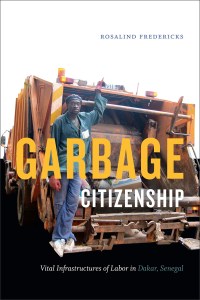
A review of Garbage Citizenship: Vital Infrastructures of Labor in Dakar, Senegal, Rosalind Fredericks, Duke University Press, 2018.

Garbage CitizenshipIn 1990, Youssou N’Dour, Senegal’s most famous musician, released an album titled Set. The main song had the following line: Set, set oy. Ni set, set ci sa xel lo, ni set ci sa jëff oy… I had no idea what it meant, but in her book Garbage Citizenship, Rosalind Fredericks provides translation and context: Cleanliness, oh cleanliness. Be clean, pure in your spirit, clean in your acts… The injunction to be clean and to make clean (set setal in wolof), repeated in the song’s chorus, echoes the rallying cry of a grassroot movement in which young men and women set out to clean the city of Dakar from its accumulating garbage, substituting a failing urban waste infrastructure and denouncing the corruption of a polluted political sphere. Labelled as an exemplary case of participatory citizenship and youth mobilization, the movement was captured by political clientelism and made to serve the neoliberal objectives of labor force flexibility and public sector cutbacks. At the height of the movement in 1989, Dakar’s mayor made a shrewd political calculus to recruit youth activists into a citywide participatory trash-collection system. Their incorporation into the trash sector was facilitated by a discourse of responsibility through active participation in the cleanliness of the city. They became the backbone of the municipal waste management system and remain included in the sector’s labor force to this day. The history of the Set/Setal movement is only one of the case studies that Rosalind Fredericks develops in her book. The author finds the same activists who spontaneously took to the streets to clean up Dakar in 1988-89 having moved into low-pay positions as trash workers in a reorganized infrastructure that used derelict garbage trucks and often delayed payment of salaries. Together with their labor union leaders, they staged another kind of public protest in 2005-07: the garbage strike, supported by Dakar inhabitants who brought their household dumpings to the main arteries of the capital and piled them for all politicians to see. Other cases studied by the author include a NGO-led, community-based trash collection project in a peripheral neighborhood mobilizing voluntary women’s labor and horse-drawn carts, and the functioning of a trash workers’ union movement affirming the dignity of labor through discourses of Islamic piety.

Governing through disposability

Garbage Citizenship is a book with high theoretical ambitions. It purports to make “theory from the South” by detailing the transformation of trash labor in contemporary Dakar. The book challenges the notion that African cities represent exceptions to urban theories, and reveals the complex mix of clientary politics, social mobilization, material things, and religious affects unleashed by neoliberal reform. It makes a novel contribution to urban studies by emphasizing the human component of infrastructure, the material aspects of municipal work, and the cultural embeddedness of human labor. Gender, ethnicity, age group, and religious affiliation come to the fore as particularly consequential shapers of sociopolitical community and citizenship practices. Inspired by new currents in critical theory loosely defined as “new materialisms,” Fredericks treats trash infrastructure as vibrant, political matter and emphasizes its material, social, and affective elements. She complements the political economy of neoliberal reforms and urban management in Dakar with a moral economy of filth and cleanliness through which social relations and political belongings are reordered. Although it is by definition dirty, trash work can be seen simultaneously as a process of cleaning and purification. The Islamic faith as it is practiced in Senegal offers an alternative discourse to the technocratic vision of good governance and efficient management that is imposed by development agencies upon Dakar’s municipal services. To sum up the book’s contribution, Garbage Citizenship develops a three-pronged critique of neoliberalism, of participatory development, and of the “materialist turn” in social science scholarship. Let me expand on these three points.

First, Garbage Citizenship offers a critique of neoliberalism grounded in social science theory and ethnographic observation. Such critique has become standard in the anthropology literature, where the logic of structural adjustment imposed by multilateral institutions and global capital is described as wreaking havoc on local livelihoods and state-supported social services. Privatization, the shrinking of public budgets, the retreat of the state, and flexibilization of labor have unleashed intense volatility in the management of urban public services and, more specifically, in the garbage collection sector in Dakar. As one of the first African countries to undergo structural adjustment, Senegal was a test case for experimenting with various formulas of public-private partnership, labor de-unionization, technological downscaling, and participatory development. The chronology of neoliberal reforms shows that structural adjustment is unmoored from political forces: the “neoliberal” president Abdoulaye Wade operated a renationalization of the waste management sector facing mounting debts and collection crises, while Dakar’s Socialist mayor Mamadou Diop orchestrated the retreat of municipal services through flexibilization of the formal labor force and the mobilization of community-based efforts for collection. What makes Garbage Citizenship’s critique different from other denunciations of neoliberalism is its empirical focus on the way that state power is materialized in everyday infrastructure, and on how life under neoliberalism is experienced daily by municipal workers and citizens alike. Garbage often stands in as the quintessential symbol of what’s wrong in African cities. The challenge of managing trash, in other words, acts as a potent metaphor for the African “crisis” writ large. Garbage Citizenship raises questions about the material and symbolic “trashing” of the continent by grounding them in the everyday politics of trash labor and governing-through-disposability. Through garbage strikes and illegal dumping of waste, Dakar’s residents mobilize the power of waste as both a symbol of state crisis and an important terrain on which to battle for control of the city.

Treating people as infrastructure

Another basic recommendation of neoliberalism, indeed of standard economics, is that labor be substituted to capital in countries with an abundant labor force and limited access to financial resources and technology. Fredericks describes how this substitution of labor to capital operates in concrete terms: through the devolution of the burdens of infrastructure onto precarious laboring bodies—those of ordinary neighborhood women and the formal trash workers themselves. The analysis illuminates how urban infrastructures are composed of human as much as technical elements and how these living elements can help make infrastructures into a vital means of political action and a tool for the formation of collective identities. The greatest burden of municipal trash systems was devolved onto labor: workers were furnished with little equipment for collection, if any at all, and existing materials were allowed to degrade. Municipal employees engaged in constant tinkering and bricolage work to keep the garbage collection trucks running. Some parts of Dakar, such as the posh central districts of Plateau and Médina, were well served by state-of-the-art French equipment operated by international companies selected through opaque bidding processes. The poorer and more populous parts of the city had to rely on second-hand garbage trucks that often broke down or were left completely off the collection grid, with ruinous effects for people’s health and the environment. Waste collection is hazardous work, and workers in the garbage sector bear the brunt of labor’s deleterious effects in the form of endangered lives and damaged health. Governing-through-disposability makes laboring bodies dispendable and orders urban space along a logic of making clean and letting dirty. By substituting labor to equipment and treating people as infrastructure, the neoliberal state treats people as trash.

Second, Garbage Citizenship provides a critique of developmentalism, a theory that is sometimes presented as a gentler substitute to neoliberalism. Developmentalism emphasizes the human aspects of development. It asserts that state bureaucrats become separated from politicians, which allows for the independent and successful redevelopments of leadership structures and administrative and bureaucratic procedures. It promotes community-driven development as a solution to the disconnect between the population and public service providers. Critics often point out that developmentalism is linked to depolitization: it treats development as an anti-politics machine, and rests on the assumption that technocratic fixes can alleviate austerity measures in the face of widespread unrest and social dislocation. For Fredericks, garbage is a highly political matter. Dakar’s garbage saga is inseparable from the evolution of national politics, with the decline of the Socialist Party under Abdou Diouf from 1988 to 2000, Abdoulaye Wade’s alternance and his failed dream of an African renaissance from 2000 to 2012, and the consolidation of state power under president Macky Sall. It is also emmeshed in municipal politics. Dakar’s Socialist mayor Mamadou Diop used the Set/Setal movement to reward and recruit new Party members from the ranks of the youth. Creating new jobs was explicitly based around a political calculus that traded patronage with enrolment into municipal work. The community-based trash system was touted as an important demonstration of the mayor’s commitment to youth and to an ideal of participatory citizenship. Participants remember the “Journées de Propreté” (Days of Cleanliness) as overt Socialist Party political rallies. Under President Wade, the trash management system became the locus of a power struggle between the municipal government and state authorities. The sector saw eight major institutional shake-ups, and equipments constantly changed hands while workers received only temporary-contract benefits and day-labor pay rates. Upon taking office, Macky Sall announced his intention to dissolve Abdoulaye Wade’s new national trash management agency and relocate Dakar’s garbage management back into the hands of local government. The municipality found an agreement with the labor union, and workers won formal contracts and higher salaries.

The perils of community

Community participation and women’s empowerment are a key tenet of developmentalism and have been adopted by aid agencies as a new mantra conditioning their support. For Fredericks, we need to unpack these notions of community, participation, and empowerment. Often imagined as unproblematic sites of tradition and consensus, communities are produced through systems that harness the labor of specific members as participants and mobilize the “glue” of communal solidarity. Empowering some people often means disenfranchising others, and interferes with existing relations of power based on gender, ethnicity, and local politics. In the case under study, ENDA, a well-established NGO, partnered with leaders from the Lebou community in the neighborhood of Tonghor, on the road to Dakar’s airport, to establish an off-the-grid garbage collection system based on horse-drawn carts and the work of “animatrices” charged with educating neighborhood women on how to properly store, separate, and dispose of their garbage. The project resonated with a vision of community-driven development using low-tech, environment-friendly solutions that even poor people can afford and can control, and that can be replicated from community to community. But the analysis finds that the ENDA project produced an elitist, ethnicized image of community and that women were subjected to dirty-labor burdens as the vehicule of these development agendas. The “empowered” animatrices, drawn from the Lebou ethnic group, were not remunerated for their services and had no choice but to participate out of a sense of obligation to their communities, as enforced by the power and authority of community leaders. The village elders explicitly chose the animatrices using “social criteria” from respected but poor Lebou households, and used the project to their own ends in order to reinforce their autonomy from the Dakar municipality. The neighborhood women whose garbage practices were being monitored often came from a disenfranchized ethnic group and were stigmatized for their “unclean” habits and filthy condition. They were often the least willing and able to pay the user fee for garbage collection, and had to resort to the old practice of burying their waste or dumping it on the beach by night. In the end, the project was terminated when garbage began to accumulate in the collection station near the airport, attracting hundreds of circling birds and the attention of national authorities.

As a third contribution, Garbage Citizenship makes an intervention in the field of critical theory. The author notes the recent resurgence of materialist thinking in several disciplines, and intents to provide her own interpretation of the role of inanimate matter and nonhuman agencies in shaping social outcomes and policy decisions. Garbage grounds the practice of politics in the pungent, gritty material of the city. It forces politicians to make or postpone decisions, as when trash strikes and collection crises choke the capital’s main arteries with piles of accumulating dump. A toxic materiality is a central feature of trash politics: garbage’s toxicity manifests itself by its stench and rot that make whole neighborhoods repellent and attracts parasitic forms of life such as germs and rodents. To borrow an expression from Jane Bennett, trash is “vibrant matter” in the sense that it becomes imbued with a life of its own, straddling the separation between life and matter and making discarded things part of the living environment. Garbage also participates in the “toxic animacies” identified by Mel Chen who writes from the same perspective of vital materialism.  This vitalist perspective emphasizes the relational nature of material and social worlds and the intersecting precarities they engender. Trash renders places and people impure through threats of contagion: as anthropologist Mary Douglas underscored in her book Purity and Danger, discourses about dirt as “matter out of place” produce social boundaries and thereby structure and spatialize social relations. According to Fredericks, governing-through-disposability is a particular modality of neoliberal governance, determining which spaces and people can be made toxic, degraded, and devalued. It makes visible, smelly and pungent the invisible part of society, the accursed share of human activity, the excessive and non-recuperable part of any economy which must be discarded and cast away. The Mbeubeuss municipal landfill, where waste accumulates in open air, is the monstrous shadow of Dakar, a grotesque double that reveals the obscene underbelly of taken-for-granted urban life. But it should be pointed out that Garbage Citizenship is not a work of critical theory: Fredericks is not interested in building theory for its own sake, and she uses vital materialism, toxic animacies, and symbolic structuralism as tools to show how the power of waste is harnessed to different ends in specific conjunctures.

Islam is the solution

What’s new in Frederick’s new materialism is that it doesn’t treat religion as an ideological smokescreen or as the opium of the people. The author underscores the particular importance ascribed to purity and cleanliness as an indispensable element of the Islamic faith. The Set/Setal movement, with its call of making clean and being clean, drew from a religious repertoire and strove to cleanse the city in a literal sense, in terms of sanitation and hygiene, but also morally in a fight against corruption, prostitution, and general delinquency. No longer waiting for permission or direction from their elders, young men and women took ownership of their neighborhoods and bypassed the power of marabouts and the Muslim brotherhoods who had traditionally channeled support toward local and national political authorities. Youth activists, some of them educated, had never imagined of working in garbage as their profession But the stigma attached to being a trash worker and doing dirty labor was overruled by the spiritual value attached to cleanliness and purity, which saw the task of cleaning the city as an act of faith, a calling even akin to a priesthood. A materialist reading of religion emphasizes religious work as bricolage. Fredericks describes the art of maintaining dignity and pride in an environment of impurity and filth as a piety of refusal. This conception of “material spirituality” includes  religious faith in the social and affective components of infrastructure. The piety of refusal also offers a language through which management decisions can be contested and the value of decent work is reaffirmed. Waste workers in Dakar harness the power of discourses of purity and cleanliness as a primary weapon in the fight for better wages and respect. In Fredericks’s interpretation, Islam offers a potent language with which to critique Senegal’s neoliberal trajectory and assert rights for fair labor. This politics of piety emphasizes Islam as the solution, but not in the sense that the Muslim Brotherhood and proponents of political Islam understand it: the demands put forward by trash workers and their union leaders are articulated with a Muslim accent, but only to emphasize the dignity of life and the decency of labor. In the context of urban waste management and unionized mobilization, Islam may provide the language for constructively contesting neoliberal austerity.

The Brazilian Buttock Lift

A review of Pretty Modern: Beauty, Sex, and Plastic Surgery in Brazil, Alexander Edmonds, Duke University Press, 2010.

Pretty ModernIn Brazil, women claim the right to be beautiful. When nature and the passing of time don’t help, beauty can be achieved at the end of a scalpel. Plastic surgery or plástica is not only a status good or the preserve of socialites and celebrities: according to Ivo Pitanguy, the most famous Brazilian plastic surgeon and a celebrity himself, “The poor have the right to be beautiful too.” And they are banking on that right. Rio and São Paulo have some of the densest concentrations of plastic surgeons in the world, and financing plans have made plástica accessible to the lower middle class and even to favela residents. While in the United States, people may hide that they have had plastic surgery like it’s something shameful, in Brazil they flaunt it. The attitude is that having work done shows you care about yourself—it’s a status symbol as well as a statement of self-esteem. Cosmetic surgery’s popularity in Brazil raises a number of interesting questions. How did plastic surgery, a practice often associated with body hatred and alienation, take root in a country known for its glorious embrace of sensuality and pleasure? Is beauty a right which, like education or health care, should be realized with the help of public institutions and fiscal subsidies? Does beauty reinforce social hierarchies, or is attractiveness a “great equalizer” that neutralizes or attenuates the effects of class and gender? Does plástica operate on the body or on the mind, and is it a legitimate medical act or a frivolous and narcissistic pursuit? Does beauty work alienate women or is it a way to bring them into the public sphere?

Class, race, gender, and plástica

Alexander Edmonds, an American anthropologist, answers these questions by mobilizing the three key dimensions of his discipline: class, race, and gender. Brazil is a class society with one of the most unequal wealth distributions in the world. It is also a society organized along racial lines, even though a long history of miscegenation has blurred color lines and made racial democracy part of the national identity. Brazil continues to have large gender gaps within the workforce and government representation. The country’s supposedly large number of exotic, attractive and sexually available women makes it a masculinist fantasy worldwide, while Brazilian feminists face enduring challenges. All these issues relate in one way or another to the availability of cosmetic surgery, the quest for beauty and attractiveness, and the development of medicine into new terrains of well-being and self-esteem. Pretty Modern mixes several strands of literature. It is a travelogue into contemporary Brazil, a deep dive into its history and culture, a journalistic description of the cosmetic surgery industry, a philosophical treatise on beauty and appearances, a personal memoir about the impasses of erudite culture and the wisdom of ordinary people. It even contains samba lyrics and color pictures of scantily clad models.

The Brazilian constitution recognizes the human right to health. It doesn’t recognize the right to beauty, but cosmetic surgery is provided for free or at subsidized rates in public clinics such as the Santa Casa da Misericórdia in Rio. Surgeons perform charity surgeries for the poor to get practice in large residency programs before opening their private clinics. Some medical doctors come from afar to learn how to operate barrigas (bellies) or bundas (buttocks), techniques that come predominantly from Brazil. Ivo Pitanguy himself, the pioneer of plastic surgery in Brazil, learned the trade from Europe before bringing it back to Rio and taking it to a new level. His democratic ethos has been maintained by his disciples who share his vision of cosmetic surgery as psychotherapeutic intervention that should be accessible to all. Pitanguy famously defined the plastic surgeon as “a psychologist with a scalpel in his hand,” echoing the saying that “the psychoanalyst knows everything but changes nothing. The plastic surgeon knows nothing but changes everything.” Women see their operations as a form of psychological healing; given the choice, they prefer the surgeon’s scalpel than the couch of the psychoanalyst. Plástica has psychological effects for the poor as well as for the rich: surgery improves a woman’s auto-estima, self-esteem, and is considered as a necessity, not a vanity. Appearance is essential to mental well-being, economic competitiveness, and social and sexual competence. If we follow the WHO’s definition of health as “a state of complete physical, mental and social well-being,” then beauty work represents the new frontier in the pursuit of happiness.

The right to beauty

Of course, the growth of cosmetic surgery has not been without controversy. A “right to beauty” seems to value a rather frivolous concern in a country with more pressing problems—from tropical diseases, like dengue, to the diseases of modernity, like diabetes. Brazil has a health system divided into a public and a private sector with different standards of care, and the poor often see their universal right to healthcare obstructed by long queues, squalid conditions, and substandard practice. Cosmetic surgery stretches medical practice into an ambiguous grey zone where the Hippocratic oath doesn’t always fully apply. The growth of plástica has also been accompanied by a rise in malpractice cases, insurance fraud, and media stories of horrific complications. Some Brazilian critics see the new fashion of breast enlargement as a form of cultural imperialism brought by Euro-American influence in a country that has long valued small boobies and big booties (the ever-popular butt implant raises fewer cultural concerns.) Beauty ideals peddled by women’s magazines are blamed for eating disorders and body alienation. Cultural elites from the West see the pursuit of the artificially enhanced body as vain, vulgar, and superficial, betraying a narcissistic concern with the self. But who is one to judge? asks Alexander Edmonds, who confesses he shared some of the misapprehensions of the distanced scholar before he was confronted with a candid remark by a favela dweller: “Only intellectuals like misery. The poor prefer luxury.” Even though it is not common for a scholar to glance through local versions of Playboy or watch telenovelas titled “Without Tits, There is no Paradise,” the anthropologist knows the heuristic value of suspending one’s judgment and immersing oneself into the life-world of cultural others through participant observation.

Race raises another set of issues. Here too, North Americans have been accused of exporting their cultural imperialism, with its bipolar racial categories and immutable color line, in a country that has long prided itself for its racial democracy and color fluidity. In fact, Brazilians are very race-conscious. But rather than grouping people into races defined by ancestry, the local taxonomy describes subtle variations in appearance along a continuum. The national census racially classifies the Brazilian population in five color types: branco (white), pardo (brown), preto (black), amarelo (yellow), and indigenous. But in everyday usage, more than 130 color types have been identified. Brazil’s famous “rainbow of color terms” intersects with class and gender. In Brazil moving up the social scale can be seen as a form of whitening. For example, a light-skinned multiracial person who held an important, well-paying position in society may be considered branco while someone else with the same ethnogenetic make-up who had darker skin or was of a lower class may be considered pardo or even preto. But unlike in many parts of the world where lightness of skin tone is fetishized, in Brazil brown is beautiful. Many women pride themselves of being morena, a term that can mean both brunette and brown-skinned. On the other hand, blackness is stigmatized, and European facial features and hair confer social advantages. No wonder that “correction of the Negroid nose” is a standard surgery operation that raises few eyebrows, while Brazil remains one of the biggest consumer market for blonde hair dye.

The anthropology of mestiçagem

More than any other nation, Brazil’s self-image and national identity has been shaped by anthropologists. The Amazon Indian is known solely from the reports of ethnographers in the field, perpetuating the heritage of Claude Lévi-Strauss. Gilberto Freyre, a student of Franz Boas in the early twentieth century, provocatively reversed the scientific discourse on “miscegenation”  and its racist underpinnings by affirming the virtue of racial mixture and cultural syncretism. Freyre’s celebration of idealized and eroticized mestiçagem played a central role in defining Brazilian national identity. Sexuality—especially across racial lines—became a key symbol for the formation of a new, mixed population with positive traits, such as cordiality and physical beauty. But more recently sociologists have deconstructed the myth of racial democracy by documenting the persistent racial inequalities in wealth and income, access to education and social services, and representations in the media and in the political sphere. Governments introduced controversial quotas to promote racial diversity in higher education and in the public sector. There has been a shift in the representation of race in the past twenty years. More dark faces now appear in telenovelas, ad campaigns, and variety shows, and multinational companies have found a new niche market for black beauty products, fashion, and cosmetics. Afrodescendentes are adopting a black hairstyle and a negra identity as well as narratives of racial pride and militancy. It is too early to say whether affirmative action and identity politics will substitute to mestiçagem and the rainbow of colors, but the emergence of the black movement in Brazil also confirms the significance of the aesthetic dimension of modern subjectivities.

What does cosmetic surgery tell us about gender relations and women’s roles? Contrary to a popular perception, women do not engage in beauty work to comply to men’s expectations and submit themselves to the male gaze. They do it on their own terms, to follow their own desires or to respond to society’s “interpellation.” Motives may vary across social class, age category, and marital status. Some Brazilian women can be openly frank about it: “After having kids, I’ll have to do a recauchutagem [refurbishing, normally of a car]. After shutting down the factory, nê?” Plastic surgery is closely linked to a larger field that manages female reproduction and sexuality. It is not coincidental that Brazil has not only high rates of plastic surgery, but also Cesarean sections (70 percent of deliveries in some private hospitals), tubal ligations (sterilization accounts for half of all contraceptive use), and other surgeries for women. Some women see elective surgeries as part of a modern standard of care available to them throughout the female life cycle. Cosmetic surgery can mark key rites of passage: initiation into adulthood, marriage, motherhood, divorce, and menopause. The transformative events by far the most often mentioned in connection with plástica are pregnancy and breast-feeding. Tensions between motherhood and sexuality are analyzed in detail by Alexander Edmonds, who mentions that both are equally important for self-esteem. Drawing on a range of examples—from maids who aspire to acquire cosmetic surgeries, to favela residents who dream of entering the fashion world, to single mothers who embrace plastic surgery as a means of erotic body scuplting—he describes how sexual and class aspirations subtly mingle in beauty culture.

The right of the Brazilian morena

In his last book Modos de homem, modas de mulher, published shortly before his death in 1987, Gilberto Freyre warned against “yankee influence” and the impact of “north-Europeanization or albinization”: “one must recognize the right of the Brazilian brunette to rebuke northern-European fashions aimed at blonde, white women.” In Pretty Modern, Alexander Edmonds shows that the right of the Brazilian morena is not to be abolished. The tyranny of fashion applies more than elsewhere in a country where bodies are being refashioned to fit aesthetic and sexual mores. But Brazilian plástica does not follow an American or north-European blueprint. If anything, it leads the way that other emerging countries in Latin America or East Asia are also beginning to tread. There, the female body is invested with hopes of social mobility and self-accomplishment that demand long-term investment and management. In poor urban areas, beauty often has a similar importance for girls as soccer (or basketball) does for boys: it promises an almost magical attainment of recognition, wealth or power. For middle-class cariocas, the body is a source of distinction and success. For many consumers, a lean and fit body is essential to economic and sexual competition, social visibility, and mental well-being. Beauty culture interpellates women as autonomous sexual beings and as economic agents in markets where physical attractiveness can be exchanged with various kinds of cultural and economic resources. This anthropologic study shows that cosmetic surgery arises in unison with a central concern for Brazilian women: staying young, sexy, and beautiful.

Indigenous Peoples and the Anglo Settler World

A review of Theft Is Property! Dispossession and Critical Theory, Robert Nichols, Duke University Press, 2020.

Theft Is Property“Property is theft !” declared Pierre-Joseph Proudhon, denouncing the inanity of social institutions undergirding bourgeois society. He was criticized by Karl Marx, who judged the formula self-refuting, and by Marx Stirner, who wrote: “Is the concept ‘theft’ at all possible unless one allows validity to the concept ‘property’? How can one steal if property is not already extant?” Indigenous people face the same set of objections when they claim ownership of the land that has been stolen from them. Their traditional culture and enduring values often emphasize a special connection to land and place. They are the “children of the soil,” “sprung from the land itself” as the word “autochthonous” indicates in its Greek etymology. They can legitimately claim the right of first occupancy and document their collective memory of having been there first. The dispossession of their ancestral lands occurred under conditions that would today be judged unlawful or illegitimate, and that was condemned as such at the time it occurred. But on the other hand, the emphasis on possession and ownership contradicts the values of shared responsibility, stewardship, and common property that many Indigenous people, indeed many persons, associate with land and natural assets. How can one argue that the earth is not to be thought of as property at all, and that it has been stolen from its rightful owners? What does it mean, then, to be dispossessed of something that you never really “had” in the first place, and to reclaim something that was never really “yours” to begin with? Can we make the legitimate claims of Indigenous people compatible with political visions that do not advocate property and ownership at their point of departure?

Anglo settler colonialism

For Robert Nichols, these questions cannot be addressed in the abstract. They have to be situated in the historical context of “Anglo settler colonialism,” the process by which the modern nations of Canada, Australia, New Zealand, and the United States were formed. As its subtitle indicates, this book is intended as a contribution to “critical theory,” and there are many theoretical development that may rebuke more empirically-inclined readers. But putting the concept of dispossession in dialogue with the plight of Indigenous peoples facing settler colonialism allows the author to ground social theory in historical processes it is meant to explain and criticize. Critical theory is mostly indebted to Karl Marx, and the author of Das Kapital is indeed the main theoretical reference in Robert Nichols’ book, with two chapters out of four at least partially devoted to discussing his writings. But other authors from the classical tradition, from Locke to Rousseau and from Tocqueville to Mill, are also brought into the debate, as well as contemporary writers belonging to various strands of critical theory: analytical Marxism, new feminisms, critical race theory, radical Black critique, critical geography, Indigenous peoples’ scholarship, and postcolonialism. Indeed, for me one of the main attraction of Theft Is Property! was its openness to critical voices that do not usually feature into the intellectual mainstream, but that nonetheless formulate valid claims and propositions. I was not familiar with most of the contemporary authors quoted or discussed by Nichols, but their voices provide a useful contribution to contemporary debates about race, rights, and property.

Nor was I familiar with the detailed history of settler colonialism in the Anglo-saxon world. Nichols reminds us that “over the course of the nineteenth century alone, Anglo settler peoples managed to acquire an estimated 9.89 million square miles of land, that is, approximately 6 percent of the total land on the surface of Earth in about one hundred years.” It was the single largest and most significant land grab in human history. This great appropriation, or transformation of land into property, was also a great dispossession. As a result of settler colonialism, Indigenous peoples have been divested of their lands, that is, the territorial foundation of their societies, and deprived of their most basic rights. This is the context that we must keep in mind when we discuss the history of settler societies and the development of capitalism. We must understand more precisely how landed property came to function as a tool of colonial domination in such a way as to generate a unique “dilemma of dispossession.” Robert Nichols presents this dilemma as follows: “We can say that dispossession is a process in which novel proprietary relations are generated but under structural conditions that demand their simultaneous negation.” In effect, the dispossessed come to “have” something they cannot use, except by alienating it to another. New proprietary relations are generated but under structural conditions that demand their simultaneous negation. The United States and its settler elite accorded Indigenous peoples truncated property rights in an unequal exchange that “took away their title to their land and gave them the right only to sell.” Indigenous people are figured as the “original owners of the land,” but only retroactively. Contrary to Max Stirner’s assertion, what belongs to no one can in fact be stolen.

Karl Marx and dispossession

To understand the genealogy of dispossession, Robert Nichols turns to Karl Marx and his analysis of the transformation of land tenure within Europe during the transition from feudalism to capitalism. Marx borrows from the anarchist tradition the claim that modern European nation-states were the emanations of acts of massive theft. But he considered the anarchist slogan “Property is theft!” as self-refuting, since the concept of theft presupposes the existence of property. He therefore turned to the notion of dispossession, or expropriation, to refer to the initial alienation process that separated “immediate producers” from direct access to the means of production. For Marx, dispossession was linked to processes of proletarianization, market formation, and industrialization. Through a process of primitive accumulation, the feudal commons were subjected to various rounds of “enclosures.” Land were partitioned and closed off to peasants who had for hundreds of years enjoyed rights of access and use. Without direct access to the common lands that once had sustained their communities, peasants were forced to contract themselves into waged employment in the new manufactures that arose in urban centers. The enclosure of the English commons and transformation of the rural peasantry into an industrial workforce serves as the primary empirical reference from which Marx derives his conceptual tools. The concepts of primitive accumulation, exploitation, and alienation are thought through the experience of England and its historical trajectory that Marx and Engels studied closely. Other historical references, such as the privatization of public lands and criminalization of poverty (the “theft of wood”) in Rhineland or the rural commune (Mir) as the fulcrum of social regeneration in Russia, are only brought in tangentially, and the territorial expansion of European societies into non-European lands is not analyzed in detail.

As Marx famously put it, the history of primitive accumulation is written “in letters of blood and fire.” But primitive accumulation should not be relegated to a primitive past or a historical stage, from which we have hopefully escaped. Critics have raised objections not only with the historical accuracy of Marx’s description but also with the very idea that the overt, extra-economic violence required by capitalism is surpassed and transformed into a period of “silent compulsion” through exploitation. For these critics—Peter Kropotkin, Rosa Luxembourg, postcolonial authors—, political violence is a constitutive feature of capitalism’s expansion and takes the form of repression at home and colonial expansion abroad. Imperialism, according to Lenin, is the highest stage of capitalism. Colonies and formally independent countries in the South become peripheral zones because they specialize in the low-tech and labor-intensive activities, including the supply of raw materials and cheap labor to core zone areas, and thus become “underdeveloped” through unequal exchange mechanisms consequent to colonization and/or imperialism. To this violence against nature and violence against labor that sustains capitalism’s expansion, feminist author Silvia Federici adds that violence against women is congenital to the reproduction of labor and the formation of capital. But this expansion of primitive accumulation and constitutive violence into the present should not obscure the fact that colonial settler societies were born out of a massive act of land grabbing and dispossession. Viewed from this perspective, primitive accumulation acquires a new meaning that cannot be reduced to its past and present forms in capitalist societies.

How the land was won

More generally, critical thinkers who forget to account for the original dispossession of Indigenous peoples in their explanation of capitalist development perform an erasure of history. They treat the clearance and dispersion of people in settler colonies as a necessity, “just as trees and brushwood are cleared from the wastes of America or Australia” (Marx). But land, understood as an intermediary concept between nature and labor, can only be separated from its early occupiers through a violent process of dispossession and appropriation. Indigenous peoples bear the memory of this injustice and of their resistance to it. Their claim for collective atonement and redress is constitutive of their identities and subjectivities. Indigenous peoples have always resisted dispossession, but they have not always done so as Indigenous peoples. Instead, the very idea of indigeneity was, in part, forged in and through this mode of resistance. Dispossession is structural in the same sense that racism can be said to be structural: it generates long-standing patterns of vulnerability and marginalization, and creates subject positions through disciplinary power and repression. Anglo settlers obtained new territories through a variety of ways, some of them requiring violence, coercion and fraud, others based on legal terms and based in norms of reciprocity and consent. But the effects were always and everywhere the same: as Theodore Rossevelt expressed it, “Whether the whites won the land by treaty, by armed conquest, or by a mixture of both, mattered relatively little as long as the land was won.” Or as a Seneca chief put it in 1811, “The white people buy and sell false rights to our lands. They have no right to buy and sell false rights to our lands.”

There is a tradition of resistance and critical thinking among Native Americans that lingers to these days. Parallel to the Great Awakening of Protestant faith that impacted the English colonies in America in the eighteenth century, there was an “Indian Great Awakening” that fused distinct religious, cultural, and political traditions into a pan-Indigenous movement with broad appeal among the Native population. In the nineteenth century, opposition to the Euro-American predation on Native lands came from three distinct perspectives: accommodationist, traditionalist, and syncretist, each articulating a political critique that converged in the denunciation of dispossession and the claim of a distinct Indigenous identity. The twentieth century has seen a remarkable revival of Indigenous syncretism and political militancy that now mobilizes against extractive development projects such as the Dakota Access Pipeline. By claiming that “there can never really be justice on stolen land,” they join forces with other social movements that advocate transnational solidarity and global justice. Robert Nichols also analyses rituals of dispossession in light of Black feminist theorists who have reflected on bodily dispossession and what it means to claim one’s body as one’s own. Self-ownership does not necessarily reinforce proprietary and commodified models of human personhood, especially in the context of enslavement, oppression, and sexual violence that Black women have been subjected to.

Native Lives Matter

On April 23, 2021, former Senator Rick Santorum caused an uproar when he declared: “There isn’t much Native American culture in American culture.” He elaborated: “We came here and created a blank slate. We birthed a nation from nothing. I mean, there was nothing here.” His remark was inspired by ignorance, bigotry, and white suprematism, and was rightly denounced as such. But in a sad way he was right. The reason there isn’t much Native cultural heritage in American culture is that most of it was destroyed or written out of the history books, by people just like Rick Santorum. The origins of American exceptionalism are mired in blood and plunder. Native American cultures have always been erased from the national narrative, as First Nations were forbidden to exhibit their culture, to carry it on and to express it in their native languages. Even now, Native Americans suffer from a disproportionate share of social ills and experience police brutality and cultural repression in their daily lives. Along with the Black Lives Matter movement, the Native Lives Matter campaign draws attention to social issues such as violence from law enforcement, high rates of incarceration, drug addiction, and mental health problems into a national dialogue calling for social justice reform. Thanksgiving, that quintessential American celebration, is commemorated as a National Day of Mourning by many Native Americans as a reminder of the genocide of millions of their people, the theft of their lands, and the relentless assault on their cultures. It is a day of remembrance and spiritual connection as well as a protest of the racism and oppression which Native Americans continue to experience. Penance and atonement, as well as thanksgiving and praising God, are part of the American tradition.

Race, Culture, and the Origins of American Anthropology

A review of Anthropology and the Racial Politics of Culture, Lee D. Baker, Duke University Press, 2010.

Lee Baker AnthropologyAnthropology in America at the turn of the twentieth century presents us with a double paradox. Cultural anthropologists wanted to protect Indian traditions from the violent onslaught of settler colonialism, and yet prominent voices among Indian Americans accused them of complicity with the erasure of their beliefs and cultural practices. They thought the culture that African Americans inherited from exile and slavery was not worthy of preservation and should dissolve itself into the American mainstream, and yet African American intellectuals praised them for the recognition of cultural difference that their discipline allowed. As Lee Baker puts it, “African American intellectuals consistently appropriated anthropology to authenticate their culture, while Native American intellectuals consistently rejected anthropology to protect their culture.” What made cultural assimilation the preferred choice in one case, and cultural preservation the best option in the second? How did the twin concepts of race and culture shape the development of anthropology as an academic discipline? In Anthropology and the Racial Politics of Culture, Lee Baker introduces a distinction between in-the-way people, the so-called “Negroes” as black persons were designated and self-identified at the time, and out-of-the-way people, the Native Americans or “Indians” who were relegated to the margins of American society.

Kill the Indian and save the man

In the end of the nineteenth century, the federal government’s policy towards American Indians was one of assimilation, privatization of tribal lands, and the suppression of native cultures. “Kill the Indian and save the man” was the slogan of that era: proponents of assimilation barely veiled their desire for the complete destruction of Indian beliefs and cultural practices. A generation later, however, cultural preservation and self-determination became the watchwords of federal policies governing Native Americans. The Wheeler-Howard Act of 1934, better known as the Indian Reorganization Act or the “Indian New Deal,” was designed “to conserve and develop Indian lands and resources; to extend to Indians the right to form business and other organizations; to establish a credit system for Indians; to grant certain rights of home rule to Indians; to provide for vocational education for Indians; and for other purposes.” Anthropology played an important role in this shift in federal Indian policy. The study of American Indian languages, customs, and material culture was at the origin of the American School of Anthropology: in an indirect way, Native Americans played a prominent role in the history of the discipline. Franz Boas, the founding father of American anthropology, famously demonstrated that one cannot rank-order races and cultures along a single evolutionary line, thereby acknowledging Indian Nations as historically distinct cultures that should be preserved, valued, and otherwise acknowledged. And yet many educated, self-proclaimed Indian elites resisted the anthropological gaze, claiming for their folk equal treatment and access to US citizenry.

The essence and primary task of American anthropology was the study of American Indians. But knowledge production went along cultural destruction: indeed, the urge to inventory Indian languages and culture was predicated upon their rapid disappearance. The need to “salvage the savage” fueled very different projects: progressive white anthropologists and conservative Indian traditionalists were committed to conserving and celebrating indigenous practices, while progressive Indian activists and conservative Christian reformers believed in mutual progress, civilization, and integration into the mainstream. These two competing visions clashed during the so-called peyote hearings held at the US House of Representatives in the winter of 1918, when the temperance movement tried to make the use of peyote a federal offense. What and who was authentically Indian, and what and who was not, was the subject of intense debate. Zitkala-Ša, also known as Gertrude Bonnin, argued for temperance in the name of civilizational values and racial uplift. James Mooney, an ethnologist from the Smithsonian institution, supported the ceremonial and medicinal uses of peyote and attacked the credibility of his opponent by challenging her authenticity: Gertrude Bonnin, he argued, “claims to be a Sioux woman, but she is wearing a woman’s dress from a southern tribe.” Debates went on whether the use of peyote was or wasn’t a genuine Indian practice, and references were made to the “ghost-dance craze” that had been banned by the Bureau of Indian Affairs in 1883, leading eventually to the massacre at Wounded Knee in 1890. The irony is that Zitkala-Ša dedicated most of her adult life to advocating greater awareness of the cultural and tribal identity of Native Americans. During the 1920s she promoted a pan-Indian movement to unite all of America’s tribes in the cause of lobbying for citizenship rights. In 1924 the Indian Citizenship Act was passed, granting US citizenship rights to most indigenous peoples who did not already have it.

Salvaging the savage

James Mooney, Gertrude Bonnin’s opponent in the peyote hearings, was also accused of “fabricating the authentic or producing the real.” Working for the Bureau of American Ethnology, an institution originally created to collect intelligence on Indian tribes in order to better subdue them, he developed from an early age a keen interest in American Indian cultures, and chose to work among those he deemed the most traditional. As Lee Baker notes, he was unscrupulous in his methods of acquiring sacred books and artifacts among the Cherokees, taking advantage of their social disintegration and economic poverty and gaining the trust of powerful men and women under false pretenses. He became the “arbiter of real Indians,” authenticating what was genuine and what was imported such as the biblical scriptures that Cherokee shamans and priests mixed with their sacred formulas. “In some cases, Lee Baker writes, he fabricated images and sounds of people outright in order to shape them into what he perceived as genuine.” But in a time dominated by assimilationist policies and a genocidal drive, he was sincerely devoted to salvaging Indian tribes’ history, folklore, and religion. He was moved to a fury by the massacre at Wounded Knee, and wrote scathing remarks about the attending missionaries who did not even offer a prayer for the deceased. He pioneered intensive participatory fieldwork long before it became the norm in anthropology, and took the time to observe various Native American tribes in the way they lived on a daily basis. His monograph The Ghost-Dance Religion and the Sioux Outbreak of 1890 was the first full-scale study of a nativist religion arising out of a cultural crisis. Mooney’s history and folklore remain definitive and vital to the Cherokee Nation today, and the stories and formulas he collected in his monographs are regularly republished.

“For every ten articles in the anthropological literature addressing American Indians, there was one discussing American Negroes or Africans.” Anthropologists were simply not interested in describing the culture of the many immigrant and black people who stood “in the way” of achieving a “more perfect union.” That job went to sociologists committed to the study of assimilation and race relations. According to Robert Park, one of the leading figures of the Chicago School of sociology, “The chief obstacle to assimilation of the Negro and the Oriental are not mental but physical traits (…) The trouble is not with the Japanese mind but with the Japanese skin.” In other words, what prevented integration and assimilation into the melting pot was not the specific culture of ethnic minorities, but racial prejudice and discrimination coming from the white Anglo-Saxon Protestant elite. The sociologists who studied race relations shared with the anthropologists the postulate that races were never inherently superior or inferior to each other. But each discipline embraced different ways of describing culture and behavior. Boas and his students at Columbia University built anthropology on the inventory of American Indian languages, customs, and material culture. Park and other Chicago sociologists focused on urban studies and the assimilation of immigrant minorities. For Park, there was no distinct African American culture: “While it is true that certain survivals of African culture and language are found among our American negroes, their culture is essentially that of the uneducated classes of people among whom they live, and their language is on the whole identical with that of their neighbors.” Progressive sociologists therefore advocated a policy of racial advancement focused on eliminating substandard housing, poverty, and racial segregation. But they also explained deviant behavior such as crime or drug use as the expression of a pathological subculture evolving from the conditions of urban ghettos.

Negro folklore

As anthropologists concentrated on Native Americans and sociologists dismissed the existence of a distinctive culture among African Americans, the task to collect stories, songs, and customs of the former black slaves fell on folklorists and educators. In the beginning of the twentieth century, the American Folk-Lore Society devoted several articles in its journal to African and African American folk traditions. The rationale for collecting and publicizing “Negro folklore” changed with the passing of time. In the 1890s, the first folklorists and black educators took to recording cultural practices of rural blacks in order to show that they could escape their backward condition and become enlightened citizens. Thirty years later, the New Negro intellectuals who led the Harlem Renaissance used folklore to embrace their African heritage and preserve their cultural roots. The same notebook of folklore with stories inspired by the African oral tradition was “first used to articulate the uplift project, and two decades later it was used to bolster the heritage project.” The schools at the origin of folklore collection followed the Hampton-Tuskegee model of educating African Americans to build their lives from basic skills. Drawing upon his experiences with mission schools in Hawaii, General Samuel Armstrong, the founder of the Hampton Normal and Agricultural Institute in 1868, used folklore as way to demonstrate how basic literacy and the learning of industrial skills could succeed at civilizing formerly enslaved people. Between 1878 and 1893, Hampton also experimented with Indian education, again employing the notion that industrial education helped to civilize the savages. Other black colleges, such as the Tuskegee Institute founded in 1881 by Hampton graduate Booker T. Washington, used the same approach in their program of racial uplift. Forty years later, the leaders of the New Negro movement turned to the anthropology developed by Franz Boas and his students to authenticate their culture and claim racial equality.

Anthropology emerged in the late nineteenth century as the science of race and the study of primitive cultures. How did anthropologists make the transition from the study of craniums to the theory of culture? What was at the origin of the three partitions of anthropology—the study of prehistorical remains, the comparison of physiological differences between races, and the social anthropology of primitive cultures? Lee Baker answers these questions by paralleling the life and work of Daniel Brinton, the first university professor of anthropology and a public intellectual of considerable influence at the end of the nineteenth century, and Franz Boas, who articulated a vision for anthropology based on cultural difference and racial equality. Brinton used the science of race to bolster the relevance of anthropology during distinguished career that began with antiquarian research in the 1880s and concluded with research that addressed relevant social issues and public problems in the 1890s. Like many people from his generation, he viewed racial difference in terms of inferiority and superiority, and placed the different human races in a hierarchy that culminated with the white race. Franz Boas, who is generally credited for debunking such racialist research in anthropology, did not attack these ideas right from the start. As a Jewish immigrant from Germany, his position within academia was insecure and he developed his original ideas only after he and anthropology were securely ensconced at Columbia University. But the assumptions of physical anthropology were directly challenged in a study Boas conducted between 1908 and 1910, published as Changes in Bodily Form of Descendants of Immigrants. Measuring the craniums of children, he was able to demonstrate that the environment played a significant role in determining physical attributes like head size, which were so often used to demarcate racial difference. His initial study of schoolchildren in Worcester, Massachusetts, which served as a foundation for his seminal work in physical anthropology, was almost derailed when parents and the local press expressed concern over the experiments that were inflicted on their children.

The Boas conspiracy

For Boas, this was the first in a long line of public assaults on his research and writings on race and culture. Franz Boas employed the skills of scientific observation to argue that all societies are part of a single, undivided humanity guided by circumstance and history, but none superior to another. We also owe to him the demonstration that cultures have different meanings and that anthropology needs not limit itself to only one interpretation. What mattered to him was the accumulation of facts and the inventory of differences. A successful ethnography should not focus on only one culture in order to patiently uncover its identity: the first and only goal of the science of man is the interpretation of differences. This analytical focus on variation makes him a precursor of structuralism, and his conception of an interpretive science announces later developments by Clifford Geertz. But for segments of the American public, Boas is not remembered for his scholarly contribution to the discipline of anthropology. Instead, he is considered as the initiator of “a vast left-wing conspiracy to destroy the idea that whites were racially superior to blacks and to impose a moral and cultural relativism that has forever crippled American civilization, and he did it with fraudulent data.” Lee Baker tracks the genealogy of this so-called “Boas conspiracy” from the Internet forums of white supremacists and KKK supporters to the anti-Semitic rant of the leader of the American Nazi Party interviewed by Alex Haley in 1966 and to the obscure texts of fringe intellectuals advocating “race realism” and the debunking of the “racial egalitarian dogma.” These unsavory readings remind us that anthropology has always been appropriated outside of the academy and has fueled projects that can be emancipatory, but also unashamedly racist and delusional.

Going to the Movies in Paris, Then and Now

A review of Paris in the Dark. Going to the Movies in the City of Light, 1930–1950, Eric Smoodin, Duke University Press, 2020.

Paris in the DarkParis in the Dark made me remember going to the movies in Paris as a child and a teenager. Of course, I did not experience firsthand the period covered by the book, from the 1930s to around 1950. My formative years took place in the late 1970s and in the 1980s, and a lot of change took place between the period described in the book and the times I remember from my childhood. But Paris will always be Paris, and some aspects of the cinema culture that Eric Smoodin describes did sound familiar. The same time distance lies between 1980 and today and between 1980 and the 1930-1950 period, in the interval between the disappearance of silent movies and the beginning of color films. Maybe my childhood years were even closer from the era of black-and-white movies than they are from my present self. Time has been running faster lately: we now have the Internet and Netflix, while I am speaking of a period before DVDs and VHS. Time did not stand still between 1940 and 1980, but there was more continuity between these two dates for French moviegoers and cinema aficionados than between 1980 and now. Also I tend to look as past history from the same perspective that Eric Smoodin describes in his introduction and concluding chapter. He, too, spent time in Paris between 1980 and 1981, as a graduate student who went to the movies as often as he could. And he now looks at the 1930s and 1940s with eyeglasses colored by this youthful experience. We broadly belong to the same generation. And we both feel nostalgic for a time when “going to the movies” was something more than spending an evening out: it was a lived experience that shaped your identity and culture.
Movie magazines

The first thing Parisians and banlieusards did when they planned to go to the movies around 1980 was to buy Pariscope (or its competitor L’Officiel des Spectacles.) This moderately-priced magazine listed all the movies, spectacles, and entertainment events in Paris and its surrounding banlieue over the upcoming week. You could find the address and schedule of cinemas, theaters, concert halls, museums, with posters from the most recent movies and even ads for sex shops, swinger clubs, and Minitel rose online forums. Pariscope was created in 1965 and ceased publication in 2016. But Eric Smoodin could exploit a similar publication, Pour Vous, a popular film tabloid that was published between 1928 and 1940 and that contained complete listings of all the films playing in the city and in the suburbs. Using this archive as a source, he produces a map of the city’s twenty arrondissements with some of the major cinemas from the period 1930-1950, cinemas that were for most of them still in existence in 1980 but, with a few exception, have disappeared from present-day Paris. He makes the distinction between the cinémas des grands boulevards lining the Champs Elysées and other main avenues, the cinémas de quartier serving a more localized neighborhood, and the ciné-clubs that were mostly concentrated in the Quartier latin, the fifth and sixth arrondissement. Each category offered a different movie-going experience. Each also survived the passing of time and link the distant past to more recent childhood memories and to the present.

As a representative of the first category, take the Rex, situated on the boulevard de la Poissonnière, which was the largest cinema theatre in Europe at the time of its opening in 1932. The Rex was built by Jacques Haïk, a wealthy film impresario known for having introduced Charlie Chaplin to France. Haïk aimed to create the most beautiful movie theatre in Paris, where cinema-goers would have the illusion of watching a film in the open air, with the ceiling painted to represent a starry night sky. The French press noted the florid extravagance of this “cinéma atmosphérique,” with its “starred ceiling giving us the illusion of an oriental night.” During the Occupation, the Rex was requisitioned and became the Soldatenkino, reserved for German soldiers. In the 1950s, one of the first escalators in France was installed and inaugurated by Gary Cooper. For a child, going to such a theater was a magic experience. It sparked the imagination for a lifetime: I still remember the grand building, the queue to the ticket window, the tip to the ouvreuse or usherette, the ice-cream seller who also handled cigarettes and Kleenex, the commercials opened by the animated figure of Jean Mineur throwing his pickaxe to a target and hitting bull’s eye…

Grand cinemas, cinémas de quartier, and ciné-clubs

The Rex and other grand cinemas typically played new movies for only a week before they were fanned out to other cinemas in the neighborhood, where the most successful flicks could keep on screen for weeks on end. The cinéma de quartier is where most Parisians situate their early movie experience. This is where they remember going to the movies for the first time alone or with their friends as opposed to accompanied by their parents; where they exchanged their first kiss; where they laughed, cried, or screamed in reaction to the scenes of the screen. In France, a R-rated movie would be accessible to teenagers, and a “film interdit aux moins de 16 ans” would be rated X in the US. But there were always ways to fake your ID, negotiate your entry without paying with the ticket clerk, or using a backdoor and some lock-picking skills to free ride on a film show. The neighborhood cinema was a familiar presence that is still remembered fondly in adult life and that finds its ways into novels by Patrick Modiano or movies such as Cinema Paradiso. Its disappearance is always a local tragedy, and its replacement by multiple screen theaters wipes away an important part of the viewer’s experience. 

No other city in the world during the period covered by this book had so extensive a system of ciné-clubs as Paris. From early on, cinema was considered as part of culture, and was identified as “le septième art  by a French-Italian critic as early as 1923. But not all movies were art movies. And ciné-clubs or art-movie theaters had a connection with highbrow Parisian culture that the commercial cinema typically did not. Movies and documentaries could occasionally be projected in institutions other than cinemas: museums, concert halls, conference venues, public libraries, or amphitheaters. They were usually preceded by introductory remarks and followed by a “débat cinématographique” bringing in the film director, art critics, public lecturers, and the public. The frequently posh setting, the people who attended, and the discussions that took place made the ciné-club, far more than the ordinary cinema, a special location in the cultural geography of Paris. In the 1970s and 1980s, ciné-clubs were also present in suburban or provincial cities and towns, as well as in the form of a student-managed activity in lycées and universities. The screenings, which sometimes took the form of all-night movie marathons, could follow various patterns such as the director retrospective, the thematic series, the avant-garde aesthetic experience, and the sensational or censored film. This is where the cinematic auteurs from the Nouvelle Vague and the art critics from Les Cahiers du cinéma honed their skills and acquired their cinematic culture.

Version originale sous-titrée

American journalists quoted by Eric Smoodin reported that Parisians had a preference for French films, and tended to shun American films with French subtitles or sous-titres in favor of French-dubbed Hollywood movies. In fact, from a sample of 110 movies listed in Pour Vous in 1933, the author was able to identify 48 French films, 34 Hollywood movies, as well as a few movies from Great Britain, Germany, Italy, Spain, and Belgium. Assigning national origins to all movies from the period can be challenging, as there were quite a few binational coproductions as well as foreign films produced for the French market or multiple-language versions of the same movie. And many films were shown in their original language. The sous-titré movie held a privileged place in French cinema, especially among the cultured elite, even if they didn’t always understand the original English. In a city known for its international film culture, foreign movies have always shared the screen with domestic films. In the Paris of the 1980s, and especially in the art-movie theaters, you could see movies from a wide variety of international directors: Visconti, Pasolini, Fellini, Antonioni, Bergman, Eisenstein, Tarkovsky, Wajda,  Kieslowski, Ozu, Oshima, Kurosawa, Fassbinder, Wenders, Jarmusch, Lynch, Kubrick, etc., were household names for the true cinéphile.

Paris, and later Cannes (where the International Film Festival was first organized in 1939 and relaunched in 1946), could make or break the reputation of filmmakers and actors. Among the most compelling stars of the period were Maurice Chevalier and Marlene Dietrich, who rose to fame following the switch to sound technologies and eclipsed older stars from the silent era. Both actors were transnational celebrities. Chevalier started his career in the music hall in France but then moved to the United States to work with Paramount. Dietrich’s career was launched with her role in L’Ange bleu in 1930, and Parisian audiences could hear her singing the theme song in the original German (“Ich bin von Kopf bis Fuß auf Liebe eingestellt”). Much more than the silent film stars, whose nationality or regional origin could never be given away by their accents, both Dietrich and Chevalier were perceived as national subjects, as German in the first case and French in the second. Their stardom may have its roots in Hollywood, but could only attain its full development with  the success they attained with French audiences. It is only recently that French actors have started to feature in American movies without a heavy French accent—although Jean Dujardin, the lead character in the 2011 movie The Artist, articulates English in a distinctly French way.

For the historian, cinema in the 1930s was also a site of violence motivated by right-wing politics. The 1930 screening of L’Âge d’or, the surrealist movie by Luis Buñuel, was interrupted by the right-wing Ligue des Patriotes who threw ink at the cinema screen and assaulting viewers who opposed them. During the following months and years, there was a series of escalating incidents in Paris cinemas, with interruptions by the public leading to police intervention. Likewise, I remember showing support during my high-school years to the local ciné-club whose screenings of controversial movies such as Je vous salue Marie (1985) by Jean-Luc Godard or La dernière tentation du Christ (1988) by Martin Scorsese was opposed by demonstrations and booing from traditional Catholics. Choosing a particular movie or theater was also a way to manifest your political affiliation. During the 1930s, one ciné-club, Les Amis de Spartacus, was affiliated with the French Communist Party and typically showed films that had been banned in France, such as Sergei Eisenstein’s Le Cuirassé Potemkine (1925). Forty years laters, municipalities from the banlieue rouge headed by communist mayors would still screen movies from Eastern Europe and the Soviet Union that would not feature in commercial cinemas. But going to the movies also positioned you in the field of intellectual politics: being able to discuss cinema history and to comment on the latest film attraction was, and still is considered as a litmus test for the true Parisian intellectual. Eric Smoodin deserves the title in abstentia.

Post scriptum: Eric Smoodin, the author of Paris in the Dark, also writes a blog on WordPress, the Paris Cinema Project. It has more pictures and historical details than the book. Recommended reading.

A Biased Perspective on Sex Change

A review of Mobile Subjects: Transnational Imaginaries of Gender Reassignment, Aren Z. Aizura, Duke University Press, 2018.

Mobile SubjectsImagine you want to go through a “sex change” or a gender reassignment. People identify you as a man, but you want to be identified as a woman, or vice versa. You may also plan to undergo medical treatment and take hormones or get surgery. What should you and your colleagues do at the workplace to manage this transition? According to the British government that published a guide for employers regarding gender reassignment, transsexual people should take a few days or weeks off at the point of change and return in their new name and gender role. Time off between roles is assumed to give the trans person as well as coworkers time to adjust to the new gender identity. It is usually announced that the trans person will go on a trip, which may be real or figurative; and this journey-out-and-return-home forms the transition narrative that will shape people’s expectations and reactions to the change in gender identity. What happens during this trip needs not be detailed. The journey abroad opens a space of gender indeterminacy that makes transsexuality intelligible within a gender binary. This transition narrative was pioneered by Christine Jorgensen who, in 1953, went to Denmark to get surgery and returned to the United States as a celebrity. As the (undoubtedly sexist) quip had it, Jorgensen “went abroad and came back a broad.”

Neoliberalism and white privilege

This line of conduct is presented as good practice to ease transition at the workplace. But Aren Aizura is not happy with this recommendation. For him, the journey narrative is tainted by neoliberalism, white privilege, colonial exploitation, and gender prejudice. As he puts it, “the particular advice to take a transition vacation places us firmly in a corporatized framework of neoliberal racialized citizenship.” This is, in a way, stating the obvious: remember that the advice comes from a guide for employers, and from the analysis of workplace policy documents. The labelling of corporate practices as “neoliberal” is a well-established convention in the social sciences and in critical discourse on globalization. More surprising is the author’s call to “remain alert to the racial and colonial overtones of ‘elsewhere’ in this fantasy of an ideal gender transition.” Denmark was never a colony, and neither was Thailand, where many gender reassignment operations now take place. Nor are the recommendations of the Women and Equality Unit of the British government tainted by a white bias or by structural racism. Contrary to what Aizura states, they do not assume the whiteness of the trans or gender nonconforming subject: this racial assignation only takes place in the author’s imagination. As for the gender bias implicit in these guidelines, it results from Aizura’s claim that gender is not necessarily binary: presenting transition as the passage from man to woman or woman to man “contains the threat of gender indeterminacy and the possibility that gender may be performative and socially constructed.” Again, nothing in the above-mentioned guidelines appears to me as contradicting these claims.

Christine Jorgensen’s journey was considered as inspirational for generations of trans people or gender nonconforming persons in the United States. As the author of Transgender Warriors put it, “Christine Jorgensen’s struggle beamed a message to me that I wasn’t alone. She proved that even a period of right-wing reaction could not coerce each individual into conformity.” Her story also contributed to posit Europe as a place where gender reassignment technologies were more widely accessible and accepted. It was a typically American success story, emphasizing individual autonomy, self-transformation, and upward social mobility. In this respect, it was fully congruent with the “capitalist liberal individualism” that Aizura so vehemently denounces. But this doesn’t turn it into a story of white privilege or settler colonialism. The deconstruction of the rags-to-riches transition narrative not only annihilates the hopes and aspirations invested by earlier generations of trans people; it leaves non-trans persons with no reference point or narrative to interpret the gender identity change that some of their colleagues or relatives may go through. The fact that Christine Jorgensen was white and middle class seems to me fully irrelevant to the power of her narrative. Aizura does envisage the case that a gender nonconforming person of color may wish to benefit from the same corporate procedure described in the British guidelines; but he immediately dismisses such person as “the token brown person or cultural diversity representative” put forward by corporate communication planners. For me, dismissing racial inclusion and diversity policies as an expression of tokenism is a deeply problematic gesture.

French cabaret

I wasn’t familiar with the story of Christine Jorgensen. However, my French upbringing made me recognize the names of Amanda Lear, Capucine, and Bambi, whom the author claims underwent vaginoplasty surgery at the Clinique du Parc in Casablanca in the 1960s. This is a blatant fabrication, based on gossip and rumors that circulated at the time but that a rigorous scholar ought not to reproduce. The life story of Amanda Lear is shrouded in mystery, as her birthdate and birthplace have never been confirmed. But throughout her singing and acting career she strongly denied the transgender rumors that circulated about her, stating at one point that it was a “crazy idea from some journalist” or attributing them to Salvador Dali’s sharp wit. Capucine, a French actress and model, was never a transgender or a cabaret performer as alleged by Aizura: he confuses her with the transgender club singer Coccinelle, who did travel to Casablanca to undergo a vaginoplasty by the renowned surgeon Georges Burou in 1956. She said later, “Dr. Burou rectified the mistake nature had made and I became a real woman, on the inside as well as the outside. After the operation, the doctor just said, ‘Bonjour, Mademoiselle’, and I knew it had been a success.” As for “Bambi”, she is better known in France by her name Marie-Pierre Pruvot and soon left the cabaret stage to become a literature teacher and an author of bestsellers. When she was awarded the Order or Merit by the French Minister of Culture Roselyne Bachelot (herself a celebrity among trans and LGBT people), she dedicated this distinction to “all those (celles et ceux) whose fight for a normal life endures.”

These stories are distorted and silenced by Aizura, who only examines English-language accounts of gender transition. He considers these narratives as normative, without acknowledging the fact that his own account is deeply influenced by norms and conventions developed in North American (and Australian) academia. Accusations of white privilege, cultural appropriation, and heterosexual normativity are part of the “culture wars” that are waged on Western (mostly American) campuses. They should not be treated lightly: these charges carry weight and can lead to the shunning or dismissal of professors and students who are accused of cultural misdemeanor. It is not therefore without consequences that Aizura targets Jan Morris, Deirdre McCloskey, and Jennifer Boylan, three public intellectuals who have authored transition narratives, with potential repercussions for their reputation and career. The first (who passed away in 2020) is accused of “blatant colonial paternalism” because she describes her trip to Casablanca along an “unabashedly orientalist perspective.” Deirdre McCloskey is inappropriately described as a “Chicago School economist.” Although she taught at the University of Chicago for twelve years, she didn’t identify with the neoclassical orientation of her colleagues from the department of economics. On the contrary, she focused her work on the “rhetorics of economics” and took a decidedly heterodox approach to the discipline. But Aizura isn’t interested in McCloskey’s scholarly contribution: as with Jennifer Boylan, he accuses her of “institutional recuperation” and “cultural appropriation” because she dares to compare her experience of crossing gender barriers with the plight of immigrants entering the United States. When McCloskey writes: “You cannot imagine the relief in adopting my correct gender. Imagine if you felt French but has been raised in Minnesota,” Aizura is prompt to denounce her Eurocentric perspective (but doesn’t notice the small bruise done to Minnesota’s pride.)

Pinkwashing

Moving to the examination of a set of documentary movies documenting the trajectories of gay and transgender migrant workers in First World locations, Aizura formulates a new set of accusations: these films are voyeuristic, manipulative, culturally insensitive, and “metronormative” (they exhibit an urban bias.) Commenting on Jennie Livingston’s 1991 documentary Paris Is Burning, he questions the logic wherein “a middle-class white lesbian film-maker could produce a document about poor and marginalized queer and trans people of color with questionable benefit to the participants.” Regarding Tomer Heymann’s Paper Dolls, a 2006 documentary that follows the lives of transgender migrant workers from the Philippines who work as healthcare providers for elderly Orthodox Jewish men and perform as drag queens during their spare time, Aizura reproduces the charge of homonationalism and pinkwashing made against Israel’s gay-friendly policy by Jasbir Puar in The Right to Maim (which I reviewed here). Sebastiano d’Ayala Valva’s documentary Les travestis pleurent aussi, located in the Clichy suburb near Paris, offers a “deliberately bleak picture of the precarious existence of queer immigrants in Europe.” Indeed, Aizura takes issue with the “race, classed, and spatial politics of representation” made by documentary cinema that renders the bodies of migrant workers visible to white, mostly non-trans audiences at LGBT festivals or in “transgender 101 courses.” As he comments, “Queer film festivals are far from politically neutral spaces, however, and embody transnational politics,” again taking issue with Israel’s sponsorship of the San Francisco LGBT Film Festival.

Mobile Subjects is also an ethnography of transgender reassignment practices done through “extensive fieldwork in Thailand and Australia between 2006 and 2009.” Here again, the author reproduces the charges of white privilege, Orientalism, and racial exclusiveness that taint the testimonies and observations he was able to collect. He viciously settles scores with the medical doctor who denied him proper treatment by reproducing a scathing obituary that circulated on social media at the time of her death: “Ding, dong, the witch is dead!” (his “Dr. K.” will be easily recognizable, as the Monash Health Gender Clinic in Melbourne was the only institution to deliver gender reassignment prescription certificates in Australia.) He contrasts the “gatekeeper model” of obtaining gender reassignment surgery or GRS with the more open and entrepreneurial framework that characterizes Thailand. Cheaper services, better techniques, and ease of travel make the Thai model more attractive for the transnational consumer. But Thailand is not without its own prejudices against its kathoey population, and its medical services are not accessible to impecunious patients. Besides, there are legitimate concerns about a consumerist approach that treats bodily modification as a commodity. But Aizura’s main concern is about race: in the eyes of the Americans, Britons, and Australians he encountered in the high-end clinics that offered services to non-Thai foreigners or farangs, Thailand was synonymous with exoticism, feminine beauty, and the fulfillment of desire. The Thai women—and a few kathoeys—who catered to their needs were perceived as the responsive and subservient Asian female subjects that echoed their orientalist fantasies. Their self-transformation into “full womanhood” was therefore predicated upon a racial hierarchy that posits Asia as the feminine and the West as the masculine part of a heteronormative dyad.

Misconstructing Asia

As is clear by now, my concern with this book goes beyond sloppy scholarship, lack of fact checking, “naming names” for opprobrium, and slavish following of “woke” intellectual fashions. The obsession with whiteness and its alleged privilege seems to me more than delusional: it betrays a basic ignorance of current trends shaping South-East Asia, where Americanism or Eurocentrism increasingly appear as a thing of the past. There is not a word on China’s presence in the region, although the international clientele for gender-affirming treatments in Thailand increasingly comes from mainland China and other countries in the region, while online platforms for prescription hormones mostly cater to a regional market. Thailand is becoming a global destination for gender change, regardless of race or ethnicity, and references to colonialism are fully irrelevant in a country that never fell under Western colonial domination. I don’t want my critique to be misconstrued as the expression of gender prejudice or transphobia: again, the objurgation of transgender persons through the deconstruction of their valid testimonies is on the author’s side, not mine. Of course, Aren Aizura is entitled to his politics, which he sums up as “decriminalization of sex work; loosening immigration restrictions and national border controls; and making welfare, health care, and social safety nets available to all people regardless of immigration status” (I wish him luck, regarding the American context in which he operates.) He is also free to pursue scholarship in line with “trans and queer of color critiques,” “transnational feminist studies,” and “critical race studies.” I am not familiar with these lines of inquiry, and I picked up Mobile Subjects to get a better sense of what they might mean. My experiment was inconclusive, to say the least.