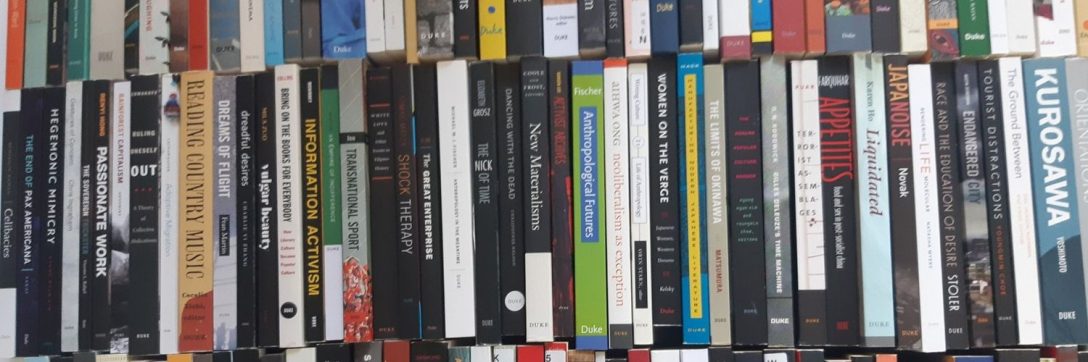

A review of The Limits of Okinawa: Japanese Capitalism, Living Labor, and Theorizations of Community, Wendy Matsumura, Duke University Press, 2015.
 Okinawa has been disposed three times in modern history. The first disposition occurred in 1609, when the feudal lord of the Satsuma domain invaded what was then the Ryūkyū kingdom and transformed it into a vassal state. The second annexation took place in 1879, when Ryūkyū was formally incorporated into Japan as Okinawa Prefecture. The third shift in sovereignty happened in 1972 when the US reverted to Japan the islands they had occupied since 1945. On these three occasions, disposition was a form of dispossession: the people were not consulted, and the islands were treated as a pawn in a larger geopolitical game. Okinawa mattered because of its position halfway between Japan and China, intersecting the trade routes that went down to South-East Asia. Central to the former kingdom’s maritime activities was the continuation of the tributary relationship with Ming Dynasty China, which allowed the Ryūkyū islands to flourish and prosper. In terms of culture as well, the Ryūkyū islands were a mix between Chinese, Japanese, and insular influences. Wendy Matsumura’s book focuses on the period between 1879 and the early 1930s and seeks to chart the limits of Okinawa as an imagined community. Okinawa was first conceived as a feudal domain resisting Japan’s imperialism; then as an economic community facing the inroads of imported capitalism; and lastly as a diasporic and deterritorialized ensemble faced with discrimination and marginalization. Each time, the articulations of community by Okinawa’s rulers and intellectual were met with local resistance and led to alternative modes of mobilization.
The limits of Okinawa as an imagined community
The first modern theorization of Okinawa as a community distinct from Japan was articulated by the former rulers of the Ryūkyū kingdom who protested the incorporation of the southern archipelago into Japan. Before the Meiji Restoration, Ryūkyū’s independence was formally maintained while the kingdom was under the domination of the Satsuma domain and kept tributary relations with China. Maintaining Ryūkyū’s appearance of independence was vital to Satsuma rulers because it allowed them to indirectly maintain commercially profitable relations with China while the rest of Tokugawa Japan was closed to foreign trade (only the Dutch were allowed to bring in foreign goods through the small island of Dejima in Nagasaki). Wendy Matsumura underscores that the annexation of the Ryūkyū kingdom was a brutal and arbitrary decision. The king was summoned to Tokyo and the delegation that he sent on his behalf in 1872 was abruptly told that the Ryūkyū kingdom was abolished and replaced by a domain under Japan’s rule. Faced with Ryūkyū’s refusal to severe its tributary relationship with China, Meiji rulers transformed the domain into a Japanese prefecture in 1879. While insisting that the people of Okinawa were Japanese subjects, the policy that Tokyo instituted to facilitate the transition from kingdom to prefecture—called the Preservation of Old Customs Policy—was formulated on the assumption of cultural difference. Local elites and politicians developed the notion of a distinct Okinawa community in order to resist the discriminatory conditions imposed on the region. Part of the nobility fought against the annexation and took refuge in China, but the Qing empire was crashed during the first Sino-Japanese war of 1895 that allowed Japan to lay claim over Taiwan. The rest of Okinawa’s elite was bought into submission by a policy that maintained their feudal rights over the peasantry.
This first vision of a community maintaining its “Old Customs” under the guidance of its feudal rulers met with fierce resistance. Under the Preservation Policy, even as the former kingdom became a prefecture, the people of Okinawa were expected to continue to fulfill their responsibilities to their traditional overlords—whom the Meiji government transformed into its functionaries charged with enacting state policy in the villages. In particular, the continuation of the former kingdom’s methods of taxation and collection of revenue allowed the Japanese state to lay hand on the lucrative sugar industry and gain monopolistic profit over the production and sale of brown sugar. Under the pretext of maintaining a pre-capitalist mode of production and traditional customs, the state transformed Okinawa into a domestic site of sugar extraction. But the incorporation of Okinawa into Japan disrupted not only the legitimacy of old rulers but also the entire moral economy that governed peasant-elite relations. These conditions provided small producers with a new method and language to put an end to their generations of suffering. In what came to be known as the Miyako Island Peasantry Movement, small peasants from the southernmost part of the archipelago collectively sent a delegation to the National Diet in Tokyo in order to petition against the rising taxes, exorbitant privileges of the nobility, and impoverishment brought by the new economic conditions. They claimed to be modern subjects of the Japanese empire, not second-class citizens. Their appeal to fairness, progress, and the elimination of the nobility’s feudal rights was attractive to the mainland newspapers, which widely covered the petition movement and helped it gain legitimacy. But they also contributed to the image of Okinawa as a backward, impoverished place that required paternalistic intervention and support.
Mōasobi and yagamaya, noro and yuta
One image that struck the public was the picture of local women with traditional tattoos on the back of their hands and forearms. In the eyes of Okinawa’s leaders and reformers, women became the metaphor for looseness, regression, and barbarism. The inroads of prostitution, the transformation of gender roles, and the prevalence of lewd behavior in rural communities created a kind of moral panic among young intellectuals, many of whom had received their education in Tokyo and who believed it was their duty to mold the people of Okinawa into proper Japanese subjects. The policing of pleasure was one of the main priorities of the Movement to Reform Old Customs. They tried to curb the practice of mōasobi (young men and women meeting at night in the empty fields to sing and dance together) and yagamaya (young men singing songs while the women engaged in handicraft activities indoors). In addition to regulating village festivals and policing play, they launched violent campaigns to diminish the authority of women who had once served important political, spiritual and economic roles in the kingdom. Two key groups that were targets of such campaigns were Okinawa’s female priestesses and fortune-tellers, called noro and yuta. They were accused of spreading false beliefs, running prostitution rings, and abusing people into offering expensive gifts for their services and rites. Reformers also attempted to discipline female cloth weavers and standardize their products in order to transform Okinawa’s craft textiles into an export industry. But although their handwoven cloths became a prized commodity on the national market, traditional weavers refused to cooperate with the trade association and didn’t submit themselves to wage labor discipline. As the author notes, “it must have been quite an outrage for Okinawa’s leaders, recipients of the highest level of education available in the nation, to witness these hordes of barefoot, sloppily dressed, tattooed women who could not even speak proper Japanese stand up to the political and commercial leaders of the prefecture and declare that they would not pay the outrageous inspection fees, membership dues, or fines leveled without their consent.”
If textiles and other crafts such as Panama hats found a market in the urban centers of Japan, the key industry for Okinawa’s economy was cane sugar. Peasants had long produced brown sugar using traditional techniques in small sugar huts called satō goya that were communally operated by groups of neighboring families called satō gumi. As mainland consumers’ demand for sugar increased and the monetarized economy developed, small peasants increased the proportion of cane sugar they produced vis-à-vis staples like sweet potatoes or vegetables. They became increasingly dependent on a system of sugar advances called satō maedai, according to which sugar brokers (nakagainin) from both Kagoshima and Okinawa issued loans prior to harvest at a high interest rate and collected on them during the manufacturing period. After the land reorganization of 1903, the Japanese state converted large surfaces of land that had been held communally into state-owned property, and set out large capitalist societies to exploit cane plantations and manufacture refined sugar or bunmitsutō. But the peasantry resisted the enclosure of their lands, refused the harsh conditions of wage labor in the plantations, and refrained from selling their cane harvest to the large-scale sugar factories, preferring to manufacture brown sugar using their traditional techniques instead. The fact that Okinawa peasants preferred to migrate than to work as wage laborers in the cane plantations or sugar factories gives evidence of the harsh conditions that prevailed in these sites of capitalist exploitation. Meanwhile, Japanese sugar manufacturers found more favorable conditions in Taiwan after the island was turned into a colony in 1895, and their investment in the development of Okinawa was limited.
Brown sugar vs. white sugar
The years immediately after World War I brought an unprecedented level of prosperity to the prefecture because of the sugar price boom that was brought by the destruction of Europe’s beet sugar industry. But the boom was followed by a precipitous fall in prices, the bank system collapsed after the Tokyo stock market crash of March 1920, and farmers who had converted to cash crops were ruined. Mainland journalists coined the phrase Sago Palm hell (sotetsu jigoku) to describe the plight of destitute people roaming the countryside who were driven to eat the deadly poisonous sago palm fruit out of desperation. The Japanese state came to the rescue and extended subsidies to small cane producers who agreed to sell their crop to the sugar factories. But news stories about Okinawa merely confirmed the prevalent view of an backward, distinct people who were always in need of rescue. Some journalists blamed Okinawans for their plight: the climate had made the people lazy. They passed their days making sweet potatoes and goya (a bitter gourd vegetable) and their nights drinking awamori (the local rice spirit) and singing yunta folk songs while listening to soft melodies played on the shamisen. This easy life lulled Okinawans into complacency and left them ill-equipped to handle their affairs on their own. This vision of an exotic, racially distinct people was reinforced by the writings of social scientists such as Yanagita Kunio, whose “discovery” of Okinawa in 1921 was instrumental to the development of native ethnology in Japan. As the Japanese empire expanded to Taiwan and then to the Korean Peninsula, some Tokyo intellectuals vented the idea of downgrading Okinawa from a prefecture into a colony.
It was in this context that Okinawa’s intellectuals elaborated new understandings of national community that affirmed the original unity of Okinawans and Japanese. Iha Fuyū, who came to be known as the father of Okinawan studies, developed the theory of shared origins (nichiryū dōsoron), arguing that the Ryūkyū and Yamato peoples were originally a single race that were separated from each other circa 3000 BC. Iha’s scientific demonstration of the natural community of Okinawans and mainland Japanese gave local intellectuals a sense that it was their natural right to be treated equally. Local political leaders mobilized this new definition of community to argue that Okinawans were fully capable of governing themselves politically and economically. instead of a pure separation of cultivators and producers that worked to the advantage only of mainland industrialists, they proposed combining the existing sugar huts and satō gumi into larger-scale, medium-size factories that could produce more sugar more efficiently. But their vision of Okinawa as a classless, timeless organic community of Okinawans with shared interests was not widely shared. Instead, a younger generation of Okinawan activists and intellectuals who came of age after the recession that followed World War I, and who had often experienced discrimination and prejudice in Japan’s main centers of power and learning, began to organize local communities along class lines. Heavily influenced by Marxism and the cooperative movement, they fanned discontent and mobilized around the agrarian struggles that erupted in the northern region of Okinawa’s main island in the early 1930s. The Ōgimi Village Reform Movement, fueled by resistance against local administrators, led to the ephemeral creation of self-managed communes of producers and consumers that brought anticapitalist struggle to the village.
Marxist historiography all over again
Wendy Matsumura’s study is couched in heavily Marxist terms. The three theorizations of Okinawa that she unpacks, the feudal vision of a sovereign domain, the bourgeois capitalist conception of an organic community, and the alternative model brought by class struggle, correspond to the three stages of history as identified by Marx—feudalism, capitalism, socialism. She borrows from Uno Kōzō the idea that these stages of development can actually overlap, and that the maintenance of noncapitalist relations of production often serves the interests of capitalism. Uno, a Japanese Marxist, used this argument in the interwar and immediate postwar period to argue against the thesis that Japan, being incompletely capitalist, was not ready for revolution. Japan, in this sense, was no exception: as Marx himself noted, it requires only “a mass of human material always ready for exploitation by capital in the interests of capital’s own changing valorization requirements.” Wendy Matsumura complements this Hegelian version of Marxism with the insights of Italy’s autonomia school of Marxism, in particular their attention to the construction of subjectivities and to the positivity of localized struggles. Her description of the various rural movements and labor incidents that punctuated Okinawa’s incorporation into Japan’s economic sphere is a useful reminder of the radical streak that runs deep in the islands’ modern history. Okinawa resists single categorizations, and its inhabitants are prone to mobilize against the various schemes that seek to dispose of their fate without consulting them. But I am not sure that familiarity with Marxist historiography, painfully acquired in the kenkyūkai or study groups of Waseda and Hōsei University, has left the author best equipped to contribute to a modern understanding of Okinawa’s history
 In everyday language, a materialist is defined as a person who considers material possessions and physical comfort as more important than spiritual values. According to Madonna’s famous song, “we are living in a material world.” Says the Material Girl: “Some boys kiss me, some boys hug me / I think they’re okay / If they don’t give me proper credit, I just walk away /…/ ‘Cause the boy with the cold hard cash is always Mister Right.” Madonna may not have had in mind the new materialisms referred to in the book edited by Diana Coole and Samantha Frost. Here materialism refers to the philosophical doctrine that nothing exists except matter and its movements and modifications, as opposed to spiritualism that posits a dualism between subject and matter. But the material girl’s lyrics may provide a good entry point into this volume. After all, Madonna’s kissing and hugging addresses a strong message to the feminists who have been accused of routinely ignoring the matter of corporeal life. In exposing her body, Madonna draws our attention to what really matters (sex), while referring to non-bodily retributions (money) that also matter a great deal. So my materialist questions to the book will be: Do we still live in a material world according to these new versions of materialism? Do the authors give proper credit, and to whom? What does the reader get from his or her cold hard cash? And are the contributors always Mr (or Mrs) Right?
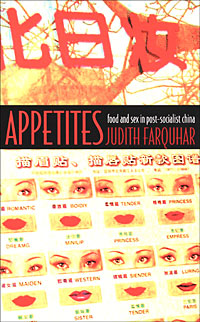 “Appetite for food and sex is nature.” Or so says the sage Mencius, as translated by D.C. Lau. But Judith Farquhar begs to differ. For her, food and sex, and our appetites for them, are historical matters through and through. As proof, she points the fact that, in contemporary China, attitudes towards carnal and dietary consumption have changed dramatically in the course of less than two decades. China has transited from a socialist to a market economy and, in the process, a new body has emerged, with new attitudes towards food and sex, with new appetites and desires. The new Chinese body differs substantially from its previous socialist version. The socialist body was frugal, martial, and asexual. The new body is gluttonous, relaxed, and sensual. If what constitutes our most intimate dimension can change in such a short span of time, then it is proof that food and sex do not stand on the side of nature, but belong squarely to the camp of history and human society. Appetite for food and sex is not nature: it comes from our second nature as social and historical beings.
 In The Nick of Time, Elizabeth Grosz wants to make Darwinism relevant for feminism, and for critical studies in general. This is a challenging task: social Darwinism has often been associated with a conservative or reactionary agenda. Darwin’s epigones, from Herbert Spencer to Francis Galton, who applied his theories to society and to culture, posited the hierarchy of races and the survival of the fittest. They in turn influenced Nietzsche and his theory of the overman, who was picked up by Nazis and by white supremacists for their nihilistic agenda. There seems to be an inherent contradiction between Darwin’s idea of natural determinism and a progressive agenda that emphasizes equal rights and opportunities. This contradiction is based, according to Elizabeth Grosz, on misreadings of Darwin and a deformation of Nietzsche’s thought. Darwin and Nietzsche never said what some people made them to say. The solution, for her, is to go back to the original texts and to read them in the light of recent advances in the biological sciences and in social theory. In doing so, one not only lays the foundation of a progressive social agenda; reconciling biology and culture, nature and society, is also a way to put back the body, and the corporeal, back at the center of political theory and feminist struggle. As Grosz argues, “the exploration of life—traditionally the purview of the biological sciences—is a fundamental feminist political concern.”
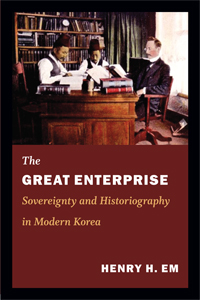 Achieving sovereignty, and attaining equal standing with other sovereign nations, was Korea’s great enterprise as referred to in the book’s title. It was a thoroughly modern project: previous generations did not feel the urge to compare with other sovereign states or to assert Korea’s distinctiveness. Beginning with the turn of the century, Korea’s commitment to the great enterprise was a necessary condition for avoiding subordinate status in the face of imperial ambitions. Then, as Japan came to dominate Korea, it became a way to break free from its colonial ruler and to campaign for its independence. Later on, emphasizing national sovereignty meant proclaiming the nation’s unity in the face of the North/South division.
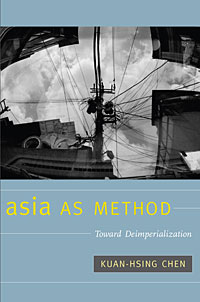 There are two kinds of Asian studies on North-American campuses. The first, area studies of Asia, grew out of the Cold War and of the United States’ need to know its allies and enemies better. It is politically neutral, although some critics would consider it conservative in essence, due to its modalities of topic selection, standards of scholarship, sources of research funding, and practical applications. It focuses on the production of experts on a specific region of the world which is of strategic interest for the United States. It usually requires the mastery of at least one Asian language, acquired through years of painful learning and extended stays in the country being studied. Great scholars have contributed to the field and have led distinguished careers that have brought them into positions of leadership within and outside academia.
 Scholars working in cultural studies are an unruly lot. They spend a great deal of energy patrolling disciplinary borders, falling down on trespassers and ensuring conformity within the field. Some mount raids on neighboring fields for intellectual loot, or claim new territories as their own. They try to regulate their quarrels with political correctness and abstruse jargon. But attacks are not muffled by circumvolved syntax or otiose vocabulary. If anything, they are made even more venomous, as one can articulate in complex sentences what one wouldn’t dare to write in plain English. Liberals are very illiberal when it comes to arguing with each other. Academics of the cultural bent are willing to wash their linen in public, to bring cadavers out of family closets, and to expose the dirty little secrets of the profession, if only for the sake of enhancing their own status. For them, it appears like business as usual. But for outside observers, who have come to associate scholarly pursuit with disinterestedness and gentlemanly behavior, this aggressiveness comes as something of a shock.
 I am an adept of extreme audio practices. From teenage youth to adult age, I went all the way from progressive rock to experimental music to various forms of electronica and to sound art. I explored the universe of sound with an open mind and a taste for novelty. But when I encountered harsh Noise, also known as Japanoise, I hit a wall. Here was something completely unexpected. There was no precedent to what I experienced, and there was no beyond. Here was a music without beat, drum or rhythm, without tone, tune or pitch. Noise music is exceedingly difficult to describe. Its components – extreme volume static, amp distortion, Larsen effects, audio feedback, industrial hissing and screeching, only give an idea of the bits and pieces that enter its composition, but their description cannot convey the impression made on the auditor.
 The Duke Reader