
A review of Writing Culture and the Life of Anthropology, edited by Orin Starn, Duke University Press, 2015.
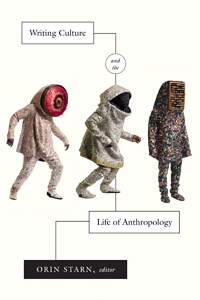 “Life” has emerged as a key concept in anthropology. It is the central notion that defines the discipline in our present day and age. So was “culture” in the eighties, when the volume Writing Culture was published. Many scholars and graduate students took to this book and projected unto it their hopes and frustrations with a discipline many considered as tainted by its colonial past and epistemological present. This was before the “culture wars” that cultural studies helped ignite, and after counter-culture had denounced America’s pretension to hegemony. Titling a book “Writing Culture and the Life of Anthropology,” almost thirty years after Writing Culture had practically declared anthropology dead, is to proclaim that there is life after death. Or maybe resurrection: in the course of three decades, anthropology has reinvented itself in order to make itself relevant for a world that has shattered its historical certitudes.
The resurrection of cultural anthropology
The return of the undead takes the form of a collection of essays, some reminiscent, others programmatic, others yet inward-looking and reflexive, written by some prominent figures in the discipline. Some of the contributors were “present at the creation”: the two editors of Writing Culture, James Clifford and George Marcus, as well as Michael Fisher, contribute essays to this volume. Others were involved as graduate students who had to take a stand about the book in class discussions or job market interviews—as the editor recalls, “you simply had to read—and have an opinion about—the book unless you wanted to appear pathetically behind the times.” Some of the people involved in the WC debate back then were feeling hysterical. By contrast, as James Clifford comments, we are now “feeling historical.” Writing Culture belongs to another era: “there is no entry for globalization in the book’s index. No Internet, no neoliberal, no postcolonial.” According to George Marcus, “Writing Culture was an ambitious and much needed critique of anthropology by means of literary therapy.” It was “perhaps the single most influential anthropology book in recent decades.” But the result of the “linguistic turn” was often “self-indulgent, jargon-strewn texts that only the initiated could understand.” For many commentators, Writing Culture led to a dead end.
So is anthropology dead? There is certainly an academic labor market crisis, coupled with a mutation in the publishing business. As noted in the introduction, “the dearth of stable tenure-track positions has created a whole large class of subemployed adjuncts who suffer through bad pay, the slights of second-class university citizenship, and a demoralizing uncertainty about their future prospects.” Anthropologists are in no less pressure to publish — and even in our age of on-line journals or internet archives, publishing a book still stands as a requisite for getting tenure. An ethnography’s typical print runs in a thousand copies—not much, for a discipline whose ambition is not only to study mankind, but also to change it. And yet “the number of anthropology majors, Ph.D. students, and faculty have not declined but have grown some over the past decade.” The American Anthropological Association today has thirty-eight subsections and more than eleven thousand members, and it sponsors twenty-two scholarly journals. AAA meetings are a moment of collective effervescence quite similar to the potlatch gatherings of North-West American Indians as described by classical anthropologists: “six thousand people united by a professional identity, but little else, come together for a frenzied few days of intense mutual activity.”
Anthropology is the best major for taking over the world
Indeed, a case could be made that anthropologists never had it so good. As a recent blog entry in “Living Anthropologically” has argued, anthropology may be the worst major for your career, but the best major for taking over the world. It is now well known that President Obama’s mother was a practicing anthropologist, and that she may have transmitted a certain worldview in her son’s upbringing, a worldview best summed up by Margaret Mead’s definition of the discipline: “the purpose of anthropology is to make the world safe for human differences.” This particular quote was used by president Obama when he greeted President Ashram Ghani of Afghanistan, a card-carrying PhD anthropologist. Before becoming president, Ashram Ghani had worked in the World Bank, an institution now run by an anthropologist, Jim Yong Kim. Jim Kim was among the first enrollees of Harvard’s experimental MD/PhD program in the social sciences, getting both an MD degree at Harvard Medical School and a PhD in the anthropology department. He then went on to create an NGO with another anthropologist, Paul Farmer, who has become a hero of sorts for his humanitarian work in Haiti. Before Piketty’s Capital became a bestseller worldwide, an anthropology book by David Graeber, Debt: The First 5000 Years, provided a manifesto for the Occupy Wall Street crowds. Other recent bestsellers include The World Until Yesterday by Jared Diamond, who was originally trained in physiology but who poaches the anthropology field relentlessly in his writings.
Anthropology, in short, is not an endangered genre. The essays collected in this volume all speak to the vitality of the discipline. Each will appeal to a different class of reader. As a self-taught amateur who reads anthropology as a way to get acquainted with mankind, I confess I remain impervious to some of the stylistic prowess displayed by some of the authors. The essay by Michael Taussig—I have yet to complete reading a book by him—seemed to me like a long rant inspired by the consumption of powdered coca leaves. It is bereft of all the traditional trappings of scholarship: there are no sections, no titles, no footnotes, and no bibliography. I couldn’t help notice that the word “F***” appears three times in the book, and that there are nineteen occurrences of the word “kinky” in one single article (“queer” gets several mentions as well, but one could argue it has become a scholarly notion.) Some entries are mere work in progress, like the ethnography of stone that hints at interesting developments in Chinese culture. Others present as heroic achievements what seems to me the standard use of widely available tools. Under the “digital pen” of some contributors, “concept work amid data or as data” means “taking field notes” or “writing a research diary.” A “draft” becomes a “prototype”, a website a “curated archive”, a blog or a twitter account a way by which “digital technology provides a means of continual reporting and engagement in relation to its granular, built publics along the way.”
A brave new disciplinary world
It is true that technology has changed the way anthropologists do business. Although fieldwork remains the hallmark of the profession, the “field” no longer seems far away at all in the age of Skype, Facebook, and the instant message. Ethnographers don’t limit themselves to distant terrains: it is “a brave new disciplinary world where just about anything anywhere has become fair ethnographic game.” Ethnographers no longer set tent in isolated communities: they follow the ebbs and flows of globalization, and engage multiple terrains and peoples to track life in an interconnected world. How, to take examples of recent monographs referred to in the introduction, “does one do the ethnography of Internet chat rooms, social media, or dot-come dating? As with fieldwork, the very word “ethnography” seems dated. Are there still ethnos to graph about?” After all, Orin Starr remarks, “the very idea of writing, at least anything more than a text or tweet, can seem old-fashioned now in the age of multimedia, streaming video and the avalanche of other digitized communication.” And yet, “as Jurassic a medium as print may be, the journal article and the book remain the gold standard for hiring and promotion.” The authors of Writing Culture were calling for new ways to experiment with forms and language. Now, as Orin Starn and Michael Fisher remark, they have to contend with the competition of nonfiction writers, novelists and moviemakers, who sometimes base their creation on extensive fieldwork but who succeed in establishing a better connexion with the public.
Could anthropology one day turn into a new religion? After all, there are prophets, priests and shamans in this book—each will be easily recognized. Writing Culture has acquired the status of a cult book or of sacred scriptures. Like the founders of any new creed, the promoters of “postmodernism” had to survive the routinization of charisma. There are chapels and churches, dogmas and rituals, anathema and exorcisms in the world of modern anthropology. What’s more, the people being studied are no longer passive: they “talk back” to the anthropologist, and may incorporate some of her findings into their belief systems.
Three stars from Duke University
Not all chapters of this book are equally memorable. My pick consists of three essays, which by themselves make this newly edited volume perhaps less epoch-making than the original Writing Culture, but nonetheless valuable. The first is the introduction by the editor, Orin Starn, who teaches at Duke University. It is a model of good humor and accessible prose, written in a light tone that nonetheless address deep questions. I like the part when he notes that “one is more likely to run into an anteater at a shopping mall than a Republican anthropologist,” or when he quotes Florida governor’s harsh words about anthropologists “as if we were just a grade above cockroaches or some other household pest.” As this introductory chapter is available on the publisher’s website, I encourage readers to peruse it.
The two other chapters that make this book worthwhile are the contributions by Charles Piot and Anne Allison, also from Duke. Plot revisits the analysis of African kinship systems, with a twist: in contemporary Togo, the US visa lottery system has led to the creation of a cottage industry in fake marriages and invented relatives, reenacting as it were the ancient traditions of situated kinship, bridewealth transactions, and “ghost marriage” with a deceased relative. Although Charles Piot certainly didn’t write it with this intention in mind, I recommend this chapter to consular officers in charge of visa procedures in West Africa and elsewhere: they will recognize some familiar figures, and may learn a few new tricks in the trade. As for Anne Allison, I have already reviewed her book on Precarious Japan, a deeply moving account of everyday life in the post-Fukushima era, which she here complements with ethnographic vignettes conveying messages of hope and resilience.
 If we include Japanese sources, there is such an extensive literature on Japan’s economy and society that the bilingual observer is often at a loss. She can make this literature accessible to non-Japanese readers—by translating, summarizing, contextualizing. Or she can collect her own primary data—especially in the field of ethnography, where the main insights are supposed to originate from fieldwork. Anne Allison’s book does both, but in an unsatisfactory manner. Its topic—precarity and precariousness—doesn’t lend itself easily to fieldwork. How do you observe a feeling, a mood, a sentiment, or a lack thereof? How do you assess the way—as Allison defines her topic— “relations with others—of care, belonging, recognition—are showing strain but also, in a few instances, getting reimagined and restitched in innovative new ways”? Having had limited time to conduct fieldwork, Allison had to rely on other people’s observations: activists, commentators, social workers, or critics. But she fails to give proper credit to these domestic observers of precariousness—and in particular to build a theory informed by local categories and debates. Instead, she imports the latest fads in social critique and peppers them with Japanese terms to add local flavor, without engaging Japanese thought seriously.
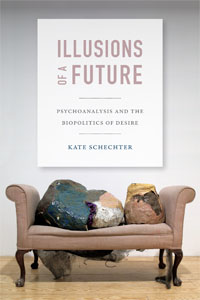 Have you ever been tempted to eavesdrop on a psychoanalyst’s conversation? Not in a therapy session of course: these conversations are private, and they usually take the form of the patient talking and the analyst listening. But psychoanalysts also talk about their trade in professional associations, congress meetings, or interviews. This public discourse is what interests Kate Schechter in Illusions of a Future. As an anthropologist-in-training, she took as her dissertation topic the psychoanalytic community in Chicago, going through their local archives and interviewing key members. Combining ethnography, history, and theory, she went beyond participant observation and archival work: she herself underwent psychoanalytic training, and is presented on the book cover as being “in the private practice of psychoanalysis and psychotherapy in Chicago.” According to Dr. Schechter (and here the title “Dr.” refers to her PhD, not to her qualification as a medical doctor), there are three remarks that are often made by psychoanalysts when commenting on the activity of their peers. “Where does she get all her analytic patients?” “It’s not psychoanalysis.” “It’s all about the relationship.” Three mechanisms are at play in these remarks: envy, denial, fetishization. Let us consider each of them in turn.
 There is an annual competition that allows PhD students to dance their research. The contestants, individually or in groups, present their research results in a choreography that gets evaluated by a jury. The first “Dance Your PhD Contest,” held in 2008, attracted significant interest from the media and on Youtube, and the number of applicants has been increasing ever since. Other Youtube videos extend a second lease of life to students’ dancing performances and staged choreographies inspired by scientific discoveries. In 1971, a football field at Stanford University became the scene of a large-scale “molecular happening,” in which more than one hundred performers staged the intricate molecular interactions involved in protein synthesis.
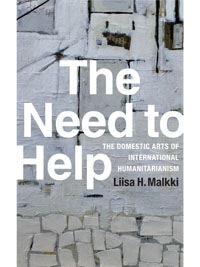 Liisa Malkki wrote her PhD and gained tenure at Stanford’s anthropology department based on her fieldwork among refugees from Burundi. She worked in a refugee camp in Tanzania in the mid-eighties, and presented the narratives she collected from Hutus fleeing political violence in a book, Purity and Exile. This book gained some public attention when it was criticized by Peter Gourevitch who argued, in the New York Review of Books, that her “mytho-history” was more myth than history, and later on when some of its testimonies of genocidal violence were echoed by the reports and stories coming out from the Rwandan genocide (this time with Hutus as perpetrators and Tutsis as victims). But Liisa Malkki didn’t want to be categorized into a box, much less be identified as a “refugee” scholar or a “genocide studies” specialist. This is why she turned to a terrain closer to her place of origin and less fraught with political disputes: Finnish Red Cross aid workers sent abroad on emergency relief missions, as well as other persons gravitating around the Red Cross movement in Finland. Although she spent her childhood in East Africa, and most of her professional career in the United States, she apparently remained close to her home country of Finland. This is where she conducted the fieldwork for this book, putting into use her intimacy with the people and their language as well as her knowledge of the domestic scene.
 In her ethnography of Wall Street, Karen Ho offers a powerful metaphor by way of a title. “Liquidated”, the book’s title, echoes the memorable advice of Andrew Mellon, US Treasury secretary in the early 1930s, as reported by then President Herbert Hoover: “Liquidate labour, liquidate stocks, liquidate farmers, liquidate real estate! It will purge the rottenness out of the system. High cost of living and high living will come down. People will work harder, live a more moral life.” This advice, of course, only deepened the Great Depression, and its failure led to the adoption of Keynesian policies and massive state intervention. Which confirms the late Michael Mussa’s diagnosis that “there are three types of financial crises: crises of liquidity, crises of solvency, and crises of stupidity.”
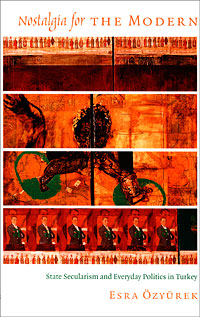 There is one country in Europe where people feel nostalgic for the 1930s, and where they almost unanimously cherish the memory of a one-party state which multiplied statues of its great leader on every street corner. The country is Turkey and the golden age that Turks remember with nostalgia is the first two decades of the republic founded in 1923 by Mustapha Kemal, the father of all Turks. The climax of this era of bliss and hope occurred with the tenth anniversary celebrations of the declaration of the Turkish Republic, when Atatürk famously declared: “How happy is the person who says I am a Turk!”
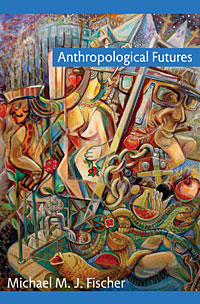 Kant is seldom claimed as an ancestor by anthropologists. That he wrote an “Anthropology from a Pragmatic Point of View” is considered irrelevant for the history or epistemology of the discipline: the “study of man” that the philosopher from Königsberg had in mind was very different from the detailed ethnographic observations by the fieldworkers of the twentieth century. For modern scholars trained in the anthropology discipline, philosophy was considered a waste of time, mainly irrelevant and sometimes dangerous. Ethnography was about facts, not speculation.
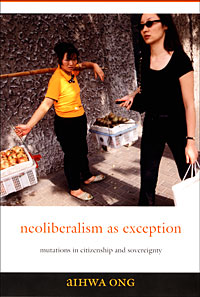 Carl Schmidt defined sovereignty as ultimately the power to call a state of exception to the normalized condition of the law. Drawing on the German philosopher, Giorgio Agamben uses the exception as a fundamental principle of state rule that is predicated on the division between citizen in a judicial order and outsiders stripped of juridical and political protections. Aihwa Ong, a Berkeley anthropologist, offers a milder version of the state of exception: the sovereign exception she is interested in “is not the negative exception that suspends civil rights for some but rather positive kinds of exception that create opportunities, usually for a minority, who enjoy political accommodations and conditions not granted to the rest of the population.”
 In Flexible Citizenship, Aihwa Ong describes how industrializing states in Southeast Asia and border-crossing citizens of Chinese descent respond differently to the challenge of globalization. Borrowing from the French philosopher Michel Foucault, she uses the term “regime” to refer to knowledge/power schemes that seek to normalize power relations. The three regimes that are considered are the regime of Chinese kinship and family, the regime of the nation-state, and the regime of the marketplace. These regimes and their associated logics of subject-making, of governmentality, and of capital accumulation, are characterized by the twin forces of flexibility and transnationality. The book explores the phenomena that are shaped by these two forces: mobile capital, business networks, migrations, media publics, zones of graduated sovereignty, and triumphant Asian discourses.
 The Duke Reader