
A review of The Remasculinization of Korean Cinema, Kyung Hyun Kim, Duke University Press, 2004.
 The thesis of this book is quite simple. Korea in the 1980s and the 1990s was a post-traumatic society. The figure of the father had been shattered by its authoritarian leaders, who ended in a grotesque finale (see The President’s Last Bang, 2005, about the assassination of Park Chung-hee) or, in the case of Chun Doo-hwan, lacked hair (The President’s Barber, 2004). The double trauma of colonization by Japan and fratricide murder during the Korean War had deprived the Korean people of its identity. The sins of the fathers were visited upon the sons, and the Memories of Murder (2003) still lingered. The ritual murder of the father could not unite the community of brothers as they stood divided between North and South (Taegukgi: The Brotherhood of War, 2004), between sons of patriots and sons of collaborationists (Thomas Ahn Jung-geun, 2004). The films quoted above, all produced in the 2000s, could resolve the tensions and dilemma of overcoming trauma by representing them on screen. By contrast, films produced in the 1980s and 1990s could only repress the representation of the primal scene, generating frustration and anger. In psychoanalytic terms, this is the difference between “working through”, the positive engagement with trauma that can lead to its ultimate resolution, and “acting out” or compulsively repeating the past.
Working through or acting out past trauma
Failure to come to terms with the representation of trauma transformed men into hysteric subjects. Simply put, men were deprived of their manhood. They were constantly alienated and emasculated by the political and economic forces of the day. In order to recover their potency, they resorted to violence: hence the brutality and violent acts ubiquitous in many Korean films. Here the author of The Remasculinization of Korean Cinema sees a sharp distinction between films produced in the 1980s and in the following decade. If the 1980s was a period of male masochism for Korean cinema, by the 1990s men freed themselves from anxiety and trauma by resorting to sadism. The two forms of violence must be clearly distinguished. Both the masochist and the sadist find pleasure in pain—pain of the self, pain of the other. But the sadist aims at subverting the law; the masochist wants to emphasize its extreme severity. The common thread that unites them is their misogynistic tendency towards women: very often, the victim of men’s effort to regain their manhood is the woman. The films from the period were solely centered on male characters. They were depicted as pathetic losers or as dumb brutes, and the movies acted out their masculinity crisis without any regard for the opposite sex. Women only functioned as passive objects oscillating between the twin images of the mother and the whore. What is absent in these movies from these two decades is a positive female character, let alone a feminist plot.
The thesis of remasculinization as a way to recover from trauma is not new. It has been advanced by American cultural critics in the context of the post-Vietnam war. The trauma of defeat, changing gender roles, and economic uncertainties generated a masculinity crisis that led to alienation, retrenchment, and gynophobia. In America, the renegotiation of masculinity took the form of the lone warrior culture, illustrated in blockbuster films of the 1980s such as Rambo, Die Hard, or Dirty Harry. What is specific about South Korea’s post trauma recovery is the political and economic context. It must be remembered that the end of authoritarian dictatorship and the inception of democracy in Korea occurred only in 1987. Before that date, films still had to deal with heavy censorship, and protest against the military government was disallowed. Unlike General Park Chung-hee however, General Chun Doo-hwan, his successor, recognized the importance of leisure and consumer spending as a way to assuage the masses and compensate the dispossession of their voting rights. He authorized the production of a wave of sleazy movies that found their way into theaters, while political expressions were strictly censored. The hope was that consumerism and pornography would make people forget about democracy and postpone their hope for a more representative government.
Korea bumped into modernity at full speed
But economic development wasn’t enough to ease the pain: in fact, it generated more ailments and frustrations. That Korea’s compressed economic development was traumatic is often overlooked. The “miracle of the Han river” left aside many victims and outcasts. Korea bumped into modernity at full speed, and without security belts or social safety nets. Urban alienation and economic marginalization is the theme from many Korean films from the 1980s and 1990s. In Chilsu and Mansu (1988), two billboard painters living on day jobs climb to a high-rise building in downtown Seoul to privately demonstrate their pent-up frustration. The public from the street below mistakes their aimless private rant for a public demonstration, and the police intervenes to arrest them. In Whale Hunting (1984), the disheartened protagonist, rejected by his college girlfriend, wanders the streets where he befriends a beggar and hangs out with a mute prostitute looking for a home. His sexual anxiety is displayed through farcical situations as in the opening scene where he dreams he is standing naked before a laughing public, or when he hugs the bare breasts of a naked statue in a museum gallery. In all the movies covered in the book, the wanderings of the male character invoke the traumatic losses of pastoral communities (urban dramas), homes (road movies), faithful wives and asexual mothers (sex scenes), and memory and sanity (social problem films).
Some artist moviemakers attempted to allude to the political by way of the sexual. One chapter is dedicated to Jang Sun-woo’s movies (The Age of Success, To You From Me, Bad Movie) which have generated far more controversy than works of any other director of the New Korea Cinema. Jang Sun-woo’s characters are self-loathing, pathetic men described as sexually frustrated, impotent, and castrated. Crude sex scenes are ubiquitous and are meant to disturb and to unsettle more than to titillate or sexually arouse. For Jang, these frail masculinities are reflective of the unresolved social crisis in South Korea that began with the elimination of the political dictatorship, when he longtime president was abruptly assassinated in 1979, and the ensuing period of political unrest. The sexual and the political are closely intertwined: in To You, From Me, Jang Sun-woo portrays an underground enterprise that releases pornographic books under the disguise of subversive North Korean communist manifestos—both are banned materials and therefore fetishized. But his anarchist, nihilistic streak is perhaps best exemplified by Bad Movie, described as “one of the most daring and experimental feature films produced in Korea,” shot without set direction, script, or production plan. The movie shows raw, crude images of sex and violence, loosely motivated by a chronicle of young runaway teenagers engaging in street motorcycle races, extortion, rape, and murder. As Kyung Hyun Kim comments, “it is as close to the real as it can get, disorienting and discomforting even the contemporary art-film viewers who are familiar with violence aestheticized in cinemas of Wong Kar-wai, Quentin Tarantino, and Kitano Takeshi.”
Men turn to violence and to sadism to reclaim their masculinity
Other directors were more overtly political. Films about the Korean War (Chang Kil-su’s Silver Stallion, Yi Kwang-mo’s Spring is My Hometown, and Im Kwon-Taek’s The Taebaek Mountains) present a different way of remembering the war, one that doesn’t rest on the diabolization of the North Korean enemy but rather insists on cracks within the South-Korean-American alliance: partisan guerrilla in the Cholla Province, yanggongju prostitutes serving US soldiers, internal conflicts within a community or a family, absent fathers and raped women. Here again attention focuses on men who have lost their virility and authority during the war, and who turn to violence and to sadism—especially against women—to reclaim their masculinity. Other episodes of Korea’s postwar political history are also revisited. A Single Spark concerns the life and death of labor union martyr Chon T’ae-il, while A Petal depicts the 1980 Kwangju uprising. These are sites that resist both remembrance and representation, components of a post-traumatic identity that can only act out what is still too painful to work through. It is also noticeable that these two movies targeted primarily foreign audiences at international film festivals. Their directors, Park Kwang-su and Jang Sun-woo, could take political and financial risks because they had already built international reputations. The years the two films were released, 1995 and 1996, also had democracy firmly entrenched since the transition of the end-1980s and the election of the first civilian president in 30 years in 1992.
The reception of Korean movies was also conditioned by their conditions of production and distribution. Most movies covered in The Remasculinization of Korean Cinema are low-budget films directed by authors who aimed at a limited audience and assembled production teams based on personal acquaintances and on-the-job training. But they are also films that have stimulated local commercial interest in a country that valued cinephile club screening and intellectual consumption of movies that would have been commercially unviable in the West. It should also be noted that the renaissance of Korean cinema in the 1980s and 1990s occurred not because of, but rather in spite of the role of the government. Import quota restrictions diminished during the 1980s, and Korean filmmakers had to aim for the creation of art cinema without the aid of state subsidies. Not only were public funds denied for Korean films, but also were bank loans, forcing filmmakers to seek alternative financial resources and credit. No Korean filmmaker could therefore neglect the box office. For some of them, the international circuit of international film festivals and arthouse movie theaters provided a source of legitimacy and revenue. Despite adverse conditions, Korea is the only nation during recent history that has regained its domestic audience after losing them to Hollywood products. Art movies from the 1980s and 1990s paved the way to the Korean blockbusters of the end-1990s and 2000s that attracted massive domestic audiences and conquered foreign markets. They also made it sure that a market space for independent movies continued to exist in Korea, as evidenced by the career of director Kim Ki-duk whose productions closely complement the movies reviewed in the book.
Korea has yet to produce a movie with a female plot, let alone a feminist one
Kyung Hyun Kim mobilizes the categories of national cinema as a genre and of the director as auteur to develop his film criticism. He focuses on a segment of Korea’s filmic production in the 1980s and 1990s that was sometimes touted as the New Korean Cinema by film critics. This is in accordance with the conventions of cinema studies, which treats national cinemas as discrete entities and delineates periods or currents characterized by a particular style or narrative. The master narrative of the New Korean Cinema is the masculine recovery from trauma, a movement that Kyung Hyun Kim sees as problematic because it is based on the exclusion of women. As he argues, Korean cinema has yet to produce a movie with a female plot, let alone a feminist one. The representation of woman is still caught between the mother and the whore. Another characteristic of the New Korean Cinema is that it had to strictly play within the commercial rules of an open marketplace, which meant competing with Hollywood films distributed freely across the nation, and could not completely abandon the conventions of popular filmmaking. The author sees this commercial exposure both as a factor in the success of the New Korean Cinema and the reason of its demise: once aligned with Hollywood standards, Korean cinema lost its shine and became just a niche cultivating subgenres in a global marketplace.
 orty years ago, Japanese psychiatrist Takeo Doi wrote The Anatomy of Dependence (or Amae no Kôzô, literally: “The Structure of Amae“). In this book, as in everyday Japanese language, amae refers to the feelings that all infants at the breast harbor for their mother–dependence, the desire to be passively loved, the unwillingness to be separated from the object of desire and cast into a world of “objective” reality. Takeo Doi’s basic premise was that Japanese men nurture these feelings well into their adult life, much more so than men raised in the West. For him, the concept of amae goes a long way in explaining the basic mentality of individuals and the organization of society in Japan.
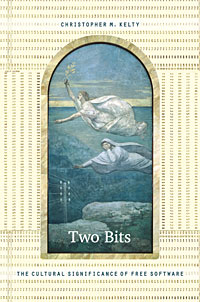 Two Bits is a failed anthropology project. It does not make it a bad book: it is well-written and informative, and I learned a lot about Free Software and Open Source by reading it. But it does not meet academic standards that one is to expect from a book published in an anthropology series. These standards, as I see them, pertain to the position of the anthropologist; the importance of fieldwork; the role of theory; the interpretation of facts; and the style of ethnographic writing. Let me elaborate on these five points.
 There are two types of anthropologists: those who have done fieldwork and those who haven’t. Only the former can fully bear the title of anthropologist. They have been ordained through the same rites of passage: they have been there, seen places, and have come back with the field notes and observations they can subsequently transform into a book. This marks their full entry into the profession: they will no longer have to return to the field for extended periods, as they can revisit the same material from a distance or through occasional visits. Bearing the talisman of their ordination, they can bar entry to the profession to those who haven’t been through the same ordeal. It doesn’t matter that these outsiders may have acquired an extensive knowledge of the anthropology literature or mastered the ropes and codes of the discipline: they are kept outside the tent, and forced to find other disciplinary affiliations. Many find refuge in literature departments, or under the broad canvas of cultural studies. There they may pursue their work in relatively unhindered ways, developing a critical dialogue with other, more patrolled disciplines in the social sciences. They may borrow from the toolbox and writing techniques of anthropologists to develop a view from afar, which they often turn to their own environment and surroundings in a kind of reflexive engagement. For all practical purposes, they are anthropologists in all but name.
 There was a change in the perception of literature’s social role in Japan between the Taishô and the Shôwa periods. According to Maruyama Masao, Japan’s foremost postwar critic, the average parent and teacher at the end of the Taishô era thought that “a middle school student who spent all his time reading novels was doing one of two things: avoiding his studies or corrupting his morals.” Progressively however, reading literature became a more respectable cultural pursuit, tolerated and even encouraged by schools and families. The social status of writers and the novel improved markedly: they became embodiments of the national spirit, and symbols of Japan’s entry into modernity. The possession of a national literature became a point of pride for citizens who wanted to see Japan ranked among the greatest nations of the world. A mass market for literary productions turned writing from an insecure occupation into a potential source of wealth, and transformed select authors into celebrities.
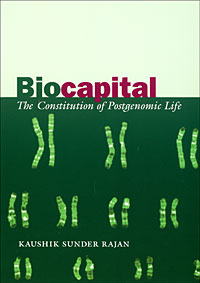 Biopolitics is a notion propounded by Michel Foucault whereby “life becomes the explicit center of political calculation.” The increasing use of this notion in the social sciences underscores a fundamental evolution. In the twenty-first century, as anticipated by Foucault, power over the biological lives of individuals and peoples has become a decisive component of political power, and control over one’s biology is becoming a central focus for political action. Used by the late Foucault in his lectures at the Collège de France, biopolitics and its associated concept, governmentality (“the conduct of conducts”), are now in the phase of constituting a whole new paradigm, a way to define what we are and what we do. Biopolitics and governmentality are now declined by many scholars who have proposed associated notions: “bare life” and the “state of exception” (Giorgio Agamben), “multitude” and “empire” (Michael Hardt and Antonio Negri), “biological citizenship” and “the politics of life itself” (Nikolas Rose), “biopolitical assemblages” and “graduated sovereignty” (Aihwa Ong), “cyborg” and “posthumanities” (Donna Haraway), etc. This flowering of conceptualizations is often associated with a critique of neoliberalism as the dominant form of globalized governmentality, and to a renewal of Marxist studies that revisit classical notions (surplus value, commodity fetishism, alienation of labor…) in light of new developments.
 Cultures from the South Pacific have provided anthropologists with a rich array of words and concepts: “mana” (power, charisma), “hau” (life’s energy), “tapu” (taboo) and its antonym “noa”, “hara” (a violation of tapu) and “wairua” (spirit) all originate in the languages of Polynesian cultures. These terms first came to the attention of western anthropologists through the reports of missionaries in the Pacific islands. Armchair theorists like James Frazer or Marcel Mauss used the observations of the first ethnographers to lay the foundation of their discipline. Their theories were built on the idea that it is possible to isolate cultural traits from their social context and bundle them together to draw comparisons and infer anthropological laws. Surveying the practice of gift-giving, Marcel Mauss famously came to the conclusion that it involved belief in a force binding the receiver and giver, which he labeled “hau” after the word used by the Māori. Such concepts derive their theoretical potential precisely from the lack of equivalence in common language. But as Claude Levi-Strauss later argued, the indiscriminate use of indigenous categories hampers the analysis of symbolic systems, which he proposed to process through the description of unconscious structures. Anthropological words have nonetheless entered common language, from totem to taboo and to tattoo, while anthropologists still use words like mana and hau as specialized vocabulary in their profession.
 So you’ve picked up this book because you think Muslim fashion is the next new thing. You’ve made a good choice: this book is totally made for you. It is a book that will teach you things, give you ideas, and make you think. Don’t expect tips on what to wear and how to wear it, though: this you will have to decide for yourself. If who you are is what you wear, then you cannot delegate this task to a third party. But reading Muslim Fashion will help you make your own choices and dress on your own terms. Maybe you won’t feel the same after reading it. Maybe your image will look different into the mirror. This is what they call a transformative book: it will make you see things differently. This is the good thing about reading books in general: you can turn them to your own use. So if this book helps you dress smarter, so be it. But it may also help you think about what you wear and why you wear it. If your style of dress makes a statement, be sure it includes the word fashion in it.
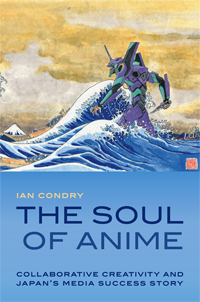 In my opinion, The Soul of Anime should be read in business schools. It provides a wonderful case study of a particular industry, and it can teach management practitioners many things about globalization, creative industries, and flexible labor. Unlike what is stated in the book’s subtitle however, the story of Japanese anime is not a success story. As Ian Condry states in the introduction, “in terms of economic success, anime seems more of a cautionary tale than a model of entrepreneurial innovation.” Judged from a management perspective, the anime industry is in many ways a case of failure: a failure to globalize, a failure to create value on a sustained basis, and a failure on the side of market participants to reap profits and secure employment. But management can learn from failures as much than it can learn from success stories. What’s more, the anthropological perspective adopted by the author points towards a different theory of value creation: for cultural content industries, value is not synonymous with profits, and the relation between producers and consumers cannot be reduced to monetary transactions and economic self-interest. This is the intuition that the founders of anthropology developed when they analyzed trading relations among primitive tribes in terms of gift-giving and reciprocity; and this is the conclusion that this modern anthropology book reaches when it describes the popular success of this particular case of industrial failure.
 Korean government officials nowadays distinguish three waves of hallyu. The first one occurred serendipitously with the unintended success of Korean TV dramas in Japan, China, and South-East Asia. The second wave was brought by the marketing strategies of entertainment companies that targeted growing markets and developed export products in the form of K-Pop bands, TV co-productions, computer games, advertising campaigns, and restaurant chains. According to these Korean officials, the third wave of hallyu will cover the whole spectrum of Korean culture, traditional and contemporary alike, and will be engineered by the state, which sees the export of cultural content as a linchpin of its creative economy strategy. Korean cinema sits rather awkwardly in this periodization. Korean movie directors didn’t wait for the first ripples of the Korean wave to gain recognition abroad: they featured early on in the Cannes film festival and other international venues where their talent and originality won critical acclaim. Cinema studies constituted Korean films as a topic for analysis before hallyu became a theme worthy of scholarly research and commentary. The first books that addressed Korean cinema as a genre, such as Kyung Hyun Kim’s seminal essay on The Remasculinization of Korean Cinema, were written in the tradition of Asian cultural studies that sees each countries’ movie productions as a distinct whole, thereby overlooking the transnational dimension that is so prevalent in the reception of Korean hallyu.
 The Duke Reader