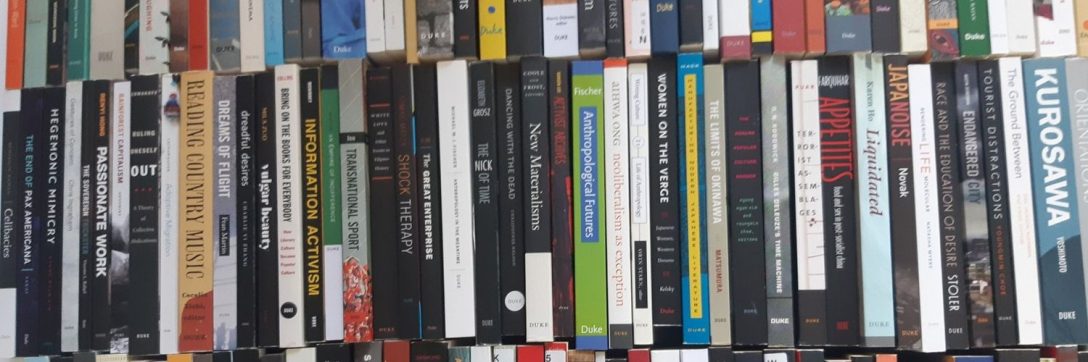

A review of Celibacies: American Modernism and Sexual Life, Benjamin Kahan, Duke University Press, 2013.
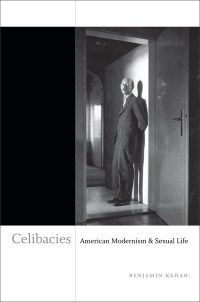 Literary criticism has accustomed us to read sex between the lines of literary fiction. What Maisie Knew was what her parents were doing in the bedroom; The Turn of the Screw would have the heroin screwed if the door was unlocked; and Marcel Proust’s Lost Time was time not spent in the arms of his lover. According to this view, literature is when the author wants to suggest something about a person or thing, but then for whatever reason he or she may not wish to explicitly state what is on his or her mind, and so the author writes a novel, or poetry. Psychoanalysis has several words for this urge to dissimulate and beautify: sublimation, repression, transfer, displacement, defense mechanism, the conflict between the super-ego and the id. They all refer to the transformation of socially undesirable impulses into desirable and acceptable behaviors. But what if the opposite was true? What if no sex means no sex, and there is no dark secret to probe into? The French philosopher Michel Foucault hinted at this possibility in his History of Sexuality when he criticized the repressive hypothesis, the idea that western society suppressed sexuality from the 17th to the mid-20th century due to the rise of capitalism and bourgeois society. Foucault argued that discourse on sexuality in fact proliferated during this period during which experts began to examine sexuality in a scientific manner, cataloguing sexual perversions and emphasizing the binary between hetero- and homosexuality. By opposition, Roland Barthes, Foucault’s colleague at the Collège de France, proposed a concept to bypass the paradigm of sexuality and go beyond the binary construction of meaning: the Neutral. “I define the Neutral as that which outplays the paradigm, or rather I call Neutral everything that baffles paradigm,” he wrote. According to Barthes, the Neutral, or the grammatical Neuter (le neutre) operates a radical deconstruction of meaning and sexuality. It allows us to reexamine from a fresh perspective the question of le genre, understood in its dual sense of literary genre and of gender.
The repressive hypothesis
Biographies of Roland Barthes point out that he remained a bachelor all his life and shared an apartment with his mother, to whom he devoted a vibrant eulogy at the time of her death. Barthes was also a closet homosexual, never avowing in public his penchant for boys and his dependence on the gigolo trade. His works are almost silent on his sexuality. Barthes’s homosexuality concerned only a private part of his life; it was never made public, because it simply wasn’t. Homosexuality was never for Barthes anything other than a matter of sex, limited to the question of the choice of a sexual object. He wasn’t gay (a term that functions as a seal of identity), and would never have been part of the political movement for the recognition of homosexual rights. This indifference was not a repression: it was another way of expressing what being modern meant for him, even if Bathes’ modernity was closely related to a certain resistance to the modern world. In a society obsessed with the new and the rejection of conventional forms, it is attachment to the past that now constitutes a form of marginality or even clandestinity and, as such, a heroism of the ordinary. Being modern doesn’t just mean taking part in the intellectual or artistic spectacle of contemporary society. It also, and above all, means constructing meanings, words, ways of being, cultural and textual interventions that precede what a society makes available. To be modern is to make one’s desire come to language. In this sense, Benjamin Kahan’s Celibacies, a work of literary criticism and cultural history, articulates other ways of being modern. Focusing on a diverse group of authors, social activists, and artists, spanning from the suffragettes to Henry James, and from the Harlem Renaissance’s Father Divine to Andy Warhol, Kahan shows that the celibate condition, in the diverse forms that it took in the twentieth century, meant much more than sexual abstinence or a cover for homosexuality. To those who associate the notion of celibacy with sexual repression, submission to social norms, and political conservatism, he demonstrates that celibacies in the twentieth century were more often than not on the side of social reform, leftist politics, and artistic avant-garde.
Celibacies is placed under the sign of Eve Sedgwick’s Epistemology of the Closet, with a quote used as an epigraph that opens the book: “Many people have their richest mental/emotional involvement with sexual acts that they don’t do, or even don’t want to do.” Sedgwick deemed the hermeneutic practice of uncovering evidence of same-sex desire and its repression in literature, “paranoid reading.” To this trend, she opposed a reparative turn in literary studies: reparative reading seeks pleasure in the text and works to replenish the self. Sedgwick’s injunction to move from paranoid to reparative reading has been diversely followed. On the one hand, queer studies continue to read the absence of sex as itself a sign of homosexuality or of repressed desire, as an act of self-censorship and insincerity. The closeted subject has internalized social norms and keeps the true self hidden from outside views, sometimes hidden from the conscious self as well. By opposition, the queer subject brings desire to the fore, and challenges tendencies to oppose private eroticism and the systems of value that govern public interests. On the other hand, queer theory rejects normativities of all stripes, including homonormativity. It understands sex and gender as enacted and not fixed by natural determinism. Since the performance of gender is what makes gender exist, a performance of “no sex” creates a distinct gender identity: no means no, and abstinence from sex is not always the sign of repressed sexuality. It is possible to theorize gender and even sexuality without the interference of sex. But according to Kahan, celibacy is distinct from asexuality, understood as the lack of sexual attraction to others, or low or absent interest in or desire for sexual activity. Celibacy is a historical formation or a structure of attachment that can be understood as a sexuality in its own right. Its meaning has evolved in the nineteenth and twentieth centuries: it has be used as a synonym for unmarried, as a life stage preceding marriage, as a choice or a vow of sexual abstinence, as a political self-identification, as a resistance to compulsory sexuality, as a period in between sexual activity, or as a new form of gender identity organized in a distinct community culture. Celibacies used in the plural reflect these overlapping meanings and cast a light on literary productions illustrating the impact of modernism in America.
The educated spinster
Celibacy once was a recognized social identity defined by its opposite, heterosexual marriage. According to Simone de Beauvoir, “the celibate woman is to be explained and defined with reference to marriage, whether she is frustrated, rebellious, or even indifferent in regard to that institution.” Its determinants were political and economical rather than sexual or sentimental: celibacy was a necessary condition for middle- and upper-class white women to gain legal and financial independence. At the end of the nineteenth century, “marriage bars” required the dismissal of female employees upon their marriage or the prohibition of the employment of a married woman. Educated women who wanted to enter a career or a profession had to remain unmarried or to hide their marriage. They did so in large numbers: “Of women educated at Bryn Mawr between 1889 and 1908, for instance, fifty-three percent remained unwed.” For this reason, celibacy is at the very heart of the history of labor in America. It is also a key component of social mobilization and civic campaigns: in the United States, unmarried, educated women composed much of the rank and file of social movements campaigning for universal suffrage, temperance, and social purity. The centrality of celibacy for first-wave feminism cannot be emphasized enough. For the author, women’s “choice not to marry is indicative of a willingness to think outside existing social structures and thus it is associated with freedom of thought.” For their male contemporaries, it was also associated with ridicule. Women campaigning for female suffrage were belittled as “suffragettes”; and other expressions disparaged women who had chosen to stay single (“singletons,” “bachelorettes,” “old maids,” “spinsters.”) The male bachelor, by contrast, was seen as socially able to marry but having delayed marriage of his own volition; he could be characterized as “a good catch,” “a stag,” or “a jolly good fellow.”
Celibacy’s history is imbricated with the history of homosexuality. Discussing Henry James’ novel The Bostonians, Kahan investigates one of the most contested site of celibacy in the history of homosexuality: the Boston marriage. The term “Boston marriage” describes a long-term partnership between two women who live together and share their lives with one another. In James’s satirical novel, the romance between the heroin Verena Tarrant and Olive Chancellor, a Boston feminist and social campaigner, is placed on equal footing with the romance between Verena and her other suitor, Basil Ransom. This love triangle is often read as a lesbian plot: Olivia’s decision to leave her parents’ house, move in with Verena and study in preparation for a career in the feminist movement is seen as the result of a love attraction. Benjamin Kahan proposes another interpretation based on the constitutive role of celibacy as a means for independence and self-determination. The Boston marriage, which does not grow out of “convenience or economy,” is associated with collaborative literary production. It reflects Henry James’ own condition as a lifelong bachelor and his conception of authorship as a vocation. The artist, like the bachelor, is fundamentally monadic and stands apart from social spheres of influence: “rather than seeing James’s celibacy as only an element of a homosexual identity, I understand it as a crucial component of his novelistic production.” In a separate chapter examining the work of Marianne Moore, a twentieth-century American poet, Kahan sees echoes of her lifelong celibacy in her poetics and conception of time. Moore’s “celibate poetics” involve a lack of development within the poem, a lack of climax, a backwardness that reverses the passage of time, as well as pleasure in difficulty, lack of explicitness, and a style at once shy and flamboyant. Moore’s remark that “the cure for loneliness is solitude” makes solitary existence a fully contented mode of sociability and a crucial part of her poetics.
Black celibacy and queer citizenship
In his effort to make celibacy be seen as progressive and pleasurable, Benjamin Kahan underscores that the celibate condition in the twentieth century was not restricted to middle-class white women. Black celibacy was advocated by a now forgotten figure of the Harlem Renaissance, Father Divine, “an intellectual and religious leader who believed he was God.” His cult, the Peace Mission Movement, organized his followers into interracial celibate living arrangements called kingdoms. These celibate communes were a direct response to economic conditions: rents in Harlem were prohibitively high, making necessary for families to share apartments or take in lodgers. Cooperative housing also echoed the calls from Claude McKay, a socialist and a poet, to seize the means of production and organize the black community on a self-sustaining basis. Lastly, black celibacy and chastity vows countered racist depictions of the black body as oversexualized and promiscuous. By making a celibate identity available to black subjects, Father Divine allowed black men and women to participate in the public sphere and created economic and spiritual opportunities for racial equality. Celibacy was also used as a strategy for queer subjects to circumvent the prohibition preventing homosexual immigrants from becoming American citizens. Before the passage of the McCarran-Walter Act in 1952, the queer citizen could, according to the letter of the law, belong to America so long as he remained celibate or was not “caught in an act of moral turpitude.” The British poet W. H. Auden became an American citizen in 1946 by practicing “cheating celibacy,” a position both inside and outside the rules that he thematized in his 1944 poetic essay The Sea and the Mirror: A Commentary on Shakespeare’s The Tempest”. This long poem is a series of dramatic monologues spoken by the characters in Shakespeare’s play in which Caliban renunciates his former self in favor of a queer form of belonging. But as Kahan notes, “black queer writers like Claude McKay, James Baldwin, and Langston Hughes had significantly less ability to move in and out of America’s borders than white authors like Auden.”
Kahan’s choice to associate Andy Warhol with celibacy is disconcerting. The pop artist was openly gay and had a reputation for promiscuity and swishiness. His art collective, the Factory, was populated by “drag queens, hustlers, speed freaks, fag hags, and others.” But “‘gayness’ is not a category that we can control in advance.” If Warhol’s declarations can be taken at face value, he claimed that he didn’t have any sex life: “Well, I never have sex” and “Yeah. I’m still a virgin,” he responded in an interview. Evidence also suggests that the Factory wasn’t the “Pussy Heaven” or “Queer Central” journalists once described: according to one witness, celibacy organized life at the Factory, and Warhol’s abstinence from sex shaped relations of power and subjection. As Kahan sees it, the tradition of celibate philosophers underwrites the Factory’s mode of government and theorizes a concept of group celibacy. Warhol’s marriage to his tape recorder exemplified his rejection of traditional marriage and emotional life: “I want to be a machine.” In the view of a contemporary, “everything is sexual to Andy without the sex act actually taking place.” His celibacy operates at a zero degree of desire. My Hustler, his 1965 movie with film director Paul Morrissey and actor Ed Hood, presents a twisted celibate plot characterized as much by sexlessness as by sex. Valerie Solanas tried to kill Andy Warhol in 1968 because she claimed “he had too much control of [her] life”. In the SCUM Manifesto she published before her attempted murder, the radical feminist urged women to “overthrow the government, eliminate the money system, institute complete automation and destroy the male sex.” Kahan places both Warhol and Solanas in a tradition of philosophical bachelorhood that precludes sex in favor of alternative modes of governance.
Celibate readings
In the conclusion of Celibacies, Benjamin Kahan argues that celibacy should not be abandoned to the American political right, with its apology of abstinence before marriage and traditional gender roles. Celibacy from the 1880s to the 1960s has been on the side of reform and modernism. Celibate women could access public space and the professions at a time social norms prevented educated married women from entering the workforce. In the 1930s, celibacy was a possible option availing economic advantages to African-Americans in Harlem or allowing queer foreigners to access U.S. citizenship. Celibacy could also be a philosophical choice or a condition for artistic production. Having a room of one’s own was easier when one didn’t have to share the apartment with another person or raise a family. Forms of celibacies have also been animated by “sexual currents, desires, identifications, and pleasures.” Celibacy’s imbrication with homosexuality is not just a modern invention: depictions of “Boston marriage” in the late nineteenth century had strong implications of lesbianism. But celibacy was not only a pre-homosexual discourse or the result of sexual repression: it was a form of sexuality in its own right, entailing a more radical withdrawal than is the case with the closet homosexual or the scholar practicing sexual abstinence. No sex means sex otherwise, or a different form of sexuality. Looking to literary works of fiction and poetry through the prism of celibacy leads to valuable insights: Kahan reads a “celibate plot” in Henry James’ The Bostonians or Andy Warhol’s My Hustler, and highlights a “celibate poetics” in the poems of Marianne Moore or W. H. Auden. This book is published in a series devoted to queer studies because, as the author argues, “celibate and queer readings overlap without being coextensive.” Much as queer theory has the effect of “undoing gender,” the primary purpose of the Neutral according to Roland Barthes is to undo the classifying function of language and thus to neutralize the signifier’s distinctive function. “L’écriture célibataire” is the form the Neutral took in American modernism.
 The relations between science and fiction have nowhere been any closer than on the planet Mars. The genre of science fiction literally began with imagining life on Mars; and some of its most popular entries nowadays are stories of how humans could settle on the red planet and make it more like the Earth. Planetary science originally took Mars as its object and tried to project onto Mars what scientists knew about the climate and geology on Earth. Now this interest for Martian affairs is coming back to Earth, as scientists are applying knowledge derived from studying Mars to the study of the Earth’s planetary dynamics. Mars’ image as a dying planet has been invoked to support competing, even antithetical views, of the fate of our world and its inhabitants: a glorious future of interplanetary expansion and space conquest, or a bleak fate of environmental devastation and human extinction. Science has not completely closed the issue on whether life has ever existed on Mars; but visions of extraterrestrial civilizations and space invaders have been superseded by narratives centered on mankind and its cosmic manifest destiny. This intimate relationship between science and fiction under the sign of Mars is now more than one century old, but shows no sign of abating. What is it in Mars that inflames people’s imagination from one generation to the next? Why has Mars attracted more interest than our closest satellite, the Moon, or than more distant planets in the solar system such as Venus or Saturn? Are there commonalities between the way our ancestors envisioned channels built by Martian civilizations and more recent visions of making Mars suitable for human sojourn? Will the detailed inventory of the Martian terrain brought back by satellite images and camera-equipped rovers put an end to our interest for the red planet, or will it rekindle a new space age with the colonization of Mars as its overarching goal? And how can our visions of planetary expansion avoid the pitfalls of colonial metaphors and Earth-based anthropocentrism?
 On July 9, 2011, South Sudan celebrated its independence as the world’s newest nation. One name considered for christening the country was the Kush Republic, after the Kingdom of Kush that ruled over part of Egypt until the 7th century BC. According to historians of antiquity, Kush was an African superpower and its influence extended to what is now called the Middle East. Placing the new nation under the sign of this prestigious ancestor was seen as particularly auspicious. But for many people the name Kush has been connected with the biblical character Cush, son of Ham and grandson of Noah in the Hebrew Bible, whose descendants include his son Nemrod and various biblical figures, including a wife of Moses referred to as “a Cushite woman.” A prophecy about Cush in Isaiah 18 speaks of “a people tall and smooth-skinned, a people feared far and wide, an aggressive nation of strange speech, whose land is divided by rivers” that will come to present gifts to God on Mount Zion after carrying them in papyrus boats over the water. For many South Sudanese at independence, Isaiah’s ancient prophecy directly applied to them, to the point the newly appointed President Salva Kiir chose Israel as one of his first destinations abroad. Churchgoers also read echoes of their fight for sovereignty and independence in various passages of the Bible. Christian southerners envisioned themselves as a chosen people destined for liberation, while Arabs and Muslim rulers in Khartoum were likened to oppressors in the biblical tradition of Babylon, Egypt, and the Philistines. John Garang, leader of the Sudan People’s Liberation Army/Movement (SPLA/M), was identified as a new Moses leading his people to the promised land. The fact that he left the reins of power to his second-in-command Salva Kiir before independence, just like Moses did with Joshua upon entering the land of Canaan, was interpreted as further accomplishment of the prophecy. Certainly God had a divine plan for the South Sudanese. For some Christian fundamentalists, the accomplishment of Isaiah’s prophecy was a sign of the imminent Second Coming of Jesus Christ that Isaiah identified as the Messiah, the king in the line of David who would establish an eternal reign upon the earth.
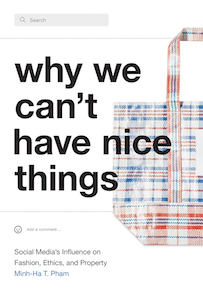 The fashion world has always espoused the latest trends in society and kept up with the times. It should therefore come as no surprise that fashion producers and commentators now speak of “ethical fashion,” “sustainable fashion,” or “fashion for good.” But what do these terms exactly mean? Who has the power to declare fashion worthy of these labels? What lies behind the glamour and glitter of fashion shows and catwalk fame? Unsurprisingly, there is also a radical wing of fashion critique (or critical fashion studies) that scrutinizes those corporate objectives and tries to hold the fashion industry accountable. Minh-Ha T. Pham is one of those critics that read fashion in relation to race, class hierarchies, labor, indigenous knowledge, creativity, and intellectual property rights (IPR). In Why We Can’t Have Nice Things, she examines the way social media users monitor the fashion market for the appearance of knockoff fashion, design theft, and plagiarism. Through what she calls “crowdsourced IP regulation,” she envisages the online activities of bloggers and Instagram users as a form of free labor mobilized in the service of fashion capital accumulation. Network vigilantes who are policing the border between authentic and fake fashion are engaged in racial work: copycat producers and consumers are always portrayed as Asians and reviled as morally defective, while creativity is defined as a property of whiteness, which gives Western fashion designers the privilege to engage in racial extractivism and legitimate cultural theft.
 I am interested in the history of anthropology. But there is a great disconnect in the way this history gets told. It stops at the point when it really should start. Anthropology is rich with disciplinary ancestors and founding fathers. Bronisław Malinowski and Franz Boas laid solid foundations for the discipline, teaching their contemporaries that no society, including their own, was the end point of human social evolution. The discipline has a few founding queens as well: Margaret Mead and Ruth Benedict, who both studied under Boas, contributed to a fundamental reimagining of human diversity that allowed for the turn toward greater tolerance and inclusion in postwar America. History books go in great detail in discussing their contribution to the field and how a few great debates shaped the discipline. They highlight a Golden Age of anthropology in which the discipline was relevant, not only for other academic specialties, but for addressing the pressing concerns of the day. As of today, an anthropology major will give prospective students a valuable perspective on matters like diversity and multiculturalism, race and gender, globalization and political conflict, religions and secular beliefs, and much more. But history books all stop when the party gets started. They never mention the controversies and paradigm shifts that form the bedrock of contemporary research. The references they quote are absolutely of no use in writing current anthropology. Bibliographies of recently published articles rarely, if ever, mention publications antedating the 1990s. It seems as if the discipline reinvented itself at some point and discarded its former self.
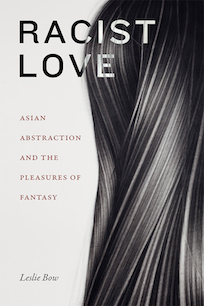 Racist Love starts from the position that love can be racist. This is an idea that many people may find difficult to admit. Of course, most people will acknowledge that racism can be at work in the sexual fantasies of old white men attracted to young Asian women. In the same vein, the way Asian American communities are praised as a “model minority” can also be called racist. But can the sincere love of a white person to his or her Asian partner be called racist? What about the unconditional love of a mother to her child in the case of interracial adoption? And even if racist love exists, is the fact that some white people, male or female, prefer Asian sexual partners different from the attraction other people feel for blondes or redheads? Where do you draw the line between a preference for physical attributes in a partner and racism? If transracial love is systematically tainted by racism, what about the love or attraction one may feel towards people of one’s own ethnic group? Can people of color be suspected of racist inclinations because they are attracted to persons outside their ethnic group, or is racist love the preserve of white people? How to deal with the case of non-Asian persons (say, Gwen Stefani) who are so attracted by everything Asian that they themselves identify as Asian? There are no easy answers to these questions and, especially in the French context, it is hard to engage a conversation on these issues. Speaking of racism usually elicits the topical response “I am not a racist!”, while using the expression “structural racism” tends to deprive people of their agency. Racism, like religious beliefs or political affiliations, are topics that are best kept out of conversations at the dinner table.
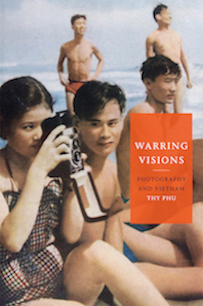 In April 2015, the Institut Français in Hanoi held a photography exhibition, Reporters de Guerre (War Reporters), marking the fortieth anniversary of the end of the Vietnam War. Curated by Patrick Chauvel, an award-winning photographer who had covered the war for France, the exhibition showcased the work of four North Vietnamese photographers (Đoàn Công Tính, Chu Chi Thành, Tràn Mai Nam, and Hùa Kiêm) whose documenting of the Vietnam War was often overshadowed by photographers from the Western press working from the South. The poster for the cultural event at L’Espace used an iconic image: a black-and-white picture of North Vietnamese soldiers climbing a rope against the spectacular backdrop of a waterfall, taken in 1970 along the Ho Chi Minh trail. Đoàn Công Tính, the photographer, had caught a moment of timeless beauty and strength, an image of mankind overcoming physical hindrances and material obstacles in the pursuit of a higher goal. However, a scandal erupted when Danish photographer Jørn Stjerneklar pointed out on his blog that this iconic image was doctored. He compared two versions, the recent print that appeared in the exhibition and the “original,” which was published in Tính’s 2001 book Khoảnh Khắc (Moments). Tính apologized profusely for “mistakenly” sending the photoshopped image, claiming that the original negative had been damaged and that he accidentally included a copy of the image with a photoshopped background in a CD to the exhibition’s organisers. But in a follow-up article on his blog, Stjerneklar pointed out that even the “original” had been retouched, as evidenced by the repeating pattern of the waterfall, and was likely a montage of another photograph which is displayed at the War Remnants Museum in Ho Chi Minh City. Stjerneklar’s story was picked up worldwide and ignited a lively debate around the presumed objectivity of photojournalism and the role of photography in propaganda.
 How can a majority of parliamentarians vote to renounce democracy? Why would a group accept its own debasement and, in doing so, abdicate its capacity for self-preservation? What induces them not only to surrender power, but also to legitimize this surrender by a vote? Which conjuncture allowed democratically elected officials to rule themselves out and allow authoritarian leaders to take full control? This sad reversal of fortune happened on two occasions in the twentieth century. On 23 March 1933, less than one month after the burning of the Reichstag, German parliamentarians gathered at the Kroll Opera House in Berlin passed a bill enabling Hitler to concentrate all powers in his own hands by a majority of 444 to 94, meeting the two-third majority required for any constitutional change. On the afternoon of 10 July 1940, at the Grand Casino in Vichy, a great majority of French deputies and senators—569 parliamentarians, about 85 percent of those who took part in the vote—endorsed a bill that vested Marshal Pétain with full powers, including authorization to draft a new constitution. In these two cases, abdication was sanctioned by an explicit decision—a vote. Both cases gave authoritarian leaders all powers to sideline parliament, suspend the republican constitution, and rule by decree. Both 23 March 1933 and 10 July 1940 are dates which live on in infamy in Germany and in France. As soon as the events occurred, they were to haunt the elected officials who took part in the decision. To borrow Ivan Ermakoff’s words, these were “decisions that people make in a mist of darkness, the darkness of their own motivations, the darkness of those who confront and challenge them, and the darkness of what the future has in store.” Can we shed light on this darkness?
 The “flash of capital” refers to the way the underlying structure of a national economy “flashes” or reverberates through the films it produces, and how cinema critique can highlight the relations between culture and capitalism, film aesthetics and geopolitics, movie commentary and political discourse, at particular moments of their transformation. A flash is not a reflection or an image, and Eric Cazdyn does not subscribe to the reflection theory of classical Marxism that sees cultural productions as a mirror image of the underlying economic infrastructure. Karl Marx posited that the superstructure, which includes the state apparatus, forms of social consciousness, and dominant ideologies, is determined “in the last instance” by the “base” or substructure, which relates to the mode of production that evolves from feudalism to capitalism and then to communism. Transformations of the mode of production lead to changes in the superstructure. Hungarian philosopher and literary critic György Lukács applied this framework to all kinds of cultural productions, claiming that a true work of art must reflect the underlying patterns of economic contradictions in the society. Rather than Marx’s and Lukács’ reflection theory, Cazdyn’s “flash theory” is inspired by post-marxist cultural theorists Walter Benjamin and Fredric Jameson, and by the work of Japan scholars Masao Miyoshi and Harry Harootunian (the two editors of the collection at Duke University Press in which the book was published). For Cazdyn, how we produce meaning and how we produce wealth are closely interrelated. Cultural productions such as films give access to the unconscious of a society: “What is unrepresentable in everyday discourse is flashed on the level of the aesthetic.” Films not only reflect and explain underlying contradictions but, more importantly, actively participate in the construction of economic and geopolitical transformations.
 Let’s begin with a tale of two cities. The first—let’s call it Gotham—is a city where crime and violent protest run rampant. Hoodlums and thugs control the streets. City Hall is corrupt and incompetent. Police officers are powerless. An anti-Western, anti-rationalist, racialist, segregationist ideology has declared war against individual freedom and freedom of thought. Vigilante groups have taken control of entire neighborhoods and established a reign of permanent violence, looting businesses, attacking representatives of public authority, setting fire to courts of law and to the premises of police departments. The chaos that accompanied the takeover of these Red Guards has caused dizzying increases in crime. Even so, influent voices are calling for the defunding of police and the abolition of prison. Law enforcement officers have to obey strict rules of engagement. They have to wear body cameras to record their interactions with the public or gather video evidence of their eventual mishandling of a situation. There are discussions about streaming these video feeds online, in real time. The second city—dubbed The Big Apple—is a place where a militarized police patrols the streets like an occupation army, clamping down on any form of dissent. Business interests have privatized vast portions of the public space, evacuating any undesirable people including climate change activists, protesters distributing antiwar pamphlets, or trade union picketers who could disrupt the consumer’s experience. With the full support of politicians, police forces have responded to a previous wave of crime with a zero tolerance policy they now apply to all kinds of public protest, in violation of the First Amendment of the American Constitution. This “Broken Windows” doctrine has had no effect on crime, but now justifies disproportionate use of force, excessive length of custody, and “shock and awe” tactics against protesters. People demonstrating for social justice or against racism are treated like criminals and are arrested without any legal basis. Democracy is undermined, and the government increasingly behaves like an authoritarian state.
