
Video Game Theory

A review of Respawn: Gamers, Hackers, and Technogenic Life, Colin Milburn, Duke University Press, 2018.

RespawnVideo games are now part of popular culture. Like books or movies, they can be studied as cultural productions, and university departments offer courses that critically engage with them. Scholars who specialize in this field of study take various perspectives: they can chart the history of video game production and consumption ; they can focus on their design or their aesthetic value; or they can analyze their narrative content and story plot. There is no limit to how video games can be engaged: some thinkers even take them as fertile ground for philosophy and theory building. Within the past few years, a handful of books have been published on video game theory. Colin Milburn’s Respawn can be added to that budding strand of literature. It is a work of applied theory: the author doesn’t engage with longstanding philosophical problems or abstract reasoning, but draws from the examples of a wide range of games, from Portal and Final Fantasy VII to Super Mario Sunshine and Shadow of the Colossus, to illustrate how they impact the lives of gamers and non-gamers alike. In particular, he considers the value of video games for shaping protest and political action. Video games, with the devotion that serious gamers bring to the task, introduce the possibility of living otherwise, of hacking the system, of gaming the game. Gamers and hackers develop alternative forms of participatory culture along with new tactics of critique and intervention. Hacktivist groups such as Anonymous use video game language and aesthetics to disrupt the operations of the security state and launch attacks on the neoliberal order. Pirate parties have won seats in European legislatures and advocate a brand of techno-progressivism, digital liberties, and participatory democracy largely inspired by video games. Exploring the culture of video games can therefore offer a glimpse into the functioning of our modern democracies in a computerized world.

Geek vocabulary

A culture is formed of various groups that may develop their own specific identity within the context of the larger social system to which they belong. Gaming culture can he treated as a subculture: a series of social codes, technological lore, and insignificant facts of history, popular culture, art and science. Subcultures create social groups by delineating their identities, beliefs, and habits as much as they exclude those who do not belong to the group. Geek culture is a subculture of computer enthusiasts that is traditionally associated with obscure media: Japanese animation, science fiction novels, comic books, and video games. Respawn is replete with trivia, code words, and key expressions that open for the noninitiate a window into the world of gaming. “All your base are belong to us” is the poorly translated sentence from the Japanese arcade game Zero Wing that is now used as a catchphrase for violent appropriation and technical domination. Used by the leader of the cyborg invasion force known as CATS, it signifies that a posthuman future is already inevitable, and presents an allegory of the information age in which mistranslations and malfunctions abound. Made popular by the website Something Awful, it is the feline equivalent of the Doge Internet meme that consists of a picture of a Shiba Inu dog accompanied by multicolored text deliberately written in a form of broken English. Variations on the CATS meme include the message posted by YouTube in 2006 that “All your videos are belong to us” or, following the Snowden affair and the exposure of NSA’s vast data-surveillance operation, various Internet images that proclaim: “All your data are belong to U.S.”

Another obscure lore sentence is the question: “Where were you on April 20, 2011?” that refers to the date the PlayStation Network was shut down as a retroactive security response to an external intrusion. Colin Milburn reconstructs the story of this particular episode, which exposes the troubled relations between Sony Corporation and various groups of hackers, of which the attack on Sony Pictures by operatives allegedly sponsored by the government of North Korea is only the last installment. It all began with Sony’s decision to make its PlayStation 3 open to homebrew programmers and technological innovators in order to encourage participatory science, peer-to-peer design, and do-it-yourself innovation. With its PlayStation Network or PSN, it even claimed to have created “the most powerful distributed computing network ever” and made it accessible to Stanford University’s researchers to simulate the mechanics of protein folding by installing the Folding@home software on all its stations. However, in January 2010, the young hacker George Hotz—more commonly known by his alias, GeoHot—announced that he had found a way to hack the PS3, gaining access to its system memory and processor and allowing users to make pirate copies of their games. Sony backpedalled on its open system policy and filed a lawsuit against GeoHot, which then found supporters among the hacker collective Anonymous who launched a massive DDOS attack against Sony servers. It is in this context that the PlayStation Network outage occurred, disabling gamers access to their favorite occupation and exposing them to the risk of leaked personal data, including passwords and credit card numbers that the hackers were able to extract from servers. Anonymous was quick to deny responsibility for the criminal intrusion, but it wasn’t the end for Sony’s troubles and the company was exposed to more attacks by malicious black-hat hackers. Meanwhile, the unsolved mystery of who hacked the PSN invited conspiracy narratives and dark humor mashups. “PlayStation Network was down so I killed Osama Ben Laden” was how a meme described president Obama’s reaction, while others noted the time coincidence between the PSN shutdown and the day the Skynet network took over the world in the Terminator movie.

Doing it for the lulz

The gamer culture intersects with hacking in the lulz, a form of corrupted laughter that derives pleasure from online actions taken at another’s expense. The “field of Theoretical Lulz” as depicted on Encyclopedia Dramatica includes trolling, gooning, griefing, and pranking, as well as the various forms of online harassment developed by hackers who, as they say, “do it just for the lulz.” Modding refers to the act of modifying hardware, software, or any aspect of a game, to perform a function not originally conceived or intended by the designer, or achieve a bespoke specification. Mods may range from small changes and tweaks to complete overhauls, and can extend the replay value and interest of the game. Respawn, a command-line first occurring in the game Doom, means to reenter an existing game environment at a fixed point after having been defeated or otherwise removed from play. It is the opposite of permadeath games that make players start over from the very beginning if their character dies. Yet another option is to play in “Iron Man mode” and try to reach the end of any game with only a single avatar life, eschewing the “save” or “respawn” functions. The hacker concept of “magic” refers to “anything as yet unexplained, or too complicated to explain,” but also to the command words in adventure games that included functions such as “XYZZY” or “PLUGH”. The word “pwn” is not a programming function or an instruction code, but a term of appreciation (as in “This game pwns”) that originated in the gaming community itself, probably born from a typographic error. According to the most enthusiastic critics, games raise philosophical issues. The role-playing game Portal includes the sentence “There will be cake” in its opening, but the player soon realizes that “The cake is a lie.” Of course, these two sentences have achieved cult status, and are repeated in countless Internet memes or signs carried at street demonstrations.

For Colin Milburn, games are closely correlated to the meaning of life. Many concepts from computer science draw parallels to the realm of organic life—worms, viruses, bugs, swarms, hives, and so forth. Sony has built upon this connexion by attaching its brand to an image of biological organism and vitality, from its 2007 “This Is Living” advertising campaign to its 2011 “Long Live Play” motto. Sony executives routinely speak about the PlayStation’s DNA, refer to its microprocessor as The Cell, and insist on the nucleic compatibility between successive generations of hardware products. For Colin Milburn, “‘respawn’ stands for a surplus of vitality, a reserve of as-yet unexpended life, a technologically mediated capacity to keep on going even while facing dire adversity.” He uses the term “technogenic life” to refer to the entanglement between organic life and digital media and the emergence of new life-forms, neither fully human nor artificial. This is of course a familiar trope in science fiction, and the author lists classic novels such as John Brunner’s Shockwave Rider, Vernon Vinge’s True Names, or William Gibson’s Neuromancer as part of any gamers’ portable library. Video games are experiments in applied science fiction: they allow players to test the limits of life, to engage with anticipation and foresight, and to make other futures imaginable. Gamers always have the possibility to reset, save, shut off, or reload. Games tend to encourage a playful and experimental attitude to life: working through error, overcoming failure, persevering toward the goal while staying open to the unexpected. Playing games can teach us how to live: indeed, they are part of our lives as Homo Ludens. Gamers respond to the injunction to “get a life” by arguing that they already have one, indeed many: “I am a gamer, not because I don’t have a life, but because I choose to have many.”

We Are Heroes

Gamers are also influenced by the subculture of comic books and superhero movies. Since 1978, when the first Superman cartridge appeared for the Atari 2600, the video-game industry has produced a steady stream of superhero adventures. One such game was City of Heroes, a massive multiplayer online role-playing game or MMORPG that attracted a large community of followers. In the game, players created super-powered characters that could team up with others to complete missions and fight criminals belonging to various gangs and organizations in the fictional Paragon City. When the South Korean company NCsoft decided to terminate its Paragon Studios development team and to shut down the game in 2012, massive protests arose. Online testimonies reflected feelings of camaraderie and shared culture, domestic and social belonging, comfort in times of sorrow, and personal accomplishment—indeed, all the qualities of “having a life”. Rallying under the motto “We are heroes. This is what we do,” participants envisaged various measures to keep the game operating past the announced date of closure. Their logic was straightforward: the company had made a game where players had spent the past eight years defending their city; it was only natural that they rose in protest against this attack on Paragon. Some decided to go rogue and keep the game running on servers based on the leaked source code. Like in the world of superheroes, the online community has always had its rogue elements, its vigilantes and its villains. The author is not sure where to categorize hackers such as the group Anonymous: “despite their roguelike appearances, hacktivists might even seem to be on the right side of history.” But the hate speech, misogynistic attacks, and racist slurs that circulate on forums such as Reddit or 4chan clearly fall into the villainy category. They represent “the dark side of the lulz,” the politics of terror and mayhem that is already familiar to the fans of Batman’s Gotham City and other superhero worlds.

Gaming also shapes a political imaginary. Numerous players have attested to the impact of gaming on their own political or ecological sensitivities. The dispositions and practices cultivated by gaming can inform political choices, responsible policy decisions, and collective action. Under the right circumstances, video games offer ways to experiment with the technopolitics of the present, to think otherwise even from the inside of a computer system. Edward Snowden has confessed that his motive for challenging the security state has developed partly through his lifelong interest in video games. According to Colin Milburn, video games frequently present interactive narratives about civil disobedience, social resistance, and transformation, becoming models for engagement. The quotidian act of saving or resetting gameplay data itself models an orientation to social change, affirming that duration and persistence are not givens but are always active processes of construction. Final Fantasy VII has encouraged a generation of players to consider “how deeply the fights for economic democracy and environmental sustainability are intertwined.” Gaming and hacking cultures are intrinsically correlated. The “primal scene of hacking” occurred in the early 1960s when MIT research scientists experimented with the university’s mainframe computer to create the first video game, Spacewar! The first online role-playing game, Adventure, which circulated on the ARPANET in the seventies, included a secret hideout place where the author left his unauthorized signature. Many games include hacking as a function, and offer the possibility to tweak the code or experiment with alternative commands even from the inside. But in the end, even those who resist the prevailing systems of control are likewise products of those same systems. Like in Ernest Cline’s novel Ready Player One, the only possible option may be to play through to the end or to quit entirely. Completing a game inevitably triggers the formula: “Game Over”.

Cultural studies

Colin Milburn advances the scholarly study of video games in several directions. First, he shows how to engage theoretically with video games. He borrows many of his tools from the cultural study of literature and cinema. For example, he focuses on particular episodes of video games, or he summarizes the plot of select games such as Final Fantasy VII. As in book or film reviews, his descriptions entail some disclosure of plot details that may constitute a spoiler for some gamers: if you don’t want to know the final scene in System Shock 2 or the location of the secret AVALANCHE hideout in Final Fantasy VII, you may have to skip some passages in the book. He also dwells on the psychology of some characters, just as a critic would do with a novel or a movie. In this sense, video game theory is not especially new: games are amenable to the tools used to analyze artworks that belong to the narrative genre. As a second contribution, Respawn offers a description of gaming culture. The author introduces the unfamiliar reader to a community brought together by code words, favorite expressions, a common history, and modes of engagement with video games and with life in general. Video game culture consists of a rich mythology of lore, trivia, fun facts, episodes, and images that are communicated through online discussions, the diffusion of Internet memes, and the participation in social events such as gaming conventions or cosplay parties. Thirdly, Colin Milburn underscores the transformative power of games, the subversive potential of role-playing and other forms of ludic recreation. The book traces the intersections of gaming with hacking and high-tech activism, focusing on several online campaigns launched by the hacktivist collective Anonymous. It underscores that lulz, fun, and games can no longer be thought as separate from issues of political or technological governance. Games allow other ways of being in the world: they create the possibility to act like a superhero, a vigilante or a villain, or to escape the laws of gravity by wavedashing or airdodging along with Super Mario. Most importantly, Colin Milburn demonstrates that video games matter—even for casual users or non-gamers. Video games have become increasingly sophisticated, not only in the evermore complex issues that they present, but also in revealing their own explicit and reflective awareness about theoretical issues. Video game theory may not just be about applying existing theory tools to video games, but also crafting new tools, concepts and theories brought forth by video games and that may be of broader relevance for culture and society.

Lord of the Crabs

A review of Improvising Medicine: An African Oncology Ward in an Emerging Cancer Epidemic, Julie Livingston, Duke University Press, 2012.

Improvising MedicineImprovising Medicine describes everyday life in a small oncology ward in Botswana, a Southern African country that has been decimated by HIV/AIDS and that now faces a rising cancer epidemic. AIDS, disease, heat, stench, misery, overcrowding, scarcity, death: the picture seems familiar, even cliché. But Julie Livingston warns (or reassures) her reader at the outset: this is not the book on Africa one has learned to expect (or to dread). As she notes, “the problems of pain, death, illness, disfigurement, and care that lie at the heart of this book are basic human ones.” This is, in essence, a book about human nature in the face of insufferable circumstances. It is told in the way anthropologists tell a story: with a concern for the local, the mundane, the quotidian. Improvising Medicine is based on an extended period of participant observation and hundreds of pages of research notes jotted down after long hours of assisting care workers in their daily chores. The particularities of ethnographic observation are reflected in the excerpts of the research diary that are inserted in the book, with the names and proclivities of each patient and coworker who, in the end, become familiar figures to the reader as they were for the fieldworker. And yet, between the localized setting and the universalist message, there are some conditions and lessons that pertain to Africa as a whole. The cancer ward in Princess Marina Hospital in Gaborone, Botswana’s capital, is referred to as an African oncology ward in an African hospital. The author routinely writes about an African ethic of care, about the defining features of biomedicine in Africa, or about the articulation between African practice and global health.

The local, the regional, and the global

Of these three overlapping planes of observation, the local that characterizes a specific cancer ward, the regional that makes it distinctly African, and the universal that is common to all humanity, let’s start with what is specific to Botswana. In the early 2000s, at the time of the book’s writing, the country had only one hospital ward dealing with cancer patients, with twenty beds and few medical equipments—radiotherapy had to be practiced in a private clinic nearby. It had no medical faculty or university hospital, and doctors had to be trained abroad or brought in as foreign experts. Botswana’s inhabitants looked up to neighboring South Africa as a place with more sophisticated and powerful medicine than was available in their country. On the other hand, Zimbabwe, Botswana’s eastern neighbor, was spiraling into a crisis of dramatic proportions, and patients or doctors who had previously relied on its health system were forced to look abroad. Unlike apartheid South Africa or dictatorial Zimbabwe, Botswana was and still is characterized by a robust social contract that has sustained a stable democratic life and steady economic growth. For over four decades, Botswana’s political leadership has proven remarkably adept, patient, and forward thinking in charting the course of development, stability, and peace under challenging circumstances. Botswana is the untold success story in a continent that is often associated with civil wars, military dictatorships, and continuous economic decline.

These characteristics of Botswana translate in the country’s health system. Healthcare is provided as a public good for citizens under a program of universal care. Most people rely on the public health system and pay only a minimal fee for its services, although the cost of transportation and hospitalization falls heavily on the poorest households’ budgets. Botswana’s democratic regime and relatively equalitarian society ensure that “Bushmen from the Kalahari lie in beds next to the siblings of cabinet ministers, and village grandmothers sit on chemo drips tethered to the same pole as those of young women studying at the university.” Its small population and dense communal life also ensures that “everybody knows each other,” and this familiarity among patients and with caregivers humanizes the illness experience. A day at the cancer ward usually starts with prayers in Setswana, the national language, as most of the nurses are devout Christians. Nursing in the oncology ward is an extension of the state’s commitment to care for its people, a manifestation of a national ethos of care and compassion, and nurses are expected to embody these deeply ingrained values. Unlike other places where nurses might look down on their poorest patients, in Botswana social differences are mediated by an equalitarian ideology, and many nurses make a point of resisting claims for extra resources (more bed space, time with the doctor, nursing attention, preferential treatment) made by the most elite patients.

Living with HIV/AIDS, dying from cancer

Of course, this picture of Botswana’s health situation wouldn’t be complete without mentioning AIDS. Botswana lives in the shadow of the HIV/AIDS epidemic. Nearly a quarter of the adult population is HIV-positive, which means everyone has intimate knowledge of AIDS and its suffering. Antiretroviral therapies, distributed free of charge by an arm of the national healthcare program, have transformed HIV/AIDS from a deadly predicament into a chronic disease. People have learned to live with HIV; new terms have entered the local vocabulary, such are mogare (worm) to designate the virus or masole (soldiers) to refer to the CD4 count. Immunodeficiency increases the risk of co-infections by hepatitis, tuberculosis, but also certain forms of cancer. Co-infection with HIV renders cancer more aggressive and prognoses more ominous and uncertain. Before ARVs were available, many of Botswana’s patients died with a cancer, but from other AIDS-related infections. Since 2001, when Botswana’s ARV program began, however, many patients have survived HIV only to grapple wth virus-associated cancers made all the more aggressive and difficult to treat by HIV co-infection.The experience of cancer (kankere) has been grafted onto an already complex health situation. “If only I just had AIDS” was the ironic refrain the author heard repeated many times by the cancer ward’s patients.

Whereas HIV/AIDS originated in Africa and is often associated with the continent, popular opinion rarely associates cancer with Africa. According to Julie Livingston, many factors contribute to make cancer in Africa invisible: statistics are scarce, detection equipments are lacking, patented drugs are expensive and tailored for rich countries’ markets, and clinical knowledge is often ill-suited to African contexts. In addition, powerful interests conspire in perpetuating scientific ignorance about cancer in Africa: the mining industry often denies occupational exposure to uranium radiation or asbestos, and the African continent is targeted as the new growth market by tobacco companies. Cancers often go undetected until they have reached terminal stage, and then again they are not reflected in mortality data due to poor registry infrastructure. The paradoxical result is the shocking visibility of cancer among African patients. Readers are reminded that “while cancer with oncology was awful, cancer without oncology could be obscene.” A visit to the oncology ward conveys a vision from hell: the author’s fieldwork notes include descriptions such as “a friable mass of bleeding tissue eating its way into the vaginal wall and the bladder,” “a black swelling on the sole of her foot which had begun to ulcerate,” “throats blocked by esophageal tumors,” or “the necrotic stench of tumors that have broken through the skin and exposed rotting flesh.” It is this rot, and its accompanying stink and sight that in earlier decades made cancer an obscenity in North America and Western Europe. Very often, at this late stage, the only solution is brutal surgery: too many breasts, legs, feet, and testicles to be removed in a single day makes the author note in her diary, with grim humor: “It’s amputation day at Princess Marina Hospital.”

Invisible pain

Cancer in Africa is made invisible; similarly, pain among African patients is negated and marginalized. Pain is what propels many patients into clinics because they can no longer endure it on their own, yet many clinical staff are reluctant to use opioids and palliative care even for patients who are dying, despite long-standing WHO protocols encouraging their use and low-cost availability of morphine, codeine, and pethidine produced by the generics industry. This economy of pain is not only limited to Africa: the Global South, which represents about 80 percent of the world’s population, accounts for only about 6 percent of global consumption of therapeutic morphine. But the invisibility of pain in Africa takes on a particular racist twist: it is widely believed that Africans are less sensitive to pain, that they are more forbearing than whites and thus bear their pain in silence, and that they even smile under duress, laugh at pain’s expression, and make it a matter of ridicule. Racial ideas about pain are inherited from the colonial period and the slave trade, with its long history of forced labor, corporal punishment, and dehumanizing psychology. But African reluctance to perform pain loudly is also understood as a function of culture, as when African women laugh at the foolishness of white women moaning and screaming during childbirth, or in reference to initiation ceremonies when young adolescents had to endure beatings and suffering in silence in order to cross the threshold to adulthood. In the cancer ward observed by Julie Livingston, pain may be spoken of, but rarely screamed or cried over, and patient silence is interpreted as a sign of forbearance. But nurses are carefully attuned to nonverbal cues, reading facial expressions and bodily contact to gauge pain. Pain, even when it is repressed, denied, or laughed at, is a thoroughly social experience.

Efforts to socialize pain point to a wider lesson: disease is not only what happens to one person, but also between people and at the level of social interactions. Although cancer produces moments of profound loneliness and boredom for patients, serious illness, pain, disfigurement, and even death are deeply social experiences. It is sometimes said that we’re born alone, we live alone, we die alone. But from the moment we are born until we take our last breath, we are enmeshed in webs of social relations: we are never alone. This social embeddedness of life and disease that the author makes visible in Gaborone’s hospital is a defining feature of medicine beyond the African context. It is also what characterizes nursing, care work, and the ethics of therapeutics whatever its location or cultural context. Improvising Medicine is therefore a book with global relevance. Even the fact that improvisation is a defining feature of biomedicine in Africa can be generalized to other contexts. Confronted with life-or-death decisions, doctors always have to improvise in the spur of the moment, make choices under imperfect information, and even triage patients by determining who might get treatment and who might be left without medical attention. Of course, doctors are supposed to memorize procedures from books and follow rules. That’s why they attend medical school for so many years and pass stringent tests to be sure they know exactly how to handle each medical emergency according to the standard procedure. But an ordinary day in Princess Marina Hospital shows us life never goes by the book: doctors may be aware of the ideal way to deliver a certain treatment or to perform an operation, but they don’t have the equipment, staff personnel, infrastructure, or administrative support necessary to follow SOPs.

Third world conditions

Improvising Medicine reminds us that global health issues are indeed global, and that cancer, like medicine itself, is neither an exclusively African problem, nor a particularly Western one. The future of global health is shaped in large part by events and trends occurring in developing countries. The cancer epidemic is rising steadily across Africa and the Global South more broadly; it is aggravated by the fact that 40% of all cancers are associated with chronic infections. Co-infections are not limited to Africa: it is an important dimension of the current COVID-19 pandemic, as being already infected by a pathogen increases the sensitivity and morbidity to the new virus. But make no mistake: the situation in Africa is different. In a hospital that lacks a cytology lab, an MRI machine, endoscopy, and mammography, diagnosing and curing cancer is an impossible mission. The forms of cancer tumors that grow and blossom, exposing rotting flesh and necrotic stench, should never be allowed to develop. Critics sometimes claim that healthcare in North America or Western Europe has declined to third-world levels. They point to the long queues, shortage of equipment, and insufficient health coverage to denounce unequal access to medicine and rampant privatization of public services. The detailed description of an oncology ward in Africa should give them pause.

What Comes Next?

A review of After Ethnos, Tobias Rees, Duke University Press, 2018.

After EthnosWhat is anthropology? What should it be about, and how should it be pursued? These questions were raised with great intensity in the politically loaded context of the seventies. Radically different visions of anthropology were offered; people experimented with new forms of writing and storytelling; and the discipline was mandated to take a political stance in reaction to the issues of the day. As a result, anthropology was deeply transformed. The two canonical concepts that defined its academic status, culture and society, were discarded in favor of other constructs or organizing schemes—although modern ethnography is still referred to as cultural anthropology in the United States and as social anthropology in the United Kingdom. Fieldwork, the close and sustained observation of native customs and modes of thought by a participant observer, ceased to define the discipline. The methodology was adopted by other social sciences—or even by other occupations such as journalism, militantism, and even art—, while anthropologists experimented with multi-sited ethnographies or with research based on archival work. As Clifford Geertz and other anthropologists working in his wake made it clear, the collection of data by the ethnographer on the field is just the tip of the iceberg: it is based on years of reading other anthropologists’ work and attending academic lectures, and it is followed by the nitty-gritty work of reconstruction and composition that leads to the journal article or the scholarly volume. The anthropologist was recognized as a writer, as a maker of forms and a designer of concepts.

A designer of concepts

In his book, published in 2018, Tobias Rees takes these questions anew. After Ethnos grapples with the state of anthropology after the great surge of creativity and experimentation that followed the publication of the volume Writing Culture in 1986. It builds on an impressive bibliography of theoretical texts, as well as on countless seminar discussions, email exchanges, and tea corner conversations. It remains true to the creativity, artistic sensitivity, and  philosophically informed theorizing that redefined the discipline after the epistemological turn of the seventies and eighties. On the webpage of the Berggruen Institute in California, where he chairs the Transformations of the Human Program, Tobias Rees is presented as follows: “The focus of Rees’s work is on the philosophy, poetry, and politics of the contemporary. He is intrigued by situations that are not reducible to the already thought and known –– by events, small ones or large ones, that set the taken for granted in motion and thereby provoke unanticipated openings for which no one has words yet. In his writings, he seeks to capture something of the at times wild, at other times tender, almost fragile openness that rules as long as the new/different has not yet gained any stable contours. When it is (still) pure movement. His work on the brain, on microbes, snails and AI have increasingly given rise to two observations that have come to define his work. (1) A distinctive feature of the present is that the question concerning the human occurs less in the human than in the non-human sciences. Say, in microbiome research, in AI or in the study of climate change. (2) The tentative answers that are emerging from these non-human fields radically defy the understanding of the human as more than mere nature and as other than mere machines on which the human sciences were built.”

Tobias Rees claims that After Ethnos is a non programmatic book. And yet it reads like a manifesto of sorts, a rallying call aiming at offering a vision of what anthropology could look like after it has severed it ties to ethnos and, in a way, to anthropos. Many sentences indeed offer a programme or a platform for future anthropologists. New directions in contemporary research are assessed, lines of escape are drawn, and a new orientation for future research is proposed. The author doesn’t mean to condemn or be judgmental of certain forms of anthropology that remain tied to disciplinary traditions. But this is because traditional anthropology has disappeared from anthropology department in most American universities. As Rees soberly notes, “Classical modern ethnography has come to an end.” People who still focus on traditional societies now need an excuse for doing so. The burden of proof falls upon them to justify the choice of a research topic that was considered as mandatory by their predecessors. They insist on their distinctiveness from older forms of scholarship that were often tainted by racial prejudice and positions of power. Whereas it is still possible to situate oneself in the sociological tradition, paying tribute to the founding fathers and the great names of the discipline, the anthropological tradition is all but dead. It has been reduced to old books accumulating dust on libraries’ shelves, and that are turned open only to show how antiquated and prejudiced the founders of the discipline were.

The erasure of Man

For Tobias Rees, the conditions of possibility that have organized ethnography have become impossible to maintain. The abstract figure of “Man”, itself a recent invention, has been erased “like a face drawn in the sand at the edge of the sea” (to take Michel Foucault’s famous metaphor.) Likewise, the ethnos and its declinations—the ethnic group, the tribe, the singular people with its well-defined culture and mores, was understood as a social construct whose fiction was increasingly difficult to maintain. With these erasures, the great divides of modernity—man vs. nature, science vs. tradition, reason vs. emotion, human vs. animal, life vs. matter, etc.—have all been redrawn. Starting in the late 1980s or early 1990s a number of anthropologists began to enter—per fieldwork—domains that were formerly believed to be beyond the scope of anthropological expertise or interest, such as medicine, science and technology, media, the Internet, finance, and much more. The result was a flurry of innovative texts and monographs offering new departures for the discipline. Anthropologists took the perspective of the gingko tree or the matsutake mushroom that have been around from times immemorial to envisage the possibility of life without humans, to displace “Man” from the center and to make it little more than a late-coming and transient episode in the history of the earth. Others have described the world-making qualities of bacteria that effectively have produced and continue to produce our external and internal environment, from the steady production of oxygen in the atmosphere to their critical role in digestion and the immune system through the microbiome. The choice of topics for anthropologists seems limitless: there is now an anthropology of stones and rivers, of outer space and stellar systems, of the modern, the emergent, and the still-to-come…

As the author notes, it is not that the anthropologist after “the human” stopped caring about humans. On the contrary, a new sensitivity to emotions, attachments, suffering, and human care, came to inform many texts that were being produced. But classical categories like the social, the cultural, the historical, or the natural had to be discarded in order to give way to new formulations. New concepts were designed, borrowed in part from social theory or from philosophy: entanglements, assemblages, ensembles, apparatus, dispositifs, man/machine, multispecies, animacies They each point to the composite nature of the stuff that anthropologists study, which is a combination of humans and artefacts, of nonhuman species and animate bodies. As pointed out, anthropologists have gradually expanded their inquiries to the nonhuman natural world. The emergence of an anthropology not concerned with humans, or taking humans only as an observation point entangled in technological and interspecies relations, reconnects our societies with non-Western worldviews that have always integrated nonhumans into their cosmology. Besides, “Man”, as it was formerly conceived and now seems to have faded away, is not something to be mourned or regretted. What appears in retrospect is the disarming poverty of the figure of “the human” on which anthropologists have been relying for so long. Their traditional interest in kinship systems, gift exchanges, rites of passage, and mythic structures now seems to us only to have scratched the surface. By decoupling curiosity about “things human” from the cultural construct of “the human”, anthropologists open up new possibilities and understandings. As Tobias Rees notes, “the reason I don’t want to start with ‘the human’ is that I want to ground my research not in an answer—but in a question, in boundless questions.”

Fieldwork-based philosophy

Rethinking and redesigning the discipline from the perspective of the “after” gives birth to what the author calls a “philosophically inclined anthropology.” Philosophy and anthropology have always entertained awkward relations. Many scholars were drawn to anthropology and fieldwork as a way to escape the abstract strictures of philosophy. Philosophers, for their part, often consider anthropology as an applied science in a division of labor that leaves philosophy the key role of providing general themes and ideas. Moreover, anthropologists tend to rely on a small sample of philosophical works, authors, and concepts. The great bulk of philosophical enquiry falls outside the purview of the discipline. For Tobias Rees, “once anthropologists break with ethnos, anthropology has the potential to venture into the terrain it formerly left, unwittingly or not, to philosophy.” The discipline can become philosophical by practicing fieldwork-based philosophy, or empirically grounded ways of “thinking about thinking.” Although he makes only a passing reference to Henri Bergson, I see a strong similarity between the kind of thought he advocates and Bergson’s conceptualizing of time and movement. Like Bergson, Rees wants to cut loose “the new” from any linear comprehension of time. His key concepts—the actual, the after, the movement—are meant to capture “something that which escapes.” He would be on familiar ground with Bergsonian notions of “la durée”, “l’élan vital”, “l’intuition” or “l’évolution créatrice.” Bergson conceived of philosophy as movement in thought and, ultimately, as dance. Similarly, Tobias Rees draws a parallel between his “anthropology of the actual” and artistic practice—its poetic aim “is to render visible instances of the invisible.”

Anthropology also has to cultivate a certain disrespect for theory. In a way, theories always already know everything. By contrast, anthropologists characterize themselves by the capacity to be surprised. They are drawn to the field by the possibility that “elsewhere” could be “different”. For Tobias Rees, “fieldwork is a bit like the desire to find—or to be found by—that which makes a difference.” It is to immerse oneself into scenes of everyday life in order to let the chance events that make up the stuff of discovery give rise to new concepts and metaphors. Anthropologists don’t go to the field to validate theories they have conceived in their ivory tower; nor do they practice armchair theorizing by exploiting the data collected by others. They never deny the possibility that things could be otherwise than they appear at first glance; they take nothing for granted. This is especially true for the new kind of anthropology that Tobias Rees has in mind. Rather than difference in place, the fieldworker seeks displacement in time. She wants to capture “the openings, the bifurcations, the troubles, the jumping forth, the new causes.”  Fieldwork has not disappeared; on the contrary, anthropologists have transformed countless sites into fields that were once thought to be far beyond the scope of the discipline. Nonetheless, Tobias Rees leaves open the question whether anthropological research can be dissociated from fieldwork. “Is there any obvious reason, he asks, why fieldwork would be the only, the sole, the authoritative form of anthropological knowledge production?” He leaves the question open—but answers it implicitly by making no reference to empirically collected results in his book.

So what?

I leave this book with two questions. Is there a way to reconnect with the anthropological tradition? How to make anthropology relevant for our present time? Tobias Rees makes some references to the great founders of the discipline. He reminds us that Bronislaw Malinowski invented fieldwork only serendipitously and as a result of adverse circumstances. As a citizen of Habsburg Austria he was considered a political enemy of the British Empire when the First World War erupted. The only way to escape encampment was to leave Australia and to live on the Trobiand Islands, where his lack of financial means led him to plant his tent among the natives. Tobias Rees treats classical anthropology as archive, as a repository of texts that remains available for critique and contextualization. Can we do more, and consider accumulated knowledge as a building stone for cumulative science, or can we jettison the whole edifice without great loss? In fact, many basic tenets of the discipline, or truths that for a long time were held as self-evident, have been refuted and proven wrong by advances in the life sciences. Any discipline preoccupied with the human nowadays cannot do without the findings and insights provided by the cognitive neurosciences, evolutionary biology, gene mapping, primatology, or brain science. As Charles S. Pierce once put it, “any inquirer must be ready at all times to dump his whole cartload of beliefs the moment experience is set against them.” As for anthropology’s relevance for the present, the proof of the pudding, as they say, is in the eating.

US-Bashing, Anti-vax, Animalism

A review of Bioinsecurities: Disease Interventions, Empire, and the Government of Species, Neel Ahuja, Duke University Press, 2016.

BioinsecuritiesThis book can be read as an anti-American tract, or an anti-vaccine manifesto, or as a justification of anti-speciesism, or as an attack on liberal ideas of democracy, equality, and scientific progress. Of course, this is not the intention of the author. Neel Ahuja didn’t write a tract or a manifesto, but an elaborate social science book with deep theoretical repercussions. He is more descriptive than prescriptive, and his political message is not spelled out in detail. He situates himself in a progressive movement that is unconditionally anti-racist, feminist, and anti-war. But he doesn’t take position on vaccines, on animal rights, or on speciesism. His goal is not to provide simple answers, but to complicate things and deepen our vision of mankind and its living environment as some truths long held to be self-evident are losing political traction. However, liberal arguments can be used for very illiberal ends. As I read it, Bioinsecurities gives credence to very nasty arguments which, taken to their extreme, articulate a very anti-liberal and regressive agenda. Of course, some readers, and the author with them, may argue that it is perfectly fine to be anti-American, anti-vaccine, or to stand for a radical vision of animal rights, especially considering the background of brutal imperialism, public health manipulations, and disregard for non-human animals that have marked our common history and still inform our present. We should work against the public amnesia and state-endorsed manipulation of truth that prevent the public to exercise democratic oversight and make informed decisions on matters of life and death that affect us most. But an author also has to give consideration to how a book might be read or perceived. For me, Bioinsecurities dangerously straddles the line between liberalism and illiberalism, humanism and anti-humanism, and progressivism and regression.
Settlers and immigrants

By using the word anti-American, I don’t intend to convey a political trial on academic activities that would represent a threat to the security and identity of the nation: I am certainly in no position to do so, and I feel only repulsion for this kind of political justice. But I would like to gesture toward a tension that often inhabits post-colonial literature when applied to the United States. Was America a nation of settlers or of immigrants? For most historians, this is a matter of chronology: settlers came first, then immigrants moved in. But at what moment should one draw the line between first movers and late arrivers? Were Apaches and Navajo Indians any less settlers than Spanish conquistadors when they arrived from their native lands of Alaska to the vast plains of the American South-West, at about the same time that Christopher Columbus discovered the new continent? Is there a fundamental difference between the four grand-parents of Donald Trump, who were all born outside the United States, and the father of Barak Obama, who was born in and returned to Kenya? Bostonians, who pride themselves to be descendants of John Winthrop, are not different from the Latino-Americans freshly arrived from their barrio to populate the periphery of Los Angeles. Who is the first American of America first? Seeing America as a settler nation reactivates the myth of autochtony that is so corrosive to the social fabric of old and new nations, from Ivory Coast to the Netherlands, from Marine Le Pen’s France to Donald Trump’s America. It calls for radical measures and deadly solutions: recall the Pan Africanist Congress’ rallying cry, “one settler, one bullet,” or Franz Fanon’s contention that “killing a European is killing two birds with one stone, eliminating in one go oppressor and oppressed: leaving one man dead and the other man free.” The United States has long prided itself to be a nation of immigrants, welcoming the “huddled masses yearning to breathe free.” It would be a pity if it modeled itself after the countries of racial apartheid and colonial exploitation.

Neel Ahuja sees America as an empire and its inhabitants as a settler society. For him, imperialism is a racial endeavor that exerts itself upon people, but also natural habitats and non-human species, including microbial ones. White privilege, the benefits that whites claim over non-white people, is inseparable from the privilege of man as opposed to woman and of humans as distinct from other species. Bioinsecurities explores empire as a project in the government of species and the management of biological life. The author explains the persistence of empire long after settler societies have given way to established communities by a phenomenon he calls “dread life”, or the turn from colonial occupation and settlement to the management of bodily vulnerability and diseases. Fear of contagion was an integral part of imperial expansion, and settlers were literally obsessed by disease. They tried to circumvent it, to quarantine it, to vaccinate against it, to weaponize it, or to use if for further expansion. The “smallpox blankets” that decimated the native American Indian population have their modern equivalent in the infamous Tuskegee Syphilis Study, in which six hundred African American men were used to study the progression of syphilis and denied proper medical information, informed consent, or the known effective treatments. For Neel Ahuja, disease interventions are a form of biopolitics, defined as the ongoing expansion of government into life itself. He studies the way settler colonialism intervened in the government of species and the domestication of bodies in five outposts of the American empire: the Hawaiian islands at the time of Hawaii’s annexation, Panama under military occupation of the Canal Zone between the two World Wars, Puerto Rico where a colony of rhesus monkeys was established during the Cold War, Iraq as seen from war planners in the corridors of power in Washington, and Guantanamo which harbored “the world’s first HIV concentration camp” during the Haitian refugee crisis in 1991-94. Race played a key role in the interventions of the US security state, which inherited the settler mentality and extended it to new terrains.

Fear of contagion

The case studies presented in Bioinsecurities all illustrate the fear of disease contagion and of racial intermingling that accompanied America’s expansion beyond its continental borders. Indigenous Hawaiians diagnosed with leprosy were segregated in quarantine camps on the island of Molokai and denied basic legal rights, while outbreaks of Hansen’s disease in the north central states of the United States (at times associated with Scandinavian immigrants) never attracted much public attention. Afro-Caribbean women involved in the sex trade in the Panama Canal Zone under US administration were arbitrarily arrested and tested for syphilis or gonorrhea and sentenced to hospitals for enforced treatment if tested positive, while US soldiers were only invited to “self-regulate” through moralizing and racially charged propaganda. The 1940s and 1950s witnessed a polio scare that led American scientists to import rhesus monkeys from India to Puerto Rico and harvest their bodies for vaccines, and the Iraq war had the US military prepare for a smallpox outbreak under the belief that Iraq had developed biological weapons and was ready to use them. Haitian refugees who tested HIV positive were segregated and imprisoned in Guantanamo during the years 1991-94. These are all shocking episodes, but should we read American history only through the lenses of “species wars”, “dread life”, and the “medicalized state of war” brought about by our modern bioinsecurities? The fact is that these cases rightfully provoke our moral indignation, as they did in the past when Jack London, who was both a socialist and a racist according to the author, visited “lepers’ island” and let the world know about the plight of Hansen disease patients in Hawaii. The history of the United States is by nature contested, and historians are right to point out sore spots and moral contradictions. But I don’t believe it can be reduced to the story of a security state bent on implanting settler exploitation in its imperial conquests.

In the wake of the animal rights movement and the development of animal studies as an academic field, new words have entered our vocabulary. “Speciesism” gives greater moral rights and value to human beings than to non-human animals. By contrast, “anti-speciesism” considers that this discrimination is unfounded and militates for its abolition. For animal rights advocates, speciesism is a prejudice similar to racism or sexism, in that the treatment of individuals is predicated on group membership and morally irrelevant physical differences. Their claim is that species membership has no moral significance. For their opponents, assigning the same moral value to all animal species is not just impractical, but ultimately absurd. Therefore, speciesism is unavoidable. Why, then, all the fuss about nonhuman animals and the moral obligations that we may have toward them? This shift reflects the influence of the radical critique of humanism and the rejection of anthropocentrism, voiced especially by the animal-rights movement and advocates of trans-humanism and post-humanism in popular culture since the 1990s. My point is not to discuss anti-humanism, animalism, or the rights of nonhuman animals. I know there are serious discussions out there, beyond the caricatures that each party draws of the opposing camp. Just because an animal is not a moral agent doesn’t mean that it cannot have rights or that moral agents can’t have duties towards them. Cruelty towards animals is clearly unacceptable; but so is violence condoned in the name of animal rights. And violence is a foregone conclusion for many animal rights advocates, who see the lack of public support for their cause as an added motivation to grab the headlines by spectacular action. Of course, supporting radical means and action is not the appanage of anti-speciesism, and one should not judge a cause by the violent actions of its most extreme elements. But comparing speciesism to racism or sexism—as many critics do in the name of intersectionality—or using words like “slavery” and “genocide” to describe the breeding and slaughtering of livestock, justifies in advance the most radical means. This slippery slope can only lead to hyperbolic conclusions.

Species wars

In effect, anti-speciesism or animalism usually concentrates its claims for right sharing to certain mammals, especially apes or non-human primates. On the book cover of Bioinsecurities, a rhesus macaque half soaked into water glances back at the viewer or the camera lens, with a gaze that can be read as angry, dissatisfied, or frustrated. This particular monkey is part of an imperial project: the import of 400 macaques from India to US-occupied territories in Puerto Rico to serve as guinea pigs for clinical research on poliomyelitis. In the name of producing polio vaccine, rhesus monkeys were, to use the author’s metaphor, “stabbed in the back” and inserted with spinal tap to extract polio serum. They were subjected to experimentations that would clearly fall outside what is now considered as proper and ethical laboratory norms. Could the antibiotic revolution have happened without animal experiments, and in particular primate vivisection? Before jumping to hasty conclusions, one should remember the crippling nature of polio disease, its devastating effects on children, and the public anxiety it generated. The argument made by the author that these fears of disease were themselves loaded with racial and class prejudice should in no way diminish the importance of biomedical research and vaccine production. In fact, Neel Ahuja shows that it is in the research labs and breeding stations that the modern categories of “almost human” primates and advanced sentient species originated. These categories “were less concerned with broadly questioning an anthropocentric hierarchy of species, and more involved with justifying vivisection on a mass scale.” They were the result of a complex history of Cold War politics, sovereignty claims, and ecological shifts that exceeded simple logics or science or profit. Rhesus monkeys imported from India to Puerto Rico for scientific use escaped their semi-free-ranging colonies and came to be viewed by many habitants as a pest. India protested the use of “sacred” species for biomedical research or nuclear testing and placed a moratorium on the primate trade. Regional primate research centers were established in many newly independent countries, giving rise to new disciplines such as ethology and primatology. Hollywood movies and urban legends fueled anxieties about interspecies intimacy and mad science experiments.

In place of the polio scare, new legends are emerging today about the proper role and effect of vaccines. The anti-vaccination (“anti-vax”) movement is a global phenomenon that has received a great deal of media attention. Anti-vaxxers usually don’t read or write social science dissertations and history books: they rely on word-of-mouth and social media to spread the message that the government and “Big Pharma” are colluding in a massive cover-up regarding the hidden dangers of vaccines. This has very serious public health consequences, as outbreaks of highly contagious diseases such as measles put vulnerable people, including newborn babies and people who have weakened immune systems, at great risk. My point here is not to discuss the positions of anti-vax propagandists (or “vaccine-hesitant parents,” as they prefer to describe themselves): I think that they are a menace to society, and that compulsory vaccine policies should be enforced. Any argument that reinforces their misinformation and conspiracy theories should be dealt with suspicion and care. This is why Neel Ahuja’s book is a matter of concern: he gives credence to arguments that identify vaccination policies with the police state, imperial endeavors, and neoconservative plots. Bioinsecurities’ introduction opens with two quotes relating to vaccine controversies: a 1905 legal opinion on Jacobson v. Massachusetts, a case of vaccine refusal that led to a well-publicized lawsuit, and an interview with Donald Rumsfeld in which the Defense Secretary assesses the risk of a smallpox epidemic in the lead-up to the Iraq war. Both cases are controversial: the Jacobson precedent was used to justify forced sterilization programs, and Donald Rumsfeld’s argument that Iraqis had developed biological weapons, including the variola virus that causes smallpox, proved to be unfounded. Although the author doesn’t make the link with modern vaccine controversies, the tainted nature of past “disease interventions” justifies skepticism towards modern public health policies.

Reductio ad absurdum

A good way to assess an argument is to push it to its logical extreme. To the argument about settler colonialism, one could ask: “You wouldn’t want to give it all back, would you?” In the case of America’s westward expansion, wouldn’t the Mexicans then have to give it all back to the Spanish, and then the Spanish to the indigenous populations they decimated, and then those peoples to the flora and fauna they displaced after crossing the land bridge from Siberia thousands of years earlier? The argument is absurd. Similarly, proselytizing vegans and animalists always have to face the argument that animals eat each other, and that even some pets require the death of other animals for their food. Anti-speciesism reasoning can be countered by the fact that insects, even bacterias and plants, can also be considered as sentient beings. Will we act accordingly, and with what consequences? These are some of the questions that may be raised after reading Bioinsecurities. The book’s main purpose is to describe the entanglement of human, animal, bacterial and viral bodies in the US project of imperial expansion over the course of the long twentieth century. But in doing so, it develops an anti-humanism that radically refutes the exceptional value of human life and democratic freedom and that gives credence to fringe arguments such as anti-vaccines. Some people may think that I read too much in this book and that I misinterpret its author’s real intentions. Others may argue that my own perception is biased, and that I am complicit in some conspiracy to justify US imperialism, denigrate animal rights advocates, and bolster the security state. Let me be clear: I don’t deny the interest of writing interspecies histories of American imperialism, paying tribute to those who resisted and paid the price of this imperial expansion, or documenting the cases of medical abuse in public health policies. But I worry that rather than inspiring its audience to protest against social injustice, this book may consolidate illiberal tendencies and a regressive turn in democratic governance.

A Typology of Filipino Women

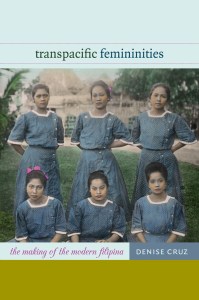
A review of Transpacific Feminities: The Making of the Modern Filipina, Denise Cruz, Duke University Press, 2012.

Transpacific feminitiesOrientalism grew out of a fascination with Asian women. From the scantily dressed harem recluse to the romantic Madame Butterfly figure, from the mousmé to the congaï, or from houri to geisha, the Western male gaze was literally obsessed by Asian female bodies, and constructed its vision of the Orient around figures of stereotyped female characters. Philippines’ women or Filipinas stood in a peculiar position with regard to these Orientalist wet dreams. They never fully fit the category of the Oriental woman as popularly conceived. Neither black nor yellow, the term used to describe her racial identity is “brown”. When traveling abroad, she is often taken for a Chinese, a Vietnamese, an Indonesian, an Indian, a Mexican, or a South American. Even now, mentioning Filipinas in a Western context brings to mind images of overseas care workers, domestic helpers, mail-order brides, or leading politicians such as the flamboyant Imelda Marcos or the stubborn Cory Aquino. Filipinas never coalesce around one single category. They escape the attempt to hold them as representative exhibits of an Asian feminity that would define a distinct type of Orientalist fantasy. As domestic workers, they cultivate invisibility and diligence. As politicians and heads of state, they embody leadership and prominence. As mail-order brides, what is conspicuous about them is not their sex-appeal but their subservient attitude and willingness to do household chores or sustain a family in depleted rural areas. There seems to be no middle ground or common features between these polarized figures. None evokes the sexual desires, eroticism, and male fantasies that otherwise characterize Orientalist visions of Asian bodies.
Racial constructions

Unsuccessful attempts to reduce Filipinas to a single stereotype are not new. Categories to designate them were always plural. In the Spanish colonial era filipino had referred to Spanish creoles, those of Spanish ancestry born in the colony, while indios were the locals of Malay ancestry. The term mestizo could refer to someone of Spanish and indio birth but more often meant a racial mixture with indio and chino or Chinese elements. Non-Christian peoples like the Negritos and Igorots, who lived in the highlands, were considered as infieles, that is, animists or infidels, and their hunter-gatherer societies were held as most backward and primitive. Muslim peoples in the South were grouped under the category Moros or Moors, and were in perpetual conflict with the Spaniards. These ethnic categories gave rise to enduring types of Filipino women: the Spanish mestiza, the pure-blood morena, the Sinicized chinita, the dark-skinned negrita… Americans who took over from Spain after 1898 added their own racial constructions to this imperial mix. The “Filipino savage” who went bare-breasted and wore a banana-leaf skirt was seen as a nonwhite other whose alterity incorporated imaginaries cast from the conquest of the New World, the annihilation of Indian native cultures, and the legacy of African slavery in America. The Spanish-speaking Doña was perceived as aristocratic, virtuous, dutiful, and subservient, forever in the thrall of the Catholic Church. The modern Filipino girl was the most amenable to the rule of empire: she benefited from access to enlightened education, transatlantic mobility, and emancipatory sisterhood with white women. She was the young lady waiting for a chivalric savior, and cultural salvation was what Americans intended to procure under their policy of benevolent assimilation.

Denise Cruz’s Transpacific Feminities explores many topics and episodes: the typologies that were made by Filipinos and Filipinas themselves in the context of the discussions leading to female suffrage in 1937; the exclusion of women from the national debates about proper language for literary expression; the emergence of the urban, transpacific college girl who flouted traditional forms of proper feminine behavior; the challenge posed by Japanese occupation that cast women as victims or, in the case of ‘Colonel Yay’, as freedom fighters; and the role of transpacific Filipinas in the Cold War context. The figure of Maria Clara, the heroin of José Rizal’s novel Noli Me Tangere, casts a long shadow over the place of women in Philippine society. Recognized by many literary scholars as the first novel by a Filipino, this satire of Spanish imperialism was written in Spanish and published in Germany in 1887 to avoid censorship. It tells the story of a failed romance between Maria Clara and Crisóstomo Ibarra, a mestizo who returns to the Philippines after years abroad with a European education and a desire to spread reform by establishing a new school in his hometown. Ibarra’s school never materializes, for he becomes implicated in both familial and revolutionary plots that interrupt his ambitious plans and end his engagement to Maria Clara. After more twists and turns, the heroin enters a convent, where nuns are subjected to medieval treatment. This female character has become a classic figure in Filipino culture. For some, she represented everything a Filipina should be: modest and chaste, homebound and subservient. For others, she was the epitome of a dying tradition, symbolic of the shackles of Spanish catholic rule. Her mestiza status is unsettled by a horrible secret: she is the illegitimate daughter of a Spanish friar who abused his mother and then became the girl’s godfather. Noli Me Tangere (“touch me not” in Latin) has become part of the national curriculum, and in its English or Tagalog versions it is still compulsory reading for high school students.

Desiring subjects of empire

Filipinas were thought to be more amenable to the civilizing influence of the United States than men. American women in particular cast themselves as saviors and emancipators of their oppressed “little sisters” and described them as symbols of oppressed women in need of rescue. Domestic authors developed a critique of the American-produced constructs of Filipino feminity as desiring subjects of empire. As an alternative, they promoted a version of elite transpacific feminity that drew from the best of multiple worlds. Commentators took great care to distinguish their fellow countrywomen from Orientalized notions of Asian women as either mysterious and exotic damsels or as uncivilized savages in need of salvation by the West. In their view, model Filipinas maintained an ideal balance between the modern and the traditional, between East and West, and between Anglo-saxon, Latin, and native cultures. They resisted the imperial project of assimilation and maintained a kind a counter-narrative to rising American hegemony. But justifying resistance and autonomy by using the English language came dangerously close to accepting the legitimacy of U.S. rule. The role of English in an independent Philippines republic was vehemently debated in the 1930s and 1940s. Colonial languages were hegemonic, as English was seen as the new lingua franca of the intelligentsia and Spanish was still used in legal proceedings and worldly conversations.  In 1937, Tagalog was instituted as the national language but still had to compete with many vernacular languages and dialects regularly used by the Philippines population. For writers, using English was a means to join a transpacific commonwealth of educated readers and writers; but they could not escape a nagging sense that the literature they were producing was disconnected from the socioeconomic realities of life in the Philippines. As in other national contexts, a separation emerged between ‘high’ and ‘low’ literature, between ‘popular’ and ‘artistic’ writing that tended to overlap the distinction between English and Tagalog. But even though women were early producers of literature in English, male authors tended to sideline them in their debates about language and literature, and they portrayed women’s literary efforts as inferior and unremarkable. To the misogynist essay “What Is Wrong With Our Women Writers?”, two feminist authors responded in 1941 with an article titled “Our Men Writers Are Not So Hot.” The emerging canon of literature in English that emerged from these early years comprises mostly male authors: Manuel Arguilla, Bienvenido N. Santos, Nick Joaquin, Carlos Bulosan, N.V.M. Gonzales… But women writers were nowhere to be found in this roster of national literature in English.

The rise of the university-educated, Western-influenced, transpacific Filipino coed ushered a debate what it meant to be Filipina in an independent Philippines and how it related to the new constitution and universal suffrage. Three decades of occupation by the United States had provided educational and professional opportunities for many Filipinas, who fell under the spell of American culture’s influence. Young Filipina coeds imitated what they read in magazine pages and saw on movie screens: bobbed hair, short skirts, plucked eyebrows, painted lips. Modern girls were by this time a global regularity, appearing almost simultaneously in China, Japan, India, the United States, Great Britain, and other countries. Like her counterparts, the transpacific Filipina coed elicited both admiration and anxiety. Transgressive expressions of sexuality—going out without the supervision of a chaperone, dancing cheek-to-cheek and kissing in public—gave rise to attempts to stop the influx of popular culture from the United States and delineate women’s proper role. Scathing articles blamed the coed for the disintegration of Philippine morality. By reply, Filipina feminists called for recognition of educated women’s contribution to families, to communities and to society as a whole. Novels and short stories were used to negotiate unclear and indeterminate national fates and recalibrate a class hierarchy that was continuously fluctuating because of imperial shifts. Romance was the genre of choice to disseminate imperial narratives of benevolent assimilation and imagine the subversion of hegemonic formations. It was linked both to empire building and to its undoing by nationalist forces and individual aspirations.

Creating a national archive in English

Denise Cruz’s approach to her topic is very much dependent on the material she selects as her archive. She draws from a wide variety of sources—novels, memoirs, essays, newspaper articles, magazine illustrations—but, with the exception of José Rizal’s Spanish language novel Noli Me Tangere, she only uses texts written in English. She notes that authors were publishing in English only two decades after the U.S. occupation began, and that women were particularly active in this field because of the educational opportunities that were created by the American occupation. What defines the transpacific Filipino is, more than any social or psychological trait, the use of English in a cosmopolitan setting. The writers examined in this book were part of a privileged group, those who lived in Manila, who had access to a university education, who travelled abroad, and who spoke and read English. Promoting the use of English was an integral part of the American imperial project. The Japanese were highly conscious of this point, and severely restricted publications in English during their short-lived occupation. Philippines literature in English was the product of a deliberate design to spread liberal values and democratic mores through education and assimilation. Instruction in English, the establishment of English as the national language, and opportunities to study in the United States were part of this imperial design. The use of language itself as a strategy for rule was closely tied with the packaging of the American presence in the Philippines as a magnanimous civilizing enterprise. By choosing English to couch on paper their dreams, hopes and aspirations, these Filipino women examined in Transpacific Feminities transformed themselves willingly into the desiring subjects that the American empire was attempting to mold.

Isn’t there a similar work at play in today’s world? As the author notes, the recognition of the United States as an empire has now become a regular feature of academic discourse. But the notion of cultural imperialism still faces much resistance or denial, and the fact that the English language constitutes the main tool for this imperial hegemony is often overlooked. By choosing to restrict her archive to texts written in English and by examining the case of English-speaking Filipina authors, Denise Cruz partakes in in a new kind of imperial project that does not bear its name. Transpacific feminities are reduced to those forms of women’s expression that are directly accessible to an English language reader. These women may have spoken multiple languages, from the old colonial Spanish to the new national Tagalog, or from French and German to Cantonese, Japanese, as well as other domestic dialects, but they are only considered within the limitation of one single parameter: their use of English as a mean of written expression. Other idioms indigenous to the Philippines or used in worldly conversations are silenced and relegated to the margins. The United States considered themselves as the gatekeeper of women’s liberation in their empire; in a way, Anglo-American academics still play this role by deciding which texts should be worthy of archival consideration and which should be left in perpetual oblivion.

Literary value

The author of Transpacific Feminities boasts of having recovered an untapped archive of Philippines literature in English that has remained hitherto forgotten and understudied. Merging archive recovery with feminist analysis, she advocates additions to an Asia Pacific literary cannon that, at least for the period under consideration, is (in her opinion) too often limited to male nationalist authors. But one could object that these texts written in English were not abundant and sophisticate enough to sustain a national literary tradition. Readership in English was reduced to a small segment of the elite. This may explain why Filipino authors often tried to reach out beyond their country’s shores. Many publications were edited by expatriates and geared in part toward the American community. The goal was to convince the American public to share the benefits of empire, or to grant the Philippines the independence and individual rights for which its people craved. Including new archives into a cannon or a reading list should include considerations of literary value and intrinsic quality. But as far as I can judge from the few excerpts and plot summaries, the literary fictions that are surveyed in this book seem to me of appalling mediocrity. I subscribe to the judgment of a critic who characterized a novel by Felicidad Ocampo as “an entertaining little tale, providing he does not read it with too critical an attitude.” Besides, Daniele Cruz is the first to point out that the language used in these stories was often deficient. By inserting the editing term “sic” in bracketed form in many direct quotes from the texts, she underscores the misusage of English and improper spelling or grammar in a way that can only be read as patronizing. Filipino and Filipina authors who tried their best to use the language of empire didn’t need to be exposed to such ignominy. As a non-native speaker, I sympathize with their plight.

Global Production Networks and the Ideology of Seamlessness in Modern Filmmaking

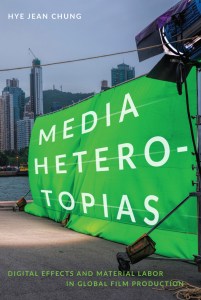
A review of Media Heterotopias: Digital Effects and Material Labor in Global Film Production, Hye Jean Chung, Duke University Press, 2018.

Media HeterotopiasIt takes a lot of people to make a movie. It also takes a diversity of production sites, technologies, and product or service providers. The list of names, locations, companies, and generic technologies that were instrumental in making a movie are listed in the closing credits. A full set of credits can include the cast and crew, but also contractors, production sponsors, distribution companies, works of music licensed or written for the movie, various legal disclaimers, such as copyrights and more. Nobody really pays attention to this part, except for the theme song playing at full blast and the occasional traits of humor interrupting the credits scroll. These closing credits allow the spectator to make the transition between the world of fiction and the real world, and to put an end to the suspension of disbelief that made him or her adhere to the on-screen story. For Hye Jean Chung, who teaches cinema studies in the School of Global Communication at Kyung Hee University in South Korea, the spectator’s disregard for credit attributions is part of an operation of denial and erasure: denial of the work that went into making a movie, and erasure of the production sites and collaborative networks that increasingly place film production into an international division of labor. The ancillary bodies and sites of labor are erased from the film’s content and only appear in the end credits; but they somehow creep back onto the screen during the movie as well, producing what she calls “spectral effects” or traces that are rendered invisible and disembodied but that still haunt the movie like a ghostly presence. Taking on from Michel Foucault’s concept of heterotopia, she defines “heterotopic perception” as a mode of criticism that is sensitive to these spectral effects, and “media heterotopias” as a digitally enhanced audiovisual realm of representation that superimposes different layers of realities, spatialities, and temporalities.

Assembling a collection of movies from the Asia-Pacific region 

These spectral effects and media heterotopias are particularly, though not exclusively, perceptible and legible in movies that use computer graphics, special effects, and digital technologies. Of the nine films that the author comments upon, six (AvatarOblivionInterstellarThe HostGodzillaBig Hero 6) make heavy use of CGI and digital effects, while others use digital reediting (Wong Kar-wai’s Ashes of Time Redux) or animated sequences (Jia Zhangke’s The World). Only Tarsem Singh’s The Fall ostensibly insists on on-location filming (in more than 20 countries) and lack of special effects in its spectacular visuals. The conceptual framework proposed by Media Heterotopias is therefore amenable to many different kinds of movies, from Hollywood blockbusters to art-house films, from adventure fantasies to science-fiction flicks. A common thread running through this selection is the focus on Asia, as many of these films were shot or produced in Asia-Pacific; but the author insists that this book is not an area studies project, and she resolutely places her analysis in a transnational or global perspective. The focus of Asia-Pacific is thereby a reflection of the on-going trend that affects movie production and consumption as well as many other industries: the shift to a new center of gravity that includes East Asia and the western shores of the Americas, and that transforms the historical Eurocentric or Atlantic domination into a thing of the past.

Although Hye Jean Chung doesn’t identify herself as a Marxist scholar, her work is very much preoccupied with issues of capital accumulation, surplus value extraction, and commodity fetishism. Against a tendency to treat films as texts and material conditions as irrelevant, she reminds us that movies are made by real people engaged in a division of labor in which value created by some is appropriated by others. Theoretically, she situates her film studies in the legacy of Michel Foucault by picking up his concept of heterotopia. According to Foucault, the cinema itself (as a building) is an heterotopia in its ability of allowing several overlapping spaces to exist. A cinema theater is a room with a two-dimensions screen where a three-dimensions world is able to exist. Heteropias in cinema (films) are therefore increasing the amount of overlapping worlds and thus question the status of reality of any of those worlds. Another important if yet more implicit reference of the book is Jacques Derrida’s Specters of Marx, where the heritage of Marxism is reclaimed by a new materialism acknowledging the haunting presence of ghosts and spirits. By being attentive to spectral effects and ghostly presences, Media Heterotopias offers a kind of spectral critique or hauntology that places human labor and production processes squarely at the center of media theory. 

The effacement of labor and the ideology of seamlessness

As many critics have pointed out, the world has been fundamentally altered by digital technologies. Our perception of reality itself is changing at a fast pace. Time is no longer a moving arrow flowing from past to present and toward the future: temporal linearity is now supplanted by intensive time, for which the only meaningful distinction is that of real time and delayed time. Digital technologies also transform our conception of space: they abolish the distinction between real space and virtual space, merging the two into a new augmented reality where digital signaling is ubiquitous. These new spatio-temporal formations have a strong impact on production and labor, and movie production is no exception. Nonlinear digital workflows are replacing linear production processes with a simultaneous collaborative workspace. Digital platforms such as video conferencing, instant messaging, and online file sharing allow massively parallel processes of collaboration to take place. To expedite and streamline the work process, the creative labor of digital film production is dispersed across geographically diverse companies in global production pipelines. Formerly disparate stages of preproduction, production, and postproduction are increasingly becoming fused with one another in a collaborative space. 

Globalization has developed an ideology of seamlessness: borders are no longer a barrier to the free flow of goods, capital, and images; and production processes are integrated into global value chains operating just-in-time and without friction.  For Hye Jean Chung, this fetishizing of a seamless integration conceals the actual living bodies and physical sites of labor that provide the material conditions of transnational activities. These bodies and locations are often firmly anchored to their national territories and regional infrastructures, with the cultural and geopolitical characteristics that are attached to them. The world isn’t flat, but a lot of work, including ideological work, goes into the task of making it appear as flat and frictionless. Similarly, both digital aesthetics and digital production processes partake in an ideology of seamlessness. Digital cinema produces a seamless effect when computer generated figures and sceneries are smoothly integrated with real actors, actual landscapes, and practical sets. By erasing material traces, visible joins and seams from the various stages of digital processing, the final product is made to look flawless and natural, even though digital images are composed of multiple layers of heterogeneous time and space. The photorealistic aspect of CGI makes it easy to suspend disbelief and create a pure spectacle of illusory seduction. This propensity toward the illusion of seamlessness has always been part of cinema’s attraction; but digital technology allows to make all traces of labor-intensive production invisible and well-hidden. Only remnants remain, coming back in the movie screen to haunt it as a spectral presence.

Self-referentiality and structural homologies 

In some cases, the ideology of seamlessness provides the material for the film story. This is particularly the case in science fiction movies, even when they are critical of capitalistic processes or technological developments. James Cameron’s Avatar offers a simplistic denunciation of technology-driven imperialism and an apology of a holistic, nature-centered, culturalistic worldview. But the heavy dependence on CGI and digital effects as well as the film’s reliance on global production and distribution networks contradict the explicit message of the movie. Who should we trust, the Na’vi and their natural utopia untainted by human technology, or the visual effects that replicate the mixing of human and alien DNA performed by Pandora’s greedy aggressors? Avatar treats body as media; migrating to a different body is reflexive of the digital filmmaking process itself. Another structural homology between movie content and filmmaking process is the act or cultural or geographical appropriation. Film commentators noted that each article of Na’vi clothing and jewelry was handmade and woven by a team of New Zealand costume designers. They underscored that the “alien” culture of Pandora was actually based on the indigenous Polynesian cultures of the Pacific Islands: for instance, the Na’vi gesture of touching foreheads is directly borrowed from the Māori’s traditional greeting, the hongi. Such acts of cultural appropriation go unnoticed or are even praised to illustrate the film’s cultural deftness. But it is doubtful whether Māori communities or other South Pacific Islanders received any benefits from these borrowings. Geographical borrowings, such as location shootings in fragile ecosystems or in scenic landscapes, are even more pernicious: they leave in their trail a legacy of environmental devastation, and often open the way for mass tourism and commercial exploitation of nature, as in the Pandora tours and Avatar-themed Na’vi wedding packages that are offered in the sites where some of the movie scenes were shot.

Another form of geographical exploitation consists of making a landscape alien, as in the science fiction movies Oblivion and Interstellar that were shot using real locations in Iceland. In these films, Iceland functions as an in-camera special effect by providing the image of a primitive or post-apocalyptic landscape that is then mixed with computer-generated imagery. Again, it is doubtful whether Icelanders received any benefit from the inclusion of their country’s natural assets as raw material in global value chains. As Hye Jean Chung notes, “certain sites of production develop as centers or nodes of production pipelines, whereas others are relegated to satellite sites of production or peripheral industries that provide human labor and natural resources to this centralized core that upholds and reinforces Hollywood’s hegemony.” Films like The Host or Godzilla however show that hegemony can be de-centered and that nations are in competition over the definition of a global imaginary. The composite body of The Host’s monster crosses genres and territories: although firmly anchored in the cultural specificity of Korean cinema, it cannot be interpreted “neither as a transplant of Hollywood’s conventions into a Korean background nor as a transfusion of Korean culture into Hollywood’s standards.” The monster, envisaged by director Bong Joon-ho as an imagined vision of “Korean-ness,” is in reality produced by a mix of Korean and non-Korean labor and technologies; and the film is itself a blend of heterotopic genres, from science fiction and monster movies to action films, family drama, political satire, and comedy. The 2014 Hollywood’s version of Godzilla, too, mixes imaginaries and straddles boundaries across the Pacific Ocean. Created by merging cross-border bodies and assets in both narrative and production spaces, it mobilizes a postwar Japanese myth born out of the atomic bomb and projects it on a global scale. The monster functions as a floating signifier, whose hybridity enables multiple national identities and transnational imaginaries to coexist. But the Hollywood’s production didn’t kill the indigenous gojira franchise: in Japan, the US-made monster was criticized as “out of shape” and as having a neck “like an American football’s athlete’s,” while the story lacked the denunciation of atomic warfare and the social critique that the Japanese versions developed.

Heterotopia is not only what movies make of it: it is inscribed in sites and territories, in imaginaries and aspirations. Theme parks like the World Park in Beijing and the Window of the World Shenzhen feature scaled-down replicas from various parts of the world; they offer the opportunity to travel abroad while staying at home. For the local migrants who work in these parks however, like the characters of Jia Zanke’s movie The World, the cosmopolitan lifestyle they showcase remains an simulacrum. Jia’s film deconstructs the transnational fantasy embedded in the World Park by revealing the various forms of uninspiring work that is necessary in producing and maintaining the illusion of cosmopolitanism. The characters’ lives are mediated by technology. They constantly send text messages on their cell phones and watch at digital video screens. Their dreams and fantasies, figured by animated sequences that punctuate the film, are made of simulated artifacts and reconstructions, as fake and artificial as the world they inhabit or the characters they are asked to impersonate. Big Hero 6 features another form of heterotopia in the hyperrealist scenes and cityscapes of “San Fransokyo”, a fictional metropolis that integrates the cultural iconography of Tokyo into the urban geography of San Francisco. This form of techno-Orientalism, reminiscent of the futuristic city displayed in Ridley Scott’s Blade Runner, is indexed on a cultural reality: the role Asian migrants have played in shaping San Francisco, a city that is now heralded as the capital metropolis of the Asia-Pacific century. In Big Hero 6, which was produced as a Disney franchise, East meets West in a virtual space rendered seamless by transpacific collaborations in the field of computer graphics and creative urban design.

From post-Marxist analysis to new materialism

What does heterotopic analysis bring to the field of cinema studies? First, it brings together two strands of film critique that are often developed separately: content and context, internal versus external critique, semantic interpretation or industry analysis, the viewer’s perspective or the point of view of the producers. As Hye Jean Chung convincingly demonstrates, the border between the two realms is porous: the ideology of seamlessness erases all traces of human labor and technical work from within the movie, but reality creeps back into the film’s narrative, making the seams apparent and the labor traceable. Many movies, especially but not exclusively in science fiction, are self-reflexive about the filmmaking process and the technological tools used in film production. Analyzing the film’s content also offers a perspective on how it was conceived and developed. Second, Media Heterotopias offers a post-Marxist analysis of the global division of labor in cultural and creative industries. The author often refers to the long work hours, tight schedules, night shifts, physical migration, or sedentary confinement along complex networks of transnational collaboration. Value accumulates at the most capitalistic points of the value chain, while other parts of the production pipeline are submitted to ruthless labor exploitation or imperialistic appropriation of cultural and natural assets. As a third point, I see this book as a contribution to the literature on new materialism. The materiality of geographical location, physical labor, and industrial practices is put alongside processes of dematerialization and digitalization, giving rise to a new kind of mediated materiality. The layered nature of digital imagery makes it an assemblage of heterogeneous time-spaces, a composite of physical and virtual elements that give rise to spectral effects and phantomatic presence. Reality is what comes back to haunt us when the real has been dissolved into digital fictions.

Same-Sex Marriage With Chinese Characteristics

A review of Petrus Liu, Queer Marxism in Two Chinas, Duke University Press, 2015.

Queer Marxism.jpgSame-sex marriage in Taiwan became legal on 24 May 2019. This made Taiwan the first nation in Asia to recognize same-sex unions. You think it’s a progress for LGBT rights? Well, think again. In the midst of the clamor for legalized same-sex marriage, G/SRAT, a LGBT organization, marched to oppose the institution of marriage at Taipei Pride, proposing the alternative slogan of “pluralism of relationships” on their banner against “marriage equality.” Queer Marxism in Two Chinas is open to such perspectives that go against the grain of conventional wisdom and emerging consensus on gay marriage and LGBT rights. It argues that gay marriage legalization is a victory for neoliberal capitalism, which incorporates gay couples into its fold and wages a propaganda battle against communist China. If we define pinkwashing as the strategy to market oneself as gay-friendly in order to appear as progressive, modern, and tolerant, then Taiwan is pinkwashing itself on a grand scale. Threatened by the prospect of reunification with mainland China, Taiwan has focussed its diplomatic strategy on integrating into the global economy and on securing popular support from the West by promoting itself as a democratic regime with values similar to those in the United States or Europe. Granting equal rights to same-sex couples is fully congruent with these twin objectives, and it serves geopolitical goals as much as it responds to local claims for equal rights and justice for all.

The goal of pinkwashing in Taiwan is to paint China red.

Contrary to what most people may think, the author of Queer Marxism disagrees with the perception that political liberalism has advanced queer rights. On the contrary, if we follow Petrus Liu, the cause of gay and lesbian rights in Taiwan is used to cover up the many cases of human rights violations against queer subjects—be they prostitutes, drug users, AIDS patients, drag queens, transsexuals, illegal aliens, or money boys. These people living on the margins of society are excluded from the definition of a human being. Similarly, it is often advanced that gay visibility and LGBT rights have progressed along the path of economic reforms in mainland China: since 1997, homosexuality is no longer a crime, it has been removed from the list of mental disorders in 2001, while Gay Pride demonstrations, gay and lesbian film festivals, and gay cultural spaces have developed in the main Chinese cities. Modern critics therefore oppose a present and futurity of openness and visibility to a Maoist past where homosexuality was repressed and hidden. But this, according to Petrus Liu, is revisionist history, a reinvention of the past in which Maoist socialism is redefined as a distortion of people’s natural genders and sexualities. Homoerotic desires and longings were also present in Maoist China, albeit in a different form. This militates for a ‘homosexuality with Chinese characteristics,’ based on the recognition that China has a four-thousand-year record of tolerance and harmony when it comes to same-sex relations.

Why do some Asian queer theorists and activists appear as staunch opponents of same-sex marriage? How can they raise the question: “Is Global Governance Bad for East Asian Queers?” What do they want as an alternative to equal rights and entitlements? To answer this question, it is necessary to introduce unaccustomed readers to what ‘queer theory’ is about, and why its Chinese version might differ from the theoretical constructions developed in the West. Queer theory has emerged as a new strand of academic literature that criticizes neoliberal economies and political liberalism. Theorists point out that queer cultures are not always complicit with neoliberal globalization and the politics of gay normalization; nor are local LGBT scenes in Asia always replications of gay cultures in the liberal West. Queer critics underscore that Western liberalism has spawned a new normative order that dissociates acceptable homosexuality from culturally undesirable practices and experiences such as promiscuity, drag, prostitution, and drug use. As the majority of gay men and lesbian women are included into the fold of mainstream normality, other groups and individuals are categorized as deviant, pervert, queer, and socially unacceptable. To quote Judith Butler, a foundational author in queer studies: “Sometimes the very terms that confer ‘humanness’ on some individuals are those that deprive certain other individuals of the possibility of achieving that status.” Or to borrow from another author, “the homonormative movement is not an equality-based movement but an inclusion-based assimilation politics with exclusionary results.”

The norms of acceptable homosexuality

According to some critics, gay cultures have lost their radical edge and are now engaged in a “rage for respectability”: the primary task of the gay movement is to “persuade straight society that they can be good parents, good soldiers, and good priests.” Homonormativity suggests that assimilating to heterosexual norms is the only path to equal rights. It sets the participation to the consumer culture of neoliberal capitalism as the ultimate political horizon of the gay rights movement. The new homonormativity advocates a privatized, depoliticized gay culture anchored in domesticity and consumption. It is grounded in liberal values of privacy, tolerance, individual rights, and diversity. It is fully compatible with neoliberalism: indeed, it reinforces tendencies already at work in neoliberal economies. The bourgeois gay couple is a capitalist’s dream niche market: double-income-no-kids, urbanite and fashion-conscious, it has the reputation of pursuing a lifestyle filled with cultural leisure and touristic escapades. The norm of acceptable homosexuality also sets new standards of governance and regulation for countries that are evaluated along their degree of adherence to LGBT rights as defined by activist groups and legal reformers in Western societies. According to this new standard, governments that legalize gay marriage and gay adoption, make assisted reproductive technologies available for same-sex couples, and encourage manifestations of gay pride and LGBT visibility are deemed as democratic and progressive. Conversely, states that keep sodomy laws on the books, discriminate along sexual orientation, and stick to a traditional view of family and marriage are relegated to the bottom of democratic governance rankings.

For many international observers, Taiwan has been a poster child of economic liberalization and political democratization. As gay visibility and LGBT rights occurred after the lifting of the martial law in 1987 and the multiparty election in 2000, it is natural to assume that gay and lesbian rights are a byproduct of the advent of the liberal-democratic state. Similarly, the People’s Republic of China has turned less intolerant towards its homosexuals and has even let gay cultures flourish in its urban centers as they reached a level of economic prosperity on par with the West. Narratives of sexuality and gender rights are therefore intrinsically indexed to broader theories of economic development and political transitions. These liberal theories tend to translate liberty as laissez-faire capitalism, and democratization as the formal competition between political parties. Petrus Liu takes a different perspective. For him, “any discussion of gender and sexuality in the Chinese context must begin with the Cold War divide.” The geopolitical rivalry between the two Chinas is the underlying cause for Taiwan’s construction of a liberal, gay-friendly political environment. The Republic of China is the People’s Republic of China’s counterfactual: it presents itself as a natural experiment of what the whole of China would have become had it not been affected by the victory of Mao’s Communists over Chiank Kai-shek’s Nationalists. It presents the “road not taken” in communist studies: what would be China today without Maoism and the Taiwan straits division? Is the People’s Republic of China simply catching up and converging towards Taiwan’s level of economic development and standards of democracy, or does it chart a different course that Taiwan will at some point be forced to follow?

Queer China and the Taiwan Strai(gh)t

The question of China’s futures has real implications for the rights and livelihoods of queer people in the two Chinas. For Petrus Liu, it is very difficult to abstract a discussion on queer human rights from the concrete national interests and geopolitical stakes that frame these rights. The invocation of LGBT rights is always anchored in a national context and expresses a desire for national, rather than cosmopolitan rights and entitlements. Democracy and human rights have progressed in Taiwan because the Republic of China constantly needs to distantiate itself from its socialist neighbor. This creates a mechanism akin to Hegel’s ‘cunning of reason’: history fulfills its ultimate rational designs in an indirect and sly manner, and liberalism advances for reasons that are, in essence, illiberal. It is always possible to mobilize the contradictions between national interests in the two Chinas for productive use, with the help of local and transnational coalitions. For instance, Taipei’s Mayor Ma Ying-jeou, who subsequently became President of the Republic of China, officially endorsed the Gay Pride in Taiwan’s capital for the first time in 2006 because he was prompted to do so by the Mayor of San Francisco, Taipei’s sister city, who sent a rainbow flag as a gift to his counterpart before the parade.

In East Asia, gay marriage as a social issue has often designated the marriage of a gay person with a heterosexual wife. This situation has provided the intrigue of many novels and movies, starting with Ang Lee’s Wedding Banquet. In Chinese language, gay men’s wives are designated as tongqi or ‘living widows,’ and their plight is a hotly debated topic on Chinese Internet forums and TV talk shows. Some estimates put their number at 16 million. For some critics, new sexual formations in Asia cannot be interpreted as the spread of Western models of homosexuality. Indeed, tongxinlian, tongzhi, and ku’er lilun may not even be translated as ‘homosexuality,’ ‘gay men,’ and ‘queer theory,’ as these concepts embody different histories and practices. The word tongxinlian reflects the era when sex between men was prosecuted under ‘hooliganism’ (liumang zui, disruption of the social order); and tongzhi, a political idiom meaning ‘comrade’, was appropriated by Chinese sexual countercultures in Hong-Kong and in Taiwan to refer to same-sex relations. Without endorsing the thesis that “Chinese comrades do it differently,” Petrus Liu acknowledges that sexual orientation and sexual practices are socially constructed. This echoes the arguments of historians who define homosexuality as a modern cultural invention reflecting the identities of a small and relatively fixed group of people, in distinction from an earlier view of same-sex desire as a continuum of acts, experiences, identities, and pleasures spanning the entire human spectrum. The argument of Chinese distinctiveness also reflects the often-made thesis that the individual doesn’t exist in Asian societies. Many Asian languages do not have a fixed term for the “I” as a sovereign subject who speaks with authority. They see the “I” as a result of social relations and as an effect of language. Consequently, in the Asian context, an individual doesn’t have rights; rights only exist in relation to others. Only when a person enters a set of social relations does it become possible to speak of rights. This sets severe constraints on individual freedom (gay persons may be obliged to marry the opposite sex for familialist reasons), but it also creates opportunities to press for a non-assimilationist, non-normative life escaping the strictures of homo- and heteronormativity.

“Better Red Than Pink!”

According to Petrus Liu, “Queer liberalism is a key tool with which Taiwan disciplines mainland China and produces its national sign of difference from its political enemy in the service of the Taiwanese independence project.” If the conclusion that he reaches is “better red than pink!”, then we are faced with a very serious case of intellectual confusion. A more generous interpretation would be to consider his text within the parameters of Western academic interventions, which offer a premium for radical provocations and disruptive ideas. But even so, Petrus Liu’s Queer Marxism pales in comparison to more conventional interpretations of Chinese queer cultures, such as the one proposed in reference to Hegel’s ‘cunning of reason.’ We saw that Taiwan uses a political ruse to promote its self-image as a liberal regime and tolerant society in opposition to mainland China; but this ruse of history has felicitous effects if it leads to the advancement of gay and lesbian rights. Similarly, one could always interpret marriage equality laws in Western Europe as a result of rising Islamophobia and as a contribution to a rhetoric of a clash of civilizations: this is, in essence, the thesis of homonationalism as expounded by Jasbir Puar in Terrorist Assemblages (which I review here). But this argument will only get you so far. The cunning of reason tells us that liberalism can sometimes be advanced through anti-liberal means. However, anti-liberalism more often leads to an erosion of individual freedom and a rise of authoritarian regimes.

Again, the case of China can be used as an illustration. In the post-Cultural Revolution period, political liberalism became an important system of thought against Maoism. Student demonstrators at Tiananmen Square built a replica of the Statue of Liberty; and Tocqueville remains one of the favorite reference of political reformers. On the other hand, Western cultural critics and academic genres such as postcolonial studies or postmodernism have been picked up in China by a clique of New Left academics, Neo-Maoist nationalists, and Communist Party apparatchiks. Critiques of Eurocentrism and of Orientalism are used to affirm the superiority of the Chinese culture and to support China’s rightful rise to world prominence after a century of humiliation. Like in the West, cultural critique in China is resolutely anti-liberal; but identity politics takes a very different form than in Western pluralist societies. It fuels cultural nationalism (wenhua minzuzhuyi) and nativism (bentuzhuyi), and it proclaims the irreducibility of national essence (guocuipai) and the superiority of Chineseness (zhonghuaxing). Queer theory, with its strong links to anti-humanism and anti-liberalism, could very much be mobilized for such ends, as in the arguments of the irreductibility of Chinese conceptions of homosexuality and queerness. There is no reason to fear that a book like Queer Marxism in Two Chinas won’t pass the test of censorship should it be published in Beijing in a Chinese translation. Like Nobel Peace Prize laureate Liu Xiaobo wrote in an open letter protesting the sentencing of journalist Shi Tao in 2005, “Some writers in China say that nowadays they can write about anything they want. Yes, up to a point. They can write about sex, they can write about violence, they can write about human defects, but they cannot touch upon what is considered as potentially ‘sensitive’ information.” Petrus Liu doesn’t quote Liu Xiaobo in his book: by writing down his name on the free Internet, I am making this review potentially sensitive.

Making the World Safe for Tourism in Asia-Pacific

A review of Securing Paradise: Tourism and Militarism in Hawai’i and the Philippines, Vernadette Vicuña Gonzalez, Duke University Press, 2013.

Securing ParadiseWhen she was a little girl growing up in the Philippines, Vernadette Vicuña Gonzalez considered American tourists and soldiers that she encountered or heard about as a benevolent presence. They were there to protect the land and to share their riches with a people in need of security and prosperity. This positive image was reinforced by the missionary schools founded by Americans, the remittances sent from abroad by relatives, the proceeds from commerce and military bases, and the endless stream of American movies and serials flowing from television. Later on, when her family emigrated to the United States, she would accompany her father to the Douglas MacArthur Memorial in Norfolk, Virginia, and share the gratitude held by many Filipinos for the general who liberated their country from Japanese occupation. For her, America was still the land of the free, a beacon of hope and opportunity for those seeking a better life beyond their own shores. But then she went to study at UC Berkeley and her worldview changed. She learned about the history of American imperialism, the gruesome stories of the Philippines-American war, the propaganda machine of Cold War politics, the complicity with authoritarian regimes, the destruction of the planet by the forces of neoliberalism, and the cynicism of exploitative raw power. Her homeland, the Philippines, became associated with the image of a puppet regime led by a dictator clinging to power with the backing of the US military. She applied the same critical lenses to the state of Hawaii and its populations after the was nominated as Associate Professor of American Studies at the University of Hawaii at Mānoa. For her, the Hawaiian archipelago was forced into the American fold at the end of the nineteenth century by a coalition of military imperialists, colonial planters, and migrant laborers who relegated the natives to subordinary status and even to cultural extinction. Being herself a nonnative in an adopted homeland, Vernadette Gonzalez purports to speak on behalf of the Native Hawaiians who should, however implausible it may sound, reclaim their sovereignty.
In the introduction, the author asks: “What alchemy transforms the terror of imperial violence and American postwar occupation to deeply felt understandings of American rescue, liberation, and benevolence?” One could raise the opposite question: how did a young girl raised in the spirit of America’s gentle embrace turn against a familiar presence and came to see it as a force of evil? How to explain this complete reversal, and what turned her from a believer of American kind-heartedness into a staunch critic of US malignity? Was it her studies in social sciences at UC Berkeley? And why did she choose to study at this university in the first place? Although she doesn’t give any biographical clues, I see three general reasons for this conversion: history, ideology, affect. These factors work both ways: the same historical, ideological and affective formations that explain Filipinos’ conversion to a myth of American compassionate guardianship also explain the anger, resentment, and challenge to the United States’ past and present imperial role. In a reversion of values, the soldier and the tourist can be seen alternatively as the Good American or the Ugly Yankee. Like a Janus-faced figure, the two characters are one and the same. He can be invited by his hosts to come home as a guest or, in the same movement, told to go home and depart. Thinking about tourism and militarism in Hawaii and the Philippines allows Vernadette Gonzalez to vent her anger against US imperialism past and present, and also to disavow the young girl who held hands with her father in American Pacific War memorials. In Securing Paradise, she applies critical lenses to analyze the history, ideology and affects sustaining the “military-tourism security complex” in the Philippines and in Hawaii.

Tourists and soldiers

In a way, the tourism industry is the opposite of militarization. Tourism is a peaceful activity, and tourists don’t go to war zones or to places exposed to the risk of insecurity. Unlike the soldier, the tourist doesn’t engage in violent or threatening behavior. He brings with him a camera, not a gun, and leaves behind dollars and trinkets, not bullets and explosives. The tourist is more often a ‘she’ than a ‘he’: a softer, warmer version of America’s presence in the tropics that stands in stark contrast to the masculine figure of oppression and threat. For Vernadette Gonzalez, the desires and economies of modern tourism are central to American military dominance in Asia and the Pacific. Tourism and militarism are mutually constitutive: both are part of am American project of domination and imperial outreach, and Hawaii and the Philippines form the first line of this concentric projection of power and sentiments. The roots and routes of the US military in these sites are foundational to tourist itineraries and imaginations. Tourism normalizes the presence of the military, prioritizes its needs, and disseminates a racialized and gendered idea of security. Both militarism and tourism rely on sedimented notions of colonized land and people (especially women) as waiting idly for their arrival, passively there for the taking. In many places, tourism has its roots in the militarized “rest and recreation” industry that thrived in the periphery of war theaters. The security that military bases provide is a fiction that starkly contrasts the reality of sexual exploitation and social insecurity that develops in the vicinity of army camps. The male tourist and the soldier both harbor voyeuristic and violent fantasies and usually turn their gaze against the bodies of women. For the author, many modern tourist sites are tainted by the illicit sexual economies and violence produced in rest and recreation sites of military occupation.

“Militourism” is designed as the activity fusing the two activities of militarism and tourism: making historic battlefields fit for tourism, creating memorials and museums to commemorate past military engagements, displaying military presence as a guarantee of security for foreign holidaymakers, or attracting active military personnel and retired soldiers to beach resorts and scenic sites. It also involves transforming former military bases into vacation sites and other sources of economic revenue, or building dual-use facilities and infrastructures such as scenic highways or helicopter landing platforms. In Asia and the Pacific, these “militourisms” take place on terrains that have long felt the impact of being objects of imperial desire. The first touristic explorations and adventures in the Pacific also doubled as military reconnaissance and imperial prospection. The image of the tropics as paradise was instrumental in justifying a policy of land grabbing and imperial expansion; it also served to lure young soldiers enrolling in overseas tours of duty. The world of the soldier and that of the tourist are often one and the same. The business of tourism benefits from the high drama of war: places like Pearl Harbor remain popular because war is at the core of America’s past and present identity. Likewise, the US military benefits from the glorification of American cultures of war that occurs in sites memorializing past military engagements. Gonzalez describes the activities of “remembering Pearl Harbor” at the USS Arizona Memorial or “playing soldier” on former US training grounds in  Subic Bay as emotional labor: the labor that it takes to shape a national myth that is instrumental to Hawaiian dispossession and to the Philippines’s subordination.

History, ideology, affect

History is at the heart of people’s ambivalent attitudes towards the United States. The history of Hawaii and of the Philippines can be told in two very different ways: one eliciting sympathy and hope, the other criticism and grief. One reason for the adherence to the myth of American benevolence in the Pacific is that its believers are served with a rosy picture of history. And one reason for their conversion to the message of “Yankee Go Home” is that they come into contact with a very different story. It is this black book of misery and sorrow that Gonzalez presents to her readers. As she notes, Hawaii before the annexation by the United States was a sovereign kingdom that was undergoing struggles for internal unification and also fighting off external attempts on its autonomy. Massive population decline following the arrival of European explorers and sailors had produced conditions for exploitation, dispossession, and cultural ethnocide. A coalition formed by white plantation owners, missionary elites, and the US Navy collaborated to roll back native sovereignty with the Bayonet Constitution of 1887, the overthrow of the monarchy in 1893, and the annexation of the islands in 1898, creating America’s first foothold in the Pacific. This history is paralleled by America’s expansion westwards and its collusion with the Spanish empire in the Philippines. The Spanish-American War of 1898 was soon followed by the Philippine-American War, a nasty and brutish conflict in which torture was used against the native insurgents. This brought the Philippines into the American fold, and allowed the US Navy to strengthen its presence in the Pacific. Indeed, Hawaii and the Philippines would share linked fates as part of the American chain of garrison islands.

American tourists and soldiers are served a version of history that stands in stark contrast with the unofficial narrative told in Securing Paradise. They visit landmark sites and museums that present a sanitized version of the United States’ imperial expansion in the Pacific. America’s presence in the Philippines is retold as a story of rescue, liberation, and sharing of riches. The US administration of the Philippines, from 1898 to 1946, and the period following the annexation when Hawaii became a US Territory, from 1989 to 1959, are characterized as a progressive era during which the United States implemented a benign and modern form of stewardship. The authorities undertook a slate of reforms, hygiene, education, and economic projects that uplifted the population and created sympathy even among former insurgents. For example, in the Philippines, the military took on projects such as road building and land clearing to rehabilitate its public relations, substituting promises of constructive colonialism and economic development to its recent history of brutality and oppression. But it is the Pacific War that sealed the fate of these two territories and anchored them in the grand narrative of the United States’ national history. For the American public, Hawaii and the Philippines remain forever associated with Pearl Harbor, Corregidor, and the Bataan Death March. The enduring narratives of masculine sacrifice and heroism in World War II constitute the framing through which the two archipelagos are imagined and understood. This history is made visible and concrete through memorial sites and scenic circuits that have become a magnet for tourists. In these sites, visitors pay their respects to the dead, take part in rituals of remembering, and celebrate a bond of brotherhood with American soldiers, sealed with blood and anchored in Cold War rhetoric. Pilgrimage to historical military sites is not the preserve of American tourists or local visitors: even Japanese tourists are invited to “Remember Pearl Harbor” or to discover Corregidor as the “Island of Valor, Peace, and International Understanding.” For the author, the fetishization of December 7 overwrites January 17, 1893—the day the Kingdom of Hawaii was overthrown and its native population dispossessed.

Neoliberalism and neoliberation

The second factor that has the strength to induce positive or negative attitudes towards the United States is ideology. For Gonzalez, militarism and tourism in Asia-Pacific embody the ideologies of neoliberalism and what she calls neoliberation. Since the departure of the US military from the Philippines, Subic Bay and Clark Base have been transformed into special economic zones under public-private partnerships and now operate as commercial and tourist hubs integrated into global circuits of capital, labor, and commerce. The “post-base” era has not put an end to military cooperation between the US and the Philippines: on the contrary, US forces benefit from an advantageous Visiting Forces Agreement, they participate in joint training operation with their Filipino counterparts, and they are at the vanguard of the fight against Muslim extremist groups the southern region of Mindanao. The US Army left the Philippines through the door and came back through the window of opportunity provided by the fight against terror. Just as the war theaters of the Pacific War were transformed into symbols of liberation from Japanese occupation and fraternal collaboration between Filipino and American soldiers, the discourse of neoliberation transforms the exploitative economies of predatory capital and imperial outreach into narratives of security and shared prosperity. American military occupation and economic hegemony are cast in the same heroic light that fuses the twin ideologies of neoliberalism and neoliberation. The “return” of the base properties to the Philippines are presented as evidence of American generosity; meanwhile, the American military continues to occupy and tour the Philippines, and foreign capital, bolstered by the structural adjustment policies dictated by the Bretton Woods institutions, benefit from zero taxation and rampant violation of basic labor rights in the Special Economic Zones.

Or at least this is how Vernadette Gonzalez presents it, based on her own biased ideology and slanted perspective in which the United States is cast as the villain and its policies as conspirational schemes to maintain neocolonial influence over its dominion. This is, in a way, a missed opportunity: because beyond the Pavlovian denunciation of neoliberalism as evil, Securing Paradise raises many important economic issues. There is indeed an economic case to be made about the links between militarism and tourism. Both activities stem from certain comparative advantages and resource endowments, like having a long and accessible coastal line to build bases and resorts. Both generate rents and drive domestic prices up, giving rise to a particular version of the Dutch disease. Both military bases and tourism resorts may be the only viable economic sectors in territories that are otherwise too far away from centers of capitalistic concentration. There are complementarities between the two activities, as when the soldier goes on vacation as a tourist or when tourism is made safe by the presence of soldiers. But there are also contradictions, especially when the local population becomes more educated and more prosperous than the soldiers posted in their midst. Beyond a certain threshold, tourism development holds more promises than military build-up. When they are consulted about their own destiny, local populations will aspire to transform their territories into islands of peace, as opposed to hosting bases of discontent. But these issues of territorial specialization and economic reasoning are not raised in this book. Instead, the author adheres to a primitive notion of economics-as-witchcraft, with neoliberalism as dark magic and the Bretton Woods institutions as wicked witches. I don’t know where Vernadette Gonzalez got her economics, but it’s certainly not from UC Berkeley’s economic faculty. Even the variant known as international political economy, taught in political science departments and exerting some influence on literary scholars, has more consideration for basic facts and logical explanations than her casual treatment of economic factors.

Combat boots clamping and digital cameras clicking in Asia-Pacific

A conversion is always an affective turn: from love and attachment to abhorrence and alienation, from warm feelings of joy and happiness to dark motives of grievance and hate. Sometimes this reversal of sentiments can be triggered by a traumatic experience or a dreadful event: as when a story of rape and sexual aggression by soldiers or tourists turn the local population against any foreign presence. For Vernadette Gonzalez, the defining moment may have been provided by the image of President Ferdinand Marcos and his wife Imelda leaving the Malacañan Palace and fleeing the country in US army aircrafts after having been ousted by the people. She also describes a traumatic scene that happened to her shortly after September 11, when she was faced with the barrel of a gun for having committed a small breach of security protocol in a tourist resort. For her, tourism and violence are intimately intertwined. In the eyes of local authorities and American strategists, tourists’ safety and comfort take precedence over the needs and aspirations of the local population. The US military wants to make the world safe for tourism. It prioritizes certain forms of mobility and border-crossing at the detriment of others. As a result it makes the world more insecure, not less, and exposes local populations to new risks and insecurities. Although Vernadette Gonzalez doesn’t explicitly formulate policy recommendations, the solutions that can be inferred from the author’s presentation should be resolutely de-colonial: let the US forces go home for good this time, severe the ties of dependance and domination that bind local populations and indigenous peoples in exploitative conditions, reclaim the sovereignty of native right-holders and democratic representatives, protect the environment from the encroachment of army bases and tourist resorts, and bring an end to the tourism industry’s deleterious influence on the social fabric of host nations.

One may or may not agree with these solutions; but they appear to me as severely out of sync with the present geopolitical situation in Asia-Pacific. As the author herself acknowledges, the region is increasingly becoming more insecure; and the blame cannot be put solely on the presence of US forces, less even so on the continuous flow of American tourists. Any person who has travelled in the region can attest that the majority of tourists are no longer Americans or Europeans. These new tourists, who may be followed by soldiers as in the previous historical sequences described for Hawaii and for the Philippines, bring with them different dreams and aspirations, and interact with local populations and the environment in different forms and modalities. They too are looking for a paradise to cherish and to hold, but their version of heaven is based on different cultural and political assumptions. (For a local version of the mix between militarism, exoticism and affect, I recommend the 2016 Korean drama series Descendants of the Sun and its local adaptations by Vietnamese and by Chinese television.) One should lend an ear to the growing sounds of army boots and tourist crowds in Asia and the Pacific: are they harbingers of a new era when the digital camera will prevail over the machine gun, or will they repeat past experiences on a larger and more devastating scale? This is why I find books such as Securing Paradise useful: they allow readers who come to them with an unjaundiced eye to enter the fabrique of sentiments, and they enable us to envision a future that may not be determined solely by militarized tourism and the touring of armies on and off duty.

Timeless, Bottomless Bad Movies

A review of The End of Japanese Cinema: Industrial Genres, National Times, and Media Ecologies, Alexander Zahlten, Duke University Press, 2017.

The End of Japanese CinemaCinema is an industry. But very often aesthetics gets in the way of analyzing it as such. For cinema—or some portions of it—is also an art. Industry or art: these two approaches give rise to two distinct bodies of literature, one focusing on professions, publics, and profits, the other one on visual style, narrative content, and film textuality. There are movie industry specialists who may teach in professional schools or in economics and sociology departments, applying the standard tools of their discipline to one particular sector that represents up to one percent of the US economy. And there are cinema critics and film studies academics who develop concepts such as genre, auteur, style, form, periods, and apply them to a canon of authorized films conserved in national archives. Film studies may emphasize culture (cinema as representative of national culture), psychology (a movie reflects the inner psyche of its director), formalism (focusing on the formal or technical elements of a film), history (itself divided into the history of genres and national traditions), or theory (film theory as a branch of applied philosophy). What these approaches have in common is that they consider a movie as worthy of cultural commentary and critique. By contrast, an industry specialist is more interested in macro factors such as film production, distribution, and box office figures. He or she will focus on context more than content, on cost and revenues more than artistic quality. In the case of Japanese cinema, an art critic will focus on directors such as Kurosawa Akira or Ōshima Nagisa, specific genres such as jidaigeki (samurai movies) or kaijū eiga (monster movies), and techniques such as Ōzu Yasujiro’s signature tatami shots and multiple scene framings; while an industry specialist will study the studio system long dominated by Shōchiku, Tōhō, Tōei, Nikkatsu, and Daiei, the unionization of workers, or the distinct distribution channels for hōga (domestic movies) and yōga (foreign movies).
Pink Film, Kadokawa Film, and V-Cinema

In The End of Japanese Cinema, Alexander Zahlten combines the two approaches. He analyzes cinema as a cultural form and as a socio-economic activity with deep political ramifications. He proposes concepts that bridge the gap between the artistic and the industrial, the qualitative and the quantitative, the individual movie and the whole economic sector. It helps his case that the three categories he discusses—Pink Film or sexploitation films, Kadokawa Film produced by one single, multi-media entrepreneur, and V-Cinema made straight for the video market—are almost devoid of any artistic value. In fact, they are ignored in critical and academic discourse on films from Japan, and do not feature in Japanese movie histories. Like the infamous AV (adult videos), a large fraction of them may not even be included in film production statistics. But collectively they form an archive of close to 8000 movies: enough for the social scientist to build models, test inferences, and draw meaningful conclusions from such a large sample. They matter for a genuine history of cinema in Japan that is willing to go beyond the time-worn theories of auteurship, national character, and genre normativity. For all practical purposes, watching a movie in Japan meant, for a large fraction of the public and during a significant period of time, attending a film that belonged to one of these three categories. The reason academic work on films in Japan hardly discusses or even mentions these movies is because they cater to the base instincts of the public and are generally considered of bad taste and poor artistic value (some Pink films nonetheless made it to the Euro-American cinema festival circuit). If some of them achieved high scores at the box office or on video rental figures, it is because the public was lured by sexual attraction or by marketing ploys and media campaigns. This is particularly the case for Kadokawa films, which include a few blockbusters: but they were derided by the critics and the art movie profession, who declared that “Kadokawa films are not films” and, in the case of Kurosawa Akira at the 1980 Cannes film festival, refused to shake hands with the producer.

Sex sells, and it is no wonder that sexually themed films feature heavily in the sample studied by the author. In fact, it has been estimated that adult films represented up to 40 percent of the video rentals in the 1980s, and that close to 75 percent of films produced in Japan in 1982 positioned themselves in this market segment. Nudity and sex officially entered Japanese cinema with Kobayashi Satoru’s controversial and popular independent production Flesh Market (Nikutai no Ichiba, 1962), which is considered the first true pink film or pinku eiga. Pink films are not to be confused with Roman Porno films, a series of theatrical erotic movies produced by the movie studio Nikkatsu riding the wave that the first Pink movies had created. Nor are they similar to Adult Videos, pornographic films adapted to Japanese proclivities and visual censorship rules. Alexander Zahlten gives a strict definition of the Pink Film genre: a one-hour length format with regularly spaced erotic scenes (shot in color while the rest of the movie is often in black-and-white), a budget of around 3 million yens since the mid-1960s (decreasing in value over the years), an independent system of production, distribution, and exhibition (with specialized Pink Film theaters), extremely fast scripting and shooting schedules (tantamount to guerrilla warfare), and intensely misogynistic content. Pink movies carry explicit titles such as Meat Mattress (Niku futon), Naked Embrace (Hadaka de dakko) or Mature Woman in Heat Ball Licking (Jukujo hatsujō tamashaburi). But in fact, these films were much less explicit that their titles suggest. The same holds true for V-Cinema, which included sub-genres such as jokyōshi (female schoolteacher), danchi-dzuma (suburban wife), and chikan densha (train groper): the video cover sleeves were covered with titillating pictures that far exceeded the film’s actual explicitness. As for Kadokawa movies, they were geared for a mass audience and limited the stoking of the male public to the exhibition of underage starlets (the three Kadokawa girls, or Kadokawa san-nin musume). But they indulged in another kind of porn: the titillating of national feelings, with the screening of a national identity discourse that passed itself for cosmopolitanism and contemporaneity.

The politics of time and the aesthetics of confusion

Watching one of the first Kadokawa productions, Proof of the Man (Ningen no shōmei) made me feel particularly ill at ease. Besides the dismal performance of George Kennedy, a veteran of Japanese movies and one of the worst actors in the history of cinema, I couldn’t pinpoint the reason for my malaise, but it certainly had to do with the mixed-race character who provides the plot that the movie unfolds. The movie, and the TV drama that came after it, are suffused with deep-seated fears about miscegenation and inter-racial contact. We find the same ideologies of nationhood in the movies and dramas adapted from the novels of Yamazaki Toyoko. The question of the Other and the question of temporal hierarchy—with Japanese time being in front of its Asian neighbors yet still behind Euro-America—is a common theme of the three genres. As the author notes, “industrial genres performed complex negotiations concerning a position vis-à-vis dominant temporal discourses such as colonial time, sequential time, straight time, and homogenous time.” Pink Film rejected the possibility of a clear separation between past and present, showing how postwar Japan was haunted by remnants of its militaristic and colonial past. Kadokawa Film exchanged history itself for a perpetual present which brought confusion between the native self and the foreign Other, the victim and the victimizer, the movie plot and its reincarnation in other media supports. V-Cinema used video technology’s ability to manipulate time by starting, pausing, rewinding, stopping, and rewatching at the viewer’s convenience, thereby creating the temporality of the rewind and the fast-forward. Each industrial genre illustrates a politics of time. Each genre also generates an aesthetics of confusion: a mixing of identities, temporalities, geographies, and media. Pink Film insisted on the messy, confusing and contradictory experience of Japan two decades after the war. Kadokawa Film conflated genre and textuality with the trademark and business strategy of a corporation. V-Cinema was an untidy and disorganized collection of cheap flick pics, sleazy journalism, endless serials, how-to tapes, and soft porn videos. Not only the movies but also the viewers were confused: they deserted movie theaters and retreated to other pastimes (in 1984, motorboat racing boasted attendance figures twenty-five times the total audience of theatrical film.)

For traditional film critics, Japanese cinema offers a meta-narrative of Japaneseness: elements of culture are isolated and reflected in the form and content of a particular movie or in the history of a genre. For Alexander Zahlten, movies and genres in his sample are self-reflective. There is “a match between the textuality of the film and the textuality of the industry structure.” The aesthetics and business organization of the industrial genre is a reflection of the filmic codes and narrative patterns of the films that compose them. The story of an industrial genre is the story of a movie writ large. Textuality can be found at the level of the business structure, corporate strategy, labor relations, spatial organization, and lifecycle of industrial genres. Pink Film tells a story (largely fabricated) of antisystem resistance, oppositional realism, class politics, cultural avant-garde, and student warfare. These narrative elements are found in the films’ stories and style but also extend beyond it to encompass the identity politics of those involved in the production of Pink films, as well as their viewers and those who commented upon them. For Kadokawa Film, business practices were part of the product that was marketed to the public. The “media-mix strategy” that the company developed was a package of films, mass market paperbacks, magazine covers, and movie theme songs marketed by a single entrepreneur to the widest possible audience, with each product advertising the others. The larger-than-life personality of Kadokawa Haruki himself was part of the service package he proposed and was reflected in the movies in which he made guest appearances. He famously declared: “I like Japanese films, but I detest the Japanese film world.” His strategy was the opposite of business as usual: he broke cartels and pitted the majors each against the others, outsourced work, released Japanese films in theaters usually reserved for foreign movies, destroyed the block-booking system, deployed blitz media campaign to advertise the release of a new blockbuster, launched the careers of the first kawaii idols, and bypassed the critics to appeal directly to the audience. The story that V-Cinema narrates is one of postbubble angst and endless repetition.

Bridging the gap between art and industry

By narrating the story of industrial genres and reflecting upon the movies they encompass, Alexander Zahlten bridges the gap between art and industry, aesthetics and business. This theoretical gesture operates a transformation of what textuality itself entails. It is no longer attached to a story, a character, a subgenre, or a national space: in contents industries or platform business models, the media model is no longer based on a clear distinction between producer and consumer, with the media text delivering a message between them. The new media ecology emphasizes mobility and connectivity rather than a transmittable and consumable narrative. In today’s multimedia environment, the medium is the message: this is a truly McLuhanesque moment that is materialized in the growth of user-generated content and jishu (self-directed) productions, but that Zahlten also sees at work since the 1960s in the trajectories of the industrial genres. Kadokawa Haruki initiated the media-mix strategy by simultaneously releasing film, book, music theme, and media articles. His younger brother Tsuguhiko, who took over the company when Haruki was indicted with drug offense, introduced the platform business model that leverages user engagement and content creation. Moving away from novel adaptation, the company largely shifted to fictional characters from manga, anime, light novels, and games for the media mix, targeting a public of otaku millennials. The new media ecology in Japan marks the end of Japanese cinema: shinecon (cinema complexes) compete for viewers’ attention span, offering a free flow of subgenres, narratives, and characters without discernible borders, while the platform model shifts the emphasis from owning the commodity to owning the world in which the commodity exists and that generates commodifiable activity. The “contents business” has gripped the imagination of policymakers who see in Japan’s “Cool National Product” a vector of international influence and soft power. The story these new assemblages tell is still the story of Japan, but the visual plot is increasingly blurred by users’ online comments, viral internet memes, and gaming devices.

Are there general lessons that the economist or the business executive can draw from reading this book? The concepts that Alexander Zahlten proposes—the industrial genre, the politics of time and the aesthetics of confusion, the new media ecologies and the platform model—operate at both levels of industrial structure and textual content. Indeed, perhaps unwittingly, Zahlten borrows many concepts from industrial organization, the branch of economics that studies industrial sectors and firm strategies. Although he doesn’t always use these terms, he addresses issues of barriers to entry, sunk costs, market power, product differentiation, price discrimination, customer segmentation, niche markets, collusion and signaling. More specifically, his analysis can be linked to the organizational ecology approach associated with the names of Michael Hannan and John Freeman. There is the same focus on populations and cohorts as opposed to individual organizations and single movies or directors. The ecological approach insists on the environmental selection processes that affect organizations through a cycle of variation, selection, and retention. Similarly, Zahlten describes a wild creative exuberance and high profit margins at the beginning of an industrial genre’s life cycle, followed by a period of consolidation and attrition in which the genre ossifies and loses part of its innovative aspect. The history of industrial genres also illustrates the Galapagos syndrome that affects many Japanese productions: no movie in the sample succeeded in making a significant impact abroad. The media ecology is a closed system with no gateways or pass-through. There may however exist a subterranean influence exerted by Japanese industrial genres on the history of Korean cinema, as can be attested in the movies collected in the Korean Film Archive on Youtube. We find the same kinds of sexploitation movies, B-Films, and formulaic genres that were produced at a time when Japanese cultural exports to Korea were officially banned.

Spirited Away

Alexander Zahlten explains in the acknowledgments section that his book was long in the making. His PhD dissertation project spanned space and time between Germany, Japan, and the United States, and involved curating film programs for various institutions including the Athénée Français cultural center in Tokyo. While in Japan, he must have heard the sentence “you know Japanese cinema better than we do” many times. And indeed, his knowledge of the three industrial genres he covers in The End of Japanese Cinema makes him without peers. Only a film freak or a movie otaku may have accumulated more data and material on such a narrow topic. He complements his documentary work on film archives with interviews with directors and producers, analysis of trade journals and specialized publications, and readings of key texts in film theory and Japanese studies. He seems to know everything there is to know on Pink Film, Kadokawa Film, and V-Cinema. Like the young girl Chihiro in Miyazaki’s movie, he may have been “spirited away” by his topic: he spent an inordinate amount of time in a world of cheap movies and low-budget productions. For despite his timid denial, the movies covered in the book must have been a pain to watch. They are, to take the title of a Korean movie that is sometimes shown in indie-art theaters, “timeless, bottomless bad movies.” And yet, art can emerge from the rubble, and one can detect a certain beauty in the whole picture that each of these movies dots. Not only in the sense that art is in the eye of the beholder: the curator that guides the public through a selection of cultural productions is himself an artist, for he has the power to change our vision and to make us see things from a different angle. Who knows, next time I visit Japan, maybe I will pick one of these old movie tapes kept on the dusty shelves of sleazy video rental shops in the back alleys of train stations, between the pachinko parlor and the second-hand manga reseller.

From Marx Boys to Schizo Kids to Otaku cultures

A review of Media Theory in Japan, edited by Marc Steinberg and Alexander Zahlten, Duke University Press, 2017.

Media Theory“Can you name five media theorists from Japan?” is the question that opens the book’s introduction by the two editors, Marc Steinberg and Alexander Zahlten. Taking up the challenge proposed by the two authors, I wrote my own entry in the book’s margins, with the intention of coming back to this list later once I would complete my reading. The handout to the assignment read as follows: Maruyama Masao, Ohmae Ken’ichi, Murai Jun, Azuma Hiroki, Sasaki Akira. The list will sound obscure to most non-specialists of Japan—and I must confess I include myself in this category. I just happen to have spent a couple of years in Japan in my formative years, and over the following two decades I have accumulated a small portable library of Japanese books and journals, mostly in the social sciences and in philosophy, although my resolution to read them has been forever deferred. Among these books, then, and to come back to my list, stands Maruyama Masao as a postwar critic or hihyōka who turned his liberal gaze on the then-dominant media, the press; Ohmae Ken’ichi as a management guru who heralded the advent of the information society in the 1980s; Murai Jun as the father of the Japanese internet; Azuma Hiroki as the theoretician of the otaku generation; and Sasaki Akira as an astute critic of Japanese theory (Nippon no shisō) and contemporary soundscapes. Having completed the reading of Media Theory in Japan, I am returning to my initial list of authors to put these names in context, add a few more, and write down a few notes on my newly-acquired knowledge.

“There is media theory in Japan”

First, a few definitions are in order. Media theory is more affiliated to the field known as theory—a low-brow version of speculative philosophy—than to the discipline of media studies, although the latter can make use of the first. The editors wryly remark that “the default setting for media theory is America; for a philosophy of media, France; and for media philosophy, Germany.” They hasten to remark that “there is media theory in Japan”; it just hasn’t made a global imprint the way that French philosophy of the 1970s made its mark on critical studies worldwide, or that Japanese management concepts influenced the curriculum of business schools at the end of the twentieth century. Theory is translated in Japanese as riron or shisō. It is closely related to the terms of tetsugaku (philosophy), hihyō (critique), and giron (debate). Compared to abstract philosophy, theory most often take the form of essay articles (ronbun) in monthly magazines or roundtable discussions (zadankai, taidan) whose proceeds are edited and published in books or monthly reviews. Critics (hihyōka) and thinkers (shisōka) are looked down by academics (gakusha) and researchers (kenkyūka) who specialize in one discipline and approach it with rigor and a sense of proper hierarchy; but the musings and cogitations of public intellectuals find many venues in Japanese society and are part of the intellectual landscape. Media theory, apart from being formalized as an academic discipline with strong American influences, remains therefore more open to free thinkers and dilettantes.

A second remark is that there has been several theory booms in Japan, which remains a theory-friendly society. The suffix –ron is affixed to many notions, including Japaneseness (nihonjinron) and media-ron. There is a history to be written that would address theory and its publics in Japan, from the Marx-boys of the 1960s to the shinjinrui (new breed of humans) of the 1970s, the Deleuzian schizo-kids of the 1980s, the otaku of the 1990s and the zeronendai Millennials. As much as media theory in Japan is, to a large extent, a theory of fandom, there are theory fans and theory addicts. Some thinkers develop a cult followership; other self-identify as fans of theoretical practice themselves and import into critical thinking the mindset and paraphernalia of fandom. There are, or there was at some point, theory camps, theory competitions, theory prizes, and, of course, theory manga and amateur movies. Theory in Japan blurs the distinctions between knowledge production, knowledge consumption, and knowledge circulation. It is a domain perpetually in flux, a moving target or a fluid that penetrates the interstices of society. Much like the fansub online communities who provide crowdsourcing subtitles of popular series on the Internet, media theory is a kind of theorization from below, by fans and media addicts. Through modern history, theory in Japan has been closely related to the dominant forms of subcultures, from ero-guro (erotic-grotesque, a Japanese literary and artistic movement of the 1920s and 1930s) to puro-gure (progressive rock). Theory corresponds to an age or a phase in life that often fades away with time: one usually grows out of one’s theory addiction.

Public intellectuals and media figures

It is altogether fitting that my first name on the list, Maruyama Masao, was known as a critic and a public intellectual more than as an academic. The study of media in Japan always had a precarious place in academia. Scholars trained in Germany introduced shimbungaku (“newspaper studies”) before the war, while cultural critics reflected upon the introduction of the cinema and, later on, of television. Media theory is usually developed to make sense of the dominant media of the day. It is always the science of “new media,” and the advent of yet another new generation of media profoundly transforms media theory along the way. The meaning of “new” itself is often predicated upon repetition. As Aaron Gerow shows in his entry “from film to television”, there are massive parallels between mid-century debates on the Age of Television and earlier theorizations on the introduction of the motion pictures, which themselves echoed turn-of-the-century debates on the onslaught of western modernity. “In Japan in particular, theories of film and television were deeply imbricated with historically specific but long-standing conflicts over problems of class, mass society, the everyday (nichijō), and the place of the intellectual.” The resistance of many intellectuals to cinema and then to television was deeply rooted. For Shimizu Ikutarō, a socialist, “television cannot permit the conditions that foster the roots of revolution.” For Katō Hidetoshi, a liberal intellectual influenced by American social critique, television’s “ability to penetrate everyday existence provides with considerable power, and could lead to the establishment of fascism in a time of peace.” Kobayashi Hideo, the pivotal Japanese critic of his time, also had ambivalent feelings regarding the advent of mass media in society.

My second entry, Ohmae Ken’ichi, a prolific writer and successful consultant at McKinsey, points toward a second figure that is familiar beyond the realm of media study: the foreign management guru and his close kin, the Japanese sidekick who introduces the first to Japanese audiences. The authors of Media Theory in Japan chose to concentrate on another character: Marshall McLuhan, the Canadian theorist of media who remains famous for a few aphorisms that sum up his approach (“the medium is the message,” “the global village”). The way McLuhan was introduced and popularized in Japan at the end of the 1960s differs from his reception in other countries. As Marc Steinberg notes, “McLuhan’s reception in Japan was colored by the fact that he was introduced by figures closely associated with television broadcasters and ad agencies, and thus he was read as a management guru by white collar ‘salary men’, media workers, and business moguls alike.” McLuhan became big in Japan because his theory was presented as actionable, like a kind of ‘prescription drug’ with the potential to provide concrete results to its users. The McLuhan boom, which was short-lived, coincided with the popularization of the term media-ron or media theory, an indeed with the use of the word ‘media’ as a stand-alone concept. McLuhan’s World, written by the media figure Takemura Ken’ichi, became even more popular than McLuhan’s book itself. This was “the first of a series of best sellers that walked the fine line between futurology (miraigaku), management theory, and media studies.” Other, more recent intellectual fads in Japan include the reception of Peter Drucker, Eduardo de Bono, Thomas Piketty, and the popularization of the concept of ‘platform,’ based on a theory of markets first coined by Nobel Prize-winner Jean Tirole and analyzed by Marc Steinberg in a more recent volume, The Platform Economy.

Nyū Aka and Dōbutsuka suru posuto modan

McLuhan’s success as a marketing guru makes visible the central role played by advertisement agencies, most notably by Dentsu, and the management consulting industry in general, in the introduction and filtering of media theory in Japan. Later on, the corporate world would also be instrumental in the reception of French theory, from Baudrillard to Derrida to Deleuze and Guattari, and in the popularization of the Japanese movement known as New Academy (Nyū Aka in short.) The central figure here is Asada Akira, which could have featured in my list and who is referred to in several chapters of the book. It is he, along with media critic Ōtsuka Eiji, who began to write complex analyses of the intersection of fandom and the popular media culture around manga and anime, often as an indicator of broader sociopolitical developments. According to Alexander Zahlten, Nyū Aka never formulated a theory of media. But the group changed the mode of theorizing itself: “Nyū Aka performed a media theory rather than formulating one.”  A number of buzzwords inspired by Guattari and Deleuze—the paranoiacs and the schizo-kids, shirake (to be left cold) and nori (to get on board), asobi (play) and ironie—entered into popular parlance, and discussing the new philosophy was perceived as a fashion statement. After the movement petered out in the early 1990s, Asada Akira, who was also coeditor with Karatani Kōjin of the journal Hihyō Kūkan (Critical space), was tasked by the national telecom company NTT to curate a journal, InterCommunication, which explored the interfaces of theory, technology, and digital arts during Japan’s lost decades. For Marilyn Ivy, InterCommunication was still too heavily dependent of the telephonic paradigm and the “capitalism of the voice” to provide a real breakthrough in media theory; but it acted as a bridge between intellectuals and communities of practice in Japan and abroad at a critical juncture in the history of media theory.

It is with my entry of Azuma Hiroki as a postmodern media theorist that I hit the mark of the book’s main focus. Considered as the prince of the otaku culture, the author of Dōbutsuka suru posuto modan (translated as Otaku: Japan’s Database Animals) has brought the pop-massification of theory initiated by Nyū Aka to the next level. In this book, published in 2001 in a popular paperback series, Azuma focuses on anime, manga, and video games; he theorizes the database as a principal construct for the interpretation of post-Internet culture; and he examines new media artifacts such as fan-produced video games to produce an analysis of new media through the prism of the otaku. Borrowing concepts loosely inspired by French philosophy (Kojève’s animal, Lyotard’s postmodern, Derrida’ postcard), and adding his own brand of theoretical constructs (the database, the kyara or anime character, moe or virtual love for a fictional character), he became a standard-bearer of the zeronendai (2000s) generation before turning to political considerations after the Fukushima nuclear disaster. The two chapters centered on Azuma’s work, by Takeshi Kadobayashi and by Tom Looser, show there was a before and an after Japan’s Database Animals. Azuma launched his career as a philosopher in 1993 with a highly abstract terminology influenced by leading Japanese critics Karatani Kōjin and Asada Akira. He made a dramatic shift in his writing style with the publication of Japan’s Database Animals, which corresponded to a new media strategy addressed to a new readership; and he returned to a more philosophical orientation with his book General Will 2.0: Rousseau, Freud, Google, having failed to develop a media theory that his earlier works anticipated. This may explain, in passing, Azuma’s failed reception in France, where he was perceived as a low-brow analyst of geek culture, while his training and earlier contributions to high theory could have given him the potential to become a new Slavoj Žižek.

Making a dent in the universe

Media Theory in Japan describes a rich intellectual landscape and makes it accessible to the general public not versed in the Japanese language. There is indeed media theory in Japan, and my initial list of authors wasn’t completely off the mark. One question remains: why didn’t Japan’s media theories make a dent in the universe in the way that French Theory achieved or, in another realm, like the influence of Japanese management concepts over global practices? The editors don’t overstate their case when they remark that “Japan, with one of the largest and most complex media industries on the planet and a rich and sophisticated history of theorization of modern media, is nearly a complete blank spot on the Euro-American media-theoretical map.” One can first point to the lack of available translations: English is the lingua franca of media theory, and works by Japanese authors are rarely made available in English. Media theorists mostly talk among themselves, and Japanese thinkers are rarely part of this conversation. One could incriminate the dearth of proper translators and sites of mediation: the journal InterCommunication, which provided translations of Euro-American authors and put them in dialogue with Japanese intellectuals, was in the end a failure. One could also point towards the more general tendency to locate the West “as the site of Theory, and the Rest as the site of history or raw materials (‘texts’).” In this respect, this book provides a welcome gesture towards ‘Provincializing Europe’, and ‘Dis-orienting the Orient.’

But the blame cannot be put solely on the West. The authors point out that Japanese attempts to articulate a homegrown media theory generally ended in impasse and incompletion. Postwar critics of television were too imbued of their bourgeois superiority and dependent on American social critique to realize that when television was still a luxury in Japan, it was often viewed outside the home by anonymous crowds or neighbor communities—in train stations, cafés, shop windows, or at the place of neighbors opening directly onto the street (as we are reminded by the 2005 movie Always: Sunset on Third Street.) Nyū Aka’s discourse amounted to a form of knowledge curation more than a genuine articulation of media theory; and Azuma was compelled to abandon his plans to publish a comprehensive theory of media. The authors even detect a hysterical streak in the Japanese subject that leads to resistance to mediation and a tendency to resort to performance and acting-out as opposed to conceptualization and working-through: “Nyū Aka performed a media theory rather than formulating one,” and so did Azuma Hiroki or the earlier critics of the television age. As the chapter on McLuhan illustrates, Japanese reception deforms European and North American media theories, and acts as a black hole absorbing energy as opposed to a mirror reflecting light. The practice of hihyō is also to blame: “taking place mostly in magazines and journals and situated somewhere between criticism and academic theory, hihyō was tailored to the needs and speeds of a massively productive print culture” that remains insular by definition.

Media theory and management practice

It is here that the globalization of Japanese pop culture—video games, anime, manga, cosplay, fansubbing, instant video messaging as on Nico Nico Douga—offers the potential to change the picture. As has often been pointed out, these subcultures usually operate in an isolated environment (straddling the borders of Japan) and they are often subject to the Galapagos syndrome: they undergo evolutionary changes independently from the rest of the world, and they are sensitive to global exposure. But some variants can also withhold competition and thrive in an open environment. As the case of new media illustrates, distinct cultural-media configurations in turn give rise to distinct forms of mediation, and distinct kinds of media theorizations. The anime industry, analyzed in The Soul of Anime: Collaborative Creativity and Japan’s Media Success Story (reviewed here), provides alternative models of value creation that may be more attuned to our post-capitalist future: value is not synonymous with profits, and the relation between producers and consumers cannot be reduced to monetary transactions and economic self-interest. Similarly, management concepts born out of Japanese practice may find applications in media theory: the notion of platform, largely conflated with the strategies of the GAFA in the American context, took up a different meaning in Japan, due to its early introduction and mediation by Japanese management strategists. The same could be said of the concepts of learning-by-doing, of tacit and explicit knowledge, of modularity, and of co-evolution and symbiosis. Management scholars can learn a lot by reading books of philosophy and critical theory; likewise, media theory in Japan could be enriched by its dialogue with other fields of practical knowledge.