
Shock and Awe

A review of The Right to Maim: Debility, Capacity, Disability, Jasbir K. Puar, Duke University Press, 2017.
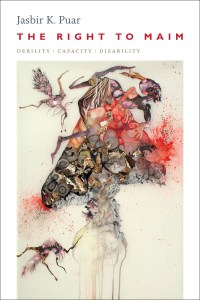
The Right to MaimTake the following affirmations. The main cause of disabilities worldwide is American imperialism. Israel wants to turn Palestinians into a population of cripples. Disability in Western societies is a reflection of white privilege. The production of disability is a policy objective. Debilitation—making people disabled—is a profitable venture. Disability is a privileged category that bestows rights and preferential treatment on its beneficiaries. Discourses of disability empowerment, pride, visibility and inclusion create disenfranchisement, precarity, invisibility, and exclusion as their constitutive other. Disability rights leads to the debilitation of a large number of individuals. Gay marriage is a reaffirmation of white privilege that was lost by being gay. Neoliberalism sentences whole populations to a condemnation of slow death. Who would subscribe to such absurd statements? Yet this is more or less what Jasbir Puar wants us to believe. She does so with great rhetorical skills and communicative persuasion. The bigger the fabrication, the better it works. Her strategy to convince the reader of these provocative affirmations can be broken down into three consecutive steps borrowed from the vocabulary of military operations: shock and awe, dazzle and confuse, swarm and saturate.

Shock and Awe, Dazzle and Confuse, Swarm and Saturate

Jasbir Puar first relies on the impact factor of a series of outrageous statements unleashed upon the reader in close succession. The goal at this stage is not to convince or to seduce, but to shock and to leave in awe. Examples of such statements abound: they are introduced right from the first pages of the book, as if to prepare the ground for the upcoming battle. Israeli Defense Forces have a logic of “creating injury and maintaining Palestinian populations as perpetually debilitated, and yet alive, in order to control them.” “What counts as a disability is already overdetermined by ‘white fragility’ on the one side and the racialization of bodies that are expected to endure pain, suffering, and injury on the other.” “The category of disability is instrumentalized by state discourses of inclusion not only to obscure forms of debility but also to actually produce debility and sustain its proliferation.” “Debilitation is caused by global injustice and the war machines of colonialism, occupation, and US imperialism.” “Debilitation is not a by-product of the operation of biopolitics but an intended result.” “I am arguing that debilitation and the production of disability are in fact biopolitical ends unto themselves.” “Disability rights solutions, while absolutely crucial to aiding some individuals, unfortunately lead to further perpetuation of debilitation.” “Part of how white centrality is maintained is through the policing of disability itself.” “The production of most of the world’s disability happens through colonial violence, developmentalism, war, occupation, and the disparity of resources—indeed through US settler colonial and imperial occupations, as a sign of the global reach of empire.”

All the above quotes come from the sixteen pages-long preface, which lays the ground for the shock and awe operation. They are presented in a categorical and assertive tone that brooks no discussion. The goal is to cause maximum confusion and disorientation in a minimum span of time. Critical faculties and plain common sense are numbed and silenced by the accumulation of reality-distorting statements. The use of overwhelming argumentative power and the display of rhetorical force will destroy the reader’s will to argue or find nuance. Military vocabulary tells it well: shock and awe is what the opening chapter purports to deliver. It is likely that the reader, having come to this book through reputation or advice, shares some of the proclivities and commitments of the author. But this heavy barrage of fire maximizes the initial distance with the author: Jasbir Puar’s writing style and political stance are upping the ante for most progressive and mainstream readers, making it clear that The Right to Maim is no ordinary pursuit. Reading this book will confront them with controversial ideas and radical viewpoints, so one better has to brace oneself, buckle up, and prepare for a tough ride. And indeed, the opening sentence of The Right to Maim’s preface interpellates the reader by shouting the injunction: “Hands up, don’t shoot!” This was, of course, the rallying cry of the Black Lives Matter campaign, along with the slogan “I can’t breathe!” taken after the last words of Eric Garner who was put in chokehold by a NYPD officer. These are in fact “disability justice rally cries,” argues the author who sees a convergence of struggles and intersectional politics along the need to resist the sovereign right to maim.

Withholding death while denying life

The next step in the battle plan conducted by the book is a charm offensive that will leave the reader dazzled and confused. The seduction of The Right to Maim operates at many levels. The first rule of the book’s attraction is the allure of style. Jasbir Puar writes in a clear and exacting fashion that demands a high degree of attention from the reader but that is in the end very rewarding. She situates disabilities in a semantic field that also includes debility, capacity, and their associated processes of disablement, debilitation and incapacitation. This conceptual triangle complicates the ability/disability binary: “while some bodies may not be recognized as or identify as disabled, they may well be debilitated, in part by being foreclosed access to legibility and resources as disabled.” Debility allows the text to “illuminate the possibilities and limits of disability imaginaries and economies.” It also allows the author to contribute to political theory by complementing the approach of biopolitics first proposed by Michel Foucault and epitomized in the maxim “to make live and to let die.” The necropolitics of Achille Mbembe rephrases this expression by adding the decision “to kill or to let live”, thus giving rise to four coordinates: making live, making die, letting live, letting die. For Jasbir Puar, the “license to kill” that the sovereign state grants itself is complemented by the “license to disable” or the sovereign right to maim. To the politics of life and death, she adds the politics of keeping barely alive, of making available for injury, of withholding death while denying life. This politics of “will not let die” is best identified with the role of the Israeli state vis-à-vis Palestinians in the occupied territories, but it also characterizes US imperialism as well as, in its most general expression, neoliberal capitalism. By taking the high ground of theory, and  adding a new development to the thought of none other than Michel Foucault, Jasbir Puar is able to rally the academic crowd and the intellectually-minded reader to her own radical agenda.

In addition to contributing to high theory, Jasbir Puar purports to explore the intersections and overlaps between various subdisciplines: disability studies, critical race studies, transgender and queer studies, postcolonial studies, to which she also adds affect theory, ecologies of sensations, “the fields of posthumanism, object-oriented ontology, and new materialisms.” These are all well-identified niches in the academic market: by touching upon them, and discussing the relevant authors and their most recent works, Puar makes sure her contribution will also be catalogued into each of these subfields, thereby gaining visibility and exposure. The result is often a tightrope exercise, as when she puts disability studies into dialogue with transgender studies—transsexualism was until recently catalogued as a “gender identity disorder,” while transsexuals often claim the health benefits associated with disability in order to support their bodily transformation. She quotes individuals with highly complex identities, such as a disability justice activist who identifies herself as a “queer, physically disabled Korean woman transracial and transnational adoptee,” not to mention the “trans women of color” who seems to be the main political subjects worthy of engagement. Puar engages critically with the notion of intersectionality, defined in the context of the convergence of struggles between feminist, LGBT, and ethnic minority movements. For her, “the invocation of intersectional movements should not leave us intact with ally models but rather create new assemblages of accountability, conspiratorial lines of flight, and seams of affinity.” Intersectionality often relies on an imaginary of social exclusion whereby the disabled person or the queer are supposed to be white and the racialized other is straight. For Jasbir Puar, one should clearly identify the ally and the enemy: she multiplies attacks against American imperialism, neoliberalism, and sionism, and underscores that her agenda is “unequivocally antiwar, pro-labor, antiracist, prison abolitionist, and anti-imperialist.” She concludes her book by stating that “the ultimate purpose of this analysis is to labor in the service of a Free Palestine.” Disability justice or LGBT rights must be embedded in this political agenda and contribute to its advancement: otherwise, they are a masquerade and serve only to whitewash (or “pinkwash”) the oppressive politics of the neocolonial state.

What happens after human rights have been bestowed

Part of the confusion caused upon the reader comes from the fact that Jasbir Puar directs some of her harshest criticisms against the basic tenets of progressive liberalism. She notes that her book “is largely about what happens after certain liberal rights are bestowed, certain thresholds or parameters of success are claimed to have been reached.” What is left of policies of human rights when rights have been granted and are universally recognized? First, discourses on rights create what is known in development circles as the last mile problem: there are always rights-bearers and potential beneficiaries that are harder to reach and to include into policies of empowerment and capacitation. For instance, people with mental and cognitive disabilities, or people stuck in a vegetative state, are often not considered in disability justice campaigns and continue to be the most marginalized of people with disabilities. Or the right to protest—a right that is held very dear by Jasbir Puar—supposes that street demonstrations and protest meetings be made barrier-free and accessible for people with disabilities. Policies of human rights not only fail to include some individuals as they create privileges for others: they deliberately generate exclusion and rightlessness as their constitutive other. For Puar, debilitation is not a by-product of the operation of biopolitics but an intended result, a supplement that often reinforces and overlaps with disability. Rights discourse produces human beings in order to give them rights; but by doing so they discriminate which bodies are vested with futurity and which aren’t. The paradigmatic example for Jasbir Puar is the LGBT rights movement, which produces “the sexual other as white and the racial other as straight.” As she argues by surveying the legal debate on transgender identity in the context of the 1990 Americans with Disabilities Act, hailing some disabilities as a matter of pride and recognition further marginalizes other disabilities. And even trans or disabled identities can lead the way to forms of normative nationalism—what the author, having coined the word “homonationalism” ten years before in her first book, proposes as the new concepts of “trans(homo)nationalism” and “crip nationalism”.

Another tactics is to supplement the blitzkrieg of her opening statements with a succession of skirmishes that makes her conquer ground over sceptic readers. She uses common sense and established facts to give some grounding to her radical affirmations. Nobody can deny that racism, colonialism, economic exploitation, and environmental pollution have debilitating effects on a vast number of people. Debilitation is indeed an effect of Israeli policies that restrict mobility and impose checkpoints that impair the circulation of able-bodied and disabled Palestinians alike. Reconstruction is big business in the West Bank and Gaza for donor agencies and NGOs that are kept in lucrative operations by the need to regularly rebuild what the Israeli army repeatedly destroys. Police officers throughout the world use nonlethal weapons such as plastic bullets and gas grenades that may cause injuries to the individuals they target, and some police forces, mostly in illiberal regimes, do use firepower against unarmed insurgents and shoot to cripple and to maim. There is a “white bias” in disability studies in the sense that most contributors to the field are indeed white. US wars leave in their trails injured soldiers and civilians who may thus be disabled for life. In Western societies, rights are granted to disabled persons that are denied to other populations, including their caretakers, who often come from disenfranchised populations and may not have access to healthcare themselves (see the French movie The Intouchables.) Disability becomes a rights-creating category by virtue of state recognition, while persons in various states of debilitation but who are not granted disabled status do not benefit from these privileges. Personal debt incurred through medical expenses is known as the number one reason for filing for bankruptcy in the United States. Israel makes efforts to market itself as a gay-friendly destination, thereby leaving itself open to accusations of pinkwashing.

A grand finale

These swarming arguments and saturation of the rhetorical space have one objective: to create “facts on the ground” through a reality-distorting field that annihilates the mental resistance of the reader. By acknowledging some facts and statements, the reader is led to subscribe to the radical propositions that form the armature of the demonstration. Much like the book opened with a barrage of fire, it ends with a grand finale, a climatic articulation of debilitation as a biopolitical end point unto itself. The explanations for the book’s title and some of the provocative affirmations stated in the preface are only given in the last chapter, where the right to maim is identified with Israel’s policy in the occupied territories. As a substitute to the word “genocide”, Jasbir Puar uses the concept of “spacio-cide” in the context of describing Gaza, one of the most densely populated place on earth, and also a region with the highest rate of people with disabilities. She identifies checkpoints as “chokepoints”: “because of this asphyxiatory control, Israel can create a crisis at will, having already set in place the bare minimum requisite for life that can be withheld at any moment.” Plastic bullets are the weapon of choice with the intended effect of hurting and injuring people, while the constraints on circulation create an entire population with mobility disabilities. But Jasbir Puar’s indictment of the politics of debilitation doesn’t stop at Israel’s (contested) borders. In her interpretation, Gaza becomes the standard by which all situations of political conflict should be evaluated. The sovereign right to maim is also applied by the United States in its handling of its racial situation and, one could add, the way the French government dealt with the yellow jackets demonstrations. Even the hidden structure of subjectivity is marked by the triangle of debility, capacity, and disability. Gaza is everywhere.

During the heydays of Marxism, French philosophers used to say that “philosophy is, in the last instance, class struggle in the field of theory.” Jasbir Puar might correct that theory is, nowadays, intersectional struggle in the field of political analysis. Theory is, for her, the continuation of political warfare by other means. This weaponization of social science serves practical goals: The Right to Maim is a political intervention in the context of campus politics where various groups call for the boycott of Israel, and Jasbir Puar fully aligns herself with this Boycott, Divestment, and Sanctions (BDS) campaign. But she doesn’t stop there: she brings warfare and military tactics to theory itself, and presents her arguments in the way military leaders execute a battle plan. Her three-pronged strategy—shock and awe, dazzle and confuse, swarm and saturate—will leave the reader in a state of shock and confusion, forced to take a stand between passive adhesion or outward rejection. Commenting on her political agenda is beyond the scope of this review. But I don’t subscribe to this agonistic interpretation of scholarship. Social science, and the humanities in general, has at its core mission the identification of the commonalities of humankind. It is only on this common ground that differences can flourish. Beyond the emphasis on difference and conflict, social science should strive to find a higher order of unity and reconciliation. This dialectics is completely absent from the scope of The Right to Maim.

Less Than Human

A review of Infrahumanisms. Science, Culture, and the Making of Modern Non/personhood, Megan H. Glick, Duke University Press, 2018.

InfraInfrahumanisms directs a multidisciplinary gaze on what it means to be human or less-than-human in twentieth century America. The author, who teaches American Studies at Wesleyan University, combines the approaches of historiography, animal studies, science studies, gender studies, ethnic studies, and other strands of cultural studies, to build new analytical tools and to apply them to a range of issues that have marked the United States’ recent history: children and primates caught in a process of bioexpansionism from the 1900s to the 1930s; extraterrestriality or the pursuit of posthuman life in outer space from the 1940s to the 1970s; and the interiority of cross-species contagion and hybridity from the 1980s to the 2010s. Judged by historiography’s standards, the book lacks the recourse to previously unexploited archives and new textual documents that most historians consider as essential for original contributions to their field. The empirical base of Infrahumanisms is composed of published books and articles, secondary analyses drawn from various disciplines, and theories offered by various authors. There are no interviews or testimonies drawn from oral history or direct observations from ethnographic fieldwork, no unearthing of new documents or unexploited archives, and no attempt to quantify or to measure statistical correlations. This piece of scholarship is firmly grounded in the qualitative methodologies and humanistic viewpoints that define American Studies on US campuses. The only novel approach proposed by the book is to use a range of photographies and visual sources as primary material and to complement textual commentary with the tools of visual analysis borrowed from media studies. But what Infrahumanisms lacks in methodological originality is more than compensated by its theoretical deftness. Megan Glick innovates in the research questions that she applies to her sample of empirical data and in the theory that she builds out of her constant back-and-forth between facts and abstraction. She does conceptual work as other social scientists do fieldwork, and offers experience-near concepts or mid-range theorizing as a way to contribute to the expansion of her research field. In particular, her use of animal studies is very novel: just like minority studies gave birth to white studies within the framework of ethnic studies, or feminism led to masculinism in the field of gender analysis, Megan Glick complements animal studies with the cultural analysis of humans as a species. Exit the old humanities that once defined American studies or literary criticism; welcome to the post-humanities of human studies that patrol the liminalities and borderings of the human species.

The whitening of the chimpanzee

What is the infrahuman contained in Infrahumanisms? A straightforward answer is to start with the book cover representing the simian body of a young baboon (sculpted by artist Kendra Haste) seen from behind: monkeys, particularly great apes, are infrahuman. This, at least, was how the word was first introduced in the English language: the first use of the term “infrahuman” was made in 1916 by Robert Mearns Yerkes, a psychobiologist now remembered as the founding father of primatology. By modern criteria, Yerkes was a eugenicist and a racist: he saw his work as assisting in the process of natural selection by promoting the success and propagation of “superior” models of the human race. Through the Pasteur Institute in Paris, he was able to import primates from French Guinea and to apply to them various tests of mental and physical capacities that were first conceived for the measurement of the intelligence and characteristics of various “races”. Thus, writes Megan Glick, “while the terms of dehumanization and radicalization are often understood to be familiar bedfellows, (…) the process of humanization is equally as important in the construction of racial difference and inequality.” In particular, she shows that the chimpanzee appeared in these early primatology studies and in popular discourse as akin to the white race, while the gorilla was identified with black Africans. The “whitening of the chimpanzee” and “blackening of the gorilla” manifested itself in the early photographs of primates in human company or in the first episodes of the Tarzan series, where Cheeta is part of Tarzan and Jane’s composite family in the jungle, while gorillas are imagined as “the deadly enemies of Tarzan’s tribe.” The jungle trope is also applied to early twentieth-century children who were involved in animalistic rituals and identities: from “jungle gym” equipments in public playgrounds to the totems and wild outdoor activities of the Boy Scouts movement, the development of a childhood culture in close contact with the natural world marked a new moment in the lives of US children at the beginning of the century. The child was imagined as a distinct species, a proto-evolutionary figure providing the missing link between animals and humans. Neither primates nor children leave written archives or provide a “voice” available for historiographical record: like the subaltern, they literally “cannot speak.” Here again, the historian turns to pictures and illustrations to envision children as infrahuman, as in the photographs of infant and adult skeletons in pediatrics books that portrayed the child as “different from the adult in every fiber.”

The mid-twentieth century was a time of great anxieties about the human condition. Images and photographs tell the story better than words. The era of extraterrestriality was bordered by the mushroom clouds of Hiroshima and Nagasaki on one end and the picture of the blue planet as seen from outer space on the other. Extraterrestrial creatures were a matter of sighting and picturing more than storytelling or inventing. The pictures of aliens crashing at Roswell, New Mexico, with their “short gray” bodies and oversized heads, took to the public imagination and were described in similar terms by “alien abductees” who came up with similar visions although they had no way to coordinate their testimonies between themselves. While aliens on the big screen or in popular media tended to be large, monstrous, and even superhuman, aliens “sighted” by the American public were small, quasi-human, and frail. Here the author has a theory that stands at variance with standard interpretations of alien invasions as inspired by the red scare of communism. It wasn’t the Cold War and the mass panic over the infiltration of communist subjects that inspired the narratives and depictions of alien abductions and Mars attacks, but rather the traumatic after-effects of the Holocaust pictures that were disseminated at the end of the Second World War. As Megan Glick argues, “both tell a story about the nature of midcentury visual culture, both are concerned about the boundaries of human embodiment, and both question the futurity of humanity.” Meanwhile, the increasing precision of human genetics gave way to a post-Holocaust eugenic culture, in which the fight against social ills that undergirded the earlier eugenic movement was traded in for a more exacting battle against biological flaws. Key to these developments was the Nobel Prize winner Joshua Lederberg, a bacteriologist who made seminal contributions to the field of human genetics and who launched the speculative study of exobiology, of life on other planets. Like in the final screenshot of the cult movie 2001: A Space Odyssey, the picture of the earth as viewed from space paralleled the image of the fully developed fetus within a woman’s womb as reproduced on the cover of Life magazine. Lederberg and his colleague envisioned the impending elimination of genetically based disabilities through intra-uterine manipulation of the embryo. Considering the backdrop of sterilization campaigns for disabled persons or anxieties raised by overpopulation in the Third World, this raised concerns that African American populations could be targeted for “defective genetic traits” such as the prevalence of sickle cell disease.

Jumping the species barrier

The 1980s was marked by the AIDS crisis, which at first was associated with stigmatized populations such as gay men, intravenous drug users, and migrants from Haiti. The AIDS epidemic has already been studied from various perspectives, locating the disease within the history of sexuality, race, and medicine. Carol Glick adopts a new angle by taking an animal studies perspective by treating AIDS as a zoonotic or cross-species disease, placing it in a series that also includes SARS, mad cow disease, and avian flu. When the virus was found to have emerged from within chimpanzees in Africa, questions wee soon raised about how, why, and when AIDS had jumped the species barrier. Speculations extended to the “strangeness” of African sexual habits and dietary customs, and the denunciation of the consumption of bush meat operated both a dehumanization of African poachers and a humanization of monkey species. Tracts of tropical forest were cleared from their human presence to preserve the habitat of great apes. Dehumanization also worked at the level of AIDS patients, who were denied proper treatment and health insurance up to this day. An extreme form of dehumanization is animalization, especially the comparison of humans with certain devalorized species such as pigs. A cartoon published in the New Yorker shows the evolution of the human species from ape to mankind, and then its devolution into pigness due to sloth and obesity. In such representations, the obese body is usually represented as disabled and deformed; it is more often than not male, bald, and white. But statistically, obese people are more likely to be black, poor, and female. Public health campaigns put the blame of overweightness on individuals, obfuscating the role of food companies, advertisement campaigns, and policy neglect for our unhealthy diet. In more than one way, pigs are our posthuman future: genetic engineering is capable of creating porcine chimeras capable of developing human cells and organs for xenotransplantation benefitting needy patients. Using animal parts in human bodies results in the hybridization of both species, while the American dietary passion for pork creates the possibility of a species transgression akin to cannibalism that the taboo on pork consumption for Muslims and Jews seems to have anticipated. The main barriers to our porcine and infrahuman future may not be scientific and technological, but cultural and religious.

The concluding chapter is titled The Plurality is Near, a pun on Ray Kurzwell’s book announcing that “the singularity is near” and that humans will soon transcend biology. The plurality of species, which includes parasites and vectors of harmful diseases, raises the issue of speciesism: does mankind have the right to eradicate certain species, such as the mosquito Aedes aegypti targeted by a campaign of total elimination due to its role in the spread of malaria, dengue, and Zika? The elimination of mosquitoes in the name of human health is hard to contest; and yet we do not know what the long-term consequences of this tinkering of ecosystems will be. Scientists record an alarming rate of species decline and extinction, with spectacular drops in the population of bugs, butterflies, and insects. A future without insects would have catastrophic implications for birds, plants, soils, and humans; so much so that in order to slow down and someday reverse the loss of insects, we must change the way we manage the earth’s ecosystem and enhance their chances of survival. The plurality of species also forms the background of the new discipline of microbiomics, the study of the genetic material of all the microbes—bacteria, fungi, yeasts and viruses—that live on and inside the human body. Yoghurt commercials have popularized the notion of the intestinal flora as essential to the well-being of the organism. Digestive health sees the intestinal tract as not only a site of transit and evacuation, but also of flourishing and symbiosis. New models representing the body go beyond the mechanics of fluids and the circuitry of organs: they mobilize the ecology of populations and the co-evolution of ecosystems. Like the poet Walt Whitman, the human body can claim to contain multitudes: where the body ends and the environment begins is no longer clear. What happens at the infrahuman level unsettles the definition of the human: “the proposed manipulation of populations that exist in parasitic and symbiotic relation to the human species, often inside the body itself, suggests a deep unsettling of the animal/human binary and a restaging of human difference.” Seeing human beings are primate-microbe hybrids sets a new frontier for research and raises questions about the future of mankind. As microbiologist and NASA adviser Joshua Lederberg once declared, “We live in evolutionary competition with microbes, bacteria and viruses – there is no certainty that we will be the winners.”

Unmasking the ideology of infrahumanism

The infrahuman, then, takes up different figures throughout the twentieth century: the ape, the child, the creature from outer space, the embryo, the racial other, the posthuman hybrid, the microbiome within the human body. The infrahuman complicates notions of the other, of what counts as alien, outsider, non-human, friend or foe. It appears through twentieth-century scientific and cultural discourses that include pediatrics, primatology, eugenics, exobiology, microbiotics, and obesity research. The infrahuman confronts us with what the author calls “hyperalterity” or the radically other. By extension, infrahumanism, taken in the plural, designates an ideology, an episteme, or an -ism that inspires processes of infrahumanization. It rests on the belief that one’s ingroup is more human than an outgroup, which is less human. It results from a dual movement of dehumanization, which denies the humanity of certain individuals or collectives, and of rehumanization, which bestows non-human animals with certain human characteristics. It is closely related to the notions of speciation, the process by which differences are constituted into a distinct species, and of speciesism, the idea that being human is a good enough reason for human animals to have greater moral rights than non-human animals. What gets to count as human or as animal also affects our conceptions of human difference such as race, sexuality, disability, and disease status. Carol Glick argues that unmasking the ideology of infrahumanism is crucial to better understanding the persistence of human social inequality, “laying bare the rhetorics of being ‘beyond’ or ‘post’ race, gender, and other forms of social difference thought now to be on the precipice of mere social construction.” She notes the curious coincidence between the deconstruction of humanist thought and the emergence of an animal rights discourse at the precise moment when feminist and minority movements started to demand the recognition of their full rights as human beings, a category from which they had long been excluded. This is why “feminism should not end at the species divide”: feminist studies have a distinctive contribution to offer on the human/nonhuman distinction and how it affects the rights and claims of both groups.

Thinking about humanism, and its infrahumanist variants, as the ideology proper to the human species also transforms our vision of “the humanities”. Rather than simply reproducing established forms and methods of disciplinary knowledge, posthumanists should confront how changes in society and culture require that scholars rethink what they do—theoretically, methodologically, and ethically. Infrahumanisms bridges the scientific and cultural spheres by attending to the cultural imaginaries of scientists as well as to the changes brought by science in popular culture. It provides a welcome critique of the foundations of the field of animal studies, itself less than a couple of decades old. In her introduction, Carl Glick scratches in passing some of the great founders of the discipline—Cary Wolfe and his infatuation with systems theory, Jacques Derrida and his cat, Donna Haraway and her doggie—while giving kudos to more recent entries that mix the radical  critique of feminist studies, critical race studies, queer studies, and disability studies—with authors such as Mel Chen, Neel Ahuja, Lauren Berlant, and Claire Jean Kim. She doesn’t support radicalism for radicalism’s sake: she has strong reservations with the biological essentialism of some animal rights activists who conflate racism with speciesism, and she reminds us that “we cannot ethically argue for the direct comparison of people and animals.” Her book is therefore a welcome contribution “to the vast and difficult conversation about the place of nonhuman animals in the humanist academy.” As mentioned, Carol Glick also extends what counts as historical archive and how to present it to the reader. Images, pictures, photographs, screenshots, and movies will remain as the twentieth century’s main archives. They require a mode of analysis and exposure that is distinct from textual interpretation, and for which tools and methodologies are only beginning to be designed. Illustrations used by the author form part of her demonstration. For many readers, the striking book cover of Infrahumanisms will remain an apt summary of her main argument.

Nationalists, Feminists, and Neoliberals Converging Against Islam

A review of In the Name of Women′s Rights: The Rise of Femonationalism, Sara R. Farris, Duke University Press, 2017.

Farris.jpgWhat happens in the name of women’s right is, according to Italian scholar Sara Farris, the denial of the rights of certain women and men to live a life with dignity in Western European countries where they have migrated. More specifically, an anti-Islam and anti-migrant rhetoric is increasingly articulated in terms of gender equality and women’s emancipation. The misuse of liberal discourse for illiberal ends is not new: the invasion of Afghanistan that followed the terrorist attacks of September 11 was presented to the international community as a mission to liberate Afghan women from their oppression under Taliban rule just as much as an act of defense and retaliation against the perpetrators of the attacks. The French fixation with the “Islamic” veil finds its origins in the Algerian war and the effort to present the fight against the FLN as a crusade for modernity on behalf of “Arab” women against their male oppressors. Closer to us, Marine Le Pen is known for courting France’s female voters and for endorsing women’s rights within the framework of her anti-migrant platform. What is distinctive about Sara Farris’s book are three things. First, she anchors her discussion on what she calls “femonationalism” (read: feminism+nationalism) within the context of ideological debates taking place in France, Italy, and the Netherlands during the first decade of the twenty-first century. Second, she shows that the instrumentalization of women’s rights for anti-migrant and anti-Islam purposes is not limited to political parties from the far right: rather, it is the result of a convergence between right-wing nationalists, some feminists and femocrats (by which she means bureaucrats and social workers promoting gender equality policies in state agencies), and neoliberal economic policies targeting participation in the labor market. Third, Farris claims that only a political economy analysis inspired by the critique of neoliberalism can explain why, at this particular juncture, “Muslim” men are being targeted as surplus workers “stealing jobs” and “oppressing women”, while “Muslim” and non-European migrant women are construed as redeemable agents to be rescued by integrating them into low-skilled, low-paid activities of the “social reproduction sector.”
The femonationalist ideological formation

The first argument on the ideology of right-wing parties is well-known. Politicians such as Geert Wilders in the Netherlands, Marine Le Pen in France, or Matteo Salvini in Italy have expressed support for the cause of gender equality (with occasional mentions to gay rights) within a xenophobic and anti-migrant framework. As the book title reflects, they are advancing their anti-Islam agenda in the name of women’s rights. Their attacks on migrant men, especially Muslims, are more strident than their position on non-Western migrant women. They consider the first ones as a direct threat to Western Europe society due, above all, to their oppressive treatment of women at home and their unrestrained, violent sexuality toward women outside the home. The second ones are considered as redeemable: provided certain conditions are met, women can “assimilate” into the host society (through work and often through marriage) and raise their children the “right” way, but they are to be protected from the pervasive influence of “their” men. As the title “in the name of women’s rights” suggests, this appropriation of a feminist agenda is only an excuse, a deception or a fraud by nationalist parties who are otherwise described as misogynist in essence and masculinist in style. Hence the message to European feminists: the accession of the nationalist right to power, as is the case in several European countries, would constitute a regression for women’s rights and would end in a backlash against women. This assumption, however, should be put to empirical testing: it might be the case that illiberal policies would, in the end, benefit the situation of (certain) women at the national level, although migrant women would certainly be the first victims of a tightening of immigration policies. Likewise, as we mentioned, liberal means can serve illiberal ends. We have no reason to assume that the defense of (certain) women’s rights in nationalist platforms is not sincere and that there is only instrumentalization at play. It is true that nationalist parties have shown concern about gender inequality mostly in the case of Muslim and ethnic minority communities. But the history of political ideas provides us with many cases in which ideologies have shifted from the left to the right and sometimes to the far right. Behind the declarations of populist leaders in favor of women’s empowerment and gender equality, there may be a kind of “alt-feminism” in the making. The relation between this alternative feminism and more traditional forms of feminism will have to be defined. But these fine points are not discussed by Sara Farris, who obviously has no sympathy at all for nationalist points of view: for her, femonationalism is no feminism at all.

The second thesis on “femonationalism” as convergence between different agendas and positions is less familiar to the general public and itself needs to be unpacked. The most evident manifestation of this convergence between nationalism and feminism is the fact that some well-known and outspoken feminists such as Elisabeth Badinter in France have joined the ranks of those who see Islam as a threat to European societies. Accordingly, they have endorsed legal proposals such as veil bans while portraying “Muslim” women as passive victims who needed to be rescued and emancipated. They have also described men originating from non-western, economically underdeveloped countries are misogynist and prone to sexual violence, as in the cases of rape and sexual aggressions committed by North Africans and Middle East migrants in Germany. Again, Islam is singled out by these intellectuals as a religion associated with unequal gender relations and violence (with an emphasis on honor killings, domestic violence, forced veiling, and arranged marriages). They see the veil as a form of symbolic violence exerted by Muslim men forcing women to wear it and by Muslim women singling themselves out from the rest of society. Many have turned against multiculturalism as promoting a kind of value relativism and failing to defend “western” values of emancipation, individual rights, and secularism. These arguments define what Farris call the “femonationalist ideological formation,” bringing together public figures who otherwise disagree on many issues. Sara Farris claims that feminists can only lose by espousing the anti-Islam agenda. They are diverting attention away from the many forms of inequality that still affect Western European women. They transform women’s rights into a “civilizational”, ideological issue, as opposed to a social and economic one grounded on material interests. They also contribute to the diffusion of an ethnicized vision of society. Their endorsement of the agenda promoted by the nationalist right is a “divine surprise” for the latter: right-wing politicians can claim the support of high-visibility intellectuals, who have a strong legitimacy on issues of gender inequality and women’s rights. Some self-declared feminists, such as Ayaan Hirsi Ali in the Netherlands, have lend themselves to political collaboration with right-wing forces. Most feminists however, have insisted on their distance with the nationalist right, claiming instead that their new fight against Islam’s oppression of women stands in continuity with their progressive engagement.

Migrant men and migrant women

Closely related to these Islam-bashing feminists, Farris also points to the role of “femocrats.” This term, slightly dismissive, refers to the (not necessarily female) bureaucrats who are institutionalizing feminism through state programs of gender equality and civic integration. Without giving any figures, Sara Farris claims that state funds are increasingly withdrawn from policies tackling gender inequality as a general problem and are redirected instead toward programs aimed at addressing gender inequality among “Muslim” and ethnic minority communities. These civic integration programs purport to teach migrant men what it means to respect women and gender diversity, and to instruct migrant women how to emancipate from their supposedly backward culture. Unwittingly, they are reproducing the prevalent image of migrant men as a sexual threat and migrant women as victims to be rescued. They are also positing the host country as a society where gender rights are respected and guaranteed by the state, as opposed to a domain of social gains and entitlements that need to be conquered and expanded. Of course, there is nothing wrong in telling people that men and women are equal and that women’s rights should be respected. But here again we may have the case of a liberal objective being pursued through illiberal and even repressive means. Civic integration policies have an obligatory character, and their nonobservance can be punished by either financial penalties or denial of a legal residence permit. Furthermore, the requirement that migrants possess the knowledge considered crucial to integration in the receiving country turns integration into an a priori condition rather than a process that occurs over time. From Sara Farris, the problem comes from the undiscussed assumption that these migrants need to be taught what gender equality is about as if they were ignorant of any notions about women’s rights. Besides, gender equality is mentioned mainly in reference to the private sphere, with an emphasis on traditional gender roles for women who need to develop good mothering skills. For Farris, emancipation cannot be taught, and certainly not in a condescending mode by Western feminists or state apparatuses. Nurturing freedom means first and foremost creating the material conditions for freedom and equality. That’s where the rubber hits the road: while social programs aimed at the integration of female migrants put forward values of emancipation and autonomy, they channel these women toward activities that are far from emancipating and that do not allow for their autonomization or empowerment. What they do is the opposite of what they preach.

Through civic integration programs and other policies, migrant women are directed toward what Sara Farris, in good Marxist fashion, calls the “social reproduction sector”: this refers to the care and domestic activities which are mostly located in the private sphere, such as babysitting, child rearing, housekeeping, apartment cleaning, and caregiving of the elderly. Farris sees a contradiction “when feminists and femocrats urge emancipation for Muslim and non-western migrant women while channeling them toward the very sphere (domestic, low-paying, and precarious jobs) from which the feminist movement had historically tried to liberate women.” While advocating women’s participation in the public sphere, they contribute to the confinement of migrant women in household services, the reinforcement of traditional gender roles and the perpetuation of the gender injustice they claim to be combating. Farris considers the jobs proposed to migrant women as lacking in dignity and not conducive to emancipation. Changing diapers, wiping floors, cleaning kitchens, attending sick bodies: these are occupations which are now overwhelmingly held by women of foreign origins and that European women do not want to take as a profession. Of course, one could argue that there is nothing demeaning in the work of care, in attending to children and the elderly, or in making hotel rooms and office space fit for productive use. These jobs can be held with dignity, the feeling that comes from working hard for a socially useful function. But this is not how society sees these jobs and occupations in western Europe. They are organized under conditions of precariousness, with minimal wages, job flexibility, part-time or casual contracts, and little access to welfare provisions. The inclusion of social reproduction into the market sphere of wage labor has not led to a rehabilitation of care and domestic work; on the contrary, it continues to be perceived as unskilled, low-status, isolated, servile, and dirty. And for Sara Farris, western feminists are largely to blame for this lack of consideration. They have deserted the issue of social reproduction as a matter for critical engagement, leaving the sector to the naturalizing forces of neoliberalism.

The regular army of domestic labor

Right-wing nationalists, intellectuals who identify themselves as feminists, state experts working on migrant women issues, and neoliberals favoring workfare programs: how can these very different and sometimes opposing parties come up with similar ideas when the migrant question is at stake? As Sara Farris insists, these opponents to Islam in the name of women’s rights should not be seen as partners in crime or ideological bedfellows. The fact that they sometimes converge on an anti-Islam platform doesn’t mean they are colluding, cooperating, or associating with each other in any way. Each party has specific reasons to frame Islam as posing a threat to gender equality in the west. Talking about instrumentalization to describe their relations would be patronizing, especially for the feminists who are very conscious of the political difference that separate them from the nationalist right. In true Marxist fashion, Sara Farris believes convergence at the ideological level comes from similar interests dictated by the material conditions of late capitalism. Neoliberalism isn’t simply the contextual ground on which the femonationalist convergence takes place: it is the constitutive plane of such a convergence. Neoliberal globalization is grounded on a sexual division of labor in which, to use Karl Marx’s categories, migrant women provide the “regular army of labor” and migrant men the “reserve army of labor” or relative surplus population. Unlike migrant men who work in the productive sector, migrant women who work in the domestic sector allow the social reproduction of labor to take place. They are spared from accusations of “stealing jobs” or “posing a threat to society” because they allow western families to form double income couples and to balance work with domestic life. Their employers maintain ownership and control over the social means of production and reproduction. Their labor cannot be substituted by machines and capital, as care and domestic work imply certain qualities that can only be provided by “live labor” and that are often associated with traditional feminine roles. The difference between the industrial sector afflicted with an oversupply of labor in western European countries and the social reproductive sector (cleaning, care domestic, and health care work) explains the double standard applied to male and female migrant workers, especially when religious values come into play.

Commenting the division of the working class in England between English proletarians and Irish proletarians, Karl Marx claimed he had found the secret of the maintenance of power by the capitalist class, as well as the secret of the English working class’s lack of revolutionary spirit. Similarly, Sara Farris believes she has solved the mystery of the unholy convergence between nationalists and feminist promoters of women’s rights: the femonationalist ideological formation takes places under the aegis of neoliberal exploitation of the Global South. “Just as the exploitation of non-western countries’ natural resources permits the West to keep its pattern of production and consumption, it is also migrant women’s socially reproductive work that permits western European women and men not only to have the ‘cheap’ care that enables them to be active in the labor market, but also to retain the illusion that gender inequality has been achieved—at least for ‘them’.” Migrant women are “needed” as workers, “tolerated” as migrants, and “encouraged” as women to conform to western values. Meanwhile, migrant men are needed only insofar as they form a “reserve army of labor,” pushing industrial wages down and antagonizing western workers who then tend to align with the nationalist agenda of the ruling class. Feminists who claim to act in the name of women’s rights are only idiot savants, contributing to the social reproduction of capital while protecting the interests of some women against others’. It is in this sense that they converge with the agenda of the nationalist right: both are complementary ways by which neoliberal globalization extends its conditions of uneven development and exploitation. This process is fraught with contradictions: historically, migrant women came to Western Europe only as the wives and relatives of male guest laborers who formed a first wave of labor migration. It is only when male workers became redundant that the demand for female migrant labor in social reproductive activities began to rise, leading to a mechanism of exclusion of male migrants and inclusion of female migrants. It is this dual process of inclusion and exclusion that femonationalism performs at the level of ideology.

Importing identity politics into Europe

In the Name of Women’s Rights offers a curious mix of European social critique and American multicultural advocacy. It was written while the author was in residence at the Institute for Advanced Studies in Princeton, with feminist author Joan W. Scott providing advice on how to frame intellectual debates about Islam and feminism in Western Europe. Through scholarly networks and academic contacts, the United States smuggles into Europe a vision of identity politics and multiculturalism that was developed in the context of the culture wars on university campuses and that reflects a very specific conception of social groups and ethnicities. Each individual is automatically affiliated to an ethnic or religious community, an exclusive group that is conceived as separated from mainstream culture and that is defined in opposition to other collectives: migrant vs. natives, foreigners vs. citizens, men vs. women, Muslims vs. secular individuals. Like the right-wing promoters of the fantasy notion of Eurabia, these leftist intellectuals see Islam and the integration of non-western Muslim communities as the main challenge facing European societies, overcoming all other forms of division and solidarity. Debates on citizenship, on gender parity, on secularism and on inequality are all overdetermined by this ethnic and religious context. As a European, Sara Farris should know better than to apply such simplistic notion to a situation that requires other tools of analysis and interpretation. But she finds it convenient to sugarcoat her hardcore Marxism with a layer of identity politics that provides catchy titles and attractive soundbites. Like the convergence between European nationalists and universalist feminists—a fringe phenomenon, that doesn’t reflect the history of both the nationalist right and of the feminist movement in Europe—, this alliance between radical economics and cultural warfare mixes elements that don’t fit together and that provide little explanatory power. This is a shallow and off-the-shelf book that attempts to ride the wave of sexual nationalisms by providing its own entry in the form of a catchy word—femonationalism is designed after the notion of homonationalism advanced by Jasbir Puar. But its cultural lenses are heavily biased, and its political economy antiquated. As a piece of transnational scholarship designed between Europe and the United States, it provides the worst of both worlds.

Too Much Shock, Too Little Therapy?

A review of Shock Therapy: Psychology, Precarity, and Well-Being in Postsocialist Russia, Tomas Matza, Duke University Press, 2018.

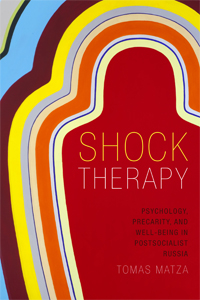
Shock TherapyWhen Russia broke away from socialism, reformers implemented a set of economic policies known as “shock therapy” that included privatization, marketization, price liberalization, and shrinking of social expenditures. In retrospect, critics claim there was “too much shock, too little therapy”: the economy spiraled down into a deep recession, currency devaluations sent prices up, and inequalities exploded. Huge fortunes were built over the privatization of state assets while the vast majority of the population experienced economic hardships and moral disarray. The indicators of social well-being went into alert mode: the psychological shock and mental distress that was caused by Russia’s transition to market economy was evidenced in higher rates of suicide, alcoholism, early death, and divorce, as well as precarious living conditions. People learned to adapt to freedom and the market the hard way: some took refuge in an idealized vision of the Soviet past, while for others traditional values of Russian nationalism and Orthodox christianity substituted for a lack of moral compass. The society as a whole experienced post-traumatic stress disorder. But contrary to the claim that economic shock therapy was “all shock and no therapy”, on the psychological front at least, therapy came in large supply. During the 1990s and 2000s, there was a boom in psychotherapeutic practices in postsocialist Russia, with an overwhelming presence of psychology in talk shows, media columns, education services, family counseling, self-help books, and personal-growth seminars. Shell-shocked Russians turned to mind training and counseling as a way to adapt to their new market environment. Political and economic transformations were accompanied by a transformation of the self: in order to deal with “biopoliticus interruptus”, homo sovieticus gave way to a psychologized homo economicus. Long repressed, discourses of the self flourished in talk therapies and speech groups in which, under condition of anonymity and privacy, individuals could say things about themselves that they wouldn’t have confessed even to their close friends or relatives. Russia became a talk show nation: the forms of psychological talk cultivated by TV hosts came to define the way Russians saw themselves as they sought guidance on how to adapt to their new environment.
Supply and demand

There are at least two ways to interpret this psychotherapeutic turn. The first mobilizes the tools of standard economics to analyze the growth of therapeutic services in terms of supply and demand converging under conditions of liberalization. Russia transited from centrally planned economy to market capitalism by removing state controls and unleashing the forces of the market. Under market conditions, supply meets demand, and pent-up demand leads to a supply boom when the constraints limiting market entry and expansion are lifted. The supply of psychotherapeutic services in the Soviet Union was severely restricted. Individual were to blame for affective disorder and social maladaptation, which diverted energies from the building of a socialist society. Care providers and psychologists had to adhere to a strict materialist approach, and subjective approaches of the self were replaced by neurophysiology and rational psychotherapy. Mental health and psychic wellbeing were tools of state control: political opposition or dissent were interpreted as a psychiatric problem, and the KGB routinely sent dissenters to psychiatrists for diagnosing to avoid embarrassing publiс trials and to discredit dissidence as the product of ill minds. During late-Soviet liberalization and perestroika, new therapeutic approaches were introduced and ideas from the West began to gain influence. This turned into a full psychotherapeutic boom after 1991: market entry conditions were relaxed, as anybody could set shop as a psikholog or a psikhoterapevt, and entrepreneurs began to advertise their services to the fraction of the public that could afford private counseling. Talk therapy and self-help, virtually nonexistent in the Soviet Union, became a booming industry. Private corporations established human resource departments and began to emphasize the cultivation of soft skills and emotional intelligence. Under volatile market conditions and with the disappearance of Soviet institutions, people strived for stability and points of reference. There was a new demand for treningi (training), koyching (coaching), and personal growth (lichnyi rost) or leadership (liderstvo) seminars. Raising a child also became a new challenge, and anxious families as well as school administrators began to use psychological services to improve performance and guarantee success.

A second interpretation, not necessarily contradicting the first, understands the psychotherapeutic turn in Russia as a symptom of the global expansion of neoliberal capitalism. In social science studies and critical discourse, neoliberalism is identified with notions of individual rationality, autonomy and responsibility, entrepreneurship, and positivity and self-confidence. These discourses and associated techniques constitute the neoliberal subject in ways consonant with neoliberal governmentality. Neoliberalism extends to education and to the self the vocabulary and mindset of economics: individuals are compelled to assume market-based values in all of their judgments and practices in order to amass sufficient quantities of ”human capital”, “invest” in skills and capabilities, and thereby become ”entrepreneurs of themselves”. They are led to believe that they are autonomous subjects responsible for their present condition and they have control of their own destiny. Those who fail to thrive under such social conditions have no one and nothing to blame but themselves. The cost of social protection, which was once supported by state programs of social security, is now transferred to the individual or to families and communities; and social ills such as unemployment, poor health, obesity, drug abuse, or school failure are blamed on individuals, as opposed to putting the blame on the societal system as a whole. Self-development discourse instills stronger individualism in society, while constraining collective identity, and thus provides social control and contributes to preserving status quo of neoliberal societies. Within the logic of global neoliberalism, the role of government is defined by its obligations to foster competition through the installation of market-based mechanisms for constraining and conditioning the actions of individuals, institutions, and the population as a whole. Neoliberalism is not laissez-faire, but permanent vigilance, activity, and intervention. The rationality of neoliberalism consists of values and principles that must be actively instituted, maintained, reassessed and, if need be, reinserted at all levels of society.

Neoliberalism at work

When he set foot in Saint Petersburg to study the psychotherapeutic complex operating in various state and private sector institutions, Tomas Matza expected to find neoliberalism at work: as he notes, there is “an extensive literature that describes how the neoliberal reforms of privatization and marketization are not just accompanied but in fact depend on the cultivation of particular kinds of citizens—namely, self-sufficient, individualized subjects of freedom able to survive austerity measures such as the withdrawal of state social programs.” But instead of homo neoliberalis in the making, he met concrete individuals with their ideals and hopes, their fears and frustrations. The story of neoliberalism couldn’t give full account of the way people perceived changes in their environment and in their own selves. The growth of the new psychotherapy market was linked to numerous reasons and motives: happiness, self-realization, improved relations, healing, change from routine, discovery, and learning. Therapists and patients came together in search of an alternative kind of social experience, rooted in an heightened form of togetherness. They described their first taste of group therapy as a kind of electric shock: “It was a new way of thinking, a new point of view. We called each other by first name […] It was shocking how new it was.” Psychotherapy was associated with a liberation of the self, a blossoming of free speech and a new age of freedom: hardly the imposition of new constraints and disciplines that critics of neoliberalism would have us believe. Besides, care providers identified themselves as political liberals as opposed to supporters of free market neoliberalism. Their technologies of the self were not aimed as much at the rational actor motivated by self-interest as at a particular kind of individual flourishing in a well-functioning democracy. They straddled a divide between political and economic liberalisms: insofar as they had political programs or opinions, these were for reforms of political practices to achieve more transparency and put a halt on immoral greed that was corrupting the basic values of society. Psychotherapy had a social and political purpose in Russia; but it was more aligned with the political values of classical liberalism than with the economic imperatives of neoliberalism.

For Tomas Matza, the psychotherapeutic turn in Russia is better described as postsocialist. It was determined by a set of experiences specific to Russia, of which the import of economic disciplines and psychological doctrines from the West was only one element. Shock Therapy attempts to describe Russia’s psychotherapy boom following the collapse of the Soviet Union by attending various terrains: psychological education camps and municipal counseling services in public schools, adult training and personal growth seminars, messages appearing in the advertising industry or exchanged in TV talk shows, and a psychoneurological outpatient clinic. Tomas Matza studied these various sites by doing participatory observation:  he took part in the kid camp’s discussions, wrote answers to the questionnaires, drew images and made clay representations of his “internal world”, and attempted professional school meetings where the cases of “problem children” were discussed. He shows that psychotherapy inherits from a long story of applied psychology in the Soviet Union. There were several periods when an interest in the subjective factors of human behavior emerged in Soviet science—the 1920s, 1960s, and 1980s. The early efforts to join Freudianism and Marxism were thwarted by the dogmatism of Pavlovian science and the Stalinization of psychology, which was banned from the faculties and redesigned as a subfield of philosophy. The fact that Soviet psychology was based on Marxism did not do away with the diversity of theoretical concepts and therapeutic approaches, which sometimes paralleled Western psychodynamics and in other cases offered home-grown discourses and concepts. Yet even in the 1970s, psychotherapists could be questioned by the KGB for mentioning Freud in group discussions. Modern practicians and academics remember the widespread repression and control that characterized late-Soviet psychology: “In the Soviet Union, there was no need for therapy.” Doctors would give a moral lecture to their patients, lie to them in an adversarial relation based on deception, and transform the clinic into a “theater of the absurd” in which power was exerted in an erratic and contradictory fashion. However, things began to change with late-Soviet liberalization and Perestroika. New approaches to education, healthcare, work, and sports were proposed, emphasizing the “human factor of production” with a huge potential yet to be tapped. More frequent exchanges between American humanistic psychologists and Soviet researchers also spread new therapeutic orientations in the USSR. The rapid expansion of psychotherapeutic services in the reform period was thus prepared by intense discussions and experimentations in the late-Soviet era.

Russian psychotherapy

As a result, Russian therapeutic practices and vocables only partly overlap with Western science. Russian professionals developed a lexicon of domestic words to translate or adapt concepts imported from the West, or to propose home-grown versions of talk cures and self cultivation. Freedom, translated as svoboda, has a more social connotation in Russian than in English: it has historically connoted a form of “freedom with”, and an emphasis on the idea that “we are free together” rather than a limitation on individual freedom. Samootsenka, now translated as self-esteem, was in Soviet times conceived as a transformation of the self that would make self-sacrifice possible. The idioms of dusha (soul), energiia, and garmoniia,  which were often used in psychological training sessions, had meanings different from their English equivalent. Through these terms and others, a new language was invented and circulated for thinking about society and the self, providing reassurance and meaning in a time of increasing anxiety and change. Some of the affects produced by psychotherapists have a strong religious undertone: “tears of bitterness and joy” flowed from the eyes of a participant attending a conference by American psychologist Carl Rogers in 1986. Some American ideas and mindsets were transmitted wholesale through seminars and book translations; others doctrines were imported from Germany, such as the “systemic constellations” theory of Bert Hellinger (a “Zulu-influenced ontology of trans-generational connectedness”); yet others were produced domestically by best-selling authors such as Vadim Zeland (“transsurfing reality”), Mirzakarim Norbekov (“how to get rid of your glasses”) or Valery Sinelnikov (“love your disease”). Tomas Matza doesn’t expand much on these doctrines, and he presents the content of the psychotherapeutic sessions in a neutral, nonjudgmental way. Another way to look at it would be to assess their scientific value based on some rational benchmarks, or to do an internal critique of the ideas and messages they convey. Shock Therapy lacks a detailed description of the therapies that are provided to the individuals in state of shock. But even a faint acquaintance with the self-help literature and personal development methods covered in the book can make the reader highly suspicious of their intellectual or humanistic value. More than the “education of freedom” that their promoters advocate, these commercial methods of self-manipulation seem to provide the “opium of the people” that Marx identified with religion.

All the psychotherapeutic work that Tomas Matza attended and that he describes in Shock Therapy do not fall into the categories of sham and scam. There is indeed some value in training the emotional intelligence of children, in cultivating the values of teamwork and leadership, or in providing support to people in times of distress. The work of care, whether it addresses the body or the soul, is a valuable endeavor. But it comes at a cost, and this financial burden is not distributed evenly across the Russian population. Tomas Matza compares two different kinds of institutions he was able to observe close-range, the first servicing primarily the children of the elite, the second focusing on poor children in difficult circumstances. While both were concerned with children’s interiorities, the first addressed children’s psychology in terms of potential, while the second brought the issues of pathology and abnormality. The psychotherapeutic turn in post-socialist Russia is associated with social inequality which it helps produce and reproduce. New forms of care focusing on well-being and the flourishing of the self are generally much more available to the better-off. Psychologists have been enrolled in the cultivation of the new elite, inciting a potential-filled, possessive individualism through the development of techniques of self-knowledge and self-esteem. For the upper and middle classes, parenting has been turned into a commercial enterprise, an activity involving financial investment, expert knowledge, and careful planning. By contrast, in municipal institutions applying psychological knowledge to public schools, resource constraints and a new management culture have squeezed their services into prophylaxis for the “problem child.” Psychological lenses are used for the management of risk and the anticipation of various possible problems: computer addiction, substance abuse, delinquency, various troubles at home, and poor school results. These differential uses of psychology may have the effect of deepening social differences and hierarchies: the soft skills and emotional intelligence acquired through supplementary education can make the difference between success and failure in the market society, while the hasty use of diagnostics with children at risk can deepen the troubles associated with the psychosocial environment.

Close-range concepts

Self-work in Russia is therefore a far more complex enterprise than simple references to the onslaught of neoliberalism would allow for. The “psychological complex” involves both the cultivation of the self and the attention to others, and it has been profoundly shaped by privatization and the emergence of consumer culture in Russia. It provides healing and care, but also reproduces social difference and class structures in a society characterized by deep inequalities. To call this complex assemblage “neoliberal governmentality” misses important details. What is at stake in the turn toward psychological explanations and therapy is not so much the construction of neoliberal subjectivity, but a search for new interpretations and new modes of sociality in a society turned upside down by the demise of socialism. Rather than stratospheric notions such as “neoliberalism”, Tomas Matza provides close-range concepts that help understand a specific situation: “psychosociality” describes the warm feeling of togetherness experienced by participants in talk groups and psychotherapy sessions; “precarious care” refers to the provision of care and the cultivation of self under conditions or precariousness; “commensuration” brings together norms and values belonging to different spheres, such as the ethical and the economic, the political and the individual. The book offers social critique while taking into account the testimonies and feelings of the persons involved with the work of care. Psychologists and psychotherapists have their own views about the social and political effects of their work. They claim to be promoting a democratic spirit and personal emancipation by helping people “learn to be free.” Other practitioners invoke the negative side effects of marketization and rationalization to argue that they are fostering social connection. The paradox is that these claims contradict the social context in which these psychotherapeutic techniques take place: they are complicit with a social hierarchy that they help reproduce, and they feed on the anxieties of people that they are supposed to assuage.

Portrait of the Anthropologist a an Art Curator

A review of Anthropology in the Meantime: Experimental Ethnography, Theory, and Method for the Twenty-First Century, Michael M. J. Fischer, Duke University Press, 2018.

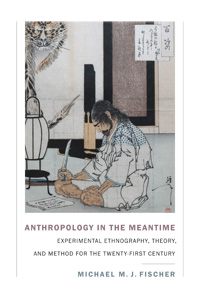
MeantimeAnthropology in the Meantime is a collection of essays by Michael Fischer that have been previously published in scholarly journals, edited volumes, or art catalogues. They have been substantially revised and rewritten for this edition in a book series, Experimental Futures, that the author curates at Duke University Press. Indeed, “curating” is the right word for describing Michael Fischer’s work: he fancies himself as an art specialist, using books as his personal gallery, and conceives of anthropology as akin to art critique or even as artistic performance, as evidenced by his circumlocutory writing style and his conception of fieldwork. In the art world, the title of “curator” identifies a person who selects and often interprets different works of art. In contemporary art, curators can make or break an artist’s career by their choice of works to display and of words to accompany them. In some cases, their celebrity can even eclipse that of the artists they work with. By donning the mantle of the art curator, the anthropologist attempts to weigh on what counts as (to quote the book’s subtitle) “ethnography, theory, and method for the twenty-first century.” Michael Fischer presents the work of his students and close associates, pays tribute to some of the big names in the discipline that he was privileged to work with, and recounts his own random walk through the past fifty years of anthropological research. Throughout this volume, he emphasizes the commonalities between anthropology and art. He claims in the introductory chapter that “ethnographers as literary forms are like novels, except they have to stick to reality”; “like anthropologists, artists have feet in several worlds” and the work of art “is often itself an ethnographic register of contemporary matters of concern.” Many readers will have first noticed Anthropology in the Meantime by its book cover, a striking Japanese woodblock print which represents a samurai about to commit seppuku. There is no connection between this artwork and the book content (nobody is going to commit suicide here, and references to Japan are sparse), except from the fact that this ukiyo-e comes from the personal collection of the author. Several other artistic belongings of the author are reproduced or referred to in the volume; and Michael Fischer claims that he chose the artwork cover of a recent bestseller in the same book series, Donna Haraway’s Staying with the Trouble, from a solo exhibition by Filipino artist Geraldine Javier, whose Chthulu-like creature was not inconsequential in the success of Haraway’s book.
Twice present at the creation

The curator or the art critic often claim for themselves a special relation with regard to art history. They were present at critical junctures, rubbed shoulders with time-defining artists before they became famous, and contributed to the build-up of their fame or the make-up of their value through critical interventions. They were the first to put names and labels on emerging trends and styles, thereby contributing to the creation of the various schools and artistic currents that are later remembered and celebrated in art history. Michael Fischer inserts in his chapters some biographical vignettes or snippets that attest his special position in anthropology’s recent history. He was twice present at the creation: he attended as an undergraduate the famous John Hopkins University’s conference in 1966 during which the word ‘poststructuralism’ was coined, and he was one of the contributing authors of the 1986 volume Writing Culture. This seminal book grew out of a week-long seminar at the School for American Research at Santa Fe, and in a fun piece Michael Fischer retranscripts the imaginary interventions of the book contributors, designated simply by their initials but early recognizable. But these were not the only times when Michael Fischer stood among giants and witnessed major turning points in the discipline. He wrote his PhD at the University of Chicago when Hannah Arendt and Clifford Geertz were on the faculty and Paul Rabinow was a fellow graduate student, and then moved to Harvard during the controversy over sociobiology and recombinant DNA. He was then recruited by George Marcus (the editor of Writing Culture) to join the Anthropology Department at Rice University, where he chaired the Rice Center for Cultural Study that became a hotbed for cross-disciplinary studies. An important turning point in his career, and for the discipline as a whole, coincided with his move to MIT, where he became Director of the Program in Science, Technology and Society. STS became the new frontier in anthropology and Michael Fischer was in the thick of it, teaching with Arthur Kleinman at the Harvard Medical School and becoming the coeditor of the book series Experimental Futures at Duke University Press. At the time this book was assembled, Michael Fischer was sharing his time between MIT and the National University of Singapore, where he was invited as Visiting Research Professor by some of his former students.

Like currency, the monetary value of art is based on convention: price is determined by an artist’s exhibition and sales record, importance and standing in art history, and ability to seize a certain Zeitgeist. Michael Fischer participates in the construction of disciplinary value in anthropology. He highlights the relevance of his book series by referring to previously published volumes and providing short summaries of their content. He advances the careers of his graduate students by emphasizing their contribution to anthropological knowledge. He caters to his own interest and reputation by detailing his own career path, which made him cross the way of, and rub shoulders with, giants in the field of academia. He uses the homage and the laudatory essay addressed to former colleagues and professors to praise and to aggrandize, but also to sideline and to bury, sometimes even to mock and to revile. He defines what’s hot and what’s not in modern anthropology, which happens to be the area in which he put his most recent investments. Constantly on the lookout for emerging trends and new currents, he uses the three C’s performed by art critics: commentary, criticism, critique. An artist’s inclusion in an important gallery and museum show can boost price and reputation: the same is true for edited volumes, which have a higher reputational impact than articles published in refereed journals (although the selection process is sometimes less rigorous and based on personal connections.) Michael Fischer is forever graced with the privilege of having written an essay for the 1986 book Writing Culture. He revels in that memory, bathes in the glow produced by this epoch-making volume, and keeps the fire alive by participating in anniversary essays and commemorations. He tries to recoup his erstwhile performance by proposing entries in edited volumes that hold the potential to redefine the parameters of the discipline:  such is, in my opinion, the book The Ground Between: Anthropologists Engage Philosophy, which was published in 2014 by the same Duke University Press and which I reviewed here. Needless to say, Michael Fischer’s contribution didn’t appear to me as the most memorable chapter in this volume.

Experimental ethnography

There were days when anthropologists were experimenting with various forms of writing and expressing while breaking scholarly traditions of orderly debates and publications. Fischer is proud to belong to that cohort of experimental authors who attempted to rewrite culture, and he himself experimented with various forms of writing tactics and media interventions. In a chapter titled “Experimental ethnography in ink, light, sound, and performance”, he lists the various attempts at creative ethnography-making that have characterized the recent decades, including filmmaking, photography, sound recording, fiction writing, theater and performance, and digital media. Research methods and what counts as fieldwork have also changed tremendously over the course of Fischer’s career. Today’s ethnographies are often multilocale and multiscale, moving from ground to theory and from micro to macro to address global processes of distributed value chains or flexible citizenship. They explore written archives and textual evidence, not just dialogic face-to-face contexts of human interaction. They also cater to nonhuman species and other nonhuman actors, living or artifacts, in a general theory that grants political agency and constitutive power to things. According to Fischer, the most exciting modern ethnographies address “the peopling of technologies”, the grounding of theory (“ground-truthing”) and the humanizing of science through digital humanities and science and technology studies. His career illustrates the shift in the focus of the discipline from a literary approach of cultural matters (“writing culture”) to a more recent involvement with scientific and technological assemblages. But he remained true to his former creed of avant-garde experimentalism: he sees himself and his cohort of graduate students as being at the cutting-edge of the discipline, and is forever willing to experiment and to innovate. He is also anxious not to miss the next new thing or not to mistake a passing fad or a false lead with an epistemological breakthrough. Remembering the seminal symposium at John Hopkins where Derrida, Barthes and Lacan had discussed structuralism, he casts Bruno Latour, Viveiro de Castro and Philippe Descola in the role of these old French luminaries and dedicates one chapter to “the so-called ontological turn”, which “became a hot topic at the American Anthropological Association meeting in 2013” (he concludes these discussions were just “fables and language games”).

After the turn of anthropology toward science and technology that he helped bring forward from his perch at MIT, Michael Fischer detects another shift, evidenced both in his career and in the broader discipline: the turn toward Asia. He notes that his own fieldwork and ethnographic work “has slowly shifted eastward from once upon a time in Jamaica to Iran, India, and now Southeast Asia.” He claims he was present at critical junctures in the history of these countries: he was doing fieldwork in Iran shortly before the Islamic revolution, and he was in India the year Indira Gandhi was assassinated and the Bhopal disaster took place. Unlike Clifford Geertz, who was accused of political blindness in the face of the 1965 massacres that tore Indonesia apart, Fischer claims he saw it coming, and that he was in a special position to interpret events as they unfolded. He underscores that “much of the future imaginary is located in Asia,” from current disasters such as avian influenza and other pandemics to intensifying threats of extreme climatic events and rising sea levels, not to mention industrial catastrophes such as Bhopal and Fukushima or geopolitical faultiness that are bringing the region to the brink of nuclear war. In the art world too, Asia is the place where things are happening. Art follows the money: there is an economic law enunciating that financial marketplaces, and these places only, can become global hubs for contemporary art. Fischer’s vocation as an art critic seems to have arisen from his contacts with Asian artists and performers. What began as a habit of illustrating powerpoint presentations with artworks (his contribution to a Clifford Geertz’s festschrift had illustrations “from cockfight to buzkashi”) evolved into a form of art criticism that he describes as “anthropological readings of novels, paintings, and films.” Fischer wrote a book on Iranian cinema at the time when a new generation of filmmakers (Abbas Kiarostami, Mohsen Makhmalbaf, Jafar Panahi…) started to emerge from that country, and he provided entries into exhibition catalogues of Asian artists during his residence in Singapore. He claims that literature, films, and arts can provide ethnographic registers: “My own sense is that there is more to be learned here about playing the scales of culture than from flat-footed talk of global assemblages, neoliberalisms, hybridities, and the like.”

Humanity’s futures

Beyond the name-dropping and memorabilia, art curators must also be able to read through the fog of information and images in order to form an appropriate picture of the times in which we are living. In order to define what is contemporary art and what isn’t, critics must first understand what “the contemporary” is. For Michael Fischer, writing around 2017, we live in a time warp akin to 1633, the year Galileo was condemned by the Roman Inquisition for affirming that the earth wasn’t at the center of the solar system, a theory first advanced by Copernicus. According to Freud, humanity’s narcissism received three blows in the course of modern history, associated with the names of Copernicus (the earth is not at the center of the universe), Darwin (man descents from the animal), and himself (the ego is not even master in his own house). We are witnessing the times in which the fourth blow is delivered, bearing the name of the Anthropocene: considering the rate of natural resources depletion and the alteration of earth system processes, we may not inhabit this planet for long. This realization may have triggered Fischer’s latest interest, at the crossroad between his previous involvements with science and technology studies and with literature criticism: reading Sci-Fi novels from Asian authors. As he notes, “science fiction stories from Asia merge in and out of our contemporary dreaming, nightmares, and experiential emotions, along with current industrial and nuclear age disasters and toxicities.” Asian sci-fi novels often stage an exit from humanity: when humans start to colonize space or learn to live underwater to escape a toxic earthly environment, they cease to be humans. Fischer sees that evolution underway: Singapore is testing and prototyping buildings from the seabed upward to expand its living spaces, while China is studying the genetic mutations that allow Tibetans to live at high altitudes, supposedly to prepare to a world with much higher sea levels in which lowlanders would migrate to the deserted highlands of Xinjiang and Tibet. Humanity would thus escape the problems of the Anthropocene by returning life to the oceans from which it came, or by colonizing the regions that were once deemed inhospitable to life. Meanwhile, the Pacific island nations where Bronislaw Malinowski, Margaret Mead, and other founders of anthropology first did their fieldwork would have long disappeared from the surface of the earth.

Fischer’s conception of anthropology is attuned to the future (remember the title of his book series, Experimental Futures), not to the past. Echoing Immanuel Kant, he defines the task of anthropology from a pragmatic point of view as: “Ask not what the human being or the world is but what we may expect of them—and of them in the plural.” Anthropology in the Meantime is the study of the emergent forms of life coming “out of the chrysalis of the twentieth century”: it is “the ethnography of how the pieces of the world interact, fit together or clash, generating complex unforeseen consequences, reinforcing cultural resonances, and causing social ruptures.” His interest in the arts also covers only the contemporary and the cutting edge, not the classical forms or the artworks bequeathed by history. But through the ethnographies of the world’s pieces, we fail to see the big picture, and our vision of the locale seems to disintegrate into the shattered surfaces of a kaleidoscope. Fischer claims to have done fieldwork in Asia over the last decade “from a perch in Singapore with forays elsewhere.” But the only empirical material he offers are accounts of his visits to art centers or “small ethnographic notes” taken from the classroom at Tembusu college (where Singapore students are “holding textbooks open with one hand, and with the other checking their teacher’s archived video lectures on their smartphones”). He only offers vignettes or personal anecdotes by way of firsthand observations. The rest is composed of lengthy discussions of other people’s ethnographies or references to his previous fieldworks in various terrains. He lists his own past publications as if they addressed empirical issues thoroughly and offered “concept-work” that allowed the “ground-truthing” of his current forays. But a quick look at some of his articles listed in the bibliography shows that the empirical content of his field-based ethnographies were always rather thin, and that the concepts he lists profusely at the beginning of each chapter or in the body of the text are never defined or clarified. While I first thought he made his career out of previously accumulated capital, making good use of previous fieldwork observations and theory building, I get the impression that his references are just that: self-references. His “zen exercises in theory making” might be evocative or even illuminating for some, but they didn’t led me to enlightenment. In this respect, reading Akashi Gidayu’s death poem on the book cover (“As I am about to enter the ranks of those who disobey/ ever more brightly shines/ the moon of the summer night”) was more fulfilling.

Wanted: proof-reader with a command of French and Japanese

As a last remark, I couldn’t get used to Michael Fischer’s writing style. He retained from his entry into the volume Writing Culture (“a trio of essays on ethnicity, torn religions, and science articulated through monologic, double-voiced, and triangulated autobiographic genre perspectives”) a peculiar and idiosyncratic rhetoric, with turgid and verbose expressions that require close attention but yield little intellectual payoff. He was right to note that Clifford Geertz, his former mentor at Chicago, was “one of the great stylists writing in anthropology, and [that he] achieved global recognition by way of it.” The same certainly cannot be said of Michael Fischer. He borrows from literary criticism the mania to split words with hyphens to point toward etymology and emphasize multiple meanings: ‘con-fusion’, ‘con-texts’. He also repeats the curious habit (or is it a typographical error?) of separating hyphenated expressions or compound words into two distinct words: ‘front line’, ‘key words’, ’policy making’, ‘science fiction’. I didn’t detect many typos or misspelled words in English due to the power of modern editing softwares; but spellcheckers do not detect errors in foreign languages, which are numerous in the two chapters that were specifically drafted for this volume. In the introductory chapter, Fischer states (and repeats twice, no doubt to emphasize his German language skills) that “nothing is worse than a period film about Vienna where the actors speak with Berlin or Hannover accents and idioms—hard to take it seriously.” But what is one to say about his repeated misspelling of French words or distorting of Japanese expressions—like his breaches of proper writing style, I tend to take it personally. In the prologue, l’homme total is feminized as l’homme totale, hara-kiri becomes hari-kari, and a parergon is misspelled as paregon. In the epilogue, which includes discussions on art and ethnographies originating from Japan, manga becomes magna, furusato is mistyped as furusatu, hikikomori are rendered as hikkihomori, and proper nouns like Ishiguro or Bakabon become Ishiguru and bakagon. These are errors that simple proof-reading would have detected; their presence in an ethnography or a scholarly book makes it hard to take it seriously.

Queer Theory in Dark Times

A review of Terrorist Assemblages: Homonationalism in Queer Times, Jasbir K. Puar, Duke University Press, Tenth Anniversary edition, 2017.

terrorist assemblageTerrorist Assemblages offers, as the foreword to the 2017 edition puts it, “queer theory in dark times.” The times that form the backdrop of queer theory are very dark indeed. The book was written at a time when, in the wake of revelations about torture of Iraqi prisoners at Abu Ghraib, New York Times editorialist Thomas Friedman could write: “I have never known a time in my life when America and its president were more hated around the world than today” (yes, the year was 2004, and the president was George W. Bush). It was, and it still is, a time of death and mourning, of war and aggression, of terrorist attacks and nationalist hype. This historical conjuncture has been described as “the age of the world target”: what is being targeted are not simply terrorist networks and rogue states, but the world as an object to be destroyed. In this context, Terrorist Assemblages exposes the United States not only as a targeting war machine, but also as a targeted nation, as the target of terrorist assaults and radical critique. There is a political urgency that is to be felt at every page, no less in the 2017 postscript titled “Homonationalism in Trump times”. This book is not the work of an ivory tower academic or a closet intellectual, pondering over the course of world’s events from the safety of an academic perch. It is a text steeped in violence and accusations, a disruptive and unruly intervention that leaves no field of inquiry unscathed. The starting point of the acceleration of time that Terrorist Assemblages manifests is September 11, 2001, which forms the degree zero of writing and thinking about our present situation. 9/11 is conceptualized as a “snapshot” and a “flashpoint”, an explosion and a lightning, allowing different temporalities to emerge and, with them, a range of issues hitherto suppressed. These weird and unhinged times offer a space for the untimely, the unexpected, the forever deferred. The politics of time that the epoch brings to the fore, with its tactics, strategies, and logistics, is a politics of the open end, of allowing unknowable political futures to come our way, of taking risks rather than guarding against them.

Advancing a nationalist agenda in the name of sexual freedom

The times are queer, and so is theory. Queer times is a historical juncture when new normativities are emerging, new subjectivities are being hailed, and new bodies are being assembled. More specifically, Jasbir Puar argues that the production of terrorist bodies is inseparable from the affirmation of queer subjects in a context where homosexuality and LGBT rights are being tied to a nationalist agenda. This book was not the first to use the expression “homonationalism”: the topic was a matter of discussion in Europe long before American academics began to notice, and the assassination of Pim Fortuyn in 2002 was a watershed in this respect. The striking feature that distinguishes contemporary European nationals parties from their older counterparts is the invocation of gender equality and LGBT rights with an otherwise xenophobic rhetoric. Indeed, despite their masculinist political style and occasional homophobic slurs, those parties have increasingly advanced their anti-Islam agendas in the name of sexual freedom and gender rights. Sexual diversity has thus been instrumentalized in the service of sexual nationalism, whereby migrants’ and Muslims’ integration and loyalty to their hosting western nations are tested by means of their commitment to the sexual values of these nations. This sexualization of citizenship posits that Muslims and other non-western migrants are intrinsically homophobic and that Islam is, in essence, “anti-gay”. Some western progressives even use this argument to call for a slower pace of social reforms in Europe, advancing that our open and increasingly multicultural societies are “not yet ready” for the recognition of sexual minorities’ rights. Puar brings these European debates to the post-9/11 American context. Centering her attention on the intersection between gay politics and US exceptionalism, she emphasizes the exclusionary state as the master signifier of the contemporary focus on male radicalized Others as misogynistic and xenophobic enemies of western civilization. More specifically, Puar discusses the encounter between US nationalism and queer sexual politics in terms of “collisions”, which she sees as productive of a “homonationalist” formation. Puar’s “homonationalism” thus both describes the mobilization of gay rights against Muslims and racialized Others within the American nationalist framework, but also refers to the integration of “homonormativity”—that is, domesticated homosexual politics—within the US agenda of the war on terror. As Puar puts it, homonationalism is a “discursive tactic that disaggregates US national gays and queers from racial and sexual others, foregrounding a collusion between homosexuality and American nationalism that is generated both by national rhetorics of patriotic inclusion and by gay and queer subjects themselves.”

Violence of theory, violence of the state, violence of the self

Terrorist Assemblages is a violent book that both condones and denounces violence. As the author writes, “it is easy, albeit painful, to point to the conservative elements of any political formation; it is less easy, and perhaps much more painful, to point to ourselves as accomplices of certain normativizing violences.” The first form of violence that the author exposes is the violence of theory. It is the chasm “between those who theorize and those who are theorized about.” It is telling that, in the context of the revelations of torture at Abu Ghraib and the outrage that pictures of maimed bodies elicited, no one took the pain to inquire who these tortured Iraqi individuals were, what experience they felt, and how their lives and those of their relatives were affected. Or that trauma analysis portrays war veterans and victims of terrorist attacks as worthy of compassion and care, whereas people who have lost loved ones as a consequence of US foreign policy elsewhere are not depicted as sufferers of trauma or injustice. Why is there a double standard when dead bodies are counted in the aftermath of military campaigns, with the Iraq war claiming 773 US fatalities but more than 10,000 Iraqis killed? Or, to return to the Abu Ghraib case, why are these photos any more revolting than pictures of body parts blown apart by shards of missiles and explosives as a consequence of targeted attacks launched by unmanned drones? For Jasbir Puar, theory is intrinsically violent. She turns this violence against queer theorists and progressives of a radical bent, and ultimately against herself. The author draws attention to the manifold ways in which the US state of exceptionalism and exception has co-opted important sections of the gay movement. Rather than a mere instrumentalization, or tactical exploitation of the theme of gay rights by nationalism, Puar thus highlights the active involvement—and responsibilities—of the queer movements themselves that have supported (wittingly or unwittingly) this new racist configuration. Queer theory itself, with its insistence on LGBT exceptionalism and impossible standards of radicalism, partakes in this contemporary violence. A typical discursive move of Puar is to bring forth a progressive or radical argument proposed by a fellow theorist, then highlight its blind spots, its undeclared essentialism and hidden normativity. On that count, few arguments survive her critique, and even her own argumentation is not immune from self-criticism. As a result, the author paints herself into an inhospitable corner: normativity, homo or hetero, is not something that we can escape.

The second form of violence that Terrorist Assemblages addresses is the violence of the state. For Puar, this violence has reached a new intensity with the war on terror and the isolation of the homeland that followed September 11, 2011. The state has morphed into a war machine which, like the desiring machines of Deleuze and Guattari, is animated with a will of its own and produces in its wake a multiplicity of infectious affects and afflictions: patriotism, racism, security, death, torture, terror, terrorism, detention, deportation, surveillance, and control. The bodies of foreign terrorists are constituted as bodies without organs: they are eviscerated, stripped bare of any subjectivity and left to survive as living dead in zones of non-law such as Guantanamo and black sites of detention. In the neo-Orientalist vision of geopolitics in the Middle East, terrorists are perceived as queer: “failed and perverse, these emasculated bodies always have femininity as their reference point of malfunction, and are metonymically tied to all sorts of pathologies of the mind and body—homosexuality, incest, pedophilia, madness, and disease.” The biopolitical state turns foreign subjects into figures of death at the same time as it associates gay couples and queer individuals with positive ideas of life and productivity: hence gay marriage, the exaltation of difference, and the market segmentation of LGBT communities into profitable ventures. For Puar, “this benevolence toward sexual others is contingent upon ever-narrowing parameters of white racial privilege, consumption capabilities, gender and kinship normatively, and bodily integrity.” The affirmation of sexual difference is concomitant with the ascendency of whiteness: in popular representation, the homosexual other is always white, while the racial other is straight. By extension, the invocation of the terrorist as queer, nonnational, perversely racialized other has become part of the normative script of the US war on terror. Of course, there is no way to tell where this process of scapegoating and excluding unworthy subjects from the national body will stop.There is always the risk that you may be next in line and that, after having targeted terrorists, illegal aliens, immigrants, law trespassers and deviants, the state may come after you.

Thirdly, Puar underscores the violence of identity. Assigning a person to a fixed and defined identity is a violent act of normativity. It elides and forecloses other affiliations and belongings, and creates a sense of loss and mourning for the other futures and possibilities that never will be. Our belonging to a certain community, group or category is a purely arbitrary fact, a given without meaning. To be born in a certain country, within a certain ethnic group or with a predetermined sexual orientation is not the result of a conscious decision or a choice: to have one’s identity defined by these contingent parameters is a form of violence that nothing compels us to take as granted. Norms exclude certain people and deny their rights as much as they include other people and grant them privileges. Queer theory has been designed to bring such norms at risk and to return against the bearer the violence that they apply to nonconformist bodies. Queer means trouble: it breaks down the established and stable categories of identity, it refuses to accept that genres and genders can be clearly defined, and instead focuses on the expansive production of sexualized selves through performance and affects. But the proliferation of shifting identities and the compulsive invocation of difference is no less violent and normative than the compulsory orders of residence that puts us under house arrest.  Although queer theory emphasizes difference, mismatch, and nonnormativity, queer as a category creates its own normative power, its ability to mold subjects and discipline their conduct. As Puar shows, all queer bodies have not been included in the category of queer. Despite its claims of intersectionality, queer politics have prioritized only one factor, sexuality, as the primary sense through which they structure their action. In particular, queer theory is underpinned by a powerful conviction that religious and racial communities are more homophobic than white mainstream queer communities are racist. By implication, for queers of colors a critique of homophobia within their home community is deemed more pressing and should take precedence over a criticism of racism within mainstream queer communities.

The West as an arbiter of civilizational standards

Jasbir Puar reverses that order of priority. She revels in exposing the bigotry of queer organizations such as InterPride or OutRage! who send politically correct messages with an exclusionary subtext. Complicity with white ascendency and heteronormativity can take many forms. As with the construction of model minorities by elites from certain ethnic groups, wealthy white gay males create an ideal of the homosexual family (gay marriage, adopted children, bourgeois lifestyle) that is no less normative and exclusionary than its heterosexual version. Nationalism is on the rise in every segment of society, and progressive sexuality is heralded as a hallmark of western modernity as opposed to the backwardness and obscurantism of the Middle East where the war on terror is waged. Islam and homosexuality are constituted as mutually exclusive; and queer people of color, or gay Muslims, becomes the significant others to be rescued from their culture or communities. The West regards itself as the arbiter of civilizational standards. Just as exotic women are waiting to be liberated by white males, gay Arabs need to be saved by white gay men, and they are granted asylum status accordingly. In the progressive narrative, gays and lesbians are the last recipients of civil rights that have already been bestowed on racial minorities. This rosy vision not only falsely assumes that discrimination and prejudices against ethnic minorities are a thing of the past; it also relieves mainstream gays and lesbians from any accountability to an antiracist agenda. The two issues are treated as substitutes, not complementary: Puar reminds us that the legalization of interracial marriage in 1967 coincided with increased criminalization of homosexuality in US laws. Likewise, the growing visibility and inclusion of gays and lesbians into the national fold comes at the expense of racialized subjects and foreign others who are targeted by discriminatory laws justified by the war on terror. Against affirmations of sexual exceptionalism that depicts the United States as a haven for the poor, huddled masses yearning to breathe sexual freedom, Puar shows that America lags far behind in the recognition of sexual minorities’ rights. And she notes that visa restrictions and deportation policies have created a new diaspora of former US residents cast away from the homeland or seeking refuge in neighboring Canada.

The publication of Terrorist Assemblages was part of the 9/11 industry machine: a kind of scholarly porn, where each critic would try to outsmart the competition by providing even more radical perspectives on what was construed as a landmark event ushering a new geopolitical era. By focusing on the production of the figure of the Muslim terrorist as queer, Puar offers a radical critique of liberal agendas that take the emancipatory nature of feminism and queer movements as granted. She shows that many segments in society continue to produce the sexual other as white and the racial other as straight. Bodies that don’t fit into this equation are construed as either racialized queer terrorists, whose political grievances are explained away by pathologizing their motives, or as exotic fairies who need to be saved from their oppressive environment. The famous critic Gayatri Chakrabarty Spivak coined the phrase “white men are saving brown women from brown men” to underscore that the voice of the subaltern woman is always silenced by patriarchy and imperialism. For Jasbir Puar, queer and lesbian racialized others are being saved by gay-friendly white men: the progressive stance of liberal positioning becomes a normative agenda, whereby how well countries treat their homosexuals becomes the litmus test of acceptable governance. Israel uses pinkwashing to market itself as a gay-friendly destination and to silence the critiques of its human rights record, and the European Union spends political energy on LGBT rights to cover its absence of strategic vision on governance issues. Meanwhile, at the national level, attitudes toward gays and lesbians become a barometer of whether immigrant minorities are acceptable to the national polity. The fixation on the certainty of greater homophobia in Muslim communities or immigrant cultures gives credence to a nationalist camp that extends its constituency to white homosexuals while comforting its hold on racist and anti-immigrant voters.  For Puar, the discourse on rights and liberalization must always be complemented by the two questions: rights for whom, and at whose expense? LGBT liberation is a legitimate goal, but it also works to distract attention from intense forms of regulation that seeks to control and exclude the activities of bodies not deemed suitable for the national body politic. The very idea of sexual identity and of gender is part of the way imperialism works and operates as a form of silent colonization of our lifeworlds.

Jasbir Puar claims that her analyses “draw upon more than five years of research conducted in New York, New Jersey, and Connecticut involving community-based organizations, activist events, meetings, protests, teach-ins, and panels, as well as pamphlets, educational materials, propaganda, and press releases from both alternative and mainstream media.” Her status as a participant observer is attested by her involvement in activist groups representing gay and lesbian South Asians, or by her familiarity with gurdwara communities where Sikh Americans had to distanciate themselves from suspicions of terrorism by claiming that “the turban is not a hat.” Many observations made by the author, as well as her analyses of feminist and queer responses to various events, show her deep involvement in the issues she is addressing. But Terrorist Assemblages is not a work of ethnography. Empirical facts and data are limited to a few casual observations, and works of art or media performances often take centerstage, as in the book’s illustrations. Puar thinks her background in community advocacy and activism gives her enough credentials to take a stand as a scholar and to engage in social critique. She is also theoretically literate: her references to the scholarly literature are cutting-edge, she is not afraid to engage with feminists and queer theorists on their own turf so as to expose some of their limitations and shortcomings. She gives flesh and substance to abstract notions and constructs such as affect theory, analyses of nonvisual perceptions, differences between foucaldian disciplines and deleuzian control, and emphases of embodied modes of existence. Her reading of the Sikh turban as an assemblage that folds together cloth, skin, hair, odors, and tactile sensations, is a model of the genre. But theory does not a philosopher make, and a philosopher she is not. She uses an elaborate style—and some sentences or paragraphs require repeated readings—to state ideas or expose facts that are quite simple and straightforward. She throws concepts like a boxer would throw blows: she doesn’t hit every time, but what matters is to stay in the fight and aim for the prize. The publication of a tenth anniversary edition of Terrorist Assemblages shows that, for some readers at least, Jasbir Puar hit the mark and came out alive and kicking.

From War Orphans to First World Citizens

A review of Adopted Territory: Transnational Korean Adoptees and the Politics of Belonging, Elena J. Kim, Duke University Press, 2010.

Adopted TerritoryA while ago Fleur Pellerin, then a junior Cabinet member of the French government led by president François Hollande, made her first visit to Korea. To the French, she was known as an elite public servant-turned-politician and put in charge of the digital economy and entrepreneurship portfolio, and also as the only minister with an Asian face. In Korea she became known as “one of us” or a “blood relative”, and during her business trip to Seoul she was welcomed as if she was the homecoming queen. She had a chat with then president Park Geun-hye, and featured in many television shows and media articles. Her first name, Fleur (“flower”), led to a crazed “Fleur-mania”, and her Korean name, Kim Jong-suk, was also made public.
Korea’s largest export

Like about 12 000 French citizen and 160 000 persons worldwide, Fleur Pellerin is a Korean adoptee. She left Korea when she was six months old, never met her biological parents again, and knows next to nothing about her birth country. For Koreans, she is the poor immigrant who made it abroad, and on top of that in a country known for its high culture and glamour – the conclusion of Korean TV dramas usually has the heartbroken heroin go to France to “refashion herself”. But she also reminds Koreans of darker times, and of a phenomenon of transnational adoption that many feel awkward about. Not so long ago, the nation’s pride in hosting the 1988 Summer Olympics was bruised by reports in the American press asserting that children constituted Korea’s “largest export”. Reaching out to adopted Koreans abroad, incorporating them in the community of overseas Koreans, and heralding their success was therefore a way for the Korean public to turn a sore spot into a matter of pride and celebration.

As Elena Kim reminds her readers in her ethnography of adopted Korean communities, Korean adoptees came to the West in distinct waves. First came the war orphans and mixed-blood children of US soldiers and Korean women. Then, in the 1960s and 1970s, American and West European families adopted the offsprings of single mothers or poor households who were convinced to relinquish their newborn baby in exchange of a hefty sum. Today, nearly all the children adopted overseas are infants born to unwed mothers in their late teens and early twenties. Meanwhile, the Koreans adopted in the past decades have become adults in their country of adoption, and today form a global community composed of subsets of regional and online groups with distinct histories and concerns. Internet and globalization have brought them together, and many are claiming voice and agency as a particular public with shared experience and common bonds.

The problem of adoption

The propinquity of money and children in transnational adoption and the attendant suspicion of human trafficking have made Korea’s overseas adoption program a target of criticism throughout its history. It has been argued that orphanages (which were largely funded by Western relief organizations), and, later, state-subsidized adoption agencies, functioned as a surrogate welfare system and a conduit for foreign exchange. It has been further advanced that Korea’s international adoption system not only retarded the development of domestic adoption and child welfare policies, but also provided a quick-fix solution that has been complicit in the social disenfranchisement of Korean women. Today South Korea has the lowest birth rate in the world, with fast increasing numbers of abortion and divorce. The “problem” of adoption (ibyang munje) has become a matter of public debate in which adult Korean adoptees and Korean birth mothers of an earlier period increasingly have a say.

What is unique about Korea’s adoption program? First, conventional wisdom in South Korea and in the Western countries to which adoptees are sent blames the persistence of Confucian family values and preoccupations with patrilineal bloodlines for the reluctance among Koreans to adopt “their children”. This is changing fast, with placement agencies now under the obligation to encourage domestic adoption first and famous media figures making a public gesture of adopting their own children. Second, the Korean state has so far failed to promote extended models of family arrangements, provide adequate financial support for single mothers, or tackle the problem of inadequate sex education. Adult adoptees such as Fleur Pellerin and lesser-known figures could help challenge dominant representations and policy outcomes, especially when they come from Europe, where the social security system is well developed and recomposed families are almost becoming the norm. Third, the long shadow of stigma associated with unwed motherhood in Korea is slowly eroding as Korean society enters a phase of globalized modernity.

A social experiment

But the most distinctive feature of Korea’s adoption program is that it came first, and therefore became the template for subsequent programs. Korean adoptees represented a “social experiment”, the outcomes of which were subject to intense scrutiny and debate since the practice began in the mid-1950s. Korean adoptions, determined to be largely successful by social workers and academic experts, expanded dramatically in the 1970s and paved the way for subsequent waves of adoptions of children from the developing world into white Western homes. By the 1970s, largely due to the success of the Korean model, transnational adoption became an institutionalized social welfare practice into many nations and a naturalized “choice” for individuals in the United States or in Europe. As Elena Kim notes, the adoption model is built upon the archetypal figure of the orphan who is construed as the ultimate figure of global humanitarianism, permitting Americans in particular to “save” children who are themselves often victims of American foreign policy decisions.

Not all adoptees were raised in wealthy, happy families with caring surrogate parents. Some experienced hardships and rejection by siblings and relatives; a significant number faced racism and bigotry at school or in their community; and most of them had to cope with the awkward feeling of being “yellow outside, white inside”. Adoption is based on separation, and the traumatic scene of abandonment sometimes lingers. According to adoption specialists, loss and grief are inescapable aspects of the adoption experience for all members involved in an adoption. Adoptees and their relatives construct “what if” scenarios and “phantom lives” of what they would have become if they had stayed in Korea. Some adopted Koreans dream of a more authentic self in their birth country, while foster parents or agency workers sometimes construct cautionary tales about girls being forced into prostitution or reduced to a dehumanized treatment. For the most politically oriented adoptees, crafting a germane public discourse for discussing the politics of adoption is a difficult process. Typically, the adoptee can only feel gratitude and indebtedness for having been given “life” and “opportunity” through inclusion in the bourgeois nuclear family, and more complex feelings of ambivalence, mourning, or resentment are suppressed, condemned as ungrateful, or pathologized.

The quest for roots

Faced with the taboos and emotionally charged issues that adoption raises, some adoptees simply choose to ignore their roots and go on with their lives. Others, increasingly, go on a quest for origins to discover the country of their birth and, for some of them, to try to meet with their biological parents. Since 2012, adopted Koreans can choose for double citizenship, or they can apply for a visa that allows them to live and work in Korea. But language and, sometimes, prejudices, remain a problem and put a barrier between them and the rest of the population. A social event known as The Gathering allows them to get together and share experience. Meeting other adoptees can feel like rediscovering one’s lost tribe: “None of us had real peer groups growing up,” notes one adoptee. “When we found each other, it was an electric thing.” Self-exploration through shared storytelling is central to adoptee social practices and can be seen as a performative negotiation of self and world. The misadjustment or lack of fit with dominant national, ethnic, and cultural models forms the basis for creating a space where, as more than one adoptee has stated, “there’s less explaining to do”.

Adopted Territories is a work of cultural anthropology that comes loaded with theoretical concepts and abstract discussions. For Elena Kim, drawing on social theorists such as Judith Butler and Aihwa Ong, adoption blurs and unsettles the categories of race, nation, and family. Not unlike the forms of gay and lesbian kinship identified by queer theory, adoptees’ experiences with nonnormative family forms lay the ground for alternative forms of personhood and kinship, contributing to the production of a shared global imaginary that has taken on transnational dimensions. “Adoptee kinship” is defined as “a form of solidarity based upon radical contingency rather than biologically rooted certitudes”. From this perspective, kinship is not a preexisting truth that is discovered or found, but rather a set of relationships actively created out of social practice and cultural representation. It is a model of kinship that is not exclusive but additive, transnational, and expansive. “Public intimacy”, another oxymoron, designates the potential sites of identification and association that extend beyond the biological family, thereby producing new kinds of identities and intimate relations.

Social theory

The notion of “counterpublic”, a term coined by Nancy Fraser in her critique of Habermas’ model of the public sphere, “highlights the fact that the adoptee social imaginary exists in diacritical relation to dominant publics – whether in the United States, Europe, South Korea, or an increasingly transnational public sphere.” The adoptee counterpublic is organized around a discursive process of identity construction in which adoptees endeavor to define themselves as a group that is distinct from others yet exists in relation to the wider public. By coining the notion of “contingent essentialism”, the author points to the fact that “adoptee identity is at once essentialized as something natural and also construed as something cultural and socially constructed.” Contingent essentialism is distinct from the biologism or genetic essentialism that characterizes much of the public discourse about adoptees and their “real” origins, identities, or families. Elena Kim defines “adopted territories” as “networks of adoptees and their activities, situated in a range of virtual and actual locations, that comprise the transnational Korean adoptee counterpublic.”

Borrowed from Judith Butler, the notion of “constitutive outside” points to the legal fiction of the orphan that leaves behind an excess of relationship, which “enchains” the child givers and recipients and “haunts” adoptee subjectivities. “Adoption not only makes children into orphans, but, over time, also produces missing persons,” writes Elena Kim, who illustrates her writing with artworks from internationally adopted artists. The book cover, a community artwork conceived by artist and activist Leanne Leith, features numbered tags bearing travel certificates delivered by the Republic of Korea, each tag representing one South Korean gone missing through international adoption. Much as the abstract conceptualizations, the live testimonies of adoptees and art pictures displayed in the book illustrate the potent message of longing and belonging that addresses a constitutive dimension of our shared humanity. Korean adoptees or not, “we all negotiate contingencies of personhood out of insufficient and mutable categories of the biological and the social.”

Imperialism and its Afterlife in the Philippines

A review of White Love and Other Events in Filipino History, Vicente L. Rafael, Duke University Press, 2000.

Vicente RafaelIs America an empire? The standard view among conservative historians is that the United States only embraced imperialism with the Spanish-American War, and that this represented an aberration from the otherwise democratic trajectory of the nation. These same historians further argue that the imperial interventions of the United States, especially in the Philippines, were far more benign and progressive than its European counterparts. Taking over the Philippines Islands in 1898 was described, in official accounts at the time and in subsequent hagiographies, as an altruistic act motivated by America’s concern for the natives’ welfare. Whereas European empires were concerned with carving the world for themselves and extending their sphere of influence, America occupied the Philippines to fill the void left by Spain and to steer the still immature nation towards a course of self-government and independence. US colonialism in the Philippines was rhetorically driven by what President McKinley had referred to as “benevolent assimilation,” whereby the “earnest and paramount aim” of the colonizer was that of “winning the confidence, respect and affection” of the colonized. Even the armed conflict between the First Republic of the Philippines and the United States that lasted from early 1899 to mid-1902 and that cost the life of more than 200,000 Filipino insurgents and civilians was “characterized by humanity and kindness to the prisoner and noncombatant.” War and occupation were manifestations of “white love,” an act of compassion and altruism that emanated from American exceptionalism. If Filipino insurgents were killed, sometimes tortured, it was for their own good, and because they somehow requested it.
America’s deadly embrace

For proof of the deadly nature of America’s imperial embrace, one needs to look no further than to the images of piled corpses lining roads and the close-up photographs of dead insurgents taken during the Philippines-American War. Photographs of war dead date back to the American Civil War and have come to signify the irreducible essence of war’s horrible truth. But these images of dead Filipino bodies piled upon another inaugurate another series, one which ends with Abu Ghraib and that signifies the obscene power of the United States over death itself. These are not noble dead that are meant to be remembered and honored: they are mere lives taken away by a biopolitical state that has the ability to make live and let die. Death pinned down and made visible Filipino fighters that were otherwise so elusive for American army troops in a guerrilla warfare based on sporadic engagements and ambushes. These old historical photos are painful to watch: dead bodies are lying in distorted fashion, with members at protruding angles, faces turned away, clothes soiled with mud. But perhaps the most painful scene for modern viewers is to see the American soldiers looking over the aligned corpses, taking poses like big-game hunters over their booty. These pictures, along with the news of atrocities committed by US forces—the torching of villages, the killing of prisoners—came as a shock for a part of American public opinion at the time they were published in local newspapers. In particular, many Americans were puzzled by the news, in 1902, that United States soldiers were torturing Filipinos with water. The “water cure”, of which gruesome pictures were also published, involved pouring water down the throat of a prisoner so that the man would swell like a toad and suffer excruciating pain. During public hearings, Governor-General William Howard Taft justified the practice by pointing to “some rather amusing instances” in which, he maintained, Filipinos had invited torture. Eager to share intelligence with the Americans, but needing a plausible cover, these Filipinos, in Taft’s recounting, had presented themselves and “said they would not say anything until they were tortured.” In many cases, it appeared, American forces had been only too happy to oblige them.

If further proof needs to be given of America’s imperial nature, it can also be found in the narratives of colonial domesticity sent home by the wives and daughters of US officials administering the islands, or in the photographs of tribesmen and racialized members of ethnic groups that illustrate the 1905 publication of the census. Women from the United States writing from the Philippines during the first decade of American rule exhibit the same racial prejudices and sense of moral superiority as the female representatives of European neighboring empires, concerned as they were with upholding middle-class respectability amid what they perceived as the barbarism of a colonized people. In tracing their remarks about the natural landscape, colonial house, and the behavior of native servants, the modern reader can see how they dealt with the imperatives of domesticity outside the domestic sphere they were used to. Colonial domesticity in the tropics heralded the conjugation of whiteness with feminity as a sign of public entitlement as well as a source of private ambivalence. As women, these writers invariably stood in an uneasy relationship to the masculinized sphere of empire, being both domineering over (male and female) locals and submitted to the masculine authority of their husbands and fathers. Helen Taft, the wife of the Governor-General, writes of going to places where “white women were still novelty, and I’m sure we looked much more peculiar to them as they did to us.” As for the census, it was, as students of empires have shown in other historical settings, a powerful technique of domination and surveillance that made visible the subjects of colonization within the borders of the occupied state. The language of benevolent assimilation was no different from the doctrines of other colonial powers at the time: rather than merely govern colonial territories, empires had a “civilizing mission” that would allegedly bring Western values to backward peoples and that justified armed action against any form of opposition.

The afterlife of empires

The afterlife of empires in the Philippines manifests itself in many ways. The term Filipino itself first designated the sons and daughters of Spanish parents born in Las Islas Filipinas, while the natives were designated as Indios and the persons of Chinese ancestry as Tsinoys or Sangleys. Spanish was the language in which the late nineteenth-century nationalist figures expressed their sense of the nation. It remained the language of choice among Filipino elites well into the twentieth century, and was used in colonial courts and the colonial legislature until the eve of the Pacific War. Hence, for the prewar Filipino elites, class identity and national consciousness continued to be expressed in Spanish, while English remained a relatively new and foreign language with which one “spoke up” to the source of imperial authority. The politics of language bears the imprint of different layers of rule, resistance, and collaboration. For Vicente Rafael, the relative foreignness of English among the national elite at the time of the Japanese occupation helps to explain the nature of the collaborationist rhetoric and the facility in which Filipino leaders were able to retrospectively separate their intentions from their words. Speaking in English to praise the Japanese emperor and the greater East Asia co-prosperity sphere meant they were using someone else’s words to express someone else’s ideas. The art of disguise and travesty extended beyond language: Vicente Rafael’s book carries a wonderful photo of Don Mariano Ponce, a Filipino nationalist sent to Japan to plead the cause of independence in 1898, dressed in a traditional kimono while the young Sun Yat-sen, sitting next to him, wears a Western suit. What is startling about this photograph is the manner in which it reproduces the uncanny permeability of emergent nationalist identities at this time. It was as if nation-building was a game of cross-dressing, for which both Japan and the West could provide the outside appearance.

Disguise and cross-dressing extended beyond the colonial era. White Love carries a reproduction of a painting figuring Ferdinand Marcos as the mythic figure of Malakas, showing his nude athletic body emerging from a forest of bamboo stalks. Imelda Marcos similarly had herself portrayed as Maganda, the feminine figure of the ancient Philippine creation myth. Politics in the Philippines was heavily sexualized. Imelda was Ferdinand’s “secret weapon”: she helped him convert politics into spectacle, and his rule into patronage. Acting together on the stage at political rallies, they turned their private lives into public spectacles, staging a stylized version of their intimacy. The eleven-day courtship in Bagiou was made into legend, and the passionate devotion to his wife of the erstwhile philanderer served his political career as much as his own physical charm and stentor voice. The term that came to designate her, the bomba star, also referred to a wave of soft-core pornography in print media and movies that swept the Philippines during this period. Bomba movies often featured the rape of a woman; but their commercial success was also a story of female ambition and boldness, and nobody exemplified this drive better than Imelda Marcos. Seeing her in her signature terno dress with butterfly sleeves as in the hyperrealist painting of Claudio Bravo summons a life removed from the world of politics and imbued with a dreamlike quality. But, as Vicente Rafael reminds us, these stagings took place over a backdrop of political assassinations, student protests, and the imposition of martial law. Consigned outside the structures of political institutions, youths took to the streets in a movement that offered an alternative to existing conceptions of authority and submission.

Discarding the epic in favor of the episodic

Vicente Rafael emerged from this generation of unruly students under authoritarian rule. He received his B.A. in history and philosophy from Ateneo de Manila University in 1977 and then moved to the US to get his Ph.D. in history at Cornell University in 1984. He writes from a position within US academia, a position halfway between the disciplinary tradition of area studies, which focuses on nation-states and remains tainted by its Cold War origins, and the more loosely defined discipline of cultural studies, which is more attuned to our present era of globalization and mixed identities. Vicente Rafael distances himself from nationalist historiography, which tells the grand narrative of the Philippines as a replay of the Passion of the Christ—the suffering, death, and resurrection of the Filipino nation. He doesn’t offer an epic story of imperialism, nationalism, and post-colonialism in which each event or character would find its place in an orderly fashion. Instead, he chooses to write in a minor mode that has antecedents in the work of cultural anthropologists probing colonial archives (such as Ann Stoler) or in the newspaper columns of cultural critics such as Ambeth Ocampo. The anthropologist working among historians, or the journalist among scholars, brings an attention to the mundane and to everyday details that are often omitted from more conventional narratives. To be sure, the author is well versed in the classic forms of history, and he refers to canonical works authored by Filipino and American scholars in the endnotes and the bibliography. But he doesn’t share their taste for chronologies, historical certitudes, and well-defined identities. He is more interested in minor episodes, literary rhetoric, and the shifting affiliations of transnational subjects. This is why, although Vicente Rafael’s departure from his homeland may have been linked to the political context of the dictator years that he chronicles in one chapter, he doesn’t write from a position of exile, as “exile brings to mind the epic possibilities of heroism and the longing for redemption for oneself and one’s people.”

According to Claude Levi-Strauss, “history organizes its data in relation to conscious expressions of social life, while anthropology proceeds by examining its unconscious foundations.” Vincent Rafael’s anthropological history is built upon unconscious material, and includes expressions such as rumors and desires that fall outside the purview of consciousness. The book draws from the archives bits and pieces of information that may have escaped the attention of the conventional historian but that, taken together, tell a story that complements in a minor mode the grand narratives of national history. It discards the epic in favor of the episodic. White Love and Other Events in Filipino History is composed of disparate elements that constitute an archive of the everyday: the punch cards of the national census; the letters sent home by the wives of US colonial officers; the dedications to loved ones written on the back of photographic portraits; the formulaic speeches delivered by collaborators during the Japanese occupation; the commissioned portraits of the presidential couple; the satirical cartoons of Nonoy Marcelo written in Taglish; the movie stars instantly recognizable by a mass public; the figure of the bakla, the petit bourgeois male homosexual; etc. These miscellanea are the foam of empires and nations, like the shells carried by the tide and left to rest on the seashore. They operate under the level of consciousness to reveal the most intimate thoughts of past figures and to alter our representations of history in subtle ways. Listening to these seashells, lending an ear to the echo they make, conveys an image of the ocean that is as valid as a photo picture or a text description.

Dancing with the Dead in Okinawa

A review of Dancing with the Dead: Memory, Performance, and Everyday Life in Postwar Okinawa, Christopher T. Nelson, Duke University Press, 2008.

Dancing With the deadOkinawa, a sub-tropical island 1,000 miles from Tokyo, was once an independent kingdom with its own language and customs. It was first invaded by Japan in the early 17th century, but was not fully absorbed into Japan until 1879. The Okinawans are said to be ethnically different from the Japanese, and have long been treated as second-class citizens. But Okinawans’ bitterest feelings go back to the Second World War, when the Japanese army, fighting in the name of the emperor, chose to make its last stand on Okinawa against the advancing allies. The battle for Okinawa lasted from March until August 1945, and cost the lives of more than 100,000 civilians and about the same number of combatants. Many of the civilians died in mass suicides forced on them by Japanese troops who were unwilling to allow the locals – whose loyalty was suspect anyway – to surrender to the invaders. Others died in the intense Allied shelling of the island, which came to be known as the ‘typhoon of steel’. The Japanese troops had dug deep bunkers and tunnels, and refused to surrender for weeks despite the overwhelming firepower of the US and British forces. In some cases, civilians who had retreated to caves stayed hidden until October 1945, not realizing that Japan had surrendered two months earlier. While American occupation of Japan ended in 1952, the United States administered Okinawa until 1972 and used their time as occupiers to build large military bases encroaching on privately held land. Still today, the United States military controls about 19% of the surface of Okinawa, making the 30,000 American servicemen a dominant feature in island life.
Coming to terms with past trauma

Christopher Nelson, an American anthropologist, treats Okinawa as a society affected with post-traumatic stress disorder. The trauma of the war still lingers: it surfaces in public conferences made by scholars-activists, in stand-alone shows performed by local artists, in student projects collecting oral histories from the elderly, or in the moves and rhythms of eisā, the traditional dance for the dead. Memories from the traumatic past are not just a bad episode that one could shrug away and then move on: for the author, “they are remembrances that are wrenching and traumatic, tearing the fabric of daily life, plunging those who experience them into despair and even madness.” Christopher Nelson uses the word “genocide” to qualify the battle of Okinawa, and treats the persons who have experienced the war as well as their descendants as “survivors.” Genocide, which the 1948 UN convention defines as “”acts committed with intent to destroy, in whole or in part, a national, ethnic, racial or religious group,” is an imprescriptible crime, for which there can be no forgiving and no forgetting. Memory in this case becomes an obligation as well as a compulsion: there is no way to escape the lingering pain or to heal the psychic wounds that individuals carry with them. Painful memories don’t stop with the Second World War and the American occupation: they are constantly reenacted in the dotted landscape of US military bases that have expropriated communities from their land, in the extreme noise pollution of military aircrafts flying low over densely populated areas, in the many traffic violations and acts of incivility committed by American soldiers and, in some instances, in the sex crimes and violence against women that remind local communities of their ancillary status.

According to psychologists, there are three ways to come to terms with a past trauma: acting-out, working-through, and letting-go. Acting-out is related to repetition, to the tendency to repeat something compulsively. People who undergo a trauma have a tendency to relive the past, to exist in the present as if they were still fully in the past, with no distance from it. The tendency to repeat traumatic scenes is a form of regression or transference that is somehow destructive and self-destructive. Yet, for people who have been severely traumatized, it may be impossible to fully transcend acting-out the past. Acting-out, on some level, may very well be necessary, even for secondary witnesses or for the descendants of past survivors. In the working-through process, the person tries to gain critical distance on a problem, to be able to distinguish between past, present and future. For the victim, this means his ability to say to himself, “Yes, that happened to me back then. It was distressing, overwhelming, perhaps I can’t entirely disengage myself from it, but I’m existing here and now, and this is different from back then.” Unless traumatic events are worked through, they can heighten insecurity not only in the immediate aftermath of violence but decades and even generations later.  Working-through involves a process of mourning, in which past atrocities are acknowledged, reflected on, and more fully understood in all their historically situated complexity. Letting-go is a process of separation and disentanglement from past trauma. The traumatic experience recedes into the past and fades from memory. Scores are settled, aggressors are ignored if not forgiven, and the exigencies of daily life take precedence over the work of mourning. The aggrieved party can still feel sadness or anger, but has regained full functioning and has reorganized life adjusting to the shock. We all must let go of the things of the past that hurts us if we want to move on with life. If we do not let go, we cannot only hurt ourselves, but also those around us that we care about.

Acting-out, working-through, and letting-go

The three processes of dealing with past trauma are all related to performance. Performance is an essentially contested concept that has been used in the humanities and social sciences to describe and analyze a wide variety of human activity. Here I take performance as both a description of the various cultural productions—storytelling, lecturing, singing, reading poetry, dancing—that Christopher Nelson witnessed and practiced during his fieldwork, and as the performative power of attitudes and conducts that can act upon reality and transform the way we envisage the past, the present and the future. As defined by Victor Turner, a pioneer in performance studies, “cultural performances are not simple reflectors or expressions of culture or even of changing culture but may themselves be active agents of change.” Seen in this perspective, acting-out is performance as repetition. The primal scene is repeated onto the stage of the unconscious, like the theatrical play-within-a-play that Hamlet presents to his murderous uncle. Past events intrude on the present existence, for example in flashbacks, or in nightmares, or in words that are compulsively repeated and that don’t seem to have their ordinary meaning. Working-through is performance as rehearsal. It is a conscious process that aims at achieving mastery over a sequence of moves and utterances, which can then be displayed and appreciated for their aesthetic or educational value. One needs method and discipline in working through past trauma, and the healing work is best done with the help of a specialist or stage director. Letting-go is performance as abandonment. It corresponds to the trance that people experience when dancing eisā, or to the concentration of the performer on stage. It is a half-conscious state in which the body takes precedence and leads the mind to a higher stage of awareness, sometimes close to rapture or ecstasy. Germans use the word ‘Gelassenheit’, translated as releasement, serenity, composure or detachment, to describe this letting-go of mind and body.

Christopher Nelson insists in taking part in performances as a way to get access to Okinawa culture and spirituality. His initial plan was to write an ethnography of land ownership, governance, and cultural transformation by consulting archives, interviewing landowners, and mapping the organization of military land use. But instead of a well-ordered terrain fit for the anthropological gaze, he found a place alive with demonstrations, meetings, and marches. The years from 1996 to 1998, when his fieldwork took place, were a turning point for Okinawa Prefecture. The country was still under the shock of the rape of an Okinawa schoolgirl by American servicemen and the public outrage at the lack of Japanese jurisdiction under the Status of Forces Agreement. In September 1996, Okinawans voted massively in favor of a reduction of US military bases on their islands, in a referendum aimed at pressuring Washington to pull out its troops. The strongly anti-base result, though widely expected, was a particularly important victory for Okinawa Governor Masahide Ota, a popular and outspoken opponent of the US troops. But in a spectacular reversal, Ota’s government capitulated to pressure from the central government and renewed the base leases that had come under expiration. Starting in February 1997, a series of public hearings allowed local communities and antiwar landowners to voice their anger, while representatives of the national government were forced to listen in humiliated silence and provided poor bureaucratic answers. Prime Minister Hashimoto visited the Prefecture capital in August 1997 and made a speech full of promises and ambiguities. Crown Prince Naruhito also visited and was greeted by an anonymous onlooker with a disrespectful “How’s your dad?” (twenty years before, when then Crown Prince Akihito visited the Himeyuri War Memorial at the Okinawa battlefield, an activist threw a firebomb at him). These episodes suggest that Okinawans’ renowned longevity is fueled not only by a diet rich in tofu and goya bitter melon, but also a healthy dose of civil disobedience.

Nuchi dū takara

Nuchi dū takara” (Life is a treasure) became the watchword of the anti base and antiwar movement in Okinawa. Legend has it that the words were uttered by Shō Tai, the last king of the Ryūkyū kingdom, upon being banished from the island after the Japanese annexation in 1879. The meaning of this phrase can be interpreted more aptly in the idea of life itself being precious, fleeting, and limited. Christopher Nelson sees this philosophy of life expressed in the bodily practices and everyday lifestyle of contemporary Okinawans. In fields and parking lots across central Okinawa, thousands of young Okinawa men and women practice eisā throughout the summer, preparing for three nights of dancing during Obon, the festival of the dead. They forego job opportunities, promotion to the mainland or reparatory sleep to become dancers and musicians. In the old Ryūkyū kingdom, only men of noble ancestry were allowed to participate in eisā and then only with the groups from their natal communities. Under Japanese militarism, Okinawan music and dance were suppressed, and young men and women had to gather in secret to celebrate moashibi parties. After the wreckage of the war, it took the energy and dedication of local artists such as Onaha Būten, Teruya Rinsuke and Kohama Shūhei to revive the old customs and adapt them to a new environment. They used tin cans, parachute cords and scraps of timber to make taiko drums and sanshin three-string instruments, and they toured internment camps and newly resettled neighborhoods to celebrate life and uplift spirits. Eisā was resuscitated as a community dance practiced by both men and women gathering in youth associations. Koza—Okinawa City—has emerged as the focal point of eisā performance, and the Sonda district, where the author practiced and performed for two consecutive summers, became the most famous of the groups within the city.

The description of the eisā dance festival, full with minute details and personal impressions, forms the last chapter of Dancing with the Dead. It is intended as a thick description in the sense that anthropologists give to the term: the cultural practice of eisā is situated in its social context and with the symbolic meaning that people attach to it. But the difference with Clifford Geert’s canonical description of the Balinese cockfight is that the anthropologist is himself a participant in the scene: he even takes center stage, providing a blow-by-blow account of his performance among the group of dancers in the streets of Sonda. The ‘I’ pronoun has become a standard feature in ethnographic writing, and the injunction to observe social practices is often coupled with the willingness to take part in the action. But here the participant-observer does more than participate and observe: he performs, in both meanings of taking part in a performance and in producing the reality that one is enunciating. What kind of traumatic event does the anthropologist need to act out, work through, and let go? Interestingly, Christopher Nelson records the primal scene of his encounter with Okinawa. Stationed as a military officer ten years before his reincarnation as an anthropologist, he goes out of a bar crowded with GIs and witnesses on the opposite sidewalk an old man in working clothes, looking at him. His inability at the time to “cross the street” and engage a conversation with the other is overcompensated by his urge to become the perfect participant-observer and mesh with the people during his fieldwork.

Okinawa studies in the United States

Christopher Nelson doesn’t situate his ethnography within a genealogy of American scholarly interest in Okinawa. Okinawa studies in the United States, like most area studies of the region, were inaugurated under military auspices. The demands of military intelligence during World War II and the immediate post-war period mobilized scientists and helped advance scientific knowledge of the Asia-Pacific region. Ruth Benedict’s The Chrysanthemum and the Sword, first published in 1946, had its pendant in the classic Okinawa: The History of an Island People by George H. Kerr, a former diplomat and US Navy officer. Kerr’s work later came to be regarded as a canonical anthropological study of Okinawa’s vanishing culture. It was translated into Japanese and paved the way for the establishment of post-World War II Okinawa studies. Presenting Okinawans as a distinct people, with its own culture and traditions, was a way to legitimize the United States’ continued occupation and trusteeship. The way Okinawans (or at least, a sample of individuals) are presented in Dancing with the Dead serves other goals, both individual and collective. On a personal basis, the narrative on memory and performance fulfills the requisites of a PhD dissertation after the initial research project focusing on land disputes has proved impractical. It also caters to the psychological need to take part, fit in, and blend with the locals that every foreign resident or visitor experiences abroad. Performing the dance of the dead is also a way to atone for past wrongdoings and mourn the innocent victims of hideous conflicts. But presenting Okinawans residents during the war as martyrs and their descendants as survivors from a genocide also produces an institutionalized language of forgiveness and reconciliation that does not necessarily fit with local realities and representations. Okinawans are not forever condemned to perform past traumas with their creative practices and acts of remembrance: they are also capable of letting go of the past and of inventing the new, the groundbreaking, and the still unknown.

The Government of Risk and the Politics of Security in Contemporary Cities

A review of Endangered City: The Politics of Security and Risk in Bogotá, Austin Zeiderman, Duke University Press, 2016.

Austin ZeidermanWhen Austin Zeiderman arrived in Bogotá in 2006 to conduct his fieldwork in anthropology, he didn’t know he was in for many surprises. The mismatch between the preconceived notions he had about Colombia’s capital and what he experienced on the ground couldn’t have been greater. People had warned him about the place: Bogotá was perceived as a city fraught with crime and corruption, where danger loomed at every corner. Not so long ago, Bogotá’s homicide rate was one of the highest in the world and assassinations, kidnappings, and bombings were almost routine. Histories of violence often produce enduring cultures of fear that are difficult to dispel: people develop strategies to avoid danger and cope with risk. For individuals as for collectives, the trauma of violence persists long after the traumatic event has faded into the past. People told the young anthropologist that he definitely shouldn’t venture in the slums that occupy the hillsides of Bogotá’s southern periphery. It is therefore with some apprehension that Austin Zeiderman joined la Caja, a municipal agency located in this danger zone, where he was to spend twenty months doing participatory observation. His first surprise was that danger and criminality were much talked about and feared, but he never experienced it firsthand: “not once during my time in these parts of Bogotá was I harassed, mugged, or assaulted.” Indeed, he felt almost more secure in the hillside barrios of Bogotá than in his native place of Philadelphia, where he had learnt to navigate the city with precaution so as to avoid potential threats. There had been a dramatic decline in violent crime in Bogotá, and the city was now safer than it had been for half a century. Instead of criminals, petty thieves, and corrupt officials, he met with law-abiding citizens, dedicated social workers, and peaceful communities.

Entering the danger zone

The second surprise was a conceptual one. Austin Zeiderman had retained from his graduate training in anthropology and urban ecology a heavy theoretical baggage and a commitment to apply critical thinking to his urban terrain. More specifically, his views were shaped by two strands of critical theory: urban political economy, heavily influenced by Marx and his twentieth-century epigones such as Henri Lefebvre and David Harvey, and the more recent approaches of neoliberal governmentality that build on the intuitions of the late Michel Foucault. For the first line of social critique, urban planning is a way to manage the contradictions of late capitalism. Displacement and expulsion of informal tenants are a case of “accumulation by dispossession,” a way by which the capitalist state exerts its monopoly of violence in order to “build the new urban world on the wreckage of the old.” The second paradigm associates “neoliberalism” with the deployment of market-based logics, the valorization of private enterprise, the reform of governmental institutions, the retrenchment of the public sector, and the formation of responsible, self-governing subjects. The author’s plan was therefore to investigate “neoliberal urbanism” at work, and to document the acts of resistance, adaptation, and self-making of the subaltern subjects who are hailed by the constitutive power of the neoliberal state. The fact that the World Bank, the arch-villain of antiglobalization protesters, had extended loans to the city of Bogotá to support the policy of relocation and urban renewal, only reinforced him in his critical orientation.

He was therefore surprised to discover that many individual households were happy to be relocated: indeed, some of them petitioned the municipality to be included in the relocation program. Eviction was not feared and resisted: it was seen as an opportunity to escape from risky environments and relocate to healthier, more secure suburbs. In fact, a hallmark of the resettlement program was its insistence that the decision to relocate was voluntary. Protecting the population from natural and human hazards was not a projection by the rich and the powerful to discipline the lives of the poor: it was based on the recognition of the sacred value of life, and corresponded to a major aspiration of the poorest, who were the first victims of insecurity and risk. The sprawling, self-built settlements of the urban periphery, commonly perceived as posing a threat to political stability and social order, turned out to have the greatest concentration of families living under threat. In other words, risky populations turned out to be the most exposed to risk. Another surprise was to to discover the political orientation of the social workers in charge of the eviction program. They were progressive individuals, who defined themselves half-jokingly as “half-communist” or “communist-and-a-half”, and who were deeply convinced of the positive effects that the relocation program would have on the lives of the poor. Rather than securing the city as a whole by evicting residents and demolishing buildings, their primary objective was to protect the lives of vulnerable populations living in the urban periphery. These social workers were in line with the political priorities of the municipality, which was run by left-of-center mayors who had attracted much appraisal for their reforms. Neoliberalism, it seems, could be used for progressive purposes.

The legacy of Antanas Mockus and Enrique Peñalosa

The young researcher was in a quandary. Should he extoll the virtues of the municipal government that had led over Bogotá’s urban renaissance, or even praise the leadership of the right-wing president Álvaro Uribe who launched successful campaigns against the FARC, Colombia’s main guerrilla movement? The success story of Bogotá had already been told: according to the international media and local pundits, it was the story of two charismatic mayors who, with unorthodox methods, in less than ten years turned one of the world’s most dangerous, violent, and corrupt capitals into a peaceful model city populated by caring citizens. In this book, Austin Zeiderman remains uncommitted towards the legacy of Antanas Mockus and Enrique Peñalosa, as well as their two left-leaning successors at Bogotá’s city hall. He notes that their choice of options remained limited and constrained by the national security landscape: any attempt at fundamentally challenging the status quo would have been countered by paramilitary forces known for persecuting activists or leaders with even vaguely radical agendas. His research site, an urban resettlement agency, was used by progressive mayors in order to distribute patronage and build a political constituency among the urban poor. As for Uribe’s two terms at the presidency, Austin Zeiderman notes that they were characterized by continued internal displacement, violence in rural regions, human rights violations, increased poverty and inequality, and collusion with drug traffickers. The author’s commitment to a progressive political agenda and to critical theory remained untainted: he was not ready for a conversion to neoliberalism. Besides, his academic focus was on social theory and anthropological fieldwork, not political science or media analysis.

This is when, combining these different thoughts and experiences, the young author had his epiphany: he would study “the government of risk and the politics of security in contemporary cities.” The topic was empirically relevant and theoretically adequate. The relocation program in which he worked was dedicated to protecting the lives of the poor and vulnerable populations from environmental hazards, such as floods, landslides, and earthquakes. Risk management had been accepted across the political spectrum as a legitimate way to govern the city and to allocate resources to people in need of support. “Life at risk” had become a category of entitlement through which the urban poor could claim assistance, protection, and care. By interviewing social workers and their benefactors, and by analyzing the techniques used to map risk and relocate people, he could make sense of these new forms of governmentality without falling into hagiography or empty critique. Theoretically, the concept of risk opened a rich space of associated notions and constructions that have been developed to characterize our modern condition. Of particular relevance to him was the notion of biopolitics developed by Michel Foucault and his epigones and defined as the way the state extends its power over bodies and populations by exerting its right to make live and to let die. Foucault’s schema also associates risk with the rise of the modern society by locating it at the center of the new art of government that emerges in the late eighteenth century. Austin Zeiderman proposes the concept of endangerment, and of the endangered city, to describe a world in which the unlimited improvement of urban life, even its sustained reproduction, are no longer taken for granted. The endangered city is not a city where life faces immediate danger: it is a place where citizens live under the shadow of insecurity and risk, even if these threats never actually materialize.

The agony of Omayra Sánchez

If there was a specific trauma that led government authorities and populations to turn their attention to the management of risk, it was to be found in the catastrophic events that took place in 1985. On November 13, a volcanic eruption set off massive mudslides and buried the town of Armero, killing over twenty-five thousand people. A young girl, Omayra Sánchez, became the symbol of this suffering for millions of TV viewers, as rescuers failed to free her from the mud and debris that had trapped her body. Just one week before, members of the M-19 guerrilla group had attacked the Palace of Justice in central Bogotá and had taken the judges and the public as hostages. The siege of the building by the army and the ensuing battle left more than one hundred people dead, including the Chief Justice and dozens of hostages. For the press, these two tragedies were “apocalypse foretold”: they could easily have been prevented, if only the state had lived up to its responsibility to protect the life of its citizens. Critics claimed that in both cases the government had advance warning of the impending tragedy and had failed to prevent known threat from materializing. As a consequence, governmental problems and their proposed solutions began to be increasingly understood within a security framework oriented toward the protection of life from a range of future threats. Prediction, prevention, and preparedness were the solution proposed, and the imperative to protect life by managing risks became the ultimate end of government. Of course, the power of the state to “make live and to let die” (to use Michel Foucault’s expression) is applied unevenly: in the Colombian context of 1985, “the figure of Omayra creates a boundary that differentiates those whose lives matter from those whose lives do not—the outlaws, insurgents, subversives, or terrorists who are dealt with as enemies of the state.” Austin Zeiderman also notes that the responsibility to protect lives imposed itself at the expense of other rationalities and state goals, such as development, democracy, and welfare.

Nothing characterizes more this shift in urban governmentality than the evolving missions of the Caja de la Vivienda Popular, the branch of Bogotá’s municipal government in which Austin Zeiderman did his fieldwork. The Caja was originally created in the 1940s to provide public housing for the poor and for public employees. Its role shifted from hygiene and poverty alleviation to slum eradication and urban renewal in the 1980s and then, starting 1996, to the resettlement of populations living in zones of high risk. Populations deemed vulnerable to environmental hazards, such as landslides and floods, were entitled to state subsidies and could benefit from a relocation program that allowed them to resettle in more secure environments. Rather than organizing housing policy in terms of social class, political citizenship, or economic necessity, vulnerability became the primary criterion that determined one’s eligibility to receive state benefits. In other words, “life at risk” came to displace “worker,” “citizen,” and “poor” as a new political category of political recognition and entitlement. The Colombian constitution’s article proclaiming the “right to life” (derecho a la vida) came to supersede the other article recognizing that all Colombians have the right to “decent housing” (derecho a una vivienda digna). Various disciplines, ranging from geology, hydrology and meteorology to sociology and new public management, were mobilized to establish risk maps and contingency plans delimitating zones of high risk (zonas de alto riesgo) whose inhabitants could claim eligibility to the relocation program. Similar approaches of urban mapping and risk calculation were applied to prevent violent crime and terrorism. In addition, sensibilización programs were conducted to educate the poor to behave in relation to future threats and to instill a collective ethos of risk management.

“Lagos is not catching up with us. Rather, we may be catching up with Lagos.”

In the last decade, Bogotá has become recognized internationally as a “model city” for its achievements in good urban governance across realms as diverse as education, security, transportation, civic order, and public space.  In the context of climate change and increased environmental hazards, disaster risk management has been especially singled out and given as an example for other cities to emulate. For Austin Zeiderman, the endangered city of Bogotá provides another kind of model: one that operates through rationalities of security and techniques of risk mitigation. As he notes, “whereas modernism heralded futures of progress, efficiency, and stability, there is a global trend toward envisioning urban futures as futures of potential crisis, catastrophe, and collapse.” Cities of the global South should no longer be expected to follow the development pathways of the “modern cities” of Europe and North America: indeed, cities from the North are now confronted with problems of insecurity, environmental threats, and terrorist violence that seem to come straight from the South. As one modern critic notes, “Lagos is not catching up with us. Rather, we may be catching up with Lagos.” This dystopian vision of the global urban future stimulates technologies of control and exclusion. A new urban security paradigm demands that all cities deploy protective and precautionary strategies against a range of threats in order to ensure their own reproduction. For Austin Zeiderman, models of urbanity that focus exclusively on risk and security draw resources away from concerns such as poverty, equality, education, housing, healthcare, or social justice. The politics of rights—rights to decent housing, rights to the city, human rights—becomes subordinated to a politics of life. Austin Zeiderman shows that this politics of life—in its devotion to the vulnerable, the dispossessed, and the victim—creates new forms of vulnerabilities, dispossession, and exclusion. By determining how certain forms of life are to survive, endure, or flourish, while others are abandoned, extinguished, or left to go extinct, biopolitics is inseparable from a politics of death, a thanatopolitics.