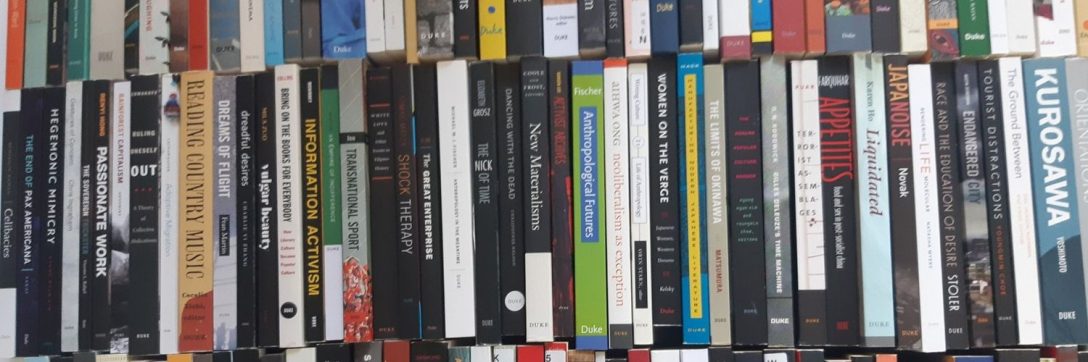

A review of Animate Planet: Making Visceral Sense of Living in a High-Tech Ecologically Damaged World, Kath Weston, Duke University Press, 2017.
 Although published in a book series high in theory octane, Kath Weston is not interested in theory. She prefers to tell stories. She is mischievous about it: in a field where theory is everywhere and academics have to live by their theoretical word, she plays with theory like a kitten plays with yarn. She wiggles it, unrolls it, shuffles it around, drags it across the floor, and turns it into a story. For stories is what she is interested in. Of course, as she herself acknowledges, “in an era when ‘post-‘ is all the rage and everyone reaches for a beyond,” she cannot ignore postmodernism, posthumanism, postcolonialism, new feminisms, the narrative shift, or the ontological turn. Or, being published by Duke University Press (and handpicked by its editor, Ken Wissoker), vibrant matter, animacies, new materialisms, the affective turn, everyday intimacies, experimental futures, global insecurities, and new ecologies (to quote book titles or series from the same press.) But she knows her strength lies in storytelling, not theory-making or abstract criticism. She realizes her book will be remembered for the stories she tells (or for the haunting book cover she selected), not for the theories she discusses or the concepts she forges. She uses references to the academic literature, especially in endnotes, to make clear that her book should not be considered as fiction or reportage, but as an attempt, as the subtitle puts it, to make “visceral sense of living in a high-tech ecologically damaged world.” She avoids ontological claims or conclusions: when she elaborates on animates and intimacies, she explores contemporary ways of living—and not ontology-based corrections of an error called modernity.
Bedtime stories
Animate Planet begins with a bedtime story. Its meaning is rather confusing: there is a before and an after, inanimate agents with capital letters (such as Alienation and Capital), birds and humans (such as in the picture on the book cover), lords and lieges, turtles and sea otters, glass castles and islands, forests and deserts, water and ice. The whole seems oddly familiar and yet alien, as in the liminal state of consciousness when bedtime stories are told, as the mind drifts into sleeping and imagination roams free. This is, as the author tells, modernity’s story, the dream in which we are caught and from which we may never awaken. It is a story of ecological destruction, resource depletion, rising sea levels, disappearing species, damaged habitats, and inevitable disaster. This initial folk tale is to be followed by many other stories, drawn from anthropological literature or from the author’s own research. Most stories adopt a language of crisis and catastrophe, of precariousness and destitution; some stories end with a more positive ring, as they develop ways to live in an increasingly inhabitable planet. They take us to places as diverse as northern India suffering from drought and water pollution, Japan living under the spell of Fukushima, and Navajo reserves marketing homeland products in the United States. Four main families of stories emerge, linked to the themes spelled out at the beginning of each chapter: food; energy; climate change; and water.
The story of food starts in a Californian school where pupils were mandated to wear an identification badge containing a radio frequency identification transmitter, or RFID. In the United States, RFID technology is widely used to track cattle in the agribusiness industry. It responds to the perceived need to trace animal products “from farm to fork” and to connect the consumer to the processed commodity, beyond species exploitation and labor alienation. We ask technologies to supply the intimate knowledge that people have long derived from direct contact and interactions. This “techno-intimacy” is especially relevant for the way we connect with food (we need “food stories” to consume a particular wine or dish), with animals (“Wir geben Fleisch ein Gesischt,” advertises a German farm producer) and with children (although the RFID badge project in the Californian school was finally abandoned.) Under the guise of biosecurity, US agencies track livestock and poultry to secure the food supply chain and prevent epidemics, even while farm inspection budgets are being cut and meatpacking regulations are being loosened. We grant nationality to animals (“US beef”) even while we deny it to undocumented immigrants. As the author records, “a cow in the United States might have as many as five different identification codes associated with it, each keyed to a different program.” Meanwhile, genetically modified organisms enter the food chain without any regulation or tracking. The techno-intimacies that are experimented on animals find their ways into social applications designed to track humans and monitor their behavior.
Japan’s radiation moms
Kath Weston was in Tokyo in March 2011 when the great earthquake, tsunami, and Fukushima catastrophe took place. Every day brought news of fresh radioactive releases and monitoring radiation became part of daily life, with new benchmarks and units such as megabecquerels (MBq), millisieverts (mSv), or counts per minute (CPM). For every measurement that the government sponsored, activists associated with the small but growing antinuclear movement created one of their own. People with no particular technical training would take technology into their own hands and equip themselves with Geiger counters and other portable electronic devices. The Internet became the preferred medium for circulating the results of grassroots radiation monitoring that appeared in the form of crowdsourced radiation maps and databases. Meanwhile, “radiation moms” took the habit of taking their Geiger counter to the market and scanning their rice and seaweed before preparing dinner. For Kath Weston, the blurring of lines between bodies, technologies, and contaminated ecologies creates a “bio-intimacy” in which humans incorporate contaminating elements into their daily lives. Treating the body as something to be protected from an environment imagined as “out there” makes no sense: the surrounding milieu is already part of the body and reconfigures it through absorbed radiations, chemicals, and poisonous substances. The pollution of our environment creates unwanted intimacy with invisible matter that creeps into our cellular fabric and alters its physiology.
The chapter on climate change begins with the story of climate skeptics for whom “it doesn’t feel hotter these days.” People have always used their body in order to decode shifts in both wether and climate, and talking about the weather has always been a favorite topic of conversation. Trusting the body makes scientific sense: it is part of the “visceral” knowledge referred to in the book’s title. Bodies have long been integral to scientific inquiry: Marie and Pierre Curie exposed themselves to radium burns and took precise measurement of the lesions produced, and the geneticist J. B. S. Haldane wrote an essay “On Being One’s Own Rabbit” in which he recounted using his body for experiments. This being told, bodily sensations are a poor instrument for assessing climate change: perceptions are fleeting and subjective, and they can not monitor shifts that take place on a yearly basis or at the scale of decades, if not centuries. The important point is to link bodily observations with broader narratives generated by climate science: this way, body sensations can assume evidential status, and scientific evidence of climate change can make visceral sense and generate political engagement. Weather reports now use the notion of “felt temperature” or “bio-weather” to tell people what effects they might experience in their bodies. This kind of bio-intimacy with temperature, humidity, wind, and hydration is as important and no less scientific than objective measurement. Referring to the useful data generated by bird watchers who record migratory patterns, Kath Weston calls for a grassroots climate science that would mobilize the potential of citizen science and amateur observation to document an increasingly damaged planet.
Holy water
Water in some parts of India is so polluted that even birds reject tap water and drink only from the filtered water that is offered to them. Many rivers can only be described as “sewers”, and most household equip themselves with water filtration systems. Meanwhile, a water-and-architecture extravaganza called the Grand Venice has been built in the Greater Noida suburb of New Delhi. The real estate development project advertises “eco” features for visitors and residents, allowing them to cultivate a spiritual connection with water that is constitutive to Indian culture; but the gondola rides and cascade fountains come at the price of severe strain on water resources and energy consumption. Water from the tap in ordinary households comes laden with heavy minerals and is incompatible with life; while water in the Grand Venice shopping mall quenches people’s inherent need for spectacle and entertainment. Kath Weston reminds us that in the urban ghettoes of the United States, people have always opened fire hydrants in the streets in hot summer to play around; similarly, in monsoon regions like northern India, people rush outside as soon as rain comes and raise their faces to the sky to greet the first raindrops. The transformation of Indian rivers into sewer canals gives rise to scatological humor and lively public protests. Drawing on Russian linguist Mikhail Bakhtin, she calls this drive for fun and merriment the “carnivalesque” and considers it fair play.
The destruction of the planet has been amply documented. But ecological consciousness doesn’t lead to political action. As Kath Weston asks, “What does it mean to know but not to grasp, to have realization end in a shrug?” Or, to put it differently, “Knowing what we know, why are we stuck?” Her answer is to substitute intellectual knowledge with a “visceral” sense of living. Some of our thoughts and feelings are deeply entrenched and rooted in our bodily existence. They do not come from the brain or from the heart, but “straight from the gut.” What is visceral is not only human: it also originates from the bacteria and germs that populate our digestive organs and that have a major influence on our metabolism. Viscera are an inter-species composite that forms what scientists describe as the microbiome and that makes us plural: from the perspective of our internal organs, we are multitude. But of course there are risks in advocating a visceral shift toward a more intimate engagement with the world that surrounds us: gut feelings may be wrong and lead us astray. We know what usually comes out from our bowels, and we don’t want to play with it the way we engage with thoughts and emotions. As an example, Kath Weston reminds us of the “new car smell” that car salesmen never failed to point out to convince potential buyers, notwithstanding the fact that the smell came from potentially carcinogenic chemicals such as adhesives and solvents that were used in the production process. Making visceral sense of the world may lead us to the same blunders that have caused our predicament.
The unrelenting power of narratives
Another way to affect behavior and to trigger a spiritual conversion is to tell stories. Narratives stay with us and linger in our memory for a longer time span than do theories. From the fairy tales of our childhood to the myths and legends that form the basis of whole civilizations, we live in a world shaped by stories in which we incidentally take part. Theories are interested in the general and seek to describe the specific in non-specific terms, whereas stories are time- and space-bound. Any theory mistakes the provincial for the universal; it reduces the yet unknown to a particular, provincial conception of things human. It denies the possibility that things could be otherwise than they are; that mutations of the possible might occur that we cannot grasp with our already established ways of thinking and knowing. A theorist already knows (everything). But what if the thing one attempts to think through in terms of this or that theory, in its own dynamic, in its own singular configuration, were such that it actually defies the theory used to explain it? By contrast, narratives start with the recognition that the new and the different is conceptually incommensurable with the already thought and known. They create an intimacy—recall the book’s bio- and techno-intimacies—that makes us familiar with the unknown, the unprecedented, the queer and alien. Even theories can be understood as narratives for the figures they summon, the rhythm they create, and the conclusions they reach. I, for one, read nonfiction books (and particularly books by Duke University Press) as bedtime stories. I am interested in the vistas they open to the world, their openness to the unfamiliar and the unexpected, their capacity to decenter and to displace well-established borders and categories. Theories I read and tend to forget; stories I recall and I revisit. This is why Kath Weston’s Animate Planet, with its stunning book cover and its tapestry of narratives, will linger with me.
 Same-sex marriage in Taiwan became legal on 24 May 2019. This made Taiwan the first nation in Asia to recognize same-sex unions. You think it’s a progress for LGBT rights? Well, think again. In the midst of the clamor for legalized same-sex marriage, G/SRAT, a LGBT organization, marched to oppose the institution of marriage at Taipei Pride, proposing the alternative slogan of “pluralism of relationships” on their banner against “marriage equality.” Queer Marxism in Two Chinas is open to such perspectives that go against the grain of conventional wisdom and emerging consensus on gay marriage and LGBT rights. It argues that gay marriage legalization is a victory for neoliberal capitalism, which incorporates gay couples into its fold and wages a propaganda battle against communist China. If we define pinkwashing as the strategy to market oneself as gay-friendly in order to appear as progressive, modern, and tolerant, then Taiwan is pinkwashing itself on a grand scale. Threatened by the prospect of reunification with mainland China, Taiwan has focussed its diplomatic strategy on integrating into the global economy and on securing popular support from the West by promoting itself as a democratic regime with values similar to those in the United States or Europe. Granting equal rights to same-sex couples is fully congruent with these twin objectives, and it serves geopolitical goals as much as it responds to local claims for equal rights and justice for all.
 When she was a little girl growing up in the Philippines, Vernadette Vicuña Gonzalez considered American tourists and soldiers that she encountered or heard about as a benevolent presence. They were there to protect the land and to share their riches with a people in need of security and prosperity. This positive image was reinforced by the missionary schools founded by Americans, the remittances sent from abroad by relatives, the proceeds from commerce and military bases, and the endless stream of American movies and serials flowing from television. Later on, when her family emigrated to the United States, she would accompany her father to the Douglas MacArthur Memorial in Norfolk, Virginia, and share the gratitude held by many Filipinos for the general who liberated their country from Japanese occupation. For her, America was still the land of the free, a beacon of hope and opportunity for those seeking a better life beyond their own shores. But then she went to study at UC Berkeley and her worldview changed. She learned about the history of American imperialism, the gruesome stories of the Philippines-American war, the propaganda machine of Cold War politics, the complicity with authoritarian regimes, the destruction of the planet by the forces of neoliberalism, and the cynicism of exploitative raw power. Her homeland, the Philippines, became associated with the image of a puppet regime led by a dictator clinging to power with the backing of the US military. She applied the same critical lenses to the state of Hawaii and its populations after the was nominated as Associate Professor of American Studies at the University of Hawaii at Mānoa. For her, the Hawaiian archipelago was forced into the American fold at the end of the nineteenth century by a coalition of military imperialists, colonial planters, and migrant laborers who relegated the natives to subordinary status and even to cultural extinction. Being herself a nonnative in an adopted homeland, Vernadette Gonzalez purports to speak on behalf of the Native Hawaiians who should, however implausible it may sound, reclaim their sovereignty.
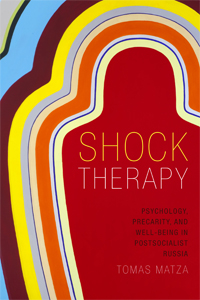 When Russia broke away from socialism, reformers implemented a set of economic policies known as “shock therapy” that included privatization, marketization, price liberalization, and shrinking of social expenditures. In retrospect, critics claim there was “too much shock, too little therapy”: the economy spiraled down into a deep recession, currency devaluations sent prices up, and inequalities exploded. Huge fortunes were built over the privatization of state assets while the vast majority of the population experienced economic hardships and moral disarray. The indicators of social well-being went into alert mode: the psychological shock and mental distress that was caused by Russia’s transition to market economy was evidenced in higher rates of suicide, alcoholism, early death, and divorce, as well as precarious living conditions. People learned to adapt to freedom and the market the hard way: some took refuge in an idealized vision of the Soviet past, while for others traditional values of Russian nationalism and Orthodox christianity substituted for a lack of moral compass. The society as a whole experienced post-traumatic stress disorder. But contrary to the claim that economic shock therapy was “all shock and no therapy”, on the psychological front at least, therapy came in large supply. During the 1990s and 2000s, there was a boom in psychotherapeutic practices in postsocialist Russia, with an overwhelming presence of psychology in talk shows, media columns, education services, family counseling, self-help books, and personal-growth seminars. Shell-shocked Russians turned to mind training and counseling as a way to adapt to their new market environment. Political and economic transformations were accompanied by a transformation of the self: in order to deal with “biopoliticus interruptus”, homo sovieticus gave way to a psychologized homo economicus. Long repressed, discourses of the self flourished in talk therapies and speech groups in which, under condition of anonymity and privacy, individuals could say things about themselves that they wouldn’t have confessed even to their close friends or relatives. Russia became a talk show nation: the forms of psychological talk cultivated by TV hosts came to define the way Russians saw themselves as they sought guidance on how to adapt to their new environment.
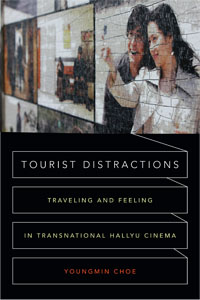 Korean government officials nowadays distinguish three waves of hallyu. The first one occurred serendipitously with the unintended success of Korean TV dramas in Japan, China, and South-East Asia. The second wave was brought by the marketing strategies of entertainment companies that targeted growing markets and developed export products in the form of K-Pop bands, TV co-productions, computer games, advertising campaigns, and restaurant chains. According to these Korean officials, the third wave of hallyu will cover the whole spectrum of Korean culture, traditional and contemporary alike, and will be engineered by the state, which sees the export of cultural content as a linchpin of its creative economy strategy. Korean cinema sits rather awkwardly in this periodization. Korean movie directors didn’t wait for the first ripples of the Korean wave to gain recognition abroad: they featured early on in the Cannes film festival and other international venues where their talent and originality won critical acclaim. Cinema studies constituted Korean films as a topic for analysis before hallyu became a theme worthy of scholarly research and commentary. The first books that addressed Korean cinema as a genre, such as Kyung Hyun Kim’s seminal essay on The Remasculinization of Korean Cinema, were written in the tradition of Asian cultural studies that sees each countries’ movie productions as a distinct whole, thereby overlooking the transnational dimension that is so prevalent in the reception of Korean hallyu.
 The Duke Reader