
A review of Chosen Peoples: Christianity and Political Imagination in South Sudan, Christopher Tounsel, Duke University Press, 2021.
 On July 9, 2011, South Sudan celebrated its independence as the world’s newest nation. One name considered for christening the country was the Kush Republic, after the Kingdom of Kush that ruled over part of Egypt until the 7th century BC. According to historians of antiquity, Kush was an African superpower and its influence extended to what is now called the Middle East. Placing the new nation under the sign of this prestigious ancestor was seen as particularly auspicious. But for many people the name Kush has been connected with the biblical character Cush, son of Ham and grandson of Noah in the Hebrew Bible, whose descendants include his son Nemrod and various biblical figures, including a wife of Moses referred to as “a Cushite woman.” A prophecy about Cush in Isaiah 18 speaks of “a people tall and smooth-skinned, a people feared far and wide, an aggressive nation of strange speech, whose land is divided by rivers” that will come to present gifts to God on Mount Zion after carrying them in papyrus boats over the water. For many South Sudanese at independence, Isaiah’s ancient prophecy directly applied to them, to the point the newly appointed President Salva Kiir chose Israel as one of his first destinations abroad. Churchgoers also read echoes of their fight for sovereignty and independence in various passages of the Bible. Christian southerners envisioned themselves as a chosen people destined for liberation, while Arabs and Muslim rulers in Khartoum were likened to oppressors in the biblical tradition of Babylon, Egypt, and the Philistines. John Garang, leader of the Sudan People’s Liberation Army/Movement (SPLA/M), was identified as a new Moses leading his people to the promised land. The fact that he left the reins of power to his second-in-command Salva Kiir before independence, just like Moses did with Joshua upon entering the land of Canaan, was interpreted as further accomplishment of the prophecy. Certainly God had a divine plan for the South Sudanese. For some Christian fundamentalists, the accomplishment of Isaiah’s prophecy was a sign of the imminent Second Coming of Jesus Christ that Isaiah identified as the Messiah, the king in the line of David who would establish an eternal reign upon the earth.
Isaiah’s prophecy
This moment of bliss and religious fervor did not last long. Conflict soon erupted between forces loyal to President Salva Kiir (of Dinka ethnicity, Sudan’s largest ethnic group) and former Vice President Riek Machar (of Nuer ethnicity, the South’s second largest ethnic group.) The South Sudanese Civil War that ensued killed more than 400,000 people and led about 2.5 million to flee to neighboring countries, especially Uganda, Sudan, and Kenya. Various ceasefire agreements were negotiated under the auspices of the African Union, the United Nations, and IGAD, a regional organization of eight East African nations. The last truce signed in February 2020 led to a power sharing agreement and a national unity government that was supposed to hold the first democratic elections since independence in 2023. Again, some predicators and religious commentators interpreted these internal divisions and ethnic strife using biblical metaphors. As with earlier periods, the war produced a dynamic crucible of religious thought. Supporters of civil peace called on South Sudanese not to divide themselves like the tribes of Israel or recalled Paul’s injunctions in the Epistle to the Galatians to become one in Jesus by forgetting divisive identities. “Let us take the Bible instead of the gun,” exhorted a senior official at the Ministry of Religious Affairs. “Shedding blood is the work of the devil, and anybody who is killing people is doing the work of the devil,” declared another cleric. The civil war was interpreted as an opposition between right and wrong; only this time the forces of evil were internal to South Sudan, not projected upon the northern oppressor. The most vindictive denounced their enemies by comparing them to the Pharisees or even to Herod. God was used in one breath to argue for cultural unity (“all are one in Christ”) and in another for cultural diversity (tribes are “gifts of God”). These conflicting arguments are proof that in all situations, the biblical referent remains major in the South Sudanese national imagination. Meanwhile, the “land of milk and honey” remains one of the poorest countries on earth, with all the characteristics of a failed state.
For some people, interpreting historical events along religious lines is not only irrational and delusional, but also dangerous and divisive. Looking at history from God’s perspective can lead to a fatalistic view of life and human action. Having “God on our side” has served as justification to some of the worst atrocities in human history, and the Westphalian system of nation-states that is enshrined in the United Nations Charter was originally created to bring an end to the religious wars that plagued Europe in the sixteenth and seventeenth century. According to modern views, Christian interpretation of biblical prophecies should remain in the pulpit, and clerics should refrain from interfering in political issues of the day: “The more politically involved the church has become, the less spiritually involved the church is.” In the case of Sudan, religion was mobilized both in the North and in the South to bolster national identities and strengthen racial differences. Leaders in Khartoum have attempted to fashion the country as an Islamic state, making Islam the state religion and sharia the source of the law since 1983. Meanwhile, Southern Sudanese have used the Bible to provide a lexicon for resistance, a vehicle for defining friends and enemies, and a script for political and often seditious actions in their quest for self-determination and sovereignty. But Christopher Tounsel does not see religion as the source of the civil war that led to the independence of South Sudan. After all, rebels in the Sudan People’s Liberation Army (SPLA) were first inspired by Marxism and backed by the socialist regime of Mengistu in Ethiopia. John Garang believed in national unity and a secular state that would guarantee the rights of all ethnic groups and religions in a “New Sudan” conceived as a democratic and pluralistic state. Theology was only one of the discourses that informed the ideological construction of the South Sudanese nation-state. Race and, after 2005, ethnicity, were also important components of southern identities, working to include individuals in collective bodies and to distinguish them from others. In this perspective, the author cautions “against a limited view of South Sudanese religious nationalism as one based exclusively in anti-Islamization.”
A crucible of race
In Chosen Peoples, Christopher Tounsel presents “theology as a crucible of race, a space where racial differences and behaviors were defined.” Rather than approaching race and religion—the two elements most often used to distinguish North and South Sudan—as separate entities, he analyzes religion as a space where race was expressed, defined, and animated with power. Tounsel is particularly interested in how Christianity shaped the identity of the region’s black inhabitants (as opposed to Sudan’s Arab-Muslim population) and brings forth the notion of God’s chosen people (or peoples) using the Bible as a “political technology” in their fight against the oppressor. The first Catholic missionaries – Jesuits – settled in South Sudan in the middle of the 19th century following the creation by Pope Gregory XVI of the Vicariate Apostolic of Central Africa in 1846. As for the Protestants, they arrived in 1866 by through the British and Foreign Bible Society. However, this initial period of mission work was interrupted for nearly thirty years due to the Mahdist Wars that bloodied Sudan in the last decades of the century. When the British regained control of the region under the Condominium Agreement signed with Egypt in 1899, they facilitated the reestablishment of missions there in order to transform South Sudan into a buffer zone that could stem the expansion of Arabic and Islam up the Nile. The missionary work carried out there in the first half of the 20th century, mainly by Roman Catholics, the Church Missionary Society (CMS) and the United Presbyterian Mission (also known as the American Mission), in addition to its classic dimensions (translating the Bible, identifying socio-linguistic groups, schooling a new local elite), included a strong martial dimension by playing both on the symbolism of the crusade and the struggle against Muslim slavery. Through a case study of the Nugent School, created by the CMS in Juba in 1920, Tounsel shows that ethnic identities were also reinforced through the teaching of local vernacular languages and the definition of self-contained tribal units based upon indigenous customs, traditional usage, and competitive antinomies (a Nuer-English dictionary included the descriptive phrase “my cattle were stolen by Dinka.”) Ethnic conflict between indigenous identities, seen as natural and inevitable, could only be overcome by a common Christianity, while Islam and Arab culture was portrayed as alien and hostile.
After Egypt’s 1946 effort to assert its sovereignty over Sudan, Britain reversed course and conceded Sudan’s right to self-determination and, ultimately, independence, which was proclaimed on January 1st, 1956. The almost complete exclusion of southerners from the “Sudanization” policies in the 1950s fueled a growing sense of southern grievance and political identity. The 1954 creation of the first all-Sudanese cabinet under al-Azhari’s National Union Party, while the southern Liberal Party was in opposition, accelerated southern political thinking toward self-determination and federalism. It was in this context that a mutiny of the Equatorial Corps occurred in 1955 at Torit in the southern Equatoria province. The Equatorial Corps, composed entirely of Christian soldiers – around 900 –, had been created by Lord Reginald Wingate as part of the Anglo-Egyptian condominium on Sudan at the end of the 1910s: a bold decision in a context where military service had until then been reserved for Muslims. It was intentionally divided along ethnic lines: most of the corps was recruited from the Lotuho and other small eastern ethnic groups on the Sudanese slave frontier that were perceived to have “natural” military qualities. The mutiny, motivated by a project to transfer some units to the North and have them replaced by northern soldiers, was sparked by an incident involving an Arab soldier who allegedly insulted a black soldier by calling him a slave (abid). This term, then commonly used by Muslim Sudanese to denigrate black populations, testified to the very slow disappearance of slavery in the region. Sudanese slavery had even experienced a surge in the 1860s and 1870s with the progress of navigation on the Nile and had still been largely tolerated by British supervision until the beginning of the 20th century, after the end of the Mahdist wars. Mostly contained in Equatoria, where most of the mutineers were based and originated, the mutiny was quickly put down but it then led to the First Sudanese Civil War, taking its sources from the same crucible: Christian identity, racial confrontation, ethnic divisions, refusal of slavery and Muslim domination.
The First and Second Sudanese Civil Wars
The First Sudanese Civil War (1955-1972) considerably strengthened the biblical reference in the South Sudanese national emancipation movement. It was widely regarded as a religious confrontation between a Muslim government in Khartoum and its armies, and Christian liberation fighters in the South. Religious thought provided an important spiritual lexicon for the racial dynamics of the war, becoming a space for southerners to articulate the extent of racial division and hostility. The decision of the Sudanese government to Arabize school programs and gradually ban foreign missions, definitively expelled in 1964, not only amplified Christian proselytizing by local pastors but also provided new troops for the South Sudanese resistance. At the beginning of the 1960s, southern opposition was structured militarily and acquired propaganda organs such as the Voice of Southern Sudan published from London with the support of missionary societies. In 1967 the Youth Organ Monthly Bulletin of the Sudan African National Union (SANU) published a rewriting of Jeremiah’s Book of Lamentations where Israel was replaced by South Sudan and Babylon by Khartoum. This type of parallel was used more and more frequently, giving the conflict the appearance of a war of religion. While Arabs were demonized as inhuman evil agents of Satan, southerners framed themselves as God’s beloved people analogous to the Israelites. The war witnessed the creation of a theology that maintained that providence was leading southerners to victory. When the first civil war ended in 1972, biblical reference was clearly rooted while racial and religious identities were closely interwoven. For Sudanese refugees, returning home was presented as the end of exile in Babylon. Southern intellectuals, rather than approaching race and religion as mutually exclusive, used theology as a crucible through which racial identity was defined.
The peace agreement signed in Addis Ababa in 1972 provided for autonomy for South Sudan and religious freedom for non-Muslim populations. Despite their desire for independence, SANU leaders accepted to compromise, but multiple violations of the agreement, as well as the decision of the Sudanese government to impose Islamic law, contributed to relaunching the conflict in 1983 with the creation of the Sudan People’s Liberation Movement and Army (SPLM/A). The fall of Ethiopia’s Mengistu regime in 1991 was the second formative event, depriving the southern opposition from operational support and ideological justification. Though the SPLM never officially affiliated with any religion and maintained a policy of religious toleration, it increasingly turned to Christianity to mobilize and garner support at home and abroad. The SPLA was transformed into a largely Christian force that explicitly used Christian themes and language as propaganda. Apart from the Bible, few other sources were available with which to interpret their position. Episodes from biblical Israel’s history, like David’s clash with Goliath or Moses leading his people to the Promised Land, became popular narratives to fit the modern situation. It is in this context that Isaiah’s prophecy concerning Cush was referenced as foretelling ultimate victory. John Garang, a secularist at the beginning of the war, saw utility in including Cush in domestic politics. He also tried to mobilize support abroad, appealing to Pan-Africanism, Evangelical solidarity, and humanitarian repulsion against modern slavery. American human rights activists pressured the US government to get involved in the situation, framing the conflict as a war between Arabs and Africans, Christianity and Islam, masters and slaves. Their advocacy and humanitarian engagement influenced the manner in which the conflict was represented in mainstream Western media. Beginning in the 1990s, Sudan entered the American evangelical mind as a site of Christian persecution and possible redemption. President Bush appointed Senator John Danforth—an ordained Episcopal minister—as his special envoy on the Sudan. Without Washington’s support, the Comprehensive Peace Agreement signed in 2005 and the ensuing independence of South Sudan in 2011 would never have taken place.
A failed state
Christopher Tounsel takes a neutral perspective on the role of religion in framing South Sudan’s struggle for independence. He does not see religion as a “veil” for material interests or as an “opium” that would intoxicate people into a war frenzy. He has consideration and respect for the religious narrative that interprets South Sudanese nationalism as a spiritual chronicle inspired by the Bible and corresponding to God’s plan. Of course, he does not himself offer a religious interpretation of historical events. The views he presents are those of local religious actors: mission students, clergy, politicians, former refugees, and others from a wide range of Christian denominations and ethnicities. He strictly endorses the role of the professional historian, crafting a rigorous history of religious nationalism—analyzing many printed sources and archives that are exploited from the first time; collecting oral testimonies by clerical and non-clerical figures in Juba; offering his own interpretation after discussing other viewpoints present in the academic literature. Only in the acknowledgement section does he make reference to his own religious affiliation by giving thanks to “my Lord and Savior Jesus Christ.” But if we consider the devastating toll that successive civil wars had on the local population, one may see the role religion has played in a more negative light. Were it not for a biblical narrative of suffering and redemption, a South Sudanese state would never have seen the day. There are serious concerns about the viability of such a landlocked, ethnically polarized country that political scientists subsume under the category of failed state. Religious faith may have been useful in forging a common identity against an oppressor perceived as Arab and Muslim, but could not prevent the newly independent state to plunge into prolonged ethnic warfare. And American Evangelicals who viewed South Sudan as the fulfillment of Isaiah’s prophecy and the sign of Christ’s second coming were not simply delusional: they added oil to the fire in an explosive crucible of race, religion, and ethnicity.
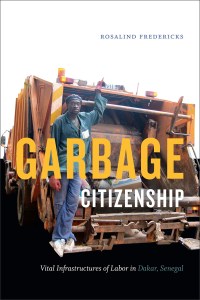 In 1990, Youssou N’Dour, Senegal’s most famous musician, released an album titled Set. The main song had the following line: Set, set oy. Ni set, set ci sa xel lo, ni set ci sa jëff oy… I had no idea what it meant, but in her book Garbage Citizenship, Rosalind Fredericks provides translation and context: Cleanliness, oh cleanliness. Be clean, pure in your spirit, clean in your acts… The injunction to be clean and to make clean (set setal in wolof), repeated in the song’s chorus, echoes the rallying cry of a grassroot movement in which young men and women set out to clean the city of Dakar from its accumulating garbage, substituting a failing urban waste infrastructure and denouncing the corruption of a polluted political sphere. Labelled as an exemplary case of participatory citizenship and youth mobilization, the movement was captured by political clientelism and made to serve the neoliberal objectives of labor force flexibility and public sector cutbacks. At the height of the movement in 1989, Dakar’s mayor made a shrewd political calculus to recruit youth activists into a citywide participatory trash-collection system. Their incorporation into the trash sector was facilitated by a discourse of responsibility through active participation in the cleanliness of the city. They became the backbone of the municipal waste management system and remain included in the sector’s labor force to this day. The history of the Set/Setal movement is only one of the case studies that Rosalind Fredericks develops in her book. The author finds the same activists who spontaneously took to the streets to clean up Dakar in 1988-89 having moved into low-pay positions as trash workers in a reorganized infrastructure that used derelict garbage trucks and often delayed payment of salaries. Together with their labor union leaders, they staged another kind of public protest in 2005-07: the garbage strike, supported by Dakar inhabitants who brought their household dumpings to the main arteries of the capital and piled them for all politicians to see. Other cases studied by the author include a NGO-led, community-based trash collection project in a peripheral neighborhood mobilizing voluntary women’s labor and horse-drawn carts, and the functioning of a trash workers’ union movement affirming the dignity of labor through discourses of Islamic piety.
 Capacity building is the holy grail of development cooperation. It refers to the process by which individuals and organizations as well as nations obtain, improve, and retain the skills, knowledge, tools, equipment, and other resources needed to achieve development. Like a scaffolding, official development assistance is only a temporary fixture; it pursues the goal of making itself irrelevant. The partner country, it insists, needs to be placed in the driver’s seat and implement its domestically-designed policies on its own terms. Once capacity is built and the development infrastructure is in place, technical assistance is no longer needed. National programs, funded by fiscal resources and private capital, can pursue the task of development and pick up from where foreign experts and ODA projects left off. And yet, in most cases, building capacity proves elusive. The landscape of development cooperation is filled with failed projects, broken-down equipment, useless consultant reports, and empty promises. Developing countries are playing catch-up with an ever receding target. As local experts master skills and technologies are transferred, new technologies emerge and disrupt existing practices. Creative destruction wreaks havoc fixed capacity and accumulated capital. Development can even be destructive and nefarious. The ground on which the book opens, the commune of Ngagne Diaw near Senegal’s capital city Dakar, is made toxic by the poisonous effluents of used lead-acid car batteries that inhabitants process to recycle heavy metals and scrape a living. Other locations in rural areas are contaminated with stockpiles of pesticides that have leaked into soil and water ecosystems.
 Improvising Medicine describes everyday life in a small oncology ward in Botswana, a Southern African country that has been decimated by HIV/AIDS and that now faces a rising cancer epidemic. AIDS, disease, heat, stench, misery, overcrowding, scarcity, death: the picture seems familiar, even cliché. But Julie Livingston warns (or reassures) her reader at the outset: this is not the book on Africa one has learned to expect (or to dread). As she notes, “the problems of pain, death, illness, disfigurement, and care that lie at the heart of this book are basic human ones.” This is, in essence, a book about human nature in the face of insufferable circumstances. It is told in the way anthropologists tell a story: with a concern for the local, the mundane, the quotidian. Improvising Medicine is based on an extended period of participant observation and hundreds of pages of research notes jotted down after long hours of assisting care workers in their daily chores. The particularities of ethnographic observation are reflected in the excerpts of the research diary that are inserted in the book, with the names and proclivities of each patient and coworker who, in the end, become familiar figures to the reader as they were for the fieldworker. And yet, between the localized setting and the universalist message, there are some conditions and lessons that pertain to Africa as a whole. The cancer ward in Princess Marina Hospital in Gaborone, Botswana’s capital, is referred to as an African oncology ward in an African hospital. The author routinely writes about an African ethic of care, about the defining features of biomedicine in Africa, or about the articulation between African practice and global health.
 The Duke Reader