

From Slumdog to Millionaire

A review of Producing Bollywood: Inside the Contemporary Hindi Film Industry, Tejaswini Ganti, Duke University Press, 2012.
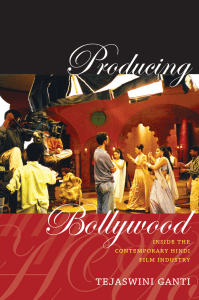
Imagine you are a foreign graduate student doing fieldwork in Hollywood and that you get to sit in a two-hour long interview with a major film star like Brad Pitt or Johnny Depp. This is precisely what happened to Tejaswini Ganti in the course of her graduate studies at the University of Pennsylvania when she was researching the local film industry in Mumbai, now better known as Bollywood. And it happened not only once: she sat in interviews with legendary actors such as Shah Rukh Khan, Aamir Khan, Shashi Kapoor, Sanjay Dutt, Amrish Puri, actress Ayesha Jhulka, as well as top producers and directors Aditya Chopra, Rakesh Roshan, and Subhash Ghai. What made this access possible? Why was a twenty-something PhD student in anthropology from New York able to meet some of the biggest celebrities in India? And what does it reveal about Bollywood? Obviously, this is not the kind of access a graduate student normally gets. Privileged access is usually granted to journalists, media critics, fellow producers, and other insiders. They observe the film industry for a reason: they are part of the larger media system, and they play a critical role in informing the public, evaluating new releases, building the legend of movie stars, and contributing to box-office success. As an anthropologist, Tejaswini Ganti’s approach to the Hindi film industry is different. As she states in her introduction, “my central focus is on the social world of Hindi filmmakers, their filmmaking practices, and their ideologies of production.” Her book explores “how filmmakers’ subjectivities, social relations, and world-views are constituted and mediated by their experiences of filmmaking.” As such, she produces little value for the marketization of Bollywood movies: her book may be read only by film students and fellow academics, and is not geared towards the general public. As befits a PhD dissertation, her prose is heavy with theoretical references. She draws on Pierre Bourdieu’s analysis of symbolic capital and his arguments about class, taste, and the practice of distinction. She uses Erving Goffman’s concept of face-work to describe the quest for respectability and avoidance of stigma in a social world associated with black money, shady operators, and tainted women. She steeps herself in industry statistics of production budgets, commercial outcomes, annual results, and box-office receipts, only to note that these figures are heavily biased and do not give an accurate picture of the movie industry in Mumbai.

Getting access

Part of Tejaswini Ganti’s success in getting access to the A-list of the Hindi film industry stems from her position of extraneity. As an “upper middle-class diasporic South Asian female academic from New York,” she didn’t benefit from “the privilege of white skin”—white European or American visitors could get access to the studios or film shoots in a way that no ethnic Indian outsider could—but she was obviously coming from outside and was not involved in power games or media strategies. For her initial contacts, she used the snowballing technique: personal friends in Philadelphia who had ties with the industry in Mumbai provided initial recommendations and helped her make her way through the personal networks and kinship relations that determine entry and access at every stage. Two different directors offered her the chance to join the team of directors assistants for two films, fulfilling the need for participant observation that remains a sine qua non in anthropology studies. People were genuinely puzzled by her academic interest in such a mundane topic (“You mean you can get a PhD in this in America?”) and eager to grant an interview to an outsider who had no stake in the game. Being a woman also helped: she “piqued curiosity and interest, often standing out as being one of the few—and sometimes only—women on a film act.” As she notes, she “did not seem to fit in any of the expected roles for women—actress, dancer, journalist, hair dresser, costume designer, or choreographer—visible at various production sites.” Contrary to common understanding about the gendered dimension of fieldwork, she actually had a harder time meeting women, specifically the actresses. She also experienced her share of sexual harassment, but as a young married woman with a strong will and a sharp wit she was able to handle unwelcome advances and derogatory remarks. Last but not least, dedicating an academic study to Bollywood provided a certain cachet and prestige to an industry that was desperately in need of social recognition. Actors and filmmakers strived not only for commercial success, but also for critical acclaim and cultural appraisal. A high-brow academic study by an American scholar gave respectability to the Hindi film industry “which for decades had been the object of much disparagement, derisive humor, and disdain.”

She also came at a critical juncture in the history of the Hindi film industry. She carried out her fieldwork for twelve months in 1996 and completed her dissertation in 2000, a period associated with the neoliberal turn in India’s political economy. She made shorter follow-up visits in 2005 and 2006, and her book was published by Duke University Press in 2012, at a time when neoliberalism was in full swing and the nationalist right was ascending. The Hindi film industry’s metamorphosis into Bollywood would not have been possible without the rise of neoliberal economic ideals in India. Along with the rest of the economy, the movie industry experienced a shift from public to private, from production to distribution, from domestic audiences to global markets, and from entertainment for the masses to gentrified leisure. The role of the state changed accordingly. At the time of independence, most leaders viewed the cinema as “low” and “vulgar” entertainment, popular with the uneducated “masses.” Gandhi declared many times that he had never seen a single film, comparing cinema with other “vices” such as satta (betting), gambling, and horseracing. Unlike Gandhi, Nehru was not averse to the cinema, but was critical of the kind of films being made at the time. He exhorted filmmakers to make “socially relevant” films to “uplift” the masses an to use cinema as a modernization tool in line with the developmentalist objectives of the state. He created a cultural bureaucracy to maximize the educational potential of movies, with institutions such as Doordarshan, the public service broadcaster, and the Films Division, the state-funded documentary film producer. Prohibitive policies such as censorship and taxation as well as bans on theater construction limited the development of commercial cinema, even though India soon became the most prolific film producing country in the world. How to explain the shift in attitudes toward mainstream cinema, from being a heavily criticized and maligned form of media to one which the state actually celebrated, touting as an example of India’s success in the international arena? There was, first, a rediscovery of cinema as national heritage, starting with the public celebrations of the cinema centenary in 1996. Cinema was also rehabilitated as an economic venture: large corporations such as the Birla Group, Tata Group, Sahara, Reliance, and others began to invest in the sector, displacing the shady operators that had associated Indian cinema with organized crime and money laundering. Multiplex construction replaced the old movie houses that had catered to the tastes and low budgets of the rural masses. Local authority started to offer tax breaks for films shot in their territory, while government agencies began to promote the export of Indian films to foreign markets. Formerly seen as a tool for social change, cinema was now envisaged as an engine of economic growth.

The gentrification of cinema

The result of this neoliberal turn was a gentrification of cinema. This transformation was reflected in the attitudes towards cinema, the ideology of industry players, the economic structure of the sector, and the content of movies themselves. One of the facts that surprised the author the she began her fieldwork in 1996 was the frequent criticism voiced by Hindi filmmakers concerning the industry’s work culture, production practices, and quality of filmmaking, as well as the disdain with which they viewed audiences. In discussions with filmmakers, the 1980s emerged as a particularly dreadful period of filmmaking, in contrast with both earlier and later periods of Hindi cinema. The arrival of VCR recorders and the advent of cable TV was hollowing out the market for theater moviegoing from both ends, resulting in a decline in cinematic quality. The upper classes completely skipped domestic cinema, the middle class increasingly turned to television and video recording, and working class audiences had access to video parlors where a simple hall with a television and a VCR replaced large-screen theaters. Filmmakers had no choice but to cater to the base instincts of the public, resulting in trashy movies with clichéd plots and dialogues, excessive violence, explicit sex, and vulgar choreography. The young ethnographer saw a marked evolution in her return visits to the field after 2000: while the Indian state recognized filmmaking as a legitimate cultural activity, filmmakers themselves began to feel pride in their work and became accepted into social and cultural elites. For Tejaswini Ganti, respectability and cultural legitimacy for commercial filmmaking only became possible when the developmentalist state was reconfigured into a neoliberal one, privileging doctrines of free markets, free trade, and consumerism. Urban middle classes were celebrated in state and media discourse as the main agents of social change as well as markers of modernity and development in India. A few blockbusters created a box-office bonanza and ushered in a new era for Bollywood movies. Released in 1995, Dilwale Dulhania Le Jayenge, better known by the initialism DDLJ, featured two young lovers (played by Shah Rukh Khan and Kajol) born and raised in Britain who elope in beautiful sceneries shot in Switzerland before facing the conflicting interests of their families in India. Love stories with extremely wealthy and often transnational characters began to replace former plots that often focused on class conflict, social injustice, and youthful rebellion. As the author notes, “through their valorization of patriarchy, the Hindu joint family, filial duty, feminine sexual modesty, and upper class privilege, the family films of the mid- to late 1990s were much more conservative than films from earlier eras; however, their visual, narrative, and performative style made them appear modern and ‘cool’.”

More than the content of films themselves, the material conditions of film-viewing and filmmaking were quoted as the main impetus for elite and middle-class audiences to return to cinema halls. The 1990s saw the advent of the era of the multiplex: with their smaller seating capacities, location in urban centers, and much higher ticket prices, multiplex theaters transformed the cinematic experience and allowed filmmakers to produce movies that would not have been commercially viable in the previous system. “What the multiplex has done today is release the producer from having to cater to the lowest common denominator,” says veteran actress Shabana Azmi. Indian middle-class norms of respectability and morality were embraced by the cinematic profession who sought to redeem its image formerly associated with organized crime, loose morals, and vulgar audiences. Girls from “good families” began to enter the industry as actresses, dancers, or assistants, their chastity protected by chaperones and new norms of decency on film sets: “while actresses frequently had to wear sexy, revealing clothing in certain sequences, once they were off camera their body language changed, going to great pains to cover themselves and create a zone of modesty and privacy in the very male and very public space of the set.” Male actors and directors also “performed respectability” and accomplished “face-work” by emphasizing their higher education credentials and middle-class lifestyle that cast them apart from “filmi” behavior—with the Indian English term filmi implying ostentation, flamboyance, crudeness, and amorality. Many individuals whose parents were filmmakers explained to the author that their parents had consciously kept them away from the film world. But many actors and directors were second-generation professionals who entered the industry through family connections and kinship networks. In Bollywood, cinema remains a family business, and while the Hindi film industry is very diverse in terms of linguistic, regional, religious, and caste origins of its members, the unifying characteristic of the contemporary industry is its quasi-dynastic structure. Getting a foothold into the profession requires connections, patience, and, at least in the stereotypical view associated with female actresses, a reliance on the “casting couch.”

An ethnography of Bollywood

This is why the kind of unmediated access, direct observation, and participatory experience that Tejaswini Ganti was able to accumulate makes Producing Bollywood a truly exceptional piece of scholarship. The author provides a “thick description” of an average day on an Hindi film set, rendering conversations, power relations, and social hierarchies. She emphasizes the prevalence of face-to-face relations, the significance of kinship as a source of talent, and the highly oral style of working. She depicts the presence of Hindi rituals, which have become incorporated into production routines, as well as the tremendous diversity—regional, linguistic, and religious—of members of the film industry. The movie industry is often analyzed through the lenses of Hollywood norms and practices: her ethnography of Bollywood aims at dislodging Hollywood from its default position by describing a different work culture based on improvisation, on-the-job training, and oral contracts. Films, deals, and commitments are made on the basis of face-to-face communication and discussion between key players, rather than via professional mediators or written materials. Actors, directors, writers, or musicians do not have any formal gatekeepers or agents as proxies for attaining work. If a producers wants a particular star for a film, he speaks directly with him. Heroines are usually chosen after the male star, director, and music director have been finalized for a film project, and are frequently regarded as interchangeable. Spending time on a Hindi film set, it is hard to miss the stark contrast between stars and everyone else around them, especially the way stars are accorded a great deal more basic comfort than the rest of the cast and crew. Chorus dancers and extras—referred to as “junior artists”—often do not have access to makeup rooms or even bathrooms. At any given point in time, only about five or six actors are deemed top stars by the industry, based on their box-office draw and performance. This makes the kind of access that the junior ethnographer enjoyed all the more exceptional.

Cinema is a risky business, and managing the uncertainty endemic to the filmmaking process is a key part of how the movie industry operates. Hindi filmmakers aim to reduce the risks and uncertainties involved with filmmaking in a variety of ways, from the most apparently superstitious practices—from conducting a ritual prayer to Ganesh, the elephant-headed Hindu god regarded as the remover of obstacles, to breaking a coconut to celebrate the first shoot of the day—to more perceptible forms of risk reduction, such as always working with the same team of people or remaking commercially successful films from the Tamil, Telugu, and Malayalam film industries. Although the driving force within the Mumbai industry is box-office success, it is a difficult goal, achieved by few and pursued by many. The reported probability of a Hindi film achieving success at the box-office ranges from 10 to 15 percent every year. The entry of the Indian corporate sector in the twenty-first century has infused the industry with much-needed capital and management skills. Many of the new companies have integrated production and distribution, which reduces uncertainties around the latter. Measures such as film insurance, coproductions, product placement, and marketing partnerships with high-profile consumer brands have also mitigated some of the financial uncertainties of filmmaking. The gentrification of cinema and the growth of multiplexes have helped to reduce the perception of uncertainty associated with filmmaking by reducing the reliance on mass audiences and single-screen cinemas. With their high ticket prices, social exclusivity, and material comforts, multiplexes have significantly transformed the economics of filmmaking. So has the growing importance of international audiences, with the South Asian diaspora providing one of the most profitable markets for Bollywood filmmakers. Diasporic audiences, especially in North America and the United Kingdom, are perceived as more predictable than domestic audiences. Not only has the multiplex and the gentrification of cinema created new modes of sociability and reordered public space, but it has also reshaped filmmakers’ audience imaginaries. Filmmakers still strive to produce the “universal hit,” a movie that can please “both aunties and servants,” but at the same time they complain that audiences are not “mature” enough to accept more risqué stories or artistically ambitious productions. This definition of the public as divided between “the masses and the classes” operates as a form of doxa—that which is completely naturalized and taken for granted—within the film industry.

The role of the state

The Hindi film industry offers a living proof example that competing against Hollywood’s dominance does not require huge barriers on imported films nor the provision of massive subsidies to domestic movies. In the movie industry as in other sectors, the role of the government is to set the broad economic environment promoting a sound and stable legal regime that is required by film companies. On this basis, film companies develop their business strategies, in particular they take the high risks inherent with this industry. A healthy domestic market requires that films from all origins compete on a level playing field to attract the largest number of domestic moviegoers. But very often the intervention of governments in the film industry goes beyond the provision of a level playing field. Public support such as subsidies, import restrictions, screen quotas, tax relief schemes, and specialized financial funds holds a preeminent place in the film policies of many countries. A generous film subsidy policy or certain import quotas can inflate the number of domestic films produced; but they rarely nurture a sustainable industry and often translate into a decline in film quality and viewers’ experience. In India, the government took the opposite direction to regulating the sector. Instead of subsidizing the industry, economic policies have treated cinema as a source of tax revenue rather than as an engine of growth. The main bulk of taxation is collected by individual state governments through the entertainment tax, which is a sales tax imposed on box-office receipts, ranging from 20 to 75 percent. India’s cinema industry has faced other regulatory hurdles, such as restrictions on screen construction that have hindered the expansion of cinemas, especially in smaller towns and cities. Even after being accorded official status as a private industry in 2001, moviemakers had tremendous difficulty in obtaining institutionalized funding, except for those already established companies that don’t need the capital and that can capitalize on lower bank interest rates compared to private financiers. The influx of capital from established financial institutions and business groups also brought in much needed management skills and planning capabilities. As a result, Bollywood has outperformed most of its competitors across a range of key dimensions (number of films produced, box office revenues, etc.) with much lower level of subsidies than the other countries and—above all from a cultural perspective—with an increase in quality and popular appeal of movies when compared to an earlier period or to foreign productions. Put that to the credit of neoliberalism.
The Party Left and the Hindu Right in Kerala

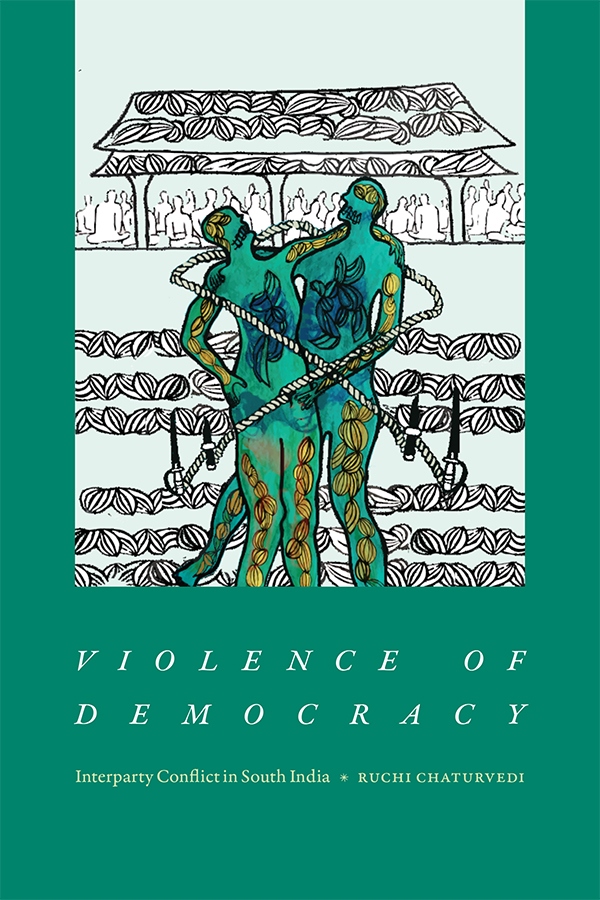
A review of Violence of Democracy: Interparty Conflict in South India, Ruchi Chaturvedi, Duke University Press, 2023.

Violence of DemocracyViolence of Democracy studies a long-standing violent antagonism between members of the party left and the Hindu right in the Kannur district of Kerala, a state on the southwestern coast of India. The term party left refers to members of the Communist Party of India (Marxist) (CPI(M)); the term Hindu right denotes affiliates of the Rashtriya Swayam Sevak Sangh (RSS) and the Bharatiya Janata Party (BJP) that holds power in New Delhi since 2014. The prevalence of violence in Kerala’s political life presents the reader with three paradoxes. First, political scientists view democracy as a pacifying system, as the regime that is most capable of keeping violence at bay. Autocracies are violent by nature; democracies are supposed to be more peaceful, both between themselves (democracies don’t go to war against each other) and within their borders (antagonisms are resolved through the ballot box.) But Ruchi Chaturvedi shows us that democracy can coexist with violence; indeed, that some characteristics of a democratic regime call for the violence it is supposed to contain. As she states in the introduction, “violence, I argue, not only reflects the paradoxes of democratic life, but democratic competitive politics has also helped to condition and produce it.” This criminalization of domestic politics has a long history in Kerala, and Violence of Democracy documents it by revisiting the life narratives of key politicians from the left, by going through judicial cases and media reports of political violence in the Kannur district of Kerala, and by conducting ethnographic interviews with grassroot militants from both parties. This book will be of special interest to social scientists interested in Indian politics as viewed from a southern state that now stands in opposition to the Modi government. But the author also raises disturbing questions for political scientists more generally: is democracy intrinsically violent? What explains the shift from the verbal violence inherent in antagonistic politics to agonistic confrontation that results in acts of intimidation, attempts to murder, and hate crimes? How can violence become closely entwined with the institutions of democracy? How to make political forces accountable for the violence they encourage and the crimes committed in their name? What happens to political violence and its culprits when they are prosecuted through the judicial system and are sanctioned under criminal law? 

Violent democracy

The second paradox lies with the root causes of political violence in this district of Kerala. Violence in India is often seen as the result of communal tensions. India’s birth of freedom was bathed in blood: the 1947 partition immediately following independence cut through the fabric of social life, pitting one community against the other. Antagonisms between Hindus and Muslims, or between Hindus and Sikhs, have often led to waves of riots and murderous violence. Beyond the trauma of the partition in which around one million people were killed and 14 million were displaced, mass breakouts of violence include the 1969 Gujarat riots involving internecine strife between Hindus and Muslims, the 1984 Sikh massacre following the assassination of Indira Gandhi by her Sikh bodyguards, the armed insurgency in Kashmir starting in 1989, the Babri Masjid demolition in the city of Ayodhya leading to retaliatory violence in 1992, the 2002 Gujarat riots that followed the Godhra train burning incident, and many other such episodes. If religion was not enough reason to fuel internal conflict, Indian society is also divided along caste, class, race, regional, and ethno-linguistic lines, and these divisions in turn often abet violence and intercommunal strife. But in the Kannur district that Chaturvedi observes, “members of the two groups do not belong to ethnic, racial, linguistic, or religious groups that have been historically pitched against other.” Indeed, “local-level workers of both the party left and the Hindu right involved in the violent conflict with each other share a similar class, religious, and caste background. And yet the contest between them to become a stronger presence and the major political force in the region has generated considerable violence.” The conflict between the two parties in this particular district is purely political. It cannot be read as a conflict between an ethnic or religious majority against a minority community. Its roots lie elsewhere: for Chaturvedi, they are to be found in the very functioning of parliamentary democracy in India.

The third paradox is that this history of violent struggle between the party left and the Hindu right doesn’t correspond to the standard image most people have of Kerala. This state on India’s tropical Malabar Coast is known for its high literacy rate, low infant and adult mortality, and low levels of poverty. Kerala’s model of development gained exceptional global coverage in the 1970s, 1980s, and early 1990s, before the rest of India began to enter into its course of high growth and raising average incomes. Even now, Kerala is ahead of other Indian states in terms of provision of social services such as education and health. Its achievements are not linked to a particular industry, like the IT service sector in Bangalore or the automotive industry in Chennai, but stem from continuous investments in human capital and infrastructure (remittances of Kerala workers employed in Gulf states have also played a role.) Kerala is also known for having self-avowed Marxists occupying positions of power since more than four decades. As Chaturvedi reminds us, “it was the first place in the world to elect a communist government through the electoral ballot in 1957.” Today, the two largest communist parties in Kerala politics are the Communist Party of India (Marxist) and the Communist Party of India, which, together with other left-wing parties, form the ruling Left Democratic Front alliance. They have been in and out of power for most of India’s post-independence history, and are well entrenched in local political life. Communists are sometimes accused of plotting the violent overthrow of the government through revolutionary tactics, and the BJP is not immune to playing with the red scare and accusing its enemies of complotism. But in Kerala violence doesn’t come from revolutionary struggle or armed insurgency; it originates in the very exercise of power. And it didn’t prevent Kerala to become the poster child of development economics, showing that redistributive justice can be achieved despite (or alongside) violent conflict and antagonistic politics.

Malabar traditions

Some observers may explain political violence in Kerala by the intrinsic character of its inhabitants. They point to a traditional martial culture of physical confrontation and warfare. The local martial art, kalaripayattu, is said to be one of the oldest combat technique still in existence. Dravidian history was marked by internecine warfare, the rise and fall of many great empires, and a culture of resistance against northern invaders. The Portuguese established several trading posts along the Malabar Coast and were followed by the Dutch in the 17th century and the French in the 18th century. In French, a “malabar” still means a muscular and sturdy character, although the name seems to come from the indentured Indian workers who came to toil in sugarcane fields of the Réunion island. The British gained control of the region in the late 18th century. The Malabar District was attached to the Madras Presidency, while the other two provinces of Travancore and Cochin, which make up the present-day Kerala, were ruled indirectly through a series of treaties reached with their princely authorities in the course of the 19th century. Direct rule in Malabar reinforced landlord domination over sharecroppers and tenants, with the landlords belonging to the upper-caste Nairs and Nambudiris while tenant cultivators and agricultural workers were the purportedly inferior Thiyyas, Pulayas, and Cherumas. In the early 20th century, social tensions were rife, voices were calling for land reform and the end of caste privilege, and Kerala became the breeding ground for the cadres and leaders of the Communist Party of India (CPI), officially founded on 26 December 1925. Communism is therefore heir to a long tradition of militancy in Kerala. India is home to not one but two communist parties, the CPI and the CPI(M), the second born of a schism in 1964 and sending more representatives to the national parliament than the first.

Instead of essentializing a streak of violence in India’s and Kerala’s political life, Chaturvedi explains the violent turn of electoral politics in the district of Kannur as the result of majoritanianism, the adversarial search to become a major force in a local political system, and its correlate minoritization, the drive to marginalize proponents from the minority party. The search for ascendance is not extraneous to democracies but is part of their basic definition and structure. In Kerala, politics turned violent precisely because the main political forces, and especially the party left and the Hindu right, agreed to play by the rules of democracy. The acceptance of democracy’s rules-of-the-game, namely free and fair elections and majority rule, wasn’t a preordained result. At various points in its history, the communist movement in India was tempted by insurgency tactics and armed struggle. Chaturvedi revisits the political history of Kerala by drawing the portrait of two leaders of the political Left, using their autobiographies and self-narratives. Both A.K. Gopalan (“AKG”) and P.R. Kurup were upper-caste politicians who identified with the plight of poor peasants and lower-caste workers. In 1927, Gopalan joined the Indian National Congress and began playing an active role in the Khadi Movement and the upliftment of Harijans (“untouchables” or Dalits). He later became acquainted with communism and was one of 16 CPI members elected to the first Lok Sabha in 1952. Gopalan’s life narratives “privilege spontaneous moral reactions marked by a good deal of physical courage and a strong sense of masculinity.” He was a party organizer, anchoring the CPI and then the CPI(M) in the political life of Kerala, and a partisan of electoral politics, discarding the temptation to engage in armed insurrection in 1948-1951 as “adventurist” or “ultra-left.” Thanks to his heritage, the CPI(M) now resembles other parties normally seen in parliamentary democracies: “each one seeking to obtain the majority of votes in order to ascend to the major rungs of government.” But P.R. Kurup embodies a darker side of electoral politics: known as “rowdy Kurup,” he remained a regional socialist leader through strong-arm tactics and the occasional streetfight operation against rival supporters of the CPI or the Congress. His band of low-caste supporters (“Kurup’s rowdies”) were willing to use intimidatory and violent means so that their party remained on top.  

From agonistic contest to antagonistic conflict

Both Gopalan and Kurup were “shepherds” or “pastoral leaders” who protected, saved, and facilitated the well-being of a populace that reciprocated their favors with votes and other expressions of support. By contrast, the next generation of local leaders to which Chaturvedi turns come from a lower rung of society. They are the militant members and local cadres of the CPI(M) and the RSS-BJP who form antagonistic communities willing to attack and counterattack each other so that their party might dominate in the electoral competition. The fact that young men at the forefront of the conflict between the party left and the Hindu right in the district of Kannur share similar religious, caste, and class backgrounds makes it exceptional. Conflict between the two groups cannot be read as a conflict between an ethnic or religious majority against a minority community. But this distinctive form of political violence in Kannur can be characterized as an exceptional-normal phenomenon, an expression of something common in all democracies: competition for popular and electoral support creates the conditions and ground for the emergence of hate-filled and vengeful acts of violence between opposing political communities. The clashes between the two camps are not just occasional: exploiting various sources such as police and court records as well as personal interviews with workers from the two groups, the author estimates that more than four thousand workers of various parties have been tried for political crimes in Kannur in the past five decades. Assailants used weapons such as iron rods, chopping knives, axes, crude bombs, sword knives (kathival), sticks, and bamboo staffs (lathi). They formed tight-knit communities of young men sharing fraternal bonds and a spirit of strong cohesion: the RSS shakha (local branch network) is the most organized structure from the Hindu right, but the party left also has its volunteer vigilante corps akin to RSS cadres or student wing trained in “self-defense techniques.” For both camps, a cycle of attacks and counterattacks breeds mimetic violence and a culture of aggression and vengeance.

In a functional democracy, law and order is maintained and crime gets punished. Many young men from the party left and the Hindu right have been brought to court on suspicion of politically motivated crimes and sanctioned accordingly. But for Chaturvedi, law is a “subterfuge” that obfuscates the complicity of the democratic political system in brewing violence and offers it an “alibi” or a “free pass.” Justice is the continuation of politics by other means, and the conflict between the CPI(M) and the RSS-BJP in Kannur is being reenacted in the courts. The judicial system depoliticizes political violence by projecting responsibility onto individuals and exonerating political structures of any responsibility for the crimes committed in their name. Perpetrators of violent aggression are liable under criminal law and judges don’t take into account their political motivations, pointing instead to acts of madness or a background of criminal delinquency. Political parties from both sides do not remain inactive during trials: they tutor witnesses to produce convincing testimonies or offer alibis, they create suspicion about testimonies of the opposite party, they fabricate evidence and manipulate opinion. Judicial proceedings take an exceedingly long time due to juridical maneuvers, and suspects are often acquitted for lack of evidence. Important local figures thought to be planning and facilitating the aggressions are not called to account. In addition, according to Chaturvedi, the judicial system in India has taken a majoritarian turn: it affords impunity to members of the dominant group while persecuting minorities and those who challenge its hegemony. In Kerala, it did not stop generations of young men to engage in attacks and counterattacks so that their party can stay on top. Depoliticizing political violence and obscuring the conditions that have produced it not only leaves political forces unaccountable: it perpetuates a cycle of aggression and impunity. For the author, a true political justice should not reduce political violence to individual criminality, but should address the structures that underlie it.

Majoritarianism and minoritization

For Chaturvedi, electoral democracy is defined by the competition “to become major and make minor,” or the imperative “to become a major political force and reduce the opposition to a minor position.” In a first-past-the-post electoral system, the party that commands the greatest number of votes in the greatest number of constituencies obtains greater legislative powers and access to executive authority. There is a built-in incentive to conquer and vanquish, as political opponents are seen as an obstacle in the road to power. Democracy therefore has a propensity to divide, polarize, hurt, and generate long-term conflicts. In the district studied by the author, democracy has facilitated the emergence of violent majoritarianism and minoritization, understood as “practices that disempower a group in the course of establishing the hegemony of another.” Most modern democracies make accommodations to protect minorities, but they also continue to uphold rule of the majority as the source of their legitimacy. The founding fathers of modern India, from Syed Ahmad Khan to Mahatma Gandhi to B.R. Ambedkar, were aware of this risk of majority rule and sought to mitigate it by building checks-and-balances and appealing to the better part of people’s nature. Initially a proponent of Hindu-Muslim unity, Sir Syed wrote about the “potentially oppressive” character of democracy, fearing that it might translate into “crude enforcement of majority rule.” Gandhi not only warned against the workings of competitive politics and the dangers of majoritarianism, but also expressed skepticism about the rule of law and impartiality of the judicial system. Ambedkar wrote principles of political freedom and social justice into the Indian constitution, but was keenly aware that democracies were by definition a precarious place for social and numerical minorities. Although their solutions may not be ours, Chaturvedi concludes that “we need to attend to questions that figures like Sir Syed, Ambedkar, and Gandhi raised.”

Anthropology Post-1986

A review of Designs for an Anthropology of the Contemporary, Paul Rabinow and George E. Marcus with James D. Faubion and Tobias Rees, Duke University Press, 2008.

Marcus 2I am interested in the history of anthropology. But there is a great disconnect in the way this history gets told. It stops at the point when it really should start. Anthropology is rich with disciplinary ancestors and founding fathers. Bronisław Malinowski and Franz Boas laid solid foundations for the discipline, teaching their contemporaries that no society, including their own, was the end point of human social evolution. The discipline has a few founding queens as well: Margaret Mead and Ruth Benedict, who both studied under Boas, contributed to a fundamental reimagining of human diversity that allowed for the turn toward greater tolerance and inclusion in postwar America. History books go in great detail in discussing their contribution to the field and how a few great debates shaped the discipline. They highlight a Golden Age of anthropology in which the discipline was relevant, not only for other academic specialties, but for addressing the pressing concerns of the day. As of today, an anthropology major will give prospective students a valuable perspective on matters like diversity and multiculturalism, race and gender, globalization and political conflict, religions and secular beliefs, and much more. But history books all stop when the party gets started. They never mention the controversies and paradigm shifts that form the bedrock of contemporary research. The references they quote are absolutely of no use in writing current anthropology. Bibliographies of recently published articles rarely, if ever, mention publications antedating the 1990s. It seems as if the discipline reinvented itself at some point and discarded its former self.

Writing Culture

This point can be dated with some precision: it corresponds to the publication in 1986 of the collection of essays Writing Culture. There was a before and an after Writing Culture. This is not to say that this edited volume was a scientific breakthrough: it consists of ill-written essays that, read retrospectively, obfuscate debates and are most noticeable for what they missed—gender and feminism, race and ethnicity, and what will be known as the politics of identity are conspicuously absent from the texts. But the book published by the University of California Press achieved mythic status. As Tobias Rees recalls, studying anthropology in Germany in the mid-1990s, “We read the history of anthropology up to Writing Culture and… and there is nothing afterwards.” It is still mandatory reading in graduate courses taught at American anthropology departments. Writing Culture operated a linguistic turn by reducing ethnography to the status of a text, separated from the reality it was supposed to study and even from a scientific project of truth-making. It opened what was at times the rather dry prose of ethnographic writing to literary freedom. It led to a proliferation of personal confessions, literary essays, and subjective renderings of fieldwork that confirmed the status of the anthropologist as author but made very little contribution to the knowledge of societies they were supposed to study. Both Paul Rabinow and George Marcus were protagonists in this movement. Marcus coedited the volume (with Jame Clifford) and began a lifelong reflection on ethnographic writing and pedagogy. Rabinow entered an essay in Writing Culture in which he grappled with philosophical issues of modernity and postmodernity. Their testimony was collected by Tobias Rees, a young assistant professor, in a series of intellectual exchanges that form the basis of this volume, published in 2008.

In retrospect, Writing Culture appears more as a logical end point than as a new departure. It seemed to bring the history of anthropology to an end, putting the whole undertaking, its methods, its concepts, even its object, radically into question. While the early academic descendants of Boas and Malinowski had a clear sense of purpose, by the 1980s the discipline had become more fragmented. Anthropologists were haunted with a sense of embarrassment about the discipline’s colonial legacy and keen to refute it (even more so today.) They had realized that true “participant observation” was hard to achieve, since the mere presence of the researcher in a society tends to change what is being studied. They had also become uncertain about where the boundaries of their discipline should lie. A new and intense sensitivity to matters of power and conflict took hold of American anthropologists. Tobias Rees lists these political factors in his introduction: “the worldwide struggles against colonialism, the rise of the civil rights movements, the coming of affirmative action, the anti-war movement, the Chicago riots, new-nation building, minority movements, etc.” It has often been said that in the 1970s and early 1980s, anthropology in the United States turned left, standing on the side of the exploited and marginalized people, while the other social sciences turned right, espousing paradigms of scientific rigor and quantification. Anthropologists also increasingly turned their lens to Western society. But studying Western cultures left them entering territory dominated by economists, geographers, political scientists, and sociologists. So should they compete with these disciplines? Collaborate? As anthropology groped for answers, the discipline spawned numerous subfields: economic anthropology, feminist anthropology, medical anthropology, legal anthropology, science and technology studies, and so on.

Clifford Geertz’s influence

Writing Culture was written in the shadow of Clifford Geertz. Geertz’s formulation of an interpretative program for anthropology marked an important turning point in the history of the discipline. Conceptually, he proposed to understand culture as text. To be more precise, Geertz defined culture as a semiotic web of meaning that is open for interpretation and rereadings. “The challenge of fieldwork was, as he famously remarked, to look over the shoulder of an informant and to read the script that guides the native’s life.” As a result of this philological turn, ethnographies were increasingly understood as texts and thus as literary documents. Clifford Geertz was Paul Rabinow’s PhD advisor at the university of Chicago and sent him to do his doctoral fieldwork in Séfrou, a Moroccan town that Geertz had selected as the camp base to conduct an extensive survey of life conditions in Third World nations. The tone of some remarks made by Paul Rabinow in his conversation with Tobias Rees confirms there was bad blood between the two. Geertz famously criticized the tendency towards “I-witnessing” that manifested itself in Rabinow’s recollection from the field, Reflections on Fieldwork in Morocco. But he was careful to specify that he was speaking of him and his like-minded colleagues only as they function inside their pages, not as “real persons.” In return, Rabinow made ad hominem attacks on his former professor in an essay, “Chicken or Glass,” in which he claimed Geertz was unable to read even a simple situation and could not tell whether a certain ritual was performed in relation to “chicken” or “glass,” as the only word he understood from an informant’s answer could have meant both. Part of their opposition was political: Geertz kept his political opinions to himself but he did not make a stand against the war in Vietnam, while Rabinow mentions that partly out of protest he started learning Vietnamese, “though the only course in English available then was a U.S. Army course.” In these conversations, Rabinow does not dwell on his grudge against Geertz, expressing regret that he and Marshall Sahlins did not engage the issues raised by Writing Culture in a constructive fashion: “by their despising the present, they essentially foreclosed their own futures. This was a loss to the discipline.”

Designs for an Anthropology of the Contemporary reads like a graduate seminar discussion—which it is, in a way: Tobias Rees brought Paul Rabinow and George Marcus in a conversation across generations about some of the directions anthropology took after 1986. Places, namely university affiliations, play an important role in the way the history of the discipline gets taught and research traditions are transmitted from one generation to the next. The foundation of anthropology in the United States has been construed as an opposition between Columbia, where Franz Boas and his students operated, and Harvard, where grand theory building took precedence over the careful gathering of data from the field. In the postwar period, Rabinow and Marcus describe a similar tension through the opposition between Chicago and Harvard. Marcus arrived at Harvard’s Department of Social Relations to witness its crumbling: “Talcott Parsons was still there, giving abstract lectures reminiscent of some heyday, but mostly to foreign students (…) such as Niklas Luhmann.” According to Rabinow, Geertz’s focus on culture goes back to Harvard, where he was trained by Talcott Parsons before joining the Committee for the Comparative Study of New Nations at the University of Chicago in 1962. Chicago had a broader view of anthropology, nurtured by interdisciplinary exchanges and the influence of the Chicago school of sociology. Meanwhile, anthropology at Columbia University turned more radical, with a generation of scientists such as Eric Wolf, Sidney Mintz, and Morton Fried falling under the influence of Marxism. Rabinow recalls that an entire cohort of students from the University of Chicago were chased out of New York: “They despised Geertz and Lévi-Strauss and they just saw it as some kind of, I don’t know what, right-wing thinking of some sort or other.” The history of anthropology at the time of Writing Culture and after was a story of an expansion of the discipline beyond these hallowed grounds. George Marcus moved to Rice University, where he chaired the anthropology department for twenty-five years before passing the baton to Michael Fischer. Paul Rabinowitz arrived at the University of California at Berkeley in 1978 and scored a big hit early on by writing the first book and anthology devoted to the French philosopher Michel Foucault.

The globalization of anthropology

Anthropology was a modest family affair back in the early days of Franz Boas and his students. By contrast, anthropology expanded rapidly in American higher education’s post-World War II boom. Nowadays nearly all American research universities, and many liberal arts colleges, harbor an anthropology department. Nor is teaching anthropology limited to the United States: European research institutions in the United Kingdom, in France and in Germany pursued distinct disciplinary traditions, while anthropology spread out worldwide and enriched itself along the way. This makes charting contemporary anthropology and delineating the new directions the discipline is taking a difficult enterprise. The profile of anthropology students and researchers also diversified: there are more women and more “halfies,” people whose national or cultural identity is mixed by virtue of migration, overseas education, or parentage. Rabinow noticed other changes at Berkeley: “We’re seeing an entry into anthropology graduate schools of many people who have been through NGOs and have, in a bigger way, run through the crisis of the Peace Corps that we saw earlier.” People still choose anthropology as a major for existential reasons both personal and political. As Rabinow recalls, “I became an anthropologist in many ways because I felt, and continue to feel, profoundly alienated from the United States.” Despite all the talk on diversity, the idea of a right-wing or conservative anthropologist runs counter, if not to logics, then to the sociological reality of a discipline that has always taken the side of the excluded, the marginal, the downtrodden. Cultural relativism is embedded in the DNA of the discipline. If anthropologists are less ready to claim the moral and political high ground, they are still committed to an agenda of radical change and social justice. As Marcus notes, “anthropology encourages these sorts of strong feelings about public issues and the world.”

Despite anthropologists’ emphasis on an epistemological break before and after Writing Culture, there has been more continuity that they are ready to acknowledge. The 1980s generation wanted to get rid of the key concepts of the discipline—culture, fieldwork, participant observation, the native point of view—and invent new modes of sharing results away from the journal article or ethnographic monograph. But publishing in peer-reviewed journals, and submitting a book to a university press, remain the gold standard for hiring and promotion. Geertz’s dilemma—“How to get an I-witnessing author into a they-picturing story”—continues to challenge writers who face new obligations of ethical best practices and accountability. The premise that fieldwork is the discipline’s distinguishing bedrock remains as powerful today as it was before Writing Culture. Ethnography is not an endangered genre: young researchers continue to go to far-away places and immerse themselves for an extended period in the daily activities of local communities in order to get a better grasp of what makes them tick. Learning the local language is still a requisite, and having some knowledge of French is always a plus: if judged by the number of references to Michel Foucault and Bruno Latour, American anthropologists remain in the thrall of French Theory. The concept of culture has been discarded, but a renewed focus on identity and on the self has kept intact the preoccupation with symbolic expression, collective modes of being, and construction of the subject. There has been productive exchanges with adjacent disciplines: feminism, media studies, cultural studies, postcolonial studies, and science and technology studies, to name a few. But anthropology has not disappeared with the blurring of disciplinary boundaries and the disappearance of its traditional object. It has found a new lease of life “after ethnos” (to take the title of a 2018 book by Tobias Rees, which I reviewed here.)

The future of the discipline

Almost twenty years after these conversations that took place at Rice University in 2004, it seems to me that the evolution of the discipline has not validated the claims made by the two aging professors. People don’t turn to anthropology to know more about “the contemporary”: there are other disciplines that may be better equipped for understanding science and technology developments, emergent forms of life, or social precariousness. If anthropology can contribute to contemporary debates, it is mostly by cultivating its distinctive concepts, methods, ad research traditions. Anthropology has turned to the study of the “here and now,” rather than the “far away’”and “timeless,” but it has kept its attachment to localized communities and out-of-joint temporalities. Marcus and Rabinow made the remark that “anthropologists are increasingly studying timely phenomena with tools developed to study people out of time.” But anthropologists and the people they study have always been in and of their times. For most researchers, taking time out to do extended fieldwork remains the distinctive mark of the profession, its rite of passage and its rejuvenating spring. Marcus’ idea of multi-sited ethnography has not really taken hold, except when the research topic is itself on the move or dispersed in several locations. And Rabinow’s vision of so-called third spaces like studios, labinars, archives, and installations, many of them enabled by new technologies, hasn’t really replaced the traditional university environment. If anything, anthropologists are now more numerous in non-academic employment. Faced with the dearth of stable tenure-track positions, freshly-minted anthropologists have found job opportunities with corporations wanting better information about how to design and sell their products, and, controversially, an American military seeking to learn more about the “human terrain” where it fights. The US government and Microsoft are now reportedly the two biggest employers of anthropologists. Reports of anthropology’s demise have been greatly exaggerated.

Love With Chinese Characteristics

A review of Dreadful Desires: The Uses of Love in Neoliberal China, Charlie Yi Zhang, Duke University Press, 2022.

Dreadful DesiresIn Dreadful Desires, Charlie Yi Zhang advocates “a new approach” and “a different perspective” on love and neoliberalism in contemporary China. As he describes it, “My study integrates the discursive with the ethnographic and combines grave scrutiny of political economies and empirical data with upbeat examinations of popular cultures.” His grave and upbeat essay documents how a neoliberal market logic permeates expressions of love and aspirations for a good life, and how a fiercely competitive conjugal market, polarized gender relationships, and residency-differenciated precarities in turn produce willful subjects who are ready to sacrifice their well-being to maximize the interests of the state and capital. Its content and writing style also reflect his personal background and professional training. Having left China in his late twenties to pursue an academic career in the US, Zhang returned to his homeland for a few months of fieldwork in 2012 in order to complete his PhD in gender studies at Arizona State University. He was subsequently hired by the University of South Dakota to teach global studies to undergraduate students for two years, then landed a job as Associate Professor in Gender and Women’s Studies at Kentucky University, where he completed his book manuscript. During his graduate studies, his sociology professor taught him “how to combine different methodologies into [his] unique voice.” He claims to have developed “a novel theoretical and methodological approach” that builds an “epistemic ground for fundamental change.” His ambition is no less than “to lay the foundation for better futures” and “to develop a different understanding of global neoliberalism and to transform the current system.” His book is published in the Thought in the Act series edited by Erin Manning and Brian Massumi, two Canadian theoreticians working at the intersection of philosophy and art critique.
Methodology and theory-building

Zhang’s methodology is far from unique in cultural studies and social science. He uses the standard anthropological method that relies upon informal conversations, focus group discussions, and direct observations collected in two Chinese cities, Hai’an and Wuxi, located in the Jiangsu province north of Shanghai. The first is a county-level city of one half-million inhabitants that encompasses rural areas and industrial zones on the south-western shores of the Yellow Sea; the second is a prefecture-level city of more than five million people in the southern delta of the Yangtze River with a rich history of silk weaving and artistic expression. During his four months of fieldwork, Zhang interviewed over a hundred rural migrants and local farmers or workers, men and women, asking questions about love, family life, and aspirations for the future. He “spent considerable time in the homes and dormitories of [his] informants” and at “various locations of production, such as construction sites, factories, small workshops, family mills, and farms.” He also participated in “nonproductive activities such as family dinners, birthday parties, weddings, festival celebrations, and mundane chores.” There are only two chapters, however, that are organized around his analysis of field data. The remaining three chapters, two of which were published in academic journals in earlier versions, offer a commentary on cultural productions and events, namely the sixtieth-anniversary ceremony of the regime’s founding in 1949, a popular TV reality show titled If You Are the One, and an analysis of middle-aged women’s passion for danmei fictions featuring same-sex relations between beautiful young men, based on a sample of sixteen fans. These chapters are written in the ethnographic tradition that combines factual description and abstract theorizing. Although he quotes data on China’s economic development and social transformation taken from the popular press and expert reports, Zhang does not use quantitative methods, structured questionnaires, or comparative case studies.

It is on the theoretical front that Zhang displays more originality and novelty. To quote from the introduction, he takes “a feminist intersectionnal approach to interrogate and untangle the mechanism that the Chinese state relies upon to define and redefine the affective parameters of desire and intimacy in binaristic terms of gender, class, sexuality, and ethno-race.” He also takes a “queer of color critique approach […] to foreground power relationships and engage the becoming aspects of the machinery to interrogate its speculative manipulation of affective ecologies.” He borrows from Judith Butler’s playbook the idea that “gender is intentional and performative” and that anatomical sex, gender identity, and embodied performance do not always align. He is attuned to the thinking of Sara Ahmed, Lauren Berlant, and Brian Massumi, who have developed new ways of articulating affective economies to neoliberalism. Ahmed allows him to present a “postorthodox Marxist perspective” in which affect is viewed as a different form of capital, which “does not reside positively in the sign or commodity, but is produced only as an effect of its circulation.” Berlant is another important source of inspiration: a dithyrambic endorsement on the book’s back cover advances that “Zhang offers to do for love in China what Lauren Berlant, in Cruel Optimism, does for hope.” As for Massumi, also associated with the affective turn in cultural studies, Zhang borrows his model of affective temporality that conflates an anticipatory present, a promisory future and a virtualized past. All three authors allow him to address “the theoretical lacunae that leaves affect, emotions, and feelings fatally underdiscussed in scholarly examinations of neoliberal subject and world making.”

The borderless Loveland and the difference-making machinery

Zhang’s distinctive contribution to social theory is to build a bridge between emotional affect and calculative reason, between love and neoliberalism. He brings affect theory to bear on political economy reasoning and geopolitical considerations. Specifically, love and aspirations for the good life are used strategically by the state to obtain acquiescence and participation in a polarized market economy. Class disparities and gender differences are exploited by the authoritarian state to recreate competition from within and to serve capital’s productive ends. Zhang also proposes a vast array of idiosyncratic concepts and neologisms to make sense of the entaglement between reason and affect in neoliberal China. He situates his ethnography in “the borderless Loveland,” an “affectsphere” or “fantasmatic lovescape” that shapes people’s love and caring capacities in order to harness China’s national interest with the transnational interests of capital. The Loveland is to be understood as a topological notion, not a geographical concept, as the author draws “a speculative topography of the everyday sensibilities.” The Loveland extends its reach beyond mainland China; it is alternatively presented as “borderless” or within boundaries that are “indeterminate” or “expansive.” Zhang’s creative use of topology extends to the concepts of biopolitics and biopower borrowed from Michel Foucault. The first, assimilated with calculative reason and state power, follows a top-down, vertical axis; while the second, located on the immanent plane of affects, circulates horizontally. Feminist scholarship complicates this two-dimensional diagram by introducing a “multilayered and multifaceted architecture” where domination and resistance are “multidirectional and multidimensionnal.” These overlapping layers consist of gender, class, ethno-race, and sexuality. The assemblage of these orthogonal coordinates and multiple dimensions give shape to what the author calls the “difference-making machinery,” a polarizing mechanism that pits disenfranchized groups against another to allow for their compound exploitation by the nation-state and multinational corporations. This neoliberal machinery “integrates the borderless Loveland into the regulatory biopolitical system to drive and sustain China’s marketization and reintegration into the global economy.”

Dreadful Desires documents two different moves: the colonization of love and sentiments by the market and the state, and the way “lovable and love-able” subjects in turn uphold the functioning of the market and the expansion of the state’s interests. The encroachment of a neoliberal logic upon the emotional lifeworld of Chinese citizens is illustrated by the TV date game show If You Are the One, a copycat of a British TV reality show with added Chinese characteristics. The crass materialism of female participants is illustrated by the attitude of one young woman who, asked by a male suitor if she would “like to go out for a ride on my bicycle”, bluntly answers: “I would rather be crying in a BMW car!” In the show as in real life, it is standard for a Chinese woman to evaluate a potential male partner’s worth and accomplishments by asking him questions about his educational background, job, salary, amount of savings in the bank, ownership of property and cars, and so on. Indeed, having an appartment, a luxury car, a hefty savings account and a high-paying job has replaced the “four big items” (si dajian) that prospective grooms were supposed to possess under Maoist China: a bicycle, a sewing machine, a wristwatch, and a radio. A new kind of masculinity has emerged, which valorizes entrepreneurship, business acumen, and material possessions. As for women, the requisites placed upon them are no less stringent. The “three good girl” (sanhao nüsheng), a honorary title for meritous students under Maoism, used to designate girls with good morality, good learning, and good health. Now women have to respond to superlative standards of attractiveness, including breast size and leg length; hold glamorous jobs in the service sector; and be ready to carry out expanded family duties to support their husband, in-laws, and future children. These impossible requiements are exerting a heavy toll on Chinese masculinities and feminities. The amount of cash and gifts exchanged in a wedding ceremony can result in lifelong debt for the average family. Migrant workers working on construction sites or women in textile factories stand ready to sacrifice their health and well-being in the hope of a better future, if not for them, then at least for their children. But the dream of a good life is forever deferred: “the harder they try, the more they are alienated from their homes.”

Xi Jinping’s love and peace ideology

The Chinese state is complicit in the exploitation of labor by capital and the reproduction of oppositional differences out of the intersection of class, gender, and sexuality. It fuels the construction boom that sacrifices migrant workers on the altar of economic development and excludes them from the cities they have helped build. It pits categories of labor and gender roles against each other, while repressing nonnormative forms of intimity in the name of “homepatriarchy”—a portmanteau word that combines heteronormativity, male privilege, state authoritarianism, and home ownership. For Zhang, internal migrations and the hukou system of residence registration play the role that racial segregation occupies in racially-divided America or in South Africa under apartheid. Hukou registration gives access to education, medical care, basic life insurance, and other social services. It considerably enhances the value of a prospective bride or groom on the marriage market; bachelors lacking the urban residence permit must work harder and save more to improve their marriageability, or find a bride from a poorer area of China or a less-developed country such as Vietnam. To be sure, the socialist state run by the Chinese Communist Party cannot condone class hierarchies and labor exploitation. New regulation on TV dating shows now mandates diversity of participants and equality of treatment—even though the guy with the biggest property portfolio still gets the girl. Drawing upon Marxist-Leninist ideology, the party-state extolls the eradication of class differences and the liberation of China from exploitation and oppression; but in the choreographied extravaganza of the sixtieth anniversary ceremony, gender difference reemerges in the celebration of the post-reform era as a way “to conceal the new class structure and class differentiation.” The figure of Xi Jinping, construed as a benevolent father and a good husband to the nation, reinforces the patriarchal nature of the regime. The party-state offers love and harmony as a solution to internal developments and external challenges; but in the eyes of the author, “China’s love-gilded cosmopolitan dream proves no less pernicious than the hate-filled paranoia stoked by incendiary nationalists” such as Donald Trump in the United States.

Is Charlie Yi Zhang a Marxist? He shows little interest for the historical Marx, noting only his endorsement of normative heterosexualiy as the foundation for human and societal development. He prefers to borrow from Petrus Liu a “queer Marxist approach” that rejects “inclusion as a mode of social redress.” He retains from Marxism and radical thought the role of crisis and contradictions in fostering political upheaval and social change. The “difference-making machinery” is ripe with contradictions and fault lines, the first being the “contradictory needs of freewheeling capital and the border-making nation-state.” Zhang uses the concept of apparatus that he borrows from Marxist thought; but whereas for Louis Althusser apparatuses were an emanation of the state and reflected its repressive or ideological functions, Zhang refers to “a fantasmatic apparatus of desire and intimacy” that draws people to “work hard, dream big, and die slowly.” Like Marx, Zhang also believes that the role of critical theory is not just to interpret the world, but to change it. His declared goal is “to find a place where the subalterns can survive and to help lay a foundation for long-run transformation.” Exposing the dissonance between promise and fulfillment in the “borderles Loveland” is bound to send shockwaves to the system, shattering the “life-sustaining fantasy” on which it is built. His economy of affects places contradiction and change solely on the side of the reproduction of capital, neglecting entirely the relations of production and the reproduction of labor that form the bedrock of Marx’s thought. Indeed, borrowing from Sara Ahmed’s “economic model of emotions” where capital and affect are the sole factors of production and reproduction, he completely ignores labor as the primary scene of class antagonism and alienation. The only form of labor that is acknowledged in this affect-dominated economy is emotional labor. Indeed, this neglect of “hard labor” that characterizes postmodern political economy reflects the disengagement of the younger generation of Chinese men and women, who shun factory or construction work in favor of lower-paid jobs in the service sector.

The cultural unconscious

To simplify Zhang’s thesis, love in China is shaped by the market, and the market in turn is moved by love, while the party-state sustains this dynamics by accentuating polarization in society. Charlie Yi Zhang is not the first one to raise the issue of love and sentiments in post-Mao China. Yan Yunxiang wrote a splendid ethnography on Private Life Under Socialism: Love, Intimacy, and Family Change in a Chinese Village, while Lisa Rofel used her extended fieldwork in a Chinese silk factory to write about Other Modernities: Gendered Yearnings in China after Socialism. These two ethnographies are based on solid empirical ground, cross-generational historical depth, and a broad-ranging critique of the meaning of modernity and social change during transition from socialism to the market. They have become classics in the anthropology literature, and allow us to understand the evolution of Chinese masculinities and feminities through experience-near concepts and thick descriptions. By comparison, Dreadful Desire is relying on more shallow observation and thinner engagement. The author attempts to compensate the limited time spent on the field with ambitious efforts at theorizing and conceptualizing, drawing from a broad range of authors and subdisciplines. But the experience-far concepts and philosophical metaphors like the “borderless Loveland” and the “difference-making mechanism” taught me more about the context of academic production on North American campuses than on the travails of migrant workers and urban citizens in Xi Jinping’s China. There is a cultural unconscious at work in the emphasis put on “the pursuit of happiness,” the possibility of a “new birth of freedom” that the author experiences while moving to the US, the protestant urge to publicly confess one’s personal background and life expectations, and the belief in the transition from a love-inpaired present to a “love-enabled future.” The proliferation of differences, gendered or otherwise, that the author attributes to a Chinese ideological state apparatus, better characterizes in my view the scissiparity reproduction of ever-increasing subfields of cultural studies and the multiplication of gendered, classed, sexualized, and ethno-racialized categories brought forth by identity politics on American campuses.

The Moral Economy of Management Consulting in China

A review of Best Practice: Management Consulting and the Ethics of Financialization in China, Kimberly Chong, Duke University Press, 2018.

Best PracticeThere was a time, not so long ago, when the “China Dream” was to make China more like the West. Foreign multinational companies were invested with a transformative mission: they would teach the Chinese how to do business the modern way. They would bring with them practices of good corporate governance, increased productivity, and organizational efficiency. Global consulting firms were at the vanguard of this transfer of management knowledge. They opened shop in China to ride the wave of globalization, and they applied to Chinese firms the tried-and-true management techniques that had made their fortune in the West. Best Practice: Management Consulting and the Ethics of Financialization in China is a product of such times. As part of her PhD in anthropology, the author spent sixteen months of fieldwork during 2008-2009 in a global management consultancy operating from Dalian, Beijing, and Shanghai. The firm’s mission was to provide services to Chinese companies, including Chinese state-owned enterprises, in order to help them achieve their digital transformation and become viable capitalist entities. The anthropologist’s conclusion is that Chinese state capitalism proves remarkably compatible with the logic of shareholder value maximization, which she describes as financialization. Consulting firms are in the business of making financial capitalism come true, and they do so by creating ethical subjects whose moral outlook and cultural norms are made commensurate with the cultural values of finance. I take a different perspective. I believe the original China Dream was a delusion, which led the West to sell the Chinese the rope with which they will try to hang us. The corporate practices and ethical values that financial capitalism promotes are incompatible with state capitalism as it operates in China. The recent wave of CEO arrests, company delistings from the New York Stock Exchange, governmental clampdown on tech firms, and negation of minority shareholders’ rights are just the first instantiations of a repressive trend that will make China less and less like the West.

Getting access

Multinational companies are notoriously difficult for anthropologists to observe and rarely grant authorization to do fieldwork. Kimberly Chong is proud of getting access and of studying up the corporate ladder. But did she? The consulting firm she boasts of cracking open let her enter through a side door, and allowed her only minimal access to its clients. She spent one year in Dalian teaching English and providing soft skills training to the employees of the shared service center where the firm was outsourcing its back-office operations worldwide. She succeeded in moving to the front office in Beijing as an unpaid external contractor, and she was able to interview consultants and to follow them to client sites where they were supervising the introduction of new IT systems in Chinese companies. She then spent a few weeks as a junior employee in the Corporate Social Responsibility (CSR) division of the firm’s China practice. Considering her limited access and lack of prior experience, the amount of information she was able to gather on the internal workings of the consulting firm is no small feat. She compares her achievement to Karen Ho’s ethnography of a Wall Street investment bank, published in 2009 by Duke University Press. In Liquidated (which I reviewed here), Karen Ho was able to show how investment bankers tend to project their own experience onto the economy by aspiring to make everything “liquid” or tradable, including jobs and people. In her own ethnography, Kimberly Chong shows how consultants embody the same values of “best practice” and high performance that they use to reshape corporate China in their own image. The ethos of outsourcing, cost-cutting, and business process engineering, which they apply to Chinese companies, also defines the inner workings of the consulting firm.

Best Practice can be read at two levels. On the one hand, it is an ethnography of a global consulting firm which applies uniform techniques in its own management and in the expertise it sells to its clients. On the other hand, Kimberly Chong shows how these best practices are adapted to the Chinese context and how they help to shape moral subjects in post-Mao China. The first aspect makes Best Practice a contribution to the booming field of critical management studies. The consulting industry has a bad image among anthropologists and ethnographers, and indeed in the eyes of large segments of society. Consultants are accused of peddling false dreams and empty recipes or, in the words of a popular critique, they “borrow your watch to tell you the time.” They are often at a loss of describing what they do and what constitutes their field of expertise. Some can be very cynical about it: “Management consultancy is a scam,” says one consultant. Others insist on the intangible value they create by standardizing business processes and promoting the diffusion of best practice. A seasoned consultant can often devote time and expertise to a project that staff employees would be unable to implement on their own. They can also help bring new life to organizations that are stuck, or shift resources to help companies grow or move in a different direction. Kimberley Chong describes her socialization into the profession: “I became proficient in their jargon of acronyms and buzzwords, and could quickly put together a PowerPoint presentation, complete with animation.” But she kept her critical distance and did not adhere to the ideology of the profession. For her, “the power of management consultants, who continue to be hired in spite of their failure to deliver on their promises, derives from their capacity to naturalize the moral actions of restructuring and other forms of intervention as purely economic or technocratic.”

The culture of performance

But global consulting firms do not operate in a vacuum. Context matters, and the purportedly “global” managerial concepts of efficiency and productivity are interpreted and negotiated by Chinese employees in very distinctive ways. Chinese consultants who failed to adhere to the tenets of performance management were said to put the enterprise at risk for failing to inculcate the required mind-set among their Chinese clientele. Observations suggested that knowledge-based industries in China were afflicted by a problem of insufficient corporate professionalism, and that Chinese employees lacked the social norms and dispositions of global work. How else to explain the high turnover rate, the opportunistic behavior, the lack of personal accountability, the attempts to game the system of managing by numbers, and the inapplicability of performance management tools that plagued the consultancy’s inner workings in China? Many assumed the problem was with “Chinese culture” or with the inheritance of a socialist work ethos. As Kimberly Chong notes, “culture in this setting is a far cry from the conceptions of culture familiar to anthropologists. Here it is something that can be managed and controlled.” Culture is deployed as a tool for producing financial value and for shaping Chinese workers into good corporate subjects who will think and behave in accordance with global business norms. But Chinese employees’ conception of culture tended to differ from the one dictated by the management consultancy. Their stated ideal was the development of suzhi, a term often translated as “human quality” that describes a person’s moral characteristics and its capacity to contribute to the nation as a whole. Particularly in state-owned enterprises, consulting was sold as a means of increasing the quality of employees rather than reducing the number of staff on payroll—even if the unavowed goal was to downsize and lay off redundant staff.

IT-enabled outsourcing and downsizing was one of the ways in which consultants sought to improve organizational performance. By decomposing tasks, formalizing processes, and measuring results, consultants were able to measure each employee’s contribution to the firm’s financial results and to divest the activities that did not contribute sufficiently to the company’s bottom line. But the rules of management by results, financial metrics, and the integrated IT solutions that consultants brought to performance extended far beyond outsourcing and offshoring. Kimberley Chong was able to observe the use of management tools at several stages of the business process. Most of her observations relate to human resource management and the optimization of employees’ performance. The evaluation of each individual’s performance, and the setting of yearly goals and targets, consumed a lot of time and energy. But she also describes staff training in “crafting value propositions” (selling consultancy work to clients) and the deployment of CRM and ERP software—respectively, consumer relationship management tools and enterprise resource planning systems designed to monitor real-time productivity. In doing so, she notes three surprising facts. First, new measures and management systems were all tied to total shareholder return or TSR: the maximization of shareholder value (the company’s share price) was the overarching goal espoused by all consultants, and the single-minded focus of the consulting company was to improve financial performance. Second, the management tools on which the consulting firm relied were not proprietary: they were bought off-the-shelf from other consultancies or adapted from recent management fads, from the Balanced Scorecard to the Change Tracking Map or the Employee Engagement Dial. The use of acronyms tended to obfuscate the trivial notions on which these standard tools were based and that formed the bread-and-butter of consultancy work. Third, key notions or metrics were left undefined or were conspicuously absent from the firm’s official literature. All consultants knew their evaluation rested on their “billability,” or ability to generate cash-flow, but the notion, like the amount of the overall compensation package, was never publicly discussed. Despite all the talk over employee engagement and motivation, turnover figures or satisfaction rates were never disclosed.

Performative management

Performance is a key concept in Best Practice, and consultancy work was performative in at least three distinct meanings of the word. As in performance evaluation or the design of high-performance organizations, performance is used as a synonym of financial results and the creation of shareholder value. The focus on performance is exclusive of any other form of personal commitment or collective endeavor: even charity activities—under the label of corporate social responsibility—have as a stated goal the strengthening of commitment and engagement of employees, which is measured by their contribution to the firm’s financial results. Performance is also a show, a game that people play or a story that a group of actors tell on the stage. “Appearing more efficient” is the reason why SOEs undertook the considerable investment of installing ERP systems to signal to investors that they had the managerial equipment identified with a modern corporation. This embodied performance depends heavily on context: among private clients, consultants had to look always busy and motivated by profit, while in state-owned enterprises they could be more lax and take long naps or give each other neck and shoulder massage. The performance of consultants reflects not only profit maximization and global norms of efficiency, but also cultural values and a shared sense of morality. But the expertise of management consultants is performative in another meaning: it “has the power to make its theories and descriptions of the world come alive in new built form, new machines and new bodies.” Management concepts and tools don’t just reflect particular ways of thinking; they also create ways of thinking, and make the world imagined by management consultants come true. This is the thesis that Karen Ho developed in her book Liquidated: financial assets and people were made liquid and tradeable, which meant, in the end, dispensable or constantly running the risk of being liquidated. Kimberly Chong uses a related concept: management consulting develops cultures of conmensuration, through which new economic imperatives, forms of value, and power relations are legitimized and naturalized. The job of management consultants is to make corporate culture commensurate with profit maximization. Likewise, financial capitalism is made commensurate with existing logics of Chinese development and post-Mao modernity. Through commensuration, consultants create a structural relation between two different entities.

In the Chinese context, did management consulting succeed in making the world of financial capitalism come true? Yes and no. As with socialism, capitalism in China comes up with Chinese characteristics. As the author reminds us, “the state remains a dominant market actor and guiding force for capitalism in China.” Financial results and profitability are not seen as exclusive of state goals, but rather as a means of advancing the public good and of shaping “quality people” with high suzhi. Chinese consultants embody this mix between private corporate ethics and public nationalist values. Most of them are haigui or “sea turtles,” which designates people who go overseas for educational and professional purposes but then return to China as entrepreneurs or to work in waiqi, or foreign companies. They are fully westernized in terms of personal habits and work ethos, drinking coffee rather than tea and sending their kids to international schools, but are also motivated by strong sentiments of love and fidelity toward the Chinese nation. Even if they weren’t, the heavy hand of the state is never far away to remind them of their liminal position. Kimberly Chong notices a senior executive who conspicuously displays a poster with all the leaders of the Chinese Communist Party (CCP) in his office. She does not seem to be aware that all companies, including waiqi, have to accommodate within themselves the functioning of a cell of the CCP. The state apparatus, controlled by the Party, has to decide on the contracting to a foreign consulting company the task of preparing state-owned enterprises for public listings on overseas stock exchange. As mentioned above, this task is largely performative: becoming a listed company requires not only a focus on profits and the share price, but also the appearance of transparency, accountability, and efficiency that will convince foreign investors to join the game. But the Party’s leadership can always put an end to the performance of foreign consultants, and change the rules by which the game has to be played.

Maximizing suzhi

Such change was slowly emerging when Kimberly Chong was doing her fieldwork, and is now fully apparent. The goal of the party-state is not to maximize profits or to create value for shareholders. An alternative goal would be to maximize suzhi or “human quality”–as defined by the state, and based on the instruments of social control and collective discipline. Other corporate goals might include assuming world leadership in key economic sectors, developing self-reliance and minimizing dependence on Western technologies, or achieving post-Mao visions of “building a paradise” and achieving socialist modernization. These state goals are only partly compatible with the maximization of shareholder value, and are particularly detrimental to minority shareholders’ rights—the metric by which the efficiency of a financial system is evaluated in the academic literature on law and finance. The Chinese state has proven its readiness to sacrifice economic efficiency when its core interests were at stake, and to destroy shareholder value on a grand scale in order to regain control of vast swathes of the economy. The time since Kimberly Chong completed her research has also seen a sharp increase in the use of data to develop new forms of state surveillance and social control. Foreign consulting companies were originally allowed to enter the Chinese market in order to spread the use of information technology systems and data management tools. The corporatization of state-owned enterprises required a radical overhaul of managerial practices, while new firms in the private sector benefited from the influx on best practices and cutting-edge technologies. As the author notes, ERP systems and human resource management tools are designed to standardize working practices and act as a system of surveillance, documenting where, when, and how long each employee spends on any one task. But the rise of artificial intelligence and data mining technologies have vastly increased the possibilities of managing by data. Due to the size of the population, the lack of protection of privacy rights, and the innovative spirit of a new breed of entrepreneurs, Chinese companies like Huawei, Baidu, Alibaba, Tencent, and Xiaomi have become world leaders in information technologies, competing head-to-head with the American GAFA formed by Google, Amazon, Facebook (now Meta), and Apple. Under the strong monitoring of the party-state, new forms of data management and surveillance capitalism with Chinese characteristics might play the role formerly devoted to foreign consultants and Western IT leaders.

Pipes, Plumbers, and Politicians in Mumbai

A review of Hydraulic City: Water and the Infrastructures of Citizenship in Mumbai, Nikhil Anand, Duke University Press, 2017.

Hydraulic CityIn his book Oriental Despotism, published in 1957, historian Karl Wittfogel introduced the notion of the hydraulic state as a social or government structure which maintains power and authority through exclusive control over access to water. He believed that Asian civilizations veered towards despotism because of the collective work needed for maintaining irrigation and flood-control systems. In Hydraulic City, anthropologist Nikhil Anand asks how water infrastructures and urban citizenship can be sustained in a country known for its messy democracy and bottom-up style of governance. The case of Mumbai’s water services exemplifies all that is wrong with Indian democracy: the failure to provide basic public services and carry out job-creating infrastructure projects; the inability to recover the costs of supplying water; and the politics of patronage and clientelist networks that tie impoverished residents to local power-brokers. And yet one is forced to acknowledge the resilience of the Indian system of governance in the face of chronic underinvestment and fledging democracy. The hydraulic city that emerges from this description is not a centralized formation of power, but rather a network or an assemblage of pipes, storage reservoirs, and valves, more or less controlled by a variety of residents, engineers, and administrators that move water in the city. Hydraulic City addresses the paradoxes of Indian cities where planned, improvised, intended and accidental mechanisms simultaneously shape the urban fabric. The” infrastructures of citizenship” that it describes combine the material infrastructure of leaking pipes and draining reservoirs, the market infrastructure that makes water demand meet supply, and the political economy of patronage relations around water provision.

A city built on water

Mumbai is a city built on water. The present-day city stretches on what was originally an archipelago of seven islands covered by marshlands and mangrove forests. Over the course of its history, embankments were built, hills were flattened, the rubble dumped into marsh, and land was reclaimed from the sea. Today, the capital of Maharashtra is the second-most populous city in the country after Delhi and the seventh-most populous city in the world with a population of roughly 20 million. But several times a year, the sea and the monsoon remind themselves to its inhabitants. Large parts of the city go under water, the trains stop, and so does Mumbai. Then comes a season with less rainfall, followed by a reduction in the supply of water to the metropolis, and life again comes to a standstill. The city is forced to keep to its basic water needs and control its more wasteful ways. With climate change and its accompanying cyclonic events, storm surges, and sea level rise, most of the city may be submerged in next hundred years. Or alternatively El Niño may change seasonal weather patterns and the monsoons might disappear, leaving the city to dry itself to death. The history of water provision in Mumbai is therefore a tale of scarcity amid plenty. As it grew in population and expanded geographically, the paucity of water was a major concern that the city faced. Before large reservoirs and piped supply schemes were undertaken, pious citizens from the Parsi and Gujarati communities constructed many tanks and wells for public good, and water flowed from the many springs, bore wells, and reservoirs. But, none of these early schemes of water provision and management could meet the needs of the citizens since there was a tremendous increase in water consumption. By the 1820s, Bombay had a population of more than 300,000, making it the world’s sixth largest city.

During the British Raj, colonial engineers used different technologies for different populations: while proper pipelines and reservoirs were installed in civil servants’ quarters and extended to wealthy native merchant communities, simple wells were dug out for indigenous masses. This discrimination was largely based on the belief that British colonial administrators and Indian subalterns had different natures, and therefore different needs. Nikhil Anand argues that this approach has not completely disappeared in independent India. That Bombay’s water infrastructure had its roots in the government of a colonial city continues to matter to this day. The delivery of basic service is often adjusted depending on the social status of concerned populations. Residents living in settlements, who account for 60 percent of the city’s total population, get far less water per day than upper-class residents in authorized buildings and residential areas. According to local engineers, there is more than enough water entering the city to meet the demands of every urban resident. And yet whole neighborhoods are regularly deprived of water, and their residents are dependent on a schedule of irregular water availability made by engineers and planners. Settlers are marginalized by city water rules that allocate them smaller pipes and water quotas. Water lines serving the settlements are allowed to remain leaky and go dry. The delivery of basic services is often adjusted depending on the social status of concerned populations. State agencies do not consider the poor as equal citizens. Settlements that are predominantly Muslim have the most severe water problems and have to draw water extensively through unauthorized connections. Those who do not obtain water from the legal network get it from the many bore wells that have been reactivated after decades of disuse, or from private trucks that bring water to low-income neighborhoods.

Scarcity amid plenty

As a result, the water infrastructure is full of contests and controversies. As Nikhil Anand remarks, “Every year, as the summer begins, for as long as I can remember, engineers and administrators have held press conferences to nervously announce the danger of failing monsoons and the likelihood of water cuts.” Engineers from the city’s water department are caught in a zero-sum game: to give one hydraulic zone more water is also to give another zone less. Installing pumps to boost water pressure uphill makes it more difficult for water to flow through the entire urban water system. Mumbai inhabitants are familiar with the sight of chaviwallas, municipal employees who turn street valves on and off and allow water to flow in a neighborhood for a limited time. Homes are equipped with water storage tanks sitting on the roof and connected to the water grid through a complex system of pipes. In Mumbai, wealthy and poor residents alike do not get individual household connections, but share their water connections with their neighbors. There are no individual meters or ways to measure water consumption with a certain degree of accuracy: as a result, residents are billed with water they did not consume, or escape payment and consider it normal. Residents often work with plumbers to redirect pipes without the permission of the water department. But for those who fall beyond the grid or receive irregular service from the public system, purchasing water as a private commodity is prohibitively expensive.

For Nikhil Anand, scarcity is not a given: “scarcity is made through discursive and material practices.” Discourses of scarcity efface and silence knowledge about the availability of other kinds of water in Mumbai. They also hide and make invisible the encroachment made by the city on water resources in its hinterland. The case for water scarcity is made by mobilizing numbers that are stabilized and received as objective facts, but that are based on fiction. Demand for water is vastly overestimated, adjusting to the fact that over a third to the city’s water leaks into the ground and through unauthorized connections, and supply does not take into account the vast resources in groundwater that the monsoon regularly replenishes. City engineers insist that subterranean water is polluted, contaminated, and dirty; but it is used by rich and poor alike through a complex system of pumps and wells (some of which are close to one hundred years old) that escape the control of the water administration. Emphasis on scarcity also permits the city’s water department to demand that more water be moved from proximate rural rivers and dam reservoirs to the city. Dams and river lakes as far as one hundred kilometers away collect and store water through the monsoon season and direct it into huge pipes to irrigate the city. The interests of the urban population are clearly prioritized over the life conditions of rural residents, who lack water to hydrate their fields and families during the dry season. Such imbalances are exacerbated in times of scarce rainfall. Droughts deprive farmers of their livelihood and uproot them from their lands, as they are forced to join the mass of migrants living in the city’s slums. In turn, city officials and nativist politicians clamp down on migration by making it extremely difficult for settlers who do not have the correct documents to establish legitimate water connections. Only in Mumbai do settlers require a panoply of documents to get a water connection, including a food ration card, as well as proof of habitation over the last twenty years. Through laws and polices, water is constituted as an entitlement that is “granted” by the city administration only when a person “belongs” to the city.

Governing through water

Hydraulic citizenship is, like water services, unequally distributed, intermittent, partial, and subject to constant negotiations. “Residents in Mumbai are only too aware of the ways that the promises of citizenship are only fitfully delivered, even to those who have all the necessary documents that establish their claims to the city.” They receive only a portion of all the promises and guarantees attached to citizenship. This is why legal water connections deliver more than water in Mumbai.  Water bills and pipe connections demonstrate to various branches of the city government that their subjects are recognized citizens. They connect populations to particular places, and can be called upon by the courts to prove that settlers have lived in the structure with the knowledge of the state. Faced with the threat of evacuation, they offer protection from the periodic appearances of state bulldozers, officers, and their disciplinary actions. Proof of residence may include receipts, fines, voter identity cards, ration cards, bank account statements and, of course, water bills. Even if they get their daily water ration from the itinerant water truck or from unregulated bore wells, settlers also desire water through the public system because the documents it generates, printed on government stationary, allow them to claim and access other public urban services like housing, health, and education. To be recognized as formal residents, settlers mobilize personal relationships with city administrators, big men, and social workers, entering into networks of patronage, clientelism, and friendship. They also protest the living conditions to which they are submitted through liberal democratic means—voting, rallying, petitioning, and organizing protest marches in the city’s center. Concepts such as civil society, political life, and material infrastructure are insufficient to describe the complex assemblage of pipe circuits and social networks that hydraulic citizens navigate.

Ensuring that each individual household gets access to water is more than a matter of engineering: it is intrinsically linked to the political, social and cultural foundations of city life. Divided into different water supply zones, each neighborhood receives water for a fixed period of time. The intermittent water supply, its schedules and varying pressures, produces a particular time and tempo in the city. For settlers, water time is an active social event, requiring negotiations with the city’s engineers and councilors, and determining how gendered and classed identities are enacted. Women maintain their social status by using water at the right times of the day and in the right places. Washing clothes usually takes place outside in front of the door, while the floors in settlers’ homes are kept sparkling clean. Water time reproduces the gendered division of labor, requiring that someone will be at home and available to collect water during supply hours. Water also determines the organization of political life. Through water delivery and scarcity, hydraulic citizens assess the legitimacy of state officials and municipal institutions. In Mumbai, politicians eagerly compete for the political loyalties of their subjects through direct, known, and personal interventions. Local intermediaries and community leaders offer to fix people’s various problems by connecting them to the administrative bureaus and political patrons who can help them. Affiliation to a political party increases access to development projects, water lines, or lucrative city contracts. In exchange for this patronage, party workers are expected to mobilize their friends, neighbors, and associates whom they “helped” to support the party. But many citizens resent the reputation of corruption and cronyism that comes with party membership. Social movements and NGOs not affiliated with political parties are more respected by residents because of their independence from party machines.

Privatization schemes

The author’s fieldwork in Mumbai coincided with a time water privatization was discussed. Although Hydraulic City is not a case against privatization, it gives many arguments to explain why settlers and city engineers are attached to the public provision of water services. World Bank-supported water privatization projects in Delhi and Bangalore have met with fierce opposition from the population. Private firms, overwhelmed by the proliferation of illegal connections and inhibited by the reluctance of citizens to pay more, have been unable to find a financial equilibrium. In Mumbai, World Bank consultants and city officials were careful to frame their Water Distribution Improvement Project not as a privatization scheme, but as a “study” to help improve service delivery to the inhabitants. They tried to lure consumers with promises to provide not intermittent but continuous water supply, ending the punctuated time schedule of waiting for water. But as Nikhil Anand notes, no one aside from the management consultants were demanding 24/7 water supply. Instead, women in the settlements demand the right amount of water at the right time, and with the right pressure. This is a more modest demand, one that recognizes that for people of their class position, a scheduled water supply might be cheaper than one regulated by market tariffs. Residents were only too familiar with the problems of escalating rates that accompanied the privatization of electricity and were concerned about the same thing happening with water. Through documenting the Water Rights Campaign that local activists waged against the World Bank project, Nikhil Anand shows that discourses of rights, justice, and entitlements do not come from “outside” but are grounded in social and material infrastructures that legitimate people’s right to the city.

Social Studies of Space Science

A review of Placing Outer Space: An Earthly Ethnography of Other Worlds, Lisa Messeri, Duke University Press, 2016.

Placing Outer SpaceWhen I heard Lisa Messeri had written an ethnography about space research, my first reaction was: what’s an anthropologist like her doing in a place like this? How can one study outer space with the tools and methods of social science? What is the distinct contribution of the anthropologist in a field dominated by rocket scientists and big bang theoreticians? What can the cosmos teach us about ourselves that is not grounded in hard science and space observatory data? To be sure, there is no anthropos to study in outer space, and other worlds are beyond the grasp of the ethnographer. The sociology of other planets remains a big question mark. So far, you cannot make participatory observation in space stations or conduct fieldwork on Mars. We may hire anthropologists, linguists, semioticians, and indeed all the help we can get when we encounter extraterrestrial civilizations and extraplanetary forms of life; but so far these close encounters of the third type remain the stuff of science-fiction novels and blockbuster movies. But on second thought, an anthropologist in outer space is not completely out of place. Anthropologists have always accompanied explorers and discoverers to the frontiers of human knowledge. They helped us understand alien cultures and foreign civilizations to make them less distant, and drew lessons from their immersion into other worlds for our own society. Anthropologists make the strange and the alien look familiar, and the “view from afar” that they advocate also makes our own planet look alien and unfamiliar. They also help us make sense of science’s results and methods, and have been a trusted if somewhat critical companion of scientific research and laboratory life. Science and technology studies (STS in the jargon) have taught us that natural scientists—contrary to a common prejudice—are never simply depicting or describing reality out there “just as it is”: their research is always characterized by a specific style and colored by the “scientific imagination.”
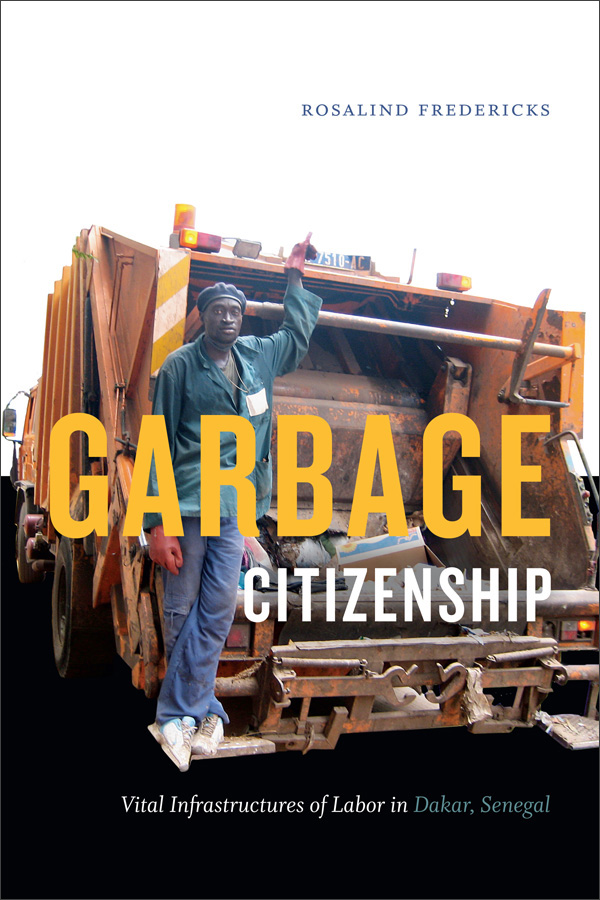
Bringing space down to Earth

An “anthropology off the Earth” therefore seems like the obvious next step for the discipline when humanity has entered the space age. And indeed, outer space is no longer the exclusive domain of what is usually designated as “hard” science. Today supposedly “messier” or “softer” sciences play an increasing role, exerting significant influence on how the extraterrestrial is portrayed and understood. A growing number of researchers in the social sciences and the humanities have begun to focus on the wider universe and how it is apprehended by modern cosmology. Call it the “four S”: social studies of space science. What unites these efforts is that the many surprises you may encounter “out there” also tell us something about ourselves, here on this planet. Space science gives us access to something that surpasses humanity and yet simultaneously contains it. Astronomy doesn’t stand apart from more earthly pursuits. The quest for an Earth-like planet not only promises a better understanding of places elsewhere in our galaxy but also provides a mirror for examining terrestrial relations from a different perspective. Anthropology can contribute to bringing space science down to Earth by its firm grounding in participant observation, its twin process of familiarization and alienation, and its attention to dimensions that are not spontaneously considered by space scientists: inequalities of gender, class, and ethnicity; legacies of colonial and imperial approaches; and terrestrial understandings of nation and nationalism. In a time of post-colonialism, gender equality, and trans-border flows, we must resist the language of “colonization,” “manned” missions, and “frontiers.”

I first used Placing Outer Space as a primer in space and planetary science. Before completing her PhD in MIT’s program in History, Anthropology, and Science, Technology and Society, Lisa Messeri took a Bachelor’s degree in aerospace engineering, and is deeply familiar with the environment in which she immersed herself for her fieldwork. Focusing on planetary scientists as the main target of her ethnographic study, she describes the practices and techniques that allow them to transform planets from abstract objects into places full of meanings and considered from the point of view of potential habitability. Her knowledge of planetary science vastly exceeds the few nuggets I retained from junior high school and teenage readings. I was reminded that there used to be water on Mars, and that the Moon and the Earth were once one and the same. I knew about gravitational pull and orbiting ellipses that make planets dance around the Sun in a well-designed choreography. I had to update some basic facts such as the list of planets in the solar system: apparently, Pluto is no longer a planet (says who?, asks Messeri in a 2010 article.) I had vaguely heard of the existence of planets outside the solar system, but I was surprised to learn that the first detection of an extrasolar planet orbiting a Sun-like star only happened in 1995. Before that, exoplanets were a conjecture deduced from statistical reasoning: considering the almost infinite number of stars in the universe, it is only logical that some may have planets orbiting them. By the same token, scientist also deduce the existence of Earth-like planets, and conjecture that a fraction of these planets can also support life. Some physicists speculate on the number of inhabited planets in the universe, and make a probabilistic argument about the existence of extraterrestrial civilizations that may be able to communicate with us (this is called the Drake equation and was first proposed in 1961.)

Finding exoplanets

These dreams and speculations, what Messeri calls the “planetary imagination,” have always animated space research. What is new with modern planetary science is that now these theoretical musings can be backed by hard numbers and observations. Scientist have embarked on a quest to find Earth-like worlds and environments that may be conducive to life on other planets. This is an almost impossible task: Lisa Messeri compares it to spotting a firefly with a searchlight when you are in the East Coast and the searchlight is in California. And yet, since the detection of the first exoplanet in 1995, more than a thousand exoplanets have been confirmed at the time of Messeri’s writing. A more recent estimate indicates that more than 4,000 exoplanets have been discovered and are considered “confirmed.” However, there are thousands of other “candidate” exoplanet detections that require further observations in order to say for sure whether or not the exoplanet is real. Messeri explains us how this detection and confirmation process works. Telescopes collect starlight and measure how the flux or energy output of a star changes over time. Applying several filters, and separating signal from noise, astronomers are able to detect a U-shaped dip in the light curve: this is the signature of an exoplanet, the sign that a planet has passed in front of a star and has blocked a minuscule fraction of the star’s light. Further tinkering with the data allows the researcher to estimate the distance of the planet from the star and its approximate mass and density. These measures will tell you whether this planet is “habitable,” whether it is made from solid rock and able to sustain water. Based on spectrum data, you can even speculate about the existence of an atmosphere and its temperature. But for the moment, finding and describing an exoplanet is as much a work of science as an art of persuasion: you have to convince colleagues that the squiggle in the data that you detect is indeed the signature of a celestial body. Young scientists-in-training have to learn how to see a stream of data as a planet, as a world. It is the ability to conjure worlds that reinforces the community of exoplanet astronomers. Their faith unites them in the pursuit of the holy grail: the discovery of a planet just like our own orbiting a star like the Sun.

Because of rapid advances in detection and computing technologies, almost all data are digital in observational astronomy nowadays. As a result, its practitioners have become more akin to number crunchers than skywatchers. As Messeri notes, “inspiration might strike while gazing up at the night sky, but the real work happens in front of a computer, and discourse is dominated by methods of data processing and analysis.” In daily conversations, the feeling of excitement comes not from speculating about habitable planets but from marveling over how “clean” the dataset looks. Exoplanet astronomy increasingly relies on space-based telescopes that beam large streams of big data back to Earth. But despite this transition to a remote model of observation, researchers still find it useful to travel regularly to observatories built on mountaintops in exotic locations. Messeri accompanies an exoplanet researcher and her PhD student to the Cerro-Tolol Inter-American Observatory (CTIO) in central Chile. Habiting a mountain observatory, even on a temporary basis, is justified on several grounds. It anchors astronomers into the history of their discipline, as old observatories in lower altitudes are often turned into space museums. It is a rite of passage into the profession for aspiring researchers, and generates social interactions and face-to-face collaboration between members of the same epistemic community. It allows astronomers to tinker with the equipment and to interact with technicians. And as Messeri notes, “being at the observatory affords one of the few chances to remember and reconnect with the awesomeness of a dark sky.” Going to faraway places on top of mountains reminds astronomers that the ultimate goal of their quest is to inhabit another world. It is also, in a way, a voyage of conquest and annexation. In conversation with Peter Redfield’s Space in the Tropics, an ethnography on the French space program in French Guiana, the author explores how observatories are “situated in a landscape with multiple histories and ties to the local, even if there are actions (intentional or not) that seek to exclude the local.”

Earth-centrism and post-colonialism

Other aspects links exoplanetary science to a post-colonial enterprise. Finding an exoplanet is by definition an Earth-centered enterprise: an habitable planet is defined as a planet that offers an acceptable environment for human beings. The “habitable zone” circling a certain category of star is defined as a region in which a planet would receive neither too little nor too much heat, and where liquid water and an oxygen atmosphere could be sustained. Due to Earth-centrism and other speciesism bias, we cannot conceive of a place conducive to life that would be devoid of these elements. The vision of Mars as a terrain for exploration and discovery also remains clouded by an Earth-centric bias. In two chapters, Messeri describes how Mars scientists transform the Earth into a Martian kind of place by simulating habitat into extreme desert environments, and how they help to bring Mars down to Earth by mapping its rugged terrain with the help of satellites images and the pictures taken by the Rover missions. By stating that “humanity’s new frontier can only be on Mars,” the Mars Society, which funds the Mars Desert Research Station in the Utah desert, is reinvigorating the rhetoric of exploration, the frontier, and colonization that reminds us of “how the West was won” and populations subjected to the logic of empires. In an age in which a proliferation of new space ventures look set to explore and exploit outer space in the interests of those who are capable of sponsoring such efforts, Messeri warns us about “the inherent hierarchies and exclusions that come with place-making practices.” But she also notes that space exploration, including commercial space flight and space tourism, is in a large part “orthogonal to profit,” and underscores that “the aim of this book is not to unpack the white, American, imperial subtext of invocations of exploration.” Taking the discourse of planetary scientist at face value, she prefers to insist on the moral element that comes with the perception of our place in the cosmos.

As noted earlier, anthropology, with its habit of making the unfamiliar familiar and of looking at our earthly condition from afar, is a welcome companion to space science and the quest for habitable planets. By positioning the Earth as one planet among many on which humans might be capable of living, social studies of outer space can help us to make sense of what it means to be on Earth. The planetary imagination is sustained by the effort to envisage what it is to be like in other worlds. The Mars mission in the Utah desert prepares astronauts to the condition humans could face in a Martian colony. Earth is being transformed into a laboratory of sorts, where scientists experiment with life on other planets. In the process, astronomy is becoming a fieldwork-based science, not unlike anthropology itself. Fieldwork is grounded in a notion that “being there” is a valuable and telling experience, and scientists trained in geology can pierce up a narrative about Mars based on the shapes of dried-up rivers, the tumbling of craters, and the presence of rock concretions. The 3D-mapping of Mars shows the Red Planet on a human scale and allows the user to “see like a rover” by navigating the landscape in an immersive experience similar to the one offered by Google Maps. These open-source maps and user-friendly interfaces assume and thus disseminate an inherent worthwhileness in studying other planets, and act as a recruiting and advocacy tool for NASA. Turning Mars into a place on Earth, and preparing to make an earthly place out of Mars, also helps us to understand our own planet in unfamiliar terms. Earth is literally made alien when seen from outer space, as in the famous Blue Marble image made from the Voyager-1 spacecraft that ushered a new ecological consciousness about the finite resources of our planet. As Messeri notes, “the most prominent legacies of the space age are not prolonged human presence in space and exploration of nearby planets but a new way to observe and study our own planet.” Similarly, the quest for an Earth-like planet is not driven by the hubris to conquer other worlds, but by the belief that humans will finally feel less cosmically alone.

Place-making and being out of place

Lisa Messeri’s distinct contribution in Placing Outer Space lies in her analysis of the role of place in planetary science and astronomy. Drawing from insights ranging from critical geography’s conceptualization of space as a social, historical, and political phenomenon, to Heidegger’s Heimatlosigkeit, she finds that place-making is central to the work of outer space scientists who transform infinite space into a definite place to be. As she argues, place “is not just a passive canvas on which action occurs but an active way of knowing worlds. Even when place is not self-evident, as perhaps with invisible exoplanets, it is nonetheless invoked and created in order to generate scientific knowledge.” Place transforms the geographically alien into the familiar, and helps us to imagine other planets as habitable worlds. Place is more than a given category; it is a way of knowing and of making sense. It involves the four processes of narrating, mapping, visualizing, and inhabiting that are used by scientists to imagine themselves in other worlds. The author sees an irony in the tension between the urge to see planets as places and the increasing sense of placelessness that we experience on Earth. Astronauts and space scientists increasingly spend time away from office or from home, turning a seat and a laptop in a conference venue or in an observatory into a working environment. The need to inhabit a physical space is declining just as the desire to detect a habitable planet is on the rise. With remote access to the Internet and data stocked in clouds, our mode of being seems increasingly disconnected from place. And yet, place is where we long to be, the destination that invites us to make ourselves at home, on Earth as it is in heaven.

Set, Set, Set, Set, Set, Set

A review of Garbage Citizenship: Vital Infrastructures of Labor in Dakar, Senegal, Rosalind Fredericks, Duke University Press, 2018.

Garbage CitizenshipIn 1990, Youssou N’Dour, Senegal’s most famous musician, released an album titled Set. The main song had the following line: Set, set oy. Ni set, set ci sa xel lo, ni set ci sa jëff oy… I had no idea what it meant, but in her book Garbage Citizenship, Rosalind Fredericks provides translation and context: Cleanliness, oh cleanliness. Be clean, pure in your spirit, clean in your acts… The injunction to be clean and to make clean (set setal in wolof), repeated in the song’s chorus, echoes the rallying cry of a grassroot movement in which young men and women set out to clean the city of Dakar from its accumulating garbage, substituting a failing urban waste infrastructure and denouncing the corruption of a polluted political sphere. Labelled as an exemplary case of participatory citizenship and youth mobilization, the movement was captured by political clientelism and made to serve the neoliberal objectives of labor force flexibility and public sector cutbacks. At the height of the movement in 1989, Dakar’s mayor made a shrewd political calculus to recruit youth activists into a citywide participatory trash-collection system. Their incorporation into the trash sector was facilitated by a discourse of responsibility through active participation in the cleanliness of the city. They became the backbone of the municipal waste management system and remain included in the sector’s labor force to this day. The history of the Set/Setal movement is only one of the case studies that Rosalind Fredericks develops in her book. The author finds the same activists who spontaneously took to the streets to clean up Dakar in 1988-89 having moved into low-pay positions as trash workers in a reorganized infrastructure that used derelict garbage trucks and often delayed payment of salaries. Together with their labor union leaders, they staged another kind of public protest in 2005-07: the garbage strike, supported by Dakar inhabitants who brought their household dumpings to the main arteries of the capital and piled them for all politicians to see. Other cases studied by the author include a NGO-led, community-based trash collection project in a peripheral neighborhood mobilizing voluntary women’s labor and horse-drawn carts, and the functioning of a trash workers’ union movement affirming the dignity of labor through discourses of Islamic piety.

Governing through disposability

Garbage Citizenship is a book with high theoretical ambitions. It purports to make “theory from the South” by detailing the transformation of trash labor in contemporary Dakar. The book challenges the notion that African cities represent exceptions to urban theories, and reveals the complex mix of clientary politics, social mobilization, material things, and religious affects unleashed by neoliberal reform. It makes a novel contribution to urban studies by emphasizing the human component of infrastructure, the material aspects of municipal work, and the cultural embeddedness of human labor. Gender, ethnicity, age group, and religious affiliation come to the fore as particularly consequential shapers of sociopolitical community and citizenship practices. Inspired by new currents in critical theory loosely defined as “new materialisms,” Fredericks treats trash infrastructure as vibrant, political matter and emphasizes its material, social, and affective elements. She complements the political economy of neoliberal reforms and urban management in Dakar with a moral economy of filth and cleanliness through which social relations and political belongings are reordered. Although it is by definition dirty, trash work can be seen simultaneously as a process of cleaning and purification. The Islamic faith as it is practiced in Senegal offers an alternative discourse to the technocratic vision of good governance and efficient management that is imposed by development agencies upon Dakar’s municipal services. To sum up the book’s contribution, Garbage Citizenship develops a three-pronged critique of neoliberalism, of participatory development, and of the “materialist turn” in social science scholarship. Let me expand on these three points.

First, Garbage Citizenship offers a critique of neoliberalism grounded in social science theory and ethnographic observation. Such critique has become standard in the anthropology literature, where the logic of structural adjustment imposed by multilateral institutions and global capital is described as wreaking havoc on local livelihoods and state-supported social services. Privatization, the shrinking of public budgets, the retreat of the state, and flexibilization of labor have unleashed intense volatility in the management of urban public services and, more specifically, in the garbage collection sector in Dakar. As one of the first African countries to undergo structural adjustment, Senegal was a test case for experimenting with various formulas of public-private partnership, labor de-unionization, technological downscaling, and participatory development. The chronology of neoliberal reforms shows that structural adjustment is unmoored from political forces: the “neoliberal” president Abdoulaye Wade operated a renationalization of the waste management sector facing mounting debts and collection crises, while Dakar’s Socialist mayor Mamadou Diop orchestrated the retreat of municipal services through flexibilization of the formal labor force and the mobilization of community-based efforts for collection. What makes Garbage Citizenship’s critique different from other denunciations of neoliberalism is its empirical focus on the way that state power is materialized in everyday infrastructure, and on how life under neoliberalism is experienced daily by municipal workers and citizens alike. Garbage often stands in as the quintessential symbol of what’s wrong in African cities. The challenge of managing trash, in other words, acts as a potent metaphor for the African “crisis” writ large. Garbage Citizenship raises questions about the material and symbolic “trashing” of the continent by grounding them in the everyday politics of trash labor and governing-through-disposability. Through garbage strikes and illegal dumping of waste, Dakar’s residents mobilize the power of waste as both a symbol of state crisis and an important terrain on which to battle for control of the city.

Treating people as infrastructure

Another basic recommendation of neoliberalism, indeed of standard economics, is that labor be substituted to capital in countries with an abundant labor force and limited access to financial resources and technology. Fredericks describes how this substitution of labor to capital operates in concrete terms: through the devolution of the burdens of infrastructure onto precarious laboring bodies—those of ordinary neighborhood women and the formal trash workers themselves. The analysis illuminates how urban infrastructures are composed of human as much as technical elements and how these living elements can help make infrastructures into a vital means of political action and a tool for the formation of collective identities. The greatest burden of municipal trash systems was devolved onto labor: workers were furnished with little equipment for collection, if any at all, and existing materials were allowed to degrade. Municipal employees engaged in constant tinkering and bricolage work to keep the garbage collection trucks running. Some parts of Dakar, such as the posh central districts of Plateau and Médina, were well served by state-of-the-art French equipment operated by international companies selected through opaque bidding processes. The poorer and more populous parts of the city had to rely on second-hand garbage trucks that often broke down or were left completely off the collection grid, with ruinous effects for people’s health and the environment. Waste collection is hazardous work, and workers in the garbage sector bear the brunt of labor’s deleterious effects in the form of endangered lives and damaged health. Governing-through-disposability makes laboring bodies dispendable and orders urban space along a logic of making clean and letting dirty. By substituting labor to equipment and treating people as infrastructure, the neoliberal state treats people as trash.

Second, Garbage Citizenship provides a critique of developmentalism, a theory that is sometimes presented as a gentler substitute to neoliberalism. Developmentalism emphasizes the human aspects of development. It asserts that state bureaucrats become separated from politicians, which allows for the independent and successful redevelopments of leadership structures and administrative and bureaucratic procedures. It promotes community-driven development as a solution to the disconnect between the population and public service providers. Critics often point out that developmentalism is linked to depolitization: it treats development as an anti-politics machine, and rests on the assumption that technocratic fixes can alleviate austerity measures in the face of widespread unrest and social dislocation. For Fredericks, garbage is a highly political matter. Dakar’s garbage saga is inseparable from the evolution of national politics, with the decline of the Socialist Party under Abdou Diouf from 1988 to 2000, Abdoulaye Wade’s alternance and his failed dream of an African renaissance from 2000 to 2012, and the consolidation of state power under president Macky Sall. It is also emmeshed in municipal politics. Dakar’s Socialist mayor Mamadou Diop used the Set/Setal movement to reward and recruit new Party members from the ranks of the youth. Creating new jobs was explicitly based around a political calculus that traded patronage with enrolment into municipal work. The community-based trash system was touted as an important demonstration of the mayor’s commitment to youth and to an ideal of participatory citizenship. Participants remember the “Journées de Propreté” (Days of Cleanliness) as overt Socialist Party political rallies. Under President Wade, the trash management system became the locus of a power struggle between the municipal government and state authorities. The sector saw eight major institutional shake-ups, and equipments constantly changed hands while workers received only temporary-contract benefits and day-labor pay rates. Upon taking office, Macky Sall announced his intention to dissolve Abdoulaye Wade’s new national trash management agency and relocate Dakar’s garbage management back into the hands of local government. The municipality found an agreement with the labor union, and workers won formal contracts and higher salaries.

The perils of community

Community participation and women’s empowerment are a key tenet of developmentalism and have been adopted by aid agencies as a new mantra conditioning their support. For Fredericks, we need to unpack these notions of community, participation, and empowerment. Often imagined as unproblematic sites of tradition and consensus, communities are produced through systems that harness the labor of specific members as participants and mobilize the “glue” of communal solidarity. Empowering some people often means disenfranchising others, and interferes with existing relations of power based on gender, ethnicity, and local politics. In the case under study, ENDA, a well-established NGO, partnered with leaders from the Lebou community in the neighborhood of Tonghor, on the road to Dakar’s airport, to establish an off-the-grid garbage collection system based on horse-drawn carts and the work of “animatrices” charged with educating neighborhood women on how to properly store, separate, and dispose of their garbage. The project resonated with a vision of community-driven development using low-tech, environment-friendly solutions that even poor people can afford and can control, and that can be replicated from community to community. But the analysis finds that the ENDA project produced an elitist, ethnicized image of community and that women were subjected to dirty-labor burdens as the vehicule of these development agendas. The “empowered” animatrices, drawn from the Lebou ethnic group, were not remunerated for their services and had no choice but to participate out of a sense of obligation to their communities, as enforced by the power and authority of community leaders. The village elders explicitly chose the animatrices using “social criteria” from respected but poor Lebou households, and used the project to their own ends in order to reinforce their autonomy from the Dakar municipality. The neighborhood women whose garbage practices were being monitored often came from a disenfranchized ethnic group and were stigmatized for their “unclean” habits and filthy condition. They were often the least willing and able to pay the user fee for garbage collection, and had to resort to the old practice of burying their waste or dumping it on the beach by night. In the end, the project was terminated when garbage began to accumulate in the collection station near the airport, attracting hundreds of circling birds and the attention of national authorities.

As a third contribution, Garbage Citizenship makes an intervention in the field of critical theory. The author notes the recent resurgence of materialist thinking in several disciplines, and intents to provide her own interpretation of the role of inanimate matter and nonhuman agencies in shaping social outcomes and policy decisions. Garbage grounds the practice of politics in the pungent, gritty material of the city. It forces politicians to make or postpone decisions, as when trash strikes and collection crises choke the capital’s main arteries with piles of accumulating dump. A toxic materiality is a central feature of trash politics: garbage’s toxicity manifests itself by its stench and rot that make whole neighborhoods repellent and attracts parasitic forms of life such as germs and rodents. To borrow an expression from Jane Bennett, trash is “vibrant matter” in the sense that it becomes imbued with a life of its own, straddling the separation between life and matter and making discarded things part of the living environment. Garbage also participates in the “toxic animacies” identified by Mel Chen who writes from the same perspective of vital materialism.  This vitalist perspective emphasizes the relational nature of material and social worlds and the intersecting precarities they engender. Trash renders places and people impure through threats of contagion: as anthropologist Mary Douglas underscored in her book Purity and Danger, discourses about dirt as “matter out of place” produce social boundaries and thereby structure and spatialize social relations. According to Fredericks, governing-through-disposability is a particular modality of neoliberal governance, determining which spaces and people can be made toxic, degraded, and devalued. It makes visible, smelly and pungent the invisible part of society, the accursed share of human activity, the excessive and non-recuperable part of any economy which must be discarded and cast away. The Mbeubeuss municipal landfill, where waste accumulates in open air, is the monstrous shadow of Dakar, a grotesque double that reveals the obscene underbelly of taken-for-granted urban life. But it should be pointed out that Garbage Citizenship is not a work of critical theory: Fredericks is not interested in building theory for its own sake, and she uses vital materialism, toxic animacies, and symbolic structuralism as tools to show how the power of waste is harnessed to different ends in specific conjunctures.

Islam is the solution

What’s new in Frederick’s new materialism is that it doesn’t treat religion as an ideological smokescreen or as the opium of the people. The author underscores the particular importance ascribed to purity and cleanliness as an indispensable element of the Islamic faith. The Set/Setal movement, with its call of making clean and being clean, drew from a religious repertoire and strove to cleanse the city in a literal sense, in terms of sanitation and hygiene, but also morally in a fight against corruption, prostitution, and general delinquency. No longer waiting for permission or direction from their elders, young men and women took ownership of their neighborhoods and bypassed the power of marabouts and the Muslim brotherhoods who had traditionally channeled support toward local and national political authorities. Youth activists, some of them educated, had never imagined of working in garbage as their profession But the stigma attached to being a trash worker and doing dirty labor was overruled by the spiritual value attached to cleanliness and purity, which saw the task of cleaning the city as an act of faith, a calling even akin to a priesthood. A materialist reading of religion emphasizes religious work as bricolage. Fredericks describes the art of maintaining dignity and pride in an environment of impurity and filth as a piety of refusal. This conception of “material spirituality” includes  religious faith in the social and affective components of infrastructure. The piety of refusal also offers a language through which management decisions can be contested and the value of decent work is reaffirmed. Waste workers in Dakar harness the power of discourses of purity and cleanliness as a primary weapon in the fight for better wages and respect. In Fredericks’s interpretation, Islam offers a potent language with which to critique Senegal’s neoliberal trajectory and assert rights for fair labor. This politics of piety emphasizes Islam as the solution, but not in the sense that the Muslim Brotherhood and proponents of political Islam understand it: the demands put forward by trash workers and their union leaders are articulated with a Muslim accent, but only to emphasize the dignity of life and the decency of labor. In the context of urban waste management and unionized mobilization, Islam may provide the language for constructively contesting neoliberal austerity.

The Brazilian Buttock Lift

A review of Pretty Modern: Beauty, Sex, and Plastic Surgery in Brazil, Alexander Edmonds, Duke University Press, 2010.

Pretty ModernIn Brazil, women claim the right to be beautiful. When nature and the passing of time don’t help, beauty can be achieved at the end of a scalpel. Plastic surgery or plástica is not only a status good or the preserve of socialites and celebrities: according to Ivo Pitanguy, the most famous Brazilian plastic surgeon and a celebrity himself, “The poor have the right to be beautiful too.” And they are banking on that right. Rio and São Paulo have some of the densest concentrations of plastic surgeons in the world, and financing plans have made plástica accessible to the lower middle class and even to favela residents. While in the United States, people may hide that they have had plastic surgery like it’s something shameful, in Brazil they flaunt it. The attitude is that having work done shows you care about yourself—it’s a status symbol as well as a statement of self-esteem. Cosmetic surgery’s popularity in Brazil raises a number of interesting questions. How did plastic surgery, a practice often associated with body hatred and alienation, take root in a country known for its glorious embrace of sensuality and pleasure? Is beauty a right which, like education or health care, should be realized with the help of public institutions and fiscal subsidies? Does beauty reinforce social hierarchies, or is attractiveness a “great equalizer” that neutralizes or attenuates the effects of class and gender? Does plástica operate on the body or on the mind, and is it a legitimate medical act or a frivolous and narcissistic pursuit? Does beauty work alienate women or is it a way to bring them into the public sphere?

Class, race, gender, and plástica

Alexander Edmonds, an American anthropologist, answers these questions by mobilizing the three key dimensions of his discipline: class, race, and gender. Brazil is a class society with one of the most unequal wealth distributions in the world. It is also a society organized along racial lines, even though a long history of miscegenation has blurred color lines and made racial democracy part of the national identity. Brazil continues to have large gender gaps within the workforce and government representation. The country’s supposedly large number of exotic, attractive and sexually available women makes it a masculinist fantasy worldwide, while Brazilian feminists face enduring challenges. All these issues relate in one way or another to the availability of cosmetic surgery, the quest for beauty and attractiveness, and the development of medicine into new terrains of well-being and self-esteem. Pretty Modern mixes several strands of literature. It is a travelogue into contemporary Brazil, a deep dive into its history and culture, a journalistic description of the cosmetic surgery industry, a philosophical treatise on beauty and appearances, a personal memoir about the impasses of erudite culture and the wisdom of ordinary people. It even contains samba lyrics and color pictures of scantily clad models.

The Brazilian constitution recognizes the human right to health. It doesn’t recognize the right to beauty, but cosmetic surgery is provided for free or at subsidized rates in public clinics such as the Santa Casa da Misericórdia in Rio. Surgeons perform charity surgeries for the poor to get practice in large residency programs before opening their private clinics. Some medical doctors come from afar to learn how to operate barrigas (bellies) or bundas (buttocks), techniques that come predominantly from Brazil. Ivo Pitanguy himself, the pioneer of plastic surgery in Brazil, learned the trade from Europe before bringing it back to Rio and taking it to a new level. His democratic ethos has been maintained by his disciples who share his vision of cosmetic surgery as psychotherapeutic intervention that should be accessible to all. Pitanguy famously defined the plastic surgeon as “a psychologist with a scalpel in his hand,” echoing the saying that “the psychoanalyst knows everything but changes nothing. The plastic surgeon knows nothing but changes everything.” Women see their operations as a form of psychological healing; given the choice, they prefer the surgeon’s scalpel than the couch of the psychoanalyst. Plástica has psychological effects for the poor as well as for the rich: surgery improves a woman’s auto-estima, self-esteem, and is considered as a necessity, not a vanity. Appearance is essential to mental well-being, economic competitiveness, and social and sexual competence. If we follow the WHO’s definition of health as “a state of complete physical, mental and social well-being,” then beauty work represents the new frontier in the pursuit of happiness.

The right to beauty

Of course, the growth of cosmetic surgery has not been without controversy. A “right to beauty” seems to value a rather frivolous concern in a country with more pressing problems—from tropical diseases, like dengue, to the diseases of modernity, like diabetes. Brazil has a health system divided into a public and a private sector with different standards of care, and the poor often see their universal right to healthcare obstructed by long queues, squalid conditions, and substandard practice. Cosmetic surgery stretches medical practice into an ambiguous grey zone where the Hippocratic oath doesn’t always fully apply. The growth of plástica has also been accompanied by a rise in malpractice cases, insurance fraud, and media stories of horrific complications. Some Brazilian critics see the new fashion of breast enlargement as a form of cultural imperialism brought by Euro-American influence in a country that has long valued small boobies and big booties (the ever-popular butt implant raises fewer cultural concerns.) Beauty ideals peddled by women’s magazines are blamed for eating disorders and body alienation. Cultural elites from the West see the pursuit of the artificially enhanced body as vain, vulgar, and superficial, betraying a narcissistic concern with the self. But who is one to judge? asks Alexander Edmonds, who confesses he shared some of the misapprehensions of the distanced scholar before he was confronted with a candid remark by a favela dweller: “Only intellectuals like misery. The poor prefer luxury.” Even though it is not common for a scholar to glance through local versions of Playboy or watch telenovelas titled “Without Tits, There is no Paradise,” the anthropologist knows the heuristic value of suspending one’s judgment and immersing oneself into the life-world of cultural others through participant observation.

Race raises another set of issues. Here too, North Americans have been accused of exporting their cultural imperialism, with its bipolar racial categories and immutable color line, in a country that has long prided itself for its racial democracy and color fluidity. In fact, Brazilians are very race-conscious. But rather than grouping people into races defined by ancestry, the local taxonomy describes subtle variations in appearance along a continuum. The national census racially classifies the Brazilian population in five color types: branco (white), pardo (brown), preto (black), amarelo (yellow), and indigenous. But in everyday usage, more than 130 color types have been identified. Brazil’s famous “rainbow of color terms” intersects with class and gender. In Brazil moving up the social scale can be seen as a form of whitening. For example, a light-skinned multiracial person who held an important, well-paying position in society may be considered branco while someone else with the same ethnogenetic make-up who had darker skin or was of a lower class may be considered pardo or even preto. But unlike in many parts of the world where lightness of skin tone is fetishized, in Brazil brown is beautiful. Many women pride themselves of being morena, a term that can mean both brunette and brown-skinned. On the other hand, blackness is stigmatized, and European facial features and hair confer social advantages. No wonder that “correction of the Negroid nose” is a standard surgery operation that raises few eyebrows, while Brazil remains one of the biggest consumer market for blonde hair dye.

The anthropology of mestiçagem

More than any other nation, Brazil’s self-image and national identity has been shaped by anthropologists. The Amazon Indian is known solely from the reports of ethnographers in the field, perpetuating the heritage of Claude Lévi-Strauss. Gilberto Freyre, a student of Franz Boas in the early twentieth century, provocatively reversed the scientific discourse on “miscegenation”  and its racist underpinnings by affirming the virtue of racial mixture and cultural syncretism. Freyre’s celebration of idealized and eroticized mestiçagem played a central role in defining Brazilian national identity. Sexuality—especially across racial lines—became a key symbol for the formation of a new, mixed population with positive traits, such as cordiality and physical beauty. But more recently sociologists have deconstructed the myth of racial democracy by documenting the persistent racial inequalities in wealth and income, access to education and social services, and representations in the media and in the political sphere. Governments introduced controversial quotas to promote racial diversity in higher education and in the public sector. There has been a shift in the representation of race in the past twenty years. More dark faces now appear in telenovelas, ad campaigns, and variety shows, and multinational companies have found a new niche market for black beauty products, fashion, and cosmetics. Afrodescendentes are adopting a black hairstyle and a negra identity as well as narratives of racial pride and militancy. It is too early to say whether affirmative action and identity politics will substitute to mestiçagem and the rainbow of colors, but the emergence of the black movement in Brazil also confirms the significance of the aesthetic dimension of modern subjectivities.

What does cosmetic surgery tell us about gender relations and women’s roles? Contrary to a popular perception, women do not engage in beauty work to comply to men’s expectations and submit themselves to the male gaze. They do it on their own terms, to follow their own desires or to respond to society’s “interpellation.” Motives may vary across social class, age category, and marital status. Some Brazilian women can be openly frank about it: “After having kids, I’ll have to do a recauchutagem [refurbishing, normally of a car]. After shutting down the factory, nê?” Plastic surgery is closely linked to a larger field that manages female reproduction and sexuality. It is not coincidental that Brazil has not only high rates of plastic surgery, but also Cesarean sections (70 percent of deliveries in some private hospitals), tubal ligations (sterilization accounts for half of all contraceptive use), and other surgeries for women. Some women see elective surgeries as part of a modern standard of care available to them throughout the female life cycle. Cosmetic surgery can mark key rites of passage: initiation into adulthood, marriage, motherhood, divorce, and menopause. The transformative events by far the most often mentioned in connection with plástica are pregnancy and breast-feeding. Tensions between motherhood and sexuality are analyzed in detail by Alexander Edmonds, who mentions that both are equally important for self-esteem. Drawing on a range of examples—from maids who aspire to acquire cosmetic surgeries, to favela residents who dream of entering the fashion world, to single mothers who embrace plastic surgery as a means of erotic body scuplting—he describes how sexual and class aspirations subtly mingle in beauty culture.

The right of the Brazilian morena

In his last book Modos de homem, modas de mulher, published shortly before his death in 1987, Gilberto Freyre warned against “yankee influence” and the impact of “north-Europeanization or albinization”: “one must recognize the right of the Brazilian brunette to rebuke northern-European fashions aimed at blonde, white women.” In Pretty Modern, Alexander Edmonds shows that the right of the Brazilian morena is not to be abolished. The tyranny of fashion applies more than elsewhere in a country where bodies are being refashioned to fit aesthetic and sexual mores. But Brazilian plástica does not follow an American or north-European blueprint. If anything, it leads the way that other emerging countries in Latin America or East Asia are also beginning to tread. There, the female body is invested with hopes of social mobility and self-accomplishment that demand long-term investment and management. In poor urban areas, beauty often has a similar importance for girls as soccer (or basketball) does for boys: it promises an almost magical attainment of recognition, wealth or power. For middle-class cariocas, the body is a source of distinction and success. For many consumers, a lean and fit body is essential to economic and sexual competition, social visibility, and mental well-being. Beauty culture interpellates women as autonomous sexual beings and as economic agents in markets where physical attractiveness can be exchanged with various kinds of cultural and economic resources. This anthropologic study shows that cosmetic surgery arises in unison with a central concern for Brazilian women: staying young, sexy, and beautiful.

Race, Culture, and the Origins of American Anthropology

A review of Anthropology and the Racial Politics of Culture, Lee D. Baker, Duke University Press, 2010.

Lee Baker AnthropologyAnthropology in America at the turn of the twentieth century presents us with a double paradox. Cultural anthropologists wanted to protect Indian traditions from the violent onslaught of settler colonialism, and yet prominent voices among Indian Americans accused them of complicity with the erasure of their beliefs and cultural practices. They thought the culture that African Americans inherited from exile and slavery was not worthy of preservation and should dissolve itself into the American mainstream, and yet African American intellectuals praised them for the recognition of cultural difference that their discipline allowed. As Lee Baker puts it, “African American intellectuals consistently appropriated anthropology to authenticate their culture, while Native American intellectuals consistently rejected anthropology to protect their culture.” What made cultural assimilation the preferred choice in one case, and cultural preservation the best option in the second? How did the twin concepts of race and culture shape the development of anthropology as an academic discipline? In Anthropology and the Racial Politics of Culture, Lee Baker introduces a distinction between in-the-way people, the so-called “Negroes” as black persons were designated and self-identified at the time, and out-of-the-way people, the Native Americans or “Indians” who were relegated to the margins of American society.

Kill the Indian and save the man

In the end of the nineteenth century, the federal government’s policy towards American Indians was one of assimilation, privatization of tribal lands, and the suppression of native cultures. “Kill the Indian and save the man” was the slogan of that era: proponents of assimilation barely veiled their desire for the complete destruction of Indian beliefs and cultural practices. A generation later, however, cultural preservation and self-determination became the watchwords of federal policies governing Native Americans. The Wheeler-Howard Act of 1934, better known as the Indian Reorganization Act or the “Indian New Deal,” was designed “to conserve and develop Indian lands and resources; to extend to Indians the right to form business and other organizations; to establish a credit system for Indians; to grant certain rights of home rule to Indians; to provide for vocational education for Indians; and for other purposes.” Anthropology played an important role in this shift in federal Indian policy. The study of American Indian languages, customs, and material culture was at the origin of the American School of Anthropology: in an indirect way, Native Americans played a prominent role in the history of the discipline. Franz Boas, the founding father of American anthropology, famously demonstrated that one cannot rank-order races and cultures along a single evolutionary line, thereby acknowledging Indian Nations as historically distinct cultures that should be preserved, valued, and otherwise acknowledged. And yet many educated, self-proclaimed Indian elites resisted the anthropological gaze, claiming for their folk equal treatment and access to US citizenry.

The essence and primary task of American anthropology was the study of American Indians. But knowledge production went along cultural destruction: indeed, the urge to inventory Indian languages and culture was predicated upon their rapid disappearance. The need to “salvage the savage” fueled very different projects: progressive white anthropologists and conservative Indian traditionalists were committed to conserving and celebrating indigenous practices, while progressive Indian activists and conservative Christian reformers believed in mutual progress, civilization, and integration into the mainstream. These two competing visions clashed during the so-called peyote hearings held at the US House of Representatives in the winter of 1918, when the temperance movement tried to make the use of peyote a federal offense. What and who was authentically Indian, and what and who was not, was the subject of intense debate. Zitkala-Ša, also known as Gertrude Bonnin, argued for temperance in the name of civilizational values and racial uplift. James Mooney, an ethnologist from the Smithsonian institution, supported the ceremonial and medicinal uses of peyote and attacked the credibility of his opponent by challenging her authenticity: Gertrude Bonnin, he argued, “claims to be a Sioux woman, but she is wearing a woman’s dress from a southern tribe.” Debates went on whether the use of peyote was or wasn’t a genuine Indian practice, and references were made to the “ghost-dance craze” that had been banned by the Bureau of Indian Affairs in 1883, leading eventually to the massacre at Wounded Knee in 1890. The irony is that Zitkala-Ša dedicated most of her adult life to advocating greater awareness of the cultural and tribal identity of Native Americans. During the 1920s she promoted a pan-Indian movement to unite all of America’s tribes in the cause of lobbying for citizenship rights. In 1924 the Indian Citizenship Act was passed, granting US citizenship rights to most indigenous peoples who did not already have it.

Salvaging the savage

James Mooney, Gertrude Bonnin’s opponent in the peyote hearings, was also accused of “fabricating the authentic or producing the real.” Working for the Bureau of American Ethnology, an institution originally created to collect intelligence on Indian tribes in order to better subdue them, he developed from an early age a keen interest in American Indian cultures, and chose to work among those he deemed the most traditional. As Lee Baker notes, he was unscrupulous in his methods of acquiring sacred books and artifacts among the Cherokees, taking advantage of their social disintegration and economic poverty and gaining the trust of powerful men and women under false pretenses. He became the “arbiter of real Indians,” authenticating what was genuine and what was imported such as the biblical scriptures that Cherokee shamans and priests mixed with their sacred formulas. “In some cases, Lee Baker writes, he fabricated images and sounds of people outright in order to shape them into what he perceived as genuine.” But in a time dominated by assimilationist policies and a genocidal drive, he was sincerely devoted to salvaging Indian tribes’ history, folklore, and religion. He was moved to a fury by the massacre at Wounded Knee, and wrote scathing remarks about the attending missionaries who did not even offer a prayer for the deceased. He pioneered intensive participatory fieldwork long before it became the norm in anthropology, and took the time to observe various Native American tribes in the way they lived on a daily basis. His monograph The Ghost-Dance Religion and the Sioux Outbreak of 1890 was the first full-scale study of a nativist religion arising out of a cultural crisis. Mooney’s history and folklore remain definitive and vital to the Cherokee Nation today, and the stories and formulas he collected in his monographs are regularly republished.

“For every ten articles in the anthropological literature addressing American Indians, there was one discussing American Negroes or Africans.” Anthropologists were simply not interested in describing the culture of the many immigrant and black people who stood “in the way” of achieving a “more perfect union.” That job went to sociologists committed to the study of assimilation and race relations. According to Robert Park, one of the leading figures of the Chicago School of sociology, “The chief obstacle to assimilation of the Negro and the Oriental are not mental but physical traits (…) The trouble is not with the Japanese mind but with the Japanese skin.” In other words, what prevented integration and assimilation into the melting pot was not the specific culture of ethnic minorities, but racial prejudice and discrimination coming from the white Anglo-Saxon Protestant elite. The sociologists who studied race relations shared with the anthropologists the postulate that races were never inherently superior or inferior to each other. But each discipline embraced different ways of describing culture and behavior. Boas and his students at Columbia University built anthropology on the inventory of American Indian languages, customs, and material culture. Park and other Chicago sociologists focused on urban studies and the assimilation of immigrant minorities. For Park, there was no distinct African American culture: “While it is true that certain survivals of African culture and language are found among our American negroes, their culture is essentially that of the uneducated classes of people among whom they live, and their language is on the whole identical with that of their neighbors.” Progressive sociologists therefore advocated a policy of racial advancement focused on eliminating substandard housing, poverty, and racial segregation. But they also explained deviant behavior such as crime or drug use as the expression of a pathological subculture evolving from the conditions of urban ghettos.

Negro folklore

As anthropologists concentrated on Native Americans and sociologists dismissed the existence of a distinctive culture among African Americans, the task to collect stories, songs, and customs of the former black slaves fell on folklorists and educators. In the beginning of the twentieth century, the American Folk-Lore Society devoted several articles in its journal to African and African American folk traditions. The rationale for collecting and publicizing “Negro folklore” changed with the passing of time. In the 1890s, the first folklorists and black educators took to recording cultural practices of rural blacks in order to show that they could escape their backward condition and become enlightened citizens. Thirty years later, the New Negro intellectuals who led the Harlem Renaissance used folklore to embrace their African heritage and preserve their cultural roots. The same notebook of folklore with stories inspired by the African oral tradition was “first used to articulate the uplift project, and two decades later it was used to bolster the heritage project.” The schools at the origin of folklore collection followed the Hampton-Tuskegee model of educating African Americans to build their lives from basic skills. Drawing upon his experiences with mission schools in Hawaii, General Samuel Armstrong, the founder of the Hampton Normal and Agricultural Institute in 1868, used folklore as way to demonstrate how basic literacy and the learning of industrial skills could succeed at civilizing formerly enslaved people. Between 1878 and 1893, Hampton also experimented with Indian education, again employing the notion that industrial education helped to civilize the savages. Other black colleges, such as the Tuskegee Institute founded in 1881 by Hampton graduate Booker T. Washington, used the same approach in their program of racial uplift. Forty years later, the leaders of the New Negro movement turned to the anthropology developed by Franz Boas and his students to authenticate their culture and claim racial equality.

Anthropology emerged in the late nineteenth century as the science of race and the study of primitive cultures. How did anthropologists make the transition from the study of craniums to the theory of culture? What was at the origin of the three partitions of anthropology—the study of prehistorical remains, the comparison of physiological differences between races, and the social anthropology of primitive cultures? Lee Baker answers these questions by paralleling the life and work of Daniel Brinton, the first university professor of anthropology and a public intellectual of considerable influence at the end of the nineteenth century, and Franz Boas, who articulated a vision for anthropology based on cultural difference and racial equality. Brinton used the science of race to bolster the relevance of anthropology during distinguished career that began with antiquarian research in the 1880s and concluded with research that addressed relevant social issues and public problems in the 1890s. Like many people from his generation, he viewed racial difference in terms of inferiority and superiority, and placed the different human races in a hierarchy that culminated with the white race. Franz Boas, who is generally credited for debunking such racialist research in anthropology, did not attack these ideas right from the start. As a Jewish immigrant from Germany, his position within academia was insecure and he developed his original ideas only after he and anthropology were securely ensconced at Columbia University. But the assumptions of physical anthropology were directly challenged in a study Boas conducted between 1908 and 1910, published as Changes in Bodily Form of Descendants of Immigrants. Measuring the craniums of children, he was able to demonstrate that the environment played a significant role in determining physical attributes like head size, which were so often used to demarcate racial difference. His initial study of schoolchildren in Worcester, Massachusetts, which served as a foundation for his seminal work in physical anthropology, was almost derailed when parents and the local press expressed concern over the experiments that were inflicted on their children.

The Boas conspiracy

For Boas, this was the first in a long line of public assaults on his research and writings on race and culture. Franz Boas employed the skills of scientific observation to argue that all societies are part of a single, undivided humanity guided by circumstance and history, but none superior to another. We also owe to him the demonstration that cultures have different meanings and that anthropology needs not limit itself to only one interpretation. What mattered to him was the accumulation of facts and the inventory of differences. A successful ethnography should not focus on only one culture in order to patiently uncover its identity: the first and only goal of the science of man is the interpretation of differences. This analytical focus on variation makes him a precursor of structuralism, and his conception of an interpretive science announces later developments by Clifford Geertz. But for segments of the American public, Boas is not remembered for his scholarly contribution to the discipline of anthropology. Instead, he is considered as the initiator of “a vast left-wing conspiracy to destroy the idea that whites were racially superior to blacks and to impose a moral and cultural relativism that has forever crippled American civilization, and he did it with fraudulent data.” Lee Baker tracks the genealogy of this so-called “Boas conspiracy” from the Internet forums of white supremacists and KKK supporters to the anti-Semitic rant of the leader of the American Nazi Party interviewed by Alex Haley in 1966 and to the obscure texts of fringe intellectuals advocating “race realism” and the debunking of the “racial egalitarian dogma.” These unsavory readings remind us that anthropology has always been appropriated outside of the academy and has fueled projects that can be emancipatory, but also unashamedly racist and delusional.