
From Slumdog to Millionaire

A review of Producing Bollywood: Inside the Contemporary Hindi Film Industry, Tejaswini Ganti, Duke University Press, 2012.
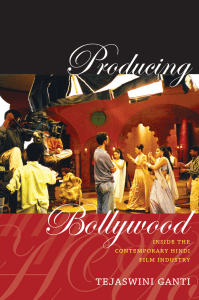
Imagine you are a foreign graduate student doing fieldwork in Hollywood and that you get to sit in a two-hour long interview with a major film star like Brad Pitt or Johnny Depp. This is precisely what happened to Tejaswini Ganti in the course of her graduate studies at the University of Pennsylvania when she was researching the local film industry in Mumbai, now better known as Bollywood. And it happened not only once: she sat in interviews with legendary actors such as Shah Rukh Khan, Aamir Khan, Shashi Kapoor, Sanjay Dutt, Amrish Puri, actress Ayesha Jhulka, as well as top producers and directors Aditya Chopra, Rakesh Roshan, and Subhash Ghai. What made this access possible? Why was a twenty-something PhD student in anthropology from New York able to meet some of the biggest celebrities in India? And what does it reveal about Bollywood? Obviously, this is not the kind of access a graduate student normally gets. Privileged access is usually granted to journalists, media critics, fellow producers, and other insiders. They observe the film industry for a reason: they are part of the larger media system, and they play a critical role in informing the public, evaluating new releases, building the legend of movie stars, and contributing to box-office success. As an anthropologist, Tejaswini Ganti’s approach to the Hindi film industry is different. As she states in her introduction, “my central focus is on the social world of Hindi filmmakers, their filmmaking practices, and their ideologies of production.” Her book explores “how filmmakers’ subjectivities, social relations, and world-views are constituted and mediated by their experiences of filmmaking.” As such, she produces little value for the marketization of Bollywood movies: her book may be read only by film students and fellow academics, and is not geared towards the general public. As befits a PhD dissertation, her prose is heavy with theoretical references. She draws on Pierre Bourdieu’s analysis of symbolic capital and his arguments about class, taste, and the practice of distinction. She uses Erving Goffman’s concept of face-work to describe the quest for respectability and avoidance of stigma in a social world associated with black money, shady operators, and tainted women. She steeps herself in industry statistics of production budgets, commercial outcomes, annual results, and box-office receipts, only to note that these figures are heavily biased and do not give an accurate picture of the movie industry in Mumbai.

Getting access

Part of Tejaswini Ganti’s success in getting access to the A-list of the Hindi film industry stems from her position of extraneity. As an “upper middle-class diasporic South Asian female academic from New York,” she didn’t benefit from “the privilege of white skin”—white European or American visitors could get access to the studios or film shoots in a way that no ethnic Indian outsider could—but she was obviously coming from outside and was not involved in power games or media strategies. For her initial contacts, she used the snowballing technique: personal friends in Philadelphia who had ties with the industry in Mumbai provided initial recommendations and helped her make her way through the personal networks and kinship relations that determine entry and access at every stage. Two different directors offered her the chance to join the team of directors assistants for two films, fulfilling the need for participant observation that remains a sine qua non in anthropology studies. People were genuinely puzzled by her academic interest in such a mundane topic (“You mean you can get a PhD in this in America?”) and eager to grant an interview to an outsider who had no stake in the game. Being a woman also helped: she “piqued curiosity and interest, often standing out as being one of the few—and sometimes only—women on a film act.” As she notes, she “did not seem to fit in any of the expected roles for women—actress, dancer, journalist, hair dresser, costume designer, or choreographer—visible at various production sites.” Contrary to common understanding about the gendered dimension of fieldwork, she actually had a harder time meeting women, specifically the actresses. She also experienced her share of sexual harassment, but as a young married woman with a strong will and a sharp wit she was able to handle unwelcome advances and derogatory remarks. Last but not least, dedicating an academic study to Bollywood provided a certain cachet and prestige to an industry that was desperately in need of social recognition. Actors and filmmakers strived not only for commercial success, but also for critical acclaim and cultural appraisal. A high-brow academic study by an American scholar gave respectability to the Hindi film industry “which for decades had been the object of much disparagement, derisive humor, and disdain.”

She also came at a critical juncture in the history of the Hindi film industry. She carried out her fieldwork for twelve months in 1996 and completed her dissertation in 2000, a period associated with the neoliberal turn in India’s political economy. She made shorter follow-up visits in 2005 and 2006, and her book was published by Duke University Press in 2012, at a time when neoliberalism was in full swing and the nationalist right was ascending. The Hindi film industry’s metamorphosis into Bollywood would not have been possible without the rise of neoliberal economic ideals in India. Along with the rest of the economy, the movie industry experienced a shift from public to private, from production to distribution, from domestic audiences to global markets, and from entertainment for the masses to gentrified leisure. The role of the state changed accordingly. At the time of independence, most leaders viewed the cinema as “low” and “vulgar” entertainment, popular with the uneducated “masses.” Gandhi declared many times that he had never seen a single film, comparing cinema with other “vices” such as satta (betting), gambling, and horseracing. Unlike Gandhi, Nehru was not averse to the cinema, but was critical of the kind of films being made at the time. He exhorted filmmakers to make “socially relevant” films to “uplift” the masses an to use cinema as a modernization tool in line with the developmentalist objectives of the state. He created a cultural bureaucracy to maximize the educational potential of movies, with institutions such as Doordarshan, the public service broadcaster, and the Films Division, the state-funded documentary film producer. Prohibitive policies such as censorship and taxation as well as bans on theater construction limited the development of commercial cinema, even though India soon became the most prolific film producing country in the world. How to explain the shift in attitudes toward mainstream cinema, from being a heavily criticized and maligned form of media to one which the state actually celebrated, touting as an example of India’s success in the international arena? There was, first, a rediscovery of cinema as national heritage, starting with the public celebrations of the cinema centenary in 1996. Cinema was also rehabilitated as an economic venture: large corporations such as the Birla Group, Tata Group, Sahara, Reliance, and others began to invest in the sector, displacing the shady operators that had associated Indian cinema with organized crime and money laundering. Multiplex construction replaced the old movie houses that had catered to the tastes and low budgets of the rural masses. Local authority started to offer tax breaks for films shot in their territory, while government agencies began to promote the export of Indian films to foreign markets. Formerly seen as a tool for social change, cinema was now envisaged as an engine of economic growth.

The gentrification of cinema

The result of this neoliberal turn was a gentrification of cinema. This transformation was reflected in the attitudes towards cinema, the ideology of industry players, the economic structure of the sector, and the content of movies themselves. One of the facts that surprised the author the she began her fieldwork in 1996 was the frequent criticism voiced by Hindi filmmakers concerning the industry’s work culture, production practices, and quality of filmmaking, as well as the disdain with which they viewed audiences. In discussions with filmmakers, the 1980s emerged as a particularly dreadful period of filmmaking, in contrast with both earlier and later periods of Hindi cinema. The arrival of VCR recorders and the advent of cable TV was hollowing out the market for theater moviegoing from both ends, resulting in a decline in cinematic quality. The upper classes completely skipped domestic cinema, the middle class increasingly turned to television and video recording, and working class audiences had access to video parlors where a simple hall with a television and a VCR replaced large-screen theaters. Filmmakers had no choice but to cater to the base instincts of the public, resulting in trashy movies with clichéd plots and dialogues, excessive violence, explicit sex, and vulgar choreography. The young ethnographer saw a marked evolution in her return visits to the field after 2000: while the Indian state recognized filmmaking as a legitimate cultural activity, filmmakers themselves began to feel pride in their work and became accepted into social and cultural elites. For Tejaswini Ganti, respectability and cultural legitimacy for commercial filmmaking only became possible when the developmentalist state was reconfigured into a neoliberal one, privileging doctrines of free markets, free trade, and consumerism. Urban middle classes were celebrated in state and media discourse as the main agents of social change as well as markers of modernity and development in India. A few blockbusters created a box-office bonanza and ushered in a new era for Bollywood movies. Released in 1995, Dilwale Dulhania Le Jayenge, better known by the initialism DDLJ, featured two young lovers (played by Shah Rukh Khan and Kajol) born and raised in Britain who elope in beautiful sceneries shot in Switzerland before facing the conflicting interests of their families in India. Love stories with extremely wealthy and often transnational characters began to replace former plots that often focused on class conflict, social injustice, and youthful rebellion. As the author notes, “through their valorization of patriarchy, the Hindu joint family, filial duty, feminine sexual modesty, and upper class privilege, the family films of the mid- to late 1990s were much more conservative than films from earlier eras; however, their visual, narrative, and performative style made them appear modern and ‘cool’.”

More than the content of films themselves, the material conditions of film-viewing and filmmaking were quoted as the main impetus for elite and middle-class audiences to return to cinema halls. The 1990s saw the advent of the era of the multiplex: with their smaller seating capacities, location in urban centers, and much higher ticket prices, multiplex theaters transformed the cinematic experience and allowed filmmakers to produce movies that would not have been commercially viable in the previous system. “What the multiplex has done today is release the producer from having to cater to the lowest common denominator,” says veteran actress Shabana Azmi. Indian middle-class norms of respectability and morality were embraced by the cinematic profession who sought to redeem its image formerly associated with organized crime, loose morals, and vulgar audiences. Girls from “good families” began to enter the industry as actresses, dancers, or assistants, their chastity protected by chaperones and new norms of decency on film sets: “while actresses frequently had to wear sexy, revealing clothing in certain sequences, once they were off camera their body language changed, going to great pains to cover themselves and create a zone of modesty and privacy in the very male and very public space of the set.” Male actors and directors also “performed respectability” and accomplished “face-work” by emphasizing their higher education credentials and middle-class lifestyle that cast them apart from “filmi” behavior—with the Indian English term filmi implying ostentation, flamboyance, crudeness, and amorality. Many individuals whose parents were filmmakers explained to the author that their parents had consciously kept them away from the film world. But many actors and directors were second-generation professionals who entered the industry through family connections and kinship networks. In Bollywood, cinema remains a family business, and while the Hindi film industry is very diverse in terms of linguistic, regional, religious, and caste origins of its members, the unifying characteristic of the contemporary industry is its quasi-dynastic structure. Getting a foothold into the profession requires connections, patience, and, at least in the stereotypical view associated with female actresses, a reliance on the “casting couch.”

An ethnography of Bollywood

This is why the kind of unmediated access, direct observation, and participatory experience that Tejaswini Ganti was able to accumulate makes Producing Bollywood a truly exceptional piece of scholarship. The author provides a “thick description” of an average day on an Hindi film set, rendering conversations, power relations, and social hierarchies. She emphasizes the prevalence of face-to-face relations, the significance of kinship as a source of talent, and the highly oral style of working. She depicts the presence of Hindi rituals, which have become incorporated into production routines, as well as the tremendous diversity—regional, linguistic, and religious—of members of the film industry. The movie industry is often analyzed through the lenses of Hollywood norms and practices: her ethnography of Bollywood aims at dislodging Hollywood from its default position by describing a different work culture based on improvisation, on-the-job training, and oral contracts. Films, deals, and commitments are made on the basis of face-to-face communication and discussion between key players, rather than via professional mediators or written materials. Actors, directors, writers, or musicians do not have any formal gatekeepers or agents as proxies for attaining work. If a producers wants a particular star for a film, he speaks directly with him. Heroines are usually chosen after the male star, director, and music director have been finalized for a film project, and are frequently regarded as interchangeable. Spending time on a Hindi film set, it is hard to miss the stark contrast between stars and everyone else around them, especially the way stars are accorded a great deal more basic comfort than the rest of the cast and crew. Chorus dancers and extras—referred to as “junior artists”—often do not have access to makeup rooms or even bathrooms. At any given point in time, only about five or six actors are deemed top stars by the industry, based on their box-office draw and performance. This makes the kind of access that the junior ethnographer enjoyed all the more exceptional.

Cinema is a risky business, and managing the uncertainty endemic to the filmmaking process is a key part of how the movie industry operates. Hindi filmmakers aim to reduce the risks and uncertainties involved with filmmaking in a variety of ways, from the most apparently superstitious practices—from conducting a ritual prayer to Ganesh, the elephant-headed Hindu god regarded as the remover of obstacles, to breaking a coconut to celebrate the first shoot of the day—to more perceptible forms of risk reduction, such as always working with the same team of people or remaking commercially successful films from the Tamil, Telugu, and Malayalam film industries. Although the driving force within the Mumbai industry is box-office success, it is a difficult goal, achieved by few and pursued by many. The reported probability of a Hindi film achieving success at the box-office ranges from 10 to 15 percent every year. The entry of the Indian corporate sector in the twenty-first century has infused the industry with much-needed capital and management skills. Many of the new companies have integrated production and distribution, which reduces uncertainties around the latter. Measures such as film insurance, coproductions, product placement, and marketing partnerships with high-profile consumer brands have also mitigated some of the financial uncertainties of filmmaking. The gentrification of cinema and the growth of multiplexes have helped to reduce the perception of uncertainty associated with filmmaking by reducing the reliance on mass audiences and single-screen cinemas. With their high ticket prices, social exclusivity, and material comforts, multiplexes have significantly transformed the economics of filmmaking. So has the growing importance of international audiences, with the South Asian diaspora providing one of the most profitable markets for Bollywood filmmakers. Diasporic audiences, especially in North America and the United Kingdom, are perceived as more predictable than domestic audiences. Not only has the multiplex and the gentrification of cinema created new modes of sociability and reordered public space, but it has also reshaped filmmakers’ audience imaginaries. Filmmakers still strive to produce the “universal hit,” a movie that can please “both aunties and servants,” but at the same time they complain that audiences are not “mature” enough to accept more risqué stories or artistically ambitious productions. This definition of the public as divided between “the masses and the classes” operates as a form of doxa—that which is completely naturalized and taken for granted—within the film industry.

The role of the state

The Hindi film industry offers a living proof example that competing against Hollywood’s dominance does not require huge barriers on imported films nor the provision of massive subsidies to domestic movies. In the movie industry as in other sectors, the role of the government is to set the broad economic environment promoting a sound and stable legal regime that is required by film companies. On this basis, film companies develop their business strategies, in particular they take the high risks inherent with this industry. A healthy domestic market requires that films from all origins compete on a level playing field to attract the largest number of domestic moviegoers. But very often the intervention of governments in the film industry goes beyond the provision of a level playing field. Public support such as subsidies, import restrictions, screen quotas, tax relief schemes, and specialized financial funds holds a preeminent place in the film policies of many countries. A generous film subsidy policy or certain import quotas can inflate the number of domestic films produced; but they rarely nurture a sustainable industry and often translate into a decline in film quality and viewers’ experience. In India, the government took the opposite direction to regulating the sector. Instead of subsidizing the industry, economic policies have treated cinema as a source of tax revenue rather than as an engine of growth. The main bulk of taxation is collected by individual state governments through the entertainment tax, which is a sales tax imposed on box-office receipts, ranging from 20 to 75 percent. India’s cinema industry has faced other regulatory hurdles, such as restrictions on screen construction that have hindered the expansion of cinemas, especially in smaller towns and cities. Even after being accorded official status as a private industry in 2001, moviemakers had tremendous difficulty in obtaining institutionalized funding, except for those already established companies that don’t need the capital and that can capitalize on lower bank interest rates compared to private financiers. The influx of capital from established financial institutions and business groups also brought in much needed management skills and planning capabilities. As a result, Bollywood has outperformed most of its competitors across a range of key dimensions (number of films produced, box office revenues, etc.) with much lower level of subsidies than the other countries and—above all from a cultural perspective—with an increase in quality and popular appeal of movies when compared to an earlier period or to foreign productions. Put that to the credit of neoliberalism.
Drone Theory and Bearing Witness

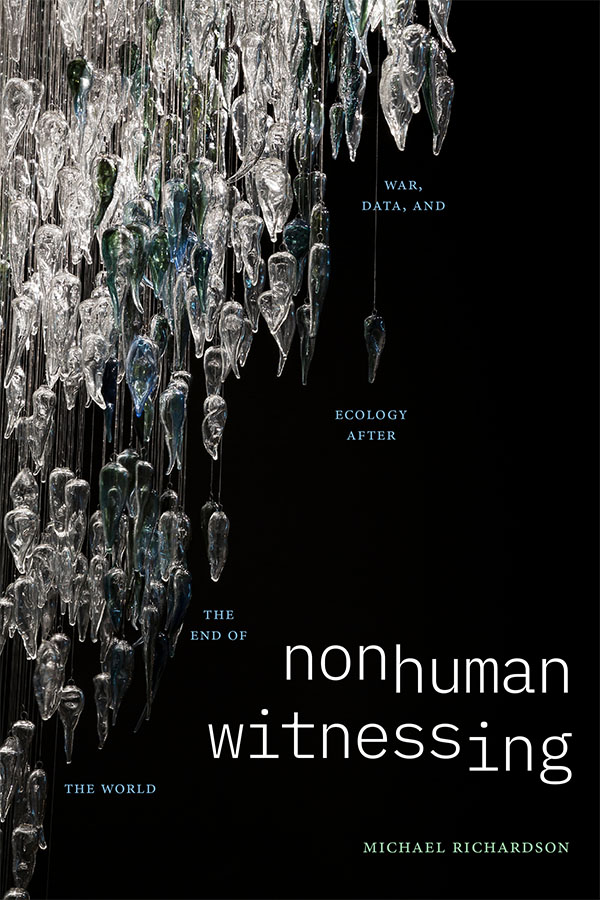
A review of Nonhuman Witnessing: War, Data, and Ecology after the End of the World, Michael Richardson, Duke University Press, 2024.

Nonhuman witnessingHow to witness a drone strike? Who—or what—bears witness in the operations of targeted killings where the success of a mission appears as a few pixels on a screen? Can there be justice if there is no witness? How can we bring the other-than-human to testify as a subject granted with agency and knowledge? What happens to human responsibility when machines have taken control? Can nonhuman witnessing register forms of violence that are otherwise rendered invisible, such as algorithmic enclosure or anthropogenic climate change? These questions lead Michael Richardson to emphasize the role of the nonhuman in witnessing, and to highlight the relevance of this expanded conception of witnessing in the struggle for more just worlds. The “end of the world” he refers to in the book’s title has several meanings. The catastrophic crises in which we find ourselves—remote wars, technological hubris, and environmental devastation—are of a world-ending importance. Human witnessing is no longer up to the task for making sense, assigning responsibility, and seeking justice in the face of such challenges. As Richardson claims, “only through an embrace of nonhuman witnessing can we humans, if indeed we are still or ever were humans, reckon with the world-destroying crises of war, data, and ecology that now envelop us.” The end of the world is also a location: Michael Richardson writes from a perch at UNSW Sydney, where he co-directs the Media Futures Hub and Autonomous Media Lab. He opens his book by paying tribute to “the unceded sovereignty of the Bidjigal and Gadigal people of the Eora Nation” over the land that is now Sydney, and he draws inspiration from First Nations cosmogonies that grant rights and agency to nonhuman actors such as animals, plants, rocks, and rivers. “World-ending crises are all too familiar to First Nation people” who also teach us that humans and nonhumans can inhabit many different worlds and ecologies. The world that is ending before our eyes is a world where Man, as opposed to nonhumans, was “the unexamined subject of witnessing.” In its demise, we see the emergence of “a world of many worlds” composed of humans, nonhumans, and assemblages thereof.

From Drone Theory to Drone Art

Nonhuman Witnessing begins with a piece of drone theory. The proliferation of drones on the battlefield, and the ethical questions that they raise, has led to a cottage industry of “drone studies,” with conferences, seminars, workshops, and publications devoted to the field. Richardson adds his own contribution by asking how witnessing occurs within conditions of drone warfare and targeted strikes from above. Drones are witnessing machines, but also what must be witnessed: new methods and concepts have to be designed to make recognizable encounters with nonhuman systems of violence that resist the forms of knowing and speaking available to the eyewitness. To analyze the witnessing of violence, as well as the violence that can be done by nonhuman witnessing, Richardson turns to theory and then to the arts. Drawing from media studies literature, he complements the notion of media witnessing, or witnessing performed in, by, and through media, by his own concept of “violent mediation,” or violence enacted through the computational simulation of reality. He also borrows from Brian Massumi the notion of ontopower, the power to bring into being, and the operative mode of preemption that seeks to define and control threat at the point of its emergence. For Richardson, drone warfare is characterized by an acceleration of the removal of human agency from military decision-making. Violence is made ubiquitous; it can take place anywhere at any time. The volume of data produced by drone sensors far outstrips human capacities for visual or computational analysis. They are transformed into actionable data by on-board autonomous software systems that rely on edge computing and AI algorithms. In a logical progression, “automated data collection leads to automated data processing, which, in turn, leads to automated response”: an ultimate end of the militarization of violent mediation is thus the “elimination of the human within technological systems to anything other than the potential target for violence.” By opposition, art insists on what makes us human. The paintings, photographs, and other art forms presented by the author emphasize the awesome power of unmanned airplanes such as the Reaper, the destruction they cause on the ground, their impact on the daily lives of those who remain under their surveillance, and their incorporation into local iconographies such as traditional Afghan war rugs. Art makes sensible the “enduring, gradual, and uneven violence done to the fabric of life” by killing machines that escape traditional forms of human witnessing.

Despite the evocative power of the concepts and artworks presented in Nonhuman Witnessing’s pages, there is a disconnect between drone theory and drone reality. The use of drones by the U.S. for targeted killings is highly publicized, because it is the most controversial, but quantitatively it remains very minor in comparison to surveillance missions. The subject of drone theory is less the drone as such than it is the drone as an illustration of the violence waged by the United States in the Middle East following the war in Afghanistan and the occupation of Iraq. New versions of the theory still have to incorporate the use of drones by new actors and in other theaters of conflict: in the Syrian civil war since 2012, during the short war between Armenia and Azerbaijan in 2020, in the Houthi insurgency against the Yemeni military supported by Saudi Arabia, and, of course, since Ukraine’s aggression by Russia in February 2022 and in Israel’s offensive against Gaza following Hamas’ surprise attack on southern Israel on 7 October 2023. The logic of preemption that characterized the United States’ war on terrorism is less manifest in these evolving situations. So is the role of AI and embarked computer systems: drones increasingly appear as a low-tech, low-cost solution, a weapon of the poor and savvy against more formidable enemies. Drone warfare and lethal autonomous weapon systems raise some complex strategic, ethical and legal questions that have been examined by a number of authors. But they are far from the “killer robots” decried in the critical literature—or hyped as a selling point by arm producers and media commentators. Richardson’s arguments against signature strikes—i.e. strikes based on behavioral patterns rather than on identity (personality strikes)—are valid and have indeed led to a reduction in targeted killings ordered by the U.S. in Pakistan, Yemen, or Somalia. But civilian killings such as the one described in the opening of the book show not that the drone is an imprecise weapon, but that it has been used in an imprecise way, just as a needle can be used imprecisely. Drones, like other pieces of military technology, can serve as inspiration or subject-matter for artists and theoreticians. But as much as drone theory is based on biased empirical ground, drone art is not a recognizable category beyond the avant-garde genre of drone music, which bears no connection with military drones whatsoever.

The power of algorithms

Whereas the chapter on “witnessing violence” used outdated evidence and questionable theory, the second chapter, “witnessing algorithms,” addresses more recent concerns and state-of-the-art technologies: ChatGPT and other applications of machine learning, deepfakes, synthetic media, mass surveillance, and the racist or misogynist biases embedded in algorithmic systems. It is based on the same conceptual swing that understands witnessing algorithms as both algorithms that enable witnessing and algorithms as entities that must themselves be witnessed. Theoretically, it draws from Deleuze and Guattari’s conception of machines as assemblages of bodies, desires, and meanings operating a generalized machinic enslavement of man, and of affect theory as interpreted by Brian Massumi and his grammar of intensities, virtual power, and futurity. Based on these references, Richardson proposes his own notion of “machinic affect” understood as “the capacity to affect and be affected that occurs within, through, and in contact with nonhuman technics.” Machine learning and generative AI can lead to false witnessing and fabrication of evidence: hence the weird errors and aberrations, the glitches and hallucinations that appear in computer-generated images or texts. “Like codes and magic, algorithms conceal their own operations: they remain mysterious, including to their makers.” But instead of denouncing their lack of transparency and demanding to open the proverbial black box, Richardson starts from algorithmic opacity as a given and attends to the emerging power of algorithms to witness on their own terms. Doing so requires the bracketing of any ethical imperative to witnessing: witnessing is what algorithms do, regardless of their accuracy or falsity, their explainability or opaqueness. Facts do not precede testimony: registering an event and producing it take place on the same plane of immanence that makes no difference between the natural and the artificial. Examples mobilized by Richardson include the false testimony of deepfakes such as the porn video of Gal Gadot having sex with her stepbrother; the production of actionable forensic evidence through the automatic detection of teargas canister images by Forensic Architecture, a British NGO investigating human rights violations; the infamous Project Maven designed by the Department of Defense to process full-motion videos from drones and automatically detect potential targets; and computer art videos making visible the inner functioning of AI.

Richardson adds to the existing literature on AI by asking how algorithmic evidence can be brought into the frame of witnessing in ways that human witnessing cannot. But he only hints at a crucial fact: most machine learning applications touted as capable of autonomous reasoning and intelligent decision-making are in fact “Potemkin AI” or “non-intelligent artificial intelligence.” The innovation sector lives on hype, hyperbole, and promissory futures. Likewise, media reactions to new technologies always follow the same tropes, from the “disappearance of work” to the advent of “intelligent machines” or “killer robots.” But the reality is more sobering. Deepfakes produce images that are not different in nature from the CGI-generated movies that dominate the box office since at least two decades. Forensic Architecture, the human rights NGO surveyed in the book, makes slick graphic presentations used as exhibits in judicial trials or media reportages, but does not produce new evidence or independent testimony. State surveillance is a product of twentieth century totalitarianism, not the invention of modern data engineers. Algorithms are biased because we designed them this way. The magic we see in AI-powered services is a form of trickery: their operating mode remains hidden because service providers have an interest in keeping it so. As Richardson rightfully notes, “machine learning systems and the companies that promote them almost always seek to obscure both the ‘free labor’ of user interactions and the low-paid labor of digital pieceworkers on platforms such as Mechanical Turk.” As such as human work will not disappear with automation, it would be a mistake to believe that human witnessing will be substituted by nonhuman forms of bearing witness. There are many human witnesses involved in the production of nonhuman witnessing. Instead of anticipating the replacement of humans by other-than-human agents, we would do well to examine the concrete changes taking place in human witnessing. The debasement of all forms of public authority, the hijacking of political institutions by private interests, the commitment fatigue in the face of too many horrors and catastrophes seem to me at the root of the crisis in human witnessing, for which the nonhuman offers no solution.

Ecological catastrophe

Richardson then turns to Pacific islands and the Australian continent to investigate the role of nonhuman witnessing in times of ecological catastrophe caused by the fallout of nuclear explosions and anthropogenic climate change. These territories, and the people they harbor, can testify to the world-destroying potential of these two crises: “just as the Marshall Islands and other nations in the Pacific were crucial sites for nuclear testing throughout the Cold War, so too are they now the canaries in the mineshaft of climate change.” Witnessing is not reducible to language or to human perception: when they take a continent or a planet as the scale of observation, they deny the human a privileged status for establishing environmental change or atmospheric control. The subject of the Anthroposcene is not the anthropos or Man as traditionally conceived, but an assemblage of humans, technologies, chemical elements, and other terraforming forces. Witnessing ecologies imply that ecologies can be made to witness impending crises and that there is an ecology of witnessing in which every element mediates every other. Drawing from affect theory and trauma studies, Richardson proposes the notion of “ecological trauma” to suggest the idea that trauma escapes the confines of the human body: “it can be climatic, atmospheric, collective, and it can be transmitted between people and across generations.” Ecological catastrophe has already been experienced by First Nations who have seen their environment shattered by settler colonialism, of which the British nuclear testings that took place on the Montebello Islands and at Maralinga in South Australia are only a late instantiation. The entire ecology—people, water, vegetation, animals, dirt, geology—was directly exposed to radioactive contaminants during the blasts and fallout, and no real effort to mitigate the effect on Aboriginal inhabitants was attempted. Polluted soil and sand melted into glass are the media used by Australian artist Yhonnie Scarce, whose glassblowing structure adorns the cover of the book. Other aesthetic works also figure prominently in this chapter, from the aerial imaging through which the planet becomes media to poems by Indigenous writers bearing witness to the destruction of their lands. For Richardson, inspired by recent developments in media theory, “attending to the nonhuman witnessing of ecologies and ecological relations continually returns us to mediation at its most fundamental: the transfer and translation of energies from one medium to another.”

The idea that we should consider nonhumans as well as humans in our processes of witnessing and decision-making already has a significant history in the social sciences. It was first put forward by science and technology studies, or STS, and it is directly relevant for the examination of technological innovation or environmental degradation. Proposed by Bruno Latour, a French STS scholar, Actor-network theory, usually abbreviated as ANT, aims to describe any phenomena—such as climate change or large technological systems—in terms of the relationships between the human and nonhuman actors that are entangled in assemblages or networks of relationships. These networks have power dynamics leading to processes such as translation (the transport with deformation of an assemblage), symmetry (representing all agents from their own perspective) or, as proposed by Richardson, witnessing. It should not be confused with the idea that humans are incapable of witnessing events that are too large-scale or too complex to be grasped by the human mind. Indeed, history shows that local communities and scholars have long understood and monitored changes in the environment and their effect on human activities. In his late work, Latour also proposed the idea that since the environmental question was radically new, politics had to be completely reinvented. We should convene a “parliament of things” where both humans and nonhumans can be represented adequately and be brought to the stand to give testimony. Although Richardson scarcely refers to this literature—he is more interested in art critique than in science and technology studies—, he shares the view that nonhuman witnessing is politically transformative. His politics is anchored in the pluriverse (a world of many worlds), mindful of the myriad of relations between humans and nonhumans, inspired by the belief systems of First Nations, and predicated on the idea that “difference is not a problem to be solved but rather the ground for flourishing.” As he concludes, “there is no blueprint for such a politics, no white paper or policy guidance.” But it is already emergent at the level of speculative aesthetics and in the creative works that punctuate his book.

Thought in the Act

Nonhuman Witnessing is published in a series edited by Erin Manning and Brian Massumi at Duke University Press. Richardson shares with the editors the taste for mixing art with philosophy and for engaging in high theory and abstract concept-building based on concrete examples. He borrows several key notions from Massumi (intensities, futurity, virtuality, preemption), who himself poached many of his insights in Deleuze and Guattari’s philosophy. The new theories developed by these authors and others working in the same field go under the names of affect theory, radical empiricism, process philosophy, speculative pragmatism, ontological vitalism, and new materialism. Each chapter in the book follows an identical pattern. It introduces a new concept (“violent mediation,” “machinic affect,” “ecological trauma,” but also “radical absence” and “witnessing opacity”) that provides an angle to a series of phenomena. It develops a few cases or examples that mostly expose forms of violence that occur across a variety of scales and temporalities: military drones and remote wars (“killer robots”), algorithms (“weapons of math destruction”), and environmental devastation through nuclear testings and climate change (“the end of the world”). It covers both aspects of witnessing, as the originator of an act of testimony and as an object to be witnessed. And it uses artistic creations as illustrations of certain forms of witnessing that escape the standard model of bearing witness. The result makes a suggestive reading but sometimes lacks coherence and clarity. Richardson starts from an original idea (whether drones might become nonhuman witnesses) but stretches it a bit too far. For him, opacity is not a pitfall to be avoided but a quality to be cultivated. Rather than a contribution to theory, the book’s main impact might be on art critique. I truly admire the author’s ability to make art part of the discussion we have on humanity’s main challenges. I didn’t review the artworks curated by the author in detail, but their description makes the most lasting impression.

War Photos and Peace Signs from Vietnam

A review of Warring Visions: Photography and Vietnam, Thy Phu, Duke University Press, 2022.

Warring VisionsIn April 2015, the Institut Français in Hanoi held a photography exhibition, Reporters de Guerre (War Reporters), marking the fortieth anniversary of the end of the Vietnam War. Curated by Patrick Chauvel, an award-winning photographer who had covered the war for France, the exhibition showcased the work of four North Vietnamese photographers (Đoàn Công Tính, Chu Chi Thành, Tràn Mai Nam, and Hùa Kiêm) whose documenting of the Vietnam War was often overshadowed by photographers from the Western press working from the South. The poster for the cultural event at L’Espace used an iconic image: a black-and-white picture of North Vietnamese soldiers climbing a rope against the spectacular backdrop of a waterfall, taken in 1970 along the Ho Chi Minh trail. Đoàn Công Tính, the photographer, had caught a moment of timeless beauty and strength, an image of mankind overcoming physical hindrances and material obstacles in the pursuit of a higher goal. However, a scandal erupted when Danish photographer Jørn Stjerneklar pointed out on his blog that this iconic image was doctored. He compared two versions, the recent print that appeared in the exhibition and the “original,” which was published in Tính’s 2001 book Khoảnh Khắc (Moments). Tính apologized profusely for “mistakenly” sending the photoshopped image, claiming that the original negative had been damaged and that he accidentally included a copy of the image with a photoshopped background in a CD to the exhibition’s organisers. But in a follow-up article on his blog, Stjerneklar pointed out that even the “original” had been retouched, as evidenced by the repeating pattern of the waterfall, and was likely a montage of another photograph which is displayed at the War Remnants Museum in Ho Chi Minh City. Stjerneklar’s story was picked up worldwide and ignited a lively debate around the presumed objectivity of photojournalism and the role of photography in propaganda.
Photography and propaganda

That photography was, and still is, part of propaganda in Vietnam was never a secret. Along with my colleagues, I experienced it firsthand during my term as consular counsellor at the French Embassy in Vietnam. When the Institut Français organized photo exhibitions at its flagship cultural center L’Espace in Hanoi, every picture had to be vetted by controlling organs of the government. The answer often came at the last minute, and many photographs were rejected on the basis of obscure criteria. Still, young Vietnamese photographers were enthusiastic about events organized by the French culture center. With the help of French photographer Nicolas Cornet and other professionals, young photography apprentices honed their skills in creative workshops and attended seminars on portfolio building. Some talented photographers held their first solo exhibition at L’Espace before embarking on an international career. In April 2023 (after I had left Vietnam), the Institut Français in Hanoi and its director, Thierry Vergon, initiated the first International Photography Biennale in Hanoi, a major cultural event placed under the aegis of Hanoi’s People’s Committee in partnership with a network of Vietnamese and international partners. More than twenty exhibitions organized on several locations allowed the general public and professionals to discover the wealth of contemporary photography and the treasures of heritage photography in Vietnam. A series of outreach activities were scheduled throughout the Biennale, including workshops to connect stakeholders, roundtables and debates, training sessions, film screenings, and portfolio reviews. The initiative was used by Hanoi City, part of UNESCO’s Creative Cities Network, to bolster its image as a regional hub for culture and innovation. Still under the strictures of a socialist government, a new Vietnamese narrative on photography is slowly emerging. It is based on creativity, not control, and its aim is to put Vietnam’s capital on the map for cultural professionals and creative workers. Alternative visions of Vietnam are seeping through the web of censorship and are flourishing in the rare spaces of unrestricted freedom offered by social networks or independent cultural venues.

Thy Phu’s book Warring Visions shows that creativity was also present in the photographs taken during the Vietnam War (known in Vietnamese as the Resistance War against America.) Vietnamese photographers working for the Hanoi-based Vietnam News Agency (VNA) were no less talented than their Western counterparts operating from the South. War pictures published by the Western press (or by Japan’s) were as much involved in political propaganda as the “socialist ways of seeing Vietnam” that filled the pages of Vietnam Pictorial, an illustrated magazine run by the communist state. War was fought on the front of images, both in Vietnam and within America. Propaganda pictures were also waged by the South Vietnam government, with less international success. For Americans, the Vietnam War still haunts the national psyche with the ignominy of defeat. The war was a watershed in visual history, and the many pictures taken by Western reporters and photographers laid the foundation for battlefield reporting and contemporary photography studies. But as Thy Phu notes, “in addition to overlooking unspectacular forms of representation, the Western press, then as now, neglects Vietnamese perspectives, emphasizing instead the American experience of this war.” The role of Vietnamese photographers, including the many stringers and fixers working for full-time foreign correspondents, is systematically downplayed, although some of them took the most iconic photos that were to shape the imaginaries of the war (such as Napalm Girl, the picture of a naked girl running away from an aerial napalm attack.) But placing the spotlight on photographs taken by Vietnamese war photographers is only half of the story. According to Thy Phu, we need to enlarge the category of war photography, a genre that usually consists of images illustrating the immediacy of combat and the spectacle of violence, pain, and wounded bodies. Pictures depicting wedding ceremonies, family reunions, and quotidian rituals are also part of the Vietnamese experience during the war. Drawing from family photo books from the Vietnamese diaspora, discarded collections found in vintage stores in Ho Chi Minh City, or her own family records, Thy Phu reconstitutes a lost archive of what war in Vietnam might have been like for ordinary citizens.

Socialist ways of seeing Vietnam

The canon of war photography, as well as its most basic principles, were established during the Vietnam War. Pulitzer-winning images exposed the brutality and injustice of war, its toll on the body and on the mind of soldiers, its devastating consequences for civilians and their living environment. According to the profession, war images should by no means be staged or manipulated. They should expose reality as it is, captured on the spur of the moment by a neutral observer. It will come as no surprise to learn that North Vietnamese photographers obeyed to different rules and aesthetic principles. The images that were taken by these propaganda workers are full of positivism and youthful energy. Unlike the photos taken from the South showing the terrible effects of war, the images taken by photographers from the North show young soldiers smiling in front of the camera or caught in the middle of disciplined action, images of incredible romanticism in the middle of war. The goal was, of course, to highlight their heroism in order to stimulate other soldiers and citizens seeing the images. Ideology informed the subject matter of these photographs and guided practitioners into what to look at and how to represent it. Harsh material conditions also shaped the way photographs were taken and circulated. The photographers were foot soldiers in uniform who had been selected from among Hanoi’s university elite and given a crash course training in journalism and photo reporting before being sent to the frontline. Communist allies abroad provided cameras and lenses that were made in East Germany and the USSR. Equipment and film were in such short supply that they were not issued to individual photographers but were stored at the headquarters of organizations such as the Young Pioneers, the Army’s photographic department, and the VNA. In such conditions of scarcity, photographers were forced to shoot sparingly, to compose and stage their images prior to shooting, and to improvise solutions to compensate for the lack of equipment. In the absence of flash bulbs, the flare of rockets fired against a dark sky provided the light necessary for nighttime pictures. Piecing together several shots created an improvised panoramic view without need of a wide-angle lens. War photos were displayed in makeshift jungle exhibitions or village fairs, along with propaganda posters, to uplift the masses and disseminate a “socialist way of seeing” things. Photographs were also distributed to foreigners beyond the Communist bloc, especially to members of antiwar organizations, some of whom received copies of Vietnam Pictorial, an internationally circulated illustrated magazine.

Reviewing past issues of this magazine, three central subjects stand out: the heroic struggle of soldiers, the toil of factory workers and farmers, and the sacrifices of revolutionary Vietnamese women. Beautiful portraits of women harvesting lotus flowers, of young girls playing in poppy fields, or children riding on the back of water buffaloes also adorned the color covers of Vietnam Pictorial, with vibrant colors denoting artificially painted photographs and reminding readers of the bright socialist future for which war was fought. For Thy Phu, the revolutionary Vietnamese woman was more than just an image: it was a symbol, embodying contested visions of women’s role in anticolonial resistance and national reunification. The battle for this symbol was fought on two fronts. On the leadership side, the figure of Nguyễn Thị Bình, the Viet Cong’s chief negotiator at the Paris Peace Conference in 1973, opposed the fierceful Madame Nhu, the de facto First Lady of South Vietnam from 1955 to 1963. Both used feminity for political aims, wearing different styles of áo dài, Vietnam’s traditional dress, as a gendered display of nationalism. In contrast to Madame Bình’s demure attire which singled her out as the sole woman at the negotiating table, Madame Nhu favored a more risqué style of áo dài and did not hesitate to pose in masculinist postures, such as in the famous closeup picture where she is seen firing a .38 pistol. Both camps also sought to glorify women’s contribution to nationalist struggle by enrolling them in mass movements. In the South, Madame Nhu founded the Women’s Solidarity Movement of Vietnam (WSM) in order to give women military training and enroll them in paramilitary groups assisting the armed forces. Women in uniform included Hồ Thị Quế (the “Tiger Lady”), member of the Black Tigers Ranger Battalion, pictured in full battledress looking fiercely at the camera. In the North, young women were recruited en masse in the Youth Shock Brigades, also known as TNXP, and sent to the frontline in order to assist male soldiers or build the Ho Chi Minh trail. The image of “girls with guns” or “long-haired soldiers” stood in stark contrast with the more traditional pictures emphasizing motherhood and family that were used to appeal to the solidarity of women’s antiwar organizations in the United States. But pictures offer fertile ground for projection, misrecognition, and reinvention: the Vietnamese revolutionary woman was reclaimed as a radical chic symbol for American feminist struggles in which she had no part. The Vietnamese Communist Party won the day in the fight over images and symbols associated with womanhood. But as French historian François Guillemot reminds us, Vietnamese women, who represent half of society, suffered more than their half as a result of military conflict and civil war.

Lost archives

The Democratic Republic of Vietnam (DRV), now known as the Socialist Republic of Vietnam, ultimately claimed victory in the war of images and symbols. As a result, war images from the South were censored, erased, and eliminated from the record. They survive as embodied performances of reenactment and remembrance in the dispersed archives of the Vietnamese diaspora. To illustrate the war as seen from the perspective of South Vietnam, Thy Phu takes the example of Nguyễn Ngọc Hạnh who was one of the most respected Vietnamese photographers of his time. He served in the French Army until 1950, then transferred to the Armée Nationale Vietnamienne, which in 1956 became the Army of the Republic of Vietnam (ARVN). He attended the French Army photography school during the mid-1950s, was designated the official ARVN combat photographer in 1961, and ultimately attained the rank of Lieutenant Colonel. After the fall of Saigon in 1975, he was sent to a “re-education camp” with his fellow officers, but survived until he was released through the intervention of Amnesty International in 1983. He emigrated to the U.S. in 1989, where he passed away in 2017. Published in 1969 in collaboration with civilian photographer Nguyễn Mạnh Đan, his book Vietnam in Flames ranks in the top echelon of great Vietnam photobooks, right alongside Philip Jones Griffiths, David Douglas Duncan, and the best of the Japanese photographers. Hạnh made no secret that his photos were staged: he even explained in painstaking detail how he used drops of olive oil to place “tears” on one of his most notable photograph, Sorrow, the portrait of a lovely young woman weeping over the dog tags of her missing companion. As Thy Phu notes, manipulation has been a defining characteristic of war photography from the nineteenth century to the present. Indeed, some of the mots famous war photographs, such as Robert Capra’s The Falling Soldier, are said to be restaged or reenacted. Hạnh nevertheless insisted that his images are authentic documents that register the intensity of the emotions the war engendered. Photographs, like tears, are a social ritual. Whether they are authentic or inauthentic, induced or spontaneous, matters less than the fact that they are to be seen and recognized. As they circulate among the Vietnamese diaspora while they remain censored in Hanoi or Ho Chi Minh City, pictures from Vietnam in Flames contribute to a sense of community through collective suffering, sacrifice, and remembrance.

The two waves of Vietnamese refugees, those who fled in 1975 after the fall of Saigon and the “boat people” who left the country from the late 1970s into the early 1990s, left behind all their personal belongings, including family pictures and photo albums. Those who stayed behind pruned their photo collections of all images reminiscent of the old regime: men in ARVN uniform, pictures betraying friendly connections with Americans, or scenes denoting bourgeois proclivities such as foreign travels and private vacations. Remarkably, however, thousands of those photos have resurfaced in the marketplace in the form of orphan images and albums separated from their original owners and stories. These are images that have been “unhomed”: scattered, lost, or left behind. Together they provide a counter-narrative of the war, a testimony of Southern Vietnamese experiences that have been erased from the record and banished from official history. How to deal with those missing archives, lost memories, and orphaned pictures? What can be learned of family pictures in the absence of a story, when the memories that bring photographs to life are missing from official records and even personal collections? In Shakespeare’s Hamlet, only a scholar is capable of speaking with ghosts. Similarly, only artists can speak to the ghostly presence of these anonymous faces. Thy Phu, who herself assembled a community archive of family photographs and the stories about them, presents the artistic démarche of Dinh Q. Lê, a diaspora Vietnamese artist now based in Ho Chi Minh City and whose work was recognized by major exhibitions in Singapore, Tokyo, New York, and Paris. Since 1998, Lê has been working on a trilogy of installations that feature family photographs, objects that fascinate him because he lost all of his own photographs in the course of his family’s forced migration. Images are stitched together to form fragile-looking, rectangular installations like mosquito nets, or they are cut into enlarged strips that are weaved to form a new picture, superposing the initial faces on the strips and an emerging bigger picture. In his 2022 exhibition at the Quai Branly Museum, one of the weaved picture represented Madame Nhu waving a pistol, an image still taboo in Vietnam but that the artist was able to reinterpret through his own eyes. In another installation, onlookers from the Vietnamese diaspora were invited to pick up images covering the gallery floor and to consult an online database that draws on crowdsourcing to identify lost images of their own family, merging the acts of collecting, remembering, and archiving.

War photography in the age of generative AI

What does Thy Phu’s book tell us about photography censorship and creativity in contemporary Vietnam? How can we interpret war photography in the light of warring visions, ragged memories, and contested identities? The first lesson I learned from Warring Visions is that the distinction between propaganda pictures and war reporting is artificial: in the end, what matters is not political intent, but what we make of it. War pictures will always be used for political purposes. But those that remain in public memory transcend the immediacy of a cause and express universal values, sometimes at odds with the intention of their sponsors. The second lesson is that we need to expand our notion of war photography. Vernacular pictures representing quotidian rites of family life also tell stories about wartime conditions, and these stories must be collected and made known. As a third lesson, we should think hard about authenticity and manipulation of images in the age of generative AI and deep fakes. The indignation that followed Jørn Stjerneklar’s blog article exposing the manipulation of Đoàn Công Tính’s poster in 2015 was in a way misplaced: war pictures can be staged, reframed, doctored, reenacted, and, yes, photoshopped. As historians of war photography tell us, this has always been the case, and we should anticipate more of the same in our technologically savvy future. In my perception, Vietnamese nowadays have a more relaxed attitude to Photoshop than people in Europe or in North America. When I took ID pictures in Hanoi, the result came heavily retouched, with bright eyes and rosy cheeks. To tell the truth, I like the picture more than the original, and I still use it on my identity documents or CV profile. This tradition of retouching pictures goes back a long way, as evidenced by the family portraits and painted photographs from colonial Indochina. It is also linked to the highest levels of Vietnamese statesmanship: as is well known, prior to establishing the DRV in 1945, Hồ Chí Minh led a peripatetic life and worked a number of odd jobs. According to the records of the French police, around 1915-17 he worked as a photo retoucher in Paris by day and meeting leading Communist agitators by night. It is said that this humble experience with visual restoration led him to grasp photography’s political potential. It also taught him to be wary of photography’s role for state surveillance and identity control: only one portrait remains from this period, recognizable by the chipped upper part of his left ear that allowed the French police to check the identity of the Vietnamese revolutionary leader who changed his name and civil status several times over the course of his career.

A Flash in Japan

A review of The Flash of Capital: Film and Geopolitics in Japan, Eric Cazdyn, Duke University Press, 2002.

The Flash of CapitalThe “flash of capital” refers to the way the underlying structure of a national economy “flashes” or reverberates through the films it produces, and how cinema critique can highlight the relations between culture and capitalism, film aesthetics and geopolitics, movie commentary and political discourse, at particular moments of their transformation. A flash is not a reflection or an image, and Eric Cazdyn does not subscribe to the reflection theory of classical Marxism that sees cultural productions as a mirror image of the underlying economic infrastructure. Karl Marx posited that the superstructure, which includes the state apparatus, forms of social consciousness, and dominant ideologies, is determined “in the last instance” by the “base” or substructure, which relates to the mode of production that evolves from feudalism to capitalism and then to communism. Transformations of the mode of production lead to changes in the superstructure. Hungarian philosopher and literary critic György Lukács applied this framework to all kinds of cultural productions, claiming that a true work of art must reflect the underlying patterns of economic contradictions in the society. Rather than Marx’s and Lukács’ reflection theory, Cazdyn’s “flash theory” is inspired by post-marxist cultural theorists Walter Benjamin and Fredric Jameson, and by the work of Japan scholars Masao Miyoshi and Harry Harootunian (the two editors of the collection at Duke University Press in which the book was published). For Cazdyn, how we produce meaning and how we produce wealth are closely interrelated. Cultural productions such as films give access to the unconscious of a society: “What is unrepresentable in everyday discourse is flashed on the level of the aesthetic.” Films not only reflect and explain underlying contradictions but, more importantly, actively participate in the construction of economic and geopolitical transformations.
 Reflection theory and flash theory

 The Flash of Capital concentrates on those critical moments of Japanese modern history during which the forms of both cinematic and capitalist categories mutate. The author identifies three such mutations of Japanese modernity: (1) between being colonized and being a colonizer nation of the pre-World War II moment; between the individual and collective of the postwar moment; and between the national and the transnational of the contemporary situation. Colonialism, Cold War, globalization: these are the three moments that Cazdyn addresses through thematic discussions of cinematic visuality, of film historiography, of literary adaptations, of amateur acting, of pornography, and of aesthetic experiments. Rather than a linear history, he prefers to concentrate on key moments of transformation during which formal inventions on the level of the film aesthetic figure a way out of impossible situations before a grammar becomes available to make sense of them. By paying close attention to the details of cinematic texts, he reads the works of Japanese directors and film critics as so many symptoms of the most pressing social problems of the day. Cazdyn borrows from Fredric Jameson and other literary critics the technique of symptomatic reading, a mode of reading literary and cinematic works which focuses on the text’s underlying presuppositions. A symptomatic reading is concerned with understanding how a text comes to mean what it does as opposed to simply describing what it means or represents. In particular, it tries to determine what a particular text is unable to say or represses because of its ideological conviction, but that transpires at the formal level through flashes, allegories, and aesthetic choices. The films that Cazdyn passes under review occur at historical junctures in which the social and political events are difficult to articulate. There does not seem to be an effective language with which to express the transformations taking place at key moments of Japanese modernity. But, as Cazdyn notes, “some filmmakers take more risks than others. They risk speaking in a language for which there is no established grammar.”

 Japanese cinema has a peculiar affinity with the history of capitalist development. The movie industry is literally coeval with Japanese modernity: in the case of Japan, the history of film and the history of the modern nation share approximately the same span of time, both emerging in the 1890s. In addition, the one-hundred-year anniversary of film in Japan coincided with the fifty-year anniversary of the end of World War II. It comes as no surprise, therefore, that almost every history of Japanese film has used the history of the nation to chart its course. The three moments that The Flash of Capital choses to concentrate on are key turning points in Japanese modern history. They are also periods when Japanese cinema was particularly productive, with successive “Golden Ages” that have marked the history of Japanese cinema for a worldwide audience. The 1930s, the postwar period up to the late 1960s, and the 1990s were times fraught with contradictions. The antinomies and tensions between colonization and empire, between the individual and the collective, and between the national and the transnational made an imprint of the films produced during these periods, both at the level of content and in the formal dimension of aesthetic choices and scenic display. It is interesting to note that these moments have also produced canonic histories of Japanese cinema, both in print and through cinematic retrospectives. Cazdyn conducts a formal analysis of six histories of Japanese films, two of which are themselves films. The first historiographic works in the 1930s and early 1940s set the terms for a theory of cinema that was heavily influenced by Marxism and by nationalism; the 1950s saw the publication of Tanaka Jun’ichirō’s monumental encyclopedia of Japanese movies and Donald Richie and Joseph Anderson’s The Japanese Film; and the 1990s was marked by the one-hundred anniversary of Japanese cinema, with yet another four-volume encyclopedia and a film retrospective by Oshima Nagisa. Among scholars and students in the West, Richie and Anderson’s book has been a constant reference and has gone through a series of republications; it is, however, distinctly anticommunist and heavily marked by the Cold War context.

Colonialism, Cold War, globalization

 Cazdyn begins his discussion of the first period with an Urtext of Japan’s cinematography: the recording in 1899 of a scene from the kabuki drama Momojigari by the actor Ichikawa Danjūrō (the stage name of a lineage of actors that goes back to the seventeenth century down to the present). Attending a screening held at his private residence, Danjūrō was shocked by his own image staring back at him and made it clear that the film should never be screened during his lifetime. But he later agreed that a presentation of the movie reels at an event in Osaka he was unable to attend was more satisfactory than a performance by another kabuki troupe. This episode set the terms—repetition, reproductibility, ubiquity, copy rights, distribution networks, mass production—by which the movie industry later operated. By the 1930s, cinema had become well entrenched in Japan. The early figures of the onnagata (men playing women’s roles) and the benshi (commentator integrated into the story), taken from similar roles in the traditional performing arts (kabuki, noh, bunraku), had given way to the modern talkie movie, a star system based on female actors, and genres divided between jidai-geki (period dramas) and gendai-geki (modern dramas). Film adaptations (eiga-ka) of literary works of fiction (shōsetsu) served to gain legitimacy for cinema as an art form, circumvent censorship, consolidate a literary cannon, and affirm the superiority of the original through fidelity-based adaptations. The writer Tanizaki Jun’ichirō, who had offered his own theory of adaptation through his successive translations into modern Japanese of the Tale of Genji, criticized the filmization of his novel Shunkinshō by pointing out the erasing of multiple levels of narration and identity that was so central to his work. When Tanizaki’s novel is reduced to mere narrative content, “all that remains are the most reactionary and conservative elements.” For the author, Tanizaki’s aesthetic choices, and the films produced by the first generation of Japanese directors, were inextricably related to the most crucial issues facing the Japanese nation in the 1930s: the rise of militarism and the backsliding of democracy, the colonization of large swathes of Asia, the rejection of Western values in favor of Japanese mores. Remaining silent about these issues, like Tanizaki in his novels or Ozu Yasujirō in his early movies, are charges that can be held against the authors.

 The second Golden Age of Japanese cinema, and a high point of Japanese capitalist development, arose from the rubbles of World War II, found its most vivid expressions in the 1950s and early 1960s, and culminated in the avant-garde productions of the late 1960s and early 1970s. Out of this second period emerged not only a studio system modeled on Hollywood, but an impressive number of great auteurs that have become household names in the history of artistic cinema. Ozu’s challenging formal compositions, Kurosawa’s intricate plots, and Imamura’s nonlinear temporalities are immediately recognizable and have influenced generations of movie directors in the West and in Asia. The postwar period, which coincided with the Cold War, was marked by the subjectivity debate or shutaisei ronsō, which influenced popular ideas about nationalism and social change. For the postwar generation of left-leaning intellectuals, a sense of self—of one’s capacity and legitimacy to act as an individual and to intervene against the state and collective opinion—was crucial to keep the nation from ever being hijacked again by totalitarianism. But at the same time, the individual was summoned to put the interests of big corporations, administrative structures, and the Japanese nation as a whole before his or her own personal fulfillment, and to sacrifice the self in favor of economic development. In the context of the movie industry, the attempt to transcend the contradiction between the individual and the collective was resolved by positing a third term: the “genius” filmmaker who breaks out of the rigid structure and trumps the other two terms. The “great man theory” claims that an individual can rise up and produce greatness within—if not transcend—any structure. The same emphasis on the power of the filmmaker characterized film adaptations of literary works in the period. Encouraged by the Art Theater Guild, eiga-ka movies took liberties with the original text either by focusing on a particular section or adding content to the narrative. Shindō Kaneto’s 1973 adaptation of Kokoro, for example, deals only with the third letter of Sōseki’s famous shōsetsu, while in Ichikawa Kon’s Fires on the Plain the soldier-narrator of Ōoka Shōhei’s novel is shot and killed at the end instead of going to a mental hospital.

The withering away of the nation-state

 The era of globalization, the third period in Eric Cazdyn’s survey of movie history, marks a transformation in the operations of the nation-state and in the aesthetics of Japanese cinema. The problem of globalization is the problem of a globalized system in which nations are steadily losing their sovereignty but where state structures and ideological models cling to an outdated form of representation. The political-economic and the cultural-ideological dimensions do not move at the same speed: at the precise moment in which the decision-making power of the nation-state is declining, nationalist ideologies and identities are as strong as ever. Some authors combined a renewed emphasis on the nation with the full embrace of globalization. For Ōshima Nagisa, the enfant terrible of the Japanese New Wave, national cinema is dead, and Japan is being bypassed by the transnational forces of capital. In Merry Christmas, Mr. Lawrence (1983), he represents the Japanese from the viewpoint of the white prisoners of war. In L’Empire des sens (1976), the pornographic nature of the film does not lie in the content (although the actors Matsuda Eiko and Fuji Tatsuya are “really doing it”) but in the form of reception: the Japanese conversation about the film was almost entirely consumed by questions of censorship, while in France, where it was first released, the film was geared towards a general audience—and foreign visitors: Ōshima noted that one out of every four Japanese who traveled to France had seen the movie. For Cazdyn, a film that makes history is “a film that represents a transformation before it has happened, a film that finds a language for something before a language has been assigned, a film that flashes the totality of modern Japanese society in a way that is unavailable to other forms of discourse.” Rather than commenting on blockbuster movies and costly productions, he choses to read political allegories in experimental films such as Tsukamoto Tetsuya’s Tetsuo (1988) or the documentary films of Hara Kazuo such as Yukiyukite shingun (Naked Army, 1987). He even finds inspiration in adult videos, which he sees as a compromise between guerrilla-style documentaries on the left and reality TV on the right. He notes that approximately seventy-five percent of current adult-video films in Japan are documentary-style—that is, their narratives are not couched in fiction, but follow a male character walk the streets looking for sex and engaging women to that end. Similarly, in his documentaries, Hara Kazuo can often be heard asking questions and provoking situations. His films make change happen into the real.

Eric Cazdyn is well-versed in the history of Japanese Marxism and makes it a central tenet of his theorization of Japanese cinema. He refers to the pre-war Marxist debate between the Kōza-ha (the faction that remained loyal to the Japanese Communist Party and the Komintern) and Rōnō-ha (the faction that split from the JCP in 1927 and argued that a bourgeois revolution had been achieved with the Meiji Restoration). Another school of Marxism, the Uno-ha, was the school of the late Tokyo Imperial University economist Uno Kōzō, who was probably the single most influential postwar Japanese economist on the domestic academic scene. Uno drew a distinction between a pure theory of capitalism, a theory of its historical phases, and the study of concrete societies. He concentrated on the first, and dedicated himself to working through the most theoretical problems of Marx’s Capital, such as the labor theory of value, the money circuit represented by the M-C-M’ formula, commodity fetishism, and the recurrence of crises. Moving to the present, Cazdyn pays tribute to Karatani Kōjin, a contemporary philosopher and interpreter of Marx’s thought that has attracted a vast followership. Marxism has had a lasting influence on Japan’s intellectual landscape, and has impacted the work of many filmmakers in the course of the past century. Cazdyn recalls that many intellectuals joined film clubs in the late 1920s and early 1930s because they were some of the only places where members could read Marx’s Capital without falling prey to censorship and repression. But this utopian space was soon discovered, and by 1935 Marxist intellectuals were either behind bars, had retreated to their private space, or had embraced right-wing nationalism. Illustrative of this wave of political commitment is the Proletarian Filmmaker’s League or Prokino. Cold War histories of Japanese cinema have disparaged this left-wing organization by pointing out “the extremely low quality of its products.” Cazdyn rehabilitates the work of its main theorist, Iwasaki Akira, and of film documentarist Kamei Fumio, who treated montage as a “method of philosophical expression.”

New publics for old movies

What is the relevance of these references to Marxist theory and obscure works of documentary or fiction for contemporary students of Japanese cinema in North America and in Europe? Cazdyn highlights the changing demographics of the classes that enroll in his discipline: “Students were primarily attracted to the arts and Eastern religion in the 1960s and 1970s; in the 1980s, they were chasing the overvalued yen; and today, they are consumed by (and consumers of) Japanese popular culture—namely manga and anime.” He also notes that the study of national cinema as an organizing paradigm has lost much of its appeal. The academic focus is now on films that address issues of minorities in Japan—post-colonial narratives, feminist films, LGBT movies, social documentaries—or on transnational productions in which Japanese identity is diluted into a pan-Asian whole. But academics should not project their current global and professional insecurities onto the screen of cinema history. The demise of the nation-state, and the dilution of national cinema into the global, is not a foregone conclusion. Movies produced in Japan today do not seem to appear less Japanese than the ones made one or two generations ago. There is still a strong home bias in the preferences of viewers, who favor locally produced movies over foreign productions. Japanese films that are popular abroad do not necessarily make it big in Japan, and the art movie theaters or international festivals often include films that are completely unknown in their domestic market. The economic and geopolitical context matters for understanding a movie, but not in the sense that Cazdyn implies. The author’s knowledge of the real functioning of an economy is inversely proportional to his investment in Marxist theory. He confesses that his interest does not hinge “on the profits and losses incurred by the film industry in Japan.” But supply and demand, profits and losses, and production and distribution circuits matter for the evolution of cinema over the ages, and a theory that claims to conceptualize the link between films and their socio-economical context must grapple with economic realities, not just outmoded Marxist fictions.

The Faculty of Climate & Media Studies

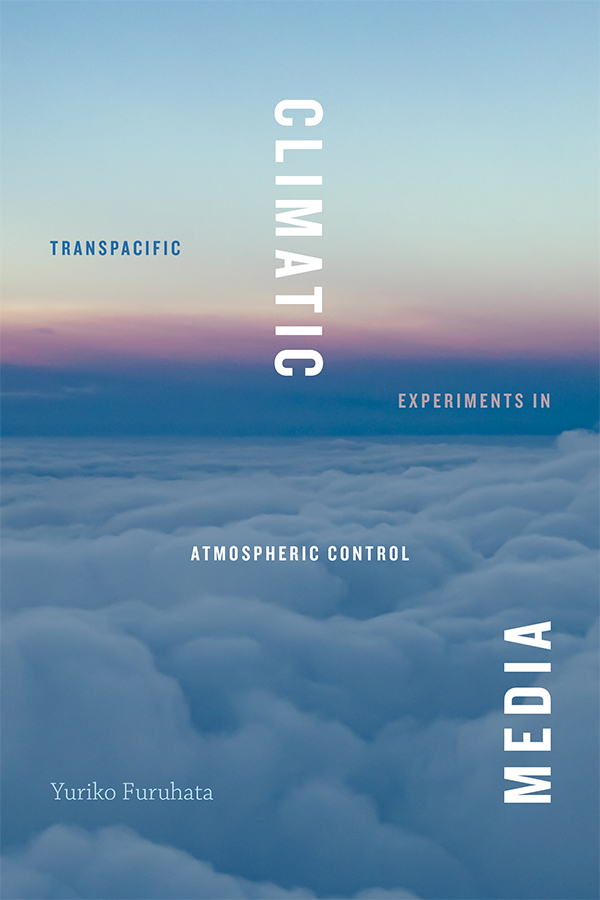
A review of Climatic Media: Transpacific Experiments in Atmospheric Control, Yuriko Furuhata, Duke University Press, 2022.

Climatic MediaMy Japanese alma mater, Keio University at Shonan Fujisawa, has a Faculty of Environment & Information. Next to it stands a Graduate School of Media & Governance. Putting two distant words together, like “environment” and “information” or “media” and governance”, creates new perspectives and innovative research questions while breaking boundaries between existing disciplines. Yuriko Furuhata uses the same approach in Climatic Media. What is climatic media? How did media become articulated with climate in the specific context of Japan? In what sense can we consider the climate, and atmospheric phenomena, as media? What new research questions arise when we put the two words “climate” and “media” together? Which disciplines are summoned, and how are they transformed by the combination of climate and media? How does climatic media relate to Watsuji Tetsurō’s concept of Fūdo, to take the title of his 1935 book translated as Climate and Culture? Can we use certain media to manage the climate, to predict and to control it? What is the genealogy of these technologies of atmospheric control, and can we trace them back to previous projects of territorial expansion and imperial hegemony? If we call “thermostatic desire” the desire to control both interior and exterior atmospheres, how does this desire “scale up” from air-conditioned rooms to smart buildings, district cooling systems, domed cities, geoengineering initiatives, orbital space colonies, and terraformed planets? In what sense can we say that air conditioning is people conditioning? These are some of the questions that Yuriko Furuhata raises in her book, which I found extremely stimulating. My review won’t provide a summary of the book’s chapters or an assessment of its contribution to the field of media studies, but will rather convey a personal journey made through Climatic Media and, indirectly, back to my formative years at Keio SFC.
The many meanings of media

One of the difficulty I had with the book, and also one of the lessons I learned from it, is the multiplicity of meanings associated with the term media. According to the burgeoning field of media studies, media can be many things. In its most widely accepted meaning, media are the communication tools used to store and deliver information or data: we may therefore speak of mass media, the print media, media broadcasting, digital media, or social media. In this limited sense, climatic media is what makes atmospheric variations visible and legible through the mediation of various instruments of data visualization: thermal imaging, photographs, charts, diagrams, computer simulations, etc. Putting the climate in media format can serve scientific, informational, political, or artistic purposes. In the arts, media designates the material and tools used by an artist, composer or designer to create a work of art. Climatic Media borrows many of its examples from the arts, and documents attempts by Japanese artists to use fog, fumes, mist, and air as a material for site-specific aerial sculptures or light projection. Architecture, in particular, can be identified as an art or a discipline deeply entangled in climatic media. In architecture, media is what mediates indoor and outdoor climate: a door or a wall can therefore be considered as media of atmospheric control. The meaning of media can also be expanded to include the materiality of elements that condition our milieu. Elemental media include the chemical components of air, indoor or outdoor air temperature and humidity, atmospheric pollution, extreme weather phenomena, the planetary atmosphere, and other natural elements of climate. In a more general meaning, media are a means toward an end. Climate can be manipulated to particular effect, which may be peaceful or war-related. Climate-controlled spheres or air-conditioned bubbles can be created, using technologies that mediate and shape what counts as a habitable environment. In this broadest sense, climatic media are technologies of government, securing a livable environment for certain populations while excluding others.  

The author chooses to concentrate on architecture as climatic media, foregrounding the imperial roots and Cold War legacy of Japanese architecture through the work of Tange Lab architects, including those associated with the internationally renowned postwar architectural movement called Metabolism, with Kurokawa Kishō and Isozaki Arata as key figures. In the past decades, Japanese architects and buildings have achieved iconic status and became known to a wide public. Even casual visitors to Tokyo are familiar with the Yoyogi National Gymnasium built by Tange Kenzō for the 1964 Tokyo Olympics, as well as the more recent National Art Center designed by Kurokawa Kishō in Roppongi. With Tange Lab as their training ground, Metabolist architects and designers believed that cities and buildings are not static entities, but are ever-changing organisms with a “metabolism.” Postwar structures that accommodated population growth were thought to have a limited lifespan and should be designed and built to be replaced. The greatest concentration of their work was to be found at the 1970 World Exposition in Osaka where Tange was responsible for master-planning the whole site whilst Kurokawa and Isozaki designed pavilions. It was also Tange Lab and Metabolism architects (some of whom were ardent “futurologists”) who helped bring cybernetics and systems theory into urban design in Japan. After the 1973 oil crisis, the Metabolists turned their attention away from Japan and toward North Africa and the Middle East, which (if we follow Yuriko Furuhata) made them complicit with the oil economy that stands as the main threat to our planetary survival in the twenty-first century.

From Japanese Empire to Osaka Expo ’70

Many of the architectural and artistic experiments described in Climatic Media are grounded in the work of the physicist Nakaya Ukichirō, known as the inventor of the world’s first artificial snow crystal. Nakaya spent his whole life studying ice, snow, and frost formations. The Institute of Low Temperature Science he established at Hokkaidō University in the 1930s helped advance research on cryospheric and atmospheric science. It was also deeply entangled in the Japanese Empire’s territorial conquests and war effort. Nakaya and his students collaborated with the research division of the South Manchurian Railway Company (“Japan’s first think tank”) in studying causes and mechanisms of frost heaving that damaged the railroad every winter in Manchuria. They helped Japanese agrarian settlers to build houses adapted to the extreme cold climate of the region, and designed ways to operate landing runways and military airplanes in frosty conditions. Nakaya Ukichirō’s ideas were later mobilized in a Cold War context, when polar regions and extreme atmospheric conditions became at stake in the geopolitical confrontation between the United States and its allies on one side and the Communist bloc on the other. Plans to weaponize the climate included battleground weather modifications such as creating hurricanes or heavy rain through cloud seeding and other chemical interventions, as well as the direct use of atmospheric weapons such as tear gas and Agent Orange during the Vietnam War. The expert knowledge of cold climates and atmospheric conditions accumulated at the Hokkaidō Institute also found civilian applications. They helped Asada Takashi, an architect at Tange Lab, to design a proto-capsule housing for the Japanese explorers and researchers at the Shōwa Station in the Antarctic in the 1950s. Tange Kenzō himself, who had aligned with the expansionist agenda of the Japanese Empire in his youth, helped design The Arctic City in 1971, a futurist proposal by Frei Otto and Ewald Bubner to house 40,000 people under a two kilometer dome in the Arctic Circle. Capsule housing and domed cities were also nurtured by dreams of extra-orbital stations and space conquest that survived the Cold War era. More down to earth, the idea of recycling snow as a source of refrigeration is now attracting investors and tech companies to build data centers in frosty regions such as Iceland or the northern provinces of Canada.

There was an even more direct connection between the physicist Nakaya Ukichirō and the architects and artists who gathered at Expo ’70 in Osaka. His daughter, Nakaya Fujiko, was a pioneer in atmospheric art and fog sculpture. She was the Tokyo representative of the American art collective Experiments in Art and Technology (E.A.T.), and was invited by Billy Klüver to create the world’s first water-based artificial fog sculpture for the Pepsi Pavilion at Expo ’70. Yuriko Furuhata argues that father and daughter were not bound solely by blood ties and a shared interest in meteorological phenomena: it is the practice of atmospheric control that binds the scientist and the artist. Nakaya Ukichirō himself was no stranger to artistic creation: he was an accomplished sumi-e artist, and documented his studies of summer fog or winter snow with ink paintings, close-up photographs, and educational films. In turn, his daughter incorporated science into her creative process, and sought advice of former students of her father to create the fog sculpture displayed at Osaka’s exposition. Nakaya Fujiko’s fog sculpture therefore sits at the point of convergence between two genealogical threads which, together, define what is at stake in climatic media: visualizing climate and engineering the atmosphere. Enveloping Pepsi Pavilion’s dome with artificial fog was meant to turn the pavilion into an interactive “living responsive environment” responding to ambient factors such as wind, temperature, humidity, and light. The machines used to make artificial fog found practical applications beyond the realm of art. Engineers use the same technology today to cool down data centers and cloud computing service infrastructure. Artificial mist is also a familiar sight in urban centers on hot summer days, where small drops of water are projected to create an artificial fog that cools down the air. Expo ’70 also served as testing ground for other urban innovations. Futurologists and technocrats paired with architects and engineers to produce a cybernetic model of the late-twentieth-century city, with its network of data-capturing sensors and its control room filled with state-of-the-art Japanese computers. This techno-utopian vision of connectivity that was put on display at Japan’s World Exposition in 1970 can be seen as a precursor of modern “smart cities” and their networked systems of urban surveillance and social conditioning. Today, many of these technologies of mass surveillance have become mundane and prevalent, but when they first entered the streets of metropoles in the late 1960s they were seen as the creative experiments of artists, architects, and futurologists.

Genealogies of the present

Instead of presenting a linear history of climatic media or splitting her subject into neatly divided themes, Yuriko Furuhata follows a genealogical method of investigation and presentation, which “reads the past as the historical a priori of the present we live in.” She starts each chapter with a modern example of atmospheric control and then goes back and forth in time to find antecedents of the same “thermostatic desire” to control the atmosphere, with Expo ’70 as a point of concentration and the Japanese Empire as a concealed Urtext. In chapter one, city sidewalks refreshed by mist-spraying devices and data centers cooled by similar technologies lead the author to describe the fog sculpture of Nakaya Fujiko at the Pepsi Pavilion and to trace her connexion with the work of her father during wartime, which in turn found direct applications in the futurist works of architects gathered at Tange Lab. In chapter two, the rise of hyperlocalized weather predictions using artificial intelligence and smart air-conditioning systems that individually curate air flows are connected to early attempts to numerically predict the weather and to the history of futurology in Japan, with early visions of the networked society that materialized in the computerized control center of the world’s fair. Amazon’s headquarters in Seattle and its CEO’s dream of colonizing space in chapter three’s opening echo former greenhouse architectures and imperial projects of a “living sphere” (Lebensraum), with Tange Lab as a source of innovative design that connects Japan’s imperial past to modern urban planning and to utopian dome cities in the Arctic or in outer space. In chapter four, the author takes the Metabolist architects at their own word, reading their defining metaphor of metabolism through the lenses of the product life cycle and the Marxist concept of the “metabolic rift” between humans and the natural environment. Kurokawa Kishō’s holistic vision of renewable capsule housing and his early engagement with systems theory are contradicted by his use of plastics as a nonrecyclable material and by his taste for the expression “Spaceship Earth,” which foregrounds modern plans to geoengineer the Earth’s climate through technological interventions. In chapter five, modern methods of atmospheric control, from tear gas to cloud computing and smart objects, are tributary to a genealogy of urban surveillance that shows the dual use of technologies of social control, turning artistic experiments into dystopian futures.

The expression “dual-use technologies” usually refers to technologies with applications in both the military and the civilian sectors. Here, they not only connect defense industries and peaceful usage, but also imperialist rule and artistic creation. Several words and expressions straddle the border between war-making and the arts: military strategists speak of theater, engagement, or war and peace without making direct reference to Shakespeare, Jean-Paul Sartre, or Leon Tolstoy. Similarly, the term “avant-garde” used by art critics derives from military vocabulary. Furuhata proposes to expand this list of dual-use terms to “site-specificity”, originally used for artworks created to exist in a certain place, and to “climatic media” in general, describing how projects to “weaponize the weather” found applications in civilian times or how avant-garde artistic experiments were the harbinger of modern security technologies. Climatic control also borrows some of its metaphors from agriculture: cloud seeding, harvesting the weather, cultivating rain, or building greenhouses point to underlying epistemic assumptions and cultural expectations associated with controlling the atmosphere. The “cloud” now used for computer data storage is not just a metaphor: cooling data centers involves the same air-conditioning nozzles and fog machines first used by artists at the Osaka fair. Computer network systems are atmospheric in the literal sense of being carried by radio waves in the air. The cybernetic model used to regulate a house’s temperature is applied to the fiction of controlling the planet’s imaginary thermostat through feedback loops. The technical operations carried out by climatic media are both material and symbolic. Urban infrastructures such as energy grids, fiber-optic cables, air ducts, water pipes, and computer systems all rely on technologies that regulate temperature and mitigate the effects of outdoor weather. In times of planetary-scale climate change caused by human activity, it is useful to remember that operations of climatic control at one scale all have consequences at another scale: the Earth is not a closed system, and climatic media are intrinsically connected with global issues of environmental pollution, greenhouse gas emissions, and waste accumulation.

Back to SFC

Reading this book reminded me of the intellectual atmosphere I found at Keio University’s Shonan Fujisawa Campus (Keio SFC) when I first came to Japan as a teacher of French studies in the early 1990s, from 1992 to 1994. Established only two years before, SFC at that time was a hotbed of technological innovation and pedagogical breakthrough. Sometimes considered as the “birthplace of the Japanese internet,” it had chosen to equip its students and faculty with state-of-the-art technology. The ubiquitous classroom computers were not the familiar IBM PC or Apple Macintosh, but turbocharged Sun SPARCstations and NeXt computers. Learning to code was a requisite, even for students specializing in the humanities. We wrote all of our documents using LaTeX, were early users of email software, and surfed the web using the Mosaic web browser upon its release in 1993. But technology was only part of the equation. SFC’s ambition was to embark a young generation of Japanese students into a life-changing experience, and to equip them with the skills and mindset for navigating the information society and its lived environment. As a junior faculty member, I was also allowed to follow courses and seminars to improve my Japanese language skills and share the students’ experience. Expanding my French upbringing and undergraduate studies in economics, the seminars and writings of Takenaka Heizo, Usui Makoto, and Uno Kimio introduced me to emergent research topics, from industrial metabolism to green accounting and input-output tables of economic development. Due to lack of personal discipline, but also because of the interdisciplinary nature of these ideas, I failed to translate all these burgeoning ideas into a PhD after I left Japan. But the knowledge acquired at Keio SFC equipped me with life-long skills and interests, and I have lived since them off the intellectual capital accumulated throughout these two years of teaching and auditing classes. I haven’t learned anything really new since then. In my view, Keio SFC at that time conveyed the vibrancy, intellectual excitement, and creativity a former generation of Japanese architects and social scientists must have experienced at Tange Lab or through the planning of Osaka Expo’ 70. Whether Keio SFC succeeded in steering Japan into the direction it set for itself is another debate. In retrospect, I could have been more attentive to the dark clouds gathering on the horizon: the bubble economy had left Japan with piles of debt and nonperforming loans; the reduced birthrate meant there were less students for an increasing number of places available in new universities; parents were still making huge sacrifices for the education of their children; and attractiveness of foreign languages and foreign destinations for studying and working abroad tended to dwindle. Even in those early years after the creation of the campus, academic inertia and routine crept in, and there was a certain hubris in the lofty goals and ambition that animated the whole project. But these two formative years still have for me the scent of youth and boundless possibilities.

I Can’t Breathe

A review of Breathing Aesthetics, Jean-Thomas Tremblay, Duke University Press, 2022. 

Breathing Aesthetics“I can’t breathe!” These were the last words uttered by Eric Garner, a Black resident of Staten Island who, on July 17, 2014, was put in a deadly chokehold by an NYPD officer for allegedly selling “loosies” or single cigarettes on the street. Garner suffered from asthma, a condition that, according to epidemiological data, disproportionately affects African Americans. Garner’s last words were also those of Elijah McClain and George Floyd, two other Black men killed by police just a few years later. “I can’t breathe” has become a rallying cry for our times and is used as an expression of the asphyxiating atmosphere in which activists declare that Black Lives Matter. The unability to breathe can be understood as both a metaphor and material reality of racism, which constrains not just life choices and opportunities, but the environmental conditions of life itself. It draws our attention to breathing as a political act: the capacity to breathe, or its preclusion, defines a new form of biopolitics in which some lives are deemed worthy of inhaling fresh air and some aren’t. Reclaiming ownership of the means of respiration, literally and figuratively, may delineate a new kind of respiratory politics that recognizes breathing as an unalienable right. For Jean-Thomas Tremblay, an art critic and professor of environmental humanities, breathing is, more than ever, in the air. Of course, breathing is in the air. But it specifically is, now, in the Zeitgeist. It is a sign of the times that breathing’s intensity and its variations—submitting breathing subjects to chokehold or waterboarding, refraining from inhaling certain substances, filtering inhaled air through face masks, measuring one’s carbon dioxide emissions—now feature in our political imaginary as an expression of agency and control. For Jean-Thomas Tremblay, the crisis in breathing predates the climate urgency, the Covid-19 epidemic, or the BLM movement. He sees its emergence and intensification around the 1970s, and tracks its expression in marginal, underground, or minoritarian art productions that may have escaped the radar screen of art historians but that, more than mainstream creations or popular art, may help us to capture what is at stake in the current inability to breathe.
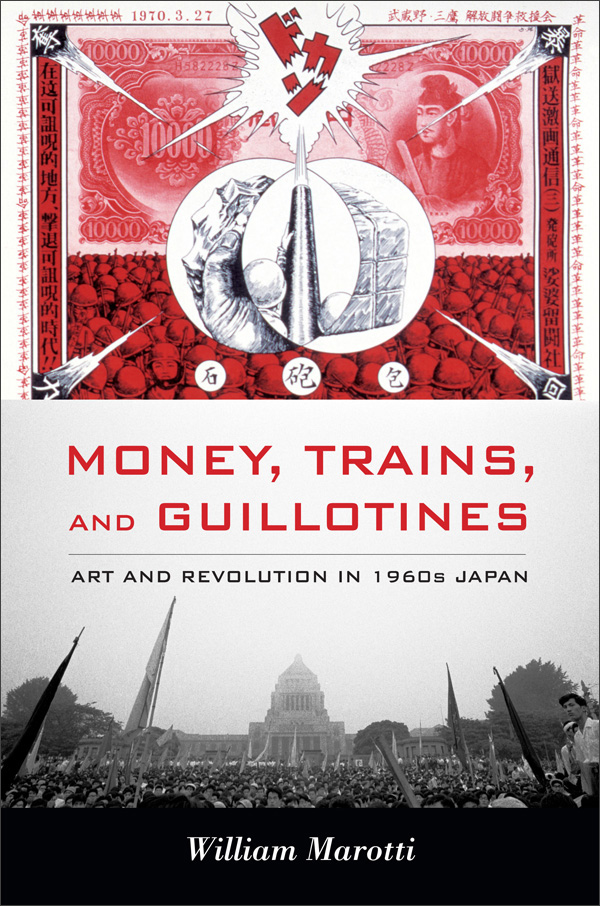
The crisis in breathing

According to Tremblay, “the intensified pollution, weaponization, and monetization of air and breath since the 1970s amount to a crisis in the reproduction of life.” Breathing orients life toward death. It accompanies us from the cradle to the grave or, to be precise, from our first intake of outside air at a maternity hospital to our last breath on our death bed. Breathing takes place in increasingly toxic environments. To breathe is to be vulnerable to airborne particles or poisonous gas, or to bad odors and fool air. Air carries the means of life and death, and each respiration reproduces the movement of life—inhaling and exhaling, in and out, in and out. Being out of breath, deferring to exhale, breathing in sync, being left panting or gaping for air: these variations constitute a popular nomenclature for expressing experiences of hostile environments and efforts to make life within them more livable. Being aware of one’s breath doesn’t protect us from airborne threats or breathing impediments: if anything, it makes the process of breathing harder by adding a layer of consciousness to what usually goes on without thinking. Coming back to the cultural history that forms the backbone of Breathing Aesthetics, the 1970s were characterized by the triple attempt to purify, weaponize, and marketize air. Pollution and air quality became increasingly debated in these years, which saw mounting scientific evidence of greenhouse gas accumulation and global temperature rise. Weaponization of air and breathing took the form of police forces using tear gas and other toxicants against demonstrators with increasing frequency. Although international protocols and agreements, from the Geneva Protocol of 1925 to the Biological Weapons Convention of 1972 and the 1993 Chemical Weapons Convention, have prohibited the use of toxic gas and airborne germs as a method of warfare, chemical weapons were used in all major conflicts, including the Vietnam War where the spraying of Agent Orange led to long-lasting health incapacitation. As for marketization, the 1970s saw the emergence of a “breathfulness industry” ascribing therapeutic value to conscious respiration. Reiki breathing, opening one’s chakra, and aligning with one’s inner self became all the rage, and the business of breathing extended to all ages and social categories.

Not everybody is equal in front of breathing: “we are all breathers, but none of the same kind.” It is the author’s guiding principle throughout Breathing Aesthetics that “respiration’s imbrication of vitality and morbidity is differently felt by differently situated people.” Control over the means of respiration is unevenly distributed. When breathing is in order, an invisible line is dividing the haves and the have nots, the fully capable and the respiratorily impaired. This is not an intuitive argument: nothing is more free than air, and everybody in good health can afford to breathe regardless of condition of wealth or social status. The distributive effects of breathing impediments are indeed a matter of debate. For some scholars, global warming or airborne pollution are the great equalizers as they affect the whole of humanity without consideration for political or class borders. The burning of coal in Beijing, China, affects cities as far as Tokyo, Seoul, or Hanoi, and the carbon dioxide emissions liberated by Chinese powerplants have consequences for the entire planet. But for Tremblay, “toxicity does discriminate, and it does know boundaries.” In the United States, respiratory hazards and their pathologies, from asthma to lung cancer, are disproportionately concentrated in areas populated by low-income minorities, which amounts to structural and environmental racism. The respiratory enmeshment of vitality and morbidity is particularly acute in situation where the taken-for-granted nature of breathing is compromised by health or environmental conditions. As the lack of mechanical ventilators in American hospitals demonstrated, the still-ongoing Covid-19 pandemic is a crisis of breathing. Many of the symptoms associated with Covid-19 are respiratory, from cough to shortness of breath to loss of smell; complications such as pneumonia and acute respiratory distress syndrome also imperil breathing. We live in an age in which respiration can be put at risk, and where the material conditions of breathing require sustained investment.

Race and respiration

In Tremblay’s analysis, breathlessness imposes itself as a locus of colonial violence, racial discrimination, patriarchal oppression, and ecological degradation. The United States owes its existence to the single largest and most significant land grab in human history. In addition to deliberate killings and wars, Native Americans died in massive numbers from infections endemic among Europeans. Much of this was associated with respiratory tract infections, including smallpox, tuberculosis, measles, and influenza. This history of dispossession and debilitation continued well into the twentieth century: the nuclear tests that took place on US soil near Indian reservations or in evacuated atolls of the Pacific have contributed to abnormally high thyroid and lung cancer rates among Indigenous populations. Settler colonialism was also associated with the slave trade and persistent racial exploitation of African Americans. The history of Black asphyxiation began with the drowning of enslaved people thrown overboard by slave ship owners during the Middle Passage to the Americas. Even today, policies aimed at controlling public spaces and preventing urban riots are depriving African Americans of their breathing space and capacity to voice their concerns. The burden of asthma in the United States falls disproportionately on Black, Hispanic and American Indian/Alaska Native people. But being Black or Latinx or Indigenous doesn’t cause asthma: the neighborhood does. Sociologists have shown that noxious and hazardous facilities are concentrated in minority and low-income communities. For some writers-activists, a war is being waged on the urban poor and the colored in America, and this war uses asphyxia and incapacitation to produce disabled bodies and lives cut short. Health disparities and environmental inequality call for environmental justice and redistribution of the means of respiration. Breathing and breathlessness also have a gendered dimension. There is growing evidence that a number of pulmonary diseases affect women differently and with a greater degree of severity than men. Childbirth labor involves respiratory techniques such as belly breathing and pushing for birth delivery. Part of the feminist movement’s ambition in the 1970s and 1980s was to “remove the man-made obstacles to breathing” and to claim the affinity between the feminine and the natural world while identifying breath as a conduit for intimacy between the two.

In Breathing Aesthetics, Tremblay addresses this politics of breathing tangentially. He defines a breathing aesthetics as a distinct mode of artistic creation and expression that takes breathing as its medium. Breathing is part of the aesthetic experience: according to Tremblay, breathing is “a mode of spectatorship in the same class as watching or listening.” Some works of art demand a certain type of breathing. They impose upon their public a certain kind of inspiring and expiring, controlling respiratory movements to produce a shared affect or breath. Common expressions reflect this affinity between respiration and the art experience A spectacle can be breathtaking, we may hold our breath at the end of a chapter, a story may leave us gaping for air, or we may fill our lungs in full appreciation of a beautiful scene. Critics have already commented upon literature’s engagement with breath: according to François-Bernard Michel, a French writer and pneumologist, Marcel Proust exhibited a literary sensibility to the weather because he suffered from asthma, and Raymond Queneau gave life to asthmatic characters because he was allergic to grass pollen. Cinema is the art form that shows the strongest connexion with the respiratory function. A movie can embark the public on a rollercoaster of laughing, crying, panting, and other respiratory emotions. Jean-Luc Godard’s A bout de souffle was about breathlessness and freedom to breathe as much as it is about challenging Hollywood to create a New Wave of cinema. Music also has a strong affinity with breath: wind instruments and brass are operated by blowing air through the mouthpiece and opening or closing holes to change the pitch. To conceive of music solely as a listening experience is to miss the point: hearing is passive, static, and detached from emotions; it hardly involves the body. Breathing, by contrast, brings the listener closer to the rhythm and harmonies played on stage. In the visual arts, some contemporary artists have taken air, smoke, and clouds as their primary material. Air sculptures are as unusual as they are ethereal, standing at the edge of materiality and drawing the public’s attention to lived and natural environments.

Minoritarian artworks and minority artists

It is Tremblay’s hypothesis that “since the 1970s, writers, filmmakers, and artists have experimented with breathing with extraordinary frequency.” Breathing Aesthetics presents itself as a series of attentive readings shedding light on the challenges of writing in the times of environmental crisis and social upheaval. The author devotes most of his attention to “minoritarian works created by marginalized figures who tend to contest the genre and media conventions traditionally valorized by artistic and academic institutions.” He uses the term “minoritarian” to refer “not to fixed positions but to an impulse, be it artistic or analytic, to contest the forces that make the world more breathable for some people than for others.” The artists and artworks curated in the book haven’t been chosen at random. Their engagement with breathing and breathlessness was a necessary condition, but another condition was their position as “minoritarian”, meaning here a circulation outside the commercial art circuit for the artworks and a belonging to ethnic or sexual minorities for the artists. The 1970s were a time when women, gays and lesbians, and ethnic minorities hadn’t acquired or been granted the visibility they have in today’s art world. To be an artist and a woman, let alone a non-white woman, was seen as problematic. It is said that the last heated exchange between Cuban-American artist Ana Mendieta and her husband Carl Andre, prior to her defenestration (presented as an accident or a suicide), was about the lack of artistic recognition she was receiving as opposed to her husband’s success. Of the BDSM couple Bob Flanagan and Sheree Rose, art history mostly remembers the male performance artist who “nailed his penis to a plank” and whose disability condition (he was suffering from cystic fibrosis) indeed connected his art to breathing and breathlessness. Of Sheree Rose we know little, and her memoirs remain unpublished. Most of the authors surveyed in the book are women, although they tend to steer away from mainstream feminism and its insistence of a feminine “breath of life.” The minoritarian voices connected to Indigenous knowledge, Black feminism, or ecological awareness rely on respiratory rituals as tactics or strategies for living through the foreclosure of political presents and futures. Breathing together, or developing respiratory asynchrony, have inspired contingent models of social and political life that are contesting “the forces that make the world more breathable for some people than for others.”

Throughout the book, the author posits that ”respiration renders vitality and morbidity inseparable.” Individuals tend to notice breathing and air when those no longer fulfill their life-giving and life-sustaining functions: “becoming conscious of our breathing confronts us with our finitude.” Some people believe that there is a finite number of breaths that one is allowed to take during one’s life: each breath brings us closer to death, and to exhale is to die a little. The French call “la petite mort” the spiritual release that comes with orgasm, or indeed with the encounter of great works of literature as described by Roland Barthes. A little death is also when something dies in you: lung cells die with every breath we take and cannot be regenerated. The entanglement between respiration and morbidity is magnified in the last breath that is supposed to separate life from death. Of course, things are not so simple: biological death has several definitions, from the cessation of brain activity to the irreversible stopping of heart and lung functions, and a person can be maintained under artificial respiration while being brain dead. Some TV series indeed play with this ambiguous passage by staging “last breath” moments that prove not to be final, causing bereaved families and the public to burst into involuntary laughter. According to Tremblay, “the fantasy that in the last breath the dying individual encounters finitude on their own terms fulfills a social function”: it introduces an unambiguous demarcation between life and death, helping survivors to part with the deceased and to go on with their lives. The last chapter of Breathing Aesthetics documents this rite of passage by analyzing two documentaries that take palliative care and the management of death in public hospitals at their main topic. Capturing the last breath poses many technical and philosophical issues: the last breath can only be named as such retroactively, and the persons involved have to give their informed consent to this breach of intimacy. Released before the advent of the Internet and social media, the two reality movies, Near Death (1989) and Dying at Grace (2003), anticipate a time when the last moments of beloved ones are recorded live on camera and the scene of death, with its last breath and stopping electrocardiogram beeping, become public events.

The politics of breathing

I have initially titled my book review “I can’t breathe,” the rallying cry of the Black Lives Matter movement. But here I stand and hesitate: should I keep this title? I used it as an easy moniker only to catch readers’ attention and to echo the book’s concern with the devaluation of Black lives in the United States today. But of course, I can breathe, and I don’t feel privileged about that one bit. This separates me from the author, who tends to consider his own whiteness as a privilege. Throughout Breathing Aesthetics, Jean-Thomas Tremblay is only interested in inequality insofar as it intersects with race, gender, sexual orientation, and (dis)ability. The analytical tools that he mobilizes are “feminist, queer, and trans, for those are the categories, along with race and ethnicity, that expose the constitution and construction of bodies.” Note that critical theory, along Marxist or continental philosophy lines, is not mentioned in the author’s toolbox. Disparities of wealth and class distinctions are not addressed. The reason we (they) can’t breathe is to be found in identity politics, not class warfare or social inequalities. It is not a matter of rich people stealing fresh air from poor people’s lungs, but of some categories being denied their fair share of breathing. Slogans should therefore be used carefully in order to avoid illegitimate racial appropriations. Tremblay warns against “the denial of structural and environmental racism” by the anti-mask campaigners who appropriated the “I can’t breathe” slogan to protest against mask-wearing and other Covid-related restrictions. He himself confesses that he took part in the demonstrations denouncing police violence in Chicago, but that he kept silent when BLM militants were chanting “I can’t breathe” and “we can’t breathe.” He recognizes he felt breathless at the time but that “his breathlessness couldn’t be equated with the breathlessness of protesters asphyxiated by environmental racism, police violence, or microaggressions.” As a French national with no connexion whatsoever to the United States, I have even less skin in the game. But I would be more ready than Jean-Thomas Tremblay to use the denunciation of breathlessness as a rallying cry because I believe our breathing condition should bring us together and not take us apart along identitarian lines. If a politics of air redistribution is to be put in place, it should be based on a universal right to breathe and grant equal access to breathable air, regardless of skin color or other marks of identity definition. Of all the works of art surveyed in Breathing Aesthetics, the one I feel the closest with is the music video “Breathing” from British pop singer Kate Bush, although this is the one that the author deems most compromised by its whiteness and lack of minoritarian impulse. 

The Artistic Avant-Garde in 1960s Japan

A review of Money, Trains, and Guillotines: Art and Revolution in 1960s Japan, William Marotti, Duke University Press, 2013.

Money Trains Guillotines“Dada” exists in the Japanese language as a category outside the realm of aesthetics and art history. The word “dada”, as in the expression dada wo koneru, is used to describe selfish behavior that lacks sense. It is also an idiom for “spoiling.” A kid throwing a tantrum can be called “dada”, or a teenager’s prank, or an adult acting childish. A popular theory derives the expression from Dadaism, the avant-garde art movement born in Zürich in 1916, but real etymology and kanji characters actually connect it to the Japanese language. Perhaps the false etymology is not wrong after all. Dadaism always had a special affinity with Japan. In the German language as in Japanese, the term may have derived from baby talk or child’s speak. Tristan Tzara’s affirmation “Dada means nothing” echoes the teachings of Zen masters and the Japanese concept of mu, or nothingness. The Dada artistic movement entered Japan soon after its birth in Europe during the First World War: in 1923, Mavo, a Dada group founded by Japanese artists Murayama Tomoyoshi, Yanase Masamu and others, held its first exhibition at the Sensō-ji temple in Tokyo. Japanese Dada may have been even more explosive than its European versions: the art review Mavo originally came with a firecracker attached to its cover. The poets Tsuji Jun and Takahashi Shinkichi were also pionneers of Dadaism in Japan, blending it with Taoism and Zen Buddhism. Dadaism then disappeared from the scene, only to resurface in the late 1950s as the Neo-Dada Group, an art collective featuring Akasegawa Genpei, Arakawa Shūsaku, Ariyoshi Arata, and a dozen other artists. Dada’s influence in Japan can be observed in a variety of cultural expressions such as surrealism, pop art, Fluxus, noise music, and even a monster figure in the popular TV series “Ultraman.” The kaiju character “Dada”, with distinctive cubist features, was created as an extension of Dadaism and avant-garde art and became a recurrent feature in the series.

Dada’s Not Dead

Many artistic acts and performances reviewed in Money, Trains, and Guillotines may fall under the umbrella of Dadaism, although only a minority of artists covered in this book were affiliated to the short-lived Neo-Dada movement. Printing giant 1,000-yen banknotes and getting sued for it; plotting to install a guillotine in front of the compound of the Imperial Palace; or performing art actions along the Yamanote train line: these are some of the disruptive performances that William Marotti reviews in his book, recasting a period alive with student movements, political clashes, labor struggles, and radical theorizing. More than “dada,” a moniker that characterized the period was hantai or han-, meaning “anti-.” Students demonstrated against the renewal of the US-Japan security treaty under the slogan Anpo hantai, or “down with the security treaty.” Neo-Dada artists joined them in their protests, covering their bodies with tracts and slogans, while sometimes shouting the rallying cry Anfo hantai, or “down with informal art.” The expression han-geijutsu, or “anti-art,” was coined at the time to characterize these various artistic movements. In 1960, the art critic Tōno Yoshiaki used it to describe the sculpture-object of artist Kūdo Tetsumi titled Zōshokusei rensa hannō, or “Proliferation chain reaction.” Inspired by anti-theater and anti-novel, the expression of “anti-art” led to a lively debate between art historians Miyakawa Atsushi and Takashina Shūji. Some critics, such as Kawakita Rinmei, defending the tradition of Japanese art, characterized anti-art artworks or performances as the production of demented rockabilly fans. Others, such as the surrealist poet and art critic Takiguchi Shūzō, who held a monthly column in the Yomiuri newspaper, encouraged young artists to push the limits of artistic expression and experiment with new art forms.

The Yomiuri newspaper played a key role in the emergence of this “anti-art” art scene. Newspapers in Japan are more than newspapers: they also sponsor art exhibitions, organize conferences, finance their own professional sport teams, and publish books written by their staff, among other activities. The Yomiuri, situated at the center-right of the political spectrum, was nothing but progressive and anti-establishment in its art choices during the period. Starting in 1949, it sponsored a yearly event modeled on nineteenth-century France’s Salon des indépendants, later labelled the Yomiuri Indépendant, first held at Tokyo Metropolitan Art Museum in Ueno Park. Competing at first with the Nihon Indépendant organized by the Japan Fine Art Association in the same location, it took on a new identity in the late 1950s and early 1960s with the participation of a new generation of artists proposing increasingly puzzling and provocative objets, installations, and performance elements. In April 1961, a major exhibition titled Gendai bijutsu no jikken (“Experimentations in contemporary art”), held at the Tokyo Metropolitan Art Museum and sponsored by the Yomiuri, displayed the works of sixteen new artists, among which Arakawa Shusaku, Kudō Tetsumi, Nakanishi Natsuyuki, Kikuhata Mokuma, Ochi Osamu, Yoshinaka Taizō, Motonaga Sadamasa, Tanaka Atsuko, etc. A predilection for art incorporating junk or transforming junk into increasingly enigmatic objets drew the attention of the outside world. Facing criticism, the Tokyo Metropolitan Museum, the site of the Yomiuri Indépendant, issued new regulations regarding the type of works that could be displayed. Were to be forbidden “works including a mechanism producing loud or unpleasant noise, works emitting a stinking odor or using perishable material, works using sharp objects that could cause injuries, works that leave the public with an unpleasant sensation and that violate the rules of public hygiene, works using sand or gravel that could damage the floor and walls of the museum, works directly hanging from the ceiling, etc.” Faced with such restrictions, artists prepared to stage a boycott, and the Yomiuri group finally put an end to the yearly exhibition in 1964.

A crucible for artistic creativity

William Marotti devotes two chapters to the history of the Yomiuri Indépendant. Its beginnings in 1949 were unappealing: fresh out of wartime collaboration and a long labor strike, the managers of the Yomiuri Shimbun wanted to whitewash their conservative image by sponsoring the arts and encouraging democratization. The creation of the yearly exhibition in 1949 occasioned both protests and a fair degree of confusion: it bore the same name as the Nihon Indépendant organized by the Nihon bijutsukai (Japan Fine Art Association), and was far less prestigious than the official Nitten exhibition (Nihon bijutsu tenrankai), divided into its five sections of Japanese Style and Western Style Painting, Sculpture, Craft as Art, and Calligraphy. First displaying a motley crew of professional artists and amateurs, it gradually became the center of a constellation of interconnected artists and art groups. It was, according to Akasegawa Genpei, a “crucible” in which the work of young artists, including his own, could combine and coalesce to acquire a certain degree of cohesion, intensity, and purpose. The Yomiuri Anpan, as the exhibition was also known, fulfilled the original goal of its creators in fostering a vigorous, critical, and anti-conformist art scene. Avant-garde art spilled out of the museum, as in Takamatsu Jirō’s Cord series (Himo) extending out of the museum and in Ueno Park, or was expelled from in precinct when Kazakura Shō engaged in nude performances in front of onlookers. Many of the exhibits were not artworks in the traditional sense: they were created for the space and duration of the exhibition and were simply abandoned afterwards. Performance pieces were by nature time- and space-specific. The Yomiuri Indépendant nonetheless featured seminal works and performances that were memorialized and displayed in retrospective exhibitions, such as The 1960’s : a decade of change in contemporary Japanese art (1960 nendai: gendai bijutsu no tenkanki) held in 1981 at the National Museum of Modern Art in Tokyo, or Japon des avant-gardes 1910-1970 at the Centre Pompidou in Paris in 1988.

The early 1960s witnessed the blossoming of many art collectives. Some of them developed an art scene outside of Tokyo, with few contacts to the avant-garde mainstream but a radical impulse that acted as a harbinger of things to come. The Gutai collective, founded in 1954 in Osaka and animated by Yoshihara Jirō, was a fascinating attempt to conflate art and performance, staging its first happenings before and independently from the New York avant-garde. Considering the fact that Life magazine devoted a photo reportage to the activities of Gutai in 1956, it is well possible that the Japanese avant-garde group influenced the New York experimental art scene and not the other way around. But Gutai remained a provincial affair, and it is only in the early 1960s that its destructive impulse was picked up by young artists in Tokyo. In addition to the Neo Dada Group, avant-garde art collectives included the Time School (jikanha) of Nakazawa Ushio, Nagano Shōzō, and Tanaka Fuji, the Music Group of Tone Yasunao, Kosugi Takehisa, and Mizuno Shūkō, and the group Zero jigen (Zero Dimension) with Katō Yoshihiro. The High Red Center, formed in 1963, was composed of Takamatsu Jirō, Akasegawa Genpei, and Nakanishi Natsuyuki. The first character of each name (Taka or high, Aka=red, Naka=center) led to the name of the collective, who took as its symbol a big exclamation mark. The group weighed the publication of an aborted plan to raise a giant guillotine in the Imperial Plaza, drawing proposals for two possible alternative configurations for the guillotine. In the context of the times, this was not only empty provocation: a writer, Fukuzawa Shichirō, had been the target of a deadly right-wing attack in 1960 for publishing a short story in which the imperial family was beheaded amid joyous festivity.

Counterfeit art

But perhaps the most radical act plotted by one of these conspiratory artists emerged out of artistic banality. Akasegawa’s 1,000-yen project was a classic attempt to make enlarged copies of the Japanese banknote featuring Prince Shōtoku using crude reproduction techniques and to display the monochrome works in various formats: as work in progress, framed pictures, or wrapping material for readymade objets. First exhibited at the 1963 Yomiuri Indépendant, the art project fell under the radar screen of Japanese authorities until the arrest of a Waseda University student prompted police to search the apartment of a magazine editor, leading to the discovery of Akasegawa Genpei’s 1,000-yen series. Akasegawa’s works—monochrome, single-sided, prepared on a range of qualities of paper, and often enlarged—could hardly have been intended to pass as currency. But according to public prosecutors, the act of reproducing banknotes fell under a 1895 law controlling the imitation of currency, establishing provision for prosecuting mozō (creating something confusable with currency) and gizō (counterfeiting). What followed was a protracted judicial trial that sometimes turned the Tokyo High Court into a scene of happenings. In several articles and literary works, Akasegawa articulated a complex critique of the pseudo-reality of money, identifying it as an agent of hidden forms of domination supported by state authority and by the policing of commonsense understandings of crime, of art, and of public welfare. In a parallel case regarding the abridged translation of a Marquis de Sade novel, the court asserted the state’s right to criminalize any form of artistic expression if it was found to be injurious to the public welfare, unlimited by constitutional restrictions and based on statuses dating back to the Meiji era.

The fact that the police state and the judicial system were mobilized in a defense of the reality of money points to the potency of artistic attacks on symbolic authority. The apparent anomaly of the trial in Courtroom 701 of the Tokyo District Court, a venue for the most serious criminal cases, and the appeals up to the Supreme Court, all testify to the weigh placed on this contest. According to William Marotti, “the gap between artists’ investigations and dreams of revolution, and the state policing of art and thought, reveals the politics of culture as confrontation.” He refers to Henri Lefebvre and Jacques Rancière to articulate a critique of the everyday, based on Japanese artists’ discovery of hidden forms of domination in daily life and their attempts to expose and challenge official forms of politics and hegemony. Avant-garde artists from the early 1960s were actively engaged in transgressing boundaries of thought and social practice. Their practices appear to have arisen out of a particular local, playful art practice that used theYomiuri Indépendant as a playground for bringing artistic experimentation into direct interaction with the everyday world. The exhibition’s cancelation in 1964, the year of the Tokyo Olympics, had the effect of pushing avant-garde art into the underground and radicalizing it further. Revolutionary forms of activism and critique emerged to challenge state institutions ranging from the museum gallery to the courthouse. Art and political activism converged in the use of a common vocabulary such as “direct action” or chokusetsu kōdō. Indeed, the transliterated English term favored by Japanese artists, akushon, often synonymous with pafōmansu, was progressively replaced by the more directly palatable kōi or kōdō, evoking direct political action ranging from general strike to terrorism.

From avant-garde to angura

Artistic vocabulary also testifies of an evolution of loan words from the French to the English language. The avant-garde artists at the Yomiuri Indépendant exhibited collages and ready-made objets influenced by Marcel Duchamp and the art informel movement. The cultural cachet of French words and idiomatic expressions inspired a generation of painters and plasticiens who still dreamed of Paris as a Mecca for the arts. In a way, the worldwide reputation of the Japanese avant-garde was made in France. The art critic Michel Tapié visited Japan from August to October 1957 and wrote lavish praise about Kudō Tetsumi’s entries at the Yomiuri exhibition. His encounter with the Gutai group predated Allan Kaprow’s apology of the Osaka collective by a few months. But soon English expressions such as abstract expressionism, action painting, art performances, happenings, and angura (a contraction of “underground”) took the place of French loan words. The early 1960s was definitely a period when Japan felt the gravity center of the art world move from Paris to New York. Whereas a previous generation of artists such as Imai Toshimitsu and Dōmoto Hisao chose Paris as the base for their artistic career, Arakawa Shūsaku and Kawara On settled in New York where they contributed to the birth of conceptual art. Jasper Johns, Robert Rauschenberg, and John Cage visited Japan in 1964, and their works and performances had a huge influence on young artists. The time of the avant-garde was over, and with it the possibility of revolution through art, the classical goal of an avant-garde, receded into oblivion.

Taking Academic Books to the People

A review of Bring on the Books for Everybody: How Literary Culture Became Popular Culture, Jim Collins, Duke University Press, 2010.

Bring on the BooksI do not want to brag, but I am in a league of my own when it comes to reading habits. I am not a professional reader, teacher, academic, or publisher, and yet I achieved to read 365 books in 2020—the year of the great lockdown. What started out as a silly gambit on January 1st—my “one-book-a-day” challenge—turned out to be a transformative experience. If “frequent readers” are said to read twelve to forty-five books a year, and “avid readers” read fifty or more books a year, I propose to create the category of “voracious reader” for those who read more than a hundred books per year,  and “gargantuan reader” for those who pass the two hundred mark. And yes, like frequent flyers accumulating miles on air travels, we should get bonuses and free books from online bookstores. To be fair, the type of books you put on the count matters. My daughter just read fifty volumes of Detective Conan during a full weekend of binge manga reading. I do not read comic books, and I have a certain aversion for novels and literature. My preference goes to nonfiction, and more specifically to academic books like the ones published by Duke University Press. They take more time to read and assimilate—this is why I did not write 365 book reviews in the year 2020. Reviewing a book requires time and effort: I am not a native English speaker, and I have long lost the habit of writing term papers and class assignments. But writing reviews, and posting them on the internet, makes me feel I am part of a community—a learned society of sorts, or a book club with a membership limited to one.
One-book-a-day challenge

Bring on the Books for Everybody (BoBE for short) focuses on books different from the ones I am usually reading: it deals with literary culture, and takes most of its examples from novels and literary fictions. Its central argument—that ordinary readers and media personalities have seized the means of literary taste production from the hands of the high priests of academia and literary criticism who once maintained the gold standard of literary currency—contradicts my personal infatuation with high theory and arcane academic books. I must confess I prefer to read comments on literature and literary analysis than literature per se. And yet BoBE’s message resonates with the reading practices I have developed. It argues that popular literary culture is now ubiquitous: it is to be found in Barnes & Noble superstores, Amazon reviews, blockbuster adaptations, and television book clubs, as much as in the hallowed grounds of public libraries and academic office shelves. Similarly, theory is not a category limited to academic scholars and is now making a dent in real life, nurturing new forms of activism and self-realization. Reading literature or nonfiction does not compete with other activities such as surfing the web, watching movies on Netflix, or posting messages on social networks: it feeds itself from such activities in a mutually reinforcing manner. Reading is not a solitary act but a social endeavor, enmeshed in webs of communication and commerce that are interpersonal, transnational, and technological. Reading theory or literature is a self-cultivation project that sometimes borders on self-help therapy. Books are a lucrative market and reading practices are shaped by market forces and economic factors.

New reading practices are challenging existing notions of literary authority. Asked which personality reads the most books in a year, the average American may come up with the name of Warren Buffet, Bill Gates, Mark Zuckerberg, or Elon Musk. The academic scholar surrounded by his bookshelves and piling volumes on his desk has been replaced by the capitalist investor, the billionaire philanthropist, the founder of a corporate empire, or the serial entrepreneur. According to Wikipedia, Warren Buffett became America’s most successful investor because he used his voracious reading habit to learn everything there was to know about every industry. Microsoft founder Bill Gates posts his reading list of the past year along with his annual letter to investors. In 2015, Facebook CEO Mark Zuckerberg vowed to read one book every other week “with an emphasis on learning about different cultures, beliefs, histories and technologies.” Young Elon Musk is said to have read for 10 hours each day before growing up to become Tesla CEO. These new reading heroes stand in stark contrast with the college dork, the science nerd, the bookworm, the librarian rat, the armchair theorist, who used to be identified as the most voracious readers. The message they convey is less on which books you should read, but that you should read a lot, and that book reading is somehow connected to economic success and a well-balanced lifestyle. Such individuals seem spectacular to us, almost superhuman. And yet, the apparent enigma in their ability to read a lot amid a very busy schedule spurs the curiosity in us about them even more. We want to know the secret behind their power.

Readers with charisma

Capitalist entrepreneurs and media celebrities have now become the taste arbiters of literary culture. They are challenging existing notions of literary authority and cultural legitimacy. As Jim Collins notes, documenting the rise of a new type of master curators such as Oprah Winfrey or Nancy Pearl, “By the late nineties, literary taste brokers outside the academy could present themselves as superior to an academy that could now simply be ignored.” Academics have painted themselves into a corner of irrelevance and ridicule by sticking to an outmoded model of exclusivity and distinction. The idea that genuine cultivation and proper taste could be secured only through proper instruction and acquired only within the academy didn’t resist the democratization of book guides, reader forums, and amateur circles. Readers were empowered to talk about literary books and form reading communities that didn’t feel intimidated by the traditional discourses of literary appreciation. The discrediting of the academy and the empowering of amateur readers have led to new forms of conversation about books. A new set of players, locations, rituals, and use values for reading literary fiction has emerged on the margins of literary culture. Within this radically secularized conversation, the new cast of curators and readers talk about books in ways that are meaningful to amateur readers, and they have the media technologies at their disposal to make their conversations into robust forms of popular entertainment.

Another central thesis of BoBE is that the literary experience has now become part of our visual culture. Books are a component of a media mix that includes a variety of texts and images: commentary, interviews, cover art, book club flyers, and cinematic adaptations, along with their spin-off products. “What used to be an exclusively print-based activity has become an increasingly image-based activity in which literary reading has been transformed into a variety of possible literary experiences.” Literary value is an important component of the success of high-concept adaptation movies and literary-inspired films: as Miramax producer Harvey Weinstein put it, “our special effects are words.” Within this predominantly visual culture, reading the book has become only one of a host of interlocking literary experiences. New reading practices are changing the public’s expectation concerning just what a literary experience should look like. It now usually comes with a Latte and a proper mise-en-scène. Reading is intertwined with tastes in music, clothing, and entertainment that come as a package: the choice of books, like the choice of wine, interior design, cosmetics, fashion accessories, and cooking utensils, attests to a set of shared values and rituals. A new kind of novels offers an exercise in self-cultivation, affirming the superiority of the reader’s taste culture and self-consciously reinventing the novel of manners for contemporary audiences. Even Jane Austen or Henry James can be read as self-help manuals for busy millennials: contemporary readers still use them as primers about the world, as introductory courses in graceful living.

From literature to theory

My reading practices are different from the ones surveyed in BoBE. I don’t take my cues on what to read from TV celebrities or corporate CEOs. Although I concentrate on scholarly books, I don’t follow an academic syllabus or a prescribed reading list. I don’t have a political agenda to document and sustain. I don’t need a caste of high priests to tell me what to read and how to read it. I make mine Martin Luther’s formula to trust only the scriptures, Sola Scriptura. My choice of books is serendipitous and owes much to the availability of second-hand books on internet platforms or discount bookstores. In concentrating on books published by Duke University Press and other academic publishers, I try to challenge not only the boundaries between the disciplines but, more importantly, the boundary between the academy and the world outside. I try to make academic books relevant for daily life and casual conversations. My reading of academic books is definitely non-academic. I do not skim volumes or skip chapters; I tend to read from the first to the last page. I don’t take notes, but I underscore important sentences or paragraphs with a pen and a ruler. It helps me process mentally the content of the book and to increase my retention rate. This way I can peruse the underscored parts in a second reading and get the gist of the book in a summary. Inscribing my mark on the pages of a book also makes it clear who is the boss. Some books are meant to be read as a struggle, and you definitively want to be on top. I feel perfectly comfortable taking on books that are supposed to be fully accessible only to professional readers. If I don’t understand the book’s content, I blame the author, not me.

New technologies have an influence on the way I read. I started to write book reviews on Amazon, developing on a writing habit I had picked up as a student. BoBE mentions the history of Amazon’s curatorial activities: reviews, articles, and interviews that were originally drafted by an editorial team have been progressively replaced by customer-generated content and algorithms linking customers sharing similar tastes (“Customers who bought this book also bought…”). The book also refers to new technologies of taste acquisition that empower amateur readers to assume the role of curators of their own archives. The website Goodreads (owned by Amazon) allows to track one’s readings, to set book lists and reading challenges for the upcoming year, and to arrange one’s library as an extension of one’s self. The solitary act of reading a book has been transformed by the advent of reader comments, star ratings, and customer evaluations. According to Jim Collins, “The desire to make those evaluations public demonstrates that the need to display one’s personal taste in terms of the books one chooses to read forms an essential part of the pleasures of reading.” People will greatly enjoy reading a whole lot more if they start telling people about what they have read. The author, who used to be a distant figure one approached reverently, now maintains a familiar presence on social networks. Nothing gives me more joy than getting positive feedback from an author on a book review I have advertised on Twitter.

The Duke Reader

So why Duke University Press? This relatively obscure publishing house has recently attracted a fair share of media attention: its editor, Ken Wissoker, as well as two of its star authors, Lauren Berlant and Donna Haraway, have been chronicled in The New Yorker. As the author of the first portrait notes, “Duke has become known as a press that blends scholarly rigor with conceptual risk-taking, where high and low art boldly intermingle on principle.” The history of Duke University Press is, partly, the history of cultural studies in the United States. It is not attached to one discipline: as an example, it is difficult to categorize BoBE between literary criticism, film studies, and the sociology of reception. Duke publishes a steady stream of volumes anchored in the social science disciplines: sociology, anthropology, history, and literary criticism. It is also open to the new disciplines that have flourished in the margins of academia: media studies, sound studies, gender studies, queer theory, critical race studies, disability studies. It is not the preserve of tenured professors and established authors: its catalogue is open to junior faculty, adjuncts, and members of the intellectual proletariat. Part of the story of how Black Lives Matter and the #MeToo movement came to the academy goes through Duke Press. It is one of the few academic presses with crossover appeal: because its editorial line is so cutting-edge, it can make interventions in contemporary debates beyond the purview of American academy. Through The Duke Reader, I am happy to associate myself with its development.

Animation Studies and Cartoon Science 

A review of Animating Film Theory, edited by Karen Beckman, Duke University Press, 2014.

Animating Film TheoryI must confess I am averse to film theory. The little I have read in this field confirms me in my opinion: film theory is empirically useless, epistemologically weak, and aesthetically unappealing. Nothing of substance has been written about the topic since Plato’s Cave, the allegory that has people watch shadows projected on the wall from objects passing in front of a fire behind them and give names to these shadows. The books and articles that are collated to form the discipline’s canon are a mixed bag of philosophical references, journalistic musings, and academic jabber. In my opinion, Deleuze’s two-volume work on film, The Movement-Image and The Time-Image, are among his weakest books. They do not amount to a philosophy of cinema, or a theory of film: at best, they are reflections on time and space that take cinema as a pretext and Bergson as an interlocutor. In textbooks and introductory chapters, film theory is a collage of quotations by cultural critics, mostly from the early twentieth century, who have commented on the birth of cinema in the context of mass culture and reproduction technologies. Remarks written in passing by Walter Benjamin or Theodor Adorno are elevated to the rank of high theory and revered as sacred scriptures by a discipline desperately in need of founding fathers. The French contributors to the Cahiers du Cinéma dabbled in film critique as a hobby and did not think of themselves as serious thinkers: they were puzzled to see cinema studies emerge as an academic discipline, and they certainly would have disapproved the emergence of a canon of officially approved texts that includes their own. When film theory tries to build a firmer intellectual grounding, it mobilizes thinkers who have written outside the purview of cinema studies and have never commented on films: Saussure, Lévi-Strauss, Derrida, Lacan, or Baudrillard. Gilles Deleuze for the French domain and Stanley Cavell in America stand as the two exceptions: they have devoted whole books to cinema as part of a program of applied philosophy. My preference goes to Cavell over Deleuze.

Animated films and live-action movies 

My biases against film theory were compounded by this volume on animation film theory. If a theory of films rests on shaky ground, what about a theory that takes animated movies as its object and proposes to build an autonomous discourse on this subset of film media? A discipline is not defined by its empirical topic, but by its methods and the way it builds a scientific object as a matter of scholarly investigation. The existence of animated movies and frame-by-frame films—which predate the birth of cinema—is in itself no justification to devote an academic discipline to their study and to engage them theoretically. I do not mean to say that animation movies should be forever marginalized and ignored by cinema specialists and cultural critics. They can provide food for thought for many disciplines and, in some instances, are valuable sources of theoretical engagement. But a discourse on animation does not a theory make. Building an animation theory has more to do with intellectual posturing and academic differentiation than with scientific rigor and sound scholarship. A caricature of the attitude that I have in mind is provided by Alan Cholodenko’s contribution to this volume. An American-Australian scholar who retired in 2001 from the University of Sidney, Cholodenko describes himself as the godfather of animation theory: “theorizing of and through animation has been my project for the last twenty-three years.” His claim of having come first to lay the “first principles” of the discipline doubles the proposition that “historically as well as theoretically, film is the ‘stepchild’ of animation, not the other way around.” Drawing inspiration from the work of Jacques Derrida and Jean Baudrillard, and postulating animation as the mother of all disciplines, his contribution to this volume amounts to little more than self-promotion and personal aggrandizement. 

What came first, film or animation? And who can claim the privilege of having “invented” animation cinema, in theory and in practice? A central tenet of the fledgling discipline is that animation represents the past and the future of all cinema. Lev Manovich, an author of books on digital culture and new media, made that claim in 2001: “Born from animation, cinema pushed animation to its periphery, only in the end to become one particular case of animation.” The division of cinema into live action and animation has been recently blurred by the digital turn: through CGI and pixel-by-pixel editing, live-action movies are merging with animation in a way that makes them undistinguishable. The cartoonization of live-action movies is propelled by special effects and computer graphics that makes whatever the mind can conceive achievable on screen. Some actors, Jim Carrey for instance (but the same could have been said of Charlie Chaplin or Buster Keaton), have built a whole career acting like cartoon characters. Contributors to Animating Film Theory show that the dividing line between film and animation has never been clear-cut. Photographs and moving pictures have always been mixed with drawings and text editing, such as in Dziga Vertov’s Kino-Pravda (Film Truth) experimental newsreel series in 1922-25, or in cartoons in which drawings “come to life” or live scenes are inserted in graphic sketches, a common practice since the silent movies era down to Robert Zemeckis’ Who Framed Roger Rabbit (1988). The incorporation of animated beings into real-world settings is only one example of the blurring of distinctions between animation and film. Whole movies, like Disney’s 2019 version of The Lion King, are photorealistic renderings of live action scenes in which each detail of character and scenery is animated step-by-step by computer graphics (the sole non-animated shot in the entire film is the sunrise in the opening scene.) 

The French did it first

The history of animation intersects with movie history but they do not necessarily move at the same pace. The Lost World (1925) was the first feature-length film made in the United States, possibly the world, to feature model animation as the primary special effect, or stop motion animation in general. The Enchanted Drawing is a 1900 silent film best known for containing the first animated sequences recorded on standard picture film, which has led its director J. Stuart Blackton to be considered the father of American animation. As for the first animated cartoon, it is attributed (by the French) to Emile Cohl, who produced the short movie Fantasmagorie in 1908. Others point to the French inventor Charles-Emile Reynaud and his 1877 patent of the praxinoscope, an animation projection device that predated the invention of the cinématographe by Louis Lumière in 1895. Other optical toys from the nineteenth century or earlier go by the names of zoetrope, thaumatrope, phenakistoscope, and camera obscura. Likewise, animation film theory has many fathers and the competing quest for precursors, pioneers, and key figures oppose various nations, periods, and individuals. One (French) contributor to this volume casts a Frenchman named André Martin as “the inventor of animation cinema” and 1953 as the date when his invention was recorded. Another (Japan specialist) author exhibits another figure, Imamura Taihei, as the first critic to devote a whole book on animation, A Theory of Cartoon Film, first published in 1941. It turns out André Martin used the expression “cinéma d’animation” in the body of a Cahier du Cinéma article about the Cannes festival, thereby donning prestige and dignity to a genre situated at the intersection between “le septième art” (French jargon for movies) and “le neuvième art” (graphic novels and comic strips). As for Imamura Taihei, he confirms the fact that Japan stands as a key site for animation and for theory. His genealogy of cartoons and comic strips goes back to the twelfth century’s emaki picture scrolls, and also includes acting techniques found in the Nō theater and folding screen paintings from the Edo period.

To build a theory of animation, Karen Beckman, the editor of this volume, has mined systematically the writings of film theory specialists to search for references to animation. As she states in the opening chapter, “animation’s persistent yet elusive presence within film theory’s key writings make it both easy to overlook and essential to engage.” These key writings include texts by Norman McLaren, Peter Kubelka, Vachel Lindsay, Jean Epstein, Béla Balázs, Germaine Dulac, Miriam Hansen, and André Bazin, none of which I was familiar with. Throughout the book, the rare mentions of cartoons and animation movies in the writings of cultural critics and philosophers are treated as precious discoveries. Theorists of film and mass culture such as Sergei Eisenstein, Walter Benjamin, and Theodor Adorno repeatedly turned to Disney cartoons and Looney Tunes characters in articulating their reflections on aesthetics and politics. Eisenstein devised a category of “plasmaticness” that he evoked in order to stress the originary shape-shifting potential of the animated movie, the way an object or image can potentially adopt any form. For Benjamin, “Mickey Mouse proves that a creature can still survive even when it has thrown off all resemblance to a human being. He disrupts the entire hierarchy of creatures that is supposed to culminate in mankind.” Adorno and Horkheimer found nothing funny about cartoons and argued that Donald Duck actively participated in the violent oppression of the proletariat by the forces of capitalism. Writing later in the century, Stanley Cavell mulled over the “abrogation of gravity” in cartoons where Sylvester the Cat or Wil E. Coyote run over the edge of a cliff and continue their course in midair. This allows the author of the last chapter in the volume to enunciate the “first theorem of cartoon physics”: “Any body suspended in space will remain in space until made aware of its situation” (the second theorem states that “Any body passing through solid matter (usually at high velocity) will leave a perforation conforming to its perimeter”.)

Cartoon physics

Animation theory is not necessarily tied to film theory: indeed, many contributions to this volume do not start from the pantheon of film theory authors or the key concepts of the discipline. Animation can be engaged with and theorized from other perspectives: as a strand of critical thought that focuses on subaltern cultures, as in Japan, or within an epistemology of scientific objectivity and experimental representation, or from the point of view of graphic art history and media art. Several chapters focus on the link between scientific visualization practices and the history of animation. The scientific experiment plays a central role in the history of cinematography. Animation itself rests on a scientific fact: by presenting a sequence of still images in quick enough succession, the viewer interprets them as a continuous moving image. This persistence of retinal perception was exploited by the early devices of animation that used a series of drawn images portrayed in stages in motion to create a moving picture. One contributor even sees the origins of 3D animation in a 1860 invention by French entrepreneur François Willème. A glass dome, housing a perimeter ring of twenty-four cameras directed inward at a central subject, allowed camera shutters to open simultaneously to produce a “photosculpture” that was not unlike the bullet-time sequence in the film The Matrix. The experiment of film allows the viewer to experience the world in a novel way: animation, like the scientific experiment itself, becomes the way to think at the limit of understanding in an attempt to get past that limit. Scientific uses of animation include medical anatomy and health education, dimensional modeling in biology or in physics, mathematical abstraction, and all kinds of pedagogical materials. Animated images do not only illustrate: they are instrumental in the process of discovery. Climate science would be less potent without the time-lapse images of shrinking glaciers and melting polar ice caps.

Japan is in a league of its own when it comes to animation theory. As mentioned, a book on the theory of anime, Manga eiga-ron, was written as early as 1941, with subsequent editions in 1965 and in 2005. In Japanese, eiga-ron has a different meaning from “film theory”, and a different history as well. Contributions to Animating Film Theory show how animation needs to be thought in relation to media beyond film to account for the singular place of animated images in Japan. One author explores how experimental Japanese Xerox artists in the 1960s operated a crossover between animation and graphic design that sheds light on the specific context within which the issue of technological reproduction and duplication was discussed. The first translation in Japanese of Walter Benjamin’s essay “The work of art in the age of mechanical reproduction” was published and discussed in Graphication, Fuji Xerox’s corporate PR magazine that presented itself as a cutting-edge publication venue for graphic art and media criticism. More generally, the great divide between commercial and academic publications that marks the intellectual landscape in America does not exist in Japan, where the bulk of critical theories are translated, published and disseminated through non-academic journals as well as mass-market books and “mooks” (a magazine in book format.) Two of Japan’s main animation critics and public intellectuals, Otsuka Eiji and Azuma Hiroki, have organized part of their critical work outside the circuit of academia and write for a broad public readership consisting of hardcore fans of media subcultures. They invite a re-reading of the question of realism in animation: beyond photographic realism and a drawing style inherited from manga comics, anime films hint toward a new style of transmedia realism without any real-world referent. The vibrant worlds of Japanese anime, manga, and video games form the basis of an alternative sphere of expression that popular Japanese critics theorize from outside the realm of film studies.

Whither animation theory?

For Gilles Deleuze, the primary operation of philosophy is problematization, the cultivation of problems such that philosophy can then go about the task of fabricating concepts. What is the problem of animation that it requires a theory? What are the key concepts that may allow animation theory to make sense and generate meaning? Film studies, in their classical form, evolved from questions of ontology, to questions of reception, to questions of context. What is film and its relationship with reality? How does film have an effect on its viewers? What is the social and political context in which film is made and received? Starting from a different set of questions, animation theory must take its own course and develop its own methodological tools. Animating Film Theory only points toward that goal, and merely sketches out the challenges that theory-makers and philosophers of the moving image might have to grapple with. The first question, already pointed out by Sergei Eisenstein and Jean Epstein, has to do with the quality of “animism” that turns people into objects and objects into animate creatures: what makes a world animated and imbued with a life of its own? A second set of questions could coalesce around the issue of self-reflexivity: animation movies are aware of themselves as works of imaginary creation, and the hand of the drawer is never far from the drawn picture. What separates us from the world of fiction, and how can we inhabit it by breaking the fourth wall that separates screen characters from the audience? The third indication we might learn from animated movies is not to take life too seriously: as the last chapter on “cartoon physics” indicates, we will always enjoy a good Tom-and-Jerry cartoon and the hilarity that courses ending in midair and cat-shaped holes might provoke.

Science’s Big Picture

A review of Epigenetic Landscapes: Drawings as Metaphor, Susan Merrill Squier, Duke University Press, 2017.

Epigenetic landscapesSusan M. Squier believes drawings, cartoons, and comic strips should play a role in science and in medicine. Not only in the waiting room of the medical doctor or during the pauses scientists take from work, but straight into the curriculum of science students and in the prescriptions given to ailing patients. She even has a word for it: graphic medicine, or the application of the cartoonist’s art to problems of health and disease. Her point is not only that laughing or smiling while reading a comic book may have beneficial effects on the patient’s morale and health. Works of graphic medicine can enable greater understanding of medical procedures, and can even generate new research questions and clinical approaches. Cartoons can help treat cancer; they might even contribute to cancer research. Pretending otherwise is to adhere to a reductionist view of science that excludes some people, especially women and the artistically inclined, from the laboratory. In order to make science more inclusive, scientists should espouse “explanatory pluralism” and remain open to nonverbal forms of communication, including drawings and pictures. Comics and cartoons are a legitimate source of knowledge production and information sharing, allowing for an embodied and personal experience to be made social. They are providing new ways to look at things, enabling new modes of intervention, and putting research content in visual form. In comics, body posture and gesture occupy a position of primacy over text, and graphic medicine therefore facilitates an encounter with the whole patient instead of focusing on abstract parameters such as illness or diagnosis. Studies are already suggesting that medical students taught to make their own comics become more empathetic caregivers as doctors. Health-care workers, patients, family members, and caregivers should be encouraged to create their own comics and to circulate them as a form of people-centered mode of knowledge creation.

Difficult words made easy

Epigenetic Landscapes is full of difficult words: DNA methylation, chromatin modification, homeorhesis, chreod, pluripotency, anastomosis (I will explain each and every one of them in this review). It also mobilizes several distinct disciplines: embryology, genetics, thermodynamics, architecture, science and technology studies, and art critique. But the reader needs not be a rocket scientist or a medical PhD to get the gist of the book. The author’s apologia of graphic medicine, or the call to apply graphic art to healthcare and to medical science, is part of a broader agenda: the rehabilitation of gender-based and art-sensitive forms of intellection that have been estranged from the life sciences. The entanglement of art and science that the author advocates is informed by feminist epistemology: in addition to the French philosopher Michel Serres, the feminist scholar Donna Haraway is presented as one of her main sources of inspiration. However Susan Squier doesn’t discuss theory in the abstract: in order to prove her larger point, she takes the life story and scientific achievement of one scientist, the biologist and embryologist C. H. Waddington (1905-1975), as well as one of the main concepts he introduced, the epigenetic landscape, a figure that has played a foundational role in the formation of epigenetics. Squier emphasizes Waddington’s claim that art and science are inextricably intertwined, and that one largely informs and provides exposure to the development of the other. While Waddington’s model, the epigenetic landscape, represented the determinative nature of development, demonstrating how canalization leads an individual to return to the normal development course even when disrupted, recently scientists are discovering that the developmental process is neither linear nor so determined. This echoes Squier’s mode of narration, which incorporates scholarship from various disciplines and exhibits nonlinearity and indeterminacy as a style of thought.

Epigenetics is a hot topic in contemporary science: it is one of the most often quoted words in biology articles, and dozens of textbooks or popular essays have been devoted to the field—some with catchy titles such as “Change Your Genes, Change Your Life,” or “Your Body is a Self-Healing Machine.” According to its scientific promoters, epigenetics can potentially revolutionize our understanding of the structure and behavior of biological life on Earth. It explains why mapping an organism’s genetic code is not enough to determine how it develops or acts, and shows how nurture combines with nature to engineer biological diversity. Some pundits draw the conclusion that “biology is no longer destiny” and that we can optimize our health outcomes by making lifestyle choices on what we eat and how we live, or by controlling the toxicity of our environment. Epigenetics is now a widely-used term, but there is still a lot of confusion surrounding what it actually is and does. Susan Squier does not add to the hype surrounding the field, but nor does she provide intellectual clarity about the potential and limitations of recent research. Moving away from contemporary debates, she focuses on the personality of C.H. Waddington and follows the cultural trail of the metaphor he helped create and that finds echoes in fields as diverse as graphic medicine, landscape architecture, and bio-art. The epigenetic landscape is all at once a model, a metaphor and a picture that appeared in three different iterations: “the river”, “the ball on the hill”, and “the view from underneath with guy wires.”

Three pictures of the epigenetic landscape

As a scientific model, the epigenetic landscape fell out of use in the late 1960s, returning only with the advent of big-data genomic research in the twenty-fist century. Yet as the epigenetic landscape has come back into widespread use, it has done so with a difference. Now the terms refers primarily to the specific mechanisms by which epigenetics works on a molecular level, particularly through DNA methylation and chromatin modification (the first inhibits gene expression in animal cells, the second makes the chromatin structure more condensed and as a result, transcription of the gene is repressed.) When Waddington conceptualized the epigenetic landscape and coined the words homeorhesis and chreods, he had a broader signification in mind. Homeorhesis, derived from the Greek for “similar flow”, is a concept encompassing dynamical systems which return to a trajectory, as opposed to systems which return to a particular state of equilibrium, which is termed homeostasis. Waddington presented the first version of his epigenetic landscape in 1940 as a river flowing in a deep valley, a visual metaphor for the role played by stable pathways (later to be called “chreodes”) in the process of biological development. This flow represents the progressive changes in size, shape, and function during the life of an organism by which its genetic potentials (genotype) are translated into functioning mature systems (phenotype). Waddington’s second landscape–an embryo, fertilized egg, or ball atop a contour-riven slope, also allows for further visual motion; while the river flows in a linear fashion, somewhat restricted by its blurred boundaries, the embryo has the possibility of rolling down any of the paths present on the hill. The third representation used by Waddington, with wires and nodes underneath the landscape, underscores the way gene expression can be pulled into different directions.

In Waddington’s vision, the role of the epigenetic landscape extended beyond the life sciences. The first representation of the model, published in his book Organizers and Genes (1940), was a drawing commissioned to the painter John Piper, who had been enrolled as a war artist to make paintings of buildings smashed by bombings. Waddington returned to the theme of collaboration between scientists and artists in his article “Art between the Wars”, where he praised the return to figurative painting under wartime conditions, and even more so in his book Behind Appearance: A study of the relations between Painting and the Natural Sciences in this Century, published in 1970. Both scientific knowledge and artistic creations, he argued, had turned “against old-fashioned common sense” and developed models, from quantum physics to abstract painting, that fundamentally challenged individual and collective representations. Behind Appearance emphasizes that both scientists and artists have come to acknowledge the extent to which they are implicated in their research. Drawing from Einstein’s remarks on the process of creation, Waddington asked whether words or images, symbols or myths, are the foundation of scientific thought. Two mythological figures were of particular importance for him: the world egg, the bland and round shape from which all things are born, and the Ouroboros, the snake that eats its tail. These figures can be found in many mythologies and they also help represent advances in modern science, from cosmological models of the Big Bang to the cybernetic notion of the feedback loop. As he grew older, Waddington was more willing to challenge the divide between science and the humanities in order to emphasize the unitary nature of knowledge.

Feminist epistemologies

He was also, or so argues Susan Squier, less constrained by gender boundaries and more willing to acknowledge women’s contribution to the advancement of science. When he was writing about art in conjunction to science, Waddington had in mind a broad readership that included many influential women, including his wife, fellow scientists, female artists, and women architects. By contrast, when he addressed his male peers at the Serbelloni Symposium in 1967 on a topic as large and open-ended as the refoundation of biological science, he was less inclined to challenge positivist orthodoxies and offer metaphysical musings. Women at this symposium were relegated to the role of the philosopher-of-science commenting on the proceedings from a detached perspective (not unlike Susan Squier’s own position), or the artist offering two poems to close the conference with a note of gendered artistry. For Susan Squier, a feminist epistemology encourages ambiguity and questioning. She conceives of her role as “poaching on academic territory in which I can claim at best amateur competence.” She notes how embryology makes pluripotent cells (stem cells that can develop into any kind of cell) and embryos visible by turning pregnant women into invisible bodies, and she redirects our attention from the embryo to the woman that is carrying it. For her, making the embryo visible is not just a matter of imaging technology: it is an act of mediation and remediation, in the sense that it mediates between the anatomical, the experimental, and the genetic; and that it offers remedy as it helps provide a treatment, an antidote or a cure. Using cartoons and comics as a mediating and remediating media, “graphic medicine” as she advocates it can help reintegrate the gendered experience exiled from formal medicine, by literally “making the womb talk.”

A feminist epistemology is not limited to the promotion of women in science. It studies the various influences of norms and conceptions of gender roles on the production and dissemination of knowledge. It avoids dubious claims about feminine cognitive differences, and balances an internal critique of mainstream research with an external perspective based on cultural studies and social critique. Squier’s analysis shows that Waddington’s epigenetic landscape was gendered as it represented the embryo cell without any reference to the female body. Her feminist critique of life sciences stresses plasticity rather than genetic determinism. She contests the dualism between science and the humanities, and argues that biology has been shaped all along by aesthetic and social concerns, just as the humanities and arts have engaged with life processes and vitalism. The scientific imagination is nurtured by myths and symbols, as Waddington himself acknowledged by conjuring the figures of the Ouroboros and the cosmic egg. The ability to think about biological development from different perspectives, visual as well as verbal, analytic as well as embodied, is understood to be a catalyst to creativity. Similarly, medicine as a healing process must include a narrative of the patient facing the disease, as well as representations—pictures or images—of illness and well-being. An evidence-only, process-oriented, and value-blind medicine has more difficulties curing patients. A doctor that takes the embodied, personal experience of the patient as a starting point is a better doctor.

Manga and anime

Epigenetic Landscapes provides us with a useful argument for rebalancing scientific and medical knowledge practices with sensorial and embodied experiences drawing from the humanities, the arts, and popular forms of expressions such as graphic novels and comic strips. But does this make the argument a feminist one, and does it apply to cultural contexts outside the Anglo-saxon world? In fact, I was surprised that no reference was made to Japan except a passing mention of Sesshū’s landscape ink painting from the fifteenth century. Japan has developed the art of explaining scientific concepts and medical training in graphic form. Anime and manga are part of any student’s formal and informal education, and famous scientists have published manga series popularizing their discipline under their names. The manga Black Jack and the TV series The Great White Tower, not to quote many others, have accompanied generations of medical students and are at the origin of many vocations into the profession. In Japan, graphic medicine doesn’t need advocacy, feminist or otherwise: it is part of the way things are done. My second remark is that the critique of phallogocentrism—to borrow a term from Derrida that Squier doesn’t use—will only bring you so far. Under this theory, abstract reasoning, which originates in the Greek logos and identifies with patriarchy, must give way to more embodied forms of knowledge practices that include the nonverbal, the intuitive, the sensorial. But we now live in an age where the image is everywhere, and where stimuli to our senses are ubiquitous. Our visual and aural cultures have received a boost with the diffusion of new media technologies. With computer graphics and artificial intelligence, anything that can be conceived can be pictured, animated, and made real in a virtual world that encroaches on our perceived environment. The written text isn not extinct however, and we can still figure things out without the help of animated images and virtual simulations. The non-representable, the purely abstract, and the ideational must remain part of the scientific imagination.