
Chinese Women Students in Australia

A review of Dreams of Flight: The Lives of Chinese Women Students in the West, Fran Martin, Duke University Press, 2022.
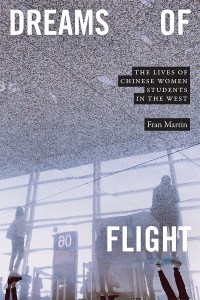
Dreams of FlightReading Dreams of Flight made me reexamine my preconceptions about Australia, China, and university studies abroad. When I was a graduate student in France back in the early 1990s, I didn’t identify Australia as a land of opportunity for academic studies. In the disciplines that I have studied, Australia is (or was) a scientific backwater, an outlier when compared to North America or Western Europe. I don’t trust university rankings that much, but last time I checked Australian universities ranked quite low in terms of research output, number of Nobel Prizes, well-identified schools of thought, or emerging paradigms. I was under the impression that an academic career in an Australian institution was a second- or third-best choice for aspiring scholars who failed to land the position of their dreams in North America or in Europe. Spending more than a decade in East Asia made me revise that opinion. I have met many Asian scholars for whom Australia was definitely on the academic map. For a prospective graduate student in South Korea, in Taiwan, or in South-East Asia, pursuing a degree in Australia, applying for a faculty position, or doing research as a post-doctoral student in an Australian university are serious options to consider. Australia’s attractiveness is not only linked to geographical proximity. Language, lifestyle, natural environment, diasporic presence, and academic freedom in well-funded research universities also weigh in the decision for an academic destination. Besides, the international students who form the focus of Dreams of Flight—a cohort of about fifty young Chinese women that the author follows across the full cycle of international study between 2012 and 2020—did not wish to pursue an academic career in science or in the humanities. Their ambition was to acquire a degree in a practical field such as accounting, finance, or communication and media studies, to broaden their horizon by getting an experience of living and studying abroad, and to follow a career marked by international mobility and promotion opportunities. Australian universities could build on these expectations to attract a growing number of students from China: in December 2019, just before Covid, there were over 212,000 Chinese students studying in Australia. Students from China represented the largest proportion of international students, while Australia was the third foreign destination for Chinese students after the United States and the United Kingdom.

Study in France, Study in Australia

Reading that higher education in Australia is also a commercial venture wasn’t really a surprise for me. In my previous posting as cultural counsellor at the French Embassy in Hanoi, I was involved in managing a Study in France programme and in attracting Vietnamese students to French educational institutions. Australian universities were clearly our direct competitors. La Trobe University had an admission office and a partnership program within Hanoi University, while RMIT was the first completely foreign-owned university granted permission to operate in Vietnam, delivering Australian degrees for a hefty tuition fee. But even with this experience in mind, I personally don’t like to think of academic studies abroad as a field ruled by competition and marketization. For France, attracting foreign students is a matter of public policy, not market development: it is a way to promote our model and our values, to uphold the position of French as an international language, to train potential recruits for French multinational firms or research labs, and to build long-lasting influence through a network of alumni who will keep a close connection to France. This assumes, of course, that foreign students will adhere to the values conveyed through education and living abroad, that they will practice French in the classroom (where courses are increasingly taught in English) and in everyday life, and that they will keep a positive attitude toward France after their study period (remember that Ho Chi Minh and Pol Pot both worked and studied in France.) Unlike many universities in Australia, in the US or in the UK, French universities and Grandes Écoles offer high-quality training without imposing unaffordable tuition and fees. In fact, the French government offers many foreign students a benefits programme that reduces tuition fees to almost nothing. Although this is not the case for every institution of higher education, these fee structures are still lower than other universities in Europe, let alone Australia or North America. This is not always the best selling point among prospective students and their families: especially in Asia, quality comes at a price, and what is low-priced tends to be perceived as low-quality. But in countries like Vietnam, the affordability of studies in France, coupled with the known quality of French curricula, was clearly a strong argument to attract students to France and to persuade them to study French in our cultural institutes located in Vietnam’s four main cities.

Australia has a different approach to attracting foreign students. Australia has been recognized as having “the most organized and aggressive international recruitment and marketing strategy” for its universities abroad, and yet the central government has little involvement in higher education promotion. Universities, and in some respects provinces, are in charge of attracting foreign students to Australia and building an image of academic excellence and cosmopolitanism. They compete among themselves and against foreign education institutions for private income from international students, with the students themselves conceptualized essentially as consumers. To attract new students and maximize revenue, they maintain a network of commercial education agents abroad, organize student fairs and promotion events, open offices on the campus of partner universities, and sign agreements with local institutions. They use marketing strategies to target the public and divide the market into various segments: the cohort of young students studied by the author, who belong to the “post-90” (jiuling hou) generation, were more likely than the previous generation to be female, to study business and management as opposed to sciences or engineering, to start studying at the bachelor’s level, and to apply for permanent resident permit after their studies. The selling points for studying in Australia increasingly focus on urban lifestyle, natural scenery, food and beverage, and opportunities for tourism. International student offices at Australian universities emphasize the quality of students’ live & learn experience. They offer a range of support, advice and information about housing, daily life, and job opportunities. The objective is to create value and maximize consumer experience, not to promote a particular model of democracy and use education as a policy instrument. If exposure to daily life in Australia makes student acquire a taste for freedom and democratic ideals, so much the better. But studying in Australia is responding to economic rationality, not to the logic of a sovereign state. The education sector is Australia’s third export market after agriculture and mining. It generates indirect revenues by contributing to nation branding, tourism, and export promotion. If anything, dependence on Chinese student income was construed as a problem, especially at the end of the period studied by Fran Martin. Excessive market concentration affects product quality and exposes producers to increased political risk.

Preconceived ideas

As Fran Martin writes in her preface, “the young Chinese women whose stories are told in this book represent the human face of this marketization of education.” I was surprised by the description of their social background as middle class: they were the (often only) daughters of middle-rank party cadres, local officials, small business entrepreneurs, or corporate executives, who could afford to pay tuition fees and living expenses abroad. By comparison, in Vietnam, studying abroad remains the preserve of the elite or the upper middle class, and parents are making huge sacrifices to send their children abroad. Even in France, where secondary education is mostly state-led and university tuition fees are very low, sending one’s child to study abroad is a tough financial decision, and most French students content themselves with a one-year mobility in a different European country under the Erasmus student exchange program. Getting a degree in the United States, in Australia, or even in post-Brexit United Kingdom is out of the financial reach of most French families. The huge number of Chinese students abroad (over 700 000 in 2019) made me realize how rich China has become, and how devoted Chinese parents are to the education of their children. A related surprise was to read that for these young urban Chinese women, Melbourne and other Australian cities felt provincial and underdeveloped. Words like Mocun (“Melvillage”) and TuAo (“native Oz”) disparage the cultural and economic backwardness of Australia as a whole, while complaints about the nation’s backward infrastructure and early shop closing times were frequent among Chinese students. For some students, the village-like living conditions in Melbourne felt safe and friendly, while other complained against the unfriendliness of the locals, the unavailability of jobs in non-Chinese-run businesses, the ethnic concentration of Chinese students and migrants in clustered urban areas and housing, and racism and violence in public places. The dream of immersing oneself in the local culture and to get to know local people often ended in disillusion and fear. Indeed, many respondents in the study found that they had left China only to arrive in a subworld populated by Chinese friends, Chinese landlords, Chinese classmates, Chinese flatmates, Chinese bosses, Chinese media, and Chinese businesses. Everyday verbal interactions were held mostly in Mandarin, and the city was experienced as a sociospatial network of connected clusters.

Another preconceived idea I had about China was that increased openness through foreign travel and studies abroad might change Chinese society for the better and steer its citizens toward more liberal attitudes on the political and social fronts. This is a delusion I share with many people in the West: the notion that exposing young Chinese people to our ideas and values will make them think and behave more like us and will turn China as a whole into a responsible stakeholder on the global scene. In France, international education is recognized as a significant tool of soft power, a mechanism of attraction and persuasion. Through student exchange programs and cultural institutions such as Alliance française and Campus France, countries convey particular cultural, social, educational and political images of themselves abroad. These not only enhances their global visibility and influence but also their ultimate goal to reach and win the hearts and minds of people worldwide. It seems hard to deny the fact that internationalized higher education, with its cross-cultural and multi-national exchange activities, lays the ground for an intensified cross-border dialogue, contributes to a greater understanding between countries as well as enhances international cooperation. Education as a global phenomenon attracts people, and generates interest in the languages and cultures of other places. But Australia doesn’t seem to make such assumptions. For Australians, education is a lucrative business, not a policy tool, and promotion efforts focus on short rather than long term objectives. If anything, the increased number of Chinese students in Australian universities, and their dependence on partnership agreements with China, are perceived as a threat to academic freedom and domestic sovereignty. After Fran Martin completed her study, it was announced that Australia’s federal government was to shut down Chinese learning centers, known as Confucius Institutes, after the latter has been suspected of functioning as a plank of the Chinese Communist Party’s propaganda. In 2021, Human Rights Watch published a report entitled How China’s Long Reach of Repression Undermines Academic Freedom at Australia’s Universities, giving voice to students and academics who felt forced to self-censor their views about the human rights abuses of the communist regime in China. Cases of nationalist outbursts and peer harassment have been reported among Chinese students abroad, making true the Chinese regime’s assertion that “leaving the country is more effective than a hundred patriotic education classes.”

Competing models of identity

This is not to say that international education had no effect on the Chinese students who responded to Fran Martin’s questions or discussed together on their WeChat group. The author identifies two competing models of identity among the young Chinese women from the post-90 generation: neoliberal-style enterprising selfhood, and neotraditionalist familial feminity. The first one values mobility, individual freedom, cosmopolitanism, professional orientation, gender equality, and consumerism. The second one prefers stability, family orientation, filial piety, collective discipline, job security, and traditional gender roles. Studying abroad accompanied a shift from the second to the first model. Contacted a few years after the study, women in the focus group were more likely to be unmarried, independent, focused on their professional career, following a flexible life course, and geographically mobile. They valued professional ambition, cultural reflexivity, and leisure consumption. All were not able to translate international studies into higher-status jobs in the private sector, in China or in Australia, and a significant number experienced downward social mobility. Some remained in Australia, navigating the state immigration regime and accumulating points in pursuit of permanent resident status while doing odd jobs in precarious conditions. Other graduates returned to China and faced gender-based discrimination in their job searches, competing with a large number of haigui returnees and having less guanxi than those who had stayed behind. Most of them delayed marriage and childbearing, with the risk of falling behind the gendered life script of marrying before their late twenties and becoming shengnü, or “leftover women.” The other model of gender neotraditionalism also retained its influence, in alliance with family structures and the modern apparatus of the socialist state. Pressures to marry and have children on a fixed schedule were difficult to escape, and heteronormativity weighed on some women who had developed same-sex leanings while in Australia. In political terms, Chinese students abroad tended to manifest expressions of “long-distance nationalism” and “patriotism from afar.” Faced with “insults to China”, the ethics of national representation demands that one make counterclaims to defend the national honor against hostile outsiders: “A son never complains that his mother is ugly; a dog never complains that its household is poor.” But nationalist feelings were also complicated by time spent abroad: the author observes a growing tendency to distinguish patriotism (aiguo) from attachment to the party or government, as well as a growing appreciation of the heterogeneity of Chinese identity. As she observes, “national feelings on the move are characterized by multiplicity, mutability, and ambivalence.”

Interestingly, the only institutions who really care about the subjectivities of Chinese students in Australia and who want to win their “hearts and minds” are proselytizing churches and religious sects. Among evangelical churches in the West (and in South Korea), China is seen as a new frontier for Christianity, a continent ripe for mass conversion and heavenly salvation. Some churches selectively target foreign students in evangelizing strategies: their personal alienation, disorientation, and insecurity resulting from their immersion into an unfamiliar environment make them easy targets for street preachers and door-to-door missionaries. The church to which there are drawn acts as a “service hub” for foreign students, providing spiritual comfort and material orientation as well as free language classes, outdoor excursion opportunities, and a quick way to meet new friends. In France, where secularism is part of the national identity, proselytizing has a bad image in the general public. It is perceived as undue influence and foreign meddling: evangelicals are routinely characterized as “Anglo-saxon,” and Seventh-Day Adventists or Latter-Day Saints are categorized as “cults.” By contrast, I was surprised to read that Chinese students had a rather positive image of proselytizing churches; despite being warned against “heterodox cults” (xie jiao) in their home country, they were curious about what they perceived as part of the cultural foundation of Western societies, and were favorably impressed by the selflessness and genuine sympathy of Christian missionaries. Some Chinese women used Bible-study classes and Pentecostal church sermons as a type of introspective self-cultivation and self-improvement, not necessarily leading to long-term religious engagement. For others, the church became the center of their social activities and spiritual life. For many Chinese students drawn to religious activities, churches were one of the few places where conversation and friendship with locals could occur. The LDS (Mormon) Church is not allowed to proselytize in China, but it trains its missionaries in Mandarin and tasks them with targeting Chinese citizens abroad in order to expand the faith into Chinese communities. For other churches as well, returnee converts may appear as an efficient means of spreading the faith in China while complying to the strict limitation imposed by the communist authorities on their activities. For the author, “churches’ provision of social services to international students raises some questions when considered in relation to ‘education export’ in Australia”: she sees it as “neoliberal privatization” and “outsourcing” of welfare services that ought to be provided by the secular state. She notes that the LDS Church and Pentecostal megachurches promote “deeply conservative positions on gender identity, (hetero)sexuality, and marriage.” But she also acknowledges the limitation of academic approaches when it comes to religious affects and expressions of faith: “the affective experience of immersion in religious scenes—even in the scholarly guise of ethnographic observation—tends to elude the clinical grasp of academic analysis.”

Market research

I wish I had with me a similar book about Vietnamese students abroad when I was posted at the French Embassy in Hanoi, covering the education sector. In our efforts to attract Vietnamese students to France, we were more or less walking in the dark. We had no market research reports, no focus group results, no customer satisfaction surveys, no communication strategy. When we organized a Study in France fair in a big hotel in Hanoi and in Ho Chi Minh City, we were overwhelmed by the number of young Vietnamese who showed up to gather information. We did invest resources to create and sustain a network of Vietnamese alumni: they were our best salespersons, and often took an active role in attracting their junior peers to the same institutions and programs from which they had graduated. A private philanthropist, who was particularly fond of elite institutions such as Ecole Polytechnique, played a tremendous role in attracting the best and the brightest Vietnamese students to France through a scholarship program. The “bourses de l’ambassade” (scholarships at the graduate level) were also very sought after, and a process was designed to guarantee the total independence of student selection. For many students, the French language was a barrier, as most courses in France were taught in French, but it was also an incentive to enroll in French language classes in Vietnam and develop a deeper engagement with French society. In our efforts to attract Vietnamese students to France, we stood halfway between economic rationality and the logic of a sovereign state. Higher education was not identified as a business sector that could generate revenue and contribute to economic growth, but as a tool of national influence and soft power. We were in competition with other foreign destinations or domestic programs, but we tended to present the Study in France experience as unique and special, not as a competitive option amongst many. Of course, a book like Dreams of Flight is not a market research report or an exhaustive survey of Chinese students in Australia. The insights it generates are, in my view, more relevant for public policy than for private sector development. In this way, it confirms my preconception that studies abroad should not be left to market forces and wealth considerations.
Love With Chinese Characteristics

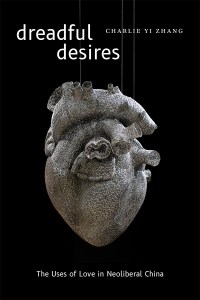
A review of Dreadful Desires: The Uses of Love in Neoliberal China, Charlie Yi Zhang, Duke University Press, 2022.

Dreadful DesiresIn Dreadful Desires, Charlie Yi Zhang advocates “a new approach” and “a different perspective” on love and neoliberalism in contemporary China. As he describes it, “My study integrates the discursive with the ethnographic and combines grave scrutiny of political economies and empirical data with upbeat examinations of popular cultures.” His grave and upbeat essay documents how a neoliberal market logic permeates expressions of love and aspirations for a good life, and how a fiercely competitive conjugal market, polarized gender relationships, and residency-differenciated precarities in turn produce willful subjects who are ready to sacrifice their well-being to maximize the interests of the state and capital. Its content and writing style also reflect his personal background and professional training. Having left China in his late twenties to pursue an academic career in the US, Zhang returned to his homeland for a few months of fieldwork in 2012 in order to complete his PhD in gender studies at Arizona State University. He was subsequently hired by the University of South Dakota to teach global studies to undergraduate students for two years, then landed a job as Associate Professor in Gender and Women’s Studies at Kentucky University, where he completed his book manuscript. During his graduate studies, his sociology professor taught him “how to combine different methodologies into [his] unique voice.” He claims to have developed “a novel theoretical and methodological approach” that builds an “epistemic ground for fundamental change.” His ambition is no less than “to lay the foundation for better futures” and “to develop a different understanding of global neoliberalism and to transform the current system.” His book is published in the Thought in the Act series edited by Erin Manning and Brian Massumi, two Canadian theoreticians working at the intersection of philosophy and art critique.
Methodology and theory-building

Zhang’s methodology is far from unique in cultural studies and social science. He uses the standard anthropological method that relies upon informal conversations, focus group discussions, and direct observations collected in two Chinese cities, Hai’an and Wuxi, located in the Jiangsu province north of Shanghai. The first is a county-level city of one half-million inhabitants that encompasses rural areas and industrial zones on the south-western shores of the Yellow Sea; the second is a prefecture-level city of more than five million people in the southern delta of the Yangtze River with a rich history of silk weaving and artistic expression. During his four months of fieldwork, Zhang interviewed over a hundred rural migrants and local farmers or workers, men and women, asking questions about love, family life, and aspirations for the future. He “spent considerable time in the homes and dormitories of [his] informants” and at “various locations of production, such as construction sites, factories, small workshops, family mills, and farms.” He also participated in “nonproductive activities such as family dinners, birthday parties, weddings, festival celebrations, and mundane chores.” There are only two chapters, however, that are organized around his analysis of field data. The remaining three chapters, two of which were published in academic journals in earlier versions, offer a commentary on cultural productions and events, namely the sixtieth-anniversary ceremony of the regime’s founding in 1949, a popular TV reality show titled If You Are the One, and an analysis of middle-aged women’s passion for danmei fictions featuring same-sex relations between beautiful young men, based on a sample of sixteen fans. These chapters are written in the ethnographic tradition that combines factual description and abstract theorizing. Although he quotes data on China’s economic development and social transformation taken from the popular press and expert reports, Zhang does not use quantitative methods, structured questionnaires, or comparative case studies.

It is on the theoretical front that Zhang displays more originality and novelty. To quote from the introduction, he takes “a feminist intersectionnal approach to interrogate and untangle the mechanism that the Chinese state relies upon to define and redefine the affective parameters of desire and intimacy in binaristic terms of gender, class, sexuality, and ethno-race.” He also takes a “queer of color critique approach […] to foreground power relationships and engage the becoming aspects of the machinery to interrogate its speculative manipulation of affective ecologies.” He borrows from Judith Butler’s playbook the idea that “gender is intentional and performative” and that anatomical sex, gender identity, and embodied performance do not always align. He is attuned to the thinking of Sara Ahmed, Lauren Berlant, and Brian Massumi, who have developed new ways of articulating affective economies to neoliberalism. Ahmed allows him to present a “postorthodox Marxist perspective” in which affect is viewed as a different form of capital, which “does not reside positively in the sign or commodity, but is produced only as an effect of its circulation.” Berlant is another important source of inspiration: a dithyrambic endorsement on the book’s back cover advances that “Zhang offers to do for love in China what Lauren Berlant, in Cruel Optimism, does for hope.” As for Massumi, also associated with the affective turn in cultural studies, Zhang borrows his model of affective temporality that conflates an anticipatory present, a promisory future and a virtualized past. All three authors allow him to address “the theoretical lacunae that leaves affect, emotions, and feelings fatally underdiscussed in scholarly examinations of neoliberal subject and world making.”

The borderless Loveland and the difference-making machinery

Zhang’s distinctive contribution to social theory is to build a bridge between emotional affect and calculative reason, between love and neoliberalism. He brings affect theory to bear on political economy reasoning and geopolitical considerations. Specifically, love and aspirations for the good life are used strategically by the state to obtain acquiescence and participation in a polarized market economy. Class disparities and gender differences are exploited by the authoritarian state to recreate competition from within and to serve capital’s productive ends. Zhang also proposes a vast array of idiosyncratic concepts and neologisms to make sense of the entaglement between reason and affect in neoliberal China. He situates his ethnography in “the borderless Loveland,” an “affectsphere” or “fantasmatic lovescape” that shapes people’s love and caring capacities in order to harness China’s national interest with the transnational interests of capital. The Loveland is to be understood as a topological notion, not a geographical concept, as the author draws “a speculative topography of the everyday sensibilities.” The Loveland extends its reach beyond mainland China; it is alternatively presented as “borderless” or within boundaries that are “indeterminate” or “expansive.” Zhang’s creative use of topology extends to the concepts of biopolitics and biopower borrowed from Michel Foucault. The first, assimilated with calculative reason and state power, follows a top-down, vertical axis; while the second, located on the immanent plane of affects, circulates horizontally. Feminist scholarship complicates this two-dimensional diagram by introducing a “multilayered and multifaceted architecture” where domination and resistance are “multidirectional and multidimensionnal.” These overlapping layers consist of gender, class, ethno-race, and sexuality. The assemblage of these orthogonal coordinates and multiple dimensions give shape to what the author calls the “difference-making machinery,” a polarizing mechanism that pits disenfranchized groups against another to allow for their compound exploitation by the nation-state and multinational corporations. This neoliberal machinery “integrates the borderless Loveland into the regulatory biopolitical system to drive and sustain China’s marketization and reintegration into the global economy.”

Dreadful Desires documents two different moves: the colonization of love and sentiments by the market and the state, and the way “lovable and love-able” subjects in turn uphold the functioning of the market and the expansion of the state’s interests. The encroachment of a neoliberal logic upon the emotional lifeworld of Chinese citizens is illustrated by the TV date game show If You Are the One, a copycat of a British TV reality show with added Chinese characteristics. The crass materialism of female participants is illustrated by the attitude of one young woman who, asked by a male suitor if she would “like to go out for a ride on my bicycle”, bluntly answers: “I would rather be crying in a BMW car!” In the show as in real life, it is standard for a Chinese woman to evaluate a potential male partner’s worth and accomplishments by asking him questions about his educational background, job, salary, amount of savings in the bank, ownership of property and cars, and so on. Indeed, having an appartment, a luxury car, a hefty savings account and a high-paying job has replaced the “four big items” (si dajian) that prospective grooms were supposed to possess under Maoist China: a bicycle, a sewing machine, a wristwatch, and a radio. A new kind of masculinity has emerged, which valorizes entrepreneurship, business acumen, and material possessions. As for women, the requisites placed upon them are no less stringent. The “three good girl” (sanhao nüsheng), a honorary title for meritous students under Maoism, used to designate girls with good morality, good learning, and good health. Now women have to respond to superlative standards of attractiveness, including breast size and leg length; hold glamorous jobs in the service sector; and be ready to carry out expanded family duties to support their husband, in-laws, and future children. These impossible requiements are exerting a heavy toll on Chinese masculinities and feminities. The amount of cash and gifts exchanged in a wedding ceremony can result in lifelong debt for the average family. Migrant workers working on construction sites or women in textile factories stand ready to sacrifice their health and well-being in the hope of a better future, if not for them, then at least for their children. But the dream of a good life is forever deferred: “the harder they try, the more they are alienated from their homes.”

Xi Jinping’s love and peace ideology

The Chinese state is complicit in the exploitation of labor by capital and the reproduction of oppositional differences out of the intersection of class, gender, and sexuality. It fuels the construction boom that sacrifices migrant workers on the altar of economic development and excludes them from the cities they have helped build. It pits categories of labor and gender roles against each other, while repressing nonnormative forms of intimity in the name of “homepatriarchy”—a portmanteau word that combines heteronormativity, male privilege, state authoritarianism, and home ownership. For Zhang, internal migrations and the hukou system of residence registration play the role that racial segregation occupies in racially-divided America or in South Africa under apartheid. Hukou registration gives access to education, medical care, basic life insurance, and other social services. It considerably enhances the value of a prospective bride or groom on the marriage market; bachelors lacking the urban residence permit must work harder and save more to improve their marriageability, or find a bride from a poorer area of China or a less-developed country such as Vietnam. To be sure, the socialist state run by the Chinese Communist Party cannot condone class hierarchies and labor exploitation. New regulation on TV dating shows now mandates diversity of participants and equality of treatment—even though the guy with the biggest property portfolio still gets the girl. Drawing upon Marxist-Leninist ideology, the party-state extolls the eradication of class differences and the liberation of China from exploitation and oppression; but in the choreographied extravaganza of the sixtieth anniversary ceremony, gender difference reemerges in the celebration of the post-reform era as a way “to conceal the new class structure and class differentiation.” The figure of Xi Jinping, construed as a benevolent father and a good husband to the nation, reinforces the patriarchal nature of the regime. The party-state offers love and harmony as a solution to internal developments and external challenges; but in the eyes of the author, “China’s love-gilded cosmopolitan dream proves no less pernicious than the hate-filled paranoia stoked by incendiary nationalists” such as Donald Trump in the United States.

Is Charlie Yi Zhang a Marxist? He shows little interest for the historical Marx, noting only his endorsement of normative heterosexualiy as the foundation for human and societal development. He prefers to borrow from Petrus Liu a “queer Marxist approach” that rejects “inclusion as a mode of social redress.” He retains from Marxism and radical thought the role of crisis and contradictions in fostering political upheaval and social change. The “difference-making machinery” is ripe with contradictions and fault lines, the first being the “contradictory needs of freewheeling capital and the border-making nation-state.” Zhang uses the concept of apparatus that he borrows from Marxist thought; but whereas for Louis Althusser apparatuses were an emanation of the state and reflected its repressive or ideological functions, Zhang refers to “a fantasmatic apparatus of desire and intimacy” that draws people to “work hard, dream big, and die slowly.” Like Marx, Zhang also believes that the role of critical theory is not just to interpret the world, but to change it. His declared goal is “to find a place where the subalterns can survive and to help lay a foundation for long-run transformation.” Exposing the dissonance between promise and fulfillment in the “borderles Loveland” is bound to send shockwaves to the system, shattering the “life-sustaining fantasy” on which it is built. His economy of affects places contradiction and change solely on the side of the reproduction of capital, neglecting entirely the relations of production and the reproduction of labor that form the bedrock of Marx’s thought. Indeed, borrowing from Sara Ahmed’s “economic model of emotions” where capital and affect are the sole factors of production and reproduction, he completely ignores labor as the primary scene of class antagonism and alienation. The only form of labor that is acknowledged in this affect-dominated economy is emotional labor. Indeed, this neglect of “hard labor” that characterizes postmodern political economy reflects the disengagement of the younger generation of Chinese men and women, who shun factory or construction work in favor of lower-paid jobs in the service sector.

The cultural unconscious

To simplify Zhang’s thesis, love in China is shaped by the market, and the market in turn is moved by love, while the party-state sustains this dynamics by accentuating polarization in society. Charlie Yi Zhang is not the first one to raise the issue of love and sentiments in post-Mao China. Yan Yunxiang wrote a splendid ethnography on Private Life Under Socialism: Love, Intimacy, and Family Change in a Chinese Village, while Lisa Rofel used her extended fieldwork in a Chinese silk factory to write about Other Modernities: Gendered Yearnings in China after Socialism. These two ethnographies are based on solid empirical ground, cross-generational historical depth, and a broad-ranging critique of the meaning of modernity and social change during transition from socialism to the market. They have become classics in the anthropology literature, and allow us to understand the evolution of Chinese masculinities and feminities through experience-near concepts and thick descriptions. By comparison, Dreadful Desire is relying on more shallow observation and thinner engagement. The author attempts to compensate the limited time spent on the field with ambitious efforts at theorizing and conceptualizing, drawing from a broad range of authors and subdisciplines. But the experience-far concepts and philosophical metaphors like the “borderless Loveland” and the “difference-making mechanism” taught me more about the context of academic production on North American campuses than on the travails of migrant workers and urban citizens in Xi Jinping’s China. There is a cultural unconscious at work in the emphasis put on “the pursuit of happiness,” the possibility of a “new birth of freedom” that the author experiences while moving to the US, the protestant urge to publicly confess one’s personal background and life expectations, and the belief in the transition from a love-inpaired present to a “love-enabled future.” The proliferation of differences, gendered or otherwise, that the author attributes to a Chinese ideological state apparatus, better characterizes in my view the scissiparity reproduction of ever-increasing subfields of cultural studies and the multiplication of gendered, classed, sexualized, and ethno-racialized categories brought forth by identity politics on American campuses.

The Moral Economy of Management Consulting in China

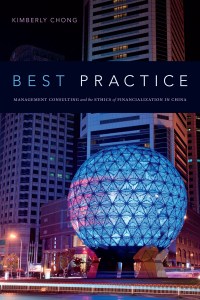
A review of Best Practice: Management Consulting and the Ethics of Financialization in China, Kimberly Chong, Duke University Press, 2018.

Best PracticeThere was a time, not so long ago, when the “China Dream” was to make China more like the West. Foreign multinational companies were invested with a transformative mission: they would teach the Chinese how to do business the modern way. They would bring with them practices of good corporate governance, increased productivity, and organizational efficiency. Global consulting firms were at the vanguard of this transfer of management knowledge. They opened shop in China to ride the wave of globalization, and they applied to Chinese firms the tried-and-true management techniques that had made their fortune in the West. Best Practice: Management Consulting and the Ethics of Financialization in China is a product of such times. As part of her PhD in anthropology, the author spent sixteen months of fieldwork during 2008-2009 in a global management consultancy operating from Dalian, Beijing, and Shanghai. The firm’s mission was to provide services to Chinese companies, including Chinese state-owned enterprises, in order to help them achieve their digital transformation and become viable capitalist entities. The anthropologist’s conclusion is that Chinese state capitalism proves remarkably compatible with the logic of shareholder value maximization, which she describes as financialization. Consulting firms are in the business of making financial capitalism come true, and they do so by creating ethical subjects whose moral outlook and cultural norms are made commensurate with the cultural values of finance. I take a different perspective. I believe the original China Dream was a delusion, which led the West to sell the Chinese the rope with which they will try to hang us. The corporate practices and ethical values that financial capitalism promotes are incompatible with state capitalism as it operates in China. The recent wave of CEO arrests, company delistings from the New York Stock Exchange, governmental clampdown on tech firms, and negation of minority shareholders’ rights are just the first instantiations of a repressive trend that will make China less and less like the West.

Getting access

Multinational companies are notoriously difficult for anthropologists to observe and rarely grant authorization to do fieldwork. Kimberly Chong is proud of getting access and of studying up the corporate ladder. But did she? The consulting firm she boasts of cracking open let her enter through a side door, and allowed her only minimal access to its clients. She spent one year in Dalian teaching English and providing soft skills training to the employees of the shared service center where the firm was outsourcing its back-office operations worldwide. She succeeded in moving to the front office in Beijing as an unpaid external contractor, and she was able to interview consultants and to follow them to client sites where they were supervising the introduction of new IT systems in Chinese companies. She then spent a few weeks as a junior employee in the Corporate Social Responsibility (CSR) division of the firm’s China practice. Considering her limited access and lack of prior experience, the amount of information she was able to gather on the internal workings of the consulting firm is no small feat. She compares her achievement to Karen Ho’s ethnography of a Wall Street investment bank, published in 2009 by Duke University Press. In Liquidated (which I reviewed here), Karen Ho was able to show how investment bankers tend to project their own experience onto the economy by aspiring to make everything “liquid” or tradable, including jobs and people. In her own ethnography, Kimberly Chong shows how consultants embody the same values of “best practice” and high performance that they use to reshape corporate China in their own image. The ethos of outsourcing, cost-cutting, and business process engineering, which they apply to Chinese companies, also defines the inner workings of the consulting firm.

Best Practice can be read at two levels. On the one hand, it is an ethnography of a global consulting firm which applies uniform techniques in its own management and in the expertise it sells to its clients. On the other hand, Kimberly Chong shows how these best practices are adapted to the Chinese context and how they help to shape moral subjects in post-Mao China. The first aspect makes Best Practice a contribution to the booming field of critical management studies. The consulting industry has a bad image among anthropologists and ethnographers, and indeed in the eyes of large segments of society. Consultants are accused of peddling false dreams and empty recipes or, in the words of a popular critique, they “borrow your watch to tell you the time.” They are often at a loss of describing what they do and what constitutes their field of expertise. Some can be very cynical about it: “Management consultancy is a scam,” says one consultant. Others insist on the intangible value they create by standardizing business processes and promoting the diffusion of best practice. A seasoned consultant can often devote time and expertise to a project that staff employees would be unable to implement on their own. They can also help bring new life to organizations that are stuck, or shift resources to help companies grow or move in a different direction. Kimberley Chong describes her socialization into the profession: “I became proficient in their jargon of acronyms and buzzwords, and could quickly put together a PowerPoint presentation, complete with animation.” But she kept her critical distance and did not adhere to the ideology of the profession. For her, “the power of management consultants, who continue to be hired in spite of their failure to deliver on their promises, derives from their capacity to naturalize the moral actions of restructuring and other forms of intervention as purely economic or technocratic.”

The culture of performance

But global consulting firms do not operate in a vacuum. Context matters, and the purportedly “global” managerial concepts of efficiency and productivity are interpreted and negotiated by Chinese employees in very distinctive ways. Chinese consultants who failed to adhere to the tenets of performance management were said to put the enterprise at risk for failing to inculcate the required mind-set among their Chinese clientele. Observations suggested that knowledge-based industries in China were afflicted by a problem of insufficient corporate professionalism, and that Chinese employees lacked the social norms and dispositions of global work. How else to explain the high turnover rate, the opportunistic behavior, the lack of personal accountability, the attempts to game the system of managing by numbers, and the inapplicability of performance management tools that plagued the consultancy’s inner workings in China? Many assumed the problem was with “Chinese culture” or with the inheritance of a socialist work ethos. As Kimberly Chong notes, “culture in this setting is a far cry from the conceptions of culture familiar to anthropologists. Here it is something that can be managed and controlled.” Culture is deployed as a tool for producing financial value and for shaping Chinese workers into good corporate subjects who will think and behave in accordance with global business norms. But Chinese employees’ conception of culture tended to differ from the one dictated by the management consultancy. Their stated ideal was the development of suzhi, a term often translated as “human quality” that describes a person’s moral characteristics and its capacity to contribute to the nation as a whole. Particularly in state-owned enterprises, consulting was sold as a means of increasing the quality of employees rather than reducing the number of staff on payroll—even if the unavowed goal was to downsize and lay off redundant staff.

IT-enabled outsourcing and downsizing was one of the ways in which consultants sought to improve organizational performance. By decomposing tasks, formalizing processes, and measuring results, consultants were able to measure each employee’s contribution to the firm’s financial results and to divest the activities that did not contribute sufficiently to the company’s bottom line. But the rules of management by results, financial metrics, and the integrated IT solutions that consultants brought to performance extended far beyond outsourcing and offshoring. Kimberley Chong was able to observe the use of management tools at several stages of the business process. Most of her observations relate to human resource management and the optimization of employees’ performance. The evaluation of each individual’s performance, and the setting of yearly goals and targets, consumed a lot of time and energy. But she also describes staff training in “crafting value propositions” (selling consultancy work to clients) and the deployment of CRM and ERP software—respectively, consumer relationship management tools and enterprise resource planning systems designed to monitor real-time productivity. In doing so, she notes three surprising facts. First, new measures and management systems were all tied to total shareholder return or TSR: the maximization of shareholder value (the company’s share price) was the overarching goal espoused by all consultants, and the single-minded focus of the consulting company was to improve financial performance. Second, the management tools on which the consulting firm relied were not proprietary: they were bought off-the-shelf from other consultancies or adapted from recent management fads, from the Balanced Scorecard to the Change Tracking Map or the Employee Engagement Dial. The use of acronyms tended to obfuscate the trivial notions on which these standard tools were based and that formed the bread-and-butter of consultancy work. Third, key notions or metrics were left undefined or were conspicuously absent from the firm’s official literature. All consultants knew their evaluation rested on their “billability,” or ability to generate cash-flow, but the notion, like the amount of the overall compensation package, was never publicly discussed. Despite all the talk over employee engagement and motivation, turnover figures or satisfaction rates were never disclosed.

Performative management

Performance is a key concept in Best Practice, and consultancy work was performative in at least three distinct meanings of the word. As in performance evaluation or the design of high-performance organizations, performance is used as a synonym of financial results and the creation of shareholder value. The focus on performance is exclusive of any other form of personal commitment or collective endeavor: even charity activities—under the label of corporate social responsibility—have as a stated goal the strengthening of commitment and engagement of employees, which is measured by their contribution to the firm’s financial results. Performance is also a show, a game that people play or a story that a group of actors tell on the stage. “Appearing more efficient” is the reason why SOEs undertook the considerable investment of installing ERP systems to signal to investors that they had the managerial equipment identified with a modern corporation. This embodied performance depends heavily on context: among private clients, consultants had to look always busy and motivated by profit, while in state-owned enterprises they could be more lax and take long naps or give each other neck and shoulder massage. The performance of consultants reflects not only profit maximization and global norms of efficiency, but also cultural values and a shared sense of morality. But the expertise of management consultants is performative in another meaning: it “has the power to make its theories and descriptions of the world come alive in new built form, new machines and new bodies.” Management concepts and tools don’t just reflect particular ways of thinking; they also create ways of thinking, and make the world imagined by management consultants come true. This is the thesis that Karen Ho developed in her book Liquidated: financial assets and people were made liquid and tradeable, which meant, in the end, dispensable or constantly running the risk of being liquidated. Kimberly Chong uses a related concept: management consulting develops cultures of conmensuration, through which new economic imperatives, forms of value, and power relations are legitimized and naturalized. The job of management consultants is to make corporate culture commensurate with profit maximization. Likewise, financial capitalism is made commensurate with existing logics of Chinese development and post-Mao modernity. Through commensuration, consultants create a structural relation between two different entities.

In the Chinese context, did management consulting succeed in making the world of financial capitalism come true? Yes and no. As with socialism, capitalism in China comes up with Chinese characteristics. As the author reminds us, “the state remains a dominant market actor and guiding force for capitalism in China.” Financial results and profitability are not seen as exclusive of state goals, but rather as a means of advancing the public good and of shaping “quality people” with high suzhi. Chinese consultants embody this mix between private corporate ethics and public nationalist values. Most of them are haigui or “sea turtles,” which designates people who go overseas for educational and professional purposes but then return to China as entrepreneurs or to work in waiqi, or foreign companies. They are fully westernized in terms of personal habits and work ethos, drinking coffee rather than tea and sending their kids to international schools, but are also motivated by strong sentiments of love and fidelity toward the Chinese nation. Even if they weren’t, the heavy hand of the state is never far away to remind them of their liminal position. Kimberly Chong notices a senior executive who conspicuously displays a poster with all the leaders of the Chinese Communist Party (CCP) in his office. She does not seem to be aware that all companies, including waiqi, have to accommodate within themselves the functioning of a cell of the CCP. The state apparatus, controlled by the Party, has to decide on the contracting to a foreign consulting company the task of preparing state-owned enterprises for public listings on overseas stock exchange. As mentioned above, this task is largely performative: becoming a listed company requires not only a focus on profits and the share price, but also the appearance of transparency, accountability, and efficiency that will convince foreign investors to join the game. But the Party’s leadership can always put an end to the performance of foreign consultants, and change the rules by which the game has to be played.

Maximizing suzhi

Such change was slowly emerging when Kimberly Chong was doing her fieldwork, and is now fully apparent. The goal of the party-state is not to maximize profits or to create value for shareholders. An alternative goal would be to maximize suzhi or “human quality”–as defined by the state, and based on the instruments of social control and collective discipline. Other corporate goals might include assuming world leadership in key economic sectors, developing self-reliance and minimizing dependence on Western technologies, or achieving post-Mao visions of “building a paradise” and achieving socialist modernization. These state goals are only partly compatible with the maximization of shareholder value, and are particularly detrimental to minority shareholders’ rights—the metric by which the efficiency of a financial system is evaluated in the academic literature on law and finance. The Chinese state has proven its readiness to sacrifice economic efficiency when its core interests were at stake, and to destroy shareholder value on a grand scale in order to regain control of vast swathes of the economy. The time since Kimberly Chong completed her research has also seen a sharp increase in the use of data to develop new forms of state surveillance and social control. Foreign consulting companies were originally allowed to enter the Chinese market in order to spread the use of information technology systems and data management tools. The corporatization of state-owned enterprises required a radical overhaul of managerial practices, while new firms in the private sector benefited from the influx on best practices and cutting-edge technologies. As the author notes, ERP systems and human resource management tools are designed to standardize working practices and act as a system of surveillance, documenting where, when, and how long each employee spends on any one task. But the rise of artificial intelligence and data mining technologies have vastly increased the possibilities of managing by data. Due to the size of the population, the lack of protection of privacy rights, and the innovative spirit of a new breed of entrepreneurs, Chinese companies like Huawei, Baidu, Alibaba, Tencent, and Xiaomi have become world leaders in information technologies, competing head-to-head with the American GAFA formed by Google, Amazon, Facebook (now Meta), and Apple. Under the strong monitoring of the party-state, new forms of data management and surveillance capitalism with Chinese characteristics might play the role formerly devoted to foreign consultants and Western IT leaders.

Chinese Movie Stars Are Beautiful and Vulgar

A review of Vulgar Beauty: Acting Chinese in the Global Sensorium, Mila Zuo, Duke University Press, 2022.

Vulgar BeautyEverything has been written about the “male gaze” and the fetishization of Asian bodies on cinema screens. As film studies and feminist scholarship make it clear, white male heterosexuals fantasize about oriental ladies and make the exotic rhyme with the erotic. But Mila Zuo is not interested in white male cinema viewers: her focus is on the close-up faces of Chinese movie stars on the screen, which she finds both beautiful and vulgar in a sense that she elaborates upon in her book Vulgar Beauty. As a film scholar with a knack for philosophy and critical studies, she builds film theory and cinema critique based on her own experience as an Asian American who grew up in the Midwest feeling the only Asian girl in town and who had to rely on movie screens to find kindred faces and spirits. As she recalls, “When on rare occasion I did see an Asian woman’s face on television, a blush of shame and fascination blanketed me.” True to her own experience, she begins each chapter with a short recollection of her personal encounter with Chinese movies or Asian movie stars. The films that she selects in Vulgar Beauty, and the film theory that she develops, are not about them (American white males): they are about us (Chinese-identifying female spectators and actresses) and even about me (as an individual with her own subjectivity and  life history). Her project is to “theorize vulgar Chinese feminity from the purview of a diasporic Chinese/Asian/American woman spectator.” She is “acting Chinese” in her effort to build film theory based on Chinese forms of knowledge and sense-making: the five medicinal flavors (bitter, salty, pungent, sweet, and sour); the practice of face reading or mian xiang; the role of blandness (dan) in the Chinese aesthetic tradition; the materialist cosmogony of traditional Chinese medicine; etc. Her conviction is that Chinese (or Asian American) film studies should not reproduce established patterns of normative knowledge production, but should be truly innovative and challenging even if it runs the risk of being vulgar.
From the male gaze to the female stare

In her endeavor, Mila Zuo does not start from zero. She enters a field rich in intellectual contributions, reflexive theorizing, and disciplinary specificities. The hallmark of Anglo-American cinema studies, and what sets it apart in a field previously dominated by European male theoretical thinkers, is its focus on identity politics and feminist critique. To the concept of the “male gaze,” first introduced by Laura Mulvey in 1975, Asian American feminist scholars have added a rich area of conceptual notions and propositions: the hyper-sexualization of petite Asian bodies; the inscrutability and artifice of the Asian face; the infantilization of actresses through notions of cuteness, perverse innocence, and capricious behavior; the masculinist ideology of Asian virtues such as submissiveness, modesty, and self-restraint; the idealization of filial piety and sentimental attachments. The corpus of theoretical references has been extended to include Lacanian psychoanalysis, Black feminism, and new materialism, all of which are discussed in Mila Zuo’s book. Efforts have been made to break off disciplinary barriers and academic compartmentalization: Vulgar Beauty does not limit itself to cinema from mainland China and includes discussions about blockbuster movies from Hollywood, art films from France, and non-movies such as Youtube videos of stand-up comedy actors. It remains within the paradigm of identity politics, with its emphasis on representing nation, ethnicity, gender, and sexuality. But in focusing on female beauty, it raises a question that earlier feminist scholars had deliberately side-stepped. Indeed, in her seminal essay on “Visual Pleasure and Narrative Cinema” that introduced the notion of the gaze, Laura Mulvey stated provocatively: “It is said that analyzing pleasure, or beauty, destroys it. That is the intention of this article.” Mila Zuo’s intention is not to destroy beauty, but to reveal it and to connect it to the basic sensations of taste, smell, and body touch.

In the decades since Mulvey’s essay was first published, film and cultural critics have been extending the implications of her work. The paradigm of the male gaze is subject to a law of diminishing returns and has now reached a dead end. Synonym with male voyeurism and domination, it equates lust with caution and defines beauty according to a narrow ideological agenda shaped by the drives of the actively-looking male heterosexual subject. On the other hand, Asian American scholarship is experiencing a renaissance of sorts, a new birth fueled by the insights of critical studies that focus on differences in class, ethnicity, sexual orientation, ableism, animacy, materiality, and affect. It is from these new strands of inquiry that Mila Zuo draws her theoretical apparatus. To the notion of the gaze, which presupposes a male heterosexual spectator, she substitutes the concept of staring, which leaves open the sexual identity and ethnicity of the viewer. “It would be more apt to say that stardom, an amplification of the actor as mythic and exceptional, engage the eye through an incitement to stare.” The gaze connotes mastery and possession on the side of the male viewer and a passive, submissive role, for the woman on the screen. The stare responds to an interpellation and is always in waiting of an impossible returning glance: “movie stars appear to invite staring.” In particular, Chinese stars hail Chinese-identifying spectators into feeling Chinese. Chineseness is used here as a notion that is supposed to be “performative, contingent, and nonessentializing.” As Rey Chow first proposed, Chineseness is about seeing and being seen: “the jouissance of this experience lies in the elusiveness of seeing the act of seeing oneself, as well as fantasizing about others seeing us seeing ourselves as a validating act.”

Adding spice to a bland recipe

Racial beauties can elicit such staring and generate a form of perverse enjoyment. Several chapters focus on movies where there is only one Asian character (as in Hannibal Rising, Irma Vep, Twin Peaks, and The Crow). Ethnicity so conceived borders on racial appropriation: as bell hooks observed, it adds “a spice, a seasoning that can liven up the dull dish that is mainstream white culture.” In Hannibal Rising, this spice has a bitter taste: Gong Li plays the role of a Japanese lady who trains the young Nazi-escaping Hannibal Lecter in the soft and hard arts of ikebana and swordsmanship. As one viewer commented, “Hannibal Rising puts the blame for a legendary serial killer where it belongs: with the Nazis. And the Communists. And the Japanese.” In Irma Vep and Twin Peaks, Maggie Cheung and Joan Chen add a salty and cool flavor to an otherwise predominantly white cast. Cheung, playing the role of an underworld criminal in a film-within-the-film, wears a tight latex costume modeled after Michelle Pfeiffer’s Catwoman outfit and finds it cool. “Like the latex encasing her body, Maggie’s racial body becomes a formal property through which the elasticity of French identity is tested.” Irma Vep became an “infatuation film” for the director Olivier Assayas and his lead actress, as the two fell in love on set and subsequently married. Twin Peaks was the first American TV show to cast an Asian actress with a leading role, as the pilot episode opens with a closeup on Joan Chen’s cold makeup face. But she disappears midway in season two as her soul (or at least her face) becomes trapped inside a desk drawer knob (or whatever). In The Crow, the atmosphere becomes pungent: actress Bai Ling, herself a hot mess and a regular on TV talk shows, embodies the limits of liberal openness and multiculturalism in a “fascistic-gothic” film that legitimizes spectacular forms of punishment against racial others.

Mila Zuo has assimilated the lessons of Asian American scholarship from the past two decades and applies it to cinema studies. She replaces Asian Americans, and in particular Chinese immigrants, in a long history of victimization and racial segregation. She mentions the Los Angeles Chinatown mob lynching of eighteen Chinese immigrants in 1871, the lethal gas execution of a Chinese convict by the state of Nevada in 1921, and the ethnic tensions between Asian and African American communities during the 1992 riots in South Central Los Angeles. She does not develop the trope of the model minority, but gives voice to Asian-American standup comedians who are able to transform racial alienation into sour jokes and laughter. Charlene Yi and Ali Wong are anything but expressions of the model minority myth. The first, whose offbeat improvisations appear on Youtube videos and who self-identifies as a nonbinary “they”, deconstructs the myth of romantic love in a road movie where they set out to interview random people about love. The second develops a form of bawdy humor and off-color cynicism, as when she comments on her abundant vaginal secretions at age eighteen: “Oh, my god, it was so juicy. You could just blow bubble wand with it, just… ‘I slime you, I slime you. Ghostbusters!’” The model minority Asian in America is supposed to be obedient, hardworking, and self-effacing. By contrast, these comedians elicit laughter by turning their social awkwardness into transgressions that evoke the flavorful aesthetic of sourness. Think of a baby eating a lemon for the first time: as Mila Zuo notes, “the sour is capricious and unexpected; it gets off rhythm, off clock.” Likewise, “racial sour” follows “another tempo, pace, and beat that is out of step and misaligned with dominant demands of time.”

Bitter and sweet

The first Chinese movies consumed by international audiences left a bitter taste to the spectators. In the post-Mao era, bitterness emerged as a structure of feeling, a way to reckon with a traumatic past by “recalling bitterness” during China’s feudal and communist periods and exalting nationalist resilience. Actress Gong Li emerged as the sensual embodiment of China’s bitter flavor, participating in the process of national wound healing while making the aesthetic of “eating bitterness” (chiku) suitable for worldwide consumption. Through a close reading of Red Sorghum, Mila Zuo shows how Gong became the suffering embodiment of China-as-woman, generating libidinal attraction and nationalist longings for reparative justice. As the Chinese saying goes, ”you can’t really know sweetness until you eat bitterness.” But the tastes dictated by Chinese authorities and the flavors favored by cosmopolitan audiences do not always align. The pungent atmosphere of Lust, Caution directed by Ang Lee and starring Tang Wei created a violent backlash among Chinese communities in China and abroad for its vivid sex scenes and moral ambiguity. Recent saccharine comedies like The Knot and If You Are the One imagine Taiwan’s reunification with the mainland through cross-strait romantic stories and are conceived as a channel for Chinese soft power propaganda. They cast Taiwan as “a female partner who, even if she hesitates, ultimately defers to a benevolent, masculine China.” But a close reading of how Taiwanese stars Vivian Hsu and Shu Qi are “acting Chinese” in these movies tells a different story. Hsu’s over-the-top performance in The Knot, where her display of excessive sweetness turns mushy and cheesy, betrays the desperation of soft power’s cloying and calculating tendencies. Noting the frequent use of fade-to-blacks and story cuts, Mila Zuo notes that “the film’s stammering fades gesture to its rheumatic problem—it has a joint issue, in both formal and politico-ideological terms.” As for Shu Qi’s performance in If You Are the One (a film that gave birth to a sequel and a TV show), it is characterized by the same excess of saccharine and glucose. Commenting on the heroine’s remark that “soft persimmons taste the best,” Mila Zuo notes that “persimmons, like kiwis, should be eaten when they are a little overripe, that is, when their flesh begins to soften and bloat.” Unbeknownst to the propaganda apparatus, the soft-sweetness of overripe fruits can act as an antidote of nationalist poison.

Mila Zuo’s book is structured around the five tastes of bitter, salty, pungent, sweet, and sour. These flavors or weidao are more than descriptions of culinary savor: they are aesthetic, sensorial, and affective categories that play a prominent role in traditional Chinese medicine and in Eastern epistemologies. They express a vision of the world that engages the whole cosmos: for example, “a bitter taste in the mouth denotes a disturbance of the element wood in the body, which is internally related to nerves and locomotion, and externally related to the season of spring, the direction of east, and the period of dawn.” Flavors not only make for a good dish but also an ordered cosmos: as Sun Tzu wrote, “Harmony is like soup. The salt flavoring is the other to the bitter, and the bitter is the other to the salt. With these two ‘others’ combining in due proportions and a new flavor emerging, this is what is expressed in ‘harmony.’” What flavors do to the body, how they are internally processed and digested by bodily organs and the fluids or scents they generate, is a reflection of the cosmic balance between the various elements. Material ingredients and spices also combine with affects: for example, salty coldness and sour anger are two ways to cope with aggression and xenophobia. Using epistemologies that are relevant to the formations of China, Mila Zuo brings a new perspective on cinema studies that otherwise rely on western theorizations and abstract categories. In particular, tasting and eating provide foundational understandings of beauty: a woman can be described as tender (nennü) or as ripe (shunü), and the weidao (sensory essence) of charm includes the scent of her skin, the softness of her body, and the sweetness of her smile as well as the bitterness of her tears and the saltiness of her perspiration.

Vulgar is not vulgar

I had trouble understanding what the author of Vulgar Beauty meant by “vulgar.” Applying it to Gong Li (an actress I tend to idolize and fetishize) seemed to me not only wrong, but also blasphemous. Even if I now get it, I am not sure I agree with the use of the term as characterized by Mila Zuo. As she explains, vulgar does not always imply vulgarity, just like sexy does not always relate to sex. “Vulgar senses” designate the bodily faculties of tasting, smelling and touching, in opposition to the more noble sensory abilities of seeing and hearing. It also refers to the “bad tastes” of the bitter, salty, pungent, and sour, as opposed to more pleasant savors of sweet and bland. Mila Zuo opposes “a paradigm of visuality and aurality, on which cinema is predicated, to an affective structure based on the lower sensorium”: one can taste and smell a movie as much as one can appreciate its visual scenes and sonic atmosphere. She also implies that her analysis is vulgar—not because she uses the word f*** several times, but due to her materialist orientation and use of “bad ideas” borrowed from Chinese cosmology. She deploys vulgarity as a critical methodology to reinscribe the Chinese body into the core of media studies. Her film commentary is sensitive to the material aspects of beauty—the “minor acts” of “eye tearing, skin perspiring, smiles cracking, fingers pointing, legs waddling.” Chinese actresses and Asian American comedians can be vulgar in a more common sense—lacking distinction and poise as defined in a white Anglo-Saxon context. The book opens with a scene starring Zhang Ziyi performing sajiao, or childish behavior directed toward a male partner, and there is certainly a lack of class and decorum in this display of self-infantilization. The same can be said of the book cover in which Joan Chen from Twin Peaks applies makeup facing a mirror in a scene that usually remains off stage. “Acting Chinese” means displacing the Western canon of beauty by including the lower senses and material elements that make vulgar beauty generative and beautiful.

Let’s Talk About Sex

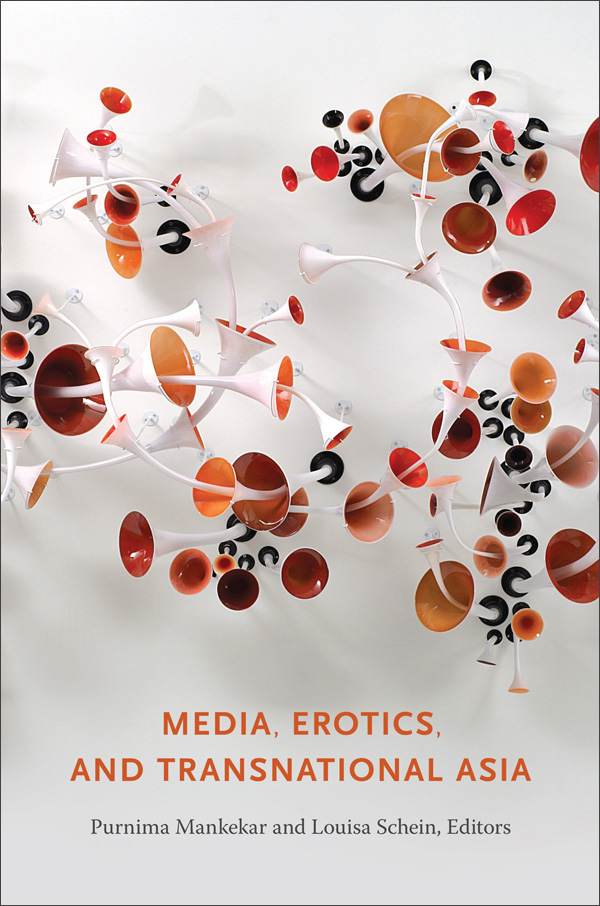
A review of Media, Erotics, and Transnational Asia, edited by Purnima Mankekar and Louisa Schein, Duke University Press, 2013.

Transnational asiaThis is not a book about Asian sex videos. Indeed, reading Media, Erotics, and Transnational Asia should lead the reader to question why the category “Asian sex video” exists in the first place, why Asian bodies are disproportionately represented in Internet porn, and how we should react to such unregulated flow of images. In fact, none of the entries in this book deals with explicitly erotic content or with pornography, and the only chapter that concerns the Internet as a medium, a study of online discussions about correspondence marriage between the US and the Philippines, insists on rejecting facile analogies with the sex trade or with mail-to-order catalogues. For scholars and for feminists—and most authors in this volume are women—, the erotic has to be distinguished from the sexual. And writing about eroticism should in no way lead to stoke the base instincts of the reader. The erotic extends beyond sex acts or desires for sex acts to become “enmeshed in, for instance, yearnings for upward mobility, longings for ‘the homeland,’ formulations of nationhood and citizenship, and ruptures of ethnic and racial identity.” Desires for sexual encounters intertwine with those for commodities and lifestyles. Such a paneroticism may break gender, class, ethnicity, or age boundaries. Synonymous with desire, it may be at odd with an Orientalist vision of Asia as feminized and the West as setting the standard for homo- and heteronormativity. For instance, “what constitutes ‘lesbian’ desire may look both and function differently than it does within Euro-American social and historical formations, and draw from alternative modes of masculinity and feminity.”
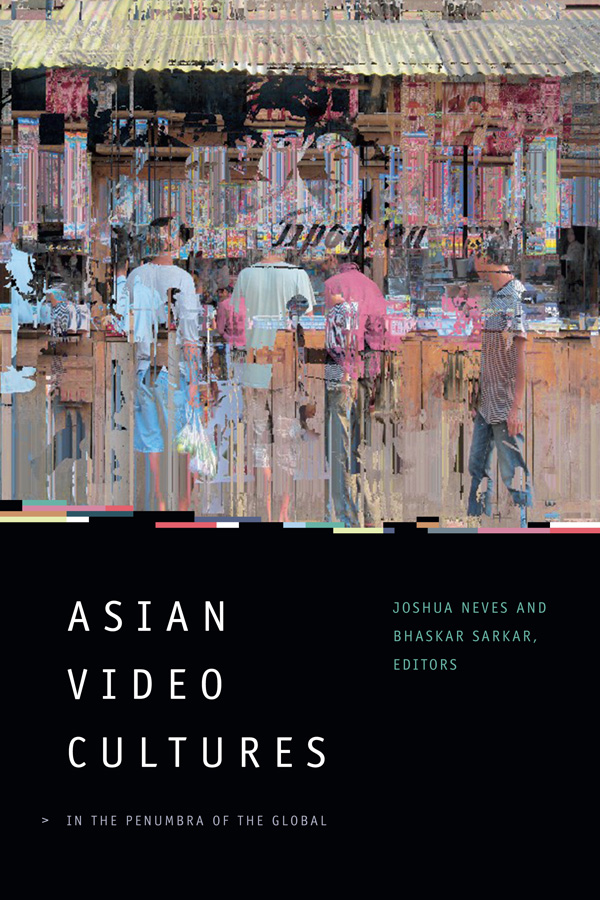
Editing a volume for Duke University Press

The book is an edited volume composed of ten chapters and a dense introduction in which the two editors explain what they mean by “media,” “erotics,” “transnational,” and “Asia.” It is difficult to strike the right balance in the introductory chapter of a collection of scholarly essays written by different authors. One the one hand, the editors want to add value to the book chapters by giving coherence and theoretical depth to the assembled pieces. On the other hand, they need to reflect the diversity of the contributions and leave open their conceptual relevance for theory-building. The introduction is often the book’s signature, its most ambitious part and the text for which it will be remembered. The risk is to promise more than the book chapters can deliver by engaging in intellectual virtuosity, or to remain at the plane of immanence and offer a paraphrase of the book’s content. Mankekar and Schein lean on the theoretical side. Their introduction is thick, sometimes obscure, and heavily referenced. Their ambition is to “construct a transnational analytics” to account for the mediation of erotics in Asia and beyond. They position the book for a broad audience spanning several subdisciplines—Asian studies, media studies, gender studies, and sexuality studies, as well as anthropology and critical theory. And yet they address scholars, and it is as scholarship that they want their contribution to be noticed and remembered. My reading as a non-scholar may therefore miss the mark or misinterpret the intent of the authors. But this is a risk I am willing to take.

One way of studying erotics through transnational media in Asia is to read texts, watch pictures or videos, listen to recordings or radio shows, and then to write about their form and content using the tools and methods of literary criticism and media analysis. This is not how the authors in this volume proceed. For them, desire and erotics can only be revealed through participation in mediated worlds, in a combination of textual analysis and ethnographic research. Erotics is what people make of it: a medium or a text can only be deemed erotic if the viewers invest it with fantasies and emotional longings. Eroticism is in the eye of the beholder: we should “suspend any bounded or determinate option of what comprises erotic texts.” The preferred method of studying erotics is through ethnography and participant observation, or face-to-face interviewing. But the ethnographer cannot only approach his or her informants and say: “Let’s talk about sex.” As Purnima Mankekar notes: “I deemed it neither ethical nor culturally appropriate to interrogate my lower-middle-class and working-class informants about their attitudes toward sex or, worse, their sexual practices.” She doesn’t explain why she considered sex talk inappropriate or unethical, but her reticence probably has something to do with academic norms of proper behavior as much as with cultural sensitivities in a lower-middle-class Indian context. In any case, some of the contributors to this volume do talk to informants about media and sex, as in Friedman’s analysis of the film Twin Bracelets and its reception among interpretive communities in the United States, Taiwan, and China, or in Manalasan’s discussion of the reception of the movie Miguel/Michelle among queer Filipino audiences in Manila and in New York. In other situations, the ethnographer had to listen to her informants’ “silences, hesitations, and discursive detours” and “go beyond the verbal, the discursive, and the visible.”

Getting a book published

When writing a text and seeking publication, the scholar has to choose between three options: the self-standing book or monograph, the journal article, or the chapter in an edited volume. Getting a book published by an university press is the most difficult option: academic publishing houses are fortresses guarded by stern gatekeepers, and getting access involves a long process of book project’s proposal, manuscript editing, and peer review. The publication of a first book, commonly one that is drawn from a dissertation, is a critical event in the career of a scholar, and the book will usually remain the author’s signature to the wider academic community for the rest of his life. Publishing a journal article is more standard: for a scholar, a good publication record is a sine qua non, and life on the academic front is ruled by the discipline of publish or perish. Getting published depends on the prestige and disciplinary slot of the academic journal and necessitates a capacity to adjust to scholarly criteria of presentation without necessarily requiring literary talent. The book chapter is the most flexible contribution: contributing authors are usually invited by the editors to write a chapter for the book, based on presentations they made at conferences or in a rewriting of previously published research material. The editors will be reviewing and accepting the chapters and also be suggesting the authors if any revisions are needed. Though they are supported by their publishers, editors remain of sole responsibility when it comes to the content integrity of their book. Again, the importance of writing an excellent introductory chapter cannot be overstated. The introduction should serve as a “lure” that attracts the reader, allows the reader to comprehend the book’s intent, and encourages the reader to continue reading.  In terms of bookshelf longevity, the full-fledged book comes first, then the edited volume and, last, the scholarly article.

Most contributors to Media, Erotics, and Transnational Asia have published a book, sometimes two or even three, with Duke University Press. Having read and reviewed some of these books on this blog, I will draw a comparison between the full-length books they have published and the chapters in this volume. My favorite author in the sample is Everett Yuehong Zhang, author of The Impotence Epidemic, a study of changing attitudes about sexuality in an increasingly globalized China. The chapter he offers here could have been included in his previous book and centers on the host and participants of a radio talk show addressing sexuality from a clinical perspective. It is only loosely connected to the twin themes of media and erotics that define the edited volume: radio broadcasting is not the medium we first think about when studying transnational media, and there is nothing erotic in talking about premature ejaculation, masturbation, or erectile failure with a medical doctor—even though desires to be normal, to enjoy a fulfilling sexual life, and to have fun talking about personal matters after decades of Maoist silence are also addressed. Dr. Ma, the talk show host, treats both male and female sexual issues and is very open about discussing sexual desire and pleasure in public. His co-host, Ms. Sun, recalls how uncomfortable she was at first using the technical term for masturbation, shouyin, with two characters meaning “hand lust,” and how talking about masturbation became easier in the 1990s with the adoption of a new word, ziwei, meaning “self-consolation.” This change of words signals a transition from the desire to be moral to the desire to be normal, and from a moral economy of seminal essence and revolutionary ardor to the realm of medical normality and individual gratification.

From the book to the article

Whispering Tonight, the call-in radio show and its case study by Everett Zhang, is a microcosm of all the issues raised by The Impotence Epidemic. One the one hand, it contextualizes sexuality within the social changes brought by recent economic reform and through the production of various desires in post-Maoist China. It relocates the body from the periphery where it was confined under Maoism toward the center of public attention, private concerns, and emotional investments. It provides a thick description of call-in patients’ complaints and doctor’s comments, based on extensive fieldwork and ethnographic documentation. On the other hand, and perhaps more explicitly than in the book, this volume’s chapter is a piece of applied theory. It draws on a rich array of concepts borrowed from French theory, and especially Deleuze and Guattari’s conceptualization of flows and affects. Deleuzian notions are sometimes hard to grasp and may provide more obscurity than light, but Zhang uses them in a simple and straightforward way, giving added depth and relevance to his text. The second piece of medical anthropology in this volume, a chapter by Judith Farquhar on “Self-Health Information in Beijing in the 1990s,” also echoes a book by the same author (Appetites: Food and Sex in Post-Socialist China), but is written in a more personal and reflexive way. Farquhar starts by describing her encounter with two men poring over an illustrated sexual disease textbook in a bookstore, and wonders what meaning this experience had for them—seeking sexual satisfaction or documenting a medical condition—and for the anthropologist, who didn’t dare interrupt and ask. She then examines a number of methodological problems that plague efforts to understand the popular and the everyday in any scholarly project. Self-health manuals, pop psychology books, and other mass-consumption publications can be used as an archive of everyday living in post-socialist China, but do not reveal how this information is read and assimilated by readers.

In addition to the introduction, Purnima Mankekar provided a chapter in this volume that is based on the research she presented in her two books published by Duke University Press, Screening Culture, Viewing Politics and Unsettling India. I usually prefer to read full-length books in anthropology than journal articles or edited volumes. My feeling is that the author needs space in order to set the scene, present the characters, and flesh out his or her argument, and that a single book chapter or article usually falls short on these three counts. But Mankekar’s chapter in this book, “Dangerous Desires,” nicely complements the two books she wrote based on the same ethnographic material: the reception of TV programs, and in particular state-sponsored television serials, viewed by upwardly-mobile, yet lower-to-middle class urban women in New Delhi. Her objective in this chapter is to examine the place of erotics in the reconfiguration of gender, family, class, caste, and nation, through the eroticization of commodity desire in TV commercials and the proliferation of sexual content in programs broadcast by transnational satellite networks. As noted above, she couldn’t just go out and ask her informants to have a “sex talk” on what they were viewing; she had to learn to watch alongside them and over their shoulders, interpreting bodily cues and discursive detours that saturated their conversations. For instance, many women she spoke with expressed their erotic longing via their yearning for certain commodities. On other occasions, her informants expressed their attitudes, feelings, and, very occasionally, their experiences of sex and erotics while discussing television programs. Desire for commodities and sexual longings were very often perceived as threats to proper gender behavior, to social status, and to the Indian nation as a whole. But Doordarshan state-run television no longer has a monopoly of public broadcasting, and the proliferation of satellite channels is having an impact on perceptions and values.

Telling better stories

Anne Allison, who provides the last chapter in this volume, teaches cultural anthropology at Duke University and has published several books on Japan. She wrote the book Nightwork on hostess clubs and Japanese corporate culture after having worked at a hostess club in Tokyo, and she has also researched erotic comic books and mother-son incest stories. The novel she reviews in her essay, Memoirs of a Geisha, doesn’t belong to the erotica literature: it is a fictional memoir of a Japanese geisha, penned by an American man and made into a movie by Steven Spielberg with Chinese actress Zhang Ziyi. Others would call it a story of cultural appropriation or a bad case of Orientalism; but Allison chose to focus on the reaction of (mostly female) American readers who, in the interviews she had with them and in the comments they wrote on Amazon, felt titillated by the fiction and enthralled by its exoticism. She reads erotic desire through the lens of the allure of fantasies generated by being transported to another place and time. In this case, desire is thoroughly political, but it doesn’t involve the masculine fantasies of empire and domination that Edward Said saw as the hallmark of Orientalist thinking. Exotica functions as erotica in the blurring of historical fiction and personal memoir, the minute description of sexual rituals such as the mizuage (by which a young geisha sells her virginity), and the allure of soft kimono fabric and intricate tea ceremony. “When readers described their experience of Memoirs to me,” writes Allison, “it was often in language befitting a love affair. They would smile and get excited, talk quickly and move their bodies. Passion, bordering on arousal, was palpable.” This, concludes Allison, raises a challenge for the anthropologist: “How to tell better stories that are imaginative and compelling, without falling into the trap of exoticizing or essentializing?”

Watching Crap Videos on YouTube

A review of Asian Video Cultures: In the Penumbra of the Global, edited by Joshua Neves and Bhaskar Sarkar, Duke University Press, 2017.

Asian Video Cultures

Reflecting on the uploaded content usually found on YouTube, legal scholar and political activist Lawrence Lessig made the following comment: “The vast majority of remix, like the vast majority of home movies, of consumer photographs, or singing in the shower, or blogs, is just crap. Most of these products are silly or derivative, a waste of even the creator’s time, let alone the consumer’s.” This is a book about crap. But it isn’t a crap book: as Charles Baudelaire and Walter Benjamin have taught us, there is meaning and enjoyment to be found in the transient, the fleeting, the contingent. It is by acknowledging these mundane aspects of everyday life that we can paint a true picture of modernity. Modernity as experienced by Baudelaire or Benjamin was Parisian, pedestrian, and picturesque. Our modernity falls under the sign of the global; and it is now in Asia, not on the streets of Paris, that new forms of contemporaneity are being experienced. Videos posted on YouTube and its regional equivalents—China’s Youku, Japan’s Niko Niko Dōga—as well as images circulating on low-tech video supports such as Video CDs and microSD cards are not only the crap of lived experience and a waste of consumer’s time. They are invested with imaginaries, intimacies, and identities that summon other ways of being in the world. As such, they provide weak signals, background noise, and narrow bandwidth communication to the careful observer attuned to Asia’s many presents and futures. But attending to these realities cannot be done merely from a computer screen. The various contributions in Asian Video Cultures emphasize ethnography as a crucial methodological tool for achieving better comprehension of video cultures at all levels of analysis and advocates anthropological case studies and cross-cultural analysis as foundational to a much-needed critical global media perspective.

Asian modernities

The “Asia” the editors have in mind is different from the landmass imagined by politicians, corporate executives, and ideologues. It is not defined by geography: art videos assembled by a gay Singaporean artist in Germany are as much part of Asia as the Bollywood movies that circulate in northern Nigeria. The book includes fieldworks studies taking place in Palestine and Lebanon, while other Asian geographies, such as Central Asia or Iran, are conspicuously absent. Articles about India dominate the count, and introduce us to fine-grained descriptions of localist movements such as the consumption of music videos by rigorist Meo villagers in the state of Haryana or the accession of Telangana to statehood through a politics of YouTube remixes and online comments. Some countries known for their digital modernity, such as Japan and Korea, only appear tangentially, while we are reminded that Indonesia has (or had) the second-highest number of Facebook users in the world. Just as the nation-state was molded by the printing press and the emergence of national literatures, imagined communities in Asia are currently being formed through the circulation of images and affects on online platforms and offline hardware devices. The YouTube video or its social media equivalent is at once intimate and political. It shapes an imaginary and carries values of immediacy, propinquity, self-expression, and affective engagement. Internet videos herald “the age of the amateur” which blurs the divisions between producer and consumer, media and content, uploading and downloading. They proliferate “in the penumbra of the global”, in the twilight hours between dusk and dawn when all cats are grey and dogs and wolves are confused.

The new media formations that the book chapters describe are often relegated at the margin of scholarly attention, statist projects, and corporate strategies. A common trope among intellectuals is to disparage media practices across the region as the emanation of a culture of copy, duplication and counterfeit, devoid of any intellectual creativity and adversarial to legitimate market value. According to this common view, the West is the originator of value and content, and the East free-rides on this authentic culture of innovation by offering knockoffs and low-cost imitations. The tolerance that Asian states grant to these intellectual property infringements is the sign of a retrograde political culture that is, in the end, adversarial to economic development. Another stereotype, which partly contradicts this first trope, is to view the state in Asia as authoritarian and manipulative. In his critique of Stalin’s Russia, Karl Wittfogel saw the authoritarian nature of communism as an extension of the need of totalitarian rule to control water that had shaped civilizations in most of Asia. This “oriental despotism” now takes the form of media censorship, Internet control, and political repression in densely populated cities and states that cannot tolerate political dissent. For the editors, these views, which still inform much of what passes as area studies in Euro-American university departments, are inspired by Cold War geopolitics and market neoliberalism: their objective is to make Asia fit for capitalism and democracy. They prevent us to register the profound social changes that are taking place at the level of the infra-political: most media practices described in this volume operate below the radar of the state and the market. They also make connections beyond and outside the borders of the state, giving way to transnational currents that are as constitutive to globalization as the movement of goods, services, and capital.

Bringing media to the village

Beyond the triumphant view of emerging Asia as a continent of skyscrapers and digital connectivity, one should not forget that Asia is also composed of slums, shantytowns, and remote villages. The economies of survival that sustain these margins also shape the technologies, idioms, and practices that characterize Asian video cultures. In “Video documentary and rural public China,” Jenny Chio describes how video is integrated into contemporary rural and ethnic minority livelihoods in China’s southwestern provinces. She shows that one can be modern and rural and ethnic at the same time. Video recordings of local festivals and folk performances of ethnic Miao communities find their ways to the smartphone screens and computer monitors of migrant workers and farming households living in factory towns or staying in isolated villages. They exist alongside, but not necessarily in conflict with, mainstream national media. The videographers who produce these videos are self-taught or, in some instances, beneficiaries of video-production training workshops run by local NGOs. They bring “media to the village,” but also participate in a rural public culture that allows for different forms of media representation and public participation. Slums and villages shouldn’t be identified as the “local” in opposition to the global. In another chapter on “Sensory politics in Northern Nigeria,” Conerly Casey takes the case of Muslim secondary-school girls who develop signs of spirit possession that include “dancing like they do in Indian masala films.” Qur’anic scholars who adhere to a strict interpretation of the Sunna immediately forbade Bollywood movies, while the local video movie industry produced song-and-dance copies of Bollywood productions and young adults circulated a PalmPilot version of the Kamasutra known as the Palmasutra. Stories of spirit possession, forbidden images, and sexual fantasies also played out in national politics when Nigeria’s strongman, General Sani Abaca, dropped dead after a late-night visit with two “Indian prostitutes”. The transnational circulation of images and content affect people at the level of the sensory, the intimate, the emotional, but also the religious and the political.

Another bias in media studies is to focus on large cinema screens and TVs or computer monitors, and to leave aside smaller screen displays and low-tech hardware supports. Products like VCDs, digital audio tapes, MiniDiscs, and SD cards were widely adopted in the region and successfully competed with DVDs and web uploads until smartphones became ubiquitous in the 2010s. The ethnographies collected in Asian Video Cultures attest that the preferred mode of diffusion is often off-line and through movable hardware devices that are passed on through informal networks of distribution and exchange. As Chia-chi Wu shows in her study of trans-Chinese screen practices, Asia is the continent of small-screen realities. In Chinese-language communities in the recent past, a growing lexicon of the “mini”, the “small” and the “micro” has developed in multifarious forms with radically different political and cultural meanings. “Wēi”, meaning “micro” in Mandarin, has been used in ubiquitous names like Wēibó (China’s version of Twitter), Wēixìn (WeChat in Chinese), and wēi xiǎo shuō (micro-fictions or SNS novels) or wēi diàn yǐng (micro-cinema or “micro film”). Other neologisms centering on the concept of small are also popular, such as xiǎo què xìng (small pleasures), wēi zhěng xíng (micro-plastic surgery) or wēi lǚ xíng (micro-travel). Asian minimalism, a film orientation associated with directors You Hsiao-hsien and Jia Zhang-ke, has given rise to the rejuvenation of short-film culture on a regional scale, as evident now in the flourishing of film festivals devoted exclusively to short films or micro-movies. Wēi diàn yǐng has almost completely replaced the Mandarin term for movie shorts, duǎn piàn, which now sounds old-fashioned if not obsolete. As Chinese consumers are enjoined to embrace “wēi” or “micro”, technologies that exploit the small, the mundane, the daily pleasures, and the quotidian begin to shape a specifically Asian or Chinese modernity. All these little things resonate with subtle, multilayered meanings about the production of a self-managing, complacent, and self-comforting subject that is compatible with market neoliberalism and state authoritarianism: of course, making “big” acts of disobedience is not tolerable or even imaginable in China.

Platform and content

Two terms dominate the formulation of corporate strategies and government policies in the digital sector throughout Asia: “platform” and “content”. The shared goal is to create home-grown platforms that would compete with the dominant players, such as Google, Facebook, Amazon or Apple, and to generate content targeted at global audiences. But video cultures show us that platforms can be improvised, such as in the exchange of microSD cards among traders and consumers, and that content is often user-generated with a very local audience in mind. Niko Niko Dōga, abbreviated Nico-dō, is a Japanese video-sharing service owned by Kadokawa Corporation as part of a media mix strategy that fuses platform and content. The media mix originally refers to the practice of turning books or manga into moving images or products and vice versa. It ties video together with print, games, plastic figures, comics, and novels in a tightly knit ecosystem. Unlike other video sharing site, comments generated by users on Niko Niko Dōga are overlaid directly onto the video, synced to specific playback times. This feature allows comments to respond directly to events occurring in the video, in sync with the viewer—creating a sense of a shared watching experience. Nico-dō delivers not only videos but also manga, novels, and magazines, via the same interface as its videos, and conjunction with its unique comments function.In Japan, the emphasis on platforms was a rather late addition in corporate strategic discourse. Previous priorities in the 1990s focused on contents and intellectual property, as policy makers entertained the hope that Japanese cultural goods would make up for the decline of Japanese industrial power. But once it was adopted in the 2000s, platforms became ubiquitous. Former telecom services such as NTT DoCoMo’s i-mode were reconceptualized as platforms, and business seminars with MIT professors were organized on the logic of multi-sided markets—as platforms are modeled among economists. The enthusiasm for platform reflected the craze about media theory that had developed among Japanese executives at the time of Marshall McLuhan’s book Understanding Media in the 1960s. Indeed, as Marc Steinberg notes in his contribution, “what we used to call media we now call platforms.”

There is a dark side of Asian video cultures that the authors of this volume do not really explore, and to which they refer only tangentially. In Asia as elsewhere, the Internet is a breeding ground for conspiracy theories, right-wing ideologies, racist provocations, and nationalist mobilizations that abuse free speech and undermine democracy. Evidence points to an Asian genealogy of some of these extremist forums. Japan’s infamous 2Channel (2ch.net), known as nichan, served as the model for the English-language 4chan, on which the hacker collective Anonymous and the far-right conspiracy movement QAnon first developed. First launched in 1999 as a bulletin-board where full anonymity was guaranteed, 2chan became known as a hub for the Net-Right or netto uyoku that bears some responsibility for the rightward swing of Japanese politics in the past two decades. Likewise, nationalism and anti-foreigner sentiment in China would never have developed to the extend it now has without the availability of Internet forums and text messaging services that allowed disgruntled youths to vent the anger they couldn’t direct at the authoritarian regime. The dark side of the net is also reflected in the proliferation of pornographic pictures and sex videos that affects individuals and communities in Asia as in other continents. Without going so far as saying that “mobile phones are responsible for rapes,” as the Karnakata legislature did to ban smartphones in schools and colleges across the state, the proliferation of smutty videos and pictures on modern social networks has certainly taken a toll on populations and especially on the most vulnerable: women, the young, those least able to navigate discriminately the new currents of online streams. With great freedom comes great responsibility.

The new Internet archive

The authors of Asian Video Cultures prefer to insist on the positive, creative and empowering aspects of new media. They offer vignettes of individual emancipation, community involvement, emergent solidarities, and artistic production that all point toward the same direction. Patricia Zimmermann describes a new-media portal in Indonesia that has been described as the “YouTube for Southeast Asia activists”. It focuses not on the national but on micro-territories and micro-practices such as the production of short documentaries for social media that address issues of environmental degradation, social mobilization, and migrant rights, thereby circumventing the mainstream media’s stranglehold on information. Tzu-hui Celina Hung documents how immigrant brides in multicultural Taiwan are able to better negotiate the terms of incorporation into their new household by exchanging information and sharing their stories on social networks. Rahul Mukerjee and Abhigyan Singh explain how young men from the Meo ethnic group in rural Mewat in northwestern India are able to escape the strictures of their rigorist community by appropriating the symbols of individual emancipation, the motorbike and the mobile phone. Feng-Mei Heberer analyzes the art videos of Singaporean artist Ming Wang who performs drag cross-dressing by impersonating the role of female protagonists in German classical movies, thereby giving a face to under-represented ethnic and sexual minorities in Germany. S.V. Srinivas studies the mobilization that led to the formation of Telangana State within India through online activities such as uploading videos and posting comments in the local language on YouTube. Like literacy in 19th century Europe, the diffusion of video cultures in contemporary Asia is conducive to the formation of new subjects and collectives. Unlike literacy, however, it largely escapes the sphere of the state and is not framed by national policies. Video documentaries and short movies are produced outside of the state media system and circulate beyond the realm of the market. Another key difference is that we are able to document 19th century history through the print archive formed by the collection of books, newspapers, pamphlets, and printed material kept in libraries and archival depots. How will future historians and researchers document our video cultures, and how will they deal with the crap that is uploaded daily on YouTube?

Same-Sex Marriage With Chinese Characteristics

A review of Petrus Liu, Queer Marxism in Two Chinas, Duke University Press, 2015.

Queer Marxism.jpgSame-sex marriage in Taiwan became legal on 24 May 2019. This made Taiwan the first nation in Asia to recognize same-sex unions. You think it’s a progress for LGBT rights? Well, think again. In the midst of the clamor for legalized same-sex marriage, G/SRAT, a LGBT organization, marched to oppose the institution of marriage at Taipei Pride, proposing the alternative slogan of “pluralism of relationships” on their banner against “marriage equality.” Queer Marxism in Two Chinas is open to such perspectives that go against the grain of conventional wisdom and emerging consensus on gay marriage and LGBT rights. It argues that gay marriage legalization is a victory for neoliberal capitalism, which incorporates gay couples into its fold and wages a propaganda battle against communist China. If we define pinkwashing as the strategy to market oneself as gay-friendly in order to appear as progressive, modern, and tolerant, then Taiwan is pinkwashing itself on a grand scale. Threatened by the prospect of reunification with mainland China, Taiwan has focussed its diplomatic strategy on integrating into the global economy and on securing popular support from the West by promoting itself as a democratic regime with values similar to those in the United States or Europe. Granting equal rights to same-sex couples is fully congruent with these twin objectives, and it serves geopolitical goals as much as it responds to local claims for equal rights and justice for all.
The goal of pinkwashing in Taiwan is to paint China red.

Contrary to what most people may think, the author of Queer Marxism disagrees with the perception that political liberalism has advanced queer rights. On the contrary, if we follow Petrus Liu, the cause of gay and lesbian rights in Taiwan is used to cover up the many cases of human rights violations against queer subjects—be they prostitutes, drug users, AIDS patients, drag queens, transsexuals, illegal aliens, or money boys. These people living on the margins of society are excluded from the definition of a human being. Similarly, it is often advanced that gay visibility and LGBT rights have progressed along the path of economic reforms in mainland China: since 1997, homosexuality is no longer a crime, it has been removed from the list of mental disorders in 2001, while Gay Pride demonstrations, gay and lesbian film festivals, and gay cultural spaces have developed in the main Chinese cities. Modern critics therefore oppose a present and futurity of openness and visibility to a Maoist past where homosexuality was repressed and hidden. But this, according to Petrus Liu, is revisionist history, a reinvention of the past in which Maoist socialism is redefined as a distortion of people’s natural genders and sexualities. Homoerotic desires and longings were also present in Maoist China, albeit in a different form. This militates for a ‘homosexuality with Chinese characteristics,’ based on the recognition that China has a four-thousand-year record of tolerance and harmony when it comes to same-sex relations.

Why do some Asian queer theorists and activists appear as staunch opponents of same-sex marriage? How can they raise the question: “Is Global Governance Bad for East Asian Queers?” What do they want as an alternative to equal rights and entitlements? To answer this question, it is necessary to introduce unaccustomed readers to what ‘queer theory’ is about, and why its Chinese version might differ from the theoretical constructions developed in the West. Queer theory has emerged as a new strand of academic literature that criticizes neoliberal economies and political liberalism. Theorists point out that queer cultures are not always complicit with neoliberal globalization and the politics of gay normalization; nor are local LGBT scenes in Asia always replications of gay cultures in the liberal West. Queer critics underscore that Western liberalism has spawned a new normative order that dissociates acceptable homosexuality from culturally undesirable practices and experiences such as promiscuity, drag, prostitution, and drug use. As the majority of gay men and lesbian women are included into the fold of mainstream normality, other groups and individuals are categorized as deviant, pervert, queer, and socially unacceptable. To quote Judith Butler, a foundational author in queer studies: “Sometimes the very terms that confer ‘humanness’ on some individuals are those that deprive certain other individuals of the possibility of achieving that status.” Or to borrow from another author, “the homonormative movement is not an equality-based movement but an inclusion-based assimilation politics with exclusionary results.”

The norms of acceptable homosexuality

According to some critics, gay cultures have lost their radical edge and are now engaged in a “rage for respectability”: the primary task of the gay movement is to “persuade straight society that they can be good parents, good soldiers, and good priests.” Homonormativity suggests that assimilating to heterosexual norms is the only path to equal rights. It sets the participation to the consumer culture of neoliberal capitalism as the ultimate political horizon of the gay rights movement. The new homonormativity advocates a privatized, depoliticized gay culture anchored in domesticity and consumption. It is grounded in liberal values of privacy, tolerance, individual rights, and diversity. It is fully compatible with neoliberalism: indeed, it reinforces tendencies already at work in neoliberal economies. The bourgeois gay couple is a capitalist’s dream niche market: double-income-no-kids, urbanite and fashion-conscious, it has the reputation of pursuing a lifestyle filled with cultural leisure and touristic escapades. The norm of acceptable homosexuality also sets new standards of governance and regulation for countries that are evaluated along their degree of adherence to LGBT rights as defined by activist groups and legal reformers in Western societies. According to this new standard, governments that legalize gay marriage and gay adoption, make assisted reproductive technologies available for same-sex couples, and encourage manifestations of gay pride and LGBT visibility are deemed as democratic and progressive. Conversely, states that keep sodomy laws on the books, discriminate along sexual orientation, and stick to a traditional view of family and marriage are relegated to the bottom of democratic governance rankings.

For many international observers, Taiwan has been a poster child of economic liberalization and political democratization. As gay visibility and LGBT rights occurred after the lifting of the martial law in 1987 and the multiparty election in 2000, it is natural to assume that gay and lesbian rights are a byproduct of the advent of the liberal-democratic state. Similarly, the People’s Republic of China has turned less intolerant towards its homosexuals and has even let gay cultures flourish in its urban centers as they reached a level of economic prosperity on par with the West. Narratives of sexuality and gender rights are therefore intrinsically indexed to broader theories of economic development and political transitions. These liberal theories tend to translate liberty as laissez-faire capitalism, and democratization as the formal competition between political parties. Petrus Liu takes a different perspective. For him, “any discussion of gender and sexuality in the Chinese context must begin with the Cold War divide.” The geopolitical rivalry between the two Chinas is the underlying cause for Taiwan’s construction of a liberal, gay-friendly political environment. The Republic of China is the People’s Republic of China’s counterfactual: it presents itself as a natural experiment of what the whole of China would have become had it not been affected by the victory of Mao’s Communists over Chiank Kai-shek’s Nationalists. It presents the “road not taken” in communist studies: what would be China today without Maoism and the Taiwan straits division? Is the People’s Republic of China simply catching up and converging towards Taiwan’s level of economic development and standards of democracy, or does it chart a different course that Taiwan will at some point be forced to follow?

Queer China and the Taiwan Strai(gh)t

The question of China’s futures has real implications for the rights and livelihoods of queer people in the two Chinas. For Petrus Liu, it is very difficult to abstract a discussion on queer human rights from the concrete national interests and geopolitical stakes that frame these rights. The invocation of LGBT rights is always anchored in a national context and expresses a desire for national, rather than cosmopolitan rights and entitlements. Democracy and human rights have progressed in Taiwan because the Republic of China constantly needs to distantiate itself from its socialist neighbor. This creates a mechanism akin to Hegel’s ‘cunning of reason’: history fulfills its ultimate rational designs in an indirect and sly manner, and liberalism advances for reasons that are, in essence, illiberal. It is always possible to mobilize the contradictions between national interests in the two Chinas for productive use, with the help of local and transnational coalitions. For instance, Taipei’s Mayor Ma Ying-jeou, who subsequently became President of the Republic of China, officially endorsed the Gay Pride in Taiwan’s capital for the first time in 2006 because he was prompted to do so by the Mayor of San Francisco, Taipei’s sister city, who sent a rainbow flag as a gift to his counterpart before the parade.

In East Asia, gay marriage as a social issue has often designated the marriage of a gay person with a heterosexual wife. This situation has provided the intrigue of many novels and movies, starting with Ang Lee’s Wedding Banquet. In Chinese language, gay men’s wives are designated as tongqi or ‘living widows,’ and their plight is a hotly debated topic on Chinese Internet forums and TV talk shows. Some estimates put their number at 16 million. For some critics, new sexual formations in Asia cannot be interpreted as the spread of Western models of homosexuality. Indeed, tongxinlian, tongzhi, and ku’er lilun may not even be translated as ‘homosexuality,’ ‘gay men,’ and ‘queer theory,’ as these concepts embody different histories and practices. The word tongxinlian reflects the era when sex between men was prosecuted under ‘hooliganism’ (liumang zui, disruption of the social order); and tongzhi, a political idiom meaning ‘comrade’, was appropriated by Chinese sexual countercultures in Hong-Kong and in Taiwan to refer to same-sex relations. Without endorsing the thesis that “Chinese comrades do it differently,” Petrus Liu acknowledges that sexual orientation and sexual practices are socially constructed. This echoes the arguments of historians who define homosexuality as a modern cultural invention reflecting the identities of a small and relatively fixed group of people, in distinction from an earlier view of same-sex desire as a continuum of acts, experiences, identities, and pleasures spanning the entire human spectrum. The argument of Chinese distinctiveness also reflects the often-made thesis that the individual doesn’t exist in Asian societies. Many Asian languages do not have a fixed term for the “I” as a sovereign subject who speaks with authority. They see the “I” as a result of social relations and as an effect of language. Consequently, in the Asian context, an individual doesn’t have rights; rights only exist in relation to others. Only when a person enters a set of social relations does it become possible to speak of rights. This sets severe constraints on individual freedom (gay persons may be obliged to marry the opposite sex for familialist reasons), but it also creates opportunities to press for a non-assimilationist, non-normative life escaping the strictures of homo- and heteronormativity.

“Better Red Than Pink!”

According to Petrus Liu, “Queer liberalism is a key tool with which Taiwan disciplines mainland China and produces its national sign of difference from its political enemy in the service of the Taiwanese independence project.” If the conclusion that he reaches is “better red than pink!”, then we are faced with a very serious case of intellectual confusion. A more generous interpretation would be to consider his text within the parameters of Western academic interventions, which offer a premium for radical provocations and disruptive ideas. But even so, Petrus Liu’s Queer Marxism pales in comparison to more conventional interpretations of Chinese queer cultures, such as the one proposed in reference to Hegel’s ‘cunning of reason.’ We saw that Taiwan uses a political ruse to promote its self-image as a liberal regime and tolerant society in opposition to mainland China; but this ruse of history has felicitous effects if it leads to the advancement of gay and lesbian rights. Similarly, one could always interpret marriage equality laws in Western Europe as a result of rising Islamophobia and as a contribution to a rhetoric of a clash of civilizations: this is, in essence, the thesis of homonationalism as expounded by Jasbir Puar in Terrorist Assemblages (which I review here). But this argument will only get you so far. The cunning of reason tells us that liberalism can sometimes be advanced through anti-liberal means. However, anti-liberalism more often leads to an erosion of individual freedom and a rise of authoritarian regimes.

Again, the case of China can be used as an illustration. In the post-Cultural Revolution period, political liberalism became an important system of thought against Maoism. Student demonstrators at Tiananmen Square built a replica of the Statue of Liberty; and Tocqueville remains one of the favorite reference of political reformers. On the other hand, Western cultural critics and academic genres such as postcolonial studies or postmodernism have been picked up in China by a clique of New Left academics, Neo-Maoist nationalists, and Communist Party apparatchiks. Critiques of Eurocentrism and of Orientalism are used to affirm the superiority of the Chinese culture and to support China’s rightful rise to world prominence after a century of humiliation. Like in the West, cultural critique in China is resolutely anti-liberal; but identity politics takes a very different form than in Western pluralist societies. It fuels cultural nationalism (wenhua minzuzhuyi) and nativism (bentuzhuyi), and it proclaims the irreducibility of national essence (guocuipai) and the superiority of Chineseness (zhonghuaxing). Queer theory, with its strong links to anti-humanism and anti-liberalism, could very much be mobilized for such ends, as in the arguments of the irreductibility of Chinese conceptions of homosexuality and queerness. There is no reason to fear that a book like Queer Marxism in Two Chinas won’t pass the test of censorship should it be published in Beijing in a Chinese translation. Like Nobel Peace Prize laureate Liu Xiaobo wrote in an open letter protesting the sentencing of journalist Shi Tao in 2005, “Some writers in China say that nowadays they can write about anything they want. Yes, up to a point. They can write about sex, they can write about violence, they can write about human defects, but they cannot touch upon what is considered as potentially ‘sensitive’ information.” Petrus Liu doesn’t quote Liu Xiaobo in his book: by writing down his name on the free Internet, I am making this review potentially sensitive.

Appetite for Food and Sex is Nature

A review of Appetites: Food and Sex in Post-Socialist China, Judith Farquhar, Duke University Press, 2002.

Farquhar“Appetite for food and sex is nature.” Or so says the sage Mencius, as translated by D.C. Lau. But Judith Farquhar begs to differ. For her, food and sex, and our appetites for them, are historical matters through and through. As proof, she points the fact that, in contemporary China, attitudes towards carnal and dietary consumption have changed dramatically in the course of less than two decades. China has transited from a socialist to a market economy and, in the process, a new body has emerged, with new attitudes towards food and sex, with new appetites and desires. The new Chinese body differs substantially from its previous socialist version. The socialist body was frugal, martial, and asexual. The new body is gluttonous, relaxed, and sensual. If what constitutes our most intimate dimension can change in such a short span of time, then it is proof that food and sex do not stand on the side of nature, but belong squarely to the camp of history and human society. Appetite for food and sex is not nature: it comes from our second nature as social and historical beings.

Mouth is from the right, work is from the left

Things in China under Mao used to be so simple. Land owners and capitalist exploiters were the gluttonous class. They fed themselves at the expense of the masses, and ate their feast on the back of poor people. The Chinese character for ‘right’ has the element ‘mouth’ in it, and ‘left’ comes up with the element ‘work’. For Maoists, the explanation was simple: the capitalists, on the right of the political spectrum, were big mouths that endlessly needed to be filled, while the workers from the Left were defined by their work. Revolution was to reverse this unequal repartition by feeding the masses and forcing the idle landowners to work. Mao himself frequently used food metaphors in his political speeches and writings. He famously remarked that “revolution is not a dinner party,” and also argued that “if you want to know the taste of a pear, you must bite into it.” He described “political synthesis” as akin to eating crabs: “eating one’s enemy” involves absorbing the flesh and expelling the waste. Class struggle existed “at the tips of people’s chopsticks”: every pang of hunger, every bite of food, every sip of drink had a class character and an almost martial significance. Providing the “iron rice bowl” was one of the main slogans for communism: the Chinese Communist Party was supposed to provide job opportunities for everyone. Propaganda rejoiced in the newly gained abundance: “in the old society we didn’t see meat from year to year, but now we can have dumplings whenever we want.”

The public discourse on food shifted dramatically in the reform period, but it did not disappear. Economic reforms and the introduction of private forms of property started with agriculture: the objective was, again, to feed the masses and provide a steady diet to everyone. Much of the rationale for “market socialism” had to do with food: private control of the land and entrepreneurship in distribution would “liberate the enthusiasm of the people for labor” and thus be more efficient in meeting the nation’s dietary needs. But people had higher hopes than merely to fill their stomach: their dreams and desires made them pursue not only satiation but pleasure, not only three meals a day but long days of strength, health, and enjoyment. For many, the market economy offered glowing visions of feast and abundance. The return of the banquet, with its elaborate order of dishes and drinks, came to symbolize this newly acquired material prosperity and became a central technique for building and maintaining social relationships under the new entrepreneurial order. For some, the excesses banquets indulged reflected the new social evils in post-Maoist China: the excessive indulgences of the nouveaux riches, the arrogance and corruption of public officials, the disregard for the environment that makes guests cherish treats taken from endangered species, etc. Gluttony led to obesity, to the point that China now has the largest overweight population in the world. Meanwhile, the one-child policy was promoted with the bizarre slogan: “Have fewer children, raise more pigs.”

Have fewer children, raise more pigs

Political change had direct consequence at the dinner table. People could now pick and choose among a variety of domestic and foreign dishes, and they understood their newly-gained pleasures in contrast to their memories of a simpler, poorer, or hungrier past. Historians rediscovered the Great Famine that took place at the end of the 1950s, and tales of hunger and oppression resurfaced in people’s conversation and literary works. Writers evoked the image of bands of children roaming the countryside, eating the bark from trees and the roots of the grass. As novelist Gu Hua writes, “After eating fernroot sweetcakes, your stools would be as hard as iron, jam up in the rectum and make it bleed; you’d have to poke with a little stick or dig it out with a finger—life really sucked!” But writer Mo Yan also remembers his childhood days during the great famine with nostalgia: “When you’re hungry, every pleasure has to do with food. In those days, children were demons for foraging, we were like the legendary Shen Nong [founder of herbal medicine], we tasted a hundred grasses ad a hundred bugs, making our own contribution to broadening the diet of the human race.” There is a subtle irony in finding the same grasses and insects, then eaten out of necessity, now finding their way back into new Chinese cuisine as elaborate dishes and rare treats. The Chinese banquet, with all its abundance and extravaganza, has at its backstory the memory of privation, hardship, and empty larders.

Chinese culture charges food with collective values far beyond the nutritional. The techniques of Chinese medicine provide a language of embodiment that brings together body and mind, matter and energy, solids and fluids. Chinese medicine takes account of states of repletion (shi) and depletion (xu) and operates an “economic” rectification in the form of therapies for the imbalances afflicting individual sufferers. Chinese medicine is particularly good at identifying areas of deficiency, which it figures as functional debility or depletion. Diagnosis traces depletions to their systematic roots, and therapy intervenes to nourish these roots and gradually eliminate the state of depletion. States of repletion, in contrast, tend to be static and localized, leading to the stagnation and corruption of crucial substances that should, by their nature, circulate. Excess is more often found outside bodies than in them. Excessive heat, wind, or humidity, especially at unseasonable times, can easily act as a pathogen for people who are already suffering some kind of debility. Too much rich food and drink, overwork, and sexual overindulgence should be avoided in order to lead a healthy life. The Chinese medical language of depletion and repletion applies just as well to economic and social states of excess and deficiency. The coexistence of uneven productivity and widespread shortages with pockets of wealth and privilege is understood by policymakers as a problem of deficiency and excess affecting the national body. The resolution of these tensions is not necessarily equalitarian, nor is it inherently progressive. But economic policies are in harmony with the categories of Chinese medicine, which provides powerful tropes and allegories.

When everything becomes sexual, erotism disappears

China after Mao has undergone a sexual revolution. The story is familiar by now: gender-neutral Maoist clothing and boyish haircuts for girls gave way to cosmopolitan fashion and cosmetics; sex became a topic for online discussions and medical counseling; prostitution and sleaze reappeared in the red-light districts of big cities; and homosexuality was dropped from the list of crimes and mental illnesses. As with the development of banquets and gourmet restaurants, the indulgence of sexual appetites is a highly visible, even flamboyant, aspect of a growing consumer culture. For Judith Farquhar, the shift toward the personal and the private is not conducive to a form of depoliticization: food and sex remain political in China, and the political field is being reconfigured to include the domestic and the sexual as new domains of political action. Except, perhaps, for the youngest consumers, relatively new forms of self-indulgence have a political and transgressive edge: enjoyment of capitalist luxuries is a personal revenge taken on the Maoist past and its regimen of asceticism and chastity. But as with revenge, it has a bitter taste: when sex is found everywhere, it tends to lose its alluring sweetness and emotive appeal. The focus on sexual intercourse leading to orgasm as the only legitimate sexual act leaves out many other forms of intense erotic experiences, such as touching hands, sharing gifts, writing love letters, and engaging in verbal badinage and flirtation. Hence the success of romantic love stories and family dramas that are so prevalent in popular novel and television series.

Changes in intimacies and consumption patterns often resulted from changes in material conditions. Maoist China imposed severe constraints on the intimacy of couples. A single living-eating-sleeping room often accommodated a whole family, including children and an elderly parent; cooking and washing facilities were shared by groups of apartments; and walls and doors were paper thin. Many married couples lived apart for years while struggling for permission for one or the other to shift to their spouse’s work unit. Romance during university years was discouraged, as student couples could be sent thousands of miles apart after graduation. These political constraints on privacy and intimacy did not disappear in post-Maoist China. The hukou system of registration is still in place, and so is the one-child policy that gives the state and party official direct control over the intimate lives of couples. Many married couples still live apart in remote work units, and those who are living together are often crammed into tiny apartments. Busy work schedules and long commutes leave little time for private exchanges and intimacy. Sex education is still lacking, and sex surveys reveal large “fuzzy spots” of ignorance and inhibition. Reviewing the ideological postulates of these surveys, Judith Farquhar reads the Chinese sex education literature as “a form of cultural imperialism.” Rather than rehashed versions of Masters and Johnson, she prefers to immerse herself in recent publications on ancient Chinese sex lore, with their “odd familiarity and quirky charm (that) are apparent even for a reader like me.” Finding “strong evidence that Chinese medicine and sex lore have a common origin,” she documents the reemergence of “life-nurturing techniques” (yang sheng) that also include the traditions of the martial arts, meditation disciplines associated with religious movements, and self-help books.

Anthropology’s new frontier

This book review is part of a series taking stock of recent books on China written by cultural anthropologists. Modern anthropology is especially well attuned to describing China’s modernity. China has emerged as the discipline’s new frontier or its favorite terrain, a place once occupied by Japan in the postwar period. Studying Japan allowed classical anthropologists to describe how one could be modern without being Western. Beyond the usual tropes of East vs. West, tradition vs. modernity, the group vs. the individual, social order vs. economic change, anthropologists writing about Japan were able to explore moral categories such as guilt and shame, face and honor, true feelings and public displays (honne and tatemae), or the need for dependence and care known as amae. They were also able to make the transition from the exotic to the familiar. As social scientists turned into business consultants, Japanese ethnographies provided the background for studies about industrial organization, corporate strategies, and management techniques. China as observed by modern anthropologists raises different issues, and provides different answers. Modern anthropologists come to the field equipped with a different toolkit that their forefathers used to carry with. Exit the focus on rites, kinship, hierarchies, and social structure. Social scientists are now more interested in the individual, the intimate, and the private, while being cognizant of the political nature of these categories in the Chinese context. They put their own experience on the line: Judith Farquhar alludes to the many banquets she attended, refers to her intimate conversations with close friends, and cannot refrain her feeling of nostalgia for the simple pleasures and moral virtues that were to be found in everyday life under socialism. Her solution is not to advocate a return to the past, but to experiment with new collective visions and values compatible with global neoliberal capitalism. If anthropology can help identify and shape these visions, its social role and public contribution as an academic discipline will be very well justified.

Getting It Up in China

A review of The Impotence Epidemic: Men’s Medicine and Sexual Desire in Contemporary China, Everett Yuehong Zhang, Duke University Press, 2015.

ImpotenceEverett Zhang was conducting fieldwork in two Chinese hospitals, documenting the reasons why men sought medical help for sexual impotence, when Viagra was first introduced into China’s market in 2000. He therefore had a unique perspective on what the media often referred to as the “impotence epidemic”, designating both the increased social visibility of male sexual dysfunction and the growing number of patients seeking treatment in nanke (men’s medicine) or urological hospital departments. At the time of Viagra’s release, Pfizer, its manufacturer, envisaged a market of more than 100 million men as potential users of “Weige” (伟哥, Great Brother) and hoped to turn China into its first consumer market in the world. Its sales projections were based on reasonable assumptions. The number of patients complaining from some degree of sexual impotence was clearly on the rise, reflecting demographic trends but also changing attitudes and values. There was a new openness in addressing sexual issues and a willingness by both men and women to experience sexually fulfilling lives, putting higher expectations on men’s potency. Renewed attention to men’s health issues since the 1980s had led to the creation of specialized units in both biomedical hospitals and TCM (traditional Chinese medicine) clinics. There was no real competitor to Pfizer’s Viagra, as traditional herbal medicine or folk recipes clearly had less immediate effects in enabling sexual intercourse.

Taking Viagra along with herbal medicine

And yet Viagra sold much less than expected. In hospitals and health clinics, Chinese patients were reluctant to accept a full prescription. Instead, they requested one or two single pills, as if to avoid dependence. The drug was expensively priced, and customers were unwilling to sacrifice other expenses to make room in their budget. In addition, Viagra did not substitute for traditional remedies, but rather developed in tandem with them as people switched between Viagra and herbal medicine, taking both for seemingly compelling reasons. Viagra addressed the issue of erectile dysfunction, and its bodily effects were clearly experienced by Chinese men who reacted to it in much the same way as male subjects elsewhere. But it did not bring an end to the “impotence epidemic”, which continued to be framed as more than a health issue by the Chinese media. Viagra did not “cure” impotence or restored men’s potency because it was unable to do so. Pfizer’s projected sales figures had been based on false assumptions, and the Chinese market proved more resistant than initially envisaged.

Zhang proposes a compelling theory of why it was so, thereby demonstrating the value of a fieldwork-based anthropological study as distinct from other types of scholarly explanations. In contrast to the dominant biomedical paradigm, he rejects the notion that male potency can be reduced to the simple ability to achieve an erection. Impotence is much more than a bodily dysfunction or a “neuromuscular event”: witness, as Zhang did, the despair of men who complain of having lost their “reason to live”, or the frustration of women who accuse their companion of having become “less than a man”. But impotence is not only a metaphor, as some cultural critics would have it. Impotence is often presented as the symbol of a masculinity in crisis or as a sign of the “end of men” and the rise of women in postsocialist China. But these generalizations do not reflect the practical experiences of impotent men, nor do they explain why the demand for more and better sex resulted in anxiety for some men, leading to impotence. “In fact, notes the author, none of the discussions surrounding Chinese masculine crises was either soundly conceptualized or empirically supported.”

Male potency cannot be reduced to the ability to achieve an erection

Zhang’s fieldwork confirmed the rise of women’s desire or increased people’s longing to enjoy sex throughout their adult life, but did not go as far as to validate the claim of an “impotence epidemic” or to testify to a “new type of impotence”. During the Maoist period, people were discouraged from seeing doctors about impotence, as sexuality was repressed and the desire for individual sexual pleasure was regarded as antithetical to the collective ethos of revolution. If anything, patients came to consultations to complain about nocturnal emissions (yijing), a complaint that more or less disappeared in the post-Maoist era. When men’s health clinics or nanke departments emerged in the new era, they medicalized impotence and established it as a legitimate “disease” warranting medical attention. Private selves emerged when the overall ethos of sacrifice and asceticism gave way to the exaltation of romantic love and then to the justification of sexual desire and pleasure. But structural impediments to sexual desire did not disappear overnight, such as the physical separation of married couples and other constraints on intimacy induced by the danwei (work unit) and hukou (household registration) systems. Other biopolitical interventions created gaps between the revolutionary class and the outcast relatives of counter-revolutionaries, between the urban and the rural or, more recently, between the rich and the poor.

The main value of the book lies in its rich collection of life stories and individual cases of men and women confronted with impotence. The amount of suffering accumulated under Maoist socialism is staggering. People interviewed in the course of this research retained collective memory of starvation during the Great Leap Famine, and feeling hungry was a common experience well into the sixties. Maoist China was a man-eat-man’s world, where middle-aged men would snatch food from school children or steal from food stalls to assuage their hunger. It was also a time when children would denounce their parents for counterrevolutionary behavior, or would call their mother by their given name in a show of disrespect in order to draw a clear line between themselves and bad parents. Sexual misery and backwardness also provided a common background. Some of Zhang’s interlocutors never touched a woman’s hand until they were thirty years old; others confessed that the first time they saw a naked female body was when they saw a Western oil painting of a female body, or when they glimpsed scenes of a classical ballet in a movie. A nineteen years-old girl didn’t understand the question when the doctor asked if she had begun lijia (menstruation) and thought lijia was a foreign word. Many persons consulting for impotence confess that they never had sexual intercourse or had tried to have sex once of twice but failed. Their conviction that they were impotent was based on very limited physical contact with women or was merely a product of their imagination.

Bedroom stories

As Zhang argues convincingly, it takes two to tango; or in words borrowed from phenomenology, “in the final analysis, curing impotence means building intercorporeal intimacy.” In paragraphs that could have been borrowed from Masters and Johnson, Zhang describes the various components of sexual intercorporeality: bodies need to be in contact, as in “touching, kissing, licking, rubbing, and so on”; but they also need to be in sync, geared toward one another in a process of “bodying forth”; and other sensory inputs (such as “seeing, touching, and smelling the naked female body, tasting the tongue of the female, or hearing her scream”) may provide additional stimulus. Male impotence very often originates in the failure of one of these intercorporeal dimensions: lack of touching, as when the husband lies side by side to his wife, waiting to achieve an erection; ignorance of the most basic facts of life, due to the lack of sex education; and withdrawal from the sensory world that is symptomatic of a more serious loss of “potency” in life. As the author notes, with a good deal of common sense, “women’s involvement in managing impotence is not any less important than men’s, and, in fact, at times may be more important. Impotence, after all, is not only a neurovascular event affecting the individual male body. It is also a social, familial event and an intercorporeal, gendered event.”

The Impotence Epidemic is not only ethnographically rich, it is also theoretically elaborate. Zhang received his PhD in anthropology from the University of California at Berkeley, in a department known for its emphasis on social and cultural theory. One of his teachers, Paul Rabinow, initiated generations of English-speaking students to the thought of French philosopher Michel Foucault. His thesis advisor, Arthur Kleinman, who teaches medical anthropology at Harvard, recently edited a book (reviewed here) about how anthropologists engage philosophy. Zhang confesses he took classes in philosophy, including one with John Searle, who involuntarily provided him with a way to think about erection (“Now I want to raise my right arm. Look, my right arm is up.”) Throughout the book, he makes frequent references to Gilles Deleuze, Michel Foucault, Merleau-Ponty, and Heidegger, as well as to Freud and Lacan.

Confronting theory with fieldwork observations

Engaging the thought of these canonical authors can sometimes feel as intimidating as having sex for the first time. Zhang shows it doesn’t have to be so. What is important is to build a rapport. Zhang graduated from his theory-heavy curriculum with a pragmatic mindset and a heavy dose of common sense. He uses what he can get from the theoretical toolbox, without forcing his erudition onto the reader. He is able to summarize complex reasoning in a few sentences, and to turn difficult words into useful tools. Sometimes only the title of a book or one single expression coined by one distinguished thinker can open up an evocative space and act as useful heuristic. Zhang refers to Deleuze and Gattari’s A Thousand Plateaux to label his collection of life stories and medical cases as “one thousand bodies of impotence.” Impotence is itself a kind of plateau, defined by Gregory Bateson as a force of continuous intensity without any orientation toward a culminating point or an external end. Throughout his book, Zhang provides succinct and transparent definitions of key concepts–Deleuze’s assemblages, Bourdieu’s habitus, Foucault’s biopower, Merleau-Ponty’s intercorporeality, Heidegger’s being-in-the-world, etc. He then tests their validity by confronting them to his fieldwork observations, sometimes giving them a twist or new polish to make them fit with his ethnographic material. In many cases, theory is found lacking, and needs to be completed with the lessons learned from participatory observation.

Zhang’s two main sources of philosophical inspiration are Deleuze and Foucault. The first allows him to think about the impotence epidemic as a positive development that signals the rise of desire; the second provides him with a method for investigating the cultivation of self in post-Maoist China. Criticizing Lacan’s notion of desire as lack, Deleuze and Guattari introduce useful concepts to think about the production of desire or, as they say, “desiring production”, which includes “the desire to desire”. They describe the force of capitalism in terms of generating flows of production and desire, which are coded (restricted) and decoded (loosened) in a moral economy of desire. Their analysis focuses on the decoding phase that is the hallmark of capitalism, lessening restrictions on desire to create deterritorialized flows. Zhang prefers to focus on the “recoding” of flows of desire or “reterritorialization” as exemplified in the cultivation of life through an ethic of “yangsheng” which advocates preserving seminal essence. Sexual cultivation in contemporary China, like the “care of the self” in ancient Greece as studied by Foucault, is an ethical approach to coping with desire. Yangsheng involves everything from sleep to dietary regimens, bathing, one’s temperament in response to changes in climate, qigong, walking, and the bedchamber arts. It is a way to regain potency over one’s life. Foucault, in order to account for unreason and madness, chose to produce a history of reason in Western civilization. Similarly, studying impotence leads Zhang to delineate life’s potency, a notion that goes well beyond the ability to achieve an erection.