
From Occupy Wall Street to Black Lives Matter

A review of Policing Protest: The Post-Democratic State and the Figure of Black Insurrection, Paul A. Passavant, Duke University Press, 2021.
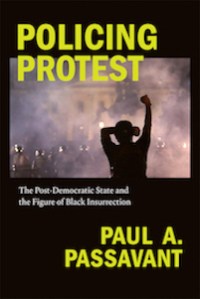
Policing ProtestLet’s begin with a tale of two cities. The first—let’s call it Gotham—is a city where crime and violent protest run rampant. Hoodlums and thugs control the streets. City Hall is corrupt and incompetent. Police officers are powerless. An anti-Western, anti-rationalist, racialist, segregationist ideology has declared war against individual freedom and freedom of thought. Vigilante groups have taken control of entire neighborhoods and established a reign of permanent violence, looting businesses, attacking representatives of public authority, setting fire to courts of law and to the premises of police departments. The chaos that accompanied the takeover of these Red Guards has caused dizzying increases in crime. Even so, influent voices are calling for the defunding of police and the abolition of prison. Law enforcement officers have to obey strict rules of engagement. They have to wear body cameras to record their interactions with the public or gather video evidence of their eventual mishandling of a situation. There are discussions about streaming these video feeds online, in real time. The second city—dubbed The Big Apple—is a place where a militarized police patrols the streets like an occupation army, clamping down on any form of dissent. Business interests have privatized vast portions of the public space, evacuating any undesirable people including climate change activists, protesters distributing antiwar pamphlets, or trade union picketers who could disrupt the consumer’s experience. With the full support of politicians, police forces have responded to a previous wave of crime with a zero tolerance policy they now apply to all kinds of public protest, in violation of the First Amendment of the American Constitution. This “Broken Windows” doctrine has had no effect on crime, but now justifies disproportionate use of force, excessive length of custody, and “shock and awe” tactics against protesters. People demonstrating for social justice or against racism are treated like criminals and are arrested without any legal basis. Democracy is undermined, and the government increasingly behaves like an authoritarian state.

A Tale of Two Cities

The first city is a fiction. It exists only in the alt-right world of alternative facts and post-truth reporting. The second city is how Paul Passavant describes the evolution of law enforcement and order maintenance in the United States. Policing Protest is a political science book that documents the rise of a “post-democratic state” in America through an analysis of the way police has become more hostile to protesters, thwarting the rights of free speech and free assembly enshrined in the American Constitution. It is based on legal analysis of court decisions, proceedings from civil actions against the NYPD, interviews with activists and with lawyers, reference to press coverage and books recounting the Occupy Wall Street movement, and textual analysis of video footage and testimonies. Although it uses standard tools of the social sciences, the research methodology does not include participant observation or questionnaire survey research, which constitute the Gold Standard in sociology. Passavant builds on a large previous scholarship highlighting a perceived decline in the guarantees offered to rights of free speech and assembly in America. Scholars have documented how policing in the United States became increasingly militarized in the 1980s and 1990s. Some point to the attacks of September 11, 2001, and the creation of the Department of Homeland Security, as causing more repressive practices in law and policing. Others see evidence of a repressive turn as early as the 1970s, instrumented as a backlash against recently conquered civil rights. Still for others, police is inherently hostile to civil rights activists and anti-racist protesters. For the proponents of Afro-pessimism, anti-Blackness is a constituent element of policing in the United States. Passavant rejects both the essentialism of Afro-pessimism and the historicism of descriptions based on rational choice theory. For him, we should analyze the hostility against Black Lives Matter as a political antagonism, not an ontological condition. But police’s excessive response to protesting should not be seen as a rational response based on utilitarian efficiency. Passavant highlights the significance of affective attachment to “kicking ass” that goes beyond instrumental rationality of the neoliberal state. He describes the emergence of a “post-democratic, postlegitimation state shaped by neoliberal authoritarianism and haunted by the figure of black insurrection.”

Police abuse of force against protesters became a political issue in the United States at the end of the 1960s. Images in the media of civil rights marchers in Birmingham or Selma, Alabama, or protesters at the 1968 Democratic National Convention being attacked by police, or antiwar demonstrators being killed by the Ohio National Guard at Kent State University, shocked the national conscience. Formed in 1967 to investigate the causes of civil disorder that had culminated in the urban riots of the summer this year, the Kerner Commission attributed the race riots to lack of economic opportunity for African Americans and Latinos, failed social service programs, police brutality, racism, and the orientation of national media to white perspectives. The 426-page report became an instant bestseller. It set into motion reforms to make police more legally accountable and to steer protest policing into a more tolerant direction. Beginning in some cities in the 1970s, the “negotiated management” model of protest policing emphasized dialogue and collaboration between police departments and groups planning acts of civil disobedience as part of a demonstration. Under the new model, police should expect and tolerate a certain amount of disruption to everyday routines when citizens exercise their First Amendment rights. During protests, police should avoid using force, and refrain from making arrests except when absolutely necessary. Arrestees should be processed with diligence and a certain degree of leniency. This model was in sharp contrast to the previous model of “escalated force” emphasizing brutal show of force and early dispersal, which was perceived as inciting an aggressive response from protesters. But the Kerner Commission report and the new model of protest policing met with fierce opposition. In December 1967, the Miami police chief uttered the now-infamous phrase, “When the looting starts, the shooting starts.” Richard Nixon placed his 1968 presidential campaign under the banner of the “forgotten Americans,” the “non-demonstrators” who are “not guilty of the crime that plagues the land.” Conflating civil rights demonstrations, urban riots, and street crime, he set in motion a “war against crime” that was fought by his successors.

Broken Windows

In 1982, The Atlantic published the essay “Broken Windows” by George Kelling and James Q. Wilson. This controversial theory states that visible signs of crime, anti-social behavior and civil disorder create an urban environment that encourages further crime and disorder. Starting with the NYPD, police departments began to target minor forms of disorder with zero tolerance in the 1990s. According to Passavant, “the transformation of policing in the direction of zero tolerance, quality of life, order maintenance policing, and enjoyment of ‘kicking ass’ was at odds with the principles of tolerance and restraint informing the negotiated management model of protest policing.” A new style of protest policing, dubbed “command and control,” emphasizes inflexible regulatory practices, strategic incapacitation based on risk assessment and surveillance, shock and awe tactics of disproportionate display of force, extralegal intimidation of protesters, and punitive postarrest detentions. This shift from negotiated management to more aggressive and violent protest policing methods can be attributed to three interrelated crises: a crisis of democracy, an urban fiscal crisis, and a crime crisis. To illustrate the first crisis, Passavant takes the example of Supreme Court decisions regarding the use of public space, such as the exercise of free speech in shopping malls and urban centers, as the sign of a deeper crisis in political culture: commercial interests are encouraged at the detriment of democratic expression. To compensate the contraction of fiscal revenue caused by the exodus to suburbia, cities began to reorient their infrastructure away from residents and toward nonresidents who might visit city centers: consumers, tourists, and visitors attracted by sporting events or cultural manifestations. Lastly, the perception of a “crime wave” in the 1960s and 1970s led to the militarization of police and the abandonment of the negotiated management model of protest policing.

By looking at how the NYPD policed the 2004 Republican National Convention (RNC), Passadant argues that when cities host mega-events, they are left with a security legacy that persists after the event is over. This legacy takes the form of armored vehicles, military-grade weapons, or security cameras that become embedded within the fabric of the urban environment. In the case of New York, politically motivated intelligence gathering and needlessly punitive arrest processing practices were first institutionalized during the organization of the 2004 RNC. When a city hosts a mega-event classified as a national special security events by the secretary of Homeland Security, it becomes eligible for federal money to enhance security. The Secret Service becomes the lead federal agency for developing and implementing security for the event, coordinating federal agencies and state and local police. Cities want to avoid a breach in security at all costs. The fear a repetition of the events that plagued Seattle’s 1999 hosting of the WTO’s ministerial conference, when massive street protests disrupted the event and caused mayhem in the city. But being perceived as capable of hosting a mega-event is also a powerful marketing tool for a city, as it generates a large economic windfall in the form of increased tourism and commercial activity. Like New Orleans’ hosting of the Super Bowl after Hurricane Katrina, New York submitted bids for several mega-events after the attacks of September 11, 2001, and was successful for its hosting of the 2002 World Economic Forum and the 2004 RNC. The first event was a rehearsal for the preparation of the second, which in turn shaped the way the NYPD reacted to Occupy Wall Street and to Black Lives Matter. Post-event assessments emphasized the perceived psychological effects of major shows of force, the role of intelligence or surveillance like the use of “undercovers” to infiltrate groups of protesters, and the NYPD’s “proactive arrest policy” directed against potential rioters. Hosting mega-events therefore produces a multiplier effect spurring the securitization of policing and urban environments. Much as the “Broken Windows” theory encouraged a horizontal dissemination of policing practices, the vertical dissemination of surveillance and control after a national special security event shapes institutions and methodologies in police departments long after the mega-event is over.

From OWS to BLM

Occupy Wall Street (OWS) left in its wake a paper trail of civil actions against the NYPD and other police departments, who were accused of excessive use of force and arbitrary arrests. It was a legally literate movement, with “legal observers” embedded among participants to document possible violations of civil rights by the police and later defend activists in courts. NYPD was found guilty of trespassing the law on many counts. But court decisions came too late to remedy the NYPD’s preemption of constitutional rights in the streets. They also failed to make the NYPD financially accountable for their policing, as civil damages arising from judicial settlements were absorbed into New York’s citywide budget. The case of a public administration violating its own laws raises a broader question. According to Max Weber, the monopoly of the legitimate use of force defines the rational-legal state and is used in an efficient and orderly manner. But there was nothing rational or orderly in the use of force by the NYPD during OWS protests. The overwhelming numbers of police dedicated to street demonstration and their heavy anti-riot equipment were displayed to intimidate protesters and force them into submission. There were numerous acts of verbal abuse and physical brutality. Rules were applied arbitrarily: in some cases, police would conduct arrests for even the slightest infraction such as putting one foot into the street when only use of the sidewalk was allowed. In other cases, illegal or unruly conducts on the part of demonstrators were tolerated and even encouraged or provoked. For Passavant, the role of excess is indicative of an affective attachment to the repressive nature of neoliberal order maintenance policing. Some police officers enjoyed “kicking ass” and reveled in the disorder they were causing. The arbitrary, aggressive, and overwhelming police behavior was calculated in order to cause fear and anger among the otherwise nonviolent crowd. As an aside, “this also had the effect of diverting the Occupy movement away from its political purpose of protesting economic inequality to a preoccupation with the NYPD.” Polices forces were not alone in reacting affectively to demonstrations and in enjoying the disorder they were causing: videos posted on YouTube of police subjecting protesters to violent treatment have become viral, eliciting in their comment thread a range of reactions going from indifference (“whatever”) to sadistic pleasure (“LOL”).

The death of Eric Garner at the hands of the police on July 17, 2014, was one of the events that helped trigger the Black Lives Matter (BLM) movement. When the NYPD local commander was informed by text message that Garner was “most likely DOA” (dead on arrival), he responded, “Not a big deal.” In Ferguson, Missouri, where black teenager Michael Brown was shot multiple times and killed by a police officer on August 9, 2014, imposing a fine on poor and black citizens for minor violations of the law and then issuing a warrant when they failed to comply was a kind of “primitive accumulation” that provided the city with 25 percent of its fiscal revenue. This is a kind of police “who enjoys impunity, and who are supported by political subjects who enjoy their enjoyment of impunity.” Much as the NYPD sought to repress, intimidate, and defeat Occupy Wall Street, it treated Black Lives Matter as a political enemy to be defeated by any means necessary. The full spectrum of repressive measures were used against the BLM movement: battlefield tactics of urban warfare and counterinsurgency, deployment of military-grade weapons such as LRADs, surveillance by counterterrorism units and undercover police, interception or blurring of communication signals, preventive arrests and grueling detention conditions. According to Passavant, these reactions are haunted by the specter of black insurrection. The protests and riots of the 1960s continue to weigh on the present. At the same time, the responses envisaged at the time—addressing inequalities in education, housing, employment, and degrading conditions of welfare—have now vanished from the political horizon.

Echoes beyond the United States

The conflation of civic protest and violent riots presented in the opening vignette (the “tale of Gotham”) is not new. In the 1960s, conservatives complained that the civil rights movement was spreading “mass lawlessness and violence,” when in fact it was the disorderly response of the authorities that fueled unrest and turmoil. Should we trust empirical evidence or alternative facts? Unfortunately, when they originate in the United States, both facts and fiction are export products. They influence the way other Western states organize their police forces, and how they perceive protests as a result of a “woke” ideology of ethnic polarization. European authorities and commentators took different attitudes regarding the two social movements reviewed in Policing Protest, Occupy Wall Street and Black Lives Matter. It must be remembered that OWS was met with a great deal of sympathy in Europe, where hostility to market forces and unfettered capitalism runs deep. European cities became the center of occupation movements that paralleled the protests in New York and other American cities. In France, a political manifesto penned by Stéphane Hessel, a respected figure from the left, Time for Outrage! (“Indignez-vous !”), sold more than one million copies in a few months. In Spain, the Indignados Movement led to the creation of the Podemos political party that entered a coalition government with the left-of-center Socialists. Occupation of public places and urban parks, in large part self-disciplined, was monitored by the police without any major incident. The BLM movement was met with more reservation and dismissal. Denunciation of structural racism and police abuse of force strike a sensitive chord in countries like France, where political leaders reject all references to “police violence” (the preferred terms are “response to provocations” or “excessive use of force”) and deny that systemic racism in French institutions can even be an issue. On the one hand, police forces and the governments that mandate them try to avoid unnecessary deaths at all costs. They fear death at the hand of the police can spark violent riots and turmoil, as was indeed the case in France in 2005 and then again in June 2023. On the other hand, the same evolution toward the militarization of law and order and the escalation in the use of force can also be observed in Europe. How can we reconcile the categorical imperative “Thou shalt not kill” with the brutalization of order maintenance methods? There are no definite answers, but the reflection proposed by Paul Passavant in Policing Protest also finds echoes in Europe.

The Faculty of Climate & Media Studies

A review of Climatic Media: Transpacific Experiments in Atmospheric Control, Yuriko Furuhata, Duke University Press, 2022.

Climatic MediaMy Japanese alma mater, Keio University at Shonan Fujisawa, has a Faculty of Environment & Information. Next to it stands a Graduate School of Media & Governance. Putting two distant words together, like “environment” and “information” or “media” and governance”, creates new perspectives and innovative research questions while breaking boundaries between existing disciplines. Yuriko Furuhata uses the same approach in Climatic Media. What is climatic media? How did media become articulated with climate in the specific context of Japan? In what sense can we consider the climate, and atmospheric phenomena, as media? What new research questions arise when we put the two words “climate” and “media” together? Which disciplines are summoned, and how are they transformed by the combination of climate and media? How does climatic media relate to Watsuji Tetsurō’s concept of Fūdo, to take the title of his 1935 book translated as Climate and Culture? Can we use certain media to manage the climate, to predict and to control it? What is the genealogy of these technologies of atmospheric control, and can we trace them back to previous projects of territorial expansion and imperial hegemony? If we call “thermostatic desire” the desire to control both interior and exterior atmospheres, how does this desire “scale up” from air-conditioned rooms to smart buildings, district cooling systems, domed cities, geoengineering initiatives, orbital space colonies, and terraformed planets? In what sense can we say that air conditioning is people conditioning? These are some of the questions that Yuriko Furuhata raises in her book, which I found extremely stimulating. My review won’t provide a summary of the book’s chapters or an assessment of its contribution to the field of media studies, but will rather convey a personal journey made through Climatic Media and, indirectly, back to my formative years at Keio SFC.
The many meanings of media

One of the difficulty I had with the book, and also one of the lessons I learned from it, is the multiplicity of meanings associated with the term media. According to the burgeoning field of media studies, media can be many things. In its most widely accepted meaning, media are the communication tools used to store and deliver information or data: we may therefore speak of mass media, the print media, media broadcasting, digital media, or social media. In this limited sense, climatic media is what makes atmospheric variations visible and legible through the mediation of various instruments of data visualization: thermal imaging, photographs, charts, diagrams, computer simulations, etc. Putting the climate in media format can serve scientific, informational, political, or artistic purposes. In the arts, media designates the material and tools used by an artist, composer or designer to create a work of art. Climatic Media borrows many of its examples from the arts, and documents attempts by Japanese artists to use fog, fumes, mist, and air as a material for site-specific aerial sculptures or light projection. Architecture, in particular, can be identified as an art or a discipline deeply entangled in climatic media. In architecture, media is what mediates indoor and outdoor climate: a door or a wall can therefore be considered as media of atmospheric control. The meaning of media can also be expanded to include the materiality of elements that condition our milieu. Elemental media include the chemical components of air, indoor or outdoor air temperature and humidity, atmospheric pollution, extreme weather phenomena, the planetary atmosphere, and other natural elements of climate. In a more general meaning, media are a means toward an end. Climate can be manipulated to particular effect, which may be peaceful or war-related. Climate-controlled spheres or air-conditioned bubbles can be created, using technologies that mediate and shape what counts as a habitable environment. In this broadest sense, climatic media are technologies of government, securing a livable environment for certain populations while excluding others.  

The author chooses to concentrate on architecture as climatic media, foregrounding the imperial roots and Cold War legacy of Japanese architecture through the work of Tange Lab architects, including those associated with the internationally renowned postwar architectural movement called Metabolism, with Kurokawa Kishō and Isozaki Arata as key figures. In the past decades, Japanese architects and buildings have achieved iconic status and became known to a wide public. Even casual visitors to Tokyo are familiar with the Yoyogi National Gymnasium built by Tange Kenzō for the 1964 Tokyo Olympics, as well as the more recent National Art Center designed by Kurokawa Kishō in Roppongi. With Tange Lab as their training ground, Metabolist architects and designers believed that cities and buildings are not static entities, but are ever-changing organisms with a “metabolism.” Postwar structures that accommodated population growth were thought to have a limited lifespan and should be designed and built to be replaced. The greatest concentration of their work was to be found at the 1970 World Exposition in Osaka where Tange was responsible for master-planning the whole site whilst Kurokawa and Isozaki designed pavilions. It was also Tange Lab and Metabolism architects (some of whom were ardent “futurologists”) who helped bring cybernetics and systems theory into urban design in Japan. After the 1973 oil crisis, the Metabolists turned their attention away from Japan and toward North Africa and the Middle East, which (if we follow Yuriko Furuhata) made them complicit with the oil economy that stands as the main threat to our planetary survival in the twenty-first century.

From Japanese Empire to Osaka Expo ’70

Many of the architectural and artistic experiments described in Climatic Media are grounded in the work of the physicist Nakaya Ukichirō, known as the inventor of the world’s first artificial snow crystal. Nakaya spent his whole life studying ice, snow, and frost formations. The Institute of Low Temperature Science he established at Hokkaidō University in the 1930s helped advance research on cryospheric and atmospheric science. It was also deeply entangled in the Japanese Empire’s territorial conquests and war effort. Nakaya and his students collaborated with the research division of the South Manchurian Railway Company (“Japan’s first think tank”) in studying causes and mechanisms of frost heaving that damaged the railroad every winter in Manchuria. They helped Japanese agrarian settlers to build houses adapted to the extreme cold climate of the region, and designed ways to operate landing runways and military airplanes in frosty conditions. Nakaya Ukichirō’s ideas were later mobilized in a Cold War context, when polar regions and extreme atmospheric conditions became at stake in the geopolitical confrontation between the United States and its allies on one side and the Communist bloc on the other. Plans to weaponize the climate included battleground weather modifications such as creating hurricanes or heavy rain through cloud seeding and other chemical interventions, as well as the direct use of atmospheric weapons such as tear gas and Agent Orange during the Vietnam War. The expert knowledge of cold climates and atmospheric conditions accumulated at the Hokkaidō Institute also found civilian applications. They helped Asada Takashi, an architect at Tange Lab, to design a proto-capsule housing for the Japanese explorers and researchers at the Shōwa Station in the Antarctic in the 1950s. Tange Kenzō himself, who had aligned with the expansionist agenda of the Japanese Empire in his youth, helped design The Arctic City in 1971, a futurist proposal by Frei Otto and Ewald Bubner to house 40,000 people under a two kilometer dome in the Arctic Circle. Capsule housing and domed cities were also nurtured by dreams of extra-orbital stations and space conquest that survived the Cold War era. More down to earth, the idea of recycling snow as a source of refrigeration is now attracting investors and tech companies to build data centers in frosty regions such as Iceland or the northern provinces of Canada.

There was an even more direct connection between the physicist Nakaya Ukichirō and the architects and artists who gathered at Expo ’70 in Osaka. His daughter, Nakaya Fujiko, was a pioneer in atmospheric art and fog sculpture. She was the Tokyo representative of the American art collective Experiments in Art and Technology (E.A.T.), and was invited by Billy Klüver to create the world’s first water-based artificial fog sculpture for the Pepsi Pavilion at Expo ’70. Yuriko Furuhata argues that father and daughter were not bound solely by blood ties and a shared interest in meteorological phenomena: it is the practice of atmospheric control that binds the scientist and the artist. Nakaya Ukichirō himself was no stranger to artistic creation: he was an accomplished sumi-e artist, and documented his studies of summer fog or winter snow with ink paintings, close-up photographs, and educational films. In turn, his daughter incorporated science into her creative process, and sought advice of former students of her father to create the fog sculpture displayed at Osaka’s exposition. Nakaya Fujiko’s fog sculpture therefore sits at the point of convergence between two genealogical threads which, together, define what is at stake in climatic media: visualizing climate and engineering the atmosphere. Enveloping Pepsi Pavilion’s dome with artificial fog was meant to turn the pavilion into an interactive “living responsive environment” responding to ambient factors such as wind, temperature, humidity, and light. The machines used to make artificial fog found practical applications beyond the realm of art. Engineers use the same technology today to cool down data centers and cloud computing service infrastructure. Artificial mist is also a familiar sight in urban centers on hot summer days, where small drops of water are projected to create an artificial fog that cools down the air. Expo ’70 also served as testing ground for other urban innovations. Futurologists and technocrats paired with architects and engineers to produce a cybernetic model of the late-twentieth-century city, with its network of data-capturing sensors and its control room filled with state-of-the-art Japanese computers. This techno-utopian vision of connectivity that was put on display at Japan’s World Exposition in 1970 can be seen as a precursor of modern “smart cities” and their networked systems of urban surveillance and social conditioning. Today, many of these technologies of mass surveillance have become mundane and prevalent, but when they first entered the streets of metropoles in the late 1960s they were seen as the creative experiments of artists, architects, and futurologists.

Genealogies of the present

Instead of presenting a linear history of climatic media or splitting her subject into neatly divided themes, Yuriko Furuhata follows a genealogical method of investigation and presentation, which “reads the past as the historical a priori of the present we live in.” She starts each chapter with a modern example of atmospheric control and then goes back and forth in time to find antecedents of the same “thermostatic desire” to control the atmosphere, with Expo ’70 as a point of concentration and the Japanese Empire as a concealed Urtext. In chapter one, city sidewalks refreshed by mist-spraying devices and data centers cooled by similar technologies lead the author to describe the fog sculpture of Nakaya Fujiko at the Pepsi Pavilion and to trace her connexion with the work of her father during wartime, which in turn found direct applications in the futurist works of architects gathered at Tange Lab. In chapter two, the rise of hyperlocalized weather predictions using artificial intelligence and smart air-conditioning systems that individually curate air flows are connected to early attempts to numerically predict the weather and to the history of futurology in Japan, with early visions of the networked society that materialized in the computerized control center of the world’s fair. Amazon’s headquarters in Seattle and its CEO’s dream of colonizing space in chapter three’s opening echo former greenhouse architectures and imperial projects of a “living sphere” (Lebensraum), with Tange Lab as a source of innovative design that connects Japan’s imperial past to modern urban planning and to utopian dome cities in the Arctic or in outer space. In chapter four, the author takes the Metabolist architects at their own word, reading their defining metaphor of metabolism through the lenses of the product life cycle and the Marxist concept of the “metabolic rift” between humans and the natural environment. Kurokawa Kishō’s holistic vision of renewable capsule housing and his early engagement with systems theory are contradicted by his use of plastics as a nonrecyclable material and by his taste for the expression “Spaceship Earth,” which foregrounds modern plans to geoengineer the Earth’s climate through technological interventions. In chapter five, modern methods of atmospheric control, from tear gas to cloud computing and smart objects, are tributary to a genealogy of urban surveillance that shows the dual use of technologies of social control, turning artistic experiments into dystopian futures.

The expression “dual-use technologies” usually refers to technologies with applications in both the military and the civilian sectors. Here, they not only connect defense industries and peaceful usage, but also imperialist rule and artistic creation. Several words and expressions straddle the border between war-making and the arts: military strategists speak of theater, engagement, or war and peace without making direct reference to Shakespeare, Jean-Paul Sartre, or Leon Tolstoy. Similarly, the term “avant-garde” used by art critics derives from military vocabulary. Furuhata proposes to expand this list of dual-use terms to “site-specificity”, originally used for artworks created to exist in a certain place, and to “climatic media” in general, describing how projects to “weaponize the weather” found applications in civilian times or how avant-garde artistic experiments were the harbinger of modern security technologies. Climatic control also borrows some of its metaphors from agriculture: cloud seeding, harvesting the weather, cultivating rain, or building greenhouses point to underlying epistemic assumptions and cultural expectations associated with controlling the atmosphere. The “cloud” now used for computer data storage is not just a metaphor: cooling data centers involves the same air-conditioning nozzles and fog machines first used by artists at the Osaka fair. Computer network systems are atmospheric in the literal sense of being carried by radio waves in the air. The cybernetic model used to regulate a house’s temperature is applied to the fiction of controlling the planet’s imaginary thermostat through feedback loops. The technical operations carried out by climatic media are both material and symbolic. Urban infrastructures such as energy grids, fiber-optic cables, air ducts, water pipes, and computer systems all rely on technologies that regulate temperature and mitigate the effects of outdoor weather. In times of planetary-scale climate change caused by human activity, it is useful to remember that operations of climatic control at one scale all have consequences at another scale: the Earth is not a closed system, and climatic media are intrinsically connected with global issues of environmental pollution, greenhouse gas emissions, and waste accumulation.

Back to SFC

Reading this book reminded me of the intellectual atmosphere I found at Keio University’s Shonan Fujisawa Campus (Keio SFC) when I first came to Japan as a teacher of French studies in the early 1990s, from 1992 to 1994. Established only two years before, SFC at that time was a hotbed of technological innovation and pedagogical breakthrough. Sometimes considered as the “birthplace of the Japanese internet,” it had chosen to equip its students and faculty with state-of-the-art technology. The ubiquitous classroom computers were not the familiar IBM PC or Apple Macintosh, but turbocharged Sun SPARCstations and NeXt computers. Learning to code was a requisite, even for students specializing in the humanities. We wrote all of our documents using LaTeX, were early users of email software, and surfed the web using the Mosaic web browser upon its release in 1993. But technology was only part of the equation. SFC’s ambition was to embark a young generation of Japanese students into a life-changing experience, and to equip them with the skills and mindset for navigating the information society and its lived environment. As a junior faculty member, I was also allowed to follow courses and seminars to improve my Japanese language skills and share the students’ experience. Expanding my French upbringing and undergraduate studies in economics, the seminars and writings of Takenaka Heizo, Usui Makoto, and Uno Kimio introduced me to emergent research topics, from industrial metabolism to green accounting and input-output tables of economic development. Due to lack of personal discipline, but also because of the interdisciplinary nature of these ideas, I failed to translate all these burgeoning ideas into a PhD after I left Japan. But the knowledge acquired at Keio SFC equipped me with life-long skills and interests, and I have lived since them off the intellectual capital accumulated throughout these two years of teaching and auditing classes. I haven’t learned anything really new since then. In my view, Keio SFC at that time conveyed the vibrancy, intellectual excitement, and creativity a former generation of Japanese architects and social scientists must have experienced at Tange Lab or through the planning of Osaka Expo’ 70. Whether Keio SFC succeeded in steering Japan into the direction it set for itself is another debate. In retrospect, I could have been more attentive to the dark clouds gathering on the horizon: the bubble economy had left Japan with piles of debt and nonperforming loans; the reduced birthrate meant there were less students for an increasing number of places available in new universities; parents were still making huge sacrifices for the education of their children; and attractiveness of foreign languages and foreign destinations for studying and working abroad tended to dwindle. Even in those early years after the creation of the campus, academic inertia and routine crept in, and there was a certain hubris in the lofty goals and ambition that animated the whole project. But these two formative years still have for me the scent of youth and boundless possibilities.

The Creative City, From Providence, Rhode Island, to Hanoi, Vietnam

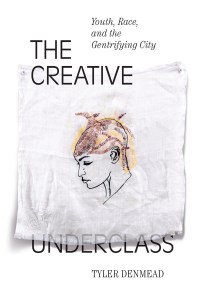
A review of The Creative Underclass: Youth, Race, and the Gentrifying City, Tyler Denmead, Duke University Press, 2019.

The Creative UnderclassI want to use Tyler Denmead’s book as an opportunity to reflect on my past experience as director of Institut Français du Vietnam, a network of four cultural centers supported by the French Ministry of Foreign Affairs in Hanoi, Ho Chi Minh City, Danang, and Hue. On the face of it, our situations could not have been more different. I was a mid-career diplomat posted as cultural counsellor at the French Embassy in Hanoi for a four-year assignment. My roadmap for managing the culture centers was simple and laid down in a few words: engage youth, be creative, and balance your budget. Tyler Denmead was the founder and director of New Urban Arts, an arts and humanities studio primarily for your people of color from working-class and low-income backgrounds in Providence, Rhode Island. Coming back to the arts studio as a PhD student doing participatory observation, he comes to realize he has been a mere instrument in the city’s program of revitalization through culture, unwittingly supporting a process of gentrification and eviction of the ethnic minorities he was supposed to empower through cultural activities and economic opportunities in the creative economy. No two cities can be further apart than Hanoi, Vietnam, and Providence, Rhode Island. And yet there are some commonalities between the two. They were both labelled “Creative Cities” and implemented strategies of economic revitalization through cultural activities. They both faced the forces of gentrification, land speculation, urban renewal, and the challenge of dealing with former industrial facilities and brownfields. New Urban Arts and the Institute Français in Hanoi were both tasked with the same missions of engaging youth, expanding access to culture, building skills, and securing public and private support. And, as directors of cultural institutions, we were both entangled in contradictions and dilemma that put our class position and ethnic privilege into question.
Revitalization through culture

Richard Florida is the urban theorist who is credited with coining the term “the creative class”. Visiting Providence in Rhode Island in 2003, he celebrated the city’s future as a creative hub. Successive mayors embarked on a program of urban renewal, rebranding Providence as a “Renaissance City” or a “Creative Capital”. Revitalizing post-industrial cities through arts, culture, and creativity has been a standard script since the 1990s. The conventional strategy includes a marketing and public relation campaign to rebrand the city’s image; supporting and promoting cultural assets including arts organizations, festivals, and cultural events; reshaping abandoned factories and warehouses into cultural spaces; and providing tax incentives to redevelop property into locations of historical, aesthetic, and economic value. According to Florida, Providence exported too much of its college-educated talent from Brown University and Rhode Island School of Design, or RISD. He thus advocated for strategies to retain young creatives from these highly selective and private universities by offering incentives to launch dynamic start-ups and host cultural events, thus attracting inward investment, tourism, and additional creative workers. In retrospect, the strategy has been a failure. In his reassessment of Providence’s future as a creative city, Florida recognized that these programs have only exacerbated urban inequalities without creating lasting economic or social value. He noted that technology has been the region weak spot and has failed to provide “real jobs” for young people in local industries. Providence’s new growth strategy now focuses on technology startups, business incubators, and quality of life. Providence now ranks as number 15 in the list of “Best Cities to Found a Startup Outside Silicon Valley and New York” and also boasts itself as one of the “10 Best Cities to Raise Kids in America.”

Tyler Denmead uses critical race theory to show that the color blindness of “creativity” dissimulates the ways in which the creative city reproduces and reinforces racial and class inequality. There is a long tradition of criticizing urban policies by exposing their racial underpinnings. James Baldwin in the 1960s described “urban renewal” as just another word for state-sponsored “negro removal” as he examined change in San Francisco at the time. And bell hooks, writing in the 1990s, described these urban renewal projects as “state-orchestrated, racialized class warfare (which) is taking place all around the United States.” Denmead’s expression, the “creative underclass”, is meant as a bridge between Florida’s “creative class” and the term “underclass”, which in the American context has often been used to explain poverty through cultural deprivation. His mission in New Urban Arts was to transform Providence’s “troubled youth,” meaning young people from ethnic minorities and low-income backgrounds, into “creative youth” equipped with the skills and talent to seize job opportunities in the creative economy. He leveraged public support for engaging teenagers and young adults in cultural activities such as art mentoring and poetry writing, even while arts education was being suppressed from the curriculum of Providence’s public schools and welfare support to poor families was being eroded. Most of the state subsidies under the creative city program were channelled toward real estate development and the restoration of old industrial buildings, fueling land speculation and gentrification. Through the promotion of a bohemian lifestyle, young people from the creative underclass were encouraged to choose to live in poverty, inhabiting abandoned warehouses and taking low-wage service jobs in the hope of gaining popularity and recognition in the white hipster scene. But there were very few “real job” opportunities for those who did not want to become “starving artists,” and public efforts to attract media companies or high-tech business activities proved ineffective. In the end, according to the author, the creative city only supports “a brand of capitalism that has legitimized the erosion of support for those who are poor.”

The Creative City

Hanoi, the capital of Vietnam, also stakes its future development on culture and the creative economy. It has been admitted in 2019 in UNESCO’s Creative Cities Network, and has identified creativity as a strategic element for sustainable urban development. Home to 7.9 million people, the political capital of Vietnam has gone through several attempts to rebrand itself. It was granted the “City of Peace” title by UNESCO in 1999, and has built on this image to position itself as a hub for international political events, such as the APEC Summit in 2006, the East Asia Summit in 2010, the World Economic Forum on ASEAN in 2018, and the second DPRK-US Summit in February 2019. The thousandth anniversary of the foundation of the capital (then named Thang Long) by the emperor Ly Thai To was the occasion of major celebrations in 2010, insisting on the city’s long history and its tradition of resistance against foreign aggression. Faced with the economic might of Ho Chi Minh City (former Saigon) in the south and the entrepreneurial spirit of Danang in central Vietnam, Hanoi can play on its distinctiveness as an ancient capital of culture, national politics, and higher education. The Creative City strategy insists on several dimensions: architecture and urban heritage, handicraft and craft villages, traditional cuisine and gastronomy, and ancient arts preserved and performed with new style. The main French cultural center in Vietnam was located in Hanoi. The French institutes in Danang and Hue were of smaller scale and focused mostly on teaching French, while the French institute in Ho Chi Minh City operated from the precinct of the French Consulate General, using outside facilities (including a residence for artists, Villa Saigon) to stage cultural events and festivals.

L’Espace, the flagship building of the French cultural presence in Hanoi, was located in the historic central district that was at the core of the city’s urban renewal strategy. Only one block away from the early twentieth century’s opera house, next to the five-star Hôtel Métropole that attracted rich tourists through a cultivated image of colonial chic, the French cultural center was a landmark location in Hanoi’s cultural life. Artists remembered having given their first concert on its stage or displayed their first solo exhibition in its art gallery. They also kept a fond memory of the lectures and intellectual debates organized in its book library, or of the French language classes that offered a window to the outside world and a prized ticket for studying abroad. When I became cultural counsellor at the French Embassy, the Hanoi center was still very active: its language classes were fully packed, its concerts and cultural events well frequented, and its aura as a showcase of French culture and lifestyle still intact. New activities such as pop concerts, hip-hop tournaments, street art exhibitions, or technology displays attracted a younger generation and encouraged collaborations between French and Vietnamese artists. But its finance were in dire straits: the yearly rental charge was regularly adjusted upward to keep pace with the rise in the property market; advertising events through Facebook and other communication channels cost money; and salaries had to be paid to the dedicated local staff and the native teachers of French. A vast public of middle-class families coming to the central district for their weekend stroll just passed us by, with little interest for French culture and low budgets to devote to cultural or educational activities. For L’Espace, the Covid epidemic was the coup de grâce: priced out of the real estate market, the center was forced to relocate its French language classes and student orientation offices in a less prestigious location, and lost its ability to host cultural events on its own stage or gallery.

France’s cultural policy in Vietnam

We campaigned hard to convince local authorities and private sponsors that subsidizing cultural activities was in their best interest. We found a sympathetic ear in the person of the city mayor, who offered the district’s central plaza for a two-day outdoor festival of French culture and gastronomy. French culture still has a good image in Vietnam: France is seen as a romantic location for tourism, a country with a rich heritage and glamorous lifestyle, and a prime destination for studying abroad. French food and wine obtain high rankings, and French luxury brands dominate the market. But only a small minority of Vietnamese people have the financial means and educated tastes to indulge in such proclivities. For younger generations with lower budgets and more familiar longings, South Korea and its culture proves the most attractive. The Korean wave has hit Vietnam in full swing, and young Vietnamese are passionate about K-pop, Korean drama, kimchi, and K-fashion and cosmetics. France simply cannot compete with this attractiveness primarily led by private actors and mediated by the digital economy. Instead, France’s main selling point is to be found in cultural heritage. French colonial history has left a deep imprint in Vietnam, from city planning and architecture to baguette bread and loanwords taken from the French language. Vietnamese leaders are eager to solicit French expertise to help them reclaim and showcase their own cultural heritage, from the recent past to ancient history. City-to-city cooperation and French government’s support have helped preserve and promote Hanoi’s Old Quarter and its Thang Long Citadel, building on France’s long experience in heritage preservation. The same goes with the city of Hue, Vietnam’s ancient capital and the cradle of Vietnamese culture, that has been a partner of French cultural cooperation for more than thirty years. The Hue Festival, a major cultural event with an international audience, was first called the Vietnamese-French Festival and celebrated in 1992.  

As a French intellectual versed in cultural studies and post-colonial theory, I was fully aware of the ambiguities and contradictions involved in promoting French culture in Vietnam. For post-colonial scholars, imperialism manifests itself not only through physical domination of geographic entities, but also through the colonization of the imaginary. But contemporary Vietnam is very forthcoming with its colonial past, and harbors no complex towards former imperial powers. After all, it has won two major wars against two dominant world powers, and has resisted more than a thousand years of Chinese imperialism. Still, the terms of cultural trade between France and Vietnam were premised on unequal exchange and an imbalance between center and periphery. As much as we sought to foster collaboration and joint projects between artists from the two countries, Vietnam was always on the receiving end, and France was always the initiator. We faced many practical dilemma in our daily activities. Could we, for instance, display the photographs of Vietnamese women from various ethnicities taken by a French artist who sold mostly to rich tourists and foreign collectors? Or should we promote the emergence of a local art scene through photography workshops and cross-exhibitions? Could we invite French intellectuals to ponder about the risks posed by Facebook and other social networks in a country where Facebook represented one rare window of free expression? How could Vietnamese historians debate with their French counterparts about the battle of Dien Bien Phu, and could they develop a common understanding of history? And how to explain the enduring success among Vietnamese audiences of the films Indochine and L’Amant that we showed repeatedly in our cinema-club? The image of colonial chic that I perceived as an expression of imperial nostalgia and ethnic prejudice among French nationals proved to be equally attractive among young Vietnamese, who had no memory of the Indochinese past but found its modern expressions romantic and glamorous.

White privilege?

For us, the ethnic question was raised in different terms than for Tyler Denmead. He denounces the myth of the “good white savior” who is supposed to transform “troubled youth” of color into “creative youth.” Well aware of his white privilege, he is careful to avoid “performative wokeness” and “virtue signaling” and to distinguish his auto-ethnography from a quest for redemption. He concludes his book with a series of recommendations based on the very words used by young people who hung around in the arts studio: troublemaking (or “fucking up white notions of what it means to be black or brown”), creating a hot mess (a place where they can be random, irrational, and disrespectful of authority), and chillaxing (temporarily opting out of the system). Our goal in Vietnam was not to encourage youth resistance and rebellion. And we did not understand “white privilege” in the way Tyler Denmead applies it to his own case. Still, it could be argued that our cultural policies and management practices were based on structural inequalities. Although our recruitment policy was open and nondiscriminatory, three of the four directors of the French culture centers in Vietnam were French, while their assistants were all Vietnamese. The presence of native French teachers was a major selling point for our language classes. Accordingly, most if not all full-time teachers were French nationals (of various ethnicities) while the part-time lecturers were Vietnamese. With very few exceptions, French managers and teachers could not speak Vietnamese, while all Vietnamese staff, including technicians, were required to have at least some mastery of the French language. Expat salaries exceeded the paycheck of locally hired staff by an order of magnitude. As for our public, we didn’t target the expat community for our cultural events. But France’s image was associated with elitism, and we were expected to keep a high profile and an upmarket brand image. Not unlike Tyler Denmead’s Urban Arts center in Providence, the French culture center in Hanoi was an instrument in a wider movement of gentrification, and was in the end forced to relocate due to the very forces it supported.

Pipes, Plumbers, and Politicians in Mumbai

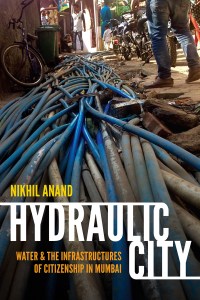
A review of Hydraulic City: Water and the Infrastructures of Citizenship in Mumbai, Nikhil Anand, Duke University Press, 2017.

Hydraulic CityIn his book Oriental Despotism, published in 1957, historian Karl Wittfogel introduced the notion of the hydraulic state as a social or government structure which maintains power and authority through exclusive control over access to water. He believed that Asian civilizations veered towards despotism because of the collective work needed for maintaining irrigation and flood-control systems. In Hydraulic City, anthropologist Nikhil Anand asks how water infrastructures and urban citizenship can be sustained in a country known for its messy democracy and bottom-up style of governance. The case of Mumbai’s water services exemplifies all that is wrong with Indian democracy: the failure to provide basic public services and carry out job-creating infrastructure projects; the inability to recover the costs of supplying water; and the politics of patronage and clientelist networks that tie impoverished residents to local power-brokers. And yet one is forced to acknowledge the resilience of the Indian system of governance in the face of chronic underinvestment and fledging democracy. The hydraulic city that emerges from this description is not a centralized formation of power, but rather a network or an assemblage of pipes, storage reservoirs, and valves, more or less controlled by a variety of residents, engineers, and administrators that move water in the city. Hydraulic City addresses the paradoxes of Indian cities where planned, improvised, intended and accidental mechanisms simultaneously shape the urban fabric. The” infrastructures of citizenship” that it describes combine the material infrastructure of leaking pipes and draining reservoirs, the market infrastructure that makes water demand meet supply, and the political economy of patronage relations around water provision.
A city built on water

Mumbai is a city built on water. The present-day city stretches on what was originally an archipelago of seven islands covered by marshlands and mangrove forests. Over the course of its history, embankments were built, hills were flattened, the rubble dumped into marsh, and land was reclaimed from the sea. Today, the capital of Maharashtra is the second-most populous city in the country after Delhi and the seventh-most populous city in the world with a population of roughly 20 million. But several times a year, the sea and the monsoon remind themselves to its inhabitants. Large parts of the city go under water, the trains stop, and so does Mumbai. Then comes a season with less rainfall, followed by a reduction in the supply of water to the metropolis, and life again comes to a standstill. The city is forced to keep to its basic water needs and control its more wasteful ways. With climate change and its accompanying cyclonic events, storm surges, and sea level rise, most of the city may be submerged in next hundred years. Or alternatively El Niño may change seasonal weather patterns and the monsoons might disappear, leaving the city to dry itself to death. The history of water provision in Mumbai is therefore a tale of scarcity amid plenty. As it grew in population and expanded geographically, the paucity of water was a major concern that the city faced. Before large reservoirs and piped supply schemes were undertaken, pious citizens from the Parsi and Gujarati communities constructed many tanks and wells for public good, and water flowed from the many springs, bore wells, and reservoirs. But, none of these early schemes of water provision and management could meet the needs of the citizens since there was a tremendous increase in water consumption. By the 1820s, Bombay had a population of more than 300,000, making it the world’s sixth largest city.

During the British Raj, colonial engineers used different technologies for different populations: while proper pipelines and reservoirs were installed in civil servants’ quarters and extended to wealthy native merchant communities, simple wells were dug out for indigenous masses. This discrimination was largely based on the belief that British colonial administrators and Indian subalterns had different natures, and therefore different needs. Nikhil Anand argues that this approach has not completely disappeared in independent India. That Bombay’s water infrastructure had its roots in the government of a colonial city continues to matter to this day. The delivery of basic service is often adjusted depending on the social status of concerned populations. Residents living in settlements, who account for 60 percent of the city’s total population, get far less water per day than upper-class residents in authorized buildings and residential areas. According to local engineers, there is more than enough water entering the city to meet the demands of every urban resident. And yet whole neighborhoods are regularly deprived of water, and their residents are dependent on a schedule of irregular water availability made by engineers and planners. Settlers are marginalized by city water rules that allocate them smaller pipes and water quotas. Water lines serving the settlements are allowed to remain leaky and go dry. The delivery of basic services is often adjusted depending on the social status of concerned populations. State agencies do not consider the poor as equal citizens. Settlements that are predominantly Muslim have the most severe water problems and have to draw water extensively through unauthorized connections. Those who do not obtain water from the legal network get it from the many bore wells that have been reactivated after decades of disuse, or from private trucks that bring water to low-income neighborhoods.

Scarcity amid plenty

As a result, the water infrastructure is full of contests and controversies. As Nikhil Anand remarks, “Every year, as the summer begins, for as long as I can remember, engineers and administrators have held press conferences to nervously announce the danger of failing monsoons and the likelihood of water cuts.” Engineers from the city’s water department are caught in a zero-sum game: to give one hydraulic zone more water is also to give another zone less. Installing pumps to boost water pressure uphill makes it more difficult for water to flow through the entire urban water system. Mumbai inhabitants are familiar with the sight of chaviwallas, municipal employees who turn street valves on and off and allow water to flow in a neighborhood for a limited time. Homes are equipped with water storage tanks sitting on the roof and connected to the water grid through a complex system of pipes. In Mumbai, wealthy and poor residents alike do not get individual household connections, but share their water connections with their neighbors. There are no individual meters or ways to measure water consumption with a certain degree of accuracy: as a result, residents are billed with water they did not consume, or escape payment and consider it normal. Residents often work with plumbers to redirect pipes without the permission of the water department. But for those who fall beyond the grid or receive irregular service from the public system, purchasing water as a private commodity is prohibitively expensive.

For Nikhil Anand, scarcity is not a given: “scarcity is made through discursive and material practices.” Discourses of scarcity efface and silence knowledge about the availability of other kinds of water in Mumbai. They also hide and make invisible the encroachment made by the city on water resources in its hinterland. The case for water scarcity is made by mobilizing numbers that are stabilized and received as objective facts, but that are based on fiction. Demand for water is vastly overestimated, adjusting to the fact that over a third to the city’s water leaks into the ground and through unauthorized connections, and supply does not take into account the vast resources in groundwater that the monsoon regularly replenishes. City engineers insist that subterranean water is polluted, contaminated, and dirty; but it is used by rich and poor alike through a complex system of pumps and wells (some of which are close to one hundred years old) that escape the control of the water administration. Emphasis on scarcity also permits the city’s water department to demand that more water be moved from proximate rural rivers and dam reservoirs to the city. Dams and river lakes as far as one hundred kilometers away collect and store water through the monsoon season and direct it into huge pipes to irrigate the city. The interests of the urban population are clearly prioritized over the life conditions of rural residents, who lack water to hydrate their fields and families during the dry season. Such imbalances are exacerbated in times of scarce rainfall. Droughts deprive farmers of their livelihood and uproot them from their lands, as they are forced to join the mass of migrants living in the city’s slums. In turn, city officials and nativist politicians clamp down on migration by making it extremely difficult for settlers who do not have the correct documents to establish legitimate water connections. Only in Mumbai do settlers require a panoply of documents to get a water connection, including a food ration card, as well as proof of habitation over the last twenty years. Through laws and polices, water is constituted as an entitlement that is “granted” by the city administration only when a person “belongs” to the city.

Governing through water

Hydraulic citizenship is, like water services, unequally distributed, intermittent, partial, and subject to constant negotiations. “Residents in Mumbai are only too aware of the ways that the promises of citizenship are only fitfully delivered, even to those who have all the necessary documents that establish their claims to the city.” They receive only a portion of all the promises and guarantees attached to citizenship. This is why legal water connections deliver more than water in Mumbai.  Water bills and pipe connections demonstrate to various branches of the city government that their subjects are recognized citizens. They connect populations to particular places, and can be called upon by the courts to prove that settlers have lived in the structure with the knowledge of the state. Faced with the threat of evacuation, they offer protection from the periodic appearances of state bulldozers, officers, and their disciplinary actions. Proof of residence may include receipts, fines, voter identity cards, ration cards, bank account statements and, of course, water bills. Even if they get their daily water ration from the itinerant water truck or from unregulated bore wells, settlers also desire water through the public system because the documents it generates, printed on government stationary, allow them to claim and access other public urban services like housing, health, and education. To be recognized as formal residents, settlers mobilize personal relationships with city administrators, big men, and social workers, entering into networks of patronage, clientelism, and friendship. They also protest the living conditions to which they are submitted through liberal democratic means—voting, rallying, petitioning, and organizing protest marches in the city’s center. Concepts such as civil society, political life, and material infrastructure are insufficient to describe the complex assemblage of pipe circuits and social networks that hydraulic citizens navigate.

Ensuring that each individual household gets access to water is more than a matter of engineering: it is intrinsically linked to the political, social and cultural foundations of city life. Divided into different water supply zones, each neighborhood receives water for a fixed period of time. The intermittent water supply, its schedules and varying pressures, produces a particular time and tempo in the city. For settlers, water time is an active social event, requiring negotiations with the city’s engineers and councilors, and determining how gendered and classed identities are enacted. Women maintain their social status by using water at the right times of the day and in the right places. Washing clothes usually takes place outside in front of the door, while the floors in settlers’ homes are kept sparkling clean. Water time reproduces the gendered division of labor, requiring that someone will be at home and available to collect water during supply hours. Water also determines the organization of political life. Through water delivery and scarcity, hydraulic citizens assess the legitimacy of state officials and municipal institutions. In Mumbai, politicians eagerly compete for the political loyalties of their subjects through direct, known, and personal interventions. Local intermediaries and community leaders offer to fix people’s various problems by connecting them to the administrative bureaus and political patrons who can help them. Affiliation to a political party increases access to development projects, water lines, or lucrative city contracts. In exchange for this patronage, party workers are expected to mobilize their friends, neighbors, and associates whom they “helped” to support the party. But many citizens resent the reputation of corruption and cronyism that comes with party membership. Social movements and NGOs not affiliated with political parties are more respected by residents because of their independence from party machines.

Privatization schemes

The author’s fieldwork in Mumbai coincided with a time water privatization was discussed. Although Hydraulic City is not a case against privatization, it gives many arguments to explain why settlers and city engineers are attached to the public provision of water services. World Bank-supported water privatization projects in Delhi and Bangalore have met with fierce opposition from the population. Private firms, overwhelmed by the proliferation of illegal connections and inhibited by the reluctance of citizens to pay more, have been unable to find a financial equilibrium. In Mumbai, World Bank consultants and city officials were careful to frame their Water Distribution Improvement Project not as a privatization scheme, but as a “study” to help improve service delivery to the inhabitants. They tried to lure consumers with promises to provide not intermittent but continuous water supply, ending the punctuated time schedule of waiting for water. But as Nikhil Anand notes, no one aside from the management consultants were demanding 24/7 water supply. Instead, women in the settlements demand the right amount of water at the right time, and with the right pressure. This is a more modest demand, one that recognizes that for people of their class position, a scheduled water supply might be cheaper than one regulated by market tariffs. Residents were only too familiar with the problems of escalating rates that accompanied the privatization of electricity and were concerned about the same thing happening with water. Through documenting the Water Rights Campaign that local activists waged against the World Bank project, Nikhil Anand shows that discourses of rights, justice, and entitlements do not come from “outside” but are grounded in social and material infrastructures that legitimate people’s right to the city.

Set, Set, Set, Set, Set, Set

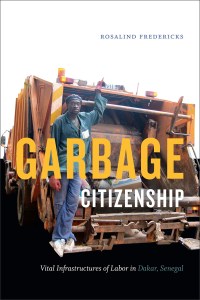
A review of Garbage Citizenship: Vital Infrastructures of Labor in Dakar, Senegal, Rosalind Fredericks, Duke University Press, 2018.

Garbage CitizenshipIn 1990, Youssou N’Dour, Senegal’s most famous musician, released an album titled Set. The main song had the following line: Set, set oy. Ni set, set ci sa xel lo, ni set ci sa jëff oy… I had no idea what it meant, but in her book Garbage Citizenship, Rosalind Fredericks provides translation and context: Cleanliness, oh cleanliness. Be clean, pure in your spirit, clean in your acts… The injunction to be clean and to make clean (set setal in wolof), repeated in the song’s chorus, echoes the rallying cry of a grassroot movement in which young men and women set out to clean the city of Dakar from its accumulating garbage, substituting a failing urban waste infrastructure and denouncing the corruption of a polluted political sphere. Labelled as an exemplary case of participatory citizenship and youth mobilization, the movement was captured by political clientelism and made to serve the neoliberal objectives of labor force flexibility and public sector cutbacks. At the height of the movement in 1989, Dakar’s mayor made a shrewd political calculus to recruit youth activists into a citywide participatory trash-collection system. Their incorporation into the trash sector was facilitated by a discourse of responsibility through active participation in the cleanliness of the city. They became the backbone of the municipal waste management system and remain included in the sector’s labor force to this day. The history of the Set/Setal movement is only one of the case studies that Rosalind Fredericks develops in her book. The author finds the same activists who spontaneously took to the streets to clean up Dakar in 1988-89 having moved into low-pay positions as trash workers in a reorganized infrastructure that used derelict garbage trucks and often delayed payment of salaries. Together with their labor union leaders, they staged another kind of public protest in 2005-07: the garbage strike, supported by Dakar inhabitants who brought their household dumpings to the main arteries of the capital and piled them for all politicians to see. Other cases studied by the author include a NGO-led, community-based trash collection project in a peripheral neighborhood mobilizing voluntary women’s labor and horse-drawn carts, and the functioning of a trash workers’ union movement affirming the dignity of labor through discourses of Islamic piety.
Governing through disposability

Garbage Citizenship is a book with high theoretical ambitions. It purports to make “theory from the South” by detailing the transformation of trash labor in contemporary Dakar. The book challenges the notion that African cities represent exceptions to urban theories, and reveals the complex mix of clientary politics, social mobilization, material things, and religious affects unleashed by neoliberal reform. It makes a novel contribution to urban studies by emphasizing the human component of infrastructure, the material aspects of municipal work, and the cultural embeddedness of human labor. Gender, ethnicity, age group, and religious affiliation come to the fore as particularly consequential shapers of sociopolitical community and citizenship practices. Inspired by new currents in critical theory loosely defined as “new materialisms,” Fredericks treats trash infrastructure as vibrant, political matter and emphasizes its material, social, and affective elements. She complements the political economy of neoliberal reforms and urban management in Dakar with a moral economy of filth and cleanliness through which social relations and political belongings are reordered. Although it is by definition dirty, trash work can be seen simultaneously as a process of cleaning and purification. The Islamic faith as it is practiced in Senegal offers an alternative discourse to the technocratic vision of good governance and efficient management that is imposed by development agencies upon Dakar’s municipal services. To sum up the book’s contribution, Garbage Citizenship develops a three-pronged critique of neoliberalism, of participatory development, and of the “materialist turn” in social science scholarship. Let me expand on these three points.

First, Garbage Citizenship offers a critique of neoliberalism grounded in social science theory and ethnographic observation. Such critique has become standard in the anthropology literature, where the logic of structural adjustment imposed by multilateral institutions and global capital is described as wreaking havoc on local livelihoods and state-supported social services. Privatization, the shrinking of public budgets, the retreat of the state, and flexibilization of labor have unleashed intense volatility in the management of urban public services and, more specifically, in the garbage collection sector in Dakar. As one of the first African countries to undergo structural adjustment, Senegal was a test case for experimenting with various formulas of public-private partnership, labor de-unionization, technological downscaling, and participatory development. The chronology of neoliberal reforms shows that structural adjustment is unmoored from political forces: the “neoliberal” president Abdoulaye Wade operated a renationalization of the waste management sector facing mounting debts and collection crises, while Dakar’s Socialist mayor Mamadou Diop orchestrated the retreat of municipal services through flexibilization of the formal labor force and the mobilization of community-based efforts for collection. What makes Garbage Citizenship’s critique different from other denunciations of neoliberalism is its empirical focus on the way that state power is materialized in everyday infrastructure, and on how life under neoliberalism is experienced daily by municipal workers and citizens alike. Garbage often stands in as the quintessential symbol of what’s wrong in African cities. The challenge of managing trash, in other words, acts as a potent metaphor for the African “crisis” writ large. Garbage Citizenship raises questions about the material and symbolic “trashing” of the continent by grounding them in the everyday politics of trash labor and governing-through-disposability. Through garbage strikes and illegal dumping of waste, Dakar’s residents mobilize the power of waste as both a symbol of state crisis and an important terrain on which to battle for control of the city.

Treating people as infrastructure

Another basic recommendation of neoliberalism, indeed of standard economics, is that labor be substituted to capital in countries with an abundant labor force and limited access to financial resources and technology. Fredericks describes how this substitution of labor to capital operates in concrete terms: through the devolution of the burdens of infrastructure onto precarious laboring bodies—those of ordinary neighborhood women and the formal trash workers themselves. The analysis illuminates how urban infrastructures are composed of human as much as technical elements and how these living elements can help make infrastructures into a vital means of political action and a tool for the formation of collective identities. The greatest burden of municipal trash systems was devolved onto labor: workers were furnished with little equipment for collection, if any at all, and existing materials were allowed to degrade. Municipal employees engaged in constant tinkering and bricolage work to keep the garbage collection trucks running. Some parts of Dakar, such as the posh central districts of Plateau and Médina, were well served by state-of-the-art French equipment operated by international companies selected through opaque bidding processes. The poorer and more populous parts of the city had to rely on second-hand garbage trucks that often broke down or were left completely off the collection grid, with ruinous effects for people’s health and the environment. Waste collection is hazardous work, and workers in the garbage sector bear the brunt of labor’s deleterious effects in the form of endangered lives and damaged health. Governing-through-disposability makes laboring bodies dispendable and orders urban space along a logic of making clean and letting dirty. By substituting labor to equipment and treating people as infrastructure, the neoliberal state treats people as trash.

Second, Garbage Citizenship provides a critique of developmentalism, a theory that is sometimes presented as a gentler substitute to neoliberalism. Developmentalism emphasizes the human aspects of development. It asserts that state bureaucrats become separated from politicians, which allows for the independent and successful redevelopments of leadership structures and administrative and bureaucratic procedures. It promotes community-driven development as a solution to the disconnect between the population and public service providers. Critics often point out that developmentalism is linked to depolitization: it treats development as an anti-politics machine, and rests on the assumption that technocratic fixes can alleviate austerity measures in the face of widespread unrest and social dislocation. For Fredericks, garbage is a highly political matter. Dakar’s garbage saga is inseparable from the evolution of national politics, with the decline of the Socialist Party under Abdou Diouf from 1988 to 2000, Abdoulaye Wade’s alternance and his failed dream of an African renaissance from 2000 to 2012, and the consolidation of state power under president Macky Sall. It is also emmeshed in municipal politics. Dakar’s Socialist mayor Mamadou Diop used the Set/Setal movement to reward and recruit new Party members from the ranks of the youth. Creating new jobs was explicitly based around a political calculus that traded patronage with enrolment into municipal work. The community-based trash system was touted as an important demonstration of the mayor’s commitment to youth and to an ideal of participatory citizenship. Participants remember the “Journées de Propreté” (Days of Cleanliness) as overt Socialist Party political rallies. Under President Wade, the trash management system became the locus of a power struggle between the municipal government and state authorities. The sector saw eight major institutional shake-ups, and equipments constantly changed hands while workers received only temporary-contract benefits and day-labor pay rates. Upon taking office, Macky Sall announced his intention to dissolve Abdoulaye Wade’s new national trash management agency and relocate Dakar’s garbage management back into the hands of local government. The municipality found an agreement with the labor union, and workers won formal contracts and higher salaries.

The perils of community

Community participation and women’s empowerment are a key tenet of developmentalism and have been adopted by aid agencies as a new mantra conditioning their support. For Fredericks, we need to unpack these notions of community, participation, and empowerment. Often imagined as unproblematic sites of tradition and consensus, communities are produced through systems that harness the labor of specific members as participants and mobilize the “glue” of communal solidarity. Empowering some people often means disenfranchising others, and interferes with existing relations of power based on gender, ethnicity, and local politics. In the case under study, ENDA, a well-established NGO, partnered with leaders from the Lebou community in the neighborhood of Tonghor, on the road to Dakar’s airport, to establish an off-the-grid garbage collection system based on horse-drawn carts and the work of “animatrices” charged with educating neighborhood women on how to properly store, separate, and dispose of their garbage. The project resonated with a vision of community-driven development using low-tech, environment-friendly solutions that even poor people can afford and can control, and that can be replicated from community to community. But the analysis finds that the ENDA project produced an elitist, ethnicized image of community and that women were subjected to dirty-labor burdens as the vehicule of these development agendas. The “empowered” animatrices, drawn from the Lebou ethnic group, were not remunerated for their services and had no choice but to participate out of a sense of obligation to their communities, as enforced by the power and authority of community leaders. The village elders explicitly chose the animatrices using “social criteria” from respected but poor Lebou households, and used the project to their own ends in order to reinforce their autonomy from the Dakar municipality. The neighborhood women whose garbage practices were being monitored often came from a disenfranchized ethnic group and were stigmatized for their “unclean” habits and filthy condition. They were often the least willing and able to pay the user fee for garbage collection, and had to resort to the old practice of burying their waste or dumping it on the beach by night. In the end, the project was terminated when garbage began to accumulate in the collection station near the airport, attracting hundreds of circling birds and the attention of national authorities.

As a third contribution, Garbage Citizenship makes an intervention in the field of critical theory. The author notes the recent resurgence of materialist thinking in several disciplines, and intents to provide her own interpretation of the role of inanimate matter and nonhuman agencies in shaping social outcomes and policy decisions. Garbage grounds the practice of politics in the pungent, gritty material of the city. It forces politicians to make or postpone decisions, as when trash strikes and collection crises choke the capital’s main arteries with piles of accumulating dump. A toxic materiality is a central feature of trash politics: garbage’s toxicity manifests itself by its stench and rot that make whole neighborhoods repellent and attracts parasitic forms of life such as germs and rodents. To borrow an expression from Jane Bennett, trash is “vibrant matter” in the sense that it becomes imbued with a life of its own, straddling the separation between life and matter and making discarded things part of the living environment. Garbage also participates in the “toxic animacies” identified by Mel Chen who writes from the same perspective of vital materialism.  This vitalist perspective emphasizes the relational nature of material and social worlds and the intersecting precarities they engender. Trash renders places and people impure through threats of contagion: as anthropologist Mary Douglas underscored in her book Purity and Danger, discourses about dirt as “matter out of place” produce social boundaries and thereby structure and spatialize social relations. According to Fredericks, governing-through-disposability is a particular modality of neoliberal governance, determining which spaces and people can be made toxic, degraded, and devalued. It makes visible, smelly and pungent the invisible part of society, the accursed share of human activity, the excessive and non-recuperable part of any economy which must be discarded and cast away. The Mbeubeuss municipal landfill, where waste accumulates in open air, is the monstrous shadow of Dakar, a grotesque double that reveals the obscene underbelly of taken-for-granted urban life. But it should be pointed out that Garbage Citizenship is not a work of critical theory: Fredericks is not interested in building theory for its own sake, and she uses vital materialism, toxic animacies, and symbolic structuralism as tools to show how the power of waste is harnessed to different ends in specific conjunctures.

Islam is the solution

What’s new in Frederick’s new materialism is that it doesn’t treat religion as an ideological smokescreen or as the opium of the people. The author underscores the particular importance ascribed to purity and cleanliness as an indispensable element of the Islamic faith. The Set/Setal movement, with its call of making clean and being clean, drew from a religious repertoire and strove to cleanse the city in a literal sense, in terms of sanitation and hygiene, but also morally in a fight against corruption, prostitution, and general delinquency. No longer waiting for permission or direction from their elders, young men and women took ownership of their neighborhoods and bypassed the power of marabouts and the Muslim brotherhoods who had traditionally channeled support toward local and national political authorities. Youth activists, some of them educated, had never imagined of working in garbage as their profession But the stigma attached to being a trash worker and doing dirty labor was overruled by the spiritual value attached to cleanliness and purity, which saw the task of cleaning the city as an act of faith, a calling even akin to a priesthood. A materialist reading of religion emphasizes religious work as bricolage. Fredericks describes the art of maintaining dignity and pride in an environment of impurity and filth as a piety of refusal. This conception of “material spirituality” includes  religious faith in the social and affective components of infrastructure. The piety of refusal also offers a language through which management decisions can be contested and the value of decent work is reaffirmed. Waste workers in Dakar harness the power of discourses of purity and cleanliness as a primary weapon in the fight for better wages and respect. In Fredericks’s interpretation, Islam offers a potent language with which to critique Senegal’s neoliberal trajectory and assert rights for fair labor. This politics of piety emphasizes Islam as the solution, but not in the sense that the Muslim Brotherhood and proponents of political Islam understand it: the demands put forward by trash workers and their union leaders are articulated with a Muslim accent, but only to emphasize the dignity of life and the decency of labor. In the context of urban waste management and unionized mobilization, Islam may provide the language for constructively contesting neoliberal austerity.

The Government of Risk and the Politics of Security in Contemporary Cities

A review of Endangered City: The Politics of Security and Risk in Bogotá, Austin Zeiderman, Duke University Press, 2016.

Austin ZeidermanWhen Austin Zeiderman arrived in Bogotá in 2006 to conduct his fieldwork in anthropology, he didn’t know he was in for many surprises. The mismatch between the preconceived notions he had about Colombia’s capital and what he experienced on the ground couldn’t have been greater. People had warned him about the place: Bogotá was perceived as a city fraught with crime and corruption, where danger loomed at every corner. Not so long ago, Bogotá’s homicide rate was one of the highest in the world and assassinations, kidnappings, and bombings were almost routine. Histories of violence often produce enduring cultures of fear that are difficult to dispel: people develop strategies to avoid danger and cope with risk. For individuals as for collectives, the trauma of violence persists long after the traumatic event has faded into the past. People told the young anthropologist that he definitely shouldn’t venture in the slums that occupy the hillsides of Bogotá’s southern periphery. It is therefore with some apprehension that Austin Zeiderman joined la Caja, a municipal agency located in this danger zone, where he was to spend twenty months doing participatory observation. His first surprise was that danger and criminality were much talked about and feared, but he never experienced it firsthand: “not once during my time in these parts of Bogotá was I harassed, mugged, or assaulted.” Indeed, he felt almost more secure in the hillside barrios of Bogotá than in his native place of Philadelphia, where he had learnt to navigate the city with precaution so as to avoid potential threats. There had been a dramatic decline in violent crime in Bogotá, and the city was now safer than it had been for half a century. Instead of criminals, petty thieves, and corrupt officials, he met with law-abiding citizens, dedicated social workers, and peaceful communities.

Entering the danger zone

The second surprise was a conceptual one. Austin Zeiderman had retained from his graduate training in anthropology and urban ecology a heavy theoretical baggage and a commitment to apply critical thinking to his urban terrain. More specifically, his views were shaped by two strands of critical theory: urban political economy, heavily influenced by Marx and his twentieth-century epigones such as Henri Lefebvre and David Harvey, and the more recent approaches of neoliberal governmentality that build on the intuitions of the late Michel Foucault. For the first line of social critique, urban planning is a way to manage the contradictions of late capitalism. Displacement and expulsion of informal tenants are a case of “accumulation by dispossession,” a way by which the capitalist state exerts its monopoly of violence in order to “build the new urban world on the wreckage of the old.” The second paradigm associates “neoliberalism” with the deployment of market-based logics, the valorization of private enterprise, the reform of governmental institutions, the retrenchment of the public sector, and the formation of responsible, self-governing subjects. The author’s plan was therefore to investigate “neoliberal urbanism” at work, and to document the acts of resistance, adaptation, and self-making of the subaltern subjects who are hailed by the constitutive power of the neoliberal state. The fact that the World Bank, the arch-villain of antiglobalization protesters, had extended loans to the city of Bogotá to support the policy of relocation and urban renewal, only reinforced him in his critical orientation.

He was therefore surprised to discover that many individual households were happy to be relocated: indeed, some of them petitioned the municipality to be included in the relocation program. Eviction was not feared and resisted: it was seen as an opportunity to escape from risky environments and relocate to healthier, more secure suburbs. In fact, a hallmark of the resettlement program was its insistence that the decision to relocate was voluntary. Protecting the population from natural and human hazards was not a projection by the rich and the powerful to discipline the lives of the poor: it was based on the recognition of the sacred value of life, and corresponded to a major aspiration of the poorest, who were the first victims of insecurity and risk. The sprawling, self-built settlements of the urban periphery, commonly perceived as posing a threat to political stability and social order, turned out to have the greatest concentration of families living under threat. In other words, risky populations turned out to be the most exposed to risk. Another surprise was to to discover the political orientation of the social workers in charge of the eviction program. They were progressive individuals, who defined themselves half-jokingly as “half-communist” or “communist-and-a-half”, and who were deeply convinced of the positive effects that the relocation program would have on the lives of the poor. Rather than securing the city as a whole by evicting residents and demolishing buildings, their primary objective was to protect the lives of vulnerable populations living in the urban periphery. These social workers were in line with the political priorities of the municipality, which was run by left-of-center mayors who had attracted much appraisal for their reforms. Neoliberalism, it seems, could be used for progressive purposes.

The legacy of Antanas Mockus and Enrique Peñalosa

The young researcher was in a quandary. Should he extoll the virtues of the municipal government that had led over Bogotá’s urban renaissance, or even praise the leadership of the right-wing president Álvaro Uribe who launched successful campaigns against the FARC, Colombia’s main guerrilla movement? The success story of Bogotá had already been told: according to the international media and local pundits, it was the story of two charismatic mayors who, with unorthodox methods, in less than ten years turned one of the world’s most dangerous, violent, and corrupt capitals into a peaceful model city populated by caring citizens. In this book, Austin Zeiderman remains uncommitted towards the legacy of Antanas Mockus and Enrique Peñalosa, as well as their two left-leaning successors at Bogotá’s city hall. He notes that their choice of options remained limited and constrained by the national security landscape: any attempt at fundamentally challenging the status quo would have been countered by paramilitary forces known for persecuting activists or leaders with even vaguely radical agendas. His research site, an urban resettlement agency, was used by progressive mayors in order to distribute patronage and build a political constituency among the urban poor. As for Uribe’s two terms at the presidency, Austin Zeiderman notes that they were characterized by continued internal displacement, violence in rural regions, human rights violations, increased poverty and inequality, and collusion with drug traffickers. The author’s commitment to a progressive political agenda and to critical theory remained untainted: he was not ready for a conversion to neoliberalism. Besides, his academic focus was on social theory and anthropological fieldwork, not political science or media analysis.

This is when, combining these different thoughts and experiences, the young author had his epiphany: he would study “the government of risk and the politics of security in contemporary cities.” The topic was empirically relevant and theoretically adequate. The relocation program in which he worked was dedicated to protecting the lives of the poor and vulnerable populations from environmental hazards, such as floods, landslides, and earthquakes. Risk management had been accepted across the political spectrum as a legitimate way to govern the city and to allocate resources to people in need of support. “Life at risk” had become a category of entitlement through which the urban poor could claim assistance, protection, and care. By interviewing social workers and their benefactors, and by analyzing the techniques used to map risk and relocate people, he could make sense of these new forms of governmentality without falling into hagiography or empty critique. Theoretically, the concept of risk opened a rich space of associated notions and constructions that have been developed to characterize our modern condition. Of particular relevance to him was the notion of biopolitics developed by Michel Foucault and his epigones and defined as the way the state extends its power over bodies and populations by exerting its right to make live and to let die. Foucault’s schema also associates risk with the rise of the modern society by locating it at the center of the new art of government that emerges in the late eighteenth century. Austin Zeiderman proposes the concept of endangerment, and of the endangered city, to describe a world in which the unlimited improvement of urban life, even its sustained reproduction, are no longer taken for granted. The endangered city is not a city where life faces immediate danger: it is a place where citizens live under the shadow of insecurity and risk, even if these threats never actually materialize.

The agony of Omayra Sánchez

If there was a specific trauma that led government authorities and populations to turn their attention to the management of risk, it was to be found in the catastrophic events that took place in 1985. On November 13, a volcanic eruption set off massive mudslides and buried the town of Armero, killing over twenty-five thousand people. A young girl, Omayra Sánchez, became the symbol of this suffering for millions of TV viewers, as rescuers failed to free her from the mud and debris that had trapped her body. Just one week before, members of the M-19 guerrilla group had attacked the Palace of Justice in central Bogotá and had taken the judges and the public as hostages. The siege of the building by the army and the ensuing battle left more than one hundred people dead, including the Chief Justice and dozens of hostages. For the press, these two tragedies were “apocalypse foretold”: they could easily have been prevented, if only the state had lived up to its responsibility to protect the life of its citizens. Critics claimed that in both cases the government had advance warning of the impending tragedy and had failed to prevent known threat from materializing. As a consequence, governmental problems and their proposed solutions began to be increasingly understood within a security framework oriented toward the protection of life from a range of future threats. Prediction, prevention, and preparedness were the solution proposed, and the imperative to protect life by managing risks became the ultimate end of government. Of course, the power of the state to “make live and to let die” (to use Michel Foucault’s expression) is applied unevenly: in the Colombian context of 1985, “the figure of Omayra creates a boundary that differentiates those whose lives matter from those whose lives do not—the outlaws, insurgents, subversives, or terrorists who are dealt with as enemies of the state.” Austin Zeiderman also notes that the responsibility to protect lives imposed itself at the expense of other rationalities and state goals, such as development, democracy, and welfare.

Nothing characterizes more this shift in urban governmentality than the evolving missions of the Caja de la Vivienda Popular, the branch of Bogotá’s municipal government in which Austin Zeiderman did his fieldwork. The Caja was originally created in the 1940s to provide public housing for the poor and for public employees. Its role shifted from hygiene and poverty alleviation to slum eradication and urban renewal in the 1980s and then, starting 1996, to the resettlement of populations living in zones of high risk. Populations deemed vulnerable to environmental hazards, such as landslides and floods, were entitled to state subsidies and could benefit from a relocation program that allowed them to resettle in more secure environments. Rather than organizing housing policy in terms of social class, political citizenship, or economic necessity, vulnerability became the primary criterion that determined one’s eligibility to receive state benefits. In other words, “life at risk” came to displace “worker,” “citizen,” and “poor” as a new political category of political recognition and entitlement. The Colombian constitution’s article proclaiming the “right to life” (derecho a la vida) came to supersede the other article recognizing that all Colombians have the right to “decent housing” (derecho a una vivienda digna). Various disciplines, ranging from geology, hydrology and meteorology to sociology and new public management, were mobilized to establish risk maps and contingency plans delimitating zones of high risk (zonas de alto riesgo) whose inhabitants could claim eligibility to the relocation program. Similar approaches of urban mapping and risk calculation were applied to prevent violent crime and terrorism. In addition, sensibilización programs were conducted to educate the poor to behave in relation to future threats and to instill a collective ethos of risk management.

“Lagos is not catching up with us. Rather, we may be catching up with Lagos.”

In the last decade, Bogotá has become recognized internationally as a “model city” for its achievements in good urban governance across realms as diverse as education, security, transportation, civic order, and public space.  In the context of climate change and increased environmental hazards, disaster risk management has been especially singled out and given as an example for other cities to emulate. For Austin Zeiderman, the endangered city of Bogotá provides another kind of model: one that operates through rationalities of security and techniques of risk mitigation. As he notes, “whereas modernism heralded futures of progress, efficiency, and stability, there is a global trend toward envisioning urban futures as futures of potential crisis, catastrophe, and collapse.” Cities of the global South should no longer be expected to follow the development pathways of the “modern cities” of Europe and North America: indeed, cities from the North are now confronted with problems of insecurity, environmental threats, and terrorist violence that seem to come straight from the South. As one modern critic notes, “Lagos is not catching up with us. Rather, we may be catching up with Lagos.” This dystopian vision of the global urban future stimulates technologies of control and exclusion. A new urban security paradigm demands that all cities deploy protective and precautionary strategies against a range of threats in order to ensure their own reproduction. For Austin Zeiderman, models of urbanity that focus exclusively on risk and security draw resources away from concerns such as poverty, equality, education, housing, healthcare, or social justice. The politics of rights—rights to decent housing, rights to the city, human rights—becomes subordinated to a politics of life. Austin Zeiderman shows that this politics of life—in its devotion to the vulnerable, the dispossessed, and the victim—creates new forms of vulnerabilities, dispossession, and exclusion. By determining how certain forms of life are to survive, endure, or flourish, while others are abandoned, extinguished, or left to go extinct, biopolitics is inseparable from a politics of death, a thanatopolitics.