
A review of Nonhuman Witnessing: War, Data, and Ecology after the End of the World, Michael Richardson, Duke University Press, 2024.
 How to witness a drone strike? Who—or what—bears witness in the operations of targeted killings where the success of a mission appears as a few pixels on a screen? Can there be justice if there is no witness? How can we bring the other-than-human to testify as a subject granted with agency and knowledge? What happens to human responsibility when machines have taken control? Can nonhuman witnessing register forms of violence that are otherwise rendered invisible, such as algorithmic enclosure or anthropogenic climate change? These questions lead Michael Richardson to emphasize the role of the nonhuman in witnessing, and to highlight the relevance of this expanded conception of witnessing in the struggle for more just worlds. The “end of the world” he refers to in the book’s title has several meanings. The catastrophic crises in which we find ourselves—remote wars, technological hubris, and environmental devastation—are of a world-ending importance. Human witnessing is no longer up to the task for making sense, assigning responsibility, and seeking justice in the face of such challenges. As Richardson claims, “only through an embrace of nonhuman witnessing can we humans, if indeed we are still or ever were humans, reckon with the world-destroying crises of war, data, and ecology that now envelop us.” The end of the world is also a location: Michael Richardson writes from a perch at UNSW Sydney, where he co-directs the Media Futures Hub and Autonomous Media Lab. He opens his book by paying tribute to “the unceded sovereignty of the Bidjigal and Gadigal people of the Eora Nation” over the land that is now Sydney, and he draws inspiration from First Nations cosmogonies that grant rights and agency to nonhuman actors such as animals, plants, rocks, and rivers. “World-ending crises are all too familiar to First Nation people” who also teach us that humans and nonhumans can inhabit many different worlds and ecologies. The world that is ending before our eyes is a world where Man, as opposed to nonhumans, was “the unexamined subject of witnessing.” In its demise, we see the emergence of “a world of many worlds” composed of humans, nonhumans, and assemblages thereof.
From Drone Theory to Drone Art
Nonhuman Witnessing begins with a piece of drone theory. The proliferation of drones on the battlefield, and the ethical questions that they raise, has led to a cottage industry of “drone studies,” with conferences, seminars, workshops, and publications devoted to the field. Richardson adds his own contribution by asking how witnessing occurs within conditions of drone warfare and targeted strikes from above. Drones are witnessing machines, but also what must be witnessed: new methods and concepts have to be designed to make recognizable encounters with nonhuman systems of violence that resist the forms of knowing and speaking available to the eyewitness. To analyze the witnessing of violence, as well as the violence that can be done by nonhuman witnessing, Richardson turns to theory and then to the arts. Drawing from media studies literature, he complements the notion of media witnessing, or witnessing performed in, by, and through media, by his own concept of “violent mediation,” or violence enacted through the computational simulation of reality. He also borrows from Brian Massumi the notion of ontopower, the power to bring into being, and the operative mode of preemption that seeks to define and control threat at the point of its emergence. For Richardson, drone warfare is characterized by an acceleration of the removal of human agency from military decision-making. Violence is made ubiquitous; it can take place anywhere at any time. The volume of data produced by drone sensors far outstrips human capacities for visual or computational analysis. They are transformed into actionable data by on-board autonomous software systems that rely on edge computing and AI algorithms. In a logical progression, “automated data collection leads to automated data processing, which, in turn, leads to automated response”: an ultimate end of the militarization of violent mediation is thus the “elimination of the human within technological systems to anything other than the potential target for violence.” By opposition, art insists on what makes us human. The paintings, photographs, and other art forms presented by the author emphasize the awesome power of unmanned airplanes such as the Reaper, the destruction they cause on the ground, their impact on the daily lives of those who remain under their surveillance, and their incorporation into local iconographies such as traditional Afghan war rugs. Art makes sensible the “enduring, gradual, and uneven violence done to the fabric of life” by killing machines that escape traditional forms of human witnessing.
Despite the evocative power of the concepts and artworks presented in Nonhuman Witnessing’s pages, there is a disconnect between drone theory and drone reality. The use of drones by the U.S. for targeted killings is highly publicized, because it is the most controversial, but quantitatively it remains very minor in comparison to surveillance missions. The subject of drone theory is less the drone as such than it is the drone as an illustration of the violence waged by the United States in the Middle East following the war in Afghanistan and the occupation of Iraq. New versions of the theory still have to incorporate the use of drones by new actors and in other theaters of conflict: in the Syrian civil war since 2012, during the short war between Armenia and Azerbaijan in 2020, in the Houthi insurgency against the Yemeni military supported by Saudi Arabia, and, of course, since Ukraine’s aggression by Russia in February 2022 and in Israel’s offensive against Gaza following Hamas’ surprise attack on southern Israel on 7 October 2023. The logic of preemption that characterized the United States’ war on terrorism is less manifest in these evolving situations. So is the role of AI and embarked computer systems: drones increasingly appear as a low-tech, low-cost solution, a weapon of the poor and savvy against more formidable enemies. Drone warfare and lethal autonomous weapon systems raise some complex strategic, ethical and legal questions that have been examined by a number of authors. But they are far from the “killer robots” decried in the critical literature—or hyped as a selling point by arm producers and media commentators. Richardson’s arguments against signature strikes—i.e. strikes based on behavioral patterns rather than on identity (personality strikes)—are valid and have indeed led to a reduction in targeted killings ordered by the U.S. in Pakistan, Yemen, or Somalia. But civilian killings such as the one described in the opening of the book show not that the drone is an imprecise weapon, but that it has been used in an imprecise way, just as a needle can be used imprecisely. Drones, like other pieces of military technology, can serve as inspiration or subject-matter for artists and theoreticians. But as much as drone theory is based on biased empirical ground, drone art is not a recognizable category beyond the avant-garde genre of drone music, which bears no connection with military drones whatsoever.
The power of algorithms
Whereas the chapter on “witnessing violence” used outdated evidence and questionable theory, the second chapter, “witnessing algorithms,” addresses more recent concerns and state-of-the-art technologies: ChatGPT and other applications of machine learning, deepfakes, synthetic media, mass surveillance, and the racist or misogynist biases embedded in algorithmic systems. It is based on the same conceptual swing that understands witnessing algorithms as both algorithms that enable witnessing and algorithms as entities that must themselves be witnessed. Theoretically, it draws from Deleuze and Guattari’s conception of machines as assemblages of bodies, desires, and meanings operating a generalized machinic enslavement of man, and of affect theory as interpreted by Brian Massumi and his grammar of intensities, virtual power, and futurity. Based on these references, Richardson proposes his own notion of “machinic affect” understood as “the capacity to affect and be affected that occurs within, through, and in contact with nonhuman technics.” Machine learning and generative AI can lead to false witnessing and fabrication of evidence: hence the weird errors and aberrations, the glitches and hallucinations that appear in computer-generated images or texts. “Like codes and magic, algorithms conceal their own operations: they remain mysterious, including to their makers.” But instead of denouncing their lack of transparency and demanding to open the proverbial black box, Richardson starts from algorithmic opacity as a given and attends to the emerging power of algorithms to witness on their own terms. Doing so requires the bracketing of any ethical imperative to witnessing: witnessing is what algorithms do, regardless of their accuracy or falsity, their explainability or opaqueness. Facts do not precede testimony: registering an event and producing it take place on the same plane of immanence that makes no difference between the natural and the artificial. Examples mobilized by Richardson include the false testimony of deepfakes such as the porn video of Gal Gadot having sex with her stepbrother; the production of actionable forensic evidence through the automatic detection of teargas canister images by Forensic Architecture, a British NGO investigating human rights violations; the infamous Project Maven designed by the Department of Defense to process full-motion videos from drones and automatically detect potential targets; and computer art videos making visible the inner functioning of AI.
Richardson adds to the existing literature on AI by asking how algorithmic evidence can be brought into the frame of witnessing in ways that human witnessing cannot. But he only hints at a crucial fact: most machine learning applications touted as capable of autonomous reasoning and intelligent decision-making are in fact “Potemkin AI” or “non-intelligent artificial intelligence.” The innovation sector lives on hype, hyperbole, and promissory futures. Likewise, media reactions to new technologies always follow the same tropes, from the “disappearance of work” to the advent of “intelligent machines” or “killer robots.” But the reality is more sobering. Deepfakes produce images that are not different in nature from the CGI-generated movies that dominate the box office since at least two decades. Forensic Architecture, the human rights NGO surveyed in the book, makes slick graphic presentations used as exhibits in judicial trials or media reportages, but does not produce new evidence or independent testimony. State surveillance is a product of twentieth century totalitarianism, not the invention of modern data engineers. Algorithms are biased because we designed them this way. The magic we see in AI-powered services is a form of trickery: their operating mode remains hidden because service providers have an interest in keeping it so. As Richardson rightfully notes, “machine learning systems and the companies that promote them almost always seek to obscure both the ‘free labor’ of user interactions and the low-paid labor of digital pieceworkers on platforms such as Mechanical Turk.” As such as human work will not disappear with automation, it would be a mistake to believe that human witnessing will be substituted by nonhuman forms of bearing witness. There are many human witnesses involved in the production of nonhuman witnessing. Instead of anticipating the replacement of humans by other-than-human agents, we would do well to examine the concrete changes taking place in human witnessing. The debasement of all forms of public authority, the hijacking of political institutions by private interests, the commitment fatigue in the face of too many horrors and catastrophes seem to me at the root of the crisis in human witnessing, for which the nonhuman offers no solution.
Ecological catastrophe
Richardson then turns to Pacific islands and the Australian continent to investigate the role of nonhuman witnessing in times of ecological catastrophe caused by the fallout of nuclear explosions and anthropogenic climate change. These territories, and the people they harbor, can testify to the world-destroying potential of these two crises: “just as the Marshall Islands and other nations in the Pacific were crucial sites for nuclear testing throughout the Cold War, so too are they now the canaries in the mineshaft of climate change.” Witnessing is not reducible to language or to human perception: when they take a continent or a planet as the scale of observation, they deny the human a privileged status for establishing environmental change or atmospheric control. The subject of the Anthroposcene is not the anthropos or Man as traditionally conceived, but an assemblage of humans, technologies, chemical elements, and other terraforming forces. Witnessing ecologies imply that ecologies can be made to witness impending crises and that there is an ecology of witnessing in which every element mediates every other. Drawing from affect theory and trauma studies, Richardson proposes the notion of “ecological trauma” to suggest the idea that trauma escapes the confines of the human body: “it can be climatic, atmospheric, collective, and it can be transmitted between people and across generations.” Ecological catastrophe has already been experienced by First Nations who have seen their environment shattered by settler colonialism, of which the British nuclear testings that took place on the Montebello Islands and at Maralinga in South Australia are only a late instantiation. The entire ecology—people, water, vegetation, animals, dirt, geology—was directly exposed to radioactive contaminants during the blasts and fallout, and no real effort to mitigate the effect on Aboriginal inhabitants was attempted. Polluted soil and sand melted into glass are the media used by Australian artist Yhonnie Scarce, whose glassblowing structure adorns the cover of the book. Other aesthetic works also figure prominently in this chapter, from the aerial imaging through which the planet becomes media to poems by Indigenous writers bearing witness to the destruction of their lands. For Richardson, inspired by recent developments in media theory, “attending to the nonhuman witnessing of ecologies and ecological relations continually returns us to mediation at its most fundamental: the transfer and translation of energies from one medium to another.”
The idea that we should consider nonhumans as well as humans in our processes of witnessing and decision-making already has a significant history in the social sciences. It was first put forward by science and technology studies, or STS, and it is directly relevant for the examination of technological innovation or environmental degradation. Proposed by Bruno Latour, a French STS scholar, Actor-network theory, usually abbreviated as ANT, aims to describe any phenomena—such as climate change or large technological systems—in terms of the relationships between the human and nonhuman actors that are entangled in assemblages or networks of relationships. These networks have power dynamics leading to processes such as translation (the transport with deformation of an assemblage), symmetry (representing all agents from their own perspective) or, as proposed by Richardson, witnessing. It should not be confused with the idea that humans are incapable of witnessing events that are too large-scale or too complex to be grasped by the human mind. Indeed, history shows that local communities and scholars have long understood and monitored changes in the environment and their effect on human activities. In his late work, Latour also proposed the idea that since the environmental question was radically new, politics had to be completely reinvented. We should convene a “parliament of things” where both humans and nonhumans can be represented adequately and be brought to the stand to give testimony. Although Richardson scarcely refers to this literature—he is more interested in art critique than in science and technology studies—, he shares the view that nonhuman witnessing is politically transformative. His politics is anchored in the pluriverse (a world of many worlds), mindful of the myriad of relations between humans and nonhumans, inspired by the belief systems of First Nations, and predicated on the idea that “difference is not a problem to be solved but rather the ground for flourishing.” As he concludes, “there is no blueprint for such a politics, no white paper or policy guidance.” But it is already emergent at the level of speculative aesthetics and in the creative works that punctuate his book.
Thought in the Act
Nonhuman Witnessing is published in a series edited by Erin Manning and Brian Massumi at Duke University Press. Richardson shares with the editors the taste for mixing art with philosophy and for engaging in high theory and abstract concept-building based on concrete examples. He borrows several key notions from Massumi (intensities, futurity, virtuality, preemption), who himself poached many of his insights in Deleuze and Guattari’s philosophy. The new theories developed by these authors and others working in the same field go under the names of affect theory, radical empiricism, process philosophy, speculative pragmatism, ontological vitalism, and new materialism. Each chapter in the book follows an identical pattern. It introduces a new concept (“violent mediation,” “machinic affect,” “ecological trauma,” but also “radical absence” and “witnessing opacity”) that provides an angle to a series of phenomena. It develops a few cases or examples that mostly expose forms of violence that occur across a variety of scales and temporalities: military drones and remote wars (“killer robots”), algorithms (“weapons of math destruction”), and environmental devastation through nuclear testings and climate change (“the end of the world”). It covers both aspects of witnessing, as the originator of an act of testimony and as an object to be witnessed. And it uses artistic creations as illustrations of certain forms of witnessing that escape the standard model of bearing witness. The result makes a suggestive reading but sometimes lacks coherence and clarity. Richardson starts from an original idea (whether drones might become nonhuman witnesses) but stretches it a bit too far. For him, opacity is not a pitfall to be avoided but a quality to be cultivated. Rather than a contribution to theory, the book’s main impact might be on art critique. I truly admire the author’s ability to make art part of the discussion we have on humanity’s main challenges. I didn’t review the artworks curated by the author in detail, but their description makes the most lasting impression.
 Brian Massumi owes his career to his ability to translate obscure texts into plain English, and to his penchant for doing the reverse. His first notoriety came from bringing Deleuze and Guattari’s A Thousand Plateaus to an English-speaking audience. Without him, what became an essential text for feminists, literary theorists, social scientists, philosophers, and avant-garde artists may have remained a local event, known only to the francosphere. His meticulous translation from French into English proved that translating untranslatable language constitutes a challenge, not an impossibility. He may have understood Deleuze and Guattari’s work better than they understood it themselves: going through the detour of a foreign language allowed the text to shed some of its obscurities, and to take on new ones as the translator engaged in his own rap and wordplays. Meaning always exceeds linguistic conventions contained in national boundaries and syntaxic rules. In this case, the obscure clarity of A Thousand Plateaus inspired many creators beyond the field of continental philosophy. References to Deleuze and Guattari’s work can be found in literary artworks, blockbuster movies, electronic music, and even in financial theory and military thinking. Massumi was both a translator and an interpreter of Deleuzian philosophy: his User’s Guide to Capitalism and Schizophrenia remains the most accessible and playful introduction to one of the major intellectual achievements of the late twentieth century. If, as Michel Foucault prophesied, the twenty-first century will be Deleuzian, it will be in no small part thanks to Brian Massumi and to his role as a translator and a go-between.
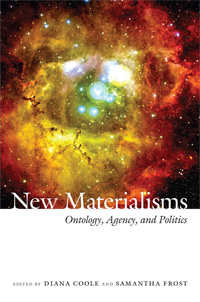 In everyday language, a materialist is defined as a person who considers material possessions and physical comfort as more important than spiritual values. According to Madonna’s famous song, “we are living in a material world.” Says the Material Girl: “Some boys kiss me, some boys hug me / I think they’re okay / If they don’t give me proper credit, I just walk away /…/ ‘Cause the boy with the cold hard cash is always Mister Right.” Madonna may not have had in mind the new materialisms referred to in the book edited by Diana Coole and Samantha Frost. Here materialism refers to the philosophical doctrine that nothing exists except matter and its movements and modifications, as opposed to spiritualism that posits a dualism between subject and matter. But the material girl’s lyrics may provide a good entry point into this volume. After all, Madonna’s kissing and hugging addresses a strong message to the feminists who have been accused of routinely ignoring the matter of corporeal life. In exposing her body, Madonna draws our attention to what really matters (sex), while referring to non-bodily retributions (money) that also matter a great deal. So my materialist questions to the book will be: Do we still live in a material world according to these new versions of materialism? Do the authors give proper credit, and to whom? What does the reader get from his or her cold hard cash? And are the contributors always Mr (or Mrs) Right?
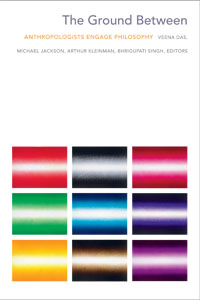 My strong belief is that this book will prove as important as the volume Writing Culture, published in 1986, which marked a turning point in the orientation of anthropological writing. This is not to say that anthropologists didn’t engage philosophy before Anthropologists Engage Philosophy, or that they will with renewed strength thereafter. Many classical anthropologists were trained as philosophers, especially in the French tradition where disciplinary borders are more porous. Pierre Bourdieu described his work in anthropology and sociology as “fieldwork in philosophy.” Nowadays “theory”, which samples a limited set of authors from contemporary philosophy, is part of the toolbox that every graduate student learns to master, and that they often repeat devotedly as a shibboleth that will grant them their PhD. What is striking in The Ground Between is the variety of authors that the contributors discuss, as well as the depth of their engagement, which goes beyond scholarly debates and is often set out in existential terms. For many anthropologists, philosophers are a life’s companion, helping them to navigate through the pitfalls of scholarship and the vicissitudes of life.
 The Duke Reader