
Anatomy of a Feminist Diplomacy Campaign

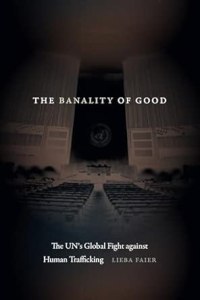
A review of The Banality of Good : The UN’s Global Fight against Human Trafficking, Lieba Faier, Duke University Press, 2024.
On the face of it, fighting human trafficking has all the banality of a good deed. The adoption in 2000 of a UN Protocol on human trafficking, with a heavy focus on the sexual exploitation and abuse of migrant women, was a positive act of feminist diplomacy and was lauded as such by feminist groups in the West and in developing countries. The UN template set the stage for the development of a new international regime of norms and guidelines for how national governments, NGOs, and international organizations should actively work together in this fight. With the Trafficking in Persons Report published yearly, the US Department of State must be praised for having given teeth to the UN Protocol, allowing a carrot-and-stick approach to ensure compliance while naming and shaming bad performers. The US government was bold enough to point finger at one of its closest allies, Japan, whose treatment of migrant women brought under an entertainer visa scheme was clearly violating basic human rights. Japan did a good thing by applying international best practices and diminishing abuse: within two years, the number of Filipino women entering Japan on entertainment visas dropped by nearly 90 percent. All stakeholders can take pride on this result: women’s groups, feminist leaders, UN diplomats, American Embassy staff, Japanese case workers, law enforcement officers, and the victims themselves. This may not sound like a big deal, but they all did well. Hence, the banality of good.

Turning Hannah Arendt’s Banality of Evil on its Head

Under this narrative, the banality of good denotes step-by-step progress in the advancement of human rights and the fight against human exploitation. But let us pause. All of the above is not the story that Lieba Faier tells, and her expression “the banality of good” in fact has the opposite meaning. She uses it “to refer to the perils of this campaign’s globalized institutional approach, which ultimately privileges technical prescription and bureaucratic compliance over the needs and perspectives of those it means to assist” (p. 11). All stakeholders aiming to do good and alleviate the plight of victims of human trafficking missed their original goal or had to compromise on their principles. By bringing a global solution to local problems, the international community only made things worse. Foreign women working in the sex industry were forcibly deported on criminal charges of visa overstay; grassroot NGO workers became complicit in the expulsion of those they were supposed to protect; while police raids pushed the sex industry further underground. In titling her book The Banality of Good, Lieba Faier of course has in mind the expression “the banality of evil” coined by Hannah Arendt to denote the fact that evil can be perpetuated when immoral principles become normalized over time by people who do not think about things from the perspective of others. Evil becomes banal when people don’t feel bad when they do evil. Here, the banality of good reflects the opposite attitude: people don’t feel good when they are supposed to do good. They know something is wrong, but they can only attribute it to “the system” or hope that their action contributes to the realization of a greater good.

Over and over in Lieba Faier’s narrative, individuals and groups committed to the betterment of foreign women’s plight had to compromise on their strategic goals and core values. The original impetus to fight against traffic in women came from Asian feminist organizations and grassroot human rights groups in Japan, Korea, and South-East Asia. Beginning in the early 1970s, they built a regional coalition to respond to a rising tide of Japanese sex tourism in the region. They also had a broader agenda that was anti-capitalist and anti-colonial at its core, seeing sex tourism as the reflect of structural inequities among nations and between genders and classes. But the US feminist groups who picked up their fight obscured the structural factors foregrounded by the earlier efforts of women’s groups in Asia and framed human trafficking as a uniform global issue that warranted a single global response. This global feminist movement coined the expression “sexual slavery” to articulate a singular, abstract, deterritorialized global practice, overlooking racial, national, and class inequalities among women. They formed an alliance with the human rights movement to launch a campaign for the abolition of “violence against women,” with human trafficking as a key instance of this violence. Lieba Faier describes how a globalist feminist project then became a UN-centered global human rights initiative: the drafting and adoption of the Trafficking Protocol was based on compromise by both Asian grassroot organizations and US feminist groups, who were themselves divided between prostitution abolitionists and sex worker rights’ advocates. By establishing a formal definition of human trafficking and then collecting data on it, the protocol promised to recognize human trafficking as a global phenomenon for states to measure and institutionally address.

Reframing Sexual Violence

But when national governments decided to act, they did not focus on human trafficking as a matter of violence against women. Rather, they reframed the issue once again, this time as a matter of transnational organized crime warranting a punitive solution. What US-based feminism had identified as violence against women would be reframed as a generalizable problem of criminal violation enacted by individual private citizens against other private citizens. A model of redistributive justice was discarded in favor of a carceral model. Of the three Ps framework—preventing trafficking, protecting victims and prosecuting traffickers–, the third P was prioritized and the two previous ones were sidelined. In Japan, grassroot NGO workers produced “trauma portfolios” of victims, collecting personal accounts of suffering to argue that foreign sex workers deserved protection and assistance, not treatment as criminals. NGO caseworkers’ accounts were so moving that American diplomats made the controversial decision of placing Japan on the Tier 2 Watch List of the 2004 Trafficking in Persons Report. For Japanese bureaucrats, this was a huge blow to national pride: most of the advanced countries were on the so-called Tier 1 list, but only Japan was ranked Tier 2. Something had to be done to restore Japan’s standing in the international community. The same narratives that had moved NGO activists and US diplomats into action were now perceived as a matter of national shame.

As Lieba Faier remarks, “People care about others for different reasons and thus to various ends” (p. 95). For NGO workers, reporting on victims’ stories of abuse to US embassy officials was a way of using gaiatsu, or foreign pressure, to induce reforms in domestic policies. But the Action Plan that the Japanese government enacted in 2005 was a bureaucratic exercise, devoid of compassion or concern for social justice. The “Roadmap to Tier 1” was rich in international best practices and indicators, but disconnected from facts on the ground. As a result of the screening process, migrants that were denied the status of victim were forcibly repatriated to their home countries or held liable for illegal residence (fuhō taizai). Only those officially recognized as victims of human trafficking received protected status, with a residency permit allowing them to remain in Japan or assistance to go back home. As one NGO caseworker confided to the author, “Sometimes I don’t feel good about the work I’m doing. These migrants have nothing back home” (p. xiv). Or as another worker put it, “They don’t have anywhere to go. For many, their life of extreme poverty in the home country is much worse than what they have now” (p. 15). These NGO caseworkers didn’t feel that justice was being served by those international protocols, but if they refused to participate in them, they worried that the situation would be worse. So they complied with the “bureaucratic glue and strings” (p. 171) attached to being part of an international campaign against trafficking in women.

Support Comes with Strings Attached

Lieba Faier complements her fieldwork with archival work and interviews with UN officials and government representatives in Japan and in the United States. She dissects the various frames and translations that a social issue has to go through in order to become a legal provision in an international protocol; and how a UN template in turn translates into reality and alters the lives of women who may or may not be designated as victims of international trafficking. She brings an ethnographic eye to practices of helping migrant workers, campaigning for women’s rights, drafting UN templates, and translating legal texts into policy options. She reads “against the grain of bureaucratic documents to see the contradictions, aporias, and impasses embedded in them” (p. 101). As she describes it, the United Nations acts as a clearinghouse for such efforts, erasing history and geographical differences in the interest of establishing a standardized international practice. As she points out, “the rote adherence to an institutional protocol comes to stand for necessary structural change” (p. 13). Well-intentioned humanitarian campaigns produce unintended harm through bureaucratic routines and institutional priorities. These efforts prioritize protocol compliance over survivors’ needs, perspectives, and lived realities, leading to repatriation, compromised quality of life, and even criminalization of those they aim to help. The Japanese government offers assistance to only a small portion of those foreign workers suffering abuse and exploitation: “In 2018, only seven trafficking victims received repatriation assistance, and this number dropped to five in 2019” (p. 211). These “lilliputian pockets of improvement” (p. 213) mask egregious failure to put an end to human trafficking. Even those who benefit from repatriation programs fall victim of “cruel empowerment” (p. 185): humanitarian programs designed to empower them through financial literacy or other neoliberal models of development fail to address the structural inequalities of the status quo.

Lieba Faier’s scholarship is informed by the years she spent as a volunteer in Japan, the Philippines and the United States working alongside NGO workers assisting migrant women and lobbying the UN and governments to address the mistreatment of foreign women working in the sex industry and other exploitative sectors. As she writes, “Doing multi-sided research involving multiple organizations in three different countries over many years had advantages insofar as I sometimes heard part of a story in one organization or country and the rest of the story in others” (p. 19). Her findings were also buttressed by the availability of US diplomatic cables disclosed by WikiLeaks, which documented internal processes and political motivations. Grassroot perspectives allowed her to question the way these migrant women’s plight was addressed in international policy forums. As she notes, “the global approach to this issue was sidelining, if not displacing, the expertise and guidance of the experienced NGO caseworkers whose labor was central to it” (p. xii). While these NGO workers were sometimes themselves former labor migrants and had a deep understanding of the situation they tried to alleviate, the organizations that brought the issue to an international public stage were headed mostly by academics, journalists, or lawyers with little direct knowledge of facts on the ground or contacts with grassroot organizations. She also questions the exclusive focus of the international campaign on the sex industry and the lack of attention awarded to other forms of exploitative labor, such as the conditions faced by Asian workers who come to Japan under the Technical Intern Training Program (Ginō Jisshū Seido), which she describes as a cover-up for cheap and disposable labor acquisition. Her advocacy for migrant rights doesn’t stop at one particular category, but is informed by “a vision of justice that asks national governments and their citizenries to see foreign workers as part of their imagined community” (p. 140).

A Plea for the UN

The Banality of Good is informed by the vision that “other worlds are possible,” as stated in the book’s opening dedication. But what are the alternatives? As a French diplomat committed to a feminist diplomacy agenda, I would not easily dismiss the United Nations’ approach to human trafficking or the work done by American diplomats to document Japan’s insufficient efforts in applying human rights standards. I agree with the author when she states that “if international guidelines are themselves problematic, little will be achieved by compliance with them” (p. 120). But this should serve as a rallying cry to devote more attention and resources to UN multilateralism and human rights campaigning. The Trafficking Protocol, with its lack of a credible enforcement mechanism and its emphasis on criminalization and border protection, is an easy target for attack. But internal debates show that the work was perfectible and that other policy options were put on the negotiation table. Mary Robinson, then UN high commissioner for human rights, pushed hard to have a human rights perspective embedded in the text. She proposed the addition of specific references, provisions, and language to acknowledge the rights of migrant workers, not just sex workers or those recognized as victims of trafficking; and she argued for strengthening the “victim protection and assistance” provisions in the draft protocol to allow for financial resources being devoted to helping victims of human trafficking. The fact is, we don’t have an alternative to the UN, and bottom-up approaches are compatible with international summitry or legal text draft-making. Concepts such as “responsibility to protect,” “rights-based approach” or “human security” are not just abstract notions devoid of any content; they alter facts on the ground and induce real changes for people in need of international protection. Misperformance is no reason for inaction.
Hawai’i on Ice

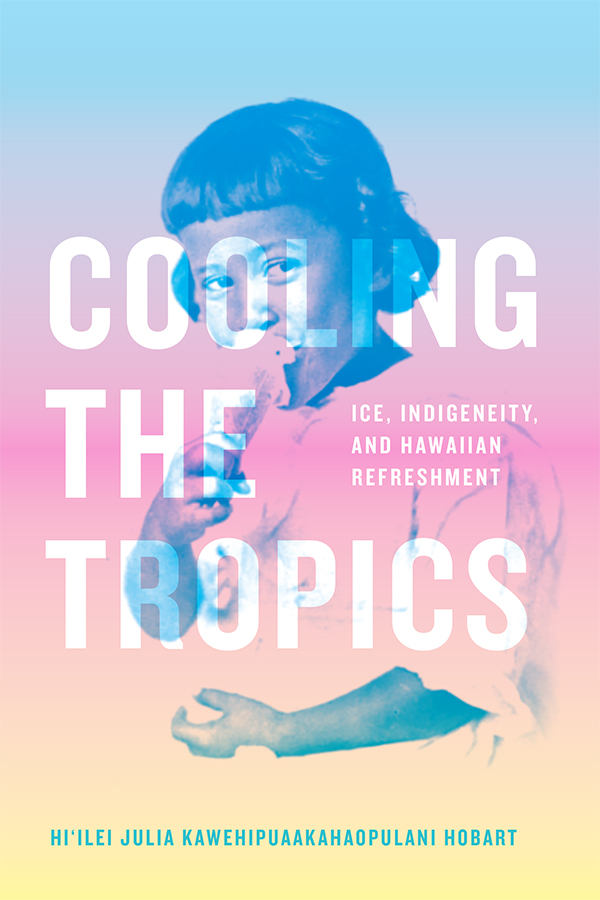
A review of Cooling the Tropics: Ice, Indigeneity, and Hawaiian Refreshment, Hi′ilei Julia Kawehipuaakahaopulani Hobart, Duke University Press, 2022.

Cooling the tropicsMany public events in the United States and in Canada begin by paying respects to the traditional custodians of the land, acknowledging that the gathering takes place on their traditional territory, and noting that they called the land home before the arrival of settlers and in many cases still do call it home. Cooling the Tropics does not open with such a Land Acknowledgement, but Hi′ilei Julia Kawehipuaakahaopulani Hobart (thereafter: Hi′ilei Hobart) claims Hawai’i as her piko (umbilicus) and pays tribute to the kūpuna (noble elders) and the lāhui (lay people) who “defended the sovereignty of [her] homeland with tender and fierce love.” She describes her identity as “anchored in a childhood in Hawai’i, with a Kānaka Maoli mother who epitomized Hawaiian grace and a second-generation Irish father who expressed his devotion to her by researching and writing our family histories.” She expresses her support for decolonial struggles and Indigenous rights, and participated in protests claiming territorial sovereignty for Hawai’i’s Native population. How can one decolonize Hawai’i? How can Hawaiian sovereignty discourse articulate a claim to land restitution and self-determination that is not a return to a mythic past? What about racial mixing, once regarded with anxiety and now touted as a symbol of Hawai’i’s success as a multicultural US state? What happens to settler colonialism and white privilege when the local economy and the political arena are dominated by populations originating from East Asia and persons of mixed descent? Is economic self-reliance a feasible option considering the imbrication of Hawai’i’s economy into the US mainland’s market? Can the rights of the Indigenous population be better defended in a sovereign Hawai’i? What is the meaning of supporting decolonial futures that include “deoccupation, demilitarization, and the dismantling of the settler state”? Can decolonization be achieved by nonviolent means, or do sovereignty’s activists have to resort to rebellion and armed struggle? What would be the future of a decolonized Hawai’i in a region fraught with military tensions and geopolitical rivalries? What can a decolonial perspective bring to the analysis of Hawai’i’s colonial past and possible futures? And why is academic research on Hawai’i’s history and society so often aligned with the decolonization agenda, to the point that decolonial approaches are almost synonymous with Hawaiian studies in the United States? More to the point: how can a PhD student majoring in food studies and chronicling the introduction of ice water, ice-making machines, ice cream, and shave ice in Hawai’i address issues of settler colonialism, Indigenous dispossession, Native rights to self-determination, and decolonial futures?
Decolonize Hawai’i

Unbeknownst to most Americans, and to all non-US citizen but a few exceptions, there is a thriving independence movement taking place in the Hawaiian Islands today. It was borne out of an unlawful US-backed overthrow of the Hawaiian Kingdom in 1893, it survived Hawai’i’s accession to statehood in 1959, and it is currently in opposition to the territorial encroachment by military infrastructure and other state interests over confiscated land and sacred sites. The Hawaiian soveignty movement doesn’t advocate a return to a mythic past. Simply put, Native communities demand respect for their traditional cultures, consideration for their role as stewards of the land, and empowerment to take part in all decisions that affect them. Since 2014, local activists have opposed the construction of the Thirty Meter Telescope (TMT), a scientific endeavor with governmental support from Canada, France, Japan, China, and India. Slated to become the most powerful telescope on the planet, the stadium-sized facility threatens to desecrate one of the most sacred sites for Kānaka Maoli. Construction was temporarily halted due to a blockade of the roadway leading to the site, and further protests as well as legal battles prevented construction of the telescope to resume. Hi′ilei Hobart took part in the protests, helping to keep the basecamp of picketers provisioned with food and beverages. Participating in local struggles fed into her dissertation in more than one way. Firstly, it underscored the obvious: ice and snow are native to Hawai’i; they are not an imported commodity brought by Anglo-American settlers along with “civilization”. Those who tell the story of how ice first came to Hawai’i get it wrong: ice and snow have been there since time immemorial. During winter, snow frequently falls on the ice-capped summits of the island chain’s tallest mountains. But even confronted with this evidence, popular discourse continues to construe ice and snow as alien to Hawai’i, and to frame Maunakea―the site of the TMT―as a terra nullius unoccupied by the Native population and thus open for grabs and available for construction in the name of science and progress. Discursive logics have combined to produce Maunakea as “not-for-Hawaiians” (Kānaka Maoli were supposed to steer away from altitude, and the first individuals on record to climb the mountaintops were Westerners), as “not-Hawai’i” (outsiders picture Hawai’i as a tropical paradise of lush valleys and beaches), and as “not-Earth” (NASA used the desolate volcanic site for outerspace simulations of spacewalks on Mars and the moon). Cumulative efforts to frame Maunakea as empty and alien have resulted in disregard for Natives’ rights and belief systems.

The second lesson Hi′ilei Hobart could draw from her roadblock picketing is a better sense of the local cosmogonies that tie humans with nature and the elements in Hawai’i. For Kanaka Maoli, Maunakea’s snow, mist, and rain are not just atmospheric phenomena: they signal the lingering presence of gods (akua) and ancestors’ spirits who have been occupying the place even in the absence of humans. Local tales or mo’olelo kept by way of oral transmission carry foundation myths of the islands and mountains and attest to Maunakea’s central role in Indigenous place and thought, while animating the elements and other life forces with their own spirit and consciousness. Likewise, for the anthropologist, commodities are animated with a life of their own. According to Marx, a wooden table “does not only stands with its feet on the ground, but, in relation to all other commodities, it stands on its head, and evolves out of its wooden brain grotesque ideas, far more wonderful than if it were to begin dancing of its own free will.” Ice and refreshments in the tropics are imbued with values, desires, longings, and social hierarchies. They have a history that intersects with the history of settler colonialism, racial capitalism, and the militaro-touristic complex in Hawai’i. Discourses about ice encapsulate ideas about race, modernity, gender, and the affective sensorium. They help rationalize Indigenous dispossession and contribute to the legitimization of imperialism. As historian Eric Jennings has demonstrated, the concepts of freshness and refreshment marked colonial relationships in the tropics. The hill stations and colonial spas built by the French and the British in their colonial outposts were predicated on the idea that fragile European bodies could not endure tropical heat and had to periodically regain some of their vigor in high-altitude places where conditions of life in the homeland were reproduced. The same logic explains how ice and frozen refreshments were progressively naturalized in Hawai’i’s foodscape. First to penetrate the Hawaiian market in the nineteenth century, ice cubes were associated with masculinity, alcohol consumption, saloon culture, plantation ownership, and white privilege. By contrast, the more feminine ice water came to be seen as a means to achieve temperance, mitigating the warm climate, and cooling after effort. Ice cream was a symbol of whiteness, sugary sweetness, purity, leasure, and innocent childhood; for young women, who could frequent the ice cream parlor without being chaperoned, the fast-melting delicacy was also synonymous with freedom and romantic encounters. Born on the plantations, shave ice is associated with brown labor, rural life, Asian migrants, mom-and-pop stores, and nostalgia for simpler times.

Infrastructures of the cold

As a third lesson of the author’s fieldwork as an activist came the realization that American society depends on thermal infrastructures, from the cold chain to keep perishable foodstuff to air conditioning and big houses protected from outside temperature. Freezers and refrigerators are essential to modern survival. These infrastructures have become so embedded in everyday life that they fade into the background, and their very invisibility guarantees that structures of dispossession and extraction go unnoticed. This is what the author labels “thermal colonialism”, defined as the modes by which temperature was managed and organized to favor settlers’ interests and reproduce racial hierarchies. Americans have become quite literally “conditioned” to experience coolness or frozen taste in hot weather, to the point that they consider the “right to chill” as constitutionally guaranteed. But desire for freshness and refreshment has a history: it is not biologically determined. We realize the importance of infrastructures of the cold when they fail us: the fragility of the cold chain in Hawai’i reveals itself after a hurricane, when lines of supply are disrupted, or each time the islands brace for an emergency. When things fall apart, networks of care and resilience take precedence over market relations and commercial interests. This is what Hi′ilei Hobart realized in the encampment at Mount Maunakea as she filled coolers with ice and drained their brown water to keep foodstuff fresh and edible. Managing community food resource pooling made her aware of food insecurity and thermal dependence in a state that heavily relies on imported goods and processed food. As her food studies turned to food work, she realized that “all that is frozen melts into water” (to paraphase Marx’s famous quote) and wondered whether Hawai’i had a future beyond the ice age: “what place does refrigeration have within Indigenous futures that move beyond settler capitalism, when coldness has played such an intimate role in these systems of oppression?” Draining water from coolers also drew her attention to melt as a condition of our current times marked by climate change and the images of fast-disappearing glaciers. She also discovered the materiality of freshness and frozenness, which pointed to a different kind of political economy as the one she had envisaged as a graduate student: an economy that is not based on commodity fetishism and labor exploitation, but on user value and short “farm-to-fork” circuits of exchange. Commodity trade, Marx argues, historically begins at the boundaries of separate economic communities based otherwise on a non-commercial form of production. As Marx explains, the commodity remains simple as long as it is tied to its use-value: “A commodity appears, at first sight, a very trivial thing, and easily understood. Its analysis shows that it is, in reality, a very queer thing, abounding in metaphysical subtleties and theological niceties.”

Hi′ilei Hobart’s history of how artificial ice came to Hawai’i is heavily dependent on her sources. Scarce at the beginning, with a few advertisements and newspaper clippings (including publications in the local language, ‘ōlelo Hawai’i), they include a wider array of testimonies, photographs, business records, cookbooks, consumer goods, and personal memories as we move closer to the present. She first chronicles the great American ice trade, in which big blocks of ice harvested from lakes in the Northeast or in Alaska circulated the globe from 1840 to 1870, the year the first ice-making machines were introduced. The ice that went to the tropics was a luxury product, used in cocktails, to chill wines, and for service at fine hotels where American planters, Western missionaries, European tourists, and Hawaiian elites mingled. The ice importing business never really took off in Hawai’i: even though entrepreneurs petitioned the local rulers for monopoly rights and invested in storage facilities, the venture remained unprofitable and was interrupted in 1860 after two decades of sporadic shipments. King Kamehameha III had mixed feelings about alcoholic beverages and iced punches: ruling over a “semi-European” polity that was modernizing fast, he also leaned to the robust temperance movement championed by Western missionaries and patronage ladies. He eventually died in 1854 after drinking from a poisoned punch-bowl of iced champagne. Under the reign of the last Hawaiian monarch, King Kalākaua, Honolulu was a fast-growing city with all the trappings of a Western metropole. ‘Iolani Palace, the royal residence, had electricity, indoor plumbing, and telephones even before Buckingham Palace or the White House. Among these technologies, ice machines and ice factories came into operation in the 1870s, transforming a once-foreign commodity into a local product.

Entering the Ice Age

Hawai’i entered the ice age at about the same period as the United States: when home refrigeration, cold chains for perishable goods, ice cream parlors, and soda fountains connected Honolulu’s domestic life to global standards of modernity. But unlike in the mainland, the use of freezing technologies were subject to colonialist frames of interpretation and local resistance. Settler reports of Kānaka aversion to ice stood as indictment of their slow pace to civility. Native people’s first contact with ice cream, taken as extremely hot instead of freezing cold, was derided as a sign of inferior civilizational status. Hawaiian-language newspapers, however, refuted implications that Kānaka Maoli were confused about or afraid of ice, and advertised the lavish cosmopolitan banquets including icy desserts served at the ‘Iolani Palace. But haole (foreigners), ali’i (elite Hawaiians), and maka’āinana (local commoners) reacted differently to frozen tastes, reflecting hierarchies of class, gender, and racialized proximity to whiteness. The racist and classist distinctions manifested themselves after US annexation during the pure food battles of the 1910s. The newly appointed food commissioner decided to apply US legislation strictly to ban poi, a local dish alternatively described as a truly delicious paste with yeasty flavor or “a native concoction that tastes like billboard paste,” and to increase the butterfat content of ice cream to mainland levels, contradicting local tastes and recipes developed by Japanese and Chinese ice cream vendors.

Shave ice and its “rainbow” of flavors is now offered as a metaphor for the “rainbow state” and its multiethnic, postracial population. As a symbol of Hawai’is racial landscape, the rainbow offers an important vehicle for the affective, and often tense, sentiments of identity and belonging. How did a food practice brought by Japanese migrants come to epitomize a US state, and how did a sugar plantation economy built along racial lines produce a racially harmonious society in the only US state with a nonwhite majority population? Shave ice offers an alternative narrative to forms of refreshment oriented toward white leasure, like the ice creams or tiki cocktails fetishized by the touristic gaze. Historians trace the origin of shave ice to Japanese agricultural workers and plantation store owners who brought the food tradition of kakigōri from Japan. Born in rural spaces where non-Hawaiians put down deep community roots, shave ice offers an alternative story about race and refreshment, one that is not tethered to whiteness and the leisure class. Asian immigrant populations in Hawai’i, once systematically marginalized, have become a “model majority” characterized by upward class mobility and adherence to nationalist values. They dominate the local economy, to the point scholars have forged the category “Asian settler colonialism” to describe the ascendancy of working-class communities of color. Hawai’i is now considered as a laboratory for multiethnic harmony as well as a harbinger of what the whole United States could become: a postracial nation, turning its back on its history of Native Indian extermination and Black enslavement. These fictions mask ongoing structural racism against Native Hawaiians and other ethnic minorities (Samoans, Filipino-Americans…) The shave ice success story glosses over such divisions and obscures Kānaka Maoli claims for Indigenous sovereignty. For present-day Hawaiians, it also brings back shared memories of childhood and nostalgia for “simpler times” characterized by community resilience, rural life, and low economic wealth. Again, this nationalist narrative envisioning an ahistorical and uncomplicated past erases a history of racial discrimination and labor exploitation, and produces “Hawaiians” as an always already multiethnic category that excludes indigeneity or Kānaka Maoli claims to place.

Hawaiian futures

I don’t see much potential in an independent, sovereign, or post-statehood Hawai’i that would grant Indigenous people rights of self-determination and privileges of territorial ownership. There are other ways to tackle the deep structural inequalities and discrimination that affect the Native population. As the French have experienced in French Polynesia, recognizing Indigenous rights is not synonymous with granting full independence or a right to secession. Politics of atonement and official apologies may be aligned with the Anglo-saxon protestant mindset, but they have their limits: short of reparations and restitution, they leave intact the structures of power that have led to Native dispossession and do not advance the living conditions of Indigenous populations. Economic needs must also be addressed, and the responsibility of all leaders, oriented toward independence or otherwise, is to chart a course that guarantees economic growth and sustainable development. I see tourism as a chance for Hawai’i, and militarization as a necessity borne out of historical and geopolitical concerns. Americans will always remember Pearl Harbor. Hawai’i is America’s first line of defense and its most strategic outpost in the Pacific. The security of the continent hinges on the continued presence of military forces which, along with tourism, form the twin pillars of the economy. Envisaging a decolonial future for Hawai’i seems to me more dystopian than real. And yet, with all these caveats in mind, I still find potential for decolonial approaches in modern scholarship about Hawai’i or other territories in the Pacific. Other Pacific islands have acceeded to independence and have demonstrated the viability, resilience, and vitality of Indigenous sovereign states. In the case of Hawai’i, but also the other US territories in the Pacific (Northern Mariana Islands, Guam, and American Samoa), solutions might exist toward or beyond US statehood without resorting to full independence. Besides, scholarship and politics are distinct endeavors. The challenge that decolonial studies must address is the decolonization of the mind. I see must potential in a decolonial perspective to the history of Hawai’i and other once occupied nations, and I learned much from reading Cooling the Tropics as much as I enjoyed reviewing it. One can quote Marx without being a Marxist; one can use decolonial scholarship without believing in a decolonial future for Hawai’i.

The Reparative Turn

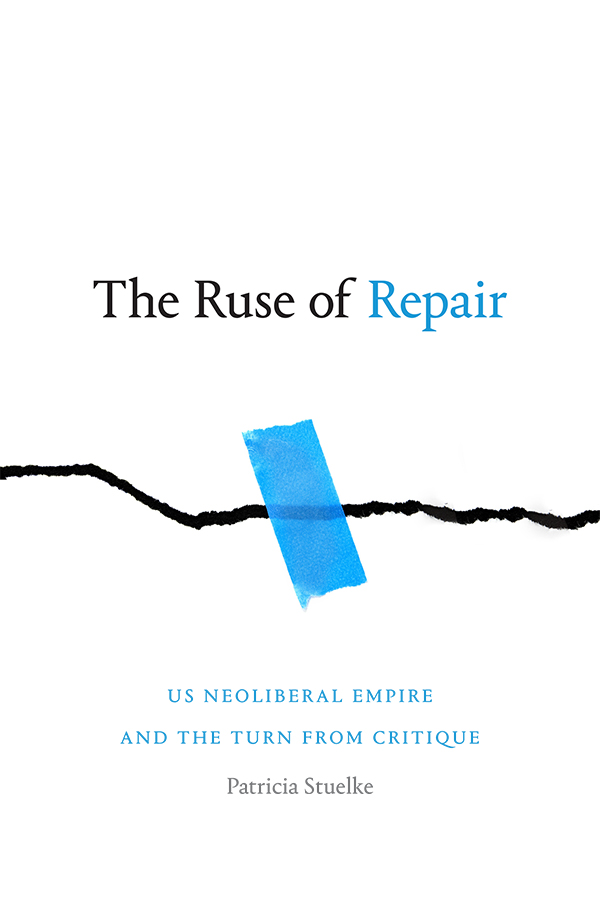
A review of The Ruse of Repair: US Neoliberal Empire and the Turn from Critique, Patricia Stuelke, Duke University Press, 2021. 

The Ruse of RepairIn 1956, Nathalie Sarraute published The Age of Suspicion, a series of essays about the modern novel starting from the following observation: “A suspicion hangs over the characters of the novel. The reader and the author have come to feel a mutual mistrust.” This book heralded the Nouveau roman and the turn toward critique: all components of a novel, from character to plot and to author, were subjected to radical deconstruction and became marked by indeterminacy, ambiguity, and equivocation. In the politically charged atmosphere of the 1960s and 1970s, literary critique became paranoid. The protagonists of postmodernist fiction often suffered from what Tony Tanner calls in City of Words (1971) a “dread that someone else is patterning your life, that there are all sorts of invisible plots afoot to rob you of your autonomy of thought and action, that conditioning is ubiquitous.” Uncovering the violence of the US empire and the racist ideology of the settler state became the order of the day. Revolution was in the air: there was a direct connection between criticism and protest, and between protest and radical change. Then suddenly, criticism became passé and suspicious modes of reading were themselves the object of suspicion. Psychology was back in favor, novels were again supposed to have a plot with a beginning and an end, and the focus of attention turned to the intimate, private matters, affects, and the body. Racial and imperialist violence no longer needed exposure: what was required was remediation and repair of the damaged self. Interpretive practices and political claims that leftist criticism had dismissed as “merely aesthetic” or “merely reformist” were drawn back to the center of the agenda. 

Paranoid reading and reparative reading 

In The Ruse of Repair, Patricia Stuelke offers a history and a critique of this reparative turn. Turning away from literary criticism and toward cultural history, she situates the rise of repair as a “structure of feeling” in literary, scholarly, and solidarity movements in the 1980s, a period marked by the ascendancy of US neoliberal empire. Specifically, the five chapters each address episodes in which reparative visions of solidarity and belonging displaced revolutionary political projects and contributed to the broader sweep of neoliberal reforms: sex-radical feminism with regard to the Iranian revolution and the so-called sex wars; black-diasporic solidarity with the Caribbean prior to the US military invasion of Grenada in 1983; the Central America solidarity movement protesting Reagan’s covert wars in Nicaragua, Guatemala, and El Salvador; creative writing programs in American universities and their contribution to the emergence of a veteran literature reflecting the trauma of the Vietnam War; and the popular music playlist weaponized by US soldiers during their invasion of Panama in 1989. Stuelke sees the origins of the reparative turn in Melanie Klein’s theories on human development and defense mechanisms, who can be read as a disavowal of “responsibility in a history of colonial war and violence that preserves and extends life to some while simultaneously withholding it from others.” Klein’s theorization of the reparative was shaped first in the debates over whether Germany should have to pay reparations after its World War I defeat, and then whether Germans should bear the guilt for war crimes and genocide in World War II. Another important milestone is Eve Kosofsky Sedgwick’s opposition between “paranoid reading” and “reparative reading,” in which the feminist scholar argued that the time of the “hermeneutics of suspicion” was over and one should return the reparative techniques that Klein had advocated. Sedgwick advanced that paranoid critique was irrelevant in an era when the lies and acts of violence of the repressive state were hidden in plain sight for anyone to see, and that one should instead concern oneself with how people find comfort, nourishment, and personal fulfilment amid precariousness and despair. The 1980s, in particular, was a decade that anticipated the ascent of reparative thinking. For Stuelke, “the turn to repair is entangled with the very history and practices of neoliberal empire and the settler colonial carceral state.” The ruse of repair, like Hegel’s ruse of reason, means that the analytical tools, patterns of interpretation, and structures of feeling that arose in the critical years of anti-imperialist militancy and radical feminism were instrumental in the ascent and triumph of neoliberalism and racial capitalism.

“Freedom to Want,” as the first chapter is titled, sets the stage by examining the logics of queer feminist anti-imperialist critique through the sex-radical solidarity politics of lesbian feminists who expressed support for progressive causes in the US and abroad, and through the institutionalization of sex-radical feminism and queer studies in the US academy. Stuelke’s archive of texts is composed of a 1986 essay by Joan Nestle, the co-founder of the Lesbian Herstory Archives ; Going to Iran (1982), Kate Millett’s memoir of traveling to witness the Iranian Revolution in 1979 ; the collective anthologies Powers of Desire (1983) and Pleasure and Danger (1984) published in the wake of the Barnard Conference on Sexuality in 1982 ; and the feminist sex wars that ensued. Joan Nestle took activism in the wake of the civil rights movement as a form of embodiment, a liberation of the lesbian self: “my body made my history… my breasts and hips shout their own slogans.” Kate Millet crafted the testimony of her trip to Iran as a reparative fantasy of revolution intermingled with the story of her reconciliation with her aunt. For the author, “Millett’s account of her relationship to the Iranian Revolution is exemplary of how feminist and queer sex-radical movement activists were revising their radical politics as neoliberalism solidified and, more insidiously, how neoliberal visions of privacy influenced the scope of their solidarity imaginaries.” The liberation of desire was elevated as the goal of solidarity politics: US imperialism was analyzed as a violent practice of sexual repression, while the turn to repair marked the passage from negative and paranoid freedom (“freedom from”) to positive and reparative freedom (“freedom to”). Sexual freedom was envisaged as “the test of how women are surviving,” and national self-determination was conflated with individual sexual expression and the neoliberal privatization of the self. Gender studies inherited this “progress narrative” of a history that celebrates women’s agency, pleasure, and difference, reifying sexual desire as natural and eclipsing the historical and material conditions of its production. The imaginaries of sex-radical feminists, and of the antipornography feminists who opposed them at the Barnard Conference, were laced with imperialist fantasies and settler colonial visions. Meanwhile, the sex wars was a white-on-white conversation, and black feminists, or queer feminists of color, were elided from the scene. Key expressions in this chapter include “racial capitalism,” “settler colonialism,” “the repressive hypothesis,” “body’s politics”, “affective infrastructures,” “valorization of privacy,” “reparative fantasies,” “homonormative politics,” and “feminism’s complicity with neoliberalism.”

The reinvention of Zora Neale Hurston

The second chapter of The Ruse of Repair, “Debt Work,” takes the reader on a journey to the Caribbean in the footsteps of three African American writers who have earned their place in the pantheon of black feminism: Harlem Renaissance figure Zora Neale Hurston, whose novel Their Eyes Were Watching God (1937) was rediscovered by recent literary criticism and became an all-star classic; and Audre Lorde and Paule Marshall, two radical feminist scholars and poets born to Caribbean immigrants who wrote memoirs rooted in Caribbean islands and diasporic identities (Zami (1983), Praisesong for the Widow (1983), Triangular Road (2009)). Patricia Stuelke sees a reparative imaginary at work in the writings of black feminist scholars about the Caribbean: the emphasis on motherhood, matrilineal family, diasporic solidarity, sexual romance, queer intimacy, and communal care were part of an effort to market the Caribbean to US tourists, and particularly to black single women from the middle class, in the early 1980s. They were heir to a long history of romanticization of the Caribbean that imagined the region as the site of matriarchal past and diasporic celebration of the present. They underscored the pivotal importance of black women as transmitters and preservers of culture, identity, and heritage. Stuelke questions the politics of these authors’ canonization as well as the reinvention or revival of Zora Neale Hurston, who wrote her classic novel during a stay in Haiti. She sees a confluence between a US black diasporic reparative imaginary of the Caribbean and America’s expansion of liberal empire. Of course, US black feminism was not the sole agent of the United States’ neoliberal recolonization of the Caribbean: the fabrication and manipulation of debt, structural adjustment programs, and the military invasion of Grenada on October 25, 1983 (“Apocalypso Now”), were pivotal in bringing Caribbean states in line with neoliberal imperatives. But imagining the Caribbean as a timeless paradise for US black women had the effect of effacing the tumultuous present marked by revolution in Grenada and contestation elsewhere. The chapter proposes key expressions and concepts to analyze these dilemma: “a black feminist reparative imaginary,” “poetics of black queer maternity,” “failed affinity with the Caribbean,” “imperial romance,” “settler modernity,” “queered diasporic belonging,” and “the unpaid debts of antiblackness.”

In the third chapter, “Solidarity as Settler Absolution,” Stuelke examines the trajectory from militancy to domesticity that led several human rights activists to turn from the denunciation of “Reagan’s dirty wars” in Central America to concerns closer to home and to the self. Her archive includes several narratives and documentary photographs produced as part of the so-called Central America solidarity movement: Joan Didion’s El Salvador (1986), Rebecca Gordon’s Letters from Nicaragua (1986), Barbara Kingsolver’s The Bean Trees (1988), Demetria Martinez’s Mother Tongue (1994), and the book and exhibition El Salvador: Thirty Photographers (1983) curated by Harry Mattison, Susan Meiselas and Fae Rubenstein. During this period, North American activists mobilized thousands to agitate in the streets and on campuses against Reagan’s foreign policy in Central America. They staged protests, carried out acts of civil disobedience, and organized photography exhibitions, theater performances, and documentary films projections documenting human rights violations and counterinsurgency war crimes. Many traveled to Nicaragua, El Salvador, and Guatemala to witness the violence of US-orchestrated military operations and bring their testimonies back home. Yet a close reading of these texts shows the prevalence of reparative approaches inspired by desires to find relief, absolution, and personal accomplishment in mediated gestures of solidarity. Many Central American guerrilla fighters and displaced refugees also deliberately played on the feelings of guilt and contrition of First World audiences to gain support. Displays of “good ethnicity” and “innocent suffering” by indigenous populations were particularly appreciated. But in narratives of Central American solidarity, the indigenous refugee character who helps the heroin find purpose and dedication ultimately disappears from the scene at the time the main character finds her “true self.” Stuelke finds in these fiction and nonfiction stories traces of “imperial romance,” “racialization of intimacy,” “white supremacist nostalgia,” “sentimental reparativity,” “staging of forgiveness,” and “settler absolution.”

The literary afterlife of military interventions

The fourth chapter, “Veteran Diversity, Veteran Asynchrony,” focuses on the centrality of the Vietnam War in US literary program fiction in the 1980s by examining various texts chronicling the popularity of creative writing programs among US war veterans, and by analyzing a sample of writings illustrative of the genre (Lorrie Moore’s Anagram (1986), Maxine Kingston’s China Men (1980), Robert Olen Butler’s On Distant Ground (1994), and two short stories by Tobias Wolff.) As the author notes, “the experience of the Vietnam War was imagined unequivocally as the stuff of ‘literary value,’ authorizing veterans not only to write, but also to teach creative writing.” This urge to convert war experience into literary capital was not new: Master of Fine Arts (MFA) programs teaching creative writing developed in relation to war, welcoming many veterans from World War II or the Korean War, and promoting a style of writing heavily influenced by war reporters such as Ernest Hemingway or John Hersey. By the 1970s and 1980s, this style became known as literary minimalism or “dirty realism” and popularized a distanciated vision of contemporary life. MFA programs discouraged antiwar fiction or critique inspired by radical politics. They also eschewed genre fiction or popular novels appealing to the taste of the general public. The emphasis had to be on silent suffering, lingering trauma, and repressed emotions. For a whole generation, “becoming a writer meant learning how to represent the seemingly unrepresentable trauma of the Vietnam War.” The Vietnam veteran functioned as a figure of wounded masculinity and emotional maladjustment that severed anti-imperialist analysis of US violence in Vietnam: the remedy for their moral pain and the nation’s ills would be found not in the elimination of US imperialism, but rather through the recognition of veterans’ plight by their fellow citizens. The university played an important role in the shift from anti-imperialist critique to the neoliberal politics of recognition, and creative writing programs were a key site in which new visions of repair and restoration were first articulated. Here again, displays of “settler common sense,” “conquest’s absolution or repair,” “institutional polishing,” “compensatory attachments,” “controlled pathos,” “white male victimhood,” “depoliticized acts of recognition,” and “empire resurgence” are in order.

The fifth and last chapter, “Invasion Love Plots and Antiblack Acoustics,” chronicles the US invasion of Panama in 1989 by focusing on a particular episode: the sonic assault of Panama’s president Manuel Noriega through US troop’s blasting of rock music featuring love-gone-wrong songs. It first sets the stage by reviewing the film Dollar Mambo (1993) that follows a set of character around December 20, 1989, the day the US army invaded Panama and thousands of innocent people were killed. The film has very few dialogue and relies on sound, instrumental music, and dance to convey dramatic tension and riveting climax. The author then examines the soldier-curators’ selection of “musical messages” sent through loudspeakers surrounding the papal diplomatic compound where Panama’s president had taken refuge. Here, Patricia Stuelke’s archive is composed of the list of songs that the US troops requested on Southern Command Network (SCN) radio for this musical assault that was supposed to drive Noriega out of the compound due to his hatred of rock’n’roll—and also to prevent reporters from eavesdropping on US negotiations with the Papal Nuncio. A reading of the playlist confirm that US troops were trying to send a message to the failed dictator who had once been America’s stooge. Love-gone-wrong pop songs and heartbreak country ballads were particularly numerous: through these lyrics, America was trying to convey to its former partner the message that it “Feels a Whole Lot Better (When You’re Gone)” and that “The Hardest Part Of Breaking Up (Is Getting Back Your Stuff)”. Soldiers also chose some songs with explicit anti-imperialist messages that were repurposed to herald a new age of free trade and democracy in the Western Hemisphere. By contrast, local musical genres inspired by Latin and African-American music, such as Jamaican reggae, dancehall music, and reguetón were conspicuously absent, and other popular American genres such as hip-hop and R&B were underrepresented. The infrequency of black music on the playlist is even more striking given the disproportionate representation of black soldiers in the military since the 1970s. For the author, “the sounds and popular music of the US invasion of Panama provided not just a soundtrack, but a genre of explanation for US empire’s drive to fortify the neoliberal economic order in the Caribbean.” Keywords in this chapter include “poptimism,” “musical resistance,” “sonic warfare,” “weaponization of sound,” “post-breakup makeover,” “repair of a damaged US white masculinity,” and “antiblack acoustics.” 

Literary criticism and cultural history

Patricia Stuelke’s critique of the turn away from criticism and toward repair is itself hyper-critical: in the debate between paranoid reading and reparative reading, she clearly verges on the paranoid, and considers reparation as complicit with the fantasy that amends can make the violence of the past disappear. She suspects dark motives in the best of intentions of popular authors who supported radical movements and anti-imperialist critique in the liberal 1970s, only to become more preoccupied with repairing the self in the counter-revolutionary 1980s. There is a streak of paranoia running in her denunciation of reparative approaches as complicit with neoliberal racial capitalism’s spread in the 1980s. Evoking paranoia nowadays reminds readers of conspiracy theories, which tend to be more common on the far right of the political spectrum. The Ruse of Repair may thus be appealing to readers of opposite persuasions: conservatives will find solace in the fact that even the sacred cows of radical feminism and anti-imperialism are severely bruised by her critical impulse, while progressives will be encouraged in their drive to pursue the work of deconstruction to its ultimate consequences. There is indeed a potentially right-wing element in the rejection of repair as a valid approach to social problems: if the world is beyond repair and people cannot make use of affectionate care, then why bother in the first place, and why not acquiesce to the manipulative power of the repressive state? The paranoid compulsion is also a turn away from “The Pleasure of the Text” (Roland Barthes, 1973) and a rejection of literature as such. Nathalie Sarraute, Tony Tanner, and Eve Kosowsky Sedgwick took literature seriously: for them, literary works could enlighten the past and show the way to the future. By contrast, there are very few literary fictions or poems in the sample of documents that the author examines, and her analysis eschews any aesthetic appreciation of their literary value or any analysis of the basis of literary expression. She treats her texts as symptoms illustrative of broader trends in American society, displaying intentions and thoughts that reflect her own reading more than the avowed goals and beliefs of the original authors. Postcolonial critique and queer theory find their origins in literary criticism, and yet they tend to reject literature as a valid site of inquiry and scholarship. They write their books and journal articles “In Hatred of the Novel” (Marthe Robert, 1982) or dismiss literature altogether as irrelevant and ideologically compromised. The field of American Studies in which this book is catalogued is the expression of this conflation between literary criticism, historiography, and critical theory. In the turn (or return) to hyper-criticism, literature is sorely missed.

War Is Interested in You

A review of An Empire of Indifference: American War and the Financial Logic of Risk Management, Randy Martin, Duke University Press, 2007.

Empire of IndifferenceIn An Empire of Indifference, Randy Martin makes the argument that a financial logic of risk management underwrites US foreign policy and domestic governance. Securitization, derivatives, hedging, arbitrage, risk, multiplier effect, leverage: these keywords of finance can be applied to the field of war-making and empire-building. The war on terror has created an empire of indifference that distances itself from any particular situation, just like the high finance of Wall Street is unconcerned about the travails of the real economy in Main Street. Finance can help us understand how foreign policy decisions are made, military interventions are planned, and scarce resources are allocated for maximum leverage. As a diplomat trained in economics, I find this angle very stimulating. However, the author approaches it from the perspective of the cultural critic, not as an economist or a political scientist. His book is written on the spur of the moment and oscillates between a denunciation of the war on terror and a conventional analysis of mounting risks in the financial sector. His logic is sloppy at best and his references to finance and economics are unsystematic and clumsy. Even his Marxism is of the literary type: he treats Marx as a shibboleth and a source of metaphors, not as an analytical toolbox or a conceptual guide. In the following lines, I would like to reclaim the impetus of mixing economics, war studies, and finance. But first, let me try to summarize Randy Martin’s argument.
Theories of imperialism

The link between the logic of capital and the expansion of Western power was first articulated in the theory of imperialism. For Marxists, imperialism is the highest stage of capitalism. Marx himself did not use the word “imperialism”, nor is there anything in his work that corresponds exactly to the concepts of imperialism advanced by later Marxist writers. He did, of course, have a theory of capitalism, and his work contains extensive, if rather scattered, coverage of the impact of capitalism on non-European societies. Unlike many of his successors, Marx saw the relative backwardness of the non-European world, and its subjection to European empires, as a transient stage in the formation of a capitalist world economy. The conceptualizing and theorizing of imperialism by Marxists has evolved over time in response to developments in the global capitalist economy and in international politics. For Rudolf Hilferding, finance capital is marked by the highest level of concentration of economic and political power. State power breeds international conflicts, while internal conflicts increase with the concentration of capital. Nikolai Bukharin transformed Hilferding’s analysis by setting it in the context of a world economy in which two tendencies were at work. The tendency to monopoly and the formation of groups of finance capital is one, and the other is an acceleration of the geographical spread of capitalism and its integration into a single world capitalist economy. Vladimir Illich Lenin also considered Hilferding’s thesis “a very valuable theoretical analysis” and complemented it with the view that rich capitalist nations were able to delay their final crisis by keeping the poorer nations underdeveloped and deep in debt, and dependent on them for manufactured goods, jobs, and financial resources. Rosa Luxemburg wrote the most comprehensive theory of imperialism, and her conclusion that the limits of the capitalist system drive it to imperialism and war led her to a lifetime of campaigning against militarism and colonialism.

Randy Martin only mentions these early contributions in passing. He devotes more time to contemporary critiques of imperialism articulated by Giovanni Arrighi, Michael Hardt and Antonio Negri, David Harvey, and others. Earlier Marxists saw the expansion of empires as the sign of capitalism’s imminent demise. By contrast, for their modern epigones, the empire is here to last. They analyze the constitution of global imperial formations as the extension of neoliberalism to all sectors of social life. Empire is the new logic and structure of rule that has emerged with the globalization of economic and financial exchanges. Although capital’s expansion inevitably involves proliferating economic and financial crises, these shocks to the system are not signs of imminent collapse but, instead, mechanisms of adaptation and adjustment. Under neoliberalism, war and empire-making are privatized and generate in response insurgencies and resistance of the multitudes from below. As Slavoz Zizek observed about the Iraq war, “there were too many reasons for the war”: the American decision to invade Iraq in March 2003 was overdetermined and justified by a long list of arguments, from bringing democracy to asserting hegemony and securing oil. President Eisenhower’s greatest fears about the expansion of the military-industrial complex have not only been realized, they have been surpassed due to the symbiotic relationship it has with the neoliberal agenda.

Asset-Backed Security

Works penned by critics of empire are usually reactive: they come after the facts and often react to geopolitical events such as the launch of a preemptive war by the US in response to the September 11 attacks, the occupation of Iraq and Afghanistan and the extension of counter-insurgency, or the vilification of presidential power brought forth by Donald Trump. Randy Martin’s book was published in 2007, shortly before the start of the subprime crisis that ushered a sharp decline in economic activity known as the Great Recession. He achieves a certain degree of prescience by pointing out the imbalances building in the subprime loan market and the excessive leverage of government-sponsored enterprises such as Fannie Mae and Freddie Mac. But his main contribution is to assess what the recent ascent of finance has meant for the conduct of military interventions and foreign policy. “Simply put, finance divides the world between those able to avail themselves of wealth opportunities through risk taking and those who are considered ‘at risk’.” Populations become the target of portfolio management at home and abroad. The logic of finance by which the United States manages its human assets and social liabilities now guides its foreign policy. The ability of an individual or a nation to sustain debt is portrayed as a sign of strength and rewarded with access to additional capital and good credit rating. Those citizens or countries deemed to being bad risks are cut short and left out to loan sharks and debt collectors.

Martin devoted one full book to The Financialization of Daily Life, analyzing the mechanisms by which finance permeates and orients the activities of markets and social life. An Empire of Indifference focuses on what finance does to foreign policy and war-making. War today takes on a financial logic in the way it is organized and prosecuted. America applies a utilitarian frame to war and peace, and seeks tradeoffs between security and risk. Security gives way to securitization, war-making follows the same rules as financial products such as options and derivatives, and Wall Street’s indifference to Main Street now extends to the empire’s carelessness about the lands and populations that become the target of foreign interventions. More specifically, the author sees a strong parallel between monetary policy and the Bush doctrine of preemptive strikes. Inflationary pressures have to be nipped in the bud before they affect the overall economy; likewise, enemies are to be defeated before they can make their antagonism manifest. By converting potential threats into actual conflicts, the war on terror transfers future uncertainty into present risk. Bridging the future into the present has been the guiding principle for monetary policy since the late 1970s. The same logic of rational expectations and backward induction now applies to military operations abroad and to homeland security: controlling risk necessitates constant interventions and is necessarily preemptive. For risks to be reliably calculable, the future must look like the present.

Security and securitization

Randy Martin sees other parallels between circuits of finance and the military. Both seek to leverage narrowly focused interventions and investments to more global effects. This is the logic of arbitrage, coupled with financial derivatives, that exploits small differences in market value and leverages it on a large scale. New battlefield tactics rely on concentrated, relatively small deployment of soldiers to achieve strategic results. Special Forces are meant to eliminate targets before a formal battle is joined; air strikes and armed drones use high-frequency information to maximize return. The intervention in Iraq was supposed to usher a new era of peace and democracy in the Middle East, solving the Palestinian question and giving lasting guarantees of security to Israel along the way. The outcome could have been predicted by pursuing the parallel with market forces and financial intermediation. The war on terror creates what it seeks to destroy; likewise, derivatives create the volatility they were meant to manage. Despite the rhetoric, preemptive wars and forward deployments do not necessarily attempt to deter enemy action, to ward off an undesirable future, but are as likely to prove provocative, to increase the likelihood of conflict, to precipitate that future. American imperium now oscillates between invasion and isolation and remains geared toward short-term gains and high risk, high rewards investments. In this new empire of indifference, people are left to manage the mess that the occupiers deposited before taking flight.

My main issue with Randy Martin’s Empire of Indifference is that the author is not an economist: he literally does not know what he is talking about. Finance is for him a play of words and a source of metaphors, not a rigorous method of allocating risk and maximizing return. Even his Marxism is literary and evocative as opposed to rational and analytical. The book is tied to a particular moment in recent history, associated with the doctrine of preemptive war and the marriage of convenience between neoliberalism and neoconservatism. Its chapters read more like newspaper columns or opinion essays meant to put the news in perspective and to influence public opinion toward desired goals.  And yet, Martin’s proposition to look at imperial ambitions in the context of the powers of finance is highly relevant in our day and age. Since Keynes’ Economic Consequences of the Peace, economists have been brought to the negotiating table; it is now time to bring them to the war room as well. Finance is doubly performative: it impacts a nation’s ability to declare and sustain war, and it affects the way war is conducted. Financial markets are often seen as reacting to political events. They are the biggest consumers of country risk analysis and geopolitical futures, and they absorb information in real time. But finance also shapes our vision of possible futures and produces affects and expectations that impact the results of foreign engagements.

You may not be interested in war, but…

Maybe it is time for finance to become weaponized, and for corporate strategy and military tactics to cross-pollinate each other. The US military has a National Guard and Reserve component of more than 1.1 million members. I wonder how many of them work in the financial sector, or how many West Point graduates are employed by Wall Street firms. There has always been a revolving door between investment banking and the DoD. The generation that laid the ground of the post-WWII international order, known collectively as the Wise Men, all had military experience. Finance as an academic discipline grew out of war-financed research in decision science and optimization. Operation research and game theory were the brain children of the Cold War, and had military as well as economic applications. DARPA has pioneered the use of prediction markets and futures exchanges based on possible political developments in various countries and regions, including violent events such as assassinations or terror attacks. To paraphrase Leon Trotsky, economists and financial market operators may not be interested in war, but war is interested in them.

US-Bashing, Anti-vax, Animalism

A review of Bioinsecurities: Disease Interventions, Empire, and the Government of Species, Neel Ahuja, Duke University Press, 2016.

BioinsecuritiesThis book can be read as an anti-American tract, or an anti-vaccine manifesto, or as a justification of anti-speciesism, or as an attack on liberal ideas of democracy, equality, and scientific progress. Of course, this is not the intention of the author. Neel Ahuja didn’t write a tract or a manifesto, but an elaborate social science book with deep theoretical repercussions. He is more descriptive than prescriptive, and his political message is not spelled out in detail. He situates himself in a progressive movement that is unconditionally anti-racist, feminist, and anti-war. But he doesn’t take position on vaccines, on animal rights, or on speciesism. His goal is not to provide simple answers, but to complicate things and deepen our vision of mankind and its living environment as some truths long held to be self-evident are losing political traction. However, liberal arguments can be used for very illiberal ends. As I read it, Bioinsecurities gives credence to very nasty arguments which, taken to their extreme, articulate a very anti-liberal and regressive agenda. Of course, some readers, and the author with them, may argue that it is perfectly fine to be anti-American, anti-vaccine, or to stand for a radical vision of animal rights, especially considering the background of brutal imperialism, public health manipulations, and disregard for non-human animals that have marked our common history and still inform our present. We should work against the public amnesia and state-endorsed manipulation of truth that prevent the public to exercise democratic oversight and make informed decisions on matters of life and death that affect us most. But an author also has to give consideration to how a book might be read or perceived. For me, Bioinsecurities dangerously straddles the line between liberalism and illiberalism, humanism and anti-humanism, and progressivism and regression.

Settlers and immigrants

By using the word anti-American, I don’t intend to convey a political trial on academic activities that would represent a threat to the security and identity of the nation: I am certainly in no position to do so, and I feel only repulsion for this kind of political justice. But I would like to gesture toward a tension that often inhabits post-colonial literature when applied to the United States. Was America a nation of settlers or of immigrants? For most historians, this is a matter of chronology: settlers came first, then immigrants moved in. But at what moment should one draw the line between first movers and late arrivers? Were Apaches and Navajo Indians any less settlers than Spanish conquistadors when they arrived from their native lands of Alaska to the vast plains of the American South-West, at about the same time that Christopher Columbus discovered the new continent? Is there a fundamental difference between the four grand-parents of Donald Trump, who were all born outside the United States, and the father of Barak Obama, who was born in and returned to Kenya? Bostonians, who pride themselves to be descendants of John Winthrop, are not different from the Latino-Americans freshly arrived from their barrio to populate the periphery of Los Angeles. Who is the first American of America first? Seeing America as a settler nation reactivates the myth of autochtony that is so corrosive to the social fabric of old and new nations, from Ivory Coast to the Netherlands, from Marine Le Pen’s France to Donald Trump’s America. It calls for radical measures and deadly solutions: recall the Pan Africanist Congress’ rallying cry, “one settler, one bullet,” or Franz Fanon’s contention that “killing a European is killing two birds with one stone, eliminating in one go oppressor and oppressed: leaving one man dead and the other man free.” The United States has long prided itself to be a nation of immigrants, welcoming the “huddled masses yearning to breathe free.” It would be a pity if it modeled itself after the countries of racial apartheid and colonial exploitation.

Neel Ahuja sees America as an empire and its inhabitants as a settler society. For him, imperialism is a racial endeavor that exerts itself upon people, but also natural habitats and non-human species, including microbial ones. White privilege, the benefits that whites claim over non-white people, is inseparable from the privilege of man as opposed to woman and of humans as distinct from other species. Bioinsecurities explores empire as a project in the government of species and the management of biological life. The author explains the persistence of empire long after settler societies have given way to established communities by a phenomenon he calls “dread life”, or the turn from colonial occupation and settlement to the management of bodily vulnerability and diseases. Fear of contagion was an integral part of imperial expansion, and settlers were literally obsessed by disease. They tried to circumvent it, to quarantine it, to vaccinate against it, to weaponize it, or to use if for further expansion. The “smallpox blankets” that decimated the native American Indian population have their modern equivalent in the infamous Tuskegee Syphilis Study, in which six hundred African American men were used to study the progression of syphilis and denied proper medical information, informed consent, or the known effective treatments. For Neel Ahuja, disease interventions are a form of biopolitics, defined as the ongoing expansion of government into life itself. He studies the way settler colonialism intervened in the government of species and the domestication of bodies in five outposts of the American empire: the Hawaiian islands at the time of Hawaii’s annexation, Panama under military occupation of the Canal Zone between the two World Wars, Puerto Rico where a colony of rhesus monkeys was established during the Cold War, Iraq as seen from war planners in the corridors of power in Washington, and Guantanamo which harbored “the world’s first HIV concentration camp” during the Haitian refugee crisis in 1991-94. Race played a key role in the interventions of the US security state, which inherited the settler mentality and extended it to new terrains.

Fear of contagion

The case studies presented in Bioinsecurities all illustrate the fear of disease contagion and of racial intermingling that accompanied America’s expansion beyond its continental borders. Indigenous Hawaiians diagnosed with leprosy were segregated in quarantine camps on the island of Molokai and denied basic legal rights, while outbreaks of Hansen’s disease in the north central states of the United States (at times associated with Scandinavian immigrants) never attracted much public attention. Afro-Caribbean women involved in the sex trade in the Panama Canal Zone under US administration were arbitrarily arrested and tested for syphilis or gonorrhea and sentenced to hospitals for enforced treatment if tested positive, while US soldiers were only invited to “self-regulate” through moralizing and racially charged propaganda. The 1940s and 1950s witnessed a polio scare that led American scientists to import rhesus monkeys from India to Puerto Rico and harvest their bodies for vaccines, and the Iraq war had the US military prepare for a smallpox outbreak under the belief that Iraq had developed biological weapons and was ready to use them. Haitian refugees who tested HIV positive were segregated and imprisoned in Guantanamo during the years 1991-94. These are all shocking episodes, but should we read American history only through the lenses of “species wars”, “dread life”, and the “medicalized state of war” brought about by our modern bioinsecurities? The fact is that these cases rightfully provoke our moral indignation, as they did in the past when Jack London, who was both a socialist and a racist according to the author, visited “lepers’ island” and let the world know about the plight of Hansen disease patients in Hawaii. The history of the United States is by nature contested, and historians are right to point out sore spots and moral contradictions. But I don’t believe it can be reduced to the story of a security state bent on implanting settler exploitation in its imperial conquests.

In the wake of the animal rights movement and the development of animal studies as an academic field, new words have entered our vocabulary. “Speciesism” gives greater moral rights and value to human beings than to non-human animals. By contrast, “anti-speciesism” considers that this discrimination is unfounded and militates for its abolition. For animal rights advocates, speciesism is a prejudice similar to racism or sexism, in that the treatment of individuals is predicated on group membership and morally irrelevant physical differences. Their claim is that species membership has no moral significance. For their opponents, assigning the same moral value to all animal species is not just impractical, but ultimately absurd. Therefore, speciesism is unavoidable. Why, then, all the fuss about nonhuman animals and the moral obligations that we may have toward them? This shift reflects the influence of the radical critique of humanism and the rejection of anthropocentrism, voiced especially by the animal-rights movement and advocates of trans-humanism and post-humanism in popular culture since the 1990s. My point is not to discuss anti-humanism, animalism, or the rights of nonhuman animals. I know there are serious discussions out there, beyond the caricatures that each party draws of the opposing camp. Just because an animal is not a moral agent doesn’t mean that it cannot have rights or that moral agents can’t have duties towards them. Cruelty towards animals is clearly unacceptable; but so is violence condoned in the name of animal rights. And violence is a foregone conclusion for many animal rights advocates, who see the lack of public support for their cause as an added motivation to grab the headlines by spectacular action. Of course, supporting radical means and action is not the appanage of anti-speciesism, and one should not judge a cause by the violent actions of its most extreme elements. But comparing speciesism to racism or sexism—as many critics do in the name of intersectionality—or using words like “slavery” and “genocide” to describe the breeding and slaughtering of livestock, justifies in advance the most radical means. This slippery slope can only lead to hyperbolic conclusions.

Species wars

In effect, anti-speciesism or animalism usually concentrates its claims for right sharing to certain mammals, especially apes or non-human primates. On the book cover of Bioinsecurities, a rhesus macaque half soaked into water glances back at the viewer or the camera lens, with a gaze that can be read as angry, dissatisfied, or frustrated. This particular monkey is part of an imperial project: the import of 400 macaques from India to US-occupied territories in Puerto Rico to serve as guinea pigs for clinical research on poliomyelitis. In the name of producing polio vaccine, rhesus monkeys were, to use the author’s metaphor, “stabbed in the back” and inserted with spinal tap to extract polio serum. They were subjected to experimentations that would clearly fall outside what is now considered as proper and ethical laboratory norms. Could the antibiotic revolution have happened without animal experiments, and in particular primate vivisection? Before jumping to hasty conclusions, one should remember the crippling nature of polio disease, its devastating effects on children, and the public anxiety it generated. The argument made by the author that these fears of disease were themselves loaded with racial and class prejudice should in no way diminish the importance of biomedical research and vaccine production. In fact, Neel Ahuja shows that it is in the research labs and breeding stations that the modern categories of “almost human” primates and advanced sentient species originated. These categories “were less concerned with broadly questioning an anthropocentric hierarchy of species, and more involved with justifying vivisection on a mass scale.” They were the result of a complex history of Cold War politics, sovereignty claims, and ecological shifts that exceeded simple logics or science or profit. Rhesus monkeys imported from India to Puerto Rico for scientific use escaped their semi-free-ranging colonies and came to be viewed by many habitants as a pest. India protested the use of “sacred” species for biomedical research or nuclear testing and placed a moratorium on the primate trade. Regional primate research centers were established in many newly independent countries, giving rise to new disciplines such as ethology and primatology. Hollywood movies and urban legends fueled anxieties about interspecies intimacy and mad science experiments.

In place of the polio scare, new legends are emerging today about the proper role and effect of vaccines. The anti-vaccination (“anti-vax”) movement is a global phenomenon that has received a great deal of media attention. Anti-vaxxers usually don’t read or write social science dissertations and history books: they rely on word-of-mouth and social media to spread the message that the government and “Big Pharma” are colluding in a massive cover-up regarding the hidden dangers of vaccines. This has very serious public health consequences, as outbreaks of highly contagious diseases such as measles put vulnerable people, including newborn babies and people who have weakened immune systems, at great risk. My point here is not to discuss the positions of anti-vax propagandists (or “vaccine-hesitant parents,” as they prefer to describe themselves): I think that they are a menace to society, and that compulsory vaccine policies should be enforced. Any argument that reinforces their misinformation and conspiracy theories should be dealt with suspicion and care. This is why Neel Ahuja’s book is a matter of concern: he gives credence to arguments that identify vaccination policies with the police state, imperial endeavors, and neoconservative plots. Bioinsecurities’ introduction opens with two quotes relating to vaccine controversies: a 1905 legal opinion on Jacobson v. Massachusetts, a case of vaccine refusal that led to a well-publicized lawsuit, and an interview with Donald Rumsfeld in which the Defense Secretary assesses the risk of a smallpox epidemic in the lead-up to the Iraq war. Both cases are controversial: the Jacobson precedent was used to justify forced sterilization programs, and Donald Rumsfeld’s argument that Iraqis had developed biological weapons, including the variola virus that causes smallpox, proved to be unfounded. Although the author doesn’t make the link with modern vaccine controversies, the tainted nature of past “disease interventions” justifies skepticism towards modern public health policies.

Reductio ad absurdum

A good way to assess an argument is to push it to its logical extreme. To the argument about settler colonialism, one could ask: “You wouldn’t want to give it all back, would you?” In the case of America’s westward expansion, wouldn’t the Mexicans then have to give it all back to the Spanish, and then the Spanish to the indigenous populations they decimated, and then those peoples to the flora and fauna they displaced after crossing the land bridge from Siberia thousands of years earlier? The argument is absurd. Similarly, proselytizing vegans and animalists always have to face the argument that animals eat each other, and that even some pets require the death of other animals for their food. Anti-speciesism reasoning can be countered by the fact that insects, even bacterias and plants, can also be considered as sentient beings. Will we act accordingly, and with what consequences? These are some of the questions that may be raised after reading Bioinsecurities. The book’s main purpose is to describe the entanglement of human, animal, bacterial and viral bodies in the US project of imperial expansion over the course of the long twentieth century. But in doing so, it develops an anti-humanism that radically refutes the exceptional value of human life and democratic freedom and that gives credence to fringe arguments such as anti-vaccines. Some people may think that I read too much in this book and that I misinterpret its author’s real intentions. Others may argue that my own perception is biased, and that I am complicit in some conspiracy to justify US imperialism, denigrate animal rights advocates, and bolster the security state. Let me be clear: I don’t deny the interest of writing interspecies histories of American imperialism, paying tribute to those who resisted and paid the price of this imperial expansion, or documenting the cases of medical abuse in public health policies. But I worry that rather than inspiring its audience to protest against social injustice, this book may consolidate illiberal tendencies and a regressive turn in democratic governance.

A Typology of Filipino Women

A review of Transpacific Feminities: The Making of the Modern Filipina, Denise Cruz, Duke University Press, 2012.

Transpacific feminitiesOrientalism grew out of a fascination with Asian women. From the scantily dressed harem recluse to the romantic Madame Butterfly figure, from the mousmé to the congaï, or from houri to geisha, the Western male gaze was literally obsessed by Asian female bodies, and constructed its vision of the Orient around figures of stereotyped female characters. Philippines’ women or Filipinas stood in a peculiar position with regard to these Orientalist wet dreams. They never fully fit the category of the Oriental woman as popularly conceived. Neither black nor yellow, the term used to describe her racial identity is “brown”. When traveling abroad, she is often taken for a Chinese, a Vietnamese, an Indonesian, an Indian, a Mexican, or a South American. Even now, mentioning Filipinas in a Western context brings to mind images of overseas care workers, domestic helpers, mail-order brides, or leading politicians such as the flamboyant Imelda Marcos or the stubborn Cory Aquino. Filipinas never coalesce around one single category. They escape the attempt to hold them as representative exhibits of an Asian feminity that would define a distinct type of Orientalist fantasy. As domestic workers, they cultivate invisibility and diligence. As politicians and heads of state, they embody leadership and prominence. As mail-order brides, what is conspicuous about them is not their sex-appeal but their subservient attitude and willingness to do household chores or sustain a family in depleted rural areas. There seems to be no middle ground or common features between these polarized figures. None evokes the sexual desires, eroticism, and male fantasies that otherwise characterize Orientalist visions of Asian bodies.
Racial constructions

Unsuccessful attempts to reduce Filipinas to a single stereotype are not new. Categories to designate them were always plural. In the Spanish colonial era filipino had referred to Spanish creoles, those of Spanish ancestry born in the colony, while indios were the locals of Malay ancestry. The term mestizo could refer to someone of Spanish and indio birth but more often meant a racial mixture with indio and chino or Chinese elements. Non-Christian peoples like the Negritos and Igorots, who lived in the highlands, were considered as infieles, that is, animists or infidels, and their hunter-gatherer societies were held as most backward and primitive. Muslim peoples in the South were grouped under the category Moros or Moors, and were in perpetual conflict with the Spaniards. These ethnic categories gave rise to enduring types of Filipino women: the Spanish mestiza, the pure-blood morena, the Sinicized chinita, the dark-skinned negrita… Americans who took over from Spain after 1898 added their own racial constructions to this imperial mix. The “Filipino savage” who went bare-breasted and wore a banana-leaf skirt was seen as a nonwhite other whose alterity incorporated imaginaries cast from the conquest of the New World, the annihilation of Indian native cultures, and the legacy of African slavery in America. The Spanish-speaking Doña was perceived as aristocratic, virtuous, dutiful, and subservient, forever in the thrall of the Catholic Church. The modern Filipino girl was the most amenable to the rule of empire: she benefited from access to enlightened education, transatlantic mobility, and emancipatory sisterhood with white women. She was the young lady waiting for a chivalric savior, and cultural salvation was what Americans intended to procure under their policy of benevolent assimilation.

Denise Cruz’s Transpacific Feminities explores many topics and episodes: the typologies that were made by Filipinos and Filipinas themselves in the context of the discussions leading to female suffrage in 1937; the exclusion of women from the national debates about proper language for literary expression; the emergence of the urban, transpacific college girl who flouted traditional forms of proper feminine behavior; the challenge posed by Japanese occupation that cast women as victims or, in the case of ‘Colonel Yay’, as freedom fighters; and the role of transpacific Filipinas in the Cold War context. The figure of Maria Clara, the heroin of José Rizal’s novel Noli Me Tangere, casts a long shadow over the place of women in Philippine society. Recognized by many literary scholars as the first novel by a Filipino, this satire of Spanish imperialism was written in Spanish and published in Germany in 1887 to avoid censorship. It tells the story of a failed romance between Maria Clara and Crisóstomo Ibarra, a mestizo who returns to the Philippines after years abroad with a European education and a desire to spread reform by establishing a new school in his hometown. Ibarra’s school never materializes, for he becomes implicated in both familial and revolutionary plots that interrupt his ambitious plans and end his engagement to Maria Clara. After more twists and turns, the heroin enters a convent, where nuns are subjected to medieval treatment. This female character has become a classic figure in Filipino culture. For some, she represented everything a Filipina should be: modest and chaste, homebound and subservient. For others, she was the epitome of a dying tradition, symbolic of the shackles of Spanish catholic rule. Her mestiza status is unsettled by a horrible secret: she is the illegitimate daughter of a Spanish friar who abused his mother and then became the girl’s godfather. Noli Me Tangere (“touch me not” in Latin) has become part of the national curriculum, and in its English or Tagalog versions it is still compulsory reading for high school students.

Desiring subjects of empire

Filipinas were thought to be more amenable to the civilizing influence of the United States than men. American women in particular cast themselves as saviors and emancipators of their oppressed “little sisters” and described them as symbols of oppressed women in need of rescue. Domestic authors developed a critique of the American-produced constructs of Filipino feminity as desiring subjects of empire. As an alternative, they promoted a version of elite transpacific feminity that drew from the best of multiple worlds. Commentators took great care to distinguish their fellow countrywomen from Orientalized notions of Asian women as either mysterious and exotic damsels or as uncivilized savages in need of salvation by the West. In their view, model Filipinas maintained an ideal balance between the modern and the traditional, between East and West, and between Anglo-saxon, Latin, and native cultures. They resisted the imperial project of assimilation and maintained a kind a counter-narrative to rising American hegemony. But justifying resistance and autonomy by using the English language came dangerously close to accepting the legitimacy of U.S. rule. The role of English in an independent Philippines republic was vehemently debated in the 1930s and 1940s. Colonial languages were hegemonic, as English was seen as the new lingua franca of the intelligentsia and Spanish was still used in legal proceedings and worldly conversations.  In 1937, Tagalog was instituted as the national language but still had to compete with many vernacular languages and dialects regularly used by the Philippines population. For writers, using English was a means to join a transpacific commonwealth of educated readers and writers; but they could not escape a nagging sense that the literature they were producing was disconnected from the socioeconomic realities of life in the Philippines. As in other national contexts, a separation emerged between ‘high’ and ‘low’ literature, between ‘popular’ and ‘artistic’ writing that tended to overlap the distinction between English and Tagalog. But even though women were early producers of literature in English, male authors tended to sideline them in their debates about language and literature, and they portrayed women’s literary efforts as inferior and unremarkable. To the misogynist essay “What Is Wrong With Our Women Writers?”, two feminist authors responded in 1941 with an article titled “Our Men Writers Are Not So Hot.” The emerging canon of literature in English that emerged from these early years comprises mostly male authors: Manuel Arguilla, Bienvenido N. Santos, Nick Joaquin, Carlos Bulosan, N.V.M. Gonzales… But women writers were nowhere to be found in this roster of national literature in English.

The rise of the university-educated, Western-influenced, transpacific Filipino coed ushered a debate what it meant to be Filipina in an independent Philippines and how it related to the new constitution and universal suffrage. Three decades of occupation by the United States had provided educational and professional opportunities for many Filipinas, who fell under the spell of American culture’s influence. Young Filipina coeds imitated what they read in magazine pages and saw on movie screens: bobbed hair, short skirts, plucked eyebrows, painted lips. Modern girls were by this time a global regularity, appearing almost simultaneously in China, Japan, India, the United States, Great Britain, and other countries. Like her counterparts, the transpacific Filipina coed elicited both admiration and anxiety. Transgressive expressions of sexuality—going out without the supervision of a chaperone, dancing cheek-to-cheek and kissing in public—gave rise to attempts to stop the influx of popular culture from the United States and delineate women’s proper role. Scathing articles blamed the coed for the disintegration of Philippine morality. By reply, Filipina feminists called for recognition of educated women’s contribution to families, to communities and to society as a whole. Novels and short stories were used to negotiate unclear and indeterminate national fates and recalibrate a class hierarchy that was continuously fluctuating because of imperial shifts. Romance was the genre of choice to disseminate imperial narratives of benevolent assimilation and imagine the subversion of hegemonic formations. It was linked both to empire building and to its undoing by nationalist forces and individual aspirations.

Creating a national archive in English

Denise Cruz’s approach to her topic is very much dependent on the material she selects as her archive. She draws from a wide variety of sources—novels, memoirs, essays, newspaper articles, magazine illustrations—but, with the exception of José Rizal’s Spanish language novel Noli Me Tangere, she only uses texts written in English. She notes that authors were publishing in English only two decades after the U.S. occupation began, and that women were particularly active in this field because of the educational opportunities that were created by the American occupation. What defines the transpacific Filipino is, more than any social or psychological trait, the use of English in a cosmopolitan setting. The writers examined in this book were part of a privileged group, those who lived in Manila, who had access to a university education, who travelled abroad, and who spoke and read English. Promoting the use of English was an integral part of the American imperial project. The Japanese were highly conscious of this point, and severely restricted publications in English during their short-lived occupation. Philippines literature in English was the product of a deliberate design to spread liberal values and democratic mores through education and assimilation. Instruction in English, the establishment of English as the national language, and opportunities to study in the United States were part of this imperial design. The use of language itself as a strategy for rule was closely tied with the packaging of the American presence in the Philippines as a magnanimous civilizing enterprise. By choosing English to couch on paper their dreams, hopes and aspirations, these Filipino women examined in Transpacific Feminities transformed themselves willingly into the desiring subjects that the American empire was attempting to mold.

Isn’t there a similar work at play in today’s world? As the author notes, the recognition of the United States as an empire has now become a regular feature of academic discourse. But the notion of cultural imperialism still faces much resistance or denial, and the fact that the English language constitutes the main tool for this imperial hegemony is often overlooked. By choosing to restrict her archive to texts written in English and by examining the case of English-speaking Filipina authors, Denise Cruz partakes in in a new kind of imperial project that does not bear its name. Transpacific feminities are reduced to those forms of women’s expression that are directly accessible to an English language reader. These women may have spoken multiple languages, from the old colonial Spanish to the new national Tagalog, or from French and German to Cantonese, Japanese, as well as other domestic dialects, but they are only considered within the limitation of one single parameter: their use of English as a mean of written expression. Other idioms indigenous to the Philippines or used in worldly conversations are silenced and relegated to the margins. The United States considered themselves as the gatekeeper of women’s liberation in their empire; in a way, Anglo-American academics still play this role by deciding which texts should be worthy of archival consideration and which should be left in perpetual oblivion.

Literary value

The author of Transpacific Feminities boasts of having recovered an untapped archive of Philippines literature in English that has remained hitherto forgotten and understudied. Merging archive recovery with feminist analysis, she advocates additions to an Asia Pacific literary cannon that, at least for the period under consideration, is (in her opinion) too often limited to male nationalist authors. But one could object that these texts written in English were not abundant and sophisticate enough to sustain a national literary tradition. Readership in English was reduced to a small segment of the elite. This may explain why Filipino authors often tried to reach out beyond their country’s shores. Many publications were edited by expatriates and geared in part toward the American community. The goal was to convince the American public to share the benefits of empire, or to grant the Philippines the independence and individual rights for which its people craved. Including new archives into a cannon or a reading list should include considerations of literary value and intrinsic quality. But as far as I can judge from the few excerpts and plot summaries, the literary fictions that are surveyed in this book seem to me of appalling mediocrity. I subscribe to the judgment of a critic who characterized a novel by Felicidad Ocampo as “an entertaining little tale, providing he does not read it with too critical an attitude.” Besides, Daniele Cruz is the first to point out that the language used in these stories was often deficient. By inserting the editing term “sic” in bracketed form in many direct quotes from the texts, she underscores the misusage of English and improper spelling or grammar in a way that can only be read as patronizing. Filipino and Filipina authors who tried their best to use the language of empire didn’t need to be exposed to such ignominy. As a non-native speaker, I sympathize with their plight.

Shock and Awe

A review of The Right to Maim: Debility, Capacity, Disability, Jasbir K. Puar, Duke University Press, 2017.

The Right to MaimTake the following affirmations. The main cause of disabilities worldwide is American imperialism. Israel wants to turn Palestinians into a population of cripples. Disability in Western societies is a reflection of white privilege. The production of disability is a policy objective. Debilitation—making people disabled—is a profitable venture. Disability is a privileged category that bestows rights and preferential treatment on its beneficiaries. Discourses of disability empowerment, pride, visibility and inclusion create disenfranchisement, precarity, invisibility, and exclusion as their constitutive other. Disability rights leads to the debilitation of a large number of individuals. Gay marriage is a reaffirmation of white privilege that was lost by being gay. Neoliberalism sentences whole populations to a condemnation of slow death. Who would subscribe to such absurd statements? Yet this is more or less what Jasbir Puar wants us to believe. She does so with great rhetorical skills and communicative persuasion. The bigger the fabrication, the better it works. Her strategy to convince the reader of these provocative affirmations can be broken down into three consecutive steps borrowed from the vocabulary of military operations: shock and awe, dazzle and confuse, swarm and saturate.
Shock and Awe, Dazzle and Confuse, Swarm and Saturate

Jasbir Puar first relies on the impact factor of a series of outrageous statements unleashed upon the reader in close succession. The goal at this stage is not to convince or to seduce, but to shock and to leave in awe. Examples of such statements abound: they are introduced right from the first pages of the book, as if to prepare the ground for the upcoming battle. Israeli Defense Forces have a logic of “creating injury and maintaining Palestinian populations as perpetually debilitated, and yet alive, in order to control them.” “What counts as a disability is already overdetermined by ‘white fragility’ on the one side and the racialization of bodies that are expected to endure pain, suffering, and injury on the other.” “The category of disability is instrumentalized by state discourses of inclusion not only to obscure forms of debility but also to actually produce debility and sustain its proliferation.” “Debilitation is caused by global injustice and the war machines of colonialism, occupation, and US imperialism.” “Debilitation is not a by-product of the operation of biopolitics but an intended result.” “I am arguing that debilitation and the production of disability are in fact biopolitical ends unto themselves.” “Disability rights solutions, while absolutely crucial to aiding some individuals, unfortunately lead to further perpetuation of debilitation.” “Part of how white centrality is maintained is through the policing of disability itself.” “The production of most of the world’s disability happens through colonial violence, developmentalism, war, occupation, and the disparity of resources—indeed through US settler colonial and imperial occupations, as a sign of the global reach of empire.”

All the above quotes come from the sixteen pages-long preface, which lays the ground for the shock and awe operation. They are presented in a categorical and assertive tone that brooks no discussion. The goal is to cause maximum confusion and disorientation in a minimum span of time. Critical faculties and plain common sense are numbed and silenced by the accumulation of reality-distorting statements. The use of overwhelming argumentative power and the display of rhetorical force will destroy the reader’s will to argue or find nuance. Military vocabulary tells it well: shock and awe is what the opening chapter purports to deliver. It is likely that the reader, having come to this book through reputation or advice, shares some of the proclivities and commitments of the author. But this heavy barrage of fire maximizes the initial distance with the author: Jasbir Puar’s writing style and political stance are upping the ante for most progressive and mainstream readers, making it clear that The Right to Maim is no ordinary pursuit. Reading this book will confront them with controversial ideas and radical viewpoints, so one better has to brace oneself, buckle up, and prepare for a tough ride. And indeed, the opening sentence of The Right to Maim’s preface interpellates the reader by shouting the injunction: “Hands up, don’t shoot!” This was, of course, the rallying cry of the Black Lives Matter campaign, along with the slogan “I can’t breathe!” taken after the last words of Eric Garner who was put in chokehold by a NYPD officer. These are in fact “disability justice rally cries,” argues the author who sees a convergence of struggles and intersectional politics along the need to resist the sovereign right to maim.

Withholding death while denying life

The next step in the battle plan conducted by the book is a charm offensive that will leave the reader dazzled and confused. The seduction of The Right to Maim operates at many levels. The first rule of the book’s attraction is the allure of style. Jasbir Puar writes in a clear and exacting fashion that demands a high degree of attention from the reader but that is in the end very rewarding. She situates disabilities in a semantic field that also includes debility, capacity, and their associated processes of disablement, debilitation and incapacitation. This conceptual triangle complicates the ability/disability binary: “while some bodies may not be recognized as or identify as disabled, they may well be debilitated, in part by being foreclosed access to legibility and resources as disabled.” Debility allows the text to “illuminate the possibilities and limits of disability imaginaries and economies.” It also allows the author to contribute to political theory by complementing the approach of biopolitics first proposed by Michel Foucault and epitomized in the maxim “to make live and to let die.” The necropolitics of Achille Mbembe rephrases this expression by adding the decision “to kill or to let live”, thus giving rise to four coordinates: making live, making die, letting live, letting die. For Jasbir Puar, the “license to kill” that the sovereign state grants itself is complemented by the “license to disable” or the sovereign right to maim. To the politics of life and death, she adds the politics of keeping barely alive, of making available for injury, of withholding death while denying life. This politics of “will not let die” is best identified with the role of the Israeli state vis-à-vis Palestinians in the occupied territories, but it also characterizes US imperialism as well as, in its most general expression, neoliberal capitalism. By taking the high ground of theory, and  adding a new development to the thought of none other than Michel Foucault, Jasbir Puar is able to rally the academic crowd and the intellectually-minded reader to her own radical agenda.

In addition to contributing to high theory, Jasbir Puar purports to explore the intersections and overlaps between various subdisciplines: disability studies, critical race studies, transgender and queer studies, postcolonial studies, to which she also adds affect theory, ecologies of sensations, “the fields of posthumanism, object-oriented ontology, and new materialisms.” These are all well-identified niches in the academic market: by touching upon them, and discussing the relevant authors and their most recent works, Puar makes sure her contribution will also be catalogued into each of these subfields, thereby gaining visibility and exposure. The result is often a tightrope exercise, as when she puts disability studies into dialogue with transgender studies—transsexualism was until recently catalogued as a “gender identity disorder,” while transsexuals often claim the health benefits associated with disability in order to support their bodily transformation. She quotes individuals with highly complex identities, such as a disability justice activist who identifies herself as a “queer, physically disabled Korean woman transracial and transnational adoptee,” not to mention the “trans women of color” who seems to be the main political subjects worthy of engagement. Puar engages critically with the notion of intersectionality, defined in the context of the convergence of struggles between feminist, LGBT, and ethnic minority movements. For her, “the invocation of intersectional movements should not leave us intact with ally models but rather create new assemblages of accountability, conspiratorial lines of flight, and seams of affinity.” Intersectionality often relies on an imaginary of social exclusion whereby the disabled person or the queer are supposed to be white and the racialized other is straight. For Jasbir Puar, one should clearly identify the ally and the enemy: she multiplies attacks against American imperialism, neoliberalism, and sionism, and underscores that her agenda is “unequivocally antiwar, pro-labor, antiracist, prison abolitionist, and anti-imperialist.” She concludes her book by stating that “the ultimate purpose of this analysis is to labor in the service of a Free Palestine.” Disability justice or LGBT rights must be embedded in this political agenda and contribute to its advancement: otherwise, they are a masquerade and serve only to whitewash (or “pinkwash”) the oppressive politics of the neocolonial state.

What happens after human rights have been bestowed

Part of the confusion caused upon the reader comes from the fact that Jasbir Puar directs some of her harshest criticisms against the basic tenets of progressive liberalism. She notes that her book “is largely about what happens after certain liberal rights are bestowed, certain thresholds or parameters of success are claimed to have been reached.” What is left of policies of human rights when rights have been granted and are universally recognized? First, discourses on rights create what is known in development circles as the last mile problem: there are always rights-bearers and potential beneficiaries that are harder to reach and to include into policies of empowerment and capacitation. For instance, people with mental and cognitive disabilities, or people stuck in a vegetative state, are often not considered in disability justice campaigns and continue to be the most marginalized of people with disabilities. Or the right to protest—a right that is held very dear by Jasbir Puar—supposes that street demonstrations and protest meetings be made barrier-free and accessible for people with disabilities. Policies of human rights not only fail to include some individuals as they create privileges for others: they deliberately generate exclusion and rightlessness as their constitutive other. For Puar, debilitation is not a by-product of the operation of biopolitics but an intended result, a supplement that often reinforces and overlaps with disability. Rights discourse produces human beings in order to give them rights; but by doing so they discriminate which bodies are vested with futurity and which aren’t. The paradigmatic example for Jasbir Puar is the LGBT rights movement, which produces “the sexual other as white and the racial other as straight.” As she argues by surveying the legal debate on transgender identity in the context of the 1990 Americans with Disabilities Act, hailing some disabilities as a matter of pride and recognition further marginalizes other disabilities. And even trans or disabled identities can lead the way to forms of normative nationalism—what the author, having coined the word “homonationalism” ten years before in her first book, proposes as the new concepts of “trans(homo)nationalism” and “crip nationalism”.

Another tactics is to supplement the blitzkrieg of her opening statements with a succession of skirmishes that makes her conquer ground over sceptic readers. She uses common sense and established facts to give some grounding to her radical affirmations. Nobody can deny that racism, colonialism, economic exploitation, and environmental pollution have debilitating effects on a vast number of people. Debilitation is indeed an effect of Israeli policies that restrict mobility and impose checkpoints that impair the circulation of able-bodied and disabled Palestinians alike. Reconstruction is big business in the West Bank and Gaza for donor agencies and NGOs that are kept in lucrative operations by the need to regularly rebuild what the Israeli army repeatedly destroys. Police officers throughout the world use nonlethal weapons such as plastic bullets and gas grenades that may cause injuries to the individuals they target, and some police forces, mostly in illiberal regimes, do use firepower against unarmed insurgents and shoot to cripple and to maim. There is a “white bias” in disability studies in the sense that most contributors to the field are indeed white. US wars leave in their trails injured soldiers and civilians who may thus be disabled for life. In Western societies, rights are granted to disabled persons that are denied to other populations, including their caretakers, who often come from disenfranchised populations and may not have access to healthcare themselves (see the French movie The Intouchables.) Disability becomes a rights-creating category by virtue of state recognition, while persons in various states of debilitation but who are not granted disabled status do not benefit from these privileges. Personal debt incurred through medical expenses is known as the number one reason for filing for bankruptcy in the United States. Israel makes efforts to market itself as a gay-friendly destination, thereby leaving itself open to accusations of pinkwashing.

A grand finale

These swarming arguments and saturation of the rhetorical space have one objective: to create “facts on the ground” through a reality-distorting field that annihilates the mental resistance of the reader. By acknowledging some facts and statements, the reader is led to subscribe to the radical propositions that form the armature of the demonstration. Much like the book opened with a barrage of fire, it ends with a grand finale, a climatic articulation of debilitation as a biopolitical end point unto itself. The explanations for the book’s title and some of the provocative affirmations stated in the preface are only given in the last chapter, where the right to maim is identified with Israel’s policy in the occupied territories. As a substitute to the word “genocide”, Jasbir Puar uses the concept of “spacio-cide” in the context of describing Gaza, one of the most densely populated place on earth, and also a region with the highest rate of people with disabilities. She identifies checkpoints as “chokepoints”: “because of this asphyxiatory control, Israel can create a crisis at will, having already set in place the bare minimum requisite for life that can be withheld at any moment.” Plastic bullets are the weapon of choice with the intended effect of hurting and injuring people, while the constraints on circulation create an entire population with mobility disabilities. But Jasbir Puar’s indictment of the politics of debilitation doesn’t stop at Israel’s (contested) borders. In her interpretation, Gaza becomes the standard by which all situations of political conflict should be evaluated. The sovereign right to maim is also applied by the United States in its handling of its racial situation and, one could add, the way the French government dealt with the yellow jackets demonstrations. Even the hidden structure of subjectivity is marked by the triangle of debility, capacity, and disability. Gaza is everywhere.

During the heydays of Marxism, French philosophers used to say that “philosophy is, in the last instance, class struggle in the field of theory.” Jasbir Puar might correct that theory is, nowadays, intersectional struggle in the field of political analysis. Theory is, for her, the continuation of political warfare by other means. This weaponization of social science serves practical goals: The Right to Maim is a political intervention in the context of campus politics where various groups call for the boycott of Israel, and Jasbir Puar fully aligns herself with this Boycott, Divestment, and Sanctions (BDS) campaign. But she doesn’t stop there: she brings warfare and military tactics to theory itself, and presents her arguments in the way military leaders execute a battle plan. Her three-pronged strategy—shock and awe, dazzle and confuse, swarm and saturate—will leave the reader in a state of shock and confusion, forced to take a stand between passive adhesion or outward rejection. Commenting on her political agenda is beyond the scope of this review. But I don’t subscribe to this agonistic interpretation of scholarship. Social science, and the humanities in general, has at its core mission the identification of the commonalities of humankind. It is only on this common ground that differences can flourish. Beyond the emphasis on difference and conflict, social science should strive to find a higher order of unity and reconciliation. This dialectics is completely absent from the scope of The Right to Maim.

A Gender Perspective on the U.S. Military Presence Overseas

A review of Over There: Living with the U.S. Military Empire from World War Two to the Present, Edited by Maria Höhn and Seungsook Moon, Duke University Press, 2010.

Over There.jpgA few years ago Hashimoto Toru, mayor of Osaka and president of Japan’s Restoration Party, caused outrage when he declared that Japan’s wartime use of comfort women was “understandable,” implying that when male soldiers are at war, organized efforts to provide women to satisfy their lust are natural, and that the practice has been adopted by many countries. He further undermined his credibility by saying that U.S. soldiers on Okinawa should use the island’s “adult entertainment industry” in order to reduce incidences of sexual assault on local women. Facing domestic and international uproar, he retracted the second comment and formulated an apology to the American people and to the U.S. military. But he stuck to his first comment on comfort women, claiming he had been misunderstood and that other countries were also guilty of sexual abuses during wartime. He called the use of comfort women, many of whom were recruited in Japanese-ruled Korea, “an inexcusable act that violated the dignity and human rights of the women.”

Comfort women and administered prostitution

To the Japanese public, these comments brought up memories from a not so distant past. They echoed the decision taken by the first postwar cabinet, immediately after Japan’s surrender, to provide sexual services to the U.S. Occupation Forces through a system of administered prostitution. The Japanese officials hoped that special comfort women would provide an outlet for the occupiers’ sexuality, help to prevent mixed blood, and serve as a buffer between “good” Japanese women and GIs. Similar plans were also proposed by German officials managing the postwar transition, only to be turned down by American commanders, who unsuccessfully tried to apply a strict policy of non-fraternization between U.S. soldiers and German male and female nationals. Likewise, during the Korean War, the Korean government reinvigorated the Japanese institution of “comfort stations” to serve Allied Forces and Korean soldiers in the name of protecting respectable women and rewarding soldiers for their sacrifice. These unsavory episodes belong to an immediate postwar or a wartime context; but despite the official ban on prostitution, the institution of camptown prostitution or “adult entertainment” has accompanied the U.S. military presence abroad throughout the years.

Regardless of what Osaka’s mayor has said, or meant to say, there is a genuine need for an open debate on the side effects of large military deployments overseas and on official attitudes regarding the sexual demands of male soldiers. These public attitudes are fraught with ambiguities and contradictions. On the one side, the U.S. military, and many host country governments, maintain a prohibition on prostitution and punish it with variable sanctions. On the other hand, they tolerate and even regulate the presence of camptown prostitution, registering sex workers and imposing medical visits in order to limit the spread of venereal diseases. While modern rest-and-relaxation (R&R) facilities and adult entertainment may not always involve paid sex, the presence of transnational sex workers with little legal protection raises the issue of transborder human trafficking, which the U.S. strongly condemns. At a time when U.S. policymakers are debating the future shape of the global network of military bases, the new global posture, which emphasizes mobile forces sent on short-term deployments without families, has far-reaching implications for gender and sexual relations with host societies.

A global network of military bases

The essays collected by Maria Höhn and Seungsook Moon in this volume are not limited to the issue of prostitution – although the book cover makes the theme quite explicit. Written with a historical perspective, and using the lenses of gender and postcolonial studies, they illustrate the various aspects of the politics of gender, sexuality, race, and class that are constitutive of the maintenance of America’s military presence in its main postwar locales: West Germany, Japan and Okinawa, and South Korea (with an additional essay on Abu Ghraib). The authors insist that this global network of military bases constitutes what can only be described as an empire: indeed, “the debate is focused not on whether the United States is an empire at all but on what kind of empire it is.” The absence of formal colonies and the reliance on bilateral or multilateral security arrangements and Status of Forces Agreements (SOFAs) obfuscate the deep power imbalances between the imperial power and its military projection outposts, creating a relationship that the authors frame in neocolonial terms.

By focusing on the social and cultural impacts of the United States’ military presence overseas, the authors’ ambition is to “make visible this unprecedented empire of bases.” The U.S. military empire has bearing not only on the lives of soldiers and their families, but also on the lives of camptown workers, who cater to their needs, and on residents of local host communities, who have to deal with the economic, social, and cultural consequences of their presence. America’s global military footprint is ubiquitous. During the Cold War, some 500,000 soldiers, as well as tens of thousands of civilian employees and hundreds of thousands of family dependents, were stationed overseas. Most Americans would be stunned to hear that the United States now maintains military bases in more than 150 countries. In the Middle East, it has kept a substantial military presence in Bahrain and Turkey for more than fifty years. To provide housing and training facilities for its personnel, the U.S. military controls almost 29 million acres of territory. And the SOFA agreements cover relations with host countries in minute detail, granting legal privileges to American servicemen that are deeply resented by local citizens.

American empire and neocolonialism

According to the volume editors, “the U.S. military displayed a colonial perception that women of occupied territories in Korea, Japan, and Germany should be sexually available for G.I.s, just as colonized women of color had been available to European colonialists.” Within the context of these three countries, nowhere was the neocolonial character of the U.S. presence more evident than in South Korea. Clustered in Gyeonggi Province and around Seoul, camptowns became a virtually colonized space where Korean sovereignty was suspended and replaced by the U.S. military authorities. The clubs and bars catering to GIs were legally off-limits to Korean nationals (except for registered hostesses and sex workers). After the Korean War, liaisons between G.I.s and Korean women often took the form of concubinage, a practice developed in European colonies whereby a white man and a local woman would cohabit outside the respectability of marriage and dissolve their relation upon the white man’s departure. Although the U.S. now maintains a zero-tolerance policy with regard to human trafficking and prostitution, many Filipinas or Russian camptown women fall prey to similar arrangements with American soldiers, and are left raising children alone because their G.I. boyfriends or husbands have returned to the United States. Foreign migrant workers continue to be subjected to abuse and violence, and the exploitative working conditions maintained by business owners and managers often comes close to the trafficking in persons that the U.S. State Department so vehemently condemns.

For Seungsook Moon, the U.S.-Korean SOFA has remained far more unequal than comparable agreements in Japan, Germany, or other NATO countries: “under the SOFA, Korean citizens are virtually colonial subjects in their own territory.” The U.S. military bases “have enjoyed extraterritoriality, marking them virtually as U.S. territories where Korean sovereignty ends.” She analyzes the presence within U.S. Army ranks of KATUSAs, or young Korean conscripts who serve as augmentation troops in support functions. This institution, “which resembles nineteenth-century European colonial military arrangements with native soldiers,” was created during the Korean War to compensate for dire manpower shortages. Nowadays KATUSAs often come from privileged social backgrounds and, unlike other Korean conscripts, they benefit from more lax discipline and better infrastructure in an English-speaking environment. While KATUSA service remains the most popular form of military service among Korean conscripts, they often resent the menial work and sense of superiority of their American colleagues. As analyzed by the author, the nonfictional and fictional accounts produced by KATUSAs about their experience of serving in the U.S. military reveal criticism of arrogant male G.I.s and fantasies about sexual encounters with white female GIs. Young Korean men also resent the predatory attitude of white male soldiers towards Korean female college students, who are often seen visiting military bases or going out with G.I.s.

Mama-san and pan-pan girls

The chapters about Japan also highlight the hidden social costs, the unequal power relations, but also the transformative and sometimes even the emancipating aspects of America’s military presence. The United States stations the bulk of its forces on the island of Okinawa, a former colony of Japan, whose inhabitants were regarded as second-class members of the nation. The institution of military prostitution has now disappeared, and the “pan-pan girls” of occupied Japan are a distant memory, but sexual or romantic entanglements around U.S. bases have not ceased. Okinawan women who date or marry U.S. military men are often the target of local scorn and ostracism. They occupy a hybrid space or liminal status in the Okinawan and U.S. military communities. Although social, racial, and cultural hierarchies are also present among the members of a Japanese Wives Club described by one contributor, Japanese women who marry American GI..s feel most at home not in the United States or in their local communities, but in the extraterritorial spaces that the military housing areas provide. Residing in the hybrid spaces created in and around U.S. military bases, local nationals are able to challenge existing hierarchical social relations of race, gender, sexuality, and class in their own societies. These same challenges of class and gender boundaries are also expressed by the young Okinawans practicing for eisa, a traditional dance performed each summer during Obon, the festival of the dead. Formerly practiced by young warriors of noble ancestry, eisa now provides working-class Okinawans, male and female, the occasion to transcend the history of double colonization and contemporary lives dominated by the overwhelming U.S. military presence. Beautifully written and deeply evocative, the text on the eisa dance enchants the reader with a literary interlude, while building on what Ann Laura Stoler has called “the affective grid of colonial politics.”

Germany provides an interesting counterpoint to the studies of South Korea and Japan. The narrative about the U.S. occupation and military presence is sharply divided along gender and generational lines. To the men who fought in the Wehrmacht or were enrolled in the Hitlerjugend, the widespread sexual and romantic fraternization between German women and U.S. soldiers came as a shock. A particularly misogynist joke during the bitter occupation years lamented that “German men fought for six years, while German women fought for only five minutes.” Those same men later held deep skepticism about the fighting spirit of their American allies against the Soviet threat. The relaxed attitude of GIs who strolled in German communities, hands in pocket and chewing gum, stood in sharp contrast with the tightness and discipline that Germans educated in the Prussian tradition had come to equate with “manliness”. But this new masculine casualness had opposite effects on the younger generation, who eagerly adopted the clothing habits and musical tastes of their American role models. During the Vietnam War, as they learned about the civil rights movement, German students reached out to African-American soldiers in order to fuel dissent in army ranks and encourage desertion. The racial crisis in the U.S. military was addressed very differently in West Germany, where it led to the adoption of sweeping measures to eradicate discrimination, and in South Korea, where it was framed as a dispute about access to local women. By exposing U.S. servicemen and their families to different racial and gender roles, the overseas military presence also had effects in changing social relations back home.

Framing the U.S. military presence overseas
Over There is a fine volume of advanced scholarship that breaks new ground and explores an issue that has garnered strikingly limited attention from scholars working outside the narrow circle of strategic studies and military history. The decision by the editors to frame the U.S. military presence overseas in imperial and neocolonial terms will not convince all readers. Some of the chapters are avowedly militant in style, and breach the sharp line between academic scholarship and social activism. But the combination of gender studies and a postcolonial perspective sheds light on an important aspect of America’s global military shadow. Referring in particular to Ann Stoler’s work, the editors argue that “social relations of gender and sexuality figure into the working of an imperial power not as a peripheral issue but as a constitutive aspect of producing and maintaining the boundary between the colonizer and the colonized.” A debate on the gender and sexual aspects of America’s military empire is long overdue.

Asian Studies in Asia

A review of Asia as Method: Toward Deimperialization, Kuan-Hsing Chen, Duke University Press, 2010.

Asia As Method.jpgThere are two kinds of Asian studies on North-American campuses. The first, area studies of Asia, grew out of the Cold War and of the United States’ need to know its allies and enemies better. It is politically neutral, although some critics would consider it conservative in essence, due to its modalities of topic selection, standards of scholarship, sources of research funding, and practical applications. It focuses on the production of experts on a specific region of the world which is of strategic interest for the United States. It usually requires the mastery of at least one Asian language, acquired through years of painful learning and extended stays in the country being studied. Great scholars have contributed to the field and have led distinguished careers that have brought them into positions of leadership within and outside academia.
The two kinds of Asian studies in the United States

Faced with a general crisis in area studies that may be linked to the decline of America’s Cold War commitments, the discipline was reinvigorated by renewed interest in Asia-Pacific as the new center of global economic growth. A number of social scientists who learned their trade in sociology, political science, or sometimes even literature studies, reinvented themselves by turning into business consultants and management specialists, offering to unveil the mysteries of Asian capitalism in its successive reincarnations (from Japan Inc. to China’s global reach). In addition, whereas other fields became highly compartmented, it is still possible to pass as a “Japan specialist” or an “expert on China”, covering all aspects of a country’s culture, economy, and political situation, in a way that is no longer possible for countries like France or Germany, let alone for Europe as a whole. Outside academia, one may even earn the reputation of an “Asia hand”, as one experiences successive postings in diplomacy or corporate management in various Asian capitals. As Benjamin Disraeli said: “the East is a career”.

The second kind of Asian studies in the United States, cultural studies of Asia, is very different in its nature and its applications. It is born out of the Civil Rights movement, anti-war protests, the claim of ethnic or sexual minorities, and campus politics. It bundles together a set of disciplines sometimes referred to as “critical humanities”: literary criticism, media studies, cultural anthropology, women studies, and the ethnic curriculum reflecting the distinctive identity of Asian-Americans. Theoretically, it is grounded in or influenced by various kinds of post-isms (postmodernism, poststructuralism, postcolonialism, posthumanism), as well as by feminism, queer theory, subaltern studies, deconstruction, and critical theory. It is also closely linked to practices of political militancy, social activism, human rights advocacy, and experiments in the performing arts. The focus of cultural studies of Asia is on transnational flux, diasporic mobility, immigration challenges, and shifting identities, as opposed to the centralizing state structures and fixed identities favored by area studies.

American cultural imperialism and Asian resistance

According to Kuan-Hsing Chen, a Taiwanese cultural critic, the second form of Asian studies is no less imperialistic than the first. It considers Asian countries only in relation to the US, and it uses American or European authors, concepts, and points of reference in order to “frame” Asia. Western scholars look to Asia from afar, and with concerns close to home. Not only do they present their partial view as the only legitimate one, but by monopolizing speaking positions they also block the emergence of alternative voices coming from Asia. It is by invoking the right to difference, to cultural identity and to affirmative action, that America exerts its cultural hegemony on a global scale. By promoting multiculturalism, it draws the best elements from the rest of the world into its universities, and dictates the terms of the cultural debate in foreign academia as well. America’s multicultural imperialism gives birth to a new generation of local informants and academic brokers, which Kuan-Hsing Chen labels as “collaborators”, “opportunists”, and “commuters”. In Asia as elsewhere, the staunchest advocates of cultural identity generally come from the diaspora: it is through exile and distance that they come to overemphasize the importance of small differences.

Knowledge production is one of the major sites in which imperialism operates and exercises its power. Kuan-Hsing Chen gives several examples where the West is used as “method” without it even being acknowledged. The existing analytical distinction between the state and civil society cannot account for democratic transformation in places like India, Taiwan, or South Korea. As Professor Chen explains, India does not possess the condition required to develop civil society in the Western European sense, because only a limited part of the Indian population, mainly social elites, could enter such a space. Instead, critical historians like Partha Chatterjee show that subaltern classes and groups have been able to invent alternative spaces of political democracy to ensure their survival and livelihood. Similarly, in Taiwan and Korea during their democratic transition, civil society virtually became the state, as major figures associated with the civil-society camp acceded to power or were coopted by the regime.

The demise of the nation-state is a luxury only the West can afford

Another issue with “the West as method” is the academic insistence on the demise of the nation-state and the advent of post-nationalism. For Kuan-Hsing Chen, this is a luxury only the West can afford: “at this point in history, a total negation of nationalism is nothing but escapism.” As he comments a documentary on Singapore made by an independent filmmaker, “one has to sincerely identify with the nation, genuinely belong to it, and truly love it in order to establish a legitimate position from which to speak.” His relation with Taiwan is itself ambivalent. He refuses the rigid binary structure that demands a choice between unification with mainland China and independence from it. He tries to sketch a “popular democratic” alternative, based on grassroot movements, anti-imperialism, and local autonomy. For that, he recommends an effort to liberate from the three-pronged grip of colonialism, cold war, and imperialism. But if attempts to engage these questions are locked within national boundaries, it will not be possible to think beyond the imposed nation-state structure and work toward genuine regional reconciliation.

Kuan-Hsing Chen wants to contribute to the emergence of the new field of Asian studies in Asia by proposing a radical alternative: Asia as method. “Using the idea of Asia as an imaginary anchoring point,” he writes, “societies in Asia can become each others’ point of reference, so that the understanding of the self may be transformed, and subjectivity rebuilt.” In a lecture given in 1960, the Japanese critic Takeuchi Yoshimi intuitively proposed the notion of Asia as method as a means of transforming the Japanese subject. But he concluded aporetically to the impossibility of defining what such a transformation might imply. Mizoguchi Yûzô, a recently deceased scholar, took up from where Takeuchi left and proposed “China as Method”, by which China or Asia ceased to be considered as the object of analysis and became a means of transforming knowledge production. In this sense, the emerging field of Asian studies in Asia will have a very different historical mission than the Asian studies practiced in Europe and North America. Studying Asia from an Asiatic standpoint is a means of self-discovery and collective emancipation. As Chen puts it succinctly, “the more I go to Seoul, the better I understand Taipei.”

Using Asian frames of reference

A first step in pursuing “Asia as method” is by using Asian authors and frames of reference. This is what Kuan-Hsing Chen does, noting that “Asia as method is not a slogan but a practice. That practice begins with multiplying the sources of our readings to include those produced in other parts of Asia.” His references include classic thinkers such as Lu Xun and Gandhi, or more recent critics like Mizoguchi Yûzô and Partha Chatterjee or Ashis Nandy. He borrows from Lu Xun a certain critical tradition that addresses broad political issues by responding to concrete events, such as a campaign to expand Taiwanese investments in South-East Asia, or the claim of a group that wishes to register Taiwan as America’s fifty-first state. The non-violent philosophy of Gandhi is mobilized to broaden the concept of civil society and to discuss the emergence of subaltern classes in conjunction with the Chinese concept of minjian. Takeuchi Yoshimi complements these references by suggesting that Japan has gone through the opposite direction of India and China, and that its cultural dependence toward the US prevents it to build a more penetrating critical subjectivity at the societal level.

Professor Chen also uses foreign authors who have become common references in postcolonial studies, in order to design “a methodology specific to the colonized third world.” The central figure here is Franz Fanon, a Martinique-born French psychiatrist, writer, and militant of decolonization, whose work inspired many revolutionary leaders from the Third World. His basic affirmation, “the black man wants to be white”, suggests that Asian people also want to become American, and end up wearing the same masks and fetishes. The psychic dimensions associated with colonialism have also been studied by Octave Mannoni, who showed that the colonizer and the colonized are bounded together by a relationship of mutually constituted subjectivity, and Albert Memmi, who posited that the alienation of the colonized cannot be reduced to the question of individual subjectivity: it has to be addressed at the level of the social structure, which conditions the collective psyche. The use of these sources and others allows Kuan-Hsing Chen to build an alternative narrative of decolonization, deimperialization, and “de-cold war” that stands at variance with North American academic references.

Decolonization, deimperialization, and “de-cold war”

The author goes farther. Asian scholars have been doing “Asian studies” all along without realizing it, “just like Europeans, North Americans, Latin Americans, and Africans have also been doing studies in relation to their own living spaces.” “That is,” Chen insists, “Martin Heidegger was actually doing European studies, as were Michel Foucault, Pierre Bourdieu, and Jürgen Habermas.” The choice of names is not insignificant, and quite ironic as well. Thinkers who attempt to “provincialize Europe” and call into question Western philosophy’s pretense to universality usually find themselves at home in the philosophy of Heidegger, that quintessential provincial who never left his Heimat and had only contempt for science and technology. Similarly, Michel Foucault dreamt of other horizons without ever using non-Western sources. “If a philosophy of the future exists,” he wrote, “it must be born outside of Europe, or equally born in consequence of meetings and impacts between Europe and non-Europe.” Kuan-Hsing Chen does not rule out the possibility of a synthesis, but he sees universalism as the end of a process as opposed to a starting point. “Universalism is not an epistemological given but a horizon we may be able to move toward in the remote future, provided that we first compare notes based upon locally grounded knowledge. Universalist arrogance serves only to keep new possibilities from emerging.”

Anthologies, Literary Prizes, and the Production of Literary Value

A review of Manufacturing Modern Japanese Literature: Publishing, Prizes, and the Ascription of Literary Value, Edward Mack, Duke University Press, 2010.

mackThere was a change in the perception of literature’s social role in Japan between the Taishô and the Shôwa periods. According to Maruyama Masao, Japan’s foremost postwar critic, the average parent and teacher at the end of the Taishô era thought that “a middle school student who spent all his time reading novels was doing one of two things: avoiding his studies or corrupting his morals.” Progressively however, reading literature became a more respectable cultural pursuit, tolerated and even encouraged by schools and families. The social status of writers and the novel improved markedly: they became embodiments of the national spirit, and symbols of Japan’s entry into modernity. The possession of a national literature became a point of pride for citizens who wanted to see Japan ranked among the greatest nations of the world. A mass market for literary productions turned writing from an insecure occupation into a potential source of wealth, and transformed select authors into celebrities.

Bringing modern Japanese literature to the home of ordinary Japanese

Although many factors influenced the shift in the general public’s perception of literature’s value, one cause had a disproportionate influence: the publication, between 1926 and 1931, of the Complete Works of Contemporary Japanese Literature (gendai nihon bungaku zenshû). The series marked a watershed in the production, reception, dissemination, and preservation of modern Japanese literature. Thanks to its reasonably low price–only one yen per volume–, the series reached a much wider audience than the traditional readership of modern literary texts, clustered around Tokyo’s literary circles and coterie magazines. For many readers, the series was the first access they had to actual literary texts assembled systematically into a cultural entity known as modern Japanese literature. In many ways, the series created and defined the very entity it purported to describe. The anthology brought Japanese modern literature to the home of ordinary Japanese: it became a familiar presence, and the bookcase offered to customers who completed the entire series was used as a decorative piece of furniture in many living rooms.

Maruyama Masao describes the impact that the publication of this series, as well as other “one-yen book” anthologies, had on young students of his generation: “Whenever the latest volume of the series arrived, everyone was talking about it, even during recess at school (…) That might have been the case only because it was a middle school in a large city. Still, it was the case for everyone–not just students–that, whether you had read them or not, you had to at least know the names of famous Japanese and world authors and their works.” Many writers from the early Shôwa period confessed the central role the collection played in their early literary education. One publishing historian wrote: “literary anthologies were the fundamental materials through which world and national literatures–centered on the novel–were systematically absorbed in Japan.” As an example, Victor Hugo’s Les Miserables was published in the first volumes of the Anthology of World Literature, and became widely known through the translation by Toyoshima Yoshio under the title “aa mujô” (Ah, No Mercy).

A commercial enterprise

Advertising was central to this commercial enterprise. In addition to posters, leaflets and banners, the publisher sponsored nationwide lecture tours in which prominent writers were mobilized. Akutagawa Ryûnosuke was quoted as complaining that he “had been made to stand before the audiences in place of a billboard.” The exhaustion from his tour may well have hastened his mental and emotional collapse that led him to commit suicide in 1925. Akutagawa’s reputation, bolstered by his inclusion in the anthology, was strengthened further when a critic established in 1935 the Akutagawa Prize in recognition of a major work of literature published during the year by a Japanese novelist.

The promoters of the series were also interested in the “noise” (zawameki) of the period, not just by a narrow band of highly polished literary productions. Their anthology included minor genres such as juvenile literature or travel essays, as well as texts not usually classified as literature, such as newspaper columns or “domestic fiction”. But by the finite nature of the list of published authors, the anthology created a “static canon”, a closed shop of consecrated authors and works. The act of creating such a series demanded a ranking of writers, a banzuke as in a sumo tournament, even when the head editors were consciously trying to create as inclusive a collection as possible. Minor authors were consecrated, and prominent ones were left out. The choice of published material often had more to do with the ease of negotiating copyright or other extraliterary factors than the simple consideration of their literary value. Even when literary considerations came into play, they were more often inspired by whim and fashion, or by personal likings and dislikes, than by objective factors and rational arguments.

The influence of the Complete Works of Contemporary Japanese Literature was not limited to the Japanese territory. Immigrants to Brazil or to the US took the volumes with them so as to keep a connexion with the homeland’s national culture. The one-yen book series also sold well in the colonies and in the territories under Japanese influence. Uchiyama Shoten, a Japanese bookstore in Shanghai that opened in 1920, was a popular spot not only for Japanese expatriates but also for Chinese intellectuals such as Lu Xun, who had lived in Japan as a foreign student before becoming a figure of the May Fourth Movement. The poet Kaneko Mitsuharu, who lived in Shanghai in 1928 before moving to France, wrote that Uchiyama Shoten was the “teat from which Chinese received their intellectual nourishment.” In Korea, even before the Japanese imposed a strict policy of forced assimilation, some Korean intellectuals were drawn to the model of expression offered by modern Japanese literature, and chose to write in Japanese instead of in their national language.

Pure literature vs. popular literature

The history of Japan’s most popular prewar anthology forms only one chapter of Edward Mack’s Manufacturing Modern Japanese Literature. Other chapters include the consequences of Tokyo’s 1923 earthquake over the publishing industry; the literary debates by which Tokyo intellectuals struggled to define the nature of literary value; the creation of the Akutagawa Prize for pure literature and the Naoki Prize for mass literature; and theoretical discussions on the history and sociology of literature. Edward Mack’s basic idea is that “the ascriptions of value that attend works are neither natural nor inevitable because they do not emanate in any simple way from the texts themselves.” In the anthologies, in the Akutagawa Prize selection process, or in the literary debates about the “I-novel” as a specifically Japanese form of literature, a variety of both literary and extraliterary factors were at play in deciding which works would enjoy consecration and which would not. A few individuals, such as the critic Kikuchi Kan, possessed a disproportionate amount of influence on the course of literary production. Of particular importance in the formation of literary value was the rhetorical opposition between “tsûzoku“(vulgar, mundane) novels and “junbungaku” or pure literature. What was considered pure or vulgar changed over time and was a matter of personal appreciation, but the binary opposition structured the forces at play in the literary field.

Although reading this book does not require previous knowledge of modern Japanese literature or of literary theory, it is an extremely rewarding experience on both counts. The text begins with the most mundane–the material conditions of literary production such as printing presses, movable fonts, paper sheets–and ends with the most speculative–deconstructing the categories of “modern,” of “Japanese,” and of “literature.” Prominent figures of Japanese literature are featured, such as Akutagawa Ryûnosuke or Kawabata Yasunari, along with minor authors and critics. Mack exhibits a mastery of Japanese texts and of epistemological tools that is rarely found with such balance in a Western scholar. The author borrows from Pierre Bourdieu the notions of symbolic capital (resources stemming from talent, prestige, or recognition) and of the literary field (defined as “the constellation of competitive relationships among literary producers and consumers who struggle for various forms of capital”). Mack draws inspiration from cultural studies and post-colonialism by questioning the link between literature and the nation-state, and by placing Taishô democracy in the context of the Japanese empire. He avoids the trap–conspicuous in the writings of Harry Harootunian, the editor of the series in which this book is published–of pure speculation that loses sight of empirical material. Manufacturing Modern Japanese Literature opens avenues for future research–some suggested, some implicit–, and should be read by all readers interested by Japanese literature or by literary criticism.