
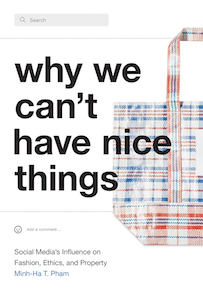
A review of Why We Can’t Have Nice Things: Social Media’s Influence on Fashion, Ethics, and Property, Minh-Ha T. Pham, Duke University Press, 2022.
 The fashion world has always espoused the latest trends in society and kept up with the times. It should therefore come as no surprise that fashion producers and commentators now speak of “ethical fashion,” “sustainable fashion,” or “fashion for good.” But what do these terms exactly mean? Who has the power to declare fashion worthy of these labels? What lies behind the glamour and glitter of fashion shows and catwalk fame? Unsurprisingly, there is also a radical wing of fashion critique (or critical fashion studies) that scrutinizes those corporate objectives and tries to hold the fashion industry accountable. Minh-Ha T. Pham is one of those critics that read fashion in relation to race, class hierarchies, labor, indigenous knowledge, creativity, and intellectual property rights (IPR). In Why We Can’t Have Nice Things, she examines the way social media users monitor the fashion market for the appearance of knockoff fashion, design theft, and plagiarism. Through what she calls “crowdsourced IP regulation,” she envisages the online activities of bloggers and Instagram users as a form of free labor mobilized in the service of fashion capital accumulation. Network vigilantes who are policing the border between authentic and fake fashion are engaged in racial work: copycat producers and consumers are always portrayed as Asians and reviled as morally defective, while creativity is defined as a property of whiteness, which gives Western fashion designers the privilege to engage in racial extractivism and legitimate cultural theft.
The sociology of fashion
Although this book is grounded in media studies, it also uses standard tools and concepts of sociological analysis. Its sociological value is limited by the fact that the author didn’t engage in fieldwork or participant observation: she only observed fashion blogging netizens from a distance and through the media impact of their activities. Nor did she collect quantitative data about fashion imitation and IPR policing activities. Her terrain is digital, and she gathered most of her observations online. But her critical perspective on the fashion industry places her in a long tradition of the sociology of fashion, from George Simmel and Thorsten Veblen to Pierre Bourdieu and Nancy Green. According to Simmel, fashion derives from a tension between, on the one hand, the tendency of each of us to imitate somebody else, and on the other hand, the tendency of each of us to distinguish oneself from others. Veblen coined the word “conspicuous consumption” to characterize the acquiring of luxury commodities by the “leisure class” as a public display of economic power. Bourdieu conceptualized fashion innovation as a field of values, norms, and power hierarchies structured around the opposition between orthodoxy and heterodoxy, mainstream élégance and avant-garde. Nancy Green gave a historical description of the working conditions of immigrants in the women’s garment industry in New York’s Seventh Avenue and the Parisian Sentier, showing how labor organization builds on gender and ethnic differences. Minh-Ha Pham’s perspective is thoroughly global: her examples and case studies originate from the heart of the fashion industry in Paris or New York as well as from the periphery of indigenous communities in Mexico or from ordinary social media users in Thailand. Call it multi-sited ethnography without direct engagement, or doing fieldwork from a distance.
Imitation is supposed to be the sincerest form of flattery, but that is not how most fashion brands see it. For years, the luxury industry has been battling counterfeiters, investing heavily in technology, the internet, and AI to authenticate products. Brands have lobbied governments to seize and destroy fake goods, prosecute buyers and dealers, and managing online traffic to counterfeit platforms. However, legal action does not seem to be enough. For a start, in the fashion industry, intellectual property is not enforced as it is within the film industry and music industry. To take inspiration from others’ designs contributes to the fashion industry’s ability to establish clothing trends. Fashion copycat disputes rarely involve original designs: fashion is, after all, a copy culture, in which innovation feeds on imitation. With few legal basis to protect original works of authorship, fashion leaders turn to the public to defend them against imitators. In the early twentieth century, powerful fashion companies used the trade and popular press to create a popular sense of fashion legality. Today, social media users and environments do this work. For Minh-Ha Pham, crowdsourced IP regulation is extralegal work: rather than pay legal experts, fashion brands depend on social media users to stamp on knockoffs and copycats. The fashion industry reproduces downstream a practice that it uses at every step of its value chain: mobilizing unpaid or grossly underpaid labor, from the garment factory workers to the unpaid fashion interns and the models that are compensated in kind with the luxury goods they have to wear.
Crowdsourced IP regulation
In crowdsourced IP regulation, social media users are naming, shaming, and demanding boycotts against fashion copycats while defending and promoting alleged copycat victims. They are playing this digital vigilante role in good faith and with good intentions: most of them sincerely believe that they contribute to a more ethical fashion world in which creativity gets rewarded and copying is sanctiond. But according to Minh-Ha Pham, the denunciation of the copycat culture follows racial and colonial patterns. The copynorms that inform them are freighted with cultural assumptions and biases, whereby copiers are always construed as Asians and innovators as Western. Authentic and fake fashion, creativity and copying are racialized categories, not neutral facts. The Asian fashion copycat is ethical fashion’s quintessential racial other. It derives from deeply rooted ideas about, on one hand, Asians’ technical superiority and, on the other hand, their cultural and ethical inferiority. According to standard stereotype, Asians are incapable of creativity, they are condemned to rote learning and mechanical repetition. The premise of the Asian copycat is routinely accepted without question or qualification: fashion knockoffs are immediately perceived as made in Asia, as the products of cheap ethics and shoddy manufacturing. Google searches automatically associate copycat culture with China or South Korea. These countries are accused of having achieved development by imitation rather than innovation. Accusations of “bottom-up copying” bristle with moral indignation about the theft of creative property, hard work, and sales that should have benefited their rightful owners. Words like “copying,” “knockoff,” “piracy,” and “counterfeit” are laden with value judgements and potentially legal implications. Meanwhile, “top-down copying” receives much less attention, and “lateral copying” is mostly a concern within the industry that feeds on imitation and trend-making. Popular euphemisms for top-down copying include “creative inspiration,” “homage,” and “cultural appreciation.”
Several case studies in the book concentrate on this top-down copying and contrast the lack of sanction associated with it to the moral indignation and media campaigns raised by bottom-up imitation. In the exceptional cases where “top-down copying” is publicly acknowledged, the copying is often excused as an isolated lapse in judgement rather than a reflection of a broader cultural or racial pattern. In particular, indigenous knowledge and ethnic designs are considered as part of the public domain, constituting a “free bin” that Western designers can mine for their creations. For Minh-Ha Pham, cultural appropriation and cultural inspiration are two faces of the same coin. They rely on what she calls “copy rights,” the power to copy without being branded a copycat. Copy rights include the right to use and enjoyment and the right to exclude others. They provide some with the right to copy, to benefit from copying, and to exclude others from the same privileges. They constitute a “racial license to copy” that is part of the privilege of being white. Examples of such racial extractivim are numerous. Isabel Marant’s copycat version of the Mixe blouse, a traditional design from the Tlahuitoltpec people in Oaxaca, Mexico, led to a legal battle that classified the indigenous design as belonging to the public domain. The Maasai people of northern Tanzania and southern Kenya have experienced a similar pattern of legally sanctioned exclusion and extraction, being used in many media campaigns without receiving any share of the proceeds. The racial license to copy also protected the designers who launched “Navajo-inspired” collections, giving rise to a Navajo chic trend that didn’t benefit the Navajo people in any regard. In fashion’s parlance, “traditional clothing”, “folk costumes,” and “ethnic garb” are racially coded terms that de-skill non-Western designs as cultural and natural rather than artistic and intellectual.
Ppl knocking each other off lol
Whereas most websites dedicated to exposing fashion copycats “punch down” on cheap imitators and align with the interests of the luxury business, Diet Prada, an Instagram account with a massive followership, doesn’t hesitate to “punch up” or “punch laterally.” It plays the role of a whistleblower or an online watchdog exposing the structural problems that pervade the global fashion industry, particularly racism, misogyny, sexual predation, and labor exploitation. Diet Prada dares to name, shame, and, in some cases, flame industry giants. Its posts typically involve side-by-side comparison photos of two or more lookalike fashion garments or accessories. It also imitates the headlines of fashion magazines or uses internet memes to expose wrongdoings and express outrage. According to Minh-Ha Pham, Diet Prada is “a fashion insider that uses insider branding strategies and forms to articulate an outsider cultural political discourse about the inequalities sustaining the global industry of which it’s now a significant part.” Its refusal to consent to hegemonic ways also finds expression in absurd posts that poke fun at fashion, fashion policing copycat, and fashion copycatting itself by juxtaposing high fashion objects with mundane things, like a ham sausage adjacent to a Bottega Veneta shoe or a dog’s snout and a Saint Laurent dress. Its derisive one-line description, “Ppl knocking each other off lol,” has remained unaltered since its first post. Its status as an industry watchdog is now so established that fashion companies have instituted channels to communicate with it, eschewing the conventional language of corporate communication to publish off-the-cuff comments and candid reactions.
Apart from naming and shaming, another response to counterfeits is moving upscale. This makes perfect economic sense: according to market signaling theory, when counterfeits enter the market, authentic brands have incentives to upgrade their quality and innovate. A higher price signals a higher quality, while pervasive counterfeiting with low production cost could drive authentic products with lower prices out of the market (as in the “market for lemons” theorized by George Akerlof.) Chanel, Gucci, and Prada don’t really need to crack down on counterfeits: they control their own distribution outlets and have developed among their customer base a sensitivity to detail that allows them to distinguish between the authentic and the fake. Fashion is linked to elitism and fueled by the increasing wealth gap in society. This is why the notions of “democratic fashion,” or “affordable luxury,” are contradictions in terms. They were promoted at the turn of the century by television shows and feature films that made the rarefied world of high fashion relatable. With Sex and the City or The Devil Wears Prada, people who might never shop for luxury fashion were encouraged to become conversant in its language. Fashion imposed its brands and values upon a society that learned to distinguish between authentic taste and fake products, between high and low market positioning. This period also saw the rapid expansion of European “fast fashion” brands into US markets. After the 2008 financial crisis, terms like “cheap chic,” “recession chic,” and “credit crunch chic” were widely used to describe budget versions of designer fashions sold at stores like Zara, Target, and H&M. Cheap chic was as much a political fashion statement then as sustainable fashion is today. It promised to make fashion (the clothes and the industry) accessible to more consumers. More recently, fast fashion came to be associated with China and rejected as unethical: it became synonymous with cheap labor, shoddy quality, and environmental degradation.
Fast fashion
Minh-Ha Pham’s book encourages readers to take a broader view of the value chain in the fashion industry. It should include all actors who create value, including the “free labor” mobilized downstream to expose counterfeits and reinforce IPR protection. Could critical fashion studies be included in this broader industry environment? Does Minh-Ha Pham participate in the regulation of a sector she so vehemently criticizes? Like fashion bloggers, academic critics believe in the importance of fashion as a social phenomenon. They treat their activity as work and dedicate an important part of their time to monitoring the industry’s latest developments. By holding fashion accountable, they demonstrate that the fashion world cannot stand outside broader societal concerns pertaining to racial justice, gender equality, labor rights, and sustainable development. The fashion world is very sensitive about these issues, not because it is particularly virtuous (it was late to follow the #MeToo bandwagon), but because its business has always been to keep abreast of latest cultural trends and to align with the changing times. Corporations in the luxury business are very careful about the language they use and what is told about them. Any blemish in their corporate image translates into massive revenue loss and need for reputation repair. The Asia Pacific region has become one of the brightest spots in the global fashion economy: as the economic status of Asian women is growing globally, racial stereotyping of Asian groups is no longer acceptable, as any blunder can lead to devastating boycott campaigns. Reading Minh-Ha Pham’s book might help corporate executives in the sector become more aware of concerns about race, gender, and global justice.
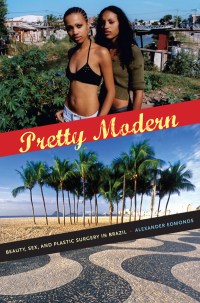 In Brazil, women claim the right to be beautiful. When nature and the passing of time don’t help, beauty can be achieved at the end of a scalpel. Plastic surgery or plástica is not only a status good or the preserve of socialites and celebrities: according to Ivo Pitanguy, the most famous Brazilian plastic surgeon and a celebrity himself, “The poor have the right to be beautiful too.” And they are banking on that right. Rio and São Paulo have some of the densest concentrations of plastic surgeons in the world, and financing plans have made plástica accessible to the lower middle class and even to favela residents. While in the United States, people may hide that they have had plastic surgery like it’s something shameful, in Brazil they flaunt it. The attitude is that having work done shows you care about yourself—it’s a status symbol as well as a statement of self-esteem. Cosmetic surgery’s popularity in Brazil raises a number of interesting questions. How did plastic surgery, a practice often associated with body hatred and alienation, take root in a country known for its glorious embrace of sensuality and pleasure? Is beauty a right which, like education or health care, should be realized with the help of public institutions and fiscal subsidies? Does beauty reinforce social hierarchies, or is attractiveness a “great equalizer” that neutralizes or attenuates the effects of class and gender? Does plástica operate on the body or on the mind, and is it a legitimate medical act or a frivolous and narcissistic pursuit? Does beauty work alienate women or is it a way to bring them into the public sphere?
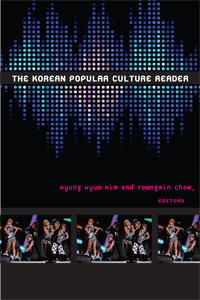 Why publish a reader on Korean popular culture? Because it sells. This is the startling confession the two editors of this volume, Kyung Hyun Kim and Youngmin Choe, make in their introduction. They are very open about it: their scholarly interest in Korea’s contemporary pop culture arose as a response to students’s interest in the field. It was a purely commercial, demand-driven affair. As they confess, “Korean studies had a difficult time selling its tradition and modern aesthetics in course syllabuses until hallyu (Korean Wave) came along.” Now students enrolling in cultural studies on American or European campuses want to share their passion for K-pop, Korean TV dramas, movies, manhwa comics, and other recent cultural sensations coming from Korea. Responding to high demand, graduate schools began churning out young PhD’s who specialized in such cultural productions. Course syllabuses were designed, classes were opened, workshops were convened, and in a short time the mass of accumulated knowledge was sufficient to allow the publication of a reader.
 So you’ve picked up this book because you think Muslim fashion is the next new thing. You’ve made a good choice: this book is totally made for you. It is a book that will teach you things, give you ideas, and make you think. Don’t expect tips on what to wear and how to wear it, though: this you will have to decide for yourself. If who you are is what you wear, then you cannot delegate this task to a third party. But reading Muslim Fashion will help you make your own choices and dress on your own terms. Maybe you won’t feel the same after reading it. Maybe your image will look different into the mirror. This is what they call a transformative book: it will make you see things differently. This is the good thing about reading books in general: you can turn them to your own use. So if this book helps you dress smarter, so be it. But it may also help you think about what you wear and why you wear it. If your style of dress makes a statement, be sure it includes the word fashion in it.
 The Duke Reader