
Coding and Decoding

A review of Code: From Information Theory to French Theory, Bernard Dionysius Geoghegan, Duke University Press, 2023.

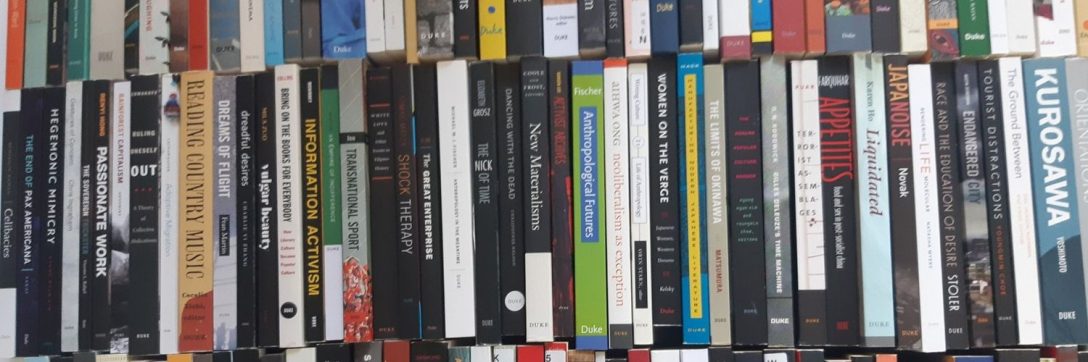
CodeIs there a pathway that goes “from information theory to French Theory”? Straying away from the familiar itineraries of intellectual history, Bernard Dionysius Geoghegan invites us to take a path less trodden: a detour that allows the reader to revisit famous milestones in the development of cybernetics and digital media, and to connect them to scholarly debates stemming from fields of study as distant as structural anthropology, family therapy, and literary semiology. Detours and shortcuts are deviations from linear progression, reminding the traveler that there is no one best way to reach a point of destination. Similarly, there are several ways to read this book. One is to start from the beginning, and proceed until the end, from the birth of communication science during the Progressive Era in the United States to the heydays of French seminars in sciences humaines in the Quartier latin before mai 68. Another way is to start from the conclusion, “Coding Today”, and to read the whole book in reverse order as a genealogy of the cultural analytics used today by big data specialists and modern codifiers of culture. A third approach would be to start from the fifth and last chapter on “Cybernetics and French Theory” and to see how casting cultural objects in terms of codes, structures, and signifiers relates to previous methodologies of treating communication as information, signals, and patterns. The common point of these three approaches to reading Code is to emphasize the crossing of boundaries: disciplinary boundaries between technical sciences and the humanities; political demarcations between social engineering and cultural critique; and transatlantic borders between North America and France. The gallery of scientists and intellectuals that the book summons is reflective of this broad sweep: Norbert Wiener, Warren Weaver, Margaret Mead, Gregory Bateson, Claude Lévi-Strauss, Roman Jakobson, Jacques Lacan, Roland Barthes, and Luce Irigaray are seldom assembled in a single essay; yet this is the challenge that Code raises, inviting us to hold together disciplines and methodologies that are usually kept separate.

The empire of code 

Let’s start from the present and move it from there. “Coding” now mostly means writing lines of code or computer software using a programming language such as JavaScript, Python, or C++. Codes can also designate social norms or cultural imperatives governing acceptable behavior in a certain context or within a subgroup. To “know the codes” means to be able to navigate a certain social world without committing blunders or impropriety. Of course, social scientists have taught us that social rules are best obeyed when one is not conscious of their imperium. Social norms must become embodied knowledge to be played spontaneously, and the best performance has the charm and immediacy of the natural, the innate, the unrehearsed. Culture cannot be recitated as a learned lesson or a set of rules. When social life is reduced to a system of codes, decontextualized from its rich background and reformatted for transnational circulation, then it becomes a simulacrum. This is why we should worry about the extension of the domain of the norm that is fueled by the twin forces of globalization and digital technologies. We are witnessing the weakening of the notion of culture, once thought of as a set of evidences shared and anchored in a territory, and today reduced to a corpus of explicit norms and cultural markers, which circulate on a global scale. The crisis in culture that Hannah Arendt diagnosed in 1961 has now given way to culture’s opposite: the reign of the explicit, the quantified, the normative. The disappearance of high culture as a shared implicit within territorial and social boundaries gives way to the sequencing of small bits of cultural content that are recombined to form a marketized commodity, as in UNESCO’s heritage list of intangible assets. These packets of texts and images circulate through networks that separate them from their point of origin and delivers them to the right place. If the network changes, due to congestion or broken links, routers can use an alternative interface to reach destination. 

There is a growing disconnect between the territory in which we live and the cultural references that we manipulate. National or religious identity is redefined as a set of cultural markers and signs of belonging that are decomposed and recomposed into new individual selves that are both unique and interchangeable. Coding implies normativity. We need new norms and regulation because things that seemed obvious, at least within a given cultural space, are no longer so. If everything is open to discussion and contestation, then we must make the rules explicit and as detailed as possible. This codification of social practice considerably reduces inner spaces of freedom and nonnormativity: the intimate, the private, the unconscious. Normativeness is the consequence of coding, the passage to the explicit, the quantification of affects. A grammar, for example, is a code and when we make a mistake, we are corrected. Contrary to language, code is acquired by apprenticeship or formal training: one must know the rules to practice coding, whereas it is not necessary to know grammar to practice a language. Coding follows a model of communication that makes each term explicit, where the receiver understands exactly what the emitter wants to say. This applies to social interactions, where what was previously left unsaid now needs to be specified, and even to the use of language, with the spread of global English and the standardization of public expression. In a multicultural context, it is recommended to speak as clearly as possible without using allusions, cultural references, and humor. The spread of artificial intelligence and chatbots will only reinforce this trend: in order to make ourselves understood by machines, or to allow machines to communicate between themselves, we must separate language from culture and minimize the noise generated through the process of encoding and decoding. 

The age of the seminar

This becoming-code of all cultural contents and social interactions has a long history. A surprising milestone in the advent of code is to be found in the works of philosophers, literary critics, and semioticians that are sometimes bundled together in the United States under the label of “French Theory.” Coding and decoding were definitely code words in French intellectual discussions during the 1960s and 1970s. “Assez décodé !” (Stop decoding/stop fooling around) was the title of a popular essay in 1978 that took aim at Roland Barthes’ new literary criticism and the abuse of technical jargon. Geoghegan identifies the 1960s as the period when “culture as communication” gave way to a preoccupation with “culture as code.” Cybernetics and information theory acted as both model and test bed for this transformation. They were part of a broader trend of social transformation based on the import of American technologies and institutions to fit postwar France’s condition. Techniques of management and human engineering were adopted en masse by an increasingly technocratic France. Funding from American foundations, tracing back to fortunes accumulated by robber barons and with links to the Cold War intelligence apparatus, supported the creation of research institutions that set new modes of organizing critical inquiry in the humanities and social sciences. A new research center and central forum for teaching social sciences was created within the Ecole pratique des hautes études as the “sixième section,” better known as the Ecole des hautes études en sciences sociales or EHESS. It modeled aspects of its study program on the social sciences in the United States, distancing itself from previous modes of scholarly organization in French universities. Its scope was resolutely transdisciplinary and experimental.  It pioneered the use of statistical methods and mathematical models in the humanities. Indeed, there is a book to be written on the fascination, some would say the math envy, exerted by mathematics and formal science on French social scientists as diverse as Claude Lévi-Strauss, Pierre Bourdieu, and Jacques Lacan. One locus for such collaboration was Lévi-Strauss’s research seminar on the utilization of mathematics in the social sciences,  which let to long-lasting interdisciplinary collaboration between scientists and social critics.

The research seminar thus became a key site for the clinical analysis of the human condition, remote from the elegant discussions in cafés and salons that previously exemplified intellectual authority in France. The seminar was the domain of the expert, the specialist, the fieldworker. It displayed science in the making, and opened its ranks to any social scientist who had new research results to share, regardless of academic position or social authority. Later on, Michel Foucault would label this new kind of postwar thinker a “specific intellectual” whose political responsibility was akin to that of the “nuclear scientist, computer expert, and pharmacologist.” Structuralism imposed itself as the dominant paradigm, with its emphasis on codes, systems, communication, economy, and even informatics patterning of signs. The promise of scientific precision and far-reaching advances attracted younger scholars eager to chart bold yet rigorous programs in emerging research areas. Human sciences as envisioned by Claude Lévi-Strauss had one great aim: “the consolidation of social anthropology, economics, and linguistics into one great field, that of communication.” In particular, “social anthropology,” he wrote, “can hope to benefit from the immense prospects opened up to linguistics itself, through the application of mathematical reasoning to the study of phenomena of communication.” Lévi-Strauss was an enthusiastic reader of Shannon and Weaver’s Mathematical Theory of Communication (1949). One of his early papers on the relevance of cybernetics on linguistics argued that engineering models of communication could be transposed onto all other fields of human activity, including linguistics, economic transactions, and the circulation of women within primitive systems of kinship. Through the 1950s, Lévi-Strauss sought to establish a physical infrastructure equal to the tasks of his emerging structural anthropology. His ascension to a chair at the Collège de France in 1960, and his concomitant establishment of the Laboratory of Social Anthropology, presented him with the long-sought opportunity to establish a research laboratory. One of his first initiatives was to acquire a copy of the Human Relations Area Files, a searchable database of two million index cards compiling ethnographic findings. Vast regimes of human data were disassembled into informational units for cross-cultural analysis. They were part of a global apparatus of knowledge that, paradoxically, unmoored cultures from local and embodied reality. Headquartered in Paris, UNESCO offered an early vehicle for bringing these new political techniques to the world.

Back to the future

Code insists on the transatlantic origins of the dominant paradigm in the sciences humaines, both institutionally and in terms of substance. The history of structuralism and poststructuralism has often been told, with an emphasis on the John Hopkins conference of 1966 that spearheaded the reception of French contemporary thought in North America. Here Geoghegan goes further back in time to highlight the way European nascent human sciences were incorporated into emerging logics of US communication science during World War II. As war swept Europe, the Rockefeller Foundation mobilized to bring threatened European intellectuals under the umbrella of US wartime science. An early recruit was Russian-born linguist Roman Jakobson, who founded the Linguistic Circle of New York in 1943 as a successor to the celebrated Prague Linguistic Circle, mixing structural linguistics initiated by the Swiss linguist Ferdinand de Saussure with diverse insights from fields including Russian formalism, avant-garde art such as futurism and cubism, and relativity theory developed in atomic physics. For Saussure, language was like a game of chess: one did not simply speak but selected from among a field of possibilities prefigured by formal constraints and anticipated threats. With Jakobson, language became probabilistic and combinatoric, ordered on principles that followed the direction of cybernetics and communication science. Much as Warren Weaver and Claude Shannon used probabilistic sequences to predict series of words, phrases, and sentences, Jakobson described phonemes as probabilistically encoded and decoded series. Another Rockefeller foundation initiative was the establishment of the Ecole libre des hautes études in New York, which recruited Claude Lévi-Strauss but declined to support Jacques Lacan. Under Jakobson’s influence, Lévi-Strauss ceased to study the empirical facts of indigenous kinship and focused instead on the relations among terms that constituted a kinship system proper. With the aid of a French mathematician, he even found algebraic expressions for his kinship studies. The linguistics seminar Jakobson and Lévi-Strauss held at the Ecole libre made a field trip to AT&T headquarters to witness the performance of the Voder, a synthetic speaking device, in 1944. According to Geoghegan, the Ecole Libre was a methodological crucible, nudging French scholars away from a concern for social equality and redirecting them in technocratic directions. As he remarks, “this was indeed a strategy of political transformation of the sort that would become a pillar of American ‘nation building’ in decades to come.”

The last thesis proposed by Geoghegan—or the first if you follow the book order, from chapter one to chapter five—, is that cybernetics wasn’t an invention of World War II and the Cold War, as science historians sometimes assume. Code shows that “links among the Rockefeller, Macy, and Carnegie philanthropies forged in the 1930s and 1940s, well before the United States’ entry into World War II, guided subsequent initiatives in cybernetics, information theory, and game theory.” The roots of the project lie in Progressive Era technocracy and its agenda to transform social strife into communication engineering problems available for technical problem-solving. Welfare policies, not warfare, were the test bed for the rise of the communication sciences, and its first deployments were to be found in the colony, the clinic, the asylum, and the urban ghetto. As Geoghegan observes, “dreams of cybernetic post-humanism depended on disappearing the bodies of native persons and other subjects regarded as less than human.” Anthropologists Ruth Benedict and Margaret Mead thought that all existing human cultures were distributed along a great “arc” which covered the whole range of possible cultural traits. Each culture then selects along this arc a “pattern” of human possibilities that fits its environment and forms a coherent whole. After his pathbreaking master degree thesis that laid the groundwork of information theory, Claude Shannon’s PhD dissertation, completed in 1940, applied Boolean algebra to the orderly processing of eugenic data. The celebrated Macy Conferences on Cybernetics, initially convened in 1942, brought together mathematicians, anthropologists, engineers, and scientists from other disciplines, and popularized notions such as reflexivity, feedback loops, and error correction mechanisms. Scientific networks cultivated in the 1930s and consolidated in wartime military projects laid the foundation for interdisciplinary communication projects well into the 1950s.

Return to sender

There is a tendency to downplay the links between the natural sciences and the dominant paradigms in the humanities. This book show that the history of the human sciences in the twentieth century cannot be separated from the rise of the communication sciences. Fields such as anthropology, psychology, and semiotics served as experimental laboratories for the engineering of a society of digital media and codified culture. Far from trailing behind engineers and natural scientists, human scientists spearheaded the reconceptualization of cultural forms as forms of code that could be decomposed and recombined using mathematical tools. Efforts to transform the humanities and social sciences into a single field, the human sciences, oriented toward communication, cannot be separated from the rise of scientific philanthropy. The Rockefeller Foundation and a host of like-minded philanthropies funded by robber barons (e.g., the Ford Foundation; the Josiah Macy Jr. Foundation; the Wenner-Gren Foundation) lavished generous funding on interdisciplinary research linked to research programs inspired by cybernetics and information theory. Their midcentury interest in these fields reflected progressive hopes to submit divisive political issues for neutral technical analysis. The long-standing aim of American philanthropies to reorient the humanities toward exact, quantifying, empirical, and rule-governed theoretical analysis found fertile ground in postwar France. Even if we should use the expression “French Theory” with caution, there was a theoretical impetus toward formalization, even a “math envy,” that shaped the dominant paradigms of structuralism and poststructuralism. A cybernetic turn of mind influenced French structuralists’ talk of codes, systems, and communication. While Barthes’s contrarian attitude or Lacan’s extravagant vocabulary carried a critique of technocratic rule, their seminars fit within the period’s emphasis on experts, codification, and structures. Their effort to remake French thought also ended up remaking American thought along the way. If we summarize the standard model of communication as a message sent by an addresser to an addressee through a channel involving operations of coding and decoding, the development of French Theory on American campuses was a case of return to sender.
Black Disabled Lives Matter

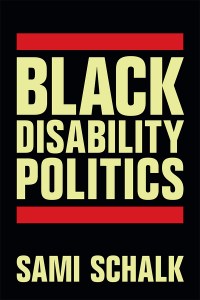
A review of Black Disability Politics, Sami Schalk, Duke University Press, 2022. 

Black Disability Politics

“This is a book written for Black people, especially Black disabled people.” Faced with this strong message in the introduction, the reader cannot help but ask questions. Who wrote this book, and for what purposes? Who shall read it, and to what ends? The author’s answer to the first question is straightforward: Sami Schalk identifies herself as “a fat Black queer disabled woman,” or “a Black person who seeks to avenge the suffering of my ancestors and to earn the respect of future generations.” Her goal is to understand how Black people have addressed disability as a political concern, and to develop Black disability politics as a tool and as a weapon in the fight for recognition and justice. She turns to history “because it benefits us as Black people to know and learn from what our ancestors did, to understand and honor them, and to continue their legacy of finding liberation.” Regarding the second question, the answer is even more blunt: Black readers are welcome. This book was written for them, especially for Black disabled people. As for non-Black persons, they are asked not to intrude into the conversation, for this book is not for or about them. The author makes an exception for “disabled people of color, disabled queer people, and disabled queer people of color”: even if they are not Black, the combination of traits that marginalizes them at multiple levels gives them a seat in the conversation about disability justice and collective liberation. But beware: white disabled persons should not confiscate the conversation, for their advocacy of disability rights has often led to the exclusion of people of color, queer people, or otherwise marginalized persons. Especially if you are white, living with disability does not give you the privilege to speak on behalf of other disabled persons.

A conversation about disability and Blackness

Black Disability Politics starts from the premise that “disability, as an identity, an experience, and a political category, has been conceptualized and approached differently by Black activists and intellectuals than by white activists and intellectuals.” There is something in Black disability that makes it different from disability without qualifier. Black disability has to be understood within the context of white supremacy. Even in the legal and medical sense, Black disabled persons are not equivalent to white disabled ones. Disabilities more common in rich white families are more likely to receive legal and medical recognition, while the types of disability more common in poor and racialized communities may not fit into legal and medical definitions of disability. In addition, “we cannot understand Black disability politics without engaging histories of anti-Black violence, scientific and medical racism, health disparities, health activism and environmental racism.” This makes the fight against ableism align with denunciations of racism, sexism, homophobia, classism, and fatfobia. The author points out “the whiteness and racism of the disability rights movement and disability studies as a field,” which often excludes or alienates Black disabled people. She defines the key principles around which Black disability politics is built: it has to be “intersectional but race centered” (race trumps other factors as it combines with them); not necessarily based on disability identity (unlike the white-dominated disability rights movement); contextualized and historicized (the book presents itself as a first step into that direction); centered on those most impacted by discrimination and injustice (i.e. multiply marginalized disabled people); holistic (the author believes in the “bodymind” literature); and action oriented (“I do not believe in knowledge for the sake of knowledge”). The reason Black disability politics, or the combination of critical race studies and disability studies, didn’t appear sooner as a discipline and as a social movement is because the few voices that have connected disability justice and Black liberation have been consistently ignored, overlooked, or other wise silenced by a white-dominated disability rights’ paradigm.

The book explores how Black people have engaged with disability as a social and political concern through delving into the history of two institutions: the Black Panther Party, or BPP, and the National Black Women’s Health Project, of NBWHP. To many, the Black Panther Party conjures up a hypermasculine image of Black men in leather coats and berets carrying shotguns. Yet for the bulk of its existence, and especially after 1972, the BPP had a majority of women in its membership, and many women featured prominently in its leadership. The BPP had a stated policy of gender equality from its outset, in stark contrast with many leftist groups at the time. While the role of women in the BPP and the Black struggle more broadly has been highlighted by recent scholarship, the same isn’t true of people with disabilities. The same prejudice that identifies Black Panthers with hyper macho men applies to its alleged ableism and neglect of disability rights. Surely a group that advocated armed self-defense and class struggle couldn’t open its ranks broadly to persons impaired in their ability to fight and to parade. Sami Schalk wants to correct this misperception and testify that disabled persons, and disability justice, indeed had a place in the concerns of the Black Panther movement. Exhibit #1 in this rehabilitation trial is a cover story of the weekly newspaper of the BPP dated May 7, 1977, and titled “HANDICAPPED WIN DEMANDS – END H.E.W. OCCUPATION.” The story that unfolds tells the involvement of the BPP in the “504 seat-in,” a nationwide protest in which people with disabilities and their supporters occupied federal buildings in order to push the issuance of long-delayed regulations regarding Section 504 of the Rehabilitation Act of 1973. Based in Oakland, California, the BPP apparently provided support to the San Francisco seat-in in the form of free meals for the 150 people involved and, as the magazine title testifies, a press release. In addition, two BPP members, one of them in a wheelchair, participated in the occupation of the Department of Health, Education and Welfare (HEW) in San Francisco and appeared on the article’s photo illustration.

Exhibits and posters

Exhibit #2 advanced by Sami Schalk to support the Panthers’ Black disability politics is the Panther-supported Oakland Community School’s stated policy of openness and inclusion “regardless of ability, ethnicity, or geographic location” (although the author couldn’t find any evidence that children with disabilities actually attended the school.) Another argument in the defense of the long-neglected disability politics of the Black Panther Party is the fight against the “medical and psychiatric industrial complexes” that made psychiatric abuse in mental and carceral institutions a pressing racial concern. Here again, exhibit #3 is composed of “numerous” press articles (thirteen in total) from the Black Panther weekly magazine that raised issues like forced pharmaceutical treatment, unpaid labor inside mental institutions, physical abuse in nursing homes, and involuntary commitment to state institutions. Another set of newspaper clips (exhibit #4) documents the use of psychiatric drugs in prisons as a means of control, while exhibit #5 consists of denunciations of the return of psychosurgery as a way to mitigate aggression and violence. A trial-within-the-trial, presented as a “praxis interlude,” takes issue with the ableist language and tropes used in some of the Black Panther magazine articles, such as the word vegetable to describe the potential result of psychosurgery and forced pharmaceutical treatment, or the presentation of disability and chronic illness as tragedies in need of prevention and eradication. Here the Black Panther activists are found guilty (“vegetable is used in a clearly ableist way”), but with extenuating circumstances (the term has to be placed “in its historical, medical, and linguistic context”) and they are released on parole provided they will use more proper language (alternative rhetoric and anti-ableist approaches are given.)

The author then turns to the National Black Women’s Health Project, a Black feminist health activist organization started in the early 1980s. Here, the tone is not judicial but celebratory: unlike the mock trial destined to rehabilitate the Black Panther Party’s disability politics from ignorance and neglect, the two chapters devoted to the NBWHP is an exhibition of Black women’s “empowerment through wellness.” Poster #1 in this celebratory exhibition analyzes Black feminist health activism as another prime example of Black disability politics, assessing how disability was explicitly and implicitly included within this collective’s holistic approach to health and wellness. Here the author is faced with a conundrum: she could find very few references to disability (and to the word “feminism”) in publications and internal documents of the NBWHP. But she sees this relative absence as a confirmation that Black disability politics is “intersectional but race centered, not based in disability identity.” Race and gender trump (dis)ability in the affirmation of a collective identity. The NBWHP insisted on the political nature of health and took a holistic approach that included disability in its definition of health and well-being. The self-help groups it organized were neither based in disability identity nor segregated by disability or health status (although they were segregated by race and gender: only Black women could attend.) Its publications addressed a wide variety of health and wellness problems, refusing to stigmatize or shame Black women for their health and promoting wellness for all (in a country where the majority of people don’t have social security.) It insisted on the emotional aspects of wellness and disease, and acknowledged the role of spirituality, faith, and religion in the lives of Black women (Amen to that!). For Sami Schalk, “the NBWHP was not a disability rights organization but a health organization that frequently acted in solidarity with disabled people in much of its work and included disabled people in leadership positions” (like many other health NGOs.)

HIV/AIDS is a disability

Poster #2 gets a little bit more specific on how the NBWHP provided support for people living with disability and chronic disease. The author performs a close analysis of the organization’s work on HIV/AIDS as a disability condition. The organization contributed to awareness and prevention through educational publications and campaigns taking into acount “the reality of Black women’s sexual lives.” It also provided material and emotional support for Black women living with HIV/AIDS (in the form of magazine articles and focus group discussions.) Here Sami Schalk is faced with a similar dilemma as in Poster #1: the programs focused on HIV/AIDS make no mention of disability at all. She nonetheless considers them a valid example of Black disability politics, and for three reasons. A chronic disease like HIV/AIDS is a disability condition, and is recognized as such under the American Disability Act (ADA). Even if a person doesn’t self-identify as disabled, she may be objectively included in the category. The distance or denial taken by some Black communities toward disability (the “Black disability consciousness gap”) can be explained by structural racism and the history of systemic oppression on the part of whites. Even so, the NBWHP is not without blame for keeping silent on HIV/AIDS as a disability issue and for failing to inform AIDS patients that they were eligible for support under the ADA. Again, in this mini-trial, NBWHP is deemed to have benefited from extenuating circumstances (there are “important historical and cultural reasons for that avoidance”) and is left with a prescription to encourage people to openly identify as disabled (even if they don’t have “a piece of paper to prove that”). To show that the lessons of the past are directly connected to the work of the present, Sami Schalk concludes Black Disability Politics by summarizing her interviews with eleven Black disabled activists and cultural workers whom she made provide feedback on the last chapter of her book (they were paid for their time), and four examples of contemporary instantiations of Black disability politics (a website, a book, another website, and another book.)

I feel uncomfortable in commenting this book. As a non-Black, non-disabled, non-academic, non-American, non-native speaker, I have the feeling I am intruding in a place where I don’t belong, and taking part in a conversation without a full understanding of its terms and stakes. And yet, Black Disability Politics is not a community blog or a restricted-access newsletter. It is published in an academic publishing house with an international distribution, its author presents herself as a scholar, and she wants a wide readership as she offers free access to the book through her webpage. I am therefore authorized to offer my five-cents comments for all it’s worth: if someone or something is intruding, it is this book that is trespassing into my favorite academic press series, not me. My first remark is that each time Sami Schalk uses the word Black (and she uses that word a lot), she should specify: Black American. Or maybe African American, or any other term that emphasizes geographical context. The USA is a country where, at any point in time, more than two million people find themselves behind bars; where most people don’t have social insurance; where life expectancy for men is inferior to Iran’s; and where there are more homicides in a day than in Japan during a whole year. African Americans are disproportionately represented in these categories (incarcerated, non-insured, premature deaths, authors or victims of violent crimes.) This situation should inspire shame and a modicum of modesty to all Americans, regardless of race or political persuasion. Viewed from outside, the United States increasingly appears as a country you don’t want to deal with, and definitely not as a country that should give lessons to the rest of the world. Unfortunately, what happens in the US doesn’t stay in the US. The United States influences conversations globally, especially academic conversations or discussions that find their origins on American campuses. What goes around comes around: China’s propaganda apparatus has seemingly become an active supporter of the global Black Lives Matter (BLM) movement – mostly in the form of lambasting the US government and system. In France, conservative forces dismiss any discussion on racial justice or equal opportunity by invoking “wokeness” and the excesses of political correctness observed in the US. As much as Sami Schalk wants to restrict participation in the conversation she is establishing with Black activists and scholars in the United States, I don’t want Black Disability Politics to be part of the conversation about race, disability, and politics in France.

Activism as a vocation

My second remark is that Sami Schalk should take sides more clearly: does she write as a scholar or as an activist? Does she take science or politics as a vocation? The material she presents (what I called exhibits and posters) may be fit for a trial or an exhibition, but cannot pass any academic test in the social sciences. The author recognizes it herself: “Black disability politics refuses to be disciplined,” and breaks away “from the typical disciplinary academic monograph mode.” Mining the past and the present to find heroic ancestors and comrades-in-arms does not a history book make: legacy is not history, and the intention to “exalt,” “honor,” or “avenge” past figures is usually a bad start for writing history books. I personally think African Americans deserve a genuine historical narrative of their relationship with disability, not an hagiography that takes no account of the rules of the discipline. The role of the historian should not be to “draw lessons from the past” but study it as it was. He or she should refrain from two major sins: presentism, or the introduction of present-day ideas and perspectives into depictions or interpretations of the past; and taking the role of the judge, for history is not a courthouse or a trial. She should try to exploit a vast array of sources, including oral testimonies, community documents, and national archives, but she should also apply critical lenses to appreciate the veracity of the sources and not take testimonies at face value. When doing survey research, the important thing is not to obtain a waiver from an institutional review board, but to apply the tools and methods of the social sciences regarding sample selection, baseline or control group, questionnaire design, and textual analysis of responses. If the scholar wants to take the position of the political militant or the social activist (and she is perfectly free to do so), she should specify in each of her interventions in which capacity she is speaking. Readers may find such literature inspiring or uplifting, or they may prefer to turn to other narratives as a source of inspiration. Personally, I still find relief in the statements of Martin Luther King and in his “dream that my four little children will one day live in a nation where they will not be judged by the color of their skin but by the content of their character.”

The Reparative Turn

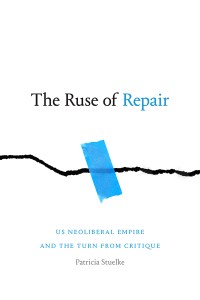
A review of The Ruse of Repair: US Neoliberal Empire and the Turn from Critique, Patricia Stuelke, Duke University Press, 2021. 

The Ruse of RepairIn 1956, Nathalie Sarraute published The Age of Suspicion, a series of essays about the modern novel starting from the following observation: “A suspicion hangs over the characters of the novel. The reader and the author have come to feel a mutual mistrust.” This book heralded the Nouveau roman and the turn toward critique: all components of a novel, from character to plot and to author, were subjected to radical deconstruction and became marked by indeterminacy, ambiguity, and equivocation. In the politically charged atmosphere of the 1960s and 1970s, literary critique became paranoid. The protagonists of postmodernist fiction often suffered from what Tony Tanner calls in City of Words (1971) a “dread that someone else is patterning your life, that there are all sorts of invisible plots afoot to rob you of your autonomy of thought and action, that conditioning is ubiquitous.” Uncovering the violence of the US empire and the racist ideology of the settler state became the order of the day. Revolution was in the air: there was a direct connection between criticism and protest, and between protest and radical change. Then suddenly, criticism became passé and suspicious modes of reading were themselves the object of suspicion. Psychology was back in favor, novels were again supposed to have a plot with a beginning and an end, and the focus of attention turned to the intimate, private matters, affects, and the body. Racial and imperialist violence no longer needed exposure: what was required was remediation and repair of the damaged self. Interpretive practices and political claims that leftist criticism had dismissed as “merely aesthetic” or “merely reformist” were drawn back to the center of the agenda. 

Paranoid reading and reparative reading 

In The Ruse of Repair, Patricia Stuelke offers a history and a critique of this reparative turn. Turning away from literary criticism and toward cultural history, she situates the rise of repair as a “structure of feeling” in literary, scholarly, and solidarity movements in the 1980s, a period marked by the ascendancy of US neoliberal empire. Specifically, the five chapters each address episodes in which reparative visions of solidarity and belonging displaced revolutionary political projects and contributed to the broader sweep of neoliberal reforms: sex-radical feminism with regard to the Iranian revolution and the so-called sex wars; black-diasporic solidarity with the Caribbean prior to the US military invasion of Grenada in 1983; the Central America solidarity movement protesting Reagan’s covert wars in Nicaragua, Guatemala, and El Salvador; creative writing programs in American universities and their contribution to the emergence of a veteran literature reflecting the trauma of the Vietnam War; and the popular music playlist weaponized by US soldiers during their invasion of Panama in 1989. Stuelke sees the origins of the reparative turn in Melanie Klein’s theories on human development and defense mechanisms, who can be read as a disavowal of “responsibility in a history of colonial war and violence that preserves and extends life to some while simultaneously withholding it from others.” Klein’s theorization of the reparative was shaped first in the debates over whether Germany should have to pay reparations after its World War I defeat, and then whether Germans should bear the guilt for war crimes and genocide in World War II. Another important milestone is Eve Kosofsky Sedgwick’s opposition between “paranoid reading” and “reparative reading,” in which the feminist scholar argued that the time of the “hermeneutics of suspicion” was over and one should return the reparative techniques that Klein had advocated. Sedgwick advanced that paranoid critique was irrelevant in an era when the lies and acts of violence of the repressive state were hidden in plain sight for anyone to see, and that one should instead concern oneself with how people find comfort, nourishment, and personal fulfilment amid precariousness and despair. The 1980s, in particular, was a decade that anticipated the ascent of reparative thinking. For Stuelke, “the turn to repair is entangled with the very history and practices of neoliberal empire and the settler colonial carceral state.” The ruse of repair, like Hegel’s ruse of reason, means that the analytical tools, patterns of interpretation, and structures of feeling that arose in the critical years of anti-imperialist militancy and radical feminism were instrumental in the ascent and triumph of neoliberalism and racial capitalism.

“Freedom to Want,” as the first chapter is titled, sets the stage by examining the logics of queer feminist anti-imperialist critique through the sex-radical solidarity politics of lesbian feminists who expressed support for progressive causes in the US and abroad, and through the institutionalization of sex-radical feminism and queer studies in the US academy. Stuelke’s archive of texts is composed of a 1986 essay by Joan Nestle, the co-founder of the Lesbian Herstory Archives ; Going to Iran (1982), Kate Millett’s memoir of traveling to witness the Iranian Revolution in 1979 ; the collective anthologies Powers of Desire (1983) and Pleasure and Danger (1984) published in the wake of the Barnard Conference on Sexuality in 1982 ; and the feminist sex wars that ensued. Joan Nestle took activism in the wake of the civil rights movement as a form of embodiment, a liberation of the lesbian self: “my body made my history… my breasts and hips shout their own slogans.” Kate Millet crafted the testimony of her trip to Iran as a reparative fantasy of revolution intermingled with the story of her reconciliation with her aunt. For the author, “Millett’s account of her relationship to the Iranian Revolution is exemplary of how feminist and queer sex-radical movement activists were revising their radical politics as neoliberalism solidified and, more insidiously, how neoliberal visions of privacy influenced the scope of their solidarity imaginaries.” The liberation of desire was elevated as the goal of solidarity politics: US imperialism was analyzed as a violent practice of sexual repression, while the turn to repair marked the passage from negative and paranoid freedom (“freedom from”) to positive and reparative freedom (“freedom to”). Sexual freedom was envisaged as “the test of how women are surviving,” and national self-determination was conflated with individual sexual expression and the neoliberal privatization of the self. Gender studies inherited this “progress narrative” of a history that celebrates women’s agency, pleasure, and difference, reifying sexual desire as natural and eclipsing the historical and material conditions of its production. The imaginaries of sex-radical feminists, and of the antipornography feminists who opposed them at the Barnard Conference, were laced with imperialist fantasies and settler colonial visions. Meanwhile, the sex wars was a white-on-white conversation, and black feminists, or queer feminists of color, were elided from the scene. Key expressions in this chapter include “racial capitalism,” “settler colonialism,” “the repressive hypothesis,” “body’s politics”, “affective infrastructures,” “valorization of privacy,” “reparative fantasies,” “homonormative politics,” and “feminism’s complicity with neoliberalism.”

The reinvention of Zora Neale Hurston

The second chapter of The Ruse of Repair, “Debt Work,” takes the reader on a journey to the Caribbean in the footsteps of three African American writers who have earned their place in the pantheon of black feminism: Harlem Renaissance figure Zora Neale Hurston, whose novel Their Eyes Were Watching God (1937) was rediscovered by recent literary criticism and became an all-star classic; and Audre Lorde and Paule Marshall, two radical feminist scholars and poets born to Caribbean immigrants who wrote memoirs rooted in Caribbean islands and diasporic identities (Zami (1983), Praisesong for the Widow (1983), Triangular Road (2009)). Patricia Stuelke sees a reparative imaginary at work in the writings of black feminist scholars about the Caribbean: the emphasis on motherhood, matrilineal family, diasporic solidarity, sexual romance, queer intimacy, and communal care were part of an effort to market the Caribbean to US tourists, and particularly to black single women from the middle class, in the early 1980s. They were heir to a long history of romanticization of the Caribbean that imagined the region as the site of matriarchal past and diasporic celebration of the present. They underscored the pivotal importance of black women as transmitters and preservers of culture, identity, and heritage. Stuelke questions the politics of these authors’ canonization as well as the reinvention or revival of Zora Neale Hurston, who wrote her classic novel during a stay in Haiti. She sees a confluence between a US black diasporic reparative imaginary of the Caribbean and America’s expansion of liberal empire. Of course, US black feminism was not the sole agent of the United States’ neoliberal recolonization of the Caribbean: the fabrication and manipulation of debt, structural adjustment programs, and the military invasion of Grenada on October 25, 1983 (“Apocalypso Now”), were pivotal in bringing Caribbean states in line with neoliberal imperatives. But imagining the Caribbean as a timeless paradise for US black women had the effect of effacing the tumultuous present marked by revolution in Grenada and contestation elsewhere. The chapter proposes key expressions and concepts to analyze these dilemma: “a black feminist reparative imaginary,” “poetics of black queer maternity,” “failed affinity with the Caribbean,” “imperial romance,” “settler modernity,” “queered diasporic belonging,” and “the unpaid debts of antiblackness.”

In the third chapter, “Solidarity as Settler Absolution,” Stuelke examines the trajectory from militancy to domesticity that led several human rights activists to turn from the denunciation of “Reagan’s dirty wars” in Central America to concerns closer to home and to the self. Her archive includes several narratives and documentary photographs produced as part of the so-called Central America solidarity movement: Joan Didion’s El Salvador (1986), Rebecca Gordon’s Letters from Nicaragua (1986), Barbara Kingsolver’s The Bean Trees (1988), Demetria Martinez’s Mother Tongue (1994), and the book and exhibition El Salvador: Thirty Photographers (1983) curated by Harry Mattison, Susan Meiselas and Fae Rubenstein. During this period, North American activists mobilized thousands to agitate in the streets and on campuses against Reagan’s foreign policy in Central America. They staged protests, carried out acts of civil disobedience, and organized photography exhibitions, theater performances, and documentary films projections documenting human rights violations and counterinsurgency war crimes. Many traveled to Nicaragua, El Salvador, and Guatemala to witness the violence of US-orchestrated military operations and bring their testimonies back home. Yet a close reading of these texts shows the prevalence of reparative approaches inspired by desires to find relief, absolution, and personal accomplishment in mediated gestures of solidarity. Many Central American guerrilla fighters and displaced refugees also deliberately played on the feelings of guilt and contrition of First World audiences to gain support. Displays of “good ethnicity” and “innocent suffering” by indigenous populations were particularly appreciated. But in narratives of Central American solidarity, the indigenous refugee character who helps the heroin find purpose and dedication ultimately disappears from the scene at the time the main character finds her “true self.” Stuelke finds in these fiction and nonfiction stories traces of “imperial romance,” “racialization of intimacy,” “white supremacist nostalgia,” “sentimental reparativity,” “staging of forgiveness,” and “settler absolution.”

The literary afterlife of military interventions

The fourth chapter, “Veteran Diversity, Veteran Asynchrony,” focuses on the centrality of the Vietnam War in US literary program fiction in the 1980s by examining various texts chronicling the popularity of creative writing programs among US war veterans, and by analyzing a sample of writings illustrative of the genre (Lorrie Moore’s Anagram (1986), Maxine Kingston’s China Men (1980), Robert Olen Butler’s On Distant Ground (1994), and two short stories by Tobias Wolff.) As the author notes, “the experience of the Vietnam War was imagined unequivocally as the stuff of ‘literary value,’ authorizing veterans not only to write, but also to teach creative writing.” This urge to convert war experience into literary capital was not new: Master of Fine Arts (MFA) programs teaching creative writing developed in relation to war, welcoming many veterans from World War II or the Korean War, and promoting a style of writing heavily influenced by war reporters such as Ernest Hemingway or John Hersey. By the 1970s and 1980s, this style became known as literary minimalism or “dirty realism” and popularized a distanciated vision of contemporary life. MFA programs discouraged antiwar fiction or critique inspired by radical politics. They also eschewed genre fiction or popular novels appealing to the taste of the general public. The emphasis had to be on silent suffering, lingering trauma, and repressed emotions. For a whole generation, “becoming a writer meant learning how to represent the seemingly unrepresentable trauma of the Vietnam War.” The Vietnam veteran functioned as a figure of wounded masculinity and emotional maladjustment that severed anti-imperialist analysis of US violence in Vietnam: the remedy for their moral pain and the nation’s ills would be found not in the elimination of US imperialism, but rather through the recognition of veterans’ plight by their fellow citizens. The university played an important role in the shift from anti-imperialist critique to the neoliberal politics of recognition, and creative writing programs were a key site in which new visions of repair and restoration were first articulated. Here again, displays of “settler common sense,” “conquest’s absolution or repair,” “institutional polishing,” “compensatory attachments,” “controlled pathos,” “white male victimhood,” “depoliticized acts of recognition,” and “empire resurgence” are in order.

The fifth and last chapter, “Invasion Love Plots and Antiblack Acoustics,” chronicles the US invasion of Panama in 1989 by focusing on a particular episode: the sonic assault of Panama’s president Manuel Noriega through US troop’s blasting of rock music featuring love-gone-wrong songs. It first sets the stage by reviewing the film Dollar Mambo (1993) that follows a set of character around December 20, 1989, the day the US army invaded Panama and thousands of innocent people were killed. The film has very few dialogue and relies on sound, instrumental music, and dance to convey dramatic tension and riveting climax. The author then examines the soldier-curators’ selection of “musical messages” sent through loudspeakers surrounding the papal diplomatic compound where Panama’s president had taken refuge. Here, Patricia Stuelke’s archive is composed of the list of songs that the US troops requested on Southern Command Network (SCN) radio for this musical assault that was supposed to drive Noriega out of the compound due to his hatred of rock’n’roll—and also to prevent reporters from eavesdropping on US negotiations with the Papal Nuncio. A reading of the playlist confirm that US troops were trying to send a message to the failed dictator who had once been America’s stooge. Love-gone-wrong pop songs and heartbreak country ballads were particularly numerous: through these lyrics, America was trying to convey to its former partner the message that it “Feels a Whole Lot Better (When You’re Gone)” and that “The Hardest Part Of Breaking Up (Is Getting Back Your Stuff)”. Soldiers also chose some songs with explicit anti-imperialist messages that were repurposed to herald a new age of free trade and democracy in the Western Hemisphere. By contrast, local musical genres inspired by Latin and African-American music, such as Jamaican reggae, dancehall music, and reguetón were conspicuously absent, and other popular American genres such as hip-hop and R&B were underrepresented. The infrequency of black music on the playlist is even more striking given the disproportionate representation of black soldiers in the military since the 1970s. For the author, “the sounds and popular music of the US invasion of Panama provided not just a soundtrack, but a genre of explanation for US empire’s drive to fortify the neoliberal economic order in the Caribbean.” Keywords in this chapter include “poptimism,” “musical resistance,” “sonic warfare,” “weaponization of sound,” “post-breakup makeover,” “repair of a damaged US white masculinity,” and “antiblack acoustics.” 

Literary criticism and cultural history

Patricia Stuelke’s critique of the turn away from criticism and toward repair is itself hyper-critical: in the debate between paranoid reading and reparative reading, she clearly verges on the paranoid, and considers reparation as complicit with the fantasy that amends can make the violence of the past disappear. She suspects dark motives in the best of intentions of popular authors who supported radical movements and anti-imperialist critique in the liberal 1970s, only to become more preoccupied with repairing the self in the counter-revolutionary 1980s. There is a streak of paranoia running in her denunciation of reparative approaches as complicit with neoliberal racial capitalism’s spread in the 1980s. Evoking paranoia nowadays reminds readers of conspiracy theories, which tend to be more common on the far right of the political spectrum. The Ruse of Repair may thus be appealing to readers of opposite persuasions: conservatives will find solace in the fact that even the sacred cows of radical feminism and anti-imperialism are severely bruised by her critical impulse, while progressives will be encouraged in their drive to pursue the work of deconstruction to its ultimate consequences. There is indeed a potentially right-wing element in the rejection of repair as a valid approach to social problems: if the world is beyond repair and people cannot make use of affectionate care, then why bother in the first place, and why not acquiesce to the manipulative power of the repressive state? The paranoid compulsion is also a turn away from “The Pleasure of the Text” (Roland Barthes, 1973) and a rejection of literature as such. Nathalie Sarraute, Tony Tanner, and Eve Kosowsky Sedgwick took literature seriously: for them, literary works could enlighten the past and show the way to the future. By contrast, there are very few literary fictions or poems in the sample of documents that the author examines, and her analysis eschews any aesthetic appreciation of their literary value or any analysis of the basis of literary expression. She treats her texts as symptoms illustrative of broader trends in American society, displaying intentions and thoughts that reflect her own reading more than the avowed goals and beliefs of the original authors. Postcolonial critique and queer theory find their origins in literary criticism, and yet they tend to reject literature as a valid site of inquiry and scholarship. They write their books and journal articles “In Hatred of the Novel” (Marthe Robert, 1982) or dismiss literature altogether as irrelevant and ideologically compromised. The field of American Studies in which this book is catalogued is the expression of this conflation between literary criticism, historiography, and critical theory. In the turn (or return) to hyper-criticism, literature is sorely missed.

The Artistic Avant-Garde in 1960s Japan

A review of Money, Trains, and Guillotines: Art and Revolution in 1960s Japan, William Marotti, Duke University Press, 2013.

Money Trains Guillotines“Dada” exists in the Japanese language as a category outside the realm of aesthetics and art history. The word “dada”, as in the expression dada wo koneru, is used to describe selfish behavior that lacks sense. It is also an idiom for “spoiling.” A kid throwing a tantrum can be called “dada”, or a teenager’s prank, or an adult acting childish. A popular theory derives the expression from Dadaism, the avant-garde art movement born in Zürich in 1916, but real etymology and kanji characters actually connect it to the Japanese language. Perhaps the false etymology is not wrong after all. Dadaism always had a special affinity with Japan. In the German language as in Japanese, the term may have derived from baby talk or child’s speak. Tristan Tzara’s affirmation “Dada means nothing” echoes the teachings of Zen masters and the Japanese concept of mu, or nothingness. The Dada artistic movement entered Japan soon after its birth in Europe during the First World War: in 1923, Mavo, a Dada group founded by Japanese artists Murayama Tomoyoshi, Yanase Masamu and others, held its first exhibition at the Sensō-ji temple in Tokyo. Japanese Dada may have been even more explosive than its European versions: the art review Mavo originally came with a firecracker attached to its cover. The poets Tsuji Jun and Takahashi Shinkichi were also pionneers of Dadaism in Japan, blending it with Taoism and Zen Buddhism. Dadaism then disappeared from the scene, only to resurface in the late 1950s as the Neo-Dada Group, an art collective featuring Akasegawa Genpei, Arakawa Shūsaku, Ariyoshi Arata, and a dozen other artists. Dada’s influence in Japan can be observed in a variety of cultural expressions such as surrealism, pop art, Fluxus, noise music, and even a monster figure in the popular TV series “Ultraman.” The kaiju character “Dada”, with distinctive cubist features, was created as an extension of Dadaism and avant-garde art and became a recurrent feature in the series.

Dada’s Not Dead

Many artistic acts and performances reviewed in Money, Trains, and Guillotines may fall under the umbrella of Dadaism, although only a minority of artists covered in this book were affiliated to the short-lived Neo-Dada movement. Printing giant 1,000-yen banknotes and getting sued for it; plotting to install a guillotine in front of the compound of the Imperial Palace; or performing art actions along the Yamanote train line: these are some of the disruptive performances that William Marotti reviews in his book, recasting a period alive with student movements, political clashes, labor struggles, and radical theorizing. More than “dada,” a moniker that characterized the period was hantai or han-, meaning “anti-.” Students demonstrated against the renewal of the US-Japan security treaty under the slogan Anpo hantai, or “down with the security treaty.” Neo-Dada artists joined them in their protests, covering their bodies with tracts and slogans, while sometimes shouting the rallying cry Anfo hantai, or “down with informal art.” The expression han-geijutsu, or “anti-art,” was coined at the time to characterize these various artistic movements. In 1960, the art critic Tōno Yoshiaki used it to describe the sculpture-object of artist Kūdo Tetsumi titled Zōshokusei rensa hannō, or “Proliferation chain reaction.” Inspired by anti-theater and anti-novel, the expression of “anti-art” led to a lively debate between art historians Miyakawa Atsushi and Takashina Shūji. Some critics, such as Kawakita Rinmei, defending the tradition of Japanese art, characterized anti-art artworks or performances as the production of demented rockabilly fans. Others, such as the surrealist poet and art critic Takiguchi Shūzō, who held a monthly column in the Yomiuri newspaper, encouraged young artists to push the limits of artistic expression and experiment with new art forms.

The Yomiuri newspaper played a key role in the emergence of this “anti-art” art scene. Newspapers in Japan are more than newspapers: they also sponsor art exhibitions, organize conferences, finance their own professional sport teams, and publish books written by their staff, among other activities. The Yomiuri, situated at the center-right of the political spectrum, was nothing but progressive and anti-establishment in its art choices during the period. Starting in 1949, it sponsored a yearly event modeled on nineteenth-century France’s Salon des indépendants, later labelled the Yomiuri Indépendant, first held at Tokyo Metropolitan Art Museum in Ueno Park. Competing at first with the Nihon Indépendant organized by the Japan Fine Art Association in the same location, it took on a new identity in the late 1950s and early 1960s with the participation of a new generation of artists proposing increasingly puzzling and provocative objets, installations, and performance elements. In April 1961, a major exhibition titled Gendai bijutsu no jikken (“Experimentations in contemporary art”), held at the Tokyo Metropolitan Art Museum and sponsored by the Yomiuri, displayed the works of sixteen new artists, among which Arakawa Shusaku, Kudō Tetsumi, Nakanishi Natsuyuki, Kikuhata Mokuma, Ochi Osamu, Yoshinaka Taizō, Motonaga Sadamasa, Tanaka Atsuko, etc. A predilection for art incorporating junk or transforming junk into increasingly enigmatic objets drew the attention of the outside world. Facing criticism, the Tokyo Metropolitan Museum, the site of the Yomiuri Indépendant, issued new regulations regarding the type of works that could be displayed. Were to be forbidden “works including a mechanism producing loud or unpleasant noise, works emitting a stinking odor or using perishable material, works using sharp objects that could cause injuries, works that leave the public with an unpleasant sensation and that violate the rules of public hygiene, works using sand or gravel that could damage the floor and walls of the museum, works directly hanging from the ceiling, etc.” Faced with such restrictions, artists prepared to stage a boycott, and the Yomiuri group finally put an end to the yearly exhibition in 1964.

A crucible for artistic creativity

William Marotti devotes two chapters to the history of the Yomiuri Indépendant. Its beginnings in 1949 were unappealing: fresh out of wartime collaboration and a long labor strike, the managers of the Yomiuri Shimbun wanted to whitewash their conservative image by sponsoring the arts and encouraging democratization. The creation of the yearly exhibition in 1949 occasioned both protests and a fair degree of confusion: it bore the same name as the Nihon Indépendant organized by the Nihon bijutsukai (Japan Fine Art Association), and was far less prestigious than the official Nitten exhibition (Nihon bijutsu tenrankai), divided into its five sections of Japanese Style and Western Style Painting, Sculpture, Craft as Art, and Calligraphy. First displaying a motley crew of professional artists and amateurs, it gradually became the center of a constellation of interconnected artists and art groups. It was, according to Akasegawa Genpei, a “crucible” in which the work of young artists, including his own, could combine and coalesce to acquire a certain degree of cohesion, intensity, and purpose. The Yomiuri Anpan, as the exhibition was also known, fulfilled the original goal of its creators in fostering a vigorous, critical, and anti-conformist art scene. Avant-garde art spilled out of the museum, as in Takamatsu Jirō’s Cord series (Himo) extending out of the museum and in Ueno Park, or was expelled from in precinct when Kazakura Shō engaged in nude performances in front of onlookers. Many of the exhibits were not artworks in the traditional sense: they were created for the space and duration of the exhibition and were simply abandoned afterwards. Performance pieces were by nature time- and space-specific. The Yomiuri Indépendant nonetheless featured seminal works and performances that were memorialized and displayed in retrospective exhibitions, such as The 1960’s : a decade of change in contemporary Japanese art (1960 nendai: gendai bijutsu no tenkanki) held in 1981 at the National Museum of Modern Art in Tokyo, or Japon des avant-gardes 1910-1970 at the Centre Pompidou in Paris in 1988.

The early 1960s witnessed the blossoming of many art collectives. Some of them developed an art scene outside of Tokyo, with few contacts to the avant-garde mainstream but a radical impulse that acted as a harbinger of things to come. The Gutai collective, founded in 1954 in Osaka and animated by Yoshihara Jirō, was a fascinating attempt to conflate art and performance, staging its first happenings before and independently from the New York avant-garde. Considering the fact that Life magazine devoted a photo reportage to the activities of Gutai in 1956, it is well possible that the Japanese avant-garde group influenced the New York experimental art scene and not the other way around. But Gutai remained a provincial affair, and it is only in the early 1960s that its destructive impulse was picked up by young artists in Tokyo. In addition to the Neo Dada Group, avant-garde art collectives included the Time School (jikanha) of Nakazawa Ushio, Nagano Shōzō, and Tanaka Fuji, the Music Group of Tone Yasunao, Kosugi Takehisa, and Mizuno Shūkō, and the group Zero jigen (Zero Dimension) with Katō Yoshihiro. The High Red Center, formed in 1963, was composed of Takamatsu Jirō, Akasegawa Genpei, and Nakanishi Natsuyuki. The first character of each name (Taka or high, Aka=red, Naka=center) led to the name of the collective, who took as its symbol a big exclamation mark. The group weighed the publication of an aborted plan to raise a giant guillotine in the Imperial Plaza, drawing proposals for two possible alternative configurations for the guillotine. In the context of the times, this was not only empty provocation: a writer, Fukuzawa Shichirō, had been the target of a deadly right-wing attack in 1960 for publishing a short story in which the imperial family was beheaded amid joyous festivity.

Counterfeit art

But perhaps the most radical act plotted by one of these conspiratory artists emerged out of artistic banality. Akasegawa’s 1,000-yen project was a classic attempt to make enlarged copies of the Japanese banknote featuring Prince Shōtoku using crude reproduction techniques and to display the monochrome works in various formats: as work in progress, framed pictures, or wrapping material for readymade objets. First exhibited at the 1963 Yomiuri Indépendant, the art project fell under the radar screen of Japanese authorities until the arrest of a Waseda University student prompted police to search the apartment of a magazine editor, leading to the discovery of Akasegawa Genpei’s 1,000-yen series. Akasegawa’s works—monochrome, single-sided, prepared on a range of qualities of paper, and often enlarged—could hardly have been intended to pass as currency. But according to public prosecutors, the act of reproducing banknotes fell under a 1895 law controlling the imitation of currency, establishing provision for prosecuting mozō (creating something confusable with currency) and gizō (counterfeiting). What followed was a protracted judicial trial that sometimes turned the Tokyo High Court into a scene of happenings. In several articles and literary works, Akasegawa articulated a complex critique of the pseudo-reality of money, identifying it as an agent of hidden forms of domination supported by state authority and by the policing of commonsense understandings of crime, of art, and of public welfare. In a parallel case regarding the abridged translation of a Marquis de Sade novel, the court asserted the state’s right to criminalize any form of artistic expression if it was found to be injurious to the public welfare, unlimited by constitutional restrictions and based on statuses dating back to the Meiji era.

The fact that the police state and the judicial system were mobilized in a defense of the reality of money points to the potency of artistic attacks on symbolic authority. The apparent anomaly of the trial in Courtroom 701 of the Tokyo District Court, a venue for the most serious criminal cases, and the appeals up to the Supreme Court, all testify to the weigh placed on this contest. According to William Marotti, “the gap between artists’ investigations and dreams of revolution, and the state policing of art and thought, reveals the politics of culture as confrontation.” He refers to Henri Lefebvre and Jacques Rancière to articulate a critique of the everyday, based on Japanese artists’ discovery of hidden forms of domination in daily life and their attempts to expose and challenge official forms of politics and hegemony. Avant-garde artists from the early 1960s were actively engaged in transgressing boundaries of thought and social practice. Their practices appear to have arisen out of a particular local, playful art practice that used theYomiuri Indépendant as a playground for bringing artistic experimentation into direct interaction with the everyday world. The exhibition’s cancelation in 1964, the year of the Tokyo Olympics, had the effect of pushing avant-garde art into the underground and radicalizing it further. Revolutionary forms of activism and critique emerged to challenge state institutions ranging from the museum gallery to the courthouse. Art and political activism converged in the use of a common vocabulary such as “direct action” or chokusetsu kōdō. Indeed, the transliterated English term favored by Japanese artists, akushon, often synonymous with pafōmansu, was progressively replaced by the more directly palatable kōi or kōdō, evoking direct political action ranging from general strike to terrorism.

From avant-garde to angura

Artistic vocabulary also testifies of an evolution of loan words from the French to the English language. The avant-garde artists at the Yomiuri Indépendant exhibited collages and ready-made objets influenced by Marcel Duchamp and the art informel movement. The cultural cachet of French words and idiomatic expressions inspired a generation of painters and plasticiens who still dreamed of Paris as a Mecca for the arts. In a way, the worldwide reputation of the Japanese avant-garde was made in France. The art critic Michel Tapié visited Japan from August to October 1957 and wrote lavish praise about Kudō Tetsumi’s entries at the Yomiuri exhibition. His encounter with the Gutai group predated Allan Kaprow’s apology of the Osaka collective by a few months. But soon English expressions such as abstract expressionism, action painting, art performances, happenings, and angura (a contraction of “underground”) took the place of French loan words. The early 1960s was definitely a period when Japan felt the gravity center of the art world move from Paris to New York. Whereas a previous generation of artists such as Imai Toshimitsu and Dōmoto Hisao chose Paris as the base for their artistic career, Arakawa Shūsaku and Kawara On settled in New York where they contributed to the birth of conceptual art. Jasper Johns, Robert Rauschenberg, and John Cage visited Japan in 1964, and their works and performances had a huge influence on young artists. The time of the avant-garde was over, and with it the possibility of revolution through art, the classical goal of an avant-garde, receded into oblivion.

Gay Dykes on Acid-Free Paper

A review of Information Activism: A Queer History of Lesbian Media Technologies, Cait McKinney, Duke University Press, 2020.

Information ActivismLesbian feminists invented the Internet, and they did it without the help of a computer. This is the surprising finding that comes out of the book Information Activism: A Queer History of Lesbian Media Technologies, published by Duke University Press in 2020. As the author Cait McKinney immediately makes it clear, the Internet that lesbians built was not composed of URL, HTML, and IP servers: it was an assemblage of print newsletters, paper index cards, telephone hotlines, paper-based community archives, and early digital technologies such as electronic mailing lists and computer databases. What made these early media technologies “lesbian” is that they formed the information infrastructure of a social movement that Cait McKinney describes as “information activism” and that was oriented toward the needs and aspirations of lesbian women in North America during the 1980s and 1990s. And what makes Cait McKinney’s book a “queer history” is that she brings feminism and queer studies to bear on a media history of US lesbian-feminist information activism based on archival research, oral interviews, and participant observation through volunteering in the Lesbian Herstory Archives in New York. Information activism took many forms: sorting index cards, putting mailing labels on newsletters, answering the telephone every time it rings, converting old archives into digital format… All these activities may not sound glamorous, but they were part of the everyday politics of “being lesbian” and “doing feminism.”

The Internet that women built

Recently the role of women in the development of information technology and the Internet has attracted a great deal of attention. Thanks in part to the effort of popular author Walter Isaacson, the names of Ada Lovelace, Grace Hopper, Jean Jennings, and Jennifer Doudna have become more familiar to modern readers, and their enduring legacy may have contributed to attract more young women into computer science. Even so, computing remains a heavily male-dominated field, and the industry’s openness to “the crazy ones, the misfits, the rebels, the troublemakers, the round pegs in the square holes” (to quote from a famous Apple commercial) is mostly limited to the masculine part of mankind. It therefore bears reminding that the Internet revolution was brought forth by information activists of all stripes and colors, not just white cis males from California. The “misfits” lauded by Steve Jobs may also have included dykes, stone butches, high femmes, riot grrrls, and lavender women as well as trans and nonbinary subjects. Besides, as feminist critique has pointed out, the concept of the “Internet revolution” or the “information superhighway” are masculinist notions that need to be reexamined. There is a gender bias in popular accounts of technology development and innovation that tends to exclude the contribution of certain agents, especially queer subjects and women of color. Technologies are gendered, and they also exhibit heteronormative and white biases. To fix this problem, much more is needed than writing more inclusive histories of innovation and exposing occupational sexism in the technology industry.

The lesbian volunteers whose activities are chronicled in Information Activism did not really invent the Internet. They did something much more purposeful: they set out to create a world bearable and a life worth living for lesbian women in North America. They did this work within conditions of exclusion from access to reliable information about lesbian life and from the margins of social structures and even mainstream feminism. Confronted with discrimination, isolation, and invisibility, they decided to build an information infrastructure of their own, one connection at a time. Creating alternative communication channels responded to conditions in which many women lacked access to other lesbians and were desperate to find connection. Sometimes, the sole purpose of maintaining this information infrastructure was to show lesbian women that they were not alone. There was another person to talk to at the other end of the help line at the New York Lesbian Switchboard ; other researchers subscribing to the newsletter Matrices were doing stuff in a field marginalized within academic studies ; documents stored at the Lesbian Herstory Archives in New York City bore the testimony of queer lives whose memorialization was a source of inspiration for modern generations. In some cases, just knowing the information was “out there” was enough to go on living with a renewed purpose. In other instances, women engaged in long “rap sessions” discussing feminist politics over the phone, started collaborative research projects that led to the emergence of a full-fledge discipline of queer studies, or found companionship and accomplishment in their volunteering projects. Information makes promises and fulfills aspirations that are much greater than “finding things out.”

A Chatroom of One’s Own

Networks have been critical to the construction of feminist histories. Cait McKinney examines several cases of networked communication initiatives that predate the emergence of online media: the publication of the newsletter Matrices designed for sharing information and resources with anyone doing research related to lesbian feminism; the New York Lesbian Switchboard connecting callers to a source of information and advice; the Lesbian Herstory Archives’ collection of print documents and audio tapes; the patient collection of indexes and bibliographies that made lesbian feminist essays and periodicals searchable and actionable. The technologies used in these pre-digital enterprises now seem antique: typewriters, photocopiers, landline telephones, letter mail, stacks of papers, cardboards, index cards, and face-to-face interactions. But the results were far-reaching and futuristic. They laid the ground on which a lesbian-feminist movement could expand and self-organize. Information and communication networks allowed dispersed researchers to connect with each other, share information, and do lesbian research within unsupportive and sometimes openly hostile research environments. Women living in rural areas or isolated places were encouraged to become active nodes of the network by taking pictures, gathering newspaper clips, and audio-recording interviews to document events taking place in their geographic area. The Matrices newsletter facilitated historical research through the creation of a supportive information infrastructure ; it also allowed for the nationwide expansion of a social movement originally concentrated in New York; and it convinced dispersed readers that lesbian lives mattered and were worth documenting. Key initiatives grew out of the network, such as the volume Black Lesbians: An Annotated Bibliography compiled by JR Roberts to counter the invisibility of women of color in mainstream lesbian feminism. In the 1990s, many print newsletters lost relevance a web browsing developed and academic listservs became key networks for sharing information. Matrices stopped publishing in 1996, replaced ostensibly by commercial enterprises such as Google, Amazon, and digital publishing tools. But online communication does not present as much of a turning point as a continuation of networked modes of organization for feminist social movements.

Another example of continuity between analog and digital modes of communication is the lesbian telephone hotline staffed by volunteers in New York City that answered to every call with a listening ear and a range of helpful tips and advice. Like newsletters, telephone hotlines connected lesbians at a distance using information. For the historian, they are harder to document: volunteers were anonymous and cannot be traced back, and all that remains of the long nights spent answering the phone are the call logs recording every conversations with a few notes and doodles scribbled in the margin. The logs suggest that many callers expressed despair, loneliness, or confusion; but others called for help finding something fun to do that night, for precise information about support groups or community resources, or just to talk and “rap” about gender issues. Even before the appearance of mailing lists and online forums, the need to have a chatroom of one’s own was clearly felt and answered. McKinney also uses the log archives as entries to thinking about feminist research methods, multimedia practices, care provision, and affective labor involved in lesbian telephone hotlines. She reminds readers that feminist activism involved less acknowledged dynamics such as boredom, repetition, isolation, and burnout. What makes a telephone hotline “lesbian feminist” is the self-definition and principles under which the switchboard operated. Volunteers were recruited from within the lesbian community and bisexual women were tacitly kept out, while the policy toward trans women and gender nonconforming persons was left undefined, although their needs were also addressed on an ad hoc basis. These remarks remind us that terminology, such as the moniker “gay and lesbian” as opposed to the more contemporary “LGBTQI+”, are historical constructions that cast aside or rigidify some categories as much as they include or deconstruct others.

A feminist mode of network thinking

Network thinking has been a feature of feminist activism and knowledge production since before the consumer Internet. “Improving (lesbian) lives with information” could be the motto of a behemoth social media company catering to a niche market; it was always the principle under which lesbian activists operated. The feminist movement produced original ideas about communication, access to information, capacity building, and the power of alternative structures for organizing people and ideas. Lesbian feminists also offered pre-digital feminist critiques of networks as egalitarian ideals that can conceal functional hierarchies and threaten the privacy of participants. Computer networks were dreamt and imagined before they were invented and built. The librarians and volunteers who collected the Lesbian Periodicals Index  were imagining computer databases and electronic indexing while shuffling paper cards into shoeboxes ; the Lesbian Herstory Archives’ project leaders were figuring putting all their resources online before they had the equipment and manpower to convert documents into digital format. They were also early adopters of information technology, manifesting a can-do attitude and a hands-on sensibility familiar to feminist activism—and more generally to “women’s work.” McKinnon characterizes as “capable amateurism” a fearless approach to learning and implementing new media technologies; a gendered belief in the capacity of amateurs to work hard and acquire new skills; and a willingness to experiment, improvize, and figure things out on the fly. Lesbian feminism is also informed by values of non-hierarchy, direct participation by members, and an investment in decentralized processes.

Today these values are reflected in many internet communities. A good-enough approach (“rough consensus”), a culture of sharing (“copyleft”), and collectively organized work (“open source”) as well as political militancy (“Anonymous”) characterize segments of the computer industry as much as they are part of the lesbian-feminist heritage. One may even see in the Slow Web movement echoes of the politics of nonadoption and digital hesitancy that was developed by some activist groups surveyed by the author. Beyond lesbian history, these activists have much to teach all of us about why, when, and for whom information comes to matter. The lesbian feminist imagination allows us to envisage a world brought together by connection, care, and “sisterhood” that earlier feminist networks originally articulated and that worldwide Internet connectivity now makes potentially real. A lesbian-feminist approach also reminds us that networks make equalitarian promises that conceal the power structures, protocols, and control mechanisms they actually exert. Computer databases and search engines are not neutral; they determine what is thinkable and sayable through filtering access to information and indexing resources into categories and keywords. These are deeply political choices, and the way decision-making processes and governance bodies are structured matters a great deal. If we want to keep a free and open Internet and uphold the principle of net neutrality, perhaps we should learn from a history of information networks written through older forms of feminist print culture.

Lesbianism is so twentieth century

But does the lesbian past still talk to our queer age? As a self-described “masculine, nonbinary person,” Cait McKinney is ambivalent about the category of lesbianism. She originally assumed that “lesbian” as a specific term of self-identification was historically dated and situated in a period of late twentieth-century militancy, and she was surprised to learn that the term was still popular among a younger generation of queer-identified activists. Young volunteers at the Lesbian Herstory Archives articulate deep attachment to lesbian history and subcultures, and the snippets of information and pictures that the center posts on Instagram are instantly popular. Some business ventures exploit the revival in lesbian-feminist militancy heritage, selling T-shirts, collectable items, and other paraphernalia bearing slogans and pictures from the seventies and eighties. McKinney also thinks lesbianism, while providing a big tent for women with nonconforming gender identities, also had exclusionary effects as many lesbian-feminists were historically hostile to trans women and indifferent to women of color. As a matter of fact, lesbianism meant much more than women having sex with women. Likewise, the erotic exceeds what is commonly understood as sensuous, sexually appealing, and emotionally gratifying acts. Eroticism can be described as a communication practice, and information activism is definitely part of it. Reading archives against the grain (or along the archival grain, as Laura Stoller invites us to do) also refers to the grain of one’s skin, and the archival touch implies an embodied experience laden with sensory perceptions and affects. Libriarianship and archivism are professions that have been historically attractive to women, including persons attracted to same-sex relations, and they have often served as erotic projections of male—and sometimes female—desire. There is something queer about manipulating acid-free paper, and Information Activism consciously addresses how librarians and archivists cope with the affective and intimate impacts of accumulated print media.

There Is No Us

A review of None Like Us: Blackness, Belonging, Aesthetic Life, Stephen Best, Duke University Press, 2018.

none-like-usThis essay stands at the intersection of black studies, queer theory, and literary criticism and art critique. Its title, None Like Us, is taken from a sentence in David Walker’s Appeal to the Coloured Citizens of the World, arguably the most radical of all anti-slavery documents written in the nineteenth century. The quotation, put on the book’s opening page, describes the wretched condition of coloured people in the United States as observed by the author. It ends with a prayer to God that “none like us ever may live again until time shall be no more.” Who is the “us” that the epigraph dooms to self-extinction and oblivion? Is there a collective subject when humans were treated as objects and disposed of as pieces of property? Can one write the history of people who did not exist, or whose existence is forever predicated on a negative relation to history? How does that “none like us” leave open the possibility for an “I,” the first singular person of the art critic, the historian, the queer subject? As Stephen Best writes, “None Like Us begins in the recognition that there is something impossible about blackness, that to be black is also to participate, of necessity, in a collective undoing.” Whatever blackness or black culture is, it cannot be indexed to a “we.” The condition of being black is rooted in a sense of unbelonging: “forms of negative sociability such as alienation, withdrawal, loneliness, broken intimacy, impossible connection, and failed affinity, situations of being unfit that it has been the great insight of queer theorists to recognize as a condition for living.”

A non-communitarian manifesto

None Like Us sometimes reads like a manifesto. The incipit: “a communitarian impulse runs deep within black studies,” sets the stage in almost Marxian fashion—one is reminded of the opening sentence of the Communist Manifesto. The specter of communism that is haunting Europe leaves way for the ghost of communitarianism that permeates African American scholarship. Also evocative of Marx and Lire Le Capital is the epistemological break that Stephen Best effectuates. He substitutes the “melancholic historicism” that characterizes black historiography with what he calls a “queer unhistoricism” that interrupts the connection between the past and the present. He breaks away from a century-long attempt to recover archival traces of black life under conditions of disavowal and silencing, to read the archive as a repository of lost traces and muted voices. Stephen Best also distances himself from all kinds of identity politics based on collective struggles and individual resistance. A politics of recognition cannot be predicated on a “we” that does not exist. Identities have to be radically deconstructed in order to assert freedom from constraining definitions of blackness and gender roles. A “gay black male” is an assemblage of three predicates, “gay,” black,” and “male,” that are equally problematic in assuming an essence that is only constituted through negation. As a non-communitarian manifesto, None Like Us is also an aesthetic treatise: the author engages in art critique and literary criticism, not to fly away from historical realities, but to induce us to “think like a work of art.”

A central tenet of African American studies rests on the thesis that black identity is uniquely grounded in plantation slavery and the Atlantic slave trade. The afterlife of slavery makes itself felt in the black political present and delineates a future in which reparation and redress are forever deferred. Recent historiography, to which Stephen Best contributed, has drawn our attention to the silenced voices that make themselves heard through the archive: the fugitive, the renegade, the maroon, the socially dead. Out of these enquiries emerged an obsession with “displacement, erasure, suppression, elision, overlooking, overwriting, omission, obscurantism, expunging, repudiation, exclusion, annihilation, and denial.” Like in Foucault’s essay “The Life of Infamous Men,” these figures emerge through the archive as “lowly lives reduced to ashes in the few sentences that struck them down” as if “they had appeared in language only on the condition of remaining absolutely unexpressed in it.” According to this melancholic view of history, “recovery from the slave past rests on a recovery of it.” To recover from past trauma, historians have to return to the scene of the crime, a crime imagined as the archive itself. Drawing from Freud’s definition of melancholia as an inarticulable loss that comes to inform the individual’s sense of his or her own subjectivity, Stephen Best writes: “Melancholy historicism provides for the view that history consists in the taking possession of such grievous experience and archival loss.”

The black radical tradition

Against this “traumatic model of black history” in which the present is merely the repetition of past humiliations, Stephen Best advocates a radical break with all attempts to recover a “we” out of the loss embodied in the archive. He borrows from what Cedric Robinson and others have called “the black radical tradition” in which violence is turned inward and rebellion leads to self-destruction. Examples mobilized by Robinson include the mass slaughter of cattle and destruction of crops ordered by the Xhosa prophetess Nongquawuse in 1856; the vanishing quilombo settlements of runaway slaves, mulattos, and outcasts on the Pernambuco coast of Brazil in the seventeenth century; and the 1915 uprising in Nyasaland (now Malawi) led by Baptist minister John Chilembwe who vowed to “strike a blow and die.” Exploring suicide and rumor in the eighteenth- and nineteenth-century archives of slavery, Stephen Best offers his own selection of vignettes and anecdotes. A “suicide bombing” occurred in 1659 when a besieged African chief blew up himself and his Dutch assailers by setting fire to a keg of powder. Archives of the Middle Passage tell tales of slaves hanging themselves, or starving themselves, or drowning themselves to end their living apocalypse, or holding their breath or swallowing their tongue in attempts at self-strangulation. People who consciously suppressed themselves in acts of self-immolation cannot be enrolled as subjects of history: theirs is “a history of people with whom we fail to identify, who appear stuck in the past beyond the reach of our historical categories.”

When it comes to black identity and the politics of race, the slave past was not always thought to explain the present. Stephen Best singles out the year 1988 and the publication of Toni Morrison’s Beloved as the moment when slavery emerged as the constituent object of African American studies. Beloved, which won the Pulitzer Prize that year, was not a unique occurrence: Alex Haley’s novel and TV series Roots had prepared the ground for a reappraisal of the slave past in popular culture, and in the late eighties and early nineties several history books anchored African American identity in “a continued proximity to the unspeakable terrors of the slave experience.” But the rise of Beloved moved the entire field of literary studies to a central place within African American studies, and this move redressed the “trade deficit” that cultural critics had accumulated with the discipline of history. Toni Morrison spoke of the slave past as a “carnage,” a “devastation” that will always be with us: “this is not a story to pass on.” But Toni Morrison’s more recent novel A Mercy (2008) opens the door for another appreciation of the slave past as it falls away and collapses into its own undoing. A Mercy is not an easy read: the chapters oscillate, confusingly at first, between a first-person narration and a third-person omniscience, reinventing the epistolary novel with dead letters whose failure to arrive comes from having never been sent. It is anchored in a world in which racial distinctions have not yet formed and much is up for grabs: the racial scripts and beliefs that are said today to make up slavery’s legacy have yet to settle into a lexicon. As the critic notes, “If Beloved incites melancholy, A Mercy incites mourning”: in Freud’s terms, melancholia is doomed to endless repetition, whereas mourning ends with a kind of forbearance.

Queer is the New Black

None Like Us is listed on the back cover as an intervention in “African American Studies” and “Queer Theory.” Stephen Best sees a high degree of complementarity between the two: “It startles how easily queerness percolates out of the condition of blackness.” Queer and slave historiography appear to be on the same page: the queer acknowledgement of non-relationality between the past and the present, what literary theorist Leo Bersani calls an “anti-communal mode of connectedness,” echoes the epistemological rupture that Best advocates. A queer orientation toward the past may preserve cultural critics from the melancholic turn that characterizes recent historiography. Black life and queer life are also intimately related through the experience of estrangement, alienation, and disaffiliation that Elizabeth Povinelli sees at the root of all progressive politics. None Like Us begins with a discussion of the different ways that both Best and James Baldwin found themselves, as young men, estranged from their fathers. Although their estrangement stems from opposite sources—Baldwin’s father’s disdain for his son, the pride of Best’s father at his son’s graduation ceremony—, there is a shared orientation toward a selfhood that occurs in disaffiliation rather than in solidarity. Part of this queerness comes from the experience of coming out of the closet as gay. As the author remembers from his tormented youth, “If I come out as gay, I will die in the eyes of my father, but I realize that a part of me is already gay and that he cannot not see that, too there must be a part of me that is already dead.” This skeleton in the closet precludes the possibility of a “we,” whether queer or black.

The chapter that opens the book’s part “On Thinking Like a Work of Art” begins with an address to the reader: “You” is the person who is put in front of the artwork and who experiences a kind of epiphany as one physical substance transmutes into another. In the Ghanaian artist El Anatsui’s richly woven tapestries, what initially presents itself as precious metal appears upon inspection to be throwaway-aluminum constructions of bottle caps and copper wire: “What was gold now reveals to be mere thrash.” In the layered paper canvases of the Los Angeles artist Mark Bradford, fragments of cardboard advertisements and printed materials are soaked into water and mixed with trash objects to generate relief within the surface itself: “What was originally ‘print’ finds itself transformed into ‘paint’.” Gwendolyn Brooks’s free-verse poems generate another kind of commentary that also mobilizes the tropes of conjuration, transmutation, and alchemy. Here the office of art is to afford a repetition of the artist’s gesture that “repairs inherently damaged or valueless experience.” And the curator, who mobilizes a rich array of sources and commentary listed in the endnotes, puts the “you” of the viewer in direct contact with the materiality of the artwork. Absent from the commentary are all the mediations that constitute art as an object of aesthetic value. Between the “I” of the critic and the “you” of the viewer, there is no “we” that would allow for the emergence of a community of value. When Foucault stated that “we have to create ourselves as a work of art,” or when Best proposes that “we must begin to think like artworks,” what they mean by “we” is mostly themselves.

Uncharted territory

Or so it seems to me. I could not relate to the book’s emphasis on art as embodied thinking or concepts brought into matter, and discussions on contemporary art brought me to uncharted territory. I had no prior knowledge of the visual artists that are commented in the book (I missed the El Anatsui’s retrospective at La Conciergerie in Paris as part of the Saison Africa2020), and I have not read a Toni Morrison novel since Tar Baby. Nor am I versed in recent historiography of the slave trade, and in the most recent discussions about black identity in the United States. I was more familiar with some of the literary criticism the author mobilizes, especially since literary criticism in the United States seems to be identified with France and French studies. Roland Barthes, Gérard Genette, Michel de Certeau, Michel Foucault, and Jacques Derrida—all listed in the index—are household names in academic circles on both sides of the Atlantic, and they point toward a common horizon that I was happy to share with the author. Also familiar was Stephen Best’s evocation of Walter Benjamin’s angel of history, that famous passage in which Benjamin gazes upon Paul Klee’s Angelus Novus and imagines that the Angel of History is looking toward the past and bears witness to history’s “piling wreckage upon wreckage.” This mix of familiar and unfamiliar shaped my reading of None Like Us, which I am happy to share with others.

Indigenous Peoples and the Anglo Settler World

A review of Theft Is Property! Dispossession and Critical Theory, Robert Nichols, Duke University Press, 2020.

Theft Is Property“Property is theft !” declared Pierre-Joseph Proudhon, denouncing the inanity of social institutions undergirding bourgeois society. He was criticized by Karl Marx, who judged the formula self-refuting, and by Marx Stirner, who wrote: “Is the concept ‘theft’ at all possible unless one allows validity to the concept ‘property’? How can one steal if property is not already extant?” Indigenous people face the same set of objections when they claim ownership of the land that has been stolen from them. Their traditional culture and enduring values often emphasize a special connection to land and place. They are the “children of the soil,” “sprung from the land itself” as the word “autochthonous” indicates in its Greek etymology. They can legitimately claim the right of first occupancy and document their collective memory of having been there first. The dispossession of their ancestral lands occurred under conditions that would today be judged unlawful or illegitimate, and that was condemned as such at the time it occurred. But on the other hand, the emphasis on possession and ownership contradicts the values of shared responsibility, stewardship, and common property that many Indigenous people, indeed many persons, associate with land and natural assets. How can one argue that the earth is not to be thought of as property at all, and that it has been stolen from its rightful owners? What does it mean, then, to be dispossessed of something that you never really “had” in the first place, and to reclaim something that was never really “yours” to begin with? Can we make the legitimate claims of Indigenous people compatible with political visions that do not advocate property and ownership at their point of departure?

Anglo settler colonialism

For Robert Nichols, these questions cannot be addressed in the abstract. They have to be situated in the historical context of “Anglo settler colonialism,” the process by which the modern nations of Canada, Australia, New Zealand, and the United States were formed. As its subtitle indicates, this book is intended as a contribution to “critical theory,” and there are many theoretical development that may rebuke more empirically-inclined readers. But putting the concept of dispossession in dialogue with the plight of Indigenous peoples facing settler colonialism allows the author to ground social theory in historical processes it is meant to explain and criticize. Critical theory is mostly indebted to Karl Marx, and the author of Das Kapital is indeed the main theoretical reference in Robert Nichols’ book, with two chapters out of four at least partially devoted to discussing his writings. But other authors from the classical tradition, from Locke to Rousseau and from Tocqueville to Mill, are also brought into the debate, as well as contemporary writers belonging to various strands of critical theory: analytical Marxism, new feminisms, critical race theory, radical Black critique, critical geography, Indigenous peoples’ scholarship, and postcolonialism. Indeed, for me one of the main attraction of Theft Is Property! was its openness to critical voices that do not usually feature into the intellectual mainstream, but that nonetheless formulate valid claims and propositions. I was not familiar with most of the contemporary authors quoted or discussed by Nichols, but their voices provide a useful contribution to contemporary debates about race, rights, and property.

Nor was I familiar with the detailed history of settler colonialism in the Anglo-saxon world. Nichols reminds us that “over the course of the nineteenth century alone, Anglo settler peoples managed to acquire an estimated 9.89 million square miles of land, that is, approximately 6 percent of the total land on the surface of Earth in about one hundred years.” It was the single largest and most significant land grab in human history. This great appropriation, or transformation of land into property, was also a great dispossession. As a result of settler colonialism, Indigenous peoples have been divested of their lands, that is, the territorial foundation of their societies, and deprived of their most basic rights. This is the context that we must keep in mind when we discuss the history of settler societies and the development of capitalism. We must understand more precisely how landed property came to function as a tool of colonial domination in such a way as to generate a unique “dilemma of dispossession.” Robert Nichols presents this dilemma as follows: “We can say that dispossession is a process in which novel proprietary relations are generated but under structural conditions that demand their simultaneous negation.” In effect, the dispossessed come to “have” something they cannot use, except by alienating it to another. New proprietary relations are generated but under structural conditions that demand their simultaneous negation. The United States and its settler elite accorded Indigenous peoples truncated property rights in an unequal exchange that “took away their title to their land and gave them the right only to sell.” Indigenous people are figured as the “original owners of the land,” but only retroactively. Contrary to Max Stirner’s assertion, what belongs to no one can in fact be stolen.

Karl Marx and dispossession

To understand the genealogy of dispossession, Robert Nichols turns to Karl Marx and his analysis of the transformation of land tenure within Europe during the transition from feudalism to capitalism. Marx borrows from the anarchist tradition the claim that modern European nation-states were the emanations of acts of massive theft. But he considered the anarchist slogan “Property is theft!” as self-refuting, since the concept of theft presupposes the existence of property. He therefore turned to the notion of dispossession, or expropriation, to refer to the initial alienation process that separated “immediate producers” from direct access to the means of production. For Marx, dispossession was linked to processes of proletarianization, market formation, and industrialization. Through a process of primitive accumulation, the feudal commons were subjected to various rounds of “enclosures.” Land were partitioned and closed off to peasants who had for hundreds of years enjoyed rights of access and use. Without direct access to the common lands that once had sustained their communities, peasants were forced to contract themselves into waged employment in the new manufactures that arose in urban centers. The enclosure of the English commons and transformation of the rural peasantry into an industrial workforce serves as the primary empirical reference from which Marx derives his conceptual tools. The concepts of primitive accumulation, exploitation, and alienation are thought through the experience of England and its historical trajectory that Marx and Engels studied closely. Other historical references, such as the privatization of public lands and criminalization of poverty (the “theft of wood”) in Rhineland or the rural commune (Mir) as the fulcrum of social regeneration in Russia, are only brought in tangentially, and the territorial expansion of European societies into non-European lands is not analyzed in detail.

As Marx famously put it, the history of primitive accumulation is written “in letters of blood and fire.” But primitive accumulation should not be relegated to a primitive past or a historical stage, from which we have hopefully escaped. Critics have raised objections not only with the historical accuracy of Marx’s description but also with the very idea that the overt, extra-economic violence required by capitalism is surpassed and transformed into a period of “silent compulsion” through exploitation. For these critics—Peter Kropotkin, Rosa Luxembourg, postcolonial authors—, political violence is a constitutive feature of capitalism’s expansion and takes the form of repression at home and colonial expansion abroad. Imperialism, according to Lenin, is the highest stage of capitalism. Colonies and formally independent countries in the South become peripheral zones because they specialize in the low-tech and labor-intensive activities, including the supply of raw materials and cheap labor to core zone areas, and thus become “underdeveloped” through unequal exchange mechanisms consequent to colonization and/or imperialism. To this violence against nature and violence against labor that sustains capitalism’s expansion, feminist author Silvia Federici adds that violence against women is congenital to the reproduction of labor and the formation of capital. But this expansion of primitive accumulation and constitutive violence into the present should not obscure the fact that colonial settler societies were born out of a massive act of land grabbing and dispossession. Viewed from this perspective, primitive accumulation acquires a new meaning that cannot be reduced to its past and present forms in capitalist societies.

How the land was won

More generally, critical thinkers who forget to account for the original dispossession of Indigenous peoples in their explanation of capitalist development perform an erasure of history. They treat the clearance and dispersion of people in settler colonies as a necessity, “just as trees and brushwood are cleared from the wastes of America or Australia” (Marx). But land, understood as an intermediary concept between nature and labor, can only be separated from its early occupiers through a violent process of dispossession and appropriation. Indigenous peoples bear the memory of this injustice and of their resistance to it. Their claim for collective atonement and redress is constitutive of their identities and subjectivities. Indigenous peoples have always resisted dispossession, but they have not always done so as Indigenous peoples. Instead, the very idea of indigeneity was, in part, forged in and through this mode of resistance. Dispossession is structural in the same sense that racism can be said to be structural: it generates long-standing patterns of vulnerability and marginalization, and creates subject positions through disciplinary power and repression. Anglo settlers obtained new territories through a variety of ways, some of them requiring violence, coercion and fraud, others based on legal terms and based in norms of reciprocity and consent. But the effects were always and everywhere the same: as Theodore Rossevelt expressed it, “Whether the whites won the land by treaty, by armed conquest, or by a mixture of both, mattered relatively little as long as the land was won.” Or as a Seneca chief put it in 1811, “The white people buy and sell false rights to our lands. They have no right to buy and sell false rights to our lands.”

There is a tradition of resistance and critical thinking among Native Americans that lingers to these days. Parallel to the Great Awakening of Protestant faith that impacted the English colonies in America in the eighteenth century, there was an “Indian Great Awakening” that fused distinct religious, cultural, and political traditions into a pan-Indigenous movement with broad appeal among the Native population. In the nineteenth century, opposition to the Euro-American predation on Native lands came from three distinct perspectives: accommodationist, traditionalist, and syncretist, each articulating a political critique that converged in the denunciation of dispossession and the claim of a distinct Indigenous identity. The twentieth century has seen a remarkable revival of Indigenous syncretism and political militancy that now mobilizes against extractive development projects such as the Dakota Access Pipeline. By claiming that “there can never really be justice on stolen land,” they join forces with other social movements that advocate transnational solidarity and global justice. Robert Nichols also analyses rituals of dispossession in light of Black feminist theorists who have reflected on bodily dispossession and what it means to claim one’s body as one’s own. Self-ownership does not necessarily reinforce proprietary and commodified models of human personhood, especially in the context of enslavement, oppression, and sexual violence that Black women have been subjected to.

Native Lives Matter

On April 23, 2021, former Senator Rick Santorum caused an uproar when he declared: “There isn’t much Native American culture in American culture.” He elaborated: “We came here and created a blank slate. We birthed a nation from nothing. I mean, there was nothing here.” His remark was inspired by ignorance, bigotry, and white suprematism, and was rightly denounced as such. But in a sad way he was right. The reason there isn’t much Native cultural heritage in American culture is that most of it was destroyed or written out of the history books, by people just like Rick Santorum. The origins of American exceptionalism are mired in blood and plunder. Native American cultures have always been erased from the national narrative, as First Nations were forbidden to exhibit their culture, to carry it on and to express it in their native languages. Even now, Native Americans suffer from a disproportionate share of social ills and experience police brutality and cultural repression in their daily lives. Along with the Black Lives Matter movement, the Native Lives Matter campaign draws attention to social issues such as violence from law enforcement, high rates of incarceration, drug addiction, and mental health problems into a national dialogue calling for social justice reform. Thanksgiving, that quintessential American celebration, is commemorated as a National Day of Mourning by many Native Americans as a reminder of the genocide of millions of their people, the theft of their lands, and the relentless assault on their cultures. It is a day of remembrance and spiritual connection as well as a protest of the racism and oppression which Native Americans continue to experience. Penance and atonement, as well as thanksgiving and praising God, are part of the American tradition.

Race, Culture, and the Origins of American Anthropology

A review of Anthropology and the Racial Politics of Culture, Lee D. Baker, Duke University Press, 2010.

Lee Baker AnthropologyAnthropology in America at the turn of the twentieth century presents us with a double paradox. Cultural anthropologists wanted to protect Indian traditions from the violent onslaught of settler colonialism, and yet prominent voices among Indian Americans accused them of complicity with the erasure of their beliefs and cultural practices. They thought the culture that African Americans inherited from exile and slavery was not worthy of preservation and should dissolve itself into the American mainstream, and yet African American intellectuals praised them for the recognition of cultural difference that their discipline allowed. As Lee Baker puts it, “African American intellectuals consistently appropriated anthropology to authenticate their culture, while Native American intellectuals consistently rejected anthropology to protect their culture.” What made cultural assimilation the preferred choice in one case, and cultural preservation the best option in the second? How did the twin concepts of race and culture shape the development of anthropology as an academic discipline? In Anthropology and the Racial Politics of Culture, Lee Baker introduces a distinction between in-the-way people, the so-called “Negroes” as black persons were designated and self-identified at the time, and out-of-the-way people, the Native Americans or “Indians” who were relegated to the margins of American society.
Kill the Indian and save the man

In the end of the nineteenth century, the federal government’s policy towards American Indians was one of assimilation, privatization of tribal lands, and the suppression of native cultures. “Kill the Indian and save the man” was the slogan of that era: proponents of assimilation barely veiled their desire for the complete destruction of Indian beliefs and cultural practices. A generation later, however, cultural preservation and self-determination became the watchwords of federal policies governing Native Americans. The Wheeler-Howard Act of 1934, better known as the Indian Reorganization Act or the “Indian New Deal,” was designed “to conserve and develop Indian lands and resources; to extend to Indians the right to form business and other organizations; to establish a credit system for Indians; to grant certain rights of home rule to Indians; to provide for vocational education for Indians; and for other purposes.” Anthropology played an important role in this shift in federal Indian policy. The study of American Indian languages, customs, and material culture was at the origin of the American School of Anthropology: in an indirect way, Native Americans played a prominent role in the history of the discipline. Franz Boas, the founding father of American anthropology, famously demonstrated that one cannot rank-order races and cultures along a single evolutionary line, thereby acknowledging Indian Nations as historically distinct cultures that should be preserved, valued, and otherwise acknowledged. And yet many educated, self-proclaimed Indian elites resisted the anthropological gaze, claiming for their folk equal treatment and access to US citizenry.

The essence and primary task of American anthropology was the study of American Indians. But knowledge production went along cultural destruction: indeed, the urge to inventory Indian languages and culture was predicated upon their rapid disappearance. The need to “salvage the savage” fueled very different projects: progressive white anthropologists and conservative Indian traditionalists were committed to conserving and celebrating indigenous practices, while progressive Indian activists and conservative Christian reformers believed in mutual progress, civilization, and integration into the mainstream. These two competing visions clashed during the so-called peyote hearings held at the US House of Representatives in the winter of 1918, when the temperance movement tried to make the use of peyote a federal offense. What and who was authentically Indian, and what and who was not, was the subject of intense debate. Zitkala-Ša, also known as Gertrude Bonnin, argued for temperance in the name of civilizational values and racial uplift. James Mooney, an ethnologist from the Smithsonian institution, supported the ceremonial and medicinal uses of peyote and attacked the credibility of his opponent by challenging her authenticity: Gertrude Bonnin, he argued, “claims to be a Sioux woman, but she is wearing a woman’s dress from a southern tribe.” Debates went on whether the use of peyote was or wasn’t a genuine Indian practice, and references were made to the “ghost-dance craze” that had been banned by the Bureau of Indian Affairs in 1883, leading eventually to the massacre at Wounded Knee in 1890. The irony is that Zitkala-Ša dedicated most of her adult life to advocating greater awareness of the cultural and tribal identity of Native Americans. During the 1920s she promoted a pan-Indian movement to unite all of America’s tribes in the cause of lobbying for citizenship rights. In 1924 the Indian Citizenship Act was passed, granting US citizenship rights to most indigenous peoples who did not already have it.

Salvaging the savage

James Mooney, Gertrude Bonnin’s opponent in the peyote hearings, was also accused of “fabricating the authentic or producing the real.” Working for the Bureau of American Ethnology, an institution originally created to collect intelligence on Indian tribes in order to better subdue them, he developed from an early age a keen interest in American Indian cultures, and chose to work among those he deemed the most traditional. As Lee Baker notes, he was unscrupulous in his methods of acquiring sacred books and artifacts among the Cherokees, taking advantage of their social disintegration and economic poverty and gaining the trust of powerful men and women under false pretenses. He became the “arbiter of real Indians,” authenticating what was genuine and what was imported such as the biblical scriptures that Cherokee shamans and priests mixed with their sacred formulas. “In some cases, Lee Baker writes, he fabricated images and sounds of people outright in order to shape them into what he perceived as genuine.” But in a time dominated by assimilationist policies and a genocidal drive, he was sincerely devoted to salvaging Indian tribes’ history, folklore, and religion. He was moved to a fury by the massacre at Wounded Knee, and wrote scathing remarks about the attending missionaries who did not even offer a prayer for the deceased. He pioneered intensive participatory fieldwork long before it became the norm in anthropology, and took the time to observe various Native American tribes in the way they lived on a daily basis. His monograph The Ghost-Dance Religion and the Sioux Outbreak of 1890 was the first full-scale study of a nativist religion arising out of a cultural crisis. Mooney’s history and folklore remain definitive and vital to the Cherokee Nation today, and the stories and formulas he collected in his monographs are regularly republished.

“For every ten articles in the anthropological literature addressing American Indians, there was one discussing American Negroes or Africans.” Anthropologists were simply not interested in describing the culture of the many immigrant and black people who stood “in the way” of achieving a “more perfect union.” That job went to sociologists committed to the study of assimilation and race relations. According to Robert Park, one of the leading figures of the Chicago School of sociology, “The chief obstacle to assimilation of the Negro and the Oriental are not mental but physical traits (…) The trouble is not with the Japanese mind but with the Japanese skin.” In other words, what prevented integration and assimilation into the melting pot was not the specific culture of ethnic minorities, but racial prejudice and discrimination coming from the white Anglo-Saxon Protestant elite. The sociologists who studied race relations shared with the anthropologists the postulate that races were never inherently superior or inferior to each other. But each discipline embraced different ways of describing culture and behavior. Boas and his students at Columbia University built anthropology on the inventory of American Indian languages, customs, and material culture. Park and other Chicago sociologists focused on urban studies and the assimilation of immigrant minorities. For Park, there was no distinct African American culture: “While it is true that certain survivals of African culture and language are found among our American negroes, their culture is essentially that of the uneducated classes of people among whom they live, and their language is on the whole identical with that of their neighbors.” Progressive sociologists therefore advocated a policy of racial advancement focused on eliminating substandard housing, poverty, and racial segregation. But they also explained deviant behavior such as crime or drug use as the expression of a pathological subculture evolving from the conditions of urban ghettos.

Negro folklore

As anthropologists concentrated on Native Americans and sociologists dismissed the existence of a distinctive culture among African Americans, the task to collect stories, songs, and customs of the former black slaves fell on folklorists and educators. In the beginning of the twentieth century, the American Folk-Lore Society devoted several articles in its journal to African and African American folk traditions. The rationale for collecting and publicizing “Negro folklore” changed with the passing of time. In the 1890s, the first folklorists and black educators took to recording cultural practices of rural blacks in order to show that they could escape their backward condition and become enlightened citizens. Thirty years later, the New Negro intellectuals who led the Harlem Renaissance used folklore to embrace their African heritage and preserve their cultural roots. The same notebook of folklore with stories inspired by the African oral tradition was “first used to articulate the uplift project, and two decades later it was used to bolster the heritage project.” The schools at the origin of folklore collection followed the Hampton-Tuskegee model of educating African Americans to build their lives from basic skills. Drawing upon his experiences with mission schools in Hawaii, General Samuel Armstrong, the founder of the Hampton Normal and Agricultural Institute in 1868, used folklore as way to demonstrate how basic literacy and the learning of industrial skills could succeed at civilizing formerly enslaved people. Between 1878 and 1893, Hampton also experimented with Indian education, again employing the notion that industrial education helped to civilize the savages. Other black colleges, such as the Tuskegee Institute founded in 1881 by Hampton graduate Booker T. Washington, used the same approach in their program of racial uplift. Forty years later, the leaders of the New Negro movement turned to the anthropology developed by Franz Boas and his students to authenticate their culture and claim racial equality.

Anthropology emerged in the late nineteenth century as the science of race and the study of primitive cultures. How did anthropologists make the transition from the study of craniums to the theory of culture? What was at the origin of the three partitions of anthropology—the study of prehistorical remains, the comparison of physiological differences between races, and the social anthropology of primitive cultures? Lee Baker answers these questions by paralleling the life and work of Daniel Brinton, the first university professor of anthropology and a public intellectual of considerable influence at the end of the nineteenth century, and Franz Boas, who articulated a vision for anthropology based on cultural difference and racial equality. Brinton used the science of race to bolster the relevance of anthropology during distinguished career that began with antiquarian research in the 1880s and concluded with research that addressed relevant social issues and public problems in the 1890s. Like many people from his generation, he viewed racial difference in terms of inferiority and superiority, and placed the different human races in a hierarchy that culminated with the white race. Franz Boas, who is generally credited for debunking such racialist research in anthropology, did not attack these ideas right from the start. As a Jewish immigrant from Germany, his position within academia was insecure and he developed his original ideas only after he and anthropology were securely ensconced at Columbia University. But the assumptions of physical anthropology were directly challenged in a study Boas conducted between 1908 and 1910, published as Changes in Bodily Form of Descendants of Immigrants. Measuring the craniums of children, he was able to demonstrate that the environment played a significant role in determining physical attributes like head size, which were so often used to demarcate racial difference. His initial study of schoolchildren in Worcester, Massachusetts, which served as a foundation for his seminal work in physical anthropology, was almost derailed when parents and the local press expressed concern over the experiments that were inflicted on their children.

The Boas conspiracy

For Boas, this was the first in a long line of public assaults on his research and writings on race and culture. Franz Boas employed the skills of scientific observation to argue that all societies are part of a single, undivided humanity guided by circumstance and history, but none superior to another. We also owe to him the demonstration that cultures have different meanings and that anthropology needs not limit itself to only one interpretation. What mattered to him was the accumulation of facts and the inventory of differences. A successful ethnography should not focus on only one culture in order to patiently uncover its identity: the first and only goal of the science of man is the interpretation of differences. This analytical focus on variation makes him a precursor of structuralism, and his conception of an interpretive science announces later developments by Clifford Geertz. But for segments of the American public, Boas is not remembered for his scholarly contribution to the discipline of anthropology. Instead, he is considered as the initiator of “a vast left-wing conspiracy to destroy the idea that whites were racially superior to blacks and to impose a moral and cultural relativism that has forever crippled American civilization, and he did it with fraudulent data.” Lee Baker tracks the genealogy of this so-called “Boas conspiracy” from the Internet forums of white supremacists and KKK supporters to the anti-Semitic rant of the leader of the American Nazi Party interviewed by Alex Haley in 1966 and to the obscure texts of fringe intellectuals advocating “race realism” and the debunking of the “racial egalitarian dogma.” These unsavory readings remind us that anthropology has always been appropriated outside of the academy and has fueled projects that can be emancipatory, but also unashamedly racist and delusional.

Going to the Movies in Paris, Then and Now

A review of Paris in the Dark. Going to the Movies in the City of Light, 1930–1950, Eric Smoodin, Duke University Press, 2020.

Paris in the DarkParis in the Dark made me remember going to the movies in Paris as a child and a teenager. Of course, I did not experience firsthand the period covered by the book, from the 1930s to around 1950. My formative years took place in the late 1970s and in the 1980s, and a lot of change took place between the period described in the book and the times I remember from my childhood. But Paris will always be Paris, and some aspects of the cinema culture that Eric Smoodin describes did sound familiar. The same time distance lies between 1980 and today and between 1980 and the 1930-1950 period, in the interval between the disappearance of silent movies and the beginning of color films. Maybe my childhood years were even closer from the era of black-and-white movies than they are from my present self. Time has been running faster lately: we now have the Internet and Netflix, while I am speaking of a period before DVDs and VHS. Time did not stand still between 1940 and 1980, but there was more continuity between these two dates for French moviegoers and cinema aficionados than between 1980 and now. Also I tend to look as past history from the same perspective that Eric Smoodin describes in his introduction and concluding chapter. He, too, spent time in Paris between 1980 and 1981, as a graduate student who went to the movies as often as he could. And he now looks at the 1930s and 1940s with eyeglasses colored by this youthful experience. We broadly belong to the same generation. And we both feel nostalgic for a time when “going to the movies” was something more than spending an evening out: it was a lived experience that shaped your identity and culture.

Movie magazines

The first thing Parisians and banlieusards did when they planned to go to the movies around 1980 was to buy Pariscope (or its competitor L’Officiel des Spectacles.) This moderately-priced magazine listed all the movies, spectacles, and entertainment events in Paris and its surrounding banlieue over the upcoming week. You could find the address and schedule of cinemas, theaters, concert halls, museums, with posters from the most recent movies and even ads for sex shops, swinger clubs, and Minitel rose online forums. Pariscope was created in 1965 and ceased publication in 2016. But Eric Smoodin could exploit a similar publication, Pour Vous, a popular film tabloid that was published between 1928 and 1940 and that contained complete listings of all the films playing in the city and in the suburbs. Using this archive as a source, he produces a map of the city’s twenty arrondissements with some of the major cinemas from the period 1930-1950, cinemas that were for most of them still in existence in 1980 but, with a few exception, have disappeared from present-day Paris. He makes the distinction between the cinémas des grands boulevards lining the Champs Elysées and other main avenues, the cinémas de quartier serving a more localized neighborhood, and the ciné-clubs that were mostly concentrated in the Quartier latin, the fifth and sixth arrondissement. Each category offered a different movie-going experience. Each also survived the passing of time and link the distant past to more recent childhood memories and to the present.

As a representative of the first category, take the Rex, situated on the boulevard de la Poissonnière, which was the largest cinema theatre in Europe at the time of its opening in 1932. The Rex was built by Jacques Haïk, a wealthy film impresario known for having introduced Charlie Chaplin to France. Haïk aimed to create the most beautiful movie theatre in Paris, where cinema-goers would have the illusion of watching a film in the open air, with the ceiling painted to represent a starry night sky. The French press noted the florid extravagance of this “cinéma atmosphérique,” with its “starred ceiling giving us the illusion of an oriental night.” During the Occupation, the Rex was requisitioned and became the Soldatenkino, reserved for German soldiers. In the 1950s, one of the first escalators in France was installed and inaugurated by Gary Cooper. For a child, going to such a theater was a magic experience. It sparked the imagination for a lifetime: I still remember the grand building, the queue to the ticket window, the tip to the ouvreuse or usherette, the ice-cream seller who also handled cigarettes and Kleenex, the commercials opened by the animated figure of Jean Mineur throwing his pickaxe to a target and hitting bull’s eye…

Grand cinemas, cinémas de quartier, and ciné-clubs

The Rex and other grand cinemas typically played new movies for only a week before they were fanned out to other cinemas in the neighborhood, where the most successful flicks could keep on screen for weeks on end. The cinéma de quartier is where most Parisians situate their early movie experience. This is where they remember going to the movies for the first time alone or with their friends as opposed to accompanied by their parents; where they exchanged their first kiss; where they laughed, cried, or screamed in reaction to the scenes of the screen. In France, a R-rated movie would be accessible to teenagers, and a “film interdit aux moins de 16 ans” would be rated X in the US. But there were always ways to fake your ID, negotiate your entry without paying with the ticket clerk, or using a backdoor and some lock-picking skills to free ride on a film show. The neighborhood cinema was a familiar presence that is still remembered fondly in adult life and that finds its ways into novels by Patrick Modiano or movies such as Cinema Paradiso. Its disappearance is always a local tragedy, and its replacement by multiple screen theaters wipes away an important part of the viewer’s experience. 

No other city in the world during the period covered by this book had so extensive a system of ciné-clubs as Paris. From early on, cinema was considered as part of culture, and was identified as “le septième art  by a French-Italian critic as early as 1923. But not all movies were art movies. And ciné-clubs or art-movie theaters had a connection with highbrow Parisian culture that the commercial cinema typically did not. Movies and documentaries could occasionally be projected in institutions other than cinemas: museums, concert halls, conference venues, public libraries, or amphitheaters. They were usually preceded by introductory remarks and followed by a “débat cinématographique” bringing in the film director, art critics, public lecturers, and the public. The frequently posh setting, the people who attended, and the discussions that took place made the ciné-club, far more than the ordinary cinema, a special location in the cultural geography of Paris. In the 1970s and 1980s, ciné-clubs were also present in suburban or provincial cities and towns, as well as in the form of a student-managed activity in lycées and universities. The screenings, which sometimes took the form of all-night movie marathons, could follow various patterns such as the director retrospective, the thematic series, the avant-garde aesthetic experience, and the sensational or censored film. This is where the cinematic auteurs from the Nouvelle Vague and the art critics from Les Cahiers du cinéma honed their skills and acquired their cinematic culture.

Version originale sous-titrée

American journalists quoted by Eric Smoodin reported that Parisians had a preference for French films, and tended to shun American films with French subtitles or sous-titres in favor of French-dubbed Hollywood movies. In fact, from a sample of 110 movies listed in Pour Vous in 1933, the author was able to identify 48 French films, 34 Hollywood movies, as well as a few movies from Great Britain, Germany, Italy, Spain, and Belgium. Assigning national origins to all movies from the period can be challenging, as there were quite a few binational coproductions as well as foreign films produced for the French market or multiple-language versions of the same movie. And many films were shown in their original language. The sous-titré movie held a privileged place in French cinema, especially among the cultured elite, even if they didn’t always understand the original English. In a city known for its international film culture, foreign movies have always shared the screen with domestic films. In the Paris of the 1980s, and especially in the art-movie theaters, you could see movies from a wide variety of international directors: Visconti, Pasolini, Fellini, Antonioni, Bergman, Eisenstein, Tarkovsky, Wajda,  Kieslowski, Ozu, Oshima, Kurosawa, Fassbinder, Wenders, Jarmusch, Lynch, Kubrick, etc., were household names for the true cinéphile.

Paris, and later Cannes (where the International Film Festival was first organized in 1939 and relaunched in 1946), could make or break the reputation of filmmakers and actors. Among the most compelling stars of the period were Maurice Chevalier and Marlene Dietrich, who rose to fame following the switch to sound technologies and eclipsed older stars from the silent era. Both actors were transnational celebrities. Chevalier started his career in the music hall in France but then moved to the United States to work with Paramount. Dietrich’s career was launched with her role in L’Ange bleu in 1930, and Parisian audiences could hear her singing the theme song in the original German (“Ich bin von Kopf bis Fuß auf Liebe eingestellt”). Much more than the silent film stars, whose nationality or regional origin could never be given away by their accents, both Dietrich and Chevalier were perceived as national subjects, as German in the first case and French in the second. Their stardom may have its roots in Hollywood, but could only attain its full development with  the success they attained with French audiences. It is only recently that French actors have started to feature in American movies without a heavy French accent—although Jean Dujardin, the lead character in the 2011 movie The Artist, articulates English in a distinctly French way.

For the historian, cinema in the 1930s was also a site of violence motivated by right-wing politics. The 1930 screening of L’Âge d’or, the surrealist movie by Luis Buñuel, was interrupted by the right-wing Ligue des Patriotes who threw ink at the cinema screen and assaulting viewers who opposed them. During the following months and years, there was a series of escalating incidents in Paris cinemas, with interruptions by the public leading to police intervention. Likewise, I remember showing support during my high-school years to the local ciné-club whose screenings of controversial movies such as Je vous salue Marie (1985) by Jean-Luc Godard or La dernière tentation du Christ (1988) by Martin Scorsese was opposed by demonstrations and booing from traditional Catholics. Choosing a particular movie or theater was also a way to manifest your political affiliation. During the 1930s, one ciné-club, Les Amis de Spartacus, was affiliated with the French Communist Party and typically showed films that had been banned in France, such as Sergei Eisenstein’s Le Cuirassé Potemkine (1925). Forty years laters, municipalities from the banlieue rouge headed by communist mayors would still screen movies from Eastern Europe and the Soviet Union that would not feature in commercial cinemas. But going to the movies also positioned you in the field of intellectual politics: being able to discuss cinema history and to comment on the latest film attraction was, and still is considered as a litmus test for the true Parisian intellectual. Eric Smoodin deserves the title in abstentia.

Post scriptum: Eric Smoodin, the author of Paris in the Dark, also writes a blog on WordPress, the Paris Cinema Project. It has more pictures and historical details than the book. Recommended reading.

Dispatches from a Controlled American Source in Quito

A review of The CIA in Ecuador, Marc Becker, Duke University Press, 2021.

CIA in EcuadorA large literature exists on United States intervention in Latin America. Much has been written about the CIA’s role in fomenting coups, influencing election results, and plotting to assassinate popular figures. Well-documented cases of abuse include the overthrow of the popularly elected president of Guatemala in 1954 and the attempts to assassinate Rafael Trujillo in the Dominican Republic and Fidel Castro in Cuba. Books about the CIA make for compelling stories and sensationalist titles: The Ghosts of Langley, The Devil’s Chessboard, Killing Hope, Legacy of Ashes, Deadly Deceits. They are usually written from the perspective of the agency’s headquarters—which moved to Langley, Virginia, only after 1961—, and they concentrate on the CIA leadership or on the wider foreign policy community in Washington—The Power Elite, The Wise Men, The Georgetown Set. Rarely do they reflect the perspective of agents in the field: the station chiefs, the case officers, the special agents charged with gathering intelligence and monitoring operations on the ground. Such narratives require a more fine-grained approach that is less spectacular than the journalistic accounts of grand spying schemes but more true to the everyday work of intelligence officers based in US diplomatic representations abroad. Fortunately, sources are available. There is a trove of declassified intelligence documents made available to the public through the online CREST database under the 25-year program of automatic declassification. In The CIA in Ecuador, Marc Becker exploits this archive to document the history of the Communist Party of Ecuador as seen from the surveillance and reporting activities of the CIA station in Quito during the first decade of the Cold War.

This is not a spy story

This book will be a disappointment for readers with a fascination for the dark arts of the spy trade and who expect crispy revelations about covert operations, clandestine schemes, and dirty espionage tricks. There were apparently no attempt to manipulate election results, no secret plots to eliminate or discredit opposition leaders, and no extraordinary renditions to undisclosed locations. Of the two missions of the CIA, the gathering of foreign intelligence and the conduct of covert action, archival evidence indicates that the Quito station strictly stuck to the first one during the period covered by the book, from 1947 to 1959. Nor are the names of confidential informants, domestic assets, or deep cover moles uncovered and exposed: intelligence reports or diplomatic dispatches usually don’t identify their sources by name and only mention their reliability (a “B2” classification thereby signifies that the source is “usually reliable” and that the content is “probably true.”) The farthest the author goes into revealing state secrets is by exposing the names of the successive station chiefs in Quito—for many decades, US authorities maintained that there was “no such things as a CIA station,” and diplomatic dispatches only referred to their intelligence as coming from a “controlled American source.” Using public records, Marc Becker was able to reconstruct their career path subsequent to their posting in Ecuador. They were not grandmaster spies destined for prestigious careers: throughout the 1950s, Quito was a small station for the CIA, and Ecuador was peripheral to Cold War interests. Their intelligence reports do not make for entertaining reading. They speak of bureaucratic work, administrative drudgery, and solitary boredom in a remote posting that rarely lasted more than three years.

To be true, despite the book’s title, the author is not interested in “the CIA in Ecuador.” He uses CIA documentation and State Department archives to write a detailed history of the left in Ecuador in the postwar period, focusing in particular on the Communist Party that was the object of intense surveillance from the CIA. The 1950s were a unusually quiet period in the turbulent political life of Ecuador. After a long period marked by political instability and infighting—twenty-one chief executives held office between 1931 and 1948, and no one managed to complete a term—, Ecuador entered a twelve-year “democratic parentheses” during which a series of three presidents were elected in what critics generally recognized as free and fair elections and were able to finish their terms in office and hand power to an elected successor from an opposing party. Despite persistent rumors of coups and insurrections, the army stayed in the barracks and public order was broadly maintained, with the occasional workers’ strike, student demonstration, or Indian mobilization, the latter facing the most violent repression. The Communist Party of Ecuador sought to coalesce these social forces into a political movement that would lay the basis for a more just and equal society. Rather than pressing for class struggle and a violent revolution, communist leaders advocated the pursuit of democratic means to achieve socialism in coalition with other progressive forces. But their attempts to form a broad anticonservative alliance with the liberals and the socialists repeatedly failed, and they drew minimal support during elections. Their emphasis on a peaceful and gradual path to power eventually led a radical wing to break from the party in the 1960s. After 1959, Ecuador returned to its status quo ante of political volatility and instability, and leftist politics became more fragmentary and confrontational.

Cold Warriors in Ecuador

Unlike Marc Becker, I am more interested in the CIA’s activities and style of reporting he indirectly describes than in the travails of the communist movement in Ecuador. Unsurprisingly, the authors of diplomatic dispatches and intelligence reports were Cold Warriors, and they shared the biases and proclivities of their colleagues and leaders in Washington. They considered world communism as the enemy, and drew the consequences of this antagonism for the conduct of foreign policy in Ecuador. They were convinced, and tried to convince their interlocutors, that the communists were dangerous subversives bent on death and destruction and that they plotted to disturb the smooth functioning of society. They were determined to implicate communists in coup attempts and they repeatedly pointed to external support for subversive movements. They saw the hand of Moscow, and Moscow’s gold, behind every move and decision of the PCE, and they closely monitored contacts with foreign communist parties and their fellow travelers, including by intercepting incoming mail and opening correspondence. Despite their weak number—estimate of party membership oscillates between 5000 and 1500 during the period—, communists were suspected of manipulating labor unions, student movements, and intellectual organizations, and of infiltrating the socialist party and progressive local governments. According to American officials, Ecuadorians did not take the communist threat seriously enough. United States representatives pressed the Ecuadorian government to implement strong anticommunist measures and applauded when it did so. The accusations of communists organizing riots and fomenting revolution fed an existing anticommunist paranoia rather than reflecting political realities. Evidence shows that the communists had no intentions of resorting to violence to achieve their political goals. But their claim for social justice and labor empowerment was perceived as posing a threat to the economic and political interests of the United States, and was fought accordingly.

In this respect, and contrary to its reputation as a rogue agency or a “state within the state,” there is no evidence that the CIA was running its own foreign policy in Ecuador. Its objectives were fully aligned with those of the State Department, and there was close cooperation between the CIA station chief and the rest of the embassy’s staff. Different branches of the government represented in Quito, including the military attaché, the cultural affairs officer, and the labor attaché, collaborated extensively around a shared anticommunist agenda. Indeed, Cold War objectives were also shared by other countries allied to the United States, and Becker quotes extensively from the correspondence of the British ambassador, who stood broadly on the same anticommunist positions but expressed them with more synthetic clarity and literary talent. To be sure, there were some petty infighting and administrative rivalry between services within the embassy. The CIA typically exaggerated communist threats, whereas State Department officials dedicated more attention to the much larger socialist party and to violent political organizations inspired by Italian fascism and the Spanish Falange. There were redundancies between official correspondence and covert reporting, and diplomats competed with CIA agents for the same sources and breaking news. Officials in Washington had “an insatiable demand for information” and were constantly fed by a flow of cables containing little valuable information and analysis. Occasionally, case officer would annex to their correspondence a tract or a manifesto that, considering the absence or destruction of party archives, provides the historian with an invaluable source of information.

Cognitive biases

In failing to give a realistic assessment of the political forces in Ecuador, CIA officials exhibited several cognitive biases and were prone to misjudgments and errors. They interpreted events through a Cold War lens that colored their understanding of the realities they observed. Their belief in the presence of an international conspiracy that sought to throw chaos across the region bordered on paranoia and made them neglect or distort important pieces of information. They failed to report that the communist party was opposed to involvement in military coups, and they overestimated the communists’ influence in the armed forces. They were blind to the threat posed by proto-fascist movements such as the falangist group ARNE and the populist CFP, suspecting the later of leftist leanings because its leader was a former communist even though he became violently opposed to his former comrades. They overreacted to some news such as the disruption of an anticommunist movie projection with stink bombs thrown by unidentified students or the spontaneous riots that followed the radio broadcasting of Orson Welles’ The War of the Worlds, “a prank turned terribly awry.” They had mood swings that alternated between overconfidence and inflated fears, minimizing the strength of the party while overemphasizing its influence over the course of events. They exhibited an almost pathological urge to uncover external sources of funding for subversive activities, even though they knew that Ecuadorian communists had only minimal contacts with Moscow and that their party’s finances were always in dire straits. They were oversensitive to divisions within the party, providing the historian with valuable information about internal currents and debates, but failed to notice political organizing efforts among Indian communities that provided strong support to the party (in general, indigenous people were a blind spot in embassy’s reporting: “The Indians are apart and their values are unknown,” pondered the ambassador.) Like any bureaucracy, the CIA and the State Department fell victim of mission creep: as one officer observed, “There was a lot of information for information’s sake.”

Considering Marc Becker’s many criticisms of US interference and interpretive biases, one wonders what an alternative course of action might have been. The United States might have adhered to a strict policy of neutrality in the hemisphere and refrained from their vehement denunciation of communism by acknowledging that the Communist Party of Ecuador and its supporters were a legitimate political force in the local context. In other terms, they might have tried to disconnect Latin America from the broader geopolitical forces that were shaping their Cold War strategy, stating in effect that Ecuador was irrelevant to the pursuit of their global policy objectives. Considering not only their words but the limited means they allotted to CIA surveillance in Ecuador in the 1950s, this is more or less what American policymakers did: only with the turbulent sixties would the United States invest more means, including covert actions, to prevent the expansion of communism following the Cuban revolution and the rise in insurgency movements. Alternatively, at the individual level, officers might have tried to rid themselves of the cognitive biases and to paint a more realistic picture of the political situation, emphasizing not only the threat but also the opportunities raised by the development of the progressive left. This might have been the course pursued by more enlightened diplomats, but considering the political climate prevailing in Washington, where McCarthyism was in full swing and the State Department was decimated by red purges, this would have meant political suicide and instant demotion for the officers involved. Better, in their perspective, to bide their time and adhere to a more conformist line of analysis, serving to their political leaders the discourse that they wanted to hear.

A revisionist history

The historian is not without his own bias. Marc Becker is a revisionist historian bent on setting the record straight: during the 1950s, the Ecuadorian Communist party was a progressive force preaching reformism and European-style social welfare programs within the parliamentary system. To demonstrate his case, he sticks to the archival record and provides much more detail for the period from 1949 to 1954, for which sources are abundant and detailed, than for the years after 1955, for which the CREST database contains much fewer documents. Like his sources, he tends to overemphasize the geopolitical importance of Ecuador and Latin America in postwar global history. His concluding chapter on the year 1959 states that “the triumph of revolutionary forces in Cuba is arguably one of the most significant political events of the twentieth century.” He sees all activities of US diplomats in Ecuador with suspicion, and tracks in every detail the heavy hand of American interventionism where in fact diplomatic missions were only doing their job of representation, advocacy, and reporting. He detects a running contradiction between the official policy of nonintervention in the internal affairs of other countries and the reality of Americans trying to shape opinions and influence outcomes. In doing so, he doesn’t clearly distinguish between adherence to the principle of non-interference, the pursuit of influence through public diplomacy, and the defense of the national interest. The fact that diplomatic dispatches conclude that a presidential candidate or a policy measure may be more favorable to American interests abroad is not synonymous with meddling into internal affairs: it is the bread-and-butter of diplomatic activity, even though what constitutes the national interest may be open to democratic debate. In the case of Ecuador during the 1950s, it was in America’s interest to monitor the activities of a communist party that was vehemently opposed to “Yankee imperialist capitalism,” however small and inconsistent its threat to the neoliberal international order. The fact that diplomatic representatives and intelligence officers pursued this mission with dedication and rigor may be put to their credit, and our understanding of the past is made richer for the documentary record they left behind.