
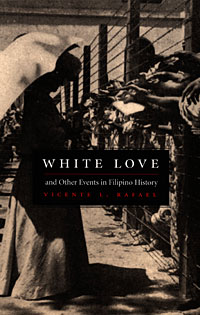
A review of White Love and Other Events in Filipino History, Vicente L. Rafael, Duke University Press, 2000.
 Is America an empire? The standard view among conservative historians is that the United States only embraced imperialism with the Spanish-American War, and that this represented an aberration from the otherwise democratic trajectory of the nation. These same historians further argue that the imperial interventions of the United States, especially in the Philippines, were far more benign and progressive than its European counterparts. Taking over the Philippines Islands in 1898 was described, in official accounts at the time and in subsequent hagiographies, as an altruistic act motivated by America’s concern for the natives’ welfare. Whereas European empires were concerned with carving the world for themselves and extending their sphere of influence, America occupied the Philippines to fill the void left by Spain and to steer the still immature nation towards a course of self-government and independence. US colonialism in the Philippines was rhetorically driven by what President McKinley had referred to as “benevolent assimilation,” whereby the “earnest and paramount aim” of the colonizer was that of “winning the confidence, respect and affection” of the colonized. Even the armed conflict between the First Republic of the Philippines and the United States that lasted from early 1899 to mid-1902 and that cost the life of more than 200,000 Filipino insurgents and civilians was “characterized by humanity and kindness to the prisoner and noncombatant.” War and occupation were manifestations of “white love,” an act of compassion and altruism that emanated from American exceptionalism. If Filipino insurgents were killed, sometimes tortured, it was for their own good, and because they somehow requested it.
America’s deadly embrace
For proof of the deadly nature of America’s imperial embrace, one needs to look no further than to the images of piled corpses lining roads and the close-up photographs of dead insurgents taken during the Philippines-American War. Photographs of war dead date back to the American Civil War and have come to signify the irreducible essence of war’s horrible truth. But these images of dead Filipino bodies piled upon another inaugurate another series, one which ends with Abu Ghraib and that signifies the obscene power of the United States over death itself. These are not noble dead that are meant to be remembered and honored: they are mere lives taken away by a biopolitical state that has the ability to make live and let die. Death pinned down and made visible Filipino fighters that were otherwise so elusive for American army troops in a guerrilla warfare based on sporadic engagements and ambushes. These old historical photos are painful to watch: dead bodies are lying in distorted fashion, with members at protruding angles, faces turned away, clothes soiled with mud. But perhaps the most painful scene for modern viewers is to see the American soldiers looking over the aligned corpses, taking poses like big-game hunters over their booty. These pictures, along with the news of atrocities committed by US forces—the torching of villages, the killing of prisoners—came as a shock for a part of American public opinion at the time they were published in local newspapers. In particular, many Americans were puzzled by the news, in 1902, that United States soldiers were torturing Filipinos with water. The “water cure”, of which gruesome pictures were also published, involved pouring water down the throat of a prisoner so that the man would swell like a toad and suffer excruciating pain. During public hearings, Governor-General William Howard Taft justified the practice by pointing to “some rather amusing instances” in which, he maintained, Filipinos had invited torture. Eager to share intelligence with the Americans, but needing a plausible cover, these Filipinos, in Taft’s recounting, had presented themselves and “said they would not say anything until they were tortured.” In many cases, it appeared, American forces had been only too happy to oblige them.
If further proof needs to be given of America’s imperial nature, it can also be found in the narratives of colonial domesticity sent home by the wives and daughters of US officials administering the islands, or in the photographs of tribesmen and racialized members of ethnic groups that illustrate the 1905 publication of the census. Women from the United States writing from the Philippines during the first decade of American rule exhibit the same racial prejudices and sense of moral superiority as the female representatives of European neighboring empires, concerned as they were with upholding middle-class respectability amid what they perceived as the barbarism of a colonized people. In tracing their remarks about the natural landscape, colonial house, and the behavior of native servants, the modern reader can see how they dealt with the imperatives of domesticity outside the domestic sphere they were used to. Colonial domesticity in the tropics heralded the conjugation of whiteness with feminity as a sign of public entitlement as well as a source of private ambivalence. As women, these writers invariably stood in an uneasy relationship to the masculinized sphere of empire, being both domineering over (male and female) locals and submitted to the masculine authority of their husbands and fathers. Helen Taft, the wife of the Governor-General, writes of going to places where “white women were still novelty, and I’m sure we looked much more peculiar to them as they did to us.” As for the census, it was, as students of empires have shown in other historical settings, a powerful technique of domination and surveillance that made visible the subjects of colonization within the borders of the occupied state. The language of benevolent assimilation was no different from the doctrines of other colonial powers at the time: rather than merely govern colonial territories, empires had a “civilizing mission” that would allegedly bring Western values to backward peoples and that justified armed action against any form of opposition.
The afterlife of empires
The afterlife of empires in the Philippines manifests itself in many ways. The term Filipino itself first designated the sons and daughters of Spanish parents born in Las Islas Filipinas, while the natives were designated as Indios and the persons of Chinese ancestry as Tsinoys or Sangleys. Spanish was the language in which the late nineteenth-century nationalist figures expressed their sense of the nation. It remained the language of choice among Filipino elites well into the twentieth century, and was used in colonial courts and the colonial legislature until the eve of the Pacific War. Hence, for the prewar Filipino elites, class identity and national consciousness continued to be expressed in Spanish, while English remained a relatively new and foreign language with which one “spoke up” to the source of imperial authority. The politics of language bears the imprint of different layers of rule, resistance, and collaboration. For Vicente Rafael, the relative foreignness of English among the national elite at the time of the Japanese occupation helps to explain the nature of the collaborationist rhetoric and the facility in which Filipino leaders were able to retrospectively separate their intentions from their words. Speaking in English to praise the Japanese emperor and the greater East Asia co-prosperity sphere meant they were using someone else’s words to express someone else’s ideas. The art of disguise and travesty extended beyond language: Vicente Rafael’s book carries a wonderful photo of Don Mariano Ponce, a Filipino nationalist sent to Japan to plead the cause of independence in 1898, dressed in a traditional kimono while the young Sun Yat-sen, sitting next to him, wears a Western suit. What is startling about this photograph is the manner in which it reproduces the uncanny permeability of emergent nationalist identities at this time. It was as if nation-building was a game of cross-dressing, for which both Japan and the West could provide the outside appearance.
Disguise and cross-dressing extended beyond the colonial era. White Love carries a reproduction of a painting figuring Ferdinand Marcos as the mythic figure of Malakas, showing his nude athletic body emerging from a forest of bamboo stalks. Imelda Marcos similarly had herself portrayed as Maganda, the feminine figure of the ancient Philippine creation myth. Politics in the Philippines was heavily sexualized. Imelda was Ferdinand’s “secret weapon”: she helped him convert politics into spectacle, and his rule into patronage. Acting together on the stage at political rallies, they turned their private lives into public spectacles, staging a stylized version of their intimacy. The eleven-day courtship in Bagiou was made into legend, and the passionate devotion to his wife of the erstwhile philanderer served his political career as much as his own physical charm and stentor voice. The term that came to designate her, the bomba star, also referred to a wave of soft-core pornography in print media and movies that swept the Philippines during this period. Bomba movies often featured the rape of a woman; but their commercial success was also a story of female ambition and boldness, and nobody exemplified this drive better than Imelda Marcos. Seeing her in her signature terno dress with butterfly sleeves as in the hyperrealist painting of Claudio Bravo summons a life removed from the world of politics and imbued with a dreamlike quality. But, as Vicente Rafael reminds us, these stagings took place over a backdrop of political assassinations, student protests, and the imposition of martial law. Consigned outside the structures of political institutions, youths took to the streets in a movement that offered an alternative to existing conceptions of authority and submission.
Discarding the epic in favor of the episodic
Vicente Rafael emerged from this generation of unruly students under authoritarian rule. He received his B.A. in history and philosophy from Ateneo de Manila University in 1977 and then moved to the US to get his Ph.D. in history at Cornell University in 1984. He writes from a position within US academia, a position halfway between the disciplinary tradition of area studies, which focuses on nation-states and remains tainted by its Cold War origins, and the more loosely defined discipline of cultural studies, which is more attuned to our present era of globalization and mixed identities. Vicente Rafael distances himself from nationalist historiography, which tells the grand narrative of the Philippines as a replay of the Passion of the Christ—the suffering, death, and resurrection of the Filipino nation. He doesn’t offer an epic story of imperialism, nationalism, and post-colonialism in which each event or character would find its place in an orderly fashion. Instead, he chooses to write in a minor mode that has antecedents in the work of cultural anthropologists probing colonial archives (such as Ann Stoler) or in the newspaper columns of cultural critics such as Ambeth Ocampo. The anthropologist working among historians, or the journalist among scholars, brings an attention to the mundane and to everyday details that are often omitted from more conventional narratives. To be sure, the author is well versed in the classic forms of history, and he refers to canonical works authored by Filipino and American scholars in the endnotes and the bibliography. But he doesn’t share their taste for chronologies, historical certitudes, and well-defined identities. He is more interested in minor episodes, literary rhetoric, and the shifting affiliations of transnational subjects. This is why, although Vicente Rafael’s departure from his homeland may have been linked to the political context of the dictator years that he chronicles in one chapter, he doesn’t write from a position of exile, as “exile brings to mind the epic possibilities of heroism and the longing for redemption for oneself and one’s people.”
According to Claude Levi-Strauss, “history organizes its data in relation to conscious expressions of social life, while anthropology proceeds by examining its unconscious foundations.” Vincent Rafael’s anthropological history is built upon unconscious material, and includes expressions such as rumors and desires that fall outside the purview of consciousness. The book draws from the archives bits and pieces of information that may have escaped the attention of the conventional historian but that, taken together, tell a story that complements in a minor mode the grand narratives of national history. It discards the epic in favor of the episodic. White Love and Other Events in Filipino History is composed of disparate elements that constitute an archive of the everyday: the punch cards of the national census; the letters sent home by the wives of US colonial officers; the dedications to loved ones written on the back of photographic portraits; the formulaic speeches delivered by collaborators during the Japanese occupation; the commissioned portraits of the presidential couple; the satirical cartoons of Nonoy Marcelo written in Taglish; the movie stars instantly recognizable by a mass public; the figure of the bakla, the petit bourgeois male homosexual; etc. These miscellanea are the foam of empires and nations, like the shells carried by the tide and left to rest on the seashore. They operate under the level of consciousness to reveal the most intimate thoughts of past figures and to alter our representations of history in subtle ways. Listening to these seashells, lending an ear to the echo they make, conveys an image of the ocean that is as valid as a photo picture or a text description.
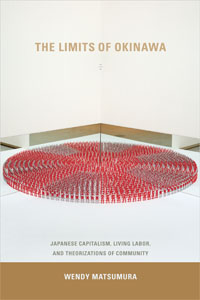 Okinawa has been disposed three times in modern history. The first disposition occurred in 1609, when the feudal lord of the Satsuma domain invaded what was then the Ryūkyū kingdom and transformed it into a vassal state. The second annexation took place in 1879, when Ryūkyū was formally incorporated into Japan as Okinawa Prefecture. The third shift in sovereignty happened in 1972 when the US reverted to Japan the islands they had occupied since 1945. On these three occasions, disposition was a form of dispossession: the people were not consulted, and the islands were treated as a pawn in a larger geopolitical game. Okinawa mattered because of its position halfway between Japan and China, intersecting the trade routes that went down to South-East Asia. Central to the former kingdom’s maritime activities was the continuation of the tributary relationship with Ming Dynasty China, which allowed the Ryūkyū islands to flourish and prosper. In terms of culture as well, the Ryūkyū islands were a mix between Chinese, Japanese, and insular influences. Wendy Matsumura’s book focuses on the period between 1879 and the early 1930s and seeks to chart the limits of Okinawa as an imagined community. Okinawa was first conceived as a feudal domain resisting Japan’s imperialism; then as an economic community facing the inroads of imported capitalism; and lastly as a diasporic and deterritorialized ensemble faced with discrimination and marginalization. Each time, the articulations of community by Okinawa’s rulers and intellectual were met with local resistance and led to alternative modes of mobilization.
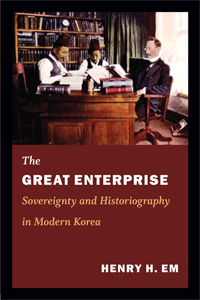 Achieving sovereignty, and attaining equal standing with other sovereign nations, was Korea’s great enterprise as referred to in the book’s title. It was a thoroughly modern project: previous generations did not feel the urge to compare with other sovereign states or to assert Korea’s distinctiveness. Beginning with the turn of the century, Korea’s commitment to the great enterprise was a necessary condition for avoiding subordinate status in the face of imperial ambitions. Then, as Japan came to dominate Korea, it became a way to break free from its colonial ruler and to campaign for its independence. Later on, emphasizing national sovereignty meant proclaiming the nation’s unity in the face of the North/South division.

 Doreen Lee had all that was required to write a great history of Reformasi, the period of transition that led to the downfall of president Suharto and the establishment of democracy in Indonesia. Although she wasn’t there during the transition years of 1998-1999—she conducted her fieldwork between 2003 and 2005—, the Indonesia she observed was still resonating with the lively debates and political effervescence that arose out of the student movement and popular protests against the Suharto regime, also known as the New Order. She met with some of the key players of the democratic transition, and gained their trust as an outsider committed to the same progressive agenda. Having spent part of her childhood and teenage years in Jakarta, she was fluent in the local language, Bahasa Indonesia, and had the personal acumen to interpret words and deeds by putting them into their cultural context. She had access to a trove of previously unexploited documents—the activist archives mentioned in the title—, which consisted of leaflets, posters, pamphlets, poems, diaries, drawings, newspaper clippings, and numerous other fragments (“the trash of democracy”, as she calls it) that activists shared with her or that were deposited in the public libraries of Western universities. Using these fragments and testimonies would have allowed for a kind of micro-historical approach that is currently in fashion among historians. Alternatively, it could have been used to challenge conventional assumptions about the Reformasi by crossing sources, checking facts, debunking myths, and reassessing the role of students and activists in the popular movement that ushered a new era in Indonesia’s political history.
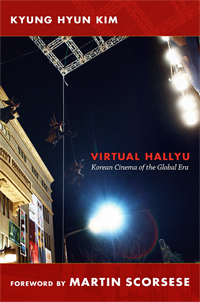 Korean cinema occupies a peculiar place in relation to hallyu. In a way, Korean movies were the harbingers of the Korean wave. They were the first Korean cultural productions to attract foreign recognition in international film festivals; they carved a global niche that was distinct from Hollywood movies or other Asian productions; and they emphasized distinctive aspects such as violence, romance, or geopolitical tensions. Cinema was the cultural medium through which Korea sought to establish itself as a new global standard. And yet K-movies are not considered part of hallyu the way K-drama, K-pop and even K-cuisine have now become. Only a handful of movies (Shiri, JSA, My Sassy Girl…) came to be seen as representative of the Korean wave, while other movies and moviemakers were perceived through the more traditional categories of film critique—national cinema, auteurship, movie genres, visual aesthetics, and narrative analysis. Korean cinema in many ways set the condition for hallyu’s expansion by inducing a shift in foreign perceptions of Korea. The country came to be seen as the producer of a different brand of modernity, distinct from Japan’s or China’s globalized cultures. Its movies were not only cheap imitation movies known collectively as Copywood; they were original productions in their own right. In addition, Korea’s movie industry demonstrated that critical and commercial success were not always incompatible: commercially successful movies could get critical acclaim, and art movies lauded by critics could also get a significant presence at the box office.
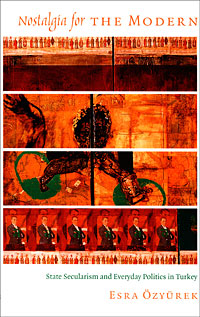 There is one country in Europe where people feel nostalgic for the 1930s, and where they almost unanimously cherish the memory of a one-party state which multiplied statues of its great leader on every street corner. The country is Turkey and the golden age that Turks remember with nostalgia is the first two decades of the republic founded in 1923 by Mustapha Kemal, the father of all Turks. The climax of this era of bliss and hope occurred with the tenth anniversary celebrations of the declaration of the Turkish Republic, when Atatürk famously declared: “How happy is the person who says I am a Turk!”
 Cultures from the South Pacific have provided anthropologists with a rich array of words and concepts: “mana” (power, charisma), “hau” (life’s energy), “tapu” (taboo) and its antonym “noa”, “hara” (a violation of tapu) and “wairua” (spirit) all originate in the languages of Polynesian cultures. These terms first came to the attention of western anthropologists through the reports of missionaries in the Pacific islands. Armchair theorists like James Frazer or Marcel Mauss used the observations of the first ethnographers to lay the foundation of their discipline. Their theories were built on the idea that it is possible to isolate cultural traits from their social context and bundle them together to draw comparisons and infer anthropological laws. Surveying the practice of gift-giving, Marcel Mauss famously came to the conclusion that it involved belief in a force binding the receiver and giver, which he labeled “hau” after the word used by the Māori. Such concepts derive their theoretical potential precisely from the lack of equivalence in common language. But as Claude Levi-Strauss later argued, the indiscriminate use of indigenous categories hampers the analysis of symbolic systems, which he proposed to process through the description of unconscious structures. Anthropological words have nonetheless entered common language, from totem to taboo and to tattoo, while anthropologists still use words like mana and hau as specialized vocabulary in their profession.

