
From Slumdog to Millionaire

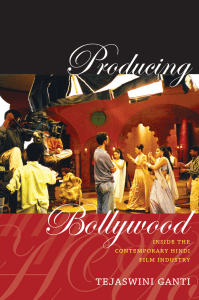
A review of Producing Bollywood: Inside the Contemporary Hindi Film Industry, Tejaswini Ganti, Duke University Press, 2012.
Imagine you are a foreign graduate student doing fieldwork in Hollywood and that you get to sit in a two-hour long interview with a major film star like Brad Pitt or Johnny Depp. This is precisely what happened to Tejaswini Ganti in the course of her graduate studies at the University of Pennsylvania when she was researching the local film industry in Mumbai, now better known as Bollywood. And it happened not only once: she sat in interviews with legendary actors such as Shah Rukh Khan, Aamir Khan, Shashi Kapoor, Sanjay Dutt, Amrish Puri, actress Ayesha Jhulka, as well as top producers and directors Aditya Chopra, Rakesh Roshan, and Subhash Ghai. What made this access possible? Why was a twenty-something PhD student in anthropology from New York able to meet some of the biggest celebrities in India? And what does it reveal about Bollywood? Obviously, this is not the kind of access a graduate student normally gets. Privileged access is usually granted to journalists, media critics, fellow producers, and other insiders. They observe the film industry for a reason: they are part of the larger media system, and they play a critical role in informing the public, evaluating new releases, building the legend of movie stars, and contributing to box-office success. As an anthropologist, Tejaswini Ganti’s approach to the Hindi film industry is different. As she states in her introduction, “my central focus is on the social world of Hindi filmmakers, their filmmaking practices, and their ideologies of production.” Her book explores “how filmmakers’ subjectivities, social relations, and world-views are constituted and mediated by their experiences of filmmaking.” As such, she produces little value for the marketization of Bollywood movies: her book may be read only by film students and fellow academics, and is not geared towards the general public. As befits a PhD dissertation, her prose is heavy with theoretical references. She draws on Pierre Bourdieu’s analysis of symbolic capital and his arguments about class, taste, and the practice of distinction. She uses Erving Goffman’s concept of face-work to describe the quest for respectability and avoidance of stigma in a social world associated with black money, shady operators, and tainted women. She steeps herself in industry statistics of production budgets, commercial outcomes, annual results, and box-office receipts, only to note that these figures are heavily biased and do not give an accurate picture of the movie industry in Mumbai.

Getting access

Part of Tejaswini Ganti’s success in getting access to the A-list of the Hindi film industry stems from her position of extraneity. As an “upper middle-class diasporic South Asian female academic from New York,” she didn’t benefit from “the privilege of white skin”—white European or American visitors could get access to the studios or film shoots in a way that no ethnic Indian outsider could—but she was obviously coming from outside and was not involved in power games or media strategies. For her initial contacts, she used the snowballing technique: personal friends in Philadelphia who had ties with the industry in Mumbai provided initial recommendations and helped her make her way through the personal networks and kinship relations that determine entry and access at every stage. Two different directors offered her the chance to join the team of directors assistants for two films, fulfilling the need for participant observation that remains a sine qua non in anthropology studies. People were genuinely puzzled by her academic interest in such a mundane topic (“You mean you can get a PhD in this in America?”) and eager to grant an interview to an outsider who had no stake in the game. Being a woman also helped: she “piqued curiosity and interest, often standing out as being one of the few—and sometimes only—women on a film act.” As she notes, she “did not seem to fit in any of the expected roles for women—actress, dancer, journalist, hair dresser, costume designer, or choreographer—visible at various production sites.” Contrary to common understanding about the gendered dimension of fieldwork, she actually had a harder time meeting women, specifically the actresses. She also experienced her share of sexual harassment, but as a young married woman with a strong will and a sharp wit she was able to handle unwelcome advances and derogatory remarks. Last but not least, dedicating an academic study to Bollywood provided a certain cachet and prestige to an industry that was desperately in need of social recognition. Actors and filmmakers strived not only for commercial success, but also for critical acclaim and cultural appraisal. A high-brow academic study by an American scholar gave respectability to the Hindi film industry “which for decades had been the object of much disparagement, derisive humor, and disdain.”

She also came at a critical juncture in the history of the Hindi film industry. She carried out her fieldwork for twelve months in 1996 and completed her dissertation in 2000, a period associated with the neoliberal turn in India’s political economy. She made shorter follow-up visits in 2005 and 2006, and her book was published by Duke University Press in 2012, at a time when neoliberalism was in full swing and the nationalist right was ascending. The Hindi film industry’s metamorphosis into Bollywood would not have been possible without the rise of neoliberal economic ideals in India. Along with the rest of the economy, the movie industry experienced a shift from public to private, from production to distribution, from domestic audiences to global markets, and from entertainment for the masses to gentrified leisure. The role of the state changed accordingly. At the time of independence, most leaders viewed the cinema as “low” and “vulgar” entertainment, popular with the uneducated “masses.” Gandhi declared many times that he had never seen a single film, comparing cinema with other “vices” such as satta (betting), gambling, and horseracing. Unlike Gandhi, Nehru was not averse to the cinema, but was critical of the kind of films being made at the time. He exhorted filmmakers to make “socially relevant” films to “uplift” the masses an to use cinema as a modernization tool in line with the developmentalist objectives of the state. He created a cultural bureaucracy to maximize the educational potential of movies, with institutions such as Doordarshan, the public service broadcaster, and the Films Division, the state-funded documentary film producer. Prohibitive policies such as censorship and taxation as well as bans on theater construction limited the development of commercial cinema, even though India soon became the most prolific film producing country in the world. How to explain the shift in attitudes toward mainstream cinema, from being a heavily criticized and maligned form of media to one which the state actually celebrated, touting as an example of India’s success in the international arena? There was, first, a rediscovery of cinema as national heritage, starting with the public celebrations of the cinema centenary in 1996. Cinema was also rehabilitated as an economic venture: large corporations such as the Birla Group, Tata Group, Sahara, Reliance, and others began to invest in the sector, displacing the shady operators that had associated Indian cinema with organized crime and money laundering. Multiplex construction replaced the old movie houses that had catered to the tastes and low budgets of the rural masses. Local authority started to offer tax breaks for films shot in their territory, while government agencies began to promote the export of Indian films to foreign markets. Formerly seen as a tool for social change, cinema was now envisaged as an engine of economic growth.

The gentrification of cinema

The result of this neoliberal turn was a gentrification of cinema. This transformation was reflected in the attitudes towards cinema, the ideology of industry players, the economic structure of the sector, and the content of movies themselves. One of the facts that surprised the author the she began her fieldwork in 1996 was the frequent criticism voiced by Hindi filmmakers concerning the industry’s work culture, production practices, and quality of filmmaking, as well as the disdain with which they viewed audiences. In discussions with filmmakers, the 1980s emerged as a particularly dreadful period of filmmaking, in contrast with both earlier and later periods of Hindi cinema. The arrival of VCR recorders and the advent of cable TV was hollowing out the market for theater moviegoing from both ends, resulting in a decline in cinematic quality. The upper classes completely skipped domestic cinema, the middle class increasingly turned to television and video recording, and working class audiences had access to video parlors where a simple hall with a television and a VCR replaced large-screen theaters. Filmmakers had no choice but to cater to the base instincts of the public, resulting in trashy movies with clichéd plots and dialogues, excessive violence, explicit sex, and vulgar choreography. The young ethnographer saw a marked evolution in her return visits to the field after 2000: while the Indian state recognized filmmaking as a legitimate cultural activity, filmmakers themselves began to feel pride in their work and became accepted into social and cultural elites. For Tejaswini Ganti, respectability and cultural legitimacy for commercial filmmaking only became possible when the developmentalist state was reconfigured into a neoliberal one, privileging doctrines of free markets, free trade, and consumerism. Urban middle classes were celebrated in state and media discourse as the main agents of social change as well as markers of modernity and development in India. A few blockbusters created a box-office bonanza and ushered in a new era for Bollywood movies. Released in 1995, Dilwale Dulhania Le Jayenge, better known by the initialism DDLJ, featured two young lovers (played by Shah Rukh Khan and Kajol) born and raised in Britain who elope in beautiful sceneries shot in Switzerland before facing the conflicting interests of their families in India. Love stories with extremely wealthy and often transnational characters began to replace former plots that often focused on class conflict, social injustice, and youthful rebellion. As the author notes, “through their valorization of patriarchy, the Hindu joint family, filial duty, feminine sexual modesty, and upper class privilege, the family films of the mid- to late 1990s were much more conservative than films from earlier eras; however, their visual, narrative, and performative style made them appear modern and ‘cool’.”

More than the content of films themselves, the material conditions of film-viewing and filmmaking were quoted as the main impetus for elite and middle-class audiences to return to cinema halls. The 1990s saw the advent of the era of the multiplex: with their smaller seating capacities, location in urban centers, and much higher ticket prices, multiplex theaters transformed the cinematic experience and allowed filmmakers to produce movies that would not have been commercially viable in the previous system. “What the multiplex has done today is release the producer from having to cater to the lowest common denominator,” says veteran actress Shabana Azmi. Indian middle-class norms of respectability and morality were embraced by the cinematic profession who sought to redeem its image formerly associated with organized crime, loose morals, and vulgar audiences. Girls from “good families” began to enter the industry as actresses, dancers, or assistants, their chastity protected by chaperones and new norms of decency on film sets: “while actresses frequently had to wear sexy, revealing clothing in certain sequences, once they were off camera their body language changed, going to great pains to cover themselves and create a zone of modesty and privacy in the very male and very public space of the set.” Male actors and directors also “performed respectability” and accomplished “face-work” by emphasizing their higher education credentials and middle-class lifestyle that cast them apart from “filmi” behavior—with the Indian English term filmi implying ostentation, flamboyance, crudeness, and amorality. Many individuals whose parents were filmmakers explained to the author that their parents had consciously kept them away from the film world. But many actors and directors were second-generation professionals who entered the industry through family connections and kinship networks. In Bollywood, cinema remains a family business, and while the Hindi film industry is very diverse in terms of linguistic, regional, religious, and caste origins of its members, the unifying characteristic of the contemporary industry is its quasi-dynastic structure. Getting a foothold into the profession requires connections, patience, and, at least in the stereotypical view associated with female actresses, a reliance on the “casting couch.”

An ethnography of Bollywood

This is why the kind of unmediated access, direct observation, and participatory experience that Tejaswini Ganti was able to accumulate makes Producing Bollywood a truly exceptional piece of scholarship. The author provides a “thick description” of an average day on an Hindi film set, rendering conversations, power relations, and social hierarchies. She emphasizes the prevalence of face-to-face relations, the significance of kinship as a source of talent, and the highly oral style of working. She depicts the presence of Hindi rituals, which have become incorporated into production routines, as well as the tremendous diversity—regional, linguistic, and religious—of members of the film industry. The movie industry is often analyzed through the lenses of Hollywood norms and practices: her ethnography of Bollywood aims at dislodging Hollywood from its default position by describing a different work culture based on improvisation, on-the-job training, and oral contracts. Films, deals, and commitments are made on the basis of face-to-face communication and discussion between key players, rather than via professional mediators or written materials. Actors, directors, writers, or musicians do not have any formal gatekeepers or agents as proxies for attaining work. If a producers wants a particular star for a film, he speaks directly with him. Heroines are usually chosen after the male star, director, and music director have been finalized for a film project, and are frequently regarded as interchangeable. Spending time on a Hindi film set, it is hard to miss the stark contrast between stars and everyone else around them, especially the way stars are accorded a great deal more basic comfort than the rest of the cast and crew. Chorus dancers and extras—referred to as “junior artists”—often do not have access to makeup rooms or even bathrooms. At any given point in time, only about five or six actors are deemed top stars by the industry, based on their box-office draw and performance. This makes the kind of access that the junior ethnographer enjoyed all the more exceptional.

Cinema is a risky business, and managing the uncertainty endemic to the filmmaking process is a key part of how the movie industry operates. Hindi filmmakers aim to reduce the risks and uncertainties involved with filmmaking in a variety of ways, from the most apparently superstitious practices—from conducting a ritual prayer to Ganesh, the elephant-headed Hindu god regarded as the remover of obstacles, to breaking a coconut to celebrate the first shoot of the day—to more perceptible forms of risk reduction, such as always working with the same team of people or remaking commercially successful films from the Tamil, Telugu, and Malayalam film industries. Although the driving force within the Mumbai industry is box-office success, it is a difficult goal, achieved by few and pursued by many. The reported probability of a Hindi film achieving success at the box-office ranges from 10 to 15 percent every year. The entry of the Indian corporate sector in the twenty-first century has infused the industry with much-needed capital and management skills. Many of the new companies have integrated production and distribution, which reduces uncertainties around the latter. Measures such as film insurance, coproductions, product placement, and marketing partnerships with high-profile consumer brands have also mitigated some of the financial uncertainties of filmmaking. The gentrification of cinema and the growth of multiplexes have helped to reduce the perception of uncertainty associated with filmmaking by reducing the reliance on mass audiences and single-screen cinemas. With their high ticket prices, social exclusivity, and material comforts, multiplexes have significantly transformed the economics of filmmaking. So has the growing importance of international audiences, with the South Asian diaspora providing one of the most profitable markets for Bollywood filmmakers. Diasporic audiences, especially in North America and the United Kingdom, are perceived as more predictable than domestic audiences. Not only has the multiplex and the gentrification of cinema created new modes of sociability and reordered public space, but it has also reshaped filmmakers’ audience imaginaries. Filmmakers still strive to produce the “universal hit,” a movie that can please “both aunties and servants,” but at the same time they complain that audiences are not “mature” enough to accept more risqué stories or artistically ambitious productions. This definition of the public as divided between “the masses and the classes” operates as a form of doxa—that which is completely naturalized and taken for granted—within the film industry.

The role of the state

The Hindi film industry offers a living proof example that competing against Hollywood’s dominance does not require huge barriers on imported films nor the provision of massive subsidies to domestic movies. In the movie industry as in other sectors, the role of the government is to set the broad economic environment promoting a sound and stable legal regime that is required by film companies. On this basis, film companies develop their business strategies, in particular they take the high risks inherent with this industry. A healthy domestic market requires that films from all origins compete on a level playing field to attract the largest number of domestic moviegoers. But very often the intervention of governments in the film industry goes beyond the provision of a level playing field. Public support such as subsidies, import restrictions, screen quotas, tax relief schemes, and specialized financial funds holds a preeminent place in the film policies of many countries. A generous film subsidy policy or certain import quotas can inflate the number of domestic films produced; but they rarely nurture a sustainable industry and often translate into a decline in film quality and viewers’ experience. In India, the government took the opposite direction to regulating the sector. Instead of subsidizing the industry, economic policies have treated cinema as a source of tax revenue rather than as an engine of growth. The main bulk of taxation is collected by individual state governments through the entertainment tax, which is a sales tax imposed on box-office receipts, ranging from 20 to 75 percent. India’s cinema industry has faced other regulatory hurdles, such as restrictions on screen construction that have hindered the expansion of cinemas, especially in smaller towns and cities. Even after being accorded official status as a private industry in 2001, moviemakers had tremendous difficulty in obtaining institutionalized funding, except for those already established companies that don’t need the capital and that can capitalize on lower bank interest rates compared to private financiers. The influx of capital from established financial institutions and business groups also brought in much needed management skills and planning capabilities. As a result, Bollywood has outperformed most of its competitors across a range of key dimensions (number of films produced, box office revenues, etc.) with much lower level of subsidies than the other countries and—above all from a cultural perspective—with an increase in quality and popular appeal of movies when compared to an earlier period or to foreign productions. Put that to the credit of neoliberalism.

A Diplomat’s Dog in India

A review of Indifference. On the Praxis of Interspecies Being, Naisargi N. Davé, Duke University Press, 2023.

IndifferenceMy wife and I are moving to India along with our dog Kokoro, a shiba inu. Kokoro, aged 13 (a venerable age for a dog) has already been around, seen places. As a diplomat’s dog, he had to follow his keeper in his foreign assignments. He has never set foot, or paw, in the land of his ancestors, and doesn’t come with us when we travel to Japan. He remained in France when I was posted in Seoul—not because he was afraid of staying in a country where dog meat consumption is still not uncommon, but because I went to Seoul as a goose father, or gireogi appa, as the Koreans say to designate a breadwinner living away from wife and kids and sending money home for the sake of their children’s education. Kokoro did come to Vietnam during my most recent assignment. He and my wife had a hard time adapting to the local culture. Pets are increasingly becoming familiar in Vietnamese cities, but many people still regard dogs as uncouth and unclean, keeping them away from human contact. My wife couldn’t determine whether people waving or wagging finger at her and her dog to tell them to go away were being aggressive toward a foreigner or simply discriminatory toward a dog. She had to bring a stick when walking Kokoro in the neighborhood park in order to ward off stray dogs, and was once attacked and bruised by a mutt. Wherever we went, she joined local NGOs or Facebook groups mobilizing for animal protection and pet welfare.
Animal protection in India

I picked up Naisargi Davé’s book because Indifference was ostensibly about human-animal relations and animalist cultures in India. The questions that I had in mind were related to the conditions that would await Kokoro and his keepers in our future location. Is there a pet culture in Indian cities, and can one easily find dog food and specialized services such as vets and pet sitters? Do street dogs carry rabies and are they aggressive toward pet dogs and their keepers during their walks? What is the general attitude of the population toward non-human animals in general and dogs in particular? Are there local organizations of pet owners or animal rights NGOs that we could join? Is violence against animals or the unethical treatment of non-human species an issue? Are Indian cows really sacred, and why do they get such special treatment? Davé’s book didn’t provide answers to these questions, at least directly. It wasn’t meant or supposed to. Anthropology, at least the way it is practiced now, is not the discipline that will answer practical questions regarding a foreign country or a particular culture. There are other books for that: travel guides, how-to manuals, journalistic accounts, or expat diaries. Naisargi Davé is not interested in South Asian cultures or civilizations in the traditional sense. Nowadays culture is a fraught concept in anthropology; nobody really uses that notion any more. The frontier of the discipline lies in queer studies, new materialism, animalism, and deconstructing notions of race, gender, and identity. As an author published in a cutting-edge academic press, Davé is committed to pushing the envelope further, not in revisiting foregone notions.

One way she connects with the past of the discipline is through fieldwork and participant observation. Anthropology departs from arm-chair theorizing and cannot be practiced from a cabinet. Ethnographers have to go on the ground, meet people, participate in activities, observe surroundings, and take notes or keep a research diary. Davé conducted her ethnographic fieldwork in several Indian cities over a period of ten years, documenting animal activism and interspecies relations by doing participant observation in local NGOs. She didn’t follow a structured methodology or engaged in survey research; instead, as she describes it, “I followed my intuitions, went where I was invited; and, in general, said yes to who and what turned up.” She associated with several strands of Indian society, from rags to riches, from pariah to nabab. She had several discussions with Maneka Gandhi, India’s most notorious animal activist and heir to the Nehru-Gandhi political dynasty, but also followed streetworkers in their roaming across popular settlements or red-light districts to heal wounded dogs or rescue suffering animals. She provides a long list of animal rights organizations: People for Animals, Welfare for Stray Dogs, Kindness for Animals and Respect for Environment, the Society for the Prevention of Cruelty to Animals, Help in Suffering, Compassion Unlimited plus Action, the Animal Welfare Board of India, Humane Society International, Save Our Strays, etc.

Dog riots and cow vigilantes

Some organizations originated in the colonial period and were significantly shaped by foreigners or expatriates. Others follow a purely domestic agenda and reflect local cultures of animal protection. Jaïns, for instance, are strict vegetarians who try to avoid all harm to humans and animals; many Jaïn monks and nuns even wear fabric over their mouths to avoid breathing in insects or microbes, and sweep ahead of themselves while walking to avoid treading on bugs. Almost every Jaïn community has established animal hospitals to care for injured and abandoned animals; many Jaïns also rescue animals from slaughterhouses. Dogs are considered sacred in the Zoroastrian religion, and an attempt by the British government to exterminate Bombay’s stray dogs in 1832 led to a mass protest known as the Parsi Dog Riots. The Great Mutiny of 1857 originated because rumors circulated that Indian soldiers’ bullet cartridges were greased with pork fat (repulsive to Muslims) or beef fat (insulting to Hindus.) The Gau Seva Sangh or Society for Service to the Cow is associated with the Hindutva right and has sponsored laws banning cow slaughter in almost of all of India’s 28 states. Cow vigilante groups have been accused of enforcing this ban through violence, often leading to the lynching of (mostly Muslim) meat sellers and cattle traders. For Davé, cow protectionism “is not animal welfare: it is exclusively about the cow, the cow as a weaponized symbol that separates those who eat or slaughter cows (Muslims, Dalits, tribal people, and Christian minorities) from those who, by doctrine, do not (caste Hindus, or sarvanas).” Davé also makes a distinction between “hands-on” and “hands-off” animalists. The first get their hand dirty and “pick up poop” or enter their fingers into dogs’ behinds to extract maggots; the second keep their hands clean and are also designated as laptopwala or AC-wala (those who reside in air conditioning.) Davé follows the formers in animal shelters caring for three-legged dogs, paralyzed pigs, and a long list of species; in street patrols doing community service for suffering animals; and in inspection visits of slaughterhouses or poultry farms.

Davé notes contradictions that often shock foreigners or distant observers of Indian society. Compassion for suffering animals can coexist with indifference for the plight of humans or cruelty toward other species. Ahimsa, a central doctrine in Hindu, Jaïn, and Buddhist thought, is often invoked to laud the moral relationship between people and animals in India. But it can also be read as an abnegation of responsibility, a haughty indifference toward every social issue that does not directly involve the abuse of animals, or the refusal to expose onself to ethical quandaries. Her ethnographic vignettes include the story of Abodh, a street veterinarian who gets his hands dirty from cleaning the wounds of animals and only asks for water to clean his hands as a form of retribution; of Dipesh, a street worker who patiently cleans a dog’s butt infected by maggots and disposes of the worms on a discarded newspaper, then expresses indifference when the dog almost gets run over by a car; of Retired Brigadier-General S.S. Chauhan who cares so much for his cow (named Kamadhanu) that he gives up drinking milk after she stops lactating; of Amala Akkineni, a South Indian actress who converts to the animal cause when she picks up a goat hit by a lorry on the side of a road; or of the Brahmin who has a run-over bull suffering agonizing pain be removed ten feet from his land to the road where he can be shot without compromising the landlord’s ahimsa. Less savory stories include mob killings of Dalit or Muslim villagers accused of having slaughtered a cow, or the many cases of bestiality, or animal sexual abuse, reported by the media. In a provocative chapter co-written with Alok Gupta, Davé draws a parallel between sexual violence against animals and livestock insemination, which she labels “permissible interspecies sex.”

Ethnographic vignettes and biographical portraits

Davé traces the history of animal protection in India through three portraits of women who advocated for the rights of animals from very different perspectives, which she calls “the odious,” “the genial,” and “the luminous.” Savitri Devi Mukherji shows that moral attention to animals can be morally repulsive. Born in France from European parents, she developed a fixation on cats and Aryans as well as a lifelong animosity toward Britain. She came to India in 1932, stayed briefly at Rabindranath Tagore’s ashram in Shantiniketan, and became an apologist of Hitler and his crimes against humanity (which she found “hopelessly amateurish” in comparison to other atrocities.) According to Davé, Savitri Devi provides the link between radical ecology, Nazism, and the Hindutva movement. Crystal Rogers, by contrast, was moved by compassion toward sentient species, humans and non-humans alike. The author of the autobiography Mad Dogs and an Englishwoman was “the original kutta-billi activist” or dog-cat lover, creating several shelters for abandoned and injured animals that exist to this day. The third character, Rukmini Devi Arundale, was a student of the theosophist Indophile Annie Besant and has become an icon of the animal welfare movement in India through her sponsoring of the Prevention of Cruelty against Animals Act (PCA) in 1960 and her participation to the the Animal Welfare Board of India until 1986. She also espoused the cause of Bharatanatyam, a traditional dance from Tamil Nadu then scorned by the elite, and created the Kalakshetra dance academy in Chennai. In addition to these three biographies, Davé mentions the attachment to animal welfare by the Nehru-Gandhi family. Jawaharlal Nehru, the father of India’s independence, was an animal lover in the bourgeois sense of the word. He considered it a point of pride to push through the PCA Act. His daughter, Indira Gandhi, sponsored the wildlife conservation initiative Project Tiger in 1973 and wrote that “someday I hope people will shoot only cameras, and not guns, in the jungle.” Maneka Gandhi married Indira’s younger son Sanjay, who died in a plane crash in 1980. An animal rights activist and a politician, she led protests against the opening of the first McDonald’s restaurant in 1996, stating that “we don’t need cow killers in India.”

But those vignettes and portraits aside, Davé refrains from providing “context.” Asked by a colleague from another discipline to give some context to her anecdote about the dog’s butt infected with maggots, she answers tongue-in-cheek with a long description of a dog’s anatomy and a chemical analysis of anal glands secreting a strong smell that keeps parasites away. For her, we should not talk about dogs and animal welfare in general, but of this particular dog in a specific situation. She echoes the anthropologist Donna Haraway who, in When Species Meet, criticizes Jacques Derrida for describing (in The Animal That Therefore I Am) his reaction to a cat staring at him naked without indicating the cat’s name or taking a cat’s point of view. While she limits her perspective to the ground level, she also offers a meta-analysis of her topic: she doesn’t write directly on animal ethics in India, but on what it means to raise the issue of animal welfare in specific situations. She also warns against the scientific impulse to “look, stare, take in, pillage, acquire, ingest, dissect, admire, anthropologize, steal, exhibit, repair, voice, recoil, sell, and possess.” Curiosity—the basic drive of the social scientist—is a politically tainted notion. As she confesses, “I can say for myself that, as a dyke, the curious gaze of normal people is rarely a pleasure.” As she puts it, “one should at least sometimes just leave folks alone.” The requirement for total transparency, like language for Roland Barthes, is fascist by nature. Instead of the inquisitorial gaze of the curious observer, she advocates “indifference to difference.” Indifference calls for a different politics as well as a poetics of relation and identity. Naisargi Davé concurs with Édouard Glissant when the French Caribbean poet proclaims: “we clamor for the right to opacity for everyone.” Her particular form of opacity is called queerness, or the refusal to conform to heteronormative scripts: “as for my identity,” she echoes Glissant, “I will take care of that myself.” We should have respect for mutual forms of opacity: in the words of the intersectional feminist and poet Audre Lorde, we should be “at the watering hole / not quite together / but learning / each other’s ways.”

Pets and diplomacy

Over the years and along my foreign postings, I have accumulated many stories about pets and diplomacy. The dog of the US Ambassador to Seoul was quite a celebrity, and his separate twitter account attracted many followers. During morning walks, people stopped his master in the street because they recognized the dog, not the diplomat. There is a popular hashtag for #diplocats on Twitter, with Larry, the cat from 10 Downing Street, as a frequent guest star. An infamous picture shows the French Ambassador to Rwanda boarding an evacuation plane at the beginning of the 1994 genocide along with his dog, while leaving behind Rwandan employees and partners to a certain death. Instructions on relocation always have a few paragraphs on pets, describing the minute procedures that dog or cat owners have to follow in order to bring their animal companion with them. Some countries have set quarantines or procedures so complex that they have to be planned at least six months in advance, while other countries, such as the Maldives, prohibit bringing in or owning dogs by law. Pets are a sweetener in international relations: state visits sometimes end with the offering of a pet or a live animal as an official gift, and China conducts its own panda diplomacy by sending giant pandas to the zoos of friendly countries. In 1949, India’s first Prime Minister Jawaharlal Nehru received a letter from the children of Japan with an almost preposterous request: they had never seen a live elephant and wanted him to send one to them—which he did, starting India’s own brand of elephant diplomacy. Some gifts carry a mixed message, such as the dog Pushinka given to President Kennedy by Premier Khrushchev in 1961. As one of the puppies of the first dog to survive space travel, Strelka, Pushinka was a gesture of friendship but also a lingering, living reminder of the Soviets’ early victories in the space race. But pets can also be weaponized: witness the picture of German Chancellor Angela Merkel, reportedly fearful of dogs since one attacked her in 1995, looking distinctly uncomfortable when Russian President Vladimir Putin brought his large black Labrador Koni into a meeting at his summer residence in Sochi, Russia, in January 2007.

The Party Left and the Hindu Right in Kerala

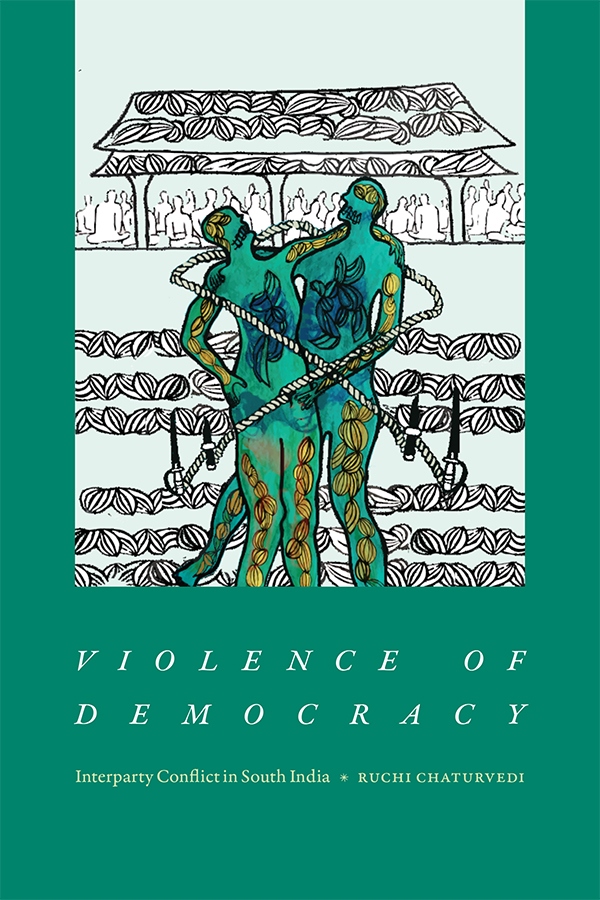
A review of Violence of Democracy: Interparty Conflict in South India, Ruchi Chaturvedi, Duke University Press, 2023.

Violence of DemocracyViolence of Democracy studies a long-standing violent antagonism between members of the party left and the Hindu right in the Kannur district of Kerala, a state on the southwestern coast of India. The term party left refers to members of the Communist Party of India (Marxist) (CPI(M)); the term Hindu right denotes affiliates of the Rashtriya Swayam Sevak Sangh (RSS) and the Bharatiya Janata Party (BJP) that holds power in New Delhi since 2014. The prevalence of violence in Kerala’s political life presents the reader with three paradoxes. First, political scientists view democracy as a pacifying system, as the regime that is most capable of keeping violence at bay. Autocracies are violent by nature; democracies are supposed to be more peaceful, both between themselves (democracies don’t go to war against each other) and within their borders (antagonisms are resolved through the ballot box.) But Ruchi Chaturvedi shows us that democracy can coexist with violence; indeed, that some characteristics of a democratic regime call for the violence it is supposed to contain. As she states in the introduction, “violence, I argue, not only reflects the paradoxes of democratic life, but democratic competitive politics has also helped to condition and produce it.” This criminalization of domestic politics has a long history in Kerala, and Violence of Democracy documents it by revisiting the life narratives of key politicians from the left, by going through judicial cases and media reports of political violence in the Kannur district of Kerala, and by conducting ethnographic interviews with grassroot militants from both parties. This book will be of special interest to social scientists interested in Indian politics as viewed from a southern state that now stands in opposition to the Modi government. But the author also raises disturbing questions for political scientists more generally: is democracy intrinsically violent? What explains the shift from the verbal violence inherent in antagonistic politics to agonistic confrontation that results in acts of intimidation, attempts to murder, and hate crimes? How can violence become closely entwined with the institutions of democracy? How to make political forces accountable for the violence they encourage and the crimes committed in their name? What happens to political violence and its culprits when they are prosecuted through the judicial system and are sanctioned under criminal law? 

Violent democracy

The second paradox lies with the root causes of political violence in this district of Kerala. Violence in India is often seen as the result of communal tensions. India’s birth of freedom was bathed in blood: the 1947 partition immediately following independence cut through the fabric of social life, pitting one community against the other. Antagonisms between Hindus and Muslims, or between Hindus and Sikhs, have often led to waves of riots and murderous violence. Beyond the trauma of the partition in which around one million people were killed and 14 million were displaced, mass breakouts of violence include the 1969 Gujarat riots involving internecine strife between Hindus and Muslims, the 1984 Sikh massacre following the assassination of Indira Gandhi by her Sikh bodyguards, the armed insurgency in Kashmir starting in 1989, the Babri Masjid demolition in the city of Ayodhya leading to retaliatory violence in 1992, the 2002 Gujarat riots that followed the Godhra train burning incident, and many other such episodes. If religion was not enough reason to fuel internal conflict, Indian society is also divided along caste, class, race, regional, and ethno-linguistic lines, and these divisions in turn often abet violence and intercommunal strife. But in the Kannur district that Chaturvedi observes, “members of the two groups do not belong to ethnic, racial, linguistic, or religious groups that have been historically pitched against other.” Indeed, “local-level workers of both the party left and the Hindu right involved in the violent conflict with each other share a similar class, religious, and caste background. And yet the contest between them to become a stronger presence and the major political force in the region has generated considerable violence.” The conflict between the two parties in this particular district is purely political. It cannot be read as a conflict between an ethnic or religious majority against a minority community. Its roots lie elsewhere: for Chaturvedi, they are to be found in the very functioning of parliamentary democracy in India.

The third paradox is that this history of violent struggle between the party left and the Hindu right doesn’t correspond to the standard image most people have of Kerala. This state on India’s tropical Malabar Coast is known for its high literacy rate, low infant and adult mortality, and low levels of poverty. Kerala’s model of development gained exceptional global coverage in the 1970s, 1980s, and early 1990s, before the rest of India began to enter into its course of high growth and raising average incomes. Even now, Kerala is ahead of other Indian states in terms of provision of social services such as education and health. Its achievements are not linked to a particular industry, like the IT service sector in Bangalore or the automotive industry in Chennai, but stem from continuous investments in human capital and infrastructure (remittances of Kerala workers employed in Gulf states have also played a role.) Kerala is also known for having self-avowed Marxists occupying positions of power since more than four decades. As Chaturvedi reminds us, “it was the first place in the world to elect a communist government through the electoral ballot in 1957.” Today, the two largest communist parties in Kerala politics are the Communist Party of India (Marxist) and the Communist Party of India, which, together with other left-wing parties, form the ruling Left Democratic Front alliance. They have been in and out of power for most of India’s post-independence history, and are well entrenched in local political life. Communists are sometimes accused of plotting the violent overthrow of the government through revolutionary tactics, and the BJP is not immune to playing with the red scare and accusing its enemies of complotism. But in Kerala violence doesn’t come from revolutionary struggle or armed insurgency; it originates in the very exercise of power. And it didn’t prevent Kerala to become the poster child of development economics, showing that redistributive justice can be achieved despite (or alongside) violent conflict and antagonistic politics.

Malabar traditions

Some observers may explain political violence in Kerala by the intrinsic character of its inhabitants. They point to a traditional martial culture of physical confrontation and warfare. The local martial art, kalaripayattu, is said to be one of the oldest combat technique still in existence. Dravidian history was marked by internecine warfare, the rise and fall of many great empires, and a culture of resistance against northern invaders. The Portuguese established several trading posts along the Malabar Coast and were followed by the Dutch in the 17th century and the French in the 18th century. In French, a “malabar” still means a muscular and sturdy character, although the name seems to come from the indentured Indian workers who came to toil in sugarcane fields of the Réunion island. The British gained control of the region in the late 18th century. The Malabar District was attached to the Madras Presidency, while the other two provinces of Travancore and Cochin, which make up the present-day Kerala, were ruled indirectly through a series of treaties reached with their princely authorities in the course of the 19th century. Direct rule in Malabar reinforced landlord domination over sharecroppers and tenants, with the landlords belonging to the upper-caste Nairs and Nambudiris while tenant cultivators and agricultural workers were the purportedly inferior Thiyyas, Pulayas, and Cherumas. In the early 20th century, social tensions were rife, voices were calling for land reform and the end of caste privilege, and Kerala became the breeding ground for the cadres and leaders of the Communist Party of India (CPI), officially founded on 26 December 1925. Communism is therefore heir to a long tradition of militancy in Kerala. India is home to not one but two communist parties, the CPI and the CPI(M), the second born of a schism in 1964 and sending more representatives to the national parliament than the first.

Instead of essentializing a streak of violence in India’s and Kerala’s political life, Chaturvedi explains the violent turn of electoral politics in the district of Kannur as the result of majoritanianism, the adversarial search to become a major force in a local political system, and its correlate minoritization, the drive to marginalize proponents from the minority party. The search for ascendance is not extraneous to democracies but is part of their basic definition and structure. In Kerala, politics turned violent precisely because the main political forces, and especially the party left and the Hindu right, agreed to play by the rules of democracy. The acceptance of democracy’s rules-of-the-game, namely free and fair elections and majority rule, wasn’t a preordained result. At various points in its history, the communist movement in India was tempted by insurgency tactics and armed struggle. Chaturvedi revisits the political history of Kerala by drawing the portrait of two leaders of the political Left, using their autobiographies and self-narratives. Both A.K. Gopalan (“AKG”) and P.R. Kurup were upper-caste politicians who identified with the plight of poor peasants and lower-caste workers. In 1927, Gopalan joined the Indian National Congress and began playing an active role in the Khadi Movement and the upliftment of Harijans (“untouchables” or Dalits). He later became acquainted with communism and was one of 16 CPI members elected to the first Lok Sabha in 1952. Gopalan’s life narratives “privilege spontaneous moral reactions marked by a good deal of physical courage and a strong sense of masculinity.” He was a party organizer, anchoring the CPI and then the CPI(M) in the political life of Kerala, and a partisan of electoral politics, discarding the temptation to engage in armed insurrection in 1948-1951 as “adventurist” or “ultra-left.” Thanks to his heritage, the CPI(M) now resembles other parties normally seen in parliamentary democracies: “each one seeking to obtain the majority of votes in order to ascend to the major rungs of government.” But P.R. Kurup embodies a darker side of electoral politics: known as “rowdy Kurup,” he remained a regional socialist leader through strong-arm tactics and the occasional streetfight operation against rival supporters of the CPI or the Congress. His band of low-caste supporters (“Kurup’s rowdies”) were willing to use intimidatory and violent means so that their party remained on top.  

From agonistic contest to antagonistic conflict

Both Gopalan and Kurup were “shepherds” or “pastoral leaders” who protected, saved, and facilitated the well-being of a populace that reciprocated their favors with votes and other expressions of support. By contrast, the next generation of local leaders to which Chaturvedi turns come from a lower rung of society. They are the militant members and local cadres of the CPI(M) and the RSS-BJP who form antagonistic communities willing to attack and counterattack each other so that their party might dominate in the electoral competition. The fact that young men at the forefront of the conflict between the party left and the Hindu right in the district of Kannur share similar religious, caste, and class backgrounds makes it exceptional. Conflict between the two groups cannot be read as a conflict between an ethnic or religious majority against a minority community. But this distinctive form of political violence in Kannur can be characterized as an exceptional-normal phenomenon, an expression of something common in all democracies: competition for popular and electoral support creates the conditions and ground for the emergence of hate-filled and vengeful acts of violence between opposing political communities. The clashes between the two camps are not just occasional: exploiting various sources such as police and court records as well as personal interviews with workers from the two groups, the author estimates that more than four thousand workers of various parties have been tried for political crimes in Kannur in the past five decades. Assailants used weapons such as iron rods, chopping knives, axes, crude bombs, sword knives (kathival), sticks, and bamboo staffs (lathi). They formed tight-knit communities of young men sharing fraternal bonds and a spirit of strong cohesion: the RSS shakha (local branch network) is the most organized structure from the Hindu right, but the party left also has its volunteer vigilante corps akin to RSS cadres or student wing trained in “self-defense techniques.” For both camps, a cycle of attacks and counterattacks breeds mimetic violence and a culture of aggression and vengeance.

In a functional democracy, law and order is maintained and crime gets punished. Many young men from the party left and the Hindu right have been brought to court on suspicion of politically motivated crimes and sanctioned accordingly. But for Chaturvedi, law is a “subterfuge” that obfuscates the complicity of the democratic political system in brewing violence and offers it an “alibi” or a “free pass.” Justice is the continuation of politics by other means, and the conflict between the CPI(M) and the RSS-BJP in Kannur is being reenacted in the courts. The judicial system depoliticizes political violence by projecting responsibility onto individuals and exonerating political structures of any responsibility for the crimes committed in their name. Perpetrators of violent aggression are liable under criminal law and judges don’t take into account their political motivations, pointing instead to acts of madness or a background of criminal delinquency. Political parties from both sides do not remain inactive during trials: they tutor witnesses to produce convincing testimonies or offer alibis, they create suspicion about testimonies of the opposite party, they fabricate evidence and manipulate opinion. Judicial proceedings take an exceedingly long time due to juridical maneuvers, and suspects are often acquitted for lack of evidence. Important local figures thought to be planning and facilitating the aggressions are not called to account. In addition, according to Chaturvedi, the judicial system in India has taken a majoritarian turn: it affords impunity to members of the dominant group while persecuting minorities and those who challenge its hegemony. In Kerala, it did not stop generations of young men to engage in attacks and counterattacks so that their party can stay on top. Depoliticizing political violence and obscuring the conditions that have produced it not only leaves political forces unaccountable: it perpetuates a cycle of aggression and impunity. For the author, a true political justice should not reduce political violence to individual criminality, but should address the structures that underlie it.

Majoritarianism and minoritization

For Chaturvedi, electoral democracy is defined by the competition “to become major and make minor,” or the imperative “to become a major political force and reduce the opposition to a minor position.” In a first-past-the-post electoral system, the party that commands the greatest number of votes in the greatest number of constituencies obtains greater legislative powers and access to executive authority. There is a built-in incentive to conquer and vanquish, as political opponents are seen as an obstacle in the road to power. Democracy therefore has a propensity to divide, polarize, hurt, and generate long-term conflicts. In the district studied by the author, democracy has facilitated the emergence of violent majoritarianism and minoritization, understood as “practices that disempower a group in the course of establishing the hegemony of another.” Most modern democracies make accommodations to protect minorities, but they also continue to uphold rule of the majority as the source of their legitimacy. The founding fathers of modern India, from Syed Ahmad Khan to Mahatma Gandhi to B.R. Ambedkar, were aware of this risk of majority rule and sought to mitigate it by building checks-and-balances and appealing to the better part of people’s nature. Initially a proponent of Hindu-Muslim unity, Sir Syed wrote about the “potentially oppressive” character of democracy, fearing that it might translate into “crude enforcement of majority rule.” Gandhi not only warned against the workings of competitive politics and the dangers of majoritarianism, but also expressed skepticism about the rule of law and impartiality of the judicial system. Ambedkar wrote principles of political freedom and social justice into the Indian constitution, but was keenly aware that democracies were by definition a precarious place for social and numerical minorities. Although their solutions may not be ours, Chaturvedi concludes that “we need to attend to questions that figures like Sir Syed, Ambedkar, and Gandhi raised.”

The World’s Largest Democracy

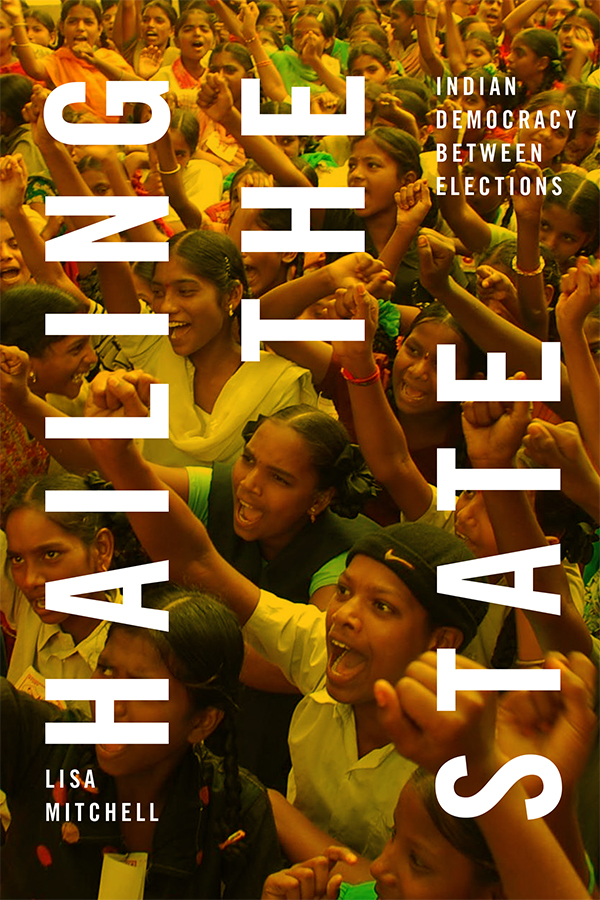
A review of Hailing the State: Indian Democracy between Elections, Lisa Mitchell, Duke University Press, 2023.

Hailing the StateWe are tirelessly reminded that India is “the world’s largest democracy.” In times of general elections, like the one taking place from 19th of April to 1st of June 2024, approximately 970 million people out of a population of 1.4 billion people are called to the ballot box in several phases to elect 543 members of the Lok Sabha, the lower house of India’s bicameral parliament. The election garners a lot of international attention. For some, it is the promise that democracy can flourish regardless of economic status or levels of income per head: India has been one of the poorest country in the world for much of the twentieth century, and yet has never reneged on its democratic pledge since independence in 1947. For others, it is the proof that unity in diversity is possible, and that nations divided along ethnic, religious, or regional lines can manage their differences in a peaceful and inclusive way. Still for others, India is not immune to the populist currents menacing democracies in the twenty-first century. For some observers, like political scientist Christophe Jaffrelot, India’s elections this year stand out for their undemocratic nature, and democracy is under threat in Narendra Modi’s India. And yet India is a functional democracy where citizens participate in voting at far higher rates than in the United States or Europe. Lisa Mitchell’s book Hailing the State draws our attention to what happens to (as the book’s subtitle says) “Indian democracy between elections.” Except during general election campaigns, foreign media’s coverage of Indian domestic politics is limited in scope and mostly concentrates on the ruling party’s exercise of power in New Delhi. Whether this year’s elections are free and fair will be considered as a test for Indian democracy. But as human rights activist G. Haragopal (quoted by the author) reminds us, “democracy doesn’t just means elections. Elections are only one part of democracy.” Elected officials have to be held accountable for their campaign promises; they have to listen to the grievances of their constituencies and find solutions to their local problems; they have to represent them and echo their concerns. When they don’t, people speak out.
Repertoires of protest

They do so in distinctly Indian ways, using repertoires of protest that differ markedly from modes of action used in other democracies. During the Telangana movement to create a separate state distinct from Andhra Pradesh, people resorted to roadblocks on state and national highways, rail blockades, fasting vows or hunger strikes, mass outdoor public meetings, strikes or work stoppages, sit-ins, human chains, processions, and marches to the capital. Collective mobilizations acquired grand names such as Mahā Jana Garjana (lit., “great roar of the people”), Sakala Janula Samme (general strike; lit., “All People’s Strike”) or Dilli Chalo (“Let’s Go to Delhi”) movements, while more ordinary practices were designated as garjanas (mass meetings), dharnās (sit-ins), padayātras (foot pilgrimages), and rāstā (blockades) and rail roko actions. During the 2020–2021 Indian farmers’ protests against three farm bills that were passed by the Parliament of India in September 2020, Tamil Nadu farmers resorted to various techniques to gain political attention, including “shaving half their beards and hair, displaying skulls and femur bones purported to be from farmers who had committed suicide, eating rats and snakes, marching in the nude to the prime minister’s office, and vowing to drink their own urine and eat their own feces.” According to Lisa Mitchell, we should not see these practices as specific to southern Indian states or linked with low-status caste or religious-based identitarian politics. First, these registers of political participation are not marginal to Indian democracy: “the many collective assemblies that sought to hold elected officials accountable to their promises to create the new state of Telangana are just one set of examples of the many similar practices that animate India’s wider political terrain.” Second, these collective modes of assembly serve a political function: they are “widely seen in India as everyday communicative methods for gaining the attention of officials, making sure that election promises are implemented, and ensuring the equitable enforcement of existing laws and policies.” And third, these mass protests have a history that predates the institution of Indian democracy, finding their roots in colonial times and even in the precolonial efforts to gain audience with domestic rulers.

Lisa Mitchell defines “hailing the state” as “a wide range of practices that can be grouped together around their common aim to actively seek, maintain, or expand state recognition and establish or enhance channels of connection to facilitate ongoing access to authorities and elected officials.” The expression inverts or subverts the state tactic identified by French philosopher Louis Althusser as “hailing” or “interpellation” by which a state official—in the Althusserian vignette, a policeman—interpellates a citizen with a halting order (“Hey, you!”). For Michel Foucault, a disciplinary society is a society where one becomes a docile body due to the presence, or threat of, constant surveillance and discipline. In political analysis inspired by Marxism or Foucaldian studies, the capitalist state is always on the side of oppression or surveillance and subjects are drawn to passive submission or led to active resistance. According to anthropologist James Scott, “weapons of the weak” include everyday forms of resistance such as footdragging, dissimulation, false compliance, pilfering, feigned ignorance, slander, arson, sabotage, and so forth. But as Lisa Mitchell notes, many collective actions of protest are in fact efforts to seek recognition and inclusion by state authorities, not to subvert or to bypass them. In both the Telangana movement and the 2020-21 farmers’ protests, the demands made were not for the overthrow of the state, but rather for dialogue with representatives of the state, for inclusion within the processes that would determine state policies, and for the fulfillment of earlier political promises that had not yet been realized. Failure to achieve recognition forces petitioners to amplify their voices in order to be heard by public administrators, political leaders, and the general public: “when one’s interests are ready well represented and one can be certain that one’s voice will be heard, there is little need to mobilize collectively in the streets. However, when one’s voice and interests repeatedly fail to find recognition, an alternative is to make one’s articulations more difficult to ignore by joining together in collective communicative action.”

Turning up the volume

Hailing the State is organized around seven sets of collective mobilizations: (1) sit-ins (dharna) and hunger strikes (nirāhāra dīkṣa); (2) efforts to meet or gain audience (samāvēśaṁ) with someone in a position of authority; (3) mass open-air public meetings (garjana); (4) strikes (samme, bandh, hartāl); (5) alarm chain pulling in the Indian railways; (6) road and rail blockades (rāstā and rail roko agitation);and (7) rallies, processions, and pilgrimages to sites of power (yātra, padayātra), along with the mass ticketless travels that often enable these gatherings. These social movements are not the expression of preexisting cultural identities; on the contrary, as Mitchell shows, Telangana or Dalit identities are constructed out of collective action and are the result of efforts to amplify voices and have them recognized. Actors who seek recognition, connection with, or incorporation into structures of state power are drawn together by a common desire to gain visibility and inclusion. Rather than ascribing a different “culture” to subaltern counterpublics and explaining differences in political repertoires by differences in underlying ideologies, we should consider that the styles of public expression are produced through failure of recognition and unequal access to power. Distinctions in the level of responsiveness by authorities to various individuals and groups explain the civility and order, or violence and unruliness, by which collective claims are made. Subaltern actors are not more prone to violence and angry protest than elites; it is just that the later usually settle their problems with ruling powers behind closed doors and without having to raise their voice, whereas the former are forced to find ways to amplify their voices. Speaking softly or writing in moderate tones is a condition of privilege, based on the expectation that one’s voice will be heard and acknowledged. We should not dismiss the masses firsthand as unruly, angry and uncivil, without considering that for them the “conditions of listening” are often not in place. Likewise, we should not draw a sharp line between the practices of “civil society” and those of “political society,” or between public places open to collective political activity and other urban venues devoted to circulation or economic activity.

Many acts of civil disobedience or nonviolent protest in India are associated with Mahatma Gandhi and the legacy of his struggle for Indian independence. Yet a history of these practices shows that they have very ancient roots, and that they didn’t stop with independence. Fasting and threatening to commit suicide at the doorstep of a powerful person, or assembling in a designated place to gain audience and present petitions are repertoires of practice recorded in ancient Hindu scriptures and colonial archives. Local rulers were usually quite responsive in promising redress to such appeals, at which point the fasting brahmin or the gathering crowd would return home and resume daily activities. Similarly, as Mitchell notes, “work stoppages, mass migrations, and collective strikes to shut down commerce and transportation are evident in South Asian archival sources from at least the seventeenth century, perhaps even earlier, and were clearly used to make representations to state authorities at the highest level.” Later on, East India Company officials and then British colonial administrators were unable to comprehend the social context of petitioning and therefore invariably took any large demonstration to be an act of hostile rebellion. They referred to the collective actions as “combinations” or, less generously, as “insurgencies,” “mutinies,” insurrections,” “revolts,” or “rebellions,” even when their participants sought only to gain an audience with officials in circumstances in which earlier communicative efforts were ignored or refused. When collective actions did become violent, it was often in response to authorities firing on crowds to silence and disperse them. Leaders of the newly independent India in 1947 largely inherited both the ideological perspective on collective assembly and the legal and policing systems established by the British. But they were never entirely successful in eliminating the collective practices that offered time-tested models for effectively engaging and communicating with officials, authority figures, and others in positions of power.

Railways democracy

Public transportation networks play a central role in the organization of collective political actions. Streets, highways, intersections, railway stations, rail lines, and road junctions are sites where people gather, claims are made, and communication with the state is pursued. A history of Indian democracy would not be complete without mentioning the role railways traffic and infrastructure have played in creating a common polity. As soon as they were built, the railways became a key target of anticolonial protest. Practices such as alarm chain pulling, rail blockades known as roko, and ticketless travel to join political rallies were so common that they eventually came to be redefined by the government as political manifestations, and efforts to impose penalties on perpetrators were lifted. Disruption of rail traffic reached such heights and became such a regular challenge to authorities that the Indian Railways developed a policy of mitigation and adaptation, adding additional wagons to accommodate the large numbers of people traveling without tickets to mass meetings or authorizing the stoppage of a train for a brief moment in order to allow demonstrators to have their picture taken by the media before clearing the way. Political scientists have underscored the role of the printing press or the mass media in the emergence of a public arena and the rise of democratic governance. Similarly, railways in India have been an effective medium of political communication. Halting a train in one location enabled a message to be broadcast up and down the entire length of a railway line, forcing those from other regions to pay attention to the cause of a delay. Road blockages have become equally important ways to convey political messages. Genealogies of democracy in India should not only focus on deliberative processes and political representation, but should also include material infrastructures such as railways and roads. Democracy is something people do, and places of participation and inclusion are a fundamental part of what democracy means.

Hailing the State is based on archival evidence and ethnographic observation. The author has documented the social movement that led to the creation of a separate Telangana state, the result of sixty years of mobilization by Telangana residents for political recognition. This movement culminated on June 2, 2014 with the creation of India’s twenty-ninth state, which bifurcated the existing Indian state of Andhra Pradesh. Proponents of a separate Telangana state felt that plans and assurances from the state legislature and Lok Sabha had not been honored, and mobilized to hold government officials accountable to their promises. They cultivated a distinct cultural identity based partly on a variant of the Telugu language, and resented having their accent ignored or mocked by speakers coming from coastal Andhra. Lisa Mitchell also documents other social movements led by Dalit students, women, and peasants in India’s southern states. Her archival work led her to exploit the archives of Indian railways, documenting the debates around alarm chain pulling and roko rail blockades over the twentieth century. Her book is also theoretically ambitious. In her text and in her endnotes, she discusses the ideas of European philosophers like Althusser, Foucault, Balibar, Lefebvre, and Habermas, highlighting their insights and perceptiveness but also their biases and shortcomings. Mitchell invites us to “decenter England (and Europe more generally) as the ‘precocious’ and normative site for historical innovation in collective forms of contentious political action.” The way democracy works in India between elections holds lessons for the rest of the world. In particular, observers would have ben less puzzled by the various Occupy movements in Western metropoles (and the Yellow Vests protests in France) had they paid any attention to the Telangana movement or other forms of collective public performances in southern India.

The India Stack

Democracy these days is becoming more abstract and dematerialized: from online consultations to e-governance, people increasingly turn to the internet for information about their rights, delivery of social services, and feedback about public matters. Digital government is supposed to enhance governance for citizens in a convenient, effective, and transparent way, eliminating opportunities for corruption and embedding democratic processes in the information infrastructure. India is at the vanguard of this movement: with a vision to transform India into a digitally empowered society and knowledge economy, the government has digitized the delivery of vital services across various domains, ensuring transparency, inclusivity, and accessibility for all citizens. The “India Stack” includes Aadhaar, the world’s largest digital ID programme; the United Payments Interface (UPI), India’s homegrown real-time mobile payments system; and the Data Empowerment and Protection Architecture (DEPA), India’s version of the General Data Protection Regulation in the European Union. But e-government and personal identity numbers can also be used to limit political access to persons in position of power or to reduce opportunities for recognition and face-to-face communication. As Lisa Mitchell notes, the decision to launch a website for receiving online petitions and substitute it to direct access was met with great protest. The removal of Dharna Chowk, Hyderabad’s designated place for assembly and protest, to a site far away from the center of power was perceived as an authoritarian effort to silence dissent and limit political opposition. Foreign observers often deride the institution of granting audience, whereby citizens wait in line to meet a government official and petition for justice, relief, or favor, as the remains of a “feudal mindset” inherited from Mughal administrators and British officers. But Indian citizens are attached to their own ways of hailing the state, and such collective performances are neither antithetical nor incidental to the functioning of India’s democracy between elections.

Indian Software Engineers and the Power of Algorithms  

A review of Virtual Migration: The Programming of Globalization, A. Aneesh, Duke University Press, 2006.

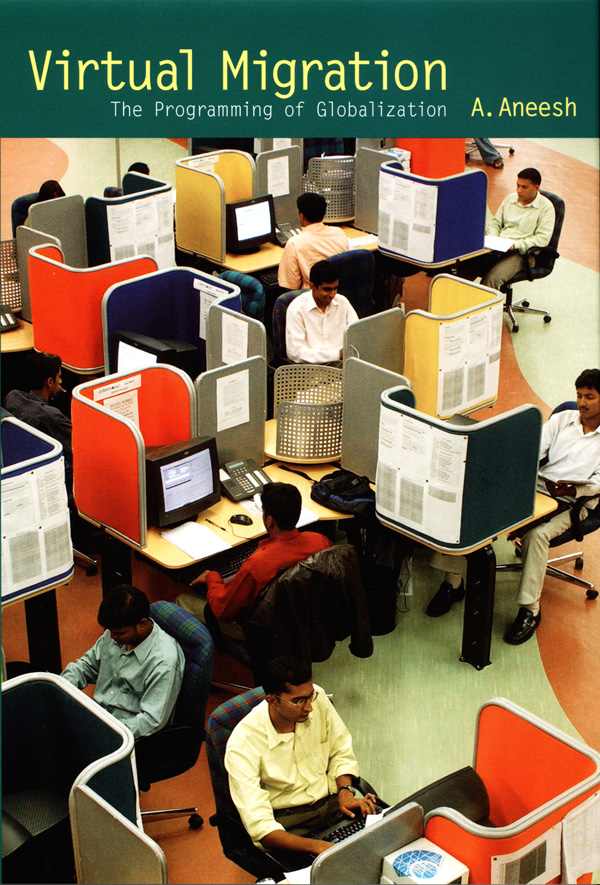
Virtual MigrationA. Aneesh first coined the word algocracy, or algocratic governance, in his book Virtual Migration, published by Duke University Press in 2006. He later refined the term in his book Neutral Accent, an ethnographic study of international call centers in India (which I reviewed here), and in subsequent work in which he preferred to use the term algorithmic governance. What is algocracy? Just as bureaucracy designates the power of bureaus, the administrative structures within large public or private organizations, algocracy points toward the power of algorithms, the lines of code underlying automatic expert systems, enterprise software solutions and, increasingly, artificial intelligence. Power and authority are increasingly embedded in algorithms that inform and define the world of automated teller machines, geographical positioning systems, personal digital assistants, digital video, word processing, databases, global capital flows, and the Internet. In Virtual Migration, Aneesh made the distinction between three types of organizational governance: the bureaucratic mode (rule by the office), the panoptic mode (rule by surveillance), and the algocratic mode (rule by code). Each form of governance corresponds to different technologies, organizations, and subjectivities. This classification is loosely connected to Max Weber’s classical distinction between three types of legitimate authority that characterize human societies, especially as they evolve from simple to more complex social organizations built upon shared norms, values, and beliefs. The German sociologist called these three types charismatic authority, traditional authority, and rational-legal authority. Charismatic authority comes from the personal charisma, strength, and aura of an individual leader. The legitimacy of traditional authority comes from traditions and customs. Rational-legal authority is a form of leadership in which command and control are largely tied to legal rationality, due process of law, and bureaucracy. Proposing the new concept of algocracy raises many questions. Is the rule of code perceived as legitimate, or how is the issue of legitimacy displaced by a new form of governance that doesn’t rest on human decision? How does this lack of human agency affect the functioning of democratic institutions? Does it have an effect on social asymmetry, inequity, and inequality? What are the intersections between algocracy and surveillance (the panoptic mode) and organizational design (the bureaucratic mode)?

What is algocracy?

But first, it is important to understand that algocratic governance is a sociological concept, grounded in the standard methodologies of social science. It is not a computer science concept, although software engineers and scientists deal with algorithms on a daily basis. Nor is it a philosophical notion that an intellectual builds out of thin air in his or her cabinet. Sociology has a long tradition of theory-building that goes through the steps of observation, categorization, and association. Participant observation is one type of data collection method typically used in qualitative research and ethnography; it constitutes the golden standard in anthropology and several branches of sociology. Other methods of data gathering include non-participant observation, survey research, structured interviews, and document analysis. Based on the collected dataset, the researcher makes generalizations from particular cases, tests the explanatory power of concepts, and builds theory through inductive reasoning. In contrast to Neutral Accent, Virtual Migration is not based on participant observation but was conducted through a qualitative methodology the author characterizes as critical, comparative, and exploratory. Aneesh conducted more than a hundred interviews with Indian programmers, system analysts, project managers, call center workers, human resource managers, and high-level executives, including CEOs, managing directors, and vice-presidents, both in India and in the United States. He also observed shop floor organization and work processes in twenty small, mid-size, and large software firms in New Delhi, Gurgaon, and Noida. The conceptualization of algocracy came to him through a simple observation. When an Indian dialer in a call center answers the phone or fills in the “fields” on a computer screen, these actions are constrained by the underlying computer system that directs the calls and formats the information to fill in. The operator “cannot type in the wrong part of a form, or put the address in the space of the phone number for the field may be coded to accept only numbers, not text; similarly, an agent cannot choose to dial a profile (unless, of course, they eschew the dialer and dial manually). The embedded code provides existing channels that guide action in precise ways.”

In order to come to this epiphany, Aneesh had to immerse himself in fieldwork and grapple with questions that connect the local and the particular to wider transnational trends. The context provides some understanding of the challenges the researcher was facing. The rise of the Indian IT industry was boosted by the so-called Millennium Bug, also known as Y2K: approaching the passage to the year 2000, there was widespread fear that the “00” date that would start from the last midnight of 1999 could cause computers to malfunction, since they might interpret it as the 00 for 1900. India’s fledging IT companies sensed the opportunity and offered their services.They sent software specialists onsite to fix the computer systems of large US corporations, and operated from a distance through increased bandwidth and Internet cable links. This was also a time when outsourcing and offshoring of service activities became an issue in the United States. The transferring of jobs from the United States to countries with lower labor standards and environmental protection became a dark symbol of globalization. The effect of international trade and global economic integration on workers’ rights, human rights, and the environment was hotly debated. In Seattle during December 1992, four days of massive street protests against the World Trade Organization turned the city into a battle ground. Globalization was attacked from the right and from the left. The nativist right criticized the loss of manufacturing jobs and the tide of immigrants that were flooding American cities, disrupting the social fabric and diluting national identity. The social justice left denounced the erosion of workers’ rights in the US and the prevalence of child labor and over forms of exploitation in the Global South. One type of work, the staffing of call centers responding to American customers from places in India or other locations, came under the focus of the news media. The same forces that had destroyed manufacturing jobs and put blue-collar workers on the dole were also affecting the service sector and threatening white-collar workers. For some observers, like the journalist Thomas Friedman, the world was becoming flat. Something was definitely happening, but social scientists lacked the tools and datasets for interpreting what was going on. New concepts were needed.

Body shopping and virtual migration

In their analysis of globalization, economists have shown that commercial integration and foreign direct investment reinforce each other, thus being complements rather than substitutes. Aneesh started his research project from a similar question: “Initially I began inquiring whether online services were replacing on-site work, making the physical migration of programming labor redundant.” During further investigations, especially interviews, he realized that the situation was a bit more complex. In a typical situation, “a firm in India might send two or three systems analysts to the client’s site in the United States for a short period, so that they might gain a first-hand understanding of the project and discuss system design. These systems analysts then help to develop the projects in India while remaining constantly in touch with their client, who can monitor the progress of the project and provide input. Once the project is over, one or two programmers fly back to the United States to test the system and oversee its installation.” Aneesh then made the distinction between two types of labor: body shopping, or embodied labor migration; and virtual migration, or disembodied labor migration. Both practices are part of the growing transnational system of flexible labor supply that allows Indian firms to enter into global supply chains and achieve optimal result. Virtual migration does not require workers to move in physical space; body shopping implies migration of both bodies and skills. In body shopping, Indian consultancy firms “shop” for skilled bodies: they recruit software professionals in India to contract them out for short-term projects in the United States. At the end of the project, programmers look for other projects, usually from the same contractors. Some of them start looking for a contractor based in the United States and attempt to secure a more lucrative placement. The ultimate goal is to switch their visa status from the H-1B work visa to the Green Card: body shopping allows Indian workers to pursue the American dream.

Contrary to standard perceptions, “the biggest advantage of hiring contract labor is not low short-term costs; it is flexibility, and the resulting reduction of the long-term costs of maintaining a large permanent workforce.” With a widespread demand for programming labor in different organizations, software professionals are well-paid workers. They are both “expensive and cheap” for American corporations to hire. They allow the receiving company to trim its workforce, take these temporary workers into service only in times of need, and economize on long-term benefits—social security, retirement contributions, health insurance, and unemployment insurance—that must be provided to permanent employees. Contractual employment allows American companies to implement just-in-time labor and to decouple work performance from the maintenance of a permanent workforce. In the case of virtual migration, they can also achieve temporal integration and work in real time, round-the-clock, in a seamless way: “Since the United States and India have an average time-zone difference of twelve hours, the client may enjoy, for a number of tasks, virtually round-the-clock office hours; when America closes its offices, India gets ready to start its day.” The temporal sequencing of work across time zones allows corporation to “follow the sun” and gain a competitive advantage by dividing their work groups and assignments between India and the United States. But time integration is not as easy as it sounds: coordination is a complex business, and lots of valuable information get lost during the workload transmission from one team to the other. Temporal dissonance may also occur when an Indian team is obliged to work at night to provide real-time response to American clients, like in the case of call centers. Like Aneesh illustrated in his subsequent book Neutral Accent, people who perform nightly live in two worlds, straddled between time zones, languages, and cultural references. Night work alters circadian rhythms and put workers out of phase with their own society: “there is a reason why night work has another name—the graveyard shift.”

Algocracy is not algonomics

In writing Virtual Migration, Aneesh’s ambition was to disentangle sociology from economics, showing that they can take different and sometimes opposed perspectives on the same phenomenon. An economist would ask whether migration and trade are complementary or substitute, and look at trade data and labor statistics to test hypotheses. He would try to differentiate between short-term losses and long-term gains, showing that job displacements and layoffs caused by transnational economic integration is more than compensated by gains in productivity and increased activity. Aneesh warns against the danger of conflating the economic and the social where the social is often assimilated to the economic. Virtual workers or Indian programmers who engage in the body shopping trade are not only economic agents; their location of choice is not only motivated by economic interest. During interviews, “programmers continually long for the ‘other’ nation: they miss India while in the United States and miss the United States when they are back in India.” It is not only an opposition between material versus more social and emotional longings: “we also find high-level executives who enjoy material luxuries in India such as chauffeur-driven cars, plush houses, and domestic help at home and yet still try to maintain their permanent residency in the United States.” Similarly, discussions on organizational networks tend to be economistic, focussing on possible efficiencies, competitive advantage, coordination, and relative transaction costs for corporations. But for Aneesh, the language of “networks” often obscures relations of power and governance in the emerging regime. As he explains, “algocracies are imbued with social ideas of control as well as formal logic, tracing their roots to the imperatives of capital and code.” Computer programming has emerged as a form of power that structures possible forms of action in a way that is analytically different from bureaucratic and surveillance systems. Enterprise software systems developed by Indian firms are not merely the automation of existing processes. They also “produce the real” by structuring possible forms of behavior and by translating embodied skills into disembodied code.

One of the characteristics of algocratic governance is to reduce the space needed for deliberation, negotiation, and contestation of the rules and processes that frame actions and orient decisions. As Aneesh could observe on shop floors and in call centers, “work is increasingly controlled not by telling workers to perform a task, nor necessarily by punishing workers for their failure, but by shaping an environment in which there are no alternatives to performing the work as desired.” Programming technologies have gained the ability to structure behavior without a need for orienting people toward accepting the rules of the game. Software templates provide existing channels that guide action in precise ways: all choices are already programmed and nonnegotiable. This guidance suggests that algorithmic authority does not need legitimacy in the same sense as was used in the past. Max Weber’s three types of legitimate power supposed human agency on the part of the bearers of authority and for those under their command. But as authority is increasingly embedded in the technology itself, or more specifically in the underlying code, governance operates without human intervention: human agency disappears, and so does the possibility to make authority legitimate. This is not to deny that programming is done by someone and that human agents are still in charge of making decisions. Yet programming also becomes fixed and congealed as a scheme, defining and channeling possible action. Automation, or the non-human operation of a process, is not a problem in itself. It becomes a matter of concern when automated algorithms enter into certain areas where it is important for the space for negotiation to remain open.

AI alignment

Artificial intelligence brings the power of algorithms to a new level. The critics addressed to AI are getting more and more familiar. AI systems are non-transparent, making it almost impossible to identify the rules that led them to recommend a decision. They can be biased and perpetuate discrimination by amplifying the racial or gender biases embedded in the data used for training them. They remain arbitrary from the individual’s perspective, substituting the human subject with changing behavioral patterns and data scores. AI lacks human qualities like creativity and empathy, limiting its ability to understand emotions or produce original ideas. Surveillance powered by AI threatens individual privacy and collective rights, tipping the balance in favor of authoritarian states and oppressive regimes. In a not-so-distant future, artificial general intelligence (AGI) systems could become “misaligned”—in a way that could lead them to make plans that involve disempowering humanity. For some experts, AGI raises an existential risk that could result in human extinction or another irreversible global catastrophe. The development of AI has generated strong warnings from leaders in the sector, some of whom have recommended a “pause” in AI research and commercial development. What I find missing in discussions about AI security and “AGI alignment” is the lack of observable facts. We need empirical observations and field research to document the changes AI-powered algorithms bring to work processes, organizational structures, and individual autonomy. We also need to explain what algorithms actually do in concrete terms by using the perspectives of people from various cultures and backgrounds. Only then will we be able to balance algorithmic governance with countervailing forces and ensure that democratic freedoms can be maintained in the age of the rule by code.

Pipes, Plumbers, and Politicians in Mumbai

A review of Hydraulic City: Water and the Infrastructures of Citizenship in Mumbai, Nikhil Anand, Duke University Press, 2017.

Hydraulic CityIn his book Oriental Despotism, published in 1957, historian Karl Wittfogel introduced the notion of the hydraulic state as a social or government structure which maintains power and authority through exclusive control over access to water. He believed that Asian civilizations veered towards despotism because of the collective work needed for maintaining irrigation and flood-control systems. In Hydraulic City, anthropologist Nikhil Anand asks how water infrastructures and urban citizenship can be sustained in a country known for its messy democracy and bottom-up style of governance. The case of Mumbai’s water services exemplifies all that is wrong with Indian democracy: the failure to provide basic public services and carry out job-creating infrastructure projects; the inability to recover the costs of supplying water; and the politics of patronage and clientelist networks that tie impoverished residents to local power-brokers. And yet one is forced to acknowledge the resilience of the Indian system of governance in the face of chronic underinvestment and fledging democracy. The hydraulic city that emerges from this description is not a centralized formation of power, but rather a network or an assemblage of pipes, storage reservoirs, and valves, more or less controlled by a variety of residents, engineers, and administrators that move water in the city. Hydraulic City addresses the paradoxes of Indian cities where planned, improvised, intended and accidental mechanisms simultaneously shape the urban fabric. The” infrastructures of citizenship” that it describes combine the material infrastructure of leaking pipes and draining reservoirs, the market infrastructure that makes water demand meet supply, and the political economy of patronage relations around water provision.

A city built on water

Mumbai is a city built on water. The present-day city stretches on what was originally an archipelago of seven islands covered by marshlands and mangrove forests. Over the course of its history, embankments were built, hills were flattened, the rubble dumped into marsh, and land was reclaimed from the sea. Today, the capital of Maharashtra is the second-most populous city in the country after Delhi and the seventh-most populous city in the world with a population of roughly 20 million. But several times a year, the sea and the monsoon remind themselves to its inhabitants. Large parts of the city go under water, the trains stop, and so does Mumbai. Then comes a season with less rainfall, followed by a reduction in the supply of water to the metropolis, and life again comes to a standstill. The city is forced to keep to its basic water needs and control its more wasteful ways. With climate change and its accompanying cyclonic events, storm surges, and sea level rise, most of the city may be submerged in next hundred years. Or alternatively El Niño may change seasonal weather patterns and the monsoons might disappear, leaving the city to dry itself to death. The history of water provision in Mumbai is therefore a tale of scarcity amid plenty. As it grew in population and expanded geographically, the paucity of water was a major concern that the city faced. Before large reservoirs and piped supply schemes were undertaken, pious citizens from the Parsi and Gujarati communities constructed many tanks and wells for public good, and water flowed from the many springs, bore wells, and reservoirs. But, none of these early schemes of water provision and management could meet the needs of the citizens since there was a tremendous increase in water consumption. By the 1820s, Bombay had a population of more than 300,000, making it the world’s sixth largest city.

During the British Raj, colonial engineers used different technologies for different populations: while proper pipelines and reservoirs were installed in civil servants’ quarters and extended to wealthy native merchant communities, simple wells were dug out for indigenous masses. This discrimination was largely based on the belief that British colonial administrators and Indian subalterns had different natures, and therefore different needs. Nikhil Anand argues that this approach has not completely disappeared in independent India. That Bombay’s water infrastructure had its roots in the government of a colonial city continues to matter to this day. The delivery of basic service is often adjusted depending on the social status of concerned populations. Residents living in settlements, who account for 60 percent of the city’s total population, get far less water per day than upper-class residents in authorized buildings and residential areas. According to local engineers, there is more than enough water entering the city to meet the demands of every urban resident. And yet whole neighborhoods are regularly deprived of water, and their residents are dependent on a schedule of irregular water availability made by engineers and planners. Settlers are marginalized by city water rules that allocate them smaller pipes and water quotas. Water lines serving the settlements are allowed to remain leaky and go dry. The delivery of basic services is often adjusted depending on the social status of concerned populations. State agencies do not consider the poor as equal citizens. Settlements that are predominantly Muslim have the most severe water problems and have to draw water extensively through unauthorized connections. Those who do not obtain water from the legal network get it from the many bore wells that have been reactivated after decades of disuse, or from private trucks that bring water to low-income neighborhoods.

Scarcity amid plenty

As a result, the water infrastructure is full of contests and controversies. As Nikhil Anand remarks, “Every year, as the summer begins, for as long as I can remember, engineers and administrators have held press conferences to nervously announce the danger of failing monsoons and the likelihood of water cuts.” Engineers from the city’s water department are caught in a zero-sum game: to give one hydraulic zone more water is also to give another zone less. Installing pumps to boost water pressure uphill makes it more difficult for water to flow through the entire urban water system. Mumbai inhabitants are familiar with the sight of chaviwallas, municipal employees who turn street valves on and off and allow water to flow in a neighborhood for a limited time. Homes are equipped with water storage tanks sitting on the roof and connected to the water grid through a complex system of pipes. In Mumbai, wealthy and poor residents alike do not get individual household connections, but share their water connections with their neighbors. There are no individual meters or ways to measure water consumption with a certain degree of accuracy: as a result, residents are billed with water they did not consume, or escape payment and consider it normal. Residents often work with plumbers to redirect pipes without the permission of the water department. But for those who fall beyond the grid or receive irregular service from the public system, purchasing water as a private commodity is prohibitively expensive.

For Nikhil Anand, scarcity is not a given: “scarcity is made through discursive and material practices.” Discourses of scarcity efface and silence knowledge about the availability of other kinds of water in Mumbai. They also hide and make invisible the encroachment made by the city on water resources in its hinterland. The case for water scarcity is made by mobilizing numbers that are stabilized and received as objective facts, but that are based on fiction. Demand for water is vastly overestimated, adjusting to the fact that over a third to the city’s water leaks into the ground and through unauthorized connections, and supply does not take into account the vast resources in groundwater that the monsoon regularly replenishes. City engineers insist that subterranean water is polluted, contaminated, and dirty; but it is used by rich and poor alike through a complex system of pumps and wells (some of which are close to one hundred years old) that escape the control of the water administration. Emphasis on scarcity also permits the city’s water department to demand that more water be moved from proximate rural rivers and dam reservoirs to the city. Dams and river lakes as far as one hundred kilometers away collect and store water through the monsoon season and direct it into huge pipes to irrigate the city. The interests of the urban population are clearly prioritized over the life conditions of rural residents, who lack water to hydrate their fields and families during the dry season. Such imbalances are exacerbated in times of scarce rainfall. Droughts deprive farmers of their livelihood and uproot them from their lands, as they are forced to join the mass of migrants living in the city’s slums. In turn, city officials and nativist politicians clamp down on migration by making it extremely difficult for settlers who do not have the correct documents to establish legitimate water connections. Only in Mumbai do settlers require a panoply of documents to get a water connection, including a food ration card, as well as proof of habitation over the last twenty years. Through laws and polices, water is constituted as an entitlement that is “granted” by the city administration only when a person “belongs” to the city.

Governing through water

Hydraulic citizenship is, like water services, unequally distributed, intermittent, partial, and subject to constant negotiations. “Residents in Mumbai are only too aware of the ways that the promises of citizenship are only fitfully delivered, even to those who have all the necessary documents that establish their claims to the city.” They receive only a portion of all the promises and guarantees attached to citizenship. This is why legal water connections deliver more than water in Mumbai.  Water bills and pipe connections demonstrate to various branches of the city government that their subjects are recognized citizens. They connect populations to particular places, and can be called upon by the courts to prove that settlers have lived in the structure with the knowledge of the state. Faced with the threat of evacuation, they offer protection from the periodic appearances of state bulldozers, officers, and their disciplinary actions. Proof of residence may include receipts, fines, voter identity cards, ration cards, bank account statements and, of course, water bills. Even if they get their daily water ration from the itinerant water truck or from unregulated bore wells, settlers also desire water through the public system because the documents it generates, printed on government stationary, allow them to claim and access other public urban services like housing, health, and education. To be recognized as formal residents, settlers mobilize personal relationships with city administrators, big men, and social workers, entering into networks of patronage, clientelism, and friendship. They also protest the living conditions to which they are submitted through liberal democratic means—voting, rallying, petitioning, and organizing protest marches in the city’s center. Concepts such as civil society, political life, and material infrastructure are insufficient to describe the complex assemblage of pipe circuits and social networks that hydraulic citizens navigate.

Ensuring that each individual household gets access to water is more than a matter of engineering: it is intrinsically linked to the political, social and cultural foundations of city life. Divided into different water supply zones, each neighborhood receives water for a fixed period of time. The intermittent water supply, its schedules and varying pressures, produces a particular time and tempo in the city. For settlers, water time is an active social event, requiring negotiations with the city’s engineers and councilors, and determining how gendered and classed identities are enacted. Women maintain their social status by using water at the right times of the day and in the right places. Washing clothes usually takes place outside in front of the door, while the floors in settlers’ homes are kept sparkling clean. Water time reproduces the gendered division of labor, requiring that someone will be at home and available to collect water during supply hours. Water also determines the organization of political life. Through water delivery and scarcity, hydraulic citizens assess the legitimacy of state officials and municipal institutions. In Mumbai, politicians eagerly compete for the political loyalties of their subjects through direct, known, and personal interventions. Local intermediaries and community leaders offer to fix people’s various problems by connecting them to the administrative bureaus and political patrons who can help them. Affiliation to a political party increases access to development projects, water lines, or lucrative city contracts. In exchange for this patronage, party workers are expected to mobilize their friends, neighbors, and associates whom they “helped” to support the party. But many citizens resent the reputation of corruption and cronyism that comes with party membership. Social movements and NGOs not affiliated with political parties are more respected by residents because of their independence from party machines.

Privatization schemes

The author’s fieldwork in Mumbai coincided with a time water privatization was discussed. Although Hydraulic City is not a case against privatization, it gives many arguments to explain why settlers and city engineers are attached to the public provision of water services. World Bank-supported water privatization projects in Delhi and Bangalore have met with fierce opposition from the population. Private firms, overwhelmed by the proliferation of illegal connections and inhibited by the reluctance of citizens to pay more, have been unable to find a financial equilibrium. In Mumbai, World Bank consultants and city officials were careful to frame their Water Distribution Improvement Project not as a privatization scheme, but as a “study” to help improve service delivery to the inhabitants. They tried to lure consumers with promises to provide not intermittent but continuous water supply, ending the punctuated time schedule of waiting for water. But as Nikhil Anand notes, no one aside from the management consultants were demanding 24/7 water supply. Instead, women in the settlements demand the right amount of water at the right time, and with the right pressure. This is a more modest demand, one that recognizes that for people of their class position, a scheduled water supply might be cheaper than one regulated by market tariffs. Residents were only too familiar with the problems of escalating rates that accompanied the privatization of electricity and were concerned about the same thing happening with water. Through documenting the Water Rights Campaign that local activists waged against the World Bank project, Nikhil Anand shows that discourses of rights, justice, and entitlements do not come from “outside” but are grounded in social and material infrastructures that legitimate people’s right to the city.

From Hot Line to Help Line

A review of Neutral Accent: How Language, Labor, and Life Become Global, A. Aneesh, Duke University Press, 2015.

Neutral AccentAt the turn of the twenty-first century, China became identified as the world’s factory and India as the world’s call center. Like China, India attracted the attention of journalists and pundits who heralded a new age of globalization and documented the rise of the world’s two emerging giants. Foremost among them, Thomas Friedman wrote several New York Times columns about call centers in Bangalore and devoted nearly half a book, The World is Flat, to reviewing personal conversations he had with Indian entrepreneurs working in the IT sector. He argued that outsourcing service jobs to Bangalore was, in the end, good for America—what goes around comes around in the form of American machine exports, service contracts, software licenses, and more US jobs. He further expanded his optimistic view to conjecture that two countries at both ends of a call center will never fight a war against each other. An intellectual tradition going back to Montesquieu posits that “sweet commerce” tends to civilize people, making them less likely to resort to violent or irrational behavior. According to this view, economic relations between states act as a powerful deterrent to military conflict. As during the Cold War, telecom lines can be used as a tool of conflict prevention: with the difference that the “hot line,” which used to connect the Kremlin to the White House, has been replaced by the “help line” which connects everyone in America to a call center in the developing world. The benefits of openness therefore extend to peace as well as prosperity. In a flat world, nations that open themselves up to the world prosper, while those that close their borders and turn inward fall behind.

Doing fieldwork in a call center

Anthropologists were also attracted to Asian factories and call center to conduct their fieldwork and write ethnographies of these peculiar workplaces. Spending time toiling along with fellow workers and writing about their participant observation would earn them a PhD and the launch of a career in an anthropology department in the United States. Doing fieldwork in a call center in Gurgaon near New Delhi came relatively easy to A. Aneesh. As a native Indian, he didn’t have much trouble adapting to the cultural context and fitting in his new work environment or gaining acceptance from his colleagues and informers. His access to the field came in the easiest way possible: he applied for a position in a call center, and after several rounds of recruitment sessions and interviews he landed a job as a telemarketing operator in a medium-sized company fictitiously designated as GoCom. He had already completed his PhD at that time and was an assistant professor at Stanford who took a one-year break to do fieldwork and publish research. He even benefited from the support of two research assistants while in New Delhi. There was no special treatment for him at the office floor, however. He started as a trainee alongside newly-hired college graduates, attending lectures and hands-on sessions to get the proper voice accent and marketing skills, then moved to the call center’s main facility to work as a telemarketer doing the night shift. He engaged in casual conversations with his peers, ate with them in the cafeteria where lunch was served after midnight, conducted formal interviews with some of them, and collected written documents such as training manuals and instruction memos.

What makes Aneesh’s Neutral Accent different from Friedman’s The World is Flat? How does an ethnographic account of daily work in an Indian call center compare with a columnist’s reportage on the frontiers of globalization? What conclusions can we infer from both texts about the forces and drivers that shape our global present? Is there added value in a scholarly work based on extended field research as compared with a journalistic essay based on select interviews and short field visits? And what is at stake in talking of call centres as evidence of a globalised world? As must be already clear, the methods used by the two authors to gather information couldn’t be more different. Aneesh’s informants were ordinary people designated by their first name—“Vikas, Tarun, Narayan, Mukul, and others”—who shared their attitudes toward their job, their experience and hardships, their dreams and aspirations. The employees with whom the author spent his working nights were recent college graduates, well-educated and ambitious, reflecting the aspirations and life values of the Indian middle-class. By contrast, Friedman associated with world-famous CEOs and founders of multi-million-dollar companies. They shared with him their worldview of a world brought together by the powerful forces of digitalization and convergence, and emphasized that globalization must have “two-way traffic.” To be true, Friedman also tells of his visits to a recruiting seminar where young Indians go to compete for the highly sought-after jobs, and to an “accent-neutralization” class where Indians learn how to make their accents sound more American. To distantiate himself from the arm-chair theorist of globalization, he emphasizes his contacts with “real” people from all walks of life. But he never pretends that his reportages amount to academic fieldwork or participant observation.

The view from below

The information collected through these methods of investigation is bound to be different. One can expect office workers to behave cautiously when addressed by a star reporter coming from the US, along with his camera crew, and introduced to the staff by top management for his reportage. The chit-chat, the informal tone, the casual conversations, and the mix of Hindi and English are bound to disappear from the scene, replaced by deference, neutral pronunciation, and silence. The views channeled by senior executives convey a different perspective from the ones expressed on the ground floor. As they confided themselves to Aneesh, employees at GoCom expressed a complete lack or pride about their job and loyalty for their company. They were in for the money, and suspected GoCom of cheating employees out of their incentive-based income. Their suspicion was not completely unfounded, and the author notices several cases of deception, if not outright cheating, regarding the computation of monthly salaries. Operators were also encouraged to mislead and cheat the customer through inflated promises or by papering over the small print in the contract. Turnover was high, and working in a call center was often viewed as a temporary position after college and before moving to other occupations. While Friedman is interested in abstract dichotomies, such as oppositions between tradition and modernity, global and local, rich and poor, Aneesh focuses on much more mundane and concrete issues: the compensation package, the commute from home, or working the night shift.

Indeed, night work is a factor that goes almost unnoticed in Friedman’s reportage, while it is a major issue in Neutral Accent. “Why is there a total absence, in thought and in practice, of any collective struggle against the graveyard shift worldwide?” asks the author, who explains this invisibility by corporate greed, union weakness, and the divergence between economic, social, and physiological well-being. He documents the deleterious effects of nocturnal labor on workers’ health, especially on women who suffer from irregular menstruation and breast cancer risk. He notices the large number of smokers around him, as well as people who complain about an array of anxieties without directing their complaints on night work per se. The frustration and discomfort of working at night is displaced to other issues: the impossibility to marry and start a family—although night work is also used by some to delay marriage or run away from family life—and the complaint about commute cabs not running on time. Indeed, what Thomas Friedman and other reporters see as a valuable perk of the job, the ability for young employees to travel safely to and from work thanks to the chauffeured car-pool services provided by the call centers, ends up as a source of frustration and anguish due to the delay and waiting time occasioned by the transport. Nocturnal labor affects men and women differently; Indian women in particular feel the brunt of social stigma as “night workers,” leading some of them to conceal their careers while looking for marriage partners, or alternatively, limiting their choice of partner to men in the same business. While the lifting of restrictions on women’s right to work at night was justified by gender neutrality, the idea of being neutral to differences carries with it disturbing elements that feminist critique has already pointed out.

Being neutral to differences

Neutrality, or indifference to difference, also characterizes the most-often noticed trait of Indian call centers: the neutralization of accent and the mimetic adoption of certain characteristics such as the Americanization of the first-names of employees who assume a different identity at work. Aneesh points out that neutral accent is not American English: during job interviews, he was asked to “stop rolling your R’s as Americans do,” and invited to speak “global English,” which is “neither American nor British.” As he notes, “such an accent does not allude to a preexisting reality; it produces it.” Accent neutralization is now an industry with its teaching methods, textbooks, and instructors. Call center employees learn to stress certain syllables in words, raise or lower their tone along the sentence, use colloquial terms with which they may not be familiar, and acquire standard pronunciation of difficult words such as “derogatory” or “disparaging,” which they ironically note in the Hindi script. Some employees are repeatedly told that they are “too polite” and that they should not use “sir” or “madam” in every sentence. For Aneesh, “neutralization allows, only to a degree, the unhinging of speech from its cultural moorings and links it with purposes of global business.” Mimesis, the second feature of transmutation, reconnects the individual to a cultural identity by selecting traits that help establish global communication, such as cheerfulness and empathy. Employees are told to keep a smiling face and use a friendly voice while talking with their overseas clients. But despite their best efforts, some cultural traits are beyond the comprehension of call center agents: “The moment they start talking about baseball, you have absolutely no idea what’s going on there” (the same could be said regarding Indian conversations about cricket.)

Aneesh uses neutralization and mimesis as a key to comprehending globalization itself. They only work one way: as the author notes, “there is no pressure, at least currently, on American or British cultures for communicative adaptation, as they are not required to simulate Indian cultural traits.” But Western consumers are also affected by processes at work in the outsourcing and offshoring of service activities. Individual identities and behaviors are increasingly monitored at the systemic level in numerous databases covering one’s credit score, buying habits, medical history, criminal record, and demographics such as age, gender, region, and education. Indeed, most outbound global calls at GoCom were not initiated by call center agents but by a software program that used algorithms to target specific profiles—demographic, economic, and cultural—in America and Great Britain. Artificial intelligence and predictive algorithms, only nascent at the time of the author’s fieldwork in 2004-2005, now drive the call center industry and standardize the process all agents use, leaving little room for human agency. Data profiles of customers can be bought and sold at a distance, forming “system identities” governed by algorithms and embedded in software platforms that structure possible forms of interaction. Identities are no longer fixed; they keep changing with each new data point, escaping our control and our right of ownership over them.

Global conversations

We cannot judge The World is Flat and Neutral Accent by the same criteria. The standard to evaluate a journalistic reportage is accuracy of fact, balanced analysis, human interest, and impact over readers. Using this yardstick, Friedman’s book was a great success and, like Fukuyama’s End of History, came to define the times and orient global conversations. The flattened world became a standard expression animated with a life of its own, and generated scores of essays explaining why the world was not really flat after all. Many Indians credited Friedman for writing positively about India and often echoed his views, claiming that the outsourcing business was doing wonders for the economy. Others critiqued the approach, saying the flat world was just another word for underpaying Indian workers and denying them the right to migrate and find work in the US. By contrast, Aneesh’s book was not geared to the general public and, apart from an enthusiastic endorsement by Saskia Sassen on the back cover and a few book reviews in scholarly journals, its publication did not elicit much debate in the academic world. In his own way, Aneesh paints a nuanced picture of globalization. Where most people see call centers as generating cultural integration and economic convergence, he insists on disjunctures, fault lines, and differentiation. The “help line” is not just a tool to connect and erase differences; it may also create frictions and dissonances of its own. A world economy neutral to day and night differences; a labor law that disregards gender disparity; work practices that erase cultural diversity; digital identities that exist beyond our control: neutralization is a force that affects call center agents and their distant customers much beyond the adoption of global English and neutral accent as a means of communication.

Let’s Talk About Sex

A review of Media, Erotics, and Transnational Asia, edited by Purnima Mankekar and Louisa Schein, Duke University Press, 2013.

Transnational asiaThis is not a book about Asian sex videos. Indeed, reading Media, Erotics, and Transnational Asia should lead the reader to question why the category “Asian sex video” exists in the first place, why Asian bodies are disproportionately represented in Internet porn, and how we should react to such unregulated flow of images. In fact, none of the entries in this book deals with explicitly erotic content or with pornography, and the only chapter that concerns the Internet as a medium, a study of online discussions about correspondence marriage between the US and the Philippines, insists on rejecting facile analogies with the sex trade or with mail-to-order catalogues. For scholars and for feminists—and most authors in this volume are women—, the erotic has to be distinguished from the sexual. And writing about eroticism should in no way lead to stoke the base instincts of the reader. The erotic extends beyond sex acts or desires for sex acts to become “enmeshed in, for instance, yearnings for upward mobility, longings for ‘the homeland,’ formulations of nationhood and citizenship, and ruptures of ethnic and racial identity.” Desires for sexual encounters intertwine with those for commodities and lifestyles. Such a paneroticism may break gender, class, ethnicity, or age boundaries. Synonymous with desire, it may be at odd with an Orientalist vision of Asia as feminized and the West as setting the standard for homo- and heteronormativity. For instance, “what constitutes ‘lesbian’ desire may look both and function differently than it does within Euro-American social and historical formations, and draw from alternative modes of masculinity and feminity.”
Editing a volume for Duke University Press

The book is an edited volume composed of ten chapters and a dense introduction in which the two editors explain what they mean by “media,” “erotics,” “transnational,” and “Asia.” It is difficult to strike the right balance in the introductory chapter of a collection of scholarly essays written by different authors. One the one hand, the editors want to add value to the book chapters by giving coherence and theoretical depth to the assembled pieces. On the other hand, they need to reflect the diversity of the contributions and leave open their conceptual relevance for theory-building. The introduction is often the book’s signature, its most ambitious part and the text for which it will be remembered. The risk is to promise more than the book chapters can deliver by engaging in intellectual virtuosity, or to remain at the plane of immanence and offer a paraphrase of the book’s content. Mankekar and Schein lean on the theoretical side. Their introduction is thick, sometimes obscure, and heavily referenced. Their ambition is to “construct a transnational analytics” to account for the mediation of erotics in Asia and beyond. They position the book for a broad audience spanning several subdisciplines—Asian studies, media studies, gender studies, and sexuality studies, as well as anthropology and critical theory. And yet they address scholars, and it is as scholarship that they want their contribution to be noticed and remembered. My reading as a non-scholar may therefore miss the mark or misinterpret the intent of the authors. But this is a risk I am willing to take.

One way of studying erotics through transnational media in Asia is to read texts, watch pictures or videos, listen to recordings or radio shows, and then to write about their form and content using the tools and methods of literary criticism and media analysis. This is not how the authors in this volume proceed. For them, desire and erotics can only be revealed through participation in mediated worlds, in a combination of textual analysis and ethnographic research. Erotics is what people make of it: a medium or a text can only be deemed erotic if the viewers invest it with fantasies and emotional longings. Eroticism is in the eye of the beholder: we should “suspend any bounded or determinate option of what comprises erotic texts.” The preferred method of studying erotics is through ethnography and participant observation, or face-to-face interviewing. But the ethnographer cannot only approach his or her informants and say: “Let’s talk about sex.” As Purnima Mankekar notes: “I deemed it neither ethical nor culturally appropriate to interrogate my lower-middle-class and working-class informants about their attitudes toward sex or, worse, their sexual practices.” She doesn’t explain why she considered sex talk inappropriate or unethical, but her reticence probably has something to do with academic norms of proper behavior as much as with cultural sensitivities in a lower-middle-class Indian context. In any case, some of the contributors to this volume do talk to informants about media and sex, as in Friedman’s analysis of the film Twin Bracelets and its reception among interpretive communities in the United States, Taiwan, and China, or in Manalasan’s discussion of the reception of the movie Miguel/Michelle among queer Filipino audiences in Manila and in New York. In other situations, the ethnographer had to listen to her informants’ “silences, hesitations, and discursive detours” and “go beyond the verbal, the discursive, and the visible.”

Getting a book published

When writing a text and seeking publication, the scholar has to choose between three options: the self-standing book or monograph, the journal article, or the chapter in an edited volume. Getting a book published by an university press is the most difficult option: academic publishing houses are fortresses guarded by stern gatekeepers, and getting access involves a long process of book project’s proposal, manuscript editing, and peer review. The publication of a first book, commonly one that is drawn from a dissertation, is a critical event in the career of a scholar, and the book will usually remain the author’s signature to the wider academic community for the rest of his life. Publishing a journal article is more standard: for a scholar, a good publication record is a sine qua non, and life on the academic front is ruled by the discipline of publish or perish. Getting published depends on the prestige and disciplinary slot of the academic journal and necessitates a capacity to adjust to scholarly criteria of presentation without necessarily requiring literary talent. The book chapter is the most flexible contribution: contributing authors are usually invited by the editors to write a chapter for the book, based on presentations they made at conferences or in a rewriting of previously published research material. The editors will be reviewing and accepting the chapters and also be suggesting the authors if any revisions are needed. Though they are supported by their publishers, editors remain of sole responsibility when it comes to the content integrity of their book. Again, the importance of writing an excellent introductory chapter cannot be overstated. The introduction should serve as a “lure” that attracts the reader, allows the reader to comprehend the book’s intent, and encourages the reader to continue reading.  In terms of bookshelf longevity, the full-fledged book comes first, then the edited volume and, last, the scholarly article.

Most contributors to Media, Erotics, and Transnational Asia have published a book, sometimes two or even three, with Duke University Press. Having read and reviewed some of these books on this blog, I will draw a comparison between the full-length books they have published and the chapters in this volume. My favorite author in the sample is Everett Yuehong Zhang, author of The Impotence Epidemic, a study of changing attitudes about sexuality in an increasingly globalized China. The chapter he offers here could have been included in his previous book and centers on the host and participants of a radio talk show addressing sexuality from a clinical perspective. It is only loosely connected to the twin themes of media and erotics that define the edited volume: radio broadcasting is not the medium we first think about when studying transnational media, and there is nothing erotic in talking about premature ejaculation, masturbation, or erectile failure with a medical doctor—even though desires to be normal, to enjoy a fulfilling sexual life, and to have fun talking about personal matters after decades of Maoist silence are also addressed. Dr. Ma, the talk show host, treats both male and female sexual issues and is very open about discussing sexual desire and pleasure in public. His co-host, Ms. Sun, recalls how uncomfortable she was at first using the technical term for masturbation, shouyin, with two characters meaning “hand lust,” and how talking about masturbation became easier in the 1990s with the adoption of a new word, ziwei, meaning “self-consolation.” This change of words signals a transition from the desire to be moral to the desire to be normal, and from a moral economy of seminal essence and revolutionary ardor to the realm of medical normality and individual gratification.

From the book to the article

Whispering Tonight, the call-in radio show and its case study by Everett Zhang, is a microcosm of all the issues raised by The Impotence Epidemic. One the one hand, it contextualizes sexuality within the social changes brought by recent economic reform and through the production of various desires in post-Maoist China. It relocates the body from the periphery where it was confined under Maoism toward the center of public attention, private concerns, and emotional investments. It provides a thick description of call-in patients’ complaints and doctor’s comments, based on extensive fieldwork and ethnographic documentation. On the other hand, and perhaps more explicitly than in the book, this volume’s chapter is a piece of applied theory. It draws on a rich array of concepts borrowed from French theory, and especially Deleuze and Guattari’s conceptualization of flows and affects. Deleuzian notions are sometimes hard to grasp and may provide more obscurity than light, but Zhang uses them in a simple and straightforward way, giving added depth and relevance to his text. The second piece of medical anthropology in this volume, a chapter by Judith Farquhar on “Self-Health Information in Beijing in the 1990s,” also echoes a book by the same author (Appetites: Food and Sex in Post-Socialist China), but is written in a more personal and reflexive way. Farquhar starts by describing her encounter with two men poring over an illustrated sexual disease textbook in a bookstore, and wonders what meaning this experience had for them—seeking sexual satisfaction or documenting a medical condition—and for the anthropologist, who didn’t dare interrupt and ask. She then examines a number of methodological problems that plague efforts to understand the popular and the everyday in any scholarly project. Self-health manuals, pop psychology books, and other mass-consumption publications can be used as an archive of everyday living in post-socialist China, but do not reveal how this information is read and assimilated by readers.

In addition to the introduction, Purnima Mankekar provided a chapter in this volume that is based on the research she presented in her two books published by Duke University Press, Screening Culture, Viewing Politics and Unsettling India. I usually prefer to read full-length books in anthropology than journal articles or edited volumes. My feeling is that the author needs space in order to set the scene, present the characters, and flesh out his or her argument, and that a single book chapter or article usually falls short on these three counts. But Mankekar’s chapter in this book, “Dangerous Desires,” nicely complements the two books she wrote based on the same ethnographic material: the reception of TV programs, and in particular state-sponsored television serials, viewed by upwardly-mobile, yet lower-to-middle class urban women in New Delhi. Her objective in this chapter is to examine the place of erotics in the reconfiguration of gender, family, class, caste, and nation, through the eroticization of commodity desire in TV commercials and the proliferation of sexual content in programs broadcast by transnational satellite networks. As noted above, she couldn’t just go out and ask her informants to have a “sex talk” on what they were viewing; she had to learn to watch alongside them and over their shoulders, interpreting bodily cues and discursive detours that saturated their conversations. For instance, many women she spoke with expressed their erotic longing via their yearning for certain commodities. On other occasions, her informants expressed their attitudes, feelings, and, very occasionally, their experiences of sex and erotics while discussing television programs. Desire for commodities and sexual longings were very often perceived as threats to proper gender behavior, to social status, and to the Indian nation as a whole. But Doordarshan state-run television no longer has a monopoly of public broadcasting, and the proliferation of satellite channels is having an impact on perceptions and values.

Telling better stories

Anne Allison, who provides the last chapter in this volume, teaches cultural anthropology at Duke University and has published several books on Japan. She wrote the book Nightwork on hostess clubs and Japanese corporate culture after having worked at a hostess club in Tokyo, and she has also researched erotic comic books and mother-son incest stories. The novel she reviews in her essay, Memoirs of a Geisha, doesn’t belong to the erotica literature: it is a fictional memoir of a Japanese geisha, penned by an American man and made into a movie by Steven Spielberg with Chinese actress Zhang Ziyi. Others would call it a story of cultural appropriation or a bad case of Orientalism; but Allison chose to focus on the reaction of (mostly female) American readers who, in the interviews she had with them and in the comments they wrote on Amazon, felt titillated by the fiction and enthralled by its exoticism. She reads erotic desire through the lens of the allure of fantasies generated by being transported to another place and time. In this case, desire is thoroughly political, but it doesn’t involve the masculine fantasies of empire and domination that Edward Said saw as the hallmark of Orientalist thinking. Exotica functions as erotica in the blurring of historical fiction and personal memoir, the minute description of sexual rituals such as the mizuage (by which a young geisha sells her virginity), and the allure of soft kimono fabric and intricate tea ceremony. “When readers described their experience of Memoirs to me,” writes Allison, “it was often in language befitting a love affair. They would smile and get excited, talk quickly and move their bodies. Passion, bordering on arousal, was palpable.” This, concludes Allison, raises a challenge for the anthropologist: “How to tell better stories that are imaginative and compelling, without falling into the trap of exoticizing or essentializing?”

The Thin-Fat Indian

A review of Metabolic Living: Food, Fat, and the Absorption of Illness in India, Harris Solomon, Duke University Press, 2016. 

Metabloic LivingProselitizing vegetarians and people who advocate a healthier diet often point to the case of India as proof that millions of people, if not a whole nation, can live on a regimen without meat. Similarly, climate advocates calculate the carbon balance of raising cattle and conclude humanity will have to cut the beef from the menu list. As is well known, Hindu communities consider beef taboo, and several sects, like Vaisnavism or Jainism, follow a strict form of vegetarianism. Fasting is a practice common to Hindus and Muslims, and traditional Indian medicine or Ayurveda emphasizes the importance of a healthy and balanced diet. Despite continued history of malnutrition, Indian is often seen as synonymous with holistic health, slim bodies, and yoga exercise. According to common conceptions, India is predominantly a vegetarian nation and the traditional diet, based on legumes, beans, grains, fruits and vegetables can provide human bodies with ample amounts of fiber, fat, carbohydrates, proteins, vitamins and minerals. But is the Indian diet really that healthy as compared to the Western one? In fact, the image of the slim and fit Indian body is based on three myths. The biggest myth, of course, is that India is a largely vegetarian country. Actually, the majority of Indians consume some form of meat, mainly chicken and mutton, but also, in many cases, beef. Even Hindus, who make up 80 percent of the Indian population, are major meat-eaters, and beef is consumed by the lower castes or Dalits as well as by non-Hindus. The second myth is that there is such a thing as Indian cuisine, with identified recipes and specialties such as curry, naan, and chutney. In reality, India is a highly diverse society with food habits and cuisines changing every kilometer and within social groups. It makes no sense to speak of an Indian diet as a unified, constant, and bounded set of dishes and recipes. 

A land of obesity

The third myth is the one of the thin, fasting, and at times hungry Indian body. India, notorious for malnutrition, has now become a land of obesity. As Harris Solomon demonstrates in this book, Indians suffer from a bad case of metabolic living: a combination of diabetes, high blood pressure (hypertension), coronary disease, and overweight. In aggregate figures, India is the “global hub” of obesity and diabetes, with the highest number of diabetics globally and morbid obesity affecting 5 percent of the country’s population. These sources of morbidity are often linked to globalization, the diffusion of Western dietary habits, and urban lifestyles. Snack indulgence, lack of physical exercise, overconsumption, unbalanced diets, and the spread of fast food restaurants, are seen as explanatory factors. So is the local notion of tenshun, or stress at work and at home, which is seen as a symptom, cause, and effect of high blood pressure and diabetes. “Globesity” is supposed to accompany the expansion of the urban middle class and to flow from the West to the East. But despite common perceptions, obesity is not a disease of the rich or of the middle class while lower classes suffer from undernutrition and hunger. Metabolic illness affects rich and poor alike, while diabetes spreads across social groups and regions. According to Solomon, “the cultural figures of the middle-class housewife binging on barfi and the malnourished child must be understood in a reticular perspective.” His ethnographic  study provides such a perspective by focusing on three domains: everyday relations to food and health in a lower-middle-class neighborhood in Mumbai; observation of patient-doctor relations in two clinics specializing in metabolic disorders; and the commercialization of food by street vendors, food processing companies, and regulating agencies. 

In 2008, newspapers reported that millions of Indians suddenly became overweight. One article suggested that overnight, 70 million more people became “officially” obese. The reason for this sudden strike of obesity lies in a biomedical concept known as the body-mass-index, or BMI. BMI can be calculated simply by dividing a person’s weight in kilograms by their height in metres squared, or kg/m2. A BMI of 25.0 or more is overweight, while the healthy range is 18.5 to 24.9. But in 2008, the body mass index for Indians changed. The new threshold diagnosing overweight status was now set at a BMI of 23. What is overweight for Caucasians now became obese for Indians. In what was called the “thin-fat Indian” paradox, it was shown that thin bodies can be metabolically similar to fat bodies: thin in appearance but metabolically obese according to impaired insulin sensitivity and blood lipid concentration. As a result, Indians are developing metabolic diseases at a lower BMI than Caucasians. Also South Asians tend to accumulate abdominal fat, or “fat tummies,” and this leads to higher metabolic risk than otherwise. The origin of the thin-fat Indian paradox is sometimes linked to the “thrifty gene hypothesis”: a long history of malnutrition has caused people to accumulate fat during periods of food abundance in order to provide for periods of food shortage. It has also been shown that being born from a malnourished mother and suffering from hunger in early childhood strongly predicts metabolic disease in later life. As a result of this focus on body shape and mass index, to lose belly fat has become a national obsession. Scales proposing to measure passengers’ weight are ubiquitous in Mumbai’s local train stations, and for a one-rupee charge people can also obtain their BMI printed on a slip of paper.

Street food and processed food

But the lure of abundant and fatty food sometimes proves stronger than incentives to lose weight. In the community that Harris Solomon was researching, the temptation to indulge in excess eating had a particular name: vada pav, a deep-fried, battered potato ball sandwich sold on street stalls and catering to a clientele of children and adults gorging on snacks. Mumbai’s politicians extoll the vada pav as the city’s culinary treasure, providing jobs to street food vendors and contributing to a robust diet through vitamins and carbohydrates. The Shiv Sena, a regional political movement that promotes the rights of Hindu people born in the state of Maharashtra, has made the vada pav an integral part of its political platform, organizing street food festivals and proposing a standardized recipe bearing its name, the Shiv vada pav. Street carts are adorned with the logo of the party, a roaring tiger, and vendors are organized in clientele networks that control the streets. But the fact is that vada pav is high in calories, fat, and sugar and contributes to obesity. Not eating nutritious meals at the right time and eating unhealthy snacks between meals are recipes for poor health. Mumbai kids’ bad snack habits should be combatted through nutritional education in school and at home as well as public regulations. In the controversies over the vada pav, Solomon sees a mix of street politics and what he labels gastropolitics, where food is the medium, and sometimes the message, of conflict. Food is inextricably linked to politics, and cultural conflicts over foodstuff or culinary practices remind us that what we eat is constitutive of what we are.

Recently, vada pav street vendors have been facing a new form of competition: franchise restaurants modelled on McDonald’s or other fast food chains and offering a sanitized version of vada pav. In their motto, they promise to “give the street taste, without the danger.” In India, food safety is a real concern and the confidence of the public has been shaken by a series of cases of food poisoning or food adulteration. Milk has been found to be laced with soapy water, chalk, paint or talc to make it whiter; bananas and mangoes are treated with added chemicals to speed their ripeness; watermelons are injected with dirty sugar water to make them sweeter; and fraudsters add toilet tissue into the milk to thicken lassi drinks. By contrast, franchise outlets and food processing companies are advertising their products as safe and healthy. The added micronutrients or vitamins that brands advertise in their products are very attractive to working mothers who do not have time to make traditional snacks. Straddling the boundary between food and drugs, some even claim to address weight gain, cholesterol levels, and blood sugars. Critics argue that processed food is bad for the body and that food companies are fueling the obesity epidemic. To make products WTO-compliant, the law mandates that all food additives as well as nutrition information should be listed clearly on food packages. When the author interviewed executives of a snack company called Enjoy Foods, they expressed frustration at the labeling requirements mirroring those of the US Food and Drug Administration: “It’s so ridiculous. The US is full of obesity, but not here.” He also participated in a market research focus groups where housewives explained their frustration at being under constant scrutiny by their stepmother: “My dignity is at stake in my cooking. I can’t afford to make mistakes.”

Treating metabolic syndrome

From diets to homeopathy to Ayurvedic remedies, different methods have been proposed to alleviate metabolic disorder. Nutritional therapy usually comes first: patients are encouraged by their dietitian to recall everything they ate from morning to night, and to adopt a more balanced regimen. But in case diet and exercise prove ineffective, doctors may resort to a last-resort intervention: gastric bypass surgery, a surgical operation that changes the way the stomach and small intestine handle the food that goes through them. The procedure aims to make post surgical patients less hungry, to have more balanced digestive hormonal regulation, to experience normalized insulin responses, and to lose weight rapidly. The results are impressive: massive weight loss comes along with the alleviation of diabetes symptoms and reduced exposure to other metabolic risks. Advertised through before/after photos of obese patients turned slim, the operation also has its risks: complications and enduring effects exist, and the medicines the patient must take following the surgery are extensive. The main lesson of metabolic surgery is that losing weight does not necessarily depend on central control and forceful will: obesity is a disease that affects people regardless of their willpower or lifestyle choices. Paradoxically, by bypassing free will and self-discipline, surgery puts the individual back in control: to lose weight is to gain life, and people describe exceptional changes in their quality of life. The French philosopher Georges Canguilhem describes the transition from illness to health as “a shift in arrangements”: it may take the form of a different alignment between the gut and the brain, but it also involves a rearrangement of the relations between an individual body and its constitutive outside, from foods to physical stimuli and moral feelings.

Metabolic Living is published by Duke University Press in a series titled “Critical Global Health: Evidence, Efficacy, Ethnography.” Harris Solomon’s perspective is based not on biomedicine but on anthropology. Despite the rise of a field known as medical anthropology, the two disciplines differ in terms of research methodology, conceptual frameworks, and political implications. The anthropologist gathers empirical evidence through fieldwork and participant observation, not through questionnaires or field trials. The goal is to make a thick description of social patterns and to interpret cultures by proposing experience-near concepts, thereby providing an alternative framework to ever-more dominant quantitative-based approaches to global health science and policy. The anthropologist doesn’t build models or test hypotheses, but proposes a narrative that hinges on literary skills and personal experience. Metabolic Living exemplifies this approach. While it is in line with some concerns in global health, such as the shift from infectious to chronic diseases as the primary cause of morbidity, this ethnography brings the global to the local by describing medical conditions at the level of a given community. The Bandra coastal suburb in Mumbai, where the author settled for his fieldwork, is home to a Catholic community whose history goes back to the sixteenth century. His sites of observation includes households that the author visited with the help of a social worker; local churches and their attending priests; a public hospital and a private clinic; and more multisided spaces occupied by food companies, government regulators, and public health conferences. Participant observation as opposed to clinical observation also relies on chance encounters, happenstance, and serendipity. The concepts and guidelines that frame the analysis are designed along the way.

The metabolic city

In his introduction, Harris Solomon contends that “people are their metabolism, as opposed to having metabolisms.” To have metabolism is defined by a series of numbers and measurements: the body-mass-index, but also unhealthy levels of cholesterol, lipids, blood sugar, calories, etc. These numbers, in turn, determine the degree of exposure to life risks such as diabetes or cardiovascular disease. By contrast, the metabolic person, or living the metabolic life, can be understood in terms of porosity to the world and absorptive capacity. “How do we turn the environment into ourselves? What counts as food and when does it mean life? Who decides what enters the body, and what does it take to be fed by another?” are some of the research questions that motivate the author’s quest. Metabolic diseases are symptoms of porosity between bodies and elements such as food, fat, and pollutants. The permeability of organisms and their consequent capacity to change is what allows the author to make sense of metabolic living. The shifting boundaries of inside and outside, between the body and its environment, provide an alternative framework to the biomedical vision based on strict separations and thresholds. As Solomon claims, “A study of metabolic illness grounded in absorption, in contrast to one that assumes overconsumption as its starting point, can offer a thicker account of how people live through this phenomenon.” In the end, the notions of absorption and porosity extend from the organism and the body to the home and to the city as a whole. The challenges of the city are ever present and they permeate people’s lives in their most intimate, leaving them with no choice but to absorb their condition. A city that is too stressful and polluted for healthy life and where everyone is dieting to lose weight is a metabolic city. Unlike individuals, who can restore health and cure metabolism through exercise, dieting, or medical treatment, there is no prescription for this urban predicament.

Watching Crap Videos on YouTube

A review of Asian Video Cultures: In the Penumbra of the Global, edited by Joshua Neves and Bhaskar Sarkar, Duke University Press, 2017.

Asian Video Cultures

Reflecting on the uploaded content usually found on YouTube, legal scholar and political activist Lawrence Lessig made the following comment: “The vast majority of remix, like the vast majority of home movies, of consumer photographs, or singing in the shower, or blogs, is just crap. Most of these products are silly or derivative, a waste of even the creator’s time, let alone the consumer’s.” This is a book about crap. But it isn’t a crap book: as Charles Baudelaire and Walter Benjamin have taught us, there is meaning and enjoyment to be found in the transient, the fleeting, the contingent. It is by acknowledging these mundane aspects of everyday life that we can paint a true picture of modernity. Modernity as experienced by Baudelaire or Benjamin was Parisian, pedestrian, and picturesque. Our modernity falls under the sign of the global; and it is now in Asia, not on the streets of Paris, that new forms of contemporaneity are being experienced. Videos posted on YouTube and its regional equivalents—China’s Youku, Japan’s Niko Niko Dōga—as well as images circulating on low-tech video supports such as Video CDs and microSD cards are not only the crap of lived experience and a waste of consumer’s time. They are invested with imaginaries, intimacies, and identities that summon other ways of being in the world. As such, they provide weak signals, background noise, and narrow bandwidth communication to the careful observer attuned to Asia’s many presents and futures. But attending to these realities cannot be done merely from a computer screen. The various contributions in Asian Video Cultures emphasize ethnography as a crucial methodological tool for achieving better comprehension of video cultures at all levels of analysis and advocates anthropological case studies and cross-cultural analysis as foundational to a much-needed critical global media perspective.

Asian modernities

The “Asia” the editors have in mind is different from the landmass imagined by politicians, corporate executives, and ideologues. It is not defined by geography: art videos assembled by a gay Singaporean artist in Germany are as much part of Asia as the Bollywood movies that circulate in northern Nigeria. The book includes fieldworks studies taking place in Palestine and Lebanon, while other Asian geographies, such as Central Asia or Iran, are conspicuously absent. Articles about India dominate the count, and introduce us to fine-grained descriptions of localist movements such as the consumption of music videos by rigorist Meo villagers in the state of Haryana or the accession of Telangana to statehood through a politics of YouTube remixes and online comments. Some countries known for their digital modernity, such as Japan and Korea, only appear tangentially, while we are reminded that Indonesia has (or had) the second-highest number of Facebook users in the world. Just as the nation-state was molded by the printing press and the emergence of national literatures, imagined communities in Asia are currently being formed through the circulation of images and affects on online platforms and offline hardware devices. The YouTube video or its social media equivalent is at once intimate and political. It shapes an imaginary and carries values of immediacy, propinquity, self-expression, and affective engagement. Internet videos herald “the age of the amateur” which blurs the divisions between producer and consumer, media and content, uploading and downloading. They proliferate “in the penumbra of the global”, in the twilight hours between dusk and dawn when all cats are grey and dogs and wolves are confused.

The new media formations that the book chapters describe are often relegated at the margin of scholarly attention, statist projects, and corporate strategies. A common trope among intellectuals is to disparage media practices across the region as the emanation of a culture of copy, duplication and counterfeit, devoid of any intellectual creativity and adversarial to legitimate market value. According to this common view, the West is the originator of value and content, and the East free-rides on this authentic culture of innovation by offering knockoffs and low-cost imitations. The tolerance that Asian states grant to these intellectual property infringements is the sign of a retrograde political culture that is, in the end, adversarial to economic development. Another stereotype, which partly contradicts this first trope, is to view the state in Asia as authoritarian and manipulative. In his critique of Stalin’s Russia, Karl Wittfogel saw the authoritarian nature of communism as an extension of the need of totalitarian rule to control water that had shaped civilizations in most of Asia. This “oriental despotism” now takes the form of media censorship, Internet control, and political repression in densely populated cities and states that cannot tolerate political dissent. For the editors, these views, which still inform much of what passes as area studies in Euro-American university departments, are inspired by Cold War geopolitics and market neoliberalism: their objective is to make Asia fit for capitalism and democracy. They prevent us to register the profound social changes that are taking place at the level of the infra-political: most media practices described in this volume operate below the radar of the state and the market. They also make connections beyond and outside the borders of the state, giving way to transnational currents that are as constitutive to globalization as the movement of goods, services, and capital.

Bringing media to the village

Beyond the triumphant view of emerging Asia as a continent of skyscrapers and digital connectivity, one should not forget that Asia is also composed of slums, shantytowns, and remote villages. The economies of survival that sustain these margins also shape the technologies, idioms, and practices that characterize Asian video cultures. In “Video documentary and rural public China,” Jenny Chio describes how video is integrated into contemporary rural and ethnic minority livelihoods in China’s southwestern provinces. She shows that one can be modern and rural and ethnic at the same time. Video recordings of local festivals and folk performances of ethnic Miao communities find their ways to the smartphone screens and computer monitors of migrant workers and farming households living in factory towns or staying in isolated villages. They exist alongside, but not necessarily in conflict with, mainstream national media. The videographers who produce these videos are self-taught or, in some instances, beneficiaries of video-production training workshops run by local NGOs. They bring “media to the village,” but also participate in a rural public culture that allows for different forms of media representation and public participation. Slums and villages shouldn’t be identified as the “local” in opposition to the global. In another chapter on “Sensory politics in Northern Nigeria,” Conerly Casey takes the case of Muslim secondary-school girls who develop signs of spirit possession that include “dancing like they do in Indian masala films.” Qur’anic scholars who adhere to a strict interpretation of the Sunna immediately forbade Bollywood movies, while the local video movie industry produced song-and-dance copies of Bollywood productions and young adults circulated a PalmPilot version of the Kamasutra known as the Palmasutra. Stories of spirit possession, forbidden images, and sexual fantasies also played out in national politics when Nigeria’s strongman, General Sani Abaca, dropped dead after a late-night visit with two “Indian prostitutes”. The transnational circulation of images and content affect people at the level of the sensory, the intimate, the emotional, but also the religious and the political.

Another bias in media studies is to focus on large cinema screens and TVs or computer monitors, and to leave aside smaller screen displays and low-tech hardware supports. Products like VCDs, digital audio tapes, MiniDiscs, and SD cards were widely adopted in the region and successfully competed with DVDs and web uploads until smartphones became ubiquitous in the 2010s. The ethnographies collected in Asian Video Cultures attest that the preferred mode of diffusion is often off-line and through movable hardware devices that are passed on through informal networks of distribution and exchange. As Chia-chi Wu shows in her study of trans-Chinese screen practices, Asia is the continent of small-screen realities. In Chinese-language communities in the recent past, a growing lexicon of the “mini”, the “small” and the “micro” has developed in multifarious forms with radically different political and cultural meanings. “Wēi”, meaning “micro” in Mandarin, has been used in ubiquitous names like Wēibó (China’s version of Twitter), Wēixìn (WeChat in Chinese), and wēi xiǎo shuō (micro-fictions or SNS novels) or wēi diàn yǐng (micro-cinema or “micro film”). Other neologisms centering on the concept of small are also popular, such as xiǎo què xìng (small pleasures), wēi zhěng xíng (micro-plastic surgery) or wēi lǚ xíng (micro-travel). Asian minimalism, a film orientation associated with directors You Hsiao-hsien and Jia Zhang-ke, has given rise to the rejuvenation of short-film culture on a regional scale, as evident now in the flourishing of film festivals devoted exclusively to short films or micro-movies. Wēi diàn yǐng has almost completely replaced the Mandarin term for movie shorts, duǎn piàn, which now sounds old-fashioned if not obsolete. As Chinese consumers are enjoined to embrace “wēi” or “micro”, technologies that exploit the small, the mundane, the daily pleasures, and the quotidian begin to shape a specifically Asian or Chinese modernity. All these little things resonate with subtle, multilayered meanings about the production of a self-managing, complacent, and self-comforting subject that is compatible with market neoliberalism and state authoritarianism: of course, making “big” acts of disobedience is not tolerable or even imaginable in China.

Platform and content

Two terms dominate the formulation of corporate strategies and government policies in the digital sector throughout Asia: “platform” and “content”. The shared goal is to create home-grown platforms that would compete with the dominant players, such as Google, Facebook, Amazon or Apple, and to generate content targeted at global audiences. But video cultures show us that platforms can be improvised, such as in the exchange of microSD cards among traders and consumers, and that content is often user-generated with a very local audience in mind. Niko Niko Dōga, abbreviated Nico-dō, is a Japanese video-sharing service owned by Kadokawa Corporation as part of a media mix strategy that fuses platform and content. The media mix originally refers to the practice of turning books or manga into moving images or products and vice versa. It ties video together with print, games, plastic figures, comics, and novels in a tightly knit ecosystem. Unlike other video sharing site, comments generated by users on Niko Niko Dōga are overlaid directly onto the video, synced to specific playback times. This feature allows comments to respond directly to events occurring in the video, in sync with the viewer—creating a sense of a shared watching experience. Nico-dō delivers not only videos but also manga, novels, and magazines, via the same interface as its videos, and conjunction with its unique comments function.In Japan, the emphasis on platforms was a rather late addition in corporate strategic discourse. Previous priorities in the 1990s focused on contents and intellectual property, as policy makers entertained the hope that Japanese cultural goods would make up for the decline of Japanese industrial power. But once it was adopted in the 2000s, platforms became ubiquitous. Former telecom services such as NTT DoCoMo’s i-mode were reconceptualized as platforms, and business seminars with MIT professors were organized on the logic of multi-sided markets—as platforms are modeled among economists. The enthusiasm for platform reflected the craze about media theory that had developed among Japanese executives at the time of Marshall McLuhan’s book Understanding Media in the 1960s. Indeed, as Marc Steinberg notes in his contribution, “what we used to call media we now call platforms.”

There is a dark side of Asian video cultures that the authors of this volume do not really explore, and to which they refer only tangentially. In Asia as elsewhere, the Internet is a breeding ground for conspiracy theories, right-wing ideologies, racist provocations, and nationalist mobilizations that abuse free speech and undermine democracy. Evidence points to an Asian genealogy of some of these extremist forums. Japan’s infamous 2Channel (2ch.net), known as nichan, served as the model for the English-language 4chan, on which the hacker collective Anonymous and the far-right conspiracy movement QAnon first developed. First launched in 1999 as a bulletin-board where full anonymity was guaranteed, 2chan became known as a hub for the Net-Right or netto uyoku that bears some responsibility for the rightward swing of Japanese politics in the past two decades. Likewise, nationalism and anti-foreigner sentiment in China would never have developed to the extend it now has without the availability of Internet forums and text messaging services that allowed disgruntled youths to vent the anger they couldn’t direct at the authoritarian regime. The dark side of the net is also reflected in the proliferation of pornographic pictures and sex videos that affects individuals and communities in Asia as in other continents. Without going so far as saying that “mobile phones are responsible for rapes,” as the Karnakata legislature did to ban smartphones in schools and colleges across the state, the proliferation of smutty videos and pictures on modern social networks has certainly taken a toll on populations and especially on the most vulnerable: women, the young, those least able to navigate discriminately the new currents of online streams. With great freedom comes great responsibility.

The new Internet archive

The authors of Asian Video Cultures prefer to insist on the positive, creative and empowering aspects of new media. They offer vignettes of individual emancipation, community involvement, emergent solidarities, and artistic production that all point toward the same direction. Patricia Zimmermann describes a new-media portal in Indonesia that has been described as the “YouTube for Southeast Asia activists”. It focuses not on the national but on micro-territories and micro-practices such as the production of short documentaries for social media that address issues of environmental degradation, social mobilization, and migrant rights, thereby circumventing the mainstream media’s stranglehold on information. Tzu-hui Celina Hung documents how immigrant brides in multicultural Taiwan are able to better negotiate the terms of incorporation into their new household by exchanging information and sharing their stories on social networks. Rahul Mukerjee and Abhigyan Singh explain how young men from the Meo ethnic group in rural Mewat in northwestern India are able to escape the strictures of their rigorist community by appropriating the symbols of individual emancipation, the motorbike and the mobile phone. Feng-Mei Heberer analyzes the art videos of Singaporean artist Ming Wang who performs drag cross-dressing by impersonating the role of female protagonists in German classical movies, thereby giving a face to under-represented ethnic and sexual minorities in Germany. S.V. Srinivas studies the mobilization that led to the formation of Telangana State within India through online activities such as uploading videos and posting comments in the local language on YouTube. Like literacy in 19th century Europe, the diffusion of video cultures in contemporary Asia is conducive to the formation of new subjects and collectives. Unlike literacy, however, it largely escapes the sphere of the state and is not framed by national policies. Video documentaries and short movies are produced outside of the state media system and circulate beyond the realm of the market. Another key difference is that we are able to document 19th century history through the print archive formed by the collection of books, newspapers, pamphlets, and printed material kept in libraries and archival depots. How will future historians and researchers document our video cultures, and how will they deal with the crap that is uploaded daily on YouTube?