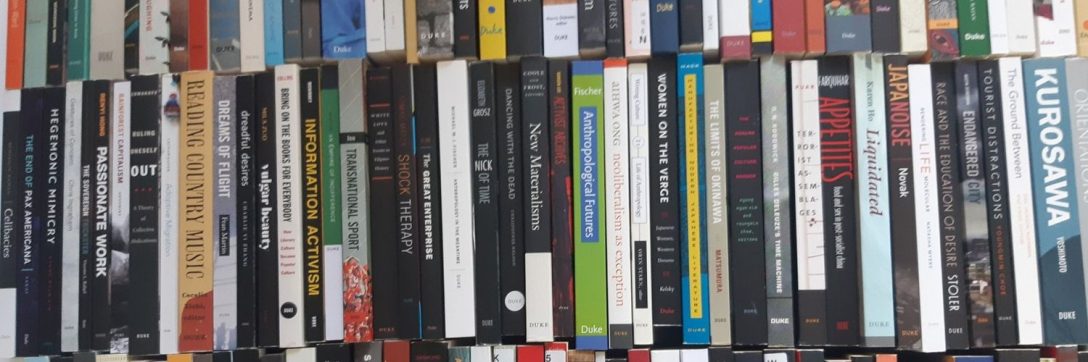

A review of The Flash of Capital: Film and Geopolitics in Japan, Eric Cazdyn, Duke University Press, 2002.
 The “flash of capital” refers to the way the underlying structure of a national economy “flashes” or reverberates through the films it produces, and how cinema critique can highlight the relations between culture and capitalism, film aesthetics and geopolitics, movie commentary and political discourse, at particular moments of their transformation. A flash is not a reflection or an image, and Eric Cazdyn does not subscribe to the reflection theory of classical Marxism that sees cultural productions as a mirror image of the underlying economic infrastructure. Karl Marx posited that the superstructure, which includes the state apparatus, forms of social consciousness, and dominant ideologies, is determined “in the last instance” by the “base” or substructure, which relates to the mode of production that evolves from feudalism to capitalism and then to communism. Transformations of the mode of production lead to changes in the superstructure. Hungarian philosopher and literary critic György Lukács applied this framework to all kinds of cultural productions, claiming that a true work of art must reflect the underlying patterns of economic contradictions in the society. Rather than Marx’s and Lukács’ reflection theory, Cazdyn’s “flash theory” is inspired by post-marxist cultural theorists Walter Benjamin and Fredric Jameson, and by the work of Japan scholars Masao Miyoshi and Harry Harootunian (the two editors of the collection at Duke University Press in which the book was published). For Cazdyn, how we produce meaning and how we produce wealth are closely interrelated. Cultural productions such as films give access to the unconscious of a society: “What is unrepresentable in everyday discourse is flashed on the level of the aesthetic.” Films not only reflect and explain underlying contradictions but, more importantly, actively participate in the construction of economic and geopolitical transformations.
Reflection theory and flash theory
The Flash of Capital concentrates on those critical moments of Japanese modern history during which the forms of both cinematic and capitalist categories mutate. The author identifies three such mutations of Japanese modernity: (1) between being colonized and being a colonizer nation of the pre-World War II moment; between the individual and collective of the postwar moment; and between the national and the transnational of the contemporary situation. Colonialism, Cold War, globalization: these are the three moments that Cazdyn addresses through thematic discussions of cinematic visuality, of film historiography, of literary adaptations, of amateur acting, of pornography, and of aesthetic experiments. Rather than a linear history, he prefers to concentrate on key moments of transformation during which formal inventions on the level of the film aesthetic figure a way out of impossible situations before a grammar becomes available to make sense of them. By paying close attention to the details of cinematic texts, he reads the works of Japanese directors and film critics as so many symptoms of the most pressing social problems of the day. Cazdyn borrows from Fredric Jameson and other literary critics the technique of symptomatic reading, a mode of reading literary and cinematic works which focuses on the text’s underlying presuppositions. A symptomatic reading is concerned with understanding how a text comes to mean what it does as opposed to simply describing what it means or represents. In particular, it tries to determine what a particular text is unable to say or represses because of its ideological conviction, but that transpires at the formal level through flashes, allegories, and aesthetic choices. The films that Cazdyn passes under review occur at historical junctures in which the social and political events are difficult to articulate. There does not seem to be an effective language with which to express the transformations taking place at key moments of Japanese modernity. But, as Cazdyn notes, “some filmmakers take more risks than others. They risk speaking in a language for which there is no established grammar.”
Japanese cinema has a peculiar affinity with the history of capitalist development. The movie industry is literally coeval with Japanese modernity: in the case of Japan, the history of film and the history of the modern nation share approximately the same span of time, both emerging in the 1890s. In addition, the one-hundred-year anniversary of film in Japan coincided with the fifty-year anniversary of the end of World War II. It comes as no surprise, therefore, that almost every history of Japanese film has used the history of the nation to chart its course. The three moments that The Flash of Capital choses to concentrate on are key turning points in Japanese modern history. They are also periods when Japanese cinema was particularly productive, with successive “Golden Ages” that have marked the history of Japanese cinema for a worldwide audience. The 1930s, the postwar period up to the late 1960s, and the 1990s were times fraught with contradictions. The antinomies and tensions between colonization and empire, between the individual and the collective, and between the national and the transnational made an imprint of the films produced during these periods, both at the level of content and in the formal dimension of aesthetic choices and scenic display. It is interesting to note that these moments have also produced canonic histories of Japanese cinema, both in print and through cinematic retrospectives. Cazdyn conducts a formal analysis of six histories of Japanese films, two of which are themselves films. The first historiographic works in the 1930s and early 1940s set the terms for a theory of cinema that was heavily influenced by Marxism and by nationalism; the 1950s saw the publication of Tanaka Jun’ichirō’s monumental encyclopedia of Japanese movies and Donald Richie and Joseph Anderson’s The Japanese Film; and the 1990s was marked by the one-hundred anniversary of Japanese cinema, with yet another four-volume encyclopedia and a film retrospective by Oshima Nagisa. Among scholars and students in the West, Richie and Anderson’s book has been a constant reference and has gone through a series of republications; it is, however, distinctly anticommunist and heavily marked by the Cold War context.
Colonialism, Cold War, globalization
Cazdyn begins his discussion of the first period with an Urtext of Japan’s cinematography: the recording in 1899 of a scene from the kabuki drama Momojigari by the actor Ichikawa Danjūrō (the stage name of a lineage of actors that goes back to the seventeenth century down to the present). Attending a screening held at his private residence, Danjūrō was shocked by his own image staring back at him and made it clear that the film should never be screened during his lifetime. But he later agreed that a presentation of the movie reels at an event in Osaka he was unable to attend was more satisfactory than a performance by another kabuki troupe. This episode set the terms—repetition, reproductibility, ubiquity, copy rights, distribution networks, mass production—by which the movie industry later operated. By the 1930s, cinema had become well entrenched in Japan. The early figures of the onnagata (men playing women’s roles) and the benshi (commentator integrated into the story), taken from similar roles in the traditional performing arts (kabuki, noh, bunraku), had given way to the modern talkie movie, a star system based on female actors, and genres divided between jidai-geki (period dramas) and gendai-geki (modern dramas). Film adaptations (eiga-ka) of literary works of fiction (shōsetsu) served to gain legitimacy for cinema as an art form, circumvent censorship, consolidate a literary cannon, and affirm the superiority of the original through fidelity-based adaptations. The writer Tanizaki Jun’ichirō, who had offered his own theory of adaptation through his successive translations into modern Japanese of the Tale of Genji, criticized the filmization of his novel Shunkinshō by pointing out the erasing of multiple levels of narration and identity that was so central to his work. When Tanizaki’s novel is reduced to mere narrative content, “all that remains are the most reactionary and conservative elements.” For the author, Tanizaki’s aesthetic choices, and the films produced by the first generation of Japanese directors, were inextricably related to the most crucial issues facing the Japanese nation in the 1930s: the rise of militarism and the backsliding of democracy, the colonization of large swathes of Asia, the rejection of Western values in favor of Japanese mores. Remaining silent about these issues, like Tanizaki in his novels or Ozu Yasujirō in his early movies, are charges that can be held against the authors.
The second Golden Age of Japanese cinema, and a high point of Japanese capitalist development, arose from the rubbles of World War II, found its most vivid expressions in the 1950s and early 1960s, and culminated in the avant-garde productions of the late 1960s and early 1970s. Out of this second period emerged not only a studio system modeled on Hollywood, but an impressive number of great auteurs that have become household names in the history of artistic cinema. Ozu’s challenging formal compositions, Kurosawa’s intricate plots, and Imamura’s nonlinear temporalities are immediately recognizable and have influenced generations of movie directors in the West and in Asia. The postwar period, which coincided with the Cold War, was marked by the subjectivity debate or shutaisei ronsō, which influenced popular ideas about nationalism and social change. For the postwar generation of left-leaning intellectuals, a sense of self—of one’s capacity and legitimacy to act as an individual and to intervene against the state and collective opinion—was crucial to keep the nation from ever being hijacked again by totalitarianism. But at the same time, the individual was summoned to put the interests of big corporations, administrative structures, and the Japanese nation as a whole before his or her own personal fulfillment, and to sacrifice the self in favor of economic development. In the context of the movie industry, the attempt to transcend the contradiction between the individual and the collective was resolved by positing a third term: the “genius” filmmaker who breaks out of the rigid structure and trumps the other two terms. The “great man theory” claims that an individual can rise up and produce greatness within—if not transcend—any structure. The same emphasis on the power of the filmmaker characterized film adaptations of literary works in the period. Encouraged by the Art Theater Guild, eiga-ka movies took liberties with the original text either by focusing on a particular section or adding content to the narrative. Shindō Kaneto’s 1973 adaptation of Kokoro, for example, deals only with the third letter of Sōseki’s famous shōsetsu, while in Ichikawa Kon’s Fires on the Plain the soldier-narrator of Ōoka Shōhei’s novel is shot and killed at the end instead of going to a mental hospital.
The withering away of the nation-state
The era of globalization, the third period in Eric Cazdyn’s survey of movie history, marks a transformation in the operations of the nation-state and in the aesthetics of Japanese cinema. The problem of globalization is the problem of a globalized system in which nations are steadily losing their sovereignty but where state structures and ideological models cling to an outdated form of representation. The political-economic and the cultural-ideological dimensions do not move at the same speed: at the precise moment in which the decision-making power of the nation-state is declining, nationalist ideologies and identities are as strong as ever. Some authors combined a renewed emphasis on the nation with the full embrace of globalization. For Ōshima Nagisa, the enfant terrible of the Japanese New Wave, national cinema is dead, and Japan is being bypassed by the transnational forces of capital. In Merry Christmas, Mr. Lawrence (1983), he represents the Japanese from the viewpoint of the white prisoners of war. In L’Empire des sens (1976), the pornographic nature of the film does not lie in the content (although the actors Matsuda Eiko and Fuji Tatsuya are “really doing it”) but in the form of reception: the Japanese conversation about the film was almost entirely consumed by questions of censorship, while in France, where it was first released, the film was geared towards a general audience—and foreign visitors: Ōshima noted that one out of every four Japanese who traveled to France had seen the movie. For Cazdyn, a film that makes history is “a film that represents a transformation before it has happened, a film that finds a language for something before a language has been assigned, a film that flashes the totality of modern Japanese society in a way that is unavailable to other forms of discourse.” Rather than commenting on blockbuster movies and costly productions, he choses to read political allegories in experimental films such as Tsukamoto Tetsuya’s Tetsuo (1988) or the documentary films of Hara Kazuo such as Yukiyukite shingun (Naked Army, 1987). He even finds inspiration in adult videos, which he sees as a compromise between guerrilla-style documentaries on the left and reality TV on the right. He notes that approximately seventy-five percent of current adult-video films in Japan are documentary-style—that is, their narratives are not couched in fiction, but follow a male character walk the streets looking for sex and engaging women to that end. Similarly, in his documentaries, Hara Kazuo can often be heard asking questions and provoking situations. His films make change happen into the real.
Eric Cazdyn is well-versed in the history of Japanese Marxism and makes it a central tenet of his theorization of Japanese cinema. He refers to the pre-war Marxist debate between the Kōza-ha (the faction that remained loyal to the Japanese Communist Party and the Komintern) and Rōnō-ha (the faction that split from the JCP in 1927 and argued that a bourgeois revolution had been achieved with the Meiji Restoration). Another school of Marxism, the Uno-ha, was the school of the late Tokyo Imperial University economist Uno Kōzō, who was probably the single most influential postwar Japanese economist on the domestic academic scene. Uno drew a distinction between a pure theory of capitalism, a theory of its historical phases, and the study of concrete societies. He concentrated on the first, and dedicated himself to working through the most theoretical problems of Marx’s Capital, such as the labor theory of value, the money circuit represented by the M-C-M’ formula, commodity fetishism, and the recurrence of crises. Moving to the present, Cazdyn pays tribute to Karatani Kōjin, a contemporary philosopher and interpreter of Marx’s thought that has attracted a vast followership. Marxism has had a lasting influence on Japan’s intellectual landscape, and has impacted the work of many filmmakers in the course of the past century. Cazdyn recalls that many intellectuals joined film clubs in the late 1920s and early 1930s because they were some of the only places where members could read Marx’s Capital without falling prey to censorship and repression. But this utopian space was soon discovered, and by 1935 Marxist intellectuals were either behind bars, had retreated to their private space, or had embraced right-wing nationalism. Illustrative of this wave of political commitment is the Proletarian Filmmaker’s League or Prokino. Cold War histories of Japanese cinema have disparaged this left-wing organization by pointing out “the extremely low quality of its products.” Cazdyn rehabilitates the work of its main theorist, Iwasaki Akira, and of film documentarist Kamei Fumio, who treated montage as a “method of philosophical expression.”
New publics for old movies
What is the relevance of these references to Marxist theory and obscure works of documentary or fiction for contemporary students of Japanese cinema in North America and in Europe? Cazdyn highlights the changing demographics of the classes that enroll in his discipline: “Students were primarily attracted to the arts and Eastern religion in the 1960s and 1970s; in the 1980s, they were chasing the overvalued yen; and today, they are consumed by (and consumers of) Japanese popular culture—namely manga and anime.” He also notes that the study of national cinema as an organizing paradigm has lost much of its appeal. The academic focus is now on films that address issues of minorities in Japan—post-colonial narratives, feminist films, LGBT movies, social documentaries—or on transnational productions in which Japanese identity is diluted into a pan-Asian whole. But academics should not project their current global and professional insecurities onto the screen of cinema history. The demise of the nation-state, and the dilution of national cinema into the global, is not a foregone conclusion. Movies produced in Japan today do not seem to appear less Japanese than the ones made one or two generations ago. There is still a strong home bias in the preferences of viewers, who favor locally produced movies over foreign productions. Japanese films that are popular abroad do not necessarily make it big in Japan, and the art movie theaters or international festivals often include films that are completely unknown in their domestic market. The economic and geopolitical context matters for understanding a movie, but not in the sense that Cazdyn implies. The author’s knowledge of the real functioning of an economy is inversely proportional to his investment in Marxist theory. He confesses that his interest does not hinge “on the profits and losses incurred by the film industry in Japan.” But supply and demand, profits and losses, and production and distribution circuits matter for the evolution of cinema over the ages, and a theory that claims to conceptualize the link between films and their socio-economical context must grapple with economic realities, not just outmoded Marxist fictions.
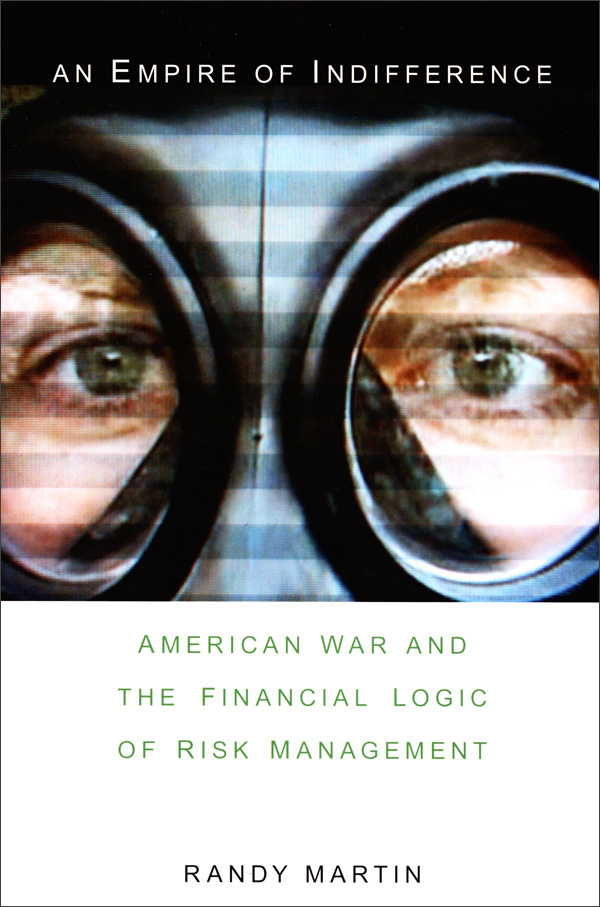 In An Empire of Indifference, Randy Martin makes the argument that a financial logic of risk management underwrites US foreign policy and domestic governance. Securitization, derivatives, hedging, arbitrage, risk, multiplier effect, leverage: these keywords of finance can be applied to the field of war-making and empire-building. The war on terror has created an empire of indifference that distances itself from any particular situation, just like the high finance of Wall Street is unconcerned about the travails of the real economy in Main Street. Finance can help us understand how foreign policy decisions are made, military interventions are planned, and scarce resources are allocated for maximum leverage. As a diplomat trained in economics, I find this angle very stimulating. However, the author approaches it from the perspective of the cultural critic, not as an economist or a political scientist. His book is written on the spur of the moment and oscillates between a denunciation of the war on terror and a conventional analysis of mounting risks in the financial sector. His logic is sloppy at best and his references to finance and economics are unsystematic and clumsy. Even his Marxism is of the literary type: he treats Marx as a shibboleth and a source of metaphors, not as an analytical toolbox or a conceptual guide. In the following lines, I would like to reclaim the impetus of mixing economics, war studies, and finance. But first, let me try to summarize Randy Martin’s argument.
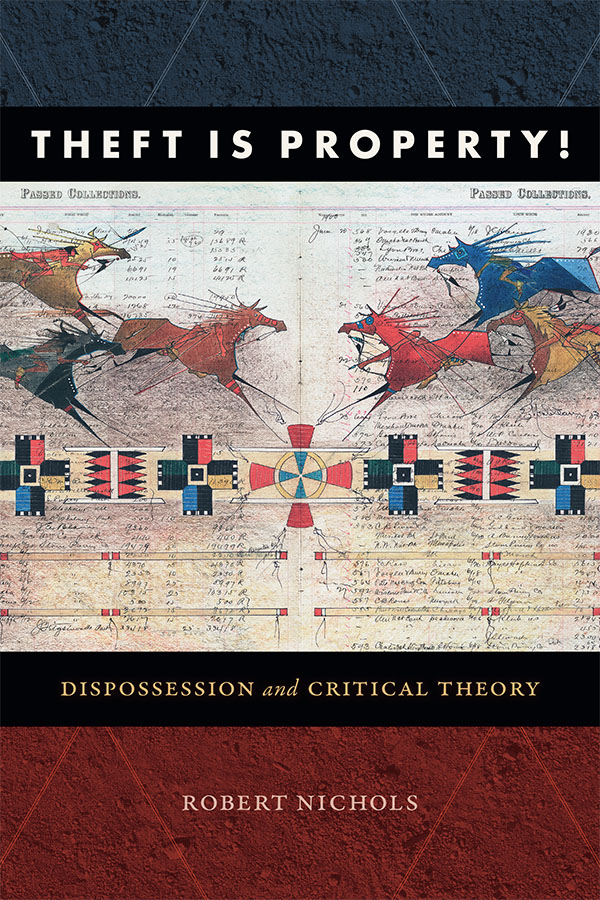 “Property is theft !” declared Pierre-Joseph Proudhon, denouncing the inanity of social institutions undergirding bourgeois society. He was criticized by Karl Marx, who judged the formula self-refuting, and by Marx Stirner, who wrote: “Is the concept ‘theft’ at all possible unless one allows validity to the concept ‘property’? How can one steal if property is not already extant?” Indigenous people face the same set of objections when they claim ownership of the land that has been stolen from them. Their traditional culture and enduring values often emphasize a special connection to land and place. They are the “children of the soil,” “sprung from the land itself” as the word “autochthonous” indicates in its Greek etymology. They can legitimately claim the right of first occupancy and document their collective memory of having been there first. The dispossession of their ancestral lands occurred under conditions that would today be judged unlawful or illegitimate, and that was condemned as such at the time it occurred. But on the other hand, the emphasis on possession and ownership contradicts the values of shared responsibility, stewardship, and common property that many Indigenous people, indeed many persons, associate with land and natural assets. How can one argue that the earth is not to be thought of as property at all, and that it has been stolen from its rightful owners? What does it mean, then, to be dispossessed of something that you never really “had” in the first place, and to reclaim something that was never really “yours” to begin with? Can we make the legitimate claims of Indigenous people compatible with political visions that do not advocate property and ownership at their point of departure?
 Ten years have passed since the wave of protests that swept across North Africa and the Middle East. Time has not been kind to the hopes, dreams, and aspirations for change that were invested in these Arab uprisings. A whole generation is now looking back at its youthful idealism with nostalgia, disillusion, and bitterness. Revolutionary hope is always followed by political disenchantment: this has been the case for all revolutions that succeeded and for all attempts that failed. Fadi Bardawil even sees here the expression of a more general law: “For as long as I can remember, I have witnessed intellectuals and critical theorists slide from critique to loss and melancholia after having witnessed a political defeat or experienced a regression in the state of affairs of the world.” These cycles of hope and disillusion are particularly acute in the Arab world, where each decade seems to bring its own political sequence of rising tide and lowering ebb. Revolution and Disenchantment tells the story of a fringe political movement, Socialist Lebanon (1964-70), through the figures of three Marxist intellectuals who went through a cycle of revolutionary fervor, disenchantment, despair, and adjustment. Waddah Charara (1942–), Fawwaz Traboulsi (1941–), and Ahmad Beydoun (1942–) are completely unknown for most publics outside Lebanon, and their reputation in their country may not even have crossed the limits of narrow intellectual circles. They have now retired from an academic career in the humanities and social sciences, and few people remember their youthful engagement at the vanguard of the revolutionary Left. But their political itinerary has a lot to tell about the role of intellectuals, the relationship between theory and practice, and the waves of enthusiasm and disillusion that turn emancipatory enterprises into disenchanted projects.
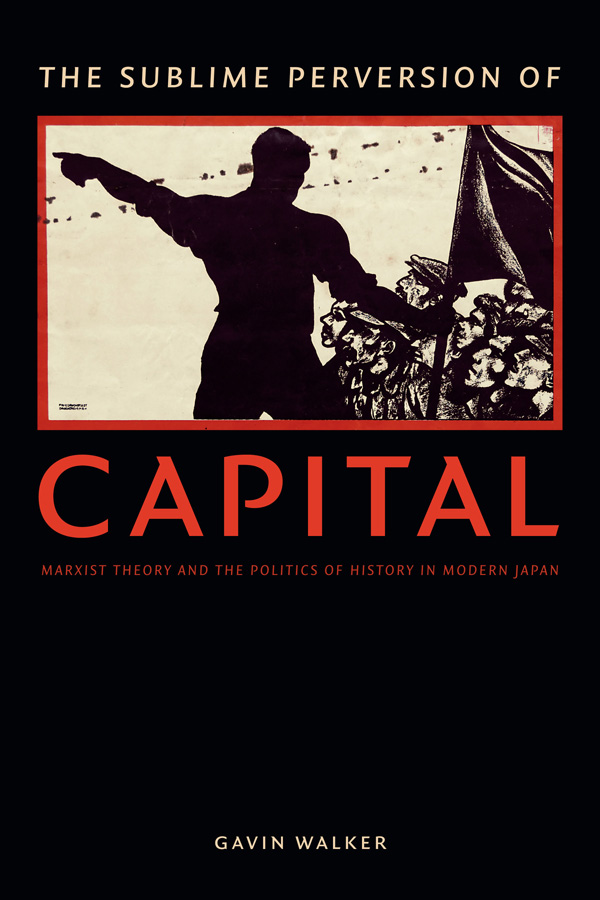 Why read Marx today? More to the point, why devote a book to how Marx was read in Japan in the mid-twentieth century, and in particular to the writings of a Marxist scholar named Uno Kōzō (1897-1977), Japan’s foremost Marxian economist and founder of what is usually referred to as the Uno School (Uno gakuha), Uno economics (Uno keizaigaku), or Uno-ist theory (Uno riron)? Books about this branch of Marxist theory now collect dust on the shelves of second-hand bookstores in the Kanda-Jinbōchō district in Tokyo. They remind us of Marxism’s surprising longevity in Japan’s academic circles: a Japanese publishing house, Kaizōsha, was the first editor in the world to publish the complete collected works of Marx and Engels (in thirty-two volumes), and Marxist theory was taught and studied with passion in the tumultuous years of campus upheavals of the 1960s and 1970s. The generation that imbibed Marx’s shihonron in its formative years is now past retirement, and the few remaining bastions of Marxism are only to be found in philosophy or literature departments, not in faculties of economics. But Gavin Walker considers that something important was at stake in these economic debates, something that can still speak to our present. In his opinion, we need to understand the “sublime perversion of capital” in order to situate and possibly overcome our contemporary theoretical impasses and debates: the surprising persistence of the nation, the postcolonial situation, the enclosure of the new “digital commons,” the endless cycles of crisis and debt. Indeed, Walker argues, “this moment of globalization calls for a fundamental (re)examination of the central questions of Marxist theory itself.” For, like Marx wrote to his German readers in the 1867 preface of Das Kapital, “De te fabula narratur!”—it is of you that the story is told.
 It takes a lot of people to make a movie. It also takes a diversity of production sites, technologies, and product or service providers. The list of names, locations, companies, and generic technologies that were instrumental in making a movie are listed in the closing credits. A full set of credits can include the cast and crew, but also contractors, production sponsors, distribution companies, works of music licensed or written for the movie, various legal disclaimers, such as copyrights and more. Nobody really pays attention to this part, except for the theme song playing at full blast and the occasional traits of humor interrupting the credits scroll. These closing credits allow the spectator to make the transition between the world of fiction and the real world, and to put an end to the suspension of disbelief that made him or her adhere to the on-screen story. For Hye Jean Chung, who teaches cinema studies in the School of Global Communication at Kyung Hee University in South Korea, the spectator’s disregard for credit attributions is part of an operation of denial and erasure: denial of the work that went into making a movie, and erasure of the production sites and collaborative networks that increasingly place film production into an international division of labor. The ancillary bodies and sites of labor are erased from the film’s content and only appear in the end credits; but they somehow creep back onto the screen during the movie as well, producing what she calls “spectral effects” or traces that are rendered invisible and disembodied but that still haunt the movie like a ghostly presence. Taking on from Michel Foucault’s concept of heterotopia, she defines “heterotopic perception” as a mode of criticism that is sensitive to these spectral effects, and “media heterotopias” as a digitally enhanced audiovisual realm of representation that superimposes different layers of realities, spatialities, and temporalities.
 Same-sex marriage in Taiwan became legal on 24 May 2019. This made Taiwan the first nation in Asia to recognize same-sex unions. You think it’s a progress for LGBT rights? Well, think again. In the midst of the clamor for legalized same-sex marriage, G/SRAT, a LGBT organization, marched to oppose the institution of marriage at Taipei Pride, proposing the alternative slogan of “pluralism of relationships” on their banner against “marriage equality.” Queer Marxism in Two Chinas is open to such perspectives that go against the grain of conventional wisdom and emerging consensus on gay marriage and LGBT rights. It argues that gay marriage legalization is a victory for neoliberal capitalism, which incorporates gay couples into its fold and wages a propaganda battle against communist China. If we define pinkwashing as the strategy to market oneself as gay-friendly in order to appear as progressive, modern, and tolerant, then Taiwan is pinkwashing itself on a grand scale. Threatened by the prospect of reunification with mainland China, Taiwan has focussed its diplomatic strategy on integrating into the global economy and on securing popular support from the West by promoting itself as a democratic regime with values similar to those in the United States or Europe. Granting equal rights to same-sex couples is fully congruent with these twin objectives, and it serves geopolitical goals as much as it responds to local claims for equal rights and justice for all.
 Okinawa has been disposed three times in modern history. The first disposition occurred in 1609, when the feudal lord of the Satsuma domain invaded what was then the Ryūkyū kingdom and transformed it into a vassal state. The second annexation took place in 1879, when Ryūkyū was formally incorporated into Japan as Okinawa Prefecture. The third shift in sovereignty happened in 1972 when the US reverted to Japan the islands they had occupied since 1945. On these three occasions, disposition was a form of dispossession: the people were not consulted, and the islands were treated as a pawn in a larger geopolitical game. Okinawa mattered because of its position halfway between Japan and China, intersecting the trade routes that went down to South-East Asia. Central to the former kingdom’s maritime activities was the continuation of the tributary relationship with Ming Dynasty China, which allowed the Ryūkyū islands to flourish and prosper. In terms of culture as well, the Ryūkyū islands were a mix between Chinese, Japanese, and insular influences. Wendy Matsumura’s book focuses on the period between 1879 and the early 1930s and seeks to chart the limits of Okinawa as an imagined community. Okinawa was first conceived as a feudal domain resisting Japan’s imperialism; then as an economic community facing the inroads of imported capitalism; and lastly as a diasporic and deterritorialized ensemble faced with discrimination and marginalization. Each time, the articulations of community by Okinawa’s rulers and intellectual were met with local resistance and led to alternative modes of mobilization.
 In everyday language, a materialist is defined as a person who considers material possessions and physical comfort as more important than spiritual values. According to Madonna’s famous song, “we are living in a material world.” Says the Material Girl: “Some boys kiss me, some boys hug me / I think they’re okay / If they don’t give me proper credit, I just walk away /…/ ‘Cause the boy with the cold hard cash is always Mister Right.” Madonna may not have had in mind the new materialisms referred to in the book edited by Diana Coole and Samantha Frost. Here materialism refers to the philosophical doctrine that nothing exists except matter and its movements and modifications, as opposed to spiritualism that posits a dualism between subject and matter. But the material girl’s lyrics may provide a good entry point into this volume. After all, Madonna’s kissing and hugging addresses a strong message to the feminists who have been accused of routinely ignoring the matter of corporeal life. In exposing her body, Madonna draws our attention to what really matters (sex), while referring to non-bodily retributions (money) that also matter a great deal. So my materialist questions to the book will be: Do we still live in a material world according to these new versions of materialism? Do the authors give proper credit, and to whom? What does the reader get from his or her cold hard cash? And are the contributors always Mr (or Mrs) Right?
 There is a tradition of contemporary Japanese philosophers drawing from anthropology (the names of Shinichi Nakazawa and Akira Asada come to mind). There is also a Japanese tradition of philosophical re-readings of Marx (with Kozo Uno or Makoto Itoh). I am interested in the first tradition. I regard the second as negligible. In The Structure of World History, Kojin Karatani combines the two approaches. He offers a broad synthesis on the origins of the state, the market, and the national community, based on the works of classical anthropologists. And he provides a close reading of Marx’s texts in order to construct his own philosophical system, encompassing the whole of human history. I found the first part based on anthropology most valuable. I only skipped through the second part. Below are a few reading notes and commentary intended to provided a cursory reading of Karatani’s book.
 The Duke Reader