
A review of Climatic Media: Transpacific Experiments in Atmospheric Control, Yuriko Furuhata, Duke University Press, 2022.
 My Japanese alma mater, Keio University at Shonan Fujisawa, has a Faculty of Environment & Information. Next to it stands a Graduate School of Media & Governance. Putting two distant words together, like “environment” and “information” or “media” and governance”, creates new perspectives and innovative research questions while breaking boundaries between existing disciplines. Yuriko Furuhata uses the same approach in Climatic Media. What is climatic media? How did media become articulated with climate in the specific context of Japan? In what sense can we consider the climate, and atmospheric phenomena, as media? What new research questions arise when we put the two words “climate” and “media” together? Which disciplines are summoned, and how are they transformed by the combination of climate and media? How does climatic media relate to Watsuji Tetsurō’s concept of Fūdo, to take the title of his 1935 book translated as Climate and Culture? Can we use certain media to manage the climate, to predict and to control it? What is the genealogy of these technologies of atmospheric control, and can we trace them back to previous projects of territorial expansion and imperial hegemony? If we call “thermostatic desire” the desire to control both interior and exterior atmospheres, how does this desire “scale up” from air-conditioned rooms to smart buildings, district cooling systems, domed cities, geoengineering initiatives, orbital space colonies, and terraformed planets? In what sense can we say that air conditioning is people conditioning? These are some of the questions that Yuriko Furuhata raises in her book, which I found extremely stimulating. My review won’t provide a summary of the book’s chapters or an assessment of its contribution to the field of media studies, but will rather convey a personal journey made through Climatic Media and, indirectly, back to my formative years at Keio SFC.
The many meanings of media
One of the difficulty I had with the book, and also one of the lessons I learned from it, is the multiplicity of meanings associated with the term media. According to the burgeoning field of media studies, media can be many things. In its most widely accepted meaning, media are the communication tools used to store and deliver information or data: we may therefore speak of mass media, the print media, media broadcasting, digital media, or social media. In this limited sense, climatic media is what makes atmospheric variations visible and legible through the mediation of various instruments of data visualization: thermal imaging, photographs, charts, diagrams, computer simulations, etc. Putting the climate in media format can serve scientific, informational, political, or artistic purposes. In the arts, media designates the material and tools used by an artist, composer or designer to create a work of art. Climatic Media borrows many of its examples from the arts, and documents attempts by Japanese artists to use fog, fumes, mist, and air as a material for site-specific aerial sculptures or light projection. Architecture, in particular, can be identified as an art or a discipline deeply entangled in climatic media. In architecture, media is what mediates indoor and outdoor climate: a door or a wall can therefore be considered as media of atmospheric control. The meaning of media can also be expanded to include the materiality of elements that condition our milieu. Elemental media include the chemical components of air, indoor or outdoor air temperature and humidity, atmospheric pollution, extreme weather phenomena, the planetary atmosphere, and other natural elements of climate. In a more general meaning, media are a means toward an end. Climate can be manipulated to particular effect, which may be peaceful or war-related. Climate-controlled spheres or air-conditioned bubbles can be created, using technologies that mediate and shape what counts as a habitable environment. In this broadest sense, climatic media are technologies of government, securing a livable environment for certain populations while excluding others.
The author chooses to concentrate on architecture as climatic media, foregrounding the imperial roots and Cold War legacy of Japanese architecture through the work of Tange Lab architects, including those associated with the internationally renowned postwar architectural movement called Metabolism, with Kurokawa Kishō and Isozaki Arata as key figures. In the past decades, Japanese architects and buildings have achieved iconic status and became known to a wide public. Even casual visitors to Tokyo are familiar with the Yoyogi National Gymnasium built by Tange Kenzō for the 1964 Tokyo Olympics, as well as the more recent National Art Center designed by Kurokawa Kishō in Roppongi. With Tange Lab as their training ground, Metabolist architects and designers believed that cities and buildings are not static entities, but are ever-changing organisms with a “metabolism.” Postwar structures that accommodated population growth were thought to have a limited lifespan and should be designed and built to be replaced. The greatest concentration of their work was to be found at the 1970 World Exposition in Osaka where Tange was responsible for master-planning the whole site whilst Kurokawa and Isozaki designed pavilions. It was also Tange Lab and Metabolism architects (some of whom were ardent “futurologists”) who helped bring cybernetics and systems theory into urban design in Japan. After the 1973 oil crisis, the Metabolists turned their attention away from Japan and toward North Africa and the Middle East, which (if we follow Yuriko Furuhata) made them complicit with the oil economy that stands as the main threat to our planetary survival in the twenty-first century.
From Japanese Empire to Osaka Expo ’70
Many of the architectural and artistic experiments described in Climatic Media are grounded in the work of the physicist Nakaya Ukichirō, known as the inventor of the world’s first artificial snow crystal. Nakaya spent his whole life studying ice, snow, and frost formations. The Institute of Low Temperature Science he established at Hokkaidō University in the 1930s helped advance research on cryospheric and atmospheric science. It was also deeply entangled in the Japanese Empire’s territorial conquests and war effort. Nakaya and his students collaborated with the research division of the South Manchurian Railway Company (“Japan’s first think tank”) in studying causes and mechanisms of frost heaving that damaged the railroad every winter in Manchuria. They helped Japanese agrarian settlers to build houses adapted to the extreme cold climate of the region, and designed ways to operate landing runways and military airplanes in frosty conditions. Nakaya Ukichirō’s ideas were later mobilized in a Cold War context, when polar regions and extreme atmospheric conditions became at stake in the geopolitical confrontation between the United States and its allies on one side and the Communist bloc on the other. Plans to weaponize the climate included battleground weather modifications such as creating hurricanes or heavy rain through cloud seeding and other chemical interventions, as well as the direct use of atmospheric weapons such as tear gas and Agent Orange during the Vietnam War. The expert knowledge of cold climates and atmospheric conditions accumulated at the Hokkaidō Institute also found civilian applications. They helped Asada Takashi, an architect at Tange Lab, to design a proto-capsule housing for the Japanese explorers and researchers at the Shōwa Station in the Antarctic in the 1950s. Tange Kenzō himself, who had aligned with the expansionist agenda of the Japanese Empire in his youth, helped design The Arctic City in 1971, a futurist proposal by Frei Otto and Ewald Bubner to house 40,000 people under a two kilometer dome in the Arctic Circle. Capsule housing and domed cities were also nurtured by dreams of extra-orbital stations and space conquest that survived the Cold War era. More down to earth, the idea of recycling snow as a source of refrigeration is now attracting investors and tech companies to build data centers in frosty regions such as Iceland or the northern provinces of Canada.
There was an even more direct connection between the physicist Nakaya Ukichirō and the architects and artists who gathered at Expo ’70 in Osaka. His daughter, Nakaya Fujiko, was a pioneer in atmospheric art and fog sculpture. She was the Tokyo representative of the American art collective Experiments in Art and Technology (E.A.T.), and was invited by Billy Klüver to create the world’s first water-based artificial fog sculpture for the Pepsi Pavilion at Expo ’70. Yuriko Furuhata argues that father and daughter were not bound solely by blood ties and a shared interest in meteorological phenomena: it is the practice of atmospheric control that binds the scientist and the artist. Nakaya Ukichirō himself was no stranger to artistic creation: he was an accomplished sumi-e artist, and documented his studies of summer fog or winter snow with ink paintings, close-up photographs, and educational films. In turn, his daughter incorporated science into her creative process, and sought advice of former students of her father to create the fog sculpture displayed at Osaka’s exposition. Nakaya Fujiko’s fog sculpture therefore sits at the point of convergence between two genealogical threads which, together, define what is at stake in climatic media: visualizing climate and engineering the atmosphere. Enveloping Pepsi Pavilion’s dome with artificial fog was meant to turn the pavilion into an interactive “living responsive environment” responding to ambient factors such as wind, temperature, humidity, and light. The machines used to make artificial fog found practical applications beyond the realm of art. Engineers use the same technology today to cool down data centers and cloud computing service infrastructure. Artificial mist is also a familiar sight in urban centers on hot summer days, where small drops of water are projected to create an artificial fog that cools down the air. Expo ’70 also served as testing ground for other urban innovations. Futurologists and technocrats paired with architects and engineers to produce a cybernetic model of the late-twentieth-century city, with its network of data-capturing sensors and its control room filled with state-of-the-art Japanese computers. This techno-utopian vision of connectivity that was put on display at Japan’s World Exposition in 1970 can be seen as a precursor of modern “smart cities” and their networked systems of urban surveillance and social conditioning. Today, many of these technologies of mass surveillance have become mundane and prevalent, but when they first entered the streets of metropoles in the late 1960s they were seen as the creative experiments of artists, architects, and futurologists.
Genealogies of the present
Instead of presenting a linear history of climatic media or splitting her subject into neatly divided themes, Yuriko Furuhata follows a genealogical method of investigation and presentation, which “reads the past as the historical a priori of the present we live in.” She starts each chapter with a modern example of atmospheric control and then goes back and forth in time to find antecedents of the same “thermostatic desire” to control the atmosphere, with Expo ’70 as a point of concentration and the Japanese Empire as a concealed Urtext. In chapter one, city sidewalks refreshed by mist-spraying devices and data centers cooled by similar technologies lead the author to describe the fog sculpture of Nakaya Fujiko at the Pepsi Pavilion and to trace her connexion with the work of her father during wartime, which in turn found direct applications in the futurist works of architects gathered at Tange Lab. In chapter two, the rise of hyperlocalized weather predictions using artificial intelligence and smart air-conditioning systems that individually curate air flows are connected to early attempts to numerically predict the weather and to the history of futurology in Japan, with early visions of the networked society that materialized in the computerized control center of the world’s fair. Amazon’s headquarters in Seattle and its CEO’s dream of colonizing space in chapter three’s opening echo former greenhouse architectures and imperial projects of a “living sphere” (Lebensraum), with Tange Lab as a source of innovative design that connects Japan’s imperial past to modern urban planning and to utopian dome cities in the Arctic or in outer space. In chapter four, the author takes the Metabolist architects at their own word, reading their defining metaphor of metabolism through the lenses of the product life cycle and the Marxist concept of the “metabolic rift” between humans and the natural environment. Kurokawa Kishō’s holistic vision of renewable capsule housing and his early engagement with systems theory are contradicted by his use of plastics as a nonrecyclable material and by his taste for the expression “Spaceship Earth,” which foregrounds modern plans to geoengineer the Earth’s climate through technological interventions. In chapter five, modern methods of atmospheric control, from tear gas to cloud computing and smart objects, are tributary to a genealogy of urban surveillance that shows the dual use of technologies of social control, turning artistic experiments into dystopian futures.
The expression “dual-use technologies” usually refers to technologies with applications in both the military and the civilian sectors. Here, they not only connect defense industries and peaceful usage, but also imperialist rule and artistic creation. Several words and expressions straddle the border between war-making and the arts: military strategists speak of theater, engagement, or war and peace without making direct reference to Shakespeare, Jean-Paul Sartre, or Leon Tolstoy. Similarly, the term “avant-garde” used by art critics derives from military vocabulary. Furuhata proposes to expand this list of dual-use terms to “site-specificity”, originally used for artworks created to exist in a certain place, and to “climatic media” in general, describing how projects to “weaponize the weather” found applications in civilian times or how avant-garde artistic experiments were the harbinger of modern security technologies. Climatic control also borrows some of its metaphors from agriculture: cloud seeding, harvesting the weather, cultivating rain, or building greenhouses point to underlying epistemic assumptions and cultural expectations associated with controlling the atmosphere. The “cloud” now used for computer data storage is not just a metaphor: cooling data centers involves the same air-conditioning nozzles and fog machines first used by artists at the Osaka fair. Computer network systems are atmospheric in the literal sense of being carried by radio waves in the air. The cybernetic model used to regulate a house’s temperature is applied to the fiction of controlling the planet’s imaginary thermostat through feedback loops. The technical operations carried out by climatic media are both material and symbolic. Urban infrastructures such as energy grids, fiber-optic cables, air ducts, water pipes, and computer systems all rely on technologies that regulate temperature and mitigate the effects of outdoor weather. In times of planetary-scale climate change caused by human activity, it is useful to remember that operations of climatic control at one scale all have consequences at another scale: the Earth is not a closed system, and climatic media are intrinsically connected with global issues of environmental pollution, greenhouse gas emissions, and waste accumulation.
Back to SFC
Reading this book reminded me of the intellectual atmosphere I found at Keio University’s Shonan Fujisawa Campus (Keio SFC) when I first came to Japan as a teacher of French studies in the early 1990s, from 1992 to 1994. Established only two years before, SFC at that time was a hotbed of technological innovation and pedagogical breakthrough. Sometimes considered as the “birthplace of the Japanese internet,” it had chosen to equip its students and faculty with state-of-the-art technology. The ubiquitous classroom computers were not the familiar IBM PC or Apple Macintosh, but turbocharged Sun SPARCstations and NeXt computers. Learning to code was a requisite, even for students specializing in the humanities. We wrote all of our documents using LaTeX, were early users of email software, and surfed the web using the Mosaic web browser upon its release in 1993. But technology was only part of the equation. SFC’s ambition was to embark a young generation of Japanese students into a life-changing experience, and to equip them with the skills and mindset for navigating the information society and its lived environment. As a junior faculty member, I was also allowed to follow courses and seminars to improve my Japanese language skills and share the students’ experience. Expanding my French upbringing and undergraduate studies in economics, the seminars and writings of Takenaka Heizo, Usui Makoto, and Uno Kimio introduced me to emergent research topics, from industrial metabolism to green accounting and input-output tables of economic development. Due to lack of personal discipline, but also because of the interdisciplinary nature of these ideas, I failed to translate all these burgeoning ideas into a PhD after I left Japan. But the knowledge acquired at Keio SFC equipped me with life-long skills and interests, and I have lived since them off the intellectual capital accumulated throughout these two years of teaching and auditing classes. I haven’t learned anything really new since then. In my view, Keio SFC at that time conveyed the vibrancy, intellectual excitement, and creativity a former generation of Japanese architects and social scientists must have experienced at Tange Lab or through the planning of Osaka Expo’ 70. Whether Keio SFC succeeded in steering Japan into the direction it set for itself is another debate. In retrospect, I could have been more attentive to the dark clouds gathering on the horizon: the bubble economy had left Japan with piles of debt and nonperforming loans; the reduced birthrate meant there were less students for an increasing number of places available in new universities; parents were still making huge sacrifices for the education of their children; and attractiveness of foreign languages and foreign destinations for studying and working abroad tended to dwindle. Even in those early years after the creation of the campus, academic inertia and routine crept in, and there was a certain hubris in the lofty goals and ambition that animated the whole project. But these two formative years still have for me the scent of youth and boundless possibilities.
 Everything has been written about the “male gaze” and the fetishization of Asian bodies on cinema screens. As film studies and feminist scholarship make it clear, white male heterosexuals fantasize about oriental ladies and make the exotic rhyme with the erotic. But Mila Zuo is not interested in white male cinema viewers: her focus is on the close-up faces of Chinese movie stars on the screen, which she finds both beautiful and vulgar in a sense that she elaborates upon in her book Vulgar Beauty. As a film scholar with a knack for philosophy and critical studies, she builds film theory and cinema critique based on her own experience as an Asian American who grew up in the Midwest feeling the only Asian girl in town and who had to rely on movie screens to find kindred faces and spirits. As she recalls, “When on rare occasion I did see an Asian woman’s face on television, a blush of shame and fascination blanketed me.” True to her own experience, she begins each chapter with a short recollection of her personal encounter with Chinese movies or Asian movie stars. The films that she selects in Vulgar Beauty, and the film theory that she develops, are not about them (American white males): they are about us (Chinese-identifying female spectators and actresses) and even about me (as an individual with her own subjectivity and
 I do not want to brag, but I am in a league of my own when it comes to reading habits. I am not a professional reader, teacher, academic, or publisher, and yet I achieved to read 365 books in 2020—the year of the great lockdown. What started out as a silly gambit on January 1st—my “one-book-a-day” challenge—turned out to be a transformative experience. If “frequent readers” are said to read twelve to forty-five books a year, and “avid readers” read fifty or more books a year, I propose to create the category of “voracious reader” for those who read more than a hundred books per year,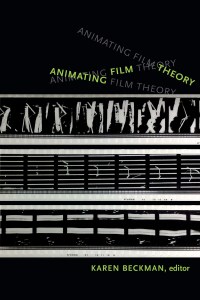
 Lesbian feminists invented the Internet, and they did it without the help of a computer. This is the surprising finding that comes out of the book Information Activism: A Queer History of Lesbian Media Technologies, published by Duke University Press in 2020. As the author Cait McKinney immediately makes it clear, the Internet that lesbians built was not composed of URL, HTML, and IP servers: it was an assemblage of print newsletters, paper index cards, telephone hotlines, paper-based community archives, and early digital technologies such as electronic mailing lists and computer databases. What made these early media technologies “lesbian” is that they formed the information infrastructure of a social movement that Cait McKinney describes as “information activism” and that was oriented toward the needs and aspirations of lesbian women in North America during the 1980s and 1990s. And what makes Cait McKinney’s book a “queer history” is that she brings feminism and queer studies to bear on a media history of US lesbian-feminist information activism based on archival research, oral interviews, and participant observation through volunteering in the Lesbian Herstory Archives in New York. Information activism took many forms: sorting index cards, putting mailing labels on newsletters, answering the telephone every time it rings, converting old archives into digital format… All these activities may not sound glamorous, but they were part of the everyday politics of “being lesbian” and “doing feminism.”
 Nowadays young PhDs majoring in the social sciences and the humanities often list an interest in sound studies when they enter the academic job market. Likewise, digital humanities is a booming field encompassing a wide range of theories and disciplines bound together by an interest in digital tools and technologies. There is a premium in listing these categories as fields of interest in one’s CV, even though the young scholar’s specialization may lie in more traditional disciplines such as English literature, modern history, or American studies. This is what economists call job market signaling: by associating themselves with “hot” topics, potential new hires make themselves in hot demand and differentiate their profile from more standard competitors. And yet, digital humanities and sonic materials have so far had a limited impact on social science scholarship. The humanities remain text-centric and bound by technologies inherited from the printing press and the paper format. The reproduction of sound is ubiquitous, and digital technologies are everywhere but in the content of academic journals and university syllabuses. Student evaluation is still mostly based on silent modes of learning such as final essays, midterm exams, and reading responses. Sonic modes of participation such as asking questions, providing oral feedback, and exchanging ideas with peers during class discussions are weighted with a limited coefficient compared to other evaluation metrics based on the written text.
 This is not a book about Asian sex videos. Indeed, reading Media, Erotics, and Transnational Asia should lead the reader to question why the category “Asian sex video” exists in the first place, why Asian bodies are disproportionately represented in Internet porn, and how we should react to such unregulated flow of images. In fact, none of the entries in this book deals with explicitly erotic content or with pornography, and the only chapter that concerns the Internet as a medium, a study of online discussions about correspondence marriage between the US and the Philippines, insists on rejecting facile analogies with the sex trade or with mail-to-order catalogues. For scholars and for feminists—and most authors in this volume are women—, the erotic has to be distinguished from the sexual. And writing about eroticism should in no way lead to stoke the base instincts of the reader. The erotic extends beyond sex acts or desires for sex acts to become “enmeshed in, for instance, yearnings for upward mobility, longings for ‘the homeland,’ formulations of nationhood and citizenship, and ruptures of ethnic and racial identity.” Desires for sexual encounters intertwine with those for commodities and lifestyles. Such a paneroticism may break gender, class, ethnicity, or age boundaries. Synonymous with desire, it may be at odd with an Orientalist vision of Asia as feminized and the West as setting the standard for homo- and heteronormativity. For instance, “what constitutes ‘lesbian’ desire may look both and function differently than it does within Euro-American social and historical formations, and draw from alternative modes of masculinity and feminity.”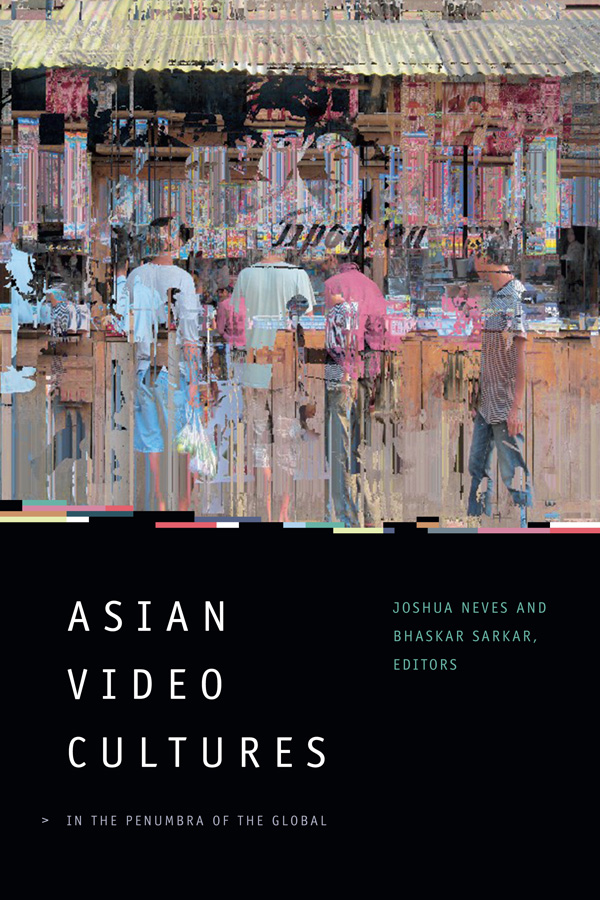
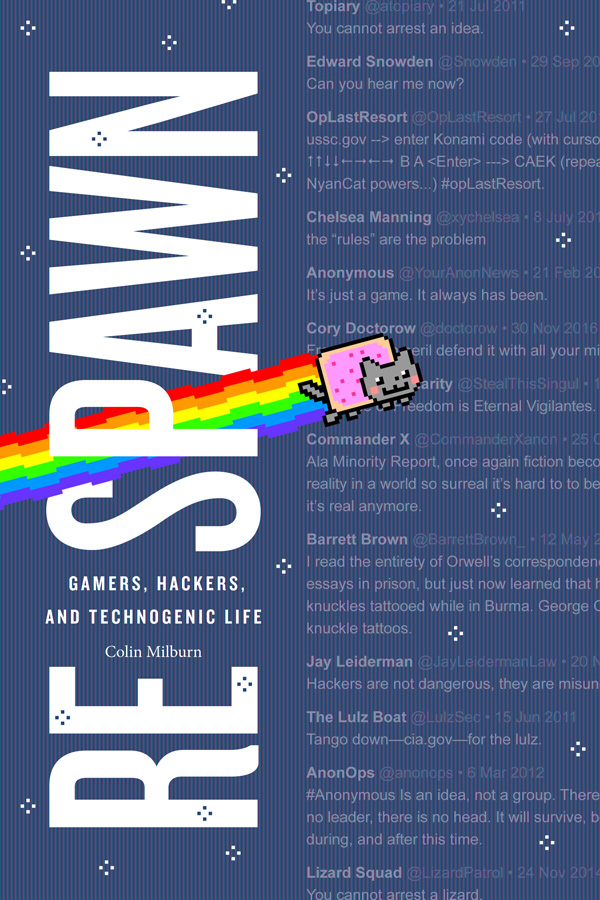 Video games are now part of popular culture. Like books or movies, they can be studied as cultural productions, and university departments offer courses that critically engage with them. Scholars who specialize in this field of study take various perspectives: they can chart the history of video game production and consumption ; they can focus on their design or their aesthetic value; or they can analyze their narrative content and story plot. There is no limit to how video games can be engaged: some thinkers even take them as fertile ground for philosophy and theory building. Within the past few years, a handful of books have been published on video game theory. Colin Milburn’s Respawn can be added to that budding strand of literature. It is a work of applied theory: the author doesn’t engage with longstanding philosophical problems or abstract reasoning, but draws from the examples of a wide range of games, from Portal and Final Fantasy VII to Super Mario Sunshine and Shadow of the Colossus, to illustrate how they impact the lives of gamers and non-gamers alike. In particular, he considers the value of video games for shaping protest and political action. Video games, with the devotion that serious gamers bring to the task, introduce the possibility of living otherwise, of hacking the system, of gaming the game. Gamers and hackers develop alternative forms of participatory culture along with new tactics of critique and intervention. Hacktivist groups such as Anonymous use video game language and aesthetics to disrupt the operations of the security state and launch attacks on the neoliberal order. Pirate parties have won seats in European legislatures and advocate a brand of techno-progressivism, digital liberties, and participatory democracy largely inspired by video games. Exploring the culture of video games can therefore offer a glimpse into the functioning of our modern democracies in a computerized world.
 Cinema is an industry. But very often aesthetics gets in the way of analyzing it as such. For cinema—or some portions of it—is also an art. Industry or art: these two approaches give rise to two distinct bodies of literature, one focusing on professions, publics, and profits, the other one on visual style, narrative content, and film textuality. There are movie industry specialists who may teach in professional schools or in economics and sociology departments, applying the standard tools of their discipline to one particular sector that represents up to one percent of the US economy. And there are cinema critics and film studies academics who develop concepts such as genre, auteur, style, form, periods, and apply them to a canon of authorized films conserved in national archives. Film studies may emphasize culture (cinema as representative of national culture), psychology (a movie reflects the inner psyche of its director), formalism (focusing on the formal or technical elements of a film), history (itself divided into the history of genres and national traditions), or theory (film theory as a branch of applied philosophy). What these approaches have in common is that they consider a movie as worthy of cultural commentary and critique. By contrast, an industry specialist is more interested in macro factors such as film production, distribution, and box office figures. He or she will focus on context more than content, on cost and revenues more than artistic quality. In the case of Japanese cinema, an art critic will focus on directors such as Kurosawa Akira or Ōshima Nagisa, specific genres such as jidaigeki (samurai movies) or kaijū eiga (monster movies), and techniques such as Ōzu Yasujiro’s signature tatami shots and multiple scene framings; while an industry specialist will study the studio system long dominated by Shōchiku, Tōhō, Tōei, Nikkatsu, and Daiei, the unionization of workers, or the distinct distribution channels for hōga (domestic movies) and yōga (foreign movies).
 The Duke Reader