
The Faculty of Climate & Media Studies

A review of Climatic Media: Transpacific Experiments in Atmospheric Control, Yuriko Furuhata, Duke University Press, 2022.

Climatic MediaMy Japanese alma mater, Keio University at Shonan Fujisawa, has a Faculty of Environment & Information. Next to it stands a Graduate School of Media & Governance. Putting two distant words together, like “environment” and “information” or “media” and governance”, creates new perspectives and innovative research questions while breaking boundaries between existing disciplines. Yuriko Furuhata uses the same approach in Climatic Media. What is climatic media? How did media become articulated with climate in the specific context of Japan? In what sense can we consider the climate, and atmospheric phenomena, as media? What new research questions arise when we put the two words “climate” and “media” together? Which disciplines are summoned, and how are they transformed by the combination of climate and media? How does climatic media relate to Watsuji Tetsurō’s concept of Fūdo, to take the title of his 1935 book translated as Climate and Culture? Can we use certain media to manage the climate, to predict and to control it? What is the genealogy of these technologies of atmospheric control, and can we trace them back to previous projects of territorial expansion and imperial hegemony? If we call “thermostatic desire” the desire to control both interior and exterior atmospheres, how does this desire “scale up” from air-conditioned rooms to smart buildings, district cooling systems, domed cities, geoengineering initiatives, orbital space colonies, and terraformed planets? In what sense can we say that air conditioning is people conditioning? These are some of the questions that Yuriko Furuhata raises in her book, which I found extremely stimulating. My review won’t provide a summary of the book’s chapters or an assessment of its contribution to the field of media studies, but will rather convey a personal journey made through Climatic Media and, indirectly, back to my formative years at Keio SFC.

The many meanings of media

One of the difficulty I had with the book, and also one of the lessons I learned from it, is the multiplicity of meanings associated with the term media. According to the burgeoning field of media studies, media can be many things. In its most widely accepted meaning, media are the communication tools used to store and deliver information or data: we may therefore speak of mass media, the print media, media broadcasting, digital media, or social media. In this limited sense, climatic media is what makes atmospheric variations visible and legible through the mediation of various instruments of data visualization: thermal imaging, photographs, charts, diagrams, computer simulations, etc. Putting the climate in media format can serve scientific, informational, political, or artistic purposes. In the arts, media designates the material and tools used by an artist, composer or designer to create a work of art. Climatic Media borrows many of its examples from the arts, and documents attempts by Japanese artists to use fog, fumes, mist, and air as a material for site-specific aerial sculptures or light projection. Architecture, in particular, can be identified as an art or a discipline deeply entangled in climatic media. In architecture, media is what mediates indoor and outdoor climate: a door or a wall can therefore be considered as media of atmospheric control. The meaning of media can also be expanded to include the materiality of elements that condition our milieu. Elemental media include the chemical components of air, indoor or outdoor air temperature and humidity, atmospheric pollution, extreme weather phenomena, the planetary atmosphere, and other natural elements of climate. In a more general meaning, media are a means toward an end. Climate can be manipulated to particular effect, which may be peaceful or war-related. Climate-controlled spheres or air-conditioned bubbles can be created, using technologies that mediate and shape what counts as a habitable environment. In this broadest sense, climatic media are technologies of government, securing a livable environment for certain populations while excluding others.  

The author chooses to concentrate on architecture as climatic media, foregrounding the imperial roots and Cold War legacy of Japanese architecture through the work of Tange Lab architects, including those associated with the internationally renowned postwar architectural movement called Metabolism, with Kurokawa Kishō and Isozaki Arata as key figures. In the past decades, Japanese architects and buildings have achieved iconic status and became known to a wide public. Even casual visitors to Tokyo are familiar with the Yoyogi National Gymnasium built by Tange Kenzō for the 1964 Tokyo Olympics, as well as the more recent National Art Center designed by Kurokawa Kishō in Roppongi. With Tange Lab as their training ground, Metabolist architects and designers believed that cities and buildings are not static entities, but are ever-changing organisms with a “metabolism.” Postwar structures that accommodated population growth were thought to have a limited lifespan and should be designed and built to be replaced. The greatest concentration of their work was to be found at the 1970 World Exposition in Osaka where Tange was responsible for master-planning the whole site whilst Kurokawa and Isozaki designed pavilions. It was also Tange Lab and Metabolism architects (some of whom were ardent “futurologists”) who helped bring cybernetics and systems theory into urban design in Japan. After the 1973 oil crisis, the Metabolists turned their attention away from Japan and toward North Africa and the Middle East, which (if we follow Yuriko Furuhata) made them complicit with the oil economy that stands as the main threat to our planetary survival in the twenty-first century.

From Japanese Empire to Osaka Expo ’70

Many of the architectural and artistic experiments described in Climatic Media are grounded in the work of the physicist Nakaya Ukichirō, known as the inventor of the world’s first artificial snow crystal. Nakaya spent his whole life studying ice, snow, and frost formations. The Institute of Low Temperature Science he established at Hokkaidō University in the 1930s helped advance research on cryospheric and atmospheric science. It was also deeply entangled in the Japanese Empire’s territorial conquests and war effort. Nakaya and his students collaborated with the research division of the South Manchurian Railway Company (“Japan’s first think tank”) in studying causes and mechanisms of frost heaving that damaged the railroad every winter in Manchuria. They helped Japanese agrarian settlers to build houses adapted to the extreme cold climate of the region, and designed ways to operate landing runways and military airplanes in frosty conditions. Nakaya Ukichirō’s ideas were later mobilized in a Cold War context, when polar regions and extreme atmospheric conditions became at stake in the geopolitical confrontation between the United States and its allies on one side and the Communist bloc on the other. Plans to weaponize the climate included battleground weather modifications such as creating hurricanes or heavy rain through cloud seeding and other chemical interventions, as well as the direct use of atmospheric weapons such as tear gas and Agent Orange during the Vietnam War. The expert knowledge of cold climates and atmospheric conditions accumulated at the Hokkaidō Institute also found civilian applications. They helped Asada Takashi, an architect at Tange Lab, to design a proto-capsule housing for the Japanese explorers and researchers at the Shōwa Station in the Antarctic in the 1950s. Tange Kenzō himself, who had aligned with the expansionist agenda of the Japanese Empire in his youth, helped design The Arctic City in 1971, a futurist proposal by Frei Otto and Ewald Bubner to house 40,000 people under a two kilometer dome in the Arctic Circle. Capsule housing and domed cities were also nurtured by dreams of extra-orbital stations and space conquest that survived the Cold War era. More down to earth, the idea of recycling snow as a source of refrigeration is now attracting investors and tech companies to build data centers in frosty regions such as Iceland or the northern provinces of Canada.

There was an even more direct connection between the physicist Nakaya Ukichirō and the architects and artists who gathered at Expo ’70 in Osaka. His daughter, Nakaya Fujiko, was a pioneer in atmospheric art and fog sculpture. She was the Tokyo representative of the American art collective Experiments in Art and Technology (E.A.T.), and was invited by Billy Klüver to create the world’s first water-based artificial fog sculpture for the Pepsi Pavilion at Expo ’70. Yuriko Furuhata argues that father and daughter were not bound solely by blood ties and a shared interest in meteorological phenomena: it is the practice of atmospheric control that binds the scientist and the artist. Nakaya Ukichirō himself was no stranger to artistic creation: he was an accomplished sumi-e artist, and documented his studies of summer fog or winter snow with ink paintings, close-up photographs, and educational films. In turn, his daughter incorporated science into her creative process, and sought advice of former students of her father to create the fog sculpture displayed at Osaka’s exposition. Nakaya Fujiko’s fog sculpture therefore sits at the point of convergence between two genealogical threads which, together, define what is at stake in climatic media: visualizing climate and engineering the atmosphere. Enveloping Pepsi Pavilion’s dome with artificial fog was meant to turn the pavilion into an interactive “living responsive environment” responding to ambient factors such as wind, temperature, humidity, and light. The machines used to make artificial fog found practical applications beyond the realm of art. Engineers use the same technology today to cool down data centers and cloud computing service infrastructure. Artificial mist is also a familiar sight in urban centers on hot summer days, where small drops of water are projected to create an artificial fog that cools down the air. Expo ’70 also served as testing ground for other urban innovations. Futurologists and technocrats paired with architects and engineers to produce a cybernetic model of the late-twentieth-century city, with its network of data-capturing sensors and its control room filled with state-of-the-art Japanese computers. This techno-utopian vision of connectivity that was put on display at Japan’s World Exposition in 1970 can be seen as a precursor of modern “smart cities” and their networked systems of urban surveillance and social conditioning. Today, many of these technologies of mass surveillance have become mundane and prevalent, but when they first entered the streets of metropoles in the late 1960s they were seen as the creative experiments of artists, architects, and futurologists.

Genealogies of the present

Instead of presenting a linear history of climatic media or splitting her subject into neatly divided themes, Yuriko Furuhata follows a genealogical method of investigation and presentation, which “reads the past as the historical a priori of the present we live in.” She starts each chapter with a modern example of atmospheric control and then goes back and forth in time to find antecedents of the same “thermostatic desire” to control the atmosphere, with Expo ’70 as a point of concentration and the Japanese Empire as a concealed Urtext. In chapter one, city sidewalks refreshed by mist-spraying devices and data centers cooled by similar technologies lead the author to describe the fog sculpture of Nakaya Fujiko at the Pepsi Pavilion and to trace her connexion with the work of her father during wartime, which in turn found direct applications in the futurist works of architects gathered at Tange Lab. In chapter two, the rise of hyperlocalized weather predictions using artificial intelligence and smart air-conditioning systems that individually curate air flows are connected to early attempts to numerically predict the weather and to the history of futurology in Japan, with early visions of the networked society that materialized in the computerized control center of the world’s fair. Amazon’s headquarters in Seattle and its CEO’s dream of colonizing space in chapter three’s opening echo former greenhouse architectures and imperial projects of a “living sphere” (Lebensraum), with Tange Lab as a source of innovative design that connects Japan’s imperial past to modern urban planning and to utopian dome cities in the Arctic or in outer space. In chapter four, the author takes the Metabolist architects at their own word, reading their defining metaphor of metabolism through the lenses of the product life cycle and the Marxist concept of the “metabolic rift” between humans and the natural environment. Kurokawa Kishō’s holistic vision of renewable capsule housing and his early engagement with systems theory are contradicted by his use of plastics as a nonrecyclable material and by his taste for the expression “Spaceship Earth,” which foregrounds modern plans to geoengineer the Earth’s climate through technological interventions. In chapter five, modern methods of atmospheric control, from tear gas to cloud computing and smart objects, are tributary to a genealogy of urban surveillance that shows the dual use of technologies of social control, turning artistic experiments into dystopian futures.

The expression “dual-use technologies” usually refers to technologies with applications in both the military and the civilian sectors. Here, they not only connect defense industries and peaceful usage, but also imperialist rule and artistic creation. Several words and expressions straddle the border between war-making and the arts: military strategists speak of theater, engagement, or war and peace without making direct reference to Shakespeare, Jean-Paul Sartre, or Leon Tolstoy. Similarly, the term “avant-garde” used by art critics derives from military vocabulary. Furuhata proposes to expand this list of dual-use terms to “site-specificity”, originally used for artworks created to exist in a certain place, and to “climatic media” in general, describing how projects to “weaponize the weather” found applications in civilian times or how avant-garde artistic experiments were the harbinger of modern security technologies. Climatic control also borrows some of its metaphors from agriculture: cloud seeding, harvesting the weather, cultivating rain, or building greenhouses point to underlying epistemic assumptions and cultural expectations associated with controlling the atmosphere. The “cloud” now used for computer data storage is not just a metaphor: cooling data centers involves the same air-conditioning nozzles and fog machines first used by artists at the Osaka fair. Computer network systems are atmospheric in the literal sense of being carried by radio waves in the air. The cybernetic model used to regulate a house’s temperature is applied to the fiction of controlling the planet’s imaginary thermostat through feedback loops. The technical operations carried out by climatic media are both material and symbolic. Urban infrastructures such as energy grids, fiber-optic cables, air ducts, water pipes, and computer systems all rely on technologies that regulate temperature and mitigate the effects of outdoor weather. In times of planetary-scale climate change caused by human activity, it is useful to remember that operations of climatic control at one scale all have consequences at another scale: the Earth is not a closed system, and climatic media are intrinsically connected with global issues of environmental pollution, greenhouse gas emissions, and waste accumulation.

Back to SFC

Reading this book reminded me of the intellectual atmosphere I found at Keio University’s Shonan Fujisawa Campus (Keio SFC) when I first came to Japan as a teacher of French studies in the early 1990s, from 1992 to 1994. Established only two years before, SFC at that time was a hotbed of technological innovation and pedagogical breakthrough. Sometimes considered as the “birthplace of the Japanese internet,” it had chosen to equip its students and faculty with state-of-the-art technology. The ubiquitous classroom computers were not the familiar IBM PC or Apple Macintosh, but turbocharged Sun SPARCstations and NeXt computers. Learning to code was a requisite, even for students specializing in the humanities. We wrote all of our documents using LaTeX, were early users of email software, and surfed the web using the Mosaic web browser upon its release in 1993. But technology was only part of the equation. SFC’s ambition was to embark a young generation of Japanese students into a life-changing experience, and to equip them with the skills and mindset for navigating the information society and its lived environment. As a junior faculty member, I was also allowed to follow courses and seminars to improve my Japanese language skills and share the students’ experience. Expanding my French upbringing and undergraduate studies in economics, the seminars and writings of Takenaka Heizo, Usui Makoto, and Uno Kimio introduced me to emergent research topics, from industrial metabolism to green accounting and input-output tables of economic development. Due to lack of personal discipline, but also because of the interdisciplinary nature of these ideas, I failed to translate all these burgeoning ideas into a PhD after I left Japan. But the knowledge acquired at Keio SFC equipped me with life-long skills and interests, and I have lived since them off the intellectual capital accumulated throughout these two years of teaching and auditing classes. I haven’t learned anything really new since then. In my view, Keio SFC at that time conveyed the vibrancy, intellectual excitement, and creativity a former generation of Japanese architects and social scientists must have experienced at Tange Lab or through the planning of Osaka Expo’ 70. Whether Keio SFC succeeded in steering Japan into the direction it set for itself is another debate. In retrospect, I could have been more attentive to the dark clouds gathering on the horizon: the bubble economy had left Japan with piles of debt and nonperforming loans; the reduced birthrate meant there were less students for an increasing number of places available in new universities; parents were still making huge sacrifices for the education of their children; and attractiveness of foreign languages and foreign destinations for studying and working abroad tended to dwindle. Even in those early years after the creation of the campus, academic inertia and routine crept in, and there was a certain hubris in the lofty goals and ambition that animated the whole project. But these two formative years still have for me the scent of youth and boundless possibilities.
Trinidad’s Carbon Footprint

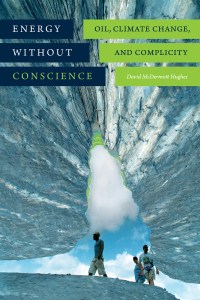
A review of Energy without Conscience. Oil, Climate Change, and Complicity, David McDermott Hughes, Duke University Press, 2017.

Energy without conscienceAs a small state composed of two islands off the coast of Venezuela, Trinidad and Tobago is heavily exposed to the risk of climate change. It is vulnerable to the rise in sea levels, increased flooding, extreme weather events, hillside erosion and the loss of coastal habitats, all of which are manifestations of the continued progression of climate change. Rising sea levels and temperatures will also impact its economy, vegetation and fauna, health, and living conditions, to the point of making current livelihoods wiped out. But there is another side to the story of climate change in this small island state. Trinidad and Tobago ranks fourth globally in per capita emissions of carbon dioxide. Each of the 1.2 million inhabitants of the two islands emitted, on average, 31.3 tons of CO2 in 2017, six times the world average. Unbeknownst to the public, who tends to associate this island paradise with beach resorts, rum-based concoctions, and calypso music, Trinidad and Tobago is an oil state, a hydrocarbon economy. In the early 1990s, its hydrocarbon sector moved from an oil-dominant to a mostly natural gas-based sector, and from land-based sites to offshore production. It is now the largest oil and natural gas producer in the Caribbean, the world’s sixth-largest LNG exporter, and the largest LNG exporter to the United States, accounting for nearly 71% of US LNG imports in 2014. If we include the carbon emissions of the oil, gas, and petrol products it sells overseas, Trinidad’s carbon footprint is disproportionately large. When it comes to climate change, Trinidad and Tobago is all at once victim and perpetrator, innocent and guilty, passive object and active subject. How do its inhabitants and its political leaders react to this situation?

Victim and accomplice

The answer is, in short, denial. To the dismal of David M. Hughes, who spent a year around 2010 conducting interviews with petroleum geologists, oil and gas executives, and environmentalists, the majority of his informants simply didn’t seem to care about carbon emissions and their impact on climate. When they did care, as in the wake of hurricanes, droughts and fires that affected the country at that time, it was to posit the island state as a victim of climate change, claiming compensation and redress from richer countries. Victimhood constitutes a “slot” in the sense that anthropologists give to the term when they refer to the “savage slot” or the “tribal slot.” To quote from Hughes, “the victim slot artificially clarifies an inherently murky moral situation. It whitewashes – as innocent – societies, firms and industrial sectors otherwise clearly complicit with carbon emissions and climate change.” History predisposed Trinidadians to that role: as victims of colonialism, of the slave trade, and of the plantation economy, Trinidad’s inhabitants naturally associate themselves with other island populations that have been victimized by the history of imperialism and the modern contempt for small states. Diplomats used this chord to initiate an alliance of like-minded states in climate negotiations, eventually giving birth to the concept of SIDS or Small Island Developing States. The irony is that Trinidad and Tobago is neither a “developing state”—according to the World Bank, it falls into the “high income” category—nor an innocent victim of climate change when it comes to per capita emissions.

Another strategy of denial is to act in bad faith, to take the term popularized by Jean-Paul Sartre. By silence and omission, Trinidad diplomats and policy leaders were able to pair with the vulnerable victims of climate change. When they took the floor in international fora, it was to claim moral superiority and victim status. “We are the conscience of the world when it comes to climate issues,” declared the environment minister on behalf of small island states. Prime Minister Patrick Manning obfuscated critiques when confronted with the high figures of per capita emissions. “The atmosphere does not respond to per capita emissions,” he repeated whenever relevant. “It only responds to absolute emissions.” In absolute terms, “we emit very little,” officials claimed, quoting the figure of 0.1 percent of global carbon emissions per year. They invoked the principle of historical responsibility to shift the blame away from developing nations: rich countries are mostly to blame for past emissions, and they should pay for their accumulated contributions to global warming. Historical responsibility, like per capita emissions, are a bone of contention in climate change negotiations. They raise legitimate questions, but they also conceal as much as they illuminate. According to Hughes, the category of victimhood redeems its sufferers in an almost Christian fashion: “It allows good people to do bad things in the biosphere.” For him, it is more relevant to consider the category of “high emitting individuals” who are present in all countries and who, taken together, number about one billion people and are responsible for the bulk of carbon emissions.

Taking sides

In conducting his research in Trinidad, David M. Hughes was in a peculiar position. Anthropologists are often supposed to take sides: for the tribe they observe against the dominant society that encroaches on their livelihoods, for the colonized against the colonizers, for the local resistance against the global empire. They want to protect the livelihoods of the natives against the onslaught of cultural modernity and social change. Hughes takes the reverse position: for him, the oil and gas industry should go extinct. Exploiting hydrocarbons is both immoral and irresponsible. The core business of any oil company damages the whole world. Oil firms should be consigned to an ash heap, worthy of condescension and worse. When burned in large volumes, hydrocarbons wreak havoc and endanger the planet. In a petrostate, the objectives of sustainability and resilience are turned on their head: the status quo is not an available option. To mitigate climate change, Trinidad and all the petrostates will need to replace the paradigm of hydrocarbons with sustainable forms of energy and economic activity. The idea of peak oil and the depletion of oil reserves makes this energy transition necessary, but we should not simply wait for oil and gas to run out before taking action on the climate. Proven reserves greatly exceed what the atmosphere can safely absorb before 2050. The role of ethnography should be, in this case, to study the enemy and document how they think, act, and feel in order to combat them. Hughes divides the Trinidad population into three groups: the engineers and executives who directly depend on the oil and gas industry; the middle- and upper-class urbanites who depend on the oil infrastructure without giving it a thought; and the poorer part of the population, including the inhabitants of Tobago, who have a minimal footprint in terms of energy consumption and carbon dioxide emission.

And so Hughes became an activist or engaged ethnographer. His political agenda was to challenge people’s complicity with climate change and to raise public concerns about carbon emissions and fossil fuel. He used his contacts in the oil and gas industry to corner people into conversations they did not wish to hold, exposing their omissions and contradictions. Along with other environmental activists, he participated in a round of public consultations on the country’s first policy regarding climate change. He raised the issue of per capita emissions repeatedly and suggested that the policy document include targets for cutting them. He suggested Trinidad identify less with Tuvalu or the Maldives and more with Bahrain, Qatar, and Saudi Arabia. To become a carbon-neutral destination, Trinidad would have to radically change its business model, exiting from the oil and gas industry and developing renewable energies such as solar and wind power. But the energy transition was seen more as a threat than as an opportunity by Trinidad’s industrialists who saw the substitution of oil and gas with wind and solar energy as a form of “aboveground risk” on a par with sabotage or nationalization. The anthropologist-turned-activist did find some environmentally-minded people and joined their fight against a proposed aluminum smelter that would have constituted a threat to the environment and human health. The activists defeated the smelter itself, but they acquiesced to the adjoining power plant, the complex’s only emitter of carbon dioxide. Even the most free-thinking Trinis failed to criticize the principle of burning oil and gas itself.

Oil culture

Trinidad’s society is suffused with oil, and yet hydrocarbons are relatively absent from art and culture. Around 1850, Michel-Jean Cazabon, the first great Trinidadian painter and internationally known artist, made sketches of Pitch Lake with heavy asphalt bubbling on the surface. Trinidad is also the place where the world’s first continually productive oil well was drilled in 1866. In both world wars, Trinidad’s oil propelled British and Allied forces. After independence in 1962, the country developed its gas sector, becoming a major exporter of downstream products such as methanol and plastics. Belying the resource curse that has plagued other countries, oil has given Trinidad and Tobago economic stability and political sovereignty. The island’s two Nobel laureates, V.S. Naipaul and Derek Walcott, do not address the oil industry in their writings—there is a dearth of petro-novels or oil fictions globally—but their characterization of Trinidad as a small and forlorn country did play a role in the cultivation of victimhood that characterizes modern attitudes to climate change. No official in Port of Spain is accepting partial responsibility for climate change. Provocatively, Hughes posits that Trinidad could assume its part of greatness and leadership if it acknowledged its status as one of the world’s largest per capita emitter of greenhouse gases. But he knows this is not going to happen. The country, like the rest of the planet, is stuck with oil and doesn’t want to claim responsibility for the wrongs it produces. The victim paradigm reigns supreme: environmental change is presented as something we all suffer passively, rather than actively influence.

Things weren’t meant to be that way. There were times when energy pricked the conscience of individuals. Hughes describes the successive energy transitions that characterized Trinidad’s history, highlighting the moral choices and the roads not taken. In the 1740s, the Jesuit Joseph Gumilla proposed developing a tropical colony built on abundant sunlight and fertile soil. Josef Chacon, the last governor for Spain before the English took power in 1797, encouraged settlers from neighboring French Caribbean islands, to come and grow sugar cane. Calculating the inputs necessary for agricultural productivity, he factored in slave labor and plantation managers but entirely omitted sunlight or other forms of energy. Plantation slaves were the first fuel, the first transatlantic flow of energy, whose exploitation meant the obliteration of conscience. In the early 1860s, Conrad Stollmeyer, a German immigrant, also proposed an utopian colony, a “paradise without labor” where humans were replaced by machines to be powered by sun, wind, and other tropical forces. But his utopian dreams soon faded and instead the German engineer developed a technology to transform heavy asphalt into kerosene, finding a new way to fuel the economy in addition to somatic power and natural energy. As this short history shows, people have already suggested the abandonment of former sources of energy and the adoption of new ones. What if Trinidad had developed into a natural colony based on abundant sunlight and water, or if mechanized agriculture had substituted to indentured labor and the need to bring in slaves? There were solutions that predated the problems, and we could return to them if only as a form of counterfactual speculation.

Energy without conscience

The title of Hughes’ book echoes Rabelais’ famous quotation: “science without conscience is but ruination of the soul.” According to environment science, energy without conscience leads to the ruin of the planet. But what could energy with conscience be? Hughes suggests that we should apply to energy consumption the same moral lenses that we once applied to slave labor: “oil might become the new slavery.” Burning oil constitutes a form of environmental injustice and human structural violence. It is not fair to say that we are all complicit in this endeavor: some people consume energy less than others, and the blame should be accrued first to persons and corporations responsible for the largest emissions.  But energy with conscience should not be just about putting blame and calling for climate justice. If climate change is to become a moral issue, it has to be framed into imaginaries and narratives as powerful as the ones that maintain the status quo. In his conclusion, Hughes notes that slavery gave a bad name to physical labor or somatic power: “it may be particularly difficult in Trinidad, the United States, and other postemancipation societies to propose muscle as a performer of work.” In public consultations, his proposal to establish bicycle lanes in Port of Spain was met with skepticism. And yet it is a mixture of brains and brawn, of ideas and effort, that may take the islands of this world out of their complicity with oil and climate change.

Straight From the Gut

A review of Animate Planet: Making Visceral Sense of Living in a High-Tech Ecologically Damaged World,  Kath Weston, Duke University Press, 2017.

Although published in a book series high in theory octane, Kath Weston is not interested in theory. She prefers to tell stories. She is mischievous about it: in a field where theory is everywhere and academics have to live by their theoretical word, she plays with theory like a kitten plays with yarn. She wiggles it, unrolls it, shuffles it around, drags it across the floor, and turns it into a story. For stories is what she is interested in. Of course, as she herself acknowledges, “in an era when ‘post-‘ is all the rage and everyone reaches for a beyond,” she cannot ignore postmodernism, posthumanism, postcolonialism, new feminisms, the narrative shift, or the ontological turn. Or, being published by Duke University Press (and handpicked by its editor, Ken Wissoker), vibrant matter, animacies, new materialisms, the affective turn, everyday intimacies, experimental futures, global insecurities, and new ecologies (to quote book titles or series from the same press.) But she knows her strength lies in storytelling, not theory-making or abstract criticism. She realizes her book will be remembered for the stories she tells (or for the haunting book cover she selected), not for the theories she discusses or the concepts she forges. She uses references to the academic literature, especially in endnotes, to make clear that her book should not be considered as fiction or reportage, but as an attempt, as the subtitle puts it, to make “visceral sense of living in a high-tech ecologically damaged world.” She avoids ontological claims or conclusions: when she elaborates on animates and intimacies, she explores contemporary ways of living—and not ontology-based corrections of an error called modernity.
Bedtime stories

Animate Planet begins with a bedtime story. Its meaning is rather confusing: there is a before and an after, inanimate agents with capital letters (such as Alienation and Capital), birds and humans (such as in the picture on the book cover), lords and lieges, turtles and sea otters, glass castles and islands, forests and deserts, water and ice. The whole seems oddly familiar and yet alien, as in the liminal state of consciousness when bedtime stories are told, as the mind drifts into sleeping and imagination roams free. This is, as the author tells, modernity’s story, the dream in which we are caught and from which we may never awaken. It is a story of ecological destruction, resource depletion, rising sea levels, disappearing species, damaged habitats, and inevitable disaster. This initial folk tale is to be followed by many other stories, drawn from anthropological literature or from the author’s own research. Most stories adopt a language of crisis and catastrophe, of precariousness and destitution; some stories end with a more positive ring, as they develop ways to live in an increasingly inhabitable planet. They take us to places as diverse as northern India suffering from drought and water pollution, Japan living under the spell of Fukushima, and Navajo reserves marketing homeland products in the United States. Four main families of stories emerge, linked to the themes spelled out at the beginning of each chapter: food; energy; climate change; and water.

The story of food starts in a Californian school where pupils were mandated to wear an identification badge containing a radio frequency identification transmitter, or RFID. In the United States, RFID technology is widely used to track cattle in the agribusiness industry. It responds to the perceived need to trace animal products “from farm to fork” and to connect the consumer to the processed commodity, beyond species exploitation and labor alienation. We ask technologies to supply the intimate knowledge that people have long derived from direct contact and interactions. This “techno-intimacy” is especially relevant for the way we connect with food (we need “food stories” to consume a particular wine or dish), with animals (“Wir geben Fleisch ein Gesischt,” advertises a German farm producer) and with children (although the RFID badge project in the Californian school was finally abandoned.) Under the guise of biosecurity, US agencies track livestock and poultry to secure the food supply chain and prevent epidemics, even while farm inspection budgets are being cut and meatpacking regulations are being loosened. We grant nationality to animals (“US beef”) even while we deny it to undocumented immigrants. As the author records, “a cow in the United States might have as many as five different identification codes associated with it, each keyed to a different program.” Meanwhile, genetically modified organisms enter the food chain without any regulation or tracking. The techno-intimacies that are experimented on animals find their ways into social applications designed to track humans and monitor their behavior. 

Japan’s radiation moms

Kath Weston was in Tokyo in March 2011 when the great earthquake, tsunami, and Fukushima catastrophe took place. Every day brought news of fresh radioactive releases and monitoring radiation became part of daily life, with new benchmarks and units such as megabecquerels (MBq), millisieverts (mSv), or counts per minute (CPM). For every measurement that the government sponsored, activists associated with the small but growing antinuclear movement created one of their own. People with no particular technical training would take technology into their own hands and equip themselves with Geiger counters and other portable electronic devices. The Internet became the preferred medium for circulating the results of grassroots radiation monitoring that appeared in the form of crowdsourced radiation maps and databases. Meanwhile, “radiation moms” took the habit of taking their Geiger counter to the market and scanning their rice and seaweed before preparing dinner. For Kath Weston, the blurring of lines between bodies, technologies, and contaminated ecologies creates a “bio-intimacy” in which humans incorporate contaminating elements into their daily lives. Treating the body as something to be protected from an environment imagined as “out there” makes no sense: the surrounding milieu is already part of the body and reconfigures it through absorbed radiations, chemicals, and poisonous substances. The pollution of our environment creates unwanted intimacy with invisible matter that creeps into our cellular fabric and alters its physiology. 

The chapter on climate change begins with the story of climate skeptics for whom “it doesn’t feel hotter these days.” People have always used their body in order to decode shifts in both wether and climate, and talking about the weather has always been a favorite topic of conversation. Trusting the body makes scientific sense: it is part of the “visceral” knowledge referred to in the book’s title. Bodies have long been integral to scientific inquiry: Marie and Pierre Curie exposed themselves to radium burns and took precise measurement of the lesions produced, and the geneticist J. B. S. Haldane wrote an essay “On Being One’s Own Rabbit” in which he recounted using his body for experiments. This being told, bodily sensations are a poor instrument for assessing climate change: perceptions are fleeting and subjective, and they can not monitor shifts that take place on a yearly basis or at the scale of decades, if not centuries. The important point is to link bodily observations with broader narratives generated by climate science: this way, body sensations can assume evidential status, and scientific evidence of climate change can make visceral sense and generate political engagement. Weather reports now use the notion of “felt temperature” or “bio-weather” to tell people what effects they might experience in their bodies. This kind of bio-intimacy with temperature, humidity, wind, and hydration is as important and no less scientific than objective measurement. Referring to the useful data generated by bird watchers who record migratory patterns, Kath Weston calls for a grassroots climate science that would mobilize the potential of citizen science and amateur observation to document an increasingly damaged planet.

Holy water

Water in some parts of India is so polluted that even birds reject tap water and drink only from the filtered water that is offered to them. Many rivers can only be described as “sewers”, and most household equip themselves with water filtration systems. Meanwhile, a water-and-architecture extravaganza called the Grand Venice has been built in the Greater Noida suburb of New Delhi. The real estate development project advertises “eco” features for visitors and residents, allowing them to cultivate a spiritual connection with water that is constitutive to Indian culture; but the gondola rides and cascade fountains come at the price of severe strain on water resources and energy consumption. Water from the tap in ordinary households comes laden with heavy minerals and is incompatible with life; while water in the Grand Venice shopping mall quenches people’s inherent need for spectacle and entertainment. Kath Weston reminds us that in the urban ghettoes of the United States, people have always opened fire hydrants in the streets in hot summer to play around; similarly, in monsoon regions like northern India, people rush outside as soon as rain comes and raise their faces to the sky to greet the first raindrops. The transformation of Indian rivers into sewer canals gives rise to scatological humor and lively public protests. Drawing on Russian linguist Mikhail Bakhtin, she calls this drive for fun and merriment the “carnivalesque” and considers it fair play. 

The destruction of the planet has been amply documented. But ecological consciousness doesn’t lead to political action. As Kath Weston asks, “What does it mean to know but not to grasp, to have realization end in a shrug?” Or, to put it differently, “Knowing what we know, why are we stuck?” Her answer is to substitute intellectual knowledge with a “visceral” sense of living. Some of our thoughts and feelings are deeply entrenched and rooted in our bodily existence. They do not come from the brain or from the heart, but “straight from the gut.” What is visceral is not only human: it also originates from the bacteria and germs that populate our digestive organs and that have a major influence on our metabolism. Viscera are an inter-species composite that forms what scientists describe as the microbiome and that makes us plural: from the perspective of our internal organs, we are multitude. But of course there are risks in advocating a visceral shift toward a more intimate engagement with the world that surrounds us: gut feelings may be wrong and lead us astray. We know what usually comes out from our bowels, and we don’t want to play with it the way we engage with thoughts and emotions. As an example, Kath Weston reminds us of the “new car smell” that car salesmen never failed to point out to convince potential buyers, notwithstanding the fact that the smell came from potentially carcinogenic chemicals such as adhesives and solvents that were used in the production process. Making visceral sense of the world may lead us to the same blunders that have caused our predicament.

The unrelenting power of narratives

Another way to affect behavior and to trigger a spiritual conversion is to tell stories. Narratives stay with us and linger in our memory for a longer time span than do theories. From the fairy tales of our childhood to the myths and legends that form the basis of whole civilizations, we live in a world shaped by stories in which we incidentally take part. Theories are interested in the general and seek to describe the specific in non-specific terms, whereas stories are time- and space-bound. Any theory mistakes the provincial for the universal; it reduces the yet unknown to a particular, provincial conception of things human. It denies the possibility that things could be otherwise than they are; that mutations of the possible might occur that we cannot grasp with our already established ways of thinking and knowing. A theorist already knows (everything). But what if the thing one attempts to think through in terms of this or that theory, in its own dynamic, in its own singular configuration, were such that it actually defies the theory used to explain it? By contrast, narratives start with the recognition that the new and the different is conceptually incommensurable with the already thought and known. They create an intimacy—recall the book’s bio- and techno-intimacies—that makes us familiar with the unknown, the unprecedented, the queer and alien. Even theories can be understood as narratives for the figures they summon, the rhythm they create, and the conclusions they reach. I, for one, read nonfiction books (and particularly books by Duke University Press) as bedtime stories. I am interested in the vistas they open to the world, their openness to the unfamiliar and the unexpected, their capacity to decenter and to displace well-established borders and categories. Theories I read and tend to forget; stories I recall and I revisit. This is why Kath Weston’s Animate Planet, with its stunning book cover and its tapestry of narratives, will linger with me.  

US-Bashing, Anti-vax, Animalism

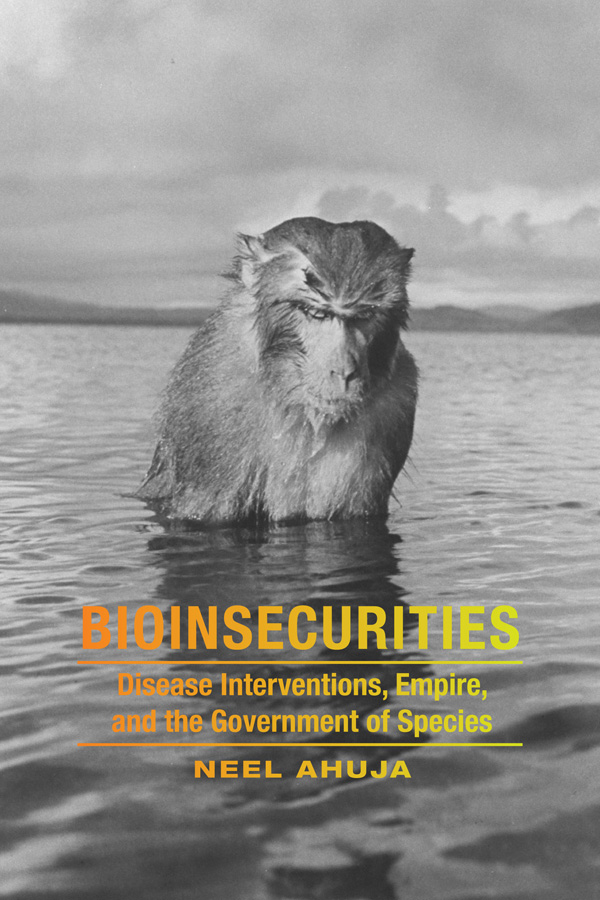
A review of Bioinsecurities: Disease Interventions, Empire, and the Government of Species, Neel Ahuja, Duke University Press, 2016.

BioinsecuritiesThis book can be read as an anti-American tract, or an anti-vaccine manifesto, or as a justification of anti-speciesism, or as an attack on liberal ideas of democracy, equality, and scientific progress. Of course, this is not the intention of the author. Neel Ahuja didn’t write a tract or a manifesto, but an elaborate social science book with deep theoretical repercussions. He is more descriptive than prescriptive, and his political message is not spelled out in detail. He situates himself in a progressive movement that is unconditionally anti-racist, feminist, and anti-war. But he doesn’t take position on vaccines, on animal rights, or on speciesism. His goal is not to provide simple answers, but to complicate things and deepen our vision of mankind and its living environment as some truths long held to be self-evident are losing political traction. However, liberal arguments can be used for very illiberal ends. As I read it, Bioinsecurities gives credence to very nasty arguments which, taken to their extreme, articulate a very anti-liberal and regressive agenda. Of course, some readers, and the author with them, may argue that it is perfectly fine to be anti-American, anti-vaccine, or to stand for a radical vision of animal rights, especially considering the background of brutal imperialism, public health manipulations, and disregard for non-human animals that have marked our common history and still inform our present. We should work against the public amnesia and state-endorsed manipulation of truth that prevent the public to exercise democratic oversight and make informed decisions on matters of life and death that affect us most. But an author also has to give consideration to how a book might be read or perceived. For me, Bioinsecurities dangerously straddles the line between liberalism and illiberalism, humanism and anti-humanism, and progressivism and regression.

Settlers and immigrants

By using the word anti-American, I don’t intend to convey a political trial on academic activities that would represent a threat to the security and identity of the nation: I am certainly in no position to do so, and I feel only repulsion for this kind of political justice. But I would like to gesture toward a tension that often inhabits post-colonial literature when applied to the United States. Was America a nation of settlers or of immigrants? For most historians, this is a matter of chronology: settlers came first, then immigrants moved in. But at what moment should one draw the line between first movers and late arrivers? Were Apaches and Navajo Indians any less settlers than Spanish conquistadors when they arrived from their native lands of Alaska to the vast plains of the American South-West, at about the same time that Christopher Columbus discovered the new continent? Is there a fundamental difference between the four grand-parents of Donald Trump, who were all born outside the United States, and the father of Barak Obama, who was born in and returned to Kenya? Bostonians, who pride themselves to be descendants of John Winthrop, are not different from the Latino-Americans freshly arrived from their barrio to populate the periphery of Los Angeles. Who is the first American of America first? Seeing America as a settler nation reactivates the myth of autochtony that is so corrosive to the social fabric of old and new nations, from Ivory Coast to the Netherlands, from Marine Le Pen’s France to Donald Trump’s America. It calls for radical measures and deadly solutions: recall the Pan Africanist Congress’ rallying cry, “one settler, one bullet,” or Franz Fanon’s contention that “killing a European is killing two birds with one stone, eliminating in one go oppressor and oppressed: leaving one man dead and the other man free.” The United States has long prided itself to be a nation of immigrants, welcoming the “huddled masses yearning to breathe free.” It would be a pity if it modeled itself after the countries of racial apartheid and colonial exploitation.

Neel Ahuja sees America as an empire and its inhabitants as a settler society. For him, imperialism is a racial endeavor that exerts itself upon people, but also natural habitats and non-human species, including microbial ones. White privilege, the benefits that whites claim over non-white people, is inseparable from the privilege of man as opposed to woman and of humans as distinct from other species. Bioinsecurities explores empire as a project in the government of species and the management of biological life. The author explains the persistence of empire long after settler societies have given way to established communities by a phenomenon he calls “dread life”, or the turn from colonial occupation and settlement to the management of bodily vulnerability and diseases. Fear of contagion was an integral part of imperial expansion, and settlers were literally obsessed by disease. They tried to circumvent it, to quarantine it, to vaccinate against it, to weaponize it, or to use if for further expansion. The “smallpox blankets” that decimated the native American Indian population have their modern equivalent in the infamous Tuskegee Syphilis Study, in which six hundred African American men were used to study the progression of syphilis and denied proper medical information, informed consent, or the known effective treatments. For Neel Ahuja, disease interventions are a form of biopolitics, defined as the ongoing expansion of government into life itself. He studies the way settler colonialism intervened in the government of species and the domestication of bodies in five outposts of the American empire: the Hawaiian islands at the time of Hawaii’s annexation, Panama under military occupation of the Canal Zone between the two World Wars, Puerto Rico where a colony of rhesus monkeys was established during the Cold War, Iraq as seen from war planners in the corridors of power in Washington, and Guantanamo which harbored “the world’s first HIV concentration camp” during the Haitian refugee crisis in 1991-94. Race played a key role in the interventions of the US security state, which inherited the settler mentality and extended it to new terrains.

Fear of contagion

The case studies presented in Bioinsecurities all illustrate the fear of disease contagion and of racial intermingling that accompanied America’s expansion beyond its continental borders. Indigenous Hawaiians diagnosed with leprosy were segregated in quarantine camps on the island of Molokai and denied basic legal rights, while outbreaks of Hansen’s disease in the north central states of the United States (at times associated with Scandinavian immigrants) never attracted much public attention. Afro-Caribbean women involved in the sex trade in the Panama Canal Zone under US administration were arbitrarily arrested and tested for syphilis or gonorrhea and sentenced to hospitals for enforced treatment if tested positive, while US soldiers were only invited to “self-regulate” through moralizing and racially charged propaganda. The 1940s and 1950s witnessed a polio scare that led American scientists to import rhesus monkeys from India to Puerto Rico and harvest their bodies for vaccines, and the Iraq war had the US military prepare for a smallpox outbreak under the belief that Iraq had developed biological weapons and was ready to use them. Haitian refugees who tested HIV positive were segregated and imprisoned in Guantanamo during the years 1991-94. These are all shocking episodes, but should we read American history only through the lenses of “species wars”, “dread life”, and the “medicalized state of war” brought about by our modern bioinsecurities? The fact is that these cases rightfully provoke our moral indignation, as they did in the past when Jack London, who was both a socialist and a racist according to the author, visited “lepers’ island” and let the world know about the plight of Hansen disease patients in Hawaii. The history of the United States is by nature contested, and historians are right to point out sore spots and moral contradictions. But I don’t believe it can be reduced to the story of a security state bent on implanting settler exploitation in its imperial conquests.

In the wake of the animal rights movement and the development of animal studies as an academic field, new words have entered our vocabulary. “Speciesism” gives greater moral rights and value to human beings than to non-human animals. By contrast, “anti-speciesism” considers that this discrimination is unfounded and militates for its abolition. For animal rights advocates, speciesism is a prejudice similar to racism or sexism, in that the treatment of individuals is predicated on group membership and morally irrelevant physical differences. Their claim is that species membership has no moral significance. For their opponents, assigning the same moral value to all animal species is not just impractical, but ultimately absurd. Therefore, speciesism is unavoidable. Why, then, all the fuss about nonhuman animals and the moral obligations that we may have toward them? This shift reflects the influence of the radical critique of humanism and the rejection of anthropocentrism, voiced especially by the animal-rights movement and advocates of trans-humanism and post-humanism in popular culture since the 1990s. My point is not to discuss anti-humanism, animalism, or the rights of nonhuman animals. I know there are serious discussions out there, beyond the caricatures that each party draws of the opposing camp. Just because an animal is not a moral agent doesn’t mean that it cannot have rights or that moral agents can’t have duties towards them. Cruelty towards animals is clearly unacceptable; but so is violence condoned in the name of animal rights. And violence is a foregone conclusion for many animal rights advocates, who see the lack of public support for their cause as an added motivation to grab the headlines by spectacular action. Of course, supporting radical means and action is not the appanage of anti-speciesism, and one should not judge a cause by the violent actions of its most extreme elements. But comparing speciesism to racism or sexism—as many critics do in the name of intersectionality—or using words like “slavery” and “genocide” to describe the breeding and slaughtering of livestock, justifies in advance the most radical means. This slippery slope can only lead to hyperbolic conclusions.

Species wars

In effect, anti-speciesism or animalism usually concentrates its claims for right sharing to certain mammals, especially apes or non-human primates. On the book cover of Bioinsecurities, a rhesus macaque half soaked into water glances back at the viewer or the camera lens, with a gaze that can be read as angry, dissatisfied, or frustrated. This particular monkey is part of an imperial project: the import of 400 macaques from India to US-occupied territories in Puerto Rico to serve as guinea pigs for clinical research on poliomyelitis. In the name of producing polio vaccine, rhesus monkeys were, to use the author’s metaphor, “stabbed in the back” and inserted with spinal tap to extract polio serum. They were subjected to experimentations that would clearly fall outside what is now considered as proper and ethical laboratory norms. Could the antibiotic revolution have happened without animal experiments, and in particular primate vivisection? Before jumping to hasty conclusions, one should remember the crippling nature of polio disease, its devastating effects on children, and the public anxiety it generated. The argument made by the author that these fears of disease were themselves loaded with racial and class prejudice should in no way diminish the importance of biomedical research and vaccine production. In fact, Neel Ahuja shows that it is in the research labs and breeding stations that the modern categories of “almost human” primates and advanced sentient species originated. These categories “were less concerned with broadly questioning an anthropocentric hierarchy of species, and more involved with justifying vivisection on a mass scale.” They were the result of a complex history of Cold War politics, sovereignty claims, and ecological shifts that exceeded simple logics or science or profit. Rhesus monkeys imported from India to Puerto Rico for scientific use escaped their semi-free-ranging colonies and came to be viewed by many habitants as a pest. India protested the use of “sacred” species for biomedical research or nuclear testing and placed a moratorium on the primate trade. Regional primate research centers were established in many newly independent countries, giving rise to new disciplines such as ethology and primatology. Hollywood movies and urban legends fueled anxieties about interspecies intimacy and mad science experiments.

In place of the polio scare, new legends are emerging today about the proper role and effect of vaccines. The anti-vaccination (“anti-vax”) movement is a global phenomenon that has received a great deal of media attention. Anti-vaxxers usually don’t read or write social science dissertations and history books: they rely on word-of-mouth and social media to spread the message that the government and “Big Pharma” are colluding in a massive cover-up regarding the hidden dangers of vaccines. This has very serious public health consequences, as outbreaks of highly contagious diseases such as measles put vulnerable people, including newborn babies and people who have weakened immune systems, at great risk. My point here is not to discuss the positions of anti-vax propagandists (or “vaccine-hesitant parents,” as they prefer to describe themselves): I think that they are a menace to society, and that compulsory vaccine policies should be enforced. Any argument that reinforces their misinformation and conspiracy theories should be dealt with suspicion and care. This is why Neel Ahuja’s book is a matter of concern: he gives credence to arguments that identify vaccination policies with the police state, imperial endeavors, and neoconservative plots. Bioinsecurities’ introduction opens with two quotes relating to vaccine controversies: a 1905 legal opinion on Jacobson v. Massachusetts, a case of vaccine refusal that led to a well-publicized lawsuit, and an interview with Donald Rumsfeld in which the Defense Secretary assesses the risk of a smallpox epidemic in the lead-up to the Iraq war. Both cases are controversial: the Jacobson precedent was used to justify forced sterilization programs, and Donald Rumsfeld’s argument that Iraqis had developed biological weapons, including the variola virus that causes smallpox, proved to be unfounded. Although the author doesn’t make the link with modern vaccine controversies, the tainted nature of past “disease interventions” justifies skepticism towards modern public health policies.

Reductio ad absurdum

A good way to assess an argument is to push it to its logical extreme. To the argument about settler colonialism, one could ask: “You wouldn’t want to give it all back, would you?” In the case of America’s westward expansion, wouldn’t the Mexicans then have to give it all back to the Spanish, and then the Spanish to the indigenous populations they decimated, and then those peoples to the flora and fauna they displaced after crossing the land bridge from Siberia thousands of years earlier? The argument is absurd. Similarly, proselytizing vegans and animalists always have to face the argument that animals eat each other, and that even some pets require the death of other animals for their food. Anti-speciesism reasoning can be countered by the fact that insects, even bacterias and plants, can also be considered as sentient beings. Will we act accordingly, and with what consequences? These are some of the questions that may be raised after reading Bioinsecurities. The book’s main purpose is to describe the entanglement of human, animal, bacterial and viral bodies in the US project of imperial expansion over the course of the long twentieth century. But in doing so, it develops an anti-humanism that radically refutes the exceptional value of human life and democratic freedom and that gives credence to fringe arguments such as anti-vaccines. Some people may think that I read too much in this book and that I misinterpret its author’s real intentions. Others may argue that my own perception is biased, and that I am complicit in some conspiracy to justify US imperialism, denigrate animal rights advocates, and bolster the security state. Let me be clear: I don’t deny the interest of writing interspecies histories of American imperialism, paying tribute to those who resisted and paid the price of this imperial expansion, or documenting the cases of medical abuse in public health policies. But I worry that rather than inspiring its audience to protest against social injustice, this book may consolidate illiberal tendencies and a regressive turn in democratic governance.

Less Than Human

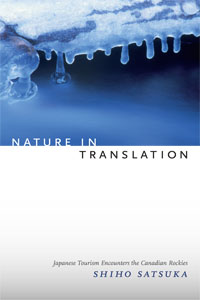
A review of Infrahumanisms. Science, Culture, and the Making of Modern Non/personhood, Megan H. Glick, Duke University Press, 2018.

InfraInfrahumanisms directs a multidisciplinary gaze on what it means to be human or less-than-human in twentieth century America. The author, who teaches American Studies at Wesleyan University, combines the approaches of historiography, animal studies, science studies, gender studies, ethnic studies, and other strands of cultural studies, to build new analytical tools and to apply them to a range of issues that have marked the United States’ recent history: children and primates caught in a process of bioexpansionism from the 1900s to the 1930s; extraterrestriality or the pursuit of posthuman life in outer space from the 1940s to the 1970s; and the interiority of cross-species contagion and hybridity from the 1980s to the 2010s. Judged by historiography’s standards, the book lacks the recourse to previously unexploited archives and new textual documents that most historians consider as essential for original contributions to their field. The empirical base of Infrahumanisms is composed of published books and articles, secondary analyses drawn from various disciplines, and theories offered by various authors. There are no interviews or testimonies drawn from oral history or direct observations from ethnographic fieldwork, no unearthing of new documents or unexploited archives, and no attempt to quantify or to measure statistical correlations. This piece of scholarship is firmly grounded in the qualitative methodologies and humanistic viewpoints that define American Studies on US campuses. The only novel approach proposed by the book is to use a range of photographies and visual sources as primary material and to complement textual commentary with the tools of visual analysis borrowed from media studies. But what Infrahumanisms lacks in methodological originality is more than compensated by its theoretical deftness. Megan Glick innovates in the research questions that she applies to her sample of empirical data and in the theory that she builds out of her constant back-and-forth between facts and abstraction. She does conceptual work as other social scientists do fieldwork, and offers experience-near concepts or mid-range theorizing as a way to contribute to the expansion of her research field. In particular, her use of animal studies is very novel: just like minority studies gave birth to white studies within the framework of ethnic studies, or feminism led to masculinism in the field of gender analysis, Megan Glick complements animal studies with the cultural analysis of humans as a species. Exit the old humanities that once defined American studies or literary criticism; welcome to the post-humanities of human studies that patrol the liminalities and borderings of the human species.
The whitening of the chimpanzee

What is the infrahuman contained in Infrahumanisms? A straightforward answer is to start with the book cover representing the simian body of a young baboon (sculpted by artist Kendra Haste) seen from behind: monkeys, particularly great apes, are infrahuman. This, at least, was how the word was first introduced in the English language: the first use of the term “infrahuman” was made in 1916 by Robert Mearns Yerkes, a psychobiologist now remembered as the founding father of primatology. By modern criteria, Yerkes was a eugenicist and a racist: he saw his work as assisting in the process of natural selection by promoting the success and propagation of “superior” models of the human race. Through the Pasteur Institute in Paris, he was able to import primates from French Guinea and to apply to them various tests of mental and physical capacities that were first conceived for the measurement of the intelligence and characteristics of various “races”. Thus, writes Megan Glick, “while the terms of dehumanization and radicalization are often understood to be familiar bedfellows, (…) the process of humanization is equally as important in the construction of racial difference and inequality.” In particular, she shows that the chimpanzee appeared in these early primatology studies and in popular discourse as akin to the white race, while the gorilla was identified with black Africans. The “whitening of the chimpanzee” and “blackening of the gorilla” manifested itself in the early photographs of primates in human company or in the first episodes of the Tarzan series, where Cheeta is part of Tarzan and Jane’s composite family in the jungle, while gorillas are imagined as “the deadly enemies of Tarzan’s tribe.” The jungle trope is also applied to early twentieth-century children who were involved in animalistic rituals and identities: from “jungle gym” equipments in public playgrounds to the totems and wild outdoor activities of the Boy Scouts movement, the development of a childhood culture in close contact with the natural world marked a new moment in the lives of US children at the beginning of the century. The child was imagined as a distinct species, a proto-evolutionary figure providing the missing link between animals and humans. Neither primates nor children leave written archives or provide a “voice” available for historiographical record: like the subaltern, they literally “cannot speak.” Here again, the historian turns to pictures and illustrations to envision children as infrahuman, as in the photographs of infant and adult skeletons in pediatrics books that portrayed the child as “different from the adult in every fiber.”

The mid-twentieth century was a time of great anxieties about the human condition. Images and photographs tell the story better than words. The era of extraterrestriality was bordered by the mushroom clouds of Hiroshima and Nagasaki on one end and the picture of the blue planet as seen from outer space on the other. Extraterrestrial creatures were a matter of sighting and picturing more than storytelling or inventing. The pictures of aliens crashing at Roswell, New Mexico, with their “short gray” bodies and oversized heads, took to the public imagination and were described in similar terms by “alien abductees” who came up with similar visions although they had no way to coordinate their testimonies between themselves. While aliens on the big screen or in popular media tended to be large, monstrous, and even superhuman, aliens “sighted” by the American public were small, quasi-human, and frail. Here the author has a theory that stands at variance with standard interpretations of alien invasions as inspired by the red scare of communism. It wasn’t the Cold War and the mass panic over the infiltration of communist subjects that inspired the narratives and depictions of alien abductions and Mars attacks, but rather the traumatic after-effects of the Holocaust pictures that were disseminated at the end of the Second World War. As Megan Glick argues, “both tell a story about the nature of midcentury visual culture, both are concerned about the boundaries of human embodiment, and both question the futurity of humanity.” Meanwhile, the increasing precision of human genetics gave way to a post-Holocaust eugenic culture, in which the fight against social ills that undergirded the earlier eugenic movement was traded in for a more exacting battle against biological flaws. Key to these developments was the Nobel Prize winner Joshua Lederberg, a bacteriologist who made seminal contributions to the field of human genetics and who launched the speculative study of exobiology, of life on other planets. Like in the final screenshot of the cult movie 2001: A Space Odyssey, the picture of the earth as viewed from space paralleled the image of the fully developed fetus within a woman’s womb as reproduced on the cover of Life magazine. Lederberg and his colleague envisioned the impending elimination of genetically based disabilities through intra-uterine manipulation of the embryo. Considering the backdrop of sterilization campaigns for disabled persons or anxieties raised by overpopulation in the Third World, this raised concerns that African American populations could be targeted for “defective genetic traits” such as the prevalence of sickle cell disease.

Jumping the species barrier

The 1980s was marked by the AIDS crisis, which at first was associated with stigmatized populations such as gay men, intravenous drug users, and migrants from Haiti. The AIDS epidemic has already been studied from various perspectives, locating the disease within the history of sexuality, race, and medicine. Carol Glick adopts a new angle by taking an animal studies perspective by treating AIDS as a zoonotic or cross-species disease, placing it in a series that also includes SARS, mad cow disease, and avian flu. When the virus was found to have emerged from within chimpanzees in Africa, questions wee soon raised about how, why, and when AIDS had jumped the species barrier. Speculations extended to the “strangeness” of African sexual habits and dietary customs, and the denunciation of the consumption of bush meat operated both a dehumanization of African poachers and a humanization of monkey species. Tracts of tropical forest were cleared from their human presence to preserve the habitat of great apes. Dehumanization also worked at the level of AIDS patients, who were denied proper treatment and health insurance up to this day. An extreme form of dehumanization is animalization, especially the comparison of humans with certain devalorized species such as pigs. A cartoon published in the New Yorker shows the evolution of the human species from ape to mankind, and then its devolution into pigness due to sloth and obesity. In such representations, the obese body is usually represented as disabled and deformed; it is more often than not male, bald, and white. But statistically, obese people are more likely to be black, poor, and female. Public health campaigns put the blame of overweightness on individuals, obfuscating the role of food companies, advertisement campaigns, and policy neglect for our unhealthy diet. In more than one way, pigs are our posthuman future: genetic engineering is capable of creating porcine chimeras capable of developing human cells and organs for xenotransplantation benefitting needy patients. Using animal parts in human bodies results in the hybridization of both species, while the American dietary passion for pork creates the possibility of a species transgression akin to cannibalism that the taboo on pork consumption for Muslims and Jews seems to have anticipated. The main barriers to our porcine and infrahuman future may not be scientific and technological, but cultural and religious.

The concluding chapter is titled The Plurality is Near, a pun on Ray Kurzwell’s book announcing that “the singularity is near” and that humans will soon transcend biology. The plurality of species, which includes parasites and vectors of harmful diseases, raises the issue of speciesism: does mankind have the right to eradicate certain species, such as the mosquito Aedes aegypti targeted by a campaign of total elimination due to its role in the spread of malaria, dengue, and Zika? The elimination of mosquitoes in the name of human health is hard to contest; and yet we do not know what the long-term consequences of this tinkering of ecosystems will be. Scientists record an alarming rate of species decline and extinction, with spectacular drops in the population of bugs, butterflies, and insects. A future without insects would have catastrophic implications for birds, plants, soils, and humans; so much so that in order to slow down and someday reverse the loss of insects, we must change the way we manage the earth’s ecosystem and enhance their chances of survival. The plurality of species also forms the background of the new discipline of microbiomics, the study of the genetic material of all the microbes—bacteria, fungi, yeasts and viruses—that live on and inside the human body. Yoghurt commercials have popularized the notion of the intestinal flora as essential to the well-being of the organism. Digestive health sees the intestinal tract as not only a site of transit and evacuation, but also of flourishing and symbiosis. New models representing the body go beyond the mechanics of fluids and the circuitry of organs: they mobilize the ecology of populations and the co-evolution of ecosystems. Like the poet Walt Whitman, the human body can claim to contain multitudes: where the body ends and the environment begins is no longer clear. What happens at the infrahuman level unsettles the definition of the human: “the proposed manipulation of populations that exist in parasitic and symbiotic relation to the human species, often inside the body itself, suggests a deep unsettling of the animal/human binary and a restaging of human difference.” Seeing human beings are primate-microbe hybrids sets a new frontier for research and raises questions about the future of mankind. As microbiologist and NASA adviser Joshua Lederberg once declared, “We live in evolutionary competition with microbes, bacteria and viruses – there is no certainty that we will be the winners.”

Unmasking the ideology of infrahumanism

The infrahuman, then, takes up different figures throughout the twentieth century: the ape, the child, the creature from outer space, the embryo, the racial other, the posthuman hybrid, the microbiome within the human body. The infrahuman complicates notions of the other, of what counts as alien, outsider, non-human, friend or foe. It appears through twentieth-century scientific and cultural discourses that include pediatrics, primatology, eugenics, exobiology, microbiotics, and obesity research. The infrahuman confronts us with what the author calls “hyperalterity” or the radically other. By extension, infrahumanism, taken in the plural, designates an ideology, an episteme, or an -ism that inspires processes of infrahumanization. It rests on the belief that one’s ingroup is more human than an outgroup, which is less human. It results from a dual movement of dehumanization, which denies the humanity of certain individuals or collectives, and of rehumanization, which bestows non-human animals with certain human characteristics. It is closely related to the notions of speciation, the process by which differences are constituted into a distinct species, and of speciesism, the idea that being human is a good enough reason for human animals to have greater moral rights than non-human animals. What gets to count as human or as animal also affects our conceptions of human difference such as race, sexuality, disability, and disease status. Carol Glick argues that unmasking the ideology of infrahumanism is crucial to better understanding the persistence of human social inequality, “laying bare the rhetorics of being ‘beyond’ or ‘post’ race, gender, and other forms of social difference thought now to be on the precipice of mere social construction.” She notes the curious coincidence between the deconstruction of humanist thought and the emergence of an animal rights discourse at the precise moment when feminist and minority movements started to demand the recognition of their full rights as human beings, a category from which they had long been excluded. This is why “feminism should not end at the species divide”: feminist studies have a distinctive contribution to offer on the human/nonhuman distinction and how it affects the rights and claims of both groups.

Thinking about humanism, and its infrahumanist variants, as the ideology proper to the human species also transforms our vision of “the humanities”. Rather than simply reproducing established forms and methods of disciplinary knowledge, posthumanists should confront how changes in society and culture require that scholars rethink what they do—theoretically, methodologically, and ethically. Infrahumanisms bridges the scientific and cultural spheres by attending to the cultural imaginaries of scientists as well as to the changes brought by science in popular culture. It provides a welcome critique of the foundations of the field of animal studies, itself less than a couple of decades old. In her introduction, Carl Glick scratches in passing some of the great founders of the discipline—Cary Wolfe and his infatuation with systems theory, Jacques Derrida and his cat, Donna Haraway and her doggie—while giving kudos to more recent entries that mix the radical  critique of feminist studies, critical race studies, queer studies, and disability studies—with authors such as Mel Chen, Neel Ahuja, Lauren Berlant, and Claire Jean Kim. She doesn’t support radicalism for radicalism’s sake: she has strong reservations with the biological essentialism of some animal rights activists who conflate racism with speciesism, and she reminds us that “we cannot ethically argue for the direct comparison of people and animals.” Her book is therefore a welcome contribution “to the vast and difficult conversation about the place of nonhuman animals in the humanist academy.” As mentioned, Carol Glick also extends what counts as historical archive and how to present it to the reader. Images, pictures, photographs, screenshots, and movies will remain as the twentieth century’s main archives. They require a mode of analysis and exposure that is distinct from textual interpretation, and for which tools and methodologies are only beginning to be designed. Illustrations used by the author form part of her demonstration. For many readers, the striking book cover of Infrahumanisms will remain an apt summary of her main argument.

Lost and Found in Translation

A review of Nature in Translation: Japanese Tourism Encounters the Canadian Rockies, by Shiho Satsuka, Duke University Press, 2015.

nature-in-translationHow do you translate nature in Japanese? The obvious answer—the word “shizen” is the dictionary translation of “nature”—is not so obvious, at least for historians of Japanese thought. Shizen is a Japanese pronunciation of the Taoist concept of ziran, drawn from Laozi. It describes the condition of artlessness or a situation happening without human intention. Its opposite is the notion of “sakui”, or “invention”, the forces of human agency that intervene to create social order. The opposition between shizen and sakui, between the natural way of heaven and earth and the power of human creation, was revived after the Second World War by public intellectual Maruyama Masao when he tried to identify the responsibility for Japan’s wartime aggression. In order to exonerate the Emperor who remained in place as a symbol of the Japanese nation, the war was narrated as if it happened “naturally”, and ordinary Japanese people were framed as the victims of the war. For Maruyama, who chose to emphasize the forces of sakui as first conceptualized by Confucian scholar Ogyû Sorai, the ambiguity in the notion of shizen, and the difficulty to find a proper translation for human subjectivity, was precisely at stake. In order to reenter the international community as rational agents, the Japanese needed to establish a new spirit of individual autonomy, or shutaisei, and to overcome nature as shizen. Only so could they find a proper sense of freedom—another concept that was difficult to translate, as the word jiyû retains the meaning of its origin in the Buddhist expression of jiyû jizai, which designates liberation as self-detachment.

For Shiho Satsuka, translating nature takes a different meaning. Trained as an anthropologist in the intellectual hotbed of the University of California at Santa Cruz, she did her graduate fieldwork training as a travel guide in the Canadian National Park of Banff, a destination favored by Japanese tourists. Her book, drawn from her PhD thesis and published in 2015, analyzes the way Japanese tour guides translate ecological knowledge into lived experience. Translation of nature involves much more than finding proper Japanese equivalents of English notions. As Shiho Satsuka states, it “concerns what counts as human, what kind of society is envisioned, and who is included in the society as a legitimate subject.” The focus of the book is on the tour guides, not on the tourists they accompany. In classic anthropological fashion, the author elaborates from her field notes to describe how the guides left Japan and came to Canada to live in “magnificent nature”; what image they held from Canada and how it contrasted with the reality they found there; how they went through training and transformed themselves into service workers; and how they negotiated issues of gender, cultural difference, knowledge politics, and personal identity. The book mobilizes a vast array of authors and theories, Western and Japanese, while staying close to the lived experience and worldviews of the tour guides that the author befriended during her anthropological fieldwork.

Narratives of freedom

Japanese guides offer “narratives of freedom” to account for their departure from Japan and their adoption of a new lifestyle in the Canadian Rockies. Their decision to leave Japan coincided with a period of national angst and crisis. In a newly established neoliberal environment, the meaning of “freedom”—remember the ambiguity of the Japanese term—became a contentious issue. The furitâ—the free individual living on small jobs or arubaito—captured the imagination of a generation aspiring to detach itself from the secure but constrained environment of the corporation. Becoming a furitâ was often a choice born out of necessity, or necessity made virtue, in the context of widespread liberalization of corporate regulations and labor laws that resulted in growing youth unemployment and precariousness. In the midst of economic change, as the Japanese economy moved from bubble years to prolonged depression, a growing number of young adventurers “escaped” from Japan to go overseas for self-searching travel. In their pursuit for freedom, they chose to drop out of, or not participate in the Japanese corporate system. A number of them found in Canada and its national parks a convenient site to reinvent themselves and establish their new subjectivities. Some thought guiding was their dream job, while others only considered it as transitional work until they found what they really wanted to do with their lives.

Their aspirations were projected onto “magnificent nature”: Canadian natural environment offered the canvas on which they could reinvent themselves, unfettered by national boundaries, cultural norms, and social rules. Moving to Canada offered them what they couldn’t find in their home society: the opportunity to pursue freedom and the choice to live one’s own life as a self-standing individual. Japan was perceived as oppressing the true, authentic self with layers upon layers of social rules and obligations. Escaping to the West was a way to take back control of one’s life and to embrace the centrality of the individual. At the same time, Canada provided a version of Western subjectivity distinct from the American model, an alternative space in which nature played a significant part in the guides’ construction of subjectivities. Japanese candidates to Canadian immigration were often attracted by mere pictures, anecdotes, or TV shows depicting life in the wilderness. They embraced the image of the natural park’s guide as a figure of independence and freedom—a person who had a solid sense of her own subjectivity and the ability to move beyond national, social, and cultural boundaries. Shiho Satsuka tracks the construction of this imaginary space in the work of a value entrepreneur, former politician and popular television entertainer, Ohashi Kyôsen, who provided his readers with the dream vision of “living one’s own life” free from the company and nation, the two most important social contexts in shaping a sarariman’s life. Although Ohashi’s main target was more the young male retirees whose corporate alienation had left them bereft of any social ties, his vision was also influential among young office ladies and freeters who found that the corporate ladder was closed to them and chose to escape to a world of unbound possibilities.

Co-modification of the self

What they discovered in Canada was that work was still work, and that becoming a tour guide entailed what the author labels a “co-modification of the self”. As service workers, they were enjoined by their training manager to become a commodity, in the sense that their public expected to consume a commodified performance similar to the one offered by an artist or an entertainer. Co-modification also designates the modification and production of self through interactions with nature and with the public who came to see the guides as a reflect of their environment. Becoming a commodity therefore had a quite different meaning from that of the commodification of labor that Marx saw as a centerpiece of capitalist exploitation. If anything, the commodity or shôhin implicit in this process of self transformation retains the qualities of premodern craftsman’s production. There was a tension between the unique skills and personalities of each guide, their obligation to act with “sincerity” and “authenticity”, and the demands of mass tourism which asked for a standardized level of comfort and quality of service. Each trainee was therefore encouraged to build his or her unique narrative, while assimilating the rules and procedures listed in a hefty manual. There was a Zen-like quality in their apprenticeship, as the trainees had to guess what the managers and senior guides had in mind even though they did not spell out their intentions. They were invited to blend with nature and transform themselves into locals, while retaining some traits of “old-style” Japanese behavior. For their instructor, the perfect match between a person and his or her surrounding was the foundation for attaining “freedom”, in the sense that the Buddhist tradition gives to the term jiyû jizai. To achieve this notion of freedom, it is important to train one’s own body and mind, and let oneself detach from one’s self-interest in order to become one with nature.

The guides’s performance as “Japanese cosmopolitans” were the result of this co-modification of self and environment. For the Japanese tourists, the guides embodied the cosmopolitan dream of escaping the standard course of stable yet constraining lives of salaried workers in order to live a frugal yet fulfilling life in nature. Despite—or because of—the stereotypical association of outdoor activity and masculine culture, female outdoor guides played a particularly significant role. They performatively constructed their subjectivities as people who could transcend the dominant gendered norms. By doing so, they produced a charismatic aura and presented themselves as mediators with the special ability to go back and forth between the everyday world and an elsewhere, imaginarily staged on Canada’s vast natural landscape. Shiho Satsuka draws the portrait of three of these charisma guides, referring them to familiar gender figures in Japanese pop culture: the male-impersonating female found in girls’ high schools or Takarazuka plays; the tomboy who refuses to grow up and fall into assigned gender roles; and the girl medium fighting to save the world as in video games or anime movies. The ambiguous characteristics of female tour guides who straddled various sets of two worlds—male and female, adult and child, and human and nature—exemplifies the limits of standard binary frameworks used for categorizing human beings. It shows that being female is not a “natural fact” but a cultural performance: choosing a gender category for oneself or others is not necessarily based on a biological body, but on a person’s social role and position in everyday interactions. Here the author makes reference to the work of Judith Butler, but her “gender trouble in nature” is devoid of any militant charge, and gender ambiguity is presented as an everyday fact of life. If anything, the gender roles performed by female outdoor guides are more “natural” than the artificial roles assigned to young women in Japanese society.

A matchmaker between the tourists and the landscape

Japanese outdoor guides offer “nature in translation”: they are expected to tell the stories of nature as if they were national park interpreters. In the park managers’ view, ecological science is the basis of understanding nature’s language. Guides play a role of environmental stewardship as a result of a neoliberal privatization process that has outsourced nature’s protection to the commercial sector. But nature and science take on different meanings in English and in Japanese. The Japanese guides’ participation in an accreditation program revealed discrepancies of worldview that locate humans in relation to nature. Japanese participants asked more questions about plant and rocks as opposed to animals, they did not laugh when their instructor ironically hugged a tree, and they had trouble translating notions like “nature interpretation” or “stewardship” into Japanese. In their view, the guide was not a decoder of nature’s true message but more like a matchmaker between the tourists and the landscape. They let nature do the talk. This doesn’t mean that Japanese guides were not interested in environmental science and technical knowledge as dispensed in the training program: on the contrary, they were keen to update themselves with the latest research by the park scientists, and embraced the principles of environmental conservation. But they insisted that nature was much larger than any person’s ability to grasp it, and their questioning suggested that the dividing line between nature and society varies across cultures. The notion of stewardship, which implies that man is accountable for this world and has to answer to a higher authority about its management, is not easily translated into other religious and knowledge traditions.

Japanese outdoor guides offer “nature in translation”: they are expected to tell the stories of nature as if they were national park interpreters. In the park managers’ view, ecological science is the basis of understanding nature’s language. Guides play a role of environmental stewardship as a result of a neoliberal privatization process that has outsourced nature’s protection to the commercial sector. But nature and science take on different meanings in English and in Japanese. The Japanese guides’ participation in an accreditation program revealed discrepancies of worldview that locate humans in relation to nature. Japanese participants asked more questions about plant and rocks as opposed to animals, they did not laugh when their instructor ironically hugged a tree, and they had trouble translating notions like “nature interpretation” or “stewardship” into Japanese. In their view, the guide was not a decoder of nature’s true message but more like a matchmaker between the tourists and the landscape. They let nature do the talk. This doesn’t mean that Japanese guides were not interested in environmental science and technical knowledge as dispensed in the training program: on the contrary, they were keen to update themselves with the latest research by the park scientists, and embraced the principles of environmental conservation. But they insisted that nature was much larger than any person’s ability to grasp it, and their questioning suggested that the dividing line between nature and society varies across cultures. The notion of stewardship, which implies that man is accountable for this world and has to answer to a higher authority about its management, is not easily translated into other religious and knowledge traditions.

Nature as a constant process of translation

Multiculturalism and environmental protection are two key areas in which Canada has assumed a self-assigned leading role in the world. They have become pillars of Canadian national identity, a source of pride and attractiveness in a world where these two values are put under stress. But nature conservation is seldom seen with the prism of multiculturalism. Instead, ecology has adopted the language of science, with the underlying assumption that scientific knowledge is culturally neutral and universally applicable to people with diverse backgrounds. By following the trail of Japanese tour guides in Banff, Shiho Satsuka shows that nature needs to be understood as a constant process of translation. Ecology as a language is inseparable from the politics of knowledge translation: notions such as nature, freedom, work, or identity are constantly renegotiated in distinct social contexts. The Japanese guides portrayed by the author occupy a liminal space away from mainstream Japanese and Canadian societies. But these service workers have much to tell us about what it means to inhabit nature as cosmopolitan agents seeking freedom and independence in a globalizing world. This book, the first one published by the author, also demonstrates the proper value of a graduate education in anthropology. Anthropology is a discipline that adresses big issues—the relation between mankind and nature, the political economy of neoliberalism and flexible work, the definition of freedom and subjectivity—in a located and situated manner. Theory—and this is a theoretically rich book—always come as a tool to understand our present in concrete situations. Her graduate education has provided Shiho Satsuka with a rich toolbox of concepts and references, but more important to her was the patient learning and questioning accumulated during ethnographic fieldwork. This book marks the birth of a great anthropologist.