
A review of The Banality of Good : The UN’s Global Fight against Human Trafficking, Lieba Faier, Duke University Press, 2024.
 On the face of it, fighting human trafficking has all the banality of a good deed. The adoption in 2000 of a UN Protocol on human trafficking, with a heavy focus on the sexual exploitation and abuse of migrant women, was a positive act of feminist diplomacy and was lauded as such by feminist groups in the West and in developing countries. The UN template set the stage for the development of a new international regime of norms and guidelines for how national governments, NGOs, and international organizations should actively work together in this fight. With the Trafficking in Persons Report published yearly, the US Department of State must be praised for having given teeth to the UN Protocol, allowing a carrot-and-stick approach to ensure compliance while naming and shaming bad performers. The US government was bold enough to point finger at one of its closest allies, Japan, whose treatment of migrant women brought under an entertainer visa scheme was clearly violating basic human rights. Japan did a good thing by applying international best practices and diminishing abuse: within two years, the number of Filipino women entering Japan on entertainment visas dropped by nearly 90 percent. All stakeholders can take pride on this result: women’s groups, feminist leaders, UN diplomats, American Embassy staff, Japanese case workers, law enforcement officers, and the victims themselves. This may not sound like a big deal, but they all did well. Hence, the banality of good.
Turning Hannah Arendt’s Banality of Evil on its Head
Under this narrative, the banality of good denotes step-by-step progress in the advancement of human rights and the fight against human exploitation. But let us pause. All of the above is not the story that Lieba Faier tells, and her expression “the banality of good” in fact has the opposite meaning. She uses it “to refer to the perils of this campaign’s globalized institutional approach, which ultimately privileges technical prescription and bureaucratic compliance over the needs and perspectives of those it means to assist” (p. 11). All stakeholders aiming to do good and alleviate the plight of victims of human trafficking missed their original goal or had to compromise on their principles. By bringing a global solution to local problems, the international community only made things worse. Foreign women working in the sex industry were forcibly deported on criminal charges of visa overstay; grassroot NGO workers became complicit in the expulsion of those they were supposed to protect; while police raids pushed the sex industry further underground. In titling her book The Banality of Good, Lieba Faier of course has in mind the expression “the banality of evil” coined by Hannah Arendt to denote the fact that evil can be perpetuated when immoral principles become normalized over time by people who do not think about things from the perspective of others. Evil becomes banal when people don’t feel bad when they do evil. Here, the banality of good reflects the opposite attitude: people don’t feel good when they are supposed to do good. They know something is wrong, but they can only attribute it to “the system” or hope that their action contributes to the realization of a greater good.
Over and over in Lieba Faier’s narrative, individuals and groups committed to the betterment of foreign women’s plight had to compromise on their strategic goals and core values. The original impetus to fight against traffic in women came from Asian feminist organizations and grassroot human rights groups in Japan, Korea, and South-East Asia. Beginning in the early 1970s, they built a regional coalition to respond to a rising tide of Japanese sex tourism in the region. They also had a broader agenda that was anti-capitalist and anti-colonial at its core, seeing sex tourism as the reflect of structural inequities among nations and between genders and classes. But the US feminist groups who picked up their fight obscured the structural factors foregrounded by the earlier efforts of women’s groups in Asia and framed human trafficking as a uniform global issue that warranted a single global response. This global feminist movement coined the expression “sexual slavery” to articulate a singular, abstract, deterritorialized global practice, overlooking racial, national, and class inequalities among women. They formed an alliance with the human rights movement to launch a campaign for the abolition of “violence against women,” with human trafficking as a key instance of this violence. Lieba Faier describes how a globalist feminist project then became a UN-centered global human rights initiative: the drafting and adoption of the Trafficking Protocol was based on compromise by both Asian grassroot organizations and US feminist groups, who were themselves divided between prostitution abolitionists and sex worker rights’ advocates. By establishing a formal definition of human trafficking and then collecting data on it, the protocol promised to recognize human trafficking as a global phenomenon for states to measure and institutionally address.
Reframing Sexual Violence
But when national governments decided to act, they did not focus on human trafficking as a matter of violence against women. Rather, they reframed the issue once again, this time as a matter of transnational organized crime warranting a punitive solution. What US-based feminism had identified as violence against women would be reframed as a generalizable problem of criminal violation enacted by individual private citizens against other private citizens. A model of redistributive justice was discarded in favor of a carceral model. Of the three Ps framework—preventing trafficking, protecting victims and prosecuting traffickers–, the third P was prioritized and the two previous ones were sidelined. In Japan, grassroot NGO workers produced “trauma portfolios” of victims, collecting personal accounts of suffering to argue that foreign sex workers deserved protection and assistance, not treatment as criminals. NGO caseworkers’ accounts were so moving that American diplomats made the controversial decision of placing Japan on the Tier 2 Watch List of the 2004 Trafficking in Persons Report. For Japanese bureaucrats, this was a huge blow to national pride: most of the advanced countries were on the so-called Tier 1 list, but only Japan was ranked Tier 2. Something had to be done to restore Japan’s standing in the international community. The same narratives that had moved NGO activists and US diplomats into action were now perceived as a matter of national shame.
As Lieba Faier remarks, “People care about others for different reasons and thus to various ends” (p. 95). For NGO workers, reporting on victims’ stories of abuse to US embassy officials was a way of using gaiatsu, or foreign pressure, to induce reforms in domestic policies. But the Action Plan that the Japanese government enacted in 2005 was a bureaucratic exercise, devoid of compassion or concern for social justice. The “Roadmap to Tier 1” was rich in international best practices and indicators, but disconnected from facts on the ground. As a result of the screening process, migrants that were denied the status of victim were forcibly repatriated to their home countries or held liable for illegal residence (fuhō taizai). Only those officially recognized as victims of human trafficking received protected status, with a residency permit allowing them to remain in Japan or assistance to go back home. As one NGO caseworker confided to the author, “Sometimes I don’t feel good about the work I’m doing. These migrants have nothing back home” (p. xiv). Or as another worker put it, “They don’t have anywhere to go. For many, their life of extreme poverty in the home country is much worse than what they have now” (p. 15). These NGO caseworkers didn’t feel that justice was being served by those international protocols, but if they refused to participate in them, they worried that the situation would be worse. So they complied with the “bureaucratic glue and strings” (p. 171) attached to being part of an international campaign against trafficking in women.
Support Comes with Strings Attached
Lieba Faier complements her fieldwork with archival work and interviews with UN officials and government representatives in Japan and in the United States. She dissects the various frames and translations that a social issue has to go through in order to become a legal provision in an international protocol; and how a UN template in turn translates into reality and alters the lives of women who may or may not be designated as victims of international trafficking. She brings an ethnographic eye to practices of helping migrant workers, campaigning for women’s rights, drafting UN templates, and translating legal texts into policy options. She reads “against the grain of bureaucratic documents to see the contradictions, aporias, and impasses embedded in them” (p. 101). As she describes it, the United Nations acts as a clearinghouse for such efforts, erasing history and geographical differences in the interest of establishing a standardized international practice. As she points out, “the rote adherence to an institutional protocol comes to stand for necessary structural change” (p. 13). Well-intentioned humanitarian campaigns produce unintended harm through bureaucratic routines and institutional priorities. These efforts prioritize protocol compliance over survivors’ needs, perspectives, and lived realities, leading to repatriation, compromised quality of life, and even criminalization of those they aim to help. The Japanese government offers assistance to only a small portion of those foreign workers suffering abuse and exploitation: “In 2018, only seven trafficking victims received repatriation assistance, and this number dropped to five in 2019” (p. 211). These “lilliputian pockets of improvement” (p. 213) mask egregious failure to put an end to human trafficking. Even those who benefit from repatriation programs fall victim of “cruel empowerment” (p. 185): humanitarian programs designed to empower them through financial literacy or other neoliberal models of development fail to address the structural inequalities of the status quo.
Lieba Faier’s scholarship is informed by the years she spent as a volunteer in Japan, the Philippines and the United States working alongside NGO workers assisting migrant women and lobbying the UN and governments to address the mistreatment of foreign women working in the sex industry and other exploitative sectors. As she writes, “Doing multi-sided research involving multiple organizations in three different countries over many years had advantages insofar as I sometimes heard part of a story in one organization or country and the rest of the story in others” (p. 19). Her findings were also buttressed by the availability of US diplomatic cables disclosed by WikiLeaks, which documented internal processes and political motivations. Grassroot perspectives allowed her to question the way these migrant women’s plight was addressed in international policy forums. As she notes, “the global approach to this issue was sidelining, if not displacing, the expertise and guidance of the experienced NGO caseworkers whose labor was central to it” (p. xii). While these NGO workers were sometimes themselves former labor migrants and had a deep understanding of the situation they tried to alleviate, the organizations that brought the issue to an international public stage were headed mostly by academics, journalists, or lawyers with little direct knowledge of facts on the ground or contacts with grassroot organizations. She also questions the exclusive focus of the international campaign on the sex industry and the lack of attention awarded to other forms of exploitative labor, such as the conditions faced by Asian workers who come to Japan under the Technical Intern Training Program (Ginō Jisshū Seido), which she describes as a cover-up for cheap and disposable labor acquisition. Her advocacy for migrant rights doesn’t stop at one particular category, but is informed by “a vision of justice that asks national governments and their citizenries to see foreign workers as part of their imagined community” (p. 140).
A Plea for the UN
The Banality of Good is informed by the vision that “other worlds are possible,” as stated in the book’s opening dedication. But what are the alternatives? As a French diplomat committed to a feminist diplomacy agenda, I would not easily dismiss the United Nations’ approach to human trafficking or the work done by American diplomats to document Japan’s insufficient efforts in applying human rights standards. I agree with the author when she states that “if international guidelines are themselves problematic, little will be achieved by compliance with them” (p. 120). But this should serve as a rallying cry to devote more attention and resources to UN multilateralism and human rights campaigning. The Trafficking Protocol, with its lack of a credible enforcement mechanism and its emphasis on criminalization and border protection, is an easy target for attack. But internal debates show that the work was perfectible and that other policy options were put on the negotiation table. Mary Robinson, then UN high commissioner for human rights, pushed hard to have a human rights perspective embedded in the text. She proposed the addition of specific references, provisions, and language to acknowledge the rights of migrant workers, not just sex workers or those recognized as victims of trafficking; and she argued for strengthening the “victim protection and assistance” provisions in the draft protocol to allow for financial resources being devoted to helping victims of human trafficking. The fact is, we don’t have an alternative to the UN, and bottom-up approaches are compatible with international summitry or legal text draft-making. Concepts such as “responsibility to protect,” “rights-based approach” or “human security” are not just abstract notions devoid of any content; they alter facts on the ground and induce real changes for people in need of international protection. Misperformance is no reason for inaction.
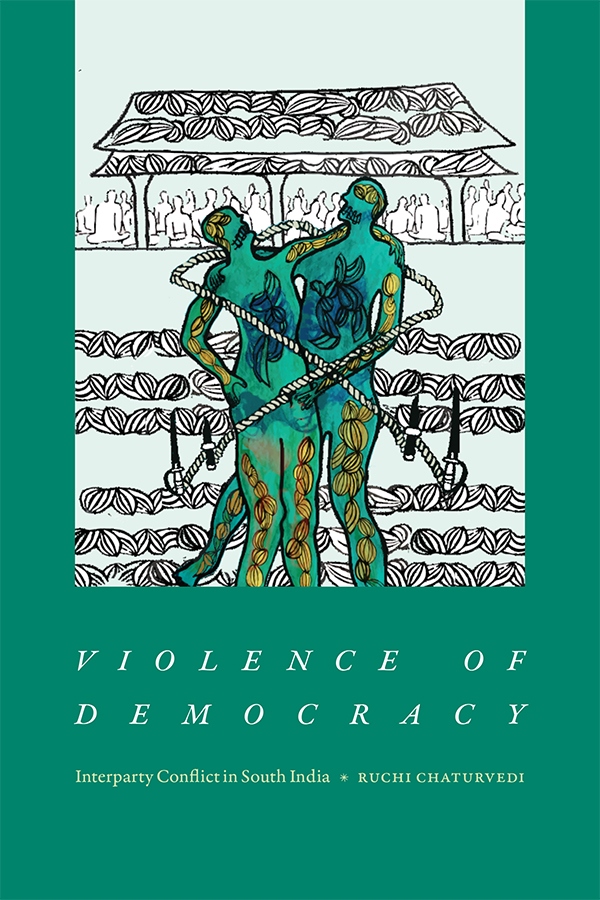
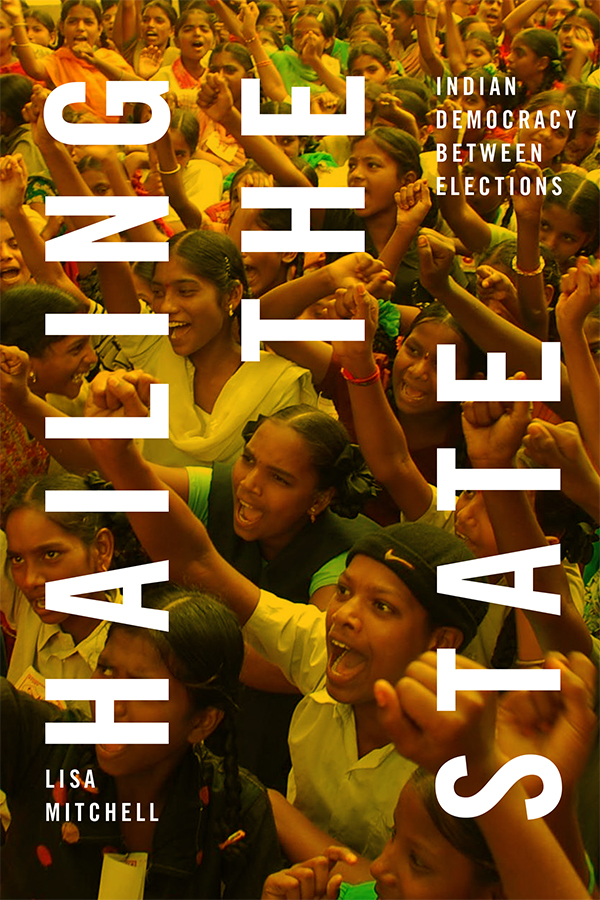 We are tirelessly reminded that India is “the world’s largest democracy.” In times of general elections, like the one taking place from 19th of April to 1st of June 2024, approximately 970 million people out of a population of 1.4 billion people are called to the ballot box in several phases to elect 543 members of the Lok Sabha, the lower house of India’s bicameral parliament. The election garners a lot of international attention. For some, it is the promise that democracy can flourish regardless of economic status or levels of income per head: India has been one of the poorest country in the world for much of the twentieth century, and yet has never reneged on its democratic pledge since independence in 1947. For others, it is the proof that unity in diversity is possible, and that nations divided along ethnic, religious, or regional lines can manage their differences in a peaceful and inclusive way. Still for others, India is not immune to the populist currents menacing democracies in the twenty-first century. For some observers, like political scientist Christophe Jaffrelot, India’s elections this year stand out for their undemocratic nature, and democracy is under threat in Narendra Modi’s India. And yet India is a functional democracy where citizens participate in voting at far higher rates than in the United States or Europe. Lisa Mitchell’s book Hailing the State draws our attention to what happens to (as the book’s subtitle says) “Indian democracy between elections.” Except during general election campaigns, foreign media’s coverage of Indian domestic politics is limited in scope and mostly concentrates on the ruling party’s exercise of power in New Delhi. Whether this year’s elections are free and fair will be considered as a test for Indian democracy. But as human rights activist G. Haragopal (quoted by the author) reminds us, “democracy doesn’t just means elections. Elections are only one part of democracy.” Elected officials have to be held accountable for their campaign promises; they have to listen to the grievances of their constituencies and find solutions to their local problems; they have to represent them and echo their concerns. When they don’t, people speak out.
 On July 9, 2011, South Sudan celebrated its independence as the world’s newest nation. One name considered for christening the country was the Kush Republic, after the Kingdom of Kush that ruled over part of Egypt until the 7th century BC. According to historians of antiquity, Kush was an African superpower and its influence extended to what is now called the Middle East. Placing the new nation under the sign of this prestigious ancestor was seen as particularly auspicious. But for many people the name Kush has been connected with the biblical character Cush, son of Ham and grandson of Noah in the Hebrew Bible, whose descendants include his son Nemrod and various biblical figures, including a wife of Moses referred to as “a Cushite woman.” A prophecy about Cush in Isaiah 18 speaks of “a people tall and smooth-skinned, a people feared far and wide, an aggressive nation of strange speech, whose land is divided by rivers” that will come to present gifts to God on Mount Zion after carrying them in papyrus boats over the water. For many South Sudanese at independence, Isaiah’s ancient prophecy directly applied to them, to the point the newly appointed President Salva Kiir chose Israel as one of his first destinations abroad. Churchgoers also read echoes of their fight for sovereignty and independence in various passages of the Bible. Christian southerners envisioned themselves as a chosen people destined for liberation, while Arabs and Muslim rulers in Khartoum were likened to oppressors in the biblical tradition of Babylon, Egypt, and the Philistines. John Garang, leader of the Sudan People’s Liberation Army/Movement (SPLA/M), was identified as a new Moses leading his people to the promised land. The fact that he left the reins of power to his second-in-command Salva Kiir before independence, just like Moses did with Joshua upon entering the land of Canaan, was interpreted as further accomplishment of the prophecy. Certainly God had a divine plan for the South Sudanese. For some Christian fundamentalists, the accomplishment of Isaiah’s prophecy was a sign of the imminent Second Coming of Jesus Christ that Isaiah identified as the Messiah, the king in the line of David who would establish an eternal reign upon the earth.
 How can a majority of parliamentarians vote to renounce democracy? Why would a group accept its own debasement and, in doing so, abdicate its capacity for self-preservation? What induces them not only to surrender power, but also to legitimize this surrender by a vote? Which conjuncture allowed democratically elected officials to rule themselves out and allow authoritarian leaders to take full control? This sad reversal of fortune happened on two occasions in the twentieth century. On 23 March 1933, less than one month after the burning of the Reichstag, German parliamentarians gathered at the Kroll Opera House in Berlin passed a bill enabling Hitler to concentrate all powers in his own hands by a majority of 444 to 94, meeting the two-third majority required for any constitutional change. On the afternoon of 10 July 1940, at the Grand Casino in Vichy, a great majority of French deputies and senators—569 parliamentarians, about 85 percent of those who took part in the vote—endorsed a bill that vested Marshal Pétain with full powers, including authorization to draft a new constitution. In these two cases, abdication was sanctioned by an explicit decision—a vote. Both cases gave authoritarian leaders all powers to sideline parliament, suspend the republican constitution, and rule by decree. Both 23 March 1933 and 10 July 1940 are dates which live on in infamy in Germany and in France. As soon as the events occurred, they were to haunt the elected officials who took part in the decision. To borrow Ivan Ermakoff’s words, these were “decisions that people make in a mist of darkness, the darkness of their own motivations, the darkness of those who confront and challenge them, and the darkness of what the future has in store.” Can we shed light on this darkness?
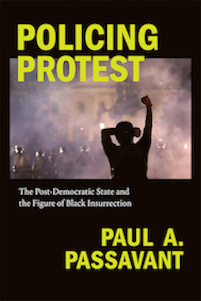 Let’s begin with a tale of two cities. The first—let’s call it Gotham—is a city where crime and violent protest run rampant. Hoodlums and thugs control the streets. City Hall is corrupt and incompetent. Police officers are powerless. An anti-Western, anti-rationalist, racialist, segregationist ideology has declared war against individual freedom and freedom of thought. Vigilante groups have taken control of entire neighborhoods and established a reign of permanent violence, looting businesses, attacking representatives of public authority, setting fire to courts of law and to the premises of police departments. The chaos that accompanied the takeover of these Red Guards has caused dizzying increases in crime. Even so, influent voices are calling for the defunding of police and the abolition of prison. Law enforcement officers have to obey strict rules of engagement. They have to wear body cameras to record their interactions with the public or gather video evidence of their eventual mishandling of a situation. There are discussions about streaming these video feeds online, in real time. The second city—dubbed The Big Apple—is a place where a militarized police patrols the streets like an occupation army, clamping down on any form of dissent. Business interests have privatized vast portions of the public space, evacuating any undesirable people including climate change activists, protesters distributing antiwar pamphlets, or trade union picketers who could disrupt the consumer’s experience. With the full support of politicians, police forces have responded to a previous wave of crime with a zero tolerance policy they now apply to all kinds of public protest, in violation of the First Amendment of the American Constitution. This “Broken Windows” doctrine has had no effect on crime, but now justifies disproportionate use of force, excessive length of custody, and “shock and awe” tactics against protesters. People demonstrating for social justice or against racism are treated like criminals and are arrested without any legal basis. Democracy is undermined, and the government increasingly behaves like an authoritarian state.
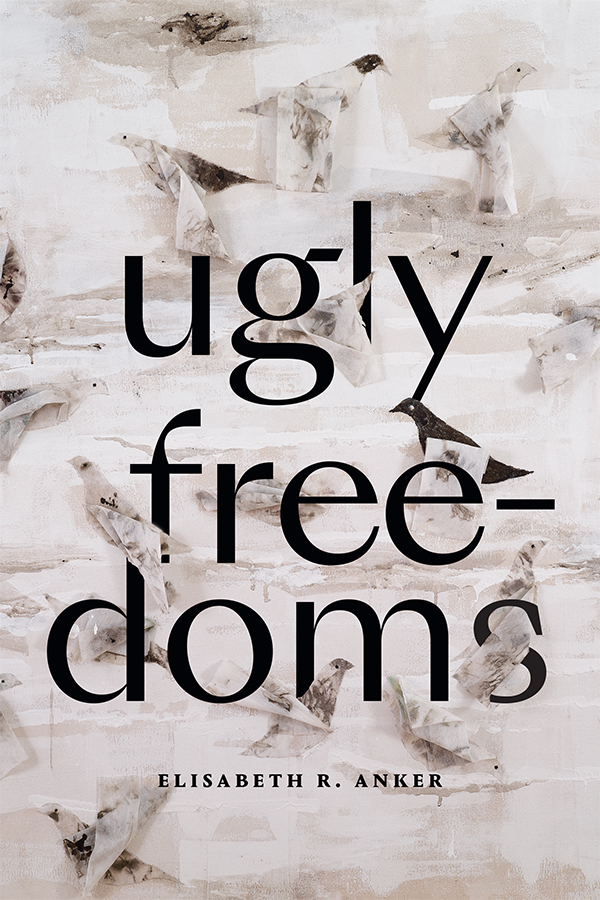 “We hold these truths to be self-evident, that all men are created equal, that they are endowed by their Creator with certain unalienable Rights, that among these are Life, Liberty and the pursuit of Happiness.” These truths are no longer self-evident: few people now believe in a Creator ; the inclusion of women in the generic term “all men” has to be specified ; and rights in their modern acceptation are not endowed or bestowed, but conquered and defended. What about Life, Liberty and the pursuit of Happiness? Are they not the expression of an American ideology that is shared by few people, even in the United States? Life itself has become a contested issue, as it hinges on when life starts and ends and some people are claiming a right to death in order to exit life with dignity. The pursuit of happiness was a central theme in Hollywood comedies of the 1930s and 1940s—a time of great unhappiness—, but we now look at these black-and-white motion pictures with nostalgia and irony, while Hollywood has moved to other descriptions of people’s aspirations and beliefs. Most significantly, freedom now has a hollow ring. The “Liberty Bell” march or the “Battle Cry of Freedom” were calls to rally round the flag and show patriotism, but these battle songs were used to legitimate wars of aggression and imperialism that made freedom a mockery of justice and equality. Domestically, the “land of the free” has the highest rate of incarceration in the world. We now speak with less assurance than our forefathers about the rights and values enshrined in declarations of independence or bills of rights. What if they were wrong in proclaiming life, liberty and happiness as our guiding principles? What if the reverse was true? What if freedom was not universally desirable, but “ugly” and repulsive? This is the argument that Elisabeth Anker makes in her book Ugly Freedoms, as she invites us to challenge self-evident truths and commonly believed assumptions.
 In his book Oriental Despotism, published in 1957, historian Karl Wittfogel introduced the notion of the hydraulic state as a social or government structure which maintains power and authority through exclusive control over access to water. He believed that Asian civilizations veered towards despotism because of the collective work needed for maintaining irrigation and flood-control systems. In Hydraulic City, anthropologist Nikhil Anand asks how water infrastructures and urban citizenship can be sustained in a country known for its messy democracy and bottom-up style of governance. The case of Mumbai’s water services exemplifies all that is wrong with Indian democracy: the failure to provide basic public services and carry out job-creating infrastructure projects; the inability to recover the costs of supplying water; and the politics of patronage and clientelist networks that tie impoverished residents to local power-brokers. And yet one is forced to acknowledge the resilience of the Indian system of governance in the face of chronic underinvestment and fledging democracy. The hydraulic city that emerges from this description is not a centralized formation of power, but rather a network or an assemblage of pipes, storage reservoirs, and valves, more or less controlled by a variety of residents, engineers, and administrators that move water in the city. Hydraulic City addresses the paradoxes of Indian cities where planned, improvised, intended and accidental mechanisms simultaneously shape the urban fabric. The” infrastructures of citizenship” that it describes combine the material infrastructure of leaking pipes and draining reservoirs, the market infrastructure that makes water demand meet supply, and the political economy of patronage relations around water provision.
 In An Empire of Indifference, Randy Martin makes the argument that a financial logic of risk management underwrites US foreign policy and domestic governance. Securitization, derivatives, hedging, arbitrage, risk, multiplier effect, leverage: these keywords of finance can be applied to the field of war-making and empire-building. The war on terror has created an empire of indifference that distances itself from any particular situation, just like the high finance of Wall Street is unconcerned about the travails of the real economy in Main Street. Finance can help us understand how foreign policy decisions are made, military interventions are planned, and scarce resources are allocated for maximum leverage. As a diplomat trained in economics, I find this angle very stimulating. However, the author approaches it from the perspective of the cultural critic, not as an economist or a political scientist. His book is written on the spur of the moment and oscillates between a denunciation of the war on terror and a conventional analysis of mounting risks in the financial sector. His logic is sloppy at best and his references to finance and economics are unsystematic and clumsy. Even his Marxism is of the literary type: he treats Marx as a shibboleth and a source of metaphors, not as an analytical toolbox or a conceptual guide. In the following lines, I would like to reclaim the impetus of mixing economics, war studies, and finance. But first, let me try to summarize Randy Martin’s argument.
 The Duke Reader