
The Celibate Plot

A review of Celibacies: American Modernism and Sexual Life, Benjamin Kahan, Duke University Press, 2013.
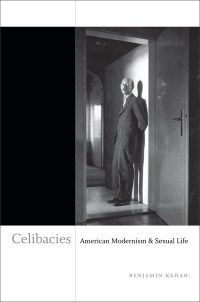
CelibaciesLiterary criticism has accustomed us to read sex between the lines of literary fiction. What Maisie Knew was what her parents were doing in the bedroom; The Turn of the Screw would have the heroin screwed if the door was unlocked; and Marcel Proust’s Lost Time was time not spent in the arms of his lover. According to this view, literature is when the author wants to suggest something about a person or thing, but then for whatever reason he or she may not wish to explicitly state what is on his or her mind, and so the author writes a novel, or poetry. Psychoanalysis has several words for this urge to dissimulate and beautify: sublimation, repression, transfer, displacement, defense mechanism, the conflict between the super-ego and the id. They all refer to the transformation of socially undesirable impulses into desirable and acceptable behaviors. But what if the opposite was true? What if no sex means no sex, and there is no dark secret to probe into? The French philosopher Michel Foucault hinted at this possibility in his History of Sexuality when he criticized the repressive hypothesis, the idea that western society suppressed sexuality from the 17th to the mid-20th century due to the rise of capitalism and bourgeois society. Foucault argued that discourse on sexuality in fact proliferated during this period during which experts began to examine sexuality in a scientific manner, cataloguing sexual perversions and emphasizing the binary between hetero- and homosexuality. By opposition, Roland Barthes, Foucault’s colleague at the Collège de France, proposed a concept to bypass the paradigm of sexuality and go beyond the binary construction of meaning: the Neutral. “I define the Neutral as that which outplays the paradigm, or rather I call Neutral everything that baffles paradigm,” he wrote. According to Barthes, the Neutral, or the grammatical Neuter (le neutre) operates a radical deconstruction of meaning and sexuality. It allows us to reexamine from a fresh perspective the question of le genre, understood in its dual sense of literary genre and of gender. 

The repressive hypothesis

Biographies of Roland Barthes point out that he remained a bachelor all his life and shared an apartment with his mother, to whom he devoted a vibrant eulogy at the time of her death. Barthes was also a closet homosexual, never avowing in public his penchant for boys and his dependence on the gigolo trade. His works are almost silent on his sexuality. Barthes’s homosexuality concerned only a private part of his life; it was never made public, because it simply wasn’t. Homosexuality was never for Barthes anything other than a matter of sex, limited to the question of the choice of a sexual object. He wasn’t gay (a term that functions as a seal of identity), and would never have been part of the political movement for the recognition of homosexual rights. This indifference was not a repression: it was another way of expressing what being modern meant for him, even if Bathes’ modernity was closely related to a certain resistance to the modern world. In a society obsessed with the new and the rejection of conventional forms, it is attachment to the past that now constitutes a form of marginality or even clandestinity and, as such, a heroism of the ordinary. Being modern doesn’t just mean taking part in the intellectual or artistic spectacle of contemporary society. It also, and above all, means constructing meanings, words, ways of being, cultural and textual interventions that precede what a society makes available. To be modern is to make one’s desire come to language. In this sense, Benjamin Kahan’s Celibacies, a work of literary criticism and cultural history, articulates other ways of being modern. Focusing on a diverse group of authors, social activists, and artists, spanning from the suffragettes to Henry James, and from the Harlem Renaissance’s Father Divine to Andy Warhol, Kahan shows that the celibate condition, in the diverse forms that it took in the twentieth century, meant much more than sexual abstinence or a cover for homosexuality. To those who associate the notion of celibacy with sexual repression, submission to social norms, and political conservatism, he demonstrates that celibacies in the twentieth century were more often than not on the side of social reform, leftist politics, and artistic avant-garde.

Celibacies is placed under the sign of Eve Sedgwick’s Epistemology of the Closet, with a quote used as an epigraph that opens the book: “Many people have their richest mental/emotional involvement with sexual acts that they don’t do, or even don’t want to do.” Sedgwick deemed the hermeneutic practice of uncovering evidence of same-sex desire and its repression in literature, “paranoid reading.” To this trend, she opposed a reparative turn in literary studies: reparative reading seeks pleasure in the text and works to replenish the self. Sedgwick’s injunction to move from paranoid to reparative reading has been diversely followed. On the one hand, queer studies continue to read the absence of sex as itself a sign of homosexuality or of repressed desire, as an act of self-censorship and insincerity. The closeted subject has internalized social norms and keeps the true self hidden from outside views, sometimes hidden from the conscious self as well. By opposition, the queer subject brings desire to the fore, and challenges tendencies to oppose private eroticism and the systems of value that govern public interests. On the other hand, queer theory rejects normativities of all stripes, including homonormativity. It understands sex and gender as enacted and not fixed by natural determinism. Since the performance of gender is what makes gender exist, a performance of “no sex” creates a distinct gender identity: no means no, and abstinence from sex is not always the sign of repressed sexuality. It is possible to theorize gender and even sexuality without the interference of sex. But according to Kahan, celibacy is distinct from asexuality, understood as the lack of sexual attraction to others, or low or absent interest in or desire for sexual activity. Celibacy is a historical formation or a structure of attachment that can be understood as a sexuality in its own right. Its meaning has evolved in the nineteenth and twentieth centuries: it has be used as a synonym for unmarried, as a life stage preceding marriage, as a choice or a vow of sexual abstinence, as a political self-identification, as a resistance to compulsory sexuality, as a period in between sexual activity, or as a new form of gender identity organized in a distinct community culture. Celibacies used in the plural reflect these overlapping meanings and cast a light on literary productions illustrating the impact of modernism in America.

The educated spinster

Celibacy once was a recognized social identity defined by its opposite, heterosexual marriage. According to Simone de Beauvoir, “the celibate woman is to be explained and defined with reference to marriage, whether she is frustrated, rebellious, or even indifferent in regard to that institution.” Its determinants were political and economical rather than sexual or sentimental: celibacy was a necessary condition for middle- and upper-class white women to gain legal and financial independence. At the end of the nineteenth century, “marriage bars” required the dismissal of female employees upon their marriage or the prohibition of the employment of a married woman. Educated women who wanted to enter a career or a profession had to remain unmarried or to hide their marriage. They did so in large numbers: “Of women educated at Bryn Mawr between 1889 and 1908, for instance, fifty-three percent remained unwed.” For this reason, celibacy is at the very heart of the history of labor in America. It is also a key component of social mobilization and civic campaigns: in the United States, unmarried, educated women composed much of the rank and file of social movements campaigning for universal suffrage, temperance, and social purity. The centrality of celibacy for first-wave feminism cannot be emphasized enough. For the author, women’s “choice not to marry is indicative of a willingness to think outside existing social structures and thus it is associated with freedom of thought.” For their male contemporaries, it was also associated with ridicule. Women campaigning for female suffrage were belittled as “suffragettes”; and other expressions disparaged women who had chosen to stay single (“singletons,” “bachelorettes,” “old maids,” “spinsters.”) The male bachelor, by contrast, was seen as socially able to marry but having delayed marriage of his own volition; he could be characterized as “a good catch,” “a stag,” or “a jolly good fellow.” 

Celibacy’s history is imbricated with the history of homosexuality. Discussing Henry James’ novel The Bostonians, Kahan investigates one of the most contested site of celibacy in the history of homosexuality: the Boston marriage. The term “Boston marriage” describes a long-term partnership between two women who live together and share their lives with one another. In James’s satirical novel, the romance between the heroin Verena Tarrant and Olive Chancellor, a Boston feminist and social campaigner, is placed on equal footing with the romance between Verena and her other suitor, Basil Ransom. This love triangle is often read as a lesbian plot: Olivia’s decision to leave her parents’ house, move in with Verena and study in preparation for a career in the feminist movement is seen as the result of a love attraction. Benjamin Kahan proposes another interpretation based on the constitutive role of celibacy as a means for independence and self-determination. The Boston marriage, which does not grow out of “convenience or economy,” is associated with collaborative literary production. It reflects Henry James’ own condition as a lifelong bachelor and his conception of authorship as a vocation. The artist, like the bachelor, is fundamentally monadic and stands apart from social spheres of influence: “rather than seeing James’s celibacy as only an element of a homosexual identity, I understand it as a crucial component of his novelistic production.” In a separate chapter examining the work of Marianne Moore, a twentieth-century American poet, Kahan sees echoes of her lifelong celibacy in her poetics and conception of time. Moore’s “celibate poetics” involve a lack of development within the poem, a lack of climax, a backwardness that reverses the passage of time, as well as pleasure in difficulty, lack of explicitness, and a style at once shy and flamboyant. Moore’s remark that “the cure for loneliness is solitude” makes solitary existence a fully contented mode of sociability and a crucial part of her poetics.

Black celibacy and queer citizenship

In his effort to make celibacy be seen as progressive and pleasurable, Benjamin Kahan underscores that the celibate condition in the twentieth century was not restricted to middle-class white women. Black celibacy was advocated by a now forgotten figure of the Harlem Renaissance, Father Divine, “an intellectual and religious leader who believed he was God.” His cult, the Peace Mission Movement, organized his followers into interracial celibate living arrangements called kingdoms. These celibate communes were a direct response to economic conditions: rents in Harlem were prohibitively high, making necessary for families to share apartments or take in lodgers. Cooperative housing also echoed the calls from Claude McKay, a socialist and a poet, to seize the means of production and organize the black community on a self-sustaining basis. Lastly, black celibacy and chastity vows countered racist depictions of the black body as oversexualized and promiscuous. By making a celibate identity available to black subjects, Father Divine allowed black men and women to participate in the public sphere and created economic and spiritual opportunities for racial equality. Celibacy was also used as a strategy for queer subjects to circumvent the prohibition preventing homosexual immigrants from becoming American citizens. Before the passage of the McCarran-Walter Act in 1952, the queer citizen could, according to the letter of the law, belong to America so long as he remained celibate or was not “caught in an act of moral turpitude.” The British poet W. H. Auden became an American citizen in 1946 by practicing “cheating celibacy,” a position both inside and outside the rules that he thematized in his 1944 poetic essay The Sea and the Mirror: A Commentary on Shakespeare’s The Tempest”. This long poem is a series of dramatic monologues spoken by the characters in Shakespeare’s play in which Caliban renunciates his former self in favor of a queer form of belonging. But as Kahan notes, “black queer writers like Claude McKay, James Baldwin, and Langston Hughes had significantly less ability to move in and out of America’s borders than white authors like Auden.”

Kahan’s choice to associate Andy Warhol with celibacy is disconcerting. The pop artist was openly gay and had a reputation for promiscuity and swishiness. His art collective, the Factory, was populated by “drag queens, hustlers, speed freaks, fag hags, and others.” But “‘gayness’ is not a category that we can control in advance.” If Warhol’s declarations can be taken at face value, he claimed that he didn’t have any sex life: “Well, I never have sex” and “Yeah. I’m still a virgin,” he responded in an interview. Evidence also suggests that the Factory wasn’t the “Pussy Heaven” or “Queer Central” journalists once described: according to one witness, celibacy organized life at the Factory, and Warhol’s abstinence from sex shaped relations of power and subjection. As Kahan sees it, the tradition of celibate philosophers underwrites the Factory’s mode of government and theorizes a concept of group celibacy. Warhol’s marriage to his tape recorder exemplified his rejection of traditional marriage and emotional life: “I want to be a machine.” In the view of a contemporary, “everything is sexual to Andy without the sex act actually taking place.” His celibacy operates at a zero degree of desire. My Hustler, his 1965 movie with film director Paul Morrissey and actor Ed Hood, presents a twisted celibate plot characterized as much by sexlessness as by sex. Valerie Solanas tried to kill Andy Warhol in 1968 because she claimed “he had too much control of [her] life”. In the SCUM Manifesto she published before her attempted murder, the radical feminist urged women to “overthrow the government, eliminate the money system, institute complete automation and destroy the male sex.” Kahan places both Warhol and Solanas in a tradition of philosophical bachelorhood that precludes sex in favor of alternative modes of governance.

Celibate readings

In the conclusion of Celibacies, Benjamin Kahan argues that celibacy should not be abandoned to the American political right, with its apology of abstinence before marriage and traditional gender roles. Celibacy from the 1880s to the 1960s has been on the side of reform and modernism. Celibate women could access public space and the professions at a time social norms prevented educated married women from entering the workforce. In the 1930s, celibacy was a possible option availing economic advantages to African-Americans in Harlem or allowing queer foreigners to access U.S. citizenship. Celibacy could also be a philosophical choice or a condition for artistic production. Having a room of one’s own was easier when one didn’t have to share the apartment with another person or raise a family. Forms of celibacies have also been animated by “sexual currents, desires, identifications, and pleasures.” Celibacy’s imbrication with homosexuality is not just a modern invention: depictions of “Boston marriage” in the late nineteenth century had strong implications of lesbianism. But celibacy was not only a pre-homosexual discourse or the result of sexual repression: it was a form of sexuality in its own right, entailing a more radical withdrawal than is the case with the closet homosexual or the scholar practicing sexual abstinence. No sex means sex otherwise, or a different form of sexuality. Looking to literary works of fiction and poetry through the prism of celibacy leads to valuable insights: Kahan reads a “celibate plot” in Henry James’ The Bostonians or Andy Warhol’s My Hustler, and highlights a “celibate poetics” in the poems of Marianne Moore or W. H. Auden. This book is published in a series devoted to queer studies because, as the author argues, “celibate and queer readings overlap without being coextensive.” Much as queer theory has the effect of “undoing gender,” the primary purpose of the Neutral according to Roland Barthes is to undo the classifying function of language and thus to neutralize the signifier’s distinctive function. “L’écriture célibataire” is the form the Neutral took in American modernism.


Passing for White, Passing for Black

A review of Passing and the Fictions of Identity, Elaine K. Ginsberg ed., Duke University Press, 1996.

Passing

On September 10, 2020, the editorial director of Duke University Press issued a statement about Jessica Krug, a published author who for several decades had falsely claimed a Black and Latinx identity before being exposed as a case of racial fraud. The public statement was brimming with rage and indignation: “I have been sickened, angered, and saddened by the many years that she deployed gross racial stereotypes to build her fake identity,” the editor wrote. The feminist scholar was denounced as a case of deception and fraud, rendered more shameful by the fact that “early in her career, she took funding and other opportunities that were earmarked for non-white scholars.” Confronted with her lies, Jessica Krug herself issued a blog confession in which she disclosed her original identity “as a white Jewish child in suburban Kansas City” who, because of “some unaddressed mental health” issues, had assumed a false identity initially as a youth and then as a scholar. Using a word tainted by a history of antisemitism, she described herself as “a culture leech,” apologized profusely, and asked to “be cancelled.” It turned out Jessica Krug wasn’t the only case of racial impersonation in academia: over the forthcoming months, other scholars were exposed as having claimed a false racial identity, including another author who had manuscripts accepted by Duke University Press even after she was denounced as a so-called “Pretendian,” or a person falsely claiming a Native American heritage. In another statement, the same editor indicated that “for months now, we at Duke University Press have engaged in difficult conversations about how we can do a better job of considering ethical concerns as we make our publishing decisions.” But she did not indicate whether the academic publisher would take measures to check the self-declared racial identity of its contributors, or how it would proceed in doing so.

Policing race, unpolicing gender

I remember being amused and puzzled by these media statements. I saw them as a typically American story as we like to imagine them in France: a narrative following a pattern of public exposure, legal confrontation, personal confession, atonement for past sins, and redemption, as was the case of Bill Clinton in the Jessica Lewinsky affair. Only in the case of white people assuming a Black identity there was neither mercy nor redemption: the culprits were expected to expose their shame publicly before disappearing into oblivion. And indeed, following her confession Jessica Krug vanished from public view, never to be seen again: she was, in effect, cancelled. To a certain degree, I can understand the outrage of the Duke editor and other persons who had been fooled into believing the usurpated identity of racial impostors. But only to a degree: there are also convincing arguments to support the fact that racial usurpation is not such a big deal, and should be treated with leniency. Whom did Jessica Krug harm by pretending to be black? Does having benefited from earmarked resources justify the policy of cancellation of a scholar who may otherwise have brought useful contributions to the field? What if it was possible to “play one’s race” as one plays a role? After all, isn’t it a central tenet of critical studies that identity is a fiction and that social roles are performatively enacted? According to Judith Butler, whose Gender Trouble was published in 1990, gender is performance. Likewise, in Epistemology of the Closet, also published in 1990, Eve Kosofsky Sedgwick argues that limiting sexuality to homosexuality or heterosexuality, in a structured binary opposition, is too simplistic. The discipline of queer studies that they helped establish is a broad tent: one does not have to prove one’s credentials as a gay, lesbian, or otherwise LGBTQI+ person to identify as “queer.” Likewise, in crip theory—the radical arm of disability studies—, a person is considered as disabled if she considers herself to be so. There are no checks of medical records or social security status: indeed, disability scholars deny doctors the exclusive right to declare who is disabled and who is not, and argue that disability status is biased against persons of color, people living in precarious conditions, and otherwise discriminated persons. Being disabled (or being queer) is a social construction, just like what is opposed to it, namely being able-bodied (or being straight). Why should race be treated differently? Are academics serious when they claim that race is also a fluid and reversible category?

The moral panic raised by racial usurpations of minority identity is a very contemporary phenomenon. To understand its roots, one has to delve into the American history of race relations, and to understand the academic context as it emerged in the 1990, especially in literature departments where questions of identity and fiction were most prominently raised. It was a time when the modern racial impersonators started their career, and when transracialism, although based in those cases on identity theft and deception, appeared as a feasible option. The book Passing and the Fictions of Identity, edited by Elaine K. Ginsberg and published in 1996, therefore provides a useful benchmark to assess contemporary debates in light of their foundational moment. The term passing designates a performance in which one presents oneself as what one is not, a performance commonly imagined along the axis of race, class, gender, or sexuality. In American literature, passing across race and across gender are thoroughly imbricated—most famously in the narrative of William and Ellen Craft, Running a Thousand Miles for Freedom (1860), in which the black couple escaped from slavery, she dressed as a white man and he posing as her servant, and in Harriet Beecher Stowe’s Uncle Tom’s Cabin (1852) when Eliza, traveling to Canada, disguises herself as a white man and her young son as a girl. In the twentieth century, novels such as Nella Larsen’s Passing (1929) and James Weldon Johnson’s Autobiography of an Ex-Coloured Man (1912) added to the discourse of racial passing a third important sense of passing: the appearance of “homosexual” as “heterosexual.” Passing and the Fictions of Identity explores passing novels as a literary genre that complicates racial and sexual categories. It also considers passing across social status delimitations, as in The Life of Olaudah Equiano (1789) in which the narrator, an Igbo African and a former British slave, becomes a free sailor and a pioneer of the abolitionist cause. It addresses gender crossing through a close reading of The Woman in Battle (1876), an account of Civil War cross-dressing that presents itself as the autobiography of Loreta Velazquez, a woman who masqueraded as a Confederate officer and spy during the war. Passing novels also include The Hidden Hand (or Capitola the Madcap), a picaresque adventure tale first published in 1859, and James Baldwin’s Giovanni’s Room (1956), in which national, racial, and sexual identities are presented as nostalgic constructions subject to a pathos of lost origins. Black Like Me (1961) is not a work of fiction but a realistic account of a journey in the Deep South of the United States, at a time when African-Americans lived under racial segregation, by a journalist who had his skin temporarily darkened to pass as a black man. Closing the book, Adrian Piper, a philosopher and a performance artist, offers her personal testimony as an African American woman who identifies herself as black but often passes for white because of her light-skin complexion.

The dilemma of passing

Passing for white is still a reality in contemporary American society, where African American identity was built on a history of slavery and segregation and where Blacks still suffer from racial prejudice and social exclusion. As F. James Davis writes in Who Is Black? One Nation’s Definition (1991), “Those who pass have a severe dilemma before they decide to do so, since a person must give up all family ties and loyalties to the black community in order to gain economic and other opportunities.” There is no forced “outing” of people who pass for white in the African American community: “Publicly to expose the African ancestry of someone who claims to have none is not done,” writes Adrian Piper. And yet passing is met with ambivalence and equivocation. In the novel Passing, one character remarks: “It’s funny about ‘passing.’ We disapprove of it and at the same time condone it. It excites our contempt and yet we rather admire it. We shy away from it with an odd kind of revulsion, but we protect it.” By contrast, at the time the book was published, passing for black when one is white was deemed a complete impossibility. Adrian Piper, who was suspected of doing so, reacts violently to such accusation: “It’s an extraordinary idea, when you think about it: as though someone would willingly shoulder the stigma of being black in a racist society.” Based on her own experience, she considers being black as “a social condition, more than an identity, that no white person would voluntarily assume, even in imagination.” The many instances of microaggressions, discriminatory treatment, racial slurs, or racist conversations she overheard even in an academic context considered as “safe” justify her point: raised as an African American by a committed family, but as a person who “looked white” and “talked white,” she involuntarily passed as white and thus was able to witness the racist behavior of white persons who lower their guard when they think they are among themselves (as in the Saturday Night Life routine when a whitefaced Eddy Murphy experiences the sight of relief as a single black man exits a bus full of white passengers.) In Black Like Me, John Howard Griffin expresses outrage and mortification at a variety of incidents that would have been commonplace to black Southerners living under Jim Crow: being turned away from hotels and restaurants, made the target of racial animosity and sexual objectification, denied banking privileges, rejected peremptorily from jobs, required to use segregated toilet facilities, and forced to sit at the back of the bus. Clearly under such conditions, no white person would willingly become black.

There are several reasons why passing became a popular trope in American literature, and why literary criticism took on the subject with an enthusiasm bordering on frenzy in the 1990s. Cross-dressing and assuming a fake identity have always been a familiar ploy in literary fiction, from picaresque novels of sixteenth century Spain to the theater comedies of Shakespeare and Marivaux. The American legacy of slavery and racial segregation added an element of drama to this familiar plot. The fictitious characters of the passing novel and the unknown thousands of very real black men and women who passed out of slavery moved from a category of subordination and oppression to one of freedom and privilege. According to the one-drop rule, any person with even one ancestor of black ancestry (“one drop” of “black blood”) was considered black (Negro or colored in historical terms). African blood is invisible on the surface of the body, allowing persons of mixed descent with a light skin and Caucasian facial features to pass as white. Crossing racial or sexual boundaries involves a suspension of disbelief that is at the heart of literary fiction: appearances are deceiving, identities are in flux, and nothing is what it seems. The visual force of passing, and especially the shock of its discovery after the fact, is extraordinary. Especially in the case of race, passing is not simply performance or theatricality, the pervasive tropes of recent work on sex and gender identity, nor is it parody or pastiche, for it seeks to erase, rather than expose, its own dissimulation. Unlike sexual identity which is not necessarily apparent, race is eminently visible, as if it were natural. Race is essential, communal, and public, whereas sexuality is contingent, individual, and private. The misperception of race is therefore surprising insofar as it contradicts the established belief in the strength of blood ties and genetic makeup. Racial passing resonates deep within the American psyche. Even though a significant proportion of white Americans, about 3.5 percent according to geneticists, are known to have some African ancestry, very few people who identify themselves as white are ready to acknowledge this heritage. According to Adrian Piper, “the fact of African ancestry among whites ranks up there with family incest, murder, and suicide as one of the bitterest and most difficult pills for white Americans to swallow.”

The fictions of identity

Through the contributions to this volume, passing was constituted as a literary genre and a productive space in which to interrogate identity in all its dimensions. According to one contributor, “passing is an act of resistance against dominant constructions of race, gender, sexuality, and identity.” As she explains, the discourse of racial passing reveals the arbitrary foundation of the categories “black” and “white,” just as passing across gender and sexuality places in question the meaning of “masculine” and “feminine,” “straight” and “gay.” For the editor in her introductory chapter, “just as the ontology of race exposes the contingencies of the categories ‘white’ and ‘black,’ so the ontology of gender exposes the essential inauthenticity of ‘man’ and ‘woman.’” Socially constructed identities seemed to connote an identity easily altered or cast off: one could be black or white (or Native American) by an act of volition, a conscious decision that would engage the rest of one’s life but that had no relation to one’s previous self. The facticity of identity made any experience of that identity necessarily inauthentic: “Passing is only one more indication that subjectivity involves fracture, that no true self exists apart from its multiple, simultaneous enactments.” It was accepted as a an article of faith that “identities are not singularly true or false but multiple and contingent.” There was no authentic self, but an assemblage composed by “a series of guises and masks, performances and roles.” Literature had first established passing as a trope, and literary criticism gave it its badge of honor. The 1990s were years of transformation in the humanities, and the university became a factory for ideas of gender transition and eventually of race fluidity. Under the influence of Roland Barthes, Jacques Lacan, Judith Butler, and Eve Sedgwick, who are quoted at length in this volume, identities were read as fictions and constructed as fantasies. Race was compared to a “metaphor,” an “empty signifier,” a “mark empty of any referential content” or “the unheimlisch return of a desire” that could be as malleable as text. Then was a time to “construct new identities, to experiment with multiple subject positions, and to cross social and economic boundaries that exclude or oppress.”

In such intellectual climate, it is no wonder that some enterprising individuals took critical theory at its own word and decided to experiment in real life the theses that literary critics and social scientists had proposed on the cultural front. If all identities are in passing and race is a masquerade, why not assume a different racial identity and pretend one belonged to a minority of color instead of dull and undifferentiated whiteness? If race is a role we play, why not choose the character we wish to embody and play the part accordingly? Of course, assuming a different ethnic identity involves lying about one’s “true” origins. But if race is a lie, lying about a lie is not a lie: it is all performance. There were several motivations behind the choice made by some individuals, mostly academics and performing artists, to take on the identity of an ethnic minority. First, the stigma once associated with being colored started to recede with the civil rights movement and the promotion of ethnic identities. In the ideologically charged climate of the 1970s, Black was beautiful, Native Indian was noble, ethnic was chic. There was a whiff of marginality and radicalism in embracing the cause of ethnic minorities fighting for their rights. As the author of Black Like Me experienced it, one could not act as a spokesperson of a group in which one did not belong. He chose to step aside and to support black separatism from a distance; others preferred to espouse the cause with which they identified unequivocally, and to play the part until the end. As a second reason, this was a period when ethnic studies and other interdisciplinary fields emerged as new and exciting disciplines. For a promising academic, it was important to position oneself where all the action was. If this involved lying about one’s ethnic origins, so be it. Most of the time, the deception began with a lie by omission or a sous-entendre that may have been based on family lore. In a nonsuspecting environment, there was no hard questions asked, and no need to provide minute answers about one’s genetic makeup. In some cases, what began as a histrionic role became an acting career. Academics spend their life on a stage and impersonate a role in front of a devoted audience. They tend to embody the ideas they defend to the point their appearance becomes inseparable from their discipline. Teaching ethnic studies made one feel part of this ethnicity.

The backlash against transracialism

And yet, transracialism has few modern proponents, and academics who are found to have lied about their ethnic origins are subjected to public shaming and a strict policy of cancellation. “In Defense of Transracialism”, an article published by the philosopher Rebecca Tuvel in the academic journal Hypatia in spring 2017, was met with a barrage of insults and denunciations, and the journal’s editors had to publish an apology. How, then, are we to understand the backlash against racial trespassing and the cancellation of individuals who claimed an ethnic identity when in fact they were white? Why did race and gender follow different paths and ended up on opposite sides of academic debates, with transracialism denounced as wholly illegitimate while trans identities were recognized and even praised by gender theorists? First, the issue of passing involves not only an individual’s decision to change race, but also deliberately lying and deceiving about it. Academia is an industry that defines itself in large part by its ethical standards: having a career based on a lie makes other people angry and resentful. American ethics adds a layer or prudery and moral posturing to these manifestations of public outrage: remember that in the Lewinsky case, what was reproached to Bill Clinton was not to have had an affair with an intern, but to have lied about it. Denunciations of ethnic fraud also emphasize the fact that the culprits benefited from preferential treatment and financial resources originally earmarked to members of ethnic minorities: they “stole” these resources from others, who may have benefited from these affirmative action measures but could not. One may find this argument shallow and petty: there is more to academia than just money and a struggle for positions, and every social policy has its leakages. The resolution to curtail the phenomenon of passing also comes from the realization that it may have reached massive proportions. According to the 1990 census, two million Americans reported as American Indians and Alaska Natives. In 2000, almost twice as many gave the same answer to the questionnaire. Among them, in proportion, Latinos and highly educated adults as well as women were the groups most directly affected. Checking the “Native American” box is not only a means of gaming the university admission system: Native American cultures have experienced a kind of cultural renaissance, which increases the number of persons willing to associate with them. As a last argument, the reaction to Rebecca Tuvel’s article showed that feminists who support trans identities and queer studies are particularly ill at ease with the possibility of transracialism. They do not want to witness the contamination of gender debates with issues of racial transition. Policing race is also a way to police their own discipline and to erect barriers to avoid trespassing.

Disability Studies and Crip Theory

A review of Crip Genealogies, edited by Mel Y. Chen, Alison Kafer, Eunjung Kim, and Julie Avril Minich, Duke University Press, 2023.

Crip GenealogiesCrip Genealogies is an anthology of texts that claim the pejorative word crip as a moniker to distance themselves from earlier contributions in the field of disability studies. Crip is a diminutive for “cripple” and is used as a slur to designate people with visible forms of disabilities, mostly physical and mobility impairments. It is also a word associated with violence and ghetto culture, as the Crips are one of the largest and most violent associations of street gangs in Los Angeles. Reclaiming crip as a definition of self-identity is a way to return the stigma against the verbal offenders and to express pride in being a member of the disability community. In the academic world, it is also a way to carve a niche for critical disability studies and to express solidarity with non-normative forms of living that may also include queerness and ethnic pride. Symptomatic of this convergence between academic currents and social movements is the proliferation of acronyms to designate minoritarian identities that may be based on sexual orientation and gender identity (LGBTQ+), race and ethnicity (BIPOC, pronounced “bye-pock,” which stands for Black, Indigenous, and people of color), mental health and physical disability (MMINDS, an acronym which stands for Mad, “mentally ill,” neurodivergent, disabled, survivor), or an intersection thereof (SDQTBIPOC, which stands for sick and disabled, queer and trans non-white persons). Most contributors to Crip Genealogies are part of this extensive community and define themselves as queer persons of color, diversely abled, and straddling the line between scholarship and activism. The publication is meant to provide foundational basis for crip theory as a discipline opposed to the apolitical and normative aspects of disability studies and that is “disrupting the established histories and imagined futures of the field.”

Crip ancestors

A genealogy is a history designed to shed light on a person’s origins or a family’s ancestral line. It involves forefathers, ancestors, elders, lineages, progenitors, siblings, cousins, relatives, and descendance. It also build upon myths of origin, narratives of displacement, acts of foundation, coming-of-age stories, acknowledgements of cultural transmission and biological inheritance. In cultural term, a genealogy may include schools of thought, intellectual traditions, disciplinary boundaries, seminal texts, and anthologies or primers. Part of the motivation of many contributors to this volume is to palliate the lack of ancestors and role models they can turn to when they try to ground their scholarly and activist practices. “Where are our queer elders?”, ponder two activists during a panel discussion in which they are asked to name their “crip ancestors.” The lack of obvious answers (beyond the figures of Frida Kahlo, Audre Lorde, and Gloria Anzaldúa) leads them to reflect on “the conditions that will allow disabled QTBIPOC elderhood to flourish,” some of which having to do with the avoidance of premature death, social exhaustion, cultivated marginality, and academic bickering. But the main responsibility for the invisibility of the crip queer-of-color subject falls on the cultivated whiteness of disability studies as an academic discipline and of disability rights as a social movement. According to Sami Schalk, “the early disability rights movement was often very white, middle-class, and single-issue focused.” Leslie Frye considers “how investments in whiteness that underwrite US disability rights have been obscured and where the traces of this movement’s racial legacy lie.” Investments in “making the cripple visible” led to the invisibilization of race, gender, sexuality, and all the other axes of individual or collective identity. The editor’s intention is therefore to underscore “not only the whiteness of the field but also the way in which it both stays white and perpetuates whiteness.” 

Histories of social movements often involve a succession of “waves” or the passing of the baton from one cause to the other. One refers to “third-wave feminism” or the “third wave of the civil rights movement” to describe the succession of challenges that feminism or the fight against racial discrimination had to face, in a linear progression that goes from oppression and alienation to self-determination and enlightenment. Likewise, the fight for disability rights seems like the logical next step once “we’ve done race/gender/sexuality.” The temporality of disability studies charts a progression from self-awareness and nascent identity to the mobilization for equal access and equal treatment, then the affirmation of pride and visibility, culminating in the disability justice movement and crip theory. It is believed that recognizing disability history will inspire persons with disabilities to feel a greater sense of pride, reduce harassment and bullying, and help keep students with disabilities in schools or universities. The authors reject such genealogies built around change, progress, and modernity. They refuse to engage in celebratory commemorations of disabled people’s advancement punctuated by legislative victories, from the Rehabilitation Act of 1973 to the Education for All Handicapped Children Act of 1975, the Americans with Disabilities Act in 1990, and the Affordable Care Act of 2010. They are critical of the term “genealogy” itself, which creates “the illusion of descent as a line,” or of metaphors of genealogical trees, epistemological roots, native soil, and disciplinary fields, which inscribe “colonial temporalities and spatialities into our conceptions of scholarship.” ”Even the rhizome can be colonial,” they note in the introduction. Their ambition is to build “epistemologies of radicalized disability that do not comply with compulsory improvement, personal initiative, and change on the way to a good life.” The mixed genealogies they call forth need to “stay with the trouble” and nurture crip theory’s revolutionary potential: “crip disrupts convention and undermines social norms.” Not unlike what the deinstitutionalization movement did for people locked up in hospital wards and collective homes, crip genealogies deconstruct all aspects of institutions. 

A new wave of deinstitutionalization

Deinstitutionalization is a political and a social process which provides for the shift from institutional care and other isolating and segregating settings to independent living. The Independent Living philosophy is based on the assumption that people with disabilities should have the same civil rights, options, and control over choices in their own lives, as do people without disabilities. Crip Genealogies advocates a new wave of deinstitutionalization. The institutions under consideration are mostly academic: the authors grapple with the place of disability studies, and of crip theory as a nascent discipline, within the space of the North American university. The university’s dependency on diversity and inclusiveness is something both to be valued and criticized: according to Mel Y. Chen, “disability can confer a selective entitlement, or reveal an interior hierarchization.” Some forms of behaviors or modes of teaching and learning are valued over others: “in the university, agitated gesture—whether in the form of politically legible protest, aggressive physicality, or movement (including stillness or slowness) inopportune to class habitus—has no proper home, save perhaps in the possibilities of dance training or intramural sport.” For scholars coming from abroad, such as Eunjung Kim, “the institutional legitimacy in US academia came with a price, as it valued certain kinds of writing and thinking over others.” The unmarked human who embodies all scholarly virtues and properties continues to be “white, non disabled, masculine, ‘functionally’ social, and creditable.” “Academia, ableist to its core, rejects disability in its love for abilities.” The result, for scholars who don’t fit, is a feeling that they don’t really belong. This feeling is shared by the four editors: ”as the four of us worked together, we all confessed feelings of inadequacy to each other.” The “academic impostor syndrome” noted by Julie Avril Minich combines with a “disability impostor syndrome”: “I know I am not the only disability scholar to feel, constantly and simultaneously, both not academic enough and not crip enough.” But in the end, writes Alison Kafer, “we owe our loyalties to people, not to institutions.”

The authors are also critical of the disability rights movement as it has been institutionalized. Focusing its demands on self-determination, legal rights, and non-discrimination, the disability rights movement led to the advancement of disabled people who were considered as “good citizens” (white, heterosexual, and affluent) at the expense of others (non-white, queer, and poor). Nor did it question the fact that belonging to the working class or to an ethnic minority are factors that promote disabilities: precariousness, which affects a large part of these categories, is one of the main causes of disability because it comes with degraded, even dangerous living conditions and limited access to healthcare. People of color and queer people of color are often confronted with stigmatizing diagnoses of disability, such as “mental retardation” or “gender identity disorder,” whereas white people tend to receive less negatively connoted diagnoses, such as “attention-deficit hyperactivity disorder” (ADHD) or “gender dysphoria.” Historically, pejorative labels were often used by public authorities with a view to disqualifying immigrants, African-Americans, the poor, but also women whose “debility” was a major argument for sterilization (including white women whose behavior corrupted whiteness). This explains why minority rights movements have often perceived the need to distance themselves from disability in order to avoid being further stigmatized, involuntarily contributing to making queer people-of-color with disabilities invisible (this is by no means general: Sami Schalk claims the Black Panther Party has been an early supporter of disability rights.) It is this invisibilization that the disability justice movement tries to repair, by taking a close interest in intersectionality and also in mental disorders, which are also marginalized by the disability rights movement. For Tari Young-Jung Na, writing from the perspective of South Korea, the deinstitutionalization movement must expand into a movement for the liberation of nonnormative beings in society, including transgender people, sex workers, people living with HIV/AIDS, and other victims of “incarceration without walls.”

Decentering disability

The editors of Crip Genealogies made a laudable effort to include perspectives coming from outside the United States. The anthology contains chapters reflecting viewpoints or evidence from South Korea, Palestine, Vietnam, Kenya, the Czech Republic, the Philippines, and Australia. One of the contribution was written in Korean and translated into English, thereby contributing to a distancing from Anglosphere imperialism, although the editors acknowledge they included too few references in languages other than English in their bibliography. The article from South Korea indeed shows that modernity is not always synonymous with the West: in Korea, it came from neighboring Japan, both during the imperial occupation with the isolation of Hansen’s disease patients, and in more recent years with the import of the Independent Living movement through seminars and training. For Jasbir Puar, settler colonialism is very much alive in the West Bank, where a “number of Palestinians are maimed by Israel on a daily basis” and a policy of extreme spatial regulation keeps an entire population in a debilitating chokehold.  The analysis of a dance film, Rhizophora, featuring young patients affected by Agent Orange in a Vietnam Friendship Village, demonstrates “the possibility of queering and cripping chemical kinships that exist as alternatives to normative familial structures.” Faith Njahîra, who lives with muscular dystrophy, discovered late in childhood that she was disabled: growing up in Kenya, she experienced no markers of difference during primary school except remarks about her “walking style” and invocation of “chest problems” to limit participation in physical education. Kateřina Kolářová, who positions herself as a feminist, queer and crip scholar, reminds us that whiteness takes a different value in postsocialist Eastern Europe, where it is reproduced in conjunction with the pathologization of Roma people. Sony Coráñez Bolton uses the concept of “supercrip,” disabled individuals believed to have superior abilities to compensate their impairment, to analyze a novel written in Spanish by mestizo Filipino José Reyes. Mel Y. Chen describes a site-specific work of art by Indigenous Australian artist Fiona Foley installed in the Queensland State Library in Brisbane. Coming back to America, ethnic minority perspectives are offered on Asian Americans whose illness punctuates the myth of the”model minority”; an experimental zine project by a self-identified “queer crip Chicanx/Tejanx single mother” in South Texas; and the activism of the Black Panther Party as a precursor to today’s disability justice movement.

Assembling this edited volume in times of COVID-19 took place under the shadow of home confinement, city lock-downs, overcrowded hospitals, mandated teleworking, and Zoom conferences. For scholars critically engaged with disability studies, there are several lessons to draw from this pandemic. Because COVID-19 is associated with old age, fragility of the immune system, respiratory problems, or other health concerns, there is a worrying tendency to treat the lives of those most at risk as less valuable, as more or less expendable. Triage in hospitals became the most terrifying illustration of the hierarchy of human lives, between lives worthy of living and lives left to die. For Achille Mbembe, to kill or to let live, or “to make live and let die,” are the principal attributes of the sovereign state. As disability studies have shown, many disabled persons already experience a kind of social death. The coronavirus crisis has only provided an infallible justification for this death, making it more physical than social. At the same time, the pandemic situation and the imposed lockdowns made whole populations experience what is in fact only a banal fact of life or a permanent condition for millions of people living with disabilities. Being condemned to stay at home because public space is not accessible, facing shortages of beds and medical equipment in hospitals overloaded with patients, having to rely on social media to maintain a network of friends and relatives: all these situations sound familiar for a part of the population overlooked by public policies. As Jasbir Puar notes, “what has been widely fetishized as ‘pandemic time’ is actually what ‘crip time’ has always been—never on time, waiting out time, needing more time, unable to keep up with time, forced time at home, too long a waiting time.” The rapid development of remote working and videoconference, which has long been requested by people with disabilities to facilitate their participation in the economy and society, shows that a previously unsurmountable challenge becomes suddenly feasible once it is perceived as the only solution to continue to run the country’s economy and allow able-bodied people to carry out their activities. The authors remind us that “texting, now used by everyone, was created as assistive technology for Deaf people.” Likewise, videoconferencing can be considered as a crip technology.

Pertinence and impertinence

I realize my review may fall within “the reductive and extractive citational practices” that the authors criticize in their introduction. Why do I take an interest in crip theory, and why do I think this intellectual endeavor needs to be known beyond a small circle of social activists and academic pundits? Simply put, because of the pertinence of the question it raises, but also on behalf of the impertinence with which it addresses issues of pressing concern. The pertinence, or relevance, of crip theory seems obvious. The question of gender and sexuality, of race and identity, of minorities and rights, are at the center of contemporary debates. As Crip Genealogies makes it clear, the terms “queer” or “crip” are not limited to questions of gender or disability: from the moment we deviate from the norm, we are no longer really “straight” or “fit” even if we are otherwise heterosexual, able-bodied, or white. Disability justice activists, claiming the impossibility to achieve normality, suggest imagining new social configurations, new solidarity movements, a new public sphere which would not base participation in social life on abilities or capacities. The impertinence, or irreverence, of crip theory is just as remarkable. Crip Genealogies is relatively measured in this respect. To the more radically inclined, I recommend the reading of Testo Junkie by the transgender activist and philosopher Paul B. Preciado. Subtitled Sex, Drugs, and Biopolitics in the Pharmacopornographic Era in its English edition, it chronicles the author’s multifaceted and liminal experience taking testosterone and other pharmaceutical drugs as a political and performative act in order to undo all normative categories of gender, health, and ableness. Despite the obvious provocations, there can be something stimulating and positive about a crip theory approach. It allows us to desacralize, if need be, the discourse on disability and ableness, to remind us of its human character – not halfway but through and through. Disability studies share with ableism a number of implicit, unquestioned assumptions about what is “right” or what is “normal.” Crip theory makes fun of these conveniences, it jostles them cheerfully and not without humor. Again, this will not be to everyone’s taste. But that’s no reason not to listen to what crip theory has to tell us about human beings in their embodied and racialized selves, the way gender and ethnicity shape who we are, the forms of injustice that exist in relation to people who do not recognize themselves in the heteronormativity and whiteness inherent in our culture. Crip theory is here to stay, and should be engaged with a positive and open mind.

Love With Chinese Characteristics

A review of Dreadful Desires: The Uses of Love in Neoliberal China, Charlie Yi Zhang, Duke University Press, 2022.

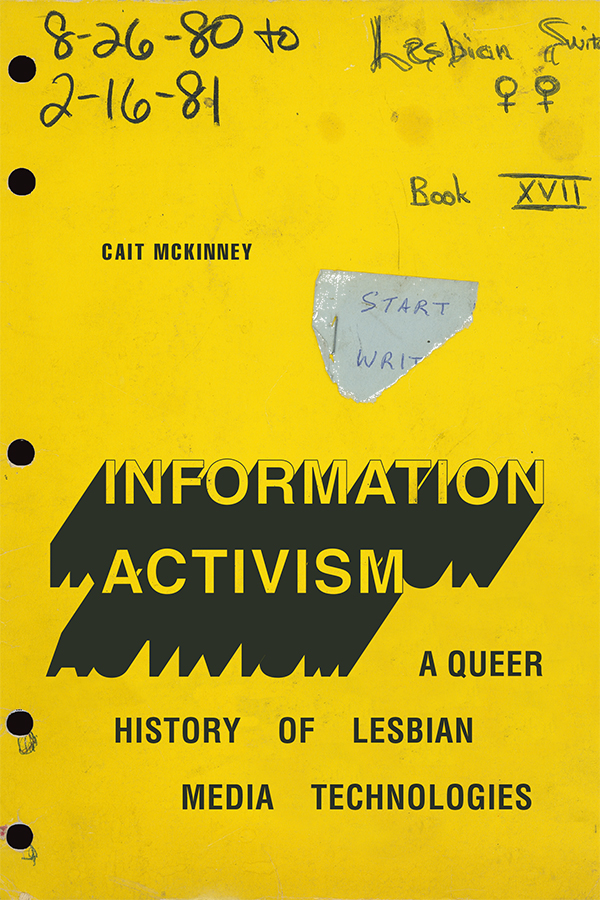
Dreadful DesiresIn Dreadful Desires, Charlie Yi Zhang advocates “a new approach” and “a different perspective” on love and neoliberalism in contemporary China. As he describes it, “My study integrates the discursive with the ethnographic and combines grave scrutiny of political economies and empirical data with upbeat examinations of popular cultures.” His grave and upbeat essay documents how a neoliberal market logic permeates expressions of love and aspirations for a good life, and how a fiercely competitive conjugal market, polarized gender relationships, and residency-differenciated precarities in turn produce willful subjects who are ready to sacrifice their well-being to maximize the interests of the state and capital. Its content and writing style also reflect his personal background and professional training. Having left China in his late twenties to pursue an academic career in the US, Zhang returned to his homeland for a few months of fieldwork in 2012 in order to complete his PhD in gender studies at Arizona State University. He was subsequently hired by the University of South Dakota to teach global studies to undergraduate students for two years, then landed a job as Associate Professor in Gender and Women’s Studies at Kentucky University, where he completed his book manuscript. During his graduate studies, his sociology professor taught him “how to combine different methodologies into [his] unique voice.” He claims to have developed “a novel theoretical and methodological approach” that builds an “epistemic ground for fundamental change.” His ambition is no less than “to lay the foundation for better futures” and “to develop a different understanding of global neoliberalism and to transform the current system.” His book is published in the Thought in the Act series edited by Erin Manning and Brian Massumi, two Canadian theoreticians working at the intersection of philosophy and art critique.
Methodology and theory-building

Zhang’s methodology is far from unique in cultural studies and social science. He uses the standard anthropological method that relies upon informal conversations, focus group discussions, and direct observations collected in two Chinese cities, Hai’an and Wuxi, located in the Jiangsu province north of Shanghai. The first is a county-level city of one half-million inhabitants that encompasses rural areas and industrial zones on the south-western shores of the Yellow Sea; the second is a prefecture-level city of more than five million people in the southern delta of the Yangtze River with a rich history of silk weaving and artistic expression. During his four months of fieldwork, Zhang interviewed over a hundred rural migrants and local farmers or workers, men and women, asking questions about love, family life, and aspirations for the future. He “spent considerable time in the homes and dormitories of [his] informants” and at “various locations of production, such as construction sites, factories, small workshops, family mills, and farms.” He also participated in “nonproductive activities such as family dinners, birthday parties, weddings, festival celebrations, and mundane chores.” There are only two chapters, however, that are organized around his analysis of field data. The remaining three chapters, two of which were published in academic journals in earlier versions, offer a commentary on cultural productions and events, namely the sixtieth-anniversary ceremony of the regime’s founding in 1949, a popular TV reality show titled If You Are the One, and an analysis of middle-aged women’s passion for danmei fictions featuring same-sex relations between beautiful young men, based on a sample of sixteen fans. These chapters are written in the ethnographic tradition that combines factual description and abstract theorizing. Although he quotes data on China’s economic development and social transformation taken from the popular press and expert reports, Zhang does not use quantitative methods, structured questionnaires, or comparative case studies.

It is on the theoretical front that Zhang displays more originality and novelty. To quote from the introduction, he takes “a feminist intersectionnal approach to interrogate and untangle the mechanism that the Chinese state relies upon to define and redefine the affective parameters of desire and intimacy in binaristic terms of gender, class, sexuality, and ethno-race.” He also takes a “queer of color critique approach […] to foreground power relationships and engage the becoming aspects of the machinery to interrogate its speculative manipulation of affective ecologies.” He borrows from Judith Butler’s playbook the idea that “gender is intentional and performative” and that anatomical sex, gender identity, and embodied performance do not always align. He is attuned to the thinking of Sara Ahmed, Lauren Berlant, and Brian Massumi, who have developed new ways of articulating affective economies to neoliberalism. Ahmed allows him to present a “postorthodox Marxist perspective” in which affect is viewed as a different form of capital, which “does not reside positively in the sign or commodity, but is produced only as an effect of its circulation.” Berlant is another important source of inspiration: a dithyrambic endorsement on the book’s back cover advances that “Zhang offers to do for love in China what Lauren Berlant, in Cruel Optimism, does for hope.” As for Massumi, also associated with the affective turn in cultural studies, Zhang borrows his model of affective temporality that conflates an anticipatory present, a promisory future and a virtualized past. All three authors allow him to address “the theoretical lacunae that leaves affect, emotions, and feelings fatally underdiscussed in scholarly examinations of neoliberal subject and world making.”

The borderless Loveland and the difference-making machinery

Zhang’s distinctive contribution to social theory is to build a bridge between emotional affect and calculative reason, between love and neoliberalism. He brings affect theory to bear on political economy reasoning and geopolitical considerations. Specifically, love and aspirations for the good life are used strategically by the state to obtain acquiescence and participation in a polarized market economy. Class disparities and gender differences are exploited by the authoritarian state to recreate competition from within and to serve capital’s productive ends. Zhang also proposes a vast array of idiosyncratic concepts and neologisms to make sense of the entaglement between reason and affect in neoliberal China. He situates his ethnography in “the borderless Loveland,” an “affectsphere” or “fantasmatic lovescape” that shapes people’s love and caring capacities in order to harness China’s national interest with the transnational interests of capital. The Loveland is to be understood as a topological notion, not a geographical concept, as the author draws “a speculative topography of the everyday sensibilities.” The Loveland extends its reach beyond mainland China; it is alternatively presented as “borderless” or within boundaries that are “indeterminate” or “expansive.” Zhang’s creative use of topology extends to the concepts of biopolitics and biopower borrowed from Michel Foucault. The first, assimilated with calculative reason and state power, follows a top-down, vertical axis; while the second, located on the immanent plane of affects, circulates horizontally. Feminist scholarship complicates this two-dimensional diagram by introducing a “multilayered and multifaceted architecture” where domination and resistance are “multidirectional and multidimensionnal.” These overlapping layers consist of gender, class, ethno-race, and sexuality. The assemblage of these orthogonal coordinates and multiple dimensions give shape to what the author calls the “difference-making machinery,” a polarizing mechanism that pits disenfranchized groups against another to allow for their compound exploitation by the nation-state and multinational corporations. This neoliberal machinery “integrates the borderless Loveland into the regulatory biopolitical system to drive and sustain China’s marketization and reintegration into the global economy.”

Dreadful Desires documents two different moves: the colonization of love and sentiments by the market and the state, and the way “lovable and love-able” subjects in turn uphold the functioning of the market and the expansion of the state’s interests. The encroachment of a neoliberal logic upon the emotional lifeworld of Chinese citizens is illustrated by the TV date game show If You Are the One, a copycat of a British TV reality show with added Chinese characteristics. The crass materialism of female participants is illustrated by the attitude of one young woman who, asked by a male suitor if she would “like to go out for a ride on my bicycle”, bluntly answers: “I would rather be crying in a BMW car!” In the show as in real life, it is standard for a Chinese woman to evaluate a potential male partner’s worth and accomplishments by asking him questions about his educational background, job, salary, amount of savings in the bank, ownership of property and cars, and so on. Indeed, having an appartment, a luxury car, a hefty savings account and a high-paying job has replaced the “four big items” (si dajian) that prospective grooms were supposed to possess under Maoist China: a bicycle, a sewing machine, a wristwatch, and a radio. A new kind of masculinity has emerged, which valorizes entrepreneurship, business acumen, and material possessions. As for women, the requisites placed upon them are no less stringent. The “three good girl” (sanhao nüsheng), a honorary title for meritous students under Maoism, used to designate girls with good morality, good learning, and good health. Now women have to respond to superlative standards of attractiveness, including breast size and leg length; hold glamorous jobs in the service sector; and be ready to carry out expanded family duties to support their husband, in-laws, and future children. These impossible requiements are exerting a heavy toll on Chinese masculinities and feminities. The amount of cash and gifts exchanged in a wedding ceremony can result in lifelong debt for the average family. Migrant workers working on construction sites or women in textile factories stand ready to sacrifice their health and well-being in the hope of a better future, if not for them, then at least for their children. But the dream of a good life is forever deferred: “the harder they try, the more they are alienated from their homes.”

Xi Jinping’s love and peace ideology

The Chinese state is complicit in the exploitation of labor by capital and the reproduction of oppositional differences out of the intersection of class, gender, and sexuality. It fuels the construction boom that sacrifices migrant workers on the altar of economic development and excludes them from the cities they have helped build. It pits categories of labor and gender roles against each other, while repressing nonnormative forms of intimity in the name of “homepatriarchy”—a portmanteau word that combines heteronormativity, male privilege, state authoritarianism, and home ownership. For Zhang, internal migrations and the hukou system of residence registration play the role that racial segregation occupies in racially-divided America or in South Africa under apartheid. Hukou registration gives access to education, medical care, basic life insurance, and other social services. It considerably enhances the value of a prospective bride or groom on the marriage market; bachelors lacking the urban residence permit must work harder and save more to improve their marriageability, or find a bride from a poorer area of China or a less-developed country such as Vietnam. To be sure, the socialist state run by the Chinese Communist Party cannot condone class hierarchies and labor exploitation. New regulation on TV dating shows now mandates diversity of participants and equality of treatment—even though the guy with the biggest property portfolio still gets the girl. Drawing upon Marxist-Leninist ideology, the party-state extolls the eradication of class differences and the liberation of China from exploitation and oppression; but in the choreographied extravaganza of the sixtieth anniversary ceremony, gender difference reemerges in the celebration of the post-reform era as a way “to conceal the new class structure and class differentiation.” The figure of Xi Jinping, construed as a benevolent father and a good husband to the nation, reinforces the patriarchal nature of the regime. The party-state offers love and harmony as a solution to internal developments and external challenges; but in the eyes of the author, “China’s love-gilded cosmopolitan dream proves no less pernicious than the hate-filled paranoia stoked by incendiary nationalists” such as Donald Trump in the United States.

Is Charlie Yi Zhang a Marxist? He shows little interest for the historical Marx, noting only his endorsement of normative heterosexualiy as the foundation for human and societal development. He prefers to borrow from Petrus Liu a “queer Marxist approach” that rejects “inclusion as a mode of social redress.” He retains from Marxism and radical thought the role of crisis and contradictions in fostering political upheaval and social change. The “difference-making machinery” is ripe with contradictions and fault lines, the first being the “contradictory needs of freewheeling capital and the border-making nation-state.” Zhang uses the concept of apparatus that he borrows from Marxist thought; but whereas for Louis Althusser apparatuses were an emanation of the state and reflected its repressive or ideological functions, Zhang refers to “a fantasmatic apparatus of desire and intimacy” that draws people to “work hard, dream big, and die slowly.” Like Marx, Zhang also believes that the role of critical theory is not just to interpret the world, but to change it. His declared goal is “to find a place where the subalterns can survive and to help lay a foundation for long-run transformation.” Exposing the dissonance between promise and fulfillment in the “borderles Loveland” is bound to send shockwaves to the system, shattering the “life-sustaining fantasy” on which it is built. His economy of affects places contradiction and change solely on the side of the reproduction of capital, neglecting entirely the relations of production and the reproduction of labor that form the bedrock of Marx’s thought. Indeed, borrowing from Sara Ahmed’s “economic model of emotions” where capital and affect are the sole factors of production and reproduction, he completely ignores labor as the primary scene of class antagonism and alienation. The only form of labor that is acknowledged in this affect-dominated economy is emotional labor. Indeed, this neglect of “hard labor” that characterizes postmodern political economy reflects the disengagement of the younger generation of Chinese men and women, who shun factory or construction work in favor of lower-paid jobs in the service sector.

The cultural unconscious

To simplify Zhang’s thesis, love in China is shaped by the market, and the market in turn is moved by love, while the party-state sustains this dynamics by accentuating polarization in society. Charlie Yi Zhang is not the first one to raise the issue of love and sentiments in post-Mao China. Yan Yunxiang wrote a splendid ethnography on Private Life Under Socialism: Love, Intimacy, and Family Change in a Chinese Village, while Lisa Rofel used her extended fieldwork in a Chinese silk factory to write about Other Modernities: Gendered Yearnings in China after Socialism. These two ethnographies are based on solid empirical ground, cross-generational historical depth, and a broad-ranging critique of the meaning of modernity and social change during transition from socialism to the market. They have become classics in the anthropology literature, and allow us to understand the evolution of Chinese masculinities and feminities through experience-near concepts and thick descriptions. By comparison, Dreadful Desire is relying on more shallow observation and thinner engagement. The author attempts to compensate the limited time spent on the field with ambitious efforts at theorizing and conceptualizing, drawing from a broad range of authors and subdisciplines. But the experience-far concepts and philosophical metaphors like the “borderless Loveland” and the “difference-making mechanism” taught me more about the context of academic production on North American campuses than on the travails of migrant workers and urban citizens in Xi Jinping’s China. There is a cultural unconscious at work in the emphasis put on “the pursuit of happiness,” the possibility of a “new birth of freedom” that the author experiences while moving to the US, the protestant urge to publicly confess one’s personal background and life expectations, and the belief in the transition from a love-inpaired present to a “love-enabled future.” The proliferation of differences, gendered or otherwise, that the author attributes to a Chinese ideological state apparatus, better characterizes in my view the scissiparity reproduction of ever-increasing subfields of cultural studies and the multiplication of gendered, classed, sexualized, and ethno-racialized categories brought forth by identity politics on American campuses.

Gay Dykes on Acid-Free Paper

A review of Information Activism: A Queer History of Lesbian Media Technologies, Cait McKinney, Duke University Press, 2020.

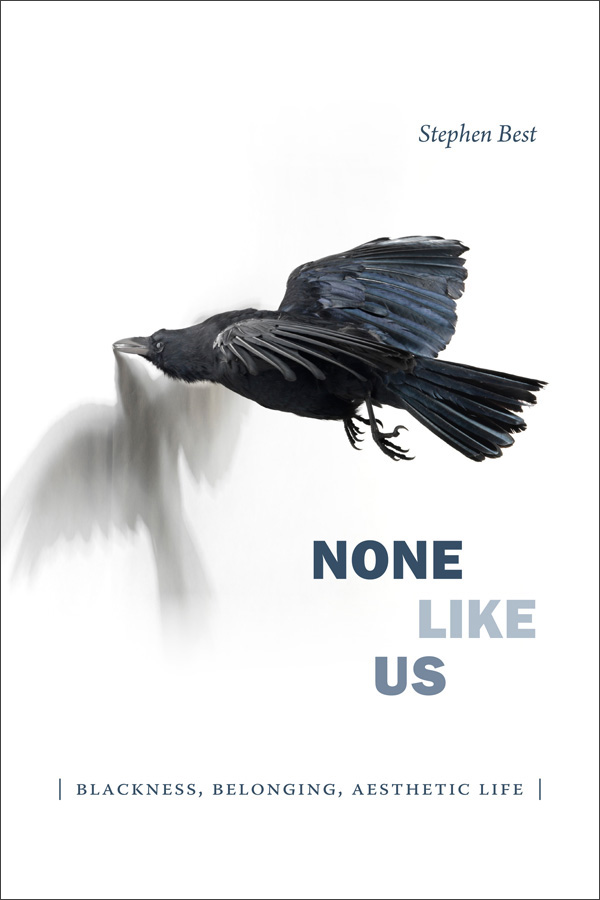
Information ActivismLesbian feminists invented the Internet, and they did it without the help of a computer. This is the surprising finding that comes out of the book Information Activism: A Queer History of Lesbian Media Technologies, published by Duke University Press in 2020. As the author Cait McKinney immediately makes it clear, the Internet that lesbians built was not composed of URL, HTML, and IP servers: it was an assemblage of print newsletters, paper index cards, telephone hotlines, paper-based community archives, and early digital technologies such as electronic mailing lists and computer databases. What made these early media technologies “lesbian” is that they formed the information infrastructure of a social movement that Cait McKinney describes as “information activism” and that was oriented toward the needs and aspirations of lesbian women in North America during the 1980s and 1990s. And what makes Cait McKinney’s book a “queer history” is that she brings feminism and queer studies to bear on a media history of US lesbian-feminist information activism based on archival research, oral interviews, and participant observation through volunteering in the Lesbian Herstory Archives in New York. Information activism took many forms: sorting index cards, putting mailing labels on newsletters, answering the telephone every time it rings, converting old archives into digital format… All these activities may not sound glamorous, but they were part of the everyday politics of “being lesbian” and “doing feminism.”
The Internet that women built

Recently the role of women in the development of information technology and the Internet has attracted a great deal of attention. Thanks in part to the effort of popular author Walter Isaacson, the names of Ada Lovelace, Grace Hopper, Jean Jennings, and Jennifer Doudna have become more familiar to modern readers, and their enduring legacy may have contributed to attract more young women into computer science. Even so, computing remains a heavily male-dominated field, and the industry’s openness to “the crazy ones, the misfits, the rebels, the troublemakers, the round pegs in the square holes” (to quote from a famous Apple commercial) is mostly limited to the masculine part of mankind. It therefore bears reminding that the Internet revolution was brought forth by information activists of all stripes and colors, not just white cis males from California. The “misfits” lauded by Steve Jobs may also have included dykes, stone butches, high femmes, riot grrrls, and lavender women as well as trans and nonbinary subjects. Besides, as feminist critique has pointed out, the concept of the “Internet revolution” or the “information superhighway” are masculinist notions that need to be reexamined. There is a gender bias in popular accounts of technology development and innovation that tends to exclude the contribution of certain agents, especially queer subjects and women of color. Technologies are gendered, and they also exhibit heteronormative and white biases. To fix this problem, much more is needed than writing more inclusive histories of innovation and exposing occupational sexism in the technology industry.

The lesbian volunteers whose activities are chronicled in Information Activism did not really invent the Internet. They did something much more purposeful: they set out to create a world bearable and a life worth living for lesbian women in North America. They did this work within conditions of exclusion from access to reliable information about lesbian life and from the margins of social structures and even mainstream feminism. Confronted with discrimination, isolation, and invisibility, they decided to build an information infrastructure of their own, one connection at a time. Creating alternative communication channels responded to conditions in which many women lacked access to other lesbians and were desperate to find connection. Sometimes, the sole purpose of maintaining this information infrastructure was to show lesbian women that they were not alone. There was another person to talk to at the other end of the help line at the New York Lesbian Switchboard ; other researchers subscribing to the newsletter Matrices were doing stuff in a field marginalized within academic studies ; documents stored at the Lesbian Herstory Archives in New York City bore the testimony of queer lives whose memorialization was a source of inspiration for modern generations. In some cases, just knowing the information was “out there” was enough to go on living with a renewed purpose. In other instances, women engaged in long “rap sessions” discussing feminist politics over the phone, started collaborative research projects that led to the emergence of a full-fledge discipline of queer studies, or found companionship and accomplishment in their volunteering projects. Information makes promises and fulfills aspirations that are much greater than “finding things out.”

A Chatroom of One’s Own

Networks have been critical to the construction of feminist histories. Cait McKinney examines several cases of networked communication initiatives that predate the emergence of online media: the publication of the newsletter Matrices designed for sharing information and resources with anyone doing research related to lesbian feminism; the New York Lesbian Switchboard connecting callers to a source of information and advice; the Lesbian Herstory Archives’ collection of print documents and audio tapes; the patient collection of indexes and bibliographies that made lesbian feminist essays and periodicals searchable and actionable. The technologies used in these pre-digital enterprises now seem antique: typewriters, photocopiers, landline telephones, letter mail, stacks of papers, cardboards, index cards, and face-to-face interactions. But the results were far-reaching and futuristic. They laid the ground on which a lesbian-feminist movement could expand and self-organize. Information and communication networks allowed dispersed researchers to connect with each other, share information, and do lesbian research within unsupportive and sometimes openly hostile research environments. Women living in rural areas or isolated places were encouraged to become active nodes of the network by taking pictures, gathering newspaper clips, and audio-recording interviews to document events taking place in their geographic area. The Matrices newsletter facilitated historical research through the creation of a supportive information infrastructure ; it also allowed for the nationwide expansion of a social movement originally concentrated in New York; and it convinced dispersed readers that lesbian lives mattered and were worth documenting. Key initiatives grew out of the network, such as the volume Black Lesbians: An Annotated Bibliography compiled by JR Roberts to counter the invisibility of women of color in mainstream lesbian feminism. In the 1990s, many print newsletters lost relevance a web browsing developed and academic listservs became key networks for sharing information. Matrices stopped publishing in 1996, replaced ostensibly by commercial enterprises such as Google, Amazon, and digital publishing tools. But online communication does not present as much of a turning point as a continuation of networked modes of organization for feminist social movements.

Another example of continuity between analog and digital modes of communication is the lesbian telephone hotline staffed by volunteers in New York City that answered to every call with a listening ear and a range of helpful tips and advice. Like newsletters, telephone hotlines connected lesbians at a distance using information. For the historian, they are harder to document: volunteers were anonymous and cannot be traced back, and all that remains of the long nights spent answering the phone are the call logs recording every conversations with a few notes and doodles scribbled in the margin. The logs suggest that many callers expressed despair, loneliness, or confusion; but others called for help finding something fun to do that night, for precise information about support groups or community resources, or just to talk and “rap” about gender issues. Even before the appearance of mailing lists and online forums, the need to have a chatroom of one’s own was clearly felt and answered. McKinney also uses the log archives as entries to thinking about feminist research methods, multimedia practices, care provision, and affective labor involved in lesbian telephone hotlines. She reminds readers that feminist activism involved less acknowledged dynamics such as boredom, repetition, isolation, and burnout. What makes a telephone hotline “lesbian feminist” is the self-definition and principles under which the switchboard operated. Volunteers were recruited from within the lesbian community and bisexual women were tacitly kept out, while the policy toward trans women and gender nonconforming persons was left undefined, although their needs were also addressed on an ad hoc basis. These remarks remind us that terminology, such as the moniker “gay and lesbian” as opposed to the more contemporary “LGBTQI+”, are historical constructions that cast aside or rigidify some categories as much as they include or deconstruct others.

A feminist mode of network thinking

Network thinking has been a feature of feminist activism and knowledge production since before the consumer Internet. “Improving (lesbian) lives with information” could be the motto of a behemoth social media company catering to a niche market; it was always the principle under which lesbian activists operated. The feminist movement produced original ideas about communication, access to information, capacity building, and the power of alternative structures for organizing people and ideas. Lesbian feminists also offered pre-digital feminist critiques of networks as egalitarian ideals that can conceal functional hierarchies and threaten the privacy of participants. Computer networks were dreamt and imagined before they were invented and built. The librarians and volunteers who collected the Lesbian Periodicals Index  were imagining computer databases and electronic indexing while shuffling paper cards into shoeboxes ; the Lesbian Herstory Archives’ project leaders were figuring putting all their resources online before they had the equipment and manpower to convert documents into digital format. They were also early adopters of information technology, manifesting a can-do attitude and a hands-on sensibility familiar to feminist activism—and more generally to “women’s work.” McKinnon characterizes as “capable amateurism” a fearless approach to learning and implementing new media technologies; a gendered belief in the capacity of amateurs to work hard and acquire new skills; and a willingness to experiment, improvize, and figure things out on the fly. Lesbian feminism is also informed by values of non-hierarchy, direct participation by members, and an investment in decentralized processes.

Today these values are reflected in many internet communities. A good-enough approach (“rough consensus”), a culture of sharing (“copyleft”), and collectively organized work (“open source”) as well as political militancy (“Anonymous”) characterize segments of the computer industry as much as they are part of the lesbian-feminist heritage. One may even see in the Slow Web movement echoes of the politics of nonadoption and digital hesitancy that was developed by some activist groups surveyed by the author. Beyond lesbian history, these activists have much to teach all of us about why, when, and for whom information comes to matter. The lesbian feminist imagination allows us to envisage a world brought together by connection, care, and “sisterhood” that earlier feminist networks originally articulated and that worldwide Internet connectivity now makes potentially real. A lesbian-feminist approach also reminds us that networks make equalitarian promises that conceal the power structures, protocols, and control mechanisms they actually exert. Computer databases and search engines are not neutral; they determine what is thinkable and sayable through filtering access to information and indexing resources into categories and keywords. These are deeply political choices, and the way decision-making processes and governance bodies are structured matters a great deal. If we want to keep a free and open Internet and uphold the principle of net neutrality, perhaps we should learn from a history of information networks written through older forms of feminist print culture.

Lesbianism is so twentieth century

But does the lesbian past still talk to our queer age? As a self-described “masculine, nonbinary person,” Cait McKinney is ambivalent about the category of lesbianism. She originally assumed that “lesbian” as a specific term of self-identification was historically dated and situated in a period of late twentieth-century militancy, and she was surprised to learn that the term was still popular among a younger generation of queer-identified activists. Young volunteers at the Lesbian Herstory Archives articulate deep attachment to lesbian history and subcultures, and the snippets of information and pictures that the center posts on Instagram are instantly popular. Some business ventures exploit the revival in lesbian-feminist militancy heritage, selling T-shirts, collectable items, and other paraphernalia bearing slogans and pictures from the seventies and eighties. McKinney also thinks lesbianism, while providing a big tent for women with nonconforming gender identities, also had exclusionary effects as many lesbian-feminists were historically hostile to trans women and indifferent to women of color. As a matter of fact, lesbianism meant much more than women having sex with women. Likewise, the erotic exceeds what is commonly understood as sensuous, sexually appealing, and emotionally gratifying acts. Eroticism can be described as a communication practice, and information activism is definitely part of it. Reading archives against the grain (or along the archival grain, as Laura Stoller invites us to do) also refers to the grain of one’s skin, and the archival touch implies an embodied experience laden with sensory perceptions and affects. Libriarianship and archivism are professions that have been historically attractive to women, including persons attracted to same-sex relations, and they have often served as erotic projections of male—and sometimes female—desire. There is something queer about manipulating acid-free paper, and Information Activism consciously addresses how librarians and archivists cope with the affective and intimate impacts of accumulated print media.

There Is No Us

A review of None Like Us: Blackness, Belonging, Aesthetic Life, Stephen Best, Duke University Press, 2018.

none-like-usThis essay stands at the intersection of black studies, queer theory, and literary criticism and art critique. Its title, None Like Us, is taken from a sentence in David Walker’s Appeal to the Coloured Citizens of the World, arguably the most radical of all anti-slavery documents written in the nineteenth century. The quotation, put on the book’s opening page, describes the wretched condition of coloured people in the United States as observed by the author. It ends with a prayer to God that “none like us ever may live again until time shall be no more.” Who is the “us” that the epigraph dooms to self-extinction and oblivion? Is there a collective subject when humans were treated as objects and disposed of as pieces of property? Can one write the history of people who did not exist, or whose existence is forever predicated on a negative relation to history? How does that “none like us” leave open the possibility for an “I,” the first singular person of the art critic, the historian, the queer subject? As Stephen Best writes, “None Like Us begins in the recognition that there is something impossible about blackness, that to be black is also to participate, of necessity, in a collective undoing.” Whatever blackness or black culture is, it cannot be indexed to a “we.” The condition of being black is rooted in a sense of unbelonging: “forms of negative sociability such as alienation, withdrawal, loneliness, broken intimacy, impossible connection, and failed affinity, situations of being unfit that it has been the great insight of queer theorists to recognize as a condition for living.”
A non-communitarian manifesto

None Like Us sometimes reads like a manifesto. The incipit: “a communitarian impulse runs deep within black studies,” sets the stage in almost Marxian fashion—one is reminded of the opening sentence of the Communist Manifesto. The specter of communism that is haunting Europe leaves way for the ghost of communitarianism that permeates African American scholarship. Also evocative of Marx and Lire Le Capital is the epistemological break that Stephen Best effectuates. He substitutes the “melancholic historicism” that characterizes black historiography with what he calls a “queer unhistoricism” that interrupts the connection between the past and the present. He breaks away from a century-long attempt to recover archival traces of black life under conditions of disavowal and silencing, to read the archive as a repository of lost traces and muted voices. Stephen Best also distances himself from all kinds of identity politics based on collective struggles and individual resistance. A politics of recognition cannot be predicated on a “we” that does not exist. Identities have to be radically deconstructed in order to assert freedom from constraining definitions of blackness and gender roles. A “gay black male” is an assemblage of three predicates, “gay,” black,” and “male,” that are equally problematic in assuming an essence that is only constituted through negation. As a non-communitarian manifesto, None Like Us is also an aesthetic treatise: the author engages in art critique and literary criticism, not to fly away from historical realities, but to induce us to “think like a work of art.”

A central tenet of African American studies rests on the thesis that black identity is uniquely grounded in plantation slavery and the Atlantic slave trade. The afterlife of slavery makes itself felt in the black political present and delineates a future in which reparation and redress are forever deferred. Recent historiography, to which Stephen Best contributed, has drawn our attention to the silenced voices that make themselves heard through the archive: the fugitive, the renegade, the maroon, the socially dead. Out of these enquiries emerged an obsession with “displacement, erasure, suppression, elision, overlooking, overwriting, omission, obscurantism, expunging, repudiation, exclusion, annihilation, and denial.” Like in Foucault’s essay “The Life of Infamous Men,” these figures emerge through the archive as “lowly lives reduced to ashes in the few sentences that struck them down” as if “they had appeared in language only on the condition of remaining absolutely unexpressed in it.” According to this melancholic view of history, “recovery from the slave past rests on a recovery of it.” To recover from past trauma, historians have to return to the scene of the crime, a crime imagined as the archive itself. Drawing from Freud’s definition of melancholia as an inarticulable loss that comes to inform the individual’s sense of his or her own subjectivity, Stephen Best writes: “Melancholy historicism provides for the view that history consists in the taking possession of such grievous experience and archival loss.”

The black radical tradition

Against this “traumatic model of black history” in which the present is merely the repetition of past humiliations, Stephen Best advocates a radical break with all attempts to recover a “we” out of the loss embodied in the archive. He borrows from what Cedric Robinson and others have called “the black radical tradition” in which violence is turned inward and rebellion leads to self-destruction. Examples mobilized by Robinson include the mass slaughter of cattle and destruction of crops ordered by the Xhosa prophetess Nongquawuse in 1856; the vanishing quilombo settlements of runaway slaves, mulattos, and outcasts on the Pernambuco coast of Brazil in the seventeenth century; and the 1915 uprising in Nyasaland (now Malawi) led by Baptist minister John Chilembwe who vowed to “strike a blow and die.” Exploring suicide and rumor in the eighteenth- and nineteenth-century archives of slavery, Stephen Best offers his own selection of vignettes and anecdotes. A “suicide bombing” occurred in 1659 when a besieged African chief blew up himself and his Dutch assailers by setting fire to a keg of powder. Archives of the Middle Passage tell tales of slaves hanging themselves, or starving themselves, or drowning themselves to end their living apocalypse, or holding their breath or swallowing their tongue in attempts at self-strangulation. People who consciously suppressed themselves in acts of self-immolation cannot be enrolled as subjects of history: theirs is “a history of people with whom we fail to identify, who appear stuck in the past beyond the reach of our historical categories.”

When it comes to black identity and the politics of race, the slave past was not always thought to explain the present. Stephen Best singles out the year 1988 and the publication of Toni Morrison’s Beloved as the moment when slavery emerged as the constituent object of African American studies. Beloved, which won the Pulitzer Prize that year, was not a unique occurrence: Alex Haley’s novel and TV series Roots had prepared the ground for a reappraisal of the slave past in popular culture, and in the late eighties and early nineties several history books anchored African American identity in “a continued proximity to the unspeakable terrors of the slave experience.” But the rise of Beloved moved the entire field of literary studies to a central place within African American studies, and this move redressed the “trade deficit” that cultural critics had accumulated with the discipline of history. Toni Morrison spoke of the slave past as a “carnage,” a “devastation” that will always be with us: “this is not a story to pass on.” But Toni Morrison’s more recent novel A Mercy (2008) opens the door for another appreciation of the slave past as it falls away and collapses into its own undoing. A Mercy is not an easy read: the chapters oscillate, confusingly at first, between a first-person narration and a third-person omniscience, reinventing the epistolary novel with dead letters whose failure to arrive comes from having never been sent. It is anchored in a world in which racial distinctions have not yet formed and much is up for grabs: the racial scripts and beliefs that are said today to make up slavery’s legacy have yet to settle into a lexicon. As the critic notes, “If Beloved incites melancholy, A Mercy incites mourning”: in Freud’s terms, melancholia is doomed to endless repetition, whereas mourning ends with a kind of forbearance.

Queer is the New Black

None Like Us is listed on the back cover as an intervention in “African American Studies” and “Queer Theory.” Stephen Best sees a high degree of complementarity between the two: “It startles how easily queerness percolates out of the condition of blackness.” Queer and slave historiography appear to be on the same page: the queer acknowledgement of non-relationality between the past and the present, what literary theorist Leo Bersani calls an “anti-communal mode of connectedness,” echoes the epistemological rupture that Best advocates. A queer orientation toward the past may preserve cultural critics from the melancholic turn that characterizes recent historiography. Black life and queer life are also intimately related through the experience of estrangement, alienation, and disaffiliation that Elizabeth Povinelli sees at the root of all progressive politics. None Like Us begins with a discussion of the different ways that both Best and James Baldwin found themselves, as young men, estranged from their fathers. Although their estrangement stems from opposite sources—Baldwin’s father’s disdain for his son, the pride of Best’s father at his son’s graduation ceremony—, there is a shared orientation toward a selfhood that occurs in disaffiliation rather than in solidarity. Part of this queerness comes from the experience of coming out of the closet as gay. As the author remembers from his tormented youth, “If I come out as gay, I will die in the eyes of my father, but I realize that a part of me is already gay and that he cannot not see that, too there must be a part of me that is already dead.” This skeleton in the closet precludes the possibility of a “we,” whether queer or black.

The chapter that opens the book’s part “On Thinking Like a Work of Art” begins with an address to the reader: “You” is the person who is put in front of the artwork and who experiences a kind of epiphany as one physical substance transmutes into another. In the Ghanaian artist El Anatsui’s richly woven tapestries, what initially presents itself as precious metal appears upon inspection to be throwaway-aluminum constructions of bottle caps and copper wire: “What was gold now reveals to be mere thrash.” In the layered paper canvases of the Los Angeles artist Mark Bradford, fragments of cardboard advertisements and printed materials are soaked into water and mixed with trash objects to generate relief within the surface itself: “What was originally ‘print’ finds itself transformed into ‘paint’.” Gwendolyn Brooks’s free-verse poems generate another kind of commentary that also mobilizes the tropes of conjuration, transmutation, and alchemy. Here the office of art is to afford a repetition of the artist’s gesture that “repairs inherently damaged or valueless experience.” And the curator, who mobilizes a rich array of sources and commentary listed in the endnotes, puts the “you” of the viewer in direct contact with the materiality of the artwork. Absent from the commentary are all the mediations that constitute art as an object of aesthetic value. Between the “I” of the critic and the “you” of the viewer, there is no “we” that would allow for the emergence of a community of value. When Foucault stated that “we have to create ourselves as a work of art,” or when Best proposes that “we must begin to think like artworks,” what they mean by “we” is mostly themselves.

Uncharted territory

Or so it seems to me. I could not relate to the book’s emphasis on art as embodied thinking or concepts brought into matter, and discussions on contemporary art brought me to uncharted territory. I had no prior knowledge of the visual artists that are commented in the book (I missed the El Anatsui’s retrospective at La Conciergerie in Paris as part of the Saison Africa2020), and I have not read a Toni Morrison novel since Tar Baby. Nor am I versed in recent historiography of the slave trade, and in the most recent discussions about black identity in the United States. I was more familiar with some of the literary criticism the author mobilizes, especially since literary criticism in the United States seems to be identified with France and French studies. Roland Barthes, Gérard Genette, Michel de Certeau, Michel Foucault, and Jacques Derrida—all listed in the index—are household names in academic circles on both sides of the Atlantic, and they point toward a common horizon that I was happy to share with the author. Also familiar was Stephen Best’s evocation of Walter Benjamin’s angel of history, that famous passage in which Benjamin gazes upon Paul Klee’s Angelus Novus and imagines that the Angel of History is looking toward the past and bears witness to history’s “piling wreckage upon wreckage.” This mix of familiar and unfamiliar shaped my reading of None Like Us, which I am happy to share with others.

A Biased Perspective on Sex Change

A review of Mobile Subjects: Transnational Imaginaries of Gender Reassignment, Aren Z. Aizura, Duke University Press, 2018.

Mobile SubjectsImagine you want to go through a “sex change” or a gender reassignment. People identify you as a man, but you want to be identified as a woman, or vice versa. You may also plan to undergo medical treatment and take hormones or get surgery. What should you and your colleagues do at the workplace to manage this transition? According to the British government that published a guide for employers regarding gender reassignment, transsexual people should take a few days or weeks off at the point of change and return in their new name and gender role. Time off between roles is assumed to give the trans person as well as coworkers time to adjust to the new gender identity. It is usually announced that the trans person will go on a trip, which may be real or figurative; and this journey-out-and-return-home forms the transition narrative that will shape people’s expectations and reactions to the change in gender identity. What happens during this trip needs not be detailed. The journey abroad opens a space of gender indeterminacy that makes transsexuality intelligible within a gender binary. This transition narrative was pioneered by Christine Jorgensen who, in 1953, went to Denmark to get surgery and returned to the United States as a celebrity. As the (undoubtedly sexist) quip had it, Jorgensen “went abroad and came back a broad.”
Neoliberalism and white privilege

This line of conduct is presented as good practice to ease transition at the workplace. But Aren Aizura is not happy with this recommendation. For him, the journey narrative is tainted by neoliberalism, white privilege, colonial exploitation, and gender prejudice. As he puts it, “the particular advice to take a transition vacation places us firmly in a corporatized framework of neoliberal racialized citizenship.” This is, in a way, stating the obvious: remember that the advice comes from a guide for employers, and from the analysis of workplace policy documents. The labelling of corporate practices as “neoliberal” is a well-established convention in the social sciences and in critical discourse on globalization. More surprising is the author’s call to “remain alert to the racial and colonial overtones of ‘elsewhere’ in this fantasy of an ideal gender transition.” Denmark was never a colony, and neither was Thailand, where many gender reassignment operations now take place. Nor are the recommendations of the Women and Equality Unit of the British government tainted by a white bias or by structural racism. Contrary to what Aizura states, they do not assume the whiteness of the trans or gender nonconforming subject: this racial assignation only takes place in the author’s imagination. As for the gender bias implicit in these guidelines, it results from Aizura’s claim that gender is not necessarily binary: presenting transition as the passage from man to woman or woman to man “contains the threat of gender indeterminacy and the possibility that gender may be performative and socially constructed.” Again, nothing in the above-mentioned guidelines appears to me as contradicting these claims.

Christine Jorgensen’s journey was considered as inspirational for generations of trans people or gender nonconforming persons in the United States. As the author of Transgender Warriors put it, “Christine Jorgensen’s struggle beamed a message to me that I wasn’t alone. She proved that even a period of right-wing reaction could not coerce each individual into conformity.” Her story also contributed to posit Europe as a place where gender reassignment technologies were more widely accessible and accepted. It was a typically American success story, emphasizing individual autonomy, self-transformation, and upward social mobility. In this respect, it was fully congruent with the “capitalist liberal individualism” that Aizura so vehemently denounces. But this doesn’t turn it into a story of white privilege or settler colonialism. The deconstruction of the rags-to-riches transition narrative not only annihilates the hopes and aspirations invested by earlier generations of trans people; it leaves non-trans persons with no reference point or narrative to interpret the gender identity change that some of their colleagues or relatives may go through. The fact that Christine Jorgensen was white and middle class seems to me fully irrelevant to the power of her narrative. Aizura does envisage the case that a gender nonconforming person of color may wish to benefit from the same corporate procedure described in the British guidelines; but he immediately dismisses such person as “the token brown person or cultural diversity representative” put forward by corporate communication planners. For me, dismissing racial inclusion and diversity policies as an expression of tokenism is a deeply problematic gesture.

French cabaret

I wasn’t familiar with the story of Christine Jorgensen. However, my French upbringing made me recognize the names of Amanda Lear, Capucine, and Bambi, whom the author claims underwent vaginoplasty surgery at the Clinique du Parc in Casablanca in the 1960s. This is a blatant fabrication, based on gossip and rumors that circulated at the time but that a rigorous scholar ought not to reproduce. The life story of Amanda Lear is shrouded in mystery, as her birthdate and birthplace have never been confirmed. But throughout her singing and acting career she strongly denied the transgender rumors that circulated about her, stating at one point that it was a “crazy idea from some journalist” or attributing them to Salvador Dali’s sharp wit. Capucine, a French actress and model, was never a transgender or a cabaret performer as alleged by Aizura: he confuses her with the transgender club singer Coccinelle, who did travel to Casablanca to undergo a vaginoplasty by the renowned surgeon Georges Burou in 1956. She said later, “Dr. Burou rectified the mistake nature had made and I became a real woman, on the inside as well as the outside. After the operation, the doctor just said, ‘Bonjour, Mademoiselle’, and I knew it had been a success.” As for “Bambi”, she is better known in France by her name Marie-Pierre Pruvot and soon left the cabaret stage to become a literature teacher and an author of bestsellers. When she was awarded the Order or Merit by the French Minister of Culture Roselyne Bachelot (herself a celebrity among trans and LGBT people), she dedicated this distinction to “all those (celles et ceux) whose fight for a normal life endures.”

These stories are distorted and silenced by Aizura, who only examines English-language accounts of gender transition. He considers these narratives as normative, without acknowledging the fact that his own account is deeply influenced by norms and conventions developed in North American (and Australian) academia. Accusations of white privilege, cultural appropriation, and heterosexual normativity are part of the “culture wars” that are waged on Western (mostly American) campuses. They should not be treated lightly: these charges carry weight and can lead to the shunning or dismissal of professors and students who are accused of cultural misdemeanor. It is not therefore without consequences that Aizura targets Jan Morris, Deirdre McCloskey, and Jennifer Boylan, three public intellectuals who have authored transition narratives, with potential repercussions for their reputation and career. The first (who passed away in 2020) is accused of “blatant colonial paternalism” because she describes her trip to Casablanca along an “unabashedly orientalist perspective.” Deirdre McCloskey is inappropriately described as a “Chicago School economist.” Although she taught at the University of Chicago for twelve years, she didn’t identify with the neoclassical orientation of her colleagues from the department of economics. On the contrary, she focused her work on the “rhetorics of economics” and took a decidedly heterodox approach to the discipline. But Aizura isn’t interested in McCloskey’s scholarly contribution: as with Jennifer Boylan, he accuses her of “institutional recuperation” and “cultural appropriation” because she dares to compare her experience of crossing gender barriers with the plight of immigrants entering the United States. When McCloskey writes: “You cannot imagine the relief in adopting my correct gender. Imagine if you felt French but has been raised in Minnesota,” Aizura is prompt to denounce her Eurocentric perspective (but doesn’t notice the small bruise done to Minnesota’s pride.)

Pinkwashing

Moving to the examination of a set of documentary movies documenting the trajectories of gay and transgender migrant workers in First World locations, Aizura formulates a new set of accusations: these films are voyeuristic, manipulative, culturally insensitive, and “metronormative” (they exhibit an urban bias.) Commenting on Jennie Livingston’s 1991 documentary Paris Is Burning, he questions the logic wherein “a middle-class white lesbian film-maker could produce a document about poor and marginalized queer and trans people of color with questionable benefit to the participants.” Regarding Tomer Heymann’s Paper Dolls, a 2006 documentary that follows the lives of transgender migrant workers from the Philippines who work as healthcare providers for elderly Orthodox Jewish men and perform as drag queens during their spare time, Aizura reproduces the charge of homonationalism and pinkwashing made against Israel’s gay-friendly policy by Jasbir Puar in The Right to Maim (which I reviewed here). Sebastiano d’Ayala Valva’s documentary Les travestis pleurent aussi, located in the Clichy suburb near Paris, offers a “deliberately bleak picture of the precarious existence of queer immigrants in Europe.” Indeed, Aizura takes issue with the “race, classed, and spatial politics of representation” made by documentary cinema that renders the bodies of migrant workers visible to white, mostly non-trans audiences at LGBT festivals or in “transgender 101 courses.” As he comments, “Queer film festivals are far from politically neutral spaces, however, and embody transnational politics,” again taking issue with Israel’s sponsorship of the San Francisco LGBT Film Festival.

Mobile Subjects is also an ethnography of transgender reassignment practices done through “extensive fieldwork in Thailand and Australia between 2006 and 2009.” Here again, the author reproduces the charges of white privilege, Orientalism, and racial exclusiveness that taint the testimonies and observations he was able to collect. He viciously settles scores with the medical doctor who denied him proper treatment by reproducing a scathing obituary that circulated on social media at the time of her death: “Ding, dong, the witch is dead!” (his “Dr. K.” will be easily recognizable, as the Monash Health Gender Clinic in Melbourne was the only institution to deliver gender reassignment prescription certificates in Australia.) He contrasts the “gatekeeper model” of obtaining gender reassignment surgery or GRS with the more open and entrepreneurial framework that characterizes Thailand. Cheaper services, better techniques, and ease of travel make the Thai model more attractive for the transnational consumer. But Thailand is not without its own prejudices against its kathoey population, and its medical services are not accessible to impecunious patients. Besides, there are legitimate concerns about a consumerist approach that treats bodily modification as a commodity. But Aizura’s main concern is about race: in the eyes of the Americans, Britons, and Australians he encountered in the high-end clinics that offered services to non-Thai foreigners or farangs, Thailand was synonymous with exoticism, feminine beauty, and the fulfillment of desire. The Thai women—and a few kathoeys—who catered to their needs were perceived as the responsive and subservient Asian female subjects that echoed their orientalist fantasies. Their self-transformation into “full womanhood” was therefore predicated upon a racial hierarchy that posits Asia as the feminine and the West as the masculine part of a heteronormative dyad.

Misconstructing Asia

As is clear by now, my concern with this book goes beyond sloppy scholarship, lack of fact checking, “naming names” for opprobrium, and slavish following of “woke” intellectual fashions. The obsession with whiteness and its alleged privilege seems to me more than delusional: it betrays a basic ignorance of current trends shaping South-East Asia, where Americanism or Eurocentrism increasingly appear as a thing of the past. There is not a word on China’s presence in the region, although the international clientele for gender-affirming treatments in Thailand increasingly comes from mainland China and other countries in the region, while online platforms for prescription hormones mostly cater to a regional market. Thailand is becoming a global destination for gender change, regardless of race or ethnicity, and references to colonialism are fully irrelevant in a country that never fell under Western colonial domination. I don’t want my critique to be misconstrued as the expression of gender prejudice or transphobia: again, the objurgation of transgender persons through the deconstruction of their valid testimonies is on the author’s side, not mine. Of course, Aren Aizura is entitled to his politics, which he sums up as “decriminalization of sex work; loosening immigration restrictions and national border controls; and making welfare, health care, and social safety nets available to all people regardless of immigration status” (I wish him luck, regarding the American context in which he operates.) He is also free to pursue scholarship in line with “trans and queer of color critiques,” “transnational feminist studies,” and “critical race studies.” I am not familiar with these lines of inquiry, and I picked up Mobile Subjects to get a better sense of what they might mean. My experiment was inconclusive, to say the least.

South Korea Meets the Queer Nation

A review of Queer Korea, edited by Todd A. Henry, Duke University Press, 2020.

Queer KoreaOn March 3, 2021, Byun Hui-su, South Korea’s first transgender soldier who was discharged from the military the year before for having gender reassignment surgery, was found dead in her home. Her apparent suicide drew media attention to transphobia and homophobia in the army and in South Korean society at large. According to Todd Henry, who edited the volume Queer Korea published by Duke University Press in 2020, “LGBTI South Koreans face innumerable obstacles in a society in which homophobia, transphobia, toxic masculinity, misogyny, and other marginalizing pressures cause an alarmingly high number of queers (and other alienated subjects) to commit suicide or inflict self-harm.” Recently people and organizations claiming LGBT identity and rights have gained increased visibility. The city of Seoul has had a Gay Pride parade since 2000, and in 2014 its mayor Park Won-soon suggested that South Korea become the first country to legalize gay marriage—but conservative politicians as well as some so-called progressives blocked the move, and the mayor committed suicide linked to a #metoo scandal in 2020. Short of same-sex unions, most laws and judicial decisions protecting LGBT rights are already on the books or in jurisprudence, and society has moved towards a more tolerant attitude regarding the issue. Nonetheless, gay and lesbian Koreans still face numerous difficulties at home and work, and many prefer not to reveal their sexual orientation to family, friends or co-workers. Opposition to LGBT rights comes mostly from Christian sectors of the country, especially Protestants, who regularly stage counter-protests to pride parades, carrying signs urging LGBT people to “repent from their sins.” In these conditions, some sexually non-normative subjects eschew visibility and remain closeted, or even give up sexuality and retreat from same-sex communities as a survival strategy.
Queer studies in a Korean context

There is also a dearth of books and articles addressing gay and lesbian cultures or gender variance in South Korean scholarship. Unlike the situation prevailing on North American university campuses, queer studies still haven’t found a place in Korean academia. Students at the most prestigious Korean universities (SNU, Korea University, Yonsei, Ehwa…) have created LGBT student groups and reading circles, but graduate students who specialize in the field face a bleak employment future. Many scholars who contributed to Queer Korea did it from a perch in a foreign university or from tier-two colleges in South Korea. This volume nonetheless demonstrates the vitality of the field and the fecundity of applying a queer studies approach to Korean history and society. The authors do not limit themselves to gay and lesbian studies: a queer perspective also includes cross-gender identification, non-binary identities, and homosocial longings that fall outside the purview of sexuality. Queer theory also takes issue with a normative approach emphasizing political visibility, human rights, and multicultural diversity as the only legitimate forms of collective mobilization. Queer-of-color critiques point out that power dynamics associating race, class, gender expression, sexuality, ability, culture and nationality influence the lived experiences of individuals and groups that hold one or more of these identities. Asian queer studies have shown that tropes of the “closet” and “coming out” may not apply to societies where the heterosexual family and the nation trump the individual and inhibit the expression of homosexuality. In addition, as postcolonial studies remind us, South Korea is heir to a history of colonialism, Cold War, and authoritarianism that has exacerbated the hyper-masculine and androcentric tendencies of the nation.

Some conservatives in South Korea hold the view that “homosexuality doesn’t exist in Korean culture” and that same-sex relations were a foreign import coming from the West (North Koreans apparently share this view.) This is, of course, absurd: although Confucianism repressed same-sex intercourse and limited sexuality to reproductive ends, throughout Korean history some men and women are known to have engaged in homoerotic activity and express their love for a person of the same sex. To limit oneself to the twentieth century, there is a rich archival record relating to same-sex longings and sensuality, cross-gender identification, and non-normative intimacies that the authors of Queer Korea were able to exploit. Homosexuality didn’t have to be invented or imported: it was present all along, albeit in different cultural forms and personal expressions. Close readings of literary texts, research into historical archives, surveys of newspapers and periodicals, visual analysis of movies and pictures, and participatory observation or social activism allow each contributor to produce scholarship on a neglected aspect of Korean history and society. But it is also true that persons that were sexually attracted to the same sex lacked role models or conceptual schemes that would have helped them make sense of their inclination. They were kept “in the dark” about the meaning of homosexuality as anything but a temporary aberrant behavior, a perverted desire that ordinary men “slipped” or “fell into” (ppajida), especially in the absence of female partners. The strong bondings that girls and young women developed in the intimacy of all-female classrooms and dormitories was seen with more leniency, but was considered as a temporary arrangement before they entered adulthood and marriage. As a result of the authoritarian ideology of the family-state, official information about non-normative sexualities such as homosexuality was highly restricted. Many men and women attracted to the same sex were confused and morally torn about their desires.

The elusive Third Miracle of the Han River

An optimistic view alleges that sexual minority rights with follow the path of economic development and democratization, only with some delay. According to this view, the “miracle of the Han river” occurred in three stages. A country totally destroyed by the Korean War transformed itself in less than three decades from a Third World wastebasket to an Asian economic powerhouse, becoming the 12th largest economy in terms of GDP. The second miracle occurred when democratic forces toppled the authoritarian regime and installed civilian rule and democratic accountability. The third transformation may be currently ongoing and refers to the mobilization of civil society to achieve equal rights for all, openness to multiculturalism, and women’s empowerment. But this teleological view neglects the fact that an emerging market economy can always shift to reverse mode: economic crises may sweep away hard-won gains, the rule of law may be compromised by ill-fated politicians, and social mobilizations may face a conservative backlash. This is arguably what is happening in South Korea these days. To limit oneself to sexual minority rights, the current administration has backpedalled on its promise to pass an anti-discrimination law; the legalization of same-sex-marriages still faces strong opposition; and homophobic institutions such as the army or schools fail to provide legal protection for gender-variant or sexually non-normative persons. The failure of LGBT communities to adopt a distinctive gay, lesbian, or trans culture and follow the path of right-based activism should not be seen as an incapacity to challenge the hetero-patriarchal norms of traditional society in favor of a transgressive and non-normative identity politics. As John (Song Pae) Cho notes, “For Korean gay men who had been excluded from the very category of humanity, simply existing as ordinary members of society may be considered the most transgressive act of all.”

The current backlash against homosexuality is not a return to a previous period of sexual repression and self-denial. It is triggered by economic necessity in the face of financial insecurity, labor market flexibility, and a retreating welfare state. John Cho shows that the three phases of male homosexuality within South Korea’s modern history were intrinsically linked to economic development. The “dark period” of South Korea’s homosexuality during the late developmentalist period, from the 1970s to the mid-1990s, was followed by a brief flowering of homosexual communities fueled by the Internet and the growing economy. But this community-building phase was undermined by the family-based restructuring that accompanied South Korea’s transformation into a neoliberal economy. As a response to the IMF crisis of 1997, the Korean state revived the older ideology of “family as nation” and “nation as family.” It used family, employment, and other social benefits to discriminate against non-married members of society and discipline non-normative populations who did not belong to the heterosexual nuclear family. Many single gay men in their thirties and forties were forced to “retreat” and “retire” from homosexuality to focus on self-development and financial security that often took the form of marriage with the opposite sex. Other gay men turned to money as the only form of security in a neoliberal world. In her chapter titled “Avoiding T’ibu (Obvious Butchness)”, Layoung Shin shows that young queer women who used to cultivate a certain masculinity, wearing short hair and young men’s clothing to emulate the look of boy bands’ idols, reverted to a strategy of invisibility and gender conformity to avoid discrimination at school and on the job market. The choice of invisibility is rendered compulsory in the army, where the Korean military even uses “honey traps” on gay dating apps to root out and expel gay military personnel.

Fighting against homophobia and transphobia

In such a context, developing queer studies in South Korea is going against the grain of powerful societal forces, and this may account for the militant tone adopted by many contributors to this volume. John Cho concludes his article on “The Three Faces of South Korea’s Male Homosexuality” by stating that the homophobic backlash is “ushering in a new period of neofascism in Korean history.” Layoung Shin emphasizes that “we cannot blame young queer women’s avoidance of masculinity,” and formulates the hope that “our criticism may offer them the courage to not fear punishment and harassment or bullying at school, which an antidiscrimination bill would remedy.” Timothy Gitzen exposes the “toxic masculinity” of South Korea’s armed forces where, on the basis of an obscure clause in the military penal code, dozens of soldiers who purportedly engage in anal sex are hunted down and imprisoned, even though they met partners during sanctioned periods of leave and in the privacy of off-base facilities. An independent researcher and transgender activist named Ruin, who self-identifies as a “zhe,” shows that bodies that do not conform to strict boundaries between men and women face intense scrutiny and various forms of discrimination, consolidated by institutions and norms such as the first digit in the second part of national ID numbers which are used for all kinds of procedures like getting a mobile phone or registering for employment and social benefits. Zhe claims that “this problem cannot be solved by legal reform; on the contrary, abolishing these legal structures altogether may be a more fundamental and effective solution,” as ID numbers were introduced to exclude and persecute “ppalgaengi” citizens suspected of pro-Communist sympathies during the Korean War. Todd Henry, the volume editor, notes that homophobia and transphobia are not limited to South (and North) Korea and that queer and transgender people in the United States face the added risk of being brutally murdered by gun-toting individuals.

But the most transgressive moves in Queer Korea may be the attempt to reframe history and revisit the literary canon using queer lenses and critical approaches inspired by queer theory. Remember that some conservative critics pontificate that “homosexuality didn’t exist in Korea” before it was introduced from abroad. In a way they are right: the word “same-sex love” (tongsongae) was translated from the Japanese dōseiai and was introduced under colonial modernity at the same time as “romantic love” (yonae) and “free marriage” (chayu kyoron). Colonial society allowed certain groups, such as schoolgirls, to engage in spiritual same-sex love to keep young people away from heterosexual intercourse. Pairs of high school girls formed a bond of sistership (ssisuta) and vowed they would “never marry and instead love each other eternally.” But during this period, “love” had little to do with sexual and romantic desire, and society relied on conjugal and filial conventions that privileged men at the expense of women. High school girls were expected to “graduate” from same-sex love and to serve as “wise mothers and good wives” (hyonmo yangcho). Those who didn’t and who tragically committed double suicides (chongsa) or led their lives as New Women (shin yoja) attracted a great deal of contentious debates and literary attention. Meanwhile, namsaek (“male color”) and tongsongae (homosexuality) between men was medicalized and pathologized as an abnormal behavior discussed along the same lines as rape, bigamy, and sexual perversion (songjok tochak). Whereas male spiritual bonding (tongjong) and physical intimacy known nowadays as skinship were tolerated and even sometimes encouraged, there seems to have emerged a fixation on anal sex (kyegan, “chicken rape”) that is shared today by the military and conservative Christian groups.

Drag queens and cross-dressers

Traditional Korea also had its drag queens and cross-dressers. The male shamans and healers (mugyok, nammu, baksu), female fortunetellers and spiritists (mudang, posal), and the so-called flower boys (hwarang) practiced cross-dressing, sex change, and gender fluidity avant la lettre. Transgendered shamans passed as women by dressing, talking, and behaving as women, while women practitioners of kut ceremonies donned kings’ and warriors’ robes and channelled the voice of male gods and spirits. Despised by traditional Korean society, they formed guilds and associations under Japanese occupation and assimilated with official shinto religion to get political favor. Under their theory of “two peoples, one civilization,” Japanese scholars claimed that Korean shamanism and Japanese Shintō shared a common origin. Meanwhile, well-known historians such as Ch’oe Nam-son and Yi Nung-hwa exploited the precolonial traditions of these marginalized women and men to forge a glorious story of the nation, one that re-centered Korea and Manchuria in a larger continental culture of shamanism. Korea’s colonial modernity had also a “queer” writer in the person of Yi Sang (1910-37), whose pen name could be transliterated as “abnormal” or “odd,” and who cultivated a Bohemian style inspired by European dandyism and avant-garde eccentricity. During the Park Chung-hee era (1963-79), the suppression of homosexuality didn’t mean that unofficial and popular representations of non-normative sexualities were absent. In fact, both reports in weekly newspaper and in gender comedy films were rife with such representations, of which queer populations were shadow readers and viewers. In a long and well-documented article, Todd Henry shows that South Korea boasts a long but largely ignored history of same-sex unions, particularly among working-class women. Journalists working for pulp magazines routinely covered female-female wedding ceremonies from the 1950s to the 1980s. In “a Female-Dressed Man Sings a National Epic,” Chung-kang Kim analyzes the story of the movie Male Kisaeng (1969), the Korean equivalent of the gender comedy film Some Like It Hot.

Queer studies are underdeveloped in South Korea. In an academy that remains disinterested in, if not hostile to, queer studies, it takes some courage to stake one’s career on the development of the field. This explains the militant tone adopted by some contributors, who mix scholarship and social activism. In a society that has often been framed in terms of ethnoracial and heteropatriarchal purities, they have a lot to bring to contemporary debates by showing how Korea has always been more diverse, and sometimes more tolerant to diversity, than dominant representations make us believe. As one of the authors claims, “homosexuality is not a ‘foreign Other’ that has been imported only into the country as part of the phenomenon of globalization. It likely has always existed as a ‘proximate Other’ within the nation itself.” And yet, Queer Korea appears at a time when the LGBT movement seems to be in retreat. The stigmatization and marginalization of sexual minorities continue unabated, and the emergence of LGBT organizations, film festivals, and political organizations during a period that witnessed the establishment of democratic institutions has given way to individual strategies of invisibility and retreat. Most queer subjects avoid the kind of public visibility that typically undergirds identity politics. Even politicians sympathetic to gay and lesbian rights avoid taking positions in this fraught context in fear of “homophobia by association”—they might be involved in collective culpability, just like the families and colleagues of ppalgaengi (Reds) were targeted by “guilt by association” under authoritarian rule. Queer studies in Korea, and Korean queer theory, will not necessarily follow the path taken by the discipline elsewhere. But this volume definitely puts it on the map.

Kiss the Frog

A review of Animacies: Biopolitics, Racial Mattering, and Queer Affect, Mel Y. Chen, Duke University Press, 2012.

Animacies“Inanimate objects, have you then a soul / that clings to our soul and forces it to love?,” wondered Alphonse de Lamartine in his poem “Milly or the Homeland.” In Animacies, Mel Chen answers positively to the first part of this question, although the range of affects she considers is much broader than the lovely attachments that connected the French poet to his home village. As she sees it, “matter that is considered insensate, immobile, deathly, or otherwise ‘wrong’ animates cultural life in important ways.” Anima, the Latin word from which animacy derives, is defined as air, breath, life, mind, or soul. Inanimate objects are supposed to be devoid of such characteristics. In De Anima, Aristotle granted a soul to animals and to plants as well as to humans, but he denied that stones could have one. Modern thinkers have been more ready to take the plunge. As Chen notes, “Throughout the humanities and social sciences, scholars are working through posthumanist understandings of the significance of stuff, objects, commodities, and things.” Various concepts have been proposed to break the great divide between humans and nonhumans and between life and inanimate things, as the titles of recent essays indicate: “Vibrant Matter” (Jane Bennett), “Excitable Matter” (Natasha Myers), “Bodies That Matter” (Judith Butler), “The Social Life of Things” (Arjun Appadurai), “The Politics of Life Itself” (Nikolas Rose),“Parliament of Things” (Bruno Latour). Many argue that objects are imbued with agency, or at least an ability to evoke some sort of change or response in individual humans or in an entire society. However, each scholar also possesses an individual interpretation of the meaning of agency and the true capacity of material objects to have personalities of their own. In Animacies, Mel Chen makes her own contribution to this debate by pushing it in a radical way: writing from the perspective of queer studies, she argues that degrees of animacy, the agency of life and things, cannot be dissociated from the parameters of sexuality and race and is imbricated with health and disability issues as well as environmental and security concerns.

Intersectionality

Recent scholarship has seen a proliferation of dedicated cultural studies bearing the name of their subfield as an identity banner in a rainbow coalition: feminist studies, queer studies, Asian American studies, critical race studies, disability studies, animal studies… In a bold gesture of transdisciplinarity, Mel Chen’s Animacies contributes to all of them. The author doesn’t limit herself to one section of the identity spectrum: in her writing, intersectionality cuts across lines of species, race, ability, sexuality, and ethnicity. It even includes in its reach inanimate matter such as pieces of furniture (a couch plays a key part in the narrative) and toxic chemicals such as mercury and lead. And as each field yields its own conceptualization, Mel Chen draws her inspiration from what she refers to as “queer theory,” “crip theory,” “new materialisms,” “affect theory,” and “cognitive linguistics.” What makes the author confident enough to contribute to such a broad array of fields, methods, and objects? The reason has to do with the way identity politics is played in American universities. To claim legitimacy in a field of cultural studies, a scholar has to demonstrate a special connexion with the domain under consideration. As an Asian American for instance, Mel Chen cannot claim expertise in African American studies; but she can work intersectionally by building on her identity as a “queer woman of color” to enter into a productive dialogue with African American feminists. The same goes with other identity categories: persons with disabilities have a personal connexion to abled and disabled embodiment, while non-disabled persons can only reflect self-consciously about their ableism. Even pet lovers, as we will see, have to develop a special relationship with their furry friends in order to contribute to (critical) animal studies.

Using this yardstick, Mel Chen qualifies by all counts to her transdisciplinary endeavor. She identifies herself as Asian American, queer, and suffering from a debilitating illness. She gives many autobiographical details to buttress her credentials. She mentions that her parents were immigrants from China who couldn’t speak proper English and used singular and plural or gendered pronominal forms indifferently. She grew up in a white-dominated town in the Midwest and was used to hearing racist slurs, such as people yelling “SARS!” at her—this was before a US president publicly stigmatized the “Chinese virus.” She shows that prejudice against the Chinese has a long history in the United States. The book includes racist illustrations dating from the nineteenth century featuring Chinese immigrants with a hair “tail” and animal traits that make them look like rodents. Chen analyzes the racial fears of lead poisoning in the “Chinese lead toy scare” of 2007 when millions of Chinese exported toys made by Mattel were recalled due to overdoses of lead paint. She exhumes from the documentary and film archives the figure of Fu Manchu, a turn-of-the-century personification of the Yellow Peril, and proposes her own slant on this character that is said to provide “the bread and butter of Asian American studies.” Mel Chen’s self-reported identity as queer is also documented.  She mentions her “Asian off-gendered form” when describing herself, and frequently refers to her own queerness. In an autobiographical vignette, she designates her partner as a “she” and puts the pronoun “her” in quotes when she refers to her girlfriend (Chen’s own bio on her academic webpage refers to her as “they”). Her scholarship builds on the classics of queer studies such as Judith Butler and Eve Kosofsky Sedgwick, and she feels especially close to “queer women of color” theorizing. She exposes to her readers some unconventional gender and sexuality performances, such as the category of “stone butch” designating a lesbian who displays traditional masculinity traits and does not allow herself to be touched by her partner during lovemaking (to draw a comparison, Chen adds that many men, homo or heterosexual, do not like to be penetrated.)

Feeling Toxic

But it is on her medical condition that Mel Chen provides the most details. Moving to the “risky terrain of the autobiographical,” she mentions that she was diagnosed as suffering from “multiple chemical sensitivity” and “heavy metal poisoning.” This condition causes her to alternate between bouts of morbid depression and moments of “incredible wakefulness.” She makes a moving description of walking in the street without her filter mask and being in high alert for toxins and chemicals coming her way: navigating the city without her chemical respirator exposes her to multiple dangers, as each passerby with a whiff of cologne or traces of a chemical sunscreen may precipitate a strong allergic reaction. In such condition, which affects her physically and mentally, she prefers to stay at home and lie on her couch without seeing anybody. But Mel Chen doesn’t dwell on her personal condition in order to pose as a victim or to elicit compassion from her readers. Firstly, she feels privileged to occupy an academic position as gender and women studies professor at UC Berkeley: “I, too, write from the seat and time of empire,” she confesses, and this position of self-assumed privilege may explain why she doesn’t feel empowered enough to contribute to postcolonial studies or to decolonial scholarship. More importantly, she considers her disability as an opportunity, not a calamity. Of course, the fact that she cannot sustain many everyday toxins limits her life choices and capabilities. But toxicity opens up a new world of possibilities, a new orientation to people, to objects and to mental states. As we are invited to consider, “queer theories are especially rich for thinking about the affects of toxicity.”

This is where the love affair with her sofa comes in. When she retreats from the toxicity of the outside world, she cuddles in the arms of her couch and cannot be disturbed from her prostration. “The couch and I are interabsorbent, interporous, and not only because the couch is made of mammalian skin.” They switch sides, as object becomes animate and subject becomes inanimate. This is not only fetishism: a heightened sense of perception of human/object relations allows her to develop a “queer phenomenology” out of her mercurial experience. New modes of relationality affirm the agency of the matter that we live among and break it down to the level of the molecular. Mel Chen criticizes the way Deleuze and Guattari use the word “molecularity” in a purely abstract manner, considering “verbal particles” as well as subjectivities in their description of the molar and the molecular. By contrast, she takes the notion of the molecular at face value, describing the very concrete effects toxic molecules have on people and their being in the world. These effects are mediated by race, class, age, ability, and gender. In her description of the Chinese lead toy panic of 2007, she argues that the lead painted onto children’s toys imported to the United States was racialized as Chinese, whereas its potential victims were depicted as largely white. She reminds us that exposure to environmental lead affects primarily black and impoverished children as well as native Indian communities, with debilitating effects over the wellbeing and psychosocial development of children. Also ignored are the toxic conditions of labor and manufacture in Chinese factories operating mainly for Western consumers. The queer part of her narrative comes with her description of white middle-class parents panicking at the sight of their child licking their train toy Thomas the Tank Engine. In American parents’ view, Thomas is a symbol of masculinity, and straight children shouldn’t take pleasure in putting this manly emblem into their mouth. But as Chen asks: “What precisely is wrong with the boy licking the train?”

Queer Licking

In addition to her self-description as Asian, queer, and disabled, Mel Chen also claims the authority of the scholar, and it is on the academic front, not at the testimonial or autobiographical level, that she wants her Animacies to be registered. Trained as “a queer feminist linguist with a heightened sensitivity to the political and disciplinary mobility of terms,” she borrows her flagship concept from linguistics. Linguists define animacy as “the quality of liveness, sentience, or humanness of a noun or noun phrase that has grammatical, often syntactic, consequences.” Animacy describes a hierarchical ordering of types of entities that positions able-bodied humans at the top and that runs from human to animal, to vegetable, and to inanimate object such as stones. Animacy operates in a continuum, and degrees of animacies are linked to existing registers of species, race, sex, ability, and sexuality. Humans can be animalized, as in racist slurs but also during lovemaking. “Vegetable” can describe the state of a terminally-ill person. As for stones, we already encountered the stone butch. Conversely, animals can be humanized, and even natural phenomena such as hurricanes can be gendered and personified (as with Katrina.) Language acts may contain and order many kinds of matter, including lifeless matter and abject objects. Dehumanization and objectification involve the removal of qualities considered as human and are linked to regimes of biopower or to necropolitics by which the sovereign decides who may live and who must die.

This makes the concept of animacy, and Mel Chen’s analysis of it, highly political. Linguistics is often disconnected from politics: Noam Chomsky, the most prominent linguist of the twentieth century, also took very vocal positions on war and American imperialism, but he kept his political agenda separate from his contribution to the discipline. In How to Do Things with Words, J. L. Austin demonstrates that speech acts can have very real and political effects, and in Language and Symbolic Power, Pierre Bourdieu takes language to be not merely a method of communication, but also a mechanism of power. Mel Chen takes this politicization to its radical extreme. She criticizes queer liberalism and its homonormative tendencies to turn queer subjects into good citizens, good consumers, good soldiers, and good married couples. Recalling the history and uses of the word queer, which began as an insult and was turned into a banner and an academic discipline, she notes that some queers of color reject the term as an identity and substitute their own terminology, as the African American quare. She also questions the politics by which animals are excluded from cognition and emotion, arguing that many nonhuman animals can also think and feel. Positioning her animacy theory at the intersection of queer of color scholarship, critical animal studies, and disability theory, she argues that categories of sexuality and animality are not colorblind and that degrees of animacy also have to do with sexual orientation and disability. She brings the endurance of her readers to its break point by invoking subjects such as bestiality and highly unconventional sexual practices. Her examples are mostly borrowed from historical and social developments in the United States, with some references to the People’s Republic of China. She exploits a highly diverse archive that includes contemporary art, popular visual culture, and TV trivia.

Critical Pet Studies

According to “Critical Pet Theory” (there appears to be such a thing), scholars have to demonstrate a special bond with their pet in order to contribute to the field of animal studies. Talking in abstract of a cat or a dog won’t do: it has to be this particular dog of a particular breed (Donna Harraway’s Australian shepherd ‘Cayenne’), or this small female cat that Jacques Derrida describes in The Animal That Therefore I Am. Talking, as Deleuze and Guattari did, of the notion of “becoming-animal” with “actual unconcern for actual animals” (as Chen reproaches them in a footnote) is clearly a breach in pet studies’ normative ethics. Even Derrida failed a simple obligation of companion species scholarship when he failed to become curious about what his cat might actually be doing, feeling, or thinking during that morning when he emerged unclothed from the bathroom, feeling somehow disturbed by the cat’s gaze. Mel Chen’s choice of companion species is in line with her self-cultivated queerness: she begins the acknowledgments section “with heartfelt thanks to the toads,” as well as “to the many humans and domesticated animals populating the words in this book.” The close-up picture of a toad on the book cover is not easily recognizable, as its bubonic glands, swollen excrescences, and slimy texture seem to belong both to the animal kingdom and to the realm of inert matter. Animacy, of course, summons the animal. But Mel Chen is not interested in contributing to pet studies: she advocates the study of wild and unruly beasts or, as she writes, a “feral” approach to disciplinarity and scholarship. “Thinking ferally” involves poaching among disciplines, raiding archives, rejecting disciplinary homes, and playing with repugnance and aversion in order to disturb and to unsettle. Yes, the toad, this “nightingale of the mud” as the French poet would have said, is an adequate representation of this book’s project.