
The Creative City, From Providence, Rhode Island, to Hanoi, Vietnam

A review of The Creative Underclass: Youth, Race, and the Gentrifying City, Tyler Denmead, Duke University Press, 2019.
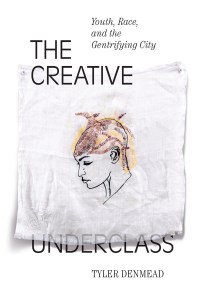
The Creative UnderclassI want to use Tyler Denmead’s book as an opportunity to reflect on my past experience as director of Institut Français du Vietnam, a network of four cultural centers supported by the French Ministry of Foreign Affairs in Hanoi, Ho Chi Minh City, Danang, and Hue. On the face of it, our situations could not have been more different. I was a mid-career diplomat posted as cultural counsellor at the French Embassy in Hanoi for a four-year assignment. My roadmap for managing the culture centers was simple and laid down in a few words: engage youth, be creative, and balance your budget. Tyler Denmead was the founder and director of New Urban Arts, an arts and humanities studio primarily for your people of color from working-class and low-income backgrounds in Providence, Rhode Island. Coming back to the arts studio as a PhD student doing participatory observation, he comes to realize he has been a mere instrument in the city’s program of revitalization through culture, unwittingly supporting a process of gentrification and eviction of the ethnic minorities he was supposed to empower through cultural activities and economic opportunities in the creative economy. No two cities can be further apart than Hanoi, Vietnam, and Providence, Rhode Island. And yet there are some commonalities between the two. They were both labelled “Creative Cities” and implemented strategies of economic revitalization through cultural activities. They both faced the forces of gentrification, land speculation, urban renewal, and the challenge of dealing with former industrial facilities and brownfields. New Urban Arts and the Institute Français in Hanoi were both tasked with the same missions of engaging youth, expanding access to culture, building skills, and securing public and private support. And, as directors of cultural institutions, we were both entangled in contradictions and dilemma that put our class position and ethnic privilege into question.

Revitalization through culture

Richard Florida is the urban theorist who is credited with coining the term “the creative class”. Visiting Providence in Rhode Island in 2003, he celebrated the city’s future as a creative hub. Successive mayors embarked on a program of urban renewal, rebranding Providence as a “Renaissance City” or a “Creative Capital”. Revitalizing post-industrial cities through arts, culture, and creativity has been a standard script since the 1990s. The conventional strategy includes a marketing and public relation campaign to rebrand the city’s image; supporting and promoting cultural assets including arts organizations, festivals, and cultural events; reshaping abandoned factories and warehouses into cultural spaces; and providing tax incentives to redevelop property into locations of historical, aesthetic, and economic value. According to Florida, Providence exported too much of its college-educated talent from Brown University and Rhode Island School of Design, or RISD. He thus advocated for strategies to retain young creatives from these highly selective and private universities by offering incentives to launch dynamic start-ups and host cultural events, thus attracting inward investment, tourism, and additional creative workers. In retrospect, the strategy has been a failure. In his reassessment of Providence’s future as a creative city, Florida recognized that these programs have only exacerbated urban inequalities without creating lasting economic or social value. He noted that technology has been the region weak spot and has failed to provide “real jobs” for young people in local industries. Providence’s new growth strategy now focuses on technology startups, business incubators, and quality of life. Providence now ranks as number 15 in the list of “Best Cities to Found a Startup Outside Silicon Valley and New York” and also boasts itself as one of the “10 Best Cities to Raise Kids in America.”

Tyler Denmead uses critical race theory to show that the color blindness of “creativity” dissimulates the ways in which the creative city reproduces and reinforces racial and class inequality. There is a long tradition of criticizing urban policies by exposing their racial underpinnings. James Baldwin in the 1960s described “urban renewal” as just another word for state-sponsored “negro removal” as he examined change in San Francisco at the time. And bell hooks, writing in the 1990s, described these urban renewal projects as “state-orchestrated, racialized class warfare (which) is taking place all around the United States.” Denmead’s expression, the “creative underclass”, is meant as a bridge between Florida’s “creative class” and the term “underclass”, which in the American context has often been used to explain poverty through cultural deprivation. His mission in New Urban Arts was to transform Providence’s “troubled youth,” meaning young people from ethnic minorities and low-income backgrounds, into “creative youth” equipped with the skills and talent to seize job opportunities in the creative economy. He leveraged public support for engaging teenagers and young adults in cultural activities such as art mentoring and poetry writing, even while arts education was being suppressed from the curriculum of Providence’s public schools and welfare support to poor families was being eroded. Most of the state subsidies under the creative city program were channelled toward real estate development and the restoration of old industrial buildings, fueling land speculation and gentrification. Through the promotion of a bohemian lifestyle, young people from the creative underclass were encouraged to choose to live in poverty, inhabiting abandoned warehouses and taking low-wage service jobs in the hope of gaining popularity and recognition in the white hipster scene. But there were very few “real job” opportunities for those who did not want to become “starving artists,” and public efforts to attract media companies or high-tech business activities proved ineffective. In the end, according to the author, the creative city only supports “a brand of capitalism that has legitimized the erosion of support for those who are poor.”

The Creative City

Hanoi, the capital of Vietnam, also stakes its future development on culture and the creative economy. It has been admitted in 2019 in UNESCO’s Creative Cities Network, and has identified creativity as a strategic element for sustainable urban development. Home to 7.9 million people, the political capital of Vietnam has gone through several attempts to rebrand itself. It was granted the “City of Peace” title by UNESCO in 1999, and has built on this image to position itself as a hub for international political events, such as the APEC Summit in 2006, the East Asia Summit in 2010, the World Economic Forum on ASEAN in 2018, and the second DPRK-US Summit in February 2019. The thousandth anniversary of the foundation of the capital (then named Thang Long) by the emperor Ly Thai To was the occasion of major celebrations in 2010, insisting on the city’s long history and its tradition of resistance against foreign aggression. Faced with the economic might of Ho Chi Minh City (former Saigon) in the south and the entrepreneurial spirit of Danang in central Vietnam, Hanoi can play on its distinctiveness as an ancient capital of culture, national politics, and higher education. The Creative City strategy insists on several dimensions: architecture and urban heritage, handicraft and craft villages, traditional cuisine and gastronomy, and ancient arts preserved and performed with new style. The main French cultural center in Vietnam was located in Hanoi. The French institutes in Danang and Hue were of smaller scale and focused mostly on teaching French, while the French institute in Ho Chi Minh City operated from the precinct of the French Consulate General, using outside facilities (including a residence for artists, Villa Saigon) to stage cultural events and festivals.

L’Espace, the flagship building of the French cultural presence in Hanoi, was located in the historic central district that was at the core of the city’s urban renewal strategy. Only one block away from the early twentieth century’s opera house, next to the five-star Hôtel Métropole that attracted rich tourists through a cultivated image of colonial chic, the French cultural center was a landmark location in Hanoi’s cultural life. Artists remembered having given their first concert on its stage or displayed their first solo exhibition in its art gallery. They also kept a fond memory of the lectures and intellectual debates organized in its book library, or of the French language classes that offered a window to the outside world and a prized ticket for studying abroad. When I became cultural counsellor at the French Embassy, the Hanoi center was still very active: its language classes were fully packed, its concerts and cultural events well frequented, and its aura as a showcase of French culture and lifestyle still intact. New activities such as pop concerts, hip-hop tournaments, street art exhibitions, or technology displays attracted a younger generation and encouraged collaborations between French and Vietnamese artists. But its finance were in dire straits: the yearly rental charge was regularly adjusted upward to keep pace with the rise in the property market; advertising events through Facebook and other communication channels cost money; and salaries had to be paid to the dedicated local staff and the native teachers of French. A vast public of middle-class families coming to the central district for their weekend stroll just passed us by, with little interest for French culture and low budgets to devote to cultural or educational activities. For L’Espace, the Covid epidemic was the coup de grâce: priced out of the real estate market, the center was forced to relocate its French language classes and student orientation offices in a less prestigious location, and lost its ability to host cultural events on its own stage or gallery.

France’s cultural policy in Vietnam

We campaigned hard to convince local authorities and private sponsors that subsidizing cultural activities was in their best interest. We found a sympathetic ear in the person of the city mayor, who offered the district’s central plaza for a two-day outdoor festival of French culture and gastronomy. French culture still has a good image in Vietnam: France is seen as a romantic location for tourism, a country with a rich heritage and glamorous lifestyle, and a prime destination for studying abroad. French food and wine obtain high rankings, and French luxury brands dominate the market. But only a small minority of Vietnamese people have the financial means and educated tastes to indulge in such proclivities. For younger generations with lower budgets and more familiar longings, South Korea and its culture proves the most attractive. The Korean wave has hit Vietnam in full swing, and young Vietnamese are passionate about K-pop, Korean drama, kimchi, and K-fashion and cosmetics. France simply cannot compete with this attractiveness primarily led by private actors and mediated by the digital economy. Instead, France’s main selling point is to be found in cultural heritage. French colonial history has left a deep imprint in Vietnam, from city planning and architecture to baguette bread and loanwords taken from the French language. Vietnamese leaders are eager to solicit French expertise to help them reclaim and showcase their own cultural heritage, from the recent past to ancient history. City-to-city cooperation and French government’s support have helped preserve and promote Hanoi’s Old Quarter and its Thang Long Citadel, building on France’s long experience in heritage preservation. The same goes with the city of Hue, Vietnam’s ancient capital and the cradle of Vietnamese culture, that has been a partner of French cultural cooperation for more than thirty years. The Hue Festival, a major cultural event with an international audience, was first called the Vietnamese-French Festival and celebrated in 1992.  

As a French intellectual versed in cultural studies and post-colonial theory, I was fully aware of the ambiguities and contradictions involved in promoting French culture in Vietnam. For post-colonial scholars, imperialism manifests itself not only through physical domination of geographic entities, but also through the colonization of the imaginary. But contemporary Vietnam is very forthcoming with its colonial past, and harbors no complex towards former imperial powers. After all, it has won two major wars against two dominant world powers, and has resisted more than a thousand years of Chinese imperialism. Still, the terms of cultural trade between France and Vietnam were premised on unequal exchange and an imbalance between center and periphery. As much as we sought to foster collaboration and joint projects between artists from the two countries, Vietnam was always on the receiving end, and France was always the initiator. We faced many practical dilemma in our daily activities. Could we, for instance, display the photographs of Vietnamese women from various ethnicities taken by a French artist who sold mostly to rich tourists and foreign collectors? Or should we promote the emergence of a local art scene through photography workshops and cross-exhibitions? Could we invite French intellectuals to ponder about the risks posed by Facebook and other social networks in a country where Facebook represented one rare window of free expression? How could Vietnamese historians debate with their French counterparts about the battle of Dien Bien Phu, and could they develop a common understanding of history? And how to explain the enduring success among Vietnamese audiences of the films Indochine and L’Amant that we showed repeatedly in our cinema-club? The image of colonial chic that I perceived as an expression of imperial nostalgia and ethnic prejudice among French nationals proved to be equally attractive among young Vietnamese, who had no memory of the Indochinese past but found its modern expressions romantic and glamorous.

White privilege?

For us, the ethnic question was raised in different terms than for Tyler Denmead. He denounces the myth of the “good white savior” who is supposed to transform “troubled youth” of color into “creative youth.” Well aware of his white privilege, he is careful to avoid “performative wokeness” and “virtue signaling” and to distinguish his auto-ethnography from a quest for redemption. He concludes his book with a series of recommendations based on the very words used by young people who hung around in the arts studio: troublemaking (or “fucking up white notions of what it means to be black or brown”), creating a hot mess (a place where they can be random, irrational, and disrespectful of authority), and chillaxing (temporarily opting out of the system). Our goal in Vietnam was not to encourage youth resistance and rebellion. And we did not understand “white privilege” in the way Tyler Denmead applies it to his own case. Still, it could be argued that our cultural policies and management practices were based on structural inequalities. Although our recruitment policy was open and nondiscriminatory, three of the four directors of the French culture centers in Vietnam were French, while their assistants were all Vietnamese. The presence of native French teachers was a major selling point for our language classes. Accordingly, most if not all full-time teachers were French nationals (of various ethnicities) while the part-time lecturers were Vietnamese. With very few exceptions, French managers and teachers could not speak Vietnamese, while all Vietnamese staff, including technicians, were required to have at least some mastery of the French language. Expat salaries exceeded the paycheck of locally hired staff by an order of magnitude. As for our public, we didn’t target the expat community for our cultural events. But France’s image was associated with elitism, and we were expected to keep a high profile and an upmarket brand image. Not unlike Tyler Denmead’s Urban Arts center in Providence, the French culture center in Hanoi was an instrument in a wider movement of gentrification, and was in the end forced to relocate due to the very forces it supported.

There Is No Us

A review of None Like Us: Blackness, Belonging, Aesthetic Life, Stephen Best, Duke University Press, 2018.

none-like-usThis essay stands at the intersection of black studies, queer theory, and literary criticism and art critique. Its title, None Like Us, is taken from a sentence in David Walker’s Appeal to the Coloured Citizens of the World, arguably the most radical of all anti-slavery documents written in the nineteenth century. The quotation, put on the book’s opening page, describes the wretched condition of coloured people in the United States as observed by the author. It ends with a prayer to God that “none like us ever may live again until time shall be no more.” Who is the “us” that the epigraph dooms to self-extinction and oblivion? Is there a collective subject when humans were treated as objects and disposed of as pieces of property? Can one write the history of people who did not exist, or whose existence is forever predicated on a negative relation to history? How does that “none like us” leave open the possibility for an “I,” the first singular person of the art critic, the historian, the queer subject? As Stephen Best writes, “None Like Us begins in the recognition that there is something impossible about blackness, that to be black is also to participate, of necessity, in a collective undoing.” Whatever blackness or black culture is, it cannot be indexed to a “we.” The condition of being black is rooted in a sense of unbelonging: “forms of negative sociability such as alienation, withdrawal, loneliness, broken intimacy, impossible connection, and failed affinity, situations of being unfit that it has been the great insight of queer theorists to recognize as a condition for living.”

A non-communitarian manifesto

None Like Us sometimes reads like a manifesto. The incipit: “a communitarian impulse runs deep within black studies,” sets the stage in almost Marxian fashion—one is reminded of the opening sentence of the Communist Manifesto. The specter of communism that is haunting Europe leaves way for the ghost of communitarianism that permeates African American scholarship. Also evocative of Marx and Lire Le Capital is the epistemological break that Stephen Best effectuates. He substitutes the “melancholic historicism” that characterizes black historiography with what he calls a “queer unhistoricism” that interrupts the connection between the past and the present. He breaks away from a century-long attempt to recover archival traces of black life under conditions of disavowal and silencing, to read the archive as a repository of lost traces and muted voices. Stephen Best also distances himself from all kinds of identity politics based on collective struggles and individual resistance. A politics of recognition cannot be predicated on a “we” that does not exist. Identities have to be radically deconstructed in order to assert freedom from constraining definitions of blackness and gender roles. A “gay black male” is an assemblage of three predicates, “gay,” black,” and “male,” that are equally problematic in assuming an essence that is only constituted through negation. As a non-communitarian manifesto, None Like Us is also an aesthetic treatise: the author engages in art critique and literary criticism, not to fly away from historical realities, but to induce us to “think like a work of art.”

A central tenet of African American studies rests on the thesis that black identity is uniquely grounded in plantation slavery and the Atlantic slave trade. The afterlife of slavery makes itself felt in the black political present and delineates a future in which reparation and redress are forever deferred. Recent historiography, to which Stephen Best contributed, has drawn our attention to the silenced voices that make themselves heard through the archive: the fugitive, the renegade, the maroon, the socially dead. Out of these enquiries emerged an obsession with “displacement, erasure, suppression, elision, overlooking, overwriting, omission, obscurantism, expunging, repudiation, exclusion, annihilation, and denial.” Like in Foucault’s essay “The Life of Infamous Men,” these figures emerge through the archive as “lowly lives reduced to ashes in the few sentences that struck them down” as if “they had appeared in language only on the condition of remaining absolutely unexpressed in it.” According to this melancholic view of history, “recovery from the slave past rests on a recovery of it.” To recover from past trauma, historians have to return to the scene of the crime, a crime imagined as the archive itself. Drawing from Freud’s definition of melancholia as an inarticulable loss that comes to inform the individual’s sense of his or her own subjectivity, Stephen Best writes: “Melancholy historicism provides for the view that history consists in the taking possession of such grievous experience and archival loss.”

The black radical tradition

Against this “traumatic model of black history” in which the present is merely the repetition of past humiliations, Stephen Best advocates a radical break with all attempts to recover a “we” out of the loss embodied in the archive. He borrows from what Cedric Robinson and others have called “the black radical tradition” in which violence is turned inward and rebellion leads to self-destruction. Examples mobilized by Robinson include the mass slaughter of cattle and destruction of crops ordered by the Xhosa prophetess Nongquawuse in 1856; the vanishing quilombo settlements of runaway slaves, mulattos, and outcasts on the Pernambuco coast of Brazil in the seventeenth century; and the 1915 uprising in Nyasaland (now Malawi) led by Baptist minister John Chilembwe who vowed to “strike a blow and die.” Exploring suicide and rumor in the eighteenth- and nineteenth-century archives of slavery, Stephen Best offers his own selection of vignettes and anecdotes. A “suicide bombing” occurred in 1659 when a besieged African chief blew up himself and his Dutch assailers by setting fire to a keg of powder. Archives of the Middle Passage tell tales of slaves hanging themselves, or starving themselves, or drowning themselves to end their living apocalypse, or holding their breath or swallowing their tongue in attempts at self-strangulation. People who consciously suppressed themselves in acts of self-immolation cannot be enrolled as subjects of history: theirs is “a history of people with whom we fail to identify, who appear stuck in the past beyond the reach of our historical categories.”

When it comes to black identity and the politics of race, the slave past was not always thought to explain the present. Stephen Best singles out the year 1988 and the publication of Toni Morrison’s Beloved as the moment when slavery emerged as the constituent object of African American studies. Beloved, which won the Pulitzer Prize that year, was not a unique occurrence: Alex Haley’s novel and TV series Roots had prepared the ground for a reappraisal of the slave past in popular culture, and in the late eighties and early nineties several history books anchored African American identity in “a continued proximity to the unspeakable terrors of the slave experience.” But the rise of Beloved moved the entire field of literary studies to a central place within African American studies, and this move redressed the “trade deficit” that cultural critics had accumulated with the discipline of history. Toni Morrison spoke of the slave past as a “carnage,” a “devastation” that will always be with us: “this is not a story to pass on.” But Toni Morrison’s more recent novel A Mercy (2008) opens the door for another appreciation of the slave past as it falls away and collapses into its own undoing. A Mercy is not an easy read: the chapters oscillate, confusingly at first, between a first-person narration and a third-person omniscience, reinventing the epistolary novel with dead letters whose failure to arrive comes from having never been sent. It is anchored in a world in which racial distinctions have not yet formed and much is up for grabs: the racial scripts and beliefs that are said today to make up slavery’s legacy have yet to settle into a lexicon. As the critic notes, “If Beloved incites melancholy, A Mercy incites mourning”: in Freud’s terms, melancholia is doomed to endless repetition, whereas mourning ends with a kind of forbearance.

Queer is the New Black

None Like Us is listed on the back cover as an intervention in “African American Studies” and “Queer Theory.” Stephen Best sees a high degree of complementarity between the two: “It startles how easily queerness percolates out of the condition of blackness.” Queer and slave historiography appear to be on the same page: the queer acknowledgement of non-relationality between the past and the present, what literary theorist Leo Bersani calls an “anti-communal mode of connectedness,” echoes the epistemological rupture that Best advocates. A queer orientation toward the past may preserve cultural critics from the melancholic turn that characterizes recent historiography. Black life and queer life are also intimately related through the experience of estrangement, alienation, and disaffiliation that Elizabeth Povinelli sees at the root of all progressive politics. None Like Us begins with a discussion of the different ways that both Best and James Baldwin found themselves, as young men, estranged from their fathers. Although their estrangement stems from opposite sources—Baldwin’s father’s disdain for his son, the pride of Best’s father at his son’s graduation ceremony—, there is a shared orientation toward a selfhood that occurs in disaffiliation rather than in solidarity. Part of this queerness comes from the experience of coming out of the closet as gay. As the author remembers from his tormented youth, “If I come out as gay, I will die in the eyes of my father, but I realize that a part of me is already gay and that he cannot not see that, too there must be a part of me that is already dead.” This skeleton in the closet precludes the possibility of a “we,” whether queer or black.

The chapter that opens the book’s part “On Thinking Like a Work of Art” begins with an address to the reader: “You” is the person who is put in front of the artwork and who experiences a kind of epiphany as one physical substance transmutes into another. In the Ghanaian artist El Anatsui’s richly woven tapestries, what initially presents itself as precious metal appears upon inspection to be throwaway-aluminum constructions of bottle caps and copper wire: “What was gold now reveals to be mere thrash.” In the layered paper canvases of the Los Angeles artist Mark Bradford, fragments of cardboard advertisements and printed materials are soaked into water and mixed with trash objects to generate relief within the surface itself: “What was originally ‘print’ finds itself transformed into ‘paint’.” Gwendolyn Brooks’s free-verse poems generate another kind of commentary that also mobilizes the tropes of conjuration, transmutation, and alchemy. Here the office of art is to afford a repetition of the artist’s gesture that “repairs inherently damaged or valueless experience.” And the curator, who mobilizes a rich array of sources and commentary listed in the endnotes, puts the “you” of the viewer in direct contact with the materiality of the artwork. Absent from the commentary are all the mediations that constitute art as an object of aesthetic value. Between the “I” of the critic and the “you” of the viewer, there is no “we” that would allow for the emergence of a community of value. When Foucault stated that “we have to create ourselves as a work of art,” or when Best proposes that “we must begin to think like artworks,” what they mean by “we” is mostly themselves.

Uncharted territory

Or so it seems to me. I could not relate to the book’s emphasis on art as embodied thinking or concepts brought into matter, and discussions on contemporary art brought me to uncharted territory. I had no prior knowledge of the visual artists that are commented in the book (I missed the El Anatsui’s retrospective at La Conciergerie in Paris as part of the Saison Africa2020), and I have not read a Toni Morrison novel since Tar Baby. Nor am I versed in recent historiography of the slave trade, and in the most recent discussions about black identity in the United States. I was more familiar with some of the literary criticism the author mobilizes, especially since literary criticism in the United States seems to be identified with France and French studies. Roland Barthes, Gérard Genette, Michel de Certeau, Michel Foucault, and Jacques Derrida—all listed in the index—are household names in academic circles on both sides of the Atlantic, and they point toward a common horizon that I was happy to share with the author. Also familiar was Stephen Best’s evocation of Walter Benjamin’s angel of history, that famous passage in which Benjamin gazes upon Paul Klee’s Angelus Novus and imagines that the Angel of History is looking toward the past and bears witness to history’s “piling wreckage upon wreckage.” This mix of familiar and unfamiliar shaped my reading of None Like Us, which I am happy to share with others.

The Brazilian Buttock Lift

A review of Pretty Modern: Beauty, Sex, and Plastic Surgery in Brazil, Alexander Edmonds, Duke University Press, 2010.

Pretty ModernIn Brazil, women claim the right to be beautiful. When nature and the passing of time don’t help, beauty can be achieved at the end of a scalpel. Plastic surgery or plástica is not only a status good or the preserve of socialites and celebrities: according to Ivo Pitanguy, the most famous Brazilian plastic surgeon and a celebrity himself, “The poor have the right to be beautiful too.” And they are banking on that right. Rio and São Paulo have some of the densest concentrations of plastic surgeons in the world, and financing plans have made plástica accessible to the lower middle class and even to favela residents. While in the United States, people may hide that they have had plastic surgery like it’s something shameful, in Brazil they flaunt it. The attitude is that having work done shows you care about yourself—it’s a status symbol as well as a statement of self-esteem. Cosmetic surgery’s popularity in Brazil raises a number of interesting questions. How did plastic surgery, a practice often associated with body hatred and alienation, take root in a country known for its glorious embrace of sensuality and pleasure? Is beauty a right which, like education or health care, should be realized with the help of public institutions and fiscal subsidies? Does beauty reinforce social hierarchies, or is attractiveness a “great equalizer” that neutralizes or attenuates the effects of class and gender? Does plástica operate on the body or on the mind, and is it a legitimate medical act or a frivolous and narcissistic pursuit? Does beauty work alienate women or is it a way to bring them into the public sphere?

Class, race, gender, and plástica

Alexander Edmonds, an American anthropologist, answers these questions by mobilizing the three key dimensions of his discipline: class, race, and gender. Brazil is a class society with one of the most unequal wealth distributions in the world. It is also a society organized along racial lines, even though a long history of miscegenation has blurred color lines and made racial democracy part of the national identity. Brazil continues to have large gender gaps within the workforce and government representation. The country’s supposedly large number of exotic, attractive and sexually available women makes it a masculinist fantasy worldwide, while Brazilian feminists face enduring challenges. All these issues relate in one way or another to the availability of cosmetic surgery, the quest for beauty and attractiveness, and the development of medicine into new terrains of well-being and self-esteem. Pretty Modern mixes several strands of literature. It is a travelogue into contemporary Brazil, a deep dive into its history and culture, a journalistic description of the cosmetic surgery industry, a philosophical treatise on beauty and appearances, a personal memoir about the impasses of erudite culture and the wisdom of ordinary people. It even contains samba lyrics and color pictures of scantily clad models.

The Brazilian constitution recognizes the human right to health. It doesn’t recognize the right to beauty, but cosmetic surgery is provided for free or at subsidized rates in public clinics such as the Santa Casa da Misericórdia in Rio. Surgeons perform charity surgeries for the poor to get practice in large residency programs before opening their private clinics. Some medical doctors come from afar to learn how to operate barrigas (bellies) or bundas (buttocks), techniques that come predominantly from Brazil. Ivo Pitanguy himself, the pioneer of plastic surgery in Brazil, learned the trade from Europe before bringing it back to Rio and taking it to a new level. His democratic ethos has been maintained by his disciples who share his vision of cosmetic surgery as psychotherapeutic intervention that should be accessible to all. Pitanguy famously defined the plastic surgeon as “a psychologist with a scalpel in his hand,” echoing the saying that “the psychoanalyst knows everything but changes nothing. The plastic surgeon knows nothing but changes everything.” Women see their operations as a form of psychological healing; given the choice, they prefer the surgeon’s scalpel than the couch of the psychoanalyst. Plástica has psychological effects for the poor as well as for the rich: surgery improves a woman’s auto-estima, self-esteem, and is considered as a necessity, not a vanity. Appearance is essential to mental well-being, economic competitiveness, and social and sexual competence. If we follow the WHO’s definition of health as “a state of complete physical, mental and social well-being,” then beauty work represents the new frontier in the pursuit of happiness.

The right to beauty

Of course, the growth of cosmetic surgery has not been without controversy. A “right to beauty” seems to value a rather frivolous concern in a country with more pressing problems—from tropical diseases, like dengue, to the diseases of modernity, like diabetes. Brazil has a health system divided into a public and a private sector with different standards of care, and the poor often see their universal right to healthcare obstructed by long queues, squalid conditions, and substandard practice. Cosmetic surgery stretches medical practice into an ambiguous grey zone where the Hippocratic oath doesn’t always fully apply. The growth of plástica has also been accompanied by a rise in malpractice cases, insurance fraud, and media stories of horrific complications. Some Brazilian critics see the new fashion of breast enlargement as a form of cultural imperialism brought by Euro-American influence in a country that has long valued small boobies and big booties (the ever-popular butt implant raises fewer cultural concerns.) Beauty ideals peddled by women’s magazines are blamed for eating disorders and body alienation. Cultural elites from the West see the pursuit of the artificially enhanced body as vain, vulgar, and superficial, betraying a narcissistic concern with the self. But who is one to judge? asks Alexander Edmonds, who confesses he shared some of the misapprehensions of the distanced scholar before he was confronted with a candid remark by a favela dweller: “Only intellectuals like misery. The poor prefer luxury.” Even though it is not common for a scholar to glance through local versions of Playboy or watch telenovelas titled “Without Tits, There is no Paradise,” the anthropologist knows the heuristic value of suspending one’s judgment and immersing oneself into the life-world of cultural others through participant observation.

Race raises another set of issues. Here too, North Americans have been accused of exporting their cultural imperialism, with its bipolar racial categories and immutable color line, in a country that has long prided itself for its racial democracy and color fluidity. In fact, Brazilians are very race-conscious. But rather than grouping people into races defined by ancestry, the local taxonomy describes subtle variations in appearance along a continuum. The national census racially classifies the Brazilian population in five color types: branco (white), pardo (brown), preto (black), amarelo (yellow), and indigenous. But in everyday usage, more than 130 color types have been identified. Brazil’s famous “rainbow of color terms” intersects with class and gender. In Brazil moving up the social scale can be seen as a form of whitening. For example, a light-skinned multiracial person who held an important, well-paying position in society may be considered branco while someone else with the same ethnogenetic make-up who had darker skin or was of a lower class may be considered pardo or even preto. But unlike in many parts of the world where lightness of skin tone is fetishized, in Brazil brown is beautiful. Many women pride themselves of being morena, a term that can mean both brunette and brown-skinned. On the other hand, blackness is stigmatized, and European facial features and hair confer social advantages. No wonder that “correction of the Negroid nose” is a standard surgery operation that raises few eyebrows, while Brazil remains one of the biggest consumer market for blonde hair dye.

The anthropology of mestiçagem

More than any other nation, Brazil’s self-image and national identity has been shaped by anthropologists. The Amazon Indian is known solely from the reports of ethnographers in the field, perpetuating the heritage of Claude Lévi-Strauss. Gilberto Freyre, a student of Franz Boas in the early twentieth century, provocatively reversed the scientific discourse on “miscegenation”  and its racist underpinnings by affirming the virtue of racial mixture and cultural syncretism. Freyre’s celebration of idealized and eroticized mestiçagem played a central role in defining Brazilian national identity. Sexuality—especially across racial lines—became a key symbol for the formation of a new, mixed population with positive traits, such as cordiality and physical beauty. But more recently sociologists have deconstructed the myth of racial democracy by documenting the persistent racial inequalities in wealth and income, access to education and social services, and representations in the media and in the political sphere. Governments introduced controversial quotas to promote racial diversity in higher education and in the public sector. There has been a shift in the representation of race in the past twenty years. More dark faces now appear in telenovelas, ad campaigns, and variety shows, and multinational companies have found a new niche market for black beauty products, fashion, and cosmetics. Afrodescendentes are adopting a black hairstyle and a negra identity as well as narratives of racial pride and militancy. It is too early to say whether affirmative action and identity politics will substitute to mestiçagem and the rainbow of colors, but the emergence of the black movement in Brazil also confirms the significance of the aesthetic dimension of modern subjectivities.

What does cosmetic surgery tell us about gender relations and women’s roles? Contrary to a popular perception, women do not engage in beauty work to comply to men’s expectations and submit themselves to the male gaze. They do it on their own terms, to follow their own desires or to respond to society’s “interpellation.” Motives may vary across social class, age category, and marital status. Some Brazilian women can be openly frank about it: “After having kids, I’ll have to do a recauchutagem [refurbishing, normally of a car]. After shutting down the factory, nê?” Plastic surgery is closely linked to a larger field that manages female reproduction and sexuality. It is not coincidental that Brazil has not only high rates of plastic surgery, but also Cesarean sections (70 percent of deliveries in some private hospitals), tubal ligations (sterilization accounts for half of all contraceptive use), and other surgeries for women. Some women see elective surgeries as part of a modern standard of care available to them throughout the female life cycle. Cosmetic surgery can mark key rites of passage: initiation into adulthood, marriage, motherhood, divorce, and menopause. The transformative events by far the most often mentioned in connection with plástica are pregnancy and breast-feeding. Tensions between motherhood and sexuality are analyzed in detail by Alexander Edmonds, who mentions that both are equally important for self-esteem. Drawing on a range of examples—from maids who aspire to acquire cosmetic surgeries, to favela residents who dream of entering the fashion world, to single mothers who embrace plastic surgery as a means of erotic body scuplting—he describes how sexual and class aspirations subtly mingle in beauty culture.

The right of the Brazilian morena

In his last book Modos de homem, modas de mulher, published shortly before his death in 1987, Gilberto Freyre warned against “yankee influence” and the impact of “north-Europeanization or albinization”: “one must recognize the right of the Brazilian brunette to rebuke northern-European fashions aimed at blonde, white women.” In Pretty Modern, Alexander Edmonds shows that the right of the Brazilian morena is not to be abolished. The tyranny of fashion applies more than elsewhere in a country where bodies are being refashioned to fit aesthetic and sexual mores. But Brazilian plástica does not follow an American or north-European blueprint. If anything, it leads the way that other emerging countries in Latin America or East Asia are also beginning to tread. There, the female body is invested with hopes of social mobility and self-accomplishment that demand long-term investment and management. In poor urban areas, beauty often has a similar importance for girls as soccer (or basketball) does for boys: it promises an almost magical attainment of recognition, wealth or power. For middle-class cariocas, the body is a source of distinction and success. For many consumers, a lean and fit body is essential to economic and sexual competition, social visibility, and mental well-being. Beauty culture interpellates women as autonomous sexual beings and as economic agents in markets where physical attractiveness can be exchanged with various kinds of cultural and economic resources. This anthropologic study shows that cosmetic surgery arises in unison with a central concern for Brazilian women: staying young, sexy, and beautiful.

Race, Culture, and the Origins of American Anthropology

A review of Anthropology and the Racial Politics of Culture, Lee D. Baker, Duke University Press, 2010.

Lee Baker AnthropologyAnthropology in America at the turn of the twentieth century presents us with a double paradox. Cultural anthropologists wanted to protect Indian traditions from the violent onslaught of settler colonialism, and yet prominent voices among Indian Americans accused them of complicity with the erasure of their beliefs and cultural practices. They thought the culture that African Americans inherited from exile and slavery was not worthy of preservation and should dissolve itself into the American mainstream, and yet African American intellectuals praised them for the recognition of cultural difference that their discipline allowed. As Lee Baker puts it, “African American intellectuals consistently appropriated anthropology to authenticate their culture, while Native American intellectuals consistently rejected anthropology to protect their culture.” What made cultural assimilation the preferred choice in one case, and cultural preservation the best option in the second? How did the twin concepts of race and culture shape the development of anthropology as an academic discipline? In Anthropology and the Racial Politics of Culture, Lee Baker introduces a distinction between in-the-way people, the so-called “Negroes” as black persons were designated and self-identified at the time, and out-of-the-way people, the Native Americans or “Indians” who were relegated to the margins of American society.
Kill the Indian and save the man

In the end of the nineteenth century, the federal government’s policy towards American Indians was one of assimilation, privatization of tribal lands, and the suppression of native cultures. “Kill the Indian and save the man” was the slogan of that era: proponents of assimilation barely veiled their desire for the complete destruction of Indian beliefs and cultural practices. A generation later, however, cultural preservation and self-determination became the watchwords of federal policies governing Native Americans. The Wheeler-Howard Act of 1934, better known as the Indian Reorganization Act or the “Indian New Deal,” was designed “to conserve and develop Indian lands and resources; to extend to Indians the right to form business and other organizations; to establish a credit system for Indians; to grant certain rights of home rule to Indians; to provide for vocational education for Indians; and for other purposes.” Anthropology played an important role in this shift in federal Indian policy. The study of American Indian languages, customs, and material culture was at the origin of the American School of Anthropology: in an indirect way, Native Americans played a prominent role in the history of the discipline. Franz Boas, the founding father of American anthropology, famously demonstrated that one cannot rank-order races and cultures along a single evolutionary line, thereby acknowledging Indian Nations as historically distinct cultures that should be preserved, valued, and otherwise acknowledged. And yet many educated, self-proclaimed Indian elites resisted the anthropological gaze, claiming for their folk equal treatment and access to US citizenry.

The essence and primary task of American anthropology was the study of American Indians. But knowledge production went along cultural destruction: indeed, the urge to inventory Indian languages and culture was predicated upon their rapid disappearance. The need to “salvage the savage” fueled very different projects: progressive white anthropologists and conservative Indian traditionalists were committed to conserving and celebrating indigenous practices, while progressive Indian activists and conservative Christian reformers believed in mutual progress, civilization, and integration into the mainstream. These two competing visions clashed during the so-called peyote hearings held at the US House of Representatives in the winter of 1918, when the temperance movement tried to make the use of peyote a federal offense. What and who was authentically Indian, and what and who was not, was the subject of intense debate. Zitkala-Ša, also known as Gertrude Bonnin, argued for temperance in the name of civilizational values and racial uplift. James Mooney, an ethnologist from the Smithsonian institution, supported the ceremonial and medicinal uses of peyote and attacked the credibility of his opponent by challenging her authenticity: Gertrude Bonnin, he argued, “claims to be a Sioux woman, but she is wearing a woman’s dress from a southern tribe.” Debates went on whether the use of peyote was or wasn’t a genuine Indian practice, and references were made to the “ghost-dance craze” that had been banned by the Bureau of Indian Affairs in 1883, leading eventually to the massacre at Wounded Knee in 1890. The irony is that Zitkala-Ša dedicated most of her adult life to advocating greater awareness of the cultural and tribal identity of Native Americans. During the 1920s she promoted a pan-Indian movement to unite all of America’s tribes in the cause of lobbying for citizenship rights. In 1924 the Indian Citizenship Act was passed, granting US citizenship rights to most indigenous peoples who did not already have it.

Salvaging the savage

James Mooney, Gertrude Bonnin’s opponent in the peyote hearings, was also accused of “fabricating the authentic or producing the real.” Working for the Bureau of American Ethnology, an institution originally created to collect intelligence on Indian tribes in order to better subdue them, he developed from an early age a keen interest in American Indian cultures, and chose to work among those he deemed the most traditional. As Lee Baker notes, he was unscrupulous in his methods of acquiring sacred books and artifacts among the Cherokees, taking advantage of their social disintegration and economic poverty and gaining the trust of powerful men and women under false pretenses. He became the “arbiter of real Indians,” authenticating what was genuine and what was imported such as the biblical scriptures that Cherokee shamans and priests mixed with their sacred formulas. “In some cases, Lee Baker writes, he fabricated images and sounds of people outright in order to shape them into what he perceived as genuine.” But in a time dominated by assimilationist policies and a genocidal drive, he was sincerely devoted to salvaging Indian tribes’ history, folklore, and religion. He was moved to a fury by the massacre at Wounded Knee, and wrote scathing remarks about the attending missionaries who did not even offer a prayer for the deceased. He pioneered intensive participatory fieldwork long before it became the norm in anthropology, and took the time to observe various Native American tribes in the way they lived on a daily basis. His monograph The Ghost-Dance Religion and the Sioux Outbreak of 1890 was the first full-scale study of a nativist religion arising out of a cultural crisis. Mooney’s history and folklore remain definitive and vital to the Cherokee Nation today, and the stories and formulas he collected in his monographs are regularly republished.

“For every ten articles in the anthropological literature addressing American Indians, there was one discussing American Negroes or Africans.” Anthropologists were simply not interested in describing the culture of the many immigrant and black people who stood “in the way” of achieving a “more perfect union.” That job went to sociologists committed to the study of assimilation and race relations. According to Robert Park, one of the leading figures of the Chicago School of sociology, “The chief obstacle to assimilation of the Negro and the Oriental are not mental but physical traits (…) The trouble is not with the Japanese mind but with the Japanese skin.” In other words, what prevented integration and assimilation into the melting pot was not the specific culture of ethnic minorities, but racial prejudice and discrimination coming from the white Anglo-Saxon Protestant elite. The sociologists who studied race relations shared with the anthropologists the postulate that races were never inherently superior or inferior to each other. But each discipline embraced different ways of describing culture and behavior. Boas and his students at Columbia University built anthropology on the inventory of American Indian languages, customs, and material culture. Park and other Chicago sociologists focused on urban studies and the assimilation of immigrant minorities. For Park, there was no distinct African American culture: “While it is true that certain survivals of African culture and language are found among our American negroes, their culture is essentially that of the uneducated classes of people among whom they live, and their language is on the whole identical with that of their neighbors.” Progressive sociologists therefore advocated a policy of racial advancement focused on eliminating substandard housing, poverty, and racial segregation. But they also explained deviant behavior such as crime or drug use as the expression of a pathological subculture evolving from the conditions of urban ghettos.

Negro folklore

As anthropologists concentrated on Native Americans and sociologists dismissed the existence of a distinctive culture among African Americans, the task to collect stories, songs, and customs of the former black slaves fell on folklorists and educators. In the beginning of the twentieth century, the American Folk-Lore Society devoted several articles in its journal to African and African American folk traditions. The rationale for collecting and publicizing “Negro folklore” changed with the passing of time. In the 1890s, the first folklorists and black educators took to recording cultural practices of rural blacks in order to show that they could escape their backward condition and become enlightened citizens. Thirty years later, the New Negro intellectuals who led the Harlem Renaissance used folklore to embrace their African heritage and preserve their cultural roots. The same notebook of folklore with stories inspired by the African oral tradition was “first used to articulate the uplift project, and two decades later it was used to bolster the heritage project.” The schools at the origin of folklore collection followed the Hampton-Tuskegee model of educating African Americans to build their lives from basic skills. Drawing upon his experiences with mission schools in Hawaii, General Samuel Armstrong, the founder of the Hampton Normal and Agricultural Institute in 1868, used folklore as way to demonstrate how basic literacy and the learning of industrial skills could succeed at civilizing formerly enslaved people. Between 1878 and 1893, Hampton also experimented with Indian education, again employing the notion that industrial education helped to civilize the savages. Other black colleges, such as the Tuskegee Institute founded in 1881 by Hampton graduate Booker T. Washington, used the same approach in their program of racial uplift. Forty years later, the leaders of the New Negro movement turned to the anthropology developed by Franz Boas and his students to authenticate their culture and claim racial equality.

Anthropology emerged in the late nineteenth century as the science of race and the study of primitive cultures. How did anthropologists make the transition from the study of craniums to the theory of culture? What was at the origin of the three partitions of anthropology—the study of prehistorical remains, the comparison of physiological differences between races, and the social anthropology of primitive cultures? Lee Baker answers these questions by paralleling the life and work of Daniel Brinton, the first university professor of anthropology and a public intellectual of considerable influence at the end of the nineteenth century, and Franz Boas, who articulated a vision for anthropology based on cultural difference and racial equality. Brinton used the science of race to bolster the relevance of anthropology during distinguished career that began with antiquarian research in the 1880s and concluded with research that addressed relevant social issues and public problems in the 1890s. Like many people from his generation, he viewed racial difference in terms of inferiority and superiority, and placed the different human races in a hierarchy that culminated with the white race. Franz Boas, who is generally credited for debunking such racialist research in anthropology, did not attack these ideas right from the start. As a Jewish immigrant from Germany, his position within academia was insecure and he developed his original ideas only after he and anthropology were securely ensconced at Columbia University. But the assumptions of physical anthropology were directly challenged in a study Boas conducted between 1908 and 1910, published as Changes in Bodily Form of Descendants of Immigrants. Measuring the craniums of children, he was able to demonstrate that the environment played a significant role in determining physical attributes like head size, which were so often used to demarcate racial difference. His initial study of schoolchildren in Worcester, Massachusetts, which served as a foundation for his seminal work in physical anthropology, was almost derailed when parents and the local press expressed concern over the experiments that were inflicted on their children.

The Boas conspiracy

For Boas, this was the first in a long line of public assaults on his research and writings on race and culture. Franz Boas employed the skills of scientific observation to argue that all societies are part of a single, undivided humanity guided by circumstance and history, but none superior to another. We also owe to him the demonstration that cultures have different meanings and that anthropology needs not limit itself to only one interpretation. What mattered to him was the accumulation of facts and the inventory of differences. A successful ethnography should not focus on only one culture in order to patiently uncover its identity: the first and only goal of the science of man is the interpretation of differences. This analytical focus on variation makes him a precursor of structuralism, and his conception of an interpretive science announces later developments by Clifford Geertz. But for segments of the American public, Boas is not remembered for his scholarly contribution to the discipline of anthropology. Instead, he is considered as the initiator of “a vast left-wing conspiracy to destroy the idea that whites were racially superior to blacks and to impose a moral and cultural relativism that has forever crippled American civilization, and he did it with fraudulent data.” Lee Baker tracks the genealogy of this so-called “Boas conspiracy” from the Internet forums of white supremacists and KKK supporters to the anti-Semitic rant of the leader of the American Nazi Party interviewed by Alex Haley in 1966 and to the obscure texts of fringe intellectuals advocating “race realism” and the debunking of the “racial egalitarian dogma.” These unsavory readings remind us that anthropology has always been appropriated outside of the academy and has fueled projects that can be emancipatory, but also unashamedly racist and delusional.

A Biased Perspective on Sex Change

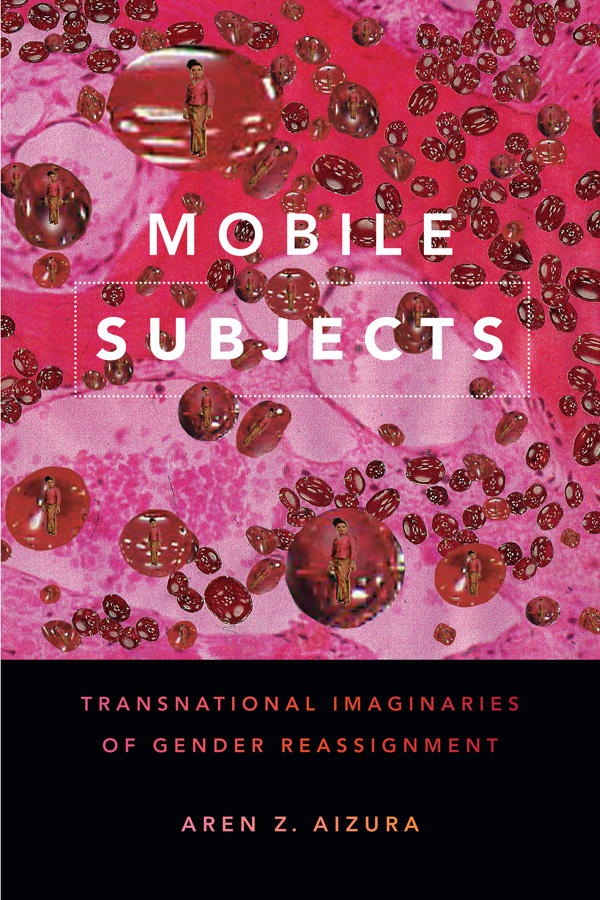
A review of Mobile Subjects: Transnational Imaginaries of Gender Reassignment, Aren Z. Aizura, Duke University Press, 2018.

Mobile SubjectsImagine you want to go through a “sex change” or a gender reassignment. People identify you as a man, but you want to be identified as a woman, or vice versa. You may also plan to undergo medical treatment and take hormones or get surgery. What should you and your colleagues do at the workplace to manage this transition? According to the British government that published a guide for employers regarding gender reassignment, transsexual people should take a few days or weeks off at the point of change and return in their new name and gender role. Time off between roles is assumed to give the trans person as well as coworkers time to adjust to the new gender identity. It is usually announced that the trans person will go on a trip, which may be real or figurative; and this journey-out-and-return-home forms the transition narrative that will shape people’s expectations and reactions to the change in gender identity. What happens during this trip needs not be detailed. The journey abroad opens a space of gender indeterminacy that makes transsexuality intelligible within a gender binary. This transition narrative was pioneered by Christine Jorgensen who, in 1953, went to Denmark to get surgery and returned to the United States as a celebrity. As the (undoubtedly sexist) quip had it, Jorgensen “went abroad and came back a broad.”
Neoliberalism and white privilege

This line of conduct is presented as good practice to ease transition at the workplace. But Aren Aizura is not happy with this recommendation. For him, the journey narrative is tainted by neoliberalism, white privilege, colonial exploitation, and gender prejudice. As he puts it, “the particular advice to take a transition vacation places us firmly in a corporatized framework of neoliberal racialized citizenship.” This is, in a way, stating the obvious: remember that the advice comes from a guide for employers, and from the analysis of workplace policy documents. The labelling of corporate practices as “neoliberal” is a well-established convention in the social sciences and in critical discourse on globalization. More surprising is the author’s call to “remain alert to the racial and colonial overtones of ‘elsewhere’ in this fantasy of an ideal gender transition.” Denmark was never a colony, and neither was Thailand, where many gender reassignment operations now take place. Nor are the recommendations of the Women and Equality Unit of the British government tainted by a white bias or by structural racism. Contrary to what Aizura states, they do not assume the whiteness of the trans or gender nonconforming subject: this racial assignation only takes place in the author’s imagination. As for the gender bias implicit in these guidelines, it results from Aizura’s claim that gender is not necessarily binary: presenting transition as the passage from man to woman or woman to man “contains the threat of gender indeterminacy and the possibility that gender may be performative and socially constructed.” Again, nothing in the above-mentioned guidelines appears to me as contradicting these claims.

Christine Jorgensen’s journey was considered as inspirational for generations of trans people or gender nonconforming persons in the United States. As the author of Transgender Warriors put it, “Christine Jorgensen’s struggle beamed a message to me that I wasn’t alone. She proved that even a period of right-wing reaction could not coerce each individual into conformity.” Her story also contributed to posit Europe as a place where gender reassignment technologies were more widely accessible and accepted. It was a typically American success story, emphasizing individual autonomy, self-transformation, and upward social mobility. In this respect, it was fully congruent with the “capitalist liberal individualism” that Aizura so vehemently denounces. But this doesn’t turn it into a story of white privilege or settler colonialism. The deconstruction of the rags-to-riches transition narrative not only annihilates the hopes and aspirations invested by earlier generations of trans people; it leaves non-trans persons with no reference point or narrative to interpret the gender identity change that some of their colleagues or relatives may go through. The fact that Christine Jorgensen was white and middle class seems to me fully irrelevant to the power of her narrative. Aizura does envisage the case that a gender nonconforming person of color may wish to benefit from the same corporate procedure described in the British guidelines; but he immediately dismisses such person as “the token brown person or cultural diversity representative” put forward by corporate communication planners. For me, dismissing racial inclusion and diversity policies as an expression of tokenism is a deeply problematic gesture.

French cabaret

I wasn’t familiar with the story of Christine Jorgensen. However, my French upbringing made me recognize the names of Amanda Lear, Capucine, and Bambi, whom the author claims underwent vaginoplasty surgery at the Clinique du Parc in Casablanca in the 1960s. This is a blatant fabrication, based on gossip and rumors that circulated at the time but that a rigorous scholar ought not to reproduce. The life story of Amanda Lear is shrouded in mystery, as her birthdate and birthplace have never been confirmed. But throughout her singing and acting career she strongly denied the transgender rumors that circulated about her, stating at one point that it was a “crazy idea from some journalist” or attributing them to Salvador Dali’s sharp wit. Capucine, a French actress and model, was never a transgender or a cabaret performer as alleged by Aizura: he confuses her with the transgender club singer Coccinelle, who did travel to Casablanca to undergo a vaginoplasty by the renowned surgeon Georges Burou in 1956. She said later, “Dr. Burou rectified the mistake nature had made and I became a real woman, on the inside as well as the outside. After the operation, the doctor just said, ‘Bonjour, Mademoiselle’, and I knew it had been a success.” As for “Bambi”, she is better known in France by her name Marie-Pierre Pruvot and soon left the cabaret stage to become a literature teacher and an author of bestsellers. When she was awarded the Order or Merit by the French Minister of Culture Roselyne Bachelot (herself a celebrity among trans and LGBT people), she dedicated this distinction to “all those (celles et ceux) whose fight for a normal life endures.”

These stories are distorted and silenced by Aizura, who only examines English-language accounts of gender transition. He considers these narratives as normative, without acknowledging the fact that his own account is deeply influenced by norms and conventions developed in North American (and Australian) academia. Accusations of white privilege, cultural appropriation, and heterosexual normativity are part of the “culture wars” that are waged on Western (mostly American) campuses. They should not be treated lightly: these charges carry weight and can lead to the shunning or dismissal of professors and students who are accused of cultural misdemeanor. It is not therefore without consequences that Aizura targets Jan Morris, Deirdre McCloskey, and Jennifer Boylan, three public intellectuals who have authored transition narratives, with potential repercussions for their reputation and career. The first (who passed away in 2020) is accused of “blatant colonial paternalism” because she describes her trip to Casablanca along an “unabashedly orientalist perspective.” Deirdre McCloskey is inappropriately described as a “Chicago School economist.” Although she taught at the University of Chicago for twelve years, she didn’t identify with the neoclassical orientation of her colleagues from the department of economics. On the contrary, she focused her work on the “rhetorics of economics” and took a decidedly heterodox approach to the discipline. But Aizura isn’t interested in McCloskey’s scholarly contribution: as with Jennifer Boylan, he accuses her of “institutional recuperation” and “cultural appropriation” because she dares to compare her experience of crossing gender barriers with the plight of immigrants entering the United States. When McCloskey writes: “You cannot imagine the relief in adopting my correct gender. Imagine if you felt French but has been raised in Minnesota,” Aizura is prompt to denounce her Eurocentric perspective (but doesn’t notice the small bruise done to Minnesota’s pride.)

Pinkwashing

Moving to the examination of a set of documentary movies documenting the trajectories of gay and transgender migrant workers in First World locations, Aizura formulates a new set of accusations: these films are voyeuristic, manipulative, culturally insensitive, and “metronormative” (they exhibit an urban bias.) Commenting on Jennie Livingston’s 1991 documentary Paris Is Burning, he questions the logic wherein “a middle-class white lesbian film-maker could produce a document about poor and marginalized queer and trans people of color with questionable benefit to the participants.” Regarding Tomer Heymann’s Paper Dolls, a 2006 documentary that follows the lives of transgender migrant workers from the Philippines who work as healthcare providers for elderly Orthodox Jewish men and perform as drag queens during their spare time, Aizura reproduces the charge of homonationalism and pinkwashing made against Israel’s gay-friendly policy by Jasbir Puar in The Right to Maim (which I reviewed here). Sebastiano d’Ayala Valva’s documentary Les travestis pleurent aussi, located in the Clichy suburb near Paris, offers a “deliberately bleak picture of the precarious existence of queer immigrants in Europe.” Indeed, Aizura takes issue with the “race, classed, and spatial politics of representation” made by documentary cinema that renders the bodies of migrant workers visible to white, mostly non-trans audiences at LGBT festivals or in “transgender 101 courses.” As he comments, “Queer film festivals are far from politically neutral spaces, however, and embody transnational politics,” again taking issue with Israel’s sponsorship of the San Francisco LGBT Film Festival.

Mobile Subjects is also an ethnography of transgender reassignment practices done through “extensive fieldwork in Thailand and Australia between 2006 and 2009.” Here again, the author reproduces the charges of white privilege, Orientalism, and racial exclusiveness that taint the testimonies and observations he was able to collect. He viciously settles scores with the medical doctor who denied him proper treatment by reproducing a scathing obituary that circulated on social media at the time of her death: “Ding, dong, the witch is dead!” (his “Dr. K.” will be easily recognizable, as the Monash Health Gender Clinic in Melbourne was the only institution to deliver gender reassignment prescription certificates in Australia.) He contrasts the “gatekeeper model” of obtaining gender reassignment surgery or GRS with the more open and entrepreneurial framework that characterizes Thailand. Cheaper services, better techniques, and ease of travel make the Thai model more attractive for the transnational consumer. But Thailand is not without its own prejudices against its kathoey population, and its medical services are not accessible to impecunious patients. Besides, there are legitimate concerns about a consumerist approach that treats bodily modification as a commodity. But Aizura’s main concern is about race: in the eyes of the Americans, Britons, and Australians he encountered in the high-end clinics that offered services to non-Thai foreigners or farangs, Thailand was synonymous with exoticism, feminine beauty, and the fulfillment of desire. The Thai women—and a few kathoeys—who catered to their needs were perceived as the responsive and subservient Asian female subjects that echoed their orientalist fantasies. Their self-transformation into “full womanhood” was therefore predicated upon a racial hierarchy that posits Asia as the feminine and the West as the masculine part of a heteronormative dyad.

Misconstructing Asia

As is clear by now, my concern with this book goes beyond sloppy scholarship, lack of fact checking, “naming names” for opprobrium, and slavish following of “woke” intellectual fashions. The obsession with whiteness and its alleged privilege seems to me more than delusional: it betrays a basic ignorance of current trends shaping South-East Asia, where Americanism or Eurocentrism increasingly appear as a thing of the past. There is not a word on China’s presence in the region, although the international clientele for gender-affirming treatments in Thailand increasingly comes from mainland China and other countries in the region, while online platforms for prescription hormones mostly cater to a regional market. Thailand is becoming a global destination for gender change, regardless of race or ethnicity, and references to colonialism are fully irrelevant in a country that never fell under Western colonial domination. I don’t want my critique to be misconstrued as the expression of gender prejudice or transphobia: again, the objurgation of transgender persons through the deconstruction of their valid testimonies is on the author’s side, not mine. Of course, Aren Aizura is entitled to his politics, which he sums up as “decriminalization of sex work; loosening immigration restrictions and national border controls; and making welfare, health care, and social safety nets available to all people regardless of immigration status” (I wish him luck, regarding the American context in which he operates.) He is also free to pursue scholarship in line with “trans and queer of color critiques,” “transnational feminist studies,” and “critical race studies.” I am not familiar with these lines of inquiry, and I picked up Mobile Subjects to get a better sense of what they might mean. My experiment was inconclusive, to say the least.

This Voice Sounds Black

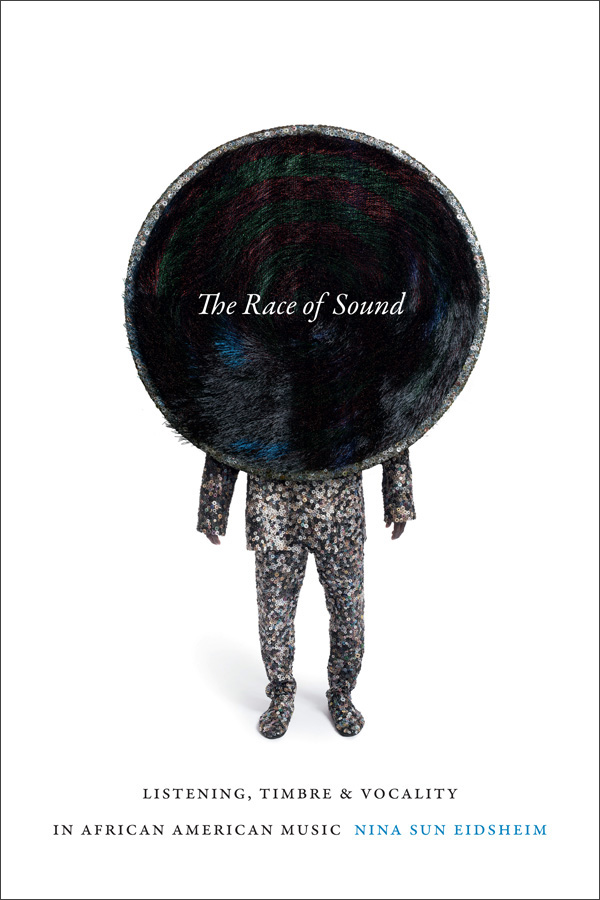
A review of The Race of Sound. Listening, Timbre, and Vocality in African American Music, Nina Sun Eidsheim, Duke University Press, 2019.

The Race of SoundI close my eyes and I can hear Billie Holiday’s black voice filling the room. Her voice, described as “a unique blend of vulnerability, innocence, and sexuality,” speaks of a life marked by abandonment, drug abuse, romantic turmoil, and premature death. Hearing Billie Holiday sing the blues also summons her black ancestors’ history of enslavement, hard labor, racial segregation, and disfranchisement. I can imagine the black singer, cigarette in hand, eyes closed, bearing the sorrow of shattered hopes and broken dreams. But wait. I open my eyes and what I see on the screen is a seven-year-old Norwegian named Angelina Jordan performing on the variety show Norway’s Got Talent. Her imitation of Billie Holiday is almost perfect: pitch, rhythm, intonation, and vocal range correspond to her model down to the smallest detail. Here is a combination of a child’s frail body and the sound of an iconic singer that we usually hear through the narrative of her unfortunate life and perceived ethnicity. Impersonations of African-American singers can be problematic: as Nina Eidsheim notes, they bring to mind a past history of blackface minstrelsy and racist exploitation, and a present still marked by cultural misappropriation and racial stereotypes. But her point is elsewhere: by assigning a race or ethnicity to the sound of a voice, we commit a common fallacy that helps reproduce and essentialize the notion of race. We hear race where, in fact, it isn’t.
Hearing race where it isn’t

Do black voices sound different? Biologically speaking, it makes no sense to assign a racial identity to the sound of a voice. Vocal timbre is determined by the diameter and length of the vocal tract and the size of the vocal folds, neither of which are affected by race or ethnicity. These components vary with gender, age, and enculturation into “communities of language and speech.” The training of the voice, like the training of the body, affects the development of vocal tissue, mass, musculature, and ligaments. Training or “entrainment” takes place both formally and informally, involving vocal practices such as speaking, singing, acting, imitating, crying, or laughing. We grow up into a certain voice tone, and this vocal timbre comes to designate an essential part of our identity. Through voice, we perform who we are or who we want to be. Voice is a collective, cultured performance, unfolding over time, and situated within a culture. Sociology can help us explain how voice becomes the way it sounds.  Drawing from his observation of soldiers in World War I, Marcel Mauss described how people in different societies are brought up to walk, stand, sit, or squat in very different ways. Similarly, Pierre Bourdieu showed in La Distinction how the tone of one’s voice, the habit to speak from the tip of one’s mouth or from the depth of one’s throat, is influenced by social class and status and correlates with other social practices such as eating or engaging in cultural activities. Nina Eidsheim extends these observations on bodily techniques and cultural styles to the ways everyday vocal training is manifested corporeally and vocally. More importantly, she shows that voice does not arise solely from the vocalizer; it is created just as much within the process of listening.

Disciples of the Greek philosopher Pythagoras used to listen to their master from behind a veil in order to better concentrate on his teachings. If an “acousmatic sound” designates a sound that is heard without its originating cause being seen, the “acousmatic question” is raised when one asks who is the person we hear singing or talking without seeing him or her. It is assumed we can know a person’s identity through the sound made by his or her voice: using aural cues, we can guess the age, gender, and ethnicity of the person with only a limited margin of error. From this on, we infer that the voice can give us access to interiority, essence, and unmediated identity of the person. To have a voice is to have a soul, and to hear a voice is to access the soul. Nina Eidsheim shows that this belied of voice as an expression of the true self is based on an illusion: the listener projects onto the voice an individual essence and a racialized identity of his or her own making. In order to dispel that illusion, and to debunk the myth of essential vocal timbre, she offers three postulates that sustain her analysis of voice as critical performance practice. Voice is not singular; its is collective. Voice is not innate; it is cultural. Voice’s source is not the singer; it is the listener. Armed with these three basic tenets, she provides many examples by which we answer to the “acousmatic question” and project a racialized identity on a voice we consider as “black.”

National schools of singing

Classical vocal artists undergo intense training, much of which is dedicated to learning to hear their own voices as the experts hear them. Classical vocal pedagogy is built upon the assumption that it is possible to construct timbre, and national schools of singing have different ways to shape a voice into a distinctive artistic performance. The difference between classical renditions of the same song, Lied or opera in Paris, London, Vienna, or Moscow has nothing to do with the race or place of birth of the singer and is entirely based on the way the singer was schooled and trained to perform. For instance, as Eidsheim notes, the French school of singing insists on the “attaque,” a very strong beginning that is created by a powerful inward thrust of the abdomen. The result is a held sound that is slightly above pitch, with a pushed and sharp-sounding phonation. Singing the French repertoire requires not only a familiarity with the numerous French liaison rules and constant vowel flow within and between words, which a French lyric diction coach can provide, but also a mastery of the attaque and other singing techniques that the French classical tradition has developed. But classical voice teachers also believe each voice has to sound “healthy,” “authentic,” and “natural.” This is where race comes in: most teachers, particularly in the North American context, believe they can always tell the ethnicity of the singer by his or her vocal timbre, and train their students to cultivate what they call their “ethnic timbre” or “unique color.” An ethic of multiculturalism has penetrated vocal pedagogy: some specialists go so far as to criticize ignorant teachers who have not been exposed to a variety of racial timbres for “homogenizing” their students’ voices. Making racial judgments on voice becomes a self-fulfilling prophecy: for performers, teachers, and listeners alike, voice begins to be heard through racial filters and categories.

For most of their history, opera houses in the United States have been exclusively white. Desegregating classical music took time and effort, and black singers had to overcome many obstacles and prejudices. Segregation prohibited African American singers from taking lessons with white teachers or singing in integrated contexts. Those who performed classical music had to share the same spaces and the same programs with the minstrel repertoire, burlesque shows, and negro spirituals. It was difficult, if not impossible, for those performers to advance their careers without reinforcing stereotypes. The first African American singers to perform classical repertoire for large interracial audiences drew a great deal of attention to their blackness. They were given nicknames such as “the black swan” or “the black Patti,” and their voices described as “husky, musky, smoky, misty,” retaining their “savage character” and imbued with the “sorrow of their race.” A surge of African American operatic divas triumphed on the stage during the 1970s and 1980s, breaking the “Porgy and Bess curse” that had relegated their predecessors to singing only a limited part of the repertoire. But even now, singers do not come to the operatic musical tradition on an equal footing. There is resistance toward casting African American tenors as romantic lead characters, and also at creating interracial romances portrayed on stage. It is easier for African Americans to succeed as baritones or basses because the roles written for these vocal types are typically villains. Visual blackness is projected onto auditory timbre, resulting in the perception of sonic blackness. The world of opera is based on the willing suspension of disbelief: the tenor may be too fat, the soprano dowdy and old, and yet the audience accepts what is on stage as a plausible fiction for the sake of enjoyment. But what if Othello isn’t black, or if the Romeo and Juliet couple is interracial?

Projections of identity

Audiences “hear” race when they see a black person singing; they also perceive gender and other markers of identity. It is often believed that a feminine voice is higher in pitch than a masculine one. In fact, there is a considerable area of overlap between male and female voices. And timbre plays a key role in the gendered reading of voice: it is how voices are colored and timbrally mediated that determines whether they are perceived as male or female. Nina Eidsheim illustrates the importance of audiences’ projections of gender categories by taking up the life of Jimmy Scott, an artist who defied categorization. Scott didn’t fit the model of the African American male jazz artist. He was born with a hormonal condition that prevented his voice from changing at puberty. The condition also stopped Scott’s body from growing after the age of twelve. “Little Jimmy Scott” achieved early commercial success but then suffered from a long period of oblivion and was rediscovered by audiences and the music world when he reached old age. Although he always described himself as “a regular guy,” he transcended gender distinctions, thus becoming uncanny, transgressive, and ripe for projection, misidentification, and dismissal as burlesque or play. On many occasions, record covers didn’t feature his picture or give credit to his artistry, and his “neutered” voice was detached from any particular gendered body. When he did appear under his own name, his unique identity was doubled by identities and significations not his own. He was perceived as a masculine woman, a homosexual, a transsexual, or a freak. Listeners participated in the co-creation of Scott’s voice and overall gender identity by projecting familiar stereotypes onto a complex artist.

Audiences project a gendered and racialized identity onto a voice, thereby changing the perception of the performer’s artistry. But racializing voice is not reserved for the human voice: the popular discourse about the “race of sound” is equally present in the digital realm, where voice is converted into zeros and ones. Nina Eidsheim examines the case of the vocal synthesis software Vocaloid that enables songwriters to generate singing by simply typing the lyrics and music notes of their composition, then choosing a “vocal font” to interpret their tune. While Vocaloid is far from the first voice synthesis program, it was the first specifically created as a commercial, consumer-oriented music product. Fan-based communities formed around the voice characters that the software enabled and that were given Christian names such as LOLA and LEON or MIRIAM by the producing company Yamaha. But while LOLA was marketed as a black soul singer’s voice and used samples from a Jamaican artist, users didn’t hear her voice as “black.” Instead, the sound character was described as “a British singer with a Japanese accent” who “lisps like a Spaniard,” and the use of the vocal font fell mostly outside the register of soul music. Vocaloid-created music feeds into YouTube channels with anime character illustrations, even though the original font characters have been “retired” and are no longer commercially available. The anime genre allows for a post-racial representation of facial traits, immersed in an Asian imaginary of misty eyes and colorful hair. Subsequent Vocaloid characters such as Hatsune Miku have transformed into “platforms people can build on,” and their hologram projections are displayed in live concerts where cosplay fans don the attire of their favorite characters. The genie has definitely escaped the racial box its creators designed for it.

I have a dream

The Race of Sound is built on a strong assumption: voice in itself is neither black nor white, and the projection of race takes place in the ear of the beholder as much as it is shaped by the entrainment of the vocalist into speaking or singing communities. The perpetuation of racialized vocal timbre goes a long way in explaining the entrenched nature of structural racism in our societies. As Nina Eidsheim underscores, “For every time that Holiday is heard as and reduced to the archetypal tragic black woman, people are turned away from jobs or housing opportunities based on reductions of their voices to assumed nonwhite identities.” But judging about the nature of voice goes much deeper and is based on fundamental beliefs about sound and listening. We practice the “cult of fidelity” by assuming that sound and vocal timbre are stable and knowable, and we project onto the sonic world fixed categories that shape our perception and representation of what we hear. Therefore, to debunk myths about race as an essential category, one must deconstruct the way we think about sound, music, and listening. This will not only allow us to become more enlightened listeners, but also uphold the status and skills of sound performers. More than stereotypes about the tragic lives of black women, it was style and technique that allowed Billie Holiday to bring dignity, depth, and grandeur to her performances. Understanding vocal timbre as an expression of skill, artistry, and communicative intention will help us appreciate the performance of great artists by judging them not by the color of their skin but by the content of their creative ability.

Kiss the Frog

A review of Animacies: Biopolitics, Racial Mattering, and Queer Affect, Mel Y. Chen, Duke University Press, 2012.

Animacies“Inanimate objects, have you then a soul / that clings to our soul and forces it to love?,” wondered Alphonse de Lamartine in his poem “Milly or the Homeland.” In Animacies, Mel Chen answers positively to the first part of this question, although the range of affects she considers is much broader than the lovely attachments that connected the French poet to his home village. As she sees it, “matter that is considered insensate, immobile, deathly, or otherwise ‘wrong’ animates cultural life in important ways.” Anima, the Latin word from which animacy derives, is defined as air, breath, life, mind, or soul. Inanimate objects are supposed to be devoid of such characteristics. In De Anima, Aristotle granted a soul to animals and to plants as well as to humans, but he denied that stones could have one. Modern thinkers have been more ready to take the plunge. As Chen notes, “Throughout the humanities and social sciences, scholars are working through posthumanist understandings of the significance of stuff, objects, commodities, and things.” Various concepts have been proposed to break the great divide between humans and nonhumans and between life and inanimate things, as the titles of recent essays indicate: “Vibrant Matter” (Jane Bennett), “Excitable Matter” (Natasha Myers), “Bodies That Matter” (Judith Butler), “The Social Life of Things” (Arjun Appadurai), “The Politics of Life Itself” (Nikolas Rose),“Parliament of Things” (Bruno Latour). Many argue that objects are imbued with agency, or at least an ability to evoke some sort of change or response in individual humans or in an entire society. However, each scholar also possesses an individual interpretation of the meaning of agency and the true capacity of material objects to have personalities of their own. In Animacies, Mel Chen makes her own contribution to this debate by pushing it in a radical way: writing from the perspective of queer studies, she argues that degrees of animacy, the agency of life and things, cannot be dissociated from the parameters of sexuality and race and is imbricated with health and disability issues as well as environmental and security concerns.
Intersectionality

Recent scholarship has seen a proliferation of dedicated cultural studies bearing the name of their subfield as an identity banner in a rainbow coalition: feminist studies, queer studies, Asian American studies, critical race studies, disability studies, animal studies… In a bold gesture of transdisciplinarity, Mel Chen’s Animacies contributes to all of them. The author doesn’t limit herself to one section of the identity spectrum: in her writing, intersectionality cuts across lines of species, race, ability, sexuality, and ethnicity. It even includes in its reach inanimate matter such as pieces of furniture (a couch plays a key part in the narrative) and toxic chemicals such as mercury and lead. And as each field yields its own conceptualization, Mel Chen draws her inspiration from what she refers to as “queer theory,” “crip theory,” “new materialisms,” “affect theory,” and “cognitive linguistics.” What makes the author confident enough to contribute to such a broad array of fields, methods, and objects? The reason has to do with the way identity politics is played in American universities. To claim legitimacy in a field of cultural studies, a scholar has to demonstrate a special connexion with the domain under consideration. As an Asian American for instance, Mel Chen cannot claim expertise in African American studies; but she can work intersectionally by building on her identity as a “queer woman of color” to enter into a productive dialogue with African American feminists. The same goes with other identity categories: persons with disabilities have a personal connexion to abled and disabled embodiment, while non-disabled persons can only reflect self-consciously about their ableism. Even pet lovers, as we will see, have to develop a special relationship with their furry friends in order to contribute to (critical) animal studies.

Using this yardstick, Mel Chen qualifies by all counts to her transdisciplinary endeavor. She identifies herself as Asian American, queer, and suffering from a debilitating illness. She gives many autobiographical details to buttress her credentials. She mentions that her parents were immigrants from China who couldn’t speak proper English and used singular and plural or gendered pronominal forms indifferently. She grew up in a white-dominated town in the Midwest and was used to hearing racist slurs, such as people yelling “SARS!” at her—this was before a US president publicly stigmatized the “Chinese virus.” She shows that prejudice against the Chinese has a long history in the United States. The book includes racist illustrations dating from the nineteenth century featuring Chinese immigrants with a hair “tail” and animal traits that make them look like rodents. Chen analyzes the racial fears of lead poisoning in the “Chinese lead toy scare” of 2007 when millions of Chinese exported toys made by Mattel were recalled due to overdoses of lead paint. She exhumes from the documentary and film archives the figure of Fu Manchu, a turn-of-the-century personification of the Yellow Peril, and proposes her own slant on this character that is said to provide “the bread and butter of Asian American studies.” Mel Chen’s self-reported identity as queer is also documented.  She mentions her “Asian off-gendered form” when describing herself, and frequently refers to her own queerness. In an autobiographical vignette, she designates her partner as a “she” and puts the pronoun “her” in quotes when she refers to her girlfriend (Chen’s own bio on her academic webpage refers to her as “they”). Her scholarship builds on the classics of queer studies such as Judith Butler and Eve Kosofsky Sedgwick, and she feels especially close to “queer women of color” theorizing. She exposes to her readers some unconventional gender and sexuality performances, such as the category of “stone butch” designating a lesbian who displays traditional masculinity traits and does not allow herself to be touched by her partner during lovemaking (to draw a comparison, Chen adds that many men, homo or heterosexual, do not like to be penetrated.)

Feeling Toxic

But it is on her medical condition that Mel Chen provides the most details. Moving to the “risky terrain of the autobiographical,” she mentions that she was diagnosed as suffering from “multiple chemical sensitivity” and “heavy metal poisoning.” This condition causes her to alternate between bouts of morbid depression and moments of “incredible wakefulness.” She makes a moving description of walking in the street without her filter mask and being in high alert for toxins and chemicals coming her way: navigating the city without her chemical respirator exposes her to multiple dangers, as each passerby with a whiff of cologne or traces of a chemical sunscreen may precipitate a strong allergic reaction. In such condition, which affects her physically and mentally, she prefers to stay at home and lie on her couch without seeing anybody. But Mel Chen doesn’t dwell on her personal condition in order to pose as a victim or to elicit compassion from her readers. Firstly, she feels privileged to occupy an academic position as gender and women studies professor at UC Berkeley: “I, too, write from the seat and time of empire,” she confesses, and this position of self-assumed privilege may explain why she doesn’t feel empowered enough to contribute to postcolonial studies or to decolonial scholarship. More importantly, she considers her disability as an opportunity, not a calamity. Of course, the fact that she cannot sustain many everyday toxins limits her life choices and capabilities. But toxicity opens up a new world of possibilities, a new orientation to people, to objects and to mental states. As we are invited to consider, “queer theories are especially rich for thinking about the affects of toxicity.”

This is where the love affair with her sofa comes in. When she retreats from the toxicity of the outside world, she cuddles in the arms of her couch and cannot be disturbed from her prostration. “The couch and I are interabsorbent, interporous, and not only because the couch is made of mammalian skin.” They switch sides, as object becomes animate and subject becomes inanimate. This is not only fetishism: a heightened sense of perception of human/object relations allows her to develop a “queer phenomenology” out of her mercurial experience. New modes of relationality affirm the agency of the matter that we live among and break it down to the level of the molecular. Mel Chen criticizes the way Deleuze and Guattari use the word “molecularity” in a purely abstract manner, considering “verbal particles” as well as subjectivities in their description of the molar and the molecular. By contrast, she takes the notion of the molecular at face value, describing the very concrete effects toxic molecules have on people and their being in the world. These effects are mediated by race, class, age, ability, and gender. In her description of the Chinese lead toy panic of 2007, she argues that the lead painted onto children’s toys imported to the United States was racialized as Chinese, whereas its potential victims were depicted as largely white. She reminds us that exposure to environmental lead affects primarily black and impoverished children as well as native Indian communities, with debilitating effects over the wellbeing and psychosocial development of children. Also ignored are the toxic conditions of labor and manufacture in Chinese factories operating mainly for Western consumers. The queer part of her narrative comes with her description of white middle-class parents panicking at the sight of their child licking their train toy Thomas the Tank Engine. In American parents’ view, Thomas is a symbol of masculinity, and straight children shouldn’t take pleasure in putting this manly emblem into their mouth. But as Chen asks: “What precisely is wrong with the boy licking the train?”

Queer Licking

In addition to her self-description as Asian, queer, and disabled, Mel Chen also claims the authority of the scholar, and it is on the academic front, not at the testimonial or autobiographical level, that she wants her Animacies to be registered. Trained as “a queer feminist linguist with a heightened sensitivity to the political and disciplinary mobility of terms,” she borrows her flagship concept from linguistics. Linguists define animacy as “the quality of liveness, sentience, or humanness of a noun or noun phrase that has grammatical, often syntactic, consequences.” Animacy describes a hierarchical ordering of types of entities that positions able-bodied humans at the top and that runs from human to animal, to vegetable, and to inanimate object such as stones. Animacy operates in a continuum, and degrees of animacies are linked to existing registers of species, race, sex, ability, and sexuality. Humans can be animalized, as in racist slurs but also during lovemaking. “Vegetable” can describe the state of a terminally-ill person. As for stones, we already encountered the stone butch. Conversely, animals can be humanized, and even natural phenomena such as hurricanes can be gendered and personified (as with Katrina.) Language acts may contain and order many kinds of matter, including lifeless matter and abject objects. Dehumanization and objectification involve the removal of qualities considered as human and are linked to regimes of biopower or to necropolitics by which the sovereign decides who may live and who must die.

This makes the concept of animacy, and Mel Chen’s analysis of it, highly political. Linguistics is often disconnected from politics: Noam Chomsky, the most prominent linguist of the twentieth century, also took very vocal positions on war and American imperialism, but he kept his political agenda separate from his contribution to the discipline. In How to Do Things with Words, J. L. Austin demonstrates that speech acts can have very real and political effects, and in Language and Symbolic Power, Pierre Bourdieu takes language to be not merely a method of communication, but also a mechanism of power. Mel Chen takes this politicization to its radical extreme. She criticizes queer liberalism and its homonormative tendencies to turn queer subjects into good citizens, good consumers, good soldiers, and good married couples. Recalling the history and uses of the word queer, which began as an insult and was turned into a banner and an academic discipline, she notes that some queers of color reject the term as an identity and substitute their own terminology, as the African American quare. She also questions the politics by which animals are excluded from cognition and emotion, arguing that many nonhuman animals can also think and feel. Positioning her animacy theory at the intersection of queer of color scholarship, critical animal studies, and disability theory, she argues that categories of sexuality and animality are not colorblind and that degrees of animacy also have to do with sexual orientation and disability. She brings the endurance of her readers to its break point by invoking subjects such as bestiality and highly unconventional sexual practices. Her examples are mostly borrowed from historical and social developments in the United States, with some references to the People’s Republic of China. She exploits a highly diverse archive that includes contemporary art, popular visual culture, and TV trivia.

Critical Pet Studies

According to “Critical Pet Theory” (there appears to be such a thing), scholars have to demonstrate a special bond with their pet in order to contribute to the field of animal studies. Talking in abstract of a cat or a dog won’t do: it has to be this particular dog of a particular breed (Donna Harraway’s Australian shepherd ‘Cayenne’), or this small female cat that Jacques Derrida describes in The Animal That Therefore I Am. Talking, as Deleuze and Guattari did, of the notion of “becoming-animal” with “actual unconcern for actual animals” (as Chen reproaches them in a footnote) is clearly a breach in pet studies’ normative ethics. Even Derrida failed a simple obligation of companion species scholarship when he failed to become curious about what his cat might actually be doing, feeling, or thinking during that morning when he emerged unclothed from the bathroom, feeling somehow disturbed by the cat’s gaze. Mel Chen’s choice of companion species is in line with her self-cultivated queerness: she begins the acknowledgments section “with heartfelt thanks to the toads,” as well as “to the many humans and domesticated animals populating the words in this book.” The close-up picture of a toad on the book cover is not easily recognizable, as its bubonic glands, swollen excrescences, and slimy texture seem to belong both to the animal kingdom and to the realm of inert matter. Animacy, of course, summons the animal. But Mel Chen is not interested in contributing to pet studies: she advocates the study of wild and unruly beasts or, as she writes, a “feral” approach to disciplinarity and scholarship. “Thinking ferally” involves poaching among disciplines, raiding archives, rejecting disciplinary homes, and playing with repugnance and aversion in order to disturb and to unsettle. Yes, the toad, this “nightingale of the mud” as the French poet would have said, is an adequate representation of this book’s project.

Nationalists, Feminists, and Neoliberals Converging Against Islam

A review of In the Name of Women′s Rights: The Rise of Femonationalism, Sara R. Farris, Duke University Press, 2017.

Farris.jpgWhat happens in the name of women’s right is, according to Italian scholar Sara Farris, the denial of the rights of certain women and men to live a life with dignity in Western European countries where they have migrated. More specifically, an anti-Islam and anti-migrant rhetoric is increasingly articulated in terms of gender equality and women’s emancipation. The misuse of liberal discourse for illiberal ends is not new: the invasion of Afghanistan that followed the terrorist attacks of September 11 was presented to the international community as a mission to liberate Afghan women from their oppression under Taliban rule just as much as an act of defense and retaliation against the perpetrators of the attacks. The French fixation with the “Islamic” veil finds its origins in the Algerian war and the effort to present the fight against the FLN as a crusade for modernity on behalf of “Arab” women against their male oppressors. Closer to us, Marine Le Pen is known for courting France’s female voters and for endorsing women’s rights within the framework of her anti-migrant platform. What is distinctive about Sara Farris’s book are three things. First, she anchors her discussion on what she calls “femonationalism” (read: feminism+nationalism) within the context of ideological debates taking place in France, Italy, and the Netherlands during the first decade of the twenty-first century. Second, she shows that the instrumentalization of women’s rights for anti-migrant and anti-Islam purposes is not limited to political parties from the far right: rather, it is the result of a convergence between right-wing nationalists, some feminists and femocrats (by which she means bureaucrats and social workers promoting gender equality policies in state agencies), and neoliberal economic policies targeting participation in the labor market. Third, Farris claims that only a political economy analysis inspired by the critique of neoliberalism can explain why, at this particular juncture, “Muslim” men are being targeted as surplus workers “stealing jobs” and “oppressing women”, while “Muslim” and non-European migrant women are construed as redeemable agents to be rescued by integrating them into low-skilled, low-paid activities of the “social reproduction sector.”
The femonationalist ideological formation

The first argument on the ideology of right-wing parties is well-known. Politicians such as Geert Wilders in the Netherlands, Marine Le Pen in France, or Matteo Salvini in Italy have expressed support for the cause of gender equality (with occasional mentions to gay rights) within a xenophobic and anti-migrant framework. As the book title reflects, they are advancing their anti-Islam agenda in the name of women’s rights. Their attacks on migrant men, especially Muslims, are more strident than their position on non-Western migrant women. They consider the first ones as a direct threat to Western Europe society due, above all, to their oppressive treatment of women at home and their unrestrained, violent sexuality toward women outside the home. The second ones are considered as redeemable: provided certain conditions are met, women can “assimilate” into the host society (through work and often through marriage) and raise their children the “right” way, but they are to be protected from the pervasive influence of “their” men. As the title “in the name of women’s rights” suggests, this appropriation of a feminist agenda is only an excuse, a deception or a fraud by nationalist parties who are otherwise described as misogynist in essence and masculinist in style. Hence the message to European feminists: the accession of the nationalist right to power, as is the case in several European countries, would constitute a regression for women’s rights and would end in a backlash against women. This assumption, however, should be put to empirical testing: it might be the case that illiberal policies would, in the end, benefit the situation of (certain) women at the national level, although migrant women would certainly be the first victims of a tightening of immigration policies. Likewise, as we mentioned, liberal means can serve illiberal ends. We have no reason to assume that the defense of (certain) women’s rights in nationalist platforms is not sincere and that there is only instrumentalization at play. It is true that nationalist parties have shown concern about gender inequality mostly in the case of Muslim and ethnic minority communities. But the history of political ideas provides us with many cases in which ideologies have shifted from the left to the right and sometimes to the far right. Behind the declarations of populist leaders in favor of women’s empowerment and gender equality, there may be a kind of “alt-feminism” in the making. The relation between this alternative feminism and more traditional forms of feminism will have to be defined. But these fine points are not discussed by Sara Farris, who obviously has no sympathy at all for nationalist points of view: for her, femonationalism is no feminism at all.

The second thesis on “femonationalism” as convergence between different agendas and positions is less familiar to the general public and itself needs to be unpacked. The most evident manifestation of this convergence between nationalism and feminism is the fact that some well-known and outspoken feminists such as Elisabeth Badinter in France have joined the ranks of those who see Islam as a threat to European societies. Accordingly, they have endorsed legal proposals such as veil bans while portraying “Muslim” women as passive victims who needed to be rescued and emancipated. They have also described men originating from non-western, economically underdeveloped countries are misogynist and prone to sexual violence, as in the cases of rape and sexual aggressions committed by North Africans and Middle East migrants in Germany. Again, Islam is singled out by these intellectuals as a religion associated with unequal gender relations and violence (with an emphasis on honor killings, domestic violence, forced veiling, and arranged marriages). They see the veil as a form of symbolic violence exerted by Muslim men forcing women to wear it and by Muslim women singling themselves out from the rest of society. Many have turned against multiculturalism as promoting a kind of value relativism and failing to defend “western” values of emancipation, individual rights, and secularism. These arguments define what Farris call the “femonationalist ideological formation,” bringing together public figures who otherwise disagree on many issues. Sara Farris claims that feminists can only lose by espousing the anti-Islam agenda. They are diverting attention away from the many forms of inequality that still affect Western European women. They transform women’s rights into a “civilizational”, ideological issue, as opposed to a social and economic one grounded on material interests. They also contribute to the diffusion of an ethnicized vision of society. Their endorsement of the agenda promoted by the nationalist right is a “divine surprise” for the latter: right-wing politicians can claim the support of high-visibility intellectuals, who have a strong legitimacy on issues of gender inequality and women’s rights. Some self-declared feminists, such as Ayaan Hirsi Ali in the Netherlands, have lend themselves to political collaboration with right-wing forces. Most feminists however, have insisted on their distance with the nationalist right, claiming instead that their new fight against Islam’s oppression of women stands in continuity with their progressive engagement.

Migrant men and migrant women

Closely related to these Islam-bashing feminists, Farris also points to the role of “femocrats.” This term, slightly dismissive, refers to the (not necessarily female) bureaucrats who are institutionalizing feminism through state programs of gender equality and civic integration. Without giving any figures, Sara Farris claims that state funds are increasingly withdrawn from policies tackling gender inequality as a general problem and are redirected instead toward programs aimed at addressing gender inequality among “Muslim” and ethnic minority communities. These civic integration programs purport to teach migrant men what it means to respect women and gender diversity, and to instruct migrant women how to emancipate from their supposedly backward culture. Unwittingly, they are reproducing the prevalent image of migrant men as a sexual threat and migrant women as victims to be rescued. They are also positing the host country as a society where gender rights are respected and guaranteed by the state, as opposed to a domain of social gains and entitlements that need to be conquered and expanded. Of course, there is nothing wrong in telling people that men and women are equal and that women’s rights should be respected. But here again we may have the case of a liberal objective being pursued through illiberal and even repressive means. Civic integration policies have an obligatory character, and their nonobservance can be punished by either financial penalties or denial of a legal residence permit. Furthermore, the requirement that migrants possess the knowledge considered crucial to integration in the receiving country turns integration into an a priori condition rather than a process that occurs over time. From Sara Farris, the problem comes from the undiscussed assumption that these migrants need to be taught what gender equality is about as if they were ignorant of any notions about women’s rights. Besides, gender equality is mentioned mainly in reference to the private sphere, with an emphasis on traditional gender roles for women who need to develop good mothering skills. For Farris, emancipation cannot be taught, and certainly not in a condescending mode by Western feminists or state apparatuses. Nurturing freedom means first and foremost creating the material conditions for freedom and equality. That’s where the rubber hits the road: while social programs aimed at the integration of female migrants put forward values of emancipation and autonomy, they channel these women toward activities that are far from emancipating and that do not allow for their autonomization or empowerment. What they do is the opposite of what they preach.

Through civic integration programs and other policies, migrant women are directed toward what Sara Farris, in good Marxist fashion, calls the “social reproduction sector”: this refers to the care and domestic activities which are mostly located in the private sphere, such as babysitting, child rearing, housekeeping, apartment cleaning, and caregiving of the elderly. Farris sees a contradiction “when feminists and femocrats urge emancipation for Muslim and non-western migrant women while channeling them toward the very sphere (domestic, low-paying, and precarious jobs) from which the feminist movement had historically tried to liberate women.” While advocating women’s participation in the public sphere, they contribute to the confinement of migrant women in household services, the reinforcement of traditional gender roles and the perpetuation of the gender injustice they claim to be combating. Farris considers the jobs proposed to migrant women as lacking in dignity and not conducive to emancipation. Changing diapers, wiping floors, cleaning kitchens, attending sick bodies: these are occupations which are now overwhelmingly held by women of foreign origins and that European women do not want to take as a profession. Of course, one could argue that there is nothing demeaning in the work of care, in attending to children and the elderly, or in making hotel rooms and office space fit for productive use. These jobs can be held with dignity, the feeling that comes from working hard for a socially useful function. But this is not how society sees these jobs and occupations in western Europe. They are organized under conditions of precariousness, with minimal wages, job flexibility, part-time or casual contracts, and little access to welfare provisions. The inclusion of social reproduction into the market sphere of wage labor has not led to a rehabilitation of care and domestic work; on the contrary, it continues to be perceived as unskilled, low-status, isolated, servile, and dirty. And for Sara Farris, western feminists are largely to blame for this lack of consideration. They have deserted the issue of social reproduction as a matter for critical engagement, leaving the sector to the naturalizing forces of neoliberalism.

The regular army of domestic labor

Right-wing nationalists, intellectuals who identify themselves as feminists, state experts working on migrant women issues, and neoliberals favoring workfare programs: how can these very different and sometimes opposing parties come up with similar ideas when the migrant question is at stake? As Sara Farris insists, these opponents to Islam in the name of women’s rights should not be seen as partners in crime or ideological bedfellows. The fact that they sometimes converge on an anti-Islam platform doesn’t mean they are colluding, cooperating, or associating with each other in any way. Each party has specific reasons to frame Islam as posing a threat to gender equality in the west. Talking about instrumentalization to describe their relations would be patronizing, especially for the feminists who are very conscious of the political difference that separate them from the nationalist right. In true Marxist fashion, Sara Farris believes convergence at the ideological level comes from similar interests dictated by the material conditions of late capitalism. Neoliberalism isn’t simply the contextual ground on which the femonationalist convergence takes place: it is the constitutive plane of such a convergence. Neoliberal globalization is grounded on a sexual division of labor in which, to use Karl Marx’s categories, migrant women provide the “regular army of labor” and migrant men the “reserve army of labor” or relative surplus population. Unlike migrant men who work in the productive sector, migrant women who work in the domestic sector allow the social reproduction of labor to take place. They are spared from accusations of “stealing jobs” or “posing a threat to society” because they allow western families to form double income couples and to balance work with domestic life. Their employers maintain ownership and control over the social means of production and reproduction. Their labor cannot be substituted by machines and capital, as care and domestic work imply certain qualities that can only be provided by “live labor” and that are often associated with traditional feminine roles. The difference between the industrial sector afflicted with an oversupply of labor in western European countries and the social reproductive sector (cleaning, care domestic, and health care work) explains the double standard applied to male and female migrant workers, especially when religious values come into play.

Commenting the division of the working class in England between English proletarians and Irish proletarians, Karl Marx claimed he had found the secret of the maintenance of power by the capitalist class, as well as the secret of the English working class’s lack of revolutionary spirit. Similarly, Sara Farris believes she has solved the mystery of the unholy convergence between nationalists and feminist promoters of women’s rights: the femonationalist ideological formation takes places under the aegis of neoliberal exploitation of the Global South. “Just as the exploitation of non-western countries’ natural resources permits the West to keep its pattern of production and consumption, it is also migrant women’s socially reproductive work that permits western European women and men not only to have the ‘cheap’ care that enables them to be active in the labor market, but also to retain the illusion that gender inequality has been achieved—at least for ‘them’.” Migrant women are “needed” as workers, “tolerated” as migrants, and “encouraged” as women to conform to western values. Meanwhile, migrant men are needed only insofar as they form a “reserve army of labor,” pushing industrial wages down and antagonizing western workers who then tend to align with the nationalist agenda of the ruling class. Feminists who claim to act in the name of women’s rights are only idiot savants, contributing to the social reproduction of capital while protecting the interests of some women against others’. It is in this sense that they converge with the agenda of the nationalist right: both are complementary ways by which neoliberal globalization extends its conditions of uneven development and exploitation. This process is fraught with contradictions: historically, migrant women came to Western Europe only as the wives and relatives of male guest laborers who formed a first wave of labor migration. It is only when male workers became redundant that the demand for female migrant labor in social reproductive activities began to rise, leading to a mechanism of exclusion of male migrants and inclusion of female migrants. It is this dual process of inclusion and exclusion that femonationalism performs at the level of ideology.

Importing identity politics into Europe

In the Name of Women’s Rights offers a curious mix of European social critique and American multicultural advocacy. It was written while the author was in residence at the Institute for Advanced Studies in Princeton, with feminist author Joan W. Scott providing advice on how to frame intellectual debates about Islam and feminism in Western Europe. Through scholarly networks and academic contacts, the United States smuggles into Europe a vision of identity politics and multiculturalism that was developed in the context of the culture wars on university campuses and that reflects a very specific conception of social groups and ethnicities. Each individual is automatically affiliated to an ethnic or religious community, an exclusive group that is conceived as separated from mainstream culture and that is defined in opposition to other collectives: migrant vs. natives, foreigners vs. citizens, men vs. women, Muslims vs. secular individuals. Like the right-wing promoters of the fantasy notion of Eurabia, these leftist intellectuals see Islam and the integration of non-western Muslim communities as the main challenge facing European societies, overcoming all other forms of division and solidarity. Debates on citizenship, on gender parity, on secularism and on inequality are all overdetermined by this ethnic and religious context. As a European, Sara Farris should know better than to apply such simplistic notion to a situation that requires other tools of analysis and interpretation. But she finds it convenient to sugarcoat her hardcore Marxism with a layer of identity politics that provides catchy titles and attractive soundbites. Like the convergence between European nationalists and universalist feminists—a fringe phenomenon, that doesn’t reflect the history of both the nationalist right and of the feminist movement in Europe—, this alliance between radical economics and cultural warfare mixes elements that don’t fit together and that provide little explanatory power. This is a shallow and off-the-shelf book that attempts to ride the wave of sexual nationalisms by providing its own entry in the form of a catchy word—femonationalism is designed after the notion of homonationalism advanced by Jasbir Puar. But its cultural lenses are heavily biased, and its political economy antiquated. As a piece of transnational scholarship designed between Europe and the United States, it provides the worst of both worlds.

Queer Theory in Dark Times

A review of Terrorist Assemblages: Homonationalism in Queer Times, Jasbir K. Puar, Duke University Press, Tenth Anniversary edition, 2017.

terrorist assemblageTerrorist Assemblages offers, as the foreword to the 2017 edition puts it, “queer theory in dark times.” The times that form the backdrop of queer theory are very dark indeed. The book was written at a time when, in the wake of revelations about torture of Iraqi prisoners at Abu Ghraib, New York Times editorialist Thomas Friedman could write: “I have never known a time in my life when America and its president were more hated around the world than today” (yes, the year was 2004, and the president was George W. Bush). It was, and it still is, a time of death and mourning, of war and aggression, of terrorist attacks and nationalist hype. This historical conjuncture has been described as “the age of the world target”: what is being targeted are not simply terrorist networks and rogue states, but the world as an object to be destroyed. In this context, Terrorist Assemblages exposes the United States not only as a targeting war machine, but also as a targeted nation, as the target of terrorist assaults and radical critique. There is a political urgency that is to be felt at every page, no less in the 2017 postscript titled “Homonationalism in Trump times”. This book is not the work of an ivory tower academic or a closet intellectual, pondering over the course of world’s events from the safety of an academic perch. It is a text steeped in violence and accusations, a disruptive and unruly intervention that leaves no field of inquiry unscathed. The starting point of the acceleration of time that Terrorist Assemblages manifests is September 11, 2001, which forms the degree zero of writing and thinking about our present situation. 9/11 is conceptualized as a “snapshot” and a “flashpoint”, an explosion and a lightning, allowing different temporalities to emerge and, with them, a range of issues hitherto suppressed. These weird and unhinged times offer a space for the untimely, the unexpected, the forever deferred. The politics of time that the epoch brings to the fore, with its tactics, strategies, and logistics, is a politics of the open end, of allowing unknowable political futures to come our way, of taking risks rather than guarding against them.

Advancing a nationalist agenda in the name of sexual freedom

The times are queer, and so is theory. Queer times is a historical juncture when new normativities are emerging, new subjectivities are being hailed, and new bodies are being assembled. More specifically, Jasbir Puar argues that the production of terrorist bodies is inseparable from the affirmation of queer subjects in a context where homosexuality and LGBT rights are being tied to a nationalist agenda. This book was not the first to use the expression “homonationalism”: the topic was a matter of discussion in Europe long before American academics began to notice, and the assassination of Pim Fortuyn in 2002 was a watershed in this respect. The striking feature that distinguishes contemporary European nationals parties from their older counterparts is the invocation of gender equality and LGBT rights with an otherwise xenophobic rhetoric. Indeed, despite their masculinist political style and occasional homophobic slurs, those parties have increasingly advanced their anti-Islam agendas in the name of sexual freedom and gender rights. Sexual diversity has thus been instrumentalized in the service of sexual nationalism, whereby migrants’ and Muslims’ integration and loyalty to their hosting western nations are tested by means of their commitment to the sexual values of these nations. This sexualization of citizenship posits that Muslims and other non-western migrants are intrinsically homophobic and that Islam is, in essence, “anti-gay”. Some western progressives even use this argument to call for a slower pace of social reforms in Europe, advancing that our open and increasingly multicultural societies are “not yet ready” for the recognition of sexual minorities’ rights. Puar brings these European debates to the post-9/11 American context. Centering her attention on the intersection between gay politics and US exceptionalism, she emphasizes the exclusionary state as the master signifier of the contemporary focus on male radicalized Others as misogynistic and xenophobic enemies of western civilization. More specifically, Puar discusses the encounter between US nationalism and queer sexual politics in terms of “collisions”, which she sees as productive of a “homonationalist” formation. Puar’s “homonationalism” thus both describes the mobilization of gay rights against Muslims and racialized Others within the American nationalist framework, but also refers to the integration of “homonormativity”—that is, domesticated homosexual politics—within the US agenda of the war on terror. As Puar puts it, homonationalism is a “discursive tactic that disaggregates US national gays and queers from racial and sexual others, foregrounding a collusion between homosexuality and American nationalism that is generated both by national rhetorics of patriotic inclusion and by gay and queer subjects themselves.”

Violence of theory, violence of the state, violence of the self

Terrorist Assemblages is a violent book that both condones and denounces violence. As the author writes, “it is easy, albeit painful, to point to the conservative elements of any political formation; it is less easy, and perhaps much more painful, to point to ourselves as accomplices of certain normativizing violences.” The first form of violence that the author exposes is the violence of theory. It is the chasm “between those who theorize and those who are theorized about.” It is telling that, in the context of the revelations of torture at Abu Ghraib and the outrage that pictures of maimed bodies elicited, no one took the pain to inquire who these tortured Iraqi individuals were, what experience they felt, and how their lives and those of their relatives were affected. Or that trauma analysis portrays war veterans and victims of terrorist attacks as worthy of compassion and care, whereas people who have lost loved ones as a consequence of US foreign policy elsewhere are not depicted as sufferers of trauma or injustice. Why is there a double standard when dead bodies are counted in the aftermath of military campaigns, with the Iraq war claiming 773 US fatalities but more than 10,000 Iraqis killed? Or, to return to the Abu Ghraib case, why are these photos any more revolting than pictures of body parts blown apart by shards of missiles and explosives as a consequence of targeted attacks launched by unmanned drones? For Jasbir Puar, theory is intrinsically violent. She turns this violence against queer theorists and progressives of a radical bent, and ultimately against herself. The author draws attention to the manifold ways in which the US state of exceptionalism and exception has co-opted important sections of the gay movement. Rather than a mere instrumentalization, or tactical exploitation of the theme of gay rights by nationalism, Puar thus highlights the active involvement—and responsibilities—of the queer movements themselves that have supported (wittingly or unwittingly) this new racist configuration. Queer theory itself, with its insistence on LGBT exceptionalism and impossible standards of radicalism, partakes in this contemporary violence. A typical discursive move of Puar is to bring forth a progressive or radical argument proposed by a fellow theorist, then highlight its blind spots, its undeclared essentialism and hidden normativity. On that count, few arguments survive her critique, and even her own argumentation is not immune from self-criticism. As a result, the author paints herself into an inhospitable corner: normativity, homo or hetero, is not something that we can escape.

The second form of violence that Terrorist Assemblages addresses is the violence of the state. For Puar, this violence has reached a new intensity with the war on terror and the isolation of the homeland that followed September 11, 2011. The state has morphed into a war machine which, like the desiring machines of Deleuze and Guattari, is animated with a will of its own and produces in its wake a multiplicity of infectious affects and afflictions: patriotism, racism, security, death, torture, terror, terrorism, detention, deportation, surveillance, and control. The bodies of foreign terrorists are constituted as bodies without organs: they are eviscerated, stripped bare of any subjectivity and left to survive as living dead in zones of non-law such as Guantanamo and black sites of detention. In the neo-Orientalist vision of geopolitics in the Middle East, terrorists are perceived as queer: “failed and perverse, these emasculated bodies always have femininity as their reference point of malfunction, and are metonymically tied to all sorts of pathologies of the mind and body—homosexuality, incest, pedophilia, madness, and disease.” The biopolitical state turns foreign subjects into figures of death at the same time as it associates gay couples and queer individuals with positive ideas of life and productivity: hence gay marriage, the exaltation of difference, and the market segmentation of LGBT communities into profitable ventures. For Puar, “this benevolence toward sexual others is contingent upon ever-narrowing parameters of white racial privilege, consumption capabilities, gender and kinship normatively, and bodily integrity.” The affirmation of sexual difference is concomitant with the ascendency of whiteness: in popular representation, the homosexual other is always white, while the racial other is straight. By extension, the invocation of the terrorist as queer, nonnational, perversely racialized other has become part of the normative script of the US war on terror. Of course, there is no way to tell where this process of scapegoating and excluding unworthy subjects from the national body will stop.There is always the risk that you may be next in line and that, after having targeted terrorists, illegal aliens, immigrants, law trespassers and deviants, the state may come after you.

Thirdly, Puar underscores the violence of identity. Assigning a person to a fixed and defined identity is a violent act of normativity. It elides and forecloses other affiliations and belongings, and creates a sense of loss and mourning for the other futures and possibilities that never will be. Our belonging to a certain community, group or category is a purely arbitrary fact, a given without meaning. To be born in a certain country, within a certain ethnic group or with a predetermined sexual orientation is not the result of a conscious decision or a choice: to have one’s identity defined by these contingent parameters is a form of violence that nothing compels us to take as granted. Norms exclude certain people and deny their rights as much as they include other people and grant them privileges. Queer theory has been designed to bring such norms at risk and to return against the bearer the violence that they apply to nonconformist bodies. Queer means trouble: it breaks down the established and stable categories of identity, it refuses to accept that genres and genders can be clearly defined, and instead focuses on the expansive production of sexualized selves through performance and affects. But the proliferation of shifting identities and the compulsive invocation of difference is no less violent and normative than the compulsory orders of residence that puts us under house arrest.  Although queer theory emphasizes difference, mismatch, and nonnormativity, queer as a category creates its own normative power, its ability to mold subjects and discipline their conduct. As Puar shows, all queer bodies have not been included in the category of queer. Despite its claims of intersectionality, queer politics have prioritized only one factor, sexuality, as the primary sense through which they structure their action. In particular, queer theory is underpinned by a powerful conviction that religious and racial communities are more homophobic than white mainstream queer communities are racist. By implication, for queers of colors a critique of homophobia within their home community is deemed more pressing and should take precedence over a criticism of racism within mainstream queer communities.

The West as an arbiter of civilizational standards

Jasbir Puar reverses that order of priority. She revels in exposing the bigotry of queer organizations such as InterPride or OutRage! who send politically correct messages with an exclusionary subtext. Complicity with white ascendency and heteronormativity can take many forms. As with the construction of model minorities by elites from certain ethnic groups, wealthy white gay males create an ideal of the homosexual family (gay marriage, adopted children, bourgeois lifestyle) that is no less normative and exclusionary than its heterosexual version. Nationalism is on the rise in every segment of society, and progressive sexuality is heralded as a hallmark of western modernity as opposed to the backwardness and obscurantism of the Middle East where the war on terror is waged. Islam and homosexuality are constituted as mutually exclusive; and queer people of color, or gay Muslims, becomes the significant others to be rescued from their culture or communities. The West regards itself as the arbiter of civilizational standards. Just as exotic women are waiting to be liberated by white males, gay Arabs need to be saved by white gay men, and they are granted asylum status accordingly. In the progressive narrative, gays and lesbians are the last recipients of civil rights that have already been bestowed on racial minorities. This rosy vision not only falsely assumes that discrimination and prejudices against ethnic minorities are a thing of the past; it also relieves mainstream gays and lesbians from any accountability to an antiracist agenda. The two issues are treated as substitutes, not complementary: Puar reminds us that the legalization of interracial marriage in 1967 coincided with increased criminalization of homosexuality in US laws. Likewise, the growing visibility and inclusion of gays and lesbians into the national fold comes at the expense of racialized subjects and foreign others who are targeted by discriminatory laws justified by the war on terror. Against affirmations of sexual exceptionalism that depicts the United States as a haven for the poor, huddled masses yearning to breathe sexual freedom, Puar shows that America lags far behind in the recognition of sexual minorities’ rights. And she notes that visa restrictions and deportation policies have created a new diaspora of former US residents cast away from the homeland or seeking refuge in neighboring Canada.

The publication of Terrorist Assemblages was part of the 9/11 industry machine: a kind of scholarly porn, where each critic would try to outsmart the competition by providing even more radical perspectives on what was construed as a landmark event ushering a new geopolitical era. By focusing on the production of the figure of the Muslim terrorist as queer, Puar offers a radical critique of liberal agendas that take the emancipatory nature of feminism and queer movements as granted. She shows that many segments in society continue to produce the sexual other as white and the racial other as straight. Bodies that don’t fit into this equation are construed as either racialized queer terrorists, whose political grievances are explained away by pathologizing their motives, or as exotic fairies who need to be saved from their oppressive environment. The famous critic Gayatri Chakrabarty Spivak coined the phrase “white men are saving brown women from brown men” to underscore that the voice of the subaltern woman is always silenced by patriarchy and imperialism. For Jasbir Puar, queer and lesbian racialized others are being saved by gay-friendly white men: the progressive stance of liberal positioning becomes a normative agenda, whereby how well countries treat their homosexuals becomes the litmus test of acceptable governance. Israel uses pinkwashing to market itself as a gay-friendly destination and to silence the critiques of its human rights record, and the European Union spends political energy on LGBT rights to cover its absence of strategic vision on governance issues. Meanwhile, at the national level, attitudes toward gays and lesbians become a barometer of whether immigrant minorities are acceptable to the national polity. The fixation on the certainty of greater homophobia in Muslim communities or immigrant cultures gives credence to a nationalist camp that extends its constituency to white homosexuals while comforting its hold on racist and anti-immigrant voters.  For Puar, the discourse on rights and liberalization must always be complemented by the two questions: rights for whom, and at whose expense? LGBT liberation is a legitimate goal, but it also works to distract attention from intense forms of regulation that seeks to control and exclude the activities of bodies not deemed suitable for the national body politic. The very idea of sexual identity and of gender is part of the way imperialism works and operates as a form of silent colonization of our lifeworlds.

Jasbir Puar claims that her analyses “draw upon more than five years of research conducted in New York, New Jersey, and Connecticut involving community-based organizations, activist events, meetings, protests, teach-ins, and panels, as well as pamphlets, educational materials, propaganda, and press releases from both alternative and mainstream media.” Her status as a participant observer is attested by her involvement in activist groups representing gay and lesbian South Asians, or by her familiarity with gurdwara communities where Sikh Americans had to distanciate themselves from suspicions of terrorism by claiming that “the turban is not a hat.” Many observations made by the author, as well as her analyses of feminist and queer responses to various events, show her deep involvement in the issues she is addressing. But Terrorist Assemblages is not a work of ethnography. Empirical facts and data are limited to a few casual observations, and works of art or media performances often take centerstage, as in the book’s illustrations. Puar thinks her background in community advocacy and activism gives her enough credentials to take a stand as a scholar and to engage in social critique. She is also theoretically literate: her references to the scholarly literature are cutting-edge, she is not afraid to engage with feminists and queer theorists on their own turf so as to expose some of their limitations and shortcomings. She gives flesh and substance to abstract notions and constructs such as affect theory, analyses of nonvisual perceptions, differences between foucaldian disciplines and deleuzian control, and emphases of embodied modes of existence. Her reading of the Sikh turban as an assemblage that folds together cloth, skin, hair, odors, and tactile sensations, is a model of the genre. But theory does not a philosopher make, and a philosopher she is not. She uses an elaborate style—and some sentences or paragraphs require repeated readings—to state ideas or expose facts that are quite simple and straightforward. She throws concepts like a boxer would throw blows: she doesn’t hit every time, but what matters is to stay in the fight and aim for the prize. The publication of a tenth anniversary edition of Terrorist Assemblages shows that, for some readers at least, Jasbir Puar hit the mark and came out alive and kicking.

Notes from a Disoriented Reader

A review of Orientations: Mapping Studies in the Asian Diaspora, Edited by Kandice Chuh and Karen Shimakawa, Duke University Press, 2001.

OrientationsScholars working in cultural studies are an unruly lot. They spend a great deal of energy patrolling disciplinary borders, falling down on trespassers and ensuring conformity within the field. Some mount raids on neighboring fields for intellectual loot, or claim new territories as their own. They try to regulate their quarrels with political correctness and abstruse jargon. But attacks are not muffled by circumvolved syntax or otiose vocabulary. If anything, they are made even more venomous, as one can articulate in complex sentences what one wouldn’t dare to write in plain English. Liberals are very illiberal when it comes to arguing with each other. Academics of the cultural bent are willing to wash their linen in public, to bring cadavers out of family closets, and to expose the dirty little secrets of the profession, if only for the sake of enhancing their own status. For them, it appears like business as usual. But for outside observers, who have come to associate scholarly pursuit with disinterestedness and gentlemanly behavior, this aggressiveness comes as something of a shock.

Settling scores between Asian Studies and Asian American studies

I didn’t expect to find so much venom, personal attacks, and political bickering in a book on Asian studies. To be true, the book centers on a different discipline, Asian American studies, which in the US context designates the curriculum designed for Asian American students who wish to reconnect with their ethnic roots and affirm their distinct cultural identity within American society. The authors insist that Asian American studies find their origins in the civil rights movement and that it espouses a progressive political agenda. The possibility of a conservative or politically neutral contribution to the field is not even envisaged. The contribution of ivory-tower scholars to the realization of social justice and the fight against racial prejudice is rather thin. One author mentions various student movements who organized campaigns and signed petitions for Asian sweatshop workers and slum dwellers. Another stresses the emancipatory dimension of avant-garde theater played by and targeted at ethnic minorities. Yet another focuses his research on Filipino immigrants and their struggle for survival. And this being the US, there is even one lawyer specializing in “Asian Americans and the Law” studies, which stands at the intersection between human rights approaches, Chinese legal studies, and Asian American critical jurisprudence.

The best way to unite is to have a common enemy. One such enemy—paradoxically, considering the fact that most authors purport to bridge the gap between Asian studies and Asian American studies—is area studies as it is still commonly practiced. This volume is tantamount to a hostile takeover bid over Asian studies by Asian American scholars with a background in cultural studies and a taste for loosely defined “theory”. For Dorinne Kondo, “hegemonic East Asian studies… stand as heir to an Orientalist legacy, permeated by an unproblematized empiricism hostile to ‘theory’, yet blind to its own theoretical presuppositions and its conservative politics.” Rey Chow denounces the persistence of a scholarly tradition of Orientalism among specialists of Chinese literature and other area studies scholars. For cultural critics, accusations of Orientalism, culturalism, and essentialism are the most damning indictments one can make, and the authors of this volume use them in abundance. The enemy can also be well-meaning, left-leaning intellectuals: Karen Shimakawa sees in the orientalist inspirations of avant-garde theater artists such as Ariane Mnouchkine or Peter Brook a neocolonial appropriation and culturalist sampling of pseudo-Asian heritage. Rey Chow makes a scathing indictment of the modern Maoist, by which she designates “a cultural critic who lives in a capitalist society but who is fed up with capitalism.” Then the enemy can also be within: Kuan-Shing Chen, a Taiwanese critic and proponent of “Asian Studies in Asia”, accuses his North American colleagues of ignoring the question of US imperialism and of trying to “discipline” Asia.

A community of victimhood

Another way to close ranks is to stress the menace posed by an outside enemy. According to the editors, Asian-Americans face three types of prejudices in the US imagination. They are considered as a distinct and unassimilable body in mainstream American society. They are perpetually associated with their country of origin, and cannot achieve full US citizenship. And they are considered as a threat to the American nation, especially in times of crisis when relations with Asian countries become strained. For the authors, “these are ideas that have effected violence against, and exclusion, disenfranchisement, and internment of, Asians in the United States over the years.” The history of the Asian presence in America is one of victimization, persecution, and silencing. No word is strong enough to characterize their plight: Dorinne Kondo even refers to “a centuries-long history of exclusion, penetration, interimperial rivalry, war, incarceration, even genocide.” (yes, genocide.) Asian-Americans contribute only negatively to the buildup of the US national identity. Asia is America’s “other”, and its exclusion reinforces the wholeness and coherence of Western self-identity. David Palumbo-Liu goes as far as saying that the US nation-state grounds its stability in large part on the successful drawing of the Asian/American line: “Asians are deemed inadequate to America, marginalized or excluded in order to (re)consolidate the nation’s image of its ideal self, which is nonetheless contradicted by its white supremacist ideology.”

Another characteristic of Americans’ alleged perception of Asians and Asian Americans is its heavily sexualized content. According to this view, Asia is forever the mysterious and feminized territory in need of US male dominance and militarized protection. In the cultural cliches conveyed by Hollywood movies and popular novels, Asian men are emasculated and Asian women are hyper-feminized, thereby contributing to maintain unequal racial, gender and class hierarchies. Stories generally favor romances involving white males and Asian females, and the reverse combination is seen as transgressive and doomed to failure. Although most people call for racial tolerance and appear to condemn racism, they never question the racial hierarchy that makes Asian women available to white males but preclude the possibility of a union between white women and Asian men. In addition, as Lisa Lowe notes, “this radicalized constructions of both Asian “masculinity” and Asian “feminity” have tended to elide non-heteronormative sexualities as threats to national integrity or to foreclose such sexualities by placing them outside the boundaries of the nation and the family.” Although sexuality as such is not addressed in all chapters, contemporary academic discourse, as noted by the editors in their preface, is “transected and substantially informed by feminism and gay and lesbian studies.”

Cultural studies fuel discourses and practices that are far from liberatory

The only occasion when the authors refrain to make personal attacks is when they talk about themselves. This they do in abundance, to the point that the whole field of Asian American studies may be considered as a strategy for self-expression and personal aggrandizement. I didn’t like the book Dorinne Kondo wrote about Japan because it was mostly a book about herself. In her contribution to this volume, she leaves all pretense to address social and cultural issues and instead writes—again—about herself, offering “an autobiographical political history”. For her, ethnic studies stem from a “politics of representation”: people who were formerly the objects of representation are now entering the academy and the arts in order to “represent themselves”. The result is navel-gazing and, in the end, the abandonment of academic disciplines in favor of artistic performance. The epitome of this flight into aesthetics is offered by Russell Leong in his “performance text” imagining a dialogue between a sociologist and two queer informants. Postmodern anthropology has taught us to call into doubt claims of authorship and to consider texts as social fictions. Now even the pretense of a real encounter between the ethnographer and social actors is abandoned in favor of imaginary hyperbole and fictitious dramatization.

Perhaps most depressing in this book is the sense of closure one gets after reading all the chapters. The claims of the editors notwithstanding, there remains no place for alternative voices coming from alternative places. America calls the tune, and the new mantra of multiculturalism and diasporic identities is offered as a global remedy that all societies should apply to their own situations. This matters a lot, because what happens in US academia has global consequences. The impact of America on knowledge production on Asia is huge. Cultural studies fuel discourses and practices that are far from liberatory, and that can even reinforce racial prejudices rather than combat them. With identity politics and the insistence on the ethnic component of power relations, an ethnicized vision of society is taking hold, where every group clamors for its own specific rights. The competition among victims create a cycle of accusations and counter-accusations, with no end or reconciliation in sight. This exhibitionary multiculturalism is the post-colonial version of the colonial fair. The rhetoric of multiculturalism inherits colonial categories that divide a population along the dominant axes of race and ethnicity, covering up the history of mixing, cross-influences, and flexible identities that have characterized human populations since the origins. To me, importing the schemes and constructions of Asian American studies to the field of Asian studies is a very bad idea indeed.