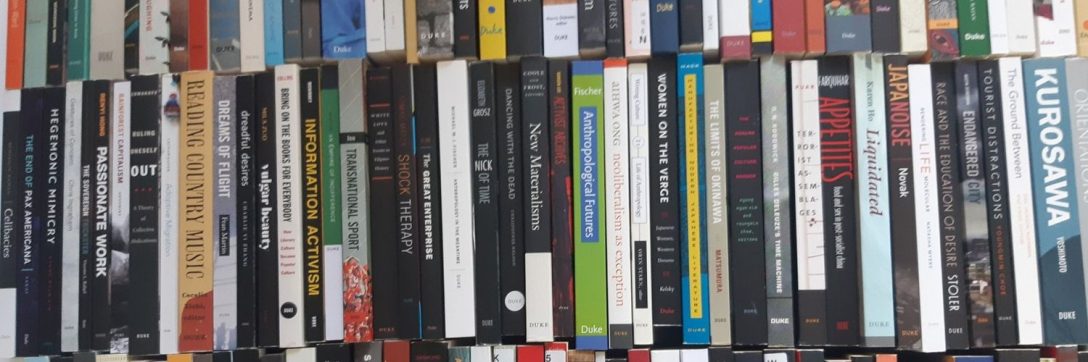

A review of Celibacies: American Modernism and Sexual Life, Benjamin Kahan, Duke University Press, 2013.
 Literary criticism has accustomed us to read sex between the lines of literary fiction. What Maisie Knew was what her parents were doing in the bedroom; The Turn of the Screw would have the heroin screwed if the door was unlocked; and Marcel Proust’s Lost Time was time not spent in the arms of his lover. According to this view, literature is when the author wants to suggest something about a person or thing, but then for whatever reason he or she may not wish to explicitly state what is on his or her mind, and so the author writes a novel, or poetry. Psychoanalysis has several words for this urge to dissimulate and beautify: sublimation, repression, transfer, displacement, defense mechanism, the conflict between the super-ego and the id. They all refer to the transformation of socially undesirable impulses into desirable and acceptable behaviors. But what if the opposite was true? What if no sex means no sex, and there is no dark secret to probe into? The French philosopher Michel Foucault hinted at this possibility in his History of Sexuality when he criticized the repressive hypothesis, the idea that western society suppressed sexuality from the 17th to the mid-20th century due to the rise of capitalism and bourgeois society. Foucault argued that discourse on sexuality in fact proliferated during this period during which experts began to examine sexuality in a scientific manner, cataloguing sexual perversions and emphasizing the binary between hetero- and homosexuality. By opposition, Roland Barthes, Foucault’s colleague at the Collège de France, proposed a concept to bypass the paradigm of sexuality and go beyond the binary construction of meaning: the Neutral. “I define the Neutral as that which outplays the paradigm, or rather I call Neutral everything that baffles paradigm,” he wrote. According to Barthes, the Neutral, or the grammatical Neuter (le neutre) operates a radical deconstruction of meaning and sexuality. It allows us to reexamine from a fresh perspective the question of le genre, understood in its dual sense of literary genre and of gender.
The repressive hypothesis
Biographies of Roland Barthes point out that he remained a bachelor all his life and shared an apartment with his mother, to whom he devoted a vibrant eulogy at the time of her death. Barthes was also a closet homosexual, never avowing in public his penchant for boys and his dependence on the gigolo trade. His works are almost silent on his sexuality. Barthes’s homosexuality concerned only a private part of his life; it was never made public, because it simply wasn’t. Homosexuality was never for Barthes anything other than a matter of sex, limited to the question of the choice of a sexual object. He wasn’t gay (a term that functions as a seal of identity), and would never have been part of the political movement for the recognition of homosexual rights. This indifference was not a repression: it was another way of expressing what being modern meant for him, even if Bathes’ modernity was closely related to a certain resistance to the modern world. In a society obsessed with the new and the rejection of conventional forms, it is attachment to the past that now constitutes a form of marginality or even clandestinity and, as such, a heroism of the ordinary. Being modern doesn’t just mean taking part in the intellectual or artistic spectacle of contemporary society. It also, and above all, means constructing meanings, words, ways of being, cultural and textual interventions that precede what a society makes available. To be modern is to make one’s desire come to language. In this sense, Benjamin Kahan’s Celibacies, a work of literary criticism and cultural history, articulates other ways of being modern. Focusing on a diverse group of authors, social activists, and artists, spanning from the suffragettes to Henry James, and from the Harlem Renaissance’s Father Divine to Andy Warhol, Kahan shows that the celibate condition, in the diverse forms that it took in the twentieth century, meant much more than sexual abstinence or a cover for homosexuality. To those who associate the notion of celibacy with sexual repression, submission to social norms, and political conservatism, he demonstrates that celibacies in the twentieth century were more often than not on the side of social reform, leftist politics, and artistic avant-garde.
Celibacies is placed under the sign of Eve Sedgwick’s Epistemology of the Closet, with a quote used as an epigraph that opens the book: “Many people have their richest mental/emotional involvement with sexual acts that they don’t do, or even don’t want to do.” Sedgwick deemed the hermeneutic practice of uncovering evidence of same-sex desire and its repression in literature, “paranoid reading.” To this trend, she opposed a reparative turn in literary studies: reparative reading seeks pleasure in the text and works to replenish the self. Sedgwick’s injunction to move from paranoid to reparative reading has been diversely followed. On the one hand, queer studies continue to read the absence of sex as itself a sign of homosexuality or of repressed desire, as an act of self-censorship and insincerity. The closeted subject has internalized social norms and keeps the true self hidden from outside views, sometimes hidden from the conscious self as well. By opposition, the queer subject brings desire to the fore, and challenges tendencies to oppose private eroticism and the systems of value that govern public interests. On the other hand, queer theory rejects normativities of all stripes, including homonormativity. It understands sex and gender as enacted and not fixed by natural determinism. Since the performance of gender is what makes gender exist, a performance of “no sex” creates a distinct gender identity: no means no, and abstinence from sex is not always the sign of repressed sexuality. It is possible to theorize gender and even sexuality without the interference of sex. But according to Kahan, celibacy is distinct from asexuality, understood as the lack of sexual attraction to others, or low or absent interest in or desire for sexual activity. Celibacy is a historical formation or a structure of attachment that can be understood as a sexuality in its own right. Its meaning has evolved in the nineteenth and twentieth centuries: it has be used as a synonym for unmarried, as a life stage preceding marriage, as a choice or a vow of sexual abstinence, as a political self-identification, as a resistance to compulsory sexuality, as a period in between sexual activity, or as a new form of gender identity organized in a distinct community culture. Celibacies used in the plural reflect these overlapping meanings and cast a light on literary productions illustrating the impact of modernism in America.
The educated spinster
Celibacy once was a recognized social identity defined by its opposite, heterosexual marriage. According to Simone de Beauvoir, “the celibate woman is to be explained and defined with reference to marriage, whether she is frustrated, rebellious, or even indifferent in regard to that institution.” Its determinants were political and economical rather than sexual or sentimental: celibacy was a necessary condition for middle- and upper-class white women to gain legal and financial independence. At the end of the nineteenth century, “marriage bars” required the dismissal of female employees upon their marriage or the prohibition of the employment of a married woman. Educated women who wanted to enter a career or a profession had to remain unmarried or to hide their marriage. They did so in large numbers: “Of women educated at Bryn Mawr between 1889 and 1908, for instance, fifty-three percent remained unwed.” For this reason, celibacy is at the very heart of the history of labor in America. It is also a key component of social mobilization and civic campaigns: in the United States, unmarried, educated women composed much of the rank and file of social movements campaigning for universal suffrage, temperance, and social purity. The centrality of celibacy for first-wave feminism cannot be emphasized enough. For the author, women’s “choice not to marry is indicative of a willingness to think outside existing social structures and thus it is associated with freedom of thought.” For their male contemporaries, it was also associated with ridicule. Women campaigning for female suffrage were belittled as “suffragettes”; and other expressions disparaged women who had chosen to stay single (“singletons,” “bachelorettes,” “old maids,” “spinsters.”) The male bachelor, by contrast, was seen as socially able to marry but having delayed marriage of his own volition; he could be characterized as “a good catch,” “a stag,” or “a jolly good fellow.”
Celibacy’s history is imbricated with the history of homosexuality. Discussing Henry James’ novel The Bostonians, Kahan investigates one of the most contested site of celibacy in the history of homosexuality: the Boston marriage. The term “Boston marriage” describes a long-term partnership between two women who live together and share their lives with one another. In James’s satirical novel, the romance between the heroin Verena Tarrant and Olive Chancellor, a Boston feminist and social campaigner, is placed on equal footing with the romance between Verena and her other suitor, Basil Ransom. This love triangle is often read as a lesbian plot: Olivia’s decision to leave her parents’ house, move in with Verena and study in preparation for a career in the feminist movement is seen as the result of a love attraction. Benjamin Kahan proposes another interpretation based on the constitutive role of celibacy as a means for independence and self-determination. The Boston marriage, which does not grow out of “convenience or economy,” is associated with collaborative literary production. It reflects Henry James’ own condition as a lifelong bachelor and his conception of authorship as a vocation. The artist, like the bachelor, is fundamentally monadic and stands apart from social spheres of influence: “rather than seeing James’s celibacy as only an element of a homosexual identity, I understand it as a crucial component of his novelistic production.” In a separate chapter examining the work of Marianne Moore, a twentieth-century American poet, Kahan sees echoes of her lifelong celibacy in her poetics and conception of time. Moore’s “celibate poetics” involve a lack of development within the poem, a lack of climax, a backwardness that reverses the passage of time, as well as pleasure in difficulty, lack of explicitness, and a style at once shy and flamboyant. Moore’s remark that “the cure for loneliness is solitude” makes solitary existence a fully contented mode of sociability and a crucial part of her poetics.
Black celibacy and queer citizenship
In his effort to make celibacy be seen as progressive and pleasurable, Benjamin Kahan underscores that the celibate condition in the twentieth century was not restricted to middle-class white women. Black celibacy was advocated by a now forgotten figure of the Harlem Renaissance, Father Divine, “an intellectual and religious leader who believed he was God.” His cult, the Peace Mission Movement, organized his followers into interracial celibate living arrangements called kingdoms. These celibate communes were a direct response to economic conditions: rents in Harlem were prohibitively high, making necessary for families to share apartments or take in lodgers. Cooperative housing also echoed the calls from Claude McKay, a socialist and a poet, to seize the means of production and organize the black community on a self-sustaining basis. Lastly, black celibacy and chastity vows countered racist depictions of the black body as oversexualized and promiscuous. By making a celibate identity available to black subjects, Father Divine allowed black men and women to participate in the public sphere and created economic and spiritual opportunities for racial equality. Celibacy was also used as a strategy for queer subjects to circumvent the prohibition preventing homosexual immigrants from becoming American citizens. Before the passage of the McCarran-Walter Act in 1952, the queer citizen could, according to the letter of the law, belong to America so long as he remained celibate or was not “caught in an act of moral turpitude.” The British poet W. H. Auden became an American citizen in 1946 by practicing “cheating celibacy,” a position both inside and outside the rules that he thematized in his 1944 poetic essay The Sea and the Mirror: A Commentary on Shakespeare’s The Tempest”. This long poem is a series of dramatic monologues spoken by the characters in Shakespeare’s play in which Caliban renunciates his former self in favor of a queer form of belonging. But as Kahan notes, “black queer writers like Claude McKay, James Baldwin, and Langston Hughes had significantly less ability to move in and out of America’s borders than white authors like Auden.”
Kahan’s choice to associate Andy Warhol with celibacy is disconcerting. The pop artist was openly gay and had a reputation for promiscuity and swishiness. His art collective, the Factory, was populated by “drag queens, hustlers, speed freaks, fag hags, and others.” But “‘gayness’ is not a category that we can control in advance.” If Warhol’s declarations can be taken at face value, he claimed that he didn’t have any sex life: “Well, I never have sex” and “Yeah. I’m still a virgin,” he responded in an interview. Evidence also suggests that the Factory wasn’t the “Pussy Heaven” or “Queer Central” journalists once described: according to one witness, celibacy organized life at the Factory, and Warhol’s abstinence from sex shaped relations of power and subjection. As Kahan sees it, the tradition of celibate philosophers underwrites the Factory’s mode of government and theorizes a concept of group celibacy. Warhol’s marriage to his tape recorder exemplified his rejection of traditional marriage and emotional life: “I want to be a machine.” In the view of a contemporary, “everything is sexual to Andy without the sex act actually taking place.” His celibacy operates at a zero degree of desire. My Hustler, his 1965 movie with film director Paul Morrissey and actor Ed Hood, presents a twisted celibate plot characterized as much by sexlessness as by sex. Valerie Solanas tried to kill Andy Warhol in 1968 because she claimed “he had too much control of [her] life”. In the SCUM Manifesto she published before her attempted murder, the radical feminist urged women to “overthrow the government, eliminate the money system, institute complete automation and destroy the male sex.” Kahan places both Warhol and Solanas in a tradition of philosophical bachelorhood that precludes sex in favor of alternative modes of governance.
Celibate readings
In the conclusion of Celibacies, Benjamin Kahan argues that celibacy should not be abandoned to the American political right, with its apology of abstinence before marriage and traditional gender roles. Celibacy from the 1880s to the 1960s has been on the side of reform and modernism. Celibate women could access public space and the professions at a time social norms prevented educated married women from entering the workforce. In the 1930s, celibacy was a possible option availing economic advantages to African-Americans in Harlem or allowing queer foreigners to access U.S. citizenship. Celibacy could also be a philosophical choice or a condition for artistic production. Having a room of one’s own was easier when one didn’t have to share the apartment with another person or raise a family. Forms of celibacies have also been animated by “sexual currents, desires, identifications, and pleasures.” Celibacy’s imbrication with homosexuality is not just a modern invention: depictions of “Boston marriage” in the late nineteenth century had strong implications of lesbianism. But celibacy was not only a pre-homosexual discourse or the result of sexual repression: it was a form of sexuality in its own right, entailing a more radical withdrawal than is the case with the closet homosexual or the scholar practicing sexual abstinence. No sex means sex otherwise, or a different form of sexuality. Looking to literary works of fiction and poetry through the prism of celibacy leads to valuable insights: Kahan reads a “celibate plot” in Henry James’ The Bostonians or Andy Warhol’s My Hustler, and highlights a “celibate poetics” in the poems of Marianne Moore or W. H. Auden. This book is published in a series devoted to queer studies because, as the author argues, “celibate and queer readings overlap without being coextensive.” Much as queer theory has the effect of “undoing gender,” the primary purpose of the Neutral according to Roland Barthes is to undo the classifying function of language and thus to neutralize the signifier’s distinctive function. “L’écriture célibataire” is the form the Neutral took in American modernism.
 Everything has been written about the “male gaze” and the fetishization of Asian bodies on cinema screens. As film studies and feminist scholarship make it clear, white male heterosexuals fantasize about oriental ladies and make the exotic rhyme with the erotic. But Mila Zuo is not interested in white male cinema viewers: her focus is on the close-up faces of Chinese movie stars on the screen, which she finds both beautiful and vulgar in a sense that she elaborates upon in her book Vulgar Beauty. As a film scholar with a knack for philosophy and critical studies, she builds film theory and cinema critique based on her own experience as an Asian American who grew up in the Midwest feeling the only Asian girl in town and who had to rely on movie screens to find kindred faces and spirits. As she recalls, “When on rare occasion I did see an Asian woman’s face on television, a blush of shame and fascination blanketed me.” True to her own experience, she begins each chapter with a short recollection of her personal encounter with Chinese movies or Asian movie stars. The films that she selects in Vulgar Beauty, and the film theory that she develops, are not about them (American white males): they are about us (Chinese-identifying female spectators and actresses) and even about me (as an individual with her own subjectivity and
 In Brazil, women claim the right to be beautiful. When nature and the passing of time don’t help, beauty can be achieved at the end of a scalpel. Plastic surgery or plástica is not only a status good or the preserve of socialites and celebrities: according to Ivo Pitanguy, the most famous Brazilian plastic surgeon and a celebrity himself, “The poor have the right to be beautiful too.” And they are banking on that right. Rio and São Paulo have some of the densest concentrations of plastic surgeons in the world, and financing plans have made plástica accessible to the lower middle class and even to favela residents. While in the United States, people may hide that they have had plastic surgery like it’s something shameful, in Brazil they flaunt it. The attitude is that having work done shows you care about yourself—it’s a status symbol as well as a statement of self-esteem. Cosmetic surgery’s popularity in Brazil raises a number of interesting questions. How did plastic surgery, a practice often associated with body hatred and alienation, take root in a country known for its glorious embrace of sensuality and pleasure? Is beauty a right which, like education or health care, should be realized with the help of public institutions and fiscal subsidies? Does beauty reinforce social hierarchies, or is attractiveness a “great equalizer” that neutralizes or attenuates the effects of class and gender? Does plástica operate on the body or on the mind, and is it a legitimate medical act or a frivolous and narcissistic pursuit? Does beauty work alienate women or is it a way to bring them into the public sphere?
 Imagine you want to go through a “sex change” or a gender reassignment. People identify you as a man, but you want to be identified as a woman, or vice versa. You may also plan to undergo medical treatment and take hormones or get surgery. What should you and your colleagues do at the workplace to manage this transition? According to the British government that published a guide for employers regarding gender reassignment, transsexual people should take a few days or weeks off at the point of change and return in their new name and gender role. Time off between roles is assumed to give the trans person as well as coworkers time to adjust to the new gender identity. It is usually announced that the trans person will go on a trip, which may be real or figurative; and this journey-out-and-return-home forms the transition narrative that will shape people’s expectations and reactions to the change in gender identity. What happens during this trip needs not be detailed. The journey abroad opens a space of gender indeterminacy that makes transsexuality intelligible within a gender binary. This transition narrative was pioneered by Christine Jorgensen who, in 1953, went to Denmark to get surgery and returned to the United States as a celebrity. As the (undoubtedly sexist) quip had it, Jorgensen “went abroad and came back a broad.”
 “Inanimate objects, have you then a soul / that clings to our soul and forces it to love?,” wondered Alphonse de Lamartine in his poem “Milly or the Homeland.” In Animacies, Mel Chen answers positively to the first part of this question, although the range of affects she considers is much broader than the lovely attachments that connected the French poet to his home village. As she sees it, “matter that is considered insensate, immobile, deathly, or otherwise ‘wrong’ animates cultural life in important ways.” Anima, the Latin word from which animacy derives, is defined as air, breath, life, mind, or soul. Inanimate objects are supposed to be devoid of such characteristics. In De Anima, Aristotle granted a soul to animals and to plants as well as to humans, but he denied that stones could have one. Modern thinkers have been more ready to take the plunge. As Chen notes, “Throughout the humanities and social sciences, scholars are working through posthumanist understandings of the significance of stuff, objects, commodities, and things.” Various concepts have been proposed to break the great divide between humans and nonhumans and between life and inanimate things, as the titles of recent essays indicate: “Vibrant Matter” (Jane Bennett), “Excitable Matter” (Natasha Myers), “Bodies That Matter” (Judith Butler), “The Social Life of Things” (Arjun Appadurai), “The Politics of Life Itself” (Nikolas Rose),“Parliament of Things” (Bruno Latour). Many argue that objects are imbued with agency, or at least an ability to evoke some sort of change or response in individual humans or in an entire society. However, each scholar also possesses an individual interpretation of the meaning of agency and the true capacity of material objects to have personalities of their own. In Animacies, Mel Chen makes her own contribution to this debate by pushing it in a radical way: writing from the perspective of queer studies, she argues that degrees of animacy, the agency of life and things, cannot be dissociated from the parameters of sexuality and race and is imbricated with health and disability issues as well as environmental and security concerns.
 This is not a book about Asian sex videos. Indeed, reading Media, Erotics, and Transnational Asia should lead the reader to question why the category “Asian sex video” exists in the first place, why Asian bodies are disproportionately represented in Internet porn, and how we should react to such unregulated flow of images. In fact, none of the entries in this book deals with explicitly erotic content or with pornography, and the only chapter that concerns the Internet as a medium, a study of online discussions about correspondence marriage between the US and the Philippines, insists on rejecting facile analogies with the sex trade or with mail-to-order catalogues. For scholars and for feminists—and most authors in this volume are women—, the erotic has to be distinguished from the sexual. And writing about eroticism should in no way lead to stoke the base instincts of the reader. The erotic extends beyond sex acts or desires for sex acts to become “enmeshed in, for instance, yearnings for upward mobility, longings for ‘the homeland,’ formulations of nationhood and citizenship, and ruptures of ethnic and racial identity.” Desires for sexual encounters intertwine with those for commodities and lifestyles. Such a paneroticism may break gender, class, ethnicity, or age boundaries. Synonymous with desire, it may be at odd with an Orientalist vision of Asia as feminized and the West as setting the standard for homo- and heteronormativity. For instance, “what constitutes ‘lesbian’ desire may look both and function differently than it does within Euro-American social and historical formations, and draw from alternative modes of masculinity and feminity.”
 Same-sex marriage in Taiwan became legal on 24 May 2019. This made Taiwan the first nation in Asia to recognize same-sex unions. You think it’s a progress for LGBT rights? Well, think again. In the midst of the clamor for legalized same-sex marriage, G/SRAT, a LGBT organization, marched to oppose the institution of marriage at Taipei Pride, proposing the alternative slogan of “pluralism of relationships” on their banner against “marriage equality.” Queer Marxism in Two Chinas is open to such perspectives that go against the grain of conventional wisdom and emerging consensus on gay marriage and LGBT rights. It argues that gay marriage legalization is a victory for neoliberal capitalism, which incorporates gay couples into its fold and wages a propaganda battle against communist China. If we define pinkwashing as the strategy to market oneself as gay-friendly in order to appear as progressive, modern, and tolerant, then Taiwan is pinkwashing itself on a grand scale. Threatened by the prospect of reunification with mainland China, Taiwan has focussed its diplomatic strategy on integrating into the global economy and on securing popular support from the West by promoting itself as a democratic regime with values similar to those in the United States or Europe. Granting equal rights to same-sex couples is fully congruent with these twin objectives, and it serves geopolitical goals as much as it responds to local claims for equal rights and justice for all.
 Cinema is an industry. But very often aesthetics gets in the way of analyzing it as such. For cinema—or some portions of it—is also an art. Industry or art: these two approaches give rise to two distinct bodies of literature, one focusing on professions, publics, and profits, the other one on visual style, narrative content, and film textuality. There are movie industry specialists who may teach in professional schools or in economics and sociology departments, applying the standard tools of their discipline to one particular sector that represents up to one percent of the US economy. And there are cinema critics and film studies academics who develop concepts such as genre, auteur, style, form, periods, and apply them to a canon of authorized films conserved in national archives. Film studies may emphasize culture (cinema as representative of national culture), psychology (a movie reflects the inner psyche of its director), formalism (focusing on the formal or technical elements of a film), history (itself divided into the history of genres and national traditions), or theory (film theory as a branch of applied philosophy). What these approaches have in common is that they consider a movie as worthy of cultural commentary and critique. By contrast, an industry specialist is more interested in macro factors such as film production, distribution, and box office figures. He or she will focus on context more than content, on cost and revenues more than artistic quality. In the case of Japanese cinema, an art critic will focus on directors such as Kurosawa Akira or Ōshima Nagisa, specific genres such as jidaigeki (samurai movies) or kaijū eiga (monster movies), and techniques such as Ōzu Yasujiro’s signature tatami shots and multiple scene framings; while an industry specialist will study the studio system long dominated by Shōchiku, Tōhō, Tōei, Nikkatsu, and Daiei, the unionization of workers, or the distinct distribution channels for hōga (domestic movies) and yōga (foreign movies).
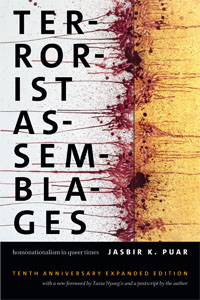 Terrorist Assemblages offers, as the foreword to the 2017 edition puts it, “queer theory in dark times.” The times that form the backdrop of queer theory are very dark indeed. The book was written at a time when, in the wake of revelations about torture of Iraqi prisoners at Abu Ghraib, New York Times editorialist Thomas Friedman could write: “I have never known a time in my life when America and its president were more hated around the world than today” (yes, the year was 2004, and the president was George W. Bush). It was, and it still is, a time of death and mourning, of war and aggression, of terrorist attacks and nationalist hype. This historical conjuncture has been described as “the age of the world target”: what is being targeted are not simply terrorist networks and rogue states, but the world as an object to be destroyed. In this context, Terrorist Assemblages exposes the United States not only as a targeting war machine, but also as a targeted nation, as the target of terrorist assaults and radical critique. There is a political urgency that is to be felt at every page, no less in the 2017 postscript titled “Homonationalism in Trump times”. This book is not the work of an ivory tower academic or a closet intellectual, pondering over the course of world’s events from the safety of an academic perch. It is a text steeped in violence and accusations, a disruptive and unruly intervention that leaves no field of inquiry unscathed. The starting point of the acceleration of time that Terrorist Assemblages manifests is September 11, 2001, which forms the degree zero of writing and thinking about our present situation. 9/11 is conceptualized as a “snapshot” and a “flashpoint”, an explosion and a lightning, allowing different temporalities to emerge and, with them, a range of issues hitherto suppressed. These weird and unhinged times offer a space for the untimely, the unexpected, the forever deferred. The politics of time that the epoch brings to the fore, with its tactics, strategies, and logistics, is a politics of the open end, of allowing unknowable political futures to come our way, of taking risks rather than guarding against them.
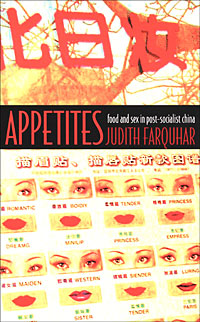 “Appetite for food and sex is nature.” Or so says the sage Mencius, as translated by D.C. Lau. But Judith Farquhar begs to differ. For her, food and sex, and our appetites for them, are historical matters through and through. As proof, she points the fact that, in contemporary China, attitudes towards carnal and dietary consumption have changed dramatically in the course of less than two decades. China has transited from a socialist to a market economy and, in the process, a new body has emerged, with new attitudes towards food and sex, with new appetites and desires. The new Chinese body differs substantially from its previous socialist version. The socialist body was frugal, martial, and asexual. The new body is gluttonous, relaxed, and sensual. If what constitutes our most intimate dimension can change in such a short span of time, then it is proof that food and sex do not stand on the side of nature, but belong squarely to the camp of history and human society. Appetite for food and sex is not nature: it comes from our second nature as social and historical beings.
 The Duke Reader