

A review of Radiation Sounds. Marshallese Music and Nuclear Silences, Jessica A. Schwartz, Duke University Press, 2021.
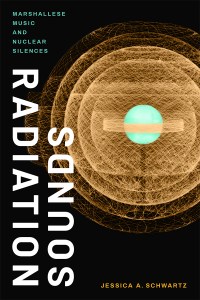 Sound studies can take you to faraway places. Ethnomusicology, the study of music in its social and cultural contexts, has taught us to lend an ear to songs and musical genres performed by people distant from Western cultures and mainstream musical practices. In Radiation Sounds, Jessica Schwartz takes her readers to the Marshall Islands, an independent microstate in the Pacific, to listen to the distant echoes and silences brought forth by the nuclear testings that took place at the onset of the Cold War. From 1946 through 1958, the United States conducted 67 nuclear tests on islands and atolls now composing the Republic of Marshall Islands (RMI). Symbolized by the strong visual of the mushroom cloud, these nuclear detonations included the 15-megaton Castle Bravo hydrogen bomb test on March 1, 1954, which led to the unexpected radioactive contamination of areas to the east of Bikini Atoll. The United States organized forcible relocations from the atolls made uninhabitable by the nuclear fallout, kept a moratorium on all information pertaining to the nuclear arms race, and submitted exposed populations without their consent to medical examination on the effects of radiations in a program code-named Project 4.1. Marshallese music and voices still carry the echoes of these nuclear explosions as they radiate through local politics, radio broadcasts, musical performances, folk songs, contaminated soils, and ailing bodies. Radiation Sounds gives equal importance to sounds and to silence, to music and to noise, to songs and to oral testimonies. It considers not only soundwaves, but also radio waves, oceanic waves, and nuclear radiations made sensible through the audible clicks of Geiger counters and the crackled voices of remembrance songs. It addresses the full spectrum of electromagnetic wavelengths while staying attuned to their sociopolitical dimension. A nuclear blast is not only a visual flash: its delayed sound effect and ionizing radiations produce more lasting consequences, including for the voices that it smothers and the silence that is forced onto all parties.
Resonances of the atomic age
Jessica Schwartz’s scholarship focuses on how different communities throughout the Marshall Islands were diversely affected by the nuclear tests. She doesn’t give full detail on the conditions and methodology of her ethnography. As a doctoral student in musicology at New York University, she conducted fieldwork in the Marshall Islands for close to two years. She stayed in Majuro, the capital city with a population of 28,000, and also visited other atolls such as Kwajalein or Kili Island where population evacuated from Bikini and neighboring islands have resettled. She mentions at some point that she was teaching at a local school, and she refers on several occasions to her contacts with local politicians, women’s groups, the local radio station, musicians, singers, and antinuclear activists. She learned the local language, and gives transcripts of some of the songs she collected in Marshallese and in English. She quotes several anthropologists who have studied the Marshall islands and Oceanian cultures, some of whom have played a role in shaping local politics and cultural policies. Hers is not a classical ethnography with neatly composed chapters documenting all aspects of a local society. She writes in an impressionistic style that is sometimes difficult to follow. She introduces concepts such as radioactive citizenship, nuclear silences, and the Marshallese notion of the “throat,” but she makes no effort at rigorous theorizing, and uses theory literature in a sparse way. Unlike classical anthropologists, she is not interested in traditional music per se, or in local traditions in general. In her account, baseball and country music are as much part of the local culture as braiding wreaths for funerals or playing the aje drum. The Marshallese popular music repertoire includes modern rock or folk songs which sometimes refer to political issues (so-called remembrance songs, protest songs, and petition songs), as well as more traditional genres such as roro, songs based on ancient legends and originally performed to give guidance during navigation or strength for mothers in labor. But there is no strict division between past genres and present repertoire, as modern bands are blending the unique songs of each island with modern influences, such as rock, country, or hip-hop. There is even a Marshallese nursery rhyme called Kōṃṃan baaṃ (“Making Bombs”) that dates back from the nuclear testing period and that is apparently set to the tune of a Filipino planting rice song. Another song, Ioon, ioon miadi kan (“Upon, Upon Those Watchtowers”) was composed in 1944 and refers to the Japanese military occupation.
When Jessica Schwartz arrived on the Marshall Islands to do fieldwork in 2008, the debates and protests that had accompanied the 2004 renewal of the Compact of Free Association (COFA) between the US and the RMI were still a vivid memory. Through the COFA initially signed in 1986, the United States has maintained military presence in the Marshall Islands while recognizing the sovereignty of an archipelago they had administered as the Trust Territory of the Pacific Islands (TTPI) since 1947. Local politics at the time of independence was dominated by local chieftains or iroij. Article III of the 1979 Constitution recognizes the title and creates a Council of Iroij chosen from holders of the chieftainship among the several constituent islands. It was not until 1999, following political corruption allegations, that the iroij-dominated government was overthrown, with Kessai Note, a commoner of Japanese-Marshallese descent, elected by the Nitijeļā (Parliament) as president. He was defeated in his bid for re-election in 2007. Jessica Schwartz points out the role of the radio as the “voice of the nation” expressing “radioactive citizenship”: “radiation and the radio have been crucial components of sense making in the period of nation building”. Installed by the US after a report by Harvard economist Anthony Solomon had recommended nation-building efforts in 1963, radio was at the center of the independence movement or “break away,” followed by COFA negotiations and the debate over monetary compensation from US nuclear militarism. In Majuro, two radio stations, divided along political lines, competed for the Marshallese audience. American Forces Radio and Television also provides broadcasting services to Kwajalein Atoll, the site of the US military base. The COFA enables Marshallese citizens to live, work, and travel freely between the RMI and the United States in exchange for the US military’s lease of large parts of Kwajalein Atoll, including Kwajalein Island. Approximately 4,300 Marshall Islands natives have relocated to Springdale, Arkansas in the United States; this figure represents the largest population concentration of Marshall Islands natives outside their island home. The threads that connect these diaspora communities are mostly oral and give more importance to songs and speeches than to the written text. Like the vocal cords in the throat that vibrate to create the sound of the voice or the umbilical cord that connects the baby to the mother’s placenta, islands are said to be connected by invisible threads that weave a network of togetherness across the atollscape.
Vocal cords and umbilical cords
The Rongelapese were the population most severely affected by the US nuclear testing program, as they were exposed to the radiations from the fallout of the Bravo explosion and had to be moved to another atoll. In 1957, three years later their first relocation, the United States government declared the area “clean and safe” and allowed the islanders to return. Evidence of continued contamination mounted, however, as many residents developed thyroid tumors and, for pregnant women, birth miscarriages. In 1985, they were evacuated to Ebeye island in Kwajalein Atoll in an operation conducted by the international NGO Greenpeace. Together with other displaced persons from Enewetak, Utrik, and Bikini, the Rongelapese formed the ERUB organization and petitioned the US government for nuclear test compensations under section 177 of the COFA agreement. A first resettlement agreement was signed in 1986, but in 2000 the Marshall Islands government submitted a Change of Circumstances Petition asking for significantly more compensation than the $US 150 million initially awarded. As a result of the radiation poisoning, many Rongelapese people developed thyroid gland disorders or cancer and required thyroid surgery–a source of particular trauma because, for the Rongelapese, the throat (“bōrō”) is the seat of the soul, comparable to the Western concept of the heart. Jessica Schwartz sees Rongelapese women as victims of US “male vococentrism”: not only were they displaced, subjected to medical testings without their informed consent, and had to undergo thyroid surgery, but they were also marginalized and stigmatized as a result of their injuries and reproductive problems. Literally and figuratively, they didn’t have a voice in the decisions and processes that affected them. As the author notes, “the Geiger counter had a political voice that is more highly valued than the women with respect to their appeal for evacuation.” The exodus of the Rongelapese community is memorialized through songs that are performed at funerals and other ceremonies: “We sing on the anniversary of Bravo, at parties, at church, and especially when visitors come.” Some of the songs are intended as musical petitions addressed to the US government. In the song performances that the ethnomusicologist attended, elderly women affected by the radiation fallout struggled to harmonize and sang in a coarse voice. And when they were unable to hit the right notes as they sang, some would gesture to their throats and blame their damaged thyroids. Schwartz sees their musical performances as “an invitation to hear radiation sounding… where precarious voices sound strength.”
Turning to the diaspora from the Bikini Atoll, the anthropologist recalls a scene, recorded on film and distributed through newsreels in 1946, in which the US military governor of the Marshall Islands asked the Bikinian leader “King Juda” for his support in evacuating the Atoll before the nuclear experiments. The American couched his request in religious terms, asking the Bikinians to give up their islands “for the good of mankind” and promising to lead them to a land of salvation, “much as God had for the Jews.” But the only answer he could get from the Bikini leader was that “everything is in God’s hands.” The sentence, Men Otemjej Rej Ilo Bein Anij, abbreviated by the Bikinians as MORIBA, has become the motto of the islands. Today the descendants of those who were moved in 1946 live on Kili Island, on Ejit Island, Majuro, other parts of the Marshall Islands, in the United States, and a few in other countries. They have been called “nuclear nomads” or “nuclear refugees.” They cannot go home because the United States has not kept its promise to return the islands to their pristine condition. The Bikinian nation formed in the mid-1980s in self-determination to protest the COFA. It is now complete with a flag, a national day (March 7, day of removal), a motto and an anthem as well as offices in Majuro and Springdale, Arkansas. Native communities claiming origin in Bikini now number 2,800 dispersed individuals out of an initial population of 167. For Schwartz, the injustices wrought by radioactive colonization account to a kind of “dissonance” in the global harmony that the Cold War was supposed to produce. Having been deprived a voice, local populations can only express their claims ventriloquially (through the voice of God) or metaphorically, through songs and musical performances. Singing is one way to create community and mobilize solidarity in the creation of new political subjectivities and communities of belonging. Songs express feelings of displacement and exile that have an unmistakable biblical tone. The Marshallese are a very religious people, and persons without religious affiliation account for a very small percentage of the population. Especially for Bikinese, church activities, both in church and in preparation, structure much of the community’s time. Hymns and religious songs therefore had a strong influence on the musical repertoire. Another strong influence is country music, heard on the military base of Kwajalein, which is appreciated as being from the heart (throat) and having to do with loss of land and/or love.
Kūrijmōj season
The anthropologist spent Christmas Eve of 2009 on Kili Island, attending church service and recording Kūrijmōj (Christmas) songs in Marshallese. 1,2000 exiled Bikinians live on this tiny island and receive support from the US government that sometimes makes other islanders envious. For Schwartz, “spirited noise” or uwaañaañ, which applies to religious songs but also to traditional navigation and to ritualized ceremonies, is a way to reclaim the sovereignty that has been denied to them. According to Schwartz, drawing on Jacques Attali’s essay first published in 1977, “Noise can be read as a blockage in the system, a coded form of communication, or something that impedes understanding and needs to be resolved.” Noisiness is usually attributed to men: through vocal performances, war chants, and spiritual hymns, Bikinese men express their diasporic masculinity and spirit of self-determination. But these voices have not been heard by Americans, who made the land of their ancestors uninhabitable, and by other Marshallese, who reject Bikini’s aspiration to sovereignty. Masculinity is displayed in lagoon parades by “Gospel warriors” clad in grass skirts and holding paddles and sticks. This Gospel Day of parades and celebrations is a national holiday that commemorates the coming of the Gospel to Ebon Atoll in 1857. For the author, Americans strategically used Christian culture to dispossess the Marshallese of their properties, but it is worth noting that Marshallese also use Christian words and religious repertoire as a strategy to relate to Americans and extract compensations. The spirit of MORIBA works both ways. Navigational chants and stick charts are two traditional techniques of “wave piloting” through which islanders could find their ways across the atollscape. Indigenous knowledge systems have been eroded and fractured by a century of marginalization and silencing, but efforts are made to reintroduce them in the education system. Marshallese culture evolves around three institutions: government, church, and custom, and music is part of all of them. Songfest competitions are also part of the Kūrijmōj season. When Christmas is still a few months away, islanders divide themselves into jeptas, which may be thought of as teams. These teams begin practicing the new songs and dances that will be performed from memory on Christmas Day. Each group may perform as many as fifteen to twenty songs. Before Christmas Day, the jeptas visit one another, engaging in competitive songfests in order to show off their skills and assess the competition. Songfests present an original mix of traditional customs and cultural practices, including “war-training exercises, church singing, line dancing, and the energetic moments of roro.”
Jessica Schwartz sees a dialectic between masculinist language expressed in Gospel Day parades or Kūrijmōj ceremonies and the matrilineal past that continues to shape the present. Anthropologists have described the Marshallese culture as a matrilineal society revolving around a complex system of clans and lineages tied to land ownership. In traditional culture, women protected the lands and lineage through songs through which the woman came to voice the end of war and direct peace among warring parties. “When a woman speaks, the man must give way”: women were seen as making decisions behind the scenes and as exerting the final say on matters of war and territory. Land was passed down from generation to generation through the mother, and land ownership tied families together into clans. Territorial appropriation and nuclear militarism have displaced women’s authority and power that was tied to the land. Majuro and Kwajalein have become highly masculinized spaces, and the ultimate authority of the feminine voice only remains in the echoes carried by songs and participation in customary practices. The author notes that domestic violence has now become a problem in the Marshall Islands, and that feminine voices have been silenced in a society that increasingly denies their rights and participation. She mentions the role of the women’s rights group WUTMI (Women United Together Marshall Islands) in supporting services for survivors of domestic violence, raising awareness about legal rights for victims of abuse, and underscoring the importance of women’s roles in climate conservation. One of the first songs she recorded was “Ioon, ioon miadi kan” (“Upon, Upon those Watchtowers”) that documents the indigenous population’s experiences of the Japanese and American military battles during World War II that resonates through the present. Composed in 1944 by the Marshallese female chief (leroij) Laabo, who was displaced from her land and forcibly assigned to a leper colony, the song is an embodied performance of disability, gender oppression, and voicelessness.
Pacific islands in the global imagination
Pacific islands, and Bikini Atoll in particular, continue to be present in the global imagination. Although Bikini is currently uninhabited with the exception of a few caretakers, it is recognized by UNESCO as a World Heritage Site due to its role at the dawn of the Nuclear Age and is open to visitors aboard vessels that are completely self-sufficient if they obtain prior approval. Bikini lagoon diving is limited to fewer than a dozen experienced divers a week, costs more than US$5,000, and includes detailed histories of the nuclear tests. In what may now be perceived as a blatant case of cultural misappropriation and disrespect for local populations, the “bikini” swimsuit has become a worldwide fashion commodity. The French, who invented the design and the term in 1946, also speak of “monokini” for topless beachwear and “burkini” (a portmanteau word for burqa and bikini) for an Islamic attire that covers the whole body. French nuclear tests in the Pacific, which were conducted from the 1960s to 1995 in the Mururoa Atoll in French Polynesia, led to the same controversies regarding the health, wellbeing, and environment of the people living in the region. Pacific islands now stand at the frontline in the battle against climate change, with rising sea levels threatening local livelihoods and the very existence of islanders’ communities. Despite having low emissions, the countries in the region have developed ambitious Nationally Determined Contributions (NDCs) under the Paris Agreement to be fully renewable in terms of energy by 2030. Elected in January 2020, the current president of the Republic of the Marshall Islands, David Kabua, has declared that combating climate change, negotiating with the US regarding the extension of the COFA that expires in 2023, and addressing the issue of the Runit Dome stocking radioactive debris as the top priorities of his presidency. Meanwhile, China has become an important and welcome source of loans, infrastructure and aid for the sovereign states in the region, triggering a commitment by the US and its allies to devote more resources and diplomatic engagement to Pacific island countries. While it doesn’t address these pressing geopolitical issues, Radiation Sounds documents the struggle of Marshallese men and women to keep their memories of ancestral homelands and cultural values alive, voicing their sense of identity amid the deafening silence that follows nuclear explosions.
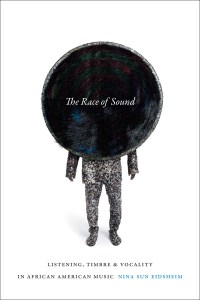 I close my eyes and I can hear Billie Holiday’s black voice filling the room. Her voice, described as “a unique blend of vulnerability, innocence, and sexuality,” speaks of a life marked by abandonment, drug abuse, romantic turmoil, and premature death. Hearing Billie Holiday sing the blues also summons her black ancestors’ history of enslavement, hard labor, racial segregation, and disfranchisement. I can imagine the black singer, cigarette in hand, eyes closed, bearing the sorrow of shattered hopes and broken dreams. But wait. I open my eyes and what I see on the screen is a seven-year-old Norwegian named Angelina Jordan performing on the variety show Norway’s Got Talent. Her imitation of Billie Holiday is almost perfect: pitch, rhythm, intonation, and vocal range correspond to her model down to the smallest detail. Here is a combination of a child’s frail body and the sound of an iconic singer that we usually hear through the narrative of her unfortunate life and perceived ethnicity. Impersonations of African-American singers can be problematic: as Nina Eidsheim notes, they bring to mind a past history of blackface minstrelsy and racist exploitation, and a present still marked by cultural misappropriation and racial stereotypes. But her point is elsewhere: by assigning a race or ethnicity to the sound of a voice, we commit a common fallacy that helps reproduce and essentialize the notion of race. We hear race where, in fact, it isn’t.
 Nowadays young PhDs majoring in the social sciences and the humanities often list an interest in sound studies when they enter the academic job market. Likewise, digital humanities is a booming field encompassing a wide range of theories and disciplines bound together by an interest in digital tools and technologies. There is a premium in listing these categories as fields of interest in one’s CV, even though the young scholar’s specialization may lie in more traditional disciplines such as English literature, modern history, or American studies. This is what economists call job market signaling: by associating themselves with “hot” topics, potential new hires make themselves in hot demand and differentiate their profile from more standard competitors. And yet, digital humanities and sonic materials have so far had a limited impact on social science scholarship. The humanities remain text-centric and bound by technologies inherited from the printing press and the paper format. The reproduction of sound is ubiquitous, and digital technologies are everywhere but in the content of academic journals and university syllabuses. Student evaluation is still mostly based on silent modes of learning such as final essays, midterm exams, and reading responses. Sonic modes of participation such as asking questions, providing oral feedback, and exchanging ideas with peers during class discussions are weighted with a limited coefficient compared to other evaluation metrics based on the written text.
 The Duke Reader