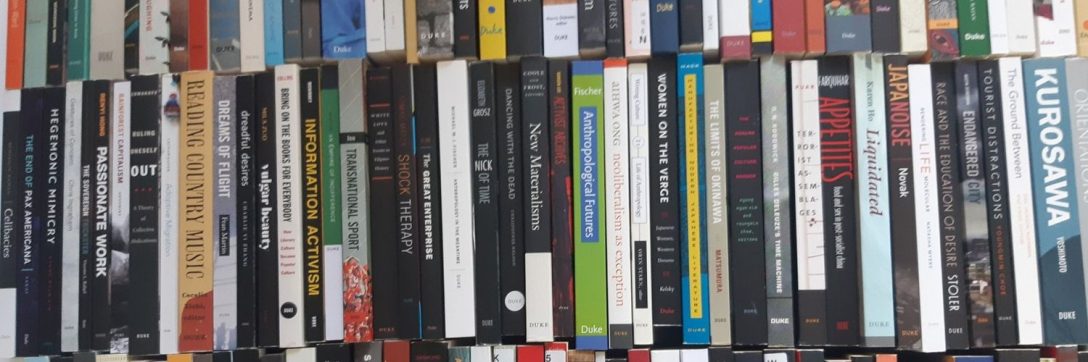

A review of Why We Can’t Have Nice Things: Social Media’s Influence on Fashion, Ethics, and Property, Minh-Ha T. Pham, Duke University Press, 2022.
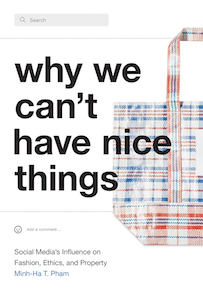 The fashion world has always espoused the latest trends in society and kept up with the times. It should therefore come as no surprise that fashion producers and commentators now speak of “ethical fashion,” “sustainable fashion,” or “fashion for good.” But what do these terms exactly mean? Who has the power to declare fashion worthy of these labels? What lies behind the glamour and glitter of fashion shows and catwalk fame? Unsurprisingly, there is also a radical wing of fashion critique (or critical fashion studies) that scrutinizes those corporate objectives and tries to hold the fashion industry accountable. Minh-Ha T. Pham is one of those critics that read fashion in relation to race, class hierarchies, labor, indigenous knowledge, creativity, and intellectual property rights (IPR). In Why We Can’t Have Nice Things, she examines the way social media users monitor the fashion market for the appearance of knockoff fashion, design theft, and plagiarism. Through what she calls “crowdsourced IP regulation,” she envisages the online activities of bloggers and Instagram users as a form of free labor mobilized in the service of fashion capital accumulation. Network vigilantes who are policing the border between authentic and fake fashion are engaged in racial work: copycat producers and consumers are always portrayed as Asians and reviled as morally defective, while creativity is defined as a property of whiteness, which gives Western fashion designers the privilege to engage in racial extractivism and legitimate cultural theft.
The sociology of fashion
Although this book is grounded in media studies, it also uses standard tools and concepts of sociological analysis. Its sociological value is limited by the fact that the author didn’t engage in fieldwork or participant observation: she only observed fashion blogging netizens from a distance and through the media impact of their activities. Nor did she collect quantitative data about fashion imitation and IPR policing activities. Her terrain is digital, and she gathered most of her observations online. But her critical perspective on the fashion industry places her in a long tradition of the sociology of fashion, from George Simmel and Thorsten Veblen to Pierre Bourdieu and Nancy Green. According to Simmel, fashion derives from a tension between, on the one hand, the tendency of each of us to imitate somebody else, and on the other hand, the tendency of each of us to distinguish oneself from others. Veblen coined the word “conspicuous consumption” to characterize the acquiring of luxury commodities by the “leisure class” as a public display of economic power. Bourdieu conceptualized fashion innovation as a field of values, norms, and power hierarchies structured around the opposition between orthodoxy and heterodoxy, mainstream élégance and avant-garde. Nancy Green gave a historical description of the working conditions of immigrants in the women’s garment industry in New York’s Seventh Avenue and the Parisian Sentier, showing how labor organization builds on gender and ethnic differences. Minh-Ha Pham’s perspective is thoroughly global: her examples and case studies originate from the heart of the fashion industry in Paris or New York as well as from the periphery of indigenous communities in Mexico or from ordinary social media users in Thailand. Call it multi-sited ethnography without direct engagement, or doing fieldwork from a distance.
Imitation is supposed to be the sincerest form of flattery, but that is not how most fashion brands see it. For years, the luxury industry has been battling counterfeiters, investing heavily in technology, the internet, and AI to authenticate products. Brands have lobbied governments to seize and destroy fake goods, prosecute buyers and dealers, and managing online traffic to counterfeit platforms. However, legal action does not seem to be enough. For a start, in the fashion industry, intellectual property is not enforced as it is within the film industry and music industry. To take inspiration from others’ designs contributes to the fashion industry’s ability to establish clothing trends. Fashion copycat disputes rarely involve original designs: fashion is, after all, a copy culture, in which innovation feeds on imitation. With few legal basis to protect original works of authorship, fashion leaders turn to the public to defend them against imitators. In the early twentieth century, powerful fashion companies used the trade and popular press to create a popular sense of fashion legality. Today, social media users and environments do this work. For Minh-Ha Pham, crowdsourced IP regulation is extralegal work: rather than pay legal experts, fashion brands depend on social media users to stamp on knockoffs and copycats. The fashion industry reproduces downstream a practice that it uses at every step of its value chain: mobilizing unpaid or grossly underpaid labor, from the garment factory workers to the unpaid fashion interns and the models that are compensated in kind with the luxury goods they have to wear.
Crowdsourced IP regulation
In crowdsourced IP regulation, social media users are naming, shaming, and demanding boycotts against fashion copycats while defending and promoting alleged copycat victims. They are playing this digital vigilante role in good faith and with good intentions: most of them sincerely believe that they contribute to a more ethical fashion world in which creativity gets rewarded and copying is sanctiond. But according to Minh-Ha Pham, the denunciation of the copycat culture follows racial and colonial patterns. The copynorms that inform them are freighted with cultural assumptions and biases, whereby copiers are always construed as Asians and innovators as Western. Authentic and fake fashion, creativity and copying are racialized categories, not neutral facts. The Asian fashion copycat is ethical fashion’s quintessential racial other. It derives from deeply rooted ideas about, on one hand, Asians’ technical superiority and, on the other hand, their cultural and ethical inferiority. According to standard stereotype, Asians are incapable of creativity, they are condemned to rote learning and mechanical repetition. The premise of the Asian copycat is routinely accepted without question or qualification: fashion knockoffs are immediately perceived as made in Asia, as the products of cheap ethics and shoddy manufacturing. Google searches automatically associate copycat culture with China or South Korea. These countries are accused of having achieved development by imitation rather than innovation. Accusations of “bottom-up copying” bristle with moral indignation about the theft of creative property, hard work, and sales that should have benefited their rightful owners. Words like “copying,” “knockoff,” “piracy,” and “counterfeit” are laden with value judgements and potentially legal implications. Meanwhile, “top-down copying” receives much less attention, and “lateral copying” is mostly a concern within the industry that feeds on imitation and trend-making. Popular euphemisms for top-down copying include “creative inspiration,” “homage,” and “cultural appreciation.”
Several case studies in the book concentrate on this top-down copying and contrast the lack of sanction associated with it to the moral indignation and media campaigns raised by bottom-up imitation. In the exceptional cases where “top-down copying” is publicly acknowledged, the copying is often excused as an isolated lapse in judgement rather than a reflection of a broader cultural or racial pattern. In particular, indigenous knowledge and ethnic designs are considered as part of the public domain, constituting a “free bin” that Western designers can mine for their creations. For Minh-Ha Pham, cultural appropriation and cultural inspiration are two faces of the same coin. They rely on what she calls “copy rights,” the power to copy without being branded a copycat. Copy rights include the right to use and enjoyment and the right to exclude others. They provide some with the right to copy, to benefit from copying, and to exclude others from the same privileges. They constitute a “racial license to copy” that is part of the privilege of being white. Examples of such racial extractivim are numerous. Isabel Marant’s copycat version of the Mixe blouse, a traditional design from the Tlahuitoltpec people in Oaxaca, Mexico, led to a legal battle that classified the indigenous design as belonging to the public domain. The Maasai people of northern Tanzania and southern Kenya have experienced a similar pattern of legally sanctioned exclusion and extraction, being used in many media campaigns without receiving any share of the proceeds. The racial license to copy also protected the designers who launched “Navajo-inspired” collections, giving rise to a Navajo chic trend that didn’t benefit the Navajo people in any regard. In fashion’s parlance, “traditional clothing”, “folk costumes,” and “ethnic garb” are racially coded terms that de-skill non-Western designs as cultural and natural rather than artistic and intellectual.
Ppl knocking each other off lol
Whereas most websites dedicated to exposing fashion copycats “punch down” on cheap imitators and align with the interests of the luxury business, Diet Prada, an Instagram account with a massive followership, doesn’t hesitate to “punch up” or “punch laterally.” It plays the role of a whistleblower or an online watchdog exposing the structural problems that pervade the global fashion industry, particularly racism, misogyny, sexual predation, and labor exploitation. Diet Prada dares to name, shame, and, in some cases, flame industry giants. Its posts typically involve side-by-side comparison photos of two or more lookalike fashion garments or accessories. It also imitates the headlines of fashion magazines or uses internet memes to expose wrongdoings and express outrage. According to Minh-Ha Pham, Diet Prada is “a fashion insider that uses insider branding strategies and forms to articulate an outsider cultural political discourse about the inequalities sustaining the global industry of which it’s now a significant part.” Its refusal to consent to hegemonic ways also finds expression in absurd posts that poke fun at fashion, fashion policing copycat, and fashion copycatting itself by juxtaposing high fashion objects with mundane things, like a ham sausage adjacent to a Bottega Veneta shoe or a dog’s snout and a Saint Laurent dress. Its derisive one-line description, “Ppl knocking each other off lol,” has remained unaltered since its first post. Its status as an industry watchdog is now so established that fashion companies have instituted channels to communicate with it, eschewing the conventional language of corporate communication to publish off-the-cuff comments and candid reactions.
Apart from naming and shaming, another response to counterfeits is moving upscale. This makes perfect economic sense: according to market signaling theory, when counterfeits enter the market, authentic brands have incentives to upgrade their quality and innovate. A higher price signals a higher quality, while pervasive counterfeiting with low production cost could drive authentic products with lower prices out of the market (as in the “market for lemons” theorized by George Akerlof.) Chanel, Gucci, and Prada don’t really need to crack down on counterfeits: they control their own distribution outlets and have developed among their customer base a sensitivity to detail that allows them to distinguish between the authentic and the fake. Fashion is linked to elitism and fueled by the increasing wealth gap in society. This is why the notions of “democratic fashion,” or “affordable luxury,” are contradictions in terms. They were promoted at the turn of the century by television shows and feature films that made the rarefied world of high fashion relatable. With Sex and the City or The Devil Wears Prada, people who might never shop for luxury fashion were encouraged to become conversant in its language. Fashion imposed its brands and values upon a society that learned to distinguish between authentic taste and fake products, between high and low market positioning. This period also saw the rapid expansion of European “fast fashion” brands into US markets. After the 2008 financial crisis, terms like “cheap chic,” “recession chic,” and “credit crunch chic” were widely used to describe budget versions of designer fashions sold at stores like Zara, Target, and H&M. Cheap chic was as much a political fashion statement then as sustainable fashion is today. It promised to make fashion (the clothes and the industry) accessible to more consumers. More recently, fast fashion came to be associated with China and rejected as unethical: it became synonymous with cheap labor, shoddy quality, and environmental degradation.
Fast fashion
Minh-Ha Pham’s book encourages readers to take a broader view of the value chain in the fashion industry. It should include all actors who create value, including the “free labor” mobilized downstream to expose counterfeits and reinforce IPR protection. Could critical fashion studies be included in this broader industry environment? Does Minh-Ha Pham participate in the regulation of a sector she so vehemently criticizes? Like fashion bloggers, academic critics believe in the importance of fashion as a social phenomenon. They treat their activity as work and dedicate an important part of their time to monitoring the industry’s latest developments. By holding fashion accountable, they demonstrate that the fashion world cannot stand outside broader societal concerns pertaining to racial justice, gender equality, labor rights, and sustainable development. The fashion world is very sensitive about these issues, not because it is particularly virtuous (it was late to follow the #MeToo bandwagon), but because its business has always been to keep abreast of latest cultural trends and to align with the changing times. Corporations in the luxury business are very careful about the language they use and what is told about them. Any blemish in their corporate image translates into massive revenue loss and need for reputation repair. The Asia Pacific region has become one of the brightest spots in the global fashion economy: as the economic status of Asian women is growing globally, racial stereotyping of Asian groups is no longer acceptable, as any blunder can lead to devastating boycott campaigns. Reading Minh-Ha Pham’s book might help corporate executives in the sector become more aware of concerns about race, gender, and global justice.
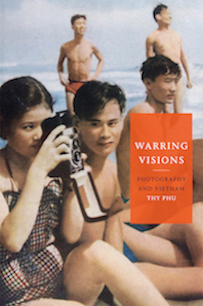 In April 2015, the Institut Français in Hanoi held a photography exhibition, Reporters de Guerre (War Reporters), marking the fortieth anniversary of the end of the Vietnam War. Curated by Patrick Chauvel, an award-winning photographer who had covered the war for France, the exhibition showcased the work of four North Vietnamese photographers (Đoàn Công Tính, Chu Chi Thành, Tràn Mai Nam, and Hùa Kiêm) whose documenting of the Vietnam War was often overshadowed by photographers from the Western press working from the South. The poster for the cultural event at L’Espace used an iconic image: a black-and-white picture of North Vietnamese soldiers climbing a rope against the spectacular backdrop of a waterfall, taken in 1970 along the Ho Chi Minh trail. Đoàn Công Tính, the photographer, had caught a moment of timeless beauty and strength, an image of mankind overcoming physical hindrances and material obstacles in the pursuit of a higher goal. However, a scandal erupted when Danish photographer Jørn Stjerneklar pointed out on his blog that this iconic image was doctored. He compared two versions, the recent print that appeared in the exhibition and the “original,” which was published in Tính’s 2001 book Khoảnh Khắc (Moments). Tính apologized profusely for “mistakenly” sending the photoshopped image, claiming that the original negative had been damaged and that he accidentally included a copy of the image with a photoshopped background in a CD to the exhibition’s organisers. But in a follow-up article on his blog, Stjerneklar pointed out that even the “original” had been retouched, as evidenced by the repeating pattern of the waterfall, and was likely a montage of another photograph which is displayed at the War Remnants Museum in Ho Chi Minh City. Stjerneklar’s story was picked up worldwide and ignited a lively debate around the presumed objectivity of photojournalism and the role of photography in propaganda.
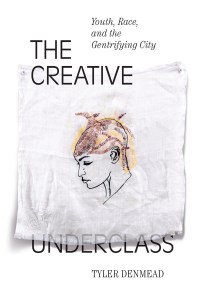 I want to use Tyler Denmead’s book as an opportunity to reflect on my past experience as director of Institut Français du Vietnam, a network of four cultural centers supported by the French Ministry of Foreign Affairs in Hanoi, Ho Chi Minh City, Danang, and Hue. On the face of it, our situations could not have been more different. I was a mid-career diplomat posted as cultural counsellor at the French Embassy in Hanoi for a four-year assignment. My roadmap for managing the culture centers was simple and laid down in a few words: engage youth, be creative, and balance your budget. Tyler Denmead was the founder and director of New Urban Arts, an arts and humanities studio primarily for your people of color from working-class and low-income backgrounds in Providence, Rhode Island. Coming back to the arts studio as a PhD student doing participatory observation, he comes to realize he has been a mere instrument in the city’s program of revitalization through culture, unwittingly supporting a process of gentrification and eviction of the ethnic minorities he was supposed to empower through cultural activities and economic opportunities in the creative economy. No two cities can be further apart than Hanoi, Vietnam, and Providence, Rhode Island. And yet there are some commonalities between the two. They were both labelled “Creative Cities” and implemented strategies of economic revitalization through cultural activities. They both faced the forces of gentrification, land speculation, urban renewal, and the challenge of dealing with former industrial facilities and brownfields. New Urban Arts and the Institute Français in Hanoi were both tasked with the same missions of engaging youth, expanding access to culture, building skills, and securing public and private support. And, as directors of cultural institutions, we were both entangled in contradictions and dilemma that put our class position and ethnic privilege into question.
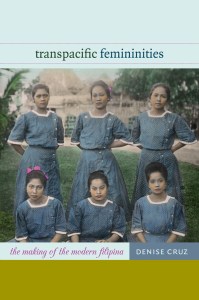 Orientalism grew out of a fascination with Asian women. From the scantily dressed harem recluse to the romantic Madame Butterfly figure, from the mousmé to the congaï, or from houri to geisha, the Western male gaze was literally obsessed by Asian female bodies, and constructed its vision of the Orient around figures of stereotyped female characters. Philippines’ women or Filipinas stood in a peculiar position with regard to these Orientalist wet dreams. They never fully fit the category of the Oriental woman as popularly conceived. Neither black nor yellow, the term used to describe her racial identity is “brown”. When traveling abroad, she is often taken for a Chinese, a Vietnamese, an Indonesian, an Indian, a Mexican, or a South American. Even now, mentioning Filipinas in a Western context brings to mind images of overseas care workers, domestic helpers, mail-order brides, or leading politicians such as the flamboyant Imelda Marcos or the stubborn Cory Aquino. Filipinas never coalesce around one single category. They escape the attempt to hold them as representative exhibits of an Asian feminity that would define a distinct type of Orientalist fantasy. As domestic workers, they cultivate invisibility and diligence. As politicians and heads of state, they embody leadership
  When she was a little girl growing up in the Philippines, Vernadette Vicuña Gonzalez considered American tourists and soldiers that she encountered or heard about as a benevolent presence. They were there to protect the land and to share their riches with a people in need of security and prosperity. This positive image was reinforced by the missionary schools founded by Americans, the remittances sent from abroad by relatives, the proceeds from commerce and military bases, and the endless stream of American movies and serials flowing from television. Later on, when her family emigrated to the United States, she would accompany her father to the Douglas MacArthur Memorial in Norfolk, Virginia, and share the gratitude held by many Filipinos for the general who liberated their country from Japanese occupation. For her, America was still the land of the free, a beacon of hope and opportunity for those seeking a better life beyond their own shores. But then she went to study at UC Berkeley and her worldview changed. She learned about the history of American imperialism, the gruesome stories of the Philippines-American war, the propaganda machine of Cold War politics, the complicity with authoritarian regimes, the destruction of the planet by the forces of neoliberalism, and the cynicism of exploitative raw power. Her homeland, the Philippines, became associated with the image of a puppet regime led by a dictator clinging to power with the backing of the US military. She applied the same critical lenses to the state of Hawaii and its populations after the was nominated as Associate Professor of American Studies at the University of Hawaii at Mānoa. For her, the Hawaiian archipelago was forced into the American fold at the end of the nineteenth century by a coalition of military imperialists, colonial planters, and migrant laborers who relegated the natives to subordinary status and even to cultural extinction. Being herself a nonnative in an adopted homeland, Vernadette Gonzalez purports to speak on behalf of the Native Hawaiians who should, however implausible it may sound, reclaim their sovereignty.
 Is America an empire? The standard view among conservative historians is that the United States only embraced imperialism with the Spanish-American War, and that this represented an aberration from the otherwise democratic trajectory of the nation. These same historians further argue that the imperial interventions of the United States, especially in the Philippines, were far more benign and progressive than its European counterparts. Taking over the Philippines Islands in 1898 was described, in official accounts at the time and in subsequent hagiographies, as an altruistic act motivated by America’s concern for the natives’ welfare. Whereas European empires were concerned with carving the world for themselves and extending their sphere of influence, America occupied the Philippines to fill the void left by Spain and to steer the still immature nation towards a course of self-government and independence. US colonialism in the Philippines was rhetorically driven by what President McKinley had referred to as “benevolent assimilation,” whereby the “earnest and paramount aim” of the colonizer was that of “winning the confidence, respect and affection” of the colonized. Even the armed conflict between the First Republic of the Philippines and the United States that lasted from early 1899 to mid-1902 and that cost the life of more than 200,000 Filipino insurgents and civilians was “characterized by humanity and kindness to the prisoner and noncombatant.” War and occupation were manifestations of “white love,” an act of compassion and altruism that emanated from American exceptionalism. If Filipino insurgents were killed, sometimes tortured, it was for their own good, and because they somehow requested it.
 Carl Schmidt defined sovereignty as ultimately the power to call a state of exception to the normalized condition of the law. Drawing on the German philosopher, Giorgio Agamben uses the exception as a fundamental principle of state rule that is predicated on the division between citizen in a judicial order and outsiders stripped of juridical and political protections. Aihwa Ong, a Berkeley anthropologist, offers a milder version of the state of exception: the sovereign exception she is interested in “is not the negative exception that suspends civil rights for some but rather positive kinds of exception that create opportunities, usually for a minority, who enjoy political accommodations and conditions not granted to the rest of the population.”
 In Flexible Citizenship, Aihwa Ong describes how industrializing states in Southeast Asia and border-crossing citizens of Chinese descent respond differently to the challenge of globalization. Borrowing from the French philosopher Michel Foucault, she uses the term “regime” to refer to knowledge/power schemes that seek to normalize power relations. The three regimes that are considered are the regime of Chinese kinship and family, the regime of the nation-state, and the regime of the marketplace. These regimes and their associated logics of subject-making, of governmentality, and of capital accumulation, are characterized by the twin forces of flexibility and transnationality. The book explores the phenomena that are shaped by these two forces: mobile capital, business networks, migrations, media publics, zones of graduated sovereignty, and triumphant Asian discourses.
 The Duke Reader