

A review of Dying Planet: Mars in Science and the Imagination, Robert Markley, Duke University Press, 2005.
 The relations between science and fiction have nowhere been any closer than on the planet Mars. The genre of science fiction literally began with imagining life on Mars; and some of its most popular entries nowadays are stories of how humans could settle on the red planet and make it more like the Earth. Planetary science originally took Mars as its object and tried to project onto Mars what scientists knew about the climate and geology on Earth. Now this interest for Martian affairs is coming back to Earth, as scientists are applying knowledge derived from studying Mars to the study of the Earth’s planetary dynamics. Mars’ image as a dying planet has been invoked to support competing, even antithetical views, of the fate of our world and its inhabitants: a glorious future of interplanetary expansion and space conquest, or a bleak fate of environmental devastation and human extinction. Science has not completely closed the issue on whether life has ever existed on Mars; but visions of extraterrestrial civilizations and space invaders have been superseded by narratives centered on mankind and its cosmic manifest destiny. This intimate relationship between science and fiction under the sign of Mars is now more than one century old, but shows no sign of abating. What is it in Mars that inflames people’s imagination from one generation to the next? Why has Mars attracted more interest than our closest satellite, the Moon, or than more distant planets in the solar system such as Venus or Saturn? Are there commonalities between the way our ancestors envisioned channels built by Martian civilizations and more recent visions of making Mars suitable for human sojourn? Will the detailed inventory of the Martian terrain brought back by satellite images and camera-equipped rovers put an end to our interest for the red planet, or will it rekindle a new space age with the colonization of Mars as its overarching goal? And how can our visions of planetary expansion avoid the pitfalls of colonial metaphors and Earth-based anthropocentrism?
Is there life on Mars?
Dying Planet explores the ways in which Mars has served as a screen on which we have projected our hopes for the future and our fears of ecological devastation on Earth. It presents a cross-disciplinary investigation of changing perceptions of Mars as both a scientific object and a cultural artifact. The persistence of the red planet in our cultural imagination explains its enduring presence on the scientific agenda; and the scientific controversies surrounding Mars have often fueled the imagination of artists and philosophers. Scientists still frequently resort to terrestrial analogies to describe Mars; and the study of Mars has encouraged scientists to think about the planetwide conditions necessary to sustain life, making Earth more of a Mars-like planet. For planetary scientists and science-fiction writers, Mars often acts as a bellwether, a harbinger of the ecological fate of the Earth. The image of Mars as a dying planet has an enduring quality: it indicates that the Earth may go the way of Mars and transform itself into a barren land due to resource exhaustion and environmental stress. To the question: Why Mars?, the author lists the reasons that has made the fourth planet in the solar system such an enduring presence in the scientific imagination. Since the invention of the telescope in the seventeenth century, Mars can be observed with a fair degree of accuracy. Dark patches on the surface, the polar caps that wax and wane, waves of darkening that spread across the planet from the poles toward the equator during its spring and summer months: all these observed phenomena have nourished rampant speculation based on analogies to Earth’s seasonal and hydrological cycles. In 1878, Giovanni Schiaparelli (1835-1910) announced that he had observed canali (channels or canals) criss-crossing its surface. At the end of the nineteenth century, American astronomer Percival Lowell (1855-1916) forcefully defended the idea that these canals were built for irrigation by an intelligent civilization. For more than a half century, the canal controversy fueled speculations about an alien race which could enter in contact with mankind. More generally, the discovery of life on Mars or elsewhere in the universe would profoundly alter humankind’s perception of its place in the cosmos: the question: Is there life on Mars? is as important as Copernic’s questioning the place of Earth at the center of the universe.
Our fascination with Mars stems from what Robert Markley calls the interplanetary sublime. According to Immanuel Kant, the sublime is the infinite object that reveals the sublimity of reason. The “starry heavens above me and the moral law within me” fill us with a profound sense of wonder and awe. The spectacle of Mars in science and in literature is indeed sublime and awe-inspiring. Mars has the largest volcano in the solar system. Its main valley stretches for three thousand miles, dwarfing terrestrial analogues and making the Grand Canyon seem “a mere crack on the sidewalk.” Its surface preserves landforms three to four billion years old that provide a window into a geological past that has long since disappeared from Earth. Orbital photographs show evidence of geologically recent lava flows, patterns of water erosion, and meteoric impacts that suggest a complex history of planetary evolution and climate change. The evidence of a once warmer and wetter Mars raises the question of planetary evolution and climate change. The study of Mars involves a multiplicity of sciences including geology, chemistry, hydrology, meteorology, and microbiology, as well as the still virtual disciplines of exobiology and terraforming. The exploration of Mars is a “fundamental science driver”: it pushes the frontiers of science further and provokes the imagination of scientists and writers alike. What we see in Mars also reflects “the moral law within me”: gazing at a distant planet makes our insignificance in the universe palpable. Whether humankind is alone in the universe or one of many intelligent species has profound philosophical and even theological implications. The loss of Mars’s atmosphere and the disappearance of water on its surface also bring lessons close to home: if the geological similarities between Mars and Earth have the same causes, then the history of Mars provides a window into Earh’s possible future. Doing comparative planetology, and understanding the dynamics of planetary climate change, therefore becomes the new rationale for going to Mars.
The planetary imagination
To twenty-first century observers, seeing canals on Mars is a bit like discerning a rabbit on the Moon: a figure of the imagination, a matter of folklore and cultural mythology. It is hard to realize that less than a century ago the issue of Mars canals was a matter of science, not fiction, filling the pages of scientific journals and the popular press. The idea of a plurality of inhabitable worlds has long been debated in speculative philosophy, starting with Greek philosopher Anaximander (610-546 B.C.). Based on observation and calculus, Nicholas Copernicus (1473-1543) placed the sun at the center of the solar system, relegating the Earth to merely another orbiting planet. The Copernician theory provided the impetus for Johannes Kepler (1571-1630) to describe precisely the orbits of the planets, although the German astronomer was “almost driven to madness” by the complexity of Mars’s orbit. With the development of the telescope in the seventeenth century, Mars began to be perceived as the most likely candidate in the solar system for harboring an extraterrestrial civilization. Giovanni Cassini (1625-1712) and Christiaan Huygens (1629-1695) published detailed images of the Martian surface that drew on terrestrial analogies: polar caps, “seas” and “oases” became familiar features of the Martian terrain. In the eighteenth century, the plurality of world hypothesis had been put on a sound scientific footing and was debated by scientists and philosophers alike. Mars’s surface was described with increasing precision, and almost all astronomers who had modern instruments at their disposal made observations of the planet. The mapping of Mars focused primarily on global cycles of temperature, hydrology, and presumed biological activity. But it was Giovanni Schiaparelli’s observation of a network of lines on the surface of Mars in 1877 that sparked the most intense controversy. Schiaparelli himself was agnostic about what his canali signified: where they “channels” connecting what was described as oceans, continents, and islands, or “canals” built by an alien civilization?
Robert Markley devotes almost three chapters of Dying Planet to the canal controversy. Forcefully defended by Percival Lowell, it had all the ingredients of a great scientific controversy. It could be boiled down to a simple thesis (canals meant intelligent Martians) and integrated into a grand narrative of planetary evolution (canals were built to counter the desertification of a dying world.) Lowell’s theory operated within the bounds of accepted scientific practice (it used all scientific observations available at the time) and mobilized the rhetoric of scientific objectivity to challenge the values, assumptions, and methods of his opponents (whose refusal to envisage life outside of Earth was denounced as religiously motivated.) Part of the fascination with Mars stemmed from the implicit and explicit lessons which scientists and their readers drew from Lowell’s vision of an advanced civilization struggling to stave off ecological disaster. Lowell’s grand narrative of a dying planet found echoes in the emerging literature of science-fiction writers who mixed the literary genres of utopian novels, adventure narratives, and philosophical speculation. Although H. G. Wells’ The War of the Worlds is by far the best known of the turn-of-the century science-fiction novels, it was by no means an isolated production. Wells’s novel offers a classic dystopian inversion of European imperialism: his blood-drinking Martians pose a horrific challenge to bourgeois complacency, even as they give shape to late Victorian culture’s masochistic fascination with its own demise. Kurd Lasswitz (1848-1910) describes a more peaceful encounter between humans and a more advanced Martian civilization in his 1897 novel Auf zwei Planeten, published in English in 1971 with a foreword by Wernher von Braun. The book has the Martian race running out of water, eating synthetic foods, traveling by rolling roads, and utilizing space stations. Alexander Bogdanov (1873-1928), a Russian physician, philosopher, and Bolshevik revolutionary, describes his Red Star (1908) as a collectivist utopia in the full throes of resource exhaustion and planetary decline. The vanguard socialism of the Martians is carved into the landscape of their planet, with the canals as both cause and effect of Martian collectivism.
How to prove a negative?
Until the 1930s, the canal thesis had enough currency within the scientific community to reinforce a widespread agnosticism about the possibility of intelligent life on Mars. Even as the canal builders retreated into science fiction, the idea of “primitive” life on Mars persisted. Lowell’s paradigm of a dying planet influenced scientific speculation about the composition of the Martian atmosphere, the character of its surface, and the nature of its putative life-forms. After World War II, advances in radiometry and the study of the infrared spectrum gave astronomers new tools with which to study Mars. As the intelligent life hypothesis became more and more improbable, scientists still deduced from the alleged existence of ice, water, and an atmosphere the possibility of vegetative life in the form of lichens and algae. It is hard to prove a negative: the inability to detect signs of life does not signify that life does not—or did not—exist on Mars. Even after the Mariner missions in the mid-1960s brought back photographs showing Mars’s barren surface as inhospitable to life, scientists speculated that oxygen might still be captured in the polar caps, and that bacterial forms of life may have existed in the past and might still be present. Evidence suggested that Mars three billion years ago was comparatively warm and wet. Did life exist in the very distant past on this more hospitable Mars? How had the planet died? Could micro-organisms survive in extreme conditions, as is the case in volcanic or deep sea environments on Earth? A whole discipline, exobiology, grounded on the premise that life may exist beyond Earth, concentrated on the search for signs of life and the study of habitable environments. The ambiguous results of the life-detection experiments conducted during the Viking missions which landed on Mars in 1976 led scientists to lobby for more sophisticated microbiology testings on future NASA landers. The search for life remains a crucial selling point for plans to explore Mars by sending automated rovers and, ultimately, boots on the ground.
In 1948, inspired by the novel of his compatriot Kurd Lasswitz, the rocket physicist and space scientist Wernher von Braun wrote the technical specification for a human expedition to Mars, The Mars Project. In the 1970s and early 1980s, the American astronomer and science communicator Carl Sagan was the most vocal advocate of space exploration and the search for extra-terrestrial intelligent life. Again, he was inspired by the science-fiction novels he read as a teenager: a map representing Edgar Rice Burroughs’s vision of Mars hung on the hallway wall outside his office for more than twenty years. Just as the canals occupied the attention of a generation of scientists, Burroughs’s novels about John Carter and his adventures on the planet he calls Barsoom dominated the interplanetary fiction of the first half of the century. Literature inspired by Mars includes the good, the bad, and the ugly: for a Ray Bradbury and his Martian Chronicles (1950) or a Isaac Asimov’s The Martian Way (1952), how many pulp fictions or comic-book adventures featuring green aliens laying eggs and four-armed tetrapods shooting laser beans? As Robert Markley states in his introduction, “anyone who has read a lot science fiction realizes that much of it is pretty bad.” But the appeal of the genre lies elsewhere: “science fiction does not represent historical experience, but generates simulations of what that experience may become.” Ray Bradbury once said that “Burroughs has probably changed more destinies than any other writer in American history.” The same could be said about himself. Generations of adults (mostly males) had their formative years influenced by the likes of Ray Bradbury, Isaac Asimov, and Arthur C. Clarke. Considering that space exploration lacks the support of vested interests outside of the aerospace industry, science-fiction novels created a constituency for sending missions to the red planet and beyond.
The Mars Society
Inspired by the Lowellian paradigm of a dying planet bearing the mark of ancient civilizations, classic science fiction was obsessed with the idea of intelligent life on Mars. More recent science fiction plays with the idea of bringing life and civilization (back) to Mars: by sending manned missions, establishing a permanent presence, and terraforming the planet. As an emblem of humankind’s interplanetary future, Mars is described both as a dead world that resists human effort to explore, colonize, and transform it and the site of humankind’s next giant leap in its multisecular evolution. These fictions are haunted by the dark underside of colonization and extractive capitalism, and often demystify the masculinist narrative of the conquest of space with a vision of failed social order and technoscientific hubris. In Kim Stanley Robinson’s trilogy, Red Mars (1992), Green Mars (1993), and Blue Mars (1996), the settlement and terraforming of Mars is chronicled through the personal and detailed viewpoints of a wide variety of characters spanning almost two centuries. Ultimately more utopian than dystopian, the story focuses on egalitarian, sociological, and scientific advances made on Mars, while Earth suffers from overpopulation and ecological disaster. These plans to colonize Mars are no longer science fiction: established in 1998 by aerospace engineer Robert Zubrin and backed by multibillionaire Elon Musk, the Mars Society, a nongovernmental organization, has set itself the goal to send humans to Mars and establish a permanent colony in the very near future. In an industry where NASA remains the most expensive game in town, the “new space” industry that operates on a “faster, better, cheaper” basis promotes alternative, low-cost ways of getting humans to Mars and sustain them while they stay on the planet. Robert Markley, who published Dying Planet in 2005, has reservations about the whole endeavor. In his opinion, the Mars Society’s vision of a new American frontier, or a new manifest destiny, “is founded on dubious or simplified readings of American history that repress both the human and ecological consequences of conquest and colonization.” As he concludes, “the ultimate challenge posed by planetary transformation is ultimately as much ethical as it is scientific.”
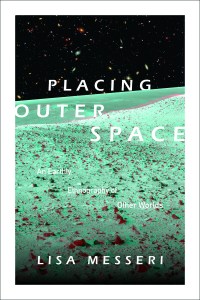 When I heard Lisa Messeri had written an ethnography about space research, my first reaction was: what’s an anthropologist like her doing in a place like this? How can one study outer space with the tools and methods of social science? What is the distinct contribution of the anthropologist in a field dominated by rocket scientists and big bang theoreticians? What can the cosmos teach us about ourselves that is not grounded in hard science and space observatory data? To be sure, there is no anthropos to study in outer space, and other worlds are beyond the grasp of the ethnographer. The sociology of other planets remains a big question mark. So far, you cannot make participatory observation in space stations or conduct fieldwork on Mars. We may hire anthropologists, linguists, semioticians, and indeed all the help we can get when we encounter extraterrestrial civilizations and extraplanetary forms of life; but so far these close encounters of the third type remain the stuff of science-fiction novels and blockbuster movies. But on second thought, an anthropologist in outer space is not completely out of place. Anthropologists have always accompanied explorers and discoverers to the frontiers of human knowledge. They helped us understand alien cultures and foreign civilizations to make them less distant, and drew lessons from their immersion into other worlds for our own society. Anthropologists make the strange and the alien look familiar, and the “view from afar” that they advocate also makes our own planet look alien and unfamiliar. They also help us make sense of science’s results and methods, and have been a trusted if somewhat critical companion of scientific research and laboratory life. Science and technology studies (STS in the jargon) have taught us that natural scientists—contrary to a common prejudice—are never simply depicting or describing reality out there “just as it is”: their research is always characterized by a specific style and colored by the “scientific imagination.”
 The Duke Reader