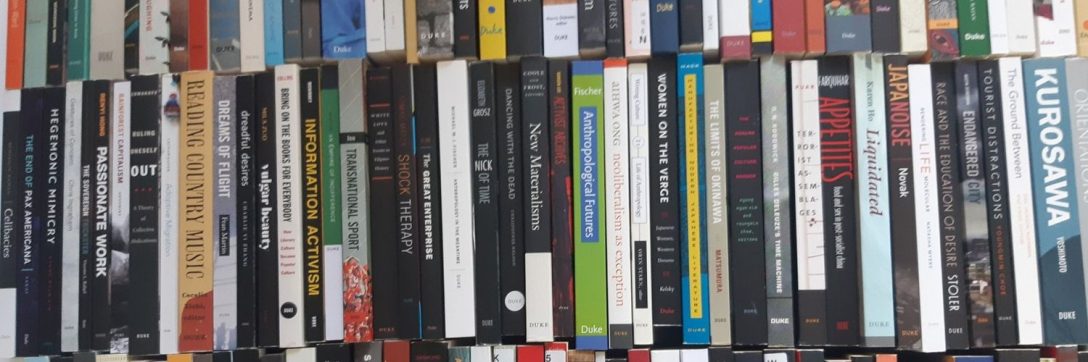

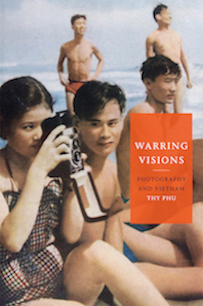
A review of Warring Visions: Photography and Vietnam, Thy Phu, Duke University Press, 2022.
 In April 2015, the Institut Français in Hanoi held a photography exhibition, Reporters de Guerre (War Reporters), marking the fortieth anniversary of the end of the Vietnam War. Curated by Patrick Chauvel, an award-winning photographer who had covered the war for France, the exhibition showcased the work of four North Vietnamese photographers (Đoàn Công Tính, Chu Chi Thành, Tràn Mai Nam, and Hùa Kiêm) whose documenting of the Vietnam War was often overshadowed by photographers from the Western press working from the South. The poster for the cultural event at L’Espace used an iconic image: a black-and-white picture of North Vietnamese soldiers climbing a rope against the spectacular backdrop of a waterfall, taken in 1970 along the Ho Chi Minh trail. Đoàn Công Tính, the photographer, had caught a moment of timeless beauty and strength, an image of mankind overcoming physical hindrances and material obstacles in the pursuit of a higher goal. However, a scandal erupted when Danish photographer Jørn Stjerneklar pointed out on his blog that this iconic image was doctored. He compared two versions, the recent print that appeared in the exhibition and the “original,” which was published in Tính’s 2001 book Khoảnh Khắc (Moments). Tính apologized profusely for “mistakenly” sending the photoshopped image, claiming that the original negative had been damaged and that he accidentally included a copy of the image with a photoshopped background in a CD to the exhibition’s organisers. But in a follow-up article on his blog, Stjerneklar pointed out that even the “original” had been retouched, as evidenced by the repeating pattern of the waterfall, and was likely a montage of another photograph which is displayed at the War Remnants Museum in Ho Chi Minh City. Stjerneklar’s story was picked up worldwide and ignited a lively debate around the presumed objectivity of photojournalism and the role of photography in propaganda.
Photography and propaganda
That photography was, and still is, part of propaganda in Vietnam was never a secret. Along with my colleagues, I experienced it firsthand during my term as consular counsellor at the French Embassy in Vietnam. When the Institut Français organized photo exhibitions at its flagship cultural center L’Espace in Hanoi, every picture had to be vetted by controlling organs of the government. The answer often came at the last minute, and many photographs were rejected on the basis of obscure criteria. Still, young Vietnamese photographers were enthusiastic about events organized by the French culture center. With the help of French photographer Nicolas Cornet and other professionals, young photography apprentices honed their skills in creative workshops and attended seminars on portfolio building. Some talented photographers held their first solo exhibition at L’Espace before embarking on an international career. In April 2023 (after I had left Vietnam), the Institut Français in Hanoi and its director, Thierry Vergon, initiated the first International Photography Biennale in Hanoi, a major cultural event placed under the aegis of Hanoi’s People’s Committee in partnership with a network of Vietnamese and international partners. More than twenty exhibitions organized on several locations allowed the general public and professionals to discover the wealth of contemporary photography and the treasures of heritage photography in Vietnam. A series of outreach activities were scheduled throughout the Biennale, including workshops to connect stakeholders, roundtables and debates, training sessions, film screenings, and portfolio reviews. The initiative was used by Hanoi City, part of UNESCO’s Creative Cities Network, to bolster its image as a regional hub for culture and innovation. Still under the strictures of a socialist government, a new Vietnamese narrative on photography is slowly emerging. It is based on creativity, not control, and its aim is to put Vietnam’s capital on the map for cultural professionals and creative workers. Alternative visions of Vietnam are seeping through the web of censorship and are flourishing in the rare spaces of unrestricted freedom offered by social networks or independent cultural venues.
Thy Phu’s book Warring Visions shows that creativity was also present in the photographs taken during the Vietnam War (known in Vietnamese as the Resistance War against America.) Vietnamese photographers working for the Hanoi-based Vietnam News Agency (VNA) were no less talented than their Western counterparts operating from the South. War pictures published by the Western press (or by Japan’s) were as much involved in political propaganda as the “socialist ways of seeing Vietnam” that filled the pages of Vietnam Pictorial, an illustrated magazine run by the communist state. War was fought on the front of images, both in Vietnam and within America. Propaganda pictures were also waged by the South Vietnam government, with less international success. For Americans, the Vietnam War still haunts the national psyche with the ignominy of defeat. The war was a watershed in visual history, and the many pictures taken by Western reporters and photographers laid the foundation for battlefield reporting and contemporary photography studies. But as Thy Phu notes, “in addition to overlooking unspectacular forms of representation, the Western press, then as now, neglects Vietnamese perspectives, emphasizing instead the American experience of this war.” The role of Vietnamese photographers, including the many stringers and fixers working for full-time foreign correspondents, is systematically downplayed, although some of them took the most iconic photos that were to shape the imaginaries of the war (such as Napalm Girl, the picture of a naked girl running away from an aerial napalm attack.) But placing the spotlight on photographs taken by Vietnamese war photographers is only half of the story. According to Thy Phu, we need to enlarge the category of war photography, a genre that usually consists of images illustrating the immediacy of combat and the spectacle of violence, pain, and wounded bodies. Pictures depicting wedding ceremonies, family reunions, and quotidian rituals are also part of the Vietnamese experience during the war. Drawing from family photo books from the Vietnamese diaspora, discarded collections found in vintage stores in Ho Chi Minh City, or her own family records, Thy Phu reconstitutes a lost archive of what war in Vietnam might have been like for ordinary citizens.
Socialist ways of seeing Vietnam
The canon of war photography, as well as its most basic principles, were established during the Vietnam War. Pulitzer-winning images exposed the brutality and injustice of war, its toll on the body and on the mind of soldiers, its devastating consequences for civilians and their living environment. According to the profession, war images should by no means be staged or manipulated. They should expose reality as it is, captured on the spur of the moment by a neutral observer. It will come as no surprise to learn that North Vietnamese photographers obeyed to different rules and aesthetic principles. The images that were taken by these propaganda workers are full of positivism and youthful energy. Unlike the photos taken from the South showing the terrible effects of war, the images taken by photographers from the North show young soldiers smiling in front of the camera or caught in the middle of disciplined action, images of incredible romanticism in the middle of war. The goal was, of course, to highlight their heroism in order to stimulate other soldiers and citizens seeing the images. Ideology informed the subject matter of these photographs and guided practitioners into what to look at and how to represent it. Harsh material conditions also shaped the way photographs were taken and circulated. The photographers were foot soldiers in uniform who had been selected from among Hanoi’s university elite and given a crash course training in journalism and photo reporting before being sent to the frontline. Communist allies abroad provided cameras and lenses that were made in East Germany and the USSR. Equipment and film were in such short supply that they were not issued to individual photographers but were stored at the headquarters of organizations such as the Young Pioneers, the Army’s photographic department, and the VNA. In such conditions of scarcity, photographers were forced to shoot sparingly, to compose and stage their images prior to shooting, and to improvise solutions to compensate for the lack of equipment. In the absence of flash bulbs, the flare of rockets fired against a dark sky provided the light necessary for nighttime pictures. Piecing together several shots created an improvised panoramic view without need of a wide-angle lens. War photos were displayed in makeshift jungle exhibitions or village fairs, along with propaganda posters, to uplift the masses and disseminate a “socialist way of seeing” things. Photographs were also distributed to foreigners beyond the Communist bloc, especially to members of antiwar organizations, some of whom received copies of Vietnam Pictorial, an internationally circulated illustrated magazine.
Reviewing past issues of this magazine, three central subjects stand out: the heroic struggle of soldiers, the toil of factory workers and farmers, and the sacrifices of revolutionary Vietnamese women. Beautiful portraits of women harvesting lotus flowers, of young girls playing in poppy fields, or children riding on the back of water buffaloes also adorned the color covers of Vietnam Pictorial, with vibrant colors denoting artificially painted photographs and reminding readers of the bright socialist future for which war was fought. For Thy Phu, the revolutionary Vietnamese woman was more than just an image: it was a symbol, embodying contested visions of women’s role in anticolonial resistance and national reunification. The battle for this symbol was fought on two fronts. On the leadership side, the figure of Nguyễn Thị Bình, the Viet Cong’s chief negotiator at the Paris Peace Conference in 1973, opposed the fierceful Madame Nhu, the de facto First Lady of South Vietnam from 1955 to 1963. Both used feminity for political aims, wearing different styles of áo dài, Vietnam’s traditional dress, as a gendered display of nationalism. In contrast to Madame Bình’s demure attire which singled her out as the sole woman at the negotiating table, Madame Nhu favored a more risqué style of áo dài and did not hesitate to pose in masculinist postures, such as in the famous closeup picture where she is seen firing a .38 pistol. Both camps also sought to glorify women’s contribution to nationalist struggle by enrolling them in mass movements. In the South, Madame Nhu founded the Women’s Solidarity Movement of Vietnam (WSM) in order to give women military training and enroll them in paramilitary groups assisting the armed forces. Women in uniform included Hồ Thị Quế (the “Tiger Lady”), member of the Black Tigers Ranger Battalion, pictured in full battledress looking fiercely at the camera. In the North, young women were recruited en masse in the Youth Shock Brigades, also known as TNXP, and sent to the frontline in order to assist male soldiers or build the Ho Chi Minh trail. The image of “girls with guns” or “long-haired soldiers” stood in stark contrast with the more traditional pictures emphasizing motherhood and family that were used to appeal to the solidarity of women’s antiwar organizations in the United States. But pictures offer fertile ground for projection, misrecognition, and reinvention: the Vietnamese revolutionary woman was reclaimed as a radical chic symbol for American feminist struggles in which she had no part. The Vietnamese Communist Party won the day in the fight over images and symbols associated with womanhood. But as French historian François Guillemot reminds us, Vietnamese women, who represent half of society, suffered more than their half as a result of military conflict and civil war.
Lost archives
The Democratic Republic of Vietnam (DRV), now known as the Socialist Republic of Vietnam, ultimately claimed victory in the war of images and symbols. As a result, war images from the South were censored, erased, and eliminated from the record. They survive as embodied performances of reenactment and remembrance in the dispersed archives of the Vietnamese diaspora. To illustrate the war as seen from the perspective of South Vietnam, Thy Phu takes the example of Nguyễn Ngọc Hạnh who was one of the most respected Vietnamese photographers of his time. He served in the French Army until 1950, then transferred to the Armée Nationale Vietnamienne, which in 1956 became the Army of the Republic of Vietnam (ARVN). He attended the French Army photography school during the mid-1950s, was designated the official ARVN combat photographer in 1961, and ultimately attained the rank of Lieutenant Colonel. After the fall of Saigon in 1975, he was sent to a “re-education camp” with his fellow officers, but survived until he was released through the intervention of Amnesty International in 1983. He emigrated to the U.S. in 1989, where he passed away in 2017. Published in 1969 in collaboration with civilian photographer Nguyễn Mạnh Đan, his book Vietnam in Flames ranks in the top echelon of great Vietnam photobooks, right alongside Philip Jones Griffiths, David Douglas Duncan, and the best of the Japanese photographers. Hạnh made no secret that his photos were staged: he even explained in painstaking detail how he used drops of olive oil to place “tears” on one of his most notable photograph, Sorrow, the portrait of a lovely young woman weeping over the dog tags of her missing companion. As Thy Phu notes, manipulation has been a defining characteristic of war photography from the nineteenth century to the present. Indeed, some of the mots famous war photographs, such as Robert Capra’s The Falling Soldier, are said to be restaged or reenacted. Hạnh nevertheless insisted that his images are authentic documents that register the intensity of the emotions the war engendered. Photographs, like tears, are a social ritual. Whether they are authentic or inauthentic, induced or spontaneous, matters less than the fact that they are to be seen and recognized. As they circulate among the Vietnamese diaspora while they remain censored in Hanoi or Ho Chi Minh City, pictures from Vietnam in Flames contribute to a sense of community through collective suffering, sacrifice, and remembrance.
The two waves of Vietnamese refugees, those who fled in 1975 after the fall of Saigon and the “boat people” who left the country from the late 1970s into the early 1990s, left behind all their personal belongings, including family pictures and photo albums. Those who stayed behind pruned their photo collections of all images reminiscent of the old regime: men in ARVN uniform, pictures betraying friendly connections with Americans, or scenes denoting bourgeois proclivities such as foreign travels and private vacations. Remarkably, however, thousands of those photos have resurfaced in the marketplace in the form of orphan images and albums separated from their original owners and stories. These are images that have been “unhomed”: scattered, lost, or left behind. Together they provide a counter-narrative of the war, a testimony of Southern Vietnamese experiences that have been erased from the record and banished from official history. How to deal with those missing archives, lost memories, and orphaned pictures? What can be learned of family pictures in the absence of a story, when the memories that bring photographs to life are missing from official records and even personal collections? In Shakespeare’s Hamlet, only a scholar is capable of speaking with ghosts. Similarly, only artists can speak to the ghostly presence of these anonymous faces. Thy Phu, who herself assembled a community archive of family photographs and the stories about them, presents the artistic démarche of Dinh Q. Lê, a diaspora Vietnamese artist now based in Ho Chi Minh City and whose work was recognized by major exhibitions in Singapore, Tokyo, New York, and Paris. Since 1998, Lê has been working on a trilogy of installations that feature family photographs, objects that fascinate him because he lost all of his own photographs in the course of his family’s forced migration. Images are stitched together to form fragile-looking, rectangular installations like mosquito nets, or they are cut into enlarged strips that are weaved to form a new picture, superposing the initial faces on the strips and an emerging bigger picture. In his 2022 exhibition at the Quai Branly Museum, one of the weaved picture represented Madame Nhu waving a pistol, an image still taboo in Vietnam but that the artist was able to reinterpret through his own eyes. In another installation, onlookers from the Vietnamese diaspora were invited to pick up images covering the gallery floor and to consult an online database that draws on crowdsourcing to identify lost images of their own family, merging the acts of collecting, remembering, and archiving.
War photography in the age of generative AI
What does Thy Phu’s book tell us about photography censorship and creativity in contemporary Vietnam? How can we interpret war photography in the light of warring visions, ragged memories, and contested identities? The first lesson I learned from Warring Visions is that the distinction between propaganda pictures and war reporting is artificial: in the end, what matters is not political intent, but what we make of it. War pictures will always be used for political purposes. But those that remain in public memory transcend the immediacy of a cause and express universal values, sometimes at odds with the intention of their sponsors. The second lesson is that we need to expand our notion of war photography. Vernacular pictures representing quotidian rites of family life also tell stories about wartime conditions, and these stories must be collected and made known. As a third lesson, we should think hard about authenticity and manipulation of images in the age of generative AI and deep fakes. The indignation that followed Jørn Stjerneklar’s blog article exposing the manipulation of Đoàn Công Tính’s poster in 2015 was in a way misplaced: war pictures can be staged, reframed, doctored, reenacted, and, yes, photoshopped. As historians of war photography tell us, this has always been the case, and we should anticipate more of the same in our technologically savvy future. In my perception, Vietnamese nowadays have a more relaxed attitude to Photoshop than people in Europe or in North America. When I took ID pictures in Hanoi, the result came heavily retouched, with bright eyes and rosy cheeks. To tell the truth, I like the picture more than the original, and I still use it on my identity documents or CV profile. This tradition of retouching pictures goes back a long way, as evidenced by the family portraits and painted photographs from colonial Indochina. It is also linked to the highest levels of Vietnamese statesmanship: as is well known, prior to establishing the DRV in 1945, Hồ Chí Minh led a peripatetic life and worked a number of odd jobs. According to the records of the French police, around 1915-17 he worked as a photo retoucher in Paris by day and meeting leading Communist agitators by night. It is said that this humble experience with visual restoration led him to grasp photography’s political potential. It also taught him to be wary of photography’s role for state surveillance and identity control: only one portrait remains from this period, recognizable by the chipped upper part of his left ear that allowed the French police to check the identity of the Vietnamese revolutionary leader who changed his name and civil status several times over the course of his career.
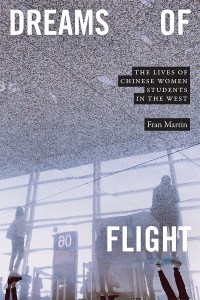 Reading Dreams of Flight made me reexamine my preconceptions about Australia, China, and university studies abroad. When I was a graduate student in France back in the early 1990s, I didn’t identify Australia as a land of opportunity for academic studies. In the disciplines that I have studied, Australia is (or was) a scientific backwater, an outlier when compared to North America or Western Europe. I don’t trust university rankings that much, but last time I checked Australian universities ranked quite low in terms of research output, number of Nobel Prizes, well-identified schools of thought, or emerging paradigms. I was under the impression that an academic career in an Australian institution was a second- or third-best choice for aspiring scholars who failed to land the position of their dreams in North America or in Europe. Spending more than a decade in East Asia made me revise that opinion. I have met many Asian scholars for whom Australia was definitely on the academic map. For a prospective graduate student in South Korea, in Taiwan, or in South-East Asia, pursuing a degree in Australia, applying for a faculty position, or doing research as a post-doctoral student in an Australian university are serious options to consider. Australia’s attractiveness is not only linked to geographical proximity. Language, lifestyle, natural environment, diasporic presence, and academic freedom in well-funded research universities also weigh in the decision for an academic destination. Besides, the international students who form the focus of Dreams of Flight—a cohort of about fifty young Chinese women that the author follows across the full cycle of international study between 2012 and 2020—did not wish to pursue an academic career in science or in the humanities. Their ambition was to acquire a degree in a practical field such as accounting, finance, or communication and media studies, to broaden their horizon by getting an experience of living and studying abroad, and to follow a career marked by international mobility and promotion opportunities. Australian universities could build on these expectations to attract a growing number of students from China: in December 2019, just before Covid, there were over 212,000 Chinese students studying in Australia. Students from China represented the largest proportion of international students, while Australia was the third foreign destination for Chinese students after the United States and the United Kingdom.
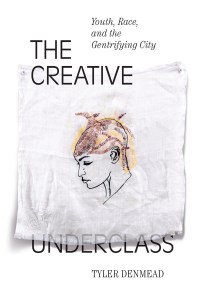 I want to use Tyler Denmead’s book as an opportunity to reflect on my past experience as director of Institut Français du Vietnam, a network of four cultural centers supported by the French Ministry of Foreign Affairs in Hanoi, Ho Chi Minh City, Danang, and Hue. On the face of it, our situations could not have been more different. I was a mid-career diplomat posted as cultural counsellor at the French Embassy in Hanoi for a four-year assignment. My roadmap for managing the culture centers was simple and laid down in a few words: engage youth, be creative, and balance your budget. Tyler Denmead was the founder and director of New Urban Arts, an arts and humanities studio primarily for your people of color from working-class and low-income backgrounds in Providence, Rhode Island. Coming back to the arts studio as a PhD student doing participatory observation, he comes to realize he has been a mere instrument in the city’s program of revitalization through culture, unwittingly supporting a process of gentrification and eviction of the ethnic minorities he was supposed to empower through cultural activities and economic opportunities in the creative economy. No two cities can be further apart than Hanoi, Vietnam, and Providence, Rhode Island. And yet there are some commonalities between the two. They were both labelled “Creative Cities” and implemented strategies of economic revitalization through cultural activities. They both faced the forces of gentrification, land speculation, urban renewal, and the challenge of dealing with former industrial facilities and brownfields. New Urban Arts and the Institute Français in Hanoi were both tasked with the same missions of engaging youth, expanding access to culture, building skills, and securing public and private support. And, as directors of cultural institutions, we were both entangled in contradictions and dilemma that put our class position and ethnic privilege into question.
 The Duke Reader