

A review of The Banality of Good : The UN’s Global Fight against Human Trafficking, Lieba Faier, Duke University Press, 2024.
 On the face of it, fighting human trafficking has all the banality of a good deed. The adoption in 2000 of a UN Protocol on human trafficking, with a heavy focus on the sexual exploitation and abuse of migrant women, was a positive act of feminist diplomacy and was lauded as such by feminist groups in the West and in developing countries. The UN template set the stage for the development of a new international regime of norms and guidelines for how national governments, NGOs, and international organizations should actively work together in this fight. With the Trafficking in Persons Report published yearly, the US Department of State must be praised for having given teeth to the UN Protocol, allowing a carrot-and-stick approach to ensure compliance while naming and shaming bad performers. The US government was bold enough to point finger at one of its closest allies, Japan, whose treatment of migrant women brought under an entertainer visa scheme was clearly violating basic human rights. Japan did a good thing by applying international best practices and diminishing abuse: within two years, the number of Filipino women entering Japan on entertainment visas dropped by nearly 90 percent. All stakeholders can take pride on this result: women’s groups, feminist leaders, UN diplomats, American Embassy staff, Japanese case workers, law enforcement officers, and the victims themselves. This may not sound like a big deal, but they all did well. Hence, the banality of good.
Turning Hannah Arendt’s Banality of Evil on its Head
Under this narrative, the banality of good denotes step-by-step progress in the advancement of human rights and the fight against human exploitation. But let us pause. All of the above is not the story that Lieba Faier tells, and her expression “the banality of good” in fact has the opposite meaning. She uses it “to refer to the perils of this campaign’s globalized institutional approach, which ultimately privileges technical prescription and bureaucratic compliance over the needs and perspectives of those it means to assist” (p. 11). All stakeholders aiming to do good and alleviate the plight of victims of human trafficking missed their original goal or had to compromise on their principles. By bringing a global solution to local problems, the international community only made things worse. Foreign women working in the sex industry were forcibly deported on criminal charges of visa overstay; grassroot NGO workers became complicit in the expulsion of those they were supposed to protect; while police raids pushed the sex industry further underground. In titling her book The Banality of Good, Lieba Faier of course has in mind the expression “the banality of evil” coined by Hannah Arendt to denote the fact that evil can be perpetuated when immoral principles become normalized over time by people who do not think about things from the perspective of others. Evil becomes banal when people don’t feel bad when they do evil. Here, the banality of good reflects the opposite attitude: people don’t feel good when they are supposed to do good. They know something is wrong, but they can only attribute it to “the system” or hope that their action contributes to the realization of a greater good.
Over and over in Lieba Faier’s narrative, individuals and groups committed to the betterment of foreign women’s plight had to compromise on their strategic goals and core values. The original impetus to fight against traffic in women came from Asian feminist organizations and grassroot human rights groups in Japan, Korea, and South-East Asia. Beginning in the early 1970s, they built a regional coalition to respond to a rising tide of Japanese sex tourism in the region. They also had a broader agenda that was anti-capitalist and anti-colonial at its core, seeing sex tourism as the reflect of structural inequities among nations and between genders and classes. But the US feminist groups who picked up their fight obscured the structural factors foregrounded by the earlier efforts of women’s groups in Asia and framed human trafficking as a uniform global issue that warranted a single global response. This global feminist movement coined the expression “sexual slavery” to articulate a singular, abstract, deterritorialized global practice, overlooking racial, national, and class inequalities among women. They formed an alliance with the human rights movement to launch a campaign for the abolition of “violence against women,” with human trafficking as a key instance of this violence. Lieba Faier describes how a globalist feminist project then became a UN-centered global human rights initiative: the drafting and adoption of the Trafficking Protocol was based on compromise by both Asian grassroot organizations and US feminist groups, who were themselves divided between prostitution abolitionists and sex worker rights’ advocates. By establishing a formal definition of human trafficking and then collecting data on it, the protocol promised to recognize human trafficking as a global phenomenon for states to measure and institutionally address.
Reframing Sexual Violence
But when national governments decided to act, they did not focus on human trafficking as a matter of violence against women. Rather, they reframed the issue once again, this time as a matter of transnational organized crime warranting a punitive solution. What US-based feminism had identified as violence against women would be reframed as a generalizable problem of criminal violation enacted by individual private citizens against other private citizens. A model of redistributive justice was discarded in favor of a carceral model. Of the three Ps framework—preventing trafficking, protecting victims and prosecuting traffickers–, the third P was prioritized and the two previous ones were sidelined. In Japan, grassroot NGO workers produced “trauma portfolios” of victims, collecting personal accounts of suffering to argue that foreign sex workers deserved protection and assistance, not treatment as criminals. NGO caseworkers’ accounts were so moving that American diplomats made the controversial decision of placing Japan on the Tier 2 Watch List of the 2004 Trafficking in Persons Report. For Japanese bureaucrats, this was a huge blow to national pride: most of the advanced countries were on the so-called Tier 1 list, but only Japan was ranked Tier 2. Something had to be done to restore Japan’s standing in the international community. The same narratives that had moved NGO activists and US diplomats into action were now perceived as a matter of national shame.
As Lieba Faier remarks, “People care about others for different reasons and thus to various ends” (p. 95). For NGO workers, reporting on victims’ stories of abuse to US embassy officials was a way of using gaiatsu, or foreign pressure, to induce reforms in domestic policies. But the Action Plan that the Japanese government enacted in 2005 was a bureaucratic exercise, devoid of compassion or concern for social justice. The “Roadmap to Tier 1” was rich in international best practices and indicators, but disconnected from facts on the ground. As a result of the screening process, migrants that were denied the status of victim were forcibly repatriated to their home countries or held liable for illegal residence (fuhō taizai). Only those officially recognized as victims of human trafficking received protected status, with a residency permit allowing them to remain in Japan or assistance to go back home. As one NGO caseworker confided to the author, “Sometimes I don’t feel good about the work I’m doing. These migrants have nothing back home” (p. xiv). Or as another worker put it, “They don’t have anywhere to go. For many, their life of extreme poverty in the home country is much worse than what they have now” (p. 15). These NGO caseworkers didn’t feel that justice was being served by those international protocols, but if they refused to participate in them, they worried that the situation would be worse. So they complied with the “bureaucratic glue and strings” (p. 171) attached to being part of an international campaign against trafficking in women.
Support Comes with Strings Attached
Lieba Faier complements her fieldwork with archival work and interviews with UN officials and government representatives in Japan and in the United States. She dissects the various frames and translations that a social issue has to go through in order to become a legal provision in an international protocol; and how a UN template in turn translates into reality and alters the lives of women who may or may not be designated as victims of international trafficking. She brings an ethnographic eye to practices of helping migrant workers, campaigning for women’s rights, drafting UN templates, and translating legal texts into policy options. She reads “against the grain of bureaucratic documents to see the contradictions, aporias, and impasses embedded in them” (p. 101). As she describes it, the United Nations acts as a clearinghouse for such efforts, erasing history and geographical differences in the interest of establishing a standardized international practice. As she points out, “the rote adherence to an institutional protocol comes to stand for necessary structural change” (p. 13). Well-intentioned humanitarian campaigns produce unintended harm through bureaucratic routines and institutional priorities. These efforts prioritize protocol compliance over survivors’ needs, perspectives, and lived realities, leading to repatriation, compromised quality of life, and even criminalization of those they aim to help. The Japanese government offers assistance to only a small portion of those foreign workers suffering abuse and exploitation: “In 2018, only seven trafficking victims received repatriation assistance, and this number dropped to five in 2019” (p. 211). These “lilliputian pockets of improvement” (p. 213) mask egregious failure to put an end to human trafficking. Even those who benefit from repatriation programs fall victim of “cruel empowerment” (p. 185): humanitarian programs designed to empower them through financial literacy or other neoliberal models of development fail to address the structural inequalities of the status quo.
Lieba Faier’s scholarship is informed by the years she spent as a volunteer in Japan, the Philippines and the United States working alongside NGO workers assisting migrant women and lobbying the UN and governments to address the mistreatment of foreign women working in the sex industry and other exploitative sectors. As she writes, “Doing multi-sided research involving multiple organizations in three different countries over many years had advantages insofar as I sometimes heard part of a story in one organization or country and the rest of the story in others” (p. 19). Her findings were also buttressed by the availability of US diplomatic cables disclosed by WikiLeaks, which documented internal processes and political motivations. Grassroot perspectives allowed her to question the way these migrant women’s plight was addressed in international policy forums. As she notes, “the global approach to this issue was sidelining, if not displacing, the expertise and guidance of the experienced NGO caseworkers whose labor was central to it” (p. xii). While these NGO workers were sometimes themselves former labor migrants and had a deep understanding of the situation they tried to alleviate, the organizations that brought the issue to an international public stage were headed mostly by academics, journalists, or lawyers with little direct knowledge of facts on the ground or contacts with grassroot organizations. She also questions the exclusive focus of the international campaign on the sex industry and the lack of attention awarded to other forms of exploitative labor, such as the conditions faced by Asian workers who come to Japan under the Technical Intern Training Program (Ginō Jisshū Seido), which she describes as a cover-up for cheap and disposable labor acquisition. Her advocacy for migrant rights doesn’t stop at one particular category, but is informed by “a vision of justice that asks national governments and their citizenries to see foreign workers as part of their imagined community” (p. 140).
A Plea for the UN
The Banality of Good is informed by the vision that “other worlds are possible,” as stated in the book’s opening dedication. But what are the alternatives? As a French diplomat committed to a feminist diplomacy agenda, I would not easily dismiss the United Nations’ approach to human trafficking or the work done by American diplomats to document Japan’s insufficient efforts in applying human rights standards. I agree with the author when she states that “if international guidelines are themselves problematic, little will be achieved by compliance with them” (p. 120). But this should serve as a rallying cry to devote more attention and resources to UN multilateralism and human rights campaigning. The Trafficking Protocol, with its lack of a credible enforcement mechanism and its emphasis on criminalization and border protection, is an easy target for attack. But internal debates show that the work was perfectible and that other policy options were put on the negotiation table. Mary Robinson, then UN high commissioner for human rights, pushed hard to have a human rights perspective embedded in the text. She proposed the addition of specific references, provisions, and language to acknowledge the rights of migrant workers, not just sex workers or those recognized as victims of trafficking; and she argued for strengthening the “victim protection and assistance” provisions in the draft protocol to allow for financial resources being devoted to helping victims of human trafficking. The fact is, we don’t have an alternative to the UN, and bottom-up approaches are compatible with international summitry or legal text draft-making. Concepts such as “responsibility to protect,” “rights-based approach” or “human security” are not just abstract notions devoid of any content; they alter facts on the ground and induce real changes for people in need of international protection. Misperformance is no reason for inaction.

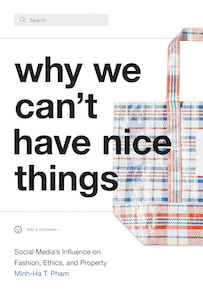 The fashion world has always espoused the latest trends in society and kept up with the times. It should therefore come as no surprise that fashion producers and commentators now speak of “ethical fashion,” “sustainable fashion,” or “fashion for good.” But what do these terms exactly mean? Who has the power to declare fashion worthy of these labels? What lies behind the glamour and glitter of fashion shows and catwalk fame? Unsurprisingly, there is also a radical wing of fashion critique (or critical fashion studies) that scrutinizes those corporate objectives and tries to hold the fashion industry accountable. Minh-Ha T. Pham is one of those critics that read fashion in relation to race, class hierarchies, labor, indigenous knowledge, creativity, and intellectual property rights (IPR). In Why We Can’t Have Nice Things, she examines the way social media users monitor the fashion market for the appearance of knockoff fashion, design theft, and plagiarism. Through what she calls “crowdsourced IP regulation,” she envisages the online activities of bloggers and Instagram users as a form of free labor mobilized in the service of fashion capital accumulation. Network vigilantes who are policing the border between authentic and fake fashion are engaged in racial work: copycat producers and consumers are always portrayed as Asians and reviled as morally defective, while creativity is defined as a property of whiteness, which gives Western fashion designers the privilege to engage in racial extractivism and legitimate cultural theft.
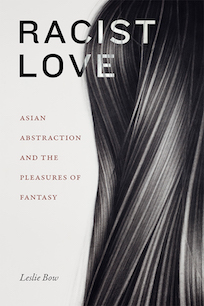 Racist Love starts from the position that love can be racist. This is an idea that many people may find difficult to admit. Of course, most people will acknowledge that racism can be at work in the sexual fantasies of old white men attracted to young Asian women. In the same vein, the way Asian American communities are praised as a “model minority” can also be called racist. But can the sincere love of a white person to his or her Asian partner be called racist? What about the unconditional love of a mother to her child in the case of interracial adoption? And even if racist love exists, is the fact that some white people, male or female, prefer Asian sexual partners different from the attraction other people feel for blondes or redheads? Where do you draw the line between a preference for physical attributes in a partner and racism? If transracial love is systematically tainted by racism, what about the love or attraction one may feel towards people of one’s own ethnic group? Can people of color be suspected of racist inclinations because they are attracted to persons outside their ethnic group, or is racist love the preserve of white people? How to deal with the case of non-Asian persons (say, Gwen Stefani) who are so attracted by everything Asian that they themselves identify as Asian? There are no easy answers to these questions and, especially in the French context, it is hard to engage a conversation on these issues. Speaking of racism usually elicits the topical response “I am not a racist!”, while using the expression “structural racism” tends to deprive people of their agency. Racism, like religious beliefs or political affiliations, are topics that are best kept out of conversations at the dinner table.
 Reading Dreams of Flight made me reexamine my preconceptions about Australia, China, and university studies abroad. When I was a graduate student in France back in the early 1990s, I didn’t identify Australia as a land of opportunity for academic studies. In the disciplines that I have studied, Australia is (or was) a scientific backwater, an outlier when compared to North America or Western Europe. I don’t trust university rankings that much, but last time I checked Australian universities ranked quite low in terms of research output, number of Nobel Prizes, well-identified schools of thought, or emerging paradigms. I was under the impression that an academic career in an Australian institution was a second- or third-best choice for aspiring scholars who failed to land the position of their dreams in North America or in Europe. Spending more than a decade in East Asia made me revise that opinion. I have met many Asian scholars for whom Australia was definitely on the academic map. For a prospective graduate student in South Korea, in Taiwan, or in South-East Asia, pursuing a degree in Australia, applying for a faculty position, or doing research as a post-doctoral student in an Australian university are serious options to consider. Australia’s attractiveness is not only linked to geographical proximity. Language, lifestyle, natural environment, diasporic presence, and academic freedom in well-funded research universities also weigh in the decision for an academic destination. Besides, the international students who form the focus of Dreams of Flight—a cohort of about fifty young Chinese women that the author follows across the full cycle of international study between 2012 and 2020—did not wish to pursue an academic career in science or in the humanities. Their ambition was to acquire a degree in a practical field such as accounting, finance, or communication and media studies, to broaden their horizon by getting an experience of living and studying abroad, and to follow a career marked by international mobility and promotion opportunities. Australian universities could build on these expectations to attract a growing number of students from China: in December 2019, just before Covid, there were over 212,000 Chinese students studying in Australia. Students from China represented the largest proportion of international students, while Australia was the third foreign destination for Chinese students after the United States and the United Kingdom.
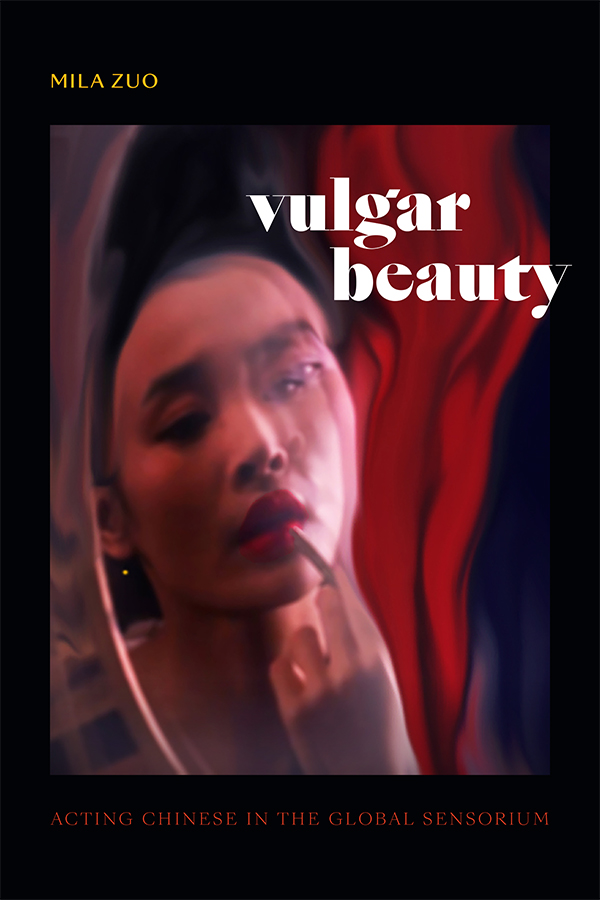 Everything has been written about the “male gaze” and the fetishization of Asian bodies on cinema screens. As film studies and feminist scholarship make it clear, white male heterosexuals fantasize about oriental ladies and make the exotic rhyme with the erotic. But Mila Zuo is not interested in white male cinema viewers: her focus is on the close-up faces of Chinese movie stars on the screen, which she finds both beautiful and vulgar in a sense that she elaborates upon in her book Vulgar Beauty. As a film scholar with a knack for philosophy and critical studies, she builds film theory and cinema critique based on her own experience as an Asian American who grew up in the Midwest feeling the only Asian girl in town and who had to rely on movie screens to find kindred faces and spirits. As she recalls, “When on rare occasion I did see an Asian woman’s face on television, a blush of shame and fascination blanketed me.” True to her own experience, she begins each chapter with a short recollection of her personal encounter with Chinese movies or Asian movie stars. The films that she selects in Vulgar Beauty, and the film theory that she develops, are not about them (American white males): they are about us (Chinese-identifying female spectators and actresses) and even about me (as an individual with her own subjectivity and
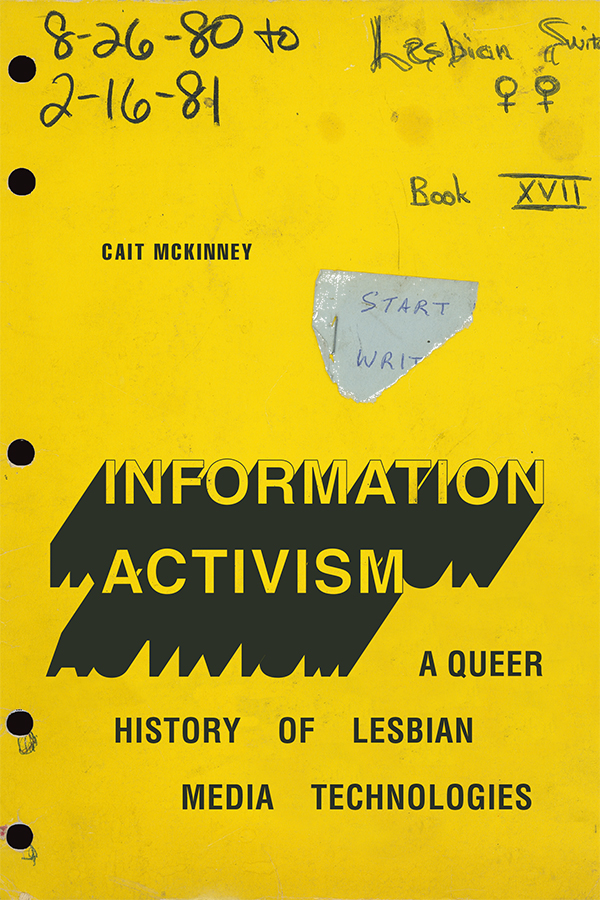 Lesbian feminists invented the Internet, and they did it without the help of a computer. This is the surprising finding that comes out of the book Information Activism: A Queer History of Lesbian Media Technologies, published by Duke University Press in 2020. As the author Cait McKinney immediately makes it clear, the Internet that lesbians built was not composed of URL, HTML, and IP servers: it was an assemblage of print newsletters, paper index cards, telephone hotlines, paper-based community archives, and early digital technologies such as electronic mailing lists and computer databases. What made these early media technologies “lesbian” is that they formed the information infrastructure of a social movement that Cait McKinney describes as “information activism” and that was oriented toward the needs and aspirations of lesbian women in North America during the 1980s and 1990s. And what makes Cait McKinney’s book a “queer history” is that she brings feminism and queer studies to bear on a media history of US lesbian-feminist information activism based on archival research, oral interviews, and participant observation through volunteering in the Lesbian Herstory Archives in New York. Information activism took many forms: sorting index cards, putting mailing labels on newsletters, answering the telephone every time it rings, converting old archives into digital format… All these activities may not sound glamorous, but they were part of the everyday politics of “being lesbian” and “doing feminism.”
 In Brazil, women claim the right to be beautiful. When nature and the passing of time don’t help, beauty can be achieved at the end of a scalpel. Plastic surgery or plástica is not only a status good or the preserve of socialites and celebrities: according to Ivo Pitanguy, the most famous Brazilian plastic surgeon and a celebrity himself, “The poor have the right to be beautiful too.” And they are banking on that right. Rio and São Paulo have some of the densest concentrations of plastic surgeons in the world, and financing plans have made plástica accessible to the lower middle class and even to favela residents. While in the United States, people may hide that they have had plastic surgery like it’s something shameful, in Brazil they flaunt it. The attitude is that having work done shows you care about yourself—it’s a status symbol as well as a statement of self-esteem. Cosmetic surgery’s popularity in Brazil raises a number of interesting questions. How did plastic surgery, a practice often associated with body hatred and alienation, take root in a country known for its glorious embrace of sensuality and pleasure? Is beauty a right which, like education or health care, should be realized with the help of public institutions and fiscal subsidies? Does beauty reinforce social hierarchies, or is attractiveness a “great equalizer” that neutralizes or attenuates the effects of class and gender? Does plástica operate on the body or on the mind, and is it a legitimate medical act or a frivolous and narcissistic pursuit? Does beauty work alienate women or is it a way to bring them into the public sphere?
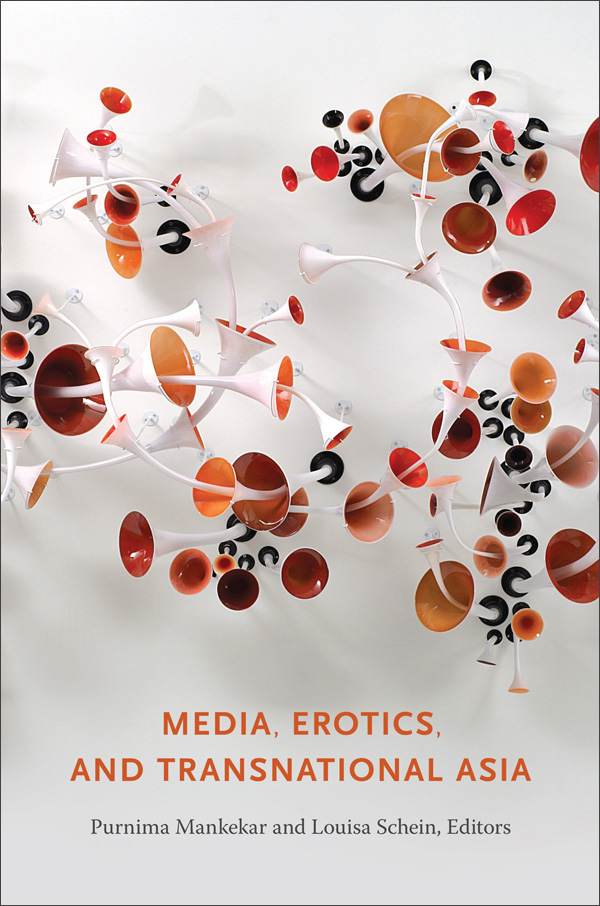 This is not a book about Asian sex videos. Indeed, reading Media, Erotics, and Transnational Asia should lead the reader to question why the category “Asian sex video” exists in the first place, why Asian bodies are disproportionately represented in Internet porn, and how we should react to such unregulated flow of images. In fact, none of the entries in this book deals with explicitly erotic content or with pornography, and the only chapter that concerns the Internet as a medium, a study of online discussions about correspondence marriage between the US and the Philippines, insists on rejecting facile analogies with the sex trade or with mail-to-order catalogues. For scholars and for feminists—and most authors in this volume are women—, the erotic has to be distinguished from the sexual. And writing about eroticism should in no way lead to stoke the base instincts of the reader. The erotic extends beyond sex acts or desires for sex acts to become “enmeshed in, for instance, yearnings for upward mobility, longings for ‘the homeland,’ formulations of nationhood and citizenship, and ruptures of ethnic and racial identity.” Desires for sexual encounters intertwine with those for commodities and lifestyles. Such a paneroticism may break gender, class, ethnicity, or age boundaries. Synonymous with desire, it may be at odd with an Orientalist vision of Asia as feminized and the West as setting the standard for homo- and heteronormativity. For instance, “what constitutes ‘lesbian’ desire may look both and function differently than it does within Euro-American social and historical formations, and draw from alternative modes of masculinity and feminity.”
 In her 1978 hit song “TV-Glotzer,” Nina Hagen sings from the perspective of an East German unable to leave her country, who escapes by watching West German television. She switches channels from East to West and stares at the tube where “everything is so colorful.” As she puts it, TV is her drug while literature makes her puke and she keeps eating chocolate that makes her fatter and fatter. The song was written when Nina Hagen was still living in East Berlin but made a hit in Western Europe, where “white punks on dope” could identify with the lyrics and share the spirit of “no future” rebellion. Anikó Imre’s TV Socialism gives a different perspective on television in socialist Europe. For her, television isn’t a drug but a matter of scholarly enquiry, and her book is a dense academic text that comes fully equipped with historical references, textual analysis, and footnotes. The book is a seminal contribution to the field of “socialist television studies” and challenges many ideas by which we assess Eastern Europe’s socialist past. But first, what does she mean by TV socialism? What links TV to socialism, and what makes socialist TV different from the television programs that were produced at the same time in Western Europe, in the United States, or in the developing world? How did television in Hungary, Poland, Czechoslovakia or the GDR shape the imaginaries of viewers, and what remains from this socialization through small-screen images in a post-socialist world? Or to repeat Anikó Imre’s introduction title, “Why do we need to talk about socialism and TV?”
 The Duke Reader