

A review of The Problem of Passing, Sandra Harvey, Duke University Press, 2026.
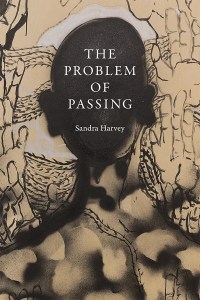 Sandra Harvey’s The Problem of Passing argues that racial passing should not be understood primarily as an individual’s choice to “become” or impersonate someone else—such as a light-skinned Black person passing for white. Instead, Harvey shifts attention to the people and institutions that accuse, identify, and police passing in a more general sense: passing for white or assuming a racial identity that contradicts one’s family history or genetic makeup; passing for the opposite sex in the case of transgender identities; passing for able-bodied when one is disabled; passing for straight when one is gay; etc. Historically and conceptually, Black slaves passing for white to escape pursuers in the Antebellum South constitute the matrix in which all forms of passing in America have been shaped, which makes Black studies the central discipline to address the problem of passing. Harvey treats passing as a structure of surveillance: a way the United States has historically organized fears about Black freedom, mobility, illegibility, and supposed criminality. Passing is not passé; we haven’t been able to move beyond the problem of passing. Harvey contends that narratives of Black racial passing remain essential for understanding contemporary Black life, even though scholarship often regards passing as a historical phenomenon superseded by civil-rights-era demands for Black visibility. Passing, she argues, has never disappeared; it continues to shape how Black people are watched, classified, and exposed to state and vigilante violence. Her key conceptual intervention is to move from the passing subject to the accuser; from passing as an individual strategy to passing as a collective experience; and from racial or gender passing to a move that is always already both. Her book is especially well suited to showing that racial passing is not a marginal literary trope; it is a route into the modern political architecture of identification, surveillance, scientific authority, and state power.
A structure of surveillance
Conventional accounts ask why an individual passes and what freedom, safety, or social mobility they seek. Harvey instead asks why observers feel compelled to decide whether someone is “really” who they appear to be. The accusation that someone is passing becomes a technique of racial discipline: it authorizes surveillance, fixes identities, and regulates movement and belonging. In this account, “passing” is not merely self-presentation. It is also something done to people through acts of reading, suspicion, documentation, classification, and narration. Harvey traces the modern U.S. logic of passing to chattel slavery. Enslaved people who moved without authorization could be deemed fugitives; written passes, free papers, clothing, bodily marks, and racialized descriptions became instruments for distinguishing the supposedly legitimate from the fraudulent. Runaway-slave advertisements helped turn the “pass” into a broader cultural story about Black people’s alleged capacity to deceive, evade capture, or pass for free. This history produces a persistent contradiction: Blackness is imagined as hypervisible—instantly legible as racial difference and criminal threat. Yet Blackness is also imagined as potentially unreadable or deceptive—capable of escaping the watcher’s gaze. Black people have nowhere to hide except in darkness, deception, and fraud. Harvey argues that this contradiction fuels an imperative to watch more intensely. The state, police, scientists, and ordinary citizens are positioned as “master hunters” who must continuously authenticate the racialized other. Surveillance thus responds not simply to what Blackness visibly is, but to an anxious fantasy that Blackness may evade classification and control.
Trayvon Martin’s killing, one of the tragedies at the origins of the Black Lives Matter movement, is a central contemporary frame for this argument. Harvey reads the suspicion directed at Martin—his presence in a white neighborhood, his clothing, especially the hoodie—not as an isolated misrecognition but as part of a long history in which free Black movement is cast as trespass, fugitivity, and danger. The hoodie becomes an “anchoring signifier”: an ordinary object attached to the Black body to stabilize a racist reading of criminality. According to Harvey, “the ritualized, everyday hunting of black people” is still a defining feature of the United States. And the suspicion or accusation of passing is part of a long history of surveillance and control. To pass for free by passing for white or forging a pass was a way for fugitive slaves to escape the plantation and run for freedom, evading scrutiny and arrest by patrollers. Passing narratives and the folklore surrounding them crop up as early cautionary tales about the way fugitives evaded capture. The well-publicized nineteenth-century story of Ellen and William Craft illustrates all the dimensions of passing. It involves a daring, multi-layered escape from slavery in 1848 where light-skinned Ellen Craft passed as a white, male, disabled planter while her husband, William, acted as her enslaved servant. Harvey’s analysis focuses on the less-studied figure of William, whose supposed hypervisibility as a dark-skinned man allowed the performance of master and slave to take place. She twists the Hegelian dialectic of the master and the servant to introduce the additional characters of the “knowing-hunting subject” and the fugitive, showing that inherent to the idea of capture and containment is the ever-present threat of escape. This allows her to move from passing as a historical experience to passing as a discursive complex or an epistemological structure.
Slavery and Indian removal
Runaway slaves passing for white weren’t the only anxiety that plagued white settlers policing the Antebellum South. Racial classifications and claims to national belonging were also entangled with the dispossession of Indigenous peoples and the affirmation of settler colonialism. The drive for cotton land in the American South was fueled by the labor of enslaved people growing plantation crops and by the violent appropriation of fertile land through Indian removal. The next chapter of The Problem of Passing reads transcripts of rejected petitions for enrollment in the Choctaw Nation submitted by suspected black applicants “passing for Natives” between 1898 and 1914. Some historical background is in order. By the early 19th century, European Americans categorized the Choctaw Nation as one of the “Five Civilized Tribes” because they adopted centralized governments, written constitutions, and plantation practices, including slave ownership. This did not prevent President Andrew Jackson and his successors to dispossess the Choctaws from their ancestral lands and to relocate them west of the Mississippi River. The Choctaws who stayed were to be recognized as citizens of the state of Mississippi and to abandon their right to sovereignty. The signing of the Treaty of Dancing Rabbit Creek led to the Trail of Tears in the 1830s, when nearly 15,000 Choctaws were forced to march hundreds of miles in harsh conditions. Wealthy Native slaveholders forced hundreds of enslaved Black people to walk the Trail of Tears alongside them, enduring the same brutal winter conditions, disease, and starvation.
Established by Congress in 1898, the Dawes Commission (officially the Commission to the Five Civilized Tribes) was charged to dismantle the collective land ownership and sovereignty of the Five Tribes in Indian Territory and to distribute individual plots of land to tribal members. This politics of recognition opened Blacks and Natives up to accusations of “passing for Native”. The Dawes Commission drew strict, often arbitrary racial boundaries that heavily penalized applicants with African ancestry. Applicants were rigidly categorized into specific groups: Citizens by Blood (those with documented indigenous ancestry); Citizens by Marriage (white individuals legally married to tribal citizens); and Freedmen (formerly enslaved people who had been adopted into the tribes after the Civil War, and their descendants). The Commission worked under the assumption that applicants by intermarriage could only be white, never black; that Blacks could not be Native, or speak a Native language as their native tongue; and that Blacks “passing for Native” should be excluded from any form of sovereignty. Preserved in the National Archives, the rolls produced through this commission’s census remain important documents of recognition and enrollment as members of the Choctaw Nation into the present. To become a legally recognized citizen of the Choctaw Nation of Oklahoma today, an applicant must prove direct, unbroken lineage to an ancestor whose name is listed on the Dawes Final Rolls as a Choctaw “by Blood”. Thus many Americans are still affected by the Dawes Commission’s prejudiced ideas about race, nation, and citizenship.
The “HeLa bomb”
The problem of passing is not limited to historical episodes accessible in the archives; it can also characterize science in the making, as conceptualized by science and technology studies. Harvey’s earlier work on Henrietta Lacks’s HeLa cells—which informs one chapter of this book—reads the panic over HeLa contamination as an accusation of racial and gender passing. HeLa is an immortal cell line derived in 1951 from Henrietta Lacks, a Black American woman whose cervical-cancer cells were taken at Johns Hopkins. In 1966, geneticist Stanley Gartler demonstrated that many supposedly distinct human cell lines had actually been overrun by HeLa cells. Because HeLa could be identified partly through genetic markers then associated in population studies with Black people, the discovery was framed as a dramatic scientific scandal—the “HeLa bomb.” A technical problem of cross-contamination came to be narrated as an alarming exposure: cells presumed to originate from white donors had, unbeknownst to researchers, been replaced by cells derived from a Black woman. Harvey argues that the contamination narrative repeated an older U.S. racial grammar organized around the “one-drop rule,” which imagined Black blood as a polluting substance capable of compromising white purity. In this framework, HeLa was portrayed as a Black presence that had slipped undetected into ostensibly white or racially unspecified cultures, “passing” as something else until science exposed it.
The contamination narrative also fastened the cells to racialized stereotypes of Black female sexuality. Although HeLa cells are laboratory materials, journalists and researchers routinely referred back to Lacks’s body, cervix, sexuality, and presumed sexual conduct. Accounts connected cervical cancer, HPV, and the cells’ spread to insinuations about Lacks’s sexual behavior; one writer inferred from HPV-related material that she had “slept around.” A journalist compared being notified of HeLa contamination to parents receiving news that “little Darlene had VD”—a metaphor that feminized contamination and associated it with sexual shame. The term “HeLa bomb,” in a Cold War context, made contamination sound like infiltration or internal enemy action. Harvey reads this episode of moral panic as part of a wider biopolitical imagination in which science, the state, and surveillance seek to identify and neutralize biological threats. In short, Harvey shows how the language surrounding HeLa transformed a laboratory event into a racial and gender drama: a Black woman’s cells were figured as invasive, sexually contagious, deceptively mobile, and laboring beyond control. Her larger intervention is to expose how scientific knowledge can inherit and reproduce social structures of racial surveillance, colonial mastery, and anti-Black gendered violence even when its immediate object is cellular biology.
The drive to know
This leads to her broader critique of an “ethics of knowing.” For Harvey, passing exposes a deeper problem in Western epistemology: the desire to know another person completely. The watcher or “master hunter” believes that proper knowledge means being able to identify, classify, and secure the truth of the other. This drive to know is inseparable from the desire to possess, regulate, and govern. Harvey draws attention to the double sense of apprehend: to understand, but also to seize or capture. Scientific objectivity is not outside the history of racial capitalism. Western ideals of the rational, autonomous, knowing subject depend on a fantasy of mastery over an objectified and racialized other. In this sense, fugitivity might be understood as a rejection of the sovereignty of the white master’s symbolic order. Black scholars like Fred Moten or Saidiya Hartman have shown how escaping captivity was not just a physical act of flight, but a radical refusal of the legal, cultural, and philosophical frameworks that defined Black people as property rather than human beings. The whole project of Black studies is oriented towards rethinking the question of the human from the perspective of fugitivity without “assuming to occupy the position of the normative subject, the transcendental subject.” Harvey’s book challenges liberal assumptions that autonomy, recognition, and inclusion alone can resolve racial violence. It allows the reader to move from the familiar literary history of racial passing to questions of surveillance, settler colonialism, scientific classification, policing, and racial capitalism. It suggests that racial classification itself is not neutral: it is historically connected to slavery, settler colonialism, state sovereignty, and white social authority. Narratives of passing help maintain these systems by turning uncertainty about identity into a reason for surveillance. The Problem of Passing ultimately calls for a decolonial or abolitionist ethics of knowing—one that refuses the violent aspiration to master the other through surveillance, classification, and exposure.
 The Duke Reader