
Between Marx and Anthropology

A review of The Structure of World History: From Modes of Production to Modes of Exchange, Kojin Karatani, Duke University Press, 2014.
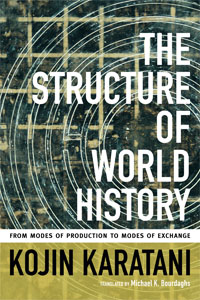
Karatani.jpgThere is a tradition of contemporary Japanese philosophers drawing from anthropology (the names of Shinichi Nakazawa and Akira Asada come to mind). There is also a Japanese tradition of philosophical re-readings of Marx (with Kozo Uno or Makoto Itoh). I am interested in the first tradition. I regard the second as negligible. In The Structure of World History, Kojin Karatani combines the two approaches. He offers a broad synthesis on the origins of the state, the market, and the national community, based on the works of classical anthropologists. And he provides a close reading of Marx’s texts in order to construct his own philosophical system, encompassing the whole of human history. I found the first part based on anthropology most valuable. I only skipped through the second part. Below are a few reading notes and commentary intended to provided a cursory reading of Karatani’s book.

A Japanese rereading of Marx

Marx, like Comte and Hegel before him, saw the history of the human race as neatly divided into historical phases. He identified five such phases: the primitive horde, Asiatic despotism, the ancient classic state, Germanic feudalism, and the modern state under capitalism. The principle of that division was to be found in modes of production and the type of labor relations they generated. The stateless clan society was characterized by primitive communism: there was no private property, and goods were shared among all members of the clan. It was followed by the Asiatic mode of production in which the despotic king owned everything and his subjects nothing. Then came the Greek and Roman slavery system giving power to a minority of citizens, followed by the Germanic feudal system with its relations of allegiance and serfdom, and modern bourgeois capitalism characterized by the opposition between capital and labor. Thus Marx famously proclaimed that all history was the history of class struggle, and that it necessarily tended towards the advent of communism, in which class would disappear and the state would wither away.

Other authors, mainly inspired by Marx, offered their own classification of social formations. To the five modes of production identified by Marx, Samir Amin added two others: the trade-based social system seen in various Arab countries, and the social formation based on the “simple petty-commodity” mode of production seen in seventeenth-century Britain. Building his own theory of world systems, Immanuel Wallerstein described a succession from mini-systems that preceded the rise of the state, to world empires that were ruled by a single state, and then world-economies in which multiple states engaged in competition without being unified politically. The modern world system of global capitalism itself went through the successive stages of mercantilism, liberalism, and imperialism, each dominated by a single hegemonic power: first Holland, then Britain, and then the United States.

Stages of development

Yet other thinkers identified various stages of development by the dominant world commodity or technology: the wool industry in the stage of mercantilism, the textile industry in liberalism, heavy industries in imperialism, and durable consumer goods such as automobiles and electronics in the stage of capitalism. Our present times may witness the rise of a new stage in which information serves as the world commodity. Still for others, each historical phase is characterized by the dominant mode of energy supply: from biomass and wood to windmills and hydropower and then to coal and steam, then electricity and the oil engine, followed by gas turbines and nuclear power or renewable energies. These periodicizations are only variants of a dominant scheme that locates the crux of world history in the realm of production.

While offering his own teleology based on modes of exchange as opposed to modes of production, Karatani introduces variants and correctives in these classifications in order to paint a more complex picture of world history. For instance, he argues that societies existed in the form of nomadic bands before the rise of clan society, and that the real turning point came with the adoption of fixed settlements, with its accompanying institutions of property, religious rituals, and political coercion. Contrary to the standard view of the Neolithic revolution that associates sedentarization with agriculture, he argues that fixed settlements preceded the appearance of agriculture, and first took the form of fishing villages located at the mouth of rivers and trade routes. Stockpiling was first made possible through the technology for smoking fish, not piling grain or herding livestock. Nomadic tribes on one side, and clan societies on the other, engaged in different modes of exchange and redistribution: pooling of resources and “primitive communism” for the first, and the logic of the gift and the forms of trade described by classical anthropologists for the second. Along with Pierre Clastres and Marshall Sahlins, he agrees that primitive societies were “societies against the state”, and actively resisted the concentration of power through warfare and reciprocity of exchange.

The Asiatic mode of production revisited

Karatani also develops a more nuanced picture of the Asiatic state, considered by Hegel and Marx as well as by Karl Wittfogel as the symbol of despotism. Contrary to the vision of tyranny and oppression, he argues that the Asiatic social contract was based on a form of redistribution. People were not simply coerced: they voluntarily undertook to work for the sake of their king-priest, driven by religious beliefs and the offer for protection. State power is based on a specific mode of exchange, distinct from the first mode based on the reciprocity of the gift. Drawing resources from large-scale irrigation systems, the Asiatic state developed the first bureaucracies, created the first permanent standing armies, and organized long-distant trade with other communities. Through his bureaucrats, the despot was expected to rule, administer, show concern for, and take care of its subjects. It was not the Asiatic community that gave birth to the Asiatic despotic state; to the contrary, it was only after the establishment of a centralized state that a new community would emerge.

Karatani also offers a revision of our understanding of Greek and Roman antiquity. As he demonstrates, political theories and philosophy did not first emerge in the Greek polis, as is sometimes alleged. The formation of Asiatic states was associated with intense philosophical debates, as in the Warring States period in China which saw the emergence of the Hundred Schools of Thought. This is because the appearance of the state required a breaking with the traditions that had existed since clan society. Greece and Rome existed at the periphery of Asian empires and retained many aspects of clan societies. Rome in the end did become a vast empire, but that was due if anything to its adoption of the Asiatic imperial system, which survived the fall of Rome with the Byzantine dynasty and then the Islamic empires. For this reason, historians should regard the despotic state that emerged in Asia not simply as a primitive early stage, but rather as the entity that perfected the supranational state (or empire). Likewise, they should regard Athens and Rome not as the wellspring of Western civilization, but as incomplete social formations that developed at the submargins of Asian empires. Drawing from Karl Wittfogel, Karatani sees a subtle dialectics between civilizations-empires at the core, vassal states at the margins, independent polities at the submargin, and out-of-sphere communities that retained their nomadic lifestyle.

From modes of production to modes of exchange

Moving to his third mode of exchange, based on money and commodities, Karatani enters classic Marxian terrain, and offers vintage Marx analysis. That is where he kind of lost me, and my reading of this part is wholly incomplete. Drawing from the classic formulas M-C-M’ and M-M’, he argues that the world created by this third mode of exchange is fundamentally a world of credit and speculation, and that it still needs the backing of the first mode (based on reciprocity) and the second mode (drawing from the social contract offered by the state) in order to sustain itself. My attention also lapsed during his discussions on world money, world commodities, and world systems à la Wallerstein. It was only revived when he described the different schools of socialist thinking, seeing great commonality between Proudhon and Marx as well as with the Young Hegelians who first developed a theory of alienation of the individual through a critique of religion, state power, and capital.

Karatani then introduces his fourth mode of exchange, labelled mode D, which marks the attempt to restore the reciprocal community of mode A on top of the market economy of mode C, and without the state structure of mode B. Although this mode of exchange is an ideal form that never existed in actuality, it manifested itself in the form of universal religions and expressed the “return of the repressed” of the primitive community’s mode of reciprocal exchange in a higher dimension. His analysis sometimes borders on the bizarre, as when he warns of a looming ecological catastrophe and generalized warfare that may take humanity back to the stage of the nomadic tribe. His description of Kant as a closet socialist advocating the disappearance of the state and of capital also seems far-fetched. But it is his reading of Marx and Hegel through Kant that may provide the greatest food for thought to modern philosophers such as Slavoj Zizek, who quotes Karatani eloquently in his books. Based on solid anthropological data and a re-reading of Marx’s classic texts, Karatani’s work may generate a thousand theoretical explosions, placing the construction of world history systems back at the heart of the philosophical agenda.
There Is More to Philosophy for Anthropologists Than Just Foucault

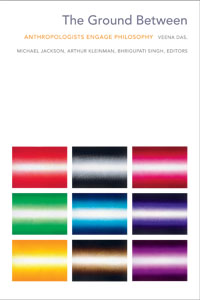
A review of The Ground Between: Anthropologists Engage Philosophy, Edited by Veena Das, Michael D. Jackson, Arthur Kleinman, Bhrigupati Singh. Duke University Press, 2014.

The Ground Between.jpgMy strong belief is that this book will prove as important as the volume Writing Culture, published in 1986, which marked a turning point in the orientation of anthropological writing. This is not to say that anthropologists didn’t engage philosophy before Anthropologists Engage Philosophy, or that they will with renewed strength thereafter. Many classical anthropologists were trained as philosophers, especially in the French tradition where disciplinary borders are more porous. Pierre Bourdieu described his work in anthropology and sociology as “fieldwork in philosophy.” Nowadays “theory”, which samples a limited set of authors from contemporary philosophy, is part of the toolbox that every graduate student learns to master, and that they often repeat devotedly as a shibboleth that will grant them their PhD. What is striking in The Ground Between is the variety of authors that the contributors discuss, as well as the depth of their engagement, which goes beyond scholarly debates and is often set out in existential terms. For many anthropologists, philosophers are a life’s companion, helping them to navigate through the pitfalls of scholarship and the vicissitudes of life.

After having been killed by Writing Culture, Clifford Geertz is back in favor

If Writing Culture was a gesture aimed at dismissing Clifford Geertz, killing the father as it were, several authors from The Ground Between move back to him as a revered father figure, or maybe as a grumpy uncle who may provide an unending collection of quips and aphorisms. Geertz indeed offers wonderful quotes as to how anthropology and philosophy stand in relation to each other, to the world, and to the self. He observed that anthropology and philosophy share “an ambition to connect just about everything with everything else,” and remarked that “one of the advantages of anthropology as a scholarly enterprise is that no one, including its practitioners, quite knows exactly what it is.” Asked by João Biehl what was his main contribution to theory, Geertz replied succinctly: “substraction”. While being generous and open to dialogue, Geertz could also strike back viciously at personal attacks such as the ones perpetrated by the authors of Writing Culture. “There is very little in what the partisans of an anthropology in which fieldwork plays a much reduced or transformed role… have so far done that would suggest they represent the way of the future,” he wrote, somewhat presciently.

Another move that many contributors enact is, although with much caution and the remains of a certain reverence, a distancing from Foucault. At the very least, they demonstrate that there is more to philosophy for anthropologists than just Foucault. Reproducing poorly rehashed quotes and concepts from Foucault will not automatically grant you access to graduate school. Didier Fassin exposes a research proposal submitted by a prospective student that reads as complete gobbledygook. Simply borrowing the lexicon of Foucault (biopolitics, power/knowledge, governmentality) or of his direct heir Agamben (the state of exception, bare life, thanatopolitics) will not get you very far. Similarly, Arthur Kleinman points out that scholars often engage in the “cultivation of the recondite, the otiose, the irresponsibly transgressive, and the merely clever,” with the effect of estranging the learned public from their discipline and turning scholarly debates into irrelevant wordplays. For João Biehl as well, “insular academic language and debates and impenetrable prose should not be allowed to strip people’s lives, knowledge, and struggles of their vitality–analytical, political, and ethical.”

Keeping Foucault at a distance

Didier Fassin writes his essay “in abusive fidelity to Foucault”, and prefers “a free translation rather than mere importation” of his concepts. Although he recognizes the heuristic fecundity of the master, he points out that many formulas borrowed by his heirs and epigones are just that: formulaic. As he soon realized in his research on humanitarian interventions, “I was indeed exploring something that Foucault had paradoxically ignored in spite of what the etymology of his concept of biopolitics seems to imply–life.” This led him to substitute the term “biopolitics” with the expression “the politics of life”, and to pay attention to the tension between the affirmation of the sacredness of life (as defined by Canguilhem) and the disparities in the treatment of particular lives (exemplified by Hannah Arendt’s work). Life is indeed a theme and even a word that is alien to Foucault’s writing. Attending to life as it is lived features prominently in several essays in the volume: “taking life back in” could be an apt description of the whole enterprise. Another common move is to go back to the source of Foucault’s inspiration, by rereading the scholars who had the most formative influence on his thinking: Georges Canguilhem in the case of Didier Fassin, and Georges Dumezil for Bhigupati Singh (who hints at a homosexual relationship between the master and the student). If Foucault is spared by those authors, they find in Agamben an avatar of “a negative dialectical lineage” (Singh) and reject his “apocalyptic take on the contemporary human condition” (Biehl).

While keeping Foucault at a distance, most authors remain firmly committed to French theory, and engage in a productive dialogue with Deleuze and Guattari, Bourdieu, as well as older figures such as Merleau-Ponty and Sartre or Bergson. Deleuze in particular is mobilized by many authors, to the point one could speak of a “deleuzian moment” in anthropology. Bhigupati Singh finds in Deleuze “an opening, a way into non-dialectical thought” that he uses in his analysis of life in a destitute Indian community. João Biehl read Deleuze while documenting the fate of Catarina, a poignant character in a place of abandonment, until his editor commented: “I don’t care what Deleuze thinks. I want to know what Catarina thinks!” Ghassan Hage wrote the “auto-ethnography” of his deafness and capacity to hear again in close dialogue with Bourdieu, seeing exemplifications of his key concepts but also the limits in the way Bourdieu conceived of being in a world characterized by inequalities in the “accumulation of homeliness”. To be deprived of raisons d’être is not to be deprived of being: as João Biehl puts it, “language and desire continue meaningfully even in circumstances of profound abjection.” “If Sartre became for me a “natural” conversation partner in my anthropological work,” confesses Michael Jackson, “it was because his focus on the conditions under which a human life becomes viable and enjoyable implied a critique of metaphysical and systematizing philosophies.” As Geertz put it succinctly: “I don’t do systems.”

A return to the American liberal tradition

A cadre of young French philosophers such as Jocelyn Benoist, Sandra Laugier and Claude Imbert also find their way into the bibliography. But other philosophical voices are also making themselves heard. For some, it is a return to the American tradition, with prominent contemporary figures such as Stanley Cavell or Nelson Goodman and older ones such as Henry James and John Austin or Hannah Arendt. Arthur Kleinman finds in Henri James the life lessons that accompany him while giving care to his wife suffering from a neurodegenerative disease, making him “feel less alone”. He considers James’s Varieties of Religious Experience the best source for teaching a course on “Religion and Medicine”. Reading Hannah Arendt in Teheran, Michael Fischer notes that Iranian intellectuals were “no longer interested in revolutionary political philosophy but rather in liberalism. Habermas, Rorty, Rawls, and Arendt were all objects of much interest.” Veena Das finds in Cavell’s philosophy the kind of attention to “the low, the ordinary, and the humble” that helps her answer to the pressures from her ethnography by “making the everyday count”.

The anthropologists are careful to point out what philosophers owe to anthropology. João Biehl underscores that Deleuze and Guattari owe their notion of “plateau” to Gregory Bateson’s work on Bali, and that their key insights on nomadism, the encoding of fluxes, the war machine, or indeed schizophrenia, all come from Pierre Clastres’s attempt to theorize “primitive society” as a social form constantly at war against the emergence of the state. The habit of “writing against” that defines a large strand of contemporary philosophy is also central in the conceptual schemes of the founding fathers of anthropology, from Bronislav Malinowski to Margaret Mead. Bhigupati Singh reminds us that “Deleuze deeply admired Levi-Strauss” and may have found in his brand of structuralism a few nondialectic terms that he finds “helpful for thinking about power, ethics, and life.” Following his provocative advice to “take an author from behind,” he imagines the offsprings that may have been produced by an anthropologically-oriented Deleuze. Michael Puett invites us to use indigenous theories to break down our own assumptions about how theory operates: “the goal should not be just to deconstruct twentieth-century theoretical categories but to utilize indigenous visions to rethink our categories and the nature of categories altogether.”

Who’s in and who’s out in the philosophical market

But this book is not a popular chart of “who is in and who is out”, whose ratings go down and whose go up in the philosophical market where anthropologists do their shopping. The authors are careful to distance themselves from “anthropologists who look to philosophy as providing the theory and to anthropology to give evidence from empirical work to say how things really are.” Ethnography is not just proto-philosophy, and anthropologists do not need authorization or patronage in their pronouncements. The idea is to “work from ethnography to theory, not the other way around.” If philosophy can be defined as “the art of forming, inventing, and fabricating concepts,” then perhaps anthropology constitutes “a mode of heightened attentiveness to life” that builds on “experience-near concepts” in order to show “how ordinary life itself gives rise to puzzles we might call philosophical.” The Ground Between therefore doesn’t herald an “ontological turn” or a “philosophical moment” in modern anthropology, in the way that Writing Culture was perceived as a turning point affixed with various labels (“postmodern”, “reflexive”, “deconstructionist”). But it is an attempt to step back, take stock, and reflect on what anthropologists are doing, in order to make their contribution to social science, to knowledge, and to human life more meaningful.

A Bad Case of Pemuda Fever

A review of Activist Archives: Youth Culture and the Political Past in Indonesia, Doreen Lee, Duke University Press, 2016.

Doreen LeeDoreen Lee had all that was required to write a great history of Reformasi, the period of transition that led to the downfall of president Suharto and the establishment of democracy in Indonesia. Although she wasn’t there during the transition years of 1998-1999—she conducted her fieldwork between 2003 and 2005—, the Indonesia she observed was still resonating with the lively debates and political effervescence that arose out of the student movement and popular protests against the Suharto regime, also known as the New Order. She met with some of the key players of the democratic transition, and gained their trust as an outsider committed to the same progressive agenda. Having spent part of her childhood and teenage years in Jakarta, she was fluent in the local language, Bahasa Indonesia, and had the personal acumen to interpret words and deeds by putting them into their cultural context. She had access to a trove of previously unexploited documents—the activist archives mentioned in the title—, which consisted of leaflets, posters, pamphlets, poems, diaries, drawings, newspaper clippings, and numerous other fragments (“the trash of democracy”, as she calls it) that activists shared with her or that were deposited in the public libraries of Western universities. Using these fragments and testimonies would have allowed for a kind of micro-historical approach that is currently in fashion among historians. Alternatively, it could have been used to challenge conventional assumptions about the Reformasi by crossing sources, checking facts, debunking myths, and reassessing the role of students and activists in the popular movement that ushered a new era in Indonesia’s political history.
This is not a history of Reformasi

But Doreen Lee is adamant that her book doesn’t constitute a new history of the Reformasi or of the various groups that composed the movement itself. She expedites the presentation of the events that form the background of her study in a two-pages chronology in the preface. She dismisses the causal explanations and the attribution of responsibilities made by conventional historians as a mere “whodunnit approach.” Her treatment of activists’ archives is more literary and evocative than historical. She is more interested in the interplay between the archive and the repertoire, between fixed objects and embodied memory, than in the material traces documenting a given period or movement. Her private collection of Reformasi memorabilia, which includes flyers, diaries, T-shirts, drawings, text messages, and numerous other fragments, is more akin to a stockpile of fetishized souvenirs than to the carefully ordered archive of the historian. She is not interested in tracing the alliances and group names and identities scattered across her documents. History usually defines periods, highlights events, sets milestones, and identifies transitions from one period to the next. Doreen Lee’s narrative is set in broad chronological order: there was a before and an after 1998. She begins with the student movement’s “missing years” (1980-1990) which didn’t leave any trace in official archives but nonetheless left a paper trail she was able to document. She then covers the 1997 monetary crisis or krismon that evolved into a total crisis (krisis total, or kristal) when students and the people (rakyat) took to the streets and forced President Suharto to resign. She follows the student activists in their demonstrations for various social causes in the post-Reformasi period, when they were increasingly seen as troublesome and irrelevant by the broader public. She then concludes with the 2004 legislative and presidential elections, during which many former students activists ran for office or campaigned for established politicians. But she doesn’t put the main events into perspective or draws the lessons, achievements and failures of the Reformasi movement.

Alternatively, Doreen Lee could have established herself as a political scientist with a unique expertise on regime transitions and street politics. Youth activism is a hot topic in political science at the moment, especially in the countries were democracy seems most at stake. The Arab spring and other colour revolutions have highlighted the transformative power of nonviolent resistance and street demonstrations, and brought to the frontline a new generation that grew up with Facebook and Twitter. New geographies of contestation have emerged, with places like Tahrir square in Cairo and Taksim square in Istanbul becoming the symbols of a new wave of democratic aspirations. The mass demonstrations that brought down the Suharto regime in 1998-99 were the harbinger of this worldwide trend. Indonesian students were at the forefront of Reformasi. Those killed in violent protests became martyrs and Reform heroes, and those who survived became pioneers of Indonesian democracy. Activist students who espoused a radical agenda stood the risk of being accused of communist sympathies, a strong indictment in a society where signs of “latent communism” were monitored, reviled, and punished by the authoritarian state and by citizens themselves. But Doreen Lee doesn’t specify the nature of the students’ engagement, their ideological convictions and political positions. She only mentions that they rally in favor of labor rights, the protection of the environment, and other social issues, but she treats the content of their mobilization as irrelevant. Likewise, she does’t address the issues of electoral politics, political institutions, mass organizations, and collective endeavors. Instead, she focuses on the lifeworld of the activist and the intertwining between history and memory. Her book, which illustrates the turn toward affects that one observes in the humanities and social sciences, will be of little use to the political scientist.

Pemuda fever

A third option for Doreen Lee would have been to order her findings in sociological terms. A sociologist would have highlighted the role of young people in mass mobilizations and used the concept of generation to show how each cohort of activists drew from the experience of their predecessors at various junctures of Indonesia’s history. In Indonesian, the word for “youth”, pemuda, has a strong political meaning. The official history of pemuda nationalism begins with the colonial-era mobilization of the 1928 generation, who declared the nationalist charter of the Sumpah Pemuda (Youth Pledge) emphasizing “one language, one people, one nation.” The revolutionary generation of 1945 fought for independence from Dutch colonialism, and was followed by the students of generation 66, who allied with the military to overthrow Soekarno’s Old Order. After the mass student protests of generation 74 and 78, who rose against the repressive regime of Suharto’s New Order, there was a long pause before the baton was passed on to generation 98. Generation 98 understood their place in the world as an extension of this nationalist history, as mandate, calling, and destiny (takdir). In a country where more than a third of the population is classified as youth, the Reformasi movement was in many ways a youth movement. Revolution was transformed into a youthful style that could be worn and circulated with ease. There was a signature pemuda style that included new ways of looking, seeing, and being. Demonstrators referred to the leftist iconography of Marx, Lenin, Mao, and Che Guevara as well as to local figures such as the poet Wiji Thukul, the movie actor Nicholas Saputra, and the pop singer Iwan Fals. But Doreen Lee only gives vignettes and indications, and doesn’t develop a full-blown sociology of the student movement.

If Activist Archives isn’t about history, political science, or sociology, then what is left? The name of this residue is anthropology. It is here conceived as the science of what’s left behind when all the other social sciences have done their job. It focuses on debris, remnants, detritus, leftovers, fading memories, and intangible affects. But building a disciplinary identity on such fleeting ground is fraught with difficulties. Lee’s ambition is to contribute to social theory and to set the parameters for a social history of Reformasi. She writes interesting paragraphs on “a sensory ethnography of heat,” on techniques of the body, and on the visual culture of the student movement. As befits an anthropology book, Activist Archives is based on fieldwork, and puts the social scientist in the position of the participant observer. Besides the street that forms the main battleground of student activism, Doreen Lee  takes as sites of her research the transitory and semi-private spaces of student socialization: the basekemp (organizational headquarters), sekretariat, posko (command posts), kost (rented rooms), and self-study clubs. These are not the institutions that we assume are fundamental to leftist and secular nationalist student movements, such as the school, the university, the army barrack, and the factory. They also stand in sharp contrast with the middle-class home: they are spaces of domiciliation rather than domesticity, and they are often chaotic, unclean, and marked by mixed-gender cohabitation. Camping out, staying overnight, and “playing house” make the kost and the basekemp places of minimal transgressions, allowing young men and women to enjoy their newly acquired freedom. Unsurprisingly, the ethnographer notes that “spring love (cinta bersemi) buds in the season of demonstrations; it is like spring fever, hard to resist.” These notations based on fieldwork observations are, in my opinion, the best part of the book.

Race, ethnicity, religion, and gender issues surface through the text

But even as an anthropology book, Activist Archives suffers from serious shortcomings. Doreen Lee refuses to address the classic categories of race, ethnicity, religion, and gender, despite their overwhelming role in Indonesian society, not to mention their canonical value in anthropological literature. Her self-censorship on these issues may reflect her own effort to blend into the group and to be accepted as a participant observer. She stood out as an ethnic Chinese woman educated in the United States and endowed with a cosmopolitan outlook, in a student activist milieu composed mostly of young men originating from Java who belonged to the Muslim majority and who were fiercely nationalistic. In Indonesia, references to ethnicity, religion, and inter-group relations are referred to as “SARA” issues (for Suku Agama Ras Antar Golongan) and they are best avoided in public discussions, but never far from people’s minds. Tensions between the ethnic Chinese minority and local Javanese or other autochthonous groups run high in Indonesian society. The memories of the 1965-66 massacres are still vivid, and ethnic Chinese  are often the target of civil unrest and discrimination. During the city riots of May 1998, property and businesses owned by Chinese Indonesians were targeted by mobs, and over 100 women were sexually assaulted. Doreen Lee glosses over these aspects of Indonesian society: it is revealing that reference to Chinese ethnicity are mostly relegated to endnotes. This murky social background nonetheless surfaces through the text.

Because she was identified as an ethnic Chinese, Doreen Lee was confronted with desultory remarks and witnessed mechanisms of exclusion at work. For instance, making money out of selling T-shirts or other cooperative joints exposed the initiators of these ventures to the accusation of being “like the Chinese, with their trickery and ability to make money.” Similarly, men circulated derisive and cautionary stories about female activists who were so borjuis (bourgeois) they could not eat roadside food or stow away on the train. There was a class and gender aspect to these remarks: the street was associated with crime and public violence, and most middle-class Indonesians avoided exposure to its suffocating heat and lurking dangers in their everyday practices of work and leisure. Doreen Lee notes that she sometimes felt isolated as a female researcher doing fieldwork in a predominantly male environment. She mentions in passing that several of her informants were female, and that young women occupied a subordinate position in the student organizations and militant groups. In a predominantly muslim society, she makes only scant references to Islam. The anthropologist presents the student groups she associated with as inter-faith and multi-ethnic, distinct as such from the Islamic militant groups which were highly structured and tied to existing parties. Despite the fact that Christianity is only a minority religion in the fringe of mainstream Indonesia, there are several references to Christian groups, Christian individuals, and the Christian University of Indonesia as well as to Catholic liberation theology. But these references are made just in passing, and do not lead to developments on the place of Christianity in Indonesia.

Indonesia Raya, Merdeka, Merdeka! (Freedom)

The expression “Stockholm Syndrome” designates the psychological attachment and affective dependence that hostages might feel towards their captors. It is seldom used in the context of ethnographic fieldwork, where the social scientist’s empathy with the group is considered the norm. Even so, Doreen Lee’s rendering of her fieldwork appears to me as a case of intellectual capture. As a rebuttal to the state and media’s depiction of mass demonstrators as unruly and anachronistic in the context of post-Reformasi politics, she argues that demonstrations are a site of expertise, strategy, and discipline. She devotes a whole chapter to violence on the side of student activists, which she condones as a rightful answer to the structural violence of the state. There were indeed many student victims of state violence, with the kidnapping, torturing and killing of activists that are remembered as a series of tragedies, but it doesn’t justify the use of violent means to fight back against the state, especially at a time when democratic transition had already occurred and clashes with the police had no other purpose than to keep student politics alive. Doreen Lee embraces the romance of resistance and adheres to the students’ radical agenda without distance or reservation. This, maybe, was just a phase: in the conclusion, written ten years after fieldwork, she reunites with some former student activists and they together look back at their past with nostalgia and irony. Youth must be served.

If You’re the Average K-Pop Fan, This Book is Not for You

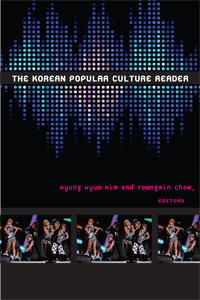
A review of The Korean Popular Culture Reader, Kyung Hyun Kim and Youngmin Choe Ed., Duke University Press, 2014.

KPop ReaderWhy publish a reader on Korean popular culture? Because it sells. This is the startling confession the two editors of this volume, Kyung Hyun Kim and Youngmin Choe, make in their introduction. They are very open about it: their scholarly interest in Korea’s contemporary pop culture arose as a response to students’s interest in the field. It was a purely commercial, demand-driven affair. As they confess, “Korean studies had a difficult time selling its tradition and modern aesthetics in course syllabuses until hallyu (Korean Wave) came along.” Now students enrolling in cultural studies on American or European campuses want to share their passion for K-pop, Korean TV dramas, movies, manhwa comics, and other recent cultural sensations coming from Korea. Responding to high demand, graduate schools began churning out young PhD’s who specialized in such cultural productions. Course syllabuses were designed, classes were opened, workshops were convened, and in a short time the mass of accumulated knowledge was sufficient to allow the publication of a reader.
Teaching Korean pop culture on American campuses

But the average K-pop fan or drama viewer will surely be taken aback by the content of this volume. If they are looking for easy clues to interpret Korean dramas or the latest fad in boys bands’ hairstyle, then they will probably drop the book after a few pages. There are magazines or websites for this kind of information. As scholars, the authors have loftier interests and higher ambitions than just discussing whether Girls’ Generation really empowers young women or instead reproduces sexual cliches, or why the ‘Gangnam Style’ video generated so many clicks on Youtube. In fact, in another candid move, the editors confess what they really think about K-pop: it sucks. Or as they put it, “Thus far, Korean popular music has yet to produce one single progression of chords that has created a ripple effect of global critical response without the aid of inane music videos and excessive use of hair gels.” Yes, you read it right. For a book devoted to Korean pop culture, with a section on popular music that discusses artists ranging from Seo Taiji to the girls band 2NE1, this is the strongest indictment one could make.

But the ambition of the editors, and of the authors they assembled, is not only to sell books. They have a hidden agenda: they want to show that popular culture matters, and that it is no less noble and worthy of study than manifestations of high culture. As they see it, a discipline should not be judged by the prestige associated with the social reality under consideration, but should be valued from the perspectives and viewpoints it brings on seemingly arcane or mundane topics. There is even a general law at play here: the lower the culture, the higher the theory. The commoner your research topic, the more dexterity you have to prove in using difficult concepts and arcane prose. Conversely, commentaries of high cultural productions can accommodate a bland style and a lack of theoretical references. You may use Bourdieu or Deleuze to comment on photography and other minor arts, but paintings from the Italian Quattrocento or Baroque architecture demand more conventional writing tools. Some critics, such as Slavoj Zizek, have become masters at commenting low brow cultural productions with high brow philosophical references.

So the solution of the authors is to trick students into enrolling in their class with the promise of studying catchy topics such as K-pop or K-drama, and then to brainwash them with a heavy dose of politically-correct theory and academic scholarship. Lured by the attraction of pop culture, they are given the full treatment associated with the cultural studies curriculum. This can be summed up by three injunctions: contextualize, historicize, theorize. The aim is to contextualize contemporary Korean culture within its local and regional or global environment, while historicizing its colonial and post-colonial legacies, thereby leading to new theorizing about global cultural futures. Another move is to broaden the scope of phenomena under review to the whole spectrum of popular culture. The Korean Popular Culture Reader therefore includes chapters on sports, on cuisine, on advertising, and one video games. Conversely, there are no chapters on cultural heritage or on folk productions associated with traditional Koreanness: crafts, calligraphy, ceramics, Korean painting, pansori, seungmu dance, etc.

Contextualize, historicize, theorize

The first injunction to contextualize is taken very seriously by the authors. Cultural artifacts are not symbolic signifiers or self-referential texts that could be subjected to a purely formal, textual analysis. They are social facts, and should be explained as such. The authors refrain from sweeping assumptions about Korean popular culture as expressing essentially Korean cultural traits or as being naturally in tune with other Asian peoples’ aspirations. Instead, they look for archival evidence and locally grounded causalities. They seek neither to defend nor to attack popular culture, but rather attempt to place it in a context and describe how it works. Beyond apparent continuities, they uncover historical ruptures and shifts, and insist on the singularity of each domain of cultural practice. They are also careful to situate Korean popular culture within its regional, global, and transnational context. As the success of hallyu illustrates, Korean pop culture is now represented on an international stage and can no longer be understood narrowly through a model of national identity.

The chapter on the failure of game consoles, and the rise of alternative gaming platforms played on computers at home or in PC bangs, is a fine example of social contextualization. Home computers caught on in Korea for the same reason game consoles didn’t: blame Confucianism and the heavy focus on education. Parents bought their children computers to run educational software and improve English skills. Similarly, PC bangs offered young people a public space that was outside the remote reach of parental surveillance or elder supervision. PC bangs have thrived by giving young people the chance to translate online relationships into real-life ones, or to team under the leadership of a master player to attack a castle or win a battle in role-playing games. The Korean professional game player, who excels in MMORPG games and becomes a worldwide celebrity but who cannot speak English, has become an iconic figure in game-related media.

The political potency of the melodrama

Analyzing street fashion and movie cultures in 1950s’ Seoul, Steven Chung shows that Korea’s compressed modernity takes place against the background of global cultural circulation that cannot be reduced to a unilateral Americanization process. The 1950s was a remarkable decade for movie stars, and the roles played by actor Kim Sung-ho illustrate the ambivalence toward familial patriarchy and political authoritarianism. The political potency of the melodrama is nowhere more apparent than in North Korean movies, with its aesthetics of socialist realism and the overbearing gaze of the benevolent leader in hidden-hero narratives. Bong Joon-ho’s movie Mother strikes Korean viewers with the discrepancy between the iconic status of the two main actors, Kim Hye-ja and Won Bin, associated with motherhood and with idol stardom, and the role they endorse in the narrative, an abusive mother and a half-wit son.

The book cover featuring the glitz and chutzpah of Korean contemporary scene–with a picture of a live concert–is there to deceive as much as to allure. In fact, only nine chapters out of seventeen focus on the contemporary, and only two essays address issues commonly associated with the Korean Wave–one on K-drama fandom and another on girl bands. Many contributions to the volume deal with the colonial or post-colonial past, as contemporary Korean popular culture remains intimately connected to the history of colonial modernity. It was during the early part of the Japanese colonial era (1910-1945) that the first instantiation of the popular emerged. The idiom “popular culture” is not easy to translate into Korean, but the words inki or yuhaeng, taken from the Japanese, suggest the mix of individualism, commercialism, and cosmopolitan ideals that stood at the core of Korean colonial modernity. The history of cultural transfers, collage, plagiarism, and creative adaptation is repeated in many sectors, from popular songs to manhwa and even to Korean cuisine, as processed kimchi and makgolli appear to own much of their popularity to their adoption by the Japanese consumer.

At the origin of modern Korean literature, we find love of the romantic kind, translated into Korean as yonae or sarang. As Boduerae Kwon writes, “It was by leaning on the concept of romantic love that Korean literature tutored itself in the art of writing, nurtured the awakening of individual consciousness, and sharpened the powers of social critique.” Boy meets girl was a new concept in early century Korea: as a new import into the Korean language, yonae required a pose that suited the novelty of the word.” North Korea relied on its own set of concepts and ideologies, such as taejung (the masses) or inmin (the national citizen). It is no coincidence that both Stalin and Kim Il-sung recognized the power of film and considered it not only the most important art form but one of the primary means for creating a new art of living as well. “Cinema was used as the primary technique and medium for the construction of socialism and the creation of a national people,” writes Travis Workman, who uses Baudrillard and Debord to show that socialist realism was in many ways more real than really existing socialism.

The stoking of male fantasy

As much as they put popular culture into context and trace its historical development, the authors put cultural phenomena in theoretical perspective. The book is not too heavy on theory: most of the savant references and conceptual discussions are put forward by the two editors in the short introductions preceding each section. But all authors share an ambition that goes beyond the mere description of cultural facts. Cultural studies is predicated on the premise that the cultural sphere has replaced the socioeconomic sphere as the main site of political struggle and ideological production. At the same time, popular culture is caught in a process of commodification and commercialization that makes it incapable of articulating a coherent worldview that would effectively challenge domination. Perhaps most striking in Korean pop culture is the absence of the transgressive element. K-pop acts, or more specifically female K-pop singers, are visual stars who epitomize the “stoking of male fantasy” while cultivating a shy innocence and mild appearance. Although Seo Taiji upset the established order in the 1990s with his school-dropout status and signature snowboard look, “there was no profanity, no sexism, no use of any substance, no piercings, and no tattoos.” This lack of rebellious impulse is what may have conducted the editors to formulate their damning indictment of K-pop.

Supporting the Korean National Team

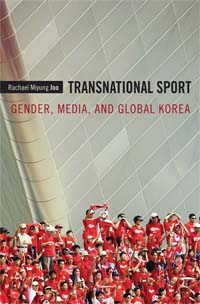
A review of Transnational Sport: Gender, Media, and Global Korea, Rachael Miyung Joo, Duke University Press, 2012.

Rachael Joo.jpgThe participant observer is the one who spoils the fun. He or she comes up with questions and doubts at the moment when the public wants answers and certitudes. Participating and observing are often two irreconcilable tasks. The observer introduces a distance when participants want to adhere to the show, and creates distinctions when the group wants to feel as one. Despite the pretense to the contrary, the researcher cannot fully belong, cannot fully take part into the action. Even when he or she choses to live among the natives, the anthropologist reminds people that he or she retains other obligations and belongings. The anthropologist dwells in the village but belongs to academia. The group can never claim him or her as one of them, because both know that he or she will have to leave one day and that his or her stay is temporary. Anthropologists are those who write things down at the end of the day: their commitment goes to scholarship, and they are dedicated to writing a book or a monograph about their experience in the field. They maintain critical distance and cultivate abstract reasoning, using categories that are in essence different from the ones that people use to frame their own experience.
The participant observer is a person who spoils the fun

Rachael Miyung Joo is the typical party spoiler. She is the only one who doesn’t wear a red T-shirt when the Korean national team is playing and people are watching the football game retransmission. When her female roommates cry and go crazy to celebrate victory, she stands back and watches from a distance. She feels closer to a solitary male supporter who sheds tears of emotion at the beauty of the game than to the crowd of cheering girls and boys who have only limited knowledge of the game rules. She bluntly confesses to her friends that she finds the players from the Italian team more attractive. She uses categories such as gender, race, and nationhood, and introduces critical distance with the immediacy of experience, when people around her just want to enjoy the fun and share the excitement. She highlights the constructed nature of national unity and the ambivalence of ethnic categories at the time when media coverage celebrates Korea as one and heralds the advent of global Koreanness. Whereas media attention focuses on female fans and their mild display of sex appeal, she brings in feminist theory to denounce the commodification of women’s bodies and the prevalence of heterosexual norms.

Rachael Miyung Joo’s fieldwork took place around the date of 2002, the year of the soccer World Cup tournament hosted jointly by South Korea and by Japan (the Japanese part is sorely lacking in the book). It is a two-sited ethnography, based on participant observation made in Seoul and in Los Angeles. In addition to soccer, Joo also documents other sports where Koreans fare particularly well: golf, where ethnic Koreans dominate the Ladies Profesionnal Golf Association, but also baseball, with the participation of ethnic Koreans in the Major League, and figure skating, dominated by multi-medalist Kim Yuna. Her ethnography uses analytical categories borrowed from philosophy, anthropology, gender studies, media studies, and critical theory. She draw from Althusser’s notion of “interpellation”, which describes how individuals are hailed through ideology. For example, the South Korean state attempts to “interpellate” Koreans in the United States as overseas Koreans—that is, loyal Korean national subjects.

The 2002 Football World Cup as a high mark of Korean transnational identity

She borrows from media studies the expression “assemblage”, a combination of institutions, images, and people that constitute the genre of media sport. Appadurai’s anthropology of the global provides her with the notion of “diasporic public spheres” that are constituted though collective and simultaneous engagements by subjects located in different spaces around the world. She offers her own concepts, such as “intimate publics”, a notion that combines the individual sphere and the public realm, or “everyday forms of self-fashioning” that she observes in Seoul’s streets. She elaborates on the notion of the transnational which is declined in all her book’s chapter headings: “transnational media sport”, “transnational athletes”, and “transnational publics”. She defines “multicultural nationalism” as “a culturalist notion of diversity that erase material differences and power inequalities between and among groups, as well as one that sees racial, national, and ethnic differences as essentially the same.”

Her main study is on the 2002 FIFA World Cup. As she writes in the introduction, “this month-long event was not primarily about sport per se; it was a great opportunity to celebrate with millions of others under the aegis of supporting the nation.” People knew they were participating in a historical event of global significance, because this had happened before: the 1988 Olympic Games are still remembered as a turning point in Korean history. One generation had passed, democracy had settled, and Koreans were even more self-confident. They felt united as one, and gave unanimous support to their national team. Young women were particularly conspicuous: they wore the color of the national team, painted the national flag on their faces and bodies, and led the crowds who were chanting and partying in the streets. For the author, “the sexual desire and excitement generated around Korean national athletes operate as allegories of desire for the Korean nation.” This desire for a fantasized Koreanness transcended borders: supporting the Korean team enabled Korean-Americans living in Los Angeles to articulate their ethnic identity and their relationship with the Korean nation.

Korean female golfers are women who don’t sweat

The female golfers who dominate the tournaments of the Ladies Professional Golf Association provide another interesting case study. According to the LPGA, 43 of 123 international players were South Korean as of July 2011. This list did not include Korean-born players who were naturalized US citizens or ethnic Koreans living abroad, including Michelle Wie or Christina Kim from the United States and Lydia Ko from New Zealand. Again, Joo sees hegemony at work in the way these female athletes represent ideas of gender, nation, and ethnicity. The sexuality of Korean female athletes is presented in contradictory ways as daughters to be protected within the Korean family and as hypersexualized Asian women to be marketed in transnational commercial contexts. As national icons, successful female golfers demonstrate how Koreans should adjust to the neoliberal contexts of a globalizing Korea. The whole nation rejoiced at the remarkable success of the golfer Se Ri Pak, who won two of the four major tournaments on the LPGA tour in her rookie year of 1998, while the nation was reeling from the trauma of the Asian financial crisis. She came to symbolize how South Korea might pull itself out of the crisis through global competitiveness, individual drive, and private capital.

In South Korea, the dominant discussion of golfers assumes that their success is due to their talent, hard work, and the sacrifice of their families. Often families move from South Korea to the United States or Australia to raise their daughters in golf-centered environments, to send their children to golf academies, and to live in areas where golf can be played year-round. In media narrative, father and daughter must bond to fight competitors in a foreign land. The father comes to standing for the national interest as he protects the progeny of the ore an nation in foreign contexts and ensures its enduring success. Some commentators also assume that Korean women are naturally well suited to forms of sport that require extreme precision and concentration, such as archery, billiards, figure skating, and golf. Conversely, non-Korean media sometimes point out that Korean golfers display a robotic quality—the idea that they lack emotion, creativity, and individuality. These cultural stereotypes are nothing new. During the Cold War, athletes from socialist countries were often stereotyped as collectivistic, militaristic, and emotionless. In the globalization age, Korean athletes are valorized as national heroes for disciplining their bodies, garnering global media attention, and demonstrating economic results. The female golfer also strengthens the capitalist ideologies of segmented labor markets that treat female labor as unskilled and subordinate.

Taeguk Warriors

Much media attention in South Korea is directed at athletes who compete abroad. These nationals icons bring global visibility to the nation, helping Korean corporations to win brand name recognition and bringing national or ethnic pride . Athletes who play abroad represent the image of the newly globalized Korean subject who leaves the country to succeed yet continues to maintain a strong sense of Korean identity. Sport operates in the affective realms of mass media to intensify and embolden feelings of nationalism and competition. Sport events also create contexts for the production of powerful feelings of nationalism and ethnic identity by diasporic subjects. Male athletes are often presented as warriors for the nation within the context of international competition. During the 2012 London Olympics, following South Korea’s victory of Japan, soccer player Park Jong-woo displayed a sign proclaiming Korean possession over the contested Eastern Sea island known as Dokdo to Koreans. As a consequence he was banned from the medal ceremony and unlike his other 17 teammates he did not receive a bronze medal for his performance. In recent years, the competition between Kim Yuna and her Japanese rival Asada Mao was staged as a nationalist revenge of Korea against her former colonial ruler.

Joo also shows the role that Korean media sport plays in shaping ideas of Korea and Koreanness for Korean Americans. Spectators who watch Korean athletes playing within US-centered sporting leagues are exposed to ideologies of ethnicity and nationalism. In the American context, a shift towards transnationalism as distinct from multiculturalism has tended to maintain the national distinctiveness of players, so that South Korean and other Asian athletes are characterized primarily as foreign nationals. As athletes themselves may work to diminish the significance of their own ethnic or national differences, corporate interests in sport often exploit these difference to market players of color to a racially segmented consumer market. In line with the racial presentation of Asian Americans as a model minority, Asian/American athletes are praised for assimilating within the context of US sport by being “team” players, behaving as obedient students of their coaches and agents, and avoiding negative or excessive attention on their personal lives.

A model ethnic minority in the United States

Athletes who enter the United States often become symbols of the American dream of immigrants and those who remain in their homelands. For the sport industry, foreign athletes also function as a conduit through which entire national markets might develop. The idea that players from abroad come with an entire nation of viewers is enthusiastically mentioned by commentators and sports writers. The Korean and Korean American fan base in baseball or in golf has increased considerably with the entry of Korean nationals into Major League Baseball and the LPGA. Clearly, disparities exist between South Korean and Korean American audiences, and national locations make a considerable difference in the ways that athletes are understood. In Korea, Korean American athletes were considered to be overseas Koreans—Koreans in a foreign land. In America, events such as the 2002 World Cup contributed to activate a sense of Koreanness among Korean Americans. Many members of the Korean diaspora in the United States maintain active material, psychological, and emotional connections to Korea. With the emergence of Korean players in professional sport, Korean Americans began to feel a new sense of ethnic pride and transnational belonging.

In Los Angeles’ Koreatown, large crowds gathered to watch football games on large screens and cheered with thousands of others as fans did in Seoul. They engaged in simultaneous acts of media consumption across geographic and national boundaries. Although Latinos were also present in the Koreatown crowds, the uniformity of public support for the Korean team precluded the possibility of expressing a preference for another team or acting outside of the scripted behaviors of the event. On the day of the Germany-Korea semifinal, even Latino TV anchors wore the “Be the Reds” shirts in solidarity with the Korean fans. This stood in sharp contrast to the 1992 Los Angeles uprising, where shops run by ethnic Koreans were take as targets by African Americans and other ethnic groups. Korean media in both the United States and South Korea widely hailed this event as a major coming of age in the Korean American community. Of course, there is a certain irony that the mainstreaming of Korea America into American society constituted Korean Americans as a group of supporters of the Korean national team. They were fundamentally depicted as essentially Korean nationals on US soil.

Mass mobilizations and demonstrations in Korea

This irony is not lost on the author. True to her vocation as a party spoiler, she points out the ambiguities and ambivalence of media sport events. Her whole book is written against the enthusiasm of sport fandom and the collective emotions of the crowd. She continuously warns against the immediacy of adhering to collective events, which are always not far from mass hysteria and totalitarian regimentation. Behind the exhilarating feelings of joy and empowerment, she detects nationalistic hubris, sexual exploitation, and cultural hegemony. Her book is written against her own feelings and proclivities: she confesses that she, too, enjoyed the mass mobilization and national exhilaration. It is only after the facts, when she went back to graduate school and was exposed to a heavy dose of critical theory, that she took a negative view on what she had first experienced in blissful ignorance.

The only time when she detects a political potential in mass events is when they fit her ideological agenda. She therefore supports the mass protests that took place in 2002 in the wake of the “tank incident” in which two young schoolgirls were run over by a US Army vehicle, or in 2008 when the Lee Myung-bak administration decided to lift the ban on the import of US beef. These large-scale protests recalled the “affective memories” and participation rituals that were first experienced during the 2020 World Cup events. It doesn’t matter that these mass rallies had strong nationalistic undertones and a marked anti-American posture: for the author, this is a natural response to decades of what she calls US hegemony (not noticing the fact that her brand of cultural studies also participates in this hegemony). Visiting Seoul in 2008, she felt at home joining the demonstrations calling for the resignation of the newly-elected president and which gathered a motley crew of “gay and lesbian organizations, immigrant rights groups, Buddhist nuns and monks, Christian organizations, labor unions, well-established non-profit groups, and citizen consumer groups, among many others.” If this is her vision of where Korean society should be heading, then why didn’t she choose to chronicle political events, instead of devoting a book to a phenomenon towards which she feels deeply ambivalent?

More Frazzled Than Dazzled

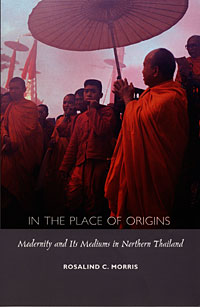
A review of In the Place of Origins: Modernity and Its Mediums in Northern Thailand, Rosalind C Morris, Duke University Press, 2000.

Rosalind Morris.jpg“Dazzling” is a word that seems to come to mind when describing this book. It is used in a laudatory manner by the two academic luminaries who provided blurbs on the back cover. Rey Chow praises In the Place of Origins as “a dazzling accomplishment”. For Gayatri Spivak , “this is a text of dazzling instructive simplicity.” Well, I was more frazzled than dazzled by Rosalind Morris’s book. And I failed to perceive its “instructive simplicity”. To me, this was only a compendium of bewildering jargon, rambling descriptions, sloppy reasoning, and bad editing. It was ethnographically and theoretically uncouth. In fact, I couldn’t make any sense out of it. I had to get back at my reading several times to complete the book, and I did it only for the purpose of writing a review on this website. In short, my advise to the potential reader is: spare yourself that trouble. Don’t take pains to read it, for this was indeed a painful experience.
Thai people turn to mediums and spirits

Granted, the topic is interesting. Chiang Mai and northern Thailand are fascinating places, with a distinctive culture that mixes tradition with modernity. Mediums are part of the local landscape and, far from receding from the scene, they have benefited from a veritable explosion of magical practices. People turn to mediums and spirits for personal or professional purposes: for love and marriage, power and money, health and luck. Stereotypically, those seeking advice about love and beauty are young women, those wanting luck and physical prowess, young men. Business advice is as often the concern of middle-aged women as of men, but healing is a universal need. In the homes of mediums, one is apt to encounter bankers and real estate entrepreneurs, local politicians and mafia thugs, all coming for consultation and advice. Buddhist monks, who are considered capable of achieving magical powers through the study of texts and meditation practice, often deride mediums as charlatans. But clients tend to believe them because they have faith in the transformative powers of their predictions.

The episodes of spirit possession are a frightening scene, replete with growls, convulsions, spasms, vomiting, spitting, and speaking in unfamiliar voices. The first experience of possession comes without warning, and is often likened to a kind of violation, a dispossession of self-knowledge and of memory. It often takes years for mediums to come to terms with their new identity, to domesticate the spirit that periodically takes hold of their mind and body, and to channel the seizures towards professional ends. After each possession, the medium must be told what has happened, and he or she often asks what the spirit has said. Spirits are historical or legendary figures, and they transform the medium into the receptacle of their wisdom. Thus, when an illiterate woman is possessed by a Buddhist saint and enabled to write, entranced, in an old script, or when an uneducated medium is able to recite with perfection the verses of a Pali sutra that she cannot read, a miraculous aura surrounds her.

Rites of possession

Mediums acquire spirits over time, eventually being possessed by several discrete characters, most of whom are associated with a distinct epoch and a particular site of origin. The spirits who finally compose the miniature pantheon of one medium are all integrated with each other in an overarching hierarchy and with the spirits of other mediums in relation to whom they are also relatively positioned. Praise ceremonies assign each medium a definite place in the ritual hierarchy, with the hosts listed in the invitations in order of seniority. The performances of mediums are characterized by a profound concern with decorum, including period costumes signifying generic pastness and a proliferation of signifiers of invented tradition. Medias and the technologies of mass reproduction go hand in hand with the occult practices of mediumship, and many photographs or videos of medium performances circulate among the public. Rosalind Morris elaborates on the parallel between the medium and the media, between mediumship and the technologies of mass reproduction. “Ultimately, it is this knowing capacity to look like an image, to be legible as a copy, that constitutes the radical newness of mediumship in the age of mechanical reproduction.”

The argument—and the title—of the book are built on a simple tension between the past and the present, the origins and the locale. Spirit possession in northern Thailand or elsewhere has often been treated as a mode of “presencing the past”. Spirits are historical figures summoned to weigh on the concerns of the present. In the context of this ethnography, northern Thailand has emerged as a sign of pastness in the national imaginary. “Chiang Mai has become a fetish of the picturesque,” writes the author, and Northerners have come “to inhabit the delirium of the nation and to take on the function of signifying pastness.” The ancient kingdom of Lanna in particular has come to signify an anterior history that is both pre-Thai and proto-Thai. It was once a vassal state of Burma, and has been treated by the Siamese as a dependent locality subject to “internal colonialism”. The tourism industry has also incited local affiliation and a production of local culture. Chiang Mai is “a city in which the signs of antiquity are constantly being produced anew.” Pastness, and specifically northern pastness, has become an object of desire. Hence the proliferation of imitation antiques, period costumes, and ethno-tourism among hill tribe peoples in the surrounding mountainous areas. Even the local language or dialect has experienced a kind of revival.

Northern Thailand is the nation’s constitutive outside

Rosalind Morris keeps coming back to the idea of origins, although she doesn’t specify what she really means by that. Northern Thailand is seen as the nation’s constitutive outside, a place of origins where the foundations of Thailand originated. Chiang Mai is located “at the center of the periphery”, sitting at the margin of the nation-state and providing it with a token authenticity. Mediums claim a special connexion to original figures, heroes and deities who are part of the national narrative. Rites of possession hint at the origin of language, as they “constantly reenacts the drama of language’s origination.” Yet “for every tale of origin, there is an encounter with the absence of origins.” Alterity lurks in the place of origins. Myths of origins often have heroes and founders of dynasties coming from outside and conquering the land. Foreign gods such as Shiva enter into the national pantheon. Many mediums are themselves of non-Thai, especially Chinese ethnicity. They use artifacts and magic formulas borrowed from tribes peoples and other minorities. Origins “is experienced as a site of loss”, a place that is always already absent.

The book is ostensibly based on field research in northern Thailand, although the context and duration of fieldwork is not specified. The author claims of having spoken to “monks, mediums, flower vendors, teachers, students, maid, and taxi drivers”. But she says very little about the context of these conversations, how they were structured, and how she fit in the picture as a participant observer. She assumes heroic knowledge on the part of the ethnographer: commenting at length on a nineteenth-century love poem, she notes that reading this text properly requires skills in “Pali, Sanskrit, Khmer, Mon, Burmese and Thai”, as well as extensive knowledge of the Buddhist literature. It also requires a good knowledge of Derrida and of deconstruction as it is practiced in comparative literature departments in the US. Elsewhere in the book, she peppers her observations with snippets from Freud, Heidegger, Benjamin, Adorno, Foucault, Baudrillard and Bourdieu. As she states in the first chapter, “this book is informed by a belief that a post-structuralist valorization of difference and indeterminacy, as being at once the limit and the enabling condition of translation, is supported and even demanded by the reading of modern northern Thai texts.” In other terms, you won’t be able to read her book if you haven’t been through Post-Structuralist Theory 101. But even if you did, skip it.

Korean Cinema in Search of a New Master Narrative

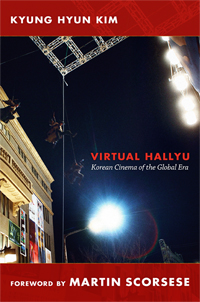
A review of Virtual Hallyu: Korean Cinema of the Global Era, Kyung Hyun Kim, Duke University Press, 2011.

Virtual Hallyu.jpgKorean cinema occupies a peculiar place in relation to hallyu. In a way, Korean movies were the harbingers of the Korean wave. They were the first Korean cultural productions to attract foreign recognition in international film festivals; they carved a global niche that was distinct from Hollywood movies or other Asian productions; and they emphasized distinctive aspects such as violence, romance, or geopolitical tensions. Cinema was the cultural medium through which Korea sought to establish itself as a new global standard. And yet K-movies are not considered part of hallyu the way K-drama, K-pop and even K-cuisine have now become. Only a handful of movies (Shiri, JSA, My Sassy Girl…) came to be seen as representative of the Korean wave, while other movies and moviemakers were perceived through the more traditional categories of film critique—national cinema, auteurship, movie genres, visual aesthetics, and narrative analysis. Korean cinema in many ways set the condition for hallyu’s expansion by inducing a shift in foreign perceptions of Korea. The country came to be seen as the producer of a different brand of modernity, distinct from Japan’s or China’s globalized cultures. Its movies were not only cheap imitation movies known collectively as Copywood; they were original productions in their own right. In addition, Korea’s movie industry demonstrated that critical and commercial success were not always incompatible: commercially successful movies could get critical acclaim, and art movies lauded by critics could also get a significant presence at the box office.
This success was due in no small part to the existence of a corps of movie critics and a roster of movie publications that made commenting on recent movies a legitimate intellectual pursuit in Korea and beyond. Kyung Hyun Kim played an important role in this reevaluation of Korea cinema. The back cover blurb on Virtual Hallyu describes him as “not just the most important Anglophone critic of South Korean cinema but a key figure in film and cultural studies generally.” In his first book on The Remasculinization of Korean Cinema (which I reviewed here), he established the label of “New Korean Cinema” by focusing on movies produced in the 1980s and 1990s. His thesis was that Korea at the time was a post-traumatic society: men had to overcome their masculinity crisis by resorting to masochism and to sadism and by denying women’s agency. In his latest book, he concentrates on movies produced during the next decade, end 1990s to end-2000s, which follow a different master plot. According to Kyung Hyun Kim, Korea has managed to untie itself from the narrative of post-crisis recovery and male failure that dominated Korean movies in the preceding period. Male hysteria no longer provides the dominant theme in more recent productions, and female characters are no longer reduced to the twin roles of the mother and the whore. The themes and characters have become more diverse and cannot be subsumed under a single heading. He nonetheless proposes the two categories of hallyu and of the virtual to define Korean cinema in this new age of commercial success and global expansion.

Riding the Korean wave

More than the commercial expansion of Korean productions abroad, hallyu refers here to a new sense of national consciousness that arose in the wake of the 1997 financial crisis and culminated with the stellar performance of the national soccer team in the 2002 World Cup tournament. It is synonymous with a nation reconciled with itself and basking in its newly acquired global status. Pride and affluence characterized the new Korea that had been able to overcome the masculinity crisis diagnosed in the previous period. This self-consciousness translated in box-office figures: Korea is one of those rare countries where domestic movies consistently outperform Hollywood productions. And yet the author diagnoses a disconnect between the success of Korean films at home and abroad. Films like April Snow, which was specifically designed for the Japanese market, flopped badly in Korea, whereas domestic blockbusters such as The Good, the Bad, the Weird failed to reach a global audience. In addition, Kyung Hyun Kim sees hallyu as a phenomenon limited in time: based on box office figures, he heralds its demise by the end of the first decade of the twenty-first century. After Korean film exports earned a record $75 million in 2005, there was an enormous decline, with only $24.5 million reported in 2006 and $12 million in 2007. For the author, this sudden decline in the popularity of the Korean wave since 2007 is just as inexplicable as its emergence. Of course, a plausible explanation is that there was simply a shortage of lucrative and attractive Korean blockbusters to please Asian tastes during that year and the next. The film industry is one of the most unpredictable in the world, and even critics cannot forecast future hits and flops.

Kyung Hyun Kim borrows the concept of the virtual from Gilles Deleuze and his twin books’ analysis of the movement-image and the time-image. Like Deleuze, he considers movies to be thought-experiments: in this sense, thinking about cinema is inseparable from making it. Through a century-long transformation, we have come to understand ourselves individually and socially through spatial and temporal articulations that were first advanced in movies. Nothing illustrates more the interdependence between philosophy and film-making than the category of the virtual. Virtuality refers here to a kind of being-in-the-world that increasingly eschews reality in favor of escapist pursuits and fictitious worlds. As the author notes, “the high-speed Internet boom that took place in Korea after the late 1990s ironically meant that Korea’s urban youth rarely needed to venture beyond their schools, homes, and offices. If they did choose to go outdoors, it was to the theater.” The virtual complicates the question of what is real and what is unreal. Despite our perception of film as the art form that most closely approximates reality, movies are pure fiction, akin to the simulacra that Baudrillard defines as images without models. Unlike the image, the virtual no longer dwells on the difference between the way things appear and the way they really are. In the virtual world, neither the opposition between true and false nor the one between reality and imagination can be resolved.

Virtual pasts and futures

Cinema itself is built on a technology of virtuality: the projection of twenty-four frames per second is perceived as continuous time and movement by our synapses. With the integration of computer graphics, the virtual has taken a whole new dimension, and the advent of virtual reality promises an era of unlimited possibilities. Everything that can be dreamed, imagined, or conceived, can be put on screen. Special effects and computer-generated graphics allowed Korean movie-makers to expand back in time, as with saguk or historical dramas, or forward to the future as with science-fiction movies. With the help of CG-generated images, directors were able to recreate images from the Chosun Dynasty period or to project their viewers into imaginary worlds. Deleuze’s use of the term “virtual” refers to something that is not only a thing of the past, but of a past that coexists with the present and also of a truth that coexists with the false. Similarly, the movie Lost Memories 2009 (2002) presents a virtual future in which Japanese occupation of Korea has continued into the twenty-first century, mixing memories of a colonial past and imaginaries of an uncertain present. The fascination with the colonial past was also rekindled by the rediscovery of old movies from the 1930s and 1940s that were thought to be lost but had been preserved in the film archives of Soviet Russia and Communist China.

The films covered in Virtual Hallyu more or less correspond to the period when the democratic party led by presidents Kim Dae-jung and Roh Moo-hyun was in power. During that decade, South Korea established itself as a full democracy as well as one of the most economically successful and technologically advanced countries in the world. Kyung Hyun Kim sees a correlation between the liberal policies pursued by these two presidents and the rise of hallyu. The state favored the expression of artistic sensibilities and adopted policies deemed favorable to the creative industries. Lee Chang-dong, an art-movie director, became the minister of culture, tourism, and sports in the Roh Moo-hyun cabinet. Most notably, the Sunshine Policy of peaceful coexistence and cooperation with North Korea, initiated by Kim Dae-jung and continued by his successor, allowed for a more nuanced view of the Communist neighbor country. If Kang Che-gyu’s Shiri (1999) was the last film to rely on a Cold War dichotomy to produce a ruthless North Korean villain and to attempt to reclaim South Korean male agency through the destruction of a North Korean femme fatale, Park Chan-wook’s JSA: Joint Security Area (2000) was the first film to defuse the stereotype of North Koreans as South Korea’s belligerent Other. Other films addressed the taboos of national history: Im Kwon-Taek’s The Taebaek Mountains (1993) depicts the period of guerrilla warfare and civil strife in the Jeolla Province before the start of the Korean war, whereas The President’s Last Bang (2005) and The President’s Barber (2004) concentrate on the controversial figure of President Park Chung-Hee, the first one as tragedy, the second as farce.

The recombination of traditional genres

Movies are shaped by market forces as much as by the political zeitgeist. In the late 1990s, the Korean industry started again to blossom, and showed an impressive success in the domestic market. Korean films enjoyed an average market share of 54 percent over the following decade, with record peaks of 60-65 percent. Last but not least, the Korean film production continued to earn many prestigious awards at top international film festivals, making Korean culture increasing attractive. This happened in the context of limited subsidies by the state and increased free-market access of US film-makers in Korean distribution. If anything, increased competition between US and Korean films induced the Korean cinema industry to create more attractive and lucrative movies than foreign films. Big industrial groups or chaebols, expecting high returns of investment, expanded their power by acquiring individual theaters and creating multiplexes and theater franchises. They invested in the production of genre movies previously considered as the preserve of the American movie industry: Westerns (The Good, the Bad, the Weird), science fiction (The Host), eco-disaster stories (Tidal Wave), urban disaster thrillers (The Tower), and heroic fantasy (Jeon Woo-chi: The Taoist Wizard). Film-makers challenged conventional boundaries and they mixed established genres to create a hybrid repertoire of multi-genre movies: comic-family-melodrama-monster (Bong Joon-ho’s The Host), erotic-horror-crime mystery (Park Chan-wook’s Oldboy), or comic-romantic-women’s tearjerker (Lee Chang-dong’s Secret Sunshine). It is this recombinatory power of Korean cinema that foreign audiences found most attractive.

For Kyung Hyun Kim, the role of the film critic is to unveil the latent meanings beneath the apparent surface of a movie. The message of a movie is made clear only when one confronts it to the other works of an auteur, or when one places it in a series that defines a genre, a historical sequence, or the broader tradition of a national cinema. His analysis is consistent with the discourse of political modernism, founded on the holy trinity of Saussure’s semiotics, Lacanian psychoanalysis, and Althusserian Marxism. Words like postmodernism, postcolonialism, late capitalism, and neoliberalism pepper the text and give it a radical cachet. For the author, none of the films produced in the period were radical enough; they only tinkered with the system, and provided imaginary solutions to real problems. As he concludes, “not only is Korea still scarred and traumatized by its colonial era and the Cold War, but—given the continuing US military presence and occasional threats of war from North Korea—it has yet to claim a true postcolonial and post-Cold War identity.” Curiously, although his previous book was all about masculinity and gender roles, he does’t address the issue of gender in Virtual Hallyu. The resolution of Korea’s masculinity crisis didn’t lead to a more balanced repartition of roles between men and women, and none of the directors listed in the book are female. In this era marked by the end of history and the advent of postmodern identities, Korean cinema has yet to find its new master narrative.

Getting It Up in China

A review of The Impotence Epidemic: Men’s Medicine and Sexual Desire in Contemporary China, Everett Yuehong Zhang, Duke University Press, 2015.

ImpotenceEverett Zhang was conducting fieldwork in two Chinese hospitals, documenting the reasons why men sought medical help for sexual impotence, when Viagra was first introduced into China’s market in 2000. He therefore had a unique perspective on what the media often referred to as the “impotence epidemic”, designating both the increased social visibility of male sexual dysfunction and the growing number of patients seeking treatment in nanke (men’s medicine) or urological hospital departments. At the time of Viagra’s release, Pfizer, its manufacturer, envisaged a market of more than 100 million men as potential users of “Weige” (伟哥, Great Brother) and hoped to turn China into its first consumer market in the world. Its sales projections were based on reasonable assumptions. The number of patients complaining from some degree of sexual impotence was clearly on the rise, reflecting demographic trends but also changing attitudes and values. There was a new openness in addressing sexual issues and a willingness by both men and women to experience sexually fulfilling lives, putting higher expectations on men’s potency. Renewed attention to men’s health issues since the 1980s had led to the creation of specialized units in both biomedical hospitals and TCM (traditional Chinese medicine) clinics. There was no real competitor to Pfizer’s Viagra, as traditional herbal medicine or folk recipes clearly had less immediate effects in enabling sexual intercourse.

Taking Viagra along with herbal medicine

And yet Viagra sold much less than expected. In hospitals and health clinics, Chinese patients were reluctant to accept a full prescription. Instead, they requested one or two single pills, as if to avoid dependence. The drug was expensively priced, and customers were unwilling to sacrifice other expenses to make room in their budget. In addition, Viagra did not substitute for traditional remedies, but rather developed in tandem with them as people switched between Viagra and herbal medicine, taking both for seemingly compelling reasons. Viagra addressed the issue of erectile dysfunction, and its bodily effects were clearly experienced by Chinese men who reacted to it in much the same way as male subjects elsewhere. But it did not bring an end to the “impotence epidemic”, which continued to be framed as more than a health issue by the Chinese media. Viagra did not “cure” impotence or restored men’s potency because it was unable to do so. Pfizer’s projected sales figures had been based on false assumptions, and the Chinese market proved more resistant than initially envisaged.

Zhang proposes a compelling theory of why it was so, thereby demonstrating the value of a fieldwork-based anthropological study as distinct from other types of scholarly explanations. In contrast to the dominant biomedical paradigm, he rejects the notion that male potency can be reduced to the simple ability to achieve an erection. Impotence is much more than a bodily dysfunction or a “neuromuscular event”: witness, as Zhang did, the despair of men who complain of having lost their “reason to live”, or the frustration of women who accuse their companion of having become “less than a man”. But impotence is not only a metaphor, as some cultural critics would have it. Impotence is often presented as the symbol of a masculinity in crisis or as a sign of the “end of men” and the rise of women in postsocialist China. But these generalizations do not reflect the practical experiences of impotent men, nor do they explain why the demand for more and better sex resulted in anxiety for some men, leading to impotence. “In fact, notes the author, none of the discussions surrounding Chinese masculine crises was either soundly conceptualized or empirically supported.”

Male potency cannot be reduced to the ability to achieve an erection

Zhang’s fieldwork confirmed the rise of women’s desire or increased people’s longing to enjoy sex throughout their adult life, but did not go as far as to validate the claim of an “impotence epidemic” or to testify to a “new type of impotence”. During the Maoist period, people were discouraged from seeing doctors about impotence, as sexuality was repressed and the desire for individual sexual pleasure was regarded as antithetical to the collective ethos of revolution. If anything, patients came to consultations to complain about nocturnal emissions (yijing), a complaint that more or less disappeared in the post-Maoist era. When men’s health clinics or nanke departments emerged in the new era, they medicalized impotence and established it as a legitimate “disease” warranting medical attention. Private selves emerged when the overall ethos of sacrifice and asceticism gave way to the exaltation of romantic love and then to the justification of sexual desire and pleasure. But structural impediments to sexual desire did not disappear overnight, such as the physical separation of married couples and other constraints on intimacy induced by the danwei (work unit) and hukou (household registration) systems. Other biopolitical interventions created gaps between the revolutionary class and the outcast relatives of counter-revolutionaries, between the urban and the rural or, more recently, between the rich and the poor.

The main value of the book lies in its rich collection of life stories and individual cases of men and women confronted with impotence. The amount of suffering accumulated under Maoist socialism is staggering. People interviewed in the course of this research retained collective memory of starvation during the Great Leap Famine, and feeling hungry was a common experience well into the sixties. Maoist China was a man-eat-man’s world, where middle-aged men would snatch food from school children or steal from food stalls to assuage their hunger. It was also a time when children would denounce their parents for counterrevolutionary behavior, or would call their mother by their given name in a show of disrespect in order to draw a clear line between themselves and bad parents. Sexual misery and backwardness also provided a common background. Some of Zhang’s interlocutors never touched a woman’s hand until they were thirty years old; others confessed that the first time they saw a naked female body was when they saw a Western oil painting of a female body, or when they glimpsed scenes of a classical ballet in a movie. A nineteen years-old girl didn’t understand the question when the doctor asked if she had begun lijia (menstruation) and thought lijia was a foreign word. Many persons consulting for impotence confess that they never had sexual intercourse or had tried to have sex once of twice but failed. Their conviction that they were impotent was based on very limited physical contact with women or was merely a product of their imagination.

Bedroom stories

As Zhang argues convincingly, it takes two to tango; or in words borrowed from phenomenology, “in the final analysis, curing impotence means building intercorporeal intimacy.” In paragraphs that could have been borrowed from Masters and Johnson, Zhang describes the various components of sexual intercorporeality: bodies need to be in contact, as in “touching, kissing, licking, rubbing, and so on”; but they also need to be in sync, geared toward one another in a process of “bodying forth”; and other sensory inputs (such as “seeing, touching, and smelling the naked female body, tasting the tongue of the female, or hearing her scream”) may provide additional stimulus. Male impotence very often originates in the failure of one of these intercorporeal dimensions: lack of touching, as when the husband lies side by side to his wife, waiting to achieve an erection; ignorance of the most basic facts of life, due to the lack of sex education; and withdrawal from the sensory world that is symptomatic of a more serious loss of “potency” in life. As the author notes, with a good deal of common sense, “women’s involvement in managing impotence is not any less important than men’s, and, in fact, at times may be more important. Impotence, after all, is not only a neurovascular event affecting the individual male body. It is also a social, familial event and an intercorporeal, gendered event.”

The Impotence Epidemic is not only ethnographically rich, it is also theoretically elaborate. Zhang received his PhD in anthropology from the University of California at Berkeley, in a department known for its emphasis on social and cultural theory. One of his teachers, Paul Rabinow, initiated generations of English-speaking students to the thought of French philosopher Michel Foucault. His thesis advisor, Arthur Kleinman, who teaches medical anthropology at Harvard, recently edited a book (reviewed here) about how anthropologists engage philosophy. Zhang confesses he took classes in philosophy, including one with John Searle, who involuntarily provided him with a way to think about erection (“Now I want to raise my right arm. Look, my right arm is up.”) Throughout the book, he makes frequent references to Gilles Deleuze, Michel Foucault, Merleau-Ponty, and Heidegger, as well as to Freud and Lacan.

Confronting theory with fieldwork observations

Engaging the thought of these canonical authors can sometimes feel as intimidating as having sex for the first time. Zhang shows it doesn’t have to be so. What is important is to build a rapport. Zhang graduated from his theory-heavy curriculum with a pragmatic mindset and a heavy dose of common sense. He uses what he can get from the theoretical toolbox, without forcing his erudition onto the reader. He is able to summarize complex reasoning in a few sentences, and to turn difficult words into useful tools. Sometimes only the title of a book or one single expression coined by one distinguished thinker can open up an evocative space and act as useful heuristic. Zhang refers to Deleuze and Gattari’s A Thousand Plateaux to label his collection of life stories and medical cases as “one thousand bodies of impotence.” Impotence is itself a kind of plateau, defined by Gregory Bateson as a force of continuous intensity without any orientation toward a culminating point or an external end. Throughout his book, Zhang provides succinct and transparent definitions of key concepts–Deleuze’s assemblages, Bourdieu’s habitus, Foucault’s biopower, Merleau-Ponty’s intercorporeality, Heidegger’s being-in-the-world, etc. He then tests their validity by confronting them to his fieldwork observations, sometimes giving them a twist or new polish to make them fit with his ethnographic material. In many cases, theory is found lacking, and needs to be completed with the lessons learned from participatory observation.

Zhang’s two main sources of philosophical inspiration are Deleuze and Foucault. The first allows him to think about the impotence epidemic as a positive development that signals the rise of desire; the second provides him with a method for investigating the cultivation of self in post-Maoist China. Criticizing Lacan’s notion of desire as lack, Deleuze and Guattari introduce useful concepts to think about the production of desire or, as they say, “desiring production”, which includes “the desire to desire”. They describe the force of capitalism in terms of generating flows of production and desire, which are coded (restricted) and decoded (loosened) in a moral economy of desire. Their analysis focuses on the decoding phase that is the hallmark of capitalism, lessening restrictions on desire to create deterritorialized flows. Zhang prefers to focus on the “recoding” of flows of desire or “reterritorialization” as exemplified in the cultivation of life through an ethic of “yangsheng” which advocates preserving seminal essence. Sexual cultivation in contemporary China, like the “care of the self” in ancient Greece as studied by Foucault, is an ethical approach to coping with desire. Yangsheng involves everything from sleep to dietary regimens, bathing, one’s temperament in response to changes in climate, qigong, walking, and the bedchamber arts. It is a way to regain potency over one’s life. Foucault, in order to account for unreason and madness, chose to produce a history of reason in Western civilization. Similarly, studying impotence leads Zhang to delineate life’s potency, a notion that goes well beyond the ability to achieve an erection.

The Anthropologist Goes to Bollywood

A review of Unsettling India: Affect, Temporality, Transnationality, Purnima Mankekar, Duke University Press, 2015.

MankekarIt’s all in the title. UNSETTLING. INDIA. AFFECT. TEMPORALITY. TRANSNATIONALITY. The key concepts are all listed here, in a sequence that will be repeated over and over in the book, like a devotional mantra. It is, if you will, the anthropologist’s “Om mani padme hum”, the way she attains her own private nirvana. Purnima Mankekar’s objective, as she states repeatedly, is to examine “how India is constructed as well as unsettled as an archive of affect and temporality in contexts shaped by transnational public cultures and neoliberalism.” Each word in this mission statement opens a particular space for ordering the observations that she gathered in the course of her fieldwork in India and in California. Indeed, the chapters of the book hold together by a thread, and this common thread is provided by the words listed in the book’s title. So let me engage with them one by one, in no particular order of succession.

Diasporic subjects and transnational imaginaries

TRANSNATIONALITY refers, first, to the two sites where the author conducted fieldwork, gathered observations, and interacted with her informants. The ethnographic material of which the book is composed was collected through the course of nearly two decades in various locations clustered around New Delhi and in the San Francisco Bay Area, where many immigrants from the South Asian subcontinent have settled. Transnationalism has been defined in anthropology as “the process by which immigrants forge and sustain simultaneous multi-stranded social relations that link together their societies of origin and settlement.” Mankekar complicates this definition by noting that diasporic subjects often cannot be pinned down to one place of origin or to one settlement location, as they frequently move across borders and develop modes of identification that are not tied to territory. In addition, transnational imaginaries also affect non-migrants who can only dream of settling abroad but for whom the distant foreign is brought close to home by television programs or consumer culture.

In a more restricted manner, transnationality applies to transnational public cultures as they are studied by the author: Bollywood movies, TV dramas, commodity consumption, ideologies of nationhood, discourses of morality, and fictive identities as in the call centers where young Indian operators impersonate the role of typical Americans. Mankekar treats transnational media as text to be subjected to textual analysis, but also as a practice to be experienced in tandem with her informants. She tells how she is able to break the ice with a busy IT executive by referring to a Bollywood drama, how she brings an Indonesia-born Sikh Indian-American to an old Raj Kapoor movie, or how she discusses gender roles and sexuality with lower-middle class and working-class informants in New Delhi based on TV serials and commercials. Public cultures are transnational because they address or interpellate a public wider than the national community; because they mobilize the forces of borderless capital and commodity fetishism; and because they often picture diasporic subjects while enabling men and women to acquire the capacity to imagine life in other places.

DDLJ, K3G, and B&B

The movies Mankekar discusses are known to many English-speaking audiences in India and abroad by their acronyms or abbreviated titles. “DDLJ” tells the story of young lovers straddling borders and communities to win parental approval to marry. “K3G” is about an adopted son expelled from his rich home for disobeying his father’s marriage injunction and then brought back into the family fold by his elder brother. Bunty and Babli is a road movie about two swindlers who escape from their small town by impersonating rich people’s identities. These stories resonate with the courting of nonresident Indians or NRIs by the Indian state appealing to their investments and skills (DDLJ); they espouse the ideology of Hindi nationalism by producing a fantasy of a reterritorialized Global India in which religious and other minorities are conspicuous by their absence (K3G); or they reflect the increased capacity to aspire of call center operators and other lower middle-class Indian who adopt new names and borrowed identities (B&B). Viewing these movies while reading the book in parallel provides the reader with a wonderful introduction to a fascinating cinematic genre.

AFFECT is a category that is mobilized on different counts. It is a dimension of ethnographic fieldwork, on par with cultural sensitivity and theoretical foregrounding. As Mankekar notes, “conducting ethnographic analysis is itself a deeply affective process and entails an engagement with the entire being of the ethnographer.” She situates her encounters with informants in their sensory and emotive contexts, providing notations on tastes, smells, likes and dislikes. “India shopping” in the ethnic grocery stores run by South Asians in the San Francisco Bay Area involves a whole range of affects, experienced by the author and her informants in intimate, embodied, and often visceral ways. They bring into play “senses of touch, smell, sound, sight, and taste.” These stores provide spaces where community members gather and exchange news about community events, and where new arrivals can learn about neighborhoods, schools, and employment opportunities. They are also places where the community exercises its surveillance upon its members and sanctions “loud” or deviant behavior. All is by no means positive in the outlook and values of Indian Americans, or in the political orientation of citizens back home. In particular, the author develops strongly negative affects towards people who espouse the Hindutva nationalist ideology and who wield campaigns of “aggressive national regeneration” aimed at religious minorities or, more prosaically, against Valentine Day celebrations. The ethnographer’s rapport with her informants is not always based on empathy and understanding.

The political economy of affects

Affect is also part of a political economy of affective labor, affective capital, and affect circulation. Michael Hardt has noted that whole sectors of the economy are “focused on the creation and manipulation of affects.” In particular, affect is constitutive of forms of labor central to the global capitalist economy, as in the transnational service sector where India claims a distinctive competitive advantage. Elaborating the notion further in The Cultural Politics of Emotions, Sara Ahmed conceives of affect as a form of capital. Analogous to the production of surplus value in capitalism, affects assume value cumulatively through circulation. Affective economies are composed of affective investment, affective value, affective circulation, and affective regimes of production and consumption. Affect is distinct from feeling (the domain of individual subjectivity) and emotion (the domain of the linguistic). Affects are generative of subjectivity—of action and agency, the capacity to act and be acted upon.

Mankekar uses these theoretical insights in a fine-grained ethnography of call center operators in a New Delhi suburb. Call centers have become the most visible part of the business outsourcing industry and have been heralded by media pundits and globalists as proof that “the world is (becoming) flat.” Mankekar demonstrates the value of ethnographic writing as opposed to media reporting. She describes affective labor as based on affective repertories – of courtesy, familiarity, friendliness, helpfulness, and, above all, caring. It is also based on the alienation of workers who refashion their only means of production—their own selves, their own bodies—through practices of impersonation and borrowed identities. As the two movie characters Bunty and Babli, call center agents become themselves by becoming others. Their aspirations to upward mobility, glamour, and success is also nurtured by transnational media: they are required to watch Hollywood films and episodes of US television shows such as Friends, and to use them as resources to acquire American accents, adopt American colloquialisms, and learn about the American way of life. They engage in virtual migration through IT-mediated work and cultivate lateral mobility by moving from one employer to the next. But the end of distance doesn’t bring the end of place. The virtual migration of call center agents coexists with forms of emplacement and immobility (and in some cases, virtual incarceration) through technologies of regulation and surveillance.

Nostalgy for the future

TEMPORALITY is the second repertory or archive mobilized, in conjunction with affect, to delineate the production and unsettling of transnational India. Describing the modern imagination as an expanded “capacity to aspire,” Arjun Appadurai suggested that we foreground aspiration in order to “place futurity, rather than pastness, at the heart of our thinking about culture.” Indian residents or diasporic subjects locate India not so much in the past as in the future. In this new regime of temporality, tradition emerges as an affective process that entails “not so much the invocation of a past as the generation of a set of practices enabling subjects to imagine and embrace specific forms of futurity.” Among diasporic Indians who carry India in their heart wherever they go, Indianness is not constructed as static or unchanging but instead is portable and flexible. Similarly, Hindu natinonalists experience “nostalgia for the future”: their longing for a glorified and mythic past combines with an aspiration to march toward a glowing future as moral subjects of Global India. In this sense, “time has agency or, at the very least, a force of its own.” Time combines with affect to shape subject formation and social process.

INDIA is constituted as an archive of affect and temporality by transnational public cultures. What “India” means is very different for each of her informants in New Delhi or in the San Francisco Bay area. Some subscribe to Hindu nationalist discourses of national purity, while others adhere to secularist conceptions of nationhood. Some insist on bounded territory and fixed identities, while others are engaged in transnational deterritorialization processes and multifaceted roles. Diaspora members carry India in their hearts wherever they go, while some individuals construct their own private India with disparate elements assembled through identity bricolage. Second-generation youth express their identity in terms of cultural difference: for these transnational consumers of Bollywood musicals and ethnic productions, “it’s cool to be Indian now”. Food is of particular significance to communities that travel across transnational space. As a mother testifies, “now that the kids are in school, they’re forgetting their Gujarati. But the least I can do is to give them one Indian meal a day.” Some see India as a country of origin, while others identify it as the land of the future.

Indian settlements and unsettlements

UNSETTLING is a common analytic that hints at the subversive nature of academic writing, politically and culturally. The disciplines of gender studies, media studies, critical theory, or cultural studies are particularly unsettling in the sense that they introduce ambiguity and uncertainty where the dominant ideology tries to impose certitude and conformity. Like many cultural critics committed to a progressive agenda, Mankekar does not take categories for granted. She refuses to essentialize notions of nation, gender, class, or ethnicity, while at the same time recognizing their relevance for interpreting social processes of identity formation and collective mobilization. In particular, she unpacks and decanters the totalizing claims of nationhood. She shows that “unsettlement is intrinsic to the production of India, such that Indian culture is conceptualized as chronically in flux, as always emergent.” India is unsettling as a nation: it challenges aspects of American identity, and is deemed particularly threatening to the self-representation of the US as a technological leader. Outsourcing service activities to India elicits reactions of rejection or even racist slurs, as when Americans realize they have been connected to a consumer service located in India. As the author notes, “we rarely see the same virulence in discussions about outsourcing to Israel and Ireland.”

Unsettling India is also part of a wider project of unsettling nations. India is not the only nation to be constituted and unsettled by regimes of affect and temporality. As Mankekar claims in her conclusion, “I have wished to sketch the contours of a conceptual and political framework that may enable us to unsettle the exclusionary and violent claims of the US nation.” In post-September 11 America, fear and rage against people of South Asian and Middle Eastern origin, in particular those “deemed to be Muslims” (such as Sikh men wearing a turban) contribute to the creation of a nation predicated on the marginalization and demonization of racial and cultural Others. This book is about unsettlement as an ethnographic strategy as well as an analytic. “It is vulnerable to the irruption of surprises, emergences, and potentialities, and to the ineffable, the inarticulate, and the inscrutable.” Traditional conceptions of family, gender, or Indianness are displaced and unsettled by images of sensuality and erotic longing. Even the most conventional romance stories or the most obtuse nationalist discourse carry a twist, a fault line that opens them to the dimension of desire. It is the hero’s respect for Indian women’s sexual purity that makes DDLJ a truly erotic movie. The controversies surrounding Valentine Day in India underscore the greater visibility of romantic love and displays of affection between young men and women. India is constructed and unsettled in the same move. Mankekar revels in revealing these shifts and cracks in the fabric of social life.