
The Old Mole

A review of The Sublime Perversion of Capital: Marxist Theory and the Politics of History in Modern Japan, Gavin Walker, Duke University Press, 2016.
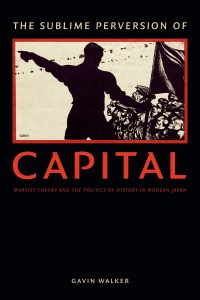
Gavin WalkerWhy read Marx today? More to the point, why devote a book to how Marx was read in Japan in the mid-twentieth century, and in particular to the writings of a Marxist scholar named Uno Kōzō (1897-1977), Japan’s foremost Marxian economist and founder of what is usually referred to as the Uno School (Uno gakuha), Uno economics (Uno keizaigaku), or Uno-ist theory (Uno riron)? Books about this branch of Marxist theory now collect dust on the shelves of second-hand bookstores in the Kanda-Jinbōchō district in Tokyo. They remind us of Marxism’s surprising longevity in Japan’s academic circles: a Japanese publishing house, Kaizōsha, was the first editor in the world to publish the complete collected works of Marx and Engels (in thirty-two volumes), and Marxist theory was taught and studied with passion in the tumultuous years of campus upheavals of the 1960s and 1970s. The generation that imbibed Marx’s shihonron in its formative years is now past retirement, and the few remaining bastions of Marxism are only to be found in philosophy or literature departments, not in faculties of economics. But Gavin Walker considers that something important was at stake in these economic debates, something that can still speak to our present. In his opinion, we need to understand the “sublime perversion of capital” in order to situate and possibly overcome our contemporary theoretical impasses and debates: the surprising persistence of the nation, the postcolonial situation, the enclosure of the new “digital commons,” the endless cycles of crisis and debt. Indeed, Walker argues, “this moment of globalization calls for a fundamental (re)examination of the central questions of Marxist theory itself.” For, like Marx wrote to his German readers in the 1867 preface of Das Kapital, “De te fabula narratur!”—it is of you that the story is told.

De te fabula narratur 

First, we must clear the ground from what the book is not. It is not a political essay à la Fukuyama that would try to apply Marxian or Hegelian lenses to a rereading of the present—Walker has only contempt for such literature, which he calls “supreme political cretinism.” Nor is it a rephrasing of Lire le Capital, an attempt to expose Marx’s theory along logical lines: indeed, this is how historiography remembers the main contribution of Uno Kōzō, who reformulated Marx’s Capital in conformity with an adequate order of exposition, with a necessary beginning, development, and end. But what concerns Walker the most is to think about what is at stake in the Japanese debates on Marxist theory for theoretical inquiry today. As he explains, “What I am interested in is to enter into the theoretical work in Marxist theory, historiography, and philosophy of this moment as theory.” He doesn’t study Japanese Marxism historically or in isolation, but plugs it to the scholarship of “world Marxism” in which the concerns of Japanese intellectuals echo, sometimes decades in advance, theoretical issues that were also picked up in the United States or in Europe. Just like Lenin identified “three sources and three component parts of Marxism” (German philosophy, English political economy, and French socialism), Walter draws from three traditions of critical thinking: Japanese Marxism or “Uno Theory” which forms the main focus of the book, but also as minor voices or counterpoints French political philosophy (Althusser, Balibar, Deleuze, Foucault, Nancy, Badiou), and the Italian autonomia school of social critique (Paolo Virno, Sandro Mezzadra, Silvia Federici). His familiarity with texts written not only in English and Japanese, but also in French, Italian, Russian, and German is what commends Walker to the serious reader. And his rereading of Japanese Marxism provides an introduction to an important current of political thought that has seldom spilled over the national, linguistic and disciplinary boundaries of academic communities. 

Uno Kōzō and Japanese Marxism are unfamiliar to most readers, and some elements of contextualization are in order. However, Walker warns us that “this book does not privilege or even accept the biographical mode of analysis,” and that “it is hostile to the concept of ‘context’.” He provides only one paragraph on the life and work of Uno Kōzō, mentioning his studies in Berlin from 1922 to 1924, his arrest in 1938 on suspicion of political activism, his work as a statistician outside of academia until the end of the war, and his reappointment after 1945 in Tokyo University’s Department of Economics, where he was to develop his famous theory of the three levels of analysis, or sandankairon, and his formulation of the “impossibility of the commodification of labor power” (rōdōryoku shōhinka no muri). Walker provides more perspective on the debate on Japanese capitalism (Nihon shihonshugi ronsō) and the opposition between the two factions of Japanese Marxism, the Rōnō-ha (Labor-farmer faction) and the Kōza-ha (Lectures faction). Based on positions or “theses on Japan” adopted by the Comintern, and raising the issue whether the Japanese Communist Party should ally with other progressive forces in a popular front, this debate, predominantly held from the late 1920s to the mid-1930s, deeply influenced political developments, not only in Japan, but also in the then-colonized Korean Peninsula, in China, in Southeast Asia, and elsewhere. The Rōnō faction argued that the land reforms instituted in the 1868 Meiji Restauration had successfully effectuated the transition from feudalism to capitalism, and that Japan was now ripe for a socialist revolution. The Kōza-ha, representing the mainstream of the JCP and of the Comintern, held the view that Japanese capitalism was permanently crippled by emerging from a feudal basis and that “remnants of feudalism” (hōkensei no zansonbutsu), especially in the countryside, made inevitable the turn to “military-feudal imperialism” (gunjiteki hōkenteki teikokushugi).

Difficult words and torturous grammar

The political debates of the times were loaded with difficult words and expressions that the Japanese language, with its kanji characters and grammatical structure, makes even more abstract and unfamiliar. Especially hard to fathom was the work of Marxist scholar Yamada Moritarō, whose Analysis of Japanese Capitalism, published in 1934, was “one of the most simultaneously celebrated, reviled, frustrating, controversial, and influential book in the history of Japanese Marxist theory and historiography.” Yamada wrote in a particularly recondite and idiosyncratic prose, filled with “riddles” and “codes,” as his writing style was modeled after the German language used in the most abstract philosophy with its inversion of typically Japanese grammar, sentence structure, and diction. But Gavin Walker’s own immersion in this literature testifies that getting fluency in this highly theoretical language is no more difficult for the true believer than mastering Buddhist scriptures: mantra-like formula such as “military semi-serf system of petty subsistence cultivation” are treated as blocks of characters that are stringed one after the other and recited like a psalmodic shibboleth. They create their own world of meaning that bears little resemblance with ordinary life, and convey to the insider the impression that he or she belongs to the select few. Besides, Japanese scholars were also fond of colloquialisms and didn’t hesitate to call each other names in a prosaic manner: rivals from the Rōnō faction called Yamada’s text a “farce,” and reacted to one of Uno Kōzō’s key lectures by saying that “Uno’s gone nuts” (Unokun wa kawatta.) The most intricate discussions often centered on simple words, such as the “semi-” (han) in semi-feudalism or the concept of “muri” used by Uno in his “impossibility of the commodification of labor power” theorem (rōdōryoku shōhinka no muri.)

Gavin Walker devotes a whole chapter to Uno’s notion of “muri,” which he alternatively translates as “logical (im)possibility,” “rational impasse,” or “the nihil of reason.” But, as any child or Japanese language beginner will tell you, muri can also mean, at a colloquial level, “don’t think about it,” “out of the question,” or “no.” Disentangling the colloquialism from the conceptual is no easy task. The most abstract discussions in Japanese philosophy often focus on everyday notions, such as mu (not, without), ma (empty space), ba (place), or iki (lively). These concepts have their roots in Japanese Buddhism and especially in the Zen tradition, and were often picked up by nationalist ideologues and twentieth century philosophers such as Nishida Kitarō to emphasize the distance between Japanese thought and the Western canon. To attempt to translate them in a foreign language, or to discuss their meaning for a Western audience, raises a difficult challenge. On the one hand, foreign commentators need to convey the radical otherness of these notions rooted in a culture that gives them meaning and depth, and they can only do so by making elaborate discussions on the intricate lifeworlds that these words summon. On the other hand, they risk to lose their simplicity and childlike quality that makes their meaning commonsensical and straightforward. This contradiction is apparent in Walker’s treatment of muri.  In Uno’s logic, the commodification of labor is the foundational basis of capitalism, and yet this commodification is made impossible by the nature of labor power as defined by Marx. Another way to express it is that although the commodification of labor power should be impossible, in capitalist society “the impossibility is constantly passing through” (sono muri ga tōtte iru). Again, the expression “passing through,” that Walker submits to a long exegesis, cannot convey the simplicity of the Japanese verb tōru

Childishly simple

Another way to complicate simple notions is to resort to vocabulary borrowed from the hard sciences or to mathematics. To convey the notion of the impossibility of labor power’s commodification, Walker alternatively refers to mathematical figures such as the Moebius’ strip, the Klein bottle, the Borromean knot, the torus, or topology notions of torsion, inversion, loop, and fold. These topological notions were all the rage in the theoretically loaded context of the sixties and seventies, when Marx was often discussed in conjunction with Freud and Lacan—the French psychoanalyst who became enamored with algebraic topology. Walker also suggests that Uno’s use of muri may be borrowed from the concept of “irrational number” (murisū), although the evidence he gives to back his claim is rather moot. The mathematical formulae he introduces in his text—variations on the M—C—M’ equation in Marx’s Capital—, are at the level of a elementary logic and only contribute to his prose’s dryness. On the other hand, Walker is also capable of flights into hyperbole and metaphoric statements. The title of his book illustrates his use of colorful rhetorics and literary excess. Why is capital perverse, and what is sublime about the perversion of capital? As I understand it, capital is perverse in the sense that it thrives on our most basic instincts in a capitalist society: commodity fetishism and the elision the social relations between people as relationships among things, the forgetting of labor’s true contribution to value and profit, alienation from one’s true self and other workers through the act of production. The sublime is the notion of absolute greatness not inhibited with ideas of limitations: this is the feeling that grips the true believer upon the revelation of absolute truth and true science that Marx’s doctrine was supposed to incarnate.

Gavin Walker’s text is even more obscure when he discusses Japanese Marxism in conjunction with contemporary authors: French philosophers, Italian social critics, or modern Japanese thinkers reclaiming Marx’s heritage. The result is a riddle wrapped in a mystery inside an enigma. As if reading a commentary of Japanese scholars commenting on Marx wasn’t hard enough, Walker double-downs the challenge by  bringing in other hard-to-read authors and by offering his own commentary of Marx’s original concepts such as primitive accumulation or the origin of labor power. Chapter 3 in the book moves from Carl Schmitt to Sandro Mezzadra and to Karatani Kōjin but loses sight of the author’s original intention to address “Marxist theory and the politics of history in modern Japan.” I understand his argument: he doesn’t want to be categorized in the “Japan slot” with other area study specialists, and he prefers to associate himself with high theory and Marxian scholarship. He sees a division of labor at work between his own production and the books of intellectual history that have mapped Marxism’s development in prewar Japan. I myself am not adverse to philosophical arguments and French Theory: I don’t mind introducing a few codes of Foucault, a dual use of quandary from Deleuze and Guattari, or a dash of devilish derring-do from Derrida. But I am also genuinely interested in Japan’s intellectual history and would have liked to read more about the Japanese context and less about Gavin Walker’s own thoughts on Marxist theory.

The Japanese management system

The transition from feudalism to capitalism was a debate that dominated scholarly discussions in Japan for decades. This debate, interesting in its own right for the logical arguments and rhetorical skills that it mobilized, has long passed its expiry date. It never affected Marxist theory—what the author labels “world Marxism”—in a significant way, and attempts to revive it in the twenty-first century are faced with the same conundrums that Derrida experienced when he confronted himself with the specters of Marx. Trying to rekindle the flame by rehashing the old theories of a Marxist scholar unknown beyond Japan’s borders seems to me like the epitome of a lost cause. Historically, the debate on Japanese capitalism was soon replaced by the discussion on Japanese management—some scholars, Japanese or Western, adapted to the changing times and made the transition between the two. I see some parallels between the two lines of enquiry. First, Japanese management scholars were also concerned with the nature of capitalism in Japan and the way it differed from the Western version. They insisted on labor relations and workplace arrangements: lifetime employment (shūshin koyō), the seniority-wage system (nenkō joretsu), and the enterprise union (kigyōbetsu kumiai) formed the “three sacred regalia” (sanshu no jingi) of the Japanese employment system—to be sure, the crown has now lost its jewels. Like the Marxist mantras of Yamada and Uno, strings of Japanese characters were attached in long formulations and found their ways in Western texts, or were lost in translation. Management specialists pondered endlessly about the everyday notions of genba (workplace), kanban (signboard) or kaizen (improvement) that sound commonsensical to anyone familiar with Japan. We even hear echoes of the disputes between the Rōnō and the Kōza factions in the opposition between proponents of Japan’s distinctiveness and those who favored neoliberal solutions—the latter won the day.
Let’s Talk About Sex

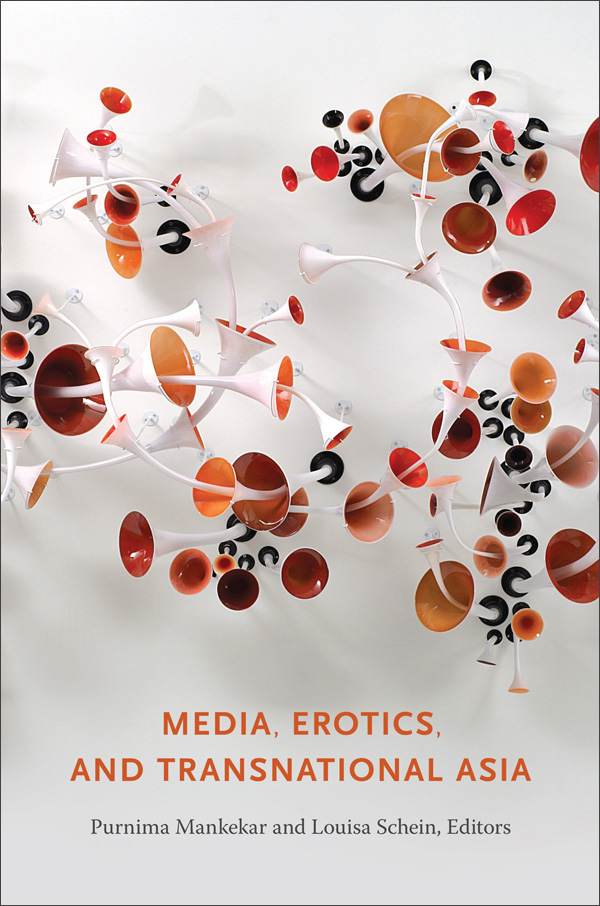
A review of Media, Erotics, and Transnational Asia, edited by Purnima Mankekar and Louisa Schein, Duke University Press, 2013.

Transnational asiaThis is not a book about Asian sex videos. Indeed, reading Media, Erotics, and Transnational Asia should lead the reader to question why the category “Asian sex video” exists in the first place, why Asian bodies are disproportionately represented in Internet porn, and how we should react to such unregulated flow of images. In fact, none of the entries in this book deals with explicitly erotic content or with pornography, and the only chapter that concerns the Internet as a medium, a study of online discussions about correspondence marriage between the US and the Philippines, insists on rejecting facile analogies with the sex trade or with mail-to-order catalogues. For scholars and for feminists—and most authors in this volume are women—, the erotic has to be distinguished from the sexual. And writing about eroticism should in no way lead to stoke the base instincts of the reader. The erotic extends beyond sex acts or desires for sex acts to become “enmeshed in, for instance, yearnings for upward mobility, longings for ‘the homeland,’ formulations of nationhood and citizenship, and ruptures of ethnic and racial identity.” Desires for sexual encounters intertwine with those for commodities and lifestyles. Such a paneroticism may break gender, class, ethnicity, or age boundaries. Synonymous with desire, it may be at odd with an Orientalist vision of Asia as feminized and the West as setting the standard for homo- and heteronormativity. For instance, “what constitutes ‘lesbian’ desire may look both and function differently than it does within Euro-American social and historical formations, and draw from alternative modes of masculinity and feminity.”
Editing a volume for Duke University Press

The book is an edited volume composed of ten chapters and a dense introduction in which the two editors explain what they mean by “media,” “erotics,” “transnational,” and “Asia.” It is difficult to strike the right balance in the introductory chapter of a collection of scholarly essays written by different authors. One the one hand, the editors want to add value to the book chapters by giving coherence and theoretical depth to the assembled pieces. On the other hand, they need to reflect the diversity of the contributions and leave open their conceptual relevance for theory-building. The introduction is often the book’s signature, its most ambitious part and the text for which it will be remembered. The risk is to promise more than the book chapters can deliver by engaging in intellectual virtuosity, or to remain at the plane of immanence and offer a paraphrase of the book’s content. Mankekar and Schein lean on the theoretical side. Their introduction is thick, sometimes obscure, and heavily referenced. Their ambition is to “construct a transnational analytics” to account for the mediation of erotics in Asia and beyond. They position the book for a broad audience spanning several subdisciplines—Asian studies, media studies, gender studies, and sexuality studies, as well as anthropology and critical theory. And yet they address scholars, and it is as scholarship that they want their contribution to be noticed and remembered. My reading as a non-scholar may therefore miss the mark or misinterpret the intent of the authors. But this is a risk I am willing to take.

One way of studying erotics through transnational media in Asia is to read texts, watch pictures or videos, listen to recordings or radio shows, and then to write about their form and content using the tools and methods of literary criticism and media analysis. This is not how the authors in this volume proceed. For them, desire and erotics can only be revealed through participation in mediated worlds, in a combination of textual analysis and ethnographic research. Erotics is what people make of it: a medium or a text can only be deemed erotic if the viewers invest it with fantasies and emotional longings. Eroticism is in the eye of the beholder: we should “suspend any bounded or determinate option of what comprises erotic texts.” The preferred method of studying erotics is through ethnography and participant observation, or face-to-face interviewing. But the ethnographer cannot only approach his or her informants and say: “Let’s talk about sex.” As Purnima Mankekar notes: “I deemed it neither ethical nor culturally appropriate to interrogate my lower-middle-class and working-class informants about their attitudes toward sex or, worse, their sexual practices.” She doesn’t explain why she considered sex talk inappropriate or unethical, but her reticence probably has something to do with academic norms of proper behavior as much as with cultural sensitivities in a lower-middle-class Indian context. In any case, some of the contributors to this volume do talk to informants about media and sex, as in Friedman’s analysis of the film Twin Bracelets and its reception among interpretive communities in the United States, Taiwan, and China, or in Manalasan’s discussion of the reception of the movie Miguel/Michelle among queer Filipino audiences in Manila and in New York. In other situations, the ethnographer had to listen to her informants’ “silences, hesitations, and discursive detours” and “go beyond the verbal, the discursive, and the visible.”

Getting a book published

When writing a text and seeking publication, the scholar has to choose between three options: the self-standing book or monograph, the journal article, or the chapter in an edited volume. Getting a book published by an university press is the most difficult option: academic publishing houses are fortresses guarded by stern gatekeepers, and getting access involves a long process of book project’s proposal, manuscript editing, and peer review. The publication of a first book, commonly one that is drawn from a dissertation, is a critical event in the career of a scholar, and the book will usually remain the author’s signature to the wider academic community for the rest of his life. Publishing a journal article is more standard: for a scholar, a good publication record is a sine qua non, and life on the academic front is ruled by the discipline of publish or perish. Getting published depends on the prestige and disciplinary slot of the academic journal and necessitates a capacity to adjust to scholarly criteria of presentation without necessarily requiring literary talent. The book chapter is the most flexible contribution: contributing authors are usually invited by the editors to write a chapter for the book, based on presentations they made at conferences or in a rewriting of previously published research material. The editors will be reviewing and accepting the chapters and also be suggesting the authors if any revisions are needed. Though they are supported by their publishers, editors remain of sole responsibility when it comes to the content integrity of their book. Again, the importance of writing an excellent introductory chapter cannot be overstated. The introduction should serve as a “lure” that attracts the reader, allows the reader to comprehend the book’s intent, and encourages the reader to continue reading.  In terms of bookshelf longevity, the full-fledged book comes first, then the edited volume and, last, the scholarly article.

Most contributors to Media, Erotics, and Transnational Asia have published a book, sometimes two or even three, with Duke University Press. Having read and reviewed some of these books on this blog, I will draw a comparison between the full-length books they have published and the chapters in this volume. My favorite author in the sample is Everett Yuehong Zhang, author of The Impotence Epidemic, a study of changing attitudes about sexuality in an increasingly globalized China. The chapter he offers here could have been included in his previous book and centers on the host and participants of a radio talk show addressing sexuality from a clinical perspective. It is only loosely connected to the twin themes of media and erotics that define the edited volume: radio broadcasting is not the medium we first think about when studying transnational media, and there is nothing erotic in talking about premature ejaculation, masturbation, or erectile failure with a medical doctor—even though desires to be normal, to enjoy a fulfilling sexual life, and to have fun talking about personal matters after decades of Maoist silence are also addressed. Dr. Ma, the talk show host, treats both male and female sexual issues and is very open about discussing sexual desire and pleasure in public. His co-host, Ms. Sun, recalls how uncomfortable she was at first using the technical term for masturbation, shouyin, with two characters meaning “hand lust,” and how talking about masturbation became easier in the 1990s with the adoption of a new word, ziwei, meaning “self-consolation.” This change of words signals a transition from the desire to be moral to the desire to be normal, and from a moral economy of seminal essence and revolutionary ardor to the realm of medical normality and individual gratification.

From the book to the article

Whispering Tonight, the call-in radio show and its case study by Everett Zhang, is a microcosm of all the issues raised by The Impotence Epidemic. One the one hand, it contextualizes sexuality within the social changes brought by recent economic reform and through the production of various desires in post-Maoist China. It relocates the body from the periphery where it was confined under Maoism toward the center of public attention, private concerns, and emotional investments. It provides a thick description of call-in patients’ complaints and doctor’s comments, based on extensive fieldwork and ethnographic documentation. On the other hand, and perhaps more explicitly than in the book, this volume’s chapter is a piece of applied theory. It draws on a rich array of concepts borrowed from French theory, and especially Deleuze and Guattari’s conceptualization of flows and affects. Deleuzian notions are sometimes hard to grasp and may provide more obscurity than light, but Zhang uses them in a simple and straightforward way, giving added depth and relevance to his text. The second piece of medical anthropology in this volume, a chapter by Judith Farquhar on “Self-Health Information in Beijing in the 1990s,” also echoes a book by the same author (Appetites: Food and Sex in Post-Socialist China), but is written in a more personal and reflexive way. Farquhar starts by describing her encounter with two men poring over an illustrated sexual disease textbook in a bookstore, and wonders what meaning this experience had for them—seeking sexual satisfaction or documenting a medical condition—and for the anthropologist, who didn’t dare interrupt and ask. She then examines a number of methodological problems that plague efforts to understand the popular and the everyday in any scholarly project. Self-health manuals, pop psychology books, and other mass-consumption publications can be used as an archive of everyday living in post-socialist China, but do not reveal how this information is read and assimilated by readers.

In addition to the introduction, Purnima Mankekar provided a chapter in this volume that is based on the research she presented in her two books published by Duke University Press, Screening Culture, Viewing Politics and Unsettling India. I usually prefer to read full-length books in anthropology than journal articles or edited volumes. My feeling is that the author needs space in order to set the scene, present the characters, and flesh out his or her argument, and that a single book chapter or article usually falls short on these three counts. But Mankekar’s chapter in this book, “Dangerous Desires,” nicely complements the two books she wrote based on the same ethnographic material: the reception of TV programs, and in particular state-sponsored television serials, viewed by upwardly-mobile, yet lower-to-middle class urban women in New Delhi. Her objective in this chapter is to examine the place of erotics in the reconfiguration of gender, family, class, caste, and nation, through the eroticization of commodity desire in TV commercials and the proliferation of sexual content in programs broadcast by transnational satellite networks. As noted above, she couldn’t just go out and ask her informants to have a “sex talk” on what they were viewing; she had to learn to watch alongside them and over their shoulders, interpreting bodily cues and discursive detours that saturated their conversations. For instance, many women she spoke with expressed their erotic longing via their yearning for certain commodities. On other occasions, her informants expressed their attitudes, feelings, and, very occasionally, their experiences of sex and erotics while discussing television programs. Desire for commodities and sexual longings were very often perceived as threats to proper gender behavior, to social status, and to the Indian nation as a whole. But Doordarshan state-run television no longer has a monopoly of public broadcasting, and the proliferation of satellite channels is having an impact on perceptions and values.

Telling better stories

Anne Allison, who provides the last chapter in this volume, teaches cultural anthropology at Duke University and has published several books on Japan. She wrote the book Nightwork on hostess clubs and Japanese corporate culture after having worked at a hostess club in Tokyo, and she has also researched erotic comic books and mother-son incest stories. The novel she reviews in her essay, Memoirs of a Geisha, doesn’t belong to the erotica literature: it is a fictional memoir of a Japanese geisha, penned by an American man and made into a movie by Steven Spielberg with Chinese actress Zhang Ziyi. Others would call it a story of cultural appropriation or a bad case of Orientalism; but Allison chose to focus on the reaction of (mostly female) American readers who, in the interviews she had with them and in the comments they wrote on Amazon, felt titillated by the fiction and enthralled by its exoticism. She reads erotic desire through the lens of the allure of fantasies generated by being transported to another place and time. In this case, desire is thoroughly political, but it doesn’t involve the masculine fantasies of empire and domination that Edward Said saw as the hallmark of Orientalist thinking. Exotica functions as erotica in the blurring of historical fiction and personal memoir, the minute description of sexual rituals such as the mizuage (by which a young geisha sells her virginity), and the allure of soft kimono fabric and intricate tea ceremony. “When readers described their experience of Memoirs to me,” writes Allison, “it was often in language befitting a love affair. They would smile and get excited, talk quickly and move their bodies. Passion, bordering on arousal, was palpable.” This, concludes Allison, raises a challenge for the anthropologist: “How to tell better stories that are imaginative and compelling, without falling into the trap of exoticizing or essentializing?”

The Thin-Fat Indian

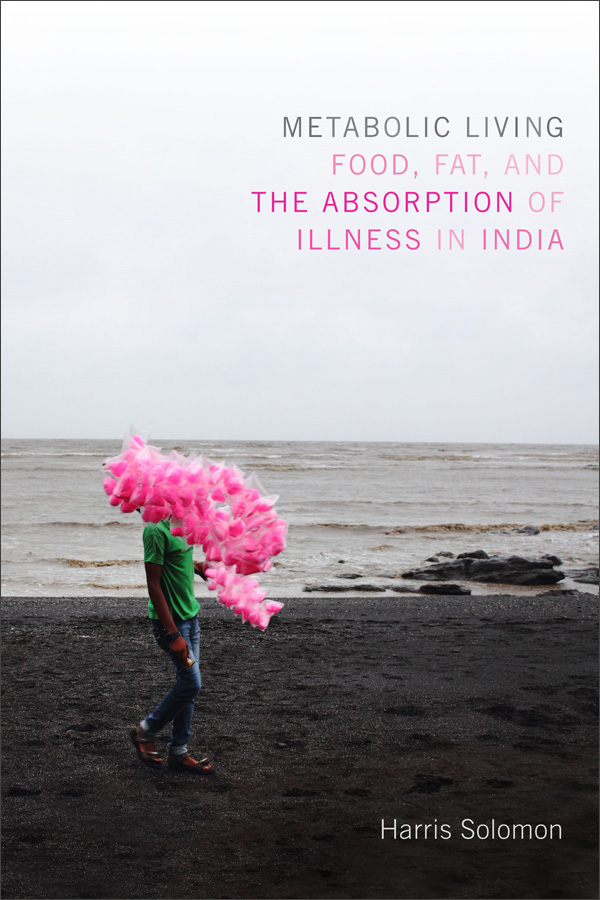
A review of Metabolic Living: Food, Fat, and the Absorption of Illness in India, Harris Solomon, Duke University Press, 2016. 

Metabloic LivingProselitizing vegetarians and people who advocate a healthier diet often point to the case of India as proof that millions of people, if not a whole nation, can live on a regimen without meat. Similarly, climate advocates calculate the carbon balance of raising cattle and conclude humanity will have to cut the beef from the menu list. As is well known, Hindu communities consider beef taboo, and several sects, like Vaisnavism or Jainism, follow a strict form of vegetarianism. Fasting is a practice common to Hindus and Muslims, and traditional Indian medicine or Ayurveda emphasizes the importance of a healthy and balanced diet. Despite continued history of malnutrition, Indian is often seen as synonymous with holistic health, slim bodies, and yoga exercise. According to common conceptions, India is predominantly a vegetarian nation and the traditional diet, based on legumes, beans, grains, fruits and vegetables can provide human bodies with ample amounts of fiber, fat, carbohydrates, proteins, vitamins and minerals. But is the Indian diet really that healthy as compared to the Western one? In fact, the image of the slim and fit Indian body is based on three myths. The biggest myth, of course, is that India is a largely vegetarian country. Actually, the majority of Indians consume some form of meat, mainly chicken and mutton, but also, in many cases, beef. Even Hindus, who make up 80 percent of the Indian population, are major meat-eaters, and beef is consumed by the lower castes or Dalits as well as by non-Hindus. The second myth is that there is such a thing as Indian cuisine, with identified recipes and specialties such as curry, naan, and chutney. In reality, India is a highly diverse society with food habits and cuisines changing every kilometer and within social groups. It makes no sense to speak of an Indian diet as a unified, constant, and bounded set of dishes and recipes. 

A land of obesity

The third myth is the one of the thin, fasting, and at times hungry Indian body. India, notorious for malnutrition, has now become a land of obesity. As Harris Solomon demonstrates in this book, Indians suffer from a bad case of metabolic living: a combination of diabetes, high blood pressure (hypertension), coronary disease, and overweight. In aggregate figures, India is the “global hub” of obesity and diabetes, with the highest number of diabetics globally and morbid obesity affecting 5 percent of the country’s population. These sources of morbidity are often linked to globalization, the diffusion of Western dietary habits, and urban lifestyles. Snack indulgence, lack of physical exercise, overconsumption, unbalanced diets, and the spread of fast food restaurants, are seen as explanatory factors. So is the local notion of tenshun, or stress at work and at home, which is seen as a symptom, cause, and effect of high blood pressure and diabetes. “Globesity” is supposed to accompany the expansion of the urban middle class and to flow from the West to the East. But despite common perceptions, obesity is not a disease of the rich or of the middle class while lower classes suffer from undernutrition and hunger. Metabolic illness affects rich and poor alike, while diabetes spreads across social groups and regions. According to Solomon, “the cultural figures of the middle-class housewife binging on barfi and the malnourished child must be understood in a reticular perspective.” His ethnographic  study provides such a perspective by focusing on three domains: everyday relations to food and health in a lower-middle-class neighborhood in Mumbai; observation of patient-doctor relations in two clinics specializing in metabolic disorders; and the commercialization of food by street vendors, food processing companies, and regulating agencies. 

In 2008, newspapers reported that millions of Indians suddenly became overweight. One article suggested that overnight, 70 million more people became “officially” obese. The reason for this sudden strike of obesity lies in a biomedical concept known as the body-mass-index, or BMI. BMI can be calculated simply by dividing a person’s weight in kilograms by their height in metres squared, or kg/m2. A BMI of 25.0 or more is overweight, while the healthy range is 18.5 to 24.9. But in 2008, the body mass index for Indians changed. The new threshold diagnosing overweight status was now set at a BMI of 23. What is overweight for Caucasians now became obese for Indians. In what was called the “thin-fat Indian” paradox, it was shown that thin bodies can be metabolically similar to fat bodies: thin in appearance but metabolically obese according to impaired insulin sensitivity and blood lipid concentration. As a result, Indians are developing metabolic diseases at a lower BMI than Caucasians. Also South Asians tend to accumulate abdominal fat, or “fat tummies,” and this leads to higher metabolic risk than otherwise. The origin of the thin-fat Indian paradox is sometimes linked to the “thrifty gene hypothesis”: a long history of malnutrition has caused people to accumulate fat during periods of food abundance in order to provide for periods of food shortage. It has also been shown that being born from a malnourished mother and suffering from hunger in early childhood strongly predicts metabolic disease in later life. As a result of this focus on body shape and mass index, to lose belly fat has become a national obsession. Scales proposing to measure passengers’ weight are ubiquitous in Mumbai’s local train stations, and for a one-rupee charge people can also obtain their BMI printed on a slip of paper.

Street food and processed food

But the lure of abundant and fatty food sometimes proves stronger than incentives to lose weight. In the community that Harris Solomon was researching, the temptation to indulge in excess eating had a particular name: vada pav, a deep-fried, battered potato ball sandwich sold on street stalls and catering to a clientele of children and adults gorging on snacks. Mumbai’s politicians extoll the vada pav as the city’s culinary treasure, providing jobs to street food vendors and contributing to a robust diet through vitamins and carbohydrates. The Shiv Sena, a regional political movement that promotes the rights of Hindu people born in the state of Maharashtra, has made the vada pav an integral part of its political platform, organizing street food festivals and proposing a standardized recipe bearing its name, the Shiv vada pav. Street carts are adorned with the logo of the party, a roaring tiger, and vendors are organized in clientele networks that control the streets. But the fact is that vada pav is high in calories, fat, and sugar and contributes to obesity. Not eating nutritious meals at the right time and eating unhealthy snacks between meals are recipes for poor health. Mumbai kids’ bad snack habits should be combatted through nutritional education in school and at home as well as public regulations. In the controversies over the vada pav, Solomon sees a mix of street politics and what he labels gastropolitics, where food is the medium, and sometimes the message, of conflict. Food is inextricably linked to politics, and cultural conflicts over foodstuff or culinary practices remind us that what we eat is constitutive of what we are.

Recently, vada pav street vendors have been facing a new form of competition: franchise restaurants modelled on McDonald’s or other fast food chains and offering a sanitized version of vada pav. In their motto, they promise to “give the street taste, without the danger.” In India, food safety is a real concern and the confidence of the public has been shaken by a series of cases of food poisoning or food adulteration. Milk has been found to be laced with soapy water, chalk, paint or talc to make it whiter; bananas and mangoes are treated with added chemicals to speed their ripeness; watermelons are injected with dirty sugar water to make them sweeter; and fraudsters add toilet tissue into the milk to thicken lassi drinks. By contrast, franchise outlets and food processing companies are advertising their products as safe and healthy. The added micronutrients or vitamins that brands advertise in their products are very attractive to working mothers who do not have time to make traditional snacks. Straddling the boundary between food and drugs, some even claim to address weight gain, cholesterol levels, and blood sugars. Critics argue that processed food is bad for the body and that food companies are fueling the obesity epidemic. To make products WTO-compliant, the law mandates that all food additives as well as nutrition information should be listed clearly on food packages. When the author interviewed executives of a snack company called Enjoy Foods, they expressed frustration at the labeling requirements mirroring those of the US Food and Drug Administration: “It’s so ridiculous. The US is full of obesity, but not here.” He also participated in a market research focus groups where housewives explained their frustration at being under constant scrutiny by their stepmother: “My dignity is at stake in my cooking. I can’t afford to make mistakes.”

Treating metabolic syndrome

From diets to homeopathy to Ayurvedic remedies, different methods have been proposed to alleviate metabolic disorder. Nutritional therapy usually comes first: patients are encouraged by their dietitian to recall everything they ate from morning to night, and to adopt a more balanced regimen. But in case diet and exercise prove ineffective, doctors may resort to a last-resort intervention: gastric bypass surgery, a surgical operation that changes the way the stomach and small intestine handle the food that goes through them. The procedure aims to make post surgical patients less hungry, to have more balanced digestive hormonal regulation, to experience normalized insulin responses, and to lose weight rapidly. The results are impressive: massive weight loss comes along with the alleviation of diabetes symptoms and reduced exposure to other metabolic risks. Advertised through before/after photos of obese patients turned slim, the operation also has its risks: complications and enduring effects exist, and the medicines the patient must take following the surgery are extensive. The main lesson of metabolic surgery is that losing weight does not necessarily depend on central control and forceful will: obesity is a disease that affects people regardless of their willpower or lifestyle choices. Paradoxically, by bypassing free will and self-discipline, surgery puts the individual back in control: to lose weight is to gain life, and people describe exceptional changes in their quality of life. The French philosopher Georges Canguilhem describes the transition from illness to health as “a shift in arrangements”: it may take the form of a different alignment between the gut and the brain, but it also involves a rearrangement of the relations between an individual body and its constitutive outside, from foods to physical stimuli and moral feelings.

Metabolic Living is published by Duke University Press in a series titled “Critical Global Health: Evidence, Efficacy, Ethnography.” Harris Solomon’s perspective is based not on biomedicine but on anthropology. Despite the rise of a field known as medical anthropology, the two disciplines differ in terms of research methodology, conceptual frameworks, and political implications. The anthropologist gathers empirical evidence through fieldwork and participant observation, not through questionnaires or field trials. The goal is to make a thick description of social patterns and to interpret cultures by proposing experience-near concepts, thereby providing an alternative framework to ever-more dominant quantitative-based approaches to global health science and policy. The anthropologist doesn’t build models or test hypotheses, but proposes a narrative that hinges on literary skills and personal experience. Metabolic Living exemplifies this approach. While it is in line with some concerns in global health, such as the shift from infectious to chronic diseases as the primary cause of morbidity, this ethnography brings the global to the local by describing medical conditions at the level of a given community. The Bandra coastal suburb in Mumbai, where the author settled for his fieldwork, is home to a Catholic community whose history goes back to the sixteenth century. His sites of observation includes households that the author visited with the help of a social worker; local churches and their attending priests; a public hospital and a private clinic; and more multisided spaces occupied by food companies, government regulators, and public health conferences. Participant observation as opposed to clinical observation also relies on chance encounters, happenstance, and serendipity. The concepts and guidelines that frame the analysis are designed along the way.

The metabolic city

In his introduction, Harris Solomon contends that “people are their metabolism, as opposed to having metabolisms.” To have metabolism is defined by a series of numbers and measurements: the body-mass-index, but also unhealthy levels of cholesterol, lipids, blood sugar, calories, etc. These numbers, in turn, determine the degree of exposure to life risks such as diabetes or cardiovascular disease. By contrast, the metabolic person, or living the metabolic life, can be understood in terms of porosity to the world and absorptive capacity. “How do we turn the environment into ourselves? What counts as food and when does it mean life? Who decides what enters the body, and what does it take to be fed by another?” are some of the research questions that motivate the author’s quest. Metabolic diseases are symptoms of porosity between bodies and elements such as food, fat, and pollutants. The permeability of organisms and their consequent capacity to change is what allows the author to make sense of metabolic living. The shifting boundaries of inside and outside, between the body and its environment, provide an alternative framework to the biomedical vision based on strict separations and thresholds. As Solomon claims, “A study of metabolic illness grounded in absorption, in contrast to one that assumes overconsumption as its starting point, can offer a thicker account of how people live through this phenomenon.” In the end, the notions of absorption and porosity extend from the organism and the body to the home and to the city as a whole. The challenges of the city are ever present and they permeate people’s lives in their most intimate, leaving them with no choice but to absorb their condition. A city that is too stressful and polluted for healthy life and where everyone is dieting to lose weight is a metabolic city. Unlike individuals, who can restore health and cure metabolism through exercise, dieting, or medical treatment, there is no prescription for this urban predicament.

The Undercover Anthropologist

A review of Cold War Anthropology: The CIA, the Pentagon, and the Growth of Dual Use Anthropology, David H. Price, Duke University Press, 2016.

Cold War AnthropologyAgency is a key concept in anthropology and the social sciences, meaning the capacity of a person or a group to act on its own behalf. The agency that David Price has in mind in this book has a completely different meaning. It designates the Central Intelligence Agency, and it reveals the links during the Cold War between the anthropologist profession and the national intelligence and defense apparatus of the United States. Cold War Anthropology makes use of the concept of dual use: “dual use science” refers to the military applications of basic science research, while “dual use technologies” are normally used for civilian purposes but may help build weapons and military systems. Similarly, anthropology is a civilian pursuit that purports to increase our knowledge of foreign cultures and societies, but it can be used for defense and security purposes: Know thy enemy has been a basic recommendation since mankind engaged in warfare and diplomacy. Intelligence, the gathering of information on foreign powers, makes use of various academic disciplines; it is only natural that anthropology, which developed alongside colonialism and followed the ebbs and flows of imperial powers, also lent itself to militarist uses. And nowhere was the demand for such knowledge higher than in the United States during the Cold War, which saw the dominant world power engage in the gathering and analysis of information in all corners of the world.
The Agency’s agency

Dual use anthropology was an offspring of World War II. During the war, cultural anthropologists worked as spies, educators, cultural liaison officers, language and culture instructors, and strategic analysts. In a previous book, Anthropological Intelligence, David Price documented American anthropologists’ contribution to the conduct of the war and the consequences their collaboration in war projects had over the course of the discipline. Cold War Anthropology picks up the ball where the previous book left off. Former members of OSS service who returned to university positions after the war kept their connections with the intelligence apparatus and helped the CIA and other agencies recruit new hires and gather information. By the mid-1970s, it was estimated that as many as five thousand academics were cooperating with the CIA on at least a part-time basis. But anthropologists taking part in the counterinsurgency operations of the Cold War didn’t have the excuse of protecting freedom and democracy at home and abroad. Cold War insurgencies were America’s dirty wars and anthropologists, like the quiet American in Graham Greene’s novel, became complicit in illegal activities ranging from kidnapping, murder, covert arm dealing, and coup d’état to the widespread infiltration of domestic academic institutions. Most of them were “reluctant imperialists” who believed they engaged in apolitical or politically neutral work, while some, including Clyde Kluckhohn and Clifford Geertz, developed “dual personalities” that allowed them to work on projects with direct or indirect connections to the CIA or the Pentagon while omitting such links from the narratives of their research.

David Price draws a typology of the relationships between anthropologists and the intelligence apparatus as a two-by-two matrix: relations could be witting-direct, witting-indirect, unwitting-direct, and unwitting-indirect. The first case represents the anthropologist-as-spy or as operative working for the US government. In a few instances, cultural anthropologists and archaeologists used fieldwork as a cover for espionage. Through access to declassified archives, the author was able to document a few cases of undercover agents who used their participation in research missions in Afghanistan, in Iran or in other hot spots to gather intelligence, provide support for special operations, and recruit informants. Not all anthropologists worked undercover, however. During the period, advertisements for military, intelligence, or State Department positions routinely appeared in the News Bulletin of the AAA, the discipline association’s newsletter. Some anthropologists moved between the government and the academy: Edward T. Hall, the founder of cross-cultural studies, taught cultural sensitivity training courses at the State Department’s Foreign Service Institute, while John Embree, the author of the first monograph on a Japanese village, became the first cultural relations adviser at the US Embassy in Bangkok in 1947 (they both objected to the use of academic research by the CIA.) Other anthropologists held CIA desks or maintained close contacts with the agency for recruitment, contract work, and data gathering. More generally, many anthropologists accepted as a matter of routine to debrief at Langley or within the precinct of the US Embassy when returning from fieldwork in sensitive areas.

Witting-indirect or unwitting-direct collaborations

The second model of anthropology-intelligence collaboration, implemented in full knowledge of it but in an indirect manner, refers to the way research was funded in the Cold War era. Rockefeller, Carnegie, Ford, and other private foundations shaped the funding of anthropological research during the Cold War. These wealthy private institutions were often directed by elite men rotating in and out of federal agencies with national security interests. They channeled the funds and designed research projects in ways that coalesced with CIA’s needs and foreign policy imperatives. This increasing availability of foundation funding was welcomed by anthropologists, who seldom considered what obligations might accompany such gifts or how the gifts might shape avenues of inquiry or analysis. Anthropologists working on research projects funded by private foundations deliberately or sometimes half-wittingly ignored the political contexts in which the projects were embedded. Clifford Geertz, who participated in the Modjokuto Project in Indonesia, turned a blind eye to the political forces that framed his first fieldwork opportunity. In later analyses, the development of area studies in American and Western Europe universities was connected to the Cold War agendas of the CIA, the FBI, and other intelligence and military agencies. Critics alleged that participating in such programs was tantamount to serving as an agent of the state. While cases of collaboration between academia and the intelligence apparatus must be assessed carefully, it is true that some research questions were prioritized and other were neglected, while geographic priorities aligned with geopolitical interests.

The third form of linkage between academic research and foreign policy-making occurred unbeknownst to the anthropologists but with direct interventions from intelligence agencies. In addition to reputable private foundations, the CIA used “paper foundations” or “pass-through” conduits to channel funds toward research without leaving footprints. The recipient individual or academic institution that received CIA funding from either a front or a conduit was generally not aware of the origin of the research grant. The funding of particular projects shaped disciplinary research agendas. The CIA also used fronts to secretly finance the publication of books and articles propagating its views, or supported journals that took a critical stance on communism and left-wing politics, such as Jiyū in Japan, Encounters in Great Britain, or Preuves in France. Some of the books were donated by US Embassies abroad or, in some cases, sold through local retailers. When these CIA-funded foundations were exposed by investigative journalists in the late 1960s, the reaction was surprisingly moot. Art Buchwald jokingly remarked the reason why the National Student Association received a CIA grant was because the organization was confused with the NSA. The Asia Foundation acknowledged CIA funding while claiming that this didn’t in any way affect the content of its policies and programs. With much soul-searching and political bickering, the American Anthropological Association adopted a code of ethics stating that “constraint, deception, and secrecy have no place in science.” Radical young scholars dubbed it too little too late, and formed a new caucus named Anthropologists for Radical Political Action, or ARPA, to push for further reforms.

Dual use anthropology

The fourth cell in the quadrant refers to unwitting and indirect forms of collaboration between anthropologists and spy agencies. The CIA’s method of harnessing the field research of others was not always manipulative. Ethnographic knowledge was in high demand by military and intelligence agencies during the Cold War, and many operatives learned their cues by perusing through the works of anthropologists. Participant observation’s approach to cultural understanding gave anthropologists the sort of cultural knowledge that made the discipline attractive to government officials willing to probe the hearts and minds of those living in lands of geopolitical interest. Anthropological field research sometimes facilitated intelligence operations by nonanthropologists through knowledge of the human terrain, understanding of social dynamics, and manipulation of power struggles. In other cases, it was used in human resource training programs to prepare for a foreign posting or develop culturally sensitive lenses of analysis. While much of the research funded in the postwar 1940s and throughout the 1950s aligned well with the needs and ideologies of the American Cold War state, in the 1960s and 1970s radical voices used these same funds to generate their own critiques. But postmodern anthropology was less relevant for practical concerns and fell out of favor with literate diplomats, military officers, and spies. Militarized uses of anthropology continued through other channels, such as the rise of private consultancies or the deployment of social scientists in combat teams.

According to David Price, the deleterious effects of dual-use anthropology were manyfold. False accusations of spying could put the fieldwork anthropologist in danger, expose his or her informants to various threats, and lead to expulsion or denial of access to the field. It was common for American anthropologists during the Cold War to be falsely suspected of spying. As mentioned, it was also routine for anthropologists returning from fieldwork to receive requests for debriefing in US Embassies or back home. Through witting or unwitting collaboration, direct or indirect solicitations, and dual-use research, the CIA’s ethical misconduct hinged on lying to the scholars about the origin of the grant money they received, the end use of their research results, and the choice of research priorities. Particularly in the context of the Vietnam war, anthropological research sustained counterinsurgency operations, the mobilization of highland tribes in armed conflicts, population regroupment in strategic hamlets and, arguably, the design of interrogation methods. David Price documents several cases of military applications of ethnographic research in South-East Asia, as well as the strong reaction of the profession to ban any form of collaboration with the military-intelligence apparatus. But he believes that many of the fundamental issues raised during this period remains unresolved. On the contrary, the conjugation of limited employment possibilities, growing student loan debt, and campus austerity programs are opening new inroads for the extension of military and intelligence forays in anthropological circles.

No Such Agency

Cold War Anthropology claims to break new ground in exposing the links between the anthropology profession and the national security apparatus. Although the author had to rely on the Freedom of Information Act to obtain declassified documentation, he doesn’t reveal state secrets or expose skeletons in the profession’s closet: for the most part, these links were hidden in plain sight. The collaboration between anthropologists and the intelligence service was an open secret. It is not obvious that the gains obtained by the intelligence community were worth compromising the integrity of scholars: the information that the CIA obtained from the AAA or the Asia Foundation, such as the detailed roster of American anthropologists or the names of Asian area specialists, would today be gathered in a few seconds through an Internet search. Similarly, the patient gathering of photographs indexed and catalogued to yield intelligence information would pale in comparison with modern satellite imagery or the harvesting of social media content. David Price’s aversion toward the CIA and the FBI also extends to the military and to the diplomatic service: he includes the State Department and USAID in the circle of Cold War institutions, and doesn’t clearly discriminate between covert operations and legitimate governmental activities. Similarly, he conflates anthropology and archeology, and bundles all fieldwork-based social sciences in one fell swoop. Meanwhile, the NSA gets no mention at all, except when it gets confused with the National Student Association—confirming the legend that the NSA was so secret its acronym stood for “No Such Agency.”

Trinidad’s Carbon Footprint

A review of Energy without Conscience. Oil, Climate Change, and Complicity, David McDermott Hughes, Duke University Press, 2017.

Energy without conscienceAs a small state composed of two islands off the coast of Venezuela, Trinidad and Tobago is heavily exposed to the risk of climate change. It is vulnerable to the rise in sea levels, increased flooding, extreme weather events, hillside erosion and the loss of coastal habitats, all of which are manifestations of the continued progression of climate change. Rising sea levels and temperatures will also impact its economy, vegetation and fauna, health, and living conditions, to the point of making current livelihoods wiped out. But there is another side to the story of climate change in this small island state. Trinidad and Tobago ranks fourth globally in per capita emissions of carbon dioxide. Each of the 1.2 million inhabitants of the two islands emitted, on average, 31.3 tons of CO2 in 2017, six times the world average. Unbeknownst to the public, who tends to associate this island paradise with beach resorts, rum-based concoctions, and calypso music, Trinidad and Tobago is an oil state, a hydrocarbon economy. In the early 1990s, its hydrocarbon sector moved from an oil-dominant to a mostly natural gas-based sector, and from land-based sites to offshore production. It is now the largest oil and natural gas producer in the Caribbean, the world’s sixth-largest LNG exporter, and the largest LNG exporter to the United States, accounting for nearly 71% of US LNG imports in 2014. If we include the carbon emissions of the oil, gas, and petrol products it sells overseas, Trinidad’s carbon footprint is disproportionately large. When it comes to climate change, Trinidad and Tobago is all at once victim and perpetrator, innocent and guilty, passive object and active subject. How do its inhabitants and its political leaders react to this situation?

Victim and accomplice

The answer is, in short, denial. To the dismal of David M. Hughes, who spent a year around 2010 conducting interviews with petroleum geologists, oil and gas executives, and environmentalists, the majority of his informants simply didn’t seem to care about carbon emissions and their impact on climate. When they did care, as in the wake of hurricanes, droughts and fires that affected the country at that time, it was to posit the island state as a victim of climate change, claiming compensation and redress from richer countries. Victimhood constitutes a “slot” in the sense that anthropologists give to the term when they refer to the “savage slot” or the “tribal slot.” To quote from Hughes, “the victim slot artificially clarifies an inherently murky moral situation. It whitewashes – as innocent – societies, firms and industrial sectors otherwise clearly complicit with carbon emissions and climate change.” History predisposed Trinidadians to that role: as victims of colonialism, of the slave trade, and of the plantation economy, Trinidad’s inhabitants naturally associate themselves with other island populations that have been victimized by the history of imperialism and the modern contempt for small states. Diplomats used this chord to initiate an alliance of like-minded states in climate negotiations, eventually giving birth to the concept of SIDS or Small Island Developing States. The irony is that Trinidad and Tobago is neither a “developing state”—according to the World Bank, it falls into the “high income” category—nor an innocent victim of climate change when it comes to per capita emissions.

Another strategy of denial is to act in bad faith, to take the term popularized by Jean-Paul Sartre. By silence and omission, Trinidad diplomats and policy leaders were able to pair with the vulnerable victims of climate change. When they took the floor in international fora, it was to claim moral superiority and victim status. “We are the conscience of the world when it comes to climate issues,” declared the environment minister on behalf of small island states. Prime Minister Patrick Manning obfuscated critiques when confronted with the high figures of per capita emissions. “The atmosphere does not respond to per capita emissions,” he repeated whenever relevant. “It only responds to absolute emissions.” In absolute terms, “we emit very little,” officials claimed, quoting the figure of 0.1 percent of global carbon emissions per year. They invoked the principle of historical responsibility to shift the blame away from developing nations: rich countries are mostly to blame for past emissions, and they should pay for their accumulated contributions to global warming. Historical responsibility, like per capita emissions, are a bone of contention in climate change negotiations. They raise legitimate questions, but they also conceal as much as they illuminate. According to Hughes, the category of victimhood redeems its sufferers in an almost Christian fashion: “It allows good people to do bad things in the biosphere.” For him, it is more relevant to consider the category of “high emitting individuals” who are present in all countries and who, taken together, number about one billion people and are responsible for the bulk of carbon emissions.

Taking sides

In conducting his research in Trinidad, David M. Hughes was in a peculiar position. Anthropologists are often supposed to take sides: for the tribe they observe against the dominant society that encroaches on their livelihoods, for the colonized against the colonizers, for the local resistance against the global empire. They want to protect the livelihoods of the natives against the onslaught of cultural modernity and social change. Hughes takes the reverse position: for him, the oil and gas industry should go extinct. Exploiting hydrocarbons is both immoral and irresponsible. The core business of any oil company damages the whole world. Oil firms should be consigned to an ash heap, worthy of condescension and worse. When burned in large volumes, hydrocarbons wreak havoc and endanger the planet. In a petrostate, the objectives of sustainability and resilience are turned on their head: the status quo is not an available option. To mitigate climate change, Trinidad and all the petrostates will need to replace the paradigm of hydrocarbons with sustainable forms of energy and economic activity. The idea of peak oil and the depletion of oil reserves makes this energy transition necessary, but we should not simply wait for oil and gas to run out before taking action on the climate. Proven reserves greatly exceed what the atmosphere can safely absorb before 2050. The role of ethnography should be, in this case, to study the enemy and document how they think, act, and feel in order to combat them. Hughes divides the Trinidad population into three groups: the engineers and executives who directly depend on the oil and gas industry; the middle- and upper-class urbanites who depend on the oil infrastructure without giving it a thought; and the poorer part of the population, including the inhabitants of Tobago, who have a minimal footprint in terms of energy consumption and carbon dioxide emission.

And so Hughes became an activist or engaged ethnographer. His political agenda was to challenge people’s complicity with climate change and to raise public concerns about carbon emissions and fossil fuel. He used his contacts in the oil and gas industry to corner people into conversations they did not wish to hold, exposing their omissions and contradictions. Along with other environmental activists, he participated in a round of public consultations on the country’s first policy regarding climate change. He raised the issue of per capita emissions repeatedly and suggested that the policy document include targets for cutting them. He suggested Trinidad identify less with Tuvalu or the Maldives and more with Bahrain, Qatar, and Saudi Arabia. To become a carbon-neutral destination, Trinidad would have to radically change its business model, exiting from the oil and gas industry and developing renewable energies such as solar and wind power. But the energy transition was seen more as a threat than as an opportunity by Trinidad’s industrialists who saw the substitution of oil and gas with wind and solar energy as a form of “aboveground risk” on a par with sabotage or nationalization. The anthropologist-turned-activist did find some environmentally-minded people and joined their fight against a proposed aluminum smelter that would have constituted a threat to the environment and human health. The activists defeated the smelter itself, but they acquiesced to the adjoining power plant, the complex’s only emitter of carbon dioxide. Even the most free-thinking Trinis failed to criticize the principle of burning oil and gas itself.

Oil culture

Trinidad’s society is suffused with oil, and yet hydrocarbons are relatively absent from art and culture. Around 1850, Michel-Jean Cazabon, the first great Trinidadian painter and internationally known artist, made sketches of Pitch Lake with heavy asphalt bubbling on the surface. Trinidad is also the place where the world’s first continually productive oil well was drilled in 1866. In both world wars, Trinidad’s oil propelled British and Allied forces. After independence in 1962, the country developed its gas sector, becoming a major exporter of downstream products such as methanol and plastics. Belying the resource curse that has plagued other countries, oil has given Trinidad and Tobago economic stability and political sovereignty. The island’s two Nobel laureates, V.S. Naipaul and Derek Walcott, do not address the oil industry in their writings—there is a dearth of petro-novels or oil fictions globally—but their characterization of Trinidad as a small and forlorn country did play a role in the cultivation of victimhood that characterizes modern attitudes to climate change. No official in Port of Spain is accepting partial responsibility for climate change. Provocatively, Hughes posits that Trinidad could assume its part of greatness and leadership if it acknowledged its status as one of the world’s largest per capita emitter of greenhouse gases. But he knows this is not going to happen. The country, like the rest of the planet, is stuck with oil and doesn’t want to claim responsibility for the wrongs it produces. The victim paradigm reigns supreme: environmental change is presented as something we all suffer passively, rather than actively influence.

Things weren’t meant to be that way. There were times when energy pricked the conscience of individuals. Hughes describes the successive energy transitions that characterized Trinidad’s history, highlighting the moral choices and the roads not taken. In the 1740s, the Jesuit Joseph Gumilla proposed developing a tropical colony built on abundant sunlight and fertile soil. Josef Chacon, the last governor for Spain before the English took power in 1797, encouraged settlers from neighboring French Caribbean islands, to come and grow sugar cane. Calculating the inputs necessary for agricultural productivity, he factored in slave labor and plantation managers but entirely omitted sunlight or other forms of energy. Plantation slaves were the first fuel, the first transatlantic flow of energy, whose exploitation meant the obliteration of conscience. In the early 1860s, Conrad Stollmeyer, a German immigrant, also proposed an utopian colony, a “paradise without labor” where humans were replaced by machines to be powered by sun, wind, and other tropical forces. But his utopian dreams soon faded and instead the German engineer developed a technology to transform heavy asphalt into kerosene, finding a new way to fuel the economy in addition to somatic power and natural energy. As this short history shows, people have already suggested the abandonment of former sources of energy and the adoption of new ones. What if Trinidad had developed into a natural colony based on abundant sunlight and water, or if mechanized agriculture had substituted to indentured labor and the need to bring in slaves? There were solutions that predated the problems, and we could return to them if only as a form of counterfactual speculation.

Energy without conscience

The title of Hughes’ book echoes Rabelais’ famous quotation: “science without conscience is but ruination of the soul.” According to environment science, energy without conscience leads to the ruin of the planet. But what could energy with conscience be? Hughes suggests that we should apply to energy consumption the same moral lenses that we once applied to slave labor: “oil might become the new slavery.” Burning oil constitutes a form of environmental injustice and human structural violence. It is not fair to say that we are all complicit in this endeavor: some people consume energy less than others, and the blame should be accrued first to persons and corporations responsible for the largest emissions.  But energy with conscience should not be just about putting blame and calling for climate justice. If climate change is to become a moral issue, it has to be framed into imaginaries and narratives as powerful as the ones that maintain the status quo. In his conclusion, Hughes notes that slavery gave a bad name to physical labor or somatic power: “it may be particularly difficult in Trinidad, the United States, and other postemancipation societies to propose muscle as a performer of work.” In public consultations, his proposal to establish bicycle lanes in Port of Spain was met with skepticism. And yet it is a mixture of brains and brawn, of ideas and effort, that may take the islands of this world out of their complicity with oil and climate change.

Shattered Bodies and Broken Minds

A review of After War: The Weight of Life at Walter Reed, Zoë H. Wool, Duke University Press, 2015.

After WarIt is said that Americans don’t have social security. Soldiers do. Earnings for active duty military service or active duty training have been covered under the Social Security Act since 1957. Veterans get social security benefits after they are discharged. Military service members who become disabled while on active duty can file for disability claims. The social security system also covers families and relatives of a deceased soldier. Active duty military members can retire after twenty years of active duty service. In exchange, they receive retirement pay for life. Veterans get free or low-cost medical care through VA hospitals and medical facilities. They have access to special education programs, housing and home loan guarantees, job training and skills upgrading, small business loans, and even burial and memorial benefits. Their situation contrasts with the thirty million Americans who do not have health insurance and who cannot afford medical costs, and with the many more who get only minimal retirement pension and healthcare. In sum, when you join the US Army, Uncle Sam gets your back covered.
Fieldwork and care work

But being a soldier in a warlike nation comes with a high risk. Wars waged abroad bring home their lot of shattered lives, broken bodies, and crippled minds. These are the lives and bodies that Zoë Wool encountered while doing fieldwork at Walter Reed Army Medical Center in Washington DC. Her book begins with a seven-pages lexicon of abbreviations and acronyms, from ACU (Army combat uniform) to VA (Department of Veterans Affairs). Any person who has approached a military administration will recognize the heavy use of jargon and code words that puts a distance between those in the know and the civilians outside. But the dehumanizing aspect of military language is soon countered by the vivid portraits from the gallery of characters that the reader encounters. Zoë Wool makes the book’s purpose and design clear in the introduction. Readers won’t find reams of statistics, or dates and facts arranged in a linear history, or the description of the running and functioning of an institution. Neither will they hear a vocal denunciation of the US military-healthcare complex. Although the author did some work with Iraq Veterans Against the War (IVAW) and attended congressional hearings related to the “war on terror,” her book centers on the lives of those with whom she spent time at Walter Reed.

Fieldwork, or spending time with people in order to answer research questions, is “the thing anthropologists do.” But the term “fieldwork” does not necessarily describe the kind of work researchers like Zoë Wool are engaged in. “Emotional work” or “caring” may be closer to what she actually did, although she wasn’t a caregiver or didn’t try to pass as such. But she cared about the people she encountered at Walter Reeds in a deep and emotional way. Whenever she could, she gave them a hand and helped them to do small things, she registered their ordinary thoughts, or lent an ear to their silence. Asked about the purpose of her research, she often said: “I just want to see what life is like here for you guys.” She wasn’t there to listen to their stories, for they had no stories to tell. Their broken bodies did the talking: missing limbs, infected bones, colostomy bags, catheters, intravenous lines, wheelchairs, and numbing medication. As for themselves, their experience and memory of the war theater was shattered and broken into pieces. Talk of war rarely took narrative form. Injured soldiers were often prompted to talk about their combat experience with visiting journalists and well-wishers, but the anthropologist didn’t add to their burden and ask them about this “asshole of a place” that was Iraq. They preferred to keep silent, and she respected that.

The most warlike people on earth

Life at Walter Reed follows very American norms. US soldiers and veterans swear only by nation, mother, and apple pie—or rather by country roads, girlfriend, and painkillers. A feeling of ordinariness permeates every situation in a place that nonetheless falls out of the ordinary. The fact that the patients are soldiers, and their injuries sustained during war, marks the situation in unique ways. Of course, Walter Reed has sheltered and treated other soldiers in previous engagements: Vietnam, Korea, World War II, and World War I. The United States is, after all, a bellicose nation, and Americans are the most war-prone people on earth if we judge by the twentieth century’s record. Heroism and patriotism have always been linked to the violence of war, and the image of the wounded soldier undergirds the national narrative of the United States. But this time was different. Injuries that were fatal in previous conflicts can now be healed or contained. A disproportionate number of soldiers were exposed to the blasting of IED or EFP (explosively formed projectiles) which have the purpose to maim and to cripple as much as to kill. These are the people that Zoë Wool encountered at Walter Reed. In addition to bodily injuries, they had to cope with PTSD, throbbing headaches, and the adverse effects of medication. Blown-up bodies can be stitched back; but broken minds can never be restored to normal.

The lives of injured soldiers at Walter Reed are characterized by an unstable oscillation between the extreme and the unremarkable, a balance the author calls “the extra/ordinary.” As she describes it, “Life was heavy and slow. Soldiers felt it in the excruciating sluggishness of each day. Hours died impossibly long deaths watching TV, playing video games, sleeping, smoking, nothing.” “Surprises were so expected you could almost see them coming.” Moments of intense boredom alternated with flashes of unbearable pain. People became fast friends without the preliminary step of getting acquainted, and they parted accordingly. While the atmosphere at the housing facility was made to recreate a “home away from home,” journalists and philanthropists popped in regularly, and people would get notes telling them Miss America will be making a visit. Publicity and patriotism saturated the place, with ubiquitous stars and stripes banners, yellow ribbons, and “support our troops” signs. Many patients hated going to special events for injured soldiers because doing so made them feel like a “charity case,” but they nonetheless accepted the invitation to be wined and dined by nation-loving benefactors.

Private donations and public support

Indeed, the mix of public support and private charity is what characterizes Walter Reed from the ground up. The housing facility in which Zoë Wool did her research, the Fisher House, is named after a married couple of benefactors who wanted to provide a living space for the spouses, parents and siblings of injured soldiers so as to recreate a form of family life. Each house functions as its own nonprofit organization and relies on the generosity of philanthropic organizations and individuals. Injured soldiers are never left alone: whether in the street or in their living room, grateful strangers come to see and meet and touch them in order to offer them thanks. The field of exchange in which soldiers are included is all at once moral, material, and affective. Claims about the sacrifice of injured soldiers are claims about the valuation of life and death in the context of America’s wars abroad. The deadly risk of soldiering is rendered sacred, and blood sacrifice is the measure the debt that society incurs. Soldiers do not always adhere to this moral economy: they do not see themselves as self-sacrificing heroes, and consider what they did on the war front as mere “work” or “a job”. Similarly, attending patriotic dinners, or accepting the grateful messages of strangers, is considered by them as part of their job.

The Fisher House at Walter Reed is also suffused with the ideology of the normative family. The institution was created to host the conjugal partners and close relatives of injured soldiers. It provides a space where couples can recreate a normal life before leaving to civilian residence. But normalcy can be elusive in the extra/ordinary context of Walter Reed. Soldiers typically married at a very young age shortly before getting enlisted, and never experienced married life as conventionally defined. Apart from their parents’ place, there was no place they could call home, a place where they used to reside and to which they could go back. Their injury and medical condition created new forms of dependency that raised specters of abandonment, isolation, and solitude. Families did not offer a refuge from the impermanence, instability, and boredom that characterized life at Walter Reed. They were torn by domestic violence, sexual frustration, or unwanted pregnancies. Soldiers held to intimate attachments like lifelines in a rough sea, while the material perks earned by their companion entered in the calculus of spouses who chose to love and to cherish for better and for worse. The pensioned veteran is the opposite of the single-mother “welfare queen”: social benefits and state support is what makes couples stay together.

The military-healthcare complex

Walter Reed General Hospital was built in 1908. It is the place American presidents visit to express the nation’s gratefulness to injured soldiers. It is also the place where Donald J. Trump got tested and treated for Covid-19. This mix of high politics and intimate care is what characterizes the military-healthcare complex. The expression “military-industrial complex” was coined by President Dwight D. Eisenhower to warn against the unholy alliance between the nation’s military and the defense industry that supplies it. Its medical equivalent raises another specter: that of a country in which a passage through the US Armed Forces is the only way to access decent living and healthcare for the disenfranchised classes. Military benefits are considered as the only legitimate form of social security. The welfare state is reduced to the warfare state. This dependency fuels an unending process of overseas wars and military entanglements. In her book, Zoë Wool doesn’t indulge in such social critique; but her deeply moving portrayal of shattered bodies and broken minds warns us of any temptation to consider homecoming soldiers solely as war heroes, victims of trauma, or bearers of patriotic pride.

TV-Glotzer

A review of TV Socialism, Anikó Imre, Duke University Press, 2016.

TV SocialismIn her 1978 hit song “TV-Glotzer,” Nina Hagen sings from the perspective of an East German unable to leave her country, who escapes by watching West German television. She switches channels from East to West and stares at the tube where “everything is so colorful.” As she puts it, TV is her drug while literature makes her puke and she keeps eating chocolate that makes her fatter and fatter. The song was written when Nina Hagen was still living in East Berlin but made a hit in Western Europe, where “white punks on dope” could identify with the lyrics and share the spirit of “no future” rebellion. Anikó Imre’s TV Socialism gives a different perspective on television in socialist Europe. For her, television isn’t a drug but a matter of scholarly enquiry, and her book is a dense academic text that comes fully equipped with historical references, textual analysis, and footnotes. The book is a seminal contribution to the field of “socialist television studies” and challenges many ideas by which we assess Eastern Europe’s socialist past. But first, what does she mean by TV socialism? What links TV to socialism, and what makes socialist TV different from the television programs that were produced at the same time in Western Europe, in the United States, or in the developing world? How did television in Hungary, Poland, Czechoslovakia or the GDR shape the imaginaries of viewers, and what remains from this socialization through small-screen images in a post-socialist world? Or to repeat Anikó Imre’s introduction title, “Why do we need to talk about socialism and TV?”
TV as a propaganda tool

According to conventional opinion, TV in socialist Europe was a propaganda tool. Its goal was to educate and enlighten all social classes, giving access to culture and information while also providing a light form of entertainment for the masses. Educational TV had to demonstrate social commitment to the cause of the State and the Party, show solidarity with the Soviet Union, acknowledge the superiority of European high culture, and contribute to the building of socialism. Teaching viewers how to be good socialist citizens was a central mission of national broadcasters. Lenin famously called on good socialists “to study, to study, and again to study,” and television was one of the mass media that could bring the study guide to the living room. Of course, socialist workers were not to be treated as students, for they embodied the knowledge and values that the sphere of culture only reflected. TV programs had to be relevant to the workers and understandable to them. TV was meant to be watched collectively in offices, factory clubs, and cultural centers. Instead of depicting life as it was, reality-based programs shifted the emphasis to teaching citizens how to behave in an ideal socialist society. But this consciousness-raising documentary realism was always articulated with the privates pleasures of television’s emotional realism. The doctrine of socialist realism also acknowledged the role of emotional expression to promote Soviet ideals. The same Lenin distinguished between propaganda, a way to convince through rational argumentation, and agitation, which mobilized emotion and affect. Like the theater according to Bertold Brecht, television was a tool of agit-prop and, as such, could lead to the creation of new forms of cultural expression, distinct from the dull productions of bourgeois culture.

This description above summarizes the standard view of socialist television, as held by critics and sycophants alike and as it was sometimes expressed by the rulers of socialist republics. But Anikó Imre shows that it was a far cry from reality. Really-existing socialist TV was not so much different from television as it existed at the time in Western Europe, and indeed there were many linkages and influences that crossed the iron curtain. To dismiss (or to hail) socialist TV as mere propaganda widely misses the mark. In her introduction, Anikó Imre articulates three surprising facts that help readers see TV and socialism from a different angle. The first surprise is that television in Eastern Europe was much more exciting and entertaining than its status as propaganda tool would make us believe. Authorities had to reckon with television’s power as a mass medium, and mostly left professionals in charge of its development. TV managers used this autonomy to operate under the radar screen of censorship, to play catch-up with Western broadcasting programs, and to formulate a light critique of the regime through irony and self-derision. The second surprise is that TV broadcasters cared about their audience, their viewer ratings and their domestic market share. They were commercially oriented, and operated in a competitive field where they had to fight for available human brain time. A large part of their revenue came from advertising. As a result, they provided the public with what people most enjoyed: quiz shows, pop music, comedy, and drama serials. It is these forms of popular entertainment, and not the live broadcast of classical music concerts or didactic science programs, that came to define what socialist TV was all about. As a third surprise, Anikó Imre shows that socialist TV was not bounded by state borders and national identities. It was transnational even before the word was invented, with border-crossing signals and program exchanges that allow the author to provide an integrated picture of Eastern European TV as opposed to a juxtaposition of country studies.

National leaders are watching TV

The way national leaders engaged with TV had a heavy influence on program content. János Kádár never watched TV as his taste drew him to high culture and concert halls. Leonid Brezhnev had his appointed head of Soviet television design programs especially for him and his wife, while his children and other relatives had the house equipped with another TV set and a Japanese VCR to watch shows and movies from the West. In the 1970s, Nicolae Ceaușescu opened his country screens to US series and German quiz shows in order to demonstrate his independence from the Soviet Union and to gain favor with the West, then in the 1980s he turned increasingly dictatorial and reduced television broadcasting to a few hours a week with programs lauding his every words and actions. Josip Broz Tito encouraged TV channels to draw on advertising income and even had a Slovenian station broadcast commercials in Italian to audiences across the border to get additional revenue. Erich Honecker redirected the course of East German TV when he famously diagnosed “a certain boredom” around television and urged its managers to create “good entertainment” at the Eighth Party Congress in 1971. What all these leaders had in common is that they tried to mold the new medium to their own purposes, but failed to dictate their taste and preferences to the public. Television’s lower cultural status allowed it to escape the strictures of official culture and to develop free forms of popular entertainment. Socialist TV shared with Western European broadcasters the same commitment to realism and the ethos of public service. Tight state control and censorship also characterized periods of Western European TV programming. De Gaulle famously gave orders and directives to TV channel managers that he himself appointed, and it was rumored that news anchors on French TV had an earplug that linked them directly to the ministry of information. As for the feeling of boredom that Erich Honecker perceived in the East German public, French téléspectateurs could feel it as well: “La France s’ennuie,” titled Le Monde in a famous editorial on the cusp of the May 1968 movement.

It may come as a surprise to a generation raised on Japanese anime and American TV series that TV programs from the East once had a not-so-insignificant market share in Western European markets. This was especially the case for children’s television. Growing up in the 1970s in the United Kingdom or in France meant watching a lot of imported East European children’s programmes. There was the Singing Ringing Tree with scary dwarves hailing from East German studio DEFA, Taupek the Mole which came from Czechoslovakia and used giggles or non-verbal exclamations instead of words to communicate, and something quite bizarre called Ludwig which was an animated series about a machine that played Beethoven to his animal chums. Some animation feature films were drawn from Continental Europe’s tales and legends, like The Snow Queen produced at the Soyuzmultfilm studio in Moscow or The Pied Piper by Czech studio Kratky Film; other animations developed Slavic themes like Gallant Robber Rumsaïs or Tchessilco the Magician, which were broadcast in France by ORTF. Not only did people in the Soviet satellites love their children too: they watched along with them what was recognized at the time as the best TV animation in the world. These animated pictures’ influence over Western animation, and over Western audiences, cannot be overstated. Anikó Imre doesn’t cover children TV in her book, but its development is quite similar to the other genres she reviews. The socialist reality-based, educational TV programs she describes were a kind of prehistory to the much more excoriated and inflamed reality-TV shows that took European channels by storm in the 1990s. Aside from proper language and decency, a lot was lost in the move from socialist realism to reality TV.

Did women have better sex under socialism?

Women are said to have had it better under socialism: better labor market participation, better jobs, better maternity leave and child care, and even better sex. Whether this is true remains controversial. Anikó Imre paints a mixed picture of women’s reflection in the mirror of socialist TV. On the one hand, television addressed many topics conventionally considered as women’s issues: child rearing and education, cooking and housekeeping, romance and family issues, and even birth control and sex life. But on the other hand, the default national viewer addressed by socialist television was most often the white, male, abled and working heterosexual citizen. Women as a homogenized social group were identified with special needs and tasks such as reproduction, family care, and emotional labor, and with inferior skills for political participation and mastering of technology. The blond female host was often associated with the pretty face and decorative position of the program announcer, while men anchors were clearly in control. This gendered hierarchy was also reflected in the two-tier production structure: television remained a male-dominated industry, and women typically worked below the line as technicians, make-up teams, or secretaries. The occasional powerful woman in television often did everything to efface herself and masquerade as one of the boys. Over the years, socialist television turned more feminine, if one identifies feminity with melodrama and consumerism. The thaw period beginning in the late 1960s brought political and economic changes that required socialist parties to readjust their gender policies. Women were presented as key agents of the “socialist lifestyle” and featured prominently in the genre that Anikó Imre labels the “late socialism soap opera.” Unlike historical dramas from the previous period, which removed the narrative into the past and revolved around heroic male figures, these domestic serials took place in the present and evolved around key female characters who acted as problem solvers and natural caretakers. This idealist image of the socialist woman who is independent, desirable and capable, is reflected the stunning photo portraits of Júlia Kudlik and Irena Dziedzic, with their fashionable hairstyle and modish dress, eliciting from the reader the male gaze that the author’s feminist agenda precludes.

Anikó Imre’s description of socialist TV defies Cold War stereotypes of a gray, repressive, joyless and isolated Eastern Europe. Men and women beyond the Iron Curtain knew how to have fun: only they did it differently, infused with the traditions of Mitteleuropa and the contradictions raised by socialism. The ruling communist parties and the strictures of state socialism couldn’t be criticized upfront. But citizens could vote with their eyeballs by switching channels, turning to programs broadcasted from neighboring countries, or turning off TV altogether. The more elitist, austere, realistic, and educational television attempted to be, the more it was mocked and abandoned by viewers, who wanted fiction, humor, and entertainment. The public could also distance itself from really existing socialism through mockery and satire. The systemic deficiencies of socialism were treated with light humor: living conditions in housing blocks, queuing for acquiring consumer products, facing the maze of bureaucracy, and other absurdities of the era were addressed in a light and relaxing manner. Reality shows at once celebrated and poked gentle fun at socialist institutions and rituals. Some 1980s serials took subversion to surprising levels: as the author notes, humor “thrives on oppression and censorship, rather than being silenced by it.” Rather than a government-controlled soapbox that repelled humor, much of socialist TV programming was actually perceived by audiences as comic because socialism itself was absurdly comical. Television was an theater of the absurd: the distance between the utopian horizon of socialism and the existing conditions of life was too great to swallow without a heavy dose of humor. The comic absurdity of late socialism could also draw from older traditions of cabaret, farce and carnivalesque entertainment that echoed the “agit-hall” operetta from Weimar Germany or the monologues, dance numbers and songs from Viennese Kabarett. This tradition of political satire survived and in some contexts flourished in the late shows and New Year extravaganzas offered to TV viewers. Here again, as for reality TV, the author sees in this wave of derision a harbinger if not a direct influencer of the politically-charged entertainment programs that were later developed in Western Europe and the Unites States, from the Guignols de l’Info to The Daily Show.

The afterlife of TV Socialism

What remains of socialist TV in today’s Europe united by political integration and market consumerism? TV Socialism addresses the afterlife of socialist TV in three different guises: as postsocialist TV programming, as an archive steeped in nostalgia, and as an academic discipline. First, socialist TV continues to have an active social life in the countries that have made the transition from state socialism to market capitalism. There is much more continuity between late socialism and postsocialism than the narratives centered on Cold War and transition to market would make us believe. Many idiosyncratic genres, distribution patterns, and reception practices have perpetuated into the present day. Some shows and serials have continued into postsocialism; other contemporary programs have deliberately attempted to reproduce the mood and values of late socialist TV, giving it a nationalist twist; and there has also been some reruns of older TV shows, with specialized channels catering to a nostalgic public. New circulating formats, from DVD to on-demand catalogues and YouTube uploads, have brought a new lease of life to vintage programs that have acquired a cult-like status. Anikó Imre adopts a critical perspective on postsocialist nostalgia, known in Germany as Ostalgie, claiming that it is a naive and postimperial gaze on a mythified past. But her own attitude shows that there is pleasure and knowledge to be gained from delving into TV archives, and that the repertoire of antiquated shows and series should not be left to oblivion. Taking socialist TV seriously grants access to an image of life under socialism that stands in stark contrast to the clichés of Cold War stereotypes. Rather than scarcity, homogeneity, and brainwashing, TV Socialism conveys a mixture of familiarity and strangeness, which helps to defamiliarize some of the basic assumptions about Eastern Europe and socialism. As Anikó Imre notes, television has long been relegated to the status of a minor and inferior object for scholarly studies, both in the Slavic and Eastern European Studies departments of American universities and in the cultural studies programs that have burgeoned in Europe. By moving it centerstage, she deconstructs the opposition between high and low culture as well as the Cold War division between East and West and between socialism and postsocialism.

The Stripe Guy and the Stick Man

A review of Disordering the Establishment: Participatory Art and Institutional Critique in France, 1958–1981, Lily Woodruff, Duke University Press, 2020.

Lily Woodruff

The book cover shows a man walking in the street carrying a multicolored wooden pole on his shoulder. The place is Paris, the man is an artist named André Cadere and the pole he carries, “a round bar of wood” as he calls it, is his signature artwork. How to look at a round bar of wood? is how an art critic called the catalogue of a Cadere exhibition. Perhaps we should look first as the surrounding scene: for as the French intellectual Guy Debord put it, “That which changes our way of seeing the street is more important than that which changes our way of seeing a work of art.” The location can easily be identified as Parisian; with its Hausmann buildings and streets paved with cobblestones, it represents an ordinary urban scene featuring a fruit stall with empty wooden crates, a man standing at a bus stop with his leather bag resting on his side, and an elderly passerby carrying her shopping basket, minding her business. The main character walks a slow pace, head slightly inclined, with long hair and an intense look. His bar of wood draws a diagonal that cuts across the picture, forming a triangle with the vertical street light pole. André Cadere was, by all accounts, an original. He regularly turned up uninvited at art-world parties, or left one of his signature batons leaning against a wall in exhibitions in which his work was not meant to be included. As well as bringing his batons into the art world, Cadere also presented them in public spaces, including restaurants and subways, announcing ‘exhibitions’ where he would appear between specific hours every day over a certain period of time, engaging passers-by with discussions about his baton and art. “Establishing Disorder” was the title of such a public talk where the artist discussed his work without exhibiting any, inviting his public to leave the room and return to their homes as a way to contest the art establishment.

Reengineering society

Disordering the Establishment, by Lily Woodruff, focuses on French artists or groups of artists in the period preceding and following the social upheaval of May 1968. She provides a total description of their artistic careers by putting their works into historical context and providing the critical apparatus built by art critics and influential thinkers to apprehend their contribution to French contemporary art and ideological debates. The 1950s and 1960s heralded the age of the technocrat: the new elite of administrators and technical experts who applied tools of social science to reengineer and modernize society. Their collective power was anonymous, science-based, and diffuse: they sought to exert authority through control of information flows, design of incentives, and manipulation of the environment more than by direct order and administrative fiat. One key word of the times was participation: for de Gaulle, workers’ participation in management aimed at substituting cooperation to antagonism and offered a way out of the class struggle that was plaguing French society. More generally, the public was invited to participate in the decisions that affected them, including aesthetic choices and cultural policies. The notion of feedback, taken from the study of cybernetic systems, was used to advocate a loop between the public, policy makers, and cultural producers in order to bring art closer to the popular audience and make it more relevant to its concerns. Technocratic idealism drove the projects of many artists, critics, architects, and urban planners. The creation of the grands ensembles or HLM (habitations à loyer modéré) in the suburbs was a grand scale experiment that attracted considerable attention at the time. Critics pointed out the dehumanizing aspects of modern habitats and the alienation brought about by a conservative social order. Others attempted not only to describe bourgeois society, but to change it through a new praxis emphasizing autonomy, creativity, and  political engagement.

The Groupe de Recherche d’Art Visuel (GRAV) was not a group of researchers, but a group of artists doing research. It was active in Paris from 1960 to 1968. Eleven artists signed the original manifesto, but only six of them formed the core of the group, among which François Morellet, Julio Le Parc, and Yvaral. Following the belief of Victor Vasarely (father of Yvaral) that the concept of the artist as a solitary genius was outdated, they cultivated anonymity and declared themselves to be “more a group of paintings than a group of painters.” In their “acte de fondation” manifesto, they spelled out nine stratagems that the group would use to unify their artistic activities and research discoveries so as to generate a constant movement of ideas and ensure that no one individual would claim authority on his own work or that of the group. Considering the objects that they produced not as finished artworks, but rather as research, they conceived of their creation process as a continual progression based on trial and error. The group guidelines closely resembled the technocratic language of the era. Using Op art and kinetic art as a medium, they defended abstraction against the prevailing popularity of figurative art among French left-wing artists and critics, and argued that abstract art was not opposed to the principles of dialectic materialism. Their plea for an abstract progressive art took inspiration from models of scientific research. They referred to “topology,” a branch of mathematics that served as a popular metaphor during the 1960s, and used Gestalt theory and cybernetics to create spaces of “visual therapy” in which viewers might discover more about their own process of reasoning than about the art itself. The cool, repetitive regularity emblematic of GRAV’s works embraced a rational geometric abstraction that stood in stark contrast to what the artists saw as the stagnating expressionisms and figurations of the French art scene. While the initial focus of the GRAV artists stemmed from experimenting with visual perception, the group’s works expanded to examine notions of spectator participation. In 1966, they brought their kinetic sculptures to the streets in a cargo van touring central Paris, distributing explanatory texts and questionnaires to the public. They installed walk-through labyrinths that they conceived of as social experiments, but that disgruntled critics compared to the devices one would expect to see at a Luna Park. They eschewed the art gallery circuit and imagined that ideally their art objects would be available for distribution at Monoprix discount stores. But the democratic ambition of their participatory displays was in tension with the rational and technocratic ethos of their approach. As the founder of the Situationist International Guy Debord put it, “What they call the avant-garde of absence is nothing more than the absence of an avant-garde.”

From enfant terrible to established artist

With the installation of his 260 truncated columns in the great courtyard of the Palais-Royal, Daniel Buren has become the symbol of the established artist. Commissioned by the Ministry of Culture, this work provoked an intense debate over the integration of contemporary art in historic buildings and about the imposition of aesthetic choices by an establishment of art administrators and policy-makers over a reluctant public. But in the 1960s and 1970s, Daniel Buren was the enfant terrible of contemporary art and the personification of anti-establishment. In 1969, he refused to have his work included in an exhibition of “Art in the street” because he did not want to be represented as one artist among others. He mocked the pretension of GRAV and kinetic artists to reach popular audiences in the cités HLM through imposed participation: “I am sure that it would be much more agreeable to be exploited.” Buren discovered the stripe motif that would become his signature while searching for inexpensive material on which to paint at the Marché Saint-Pierre in 1965. He was pursuing the “degree zero of painting,” an expression taken from Roland Barthes’ 1953 book Writing Degree Zero. In April 1968, Buren began pasting posters that he had commercially printed with his striped motif at various locations across Paris in what he called affichages sauvages, or wild posterings. The posters went up on palisades surrounding construction sites covered with advertisements, but also among other fly-posted tracts condemning the war in Vietnam and announcing meeting times for protests—Mai 1968 was to erupt the next month. Spurred by the student protests, he accompanied his works with a deluge of explanatory texts, written tracts, manifestos, and interviews in which he declared “the only thing that one maybe can do after having seen a canvas like one of ours is total revolution.” He saw French society as massively repressive and the contemporary art world as irretrievably compromised: he retrospectively described “a suffocating atmosphere, with the appearance of being tidy and policed, where avant-garde artists had an open table at prime minister Georges Pompidou’s place.” But his own work crucially depended on institutions for ideological support. While objecting to traditional ways of presenting art through the museum-gallery system, he cultivated his relations with galleries and biennales, creating pressing demand to show via the same system. As a sign that the times were changing, he began to produce decorative tape and wallpaper for private residences in the 1980s.

If Daniel Buren was the “stripe guy,” André Cadere is remembered as “the stick man,” the artist known for carrying a stick. He shared with the GRAV collective a taste for formalism and mathematics: his round bars of wood, of various size and length, were composed of colored segments repeating a combination sequence in which one deliberate error was inserted. He was less engaged than Buren in political talk; if anything, his status as a refugee exiled from his native Romania exposed him to the surveillance of the state police, and he has had enough of a taste of totalitarianism to appreciate democratic freedom as it was worth. The man with a stick was much less famous than the stripe-man, but he used his fellow artist’s fame to free-ride on his egoistic self-promotion. In 1973, he left a colored bar in an exhibition featuring Buren’s works and, when it was removed and hidden away in a closet, circulated an exhibition announcement instructing visitors to seek out the sequestered bar in the broom closet. Like Buren, Cadere produced a single type of iconic work based on a systematically repeated formula that negated the subjectivity of the artist and neutralized the significance of viewer interpretation. While Buren’s work from this period similarly played across the boundaries of institutional limitation, the highly visible and intentional attachment of the artwork to the body of the wandering artist was the feature by which Cadere argued his opposition to Buren. Whereas in situ works generally complemented the sites in which they were placed, Cadere’s juxtapositions based their critique on the cultural inappropriateness of the art object’s presence within and outside artistic contexts. Cadere’s guerrilla tactics was in line with his hobo lifestyle. He fashioned himself as a rogue art celebrity, building his identity on marginality and independence. Photographs (remember the book cover) represent him in various circumstances, with his trademark stick and intense look, but he was careful to distinguish between the artwork and its representation through documentary media. Cadere wanted his bars to be seen in their materiality, and insisted that his work was “exhibited where it is seen.” His round bars of wood are now displayed in museums and private collections, but they have lost their potential to disturb and to unsettle. 

Sociological Art

Though relatively unknown today, Sociological Art is thoroughly emblematic of the historical upheavals of the late 1960s and 1970s in France. The Sociological Art Collective was formed by Hervé Fischer, Fred Forest, and Jean-Paul Thénot in 1974 but each artist came to its positions independently by developing their own art projects. In 1971, Hervé Fischer invited other artists to send him their artworks which he tore up and disposed in garbage bags put on display in an art gallery. He also disposed of his own body by putting his head in a plastic bag or wrapping himself in vinyl sheets. For Fischer, tearing and throwing away was as much creative as it was destructive, and documenting this process of destruction was conceived as a work of art. Fred Forest, who worked as a telephone operator in the 1960s, organized his earlier works around the mediated participation of his audience. In Portraits de famille, he asked the residents of a suburban housing project to send family pictures at the dinner table, which he presented in a community exhibition. In Space-Media, he placed a blank rectangle in the newspaper Le Monde and inviting readers to fill it in with whatever they liked and mail it to him. Taking part in a popular television program, he made the screen grow black for a few seconds and invited spectators to fill that free space with the thoughts and comments that he then collected. On the occasion of the São Paulo biennale in October 1973, he organized a series of performances, including a procession through the city center with participants holding white placards: he was arrested by the junta police, who took it as a real protest. Jean-Paul Thénot distributed questionnaires with open or nonsensical questions that he analyzed with the statistical techniques used by opinion pollsters. Most of his polls reflected on the art world, as when he asked respondents to name the most representative French artist that would correspond to the mean average choice. Together, the three proponents of Sociological Art published manifestos, organized interdisciplinary performances, and conducted field experiments as in their large-scale artistic survey of the city of Perpignan. Rejecting aesthetic motivations, they argued that “sociological art has no style,” and they developed an ethics of nonintervention by providing raw data and community-based documents. 

I was completely unfamiliar with the episodes of contemporary art history that are described in this book. What I take from reading Disordering the Establishment is three things. First, Lily Woodruff succeeds in linking art to its historical context. Through her four case studies, she provides an alternative story of Les Trente Glorieuses, the three decades of robust economic growth, political dirigisme, and social upheavals that French citizens now remember with nostalgia and regret. Art is not estranged from its social and political environment: on the contrary, it reflects and contributes to the main debates of the day, projecting them on a different plane that makes the familiar look unfamiliar. By developing a critique of institutions, art brings disorder and dissonance into a well-ordered world. It reminds us that history always contains a part of randomness, of background noise and graphic disturbance that retrospective narratives tend to eliminate from the broad picture. When you switch the channel to this ambient noise, a different history appears, unfolding at street level and more attuned to the individual experience of passers-by. As a second contribution, the author brings contemporary art schools in close contact with intellectual history. I was in more familiar terms with the many intellectuals, social critics, and thinkers that Lily Woodruff quotes in abundance. The writings of Roland Barthes, Pierre Bourdieu, Guy Debord, Gilles Deleuze, Michel Foucault, Henri Lefebvre, Jean-François Lyotard, Edgar Morin, and others are very relevant for understanding artistic developments in France and putting them into their ideological context, not least because these thinkers were themselves close watchers of the art scene and commented upon contemporary artists in their work. Intellectual debates at the time were as much about aesthetics as they were political or philosophical. The anti-establishment mood was widely shared and gave way to various expressions: taken together, they form the most valuable inheritance that we received from this period. Artists and critics developed a form of specific courage: their attack on the establishment was not only intellectual posturing. They walked the talk and drew the consequences of their radical political stance in their specific field of activity, without fear of confrontation and marginality. That some of them rallied later on to existing institutions and centers of power only shows the precarious nature of the artistic field, where only institutions or the market can guarantee independence over the long term. As a third point, Disordering the Establishment seems to me a good model of how to write about art. Especially when it comes to contemporary creation, I am all in favor of pedagogy and even didacticism in the appreciation of the arts. I believe art and literature ought to convey information and instruction, along with pleasure and entertainment. Artworks cannot do this by themselves: they have to be accompanied by a critical apparatus or scholarly material that allows the public to shape its perception and understanding of art. In her masterful essay on participatory art and institutional critique in pre- and post-1968 France, Lily Woodruff  provided me with such a companion to an intelligent understanding of some recent artistic creations.

Watching Crap Videos on YouTube

A review of Asian Video Cultures: In the Penumbra of the Global, edited by Joshua Neves and Bhaskar Sarkar, Duke University Press, 2017.

Asian Video Cultures

Reflecting on the uploaded content usually found on YouTube, legal scholar and political activist Lawrence Lessig made the following comment: “The vast majority of remix, like the vast majority of home movies, of consumer photographs, or singing in the shower, or blogs, is just crap. Most of these products are silly or derivative, a waste of even the creator’s time, let alone the consumer’s.” This is a book about crap. But it isn’t a crap book: as Charles Baudelaire and Walter Benjamin have taught us, there is meaning and enjoyment to be found in the transient, the fleeting, the contingent. It is by acknowledging these mundane aspects of everyday life that we can paint a true picture of modernity. Modernity as experienced by Baudelaire or Benjamin was Parisian, pedestrian, and picturesque. Our modernity falls under the sign of the global; and it is now in Asia, not on the streets of Paris, that new forms of contemporaneity are being experienced. Videos posted on YouTube and its regional equivalents—China’s Youku, Japan’s Niko Niko Dōga—as well as images circulating on low-tech video supports such as Video CDs and microSD cards are not only the crap of lived experience and a waste of consumer’s time. They are invested with imaginaries, intimacies, and identities that summon other ways of being in the world. As such, they provide weak signals, background noise, and narrow bandwidth communication to the careful observer attuned to Asia’s many presents and futures. But attending to these realities cannot be done merely from a computer screen. The various contributions in Asian Video Cultures emphasize ethnography as a crucial methodological tool for achieving better comprehension of video cultures at all levels of analysis and advocates anthropological case studies and cross-cultural analysis as foundational to a much-needed critical global media perspective.

Asian modernities

The “Asia” the editors have in mind is different from the landmass imagined by politicians, corporate executives, and ideologues. It is not defined by geography: art videos assembled by a gay Singaporean artist in Germany are as much part of Asia as the Bollywood movies that circulate in northern Nigeria. The book includes fieldworks studies taking place in Palestine and Lebanon, while other Asian geographies, such as Central Asia or Iran, are conspicuously absent. Articles about India dominate the count, and introduce us to fine-grained descriptions of localist movements such as the consumption of music videos by rigorist Meo villagers in the state of Haryana or the accession of Telangana to statehood through a politics of YouTube remixes and online comments. Some countries known for their digital modernity, such as Japan and Korea, only appear tangentially, while we are reminded that Indonesia has (or had) the second-highest number of Facebook users in the world. Just as the nation-state was molded by the printing press and the emergence of national literatures, imagined communities in Asia are currently being formed through the circulation of images and affects on online platforms and offline hardware devices. The YouTube video or its social media equivalent is at once intimate and political. It shapes an imaginary and carries values of immediacy, propinquity, self-expression, and affective engagement. Internet videos herald “the age of the amateur” which blurs the divisions between producer and consumer, media and content, uploading and downloading. They proliferate “in the penumbra of the global”, in the twilight hours between dusk and dawn when all cats are grey and dogs and wolves are confused.

The new media formations that the book chapters describe are often relegated at the margin of scholarly attention, statist projects, and corporate strategies. A common trope among intellectuals is to disparage media practices across the region as the emanation of a culture of copy, duplication and counterfeit, devoid of any intellectual creativity and adversarial to legitimate market value. According to this common view, the West is the originator of value and content, and the East free-rides on this authentic culture of innovation by offering knockoffs and low-cost imitations. The tolerance that Asian states grant to these intellectual property infringements is the sign of a retrograde political culture that is, in the end, adversarial to economic development. Another stereotype, which partly contradicts this first trope, is to view the state in Asia as authoritarian and manipulative. In his critique of Stalin’s Russia, Karl Wittfogel saw the authoritarian nature of communism as an extension of the need of totalitarian rule to control water that had shaped civilizations in most of Asia. This “oriental despotism” now takes the form of media censorship, Internet control, and political repression in densely populated cities and states that cannot tolerate political dissent. For the editors, these views, which still inform much of what passes as area studies in Euro-American university departments, are inspired by Cold War geopolitics and market neoliberalism: their objective is to make Asia fit for capitalism and democracy. They prevent us to register the profound social changes that are taking place at the level of the infra-political: most media practices described in this volume operate below the radar of the state and the market. They also make connections beyond and outside the borders of the state, giving way to transnational currents that are as constitutive to globalization as the movement of goods, services, and capital.

Bringing media to the village

Beyond the triumphant view of emerging Asia as a continent of skyscrapers and digital connectivity, one should not forget that Asia is also composed of slums, shantytowns, and remote villages. The economies of survival that sustain these margins also shape the technologies, idioms, and practices that characterize Asian video cultures. In “Video documentary and rural public China,” Jenny Chio describes how video is integrated into contemporary rural and ethnic minority livelihoods in China’s southwestern provinces. She shows that one can be modern and rural and ethnic at the same time. Video recordings of local festivals and folk performances of ethnic Miao communities find their ways to the smartphone screens and computer monitors of migrant workers and farming households living in factory towns or staying in isolated villages. They exist alongside, but not necessarily in conflict with, mainstream national media. The videographers who produce these videos are self-taught or, in some instances, beneficiaries of video-production training workshops run by local NGOs. They bring “media to the village,” but also participate in a rural public culture that allows for different forms of media representation and public participation. Slums and villages shouldn’t be identified as the “local” in opposition to the global. In another chapter on “Sensory politics in Northern Nigeria,” Conerly Casey takes the case of Muslim secondary-school girls who develop signs of spirit possession that include “dancing like they do in Indian masala films.” Qur’anic scholars who adhere to a strict interpretation of the Sunna immediately forbade Bollywood movies, while the local video movie industry produced song-and-dance copies of Bollywood productions and young adults circulated a PalmPilot version of the Kamasutra known as the Palmasutra. Stories of spirit possession, forbidden images, and sexual fantasies also played out in national politics when Nigeria’s strongman, General Sani Abaca, dropped dead after a late-night visit with two “Indian prostitutes”. The transnational circulation of images and content affect people at the level of the sensory, the intimate, the emotional, but also the religious and the political.

Another bias in media studies is to focus on large cinema screens and TVs or computer monitors, and to leave aside smaller screen displays and low-tech hardware supports. Products like VCDs, digital audio tapes, MiniDiscs, and SD cards were widely adopted in the region and successfully competed with DVDs and web uploads until smartphones became ubiquitous in the 2010s. The ethnographies collected in Asian Video Cultures attest that the preferred mode of diffusion is often off-line and through movable hardware devices that are passed on through informal networks of distribution and exchange. As Chia-chi Wu shows in her study of trans-Chinese screen practices, Asia is the continent of small-screen realities. In Chinese-language communities in the recent past, a growing lexicon of the “mini”, the “small” and the “micro” has developed in multifarious forms with radically different political and cultural meanings. “Wēi”, meaning “micro” in Mandarin, has been used in ubiquitous names like Wēibó (China’s version of Twitter), Wēixìn (WeChat in Chinese), and wēi xiǎo shuō (micro-fictions or SNS novels) or wēi diàn yǐng (micro-cinema or “micro film”). Other neologisms centering on the concept of small are also popular, such as xiǎo què xìng (small pleasures), wēi zhěng xíng (micro-plastic surgery) or wēi lǚ xíng (micro-travel). Asian minimalism, a film orientation associated with directors You Hsiao-hsien and Jia Zhang-ke, has given rise to the rejuvenation of short-film culture on a regional scale, as evident now in the flourishing of film festivals devoted exclusively to short films or micro-movies. Wēi diàn yǐng has almost completely replaced the Mandarin term for movie shorts, duǎn piàn, which now sounds old-fashioned if not obsolete. As Chinese consumers are enjoined to embrace “wēi” or “micro”, technologies that exploit the small, the mundane, the daily pleasures, and the quotidian begin to shape a specifically Asian or Chinese modernity. All these little things resonate with subtle, multilayered meanings about the production of a self-managing, complacent, and self-comforting subject that is compatible with market neoliberalism and state authoritarianism: of course, making “big” acts of disobedience is not tolerable or even imaginable in China.

Platform and content

Two terms dominate the formulation of corporate strategies and government policies in the digital sector throughout Asia: “platform” and “content”. The shared goal is to create home-grown platforms that would compete with the dominant players, such as Google, Facebook, Amazon or Apple, and to generate content targeted at global audiences. But video cultures show us that platforms can be improvised, such as in the exchange of microSD cards among traders and consumers, and that content is often user-generated with a very local audience in mind. Niko Niko Dōga, abbreviated Nico-dō, is a Japanese video-sharing service owned by Kadokawa Corporation as part of a media mix strategy that fuses platform and content. The media mix originally refers to the practice of turning books or manga into moving images or products and vice versa. It ties video together with print, games, plastic figures, comics, and novels in a tightly knit ecosystem. Unlike other video sharing site, comments generated by users on Niko Niko Dōga are overlaid directly onto the video, synced to specific playback times. This feature allows comments to respond directly to events occurring in the video, in sync with the viewer—creating a sense of a shared watching experience. Nico-dō delivers not only videos but also manga, novels, and magazines, via the same interface as its videos, and conjunction with its unique comments function.In Japan, the emphasis on platforms was a rather late addition in corporate strategic discourse. Previous priorities in the 1990s focused on contents and intellectual property, as policy makers entertained the hope that Japanese cultural goods would make up for the decline of Japanese industrial power. But once it was adopted in the 2000s, platforms became ubiquitous. Former telecom services such as NTT DoCoMo’s i-mode were reconceptualized as platforms, and business seminars with MIT professors were organized on the logic of multi-sided markets—as platforms are modeled among economists. The enthusiasm for platform reflected the craze about media theory that had developed among Japanese executives at the time of Marshall McLuhan’s book Understanding Media in the 1960s. Indeed, as Marc Steinberg notes in his contribution, “what we used to call media we now call platforms.”

There is a dark side of Asian video cultures that the authors of this volume do not really explore, and to which they refer only tangentially. In Asia as elsewhere, the Internet is a breeding ground for conspiracy theories, right-wing ideologies, racist provocations, and nationalist mobilizations that abuse free speech and undermine democracy. Evidence points to an Asian genealogy of some of these extremist forums. Japan’s infamous 2Channel (2ch.net), known as nichan, served as the model for the English-language 4chan, on which the hacker collective Anonymous and the far-right conspiracy movement QAnon first developed. First launched in 1999 as a bulletin-board where full anonymity was guaranteed, 2chan became known as a hub for the Net-Right or netto uyoku that bears some responsibility for the rightward swing of Japanese politics in the past two decades. Likewise, nationalism and anti-foreigner sentiment in China would never have developed to the extend it now has without the availability of Internet forums and text messaging services that allowed disgruntled youths to vent the anger they couldn’t direct at the authoritarian regime. The dark side of the net is also reflected in the proliferation of pornographic pictures and sex videos that affects individuals and communities in Asia as in other continents. Without going so far as saying that “mobile phones are responsible for rapes,” as the Karnakata legislature did to ban smartphones in schools and colleges across the state, the proliferation of smutty videos and pictures on modern social networks has certainly taken a toll on populations and especially on the most vulnerable: women, the young, those least able to navigate discriminately the new currents of online streams. With great freedom comes great responsibility.

The new Internet archive

The authors of Asian Video Cultures prefer to insist on the positive, creative and empowering aspects of new media. They offer vignettes of individual emancipation, community involvement, emergent solidarities, and artistic production that all point toward the same direction. Patricia Zimmermann describes a new-media portal in Indonesia that has been described as the “YouTube for Southeast Asia activists”. It focuses not on the national but on micro-territories and micro-practices such as the production of short documentaries for social media that address issues of environmental degradation, social mobilization, and migrant rights, thereby circumventing the mainstream media’s stranglehold on information. Tzu-hui Celina Hung documents how immigrant brides in multicultural Taiwan are able to better negotiate the terms of incorporation into their new household by exchanging information and sharing their stories on social networks. Rahul Mukerjee and Abhigyan Singh explain how young men from the Meo ethnic group in rural Mewat in northwestern India are able to escape the strictures of their rigorist community by appropriating the symbols of individual emancipation, the motorbike and the mobile phone. Feng-Mei Heberer analyzes the art videos of Singaporean artist Ming Wang who performs drag cross-dressing by impersonating the role of female protagonists in German classical movies, thereby giving a face to under-represented ethnic and sexual minorities in Germany. S.V. Srinivas studies the mobilization that led to the formation of Telangana State within India through online activities such as uploading videos and posting comments in the local language on YouTube. Like literacy in 19th century Europe, the diffusion of video cultures in contemporary Asia is conducive to the formation of new subjects and collectives. Unlike literacy, however, it largely escapes the sphere of the state and is not framed by national policies. Video documentaries and short movies are produced outside of the state media system and circulate beyond the realm of the market. Another key difference is that we are able to document 19th century history through the print archive formed by the collection of books, newspapers, pamphlets, and printed material kept in libraries and archival depots. How will future historians and researchers document our video cultures, and how will they deal with the crap that is uploaded daily on YouTube?

Straight From the Gut

A review of Animate Planet: Making Visceral Sense of Living in a High-Tech Ecologically Damaged World,  Kath Weston, Duke University Press, 2017.

Although published in a book series high in theory octane, Kath Weston is not interested in theory. She prefers to tell stories. She is mischievous about it: in a field where theory is everywhere and academics have to live by their theoretical word, she plays with theory like a kitten plays with yarn. She wiggles it, unrolls it, shuffles it around, drags it across the floor, and turns it into a story. For stories is what she is interested in. Of course, as she herself acknowledges, “in an era when ‘post-‘ is all the rage and everyone reaches for a beyond,” she cannot ignore postmodernism, posthumanism, postcolonialism, new feminisms, the narrative shift, or the ontological turn. Or, being published by Duke University Press (and handpicked by its editor, Ken Wissoker), vibrant matter, animacies, new materialisms, the affective turn, everyday intimacies, experimental futures, global insecurities, and new ecologies (to quote book titles or series from the same press.) But she knows her strength lies in storytelling, not theory-making or abstract criticism. She realizes her book will be remembered for the stories she tells (or for the haunting book cover she selected), not for the theories she discusses or the concepts she forges. She uses references to the academic literature, especially in endnotes, to make clear that her book should not be considered as fiction or reportage, but as an attempt, as the subtitle puts it, to make “visceral sense of living in a high-tech ecologically damaged world.” She avoids ontological claims or conclusions: when she elaborates on animates and intimacies, she explores contemporary ways of living—and not ontology-based corrections of an error called modernity.

Bedtime stories

Animate Planet begins with a bedtime story. Its meaning is rather confusing: there is a before and an after, inanimate agents with capital letters (such as Alienation and Capital), birds and humans (such as in the picture on the book cover), lords and lieges, turtles and sea otters, glass castles and islands, forests and deserts, water and ice. The whole seems oddly familiar and yet alien, as in the liminal state of consciousness when bedtime stories are told, as the mind drifts into sleeping and imagination roams free. This is, as the author tells, modernity’s story, the dream in which we are caught and from which we may never awaken. It is a story of ecological destruction, resource depletion, rising sea levels, disappearing species, damaged habitats, and inevitable disaster. This initial folk tale is to be followed by many other stories, drawn from anthropological literature or from the author’s own research. Most stories adopt a language of crisis and catastrophe, of precariousness and destitution; some stories end with a more positive ring, as they develop ways to live in an increasingly inhabitable planet. They take us to places as diverse as northern India suffering from drought and water pollution, Japan living under the spell of Fukushima, and Navajo reserves marketing homeland products in the United States. Four main families of stories emerge, linked to the themes spelled out at the beginning of each chapter: food; energy; climate change; and water.

The story of food starts in a Californian school where pupils were mandated to wear an identification badge containing a radio frequency identification transmitter, or RFID. In the United States, RFID technology is widely used to track cattle in the agribusiness industry. It responds to the perceived need to trace animal products “from farm to fork” and to connect the consumer to the processed commodity, beyond species exploitation and labor alienation. We ask technologies to supply the intimate knowledge that people have long derived from direct contact and interactions. This “techno-intimacy” is especially relevant for the way we connect with food (we need “food stories” to consume a particular wine or dish), with animals (“Wir geben Fleisch ein Gesischt,” advertises a German farm producer) and with children (although the RFID badge project in the Californian school was finally abandoned.) Under the guise of biosecurity, US agencies track livestock and poultry to secure the food supply chain and prevent epidemics, even while farm inspection budgets are being cut and meatpacking regulations are being loosened. We grant nationality to animals (“US beef”) even while we deny it to undocumented immigrants. As the author records, “a cow in the United States might have as many as five different identification codes associated with it, each keyed to a different program.” Meanwhile, genetically modified organisms enter the food chain without any regulation or tracking. The techno-intimacies that are experimented on animals find their ways into social applications designed to track humans and monitor their behavior. 

Japan’s radiation moms

Kath Weston was in Tokyo in March 2011 when the great earthquake, tsunami, and Fukushima catastrophe took place. Every day brought news of fresh radioactive releases and monitoring radiation became part of daily life, with new benchmarks and units such as megabecquerels (MBq), millisieverts (mSv), or counts per minute (CPM). For every measurement that the government sponsored, activists associated with the small but growing antinuclear movement created one of their own. People with no particular technical training would take technology into their own hands and equip themselves with Geiger counters and other portable electronic devices. The Internet became the preferred medium for circulating the results of grassroots radiation monitoring that appeared in the form of crowdsourced radiation maps and databases. Meanwhile, “radiation moms” took the habit of taking their Geiger counter to the market and scanning their rice and seaweed before preparing dinner. For Kath Weston, the blurring of lines between bodies, technologies, and contaminated ecologies creates a “bio-intimacy” in which humans incorporate contaminating elements into their daily lives. Treating the body as something to be protected from an environment imagined as “out there” makes no sense: the surrounding milieu is already part of the body and reconfigures it through absorbed radiations, chemicals, and poisonous substances. The pollution of our environment creates unwanted intimacy with invisible matter that creeps into our cellular fabric and alters its physiology. 

The chapter on climate change begins with the story of climate skeptics for whom “it doesn’t feel hotter these days.” People have always used their body in order to decode shifts in both wether and climate, and talking about the weather has always been a favorite topic of conversation. Trusting the body makes scientific sense: it is part of the “visceral” knowledge referred to in the book’s title. Bodies have long been integral to scientific inquiry: Marie and Pierre Curie exposed themselves to radium burns and took precise measurement of the lesions produced, and the geneticist J. B. S. Haldane wrote an essay “On Being One’s Own Rabbit” in which he recounted using his body for experiments. This being told, bodily sensations are a poor instrument for assessing climate change: perceptions are fleeting and subjective, and they can not monitor shifts that take place on a yearly basis or at the scale of decades, if not centuries. The important point is to link bodily observations with broader narratives generated by climate science: this way, body sensations can assume evidential status, and scientific evidence of climate change can make visceral sense and generate political engagement. Weather reports now use the notion of “felt temperature” or “bio-weather” to tell people what effects they might experience in their bodies. This kind of bio-intimacy with temperature, humidity, wind, and hydration is as important and no less scientific than objective measurement. Referring to the useful data generated by bird watchers who record migratory patterns, Kath Weston calls for a grassroots climate science that would mobilize the potential of citizen science and amateur observation to document an increasingly damaged planet.

Holy water

Water in some parts of India is so polluted that even birds reject tap water and drink only from the filtered water that is offered to them. Many rivers can only be described as “sewers”, and most household equip themselves with water filtration systems. Meanwhile, a water-and-architecture extravaganza called the Grand Venice has been built in the Greater Noida suburb of New Delhi. The real estate development project advertises “eco” features for visitors and residents, allowing them to cultivate a spiritual connection with water that is constitutive to Indian culture; but the gondola rides and cascade fountains come at the price of severe strain on water resources and energy consumption. Water from the tap in ordinary households comes laden with heavy minerals and is incompatible with life; while water in the Grand Venice shopping mall quenches people’s inherent need for spectacle and entertainment. Kath Weston reminds us that in the urban ghettoes of the United States, people have always opened fire hydrants in the streets in hot summer to play around; similarly, in monsoon regions like northern India, people rush outside as soon as rain comes and raise their faces to the sky to greet the first raindrops. The transformation of Indian rivers into sewer canals gives rise to scatological humor and lively public protests. Drawing on Russian linguist Mikhail Bakhtin, she calls this drive for fun and merriment the “carnivalesque” and considers it fair play. 

The destruction of the planet has been amply documented. But ecological consciousness doesn’t lead to political action. As Kath Weston asks, “What does it mean to know but not to grasp, to have realization end in a shrug?” Or, to put it differently, “Knowing what we know, why are we stuck?” Her answer is to substitute intellectual knowledge with a “visceral” sense of living. Some of our thoughts and feelings are deeply entrenched and rooted in our bodily existence. They do not come from the brain or from the heart, but “straight from the gut.” What is visceral is not only human: it also originates from the bacteria and germs that populate our digestive organs and that have a major influence on our metabolism. Viscera are an inter-species composite that forms what scientists describe as the microbiome and that makes us plural: from the perspective of our internal organs, we are multitude. But of course there are risks in advocating a visceral shift toward a more intimate engagement with the world that surrounds us: gut feelings may be wrong and lead us astray. We know what usually comes out from our bowels, and we don’t want to play with it the way we engage with thoughts and emotions. As an example, Kath Weston reminds us of the “new car smell” that car salesmen never failed to point out to convince potential buyers, notwithstanding the fact that the smell came from potentially carcinogenic chemicals such as adhesives and solvents that were used in the production process. Making visceral sense of the world may lead us to the same blunders that have caused our predicament.

The unrelenting power of narratives

Another way to affect behavior and to trigger a spiritual conversion is to tell stories. Narratives stay with us and linger in our memory for a longer time span than do theories. From the fairy tales of our childhood to the myths and legends that form the basis of whole civilizations, we live in a world shaped by stories in which we incidentally take part. Theories are interested in the general and seek to describe the specific in non-specific terms, whereas stories are time- and space-bound. Any theory mistakes the provincial for the universal; it reduces the yet unknown to a particular, provincial conception of things human. It denies the possibility that things could be otherwise than they are; that mutations of the possible might occur that we cannot grasp with our already established ways of thinking and knowing. A theorist already knows (everything). But what if the thing one attempts to think through in terms of this or that theory, in its own dynamic, in its own singular configuration, were such that it actually defies the theory used to explain it? By contrast, narratives start with the recognition that the new and the different is conceptually incommensurable with the already thought and known. They create an intimacy—recall the book’s bio- and techno-intimacies—that makes us familiar with the unknown, the unprecedented, the queer and alien. Even theories can be understood as narratives for the figures they summon, the rhythm they create, and the conclusions they reach. I, for one, read nonfiction books (and particularly books by Duke University Press) as bedtime stories. I am interested in the vistas they open to the world, their openness to the unfamiliar and the unexpected, their capacity to decenter and to displace well-established borders and categories. Theories I read and tend to forget; stories I recall and I revisit. This is why Kath Weston’s Animate Planet, with its stunning book cover and its tapestry of narratives, will linger with me.