
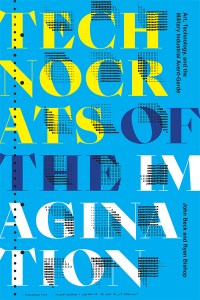
A review of Technocrats of the Imagination: Art, Technology, and the Military-Industrial Avant-Garde, John Beck and Ryan Bishop, Duke University Press, 2020.
 There is a renewed interest in the United States for art-and-technology projects. Tech firms have money to spend on the arts to buttress their image of cool modernity; universities want to break the barriers between science and the humanities; and artists are looking for material opportunities to explore new modes of working. Recent initiatives mixing art, science, and technology include the Art+Technology Lab at LACMA (Los Angeles County Museum of Art), MIT’s Center for Art, Science, and Technology (CAST), and the E.A.T. Salon launched by Nokia Bell Labs. In their presentation documents, these institutions make reference to previous experiments in which artists worked with scientists and engineers in universities, private labs, and museums. LACMA’s A+T Lab is the heir to the Art&Technology Program (A&T) launched in 1967 by curator Maurice Tuchman with the involvement of the most famous artists of the period, such as Andy Warhol, Claes Oldenburg, Roy Lichtenstein, and Richard Serra. MIT was the host of the Center for Advanced Visual Studies (CAVS) founded in the same year by György Kepes, who had previously worked with László Moholy-Nagy at the New Bauhaus in Chicago. Bell Labs is where scientist Billy Klüver launched Experiments in Art and Technology (E.A.T.) with Robert Rauschenberg in late 1966. Technocrats of the Imagination tells the story of these early initiatives by replacing them in their intellectual and geopolitical context, exposing in particular the link with Cold War R&D and the rising influence of the military-industrial complex. The contradiction between an anti-establishment cultural milieu denouncing technocratic complicity with the Vietnam war and a corporate environment where these collusions were left unchallenged led these art-and-technology projects to their rapid demise. Modern initiatives operate in a different environment, but unquestioned assumptions may lead them to the same fate.
Creativity, collaboration, and experimentation
Why should artists collaborate with scientists and engineers? Then and now, the same arguments are put forward by a class of art curators, tech gurus, and project managers. The art world and the research lab are both characterized by a strategy of continuous innovation, collaborative experimentation, and disciplined creativity. They tend to abolish the boundaries between theory and practice, knowing and doing, individual inspiration and collective work. These tendencies were reinforced in the context of the 1950s and 1960s: in an age of big science and artistic avant-garde framed by integrative paradigms such as cybernetics and information theory, the artist and the engineer seemed to herald a new dawn of democratic organization and shared prosperity. The artist defined himself as a “factory manager” (Andy Warhol) and did not hesitate to don the white coat of the laboratory experimenter. The scientist was engaged in much more than the accumulation of scientific knowledge and science’s contribution was vital for the nation’s wealth and security. Both worked under the assumption that science could enlarge democracy and support the United States’ place in the world, and that American art should be considered on an equal footing with other professional fields of activity. But the shared virtues of creativity, collaboration, and experimentation covered profoundly different ideas of what those terms might mean and how they should be achieved. The conception of experimental collaboration in the arts was heir to a liberal tradition of educational reform emphasizing free expression and self-discovery. By contrast, innovation and experimentation as understood by institutions training and employing scientists followed a model of elite expertise and top-down management. They were also heavily compromised, as John Beck and Ryan Bishop emphasize, by their ties to the military-industrial complex.
Beck and Bishop place the genealogy of the three art-and-tech initiatives under the influence of two currents: John Dewey’s philosophy of democracy and education, and Bauhaus’ approach to artistic-industrial collaborations. The influence of John Dewey over the course of the twentieth century cannot be overemphasized. More than any other public intellectual, Dewey shaped and influenced debates on the relations between science, politics, and society in the United States. His principles of democratic education emphasizing holistic learning and the study of art were applied in Black Mountain College in North Carolina, a liberal arts education institution that left its imprint on a whole generation of future artists and creators (Robert Rauschenberg, Cy Twombly, John Cage, Merce Cunningham, Ray Johnson, Ruth Asawa, Robert Motherwell, Dorothea Rockburne, Susan Weil, Buckminster Fuller, Franz Kline, Aaron Siskind, Willem and Elaine de Kooning, etc.) The influence of Dewey’s pragmatism extended beyond the US, notably among German educational reformers, and his notion of “learning by doing” was picked up by the Bauhaus, a German art school operational from 1919 to 1933 that combined crafts and the fine arts. In return, Bauhaus furnished Black Mountain College with émigrés educators—Josef and Anni Albers, Xanti Schawinksy, Walter Gropius—and an utopian vision of a post-disciplinary, collectivist education that did not favor one medium or skill set over another. Bauhaus’ afterlife and legacy in the United States also manifests itself in the trajectories of Bauhaus veterans László Moholy-Nagy who created the short-lived Chicago School of Design in 1937, and György Kepes, who taught at MIT and ended up creating the Center for Advanced Visual Studies (CAVS) in 1967.
Bauhaus in America
It was Moholy-Nagy who originated the idea to stimulate interactions among artists, scientists, and technologists in order to spearhead creativity and innovation. His Hungarian compatriot and associate at the School of Design took the idea to the MIT, an institution whose motto mens et manus (“mind and hand”) echoed Dewey’s and Bauhaus’ devotion to “learning by doing” and “experience as experimentation.” MIT was a full research-based science university awash with money from government contracts and military R&D. Research teams working on ‘Big Science’ projects included not just scientists but engineers, administrators, and technicians collaborating together in a structured manner. Kepes’ tenure at MIT between 1946 and 1977 was characterized by a commitment to science and technology and a belief in the virtues of the unintended consequences of chance encounters leading to breakthrough innovations. His interdisciplinary teachings were structured around the principles of vision, visual technologies, and their social implications. Many disciplines were mobilized, including Gestalt psychology, systems theory, physiology, linguistics, architecture, art, design, music, and perception theory. Transdisciplinarity, holistic approaches, and the eclectic mix of science, technology, and artistic disciplines was in the air in the late sixties and influenced the counterculture as well as artistic creation. The same eclecticism presided over the creation of CAVS, a center dedicated to all aspects related to vision and visual technologies. Drawing in important artists and thinkers, including many Black Mountain alumni, CAVS laid the groundwork for subsequent MIT ventures such as the influential Media Lab, founded in 1985 by Nicholas Negroponte, and the Center for Art, Science, and Technology (CAST). It was in such environment that experimental filmmaker Stan Vanderbeek pondered the possibility of creating an “electronic paintbrush” to complement the electronic pen used in early man/machine interfaces.
The industrial corporation, the research university, and the private lab were the three nodes of the military-industrial complex. Hailed by Fortune magazine as “The World’s Greatest Industrial Laboratory,” the Bell Labs’ research center at Murray Hill in New Jersey was conceived along the lines of a miniature college or university. The laboratories themselves were physically flexible, with no fixed partitions and rooms so that they could be partitioned, assembled, and taken apart at short notice. Bell Laboratories cultivated creativity and innovation: researchers working at Bell Labs were credited with the development of the transistor, the laser, the photovoltaic cell, information theory, and the first computer programs to play electronic music. The proximity of New York City, which had become the capital of the art world, and the presence of an arts college at the neighboring Rutgers University, facilitated the rapprochement between the scientific avant-garde working at Murray Hill and the contemporary art world. Artists and musicians were offered organized tours of Bell Labs as a mean of opening dialogue and providing a sense of how technology could be harnessed for artistic creativity. Early realizations include Edgar Varèse’s Déserts (1950-54), an atonal piece that was described as “music in the time of the H-bomb”; Jean Tinguely’s Homage to New York (1960), a self-constructing and self-destructing sculpture mechanism that performed for 27 minutes during a public performance in the Sculpture Garden of the Museum of Modern Art in New York; and Robert Rauschenberg’s Oracle (1962-65), a five-part found-metal assemblage with five concealed radios and electronic components now displayed at the Pompidou Center in Paris. Also influential was the 9 Evenings: Theatre and Engineering, a series of performances that mixed avant-garde theatre, dance, music, and new technologies. In 1967, the engineer and project manager Billy Klüver set up the Experiments in Art and Technology (E.A.T.), a collaborative project matching avant-garde artists and Bell Lab researchers that attracted the application of more than 6000 artists, scientists and engineers. But the project soon foundered due to poor management and lack of funds.
From New York to Los Angeles and to the world
Place matters for artistic innovation, as it does for scientific discovery and technological breakthrough. During the twentieth century, the center of the advanced art world shifted from Paris to New York. Yet there was also a marked increase in the geographic origins of innovative artists. When he became the first curator of twentieth-century art at the Los Angeles County Museum of Art (LACMA), part of Maurice Tuchman’s mission was to put LA on the art map as “the center of a new civilization.” He did so by partnering with business organizations to sponsor an Art & Technology exhibition in 1971, with the participation of high-profile artists such as Roy Lichtenstein, Claes Oldenburg, Robert Rauschenberg, Richard Serra, and Andy Warhol. But at that time public opinion had already shifted away from the technocratic model of corporate liberalism, and the exhibition was a flop. Another Californian experiment sponsored by LACMA was the creation of artist-in-residence positions at RAND and the Hudson Institute, two think tanks working mostly for the government sector and tasked with: “thinking about the unthinkable.” But the New York-based sculptor John Chamberlain and the conceptual artist James Lee Byars had a difficult time adapting to their new environment. The first sent a memo to all RAND staff stating: “I’m searching for ANSWERS. Not questions! If you have any, will you please fill it below”: the incomprehension was total, and the memo fell flat. The second set up a “World Question Center” and invited the public to submit any kind of questions that would then be answered by a panel of intellectuals, artists, and scientists. But as the two authors of Technocrats of the Imagination comment: “If Byars could have included Stein, Einstein, and Wittgenstein in his teleconference, what might they have been permitted to say, given the serious limitations of the format? An expert is an expert is an expert.”
Twentieth century art was advanced by new institutions on the art scene: the Salons and group exhibitions of independent art collectives, the private art gallery, the art critique magazine, the contemporary art museum, and the international art biennale. World exhibitions also played a key role in the globalization of advanced art, and the American presence in these global events often displayed art-and-technology projects. Billy Klüver and the E.A.T. program at Bell Labs engineered the American pavilion for the Osaka World’s Fair, Expo ’70, in partnership with PepsiCo. The RAND Corporation was pivotal for displaying US advanced technology abroad in exhibitions of science, urbanism, postwar visions of the future, and consumer society. The Eames Office, a design studio based in Venice, California, was commissioned to contribute to the USIA-sponsored US pavilion at the 1959 Moscow World’s Fair and the Montreal Expo ’67, and designed the IBM pavilion at the 1964 New York World’s Fair. The aim of these exhibitions was geopolitical: they were to display America’s might at its most spectacular, and to offer a glimpse of the future in which technology played a key part. They were conceived as artist-led immersive environments in the tradition of the Gesamtkunstwerk or “total work of art” of the Bauhaus, and played a pioneering role in the development of multimedia installations and video art. Charles and Ray Eames were “cultural ambassadors” for the Cold War representation of the United States, and their design creations aligned with the political agenda the US government wished to communicate. The Eames Office made important cutting-edge documentaries such as Powers of Ten (1968), a short film dealing with the relative size of things in the universe and the effect of adding or subtracting one zero, or Think (1964), a multiscreen film in a large, egg-shaped structure called the Ovoid Theater that stood high above the canopy and central structure of the IBM pavilion at the New York World’s Fair.
Corporate neoliberalism
John Beck and Ryan Bishop focus their analysis on the ideological underpinnings and geopolitical ramifications of these art-and-technology projects. They argue that, contrary to their forward-looking ambitions and futuristic visions, MIT’s CAVS, Bell Lab’s E.A.T., and LACMA’s A&T’s program were behind their times. In the late 1960s, antiwar sentiment had hardened public opinion against corporations and technology more generally. The positions of the scientist and the engineer were compromised by their participation in the military-industrial complex: “science and technology had come to be seen by many as sinister, nihilistic, and death-driven.” The idea that US corporations could plausibly collaborate with artists to create new worlds of social progress was now evidence of complicity and corruption—technology was the problem and not the solution. The political climate made it impossible to justify what was now summarily dismissed as “industry-sponsored art.” In this politically charged context, art and technology projects had very little to say about politics, American foreign policy, or the Cold War in general. Technocrats of the Imagination concludes with a comparison between these late-1960s projects and recent reenactments such as MIT’s CAST, LACMA’s A+T Lab, and Nokia’s E.A.T. Salon. Contrary to their predecessors, these new projects operate in a neoliberal environment driven by private corporations in which the sense of dedication to the public good that animated scientists and artists from the previous generation has all but disappeared. As the authors argue, the recent art-and-tech reboot “cannot be separated from or understood outside the deregulated labor market under neoliberalism that has demanded increased worker flexibility, adaptability, and entrepreneurialism.” The avant-garde artist’s new partner is not the white-coated scientist or the lab engineer, but the tech entrepreneur who claims the heritage of counterculture to advance techno-utopianism and radical individualism. Their claim of “hippie modernism” and their appropriation of the 1960s’ avant-garde is based on historical amnesia, against which this book provides a useful remedy.
 Ten years have passed since the wave of protests that swept across North Africa and the Middle East. Time has not been kind to the hopes, dreams, and aspirations for change that were invested in these Arab uprisings. A whole generation is now looking back at its youthful idealism with nostalgia, disillusion, and bitterness. Revolutionary hope is always followed by political disenchantment: this has been the case for all revolutions that succeeded and for all attempts that failed. Fadi Bardawil even sees here the expression of a more general law: “For as long as I can remember, I have witnessed intellectuals and critical theorists slide from critique to loss and melancholia after having witnessed a political defeat or experienced a regression in the state of affairs of the world.” These cycles of hope and disillusion are particularly acute in the Arab world, where each decade seems to bring its own political sequence of rising tide and lowering ebb. Revolution and Disenchantment tells the story of a fringe political movement, Socialist Lebanon (1964-70), through the figures of three Marxist intellectuals who went through a cycle of revolutionary fervor, disenchantment, despair, and adjustment. Waddah Charara (1942–), Fawwaz Traboulsi (1941–), and Ahmad Beydoun (1942–) are completely unknown for most publics outside Lebanon, and their reputation in their country may not even have crossed the limits of narrow intellectual circles. They have now retired from an academic career in the humanities and social sciences, and few people remember their youthful engagement at the vanguard of the revolutionary Left. But their political itinerary has a lot to tell about the role of intellectuals, the relationship between theory and practice, and the waves of enthusiasm and disillusion that turn emancipatory enterprises into disenchanted projects.
 “Inanimate objects, have you then a soul / that clings to our soul and forces it to love?,” wondered Alphonse de Lamartine in his poem “Milly or the Homeland.” In Animacies, Mel Chen answers positively to the first part of this question, although the range of affects she considers is much broader than the lovely attachments that connected the French poet to his home village. As she sees it, “matter that is considered insensate, immobile, deathly, or otherwise ‘wrong’ animates cultural life in important ways.” Anima, the Latin word from which animacy derives, is defined as air, breath, life, mind, or soul. Inanimate objects are supposed to be devoid of such characteristics. In De Anima, Aristotle granted a soul to animals and to plants as well as to humans, but he denied that stones could have one. Modern thinkers have been more ready to take the plunge. As Chen notes, “Throughout the humanities and social sciences, scholars are working through posthumanist understandings of the significance of stuff, objects, commodities, and things.” Various concepts have been proposed to break the great divide between humans and nonhumans and between life and inanimate things, as the titles of recent essays indicate: “Vibrant Matter” (Jane Bennett), “Excitable Matter” (Natasha Myers), “Bodies That Matter” (Judith Butler), “The Social Life of Things” (Arjun Appadurai), “The Politics of Life Itself” (Nikolas Rose),“Parliament of Things” (Bruno Latour). Many argue that objects are imbued with agency, or at least an ability to evoke some sort of change or response in individual humans or in an entire society. However, each scholar also possesses an individual interpretation of the meaning of agency and the true capacity of material objects to have personalities of their own. In Animacies, Mel Chen makes her own contribution to this debate by pushing it in a radical way: writing from the perspective of queer studies, she argues that degrees of animacy, the agency of life and things, cannot be dissociated from the parameters of sexuality and race and is imbricated with health and disability issues as well as environmental and security concerns.
 Why read Marx today? More to the point, why devote a book to how Marx was read in Japan in the mid-twentieth century, and in particular to the writings of a Marxist scholar named Uno Kōzō (1897-1977), Japan’s foremost Marxian economist and founder of what is usually referred to as the Uno School (Uno gakuha), Uno economics (Uno keizaigaku), or Uno-ist theory (Uno riron)? Books about this branch of Marxist theory now collect dust on the shelves of second-hand bookstores in the Kanda-Jinbōchō district in Tokyo. They remind us of Marxism’s surprising longevity in Japan’s academic circles: a Japanese publishing house, Kaizōsha, was the first editor in the world to publish the complete collected works of Marx and Engels (in thirty-two volumes), and Marxist theory was taught and studied with passion in the tumultuous years of campus upheavals of the 1960s and 1970s. The generation that imbibed Marx’s shihonron in its formative years is now past retirement, and the few remaining bastions of Marxism are only to be found in philosophy or literature departments, not in faculties of economics. But Gavin Walker considers that something important was at stake in these economic debates, something that can still speak to our present. In his opinion, we need to understand the “sublime perversion of capital” in order to situate and possibly overcome our contemporary theoretical impasses and debates: the surprising persistence of the nation, the postcolonial situation, the enclosure of the new “digital commons,” the endless cycles of crisis and debt. Indeed, Walker argues, “this moment of globalization calls for a fundamental (re)examination of the central questions of Marxist theory itself.” For, like Marx wrote to his German readers in the 1867 preface of Das Kapital, “De te fabula narratur!”—it is of you that the story is told.
 This is not a book about Asian sex videos. Indeed, reading Media, Erotics, and Transnational Asia should lead the reader to question why the category “Asian sex video” exists in the first place, why Asian bodies are disproportionately represented in Internet porn, and how we should react to such unregulated flow of images. In fact, none of the entries in this book deals with explicitly erotic content or with pornography, and the only chapter that concerns the Internet as a medium, a study of online discussions about correspondence marriage between the US and the Philippines, insists on rejecting facile analogies with the sex trade or with mail-to-order catalogues. For scholars and for feminists—and most authors in this volume are women—, the erotic has to be distinguished from the sexual. And writing about eroticism should in no way lead to stoke the base instincts of the reader. The erotic extends beyond sex acts or desires for sex acts to become “enmeshed in, for instance, yearnings for upward mobility, longings for ‘the homeland,’ formulations of nationhood and citizenship, and ruptures of ethnic and racial identity.” Desires for sexual encounters intertwine with those for commodities and lifestyles. Such a paneroticism may break gender, class, ethnicity, or age boundaries. Synonymous with desire, it may be at odd with an Orientalist vision of Asia as feminized and the West as setting the standard for homo- and heteronormativity. For instance, “what constitutes ‘lesbian’ desire may look both and function differently than it does within Euro-American social and historical formations, and draw from alternative modes of masculinity and feminity.”
 Agency is a key concept in anthropology and the social sciences, meaning the capacity of a person or a group to act on its own behalf. The agency that David Price has in mind in this book has a completely different meaning. It designates the Central Intelligence Agency, and it reveals the links during the Cold War between the anthropologist profession and the national intelligence and defense apparatus of the United States. Cold War Anthropology makes use of the concept of dual use: “dual use science” refers to the military applications of basic science research, while “dual use technologies” are normally used for civilian purposes but may help build weapons and military systems. Similarly, anthropology is a civilian pursuit that purports to increase our knowledge of foreign cultures and societies, but it can be used for defense and security purposes: Know thy enemy has been a basic recommendation since mankind engaged in warfare and diplomacy. Intelligence, the gathering of information on foreign powers, makes use of various academic disciplines; it is only natural that anthropology, which developed alongside colonialism and followed the ebbs and flows of imperial powers, also lent itself to militarist uses. And nowhere was the demand for such knowledge higher than in the United States during the Cold War, which saw the dominant world power engage in the gathering and analysis of information in all corners of the world.
 As a small state composed of two islands off the coast of Venezuela, Trinidad and Tobago is heavily exposed to the risk of climate change. It is vulnerable to the rise in sea levels, increased flooding, extreme weather events, hillside erosion and the loss of coastal habitats, all of which are manifestations of the continued progression of climate change. Rising sea levels and temperatures will also impact its economy, vegetation and fauna, health, and living conditions, to the point of making current livelihoods wiped out. But there is another side to the story of climate change in this small island state. Trinidad and Tobago ranks fourth globally in per capita emissions of carbon dioxide. Each of the 1.2 million inhabitants of the two islands emitted, on average, 31.3 tons of CO2 in 2017, six times the world average. Unbeknownst to the public, who tends to associate this island paradise with beach resorts, rum-based concoctions, and calypso music, Trinidad and Tobago is an oil state, a hydrocarbon economy. In the early 1990s, its hydrocarbon sector moved from an oil-dominant to a mostly natural gas-based sector, and from land-based sites to offshore production. It is now the largest oil and natural gas producer in the Caribbean, the world’s sixth-largest LNG exporter, and the largest LNG exporter to the United States, accounting for nearly 71% of US LNG imports in 2014. If we include the carbon emissions of the oil, gas, and petrol products it sells overseas, Trinidad’s carbon footprint is disproportionately large. When it comes to climate change, Trinidad and Tobago is all at once victim and perpetrator, innocent and guilty, passive object and active subject. How do its inhabitants and its political leaders react to this situation?
 It is said that Americans don’t have social security. Soldiers do. Earnings for active duty military service or active duty training have been covered under the Social Security Act since 1957. Veterans get social security benefits after they are discharged. Military service members who become disabled while on active duty can file for disability claims. The social security system also covers families and relatives of a deceased soldier. Active duty military members can retire after twenty years of active duty service. In exchange, they receive retirement pay for life. Veterans get free or low-cost medical care through VA hospitals and medical facilities. They have access to special education programs, housing and home loan guarantees, job training and skills upgrading, small business loans, and even burial and memorial benefits. Their situation contrasts with the thirty million Americans who do not have health insurance and who cannot afford medical costs, and with the many more who get only minimal retirement pension and healthcare. In sum, when you join the US Army, Uncle Sam gets your back covered.
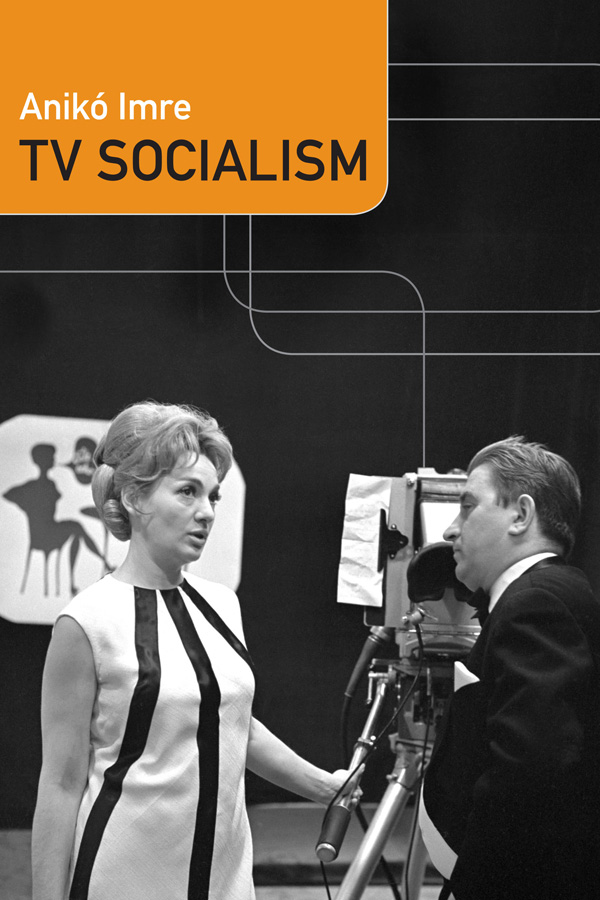 In her 1978 hit song “TV-Glotzer,” Nina Hagen sings from the perspective of an East German unable to leave her country, who escapes by watching West German television. She switches channels from East to West and stares at the tube where “everything is so colorful.” As she puts it, TV is her drug while literature makes her puke and she keeps eating chocolate that makes her fatter and fatter. The song was written when Nina Hagen was still living in East Berlin but made a hit in Western Europe, where “white punks on dope” could identify with the lyrics and share the spirit of “no future” rebellion. Anikó Imre’s TV Socialism gives a different perspective on television in socialist Europe. For her, television isn’t a drug but a matter of scholarly enquiry, and her book is a dense academic text that comes fully equipped with historical references, textual analysis, and footnotes. The book is a seminal contribution to the field of “socialist television studies” and challenges many ideas by which we assess Eastern Europe’s socialist past. But first, what does she mean by TV socialism? What links TV to socialism, and what makes socialist TV different from the television programs that were produced at the same time in Western Europe, in the United States, or in the developing world? How did television in Hungary, Poland, Czechoslovakia or the GDR shape the imaginaries of viewers, and what remains from this socialization through small-screen images in a post-socialist world? Or to repeat Anikó Imre’s introduction title, “Why do we need to talk about socialism and TV?”
