

A review of Bodily Matters: The Anti-Vaccination Movement in England, 1853–1907, Nadja Durbach, Duke University Press, 2004.
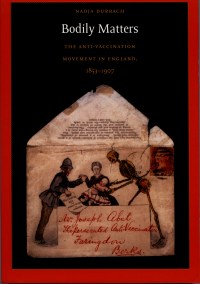 In 1980, smallpox, also known as variola, became the only human infectious disease ever to be completely eradicated. Smallpox had plagued humanity since times immemorial. It is believed to have appeared around 10,000 BC, at the time of the first agricultural settlements. Stains of smallpox were found in Egyptian mummies, in ancient Chinese tombs, and among the Roman legions. Long before germ theory was developed and bacteria or viruses could be observed, humanity was already familiar with ways to prevent the disease and to produce a remedy. The technique of variolation, or exposing patients to the disease so that they develop immunity, was already known to the Chinese in the fifteenth century and to India, the Ottoman Empire, and Europe in the eighteenth century. In 1796, Edward Jenner developed the first vaccine by noticing that milkmaids who had gotten cowpox never contracted smallpox. Calves or children produced the cowpox lymph that was then inoculated to patients to vaccinate them from smallpox. Vaccination became widely accepted and gradually replaced the practice of variolation. By the end of the nineteenth century, Europeans vaccinated most of their children and they brought the technique to the colonies, where it was nonetheless slow to take hold. In 1959, the World Health Organization initiated a plan to rid the world of smallpox. The concept of global health emerged from that enterprise and, as a result of these efforts, the World Health Assembly declared smallpox eradicated in 1980 and recommended that all countries cease routine smallpox vaccination.
Humanity’s greatest achievement
The eradication of smallpox should be celebrated as one of humanity’s greatest achievements. But it isn’t. In recent years vaccination has emerged as a controversial issue. Claiming various health concerns or belief motives, some parents are reluctant to let their children receive some or all of the recommended vaccines. The constituents who make up the so-called vaccine resistant community come from disparate groups, and include anti-government libertarians, apostles of the all-natural, and parents who believe that doctors should not dictate medical decisions about children. They circulate wild claims that autism is linked to vaccines, based on a fraudulent study that was long ago debunked. They affirm, without any scientific backing, that infant immune systems can’t handle so many vaccines, that natural immunity is better than vaccine-acquired immunity, and that vaccines aren’t worth the risk as they may create allergic reactions or even infect the child with the disease they are trying to prevent. Public health officials and physicians have been combating these misconceptions about vaccines for decades. But anti-vaccine memes seem deeply ingrained in segments of the public, and they feed on new pieces of information and communication channels as they circulate by word-of-mouth and on social media. Each country seems to have a special reluctance for a particular vaccine: in the United State, the MMR vaccine against measles, mumps, and rubella has been the target of anti-vax campaigns. in France, the innocuity of the hepatitis B vaccine has been put into question, and most people neglect to vaccinate against seasonal flu. In the Islamic world, some fatwas have targeted vaccination against polio.
Resistance to vaccines isn’t new. In Bodily Matters, Nadja Durbach investigates the history of the first outbreak of anti-vaccine fever: the anti-vaccination movement that spread over England from 1853, the year the first Compulsory Vaccination Act was established on the basis of the Poor Law system, until 1907, when the last legislation on smallpox was adopted to grant exemption certificates to reluctant parents. Like its modern equivalent, it is a history that pits the medical establishment and the scientific community against vast segments of the population. Vaccination against smallpox at that time was a painful affair: Victorian vaccinators used a lancet to cut lines into the flesh of infants’ arms, then applied the lymph that had developed on the suppurating blisters of other children who had received the same treatment. Infections often developed, diseases were passed with the arm-to-arm method, and some babies responded badly to the vaccine. Statistics showing the efficacy of vaccination were not fully reliable: doctors routinely classified those with no vaccination scars as “unvaccinated,” and the number of patients who caught smallpox after receiving vaccination was not properly counted. The vaccination process was perceived as invasive, painful, and of dubious effect: opponents to vaccination claimed that it caused many more deaths than the diffusion of smallpox itself. Serious infections such as gangrene could follow even a successful vaccination. But people not only resisted the invasion of the body and the risk to their health: resistance against compulsory vaccination was also predicated upon assumptions about the boundaries of state intervention in personal life. Concerns about the role of the state, the rights of the individual, and the authority of the medical profession combined with deeply-held beliefs about the health and safety of the body.
Anti-vaccination in 19th-century England
While historians have often seen anti-vaccination as resistance against progress and enlightenment, the picture that emerges from the historical narrative, as reconstructed by Nadja Durbach, is much more nuanced. Through detailed analysis of the way sanitary policies were implemented and the resistance they faced, she shows that anti-vaccination in nineteenth-century England was very often on the side of social progress, democratic accountability, and the promotion of working-class interest, while forced vaccination was synonymous with state control, medical hegemony, and the encroachment of private liberties. The growth of professional medicine run counter to the interests of practitioners such as unlicensed physicians, surgeons, midwives, and apothecaries, some of whom had practiced variolation with the smallpox virus for a long time. It abolished the long-held practice of negotiating what treatments were to be applied, and turned patients into passive receptacles of prescriptions backed by the authority of science and the state. Compulsory infant vaccination, as the first continuous public-health activity undertaken by the state, ushered in a new age in which the Victorian state became intimately involved in bodily matters. Administrators—the same officers who applied the infamous Poor Laws and ran the workhouses for indigents and vagabonds—saw the bodies of the working classes themselves as contagious and, like prisoners, beggars, and paupers, in need of surveillance and control. Sanitary technologies such as quarantines, compulsory medical checks, forced sanitization of houses, and destruction of contaminated property were first experimented in this context of state-enforced medicine and bureaucratization. Several Vaccination Acts were adopted—in 1853, 1867, and 1871—to ensure that all infants born from poor families were vaccinated against smallpox. The fact that the authorities had to repeat the same laws on the books shows that the “lower and uneducated classes” were not taking advantage of the free service, and were avoiding mandatory vaccination at all costs.
Born in the 1850s, the anti-vaccination movement took shape in the late 1860s and early ‘70s as resisters responded to what they considered an increasingly coercive vaccination policy. The first to protest were traditional healers and proponents of alternative medicine who felt threatened by the professionalization of health care and the development of medical science. For these alternative practitioners, medicine was more art than science, and the state had no role in regulating this sector of activity. They objected to the scientific experimentation on the human body: vaccination, they maintained, not only polluted the blood with animal material but also spread dangerous diseases such as scrofula and syphilis. These early medical dissenters were soon rejoined by a motley crew of social activists who added the anti-vaccination cause to their broader social and political agenda. Temperance associations, anti-vivisectionists, vegetarians and food reformers, women’s rights advocates, working men’s clubs, trade unionists, religious sects, followers of the Swedish mystic Swedenborg: all these movements formed a larger culture of dissent in which anti-vaccinators found a place. They created leagues to organize against the Vaccination Acts, organized debates and mass meetings, published tracts and bulletins, and held demonstrations that sometimes turned into small-scale riots. Women from all social classes were particularly active: they wrote pamphlets, contributed letters to newspapers, and expressed strong opposition at public meetings. They often took their roles as guardians of the home quite literally, and refused to open their door to intruding medical officials. Campaigners argued that parental rights were political rights, to which all respectable English citizens were entitled. The state, they contended, had no right to encroach on parental choice and individual freedom. “The Englishman’s home is his castle,” they maintained, and how best to raise a family was a domestic issue over which the state had no authority to interfere.
Middle-class campaigners and working-class opponents
While the populist language of rights and citizenship enabled a cross-class alliance to exist, the middle-class campaigners didn’t experience the bulk of repression that befell on working-class families that resisted compulsory vaccination. Working-class noncompliers were routinely sized from their houses and dragged to jail, or were charged with heavy fines. Middle-class activists clung to the old liberal tenets of individual rights and laissez-faire: “There should be free trade in vaccination; let those buy it who want it, and let those be free who don’t want it.” By contrast, working-class protests against vaccination was often formulated at the level of the collective, and they had important bodily implications. Some anti-vaccinators considered themselves socialists and belonged to the Independent Labour Party. They aligned their fight with the interest of the working class and expressed distrust of state welfare in general and of anti-pauperism in particular. The Poor Laws that forced recipient of government relief into the workhouse were a target of widespread detestation. Vaccination remained linked to poor relief in the minds of many parents, as workhouse surgeons were often in charge of inoculation and the health campaigns remained administered by the Poor Law Board. Public vaccination was performed at vaccination stations, regarded by many as sites of moral and physical pollution. The vaccination of children from arm to arm provoked enormous fears of contamination. Parents expressed a shared experience of the body as violated and coerced, and repeatedly voiced their grievances in the political language of class conflict. Their protests helped to shape the production of a working-class identity by locating class consciousness in shared bodily experience.
Anti-vaccination also drew from an imaginary of bodily invasion, blood contamination, and monstrous transformations. Many Victorians believed that health depended on preserving the body’s integrity, encouraging the circulation of pure blood, and preventing the introduction of any foreign material into the body. Gothic novels popularized the figures of the vampire, the body-snatcher, and the incubus. They offered lurid tales of rotten flesh and scabrous wounds that left a mark on readers’ imagination. Anti-vaccinators heavily exploited these gothic tropes to generate parental anxieties: they depicted vaccination as a kind of ritual murder or child sacrifice, a sacrilege that interfered with the God-given body of the pristine child. They quoted the Book of Revelations: “Fool and evil sores came upon the men who bore the mark of the beast.” Supporters of vaccination also participated in the production of this sensationalist imagery by depicting innocent victims of the smallpox disease turned into loathsome creatures. Fear of bodily violation was intimately bound up with concerns over the purity of the blood and the proper functioning of the circulatory system. The best guard against smallpox, maintained a medical dissenter, was to keep “the blood pure, the bowels regular, and the skin clean.” Temperance advocates or proselytizing vegetarians added anti-vaccine to their cause: “If there is anything that I detest more than others, they are vaccination, alcohol, and tobacco.” As the lymph applied to children’s sores was the product of disease-infected cows, some parents feared that vaccinated children might adopt cow-like tendencies, or that calf lymph might also transmit animal diseases. Human lymph was even more problematic: applied from arm to arm, it could expose untainted children to the poisonous fluids of contaminated patients and spread contagious or hereditary diseases such as scrofula, syphilis, leprosy, blindness, or tuberculosis.
Understanding the intellectual and social roots of anti-vax campaigns
This early wave of resistance to vaccination, as depicted in Bodily Matters, is crucial to understanding the intellectual and social roots of modern anti-vaccine campaigns. Then as now, anti-vax advocates use the same arguments: that vaccines are unsafe and inefficient, that the government is abusing its power, and that alternative health practices are preferable. Vaccination is no longer coercive and disciplinary, but the issue of compulsory treatment of certain professions such as healthcare workers regularly resurfaces. More fundamentally, the Victorian era in nineteenth-century England was, like our own age, a time of deepening democratization and rampant anti-elitism. Now, too, the democratization of knowledge and truth can produce an odd mixture of credulity and skepticism among many ordinary citizens. Moreover, we, too, are living in an era when state-enforced medicine and scientific expertise are being challenged. Science has become just another voice in the room, and people are carrying their reliance on individual judgment to ridiculous extremes. With everyone being told that their ideas about medicine, art, and government are as valid as those of the so-called “experts” and “those in power,” truth and knowledge become elusive and difficult to pin down. As we are discovering again, democracy and elite expertise do not always go well together. Where everything is believable, everything is doubtable. And when all claims to expert knowledge become suspect, people will tend to mistrust anything that they have not seen, felt, heard, tasted, or smelled. Proponents of alternative medicine uphold a more holistic approach to sickness and health and they claim, as did nineteenth century medical dissenters, that every man and woman could and should be his or her own doctor. Of course, campaigners from the late Victorian age could only have dreamed of the role that social media has enabled ordinary people to play. The pamphlets and periodicals of the 1870s couldn’t hold a candle to Twitter, Facebook, and other platforms that enable everyone to participate in the creation of popular opinion.
Which brings us to the present situation. As I write this review, governments all over the world are busy developing, acquiring, and administering new vaccines against an infectious disease that has left no country untouched. The Covid-19, as the new viral disease is known, has spread across borders like wildfire, demonstrating the interconnect nature of our present global age. Pending the diffusion of an effective treatment, herd immunity, which was touted by some experts as a possible endgame, can only be attained at a staggering cost in human lives and economic loss. “Flattening the curve” to allow the healthcare system to cope with the crisis before mass vaccination campaigns unroll quickly became the new mantra, and rankings were made among countries to determine which policies have proven the most efficient in containing the disease. Meanwhile, scientists have worked furiously to develop and test an effective vaccine. Vaccines usually take years to develop and they are submitted to a lengthy process of testing and approval until they reach the market. Covid-19 has changed all this: several proof-tested vaccines using three different technologies are currently being administered in the most time-condensed vaccination campaign of all times. This is when resistance to vaccines resurfaces: as vaccines become widely available, a significant proportion of the population in developing countries are refusing to get their shots. And many of those refusing are those who have the most reason to get vaccinated: high-risk themselves or susceptible of passing the virus to other vulnerable people. Disinformation, distrust and rumors that are downright delusional have turned what should have been a well-oiled operation into an organizational nightmare. In the end, we will get rid of Covid-19. But we can’t and we won’t get rid of our dependence on vaccines.
 There is a renewed interest in the United States for art-and-technology projects. Tech firms have money to spend on the arts to buttress their image of cool modernity; universities want to break the barriers between science and the humanities; and artists are looking for material opportunities to explore new modes of working. Recent initiatives mixing art, science, and technology include
 Ten years have passed since the wave of protests that swept across North Africa and the Middle East. Time has not been kind to the hopes, dreams, and aspirations for change that were invested in these Arab uprisings. A whole generation is now looking back at its youthful idealism with nostalgia, disillusion, and bitterness. Revolutionary hope is always followed by political disenchantment: this has been the case for all revolutions that succeeded and for all attempts that failed. Fadi Bardawil even sees here the expression of a more general law: “For as long as I can remember, I have witnessed intellectuals and critical theorists slide from critique to loss and melancholia after having witnessed a political defeat or experienced a regression in the state of affairs of the world.” These cycles of hope and disillusion are particularly acute in the Arab world, where each decade seems to bring its own political sequence of rising tide and lowering ebb. Revolution and Disenchantment tells the story of a fringe political movement, Socialist Lebanon (1964-70), through the figures of three Marxist intellectuals who went through a cycle of revolutionary fervor, disenchantment, despair, and adjustment. Waddah Charara (1942–), Fawwaz Traboulsi (1941–), and Ahmad Beydoun (1942–) are completely unknown for most publics outside Lebanon, and their reputation in their country may not even have crossed the limits of narrow intellectual circles. They have now retired from an academic career in the humanities and social sciences, and few people remember their youthful engagement at the vanguard of the revolutionary Left. But their political itinerary has a lot to tell about the role of intellectuals, the relationship between theory and practice, and the waves of enthusiasm and disillusion that turn emancipatory enterprises into disenchanted projects.
 Why read Marx today? More to the point, why devote a book to how Marx was read in Japan in the mid-twentieth century, and in particular to the writings of a Marxist scholar named Uno Kōzō (1897-1977), Japan’s foremost Marxian economist and founder of what is usually referred to as the Uno School (Uno gakuha), Uno economics (Uno keizaigaku), or Uno-ist theory (Uno riron)? Books about this branch of Marxist theory now collect dust on the shelves of second-hand bookstores in the Kanda-Jinbōchō district in Tokyo. They remind us of Marxism’s surprising longevity in Japan’s academic circles: a Japanese publishing house, Kaizōsha, was the first editor in the world to publish the complete collected works of Marx and Engels (in thirty-two volumes), and Marxist theory was taught and studied with passion in the tumultuous years of campus upheavals of the 1960s and 1970s. The generation that imbibed Marx’s shihonron in its formative years is now past retirement, and the few remaining bastions of Marxism are only to be found in philosophy or literature departments, not in faculties of economics. But Gavin Walker considers that something important was at stake in these economic debates, something that can still speak to our present. In his opinion, we need to understand the “sublime perversion of capital” in order to situate and possibly overcome our contemporary theoretical impasses and debates: the surprising persistence of the nation, the postcolonial situation, the enclosure of the new “digital commons,” the endless cycles of crisis and debt. Indeed, Walker argues, “this moment of globalization calls for a fundamental (re)examination of the central questions of Marxist theory itself.” For, like Marx wrote to his German readers in the 1867 preface of Das Kapital, “De te fabula narratur!”—it is of you that the story is told.
 Agency is a key concept in anthropology and the social sciences, meaning the capacity of a person or a group to act on its own behalf. The agency that David Price has in mind in this book has a completely different meaning. It designates the Central Intelligence Agency, and it reveals the links during the Cold War between the anthropologist profession and the national intelligence and defense apparatus of the United States. Cold War Anthropology makes use of the concept of dual use: “dual use science” refers to the military applications of basic science research, while “dual use technologies” are normally used for civilian purposes but may help build weapons and military systems. Similarly, anthropology is a civilian pursuit that purports to increase our knowledge of foreign cultures and societies, but it can be used for defense and security purposes: Know thy enemy has been a basic recommendation since mankind engaged in warfare and diplomacy. Intelligence, the gathering of information on foreign powers, makes use of various academic disciplines; it is only natural that anthropology, which developed alongside colonialism and followed the ebbs and flows of imperial powers, also lent itself to militarist uses. And nowhere was the demand for such knowledge higher than in the United States during the Cold War, which saw the dominant world power engage in the gathering and analysis of information in all corners of the world.
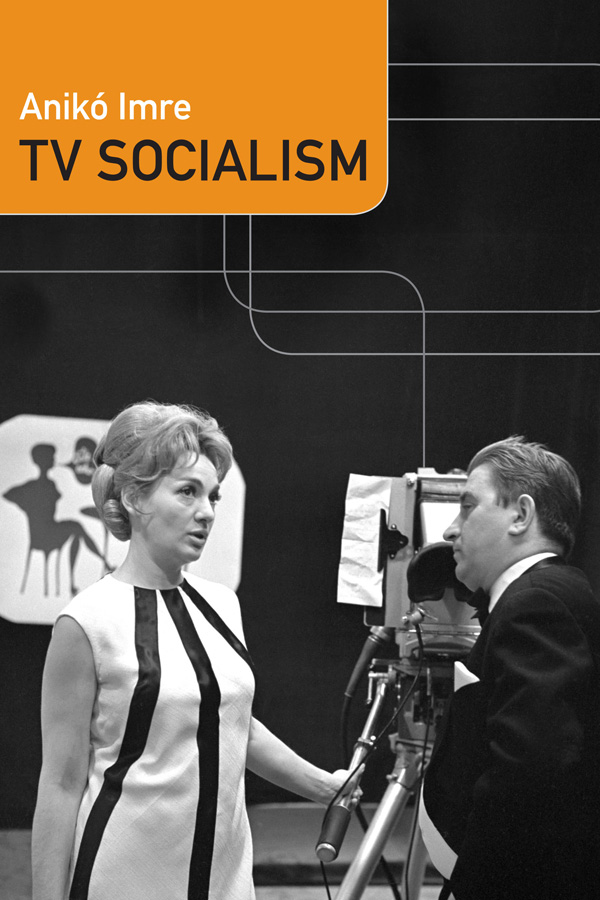 In her 1978 hit song “TV-Glotzer,” Nina Hagen sings from the perspective of an East German unable to leave her country, who escapes by watching West German television. She switches channels from East to West and stares at the tube where “everything is so colorful.” As she puts it, TV is her drug while literature makes her puke and she keeps eating chocolate that makes her fatter and fatter. The song was written when Nina Hagen was still living in East Berlin but made a hit in Western Europe, where “white punks on dope” could identify with the lyrics and share the spirit of “no future” rebellion. Anikó Imre’s TV Socialism gives a different perspective on television in socialist Europe. For her, television isn’t a drug but a matter of scholarly enquiry, and her book is a dense academic text that comes fully equipped with historical references, textual analysis, and footnotes. The book is a seminal contribution to the field of “socialist television studies” and challenges many ideas by which we assess Eastern Europe’s socialist past. But first, what does she mean by TV socialism? What links TV to socialism, and what makes socialist TV different from the television programs that were produced at the same time in Western Europe, in the United States, or in the developing world? How did television in Hungary, Poland, Czechoslovakia or the GDR shape the imaginaries of viewers, and what remains from this socialization through small-screen images in a post-socialist world? Or to repeat Anikó Imre’s introduction title, “Why do we need to talk about socialism and TV?”
 When she was a little girl growing up in the Philippines, Vernadette Vicuña Gonzalez considered American tourists and soldiers that she encountered or heard about as a benevolent presence. They were there to protect the land and to share their riches with a people in need of security and prosperity. This positive image was reinforced by the missionary schools founded by Americans, the remittances sent from abroad by relatives, the proceeds from commerce and military bases, and the endless stream of American movies and serials flowing from television. Later on, when her family emigrated to the United States, she would accompany her father to the Douglas MacArthur Memorial in Norfolk, Virginia, and share the gratitude held by many Filipinos for the general who liberated their country from Japanese occupation. For her, America was still the land of the free, a beacon of hope and opportunity for those seeking a better life beyond their own shores. But then she went to study at UC Berkeley and her worldview changed. She learned about the history of American imperialism, the gruesome stories of the Philippines-American war, the propaganda machine of Cold War politics, the complicity with authoritarian regimes, the destruction of the planet by the forces of neoliberalism, and the cynicism of exploitative raw power. Her homeland, the Philippines, became associated with the image of a puppet regime led by a dictator clinging to power with the backing of the US military. She applied the same critical lenses to the state of Hawaii and its populations after the was nominated as Associate Professor of American Studies at the University of Hawaii at Mānoa. For her, the Hawaiian archipelago was forced into the American fold at the end of the nineteenth century by a coalition of military imperialists, colonial planters, and migrant laborers who relegated the natives to subordinary status and even to cultural extinction. Being herself a nonnative in an adopted homeland, Vernadette Gonzalez purports to speak on behalf of the Native Hawaiians who should, however implausible it may sound, reclaim their sovereignty.
 Infrahumanisms directs a multidisciplinary gaze on what it means to be human or less-than-human in twentieth century America. The author, who teaches American Studies at Wesleyan University, combines the approaches of historiography, animal studies, science studies, gender studies, ethnic studies, and other strands of cultural studies, to build new analytical tools and to apply them to a range of issues that have marked the United States’ recent history: children and primates caught in a process of bioexpansionism from the 1900s to the 1930s; extraterrestriality or the pursuit of posthuman life in outer space from the 1940s to the 1970s; and the interiority of cross-species contagion and hybridity from the 1980s to the 2010s. Judged by historiography’s standards, the book lacks the recourse to previously unexploited archives and new textual documents that most historians consider as essential for original contributions to their field. The empirical base of Infrahumanisms is composed of published books and articles, secondary analyses drawn from various disciplines, and theories offered by various authors. There are no interviews or testimonies drawn from oral history or direct observations from ethnographic fieldwork, no unearthing of new documents or unexploited archives, and no attempt to quantify or to measure statistical correlations. This piece of scholarship is firmly grounded in the qualitative methodologies and humanistic viewpoints that define American Studies on US campuses. The only novel approach proposed by the book is to use a range of photographies and visual sources as primary material and to complement textual commentary with the tools of visual analysis borrowed from media studies. But what Infrahumanisms lacks in methodological originality is more than compensated by its theoretical deftness. Megan Glick innovates in the research questions that she applies to her sample of empirical data and in the theory that she builds out of her constant back-and-forth between facts and abstraction. She does conceptual work as other social scientists do fieldwork, and offers experience-near concepts or mid-range theorizing as a way to contribute to the expansion of her research field. In particular, her use of animal studies is very novel: just like minority studies gave birth to white studies within the framework of ethnic studies, or feminism led to masculinism in the field of gender analysis, Megan Glick complements animal studies with the cultural analysis of humans as a species. Exit the old humanities that once defined American studies or literary criticism; welcome to the post-humanities of human studies that patrol the liminalities and borderings of the human species.
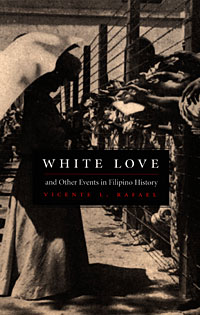 Is America an empire? The standard view among conservative historians is that the United States only embraced imperialism with the Spanish-American War, and that this represented an aberration from the otherwise democratic trajectory of the nation. These same historians further argue that the imperial interventions of the United States, especially in the Philippines, were far more benign and progressive than its European counterparts. Taking over the Philippines Islands in 1898 was described, in official accounts at the time and in subsequent hagiographies, as an altruistic act motivated by America’s concern for the natives’ welfare. Whereas European empires were concerned with carving the world for themselves and extending their sphere of influence, America occupied the Philippines to fill the void left by Spain and to steer the still immature nation towards a course of self-government and independence. US colonialism in the Philippines was rhetorically driven by what President McKinley had referred to as “benevolent assimilation,” whereby the “earnest and paramount aim” of the colonizer was that of “winning the confidence, respect and affection” of the colonized. Even the armed conflict between the First Republic of the Philippines and the United States that lasted from early 1899 to mid-1902 and that cost the life of more than 200,000 Filipino insurgents and civilians was “characterized by humanity and kindness to the prisoner and noncombatant.” War and occupation were manifestations of “white love,” an act of compassion and altruism that emanated from American exceptionalism. If Filipino insurgents were killed, sometimes tortured, it was for their own good, and because they somehow requested it.
 The Duke Reader