
A review of Chosen Peoples: Christianity and Political Imagination in South Sudan, Christopher Tounsel, Duke University Press, 2021.
 On July 9, 2011, South Sudan celebrated its independence as the world’s newest nation. One name considered for christening the country was the Kush Republic, after the Kingdom of Kush that ruled over part of Egypt until the 7th century BC. According to historians of antiquity, Kush was an African superpower and its influence extended to what is now called the Middle East. Placing the new nation under the sign of this prestigious ancestor was seen as particularly auspicious. But for many people the name Kush has been connected with the biblical character Cush, son of Ham and grandson of Noah in the Hebrew Bible, whose descendants include his son Nemrod and various biblical figures, including a wife of Moses referred to as “a Cushite woman.” A prophecy about Cush in Isaiah 18 speaks of “a people tall and smooth-skinned, a people feared far and wide, an aggressive nation of strange speech, whose land is divided by rivers” that will come to present gifts to God on Mount Zion after carrying them in papyrus boats over the water. For many South Sudanese at independence, Isaiah’s ancient prophecy directly applied to them, to the point the newly appointed President Salva Kiir chose Israel as one of his first destinations abroad. Churchgoers also read echoes of their fight for sovereignty and independence in various passages of the Bible. Christian southerners envisioned themselves as a chosen people destined for liberation, while Arabs and Muslim rulers in Khartoum were likened to oppressors in the biblical tradition of Babylon, Egypt, and the Philistines. John Garang, leader of the Sudan People’s Liberation Army/Movement (SPLA/M), was identified as a new Moses leading his people to the promised land. The fact that he left the reins of power to his second-in-command Salva Kiir before independence, just like Moses did with Joshua upon entering the land of Canaan, was interpreted as further accomplishment of the prophecy. Certainly God had a divine plan for the South Sudanese. For some Christian fundamentalists, the accomplishment of Isaiah’s prophecy was a sign of the imminent Second Coming of Jesus Christ that Isaiah identified as the Messiah, the king in the line of David who would establish an eternal reign upon the earth.
Isaiah’s prophecy
This moment of bliss and religious fervor did not last long. Conflict soon erupted between forces loyal to President Salva Kiir (of Dinka ethnicity, Sudan’s largest ethnic group) and former Vice President Riek Machar (of Nuer ethnicity, the South’s second largest ethnic group.) The South Sudanese Civil War that ensued killed more than 400,000 people and led about 2.5 million to flee to neighboring countries, especially Uganda, Sudan, and Kenya. Various ceasefire agreements were negotiated under the auspices of the African Union, the United Nations, and IGAD, a regional organization of eight East African nations. The last truce signed in February 2020 led to a power sharing agreement and a national unity government that was supposed to hold the first democratic elections since independence in 2023. Again, some predicators and religious commentators interpreted these internal divisions and ethnic strife using biblical metaphors. As with earlier periods, the war produced a dynamic crucible of religious thought. Supporters of civil peace called on South Sudanese not to divide themselves like the tribes of Israel or recalled Paul’s injunctions in the Epistle to the Galatians to become one in Jesus by forgetting divisive identities. “Let us take the Bible instead of the gun,” exhorted a senior official at the Ministry of Religious Affairs. “Shedding blood is the work of the devil, and anybody who is killing people is doing the work of the devil,” declared another cleric. The civil war was interpreted as an opposition between right and wrong; only this time the forces of evil were internal to South Sudan, not projected upon the northern oppressor. The most vindictive denounced their enemies by comparing them to the Pharisees or even to Herod. God was used in one breath to argue for cultural unity (“all are one in Christ”) and in another for cultural diversity (tribes are “gifts of God”). These conflicting arguments are proof that in all situations, the biblical referent remains major in the South Sudanese national imagination. Meanwhile, the “land of milk and honey” remains one of the poorest countries on earth, with all the characteristics of a failed state.
For some people, interpreting historical events along religious lines is not only irrational and delusional, but also dangerous and divisive. Looking at history from God’s perspective can lead to a fatalistic view of life and human action. Having “God on our side” has served as justification to some of the worst atrocities in human history, and the Westphalian system of nation-states that is enshrined in the United Nations Charter was originally created to bring an end to the religious wars that plagued Europe in the sixteenth and seventeenth century. According to modern views, Christian interpretation of biblical prophecies should remain in the pulpit, and clerics should refrain from interfering in political issues of the day: “The more politically involved the church has become, the less spiritually involved the church is.” In the case of Sudan, religion was mobilized both in the North and in the South to bolster national identities and strengthen racial differences. Leaders in Khartoum have attempted to fashion the country as an Islamic state, making Islam the state religion and sharia the source of the law since 1983. Meanwhile, Southern Sudanese have used the Bible to provide a lexicon for resistance, a vehicle for defining friends and enemies, and a script for political and often seditious actions in their quest for self-determination and sovereignty. But Christopher Tounsel does not see religion as the source of the civil war that led to the independence of South Sudan. After all, rebels in the Sudan People’s Liberation Army (SPLA) were first inspired by Marxism and backed by the socialist regime of Mengistu in Ethiopia. John Garang believed in national unity and a secular state that would guarantee the rights of all ethnic groups and religions in a “New Sudan” conceived as a democratic and pluralistic state. Theology was only one of the discourses that informed the ideological construction of the South Sudanese nation-state. Race and, after 2005, ethnicity, were also important components of southern identities, working to include individuals in collective bodies and to distinguish them from others. In this perspective, the author cautions “against a limited view of South Sudanese religious nationalism as one based exclusively in anti-Islamization.”
A crucible of race
In Chosen Peoples, Christopher Tounsel presents “theology as a crucible of race, a space where racial differences and behaviors were defined.” Rather than approaching race and religion—the two elements most often used to distinguish North and South Sudan—as separate entities, he analyzes religion as a space where race was expressed, defined, and animated with power. Tounsel is particularly interested in how Christianity shaped the identity of the region’s black inhabitants (as opposed to Sudan’s Arab-Muslim population) and brings forth the notion of God’s chosen people (or peoples) using the Bible as a “political technology” in their fight against the oppressor. The first Catholic missionaries – Jesuits – settled in South Sudan in the middle of the 19th century following the creation by Pope Gregory XVI of the Vicariate Apostolic of Central Africa in 1846. As for the Protestants, they arrived in 1866 by through the British and Foreign Bible Society. However, this initial period of mission work was interrupted for nearly thirty years due to the Mahdist Wars that bloodied Sudan in the last decades of the century. When the British regained control of the region under the Condominium Agreement signed with Egypt in 1899, they facilitated the reestablishment of missions there in order to transform South Sudan into a buffer zone that could stem the expansion of Arabic and Islam up the Nile. The missionary work carried out there in the first half of the 20th century, mainly by Roman Catholics, the Church Missionary Society (CMS) and the United Presbyterian Mission (also known as the American Mission), in addition to its classic dimensions (translating the Bible, identifying socio-linguistic groups, schooling a new local elite), included a strong martial dimension by playing both on the symbolism of the crusade and the struggle against Muslim slavery. Through a case study of the Nugent School, created by the CMS in Juba in 1920, Tounsel shows that ethnic identities were also reinforced through the teaching of local vernacular languages and the definition of self-contained tribal units based upon indigenous customs, traditional usage, and competitive antinomies (a Nuer-English dictionary included the descriptive phrase “my cattle were stolen by Dinka.”) Ethnic conflict between indigenous identities, seen as natural and inevitable, could only be overcome by a common Christianity, while Islam and Arab culture was portrayed as alien and hostile.
After Egypt’s 1946 effort to assert its sovereignty over Sudan, Britain reversed course and conceded Sudan’s right to self-determination and, ultimately, independence, which was proclaimed on January 1st, 1956. The almost complete exclusion of southerners from the “Sudanization” policies in the 1950s fueled a growing sense of southern grievance and political identity. The 1954 creation of the first all-Sudanese cabinet under al-Azhari’s National Union Party, while the southern Liberal Party was in opposition, accelerated southern political thinking toward self-determination and federalism. It was in this context that a mutiny of the Equatorial Corps occurred in 1955 at Torit in the southern Equatoria province. The Equatorial Corps, composed entirely of Christian soldiers – around 900 –, had been created by Lord Reginald Wingate as part of the Anglo-Egyptian condominium on Sudan at the end of the 1910s: a bold decision in a context where military service had until then been reserved for Muslims. It was intentionally divided along ethnic lines: most of the corps was recruited from the Lotuho and other small eastern ethnic groups on the Sudanese slave frontier that were perceived to have “natural” military qualities. The mutiny, motivated by a project to transfer some units to the North and have them replaced by northern soldiers, was sparked by an incident involving an Arab soldier who allegedly insulted a black soldier by calling him a slave (abid). This term, then commonly used by Muslim Sudanese to denigrate black populations, testified to the very slow disappearance of slavery in the region. Sudanese slavery had even experienced a surge in the 1860s and 1870s with the progress of navigation on the Nile and had still been largely tolerated by British supervision until the beginning of the 20th century, after the end of the Mahdist wars. Mostly contained in Equatoria, where most of the mutineers were based and originated, the mutiny was quickly put down but it then led to the First Sudanese Civil War, taking its sources from the same crucible: Christian identity, racial confrontation, ethnic divisions, refusal of slavery and Muslim domination.
The First and Second Sudanese Civil Wars
The First Sudanese Civil War (1955-1972) considerably strengthened the biblical reference in the South Sudanese national emancipation movement. It was widely regarded as a religious confrontation between a Muslim government in Khartoum and its armies, and Christian liberation fighters in the South. Religious thought provided an important spiritual lexicon for the racial dynamics of the war, becoming a space for southerners to articulate the extent of racial division and hostility. The decision of the Sudanese government to Arabize school programs and gradually ban foreign missions, definitively expelled in 1964, not only amplified Christian proselytizing by local pastors but also provided new troops for the South Sudanese resistance. At the beginning of the 1960s, southern opposition was structured militarily and acquired propaganda organs such as the Voice of Southern Sudan published from London with the support of missionary societies. In 1967 the Youth Organ Monthly Bulletin of the Sudan African National Union (SANU) published a rewriting of Jeremiah’s Book of Lamentations where Israel was replaced by South Sudan and Babylon by Khartoum. This type of parallel was used more and more frequently, giving the conflict the appearance of a war of religion. While Arabs were demonized as inhuman evil agents of Satan, southerners framed themselves as God’s beloved people analogous to the Israelites. The war witnessed the creation of a theology that maintained that providence was leading southerners to victory. When the first civil war ended in 1972, biblical reference was clearly rooted while racial and religious identities were closely interwoven. For Sudanese refugees, returning home was presented as the end of exile in Babylon. Southern intellectuals, rather than approaching race and religion as mutually exclusive, used theology as a crucible through which racial identity was defined.
The peace agreement signed in Addis Ababa in 1972 provided for autonomy for South Sudan and religious freedom for non-Muslim populations. Despite their desire for independence, SANU leaders accepted to compromise, but multiple violations of the agreement, as well as the decision of the Sudanese government to impose Islamic law, contributed to relaunching the conflict in 1983 with the creation of the Sudan People’s Liberation Movement and Army (SPLM/A). The fall of Ethiopia’s Mengistu regime in 1991 was the second formative event, depriving the southern opposition from operational support and ideological justification. Though the SPLM never officially affiliated with any religion and maintained a policy of religious toleration, it increasingly turned to Christianity to mobilize and garner support at home and abroad. The SPLA was transformed into a largely Christian force that explicitly used Christian themes and language as propaganda. Apart from the Bible, few other sources were available with which to interpret their position. Episodes from biblical Israel’s history, like David’s clash with Goliath or Moses leading his people to the Promised Land, became popular narratives to fit the modern situation. It is in this context that Isaiah’s prophecy concerning Cush was referenced as foretelling ultimate victory. John Garang, a secularist at the beginning of the war, saw utility in including Cush in domestic politics. He also tried to mobilize support abroad, appealing to Pan-Africanism, Evangelical solidarity, and humanitarian repulsion against modern slavery. American human rights activists pressured the US government to get involved in the situation, framing the conflict as a war between Arabs and Africans, Christianity and Islam, masters and slaves. Their advocacy and humanitarian engagement influenced the manner in which the conflict was represented in mainstream Western media. Beginning in the 1990s, Sudan entered the American evangelical mind as a site of Christian persecution and possible redemption. President Bush appointed Senator John Danforth—an ordained Episcopal minister—as his special envoy on the Sudan. Without Washington’s support, the Comprehensive Peace Agreement signed in 2005 and the ensuing independence of South Sudan in 2011 would never have taken place.
A failed state
Christopher Tounsel takes a neutral perspective on the role of religion in framing South Sudan’s struggle for independence. He does not see religion as a “veil” for material interests or as an “opium” that would intoxicate people into a war frenzy. He has consideration and respect for the religious narrative that interprets South Sudanese nationalism as a spiritual chronicle inspired by the Bible and corresponding to God’s plan. Of course, he does not himself offer a religious interpretation of historical events. The views he presents are those of local religious actors: mission students, clergy, politicians, former refugees, and others from a wide range of Christian denominations and ethnicities. He strictly endorses the role of the professional historian, crafting a rigorous history of religious nationalism—analyzing many printed sources and archives that are exploited from the first time; collecting oral testimonies by clerical and non-clerical figures in Juba; offering his own interpretation after discussing other viewpoints present in the academic literature. Only in the acknowledgement section does he make reference to his own religious affiliation by giving thanks to “my Lord and Savior Jesus Christ.” But if we consider the devastating toll that successive civil wars had on the local population, one may see the role religion has played in a more negative light. Were it not for a biblical narrative of suffering and redemption, a South Sudanese state would never have seen the day. There are serious concerns about the viability of such a landlocked, ethnically polarized country that political scientists subsume under the category of failed state. Religious faith may have been useful in forging a common identity against an oppressor perceived as Arab and Muslim, but could not prevent the newly independent state to plunge into prolonged ethnic warfare. And American Evangelicals who viewed South Sudan as the fulfillment of Isaiah’s prophecy and the sign of Christ’s second coming were not simply delusional: they added oil to the fire in an explosive crucible of race, religion, and ethnicity.
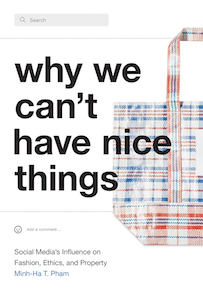 The fashion world has always espoused the latest trends in society and kept up with the times. It should therefore come as no surprise that fashion producers and commentators now speak of “ethical fashion,” “sustainable fashion,” or “fashion for good.” But what do these terms exactly mean? Who has the power to declare fashion worthy of these labels? What lies behind the glamour and glitter of fashion shows and catwalk fame? Unsurprisingly, there is also a radical wing of fashion critique (or critical fashion studies) that scrutinizes those corporate objectives and tries to hold the fashion industry accountable. Minh-Ha T. Pham is one of those critics that read fashion in relation to race, class hierarchies, labor, indigenous knowledge, creativity, and intellectual property rights (IPR). In Why We Can’t Have Nice Things, she examines the way social media users monitor the fashion market for the appearance of knockoff fashion, design theft, and plagiarism. Through what she calls “crowdsourced IP regulation,” she envisages the online activities of bloggers and Instagram users as a form of free labor mobilized in the service of fashion capital accumulation. Network vigilantes who are policing the border between authentic and fake fashion are engaged in racial work: copycat producers and consumers are always portrayed as Asians and reviled as morally defective, while creativity is defined as a property of whiteness, which gives Western fashion designers the privilege to engage in racial extractivism and legitimate cultural theft.
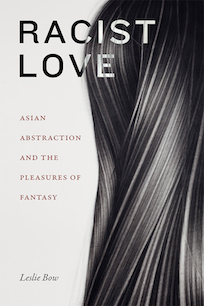 Racist Love starts from the position that love can be racist. This is an idea that many people may find difficult to admit. Of course, most people will acknowledge that racism can be at work in the sexual fantasies of old white men attracted to young Asian women. In the same vein, the way Asian American communities are praised as a “model minority” can also be called racist. But can the sincere love of a white person to his or her Asian partner be called racist? What about the unconditional love of a mother to her child in the case of interracial adoption? And even if racist love exists, is the fact that some white people, male or female, prefer Asian sexual partners different from the attraction other people feel for blondes or redheads? Where do you draw the line between a preference for physical attributes in a partner and racism? If transracial love is systematically tainted by racism, what about the love or attraction one may feel towards people of one’s own ethnic group? Can people of color be suspected of racist inclinations because they are attracted to persons outside their ethnic group, or is racist love the preserve of white people? How to deal with the case of non-Asian persons (say, Gwen Stefani) who are so attracted by everything Asian that they themselves identify as Asian? There are no easy answers to these questions and, especially in the French context, it is hard to engage a conversation on these issues. Speaking of racism usually elicits the topical response “I am not a racist!”, while using the expression “structural racism” tends to deprive people of their agency. Racism, like religious beliefs or political affiliations, are topics that are best kept out of conversations at the dinner table.
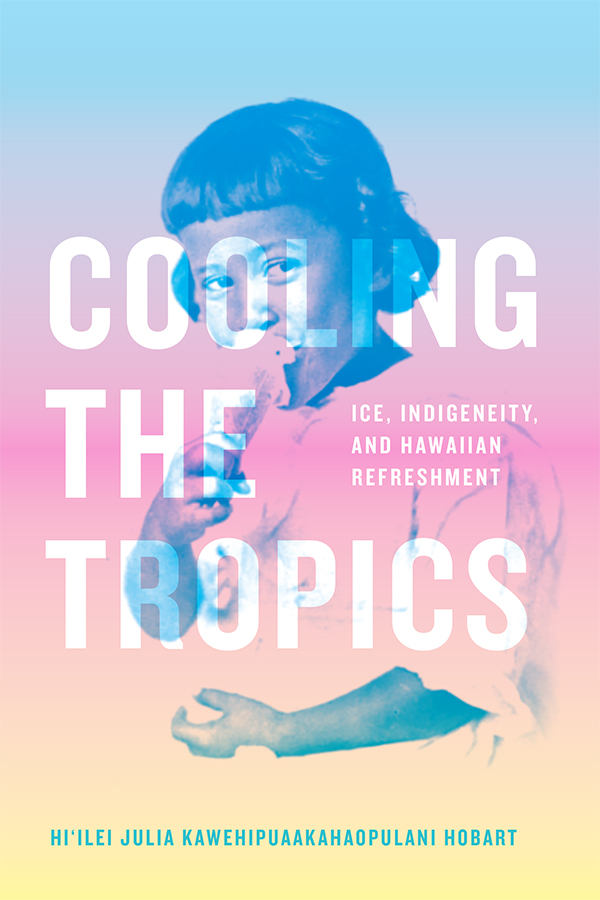 Many public events in the United States and in Canada begin by paying respects to the traditional custodians of the land, acknowledging that the gathering takes place on their traditional territory, and noting that they called the land home before the arrival of settlers and in many cases still do call it home. Cooling the Tropics does not open with such a Land Acknowledgement, but Hi′ilei Julia Kawehipuaakahaopulani Hobart (thereafter: Hi′ilei Hobart) claims Hawai’i as her piko (umbilicus) and pays tribute to the kūpuna (noble elders) and the lāhui (lay people) who “defended the sovereignty of [her] homeland with tender and fierce love.” She describes her identity as “anchored in a childhood in Hawai’i, with a Kānaka Maoli mother who epitomized Hawaiian grace and a second-generation Irish father who expressed his devotion to her by researching and writing our family histories.” She expresses her support for decolonial struggles and Indigenous rights, and participated in protests claiming territorial sovereignty for Hawai’i’s Native population. How can one decolonize Hawai’i? How can Hawaiian sovereignty discourse articulate a claim to land restitution and self-determination that is not a return to a mythic past? What about racial mixing, once regarded with anxiety and now touted as a symbol of Hawai’i’s success as a multicultural US state? What happens to settler colonialism and white privilege when the local economy and the political arena are dominated by populations originating from East Asia and persons of mixed descent? Is economic self-reliance a feasible option considering the imbrication of Hawai’i’s economy into the US mainland’s market? Can the rights of the Indigenous population be better defended in a sovereign Hawai’i? What is the meaning of supporting decolonial futures that include “deoccupation, demilitarization, and the dismantling of the settler state”? Can decolonization be achieved by nonviolent means, or do sovereignty’s activists have to resort to rebellion and armed struggle? What would be the future of a decolonized Hawai’i in a region fraught with military tensions and geopolitical rivalries? What can a decolonial perspective bring to the analysis of Hawai’i’s colonial past and possible futures? And why is academic research on Hawai’i’s history and society so often aligned with the decolonization agenda, to the point that decolonial approaches are almost synonymous with Hawaiian studies in the United States? More to the point: how can a PhD student majoring in food studies and chronicling the introduction of ice water, ice-making machines, ice cream, and shave ice in Hawai’i address issues of settler colonialism, Indigenous dispossession, Native rights to self-determination, and decolonial futures?
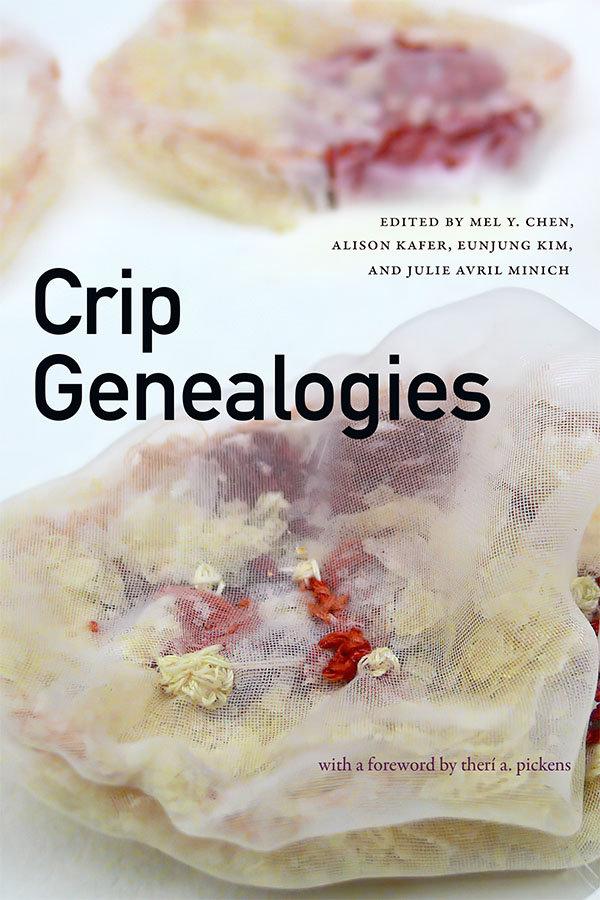 Crip Genealogies is an anthology of texts that claim the pejorative word crip as a moniker to distance themselves from earlier contributions in the field of disability studies. Crip is a diminutive for “cripple” and is used as a slur to designate people with visible forms of disabilities, mostly physical and mobility impairments. It is also a word associated with violence and ghetto culture, as the Crips are one of the largest and most violent associations of street gangs in Los Angeles. Reclaiming crip as a definition of self-identity is a way to return the stigma against the verbal offenders and to express pride in being a member of the disability community. In the academic world, it is also a way to carve a niche for critical disability studies and to express solidarity with non-normative forms of living that may also include queerness and ethnic pride. Symptomatic of this convergence between academic currents and social movements is the proliferation of acronyms to designate minoritarian identities that may be based on sexual orientation and gender identity (LGBTQ+), race and ethnicity (BIPOC, pronounced “bye-pock,” which stands for Black, Indigenous, and people of color), mental health and physical disability (MMINDS, an acronym which stands for Mad, “mentally ill,” neurodivergent, disabled, survivor), or an intersection thereof (SDQTBIPOC, which stands for sick and disabled, queer and trans non-white persons). Most contributors to Crip Genealogies are part of this extensive community and define themselves as queer persons of color, diversely abled, and straddling the line between scholarship and activism. The publication is meant to provide foundational basis for crip theory as a discipline opposed to the apolitical and normative aspects of disability studies and that is “disrupting the established histories and imagined futures of the field.”
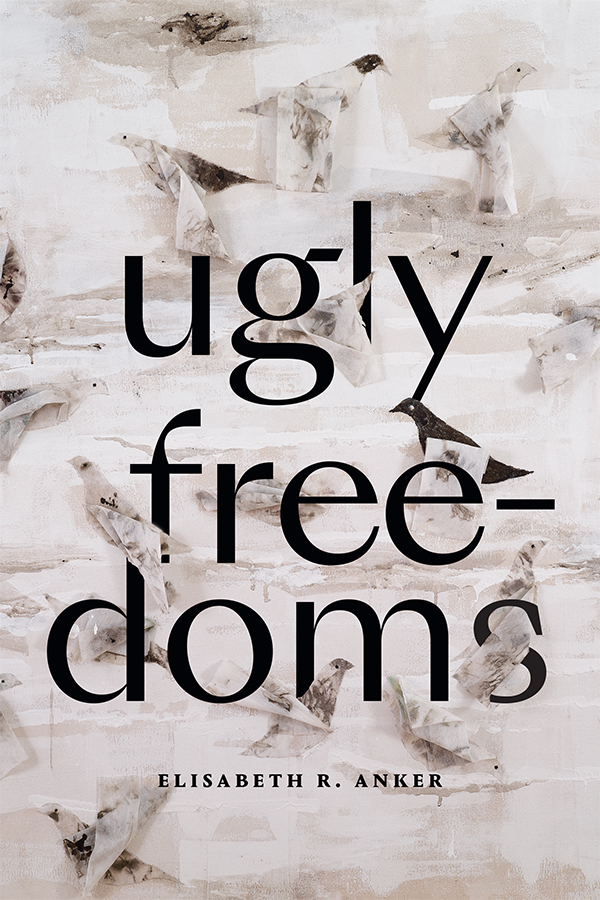 “We hold these truths to be self-evident, that all men are created equal, that they are endowed by their Creator with certain unalienable Rights, that among these are Life, Liberty and the pursuit of Happiness.” These truths are no longer self-evident: few people now believe in a Creator ; the inclusion of women in the generic term “all men” has to be specified ; and rights in their modern acceptation are not endowed or bestowed, but conquered and defended. What about Life, Liberty and the pursuit of Happiness? Are they not the expression of an American ideology that is shared by few people, even in the United States? Life itself has become a contested issue, as it hinges on when life starts and ends and some people are claiming a right to death in order to exit life with dignity. The pursuit of happiness was a central theme in Hollywood comedies of the 1930s and 1940s—a time of great unhappiness—, but we now look at these black-and-white motion pictures with nostalgia and irony, while Hollywood has moved to other descriptions of people’s aspirations and beliefs. Most significantly, freedom now has a hollow ring. The “Liberty Bell” march or the “Battle Cry of Freedom” were calls to rally round the flag and show patriotism, but these battle songs were used to legitimate wars of aggression and imperialism that made freedom a mockery of justice and equality. Domestically, the “land of the free” has the highest rate of incarceration in the world. We now speak with less assurance than our forefathers about the rights and values enshrined in declarations of independence or bills of rights. What if they were wrong in proclaiming life, liberty and happiness as our guiding principles? What if the reverse was true? What if freedom was not universally desirable, but “ugly” and repulsive? This is the argument that Elisabeth Anker makes in her book Ugly Freedoms, as she invites us to challenge self-evident truths and commonly believed assumptions.
 In Dreadful Desires, Charlie Yi Zhang advocates “a new approach” and “a different perspective” on love and neoliberalism in contemporary China. As he describes it, “My study integrates the discursive with the ethnographic and combines grave scrutiny of political economies and empirical data with upbeat examinations of popular cultures.” His grave and upbeat essay documents how a neoliberal market logic permeates expressions of love and aspirations for a good life, and how a fiercely competitive conjugal market, polarized gender relationships, and residency-differenciated precarities in turn produce willful subjects who are ready to sacrifice their well-being to maximize the interests of the state and capital. Its content and writing style also reflect his personal background and professional training. Having left China in his late twenties to pursue an academic career in the US, Zhang returned to his homeland for a few months of fieldwork in 2012 in order to complete his PhD in gender studies at Arizona State University. He was subsequently hired by the University of South Dakota to teach global studies to undergraduate students for two years, then landed a job as Associate Professor in Gender and Women’s Studies at Kentucky University, where he completed his book manuscript. During his graduate studies, his sociology professor taught him “how to combine different methodologies into [his] unique voice.” He claims to have developed “a novel theoretical and methodological approach” that builds an “epistemic ground for fundamental change.” His ambition is no less than “to lay the foundation for better futures” and “to develop a different understanding of global neoliberalism and to transform the current system.” His book is published in the Thought in the Act series edited by Erin Manning and Brian Massumi, two Canadian theoreticians working at the intersection of philosophy and art critique.
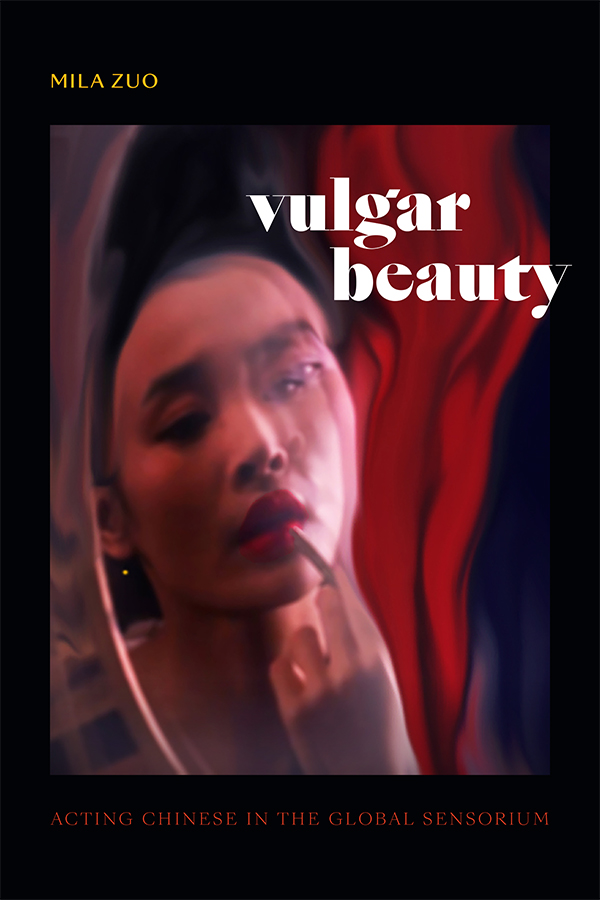 Everything has been written about the “male gaze” and the fetishization of Asian bodies on cinema screens. As film studies and feminist scholarship make it clear, white male heterosexuals fantasize about oriental ladies and make the exotic rhyme with the erotic. But Mila Zuo is not interested in white male cinema viewers: her focus is on the close-up faces of Chinese movie stars on the screen, which she finds both beautiful and vulgar in a sense that she elaborates upon in her book Vulgar Beauty. As a film scholar with a knack for philosophy and critical studies, she builds film theory and cinema critique based on her own experience as an Asian American who grew up in the Midwest feeling the only Asian girl in town and who had to rely on movie screens to find kindred faces and spirits. As she recalls, “When on rare occasion I did see an Asian woman’s face on television, a blush of shame and fascination blanketed me.” True to her own experience, she begins each chapter with a short recollection of her personal encounter with Chinese movies or Asian movie stars. The films that she selects in Vulgar Beauty, and the film theory that she develops, are not about them (American white males): they are about us (Chinese-identifying female spectators and actresses) and even about me (as an individual with her own subjectivity and
 The Duke Reader