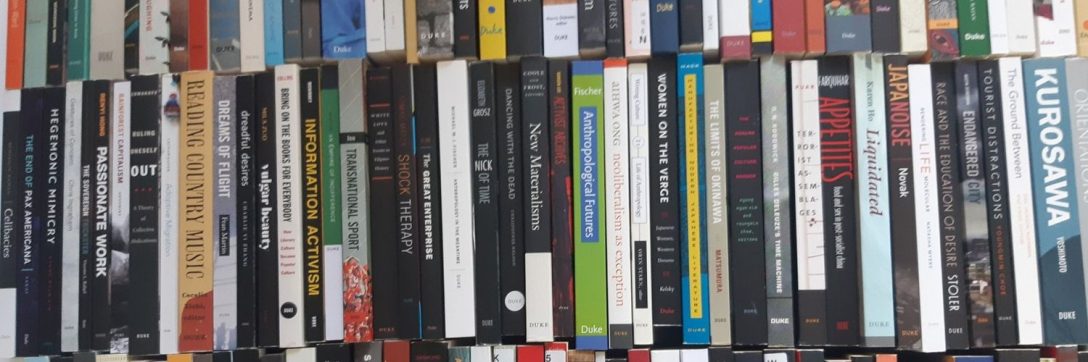

A review of The Banality of Good : The UN’s Global Fight against Human Trafficking, Lieba Faier, Duke University Press, 2024.
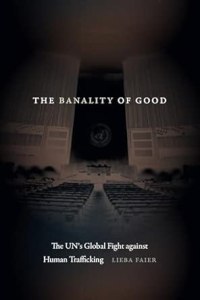 On the face of it, fighting human trafficking has all the banality of a good deed. The adoption in 2000 of a UN Protocol on human trafficking, with a heavy focus on the sexual exploitation and abuse of migrant women, was a positive act of feminist diplomacy and was lauded as such by feminist groups in the West and in developing countries. The UN template set the stage for the development of a new international regime of norms and guidelines for how national governments, NGOs, and international organizations should actively work together in this fight. With the Trafficking in Persons Report published yearly, the US Department of State must be praised for having given teeth to the UN Protocol, allowing a carrot-and-stick approach to ensure compliance while naming and shaming bad performers. The US government was bold enough to point finger at one of its closest allies, Japan, whose treatment of migrant women brought under an entertainer visa scheme was clearly violating basic human rights. Japan did a good thing by applying international best practices and diminishing abuse: within two years, the number of Filipino women entering Japan on entertainment visas dropped by nearly 90 percent. All stakeholders can take pride on this result: women’s groups, feminist leaders, UN diplomats, American Embassy staff, Japanese case workers, law enforcement officers, and the victims themselves. This may not sound like a big deal, but they all did well. Hence, the banality of good.
Turning Hannah Arendt’s Banality of Evil on its Head
Under this narrative, the banality of good denotes step-by-step progress in the advancement of human rights and the fight against human exploitation. But let us pause. All of the above is not the story that Lieba Faier tells, and her expression “the banality of good” in fact has the opposite meaning. She uses it “to refer to the perils of this campaign’s globalized institutional approach, which ultimately privileges technical prescription and bureaucratic compliance over the needs and perspectives of those it means to assist” (p. 11). All stakeholders aiming to do good and alleviate the plight of victims of human trafficking missed their original goal or had to compromise on their principles. By bringing a global solution to local problems, the international community only made things worse. Foreign women working in the sex industry were forcibly deported on criminal charges of visa overstay; grassroot NGO workers became complicit in the expulsion of those they were supposed to protect; while police raids pushed the sex industry further underground. In titling her book The Banality of Good, Lieba Faier of course has in mind the expression “the banality of evil” coined by Hannah Arendt to denote the fact that evil can be perpetuated when immoral principles become normalized over time by people who do not think about things from the perspective of others. Evil becomes banal when people don’t feel bad when they do evil. Here, the banality of good reflects the opposite attitude: people don’t feel good when they are supposed to do good. They know something is wrong, but they can only attribute it to “the system” or hope that their action contributes to the realization of a greater good.
Over and over in Lieba Faier’s narrative, individuals and groups committed to the betterment of foreign women’s plight had to compromise on their strategic goals and core values. The original impetus to fight against traffic in women came from Asian feminist organizations and grassroot human rights groups in Japan, Korea, and South-East Asia. Beginning in the early 1970s, they built a regional coalition to respond to a rising tide of Japanese sex tourism in the region. They also had a broader agenda that was anti-capitalist and anti-colonial at its core, seeing sex tourism as the reflect of structural inequities among nations and between genders and classes. But the US feminist groups who picked up their fight obscured the structural factors foregrounded by the earlier efforts of women’s groups in Asia and framed human trafficking as a uniform global issue that warranted a single global response. This global feminist movement coined the expression “sexual slavery” to articulate a singular, abstract, deterritorialized global practice, overlooking racial, national, and class inequalities among women. They formed an alliance with the human rights movement to launch a campaign for the abolition of “violence against women,” with human trafficking as a key instance of this violence. Lieba Faier describes how a globalist feminist project then became a UN-centered global human rights initiative: the drafting and adoption of the Trafficking Protocol was based on compromise by both Asian grassroot organizations and US feminist groups, who were themselves divided between prostitution abolitionists and sex worker rights’ advocates. By establishing a formal definition of human trafficking and then collecting data on it, the protocol promised to recognize human trafficking as a global phenomenon for states to measure and institutionally address.
Reframing Sexual Violence
But when national governments decided to act, they did not focus on human trafficking as a matter of violence against women. Rather, they reframed the issue once again, this time as a matter of transnational organized crime warranting a punitive solution. What US-based feminism had identified as violence against women would be reframed as a generalizable problem of criminal violation enacted by individual private citizens against other private citizens. A model of redistributive justice was discarded in favor of a carceral model. Of the three Ps framework—preventing trafficking, protecting victims and prosecuting traffickers–, the third P was prioritized and the two previous ones were sidelined. In Japan, grassroot NGO workers produced “trauma portfolios” of victims, collecting personal accounts of suffering to argue that foreign sex workers deserved protection and assistance, not treatment as criminals. NGO caseworkers’ accounts were so moving that American diplomats made the controversial decision of placing Japan on the Tier 2 Watch List of the 2004 Trafficking in Persons Report. For Japanese bureaucrats, this was a huge blow to national pride: most of the advanced countries were on the so-called Tier 1 list, but only Japan was ranked Tier 2. Something had to be done to restore Japan’s standing in the international community. The same narratives that had moved NGO activists and US diplomats into action were now perceived as a matter of national shame.
As Lieba Faier remarks, “People care about others for different reasons and thus to various ends” (p. 95). For NGO workers, reporting on victims’ stories of abuse to US embassy officials was a way of using gaiatsu, or foreign pressure, to induce reforms in domestic policies. But the Action Plan that the Japanese government enacted in 2005 was a bureaucratic exercise, devoid of compassion or concern for social justice. The “Roadmap to Tier 1” was rich in international best practices and indicators, but disconnected from facts on the ground. As a result of the screening process, migrants that were denied the status of victim were forcibly repatriated to their home countries or held liable for illegal residence (fuhō taizai). Only those officially recognized as victims of human trafficking received protected status, with a residency permit allowing them to remain in Japan or assistance to go back home. As one NGO caseworker confided to the author, “Sometimes I don’t feel good about the work I’m doing. These migrants have nothing back home” (p. xiv). Or as another worker put it, “They don’t have anywhere to go. For many, their life of extreme poverty in the home country is much worse than what they have now” (p. 15). These NGO caseworkers didn’t feel that justice was being served by those international protocols, but if they refused to participate in them, they worried that the situation would be worse. So they complied with the “bureaucratic glue and strings” (p. 171) attached to being part of an international campaign against trafficking in women.
Support Comes with Strings Attached
Lieba Faier complements her fieldwork with archival work and interviews with UN officials and government representatives in Japan and in the United States. She dissects the various frames and translations that a social issue has to go through in order to become a legal provision in an international protocol; and how a UN template in turn translates into reality and alters the lives of women who may or may not be designated as victims of international trafficking. She brings an ethnographic eye to practices of helping migrant workers, campaigning for women’s rights, drafting UN templates, and translating legal texts into policy options. She reads “against the grain of bureaucratic documents to see the contradictions, aporias, and impasses embedded in them” (p. 101). As she describes it, the United Nations acts as a clearinghouse for such efforts, erasing history and geographical differences in the interest of establishing a standardized international practice. As she points out, “the rote adherence to an institutional protocol comes to stand for necessary structural change” (p. 13). Well-intentioned humanitarian campaigns produce unintended harm through bureaucratic routines and institutional priorities. These efforts prioritize protocol compliance over survivors’ needs, perspectives, and lived realities, leading to repatriation, compromised quality of life, and even criminalization of those they aim to help. The Japanese government offers assistance to only a small portion of those foreign workers suffering abuse and exploitation: “In 2018, only seven trafficking victims received repatriation assistance, and this number dropped to five in 2019” (p. 211). These “lilliputian pockets of improvement” (p. 213) mask egregious failure to put an end to human trafficking. Even those who benefit from repatriation programs fall victim of “cruel empowerment” (p. 185): humanitarian programs designed to empower them through financial literacy or other neoliberal models of development fail to address the structural inequalities of the status quo.
Lieba Faier’s scholarship is informed by the years she spent as a volunteer in Japan, the Philippines and the United States working alongside NGO workers assisting migrant women and lobbying the UN and governments to address the mistreatment of foreign women working in the sex industry and other exploitative sectors. As she writes, “Doing multi-sided research involving multiple organizations in three different countries over many years had advantages insofar as I sometimes heard part of a story in one organization or country and the rest of the story in others” (p. 19). Her findings were also buttressed by the availability of US diplomatic cables disclosed by WikiLeaks, which documented internal processes and political motivations. Grassroot perspectives allowed her to question the way these migrant women’s plight was addressed in international policy forums. As she notes, “the global approach to this issue was sidelining, if not displacing, the expertise and guidance of the experienced NGO caseworkers whose labor was central to it” (p. xii). While these NGO workers were sometimes themselves former labor migrants and had a deep understanding of the situation they tried to alleviate, the organizations that brought the issue to an international public stage were headed mostly by academics, journalists, or lawyers with little direct knowledge of facts on the ground or contacts with grassroot organizations. She also questions the exclusive focus of the international campaign on the sex industry and the lack of attention awarded to other forms of exploitative labor, such as the conditions faced by Asian workers who come to Japan under the Technical Intern Training Program (Ginō Jisshū Seido), which she describes as a cover-up for cheap and disposable labor acquisition. Her advocacy for migrant rights doesn’t stop at one particular category, but is informed by “a vision of justice that asks national governments and their citizenries to see foreign workers as part of their imagined community” (p. 140).
A Plea for the UN
The Banality of Good is informed by the vision that “other worlds are possible,” as stated in the book’s opening dedication. But what are the alternatives? As a French diplomat committed to a feminist diplomacy agenda, I would not easily dismiss the United Nations’ approach to human trafficking or the work done by American diplomats to document Japan’s insufficient efforts in applying human rights standards. I agree with the author when she states that “if international guidelines are themselves problematic, little will be achieved by compliance with them” (p. 120). But this should serve as a rallying cry to devote more attention and resources to UN multilateralism and human rights campaigning. The Trafficking Protocol, with its lack of a credible enforcement mechanism and its emphasis on criminalization and border protection, is an easy target for attack. But internal debates show that the work was perfectible and that other policy options were put on the negotiation table. Mary Robinson, then UN high commissioner for human rights, pushed hard to have a human rights perspective embedded in the text. She proposed the addition of specific references, provisions, and language to acknowledge the rights of migrant workers, not just sex workers or those recognized as victims of trafficking; and she argued for strengthening the “victim protection and assistance” provisions in the draft protocol to allow for financial resources being devoted to helping victims of human trafficking. The fact is, we don’t have an alternative to the UN, and bottom-up approaches are compatible with international summitry or legal text draft-making. Concepts such as “responsibility to protect,” “rights-based approach” or “human security” are not just abstract notions devoid of any content; they alter facts on the ground and induce real changes for people in need of international protection. Misperformance is no reason for inaction.

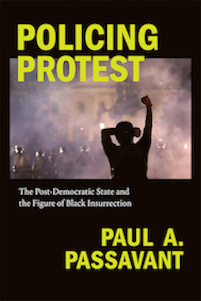 Let’s begin with a tale of two cities. The first—let’s call it Gotham—is a city where crime and violent protest run rampant. Hoodlums and thugs control the streets. City Hall is corrupt and incompetent. Police officers are powerless. An anti-Western, anti-rationalist, racialist, segregationist ideology has declared war against individual freedom and freedom of thought. Vigilante groups have taken control of entire neighborhoods and established a reign of permanent violence, looting businesses, attacking representatives of public authority, setting fire to courts of law and to the premises of police departments. The chaos that accompanied the takeover of these Red Guards has caused dizzying increases in crime. Even so, influent voices are calling for the defunding of police and the abolition of prison. Law enforcement officers have to obey strict rules of engagement. They have to wear body cameras to record their interactions with the public or gather video evidence of their eventual mishandling of a situation. There are discussions about streaming these video feeds online, in real time. The second city—dubbed The Big Apple—is a place where a militarized police patrols the streets like an occupation army, clamping down on any form of dissent. Business interests have privatized vast portions of the public space, evacuating any undesirable people including climate change activists, protesters distributing antiwar pamphlets, or trade union picketers who could disrupt the consumer’s experience. With the full support of politicians, police forces have responded to a previous wave of crime with a zero tolerance policy they now apply to all kinds of public protest, in violation of the First Amendment of the American Constitution. This “Broken Windows” doctrine has had no effect on crime, but now justifies disproportionate use of force, excessive length of custody, and “shock and awe” tactics against protesters. People demonstrating for social justice or against racism are treated like criminals and are arrested without any legal basis. Democracy is undermined, and the government increasingly behaves like an authoritarian state.
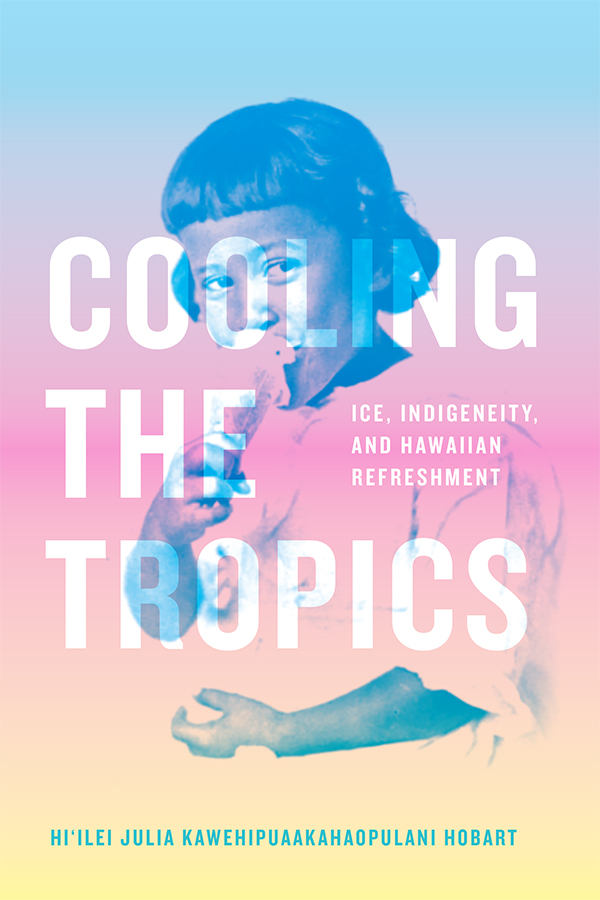 Many public events in the United States and in Canada begin by paying respects to the traditional custodians of the land, acknowledging that the gathering takes place on their traditional territory, and noting that they called the land home before the arrival of settlers and in many cases still do call it home. Cooling the Tropics does not open with such a Land Acknowledgement, but Hi′ilei Julia Kawehipuaakahaopulani Hobart (thereafter: Hi′ilei Hobart) claims Hawai’i as her piko (umbilicus) and pays tribute to the kūpuna (noble elders) and the lāhui (lay people) who “defended the sovereignty of [her] homeland with tender and fierce love.” She describes her identity as “anchored in a childhood in Hawai’i, with a Kānaka Maoli mother who epitomized Hawaiian grace and a second-generation Irish father who expressed his devotion to her by researching and writing our family histories.” She expresses her support for decolonial struggles and Indigenous rights, and participated in protests claiming territorial sovereignty for Hawai’i’s Native population. How can one decolonize Hawai’i? How can Hawaiian sovereignty discourse articulate a claim to land restitution and self-determination that is not a return to a mythic past? What about racial mixing, once regarded with anxiety and now touted as a symbol of Hawai’i’s success as a multicultural US state? What happens to settler colonialism and white privilege when the local economy and the political arena are dominated by populations originating from East Asia and persons of mixed descent? Is economic self-reliance a feasible option considering the imbrication of Hawai’i’s economy into the US mainland’s market? Can the rights of the Indigenous population be better defended in a sovereign Hawai’i? What is the meaning of supporting decolonial futures that include “deoccupation, demilitarization, and the dismantling of the settler state”? Can decolonization be achieved by nonviolent means, or do sovereignty’s activists have to resort to rebellion and armed struggle? What would be the future of a decolonized Hawai’i in a region fraught with military tensions and geopolitical rivalries? What can a decolonial perspective bring to the analysis of Hawai’i’s colonial past and possible futures? And why is academic research on Hawai’i’s history and society so often aligned with the decolonization agenda, to the point that decolonial approaches are almost synonymous with Hawaiian studies in the United States? More to the point: how can a PhD student majoring in food studies and chronicling the introduction of ice water, ice-making machines, ice cream, and shave ice in Hawai’i address issues of settler colonialism, Indigenous dispossession, Native rights to self-determination, and decolonial futures?
 Crip Genealogies is an anthology of texts that claim the pejorative word crip as a moniker to distance themselves from earlier contributions in the field of disability studies. Crip is a diminutive for “cripple” and is used as a slur to designate people with visible forms of disabilities, mostly physical and mobility impairments. It is also a word associated with violence and ghetto culture, as the Crips are one of the largest and most violent associations of street gangs in Los Angeles. Reclaiming crip as a definition of self-identity is a way to return the stigma against the verbal offenders and to express pride in being a member of the disability community. In the academic world, it is also a way to carve a niche for critical disability studies and to express solidarity with non-normative forms of living that may also include queerness and ethnic pride. Symptomatic of this convergence between academic currents and social movements is the proliferation of acronyms to designate minoritarian identities that may be based on sexual orientation and gender identity (LGBTQ+), race and ethnicity (BIPOC, pronounced “bye-pock,” which stands for Black, Indigenous, and people of color), mental health and physical disability (MMINDS, an acronym which stands for Mad, “mentally ill,” neurodivergent, disabled, survivor), or an intersection thereof (SDQTBIPOC, which stands for sick and disabled, queer and trans non-white persons). Most contributors to Crip Genealogies are part of this extensive community and define themselves as queer persons of color, diversely abled, and straddling the line between scholarship and activism. The publication is meant to provide foundational basis for crip theory as a discipline opposed to the apolitical and normative aspects of disability studies and that is “disrupting the established histories and imagined futures of the field.”
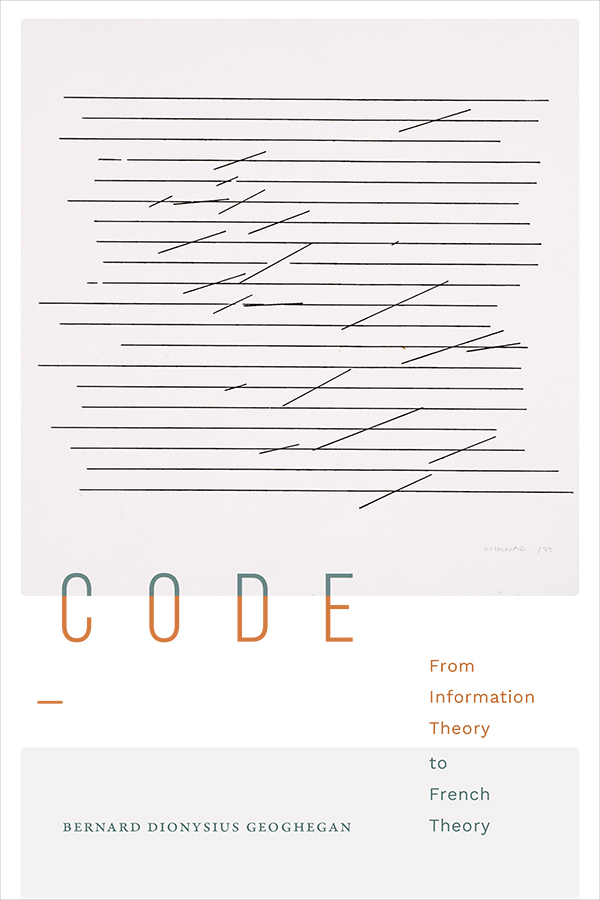 Is there a pathway that goes “from information theory to French Theory”? Straying away from the familiar itineraries of intellectual history, Bernard Dionysius Geoghegan invites us to take a path less trodden: a detour that allows the reader to revisit famous milestones in the development of cybernetics and digital media, and to connect them to scholarly debates stemming from fields of study as distant as structural anthropology, family therapy, and literary semiology. Detours and shortcuts are deviations from linear progression, reminding the traveler that there is no one best way to reach a point of destination. Similarly, there are several ways to read this book. One is to start from the beginning, and proceed until the end, from the birth of communication science during the Progressive Era in the United States to the heydays of French seminars in sciences humaines in the Quartier latin before mai 68. Another way is to start from the conclusion, “Coding Today”, and to read the whole book in reverse order as a genealogy of the cultural analytics used today by big data specialists and modern codifiers of culture. A third approach would be to start from the fifth and last chapter on “Cybernetics and French Theory” and to see how casting cultural objects in terms of codes, structures, and signifiers relates to previous methodologies of treating communication as information, signals, and patterns. The common point of these three approaches to reading Code is to emphasize the crossing of boundaries: disciplinary boundaries between technical sciences and the humanities; political demarcations between social engineering and cultural critique; and transatlantic borders between North America and France. The gallery of scientists and intellectuals that the book summons is reflective of this broad sweep: Norbert Wiener, Warren Weaver, Margaret Mead, Gregory Bateson, Claude Lévi-Strauss, Roman Jakobson, Jacques Lacan, Roland Barthes, and Luce Irigaray are seldom assembled in a single essay; yet this is the challenge that Code raises, inviting us to hold together disciplines and methodologies that are usually kept separate.
 “I can’t breathe!” These were the last words uttered by Eric Garner, a Black resident of Staten Island who, on July 17, 2014, was put in a deadly chokehold by an NYPD officer for allegedly selling “loosies” or single cigarettes on the street. Garner suffered from asthma, a condition that, according to epidemiological data, disproportionately affects African Americans. Garner’s last words were also those of Elijah McClain and George Floyd, two other Black men killed by police just a few years later. “I can’t breathe” has become a rallying cry for our times and is used as an expression of the asphyxiating atmosphere in which activists declare that Black Lives Matter. The unability to breathe can be understood as both a metaphor and material reality of racism, which constrains not just life choices and opportunities, but the environmental conditions of life itself. It draws our attention to breathing as a political act: the capacity to breathe, or its preclusion, defines a new form of biopolitics in which some lives are deemed worthy of inhaling fresh air and some aren’t. Reclaiming ownership of the means of respiration, literally and figuratively, may delineate a new kind of respiratory politics that recognizes breathing as an unalienable right. For Jean-Thomas Tremblay, an art critic and professor of environmental humanities, breathing is, more than ever, in the air. Of course, breathing is in the air. But it specifically is, now, in the Zeitgeist. It is a sign of the times that breathing’s intensity and its variations—submitting breathing subjects to chokehold or waterboarding, refraining from inhaling certain substances, filtering inhaled air through face masks, measuring one’s carbon dioxide emissions—now feature in our political imaginary as an expression of agency and control. For Jean-Thomas Tremblay, the crisis in breathing predates the climate urgency, the Covid-19 epidemic, or the BLM movement. He sees its emergence and intensification around the 1970s, and tracks its expression in marginal, underground, or minoritarian art productions that may have escaped the radar screen of art historians but that, more than mainstream creations or popular art, may help us to capture what is at stake in the current inability to breathe.
 Sound studies can take you to faraway places. Ethnomusicology, the study of music in its social and cultural contexts, has taught us to lend an ear to songs and musical genres performed by people distant from Western cultures and mainstream musical practices. In Radiation Sounds, Jessica Schwartz takes her readers to the Marshall Islands, an independent microstate in the Pacific, to listen to the distant echoes and silences brought forth by the nuclear testings that took place at the onset of the Cold War. From 1946 through 1958, the United States conducted 67 nuclear tests on islands and atolls now composing the Republic of Marshall Islands (RMI). Symbolized by the strong visual of the mushroom cloud, these nuclear detonations included the 15-megaton Castle Bravo hydrogen bomb test on March 1, 1954, which led to the unexpected radioactive contamination of areas to the east of Bikini Atoll. The United States organized forcible relocations from the atolls made uninhabitable by the nuclear fallout, kept a moratorium on all information pertaining to the nuclear arms race, and submitted exposed populations without their consent to medical examination on the effects of radiations in a program code-named Project 4.1. Marshallese music and voices still carry the echoes of these nuclear explosions as they radiate through local politics, radio broadcasts, musical performances, folk songs, contaminated soils, and ailing bodies. Radiation Sounds gives equal importance to sounds and to silence, to music and to noise, to songs and to oral testimonies. It considers not only soundwaves, but also radio waves, oceanic waves, and nuclear radiations made sensible through the audible clicks of Geiger counters and the crackled voices of remembrance songs. It addresses the full spectrum of electromagnetic wavelengths while staying attuned to their sociopolitical dimension. A nuclear blast is not only a visual flash: its delayed sound effect and ionizing radiations produce more lasting consequences, including for the voices that it smothers and the silence that is forced onto all parties.
 The Duke Reader