
Writing Culture Redux

A review of Writing Culture and the Life of Anthropology, edited by Orin Starn, Duke University Press, 2015.
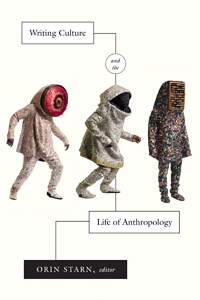
Writing Culture“Life” has emerged as a key concept in anthropology. It is the central notion that defines the discipline in our present day and age. So was “culture” in the eighties, when the volume Writing Culture was published. Many scholars and graduate students took to this book and projected unto it their hopes and frustrations with a discipline many considered as tainted by its colonial past and epistemological present. This was before the “culture wars” that cultural studies helped ignite, and after counter-culture had denounced America’s pretension to hegemony. Titling a book “Writing Culture and the Life of Anthropology,” almost thirty years after Writing Culture had practically declared anthropology dead, is to proclaim that there is life after death. Or maybe resurrection: in the course of three decades, anthropology has reinvented itself in order to make itself relevant for a world that has shattered its historical certitudes.

The resurrection of cultural anthropology

The return of the undead takes the form of a collection of essays, some reminiscent, others programmatic, others yet inward-looking and reflexive, written by some prominent figures in the discipline. Some of the contributors were “present at the creation”: the two editors of Writing Culture, James Clifford and George Marcus, as well as Michael Fisher, contribute essays to this volume. Others were involved as graduate students who had to take a stand about the book in class discussions or job market interviews—as the editor recalls, “you simply had to read—and have an opinion about—the book unless you wanted to appear pathetically behind the times.” Some of the people involved in the WC debate back then were feeling hysterical. By contrast, as James Clifford comments, we are now “feeling historical.” Writing Culture belongs to another era: “there is no entry for globalization in the book’s index. No Internet, no neoliberal, no postcolonial.” According to George Marcus, “Writing Culture was an ambitious and much needed critique of anthropology by means of literary therapy.” It was “perhaps the single most influential anthropology book in recent decades.” But the result of the “linguistic turn” was often “self-indulgent, jargon-strewn texts that only the initiated could understand.” For many commentators, Writing Culture led to a dead end.

So is anthropology dead? There is certainly an academic labor market crisis, coupled with a mutation in the publishing business. As noted in the introduction, “the dearth of stable tenure-track positions has created a whole large class of subemployed adjuncts who suffer through bad pay, the slights of second-class university citizenship, and a demoralizing uncertainty about their future prospects.” Anthropologists are in no less pressure to publish — and even in our age of on-line journals or internet archives, publishing a book still stands as a requisite for getting tenure. An ethnography’s typical print runs in a thousand copies—not much, for a discipline whose ambition is not only to study mankind, but also to change it. And yet “the number of anthropology majors, Ph.D. students, and faculty have not declined but have grown some over the past decade.” The American Anthropological Association today has thirty-eight subsections and more than eleven thousand members, and it sponsors twenty-two scholarly journals. AAA meetings are a moment of collective effervescence quite similar to the potlatch gatherings of North-West American Indians as described by classical anthropologists: “six thousand people united by a professional identity, but little else, come together for a frenzied few days of intense mutual activity.”

Anthropology is the best major for taking over the world

Indeed, a case could be made that anthropologists never had it so good. As a recent blog entry in “Living Anthropologically” has argued, anthropology may be the worst major for your career, but the best major for taking over the world. It is now well known that President Obama’s mother was a practicing anthropologist, and that she may have transmitted a certain worldview in her son’s upbringing, a worldview best summed up by Margaret Mead’s definition of the discipline: “the purpose of anthropology is to make the world safe for human differences.” This particular quote was used by president Obama when he greeted President Ashram Ghani of Afghanistan, a card-carrying PhD anthropologist. Before becoming president, Ashram Ghani had worked in the World Bank, an institution now run by an anthropologist, Jim Yong Kim. Jim Kim was among the first enrollees of Harvard’s experimental MD/PhD program in the social sciences, getting both an MD degree at Harvard Medical School and a PhD in the anthropology department. He then went on to create an NGO with another anthropologist, Paul Farmer, who has become a hero of sorts for his humanitarian work in Haiti. Before Piketty’s Capital became a bestseller worldwide, an anthropology book by David Graeber, Debt: The First 5000 Years, provided a manifesto for the Occupy Wall Street crowds. Other recent bestsellers include The World Until Yesterday by Jared Diamond, who was originally trained in physiology but who poaches the anthropology field relentlessly in his writings.

Anthropology, in short, is not an endangered genre. The essays collected in this volume all speak to the vitality of the discipline. Each will appeal to a different class of reader. As a self-taught amateur who reads anthropology as a way to get acquainted with mankind, I confess I remain impervious to some of the stylistic prowess displayed by some of the authors. The essay by Michael Taussig—I have yet to complete reading a book by him—seemed to me like a long rant inspired by the consumption of powdered coca leaves. It is bereft of all the traditional trappings of scholarship: there are no sections, no titles, no footnotes, and no bibliography. I couldn’t help notice that the word “F***” appears three times in the book, and that there are nineteen occurrences of the word “kinky” in one single article (“queer” gets several mentions as well, but one could argue it has become a scholarly notion.) Some entries are mere work in progress, like the ethnography of stone that hints at interesting developments in Chinese culture. Others present as heroic achievements what seems to me the standard use of widely available tools. Under the “digital pen” of some contributors, “concept work amid data or as data” means “taking field notes” or “writing a research diary.” A “draft” becomes a “prototype”, a website a “curated archive”, a blog or a twitter account a way by which “digital technology provides a means of continual reporting and engagement in relation to its granular, built publics along the way.”

A brave new disciplinary world

It is true that technology has changed the way anthropologists do business. Although fieldwork remains the hallmark of the profession, the “field” no longer seems far away at all in the age of Skype, Facebook, and the instant message. Ethnographers don’t limit themselves to distant terrains: it is “a brave new disciplinary world where just about anything anywhere has become fair ethnographic game.” Ethnographers no longer set tent in isolated communities: they follow the ebbs and flows of globalization, and engage multiple terrains and peoples to track life in an interconnected world. How, to take examples of recent monographs referred to in the introduction, “does one do the ethnography of Internet chat rooms, social media, or dot-come dating? As with fieldwork, the very word “ethnography” seems dated. Are there still ethnos to graph about?” After all, Orin Starr remarks, “the very idea of writing, at least anything more than a text or tweet, can seem old-fashioned now in the age of multimedia, streaming video and the avalanche of other digitized communication.” And yet, “as Jurassic a medium as print may be, the journal article and the book remain the gold standard for hiring and promotion.” The authors of Writing Culture were calling for new ways to experiment with forms and language. Now, as Orin Starn and Michael Fisher remark, they have to contend with the competition of nonfiction writers, novelists and moviemakers, who sometimes base their creation on extensive fieldwork but who succeed in establishing a better connexion with the public.

Could anthropology one day turn into a new religion? After all, there are prophets, priests and shamans in this book—each will be easily recognized. Writing Culture has acquired the status of a cult book or of sacred scriptures. Like the founders of any new creed, the promoters of “postmodernism” had to survive the routinization of charisma. There are chapels and churches, dogmas and rituals, anathema and exorcisms in the world of modern anthropology. What’s more, the people being studied are no longer passive: they “talk back” to the anthropologist, and may incorporate some of her findings into their belief systems.

Three stars from Duke University

Not all chapters of this book are equally memorable. My pick consists of three essays, which by themselves make this newly edited volume perhaps less epoch-making than the original Writing Culture, but nonetheless valuable. The first is the introduction by the editor, Orin Starn, who teaches at Duke University. It is a model of good humor and accessible prose, written in a light tone that nonetheless address deep questions. I like the part when he notes that “one is more likely to run into an anteater at a shopping mall than a Republican anthropologist,” or when he quotes Florida governor’s harsh words about anthropologists “as if we were just a grade above cockroaches or some other household pest.” As this introductory chapter is available on the publisher’s website, I encourage readers to peruse it.

The two other chapters that make this book worthwhile are the contributions by Charles Piot and Anne Allison, also from Duke. Plot revisits the analysis of African kinship systems, with a twist: in contemporary Togo, the US visa lottery system has led to the creation of a cottage industry in fake marriages and invented relatives, reenacting as it were the ancient traditions of situated kinship, bridewealth transactions, and “ghost marriage” with a deceased relative. Although Charles Piot certainly didn’t write it with this intention in mind, I recommend this chapter to consular officers in charge of visa procedures in West Africa and elsewhere: they will recognize some familiar figures, and may learn a few new tricks in the trade. As for Anne Allison, I have already reviewed her book on Precarious Japan, a deeply moving account of everyday life in the post-Fukushima era, which she here complements with ethnographic vignettes conveying messages of hope and resilience.

War, Grief, Mud.

A review of Precarious Japan, Anne Allison, Duke University Press, 2013.

Anne AllisonIf we include Japanese sources, there is such an extensive literature on Japan’s economy and society that the bilingual observer is often at a loss. She can make this literature accessible to non-Japanese readers—by translating, summarizing, contextualizing. Or she can collect her own primary data—especially in the field of ethnography, where the main insights are supposed to originate from fieldwork. Anne Allison’s book does both, but in an unsatisfactory manner. Its topic—precarity and precariousness—doesn’t lend itself easily to fieldwork. How do you observe a feeling, a mood, a sentiment, or a lack thereof? How do you assess the way—as Allison defines her topic— “relations with others—of care, belonging, recognition—are showing strain but also, in a few instances, getting reimagined and restitched in innovative new ways”? Having had limited time to conduct fieldwork, Allison had to rely on other people’s observations: activists, commentators, social workers, or critics. But she fails to give proper credit to these domestic observers of precariousness—and in particular to build a theory informed by local categories and debates. Instead, she imports the latest fads in social critique and peppers them with Japanese terms to add local flavor, without engaging Japanese thought seriously.

Precariousness everywhere

How do you observe precariousness? The answer, for anyone living in Japan, is pretty straightforward: open a newspaper, and you will read many accounts of life at the edge. The “shakai” (society) section of newspapers is full of reports on precarious employment (dispatch, contract, day labor), on elderly people living and dying alone (kodokushi), on young people withdrawing from society (hikikomori), on poverty gnawing at the life of the most vulnerable: single mothers, school dropouts, foreign workers, social outcasts, laid-out salarymen, etc. “Life, tenuous and raw, disconnected from others and surviving or dying alone: such stories cycle through the news these days,” remarks the author. Next to the serious reporting on social ills come the sensationalized news items making headlines: “mothers beheaded, strangers killed, children abandoned, adults starved.” Japan is the country where social pathologies bear indigenous names: “otaku” live in a fantasy world of anime characters and online chatrooms; “hikikomori” retreat in the private space of their room, withdrawing from school or workplace and avoiding social contact; “netto kafe nanmin” are mainly flexible or irregular workers who, with unsteady paychecks and no job security, are unable to afford more permanent housing and dwell in PC cafes for a low fee.

Likewise, there is not a lack of social commentary, of people analyzing these trends to draw general lessons or recommendations for Japan’s future. According to observers, “Japan is becoming an impoverished country, a society where hope has turned scarce and the future has become bleak or inconceivable altogether.” Precarity not only affects labor conditions but life as well: it is “a state where one’s human condition has become precarious as well.” There is a rich vocabulary that describes the difficulties of life (ikizurasa) in contemporary Japan: the insecurity (fuan, fuantei), dissatisfaction (fuman), the lack of a place or space where one feels comfortable and “at home” (ibasho ga nai), the connections (tsunagari) and sense of belonging disappearing from society (muen shakai), the poverty of human relations (ningenkankei no hinkon), the withering of social links (kizuna), the incapacity to achieve an “ordinary lifestyle” (hitonami no seikatsu), the absence of hope (kibô ga nai), the despair (zetsubô). For the Japanese, these terms are highly evocative, and together they paint a bleak picture of a society that has lost its balance. For non-Japanese speakers, the Japanese words add a new repertoire of social conditions that may help put their own society into perspective.

Metaphors of war, grief, and mud

Anne Allison uses several metaphors to describe the current state of Japan under precarity. The first is a bellicose one, a paradox in a country that has banned war in its constitution. Japan is a society at war with itself. More specifically, the country is at war with its own youths, sacrificing them as refugees. According to human rights activists, it is a war that the state is waging by endangering and not fulfilling its commitment to the people—that of ensuring a “healthy and culturally basic existence” that all citizens are entitled to under Article 25 of the Constitution. When the outside world is seen as a war zone, people take refuge at home or in an imaginary world. In 2007, the monthly magazine Ronza published an essay titled “Kibô wa sensô” (Hope is War), in which a young part-time worker described all the humiliations his generation had to endure and concluded by placing his hope in a nationalist war that would restore his sense of masculine dignity and pride. Nobody really advocates war and the return to militarism in Japan; but nationalism is clearly on the rise, and right-wing extremism has found in Internet forums and discussion channels a new venue to vent its regressive agenda. Social scientists describe this reaction as paranoid nationalism: “when, feeling excluded from nation or community, one attempts, sometimes violently, to exclude others as well.” The most extreme form of this self-destructing drive is given in the random murder incidents by demented youths who kill passersby as a form of protest.

The second metaphor that runs through the text is the idea of grief and mourning. Here the author draws from Judith Butler, the famous feminist scholar who, drawing herself from Jacques Derrida, has written about the grievability of all life and lives. As Butler writes, “there can be no recognition of a person’s life without an implicit understanding that the life is grievable, that it would be grieved if it were lost, and that this future anterior is installed as the condition of its life.” Without grievability, there is no life or, rather, there is something living that is other than life. But not all lives are equally grievable: when people live and die alone, nobody is there to register their death (as in the case of the “missing centenarians”, who were found to be deceased and unreported by their families who kept the pension payments for themselves.) What counts and who counts as having a grievable life is increasingly dependent on economic calculation and state action. It is the prerogative of the modern state to “make live and let die” (Foucault), and never is this new biopolitical landscape more apparent than in the neoliberal injunction to pursue self-reliance, self-independence, and self-responsibility (jikô sekinin) as a positive agenda.

Shoveling mud and cleaning houses in Ishinomaki

The third metaphor that creeps in the last chapter is the invasion of mud. The author was knee-deep in it when she volunteered to clean ditches in Ishinomaki after the earthquake and tsunami that hit the Tôhoku region on March 11th, 2011. As Allison aptly describes it, “the tsunami rendered the entire northeast coastline a cesspool of waste: dead remains and dying life entwined—animals, humans, boats, cars, oil, hours, vegetation, and belongings.” Cleaning up the mess was devoted to the Self-Defense Forces—whose members in uniform had never been so conspicuous in Japanese society—, assisted by the US Armed Forces engaged in Operation Tomodachi and other, smaller contingents dispatched by friendly nations. Then a slew of NGOs, volunteers, and private cleanup operations (many of them employing precariat workers) took on the job in a great upsurge of solidarity. Cleaning the mud from homes and ditches, sweeping it from photographs and personal belongings, is described by the author as an exhilarating experience, a kind of return to a primal scene where social barriers disappear and a new sense of community emerges. This regression to an infantile stage of scatological pleasure is also a move away from the political. The author recognizes it herself: “while tremendously moving, the work we do moves little in fact.” But the important thing is “being there”: “stress is placed on the immediacy of the action and on the ethics of care.” Riding a bus to Ishinomaki, an NGO team leader wondered why people made street protests against the government’s nuclear policy: “why not come here and shovel mud instead?”

But there is a politics in shoveling mud, grieving lives, and opposing social warfare. Anne Allison never discusses her adherence to a progressive agenda broadly aligned with the Japanese left. The media she relies on (the Asahi newspaper, mostly), the intellectuals she quotes, the social activists she associates with, and the activities she participates in, are all identified with a segment of Japanese politics. Like it or not, this segment has been on the decline in Japan for the last two decades at least. The moment Allison did her fieldwork, which corresponded to the time politicians from the Democratic Party of Japan were in power, was only a parenthesis in an era dominated by the conservative Liberal-Democratic Party. Japanese conservatives of various stripes have themselves offered comments and remedies about the rise of precariousness and exclusion in contemporary Japan. These views fill the pages of right-wing magazines such as Shokun!, Seiron, Voice, or WiLL. Reflecting these views, which also find echoes among members of the precariat (remember the Ronza article praising war as a solution to poverty), would have provided ethnographic value: we don’t need to be reminded about what people like us think. It would also have helped us understand the future: as mentioned, these people are winning the day in contemporary Japan.

A limited use of local sources

Indeed, the range of sources Allison uses and the scope of her fieldwork appear limited. Although the book claims to be based on participant observation, one has to wait until page 124 to begin to see real ethnographic work. And fieldwork is mostly limited to on-site interviews with well-known social activists: Yuasa Makoto, one of the leading figures advocating rights for precarious workers, dispatch workers, the homeless, and working poor; Amamiya Karin, a former suicidal freeter and author in her mid-thirties who dresses in goth; Genda Yûji, the founder of “hope studies” (kibôgaku) at Tokyo University; Tsukino Kôji, a performer and founder of Kowaremono, a music band where each member self-identifies as having a handicap; etc. The Japanese books that are quoted—and there are quite a few in the bibliography—are only scanned in a superficial way, and there are no close readings of key texts that would have given a conceptual framework to the topic at hand. Indeed, it is significant that when Allison needs theoretical references, she turns to English sources and authors like Judith Butler, Lauren Berlant, Michel Foucault, etc. There is a division of labor by which Japanese sources provide first-hand observation and commentary, but the real concept work—the theory of the theory—is done by Western authors. Allison quotes in passing a few Japanese philosophers who have tried to address issues of social justice and identity politics in innovative ways: Azuma Hiroshi, Asada Akira, Kayano Toshihito, and others. She could have relied more on them to provide a locally-grounded, theoretically relevant and ethnographically innovative account of the rise of precariousness in Japan.

The Anthropologist on the Couch

A review of Illusions of a Future: Psychoanalysis and the Biopolitics of Desire, Kate Schechter, Duke University Press, 2014.

Kate SchechterHave you ever been tempted to eavesdrop on a psychoanalyst’s conversation? Not in a therapy session of course: these conversations are private, and they usually take the form of the patient talking and the analyst listening. But psychoanalysts also talk about their trade in professional associations, congress meetings, or interviews. This public discourse is what interests Kate Schechter in Illusions of a Future. As an anthropologist-in-training, she took as her dissertation topic the psychoanalytic community in Chicago, going through their local archives and interviewing key members. Combining ethnography, history, and theory, she went beyond participant observation and archival work: she herself underwent psychoanalytic training, and is presented on the book cover as being “in the private practice of psychoanalysis and psychotherapy in Chicago.” According to Dr. Schechter (and here the title “Dr.” refers to her PhD, not to her qualification as a medical doctor), there are three remarks that are often made by psychoanalysts when commenting on the activity of their peers. “Where does she get all her analytic patients?” “It’s not psychoanalysis.” “It’s all about the relationship.” Three mechanisms are at play in these remarks: envy, denial, fetishization. Let us consider each of them in turn.

Psychoanalysts suffer from a bad case of patient envy

Psychoanalysts nowadays suffer from a bad case of patient envy. The majority of psychoanalysts in the United States—and the Chicago practitioners are no exception—have only one or two patients in actual psychoanalysis. Some of them achieve to get a higher number of subjects in analysis—defined as a demanding regimen of intensive, four-times-a-week introspective sessions on the couch pursued over a period of several years. A lesser intensity and frequency means that a treatment is expressly not psychoanalysis but rather psychotherapy. Measured by that rigid standard, most psychoanalysts nowadays only have one or two analytic patients in tow, if any. The other patients who visit them are here for therapy or counseling. They don’t sit on the couch, they don’t consult three or four times a week, and the expect answers to their problems from their analyst, not just passive listening. But psychoanalysts don’t think of themselves as therapists or counselors. They are in the business of getting analytic patients—hence their envy for the analysts who ostensibly attract a higher number of analysands.

So most of what psychoanalysts do is “not psychoanalysis”. How today’s psychoanalysts manage to maintain their professional identity while they cannot practice what they preach is the topic of Kate Schechter’s ethnography. Finding, making, and keeping analytic patients when there are none has become an existential challenge for Chicago psychoanalysts. Some blame the patients themselves: “people simply don’t want to do the work anymore,” says one. “Psychoanalysis is too rigorous for people today; patients want a quick fix, they want symptom relief as opposed to enduring structural change,” says another. Others blame the system: in the era of psychopharmaceuticals, managed care, and cognitive-behavioral therapy, psychoanalysts have to demonstrate value as defined by neoliberal medicine. After World War II, generous medical insurance plans and government programs funded psychoanalysis because it was the only treatment for anxiety and depression that was available. By the 1980s however, with costs in medicine exploding and numerous new and cost-effective pharmacological treatments of anxiety and depression emerging, the psychoanalytic talking-cure has come under attack as ineffective, unaccountable, and wasteful.

Using numbers and coding patients

Psychoanalysts overall take issue with the epistemic universe of managed care and evidence-based medicine. Historically, many psychoanalysts have viewed quantitative and behavioral research with disdain. They strongly reject the categories of the DSM-V, which explicitly excludes psychiatric notions based on Freudian theory. Nonetheless, psychoanalysts have to find ways to negotiate with the insurance companies and managed care organizations that will allow them to preserve their practices and their sense of autonomy. They report their cases using DSM diagnoses and CPT codes to keep records and submit to out-of-network benefits. Some analysts insist among one another that they are doing psychoanalysis but nonetheless code for psychotherapy because most insurance plans will cover psychotherapy (90801) but not psychoanalysis (90845). They use numbers to quantify the frequency and duration of analysis, basically responding to corporatized health care on the enemy’s terms. Some even craft their defense using the audit practices and scientific methods of neoliberal medicine: “We need to start speaking the language of evidence-based psychology,” advocates one. Others remain strangely in between, tinkering with categories and practices, like this analyst who reports having “four and a half” patients under analysis.

Psychoanalysts also have to grapple with issues of deskilling, feminization, and the lower status of mental health professions. One interviewee bemoans this loss of status: “There’s been an enormous change in the whole character of the profession. People used to wear ties. I think someone who is a doctor, someone who’s seeing patients, should.” The fact is that being a medical doctor is no longer a prerequisite to become an analyst. From the late 1930s until a 1989 lawsuit, the psychoanalytic regulating body held firm to the view that psychoanalysis was a medical science and that only physicians should practice it. Now the profession is open to psychologists, social workers, group therapists, family councillors, and other kinds of care providers. The only requisite is that they follow a full analytic talking-cure provided by a training analyst—in fact, analysts-in-training may be the last patients willing to submit to the strict discipline of the traditional analytic cure. Once trained, these therapists offer various kinds of services, from child psychology to group therapy or marriage counseling. They develop these psychotherapeutic activities “in a psychoanalytic way”, based on their training and understanding of the discipline, but for the purists and guardians of the profession, “it’s not psychoanalysis”.

Envy, denial, and fetishism

So let’s sum up. A growing number of analytically-trained professionals compete for a dwindling number of patients ready to subscribe to the whole analytic course: four weekly sessions, the use of the couch, the interpretive resolution of a transference neurosis, a proper termination. Most psychoanalysts practice some kind of psychotherapy that is, by their own recognition, “not psychoanalysis”. They envy those who are able to secure proper patients, and deny that their profession as a whole might be to blame. Another mechanism is at play here: the logic of the fetish, the denial of a feared absence through a replacement with a substitute presence. Fetishization takes the form of the emphasis on the importance of the relationship between the analyst and her patient. This personal relationship was deemed nonessential by the founding fathers of psychoanalysis. What mattered was “transference”, that artificial illness whose resolution by interpretation led to psychoanalytic cure. The analyst’s ostensibly technical work was reading and interpreting the transference neurosis. In more recent years however, the relationship itself has come to be seen by many psychoanalysts as curative.

Kate Schechter shows that the opposition between these two logics—the orthodoxy of transference, and the heterodoxy of the relationship—goes back to the origins of the Chicago school of psychoanalysis. I will not try to summarize her history of the debates between the two ancestors, Lionel Blitzsten and Franz Alexander, as well as the constant infighting between their disciples and epigones. Based on archival work, her analysis straddles several disciplines: the sociology of the professions, the history of scientific knowledge, the anthropology of medical care, and psychoanalysis itself. This is not just local history: the Chicago school of psychoanalysis was the most important one west of New York City, and the quarrels between its founders echo wider debates in the discipline. But I found this historical part less interesting than the firsts chapters when the author eavesdrops on psychoanalysts bemoaning the lack of proper patients, the elusive nature of psychoanalysis, and the growing importance of the human relationship between analyst and patient.

Dance Your PhD

A review of Rendering Life Molecular: Models, Modelers, and Excitable Matter, Natasha Myers, Duke University Press, 2015.

Natasha MyersThere is an annual competition that allows PhD students to dance their research. The contestants, individually or in groups, present their research results in a choreography that gets evaluated by a jury. The first “Dance Your PhD Contest,” held in 2008, attracted significant interest from the media and on Youtube, and the number of applicants has been increasing ever since. Other Youtube videos extend a second lease of life to students’ dancing performances and staged choreographies inspired by scientific discoveries. In 1971, a football field at Stanford University became the scene of a large-scale “molecular happening,” in which more than one hundred performers staged the intricate molecular interactions involved in protein synthesis.
These performances, of course, do not count as research, and they will not feature in a scientist’s resumé. But anthropologist Natasha Myers takes them very seriously. In Rendering Life Molecular, she wants to expand what counts as science and science-making to include what she refers to as “body-work” or, in more technical terms, “kinesthetic animations”, “haptic vision”, “molecular calisthenics”, “mimetic modeling”, and other body experiments. She does so by paying attention to what otherwise may go unnoticed in scientific work: gestures and mimics, emotions and affects, metaphors and values, and other forms of life in the laboratory that are muted in other accounts of science-in-the-making.

Body work doesn’t count as research

Bodies, play, and emotions have no proper place in a scientific lab. And yet, as one of Natasha Myers’ informants remarks, “you can’t learn something if you don’t get your body involved.” Touching, sensing, feeling, and knowing are entangled in laboratory research. Life science research is a full-bodied practice. The researchers’ moving bodies and their moving stories are integral to scientific enquiry. Lecturers encourage students in molecular biology to learn the fold of their molecule by heart, to trace the direction of each component by hand, and to be able to render it with their entire body. Researchers’ bodies become effective proxies for their molecules. Indeed, a cartoon reproduced by the author in her book opening features a male scientist twisting his body into the shape of a double helix, while his colleague sitting at his bench chides him: “Very good, Michaels—you’re a DNA molecule. Now, get back to work.”

The most obvious sense that connects us to reality is seeing. And yet, “seeing” a molecule is not at all obvious. Protein molecules are so tiny that long waves of visible light pass right by them without registering their presence. The only way researchers can get a glimpse of their molecule is by transforming it into a crystal, collecting data on the position of each atom through a process known as X-ray diffraction, and working on the data to generate a model of the atomic configuration of the protein. Every step in this process is fraught with difficulties. Crystallographic techniques are far from foolproof, and almost every project is plagued by setbacks, failures, and detours. Not any crystal will do: viable protein crystals must be well-ordered to diffract X-rays. Protein crystals are not only hard to grow; they are also quite unstable and can disintegrate easily. Once crystallized, a molecule has to stand still through a kind of freeze-frame technique so the data can be collected.

A happy and well-folded molecule

Once collected, the data has to fit into the model, which again involves many tweaking and adjusting. Molecule models are three-dimensional structures made up of thousands of atoms, and their configuration has to conform to the modeler’s intuition. Some models simply don’t look right: they seem distorted, misfolded, and “in pain”; others look “happy,” “relaxed,” and well-folded. It takes a long time to develop the skill set required to “feel the pain” of a misshapen protein model. Tacit knowledge can only be acquired and communicated “from body to body.” Modelers have to exercise their synesthetic reason in an open-ended, improvisational, and intuitive mode. This process cannot be automated: it demands “hands-on” practice. This is why the laboratory retains the structure of the master-disciple relationship, with senior researchers cast in the role of the charismatic magician and PhD students playing the sorcerer-apprentice.

Making crystallographic data visible in the form of electron density maps and molecular models allows the researcher to play with the data with the help of animated software. Three-dimensional models are essential visualization tools for teaching, learning, and research. But computers will never replace the “feel” for the molecule that patient work in the lab cultivates. While today almost all crystal structures are built on-screen, physical models like the ones used in high school chemistry do retain their pedagogical value. Researchers can easily get “lost in the map” and forget the assumptions on which computer software are built. Leaders in the field are prompt to qualify the limits of the data—these are just models, and modelers must keep their interpretations open. Students are taught to distrust computer algorithms and to exercise expert judgment at every step of the model-building process.

Playing techno music to a crystal

Protein crystallography is therefore more craft than science. The indirect nature of diffractive optics makes it necessary for modelers to get fully entangled with their instruments and materials as they rend imperceptible substances into visible and palpable forms. It is possible that a crystallographer will never find the perfect condition for a protein to crystallize; he or she may spend years in her PhD trying to set the conditions right. In one case, reported in a scientific paper, the researchers had to add one percent pickle juice “from the Sweetand Snappy Vlassic brand” to the crystallization mix. Experienced crystallographers regularly joke that protein crystallization requires “voodoo magic.” Some insist on playing techno music while they mix their biochemical media. Others have found that proteins will crystallize only if they are wearing their “special sweater.” Some even talk and sing to their crystal. As Natasha Myers remarks, ”it seems in these contexts that magic, ritual, and superstition are not a ‘threat’ to science; rather, they are integral to its practice.”

Laboratories are not just factories for the production of scientific facts; they are living spaces where practitioners engage the whole range of their human affects and senses. Myers focuses on one dimension of laboratory labor that is so often overlooked in accounts of the political economy of science. This is an attention to the affective labor involved in scientific research and training; a form of labor that is crucial to the work of producing and circulating valuable scientific facts. Affective labor is a concept developed by feminist scholars and political theorists to analyze forms of labor, such as nurture and care, which have historically been undervalued or otherwise made invisible. The laboratory researchers studied by Myers do not only take care of themselves and of others: they also cultivate a kind of “care of the molecule”. They go to extraordinary lengths to “keep their molecules happy” and to nurture the perfect conditions for their protein to crystallize. A crystallographic model is not just “matter of fact”; it is also a “matter of care.”

Affective labor

This image of the laboratory as a nurturing and caring environment stands in stark contrast with the dominant view that emphasizes disembodied reasoning, competitive spirit, and economic rationality. Natasha Myers gives the example of the documentary Naturally Obsessed that documents how graduate students cultivate the ethos and habits they need to succeed in science. The story focuses on only one class of affects: competition, and an exclusive focus on result delivery. Winning the game in this rendering requires graduate students to solve the structure of a prized protein molecule before others beat them to it. In this context, remarks one student, “one of the best thing that you can do as a scientist is suffer from obsessive-compulsive disorder. So that you become obsessed with a problem and can’t stop working on it until you get to your answer.” Indeed, as Myers notes, the figure of the obsessive-compulsive scientist is one whose ethos and habitus are perfectly tuned in to a neoliberal economy. As a recruitment tool for high school students, this documentary is itself a pedagogical device that can shape what its viewers come to think a life in science should be like.

Natasha Myers wants to give a different image of science. Her book stems from a strong belief that “there are other analytic frames and other ways of telling stories about the life sciences and lives in science.” To use a cliché, her depiction of science is more “feminine,” more attuned to sensations and affects, than the heroic masculine renderings of science-in-the-making. Her depiction of dancing molecules and epistemic choreographies is not fortuitous: she confesses that “as a life-long dancer, my attentions were especially attuned to the relationship between movement and forms of knowing in science.” She develops a new vocabulary to describe the role of the body in scientific work, turning tacit knowledge into explicit discourse. Rendering Life Molecular is also an epistemologically rich book, engaging in meaningful discussions with prominent authors in the field of science studies, such as Donna Haraway, Emily Martin, Lorraine Daston, and many others. Natasha Myers opens new venues for research: this is a book I will return to for close reading of chapters and added insights on what renders life molecular.

Finns Bearing Gifts

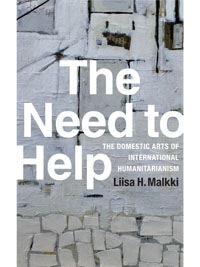
A review of The Need to Help: The Domestic Arts of International Humanitarianism, Liisa H. Malkki, Duke University Press, 2015.

Kiisa MalkkiLiisa Malkki wrote her PhD and gained tenure at Stanford’s anthropology department based on her fieldwork among refugees from Burundi. She worked in a refugee camp in Tanzania in the mid-eighties, and presented the narratives she collected from Hutus fleeing political violence in a book, Purity and Exile. This book gained some public attention when it was criticized by Peter Gourevitch who argued, in the New York Review of Books, that her “mytho-history” was more myth than history, and later on when some of its testimonies of genocidal violence were echoed by the reports and stories coming out from the Rwandan genocide (this time with Hutus as perpetrators and Tutsis as victims). But Liisa Malkki didn’t want to be categorized into a box, much less be identified as a “refugee” scholar or a “genocide studies” specialist. This is why she turned to a terrain closer to her place of origin and less fraught with political disputes: Finnish Red Cross aid workers sent abroad on emergency relief missions, as well as other persons gravitating around the Red Cross movement in Finland. Although she spent her childhood in East Africa, and most of her professional career in the United States, she apparently remained close to her home country of Finland. This is where she conducted the fieldwork for this book, putting into use her intimacy with the people and their language as well as her knowledge of the domestic scene.

Act like a Finn

Who are the Finns? How can one hail from Finland? This is a question to which Finnish aid workers, and Finnish nationals in general, are often confronted. They have developed a response in action: to be a Finn is to act like a Finn, and to embody the virtues and proclivities that they associate with their homeland. Finns often speak of “having to prove themselves” on the international scene. For them, and therefore for their foreign interlocutors, Finnishness (suomalaisuus) involves calmness, discretion, honesty, social reserve (häveliäsyys), and hard work. Some people feel at ease with these national characteristics, and work hard to prove they deserve their reputation of hard workers. Other experience it as a constraint to their lives and try to escape from it—by going out to the “world out there” (olla maailmalla), or by developing other sensibilities not associated with the national character. In particular, in a society that prides itself on self-reliance, grit (sisa), and a fierce love of privacy and individualism, solitude and the repression of public emotions can be felt as a heavy burden. Finnishness is also sometimes associated with small-mindedness, provincialism, conventionality, and the rejection of foreigners. Hailing from a small and isolated country, Finns want to connect to the outside world, and be part of something “larger than themselves”. The ICRC provides them the opportunity to do just that.

If Liisa Malkki reports such traits, it is not to engage in an outmoded sociology of the national character, but to describe how Finnishness is perceived both as a resource and as a constraint by the people she interviewed. Talk of what Finnishness means, and self-stereotyping, are extremely common among Finns. Little is known from their country abroad, especially in the countries where Finnish aid workers are dispatched. Finland is a country remote from the Global South, by its latitude and its climate as well as by its national history. It never engaged in colonial expansion, and itself experienced imperial rule for most of its history, as a province of Sweden and then of Russia before gaining its independence in 1917. Just as the Finns want to appear as thrifty and hard-working, the Finnish state is characterized by its generous aid policy toward Third World nations but also, at the same time, by its stern condemnation of the profligacy of Greece and other southern members of the European Union. Finland wants to appear generous to strangers and willing to share its riches with those who really deserve it, yet according to media reports it treats foreign immigrants from developing nations as social outcasts, and admits very few refugees. It is in many ways a closed society. As the author argues, “refugees, immigrants and minorities from around the world (and especially their children) might be ‘Finns’ both culturally and in terms of citizenship—but they are still often the object of xenophobic slurs and attacks.”

Peace, neutrality, and humanitarianism

The fact that Finland is a small internationalist state committed to world peace and United Nations principles is also an important factor for the ICRC, an organization that has elevated the notion of neutrality, along with impartiality and humanity, to the status of a founding principle. Neutrality has long been a key part of Finland’s foreign policy and international image, and this helps to explain the heavy representation of Finns on ICRC missions in politically difficult conflicts elsewhere around the world, especially in Africa and the Middle East. Of course, as Liisa Malkki reminds us, neutrality (neutraalius) is a kind of politics, both for Finland and for humanitarian aid. For most of its modern history, Finland’s neutrality has been a strategic defense issue of great significance, although some people now see it as a relic of the Cold War that should be jettisoned. Similarly, neutrality is a policy tool that allows the ICRC to “talk to anyone” in an armed conflict or during a humanitarian crisis. Neutrality and the attempt to steer clear of politics has often been reproached to the Red Cross (was it right to stay “neutral” during the rise of Nazism in Hitler’s Germany?), and it can also lead to ethical dilemma and impossible situations. The author shows that neutrality is not only a code of conduct, but also a state of mind for aid workers who need to preserve “affective neutrality” in the face of human suffering. Like a surgeon in the middle of an operation, the aid worker (who often operates in the medical field) needs to concentrate on her work and shun out emotions, at least temporarily. Again, this attitude conforms to the Finnish national character of emotional restraint and hard work.

Like neutrality, humanity is part of the Red Cross ethos—it is a core value that Red Cross workers are supposed to serve. Humanity is here conceived in terms of “basic human needs” and of abstract “human rights” that have to be supplied and guaranteed by the “international community.” In the worst case, such views can lead the “needy African” to be imagined as a sort of specimen of “basic humanity” more biological than political—“bare life,” as Agamben and others have argued, more zoë than bios. Engagements with humanity understood in such generic terms can turn into political disempowerment. Paradoxically, it also can lead to dehumanization, as when the public’s compassion focuses on children and on animals, which is a way to deny human subjects their agency. Images of children in need are everywhere in humanitarian appeals to generosity in print and digital media. No wonder that this kind of sentimental humanitarianism has been the target of attacks by social critics, from Friedrich Nietzsche and Karl Marx to Hannah Arendt and Roland Barthes. Even politicians have joined in their critiques: Jean Kirkpatrick, a former US ambassador to the United Nations, once dismissed the category of “economic, social and cultural rights” enshrined in the Universal Declaration of Human Rights as “a letter to Santa Claus.” To the lofty scene of humanitarian ideals, they oppose the hard reality of conflicting interests, geopolitics, and war.

A letter to Santa Claus

As she confesses, Liisa Malkki started her research ready to see a dangerous kind of antipolitics in invocations of an unsituated “humanity” such as those found in the guiding principles of the ICRC. But the competing view, the misogynistic denunciation of the human herd by Nietzsche or the cynical realpolitik of politicians, does not get her favor either. She notes with some regret that the appeals to world peace, disarmament, and global social justice, which were once the preserve of powerful spirits such as Albert Einstein or Eleanor Roosevelt, have been trivialized and infantilized to the point of losing all political potency. Her chapter on Children, Humanity, and the Infantilization of Peace demonstrate how children have been invested with various ideals within a “transnational ritual sphere” that constitutes the figure of the child as the bearer of humanity. Again, it is easy to deride the lachrymose exploitation of children’s image by humanitarian marketing campaigns and peace education programs. But humanitarian appeal is not just the negation of politics: it is also, in itself, a form of politics. Liisa Malkki shows how an unblinking, absolute commitment to humanity (as to neutrality) involves its own kind of zealotry. Zealous humanism, she suggests, is no less extreme than religious fundamentalism. It is indeed rooted in religious values and Christian doctrines, although most of the Finns she interviewed denied any form of religious affiliation and were wholly secular.

There is a commonplace popular view that the humanitarian worker is moved by powerful ideals and feelings of compassion. But the people sent on humanitarian mission by the Red Cross refuted this image. For them, the “Mother Theresa-type” of people bent on self-sacrifice were clearly not wanted: they could put a mission at risk, and were at best a disturbance from a more efficient work ethos. The persons interviewed by Liisa Malkki took issue with their definition as humanitarian actors. They preferred to design themselves as “aid workers”, or to emphasize their professional affiliation—as doctors, nurses or engineers. Professional solidarity with their fellow team members and with their national counterparts in the field took precedence over abstract humanitarianism. They acknowledged several reasons for going on mission abroad, some mundane—to escape from the cold of Finland’s long winter and to find “warmer” places, meteorologicallly and socially—, others more practical—as a way of personal and professional development, to acquire new skills and exercise them in more demanding conditions. Going overseas made it possible for them to be part of something other and bigger than themselves. To be “out in the world” (olla maailmalla) was a powerful object of imagination for them. Many talked in terms of an international obligation and a “need to help” (tarve auttaa). But they were professionals before they were humanitarians.

Humanitarian aid always begins at home

Importantly, for Malkki, acknowledging the needs of aid workers does not diminish them or the work that they do. Nowhere does she suggest that they serve their own needs at the expense of the needs of others. On the contrary, recognizing needs on both sides of the aid relationship calls for a more reciprocal view of North-South relations. It complicates the dichotomy between the aid giver—perceived as generous, selfless, compassionate—, and the aid recipient who is identified solely by her needs. Malkki provides a case study of a kind of help for which there is no real recipient: the Finnish Red Cross Aid Bunny campaign, that had old ladies hand-knit toy-like figures that are then supposedly sent to children in need as part of emergency relief missions. The Aid Bunnies and their siblings—the Trauma Teddies, the Mother Theresa blankets, and so on—are easy to dismiss as silly sentimentalism and useless gift-giving: even Red Cross employees feel embarrassed by the accumulation of cardboards full of animal toys that they are mandated to send to the field. But again, Liisa Malkki eschews from taking an easy target at these forms of wasteful generosity. Instead, she concentrates on the social activities and inner lives of the Finnish ladies who contribute to these campaigns, showing again a powerful need to donate their time and attention to causes that pull them upward.

One shouldn’t beware of Finns bearing gifts. Their intentions are sincere, their feelings are true, and their hard work speaks louder than their words. The conduct of Red Cross aid workers may appear as self-serving and parochial, the sentimentalism of old ladies knitting teddy bears for imaginary victims may generate scorn and indifference. But consider the alternative. Cynicism and hard-nosed interest breed conflict and isolation. Without proper stimulus, the faculty to empathize with one’s fellow human wanes and dwindles. Imagining children in need and longing to help them may be considered as a calisthenics for the enhancement of empathy. Compassion needs training. Viewed from this perspective, the cultivation of humanitarian sentiments, encouraged by the state and various social institutions, is closely linked to the generous aid policies of Nordic countries. Manufacturing consent to ODA policies involves not only rational arguments about aid effectiveness and geopolitical payoffs, but also a sentimental education of the imagination, a cultivation of the “need to help.” This is especially true in a country like Finland, where smallness and isolation breed a desire to be connected to something other and greater than oneself. There is something in the home society of Finland that creates a specific “need to help.” Humanitarian aid always begins at home.

Observing the Tribes, Rites, and Myths of Wall Street

A review of Liquidated: An Ethnography of Wall Street, Karen Ho, Duke University Press, 2009.

Karen HoIn her ethnography of Wall Street, Karen Ho offers a powerful metaphor by way of a title. “Liquidated”, the book’s title, echoes the memorable advice of Andrew Mellon, US Treasury secretary in the early 1930s, as reported by then President Herbert Hoover: “Liquidate labour, liquidate stocks, liquidate farmers, liquidate real estate! It will purge the rottenness out of the system. High cost of living and high living will come down. People will work harder, live a more moral life.” This advice, of course, only deepened the Great Depression, and its failure led to the adoption of Keynesian policies and massive state intervention. Which confirms the late Michael Mussa’s diagnosis that “there are three types of financial crises: crises of liquidity, crises of solvency, and crises of stupidity.”
“You are fired!”

Liquidity means different things to different people. For the bond trader, liquidity is a fact of life. An asset has to stay liquid if it is to be sold without causing a significant movement in market price and with minimum loss of value. Money, or cash, is the most liquid asset, but even major currencies can suffer loss of market liquidity in large liquidation events. When even safe assets are considered high risk, flight-to-liquidity might generate huge price movements and lead to a panic. For an investment banker, liquidity refers both to a business’ ability to meet its payment obligations, in terms of possessing sufficient liquid assets, and to such assets themselves. If a business is unable to service current debt from current income or cash reserves, it has to liquidate some assets or be forced into liquidation. For ordinary people, being liquidated means to lose a job, which in the US can happen on a brutal basis: you pack your personal items in a box and go. But even then, there are differences: for a banker, the line “you are fired!” means it is time to return the calls of headhunters, while for a CEO liquidation often comes with a hefty severance package or golden parachute.

Liquidation therefore provides a meaningful metaphor of how Wall Street operates. According to Karen Ho, liquidity is part of investment bankers’ “ethos” or “habitus”. Borrowed from French social scientist Pierre Bourdieu, these two concepts refer, first, to the worldview, and second, to the set of dispositions acquired through the activities and experiences of everyday life. They are the result of the objectification of social structure or “field” at the level of individual subjectivity. By using these concepts, Karen Ho’s goal is to demonstrate empirically how Wall Street’s subjectivities, its specific practices, constraints, and institutional culture, exert powerful systemic effects on US corporations and financial markets. Investment bankers live in a world where jobs are highly insecure, and they get paid for cutting deals or trading assets. They tend to project their experience onto the economy by aspiring to make everything “liquid” or tradable, including jobs and people.

When Wall Street takes over Main Street

Downsizing, restructuring and layoff plans are not only business decisions based on economic rationality and abstract financial models: they are the predictable outcomes of a peculiar corporate culture that values liquidity above all else. It is important to note that the people heralding downsizing and job market flexibility themselves experience it firsthand. Investment bankers are constantly subjected to boom and bust cycles and to waves of restructuring, even during bull markets (before writing her PhD dissertation, Karen Ho did a stint at Bankers Trust and lost her job when her team was dismantled). They live their professional life with an updated CV at hand, and are constantly solicited by headhunters and placement agencies. By pushing deals and reengineering corporations, they are projecting their own model of employee liquidity and financial instability onto corporate America, thereby setting the stage for rounds of market crises and layoffs.

While no terrain is considered off limits for modern anthropology, Wall Street is not usual territory for doing fieldwork. As Ho notes, you cannot just pitch your tent in the lobby of JP Morgan or on the floor of the New York Stock Exchange and observe what is going on. Chances are, security guards will throw you out in the matter of an hour. Besides, you won’t be able to gain much relevant information, as a lot of what goes on in corporate banking happens behind close boardroom doors or as the result of abstract computer models. Negotiating access to the field is always an issue for anthropologists. In the case of Wall Street, the difficulty is compounded by the culture of secrecy and the strict control over corporate information exerted by financial institutions.

Getting access to the field

In addition, bankers are in a position of power relative to anthropologists. They can humble the apprentice social scientist with their cock-sure assertiveness and technical jargon. For an anthropologist, the challenge of “studying up” and researching the power elite is very different from the issues raised by “studying down” distant tribes or dominated social groups. The way Karen Ho went around this problem of access was pragmatic and opportunistic. She first landed a job in an investment bank to familiarize herself with the field. She then used her university connections, former colleagues and network of contacts to gather as much information as she could. Her field methods included structured interviews, casual conversations, and participant observation at banking events such as industry conferences or recruitment forums. She finally ordered her data into a narrative that described, in true anthropological fashion, the tribes, rites and myths of Wall Street.

Investment bankers form an elite tribe. They are the leaders of the pack, the smartest guys in the room. Their culture emphasizes smartness, hard work, risk taking, expediency, flexibility, and a global outlook. They look down on Main Street corporate workers, whose steady, clock-watching routinization produces “stagnant”, “fat”, “lazy” “dead wood” that needs to be “pruned”. They are the market vanguard of finance-led capitalism, and perceive themselves as exerting a useful economic function. They hang around in the same places: gourmet restaurants, uptown watering holes, week-ends in the Hamptons, and jet-set vacations in exotic locations. Investment bankers form distinct sub-tribes or “kinship networks”: they are the “Harvard guys”, or the guys from Yale, Princeton, or Stanford. Individual employees are not only known and referred to by their universities but are also seen as more or less interchangeable with others from their school. The investment bank is organized into a strict pyramid, with the overall dominance of the “front office” over the “back office” and the hierarchy between analysts, vice presidents, and managing directors. Few new hires ever make it to MD status: Wall Street functions as a revolving door, where organizations are constantly restructured and reconfigurated.

Tribes, rites, and myths

Karen Ho explores several rites that define investment bankers’ corporate culture: the recruitment process, the integration into the firm, closing a deal, getting promoted, negotiating a bonus, and hopping from job to job in an industry that applies a “strategy of no strategy.” Smart students from Ivy League universities do not choose Wall Street as much as there are chosen along a natural path that makes investment banking the only “suitable” destination. They go through several rites of initiation that ingrain in them a sense of superiority, hard work, and professional dedication. Most of Ho’s informants experienced an initial sense of shock at the extraordinary demands of work on Wall Street, though over time, they began to claim hard work as a badge of honor and distinction. A tremendous amount of energy is spent in determining compensation via end-of-year bonuses. As they themselves acknowledge, bankers do it for the money, and the amount they earn determines their sense of self-esteem and their position in the corporate hierarchy.

Bronislaw Malinowski, as quoted by Karen Ho, writes that “an intimate connection exists between the word, the mythos, the sacred tales of a tribe, on the one hand, and their ritual acts, their moral deeds, their social organization, and even their practical activities, on the other.” The myths of Wall Street are the lessons taught in business schools and financial theory courses: the superiority of shareholder value and the relentless pursuit of profit maximization. These myths of origin are not always coherent. Investment bankers and consultants in the sixties heralded diversification and growth in unrelated sectors, before moving to a new mantra of “core business focus” and downsizing. Breaking up the conglomerates they helped assemble in the first place created a whole new source of profit for bankers. Similarly, stockholders were once described as fickle, mobile, and irresponsible in relation to corporate managers. The shareholder value revolution inverted the picture, and financiers pressured companies and their managers for profits and dividend payments. These “sacred tales” taught in business schools are also myths of legitimization: for Wall Street, the role of bankers is to create liquidity, to “unlock” value that is trapped in the corporation and to allocate money (as in the takeover movement) to its “best” use.

Making ethnography mandatory reading for MBA students

Karen Ho’s ambition is to offer a “cultural” theory of corporate finance. In her view, strategy is produced by culture, and “the financial is cultural through and through.” She constantly emphasizes the fact that investment bankers actively “make” markets, “produce” relations of hegemony and “create” systemic effects on US corporations through their corporate culture and personal habitus. Wall Street narratives of shareholder value and employee liquidity generate an approach to corporate America that “not only promotes socioeconomic inequalities but also precludes a more democratic approach to corporate governance.” Of course, it can be argued that culture does not explain everything, and that Karen Ho’s perspective in turn only reflects the views of a particular tribe: that of the cultural anthropologist. There is also the fact that Liquidated focuses on yesterday’s battlegrounds: the focus is on corporate equity and M&A, which were the high-profile areas everyone could see, while the dark pools of CDOs and over-the-counter derivatives were left completely off the hook. The book was completed in 2008, and the subprime crisis is only alluded to in a coda. But despite these obvious limitations, Karen Ho’s book provides a salutary perspective on the banking world, and should be made mandatory reading for any MBA student or financial PhD before they embark on their master-of-the-universe carrier. Maybe investment banks should also do well to hire their in-house anthropologist.

How Happy is the Person Who Says I am a Turk

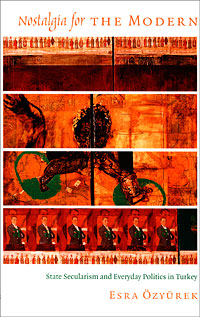
A review of Nostalgia for the Modern: State Secularism and Everyday Politics in Turkey, Esra Özyürek, Duke University Press, 2006.

Ezra OzyurekThere is one country in Europe where people feel nostalgic for the 1930s, and where they almost unanimously cherish the memory of a one-party state which multiplied statues of its great leader on every street corner. The country is Turkey and the golden age that Turks remember with nostalgia is the first two decades of the republic founded in 1923 by Mustapha Kemal, the father of all Turks. The climax of this era of bliss and hope occurred with the tenth anniversary celebrations of the declaration of the Turkish Republic, when Atatürk famously declared: “How happy is the person who says I am a Turk!”
Nostalgia is a thoroughly modern sentiment. Or maybe a postmodern one: it is fair to say that modernity ended with the end of hope for tomorrow. Since then, people have looked for their utopias in the past rather than in the future. As Esra Özyürek notes, quoting another author, the twentieth century began with a futuristic utopia and ended with nostalgia. A belief in the future is now only a relic of the past. What people look for in the past is the kind of pride and hope in the future that seems to have disappeared from our present.

The twentieth century began with a futuristic utopia and ended with nostalgia

By locating their modernity in the past, rather than in the present or future, and by cultivating a vivid memory of the 1930s as a modern past utopia in which the citizens united around their state, many Turks with a nationalist-secular worldview tend to reject the visions, revisions and divisions that characterize the present situation. They are discontent with the new definition of modernity that the European Union imposes on Turkey, becoming resistant to criticisms of the way Turkey has handled the Kurdish issue and human rights violations. They firmly oppose the rise of political Islam and what they perceive as attacks to the foundations of the secular state.

For nostalgic Republicans, the end of the single-party regime and the transition to democracy formed the starting point of selfishness and factionalism in Turkey. They agree that the golden age came to an end with the first fair general elections of 1950, when the Democrat Party replaced the Republican People’s Party. Everything apparently got worse afterwards. Suddenly, there was more than one vision for the future of the country, and citizens were divided along the lines of gender, class, ethnicity, and religion. People started putting their private interest above the common good embodied by the state.

Of course, paradise is always and forever lost, and nobody in Turkey really wants to turn back the clock backward to the 1930s. The militaristic and patriarchal feelings associated with the early Republican era no longer match the contemporary ideals of European modernism, which promotes voluntarism, spontaneity, and free will in state-citizen relations. The nationalist march songs with lyrics glorifying the construction of railroad tracks and the devotion to the leader are revisited today with a new aesthetic of postmodern kitsch and disco rhythm. Nostalgia is also used to silence the opposition, as when the remix of nationalist songs blasted by discotheques compete with the calls to prayer of the muezzin.

In Nostalgia for the Modern, Esra Özyürek explores how nostalgia for the single-party era is indicative of a new kind of relationship citizens have established with the founding principles of the Turkish Republic, one that manifests itself in affective, domestic, and otherwise private realms generally considered outside the traditional field of politics. She takes as the sites of her ethnography the seventy-fifth anniversary Republic Day celebrations arranged by civil society organizations; the popular life histories of first-generation Republicans who transformed their lives as a result of the Kemalist reforms; the commercial pictures of Atatürk that privatize and commodify a state icon; the pop music albums that remixed the tenth-anniversary march originally made in 1933; and museum exhibits about the family lives of citizens that articulate metaphors of national intimacy.

Metaphors of national intimacy

Özyürek sees a parallel between the neoliberal policies of market reforms and structural adjustment and what she describes as the privatization of state ideology. Both are characterized by a symbolism of privatization, market choice, and voluntarism that contrasts with the statist, nationalist and authoritarian ideology of Kemalism in the former period. With neo-Kemalism, a secular state ideology, politics, and imaginary finds a new life and legitimacy in the private realms of the market, the home, civil society, life history, and emotional attachment, transforming the intimate sphere along the way.

This shift of secular ideology from the public to the private, which (just like neoliberal economic reforms) involves processes of deterritorialization and reterritorialization, occurred just at the same time as, and in reaction to, the growing importance in the public sphere of religious beliefs and practices that were once confined in the private realm. Secularism went private just when Islam went public, as both had to face the shift produced by market reforms and liberalization. This exploration of cultural imaginaries associated with the neoliberal ideology opens up new possibilities for political anthropology: according to the author, “anthropologists are uniquely equipped to understand the newly hegemonic culture of neoliberalism in the fields of economy, society and politics.”

Fieldwork and family work

There is also an autobiographical aspect to this ethnography. For Esra Özyürek, fieldwork was intimately linked to family work. As she confesses, “I am the granddaughter of a parliamentarian of the single-party regime and the daughter of two staunch Kemalist and social democrat activists affiliated with the Republican People’s Party.” Raised as an orthodox Kemalist, her mother is a firm believer in Westernization, secularism, and Turkish nationalism. She doesn’t hesitate to chastise her daughter for her sympathy with the cause of veiled university students. Her father is also a stalwart Republican who was elected to Parliament in the course of her research. Analyzing further her motivations for undertaking this project, the author notes that “this study became a tool for me to negotiate daughter-parent relations and establish myself as an adult in some ways.” Coming of age as an anthropologist also involves dealing with the father-figure of Atatürk, whose towering presence makes itself felt in every chapters of the book.

Written as a scholarly essay with a rich theoretical apparatus, Nostalgia for the Modern can also be read as a very personal rendition of the author’s effort to come to terms with her Turkish identity.

Anthropology from a Pragmatic Point of View

A review of Anthropological Futures, Michael M. J. Fischer, Duke University Press, 2009.

Michael FischerKant is seldom claimed as an ancestor by anthropologists. That he wrote an “Anthropology from a Pragmatic Point of View” is considered irrelevant for the history or epistemology of the discipline: the “study of man” that the philosopher from Königsberg had in mind was very different from the detailed ethnographic observations by the fieldworkers of the twentieth century. For modern scholars trained in the anthropology discipline, philosophy was considered a waste of time, mainly irrelevant and sometimes dangerous. Ethnography was about facts, not speculation.
Arguably, the main advances in the discipline are associated with anthropologists who were theoretically inclined, and philosophy formed the background of their intellectual constructions. But other philosophical references tended to outweigh Kant’s transcendental idealism. Hegel and Comte exerted a lasting influence on the social sciences, as well as Marx, Durkheim and Weber, whom sociology claims as founding fathers. More recently, anthropologists well versed in theory have turned to Heidegger as well as to French modern philosophers also popular in cultural studies departments: references to Foucault fill the pages of social science journals, and one also finds discussions on Derrida’s deconstructionism, Deleuze’s contribution to media studies, Levinas’ ethics of the Other, or Lacan’s brand of psychoanalysis. Most of the time, however, the philosophical underpinnings of ethnographic studies remain implicit, and social scientists who claim fieldwork as the foundational pillar of their discipline remain wary of theories that are not empirically grounded. Theoretical musings remain the preserve of elder scholars, who can claim the benefit of accumulated experience, have cultivated a taste for literary prowess, and are too old to go to the field anyway.

Claiming Kant as an ancestor of modern anthropology

The return to Kant proposed by Michael Fischer in Anthropological Futures is therefore intriguing. True, as he confesses, the author has always dabbled in philosophy. Along his training in anthropology, he kept philosophy as a minor in his curriculum, and he complemented his formal training with personal readings. His defining moment was when he attended a conference entitled The Structuralism Controversy held at John Hopkins University in 1966, with the cream of French theorists in attendance, from Lévi-Strauss to Derrida and Lacan: it was there that the word “poststructuralism” was apparently coined, and Fischer was, as he claims, present at the creation. Later at the University of Chicago, he was fortunate enough to attend lectures and seminars by Hannah Arendt, Paul Ricoeur, Mircea Eliade, and two former students of Ludwig Wittgenstein. But as his references show, he was always more inclined to pick ideas and metaphors from the latest postmodern critics and French luminaries than to meditate over the abstract metaphysics and stern moral imperatives of eighteenth century’s Immanuel Kant.

Returning to Kant is however justified on several grounds. First, as Fischer notes, particularly for French theory in the late twentieth century Kant remains an important intertext: for Bourdieu, Deleuze, Derrida, Foucault, Levinas, and others. Second, although it is not clearly stated, one gets the feeling that our world requires a moral compass and a pragmatic agenda that postmodern critics have been unable to provide. Rereading Kant, along with Hannah Arendt and other moralists, provide our contemporaries with such perspective. It is highly revealing that when Iranian intellectuals connected to Fischer and opposed to the clerical regime want to find references in modern philosophy, they turn to Hannah Arendt, Jürgen Habermas, Richard Rorty, and John Rawls, not Michel Foucault, Jacques Derrida and the like. The return to Kant is a return to the spirit of the Enlightenment. Countering interpretations by the Frankfurt School (who underscored the “dark side” of the Enlightenment) and by Lacan (who read Kant along with Sade), Fischer notes that “the Enlightenment was not so ethnocentric and parochial as some detractors suggest.”

In addition, one discovers in Kant an attention to detail, a recognition of the “plurality of the human condition” (to use Arendt’s words), and a focus on “the unsociable sociability of man” (Kant’s own expression) that prefigures modern anthropology. Kant apparently was an avid reader of travelers’ reports, explorers’ journals, and news from other countries. He considered his teaching of Anthropology as well as Geography as essential part in the upbringing of citizens of the world. While one should not expect from Kant’s writings anything approaching the thick description or comparative standards of modern ethnography, it nonetheless provides a logical prolegomenon to much of that project. As a last point, cosmopolitanism, conceived as not only knowing but participating in the world, again constitutes our political horizon. Despite its shortcomings, the European Union is the closest approximation to the federation of republics that Kant envisaged in his philosophical sketch for a perpetual peace.

Anthropology as a philosophical mode of enquiry

Fischer’s discussion on Kant is based on the premise that anthropology should return to fundamental moral and cultural issues and become what some precursors envisaged for it: a philosophical mode of enquiry, grounded in theory as well as observation, and bridging various disciplines into an integrated whole. Anthropology stands at the crossroad of the many academic disciplines that have developed over the years around literature departments and social science faculties. Indeed, just as Auguste Comte claimed sociology as the queen of all disciplines, Fischer envisages for anthropology a pivotal role, dethroning cultural studies in its ability to generate interdisciplinary work between the humanities and social sciences. In the end, such discipline should be capable of restoring the human being to a free condition. It should “not just ask what man is, but what one can expect of him.”

Fischer sees particular potential in his own branch of inquiry, the anthropology of science, whose ultimate objective is to reconnect the procedures of the natural sciences with the goals of the human sciences. In comparison with other social studies of science–the field seems to be replete with acronyms, from STS to SSK, SCOT and ANT–, anthropology can bring attention to other terrains beyond the traditional focus on Europe and America. This is what the author does, in short vignettes presenting research labs in emerging countries, with a focus that goes beyond the conventional claims of postcolonial studies or the center/periphery duality. As he notes in a short manifesto concluding a survey on the interface between nature and society, “An anthropology to come will need to be collaborative and intercultural, not only across traditional cultures, but across cultures of specialization, and it will need not only to incorporate the lively languages of the new technosciences, but also reread, decipher, and redeploy the palimpsests of traditional knowledges.”

Borrowing metaphors from the hard sciences

In his attempt to substitute anthropology to cultural studies at the pinnacle of the humanities, Fischer adopts many tics and proclivities of his colleagues in cultural studies departments. The book’s chapters are usually built around a basic notion (culture, science, nature, the body) that is “unpacked” into several loosely-connected dimensions, with various illustration from the arts and the social science literature. Bibliographical references are brought in more as a show of scholarship and for the halo of scientificity that they bring than for close readings or detailed criticism. Footnotes are prolific and develop a narrative of their own, sometimes orthogonal to the main body of the text. Like scholars in critical theory, Fischer likes to bring key words and metaphors from the hard sciences, often used out of context. Such categories include haplotype groups, experimental systems, recombinant science, graphemic spaces, object-oriented languages, emergent forms of life, and material-semiotic operators. Lastly, his writing lacks both the rigorous accuracy of science and the metaphorical literality of the humanities, leaving the reader with convoluted sentences that sometimes require second or third readings. These theoretical musings are far from the models of style and precision that authors such as Clifford Geertz have set forth for the discipline.

The State of Exception in East Asia

A review of Neoliberalism as Exception: Mutations in Citizenship and Sovereignty, Aihwa Ong, Duke University Press, 2006.

Neoliberalism as ExceptionCarl Schmidt defined sovereignty as ultimately the power to call a state of exception to the normalized condition of the law. Drawing on the German philosopher, Giorgio Agamben uses the exception as a fundamental principle of state rule that is predicated on the division between citizen in a judicial order and outsiders stripped of juridical and political protections. Aihwa Ong, a Berkeley anthropologist, offers a milder version of the state of exception: the sovereign exception she is interested in “is not the negative exception that suspends civil rights for some but rather positive kinds of exception that create opportunities, usually for a minority, who enjoy political accommodations and conditions not granted to the rest of the population.”

The neoliberal state of exception creates threats and opportunities

Aihwa Ong is interested in the spaces and identities opened up by neoliberalism as exception–the market-oriented and calculating technologies of government used by otherwise interventionist states in East Asia–, and by exceptions to neoliberalism–the management of populations who are deliberately excluded from neoliberal considerations, either positively or negatively. She focuses on “the interplay among technologies of governing and of disciplining, of inclusion and exclusion, of giving value or denying value to human conduct.”

The book explores how the market-driven logic of exception is deployed into a variety of ethnographic contexts: the opposition between Islamic judges and theologians and feminist groups who also claim the authority of the Quran to challenge patriarchal norms in the Malaysian context; the tensions between online communities protesting against the persecution of ethnic Chinese in Indonesia and localized struggles for national belonging and an inclusive concept of citizenship; the market- and policy-driven strategies of spatial fragmentation that create a pattern of differently administered spaces in mainland China; the ethnicization of labor market pools and of production networks linking both sides of the Pacific Ocean in the electronics industry; the tension between moral education and technical training in American colleges and universities pursuing global strategies, the outsourcing strategies that undermine the foundations of middle-class American masculine identities; the efforts of Singapore to position itself as a hub for accumulating international expertise in the knowledge-driven economy; the demands of NGOs for the biological welfare of foreign maids and migrant workers; and the failed attempts by American companies to instill management thinking and behavior among Shanghainese professionals who pursue their own self-interest.

In doing so, the author introduces many new concepts that may be picked up by other social scientists for further use and elaboration: graduated sovereignty, zoning technologies, latitudinal citizenship, translocal publics, translational identities, global ethnicities, the postdevelopmental state, labor arbitrage, biowelfare, and others. She also critically addresses works by Hardt and Negri, Agamben, Sassen, Habermas, Appadurai, and elaborates on the concept of governmentality as defined by Foucault.

An indiscriminate gleaning of facts

Neoliberalism as Exception elaborates on Aihwa Ong’s previous book, which won the Cultural Studies prize of the Association of Asian American Studies in 2001. There were aspects that disturbed me in Flexible Citizenship: the political militancy, the mix of high-brow concepts and trivial observations, the lack of any historical perspective, the disdain for economic reasoning or statistical observations, the departure from earlier traditions of fieldwork in favor of casual browsing and indiscriminate gleaning of facts. Not only did I find the same defects in Neoliberalism as Exception, but I was baffled to read whole sentences reproduced at full length from the previous book, without any mention that the two essays were based on the same material. Take the following sentence, which I had singled out in my reading of Flexible Citizenship for being particularly inept: “On a palm-fringed hillock stands the Kuala Lumpur Hilton, where attendants in white suits and batik sarongs rush forward to greet well-groomed Malay executives wielding cellular phones as they step out of limousines.” If I were the author, I wouldn’t be too proud of this stereotyped description that seems to come straight out of a popular novel or a fashion magazine. But Aihwa Ong found it worthy enough to include it all over again in one chapter of her new book.

Now why do I care, and who reads anthropology anyway? We should pay attention to what happens in the anthropological field because it offers a rare window into the lives and cultures of people who may appear distant or alien but who share with us our common humanity. Modern anthropologists have rejected earlier models of ethnography which treated local cultures as bounded and isolated, and have welcomed globalization as a formidable challenge to expand the discipline’s boundaries and to include political and economic considerations. Concepts and theoretical constructs used in anthropology also act as a reality check over the ideas and theories offered by philosophers or social critics because they are grounded in empirical observations and a rich methodological tradition. As Aihwa Ong herself acknowledges, “As anthropologists, we are skeptical of grand theories. We pose big questions through the prism of situated ethnographic research on disparate situations of contemporary living”. One only wishes she would have applied her prism more rigorously.

The last reason we should care about anthropology is because of the political uses that can be made of research results. Most anthropologists maintain a healthy distance to the centers of power and they rightly cherish their academic freedom. Some choose to embrace social causes and lend their voice to the dispossessed, the disenfranchised and the voiceless. Others address the works of social critics and offer validations or amendments of theoretical claims from their methodological perspective. As the endorsements by Michael Hardt or Manuel Castells on the book’s back cover indicate, there is a kind of circularity from theoretical texts to “views from the field” and then back to theory. But without a rich and varied ethnographic material, this circularity runs empty and theory leads to more theory without the necessary detour through observation.

The Cultural Anthropology of Asia-Pacific Modernity

A review of Flexible Citizenship: The Cultural Logics of Transnationality, Aihwa Ong, Duke University Press, 1999.

Flexible CitizenshipIn Flexible Citizenship, Aihwa Ong describes how industrializing states in Southeast Asia and border-crossing citizens of Chinese descent respond differently to the challenge of globalization. Borrowing from the French philosopher Michel Foucault, she uses the term “regime” to refer to knowledge/power schemes that seek to normalize power relations. The three regimes that are considered are the regime of Chinese kinship and family, the regime of the nation-state, and the regime of the marketplace. These regimes and their associated logics of subject-making, of governmentality, and of capital accumulation, are characterized by the twin forces of flexibility and transnationality. The book explores the phenomena that are shaped by these two forces: mobile capital, business networks, migrations, media publics, zones of graduated sovereignty, and triumphant Asian discourses.

Flexibility and transnationality in the Chinese diaspora

According to Benedict Anderson, rephrasing a basic tenet of Foucaldian studies, “the dreams of racism actually have their origin in ideologies of class, rather than those of nation.” Not so in China: the embrace of the authoritarian Asian model of modernity, the crucial role of overseas Chinese in China’s development, and the encounter with global capitalism have reinvigorated racial consciousness and its implications for the integrity of the national territory. The resurgence of Chinese racial consciousness overseas, stimulated by the reemergence of China on the world stage and by the economic activities of diasporean Chinese, cannot be dissociated from the racial pride that feeds China’s imaginary community. Meanwhile, it is important that the term “Chinese” not be invoked in such ways as to become automatically and at all times the equivalent of the People’s Republic. There is an ever growing pluralization of Chinese identities, as illustrated by the figures of transnational subjects that form the focus of this study: the multiple-passport holder; the multicultural professional who is able to convert his social capital across borders; the business executive who can live anywhere in the world, provided it is near an airport; the “parachute kids” who are dropped in Southern California to acquire an American college education that is almost a requisite for global mobility.

These international managers and professionals adopt a market-driven view of citizenship: they seek legal residence and citizenship not necessarily in the states where they conduct their business but in places where their families can pursue their dreams. The art of flexibility, which is constrained by political and cultural boundaries, includes sending families and business abroad, as well as acquiring dual citizenship, second homes, overseas bank accounts, and new habits. Among overseas Chinese, cultural norms dictate the formation of translocal business networks, putting men in charge of mobility while women and children are the disciplinary subjects of familial regimes. These norms that generally valorize mobile masculinity and localized feminity shape strategies of flexible citizenship, gender division of labour, and relocation in different sites.

Sites of graduated sovereignty

Despite frequent assertions about the demise of the state, the issue of state action remains central when it comes to the rearrangements of global spaces and the restructuring of social and political relations. In Southeast Asia, governments seeking to accommodate corporate strategies of location have become flexible in their management of sovereignty, so that different production sites often become institutional domains that vary in their mix of legal protections, controls, and disciplinary regimes. As Asian postdevelopmental states seek to maintain their competitiveness and political stability, they are no longer interested in securing uniform regulatory authority over all their citizens. The low-wage export-processing zones, the illegal labour market, the aboriginal periphery, the refugee camp, the cyber corridor, and the growth triangle are the new sites of graduated sovereignty, whereby citizens in zones that are differently articulated to global production and financial circuits are subjected to different kinds of surveillance and in practice enjoy different sets of civil, political, and economic rights.

Aihwa Ong’s essay is historically dated: her narrative takes place between China’s repression of the Tiananmen mass protests of 1989 and the turbulence of the Asian financial crisis of 1997. It encompasses political milestones such as Hong Kong’s return to Chinese sovereignty and the demise of the Soeharto regime in Indonesia; cultural phenomena like the rise of Star TV and other pan-Asian medias or the birth of Asian studies in the curriculum of American universities; economic developments such as the burgeoning production networks of multinational firms in Southeast Asia or the increased visibility of Asian presence in California; and ideological debates such as Huntington’s thesis of a clash of civilizations or the promotion of Asian values as an alternative to the West’s hegemony. The emergence of China as an economic superpower provides the background to all these trends.

But the book doesn’t take into account other developments that have transformed the region’s cultural and political fabric since its date of publication. The economic centre of gravity of East Asia has moved further from Southeast Asia to the Chinese mainland. China now complements its economic power with a new political assertiveness. Nationalist claims have been given a new virulence through the development of internet discussion forums. Issues of transnationality and border crossing have taken a new salience since September 11: once valorized as the emergence of a cosmopolitan class, they now tend to be associated with risk and threats to national security. And the politics of race in the USA has been transformed and redefined by the election of a president who claims roots on three continents.

Fault lines in a multi-sited ethnography

Against this background, we can now detect some fault line in Aihwa Ong’s analysis. History is left out of the picture, and the snapshots captured by her analysis are situated into a kind of undefined present. Because she considers that most historians entertain the “grand orientalist legacy,” she rejects the historical method of building truth claims through a patient investigation of archival materials. Instead, she builds her ethnographic analysis on the most transient of sources: articles in popular magazines, casual conversations with random informants, TV images watched in hotel rooms, and media coverage of political debates.

She rejects the notion of fieldwork that, until recently, formed the hallmark of anthropology as a discipline, and substitutes to it the standard approach of cultural studies: a blind reverence to Foucault and his concept of power; a fixation with issues of race, class, and gender; and a romantic denunciation of capitalism that comes plastered with the label of political economy. Compared to the sophistication of her theoretical apparatus, her ethnographic knowledge base is rather thin, and her descriptive narrative uses the clichés found in the popular literature. Judge by the following quote: “On a palm-fringed hillock stands the Kuala Lumpur Hilton, where attendants in white suits and batik sarongs rush forward to greet well-groomed Malay executives wielding cellular phones as they step out of limousines. Women in silk baju kurong (the loose Malay tunic and sarong), dripping jewelry from their ears and necks, saunter in on their way to fancy receptions.”

Anthropology is a constantly evolving social science. While I acknowledge the positive aspects brought by new theoretical perspectives and innovative notions of what counts as ethnographic material, I don’t fully subscribe to the new directions that the discipline has taken, as exemplified by this book.